Pages purged by Facebook were on blacklist promoted by Washington Post
By Andre Damon | WSWS | October 13, 2018
Media outlets removed by Facebook on Thursday, in a massive purge of 800 accounts and pages, had previously been targeted in a blacklist of oppositional sites promoted by the Washington Post in November 2016.
The organizations censored by Facebook include The Anti-Media, with 2.1 million followers, The Free Thought Project, with 3.1 million followers, and Counter Current News, with 500,000 followers. All three of these groups had been on the blacklist.
In November 2016, the Washington Post published a puff-piece on a shadowy and up to then largely unknown organization called PropOrNot, which had compiled a list of organizations it claimed were part of a “sophisticated Russian propaganda campaign.”
The Post said the report “identifies more than 200 websites as routine peddlers of Russian propaganda during the election season, with combined audiences of at least 15 million Americans.”
The publication of the blacklist drew widespread media condemnation, including from journalists Matt Taibbi and Glenn Greenwald, forcing the Post to publish a partial retraction. The newspaper declared that it “does not itself vouch for the validity of PropOrNot’s findings regarding any individual media outlet.”
While the individuals behind PropOrNot have not identified themselves, the Washington Post said the group was a “collection of researchers with foreign policy, military and technology backgrounds.”
PropOrNot, which remains active on Twitter, publicly gloated about Facebook’s removal of the pages on Thursday. “Russian propaganda is VERY VERY MAD about their various front outlets & fellow travellers getting suspended by @Facebook &/or @Twitter,” it wrote. The tweet tagged The Anti Media and The Free Thought Project, and included a Russian flag emoji next to an emoji depicting feces.
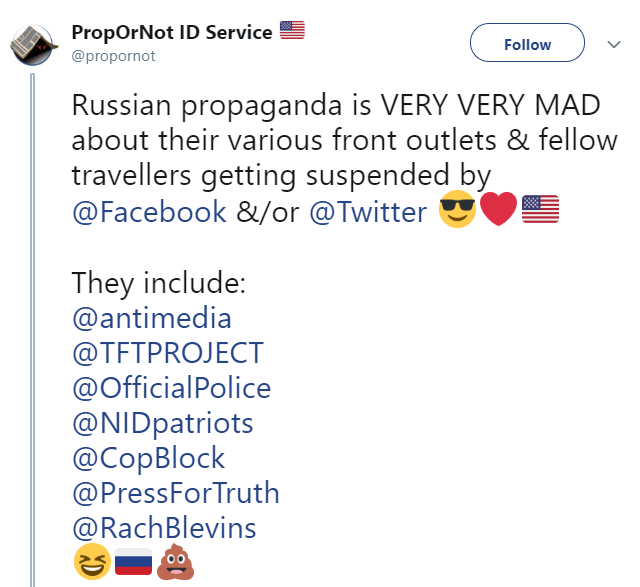
PropOrNot did not attempt to reconcile its own narrative that the targeted organizations were front groups for the Kremlin with Facebook’s official claim that they operated independently of any government but sought to “stir up political debate” for financial motives. This is because both accusations are hollow pretexts for political censorship.
In a separate post, PropOrNot added: “Well, look at that… @Facebook removed some of the most important gray/black Russian propaganda outlets from their platform! Bravo @Facebook – better late than never, so a BIG thank you for this.”
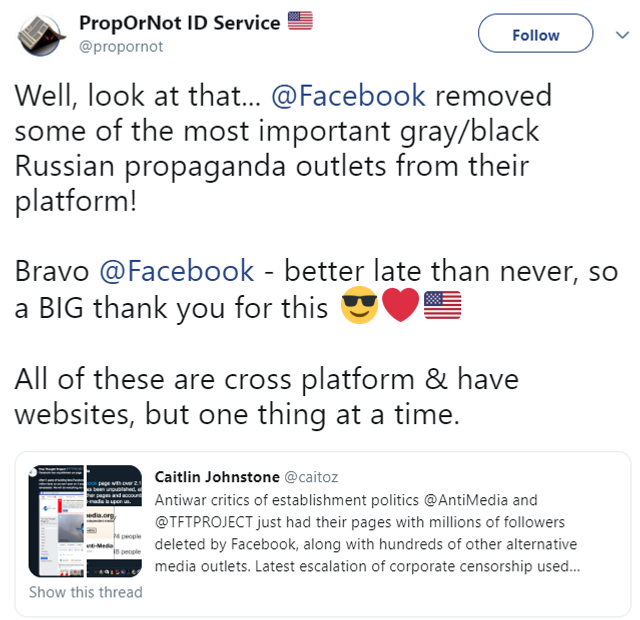
It added, ominously: “All of these [organizations] are cross platform & have websites, but one thing at a time.”
These comments by PropOrNot make clear where the censorship measures supervised by the US government and implemented by the internet companies are going. While these organizations still “have websites,” the authorities are handling “one thing at a time.”
The clear implication is that censorship will not end with Google’s manipulation of its search platform or the removal of accounts by Facebook and Twitter. The ultimate aim is the total banning of oppositional news web sites.
The publication of the PropOrNot blacklist and its promotion by the Washington Post helped trigger a wave of censorship measures against oppositional news sites by the major technology companies, working at the instigation of the US intelligence agencies and leading politicians.
Last year, the World Socialist Web Site reported that it an other sites, including Global Research, Counterpunch, Consortium News, WikiLeaks and Truthout, saw their search traffic plunge after search giant Google implemented a change to its search ranking algorithm.
In the subsequent period, search traffic to these sites has fallen even further. Search traffic to Counterpunch has fallen by 39 percent, and Consortium News has fallen by 51 percent.
These developments confirm the analysis made by the World Socialist Web Site in its open letter to Google alleging that it was censoring left-wing, anti-war and socialist websites.
“Censorship on this scale is political blacklisting,” the letter declared. “The obvious intent of Google’s censorship algorithm is to block news that your company does not want reported and to suppress opinions with which you do not agree. Political blacklisting is not a legitimate exercise of whatever may be Google’s prerogatives as a commercial enterprise. It is a gross abuse of monopolistic power. What you are doing is an attack on freedom of speech.”
On Tuesday, Google admitted in an internal document that it and other technology companies had “gradually shifted away from unmediated free speech and towards censorship and moderation.” The document stated that an aim of the censorship was to “increase revenues” under conditions of growing government and commercial pressure.
The document acknowledged that such actions constitute a break with the “American tradition that prioritizes free speech for democracy.”
Danish Bill Proposes 12 Years in Prison for ‘Pro-Russia’ Opinion
Sputnik – October 13, 2018
Danish lawmakers have gone on the offensive against interference in public debate, sparking criticism that a new proposal, which could entail criminal liability for expressing opinions similar to those of Moscow, may become a step toward silencing public debate.
According to a bill brought forward in local parliament, Danes could face a jail term if they voice dissent over the government’s position on Russia.
The proposal, which is said to be meant to “strengthen efforts against illegal influence from foreign intelligence services,” would introduce criminal penalties for perceived “meddling” in public debates and attempts to influence decision-making. Crimes committed during an election campaign would entail a maximum prison term of 12 years.
Berlingske, the country’s oldest newspaper, has bashed the bill, claiming that it would narrow the scale of political conversation in Denmark.
Berlingske’s Flemming Rose argues that the law could be stretched to the point where a Danish director is targeted for changing a burnt-out light bulb following the advice of a foreign intelligence agent.
He also warns that a Danish subject could face punishment for sharing an opinion in the local media that anti-Russia sanctions damage the country or attempting to publicly downplay concerns over the Russia-led Nord Stream 2 pipeline project (Denmark has so far failed to give its approval of the pipeline passing through its territorial waters).
The bill is understood to mean an attempt to influence public opinion in Denmark and concrete decisions in both the private and public sectors as it targets legitimate opinions that can be taken to be propaganda.
This comes at a time when Russia is facing a flurry of accusations from Western countries that it had hacked doping agencies and other international organizations in a bid to influence public opinion. Russia has vehemently dismissed the allegations as “spy mania.”
Banned alternative media speak to RT after mass Facebook purge
RT | October 13, 2018
Some 800 anti-establishment accounts and pages have been yanked from Facebook in a sweeping crackdown the social media giant framed as a fight against spammers. RT talked to those who were targeted in the cleansing.
Among the hundreds of pages and accounts Facebook and Twitter took down were those both on the political left and right, ranging from conspiracy theorists and police brutality watchers, to news outlets with non-mainstream angles, While their content could be at times described as controversial, the bulk of the banished pages boasted large followings and outreach.
RT spoke to some of the voices silenced by the Facebook move. Here is what they had to say.
Jason Bassler, The Free Thought Project, 3.1mn followers
The Free Thought Project bills itself as a “hub for free thinking conversations.” Both its Facebook and Twitter accounts were shut down in the pre-midterms purge. Jason Bassler, who co-founded the project in 2013, told RT that what Facebook did is an act of political censorship and has nothing to do with its stated goal to clean up its platform from spam.
“If that was just spam, if that was just irrelevant garbage they wouldn’t be so threatening, they would not ban us, they would not care, we would not have been on their radar.”
By spinning the story as a fight against unworthy news trash, Facebook itself is misleading users with its own version of fake news, he said: “This is nothing more than political censorship and trying to eradicate certain political ideologies.”
Nicholas Bernabe, founder of The Anti-Media, 2.1mn followers
Nicholas Bernabe, blogger and entrepreneur behind the independent news aggregator The Anti-Media, believes that “the most troubling” thing in Facebook’s treatment of media pages is that tech giants are now trying to police cultural dialogue by posing as politically neutral.
“That could actually be perceived as Facebook itself meddling in elections, because we are only a few weeks away from the midterms and they go and target 800 politically-oriented media pages for deletion.”
He added that the majority of the banned pages held “very anti-establishment, very anti-authoritarian views,” that appealed to those whose take on election is very different from what mainstream media has to offer.
Matt Savoy, The Free Thought Project, 3.1mn followers
It is hard to overestimate the implications for those that were swept up in the purge, Matt Savoy of The Free Thought Project said. Many of the affected websites will be out of business and “thousands of people will be out of work.”
“This is like a death blow. Facebook was a source of how we were able to get our links out and drive traffic to the website, and we no longer have it. The few remaining employees that we have, they are going to be gone.”
Journalists did not have any time to prepare for the looming crackdown, Savoy said, and at first the staff thought it was a mere glitch.
Matt Bergman, Punk Rock Libertarians, 190,000 followers
Matt Bergman, who founded the Punk Rock Libertarians in 2010, told RT that his ‘The Daily Liberator’ podcast was taken down from Facebook without any explanation. Bergman’s own account was also briefly suspended, as well as those of other page admins.
The purge is the result of the pressure Congress put on Mark Zuckerberg, and its first targets were independent outlets “right of the dial,” since it’s easier to get away with banning relatively small outlets than major channels like RT, he argued.
“Their terms of service agreement is probably a million words long. Nobody has ever read it all the way through and I would think that if they wanted to they can ban CNN, they can ban you guys, if they wanted to, they can ban anybody.”
Bergman said he is filing an appeal in a bid to restore the account.
Dan Dicks, Investigative Journalist, 350,000 followers
Vancouver-based investigative journalist Dan Dicks, who writes for The Press for Truth, said the Facebook crackdown was “clearly political” as it saw tech companies assuming the role of “the gatekeepers of political thought.”
“What we are dealing with here today is the silencing of anybody who goes against the status quo right now, does not matter right or left side of the political spectrum.”
Conspiracy theorist Alex Jones, expunged from Facebook and Twitter, might have been “the first domino to fall,” but now the crackdown has widened to affect smaller outlets that vie for minds of the people on par with mainstream media, he said.
The crackdown on anti-establishment voices will come back to bite Facebook, UK Labour Party activist and political theorist Dr. Richard Barbrook argued.
Facebook and other tech companies who feel compelled to impose more “traditional media censorship” are likely to see a mass exodus from their platforms, he believes.
“The problem is if they are doing it too much, people would be gone somewhere else, where they don’t have network effects working against them,” Barbrook told RT.
Facebook pulls alt-media pages, dismisses as spam ahead of 2018 elections
RT | October 12, 2018
Facebook is again being called out for purging political accounts too far left and right of center, after it removed more than 800 pages just in time for the 2018 midterm elections. Some had millions of followers.
Many of the affected pages were supposedly sharing links between groups using fake accounts, which then clicked “Like” on the posts, artificially upping their engagement numbers. This “inauthentic behavior” violates Facebook’s anti-spam policies and goes against “what people expect” from Facebook, the company said.
While some of the deleted pages have been known to run content of questionable credibility at times, Facebook did not expressly accuse them of spreading “fake news” – or actually provide a list of names or examples of postings at all. However, under the platform’s new policies, simply spreading “news” is frowned upon: it has recently tweaked its algorithm to prevent users’ feeds from being dominated by news stories.
Twitter was in an uproar this afternoon as many voices on the left and right alike saw their pages removed without cause.
On the Left, AntiMedia and the Free Thought Project were among the victims. AntiMedia’s Twitter account was suspended shortly after they posted about their removal from Facebook.
Press For Truth was also dropped.
Right Wing News and Nation In Distress were some of the conservative pages that got the axe. Free Thought Project, AntiMedia, and Nation In Distress had millions of followers each, while many others had hundreds of thousands of followers.
Among those dragged under in the ‘inauthentic behavior’ purge is RT America correspondent Rachel Blevins, who says she took years to build up a following by posting her reports and articles – though RT content is probably not very popular with Facebook staff these days.
In August, the aggressively pro-NATO think tank Atlantic Council announced it was joining Facebook as a “fact-checking” partner. A press statement from the social media platform gushed that the think tank, which boasts such esteemed warmongers as Henry Kissinger and Michael Chertoff on its board, would serve as the “eyes and ears” of Facebook, so the platform could play a “positive role” in ensuring democracy was practiced correctly in the future.
Since the Atlantic Council arrived on the scene to protect Facebook users from themselves, accounts that post anti-establishment political content have noticed a massive drop in engagement on their posts – if they haven’t been kicked off the platform altogether. In August, Facebook deleted 652 accounts after cybersecurity firm FireEye claimed they were linked to Iran.
After it emerged that political research firm Cambridge Analytica had used publicly-available user data to target possible Trump voters, CEO Mark Zuckerberg dismissed the idea that social media manipulation played a significant role in the 2016 US presidential election. Since then, however, the company has been playing catch-up, trying to preempt government regulation by banning and blocking any user who deviates from an increasingly narrow centrism.
Remembering the days when Facebook was all about cat videos and clickbaity headlines, one cannot help but link the sense of social responsibility it’s suddenly developing to how US lawmakers have set their sights on social media platforms. In April, Zuckerberg had to endure House and Senate hearings, taking cringe-worthy questions from politicians who at time seemed to barely know what a social network is and how it works.
Meanwhile, mainstream media fearmongering is already kicking in. The New York Times – an outlet Facebook is unlikely to delist for posting misleading content anytime soon – has cited “experts” to accuse these domestic US pages of “emulating the Russian strategy of 2016” by creating and amplifying clickbait.
‘Free Speech’: Trump Campaign Defends WikiLeaks’ Release of Hacked DNC Emails
Sputnik – 11.10.2018
A lawsuit filed in September by two donors and an ex-employee from the Democratic Party alleged that President Donald Trump’s team had purportedly conspired with Russia to release emails ostensibly stolen from the servers of the Democratic National Committee.
In a motion to dismiss a new lawsuit, the Trump campaign, represented by lawyers from the firm Jones Day, turned to Section 230 of the Communications Decency Act to state that WikiLeaks couldn’t be held “liable” for publishing Democratic National Committee (DNC) emails because the whistleblowing website served as an “intermediary” for other parties’ information.
“A website that provides a forum where ‘third parties can post information’ is not liable for the third party’s posted information. Since WikiLeaks provided a forum for a third party (the unnamed “Russian actors”) to publish content developed by that third party (the hacked emails), it cannot be held liable for the publication,” the motion read.
Presenting the 32-page legal filing, the lawyers also maintained that any alleged agreement between the website and the Trump campaign to leak those emails couldn’t be considered a “conspiracy” due to the fact that WikiLeaks’ posting of the messages was not a crime, while a “conspiracy is an agreement to commit an unlawful act,” the lawyers claimed.
They further added that the campaign couldn’t be held legally responsible for the publication of the DNC emails on WikiLeaks.
The lawyers appealed to the First Amendment, which protects the right to “disclose information – even stolen information – so long as (1) the speaker did not participate in the theft and (2) the information deals with matters of public concern.”
“At a minimum, privacy cannot justify suppressing true speech during a political campaign. The First Amendment ‘has its fullest and most urgent application to speech uttered during a campaign for political office’. It leaves voters ‘free to obtain information from diverse sources in order to determine how to cast their votes,’” the filing read.
The motion was submitted in response to a civil lawsuit brought against the Trump campaign by one ex-employee from the Democratic Party and two donors, who alleged that the leaked emails had revealed “identifying information.”
While the Trump campaign’s lawyers leapt to the defense of the website in their brief, the current administration has previously blasted WikiLeaks for releasing classified documents, with then-CIA director Mike Pompeo – now the secretary of state – dismissing the platform as a “hostile non-state intelligence service” in 2017.
In July 2018, Special Counsel Robert Mueller, who is leading the investigation into the alleged Russian meddling in the 2016 election, announced indictments against 12 Russian nationals, claiming that they were posing as Guccifer 2.0, the entity that took credit for the hack of the DNC.
According to the indictment, they used a website run by an organization, “that had previously posted documents stolen from US persons, entities, and the US government,” in an apparent allusion to WikiLeaks.
WikiLeaks, which was accused by Trump’s Democratic rival in the election, Hillary Clinton, of acting as a “fully owned subsidiary of Russian intelligence” after publishing emails leaked from the DNC servers during the campaign, has denied any efforts to meddle in the 2016 election in the United States, as well as conspiring with Russia.
Both Washington and Moscow have repeatedly dismissed claims of collusion to influence the outcome of the vote.
US professor urges release of student held in Israel
MEMO | October 10, 2018
A professor at the University of Florida appealed Tuesday for the release of a former student who has been held by Israeli authorities for a week, Anadolu reports.
Lara Alqasem, a US citizen, has been in Israeli custody since arriving at Ben Gurion International Airport last Tuesday with a valid student visa hoping to study law, human rights and freedom of travel at Hebrew University in Jerusalem.
Israeli officials are denying 22-year-old Alqasem entry based on allegations that she supported the Boycott, Divestment and Sanctions (BDS) movement, which urges businesses, educational institutions and celebrities to cut ties with Israel.
The movement has long been criticized by Israeli officials, and the Israeli parliament, known as the Knesset, passed a law in 2017 allowing authorities to deny entry to individuals who make public calls for a boycott of Israel.
Dror Abend-David, who taught Alqasem at the University of Florida, said he is “one of many people,” including her former professors, who think she should be released and allowed to study immediately.
“Everyone who taught her was very impressed with her,” he told Anadolu Agency. “There’s a very active group of professors here on campus who are working for her.”
One of the proposals being floated, Abend-David said, is a reevaluation of the university’s study abroad program in Israel.
That could effectively make Israel’s policy of denying entry to BDS supporters an own goal.
When asked if he thought Israeli officials could ironically be accomplishing BDS’ goals for the movement, Abend-David pointed to two works of Soviet-era Russian literature that he said, “made the point that bureaucrats don’t see irony”.
Hebrew University President Asher Cohen told Israel’s Army Radio that Israel’s actions could harm the university’s anti-BDS efforts and could end up serving the movement instead, according to the Times of Israel.
Israel earlier Tuesday conditioned Alqasem’s release on her issuing a public apology for her alleged support of the global boycott.
”If Alqasem comes forward tomorrow morning with her own voice, not with all sorts of lawyers’ wisecracking and statements that could be construed this way or another – and declares that supporting BDS, she thinks today, is illegitimate and she regrets what she did on this matter, we will consider our stance,” Minister of Strategic Affairs Gilad Erdan said on Twitter on Tuesday.
Her first appeal against the Israeli decision to deny her entry was denied last week. A second appeal is expected to be heard in the coming days.
The US State Department on Tuesday punted on questions about Alqasem’s case, saying it is up to Israel to decide who it allows into the country.
Israeli officials and their supporters have regularly alleged the BDS movement is inherently anti-Semitic. But when asked if he thought Alqasem was anti-Semitic herself, Abend-David was unequivocal in his response.
“Lara was not anti-Semitic in any way, shape or form,” he said. “She has been kind and polite and helpful with no hint that she felt badly of Israel or anyone who is connected with that country.”
Israel arrests 500 Palestinians over Facebook posts
Palestine Information Center – October 8, 2018
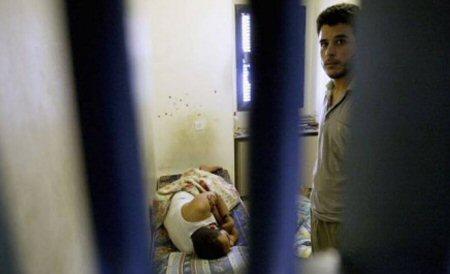
GAZA – Israel has arrested 500 Palestinians, including women, children and MPs, over their social media posts, the Palestine Center for Prisoners Studies reported.
The center’s spokesman Riyadh Al-Ashqar said that the Israeli authorities began arresting Palestinians for their social media posts since the start of the Jerusalem Intifada claiming such uploads incite terror against Israel.
Israel is using its recently formed “Cyber Unit” to monitor Palestinian social media posts, he said.
This unit, Al-Ashqar said, classifies any Facebook post that glorifies Palestinian martyrs, discloses Israeli crimes, and supports resistance as “incitement of terror”.
Hundreds of Palestinians have been sentenced over the past three years to different jail terms on the ground of incitement on social media, he charged.
Some others were placed under house arrest and denied from using social media platforms, he continued.
Al-Ashqar strongly condemned such arrests that “clearly violate the Universal Declaration of Human Rights and the European Convention of Human Rights.”
He concluded by calling on the international community to protect the Palestinian people’s right of freedom of expression.
Smear and Shekels
By Gilad Atzmon | October 4, 2018
Haaretz reveals today that Canary Mission a Hasbara defamation outlet that was established to “spread fear among undergraduate activists, posting more than a thousand political dossiers on student supporters of Palestinian rights,” is funded by one of the largest Jewish charities in the U.S.
According to Haaretz ; the Forward, an American Jewish outlet, “has definitively identified a major donor to Canary Mission. It is a foundation controlled by the Jewish Community Federation of San Francisco, a major Jewish charity with an annual budget of over $100 million.” We could have guessed the funding was from such an organisation. We somehow knew that it wasn’t the Iranian government or Hamas who sent shekels to the Zionist smear factory. Haaretz continues, “for three years, a website called Canary Mission has spread fear among undergraduate activists, posting more than a thousand political dossiers on student supporters of Palestinian rights. The dossiers are meant to harm students’ job prospects, and have been used in interrogations by Israeli security officials.”
Canary Mission is indeed a nasty operation and far from unique. We have seen similar efforts within the Jewish institutional universe for some time. It might be reasonable to opine that smear has become a new Jewish industry. Consistent with the rules of economics, many new Jewish bodies have entered the profitable business, and these outlets have competed mercilessly with each other for donations and funds.
This is precisely a variation on the battle we have seen in Britain in the last few years. Almost every British Jewish institution joined the ‘Corbyn defamation’ contest, competing over who could toss the most dirt on the Labour party and its leader. The outcome was magnificent. Last week at Labour’s annual conference, the party unanimously expressed its firm opposition to Israel and took the Palestinian’s side.
Badmouthing is not really a ‘Zionist symptom.’ Unfortunately, it is a Jewish political obsession. In between its fund raisers, it seems that Jewish Voice for Peace (JVP) invests a lot of energy in smearing some of the more dedicated truth tellers. Mondoweiss, another Jewish outlet, practices this game as well.
I, myself, have been subjected to hundreds of such smear campaigns by so called ‘anti’ Zionist Jews who were desperate to stop the circulation of my work on Jewish ID politics. But these frantic efforts only served to support my thesis that the issues to do with Israel and Palestine extend far beyond the Zionist/anti debate. We had better dig into the meaning of Jewishness and its contemporary political implications.
Once again the question is, why do self-identified Jewish activists use these ugly tactics? Why do they insist upon smearing and terrorising instead of engaging in a proper scholarly and/or political debate?
Choseness is one possible answer. People who are convinced of their own exceptional nature often lack an understanding of the ‘other.’ This deficiency may well interfere with the ability to evolve a code of universal ethics.
The other answer may have something to do with the battle for funds. As we learned from Haaretz, the Canary Mission is funded by one of the richest Jewish American funds. Badmouthing has value. ‘You defame, we send money.’ Unfortunately this holds for Zionists and ‘anti’ alike.
Crucially, in this battle, Jews often oppose each other. Haaretz writes that the Canary Mission “has been controversial since it appeared in mid-2015, drawing comparisons to a McCarthyite blacklist.” And it seems that some Zionist Jews eventually gathered that the Canary smear factory gives Jews a bad name.
Tilly Shames, who runs the campus Hillel at the University of Michigan, Ann Arbor, told the Forward that “the tactics of the organisation are troubling, both from a moral standpoint, but have also proven to be ineffective and counterproductive,”
Shames said that Canary Mission’s publication of dossiers on students on her campus had led to greater support for the targeted students and their beliefs, and had spread mistrust of pro-Israel students, who were suspected of spying for Canary Mission.
This dynamic can be explained. My study of Jewish controlled opposition postulates that self-identified Jewish activists always attempt to dominate both poles of any debate that is relevant to Jewish interests. Once it was accepted that Palestine was becoming a ‘Jewish problem,’ a number of Jewish bodies became increasingly involved in steering the Palestinian solidarity movement. We then saw that they diluted the call for the Palestinian Right of Return and replaced it with watery notions that, de facto, legitimise Israel.
When it was evident that the Neocon school was, in practice, a Ziocon war machine, we saw bodies on the Jewish Left steer the anti-war call. When some British Jews realised that the Jewish campaign against Corbyn might backfire, they were astonishingly quick to form Jews for Jeremy that rapidly evolved into Jewish Voice for Labour (JVL). The battle over the next British PM became an internal Jewish debate. The rule is simple: every public dispute that is somehow relevant to Jewish interests will quickly become an exclusive internal Jewish debate.
Hillel activists see that Canary Mission is starting to backfire. Together with Forward and Haaretz, they have quickly positioned themselves at the forefront of the opposition.
France Raids Anti-Zionist Islamic Center in North
Al-Manar | October 2, 2018
A so-called “counter-terror” operation, involving around 200 policemen, is underway on Tuesday in France, with the police forces raiding the headquarters of Islamic organization Centre Zahra France in the country’s north, France Info radio station reported, citing the prefecture of the department.
Centre Zahra France is a Shiite organization, known for its anti-Zionist rhetoric, namely, in social media.
Eleven people were detained in the raid in the commune of Grande-Synthe, a suburb of the port city of Dunkirk, local media reported on Tuesday.
“This morning, starting from 6 a.m. [local time, 04:00 GMT], the national police has been carrying out an operation in the Grande-Synthe commune, Nord department. The operation is being conducted within counter-terrorism efforts… Centre Zahra France’s activity has been followed up closely due to the fact that its leaders grant support to a number of terror organizations,” France Info radio station reported, citing the Nord prefecture’s statement.
The police have also raided 12 homes of the Centre Zahra France’s major leaders.
New Israel report exposes role of NGO Monitor in defaming rights activists
MEMO | October 1, 2018
A new Israeli report has accused right-wing pressure group NGO Monitor of “spearheading the shrinking of space for Israeli and Palestinian human rights NGOs”.
The “Shrinking Space” report – “NGO Monitor: Defaming human rights organisations that criticize the Israeli occupation” – is the work of a collective of Israeli ex-diplomats, academics and others, known as the Policy Working Group (PWG), that supports a two-state solution.
NGO Monitor was established in 2002 under the auspices of right-wing think tank the Jerusalem Centre for Public Affairs, and has been independent since 2007.
Its declared goal of promoting “transparency and accountability of NGOs claiming human rights agendas” is described by the PWG report as “disingenuous”.
“In fact,” the report claims, “years of experience show that NGO Monitor’s overarching objective is to defend and sustain government policies that help uphold Israel’s occupation of, and control over, the Palestinian territories.”
The new, in-depth report “concludes and argues that NGO Monitor is a government-affiliated organisation that selectively targets human rights organisations, relies almost entirely on funding from donors in the US, shirks the transparency it demands of others and disseminates misleading and tendentious information, which it presents as factual in-depth research.”
“As an organisation whose purpose is to scrutinise others, NGO Monitor itself has so far received little scrutiny of its own. After years of evasion, it is time to monitor NGO Monitor,” PWG adds.
Among the areas of critique found in the PWG report, NGO Monitor is accused of a selective focus, a right-wing political agenda, and of “close ties with the [Israeli] government”.
NGO Monitor plays a key role in providing Israeli ministries and diplomatic missions with misleading information to defame Israeli and Palestinian human rights organisations
PWG states, “and mobilises the government to pressure European counterparts to stop funding them”.
“In Israel,” meanwhile, “it acts as a catalyst for anti-democratic legislation that selectively targets such NGOs.”
The PWG report also accuses of NGO Monitor of publishing articles and reports containing “baseless claims and factual inaccuracies”, while also “fram[ing] the occupation of the Palestinian territories as an internal Israeli affair in which other countries must not interfere”.
Featured Video
Dan Dicks with James Corbett on Solutions Watch
or go to
Aletho News Archives – Video-Images
From the Archives
$1.5bn up in smoke: US THAAD missile stockpile dries up defending Israel against Iran
By Ivan Kesic | Press TV | July 2, 2025
According to American media, defense news outlets, and independent analysts, the 12-day Israeli military aggression against Iran significantly depleted the US stockpile of THAAD (Terminal High Altitude Area Defense) interceptor missiles.
Citing official sources, American magazine Newsweek reported on Friday that the US transferred a substantial portion of its advanced missile defense capabilities to support the Israeli regime, an effort with questionable results and a critical impact on US strategic reserves.
THAAD, developed by Lockheed Martin arms manufacturing company, is a key component of Israel’s multi-layered air defense architecture. It is designed to intercept medium-range ballistic missiles, including those launched from Iran and Yemen.
The US-made system is capable of targeting short-, medium-, and intermediate-range ballistic missiles during their terminal phase, whether inside or outside Earth’s atmosphere.
THAAD uses a “hit-to-kill” method, relying on kinetic energy rather than explosive warheads to destroy incoming threats, intercepting at altitudes of up to 150 km and ranges between 150-200 km.
Operated exclusively by American personnel, the US military maintains eight THAAD batteries with an estimated 350–400 interceptors in total. The eighth battery was activated during the June 20 Israeli aggression against Iran and is capable of intercepting hypersonic missiles. … continue
Blog Roll
 Aletho News
- Zionist Bought Senate Blocks Information About American Citizens Killed By Israel
- While Gaza dominates the UN, these are the people keeping it alive
- New Report: “Scholasticide and Genocide in Gaza: Assessment, Testimonies and Legal Analysis”
- ‘THAAD Delusion’: Iran war exposes US missile shield limits – The Atlantic
- Moscow issues warning to NATO over Russian exclave
- Yes, the Iran war has destroyed Trump’s presidency
- The fallacy of US delusions about Iran’s economic collapse
- Hezbollah denies Syria cell link, warns of Israeli plan to sow discord
- The legacy of US sanctions, war, and occupation in Iraq
- Iraqi resistance group rejects disarmament, vows to maintain support for Lebanon
- If Americans Knew
- Mamdani releases plan to combat antisemitism and hate crimes in New York City
- Iran’s Revolutionary Guards Publish Letter to the American People
- DMFI launches $1 million ad campaign supporting Virginia’s Elaine Luria
- US Senate blocks resolution seeking report on Americans killed by Israel
- Israeli Attacks Kill Ten Palestinians in Gaza
- Massacre at Minab: The School That Became a Grave
- Israeli media: The IDF Shows It Doesn’t Turn a Blind Eye; It Actively Emboldens Settler Havoc
- As settlers ravage West Bank, Israeli forces kill 10 in Gaza – Daily Update
- New Report: “Scholasticide and Genocide in Gaza: Assessment, Testimonies and Legal Analysis”
- Ex-Biden officials are desperate for a Gaza scapegoat
- No Tricks Zone
- Green Energy Debacle: German Expert Professor Fritz Vahrenholt Warns Of Severe Economic And Social Consequences
- Two More Paleo Reconstructions Affirm Meters-Higher Sea Levels Across Ireland, Brazil 7000-6000 Years Ago
- New Study: Earth And Venus Surface Warmth Largely Explained By Convection And Lapse Rate, Not CO2 Or Radiation
- 2025 Nature Paper Claiming Worsening Global Drought Gets RETRACTED …Heavily Flawed
- New Study: ‘Global Drought Shows No Detectable Recent Acceleration Under Climate Warming’
- Economic Masterminds: German Socialists Suggest Taxing Productivity Gains Stemming From Using AI
- The South China Sea Has Not Been Cooperating With The Climate Change Narrative
- Energy Crisis: Germany Enters Heating Season With Historically Low Gas Reserve Fill Levels
- New Study: The Antarctic Ice Sheet Gained Mass From 2020-2024 Due To Staggering Snow And Ice Accumulation
- Study: Ocean Heating Rates From Thousands Of Years Ago ‘Dwarf’ Modern Ocean Heating Rates

