European Commission to Issue Plan on Tackling Foreign Fake News
Sputnik – January 18, 2108
The European Commission is preparing a strategy to counter fake news, which will be published this spring, European Commissioner for the Security Union Julian King said during a debate at the EU Parliament on Wednesday.
“There’s been a focus on a wider phenomenon of fake news. It’s one of the European Commission’s priorities for the coming year… In November last year, we established a high-level expert group which has now started its work to advise the commission on scooping the phenomenon … and presenting recommendations. It will contribute to the preparation of a strategy addressing the challenge of fake news, which we’ll issue in spring this year,” King said at the European Parliament’s debates entitled “Russia — the influence of propaganda on EU countries.”
According to King, there was little doubt that a pro-Kremlin disinformation campaign was an orchestrated strategy aimed at spreading disinformation in various languages and through various channels.
“Russian disinformation can be extremely successful. So that’s why we need to redouble efforts to debunk this propaganda,” King stressed. Western politicians have repeatedly accused the Kremlin of orchestrating disinformation and propaganda campaigns and spoken about threats allegedly posed by Russian media, specifically emphasizing the role of Sputnik news agency and RT broadcaster. Moscow has repeatedly dismissed such allegations.
However, current EU polices on countering fake news and propaganda are focused on Russian media exclusively, with some other outlets like Fox News and Al Jazeera not being under the radar, the European Parliament member from the Group of the Progressive Alliance of Socialists and Democrats, Tanja Fajon, said on Wednesday.
“I agree that monitoring the impact of the media on the politics in society is necessary … but I have a few critical remarks. Firstly, why are we dealing only with Russian propaganda, how do we view the news on the American Fox News, do we have a problem with the stakes of the US media corporations in EU media outlets whose views are reported by Al Jazeera? And if we remain in Europe, how do we feel about the national media owned by a political party members and related persons, in Slovenia we have such a media outlet,” Fajon said during a debate at the EU Parliament dubbed “Russia — the influence of propaganda on EU countries.”
She added that RT broadcaster and Sputnik news agency perhaps should be seen as an attempt of Russia to find its place in the media world, which had long been dominated by the West.Meanwhile, several other lawmakers also pointed at the hypocrisy of the European Parliament. Joerg Meuthen from the Alternative for Germany (AfD) party noted that the term “fake news” was often used to discredit unwanted facts and opinions.
“Today’s debate about alleged election influence by Russian fake news is for the established European parties like Easter and Christmas at once … This is pure hypocrisy, since this Parliament will lead an election campaign in pure self-interest in the 2019 European elections. The self-supporting slogans of EU officials and campaigners will produce their own truths, which will be propaganda of the best calibre. Anyone who acts like that has no right to complain about alleged election interferences by Russia. You are sitting in a glasshouse here in Strasburg, you should therefore not throw stones,” Meuthen warned.
Leader of the UK Independence Party (UKIP) in Scotland, David Coburn, stressed that it was the European Union that spent millions in propaganda to prevent Brexit, and that was destroying impartiality or credibility of this debate about alleged Russian influence.
“The EU is still doing it by setting up the Orwellian machine to push the EU project and subvert national democracies, in its own words, ‘challenging Euroscepticism.’ It is pure Soviet ‘Pravda’ [newspaper]. I am more concerned with EU propaganda than with their clunky Russian version,” he said. Moreover, Coburn recalled that RT broadcaster gave the UKIP an opportunity to voice its position when they could not get on the BBC.
Western politicians have repeatedly accused the Kremlin of orchestrating disinformation and propaganda campaigns and spoke about threats allegedly posed by Russian media. Moscow has repeatedly dismissed all such allegations.In November 2016, the European Parliament adopted a Polish-initiated resolution which declared that Russia was waging an “information war” against the European Union and claimed the need to “fight” Russian “disinformation.” Commenting on that decision, Russian President Vladimir Putin stated that the adoption of the resolution demonstrated the degradation of the perception of democracy in the European society and expressed hope that the common sense would prevail.
Since then, the European External Action Service East Stratcom Task Force, set up in 2015, has secured over $1 million in funding and published multiple articles “debunking” alleged cases of “disinformation” by Russian outlets. A lot of these cases appeared to “debunk” news pieces reporting about opinionated remarks by Russian officials and overblown tabloid headlines.
Statin Drugs – The Real Reason Official Guidelines Still Demonize Fats Despite the Evidence?
By Gabriela Segura, M.D. | Sott.net | January 15, 2018
Nina Teicholz, investigative journalist and author of the International bestseller The Big Fat Surprise, wrote an article for the BMJ (formerly the British Medical Journal) in September 2015, which makes the case for the inadequacy of the scientific advice that underpins the Dietary Guidelines (Teicholz, 2015). The title of the article was “The scientific report guiding the U.S. dietary guidelines: is it scientific?” Ian Leslie writing for The Guardian reports that the response of the nutrition establishment was ferocious: 173 scientists – some of whom were on the advisory panel, and many of whose work had been critiqued in Teicholz’s book – signed a letter to the BMJ, demanding it retract the piece (Leslie, 2016). Prominent cardiovascular and nutrition scientists from 19 countries called for the retraction. However, to this day, the article remains published. The BMJ has officially announced that it will not retract the peer-reviewed investigation after stating that two independent experts conducted formal post-publication reviews of the article and found no grounds for retraction (Sboros, 2016).
Yet, behind every mainstream medical practice, strict questionable guidelines are still followed faithfully every day. Doctors are still following cholesterol targets that are often unattainable without cholesterol lowering drugs, but many do try to achieve their targets with extremely low fat diets recommended irresponsibly in dietary guidelines.
Unfortunately the rest of the world has followed suit on these dietary changes. Traditional high fat foods have been given up for the low fat scam. Promoters of the highly touted Mediterranean diet, with its olive oil and ‘low animal fat’, fail to mention the fact that there are still fat loaded recipes that were passed from generation to generation among the Mediterranean people. Lardo di Colonnata with its cured strips of fatback and herbs and spices; Greek barbecue which often involves an entire lamb roasted on a spit; or the kokoretsi which is made from the internal organs of the lamb – liver, spleen, heart, glands – threaded onto skewers along with the fatty membrane from the lamb intestines, all of these are foods of the long-lived Mediterranean people. Yet the ‘American style Mediterranean Diet’ selectively picks foods from the diet of the Mediterranean people to give the picture they desire. Ironically, many of the Mediterranean people have adopted this Americanized version of the ‘Mediterranean Diet’.
The truth is that cholesterol is a substance our bodies make naturally, and it’s absolutely essential to our health. Cholesterol is so crucial that the body produces some 1000-1400 milligrams of it each day, mainly in the liver. Cholesterol is also synthesized to a smaller extent in the adrenal glands, intestines, reproductive organs, etc.
We are told by the “Official Thought-Control Institutions” to limit consumption to less than 300 milligrams of cholesterol per day, but our liver’s production of cholesterol is controlled by a feedback mechanism based on how much we eat. If we eat a lot of cholesterol, we produce less, leaving much needed liver energy for other important tasks. If we eat little cholesterol, replacing it with carbohydrates and vegetable oils, then the body will produce the cholesterol from these dietary raw materials. However, a high-carb and vegetable oil diet yields a very bad cholesterol profile even when the cholesterol is in normal range. If we hardly eat any cholesterol and we block its production with lowering cholesterol drugs, then we are limiting the supply of something the body desperately needs for its proper function. Yet statins, cholesterol-lowering drugs, are among the most profitable drugs in the history of the world.
Restricting or eliminating cholesterol in the diet overburdens the liver, which now has to overproduce it through its enzyme HMG-CoA reductase from food in our diet. This enzyme is the one that is blocked by statin drugs for the purpose of lowering the amount of cholesterol the body produces. But, as with all pharmaceuticals, it comes with a price. HMG-CoA reductase is also the enzyme needed for the creation of coenzyme Q10 (CoQ10), which is a key nutrient for energy production in our cells. CoQ10 is also a major antioxidant. People complain of muscle cramps or aches while on statins drugs. Keep in mind that your heart is a muscle as well. Coincidence or not, the incidence of congestive heart failure has spiked during the time statins have been a top selling drug. Even when statin drugs are not at fault for the increased prevalence of congestive heart failure during the last decades, we don’t necessarily want to decrease CoQ10 levels in a failing heart.
Coenzyme Q10 – also called ubiquinone, which means ‘occurring everywhere’ – plays an important role in the manufacture of ATP, the fuel of our cells. It is present in every cell of our bodies, especially in the very active cells of our hearts. Depriving the heart of CoQ10 is like removing the spark plug from an engine. It just won’t work. Low levels of CoQ10 are involved in practically all cardiovascular diseases including angina, hypertension, cardiomyopathy and congestive heart failure (Sarter, 2002). It is ironic that statins, for “heart health”, block coenzyme Q10.
Statins’ many potential side effects include depression, confusion, memory problems and inability to concentrate. It hinders our body’s ability to fight microbes, increases liver damage, increases risk of cancer, fatigue, impotence, kidney failure, rhabdomyolysis (destruction of muscle cells) and shortness of breath among other things (for a database on statin adverse effects, see here). Cholesterol levels that are below 150 mg/dL may increase the risk for cancer, hormonal imbalances, depression, sexual dysfunction, memory loss, Parkinson’s disease, type 2 diabetes, stroke, suicide, and violent behavior.
As scientists are beginning to understand the intricacies of cholesterol’s role in the function of our trillions of cell membranes, including the details of nutrient transport across membranes, they are starting to realize what a bad idea this whole statin business is. Well, some of them are, anyway. According to some researchers:
Current guidelines encourage ambitious long term cholesterol lowering with statins, in order to decrease cardiovascular disease events. However, by regulating the biosynthesis of cholesterol we potentially change the form and function of every cell membrane from the head to the toe. As research into cell morphology and membrane function realises more dependencies upon cholesterol rich lipid membranes, our clinical understanding of long term inhibition of cholesterol biosynthesis is also changing.” (Wainwright, Mascitelli, & Goldstein, 2009, p. 289)
We make highly unstable and dysfunctional cell membranes when we restrict organic animal fats. This harmful effect has far reaching consequences. And doctors, unfortunately, don’t seem to be receiving this information.
The past decade of research has shown the importance of cholesterol-rich membranes and their fundamental implications for our brain and nervous tissue, immune system and all areas where lipoproteins are created, secreted, delivered and utilized. Cholesterol is so vital to the formation and correct operation of the brain that neurons require additional cholesterol to be secreted by brain cells. No wonder some people lose their memories with statin therapy!
Statin drugs also impair the secretion of new myelin, the fatty coating that covers the nerve cells and facilitates their firing. The connection between cholesterol and its fundamental role in the immune system and in the cell membrane should also be kept in mind when it comes to autoimmune diseases.
Modern guidelines say that it is desirable to have a level of total cholesterol of less than 200 mg/dL. When I was in medical school, which was not that long ago, the upper limit was 240 mg/dL. Once upon a time, it used to be 280 mg/dl. Apparently, in 1970, the rule-of-thumb for a healthy serum cholesterol was in the 200 plus range. Now most doctors try to keep cholesterol below 200, which most people find very difficult (if not impossible) to achieve through diet and lifestyle changes alone. Since then, statin drugs like Lipitor became one of the all-time top-selling drugs in history (Angell, 2005).
The European guidelines on cardiovascular disease prevention in clinical practice (Piepoli et al., 2016) recommends that very high-risk patients lower their LDL cholesterol to less than 70mg/dL (<1.8 mmol/L) or “a reduction of at least 50% if the baseline is between 70 and 135 mg/dL (1.8 and 3.5 mmol/L).” (Ibid., p. 2331) Conveniently, pharmaceutical companies have the drug just for such a drastic reduction. For example Orvatez by Merck which combines ezetimibe (blocks the absorption of cholesterol) and atorvastatin (a statin drug) can bring LDL cholesterol down to 50 mg/dL. Merck highlights in a chart made for doctors that if a patient has a baseline LDL cholesterol of 70 mg/dL, target LDL should be of 35 mg/dL! And I’m not the only one who sees a problem with this. As the Mayo Clinic shyly puts it:
“There is no consensus on how to define very low LDL cholesterol, but LDL would be considered very low if it is less than 40 milligrams per deciliter of blood… very low levels of LDL cholesterol may be associated with an increased risk of cancer, hemorrhagic stroke, depression, anxiety, preterm birth and low birth weight if your cholesterol is low while you’re pregnant.” (Lopez-Jimenez, 2015, para. 2-3)
The above-mentioned European guidelines include a disclaimer where we read the following:
“[the] Guidelines do not override, in any way whatsoever, the individual responsibility of health professionals to make appropriate and accurate decisions in consideration of each patient’s health condition and in consultation with that patient and, where appropriate and/or necessary, the patient’s caregiver. Nor do the ESC Guidelines exempt health professionals from taking into full and careful consideration the relevant official updated recommendations or guidelines issued by the competent public health authorities, in order to manage each patient’s case in light of the scientifically accepted data pursuant to their respective ethical and professional obligations. It is also the health professional’s responsibility to verify the applicable rules and regulations relating to drugs and medical devices at the time of prescription.” (Piepoli et al., 2016, p. 2315)
Since I have first hand experience of the way research is done in Europe, most specifically Italy, I decided to have a look at the disclosure forms of the experts involved in the development of these guidelines. As it happens, there is no direct hyperlink to the disclosure from the electronic version. I found it hyperlinked in a smaller font as the last section of the menu on a separate page at their escardio.org website. After a while you get good at digging for these details that very few are trained to look for and/or are interested in. The declaration of interest is a PDF file of 35 pages and it specifies that “the report below lists declarations of interest as reported to the ESC by the experts covering the period of the Guidelines production, from Task Force creation to publication.” (Available at https://www.escardio.org/static_file/Escardio/Guidelines/DOI_CVDPrevention.pdf)
That is, the declaration of interest only covers 2014 and 2015, and it is not given by a third party. Most of the authors have so many links to Big Pharma that their declaration of interest can take an entire page. The reader can have fun searching for Big Pharma sponsoring for the years not covered for both the sponsored and the few authors who had nothing to declare in 2014 and 2015. I challenge anyone to find at least one author who chose to attend only conferences that were not financed by Big Pharma as a general rule for his entire career.
As Marcia Angell, Senior Lecturer in Social Medicine at Harvard Medical School and former Editor of the New England Journal of Medicine states:
If drug companies and medical educators were really providing education, doctors and academic institutions would pay them for their services. When you take piano lessons, you pay the teacher, not the other way around. But in this case, industry pays the academic institutions and faculty, and even the doctors who take the courses. The companies are simply buying access to medical school faculty and to doctors in training and practice.
This is marketing masquerading as education. It is self-evidently absurd to look to companies for critical, unbiased education about products they sell. It’s like asking a brewery to teach you about alcoholism, or a Honda dealer for a recommendation about what car to buy. Doctors recognize this in other parts of their lives, but they’ve convinced themselves that drug companies are different. That industry-sponsored education is a masquerade is underscored by the fact that some of the biggest Madison Avenue ad agencies, hired by drug companies to promote their products, also own their own medical-education companies. It’s one-stop shopping for the industry.[…]
It’s easy to fault drug companies for much of what I’ve described, and they certainly deserve a great deal of blame. Most of the big drug companies have paid huge fines to settle charges of illegal activities. Last year Pfizer pleaded guilty and agreed to pay $2.3 billion to settle criminal and civil charges of marketing drugs for off-label uses-the largest criminal fine in history. The fines, while enormous, are still dwarfed by the profits generated by these activities, and are therefore not much of a deterrent. Still, apologists might argue that, despite its legal transgressions, the pharmaceutical industry is merely trying to do its primary job-furthering the interests of its investors-and sometimes it simply goes a little too far.
Doctors, medical schools, and professional organizations have no such excuse; the medical profession’s only fiduciary responsibility is to patients and the public. (emphasis added) (Angell, 2010, para. 35-36, 39-40)
If only health care professionals at large would take a stand against the massive conflict of interests from pharmaceutical and food industries and their role in the corruption of the medical science, it wouldn’t have come to the point where there are guidelines advising the reduction of cholesterol to levels never seen before in medical records. Another line of research would have been followed where dietary and environmental factors and their role in inflammation and our health would play a greater role. Hopefully we will wake up soon, otherwise we risk a guideline recommending zero levels of LDL cholesterol. It sounds absurd, but then, I thought that an LDL target 35 mg/dL would shock conventional practitioners to realize the absurdity of these recommendations, and that doesn’t seem to have happened.
Statin drugs are among the most profitable drugs in the history of the world. Those profits buy a lot of propaganda: lobbyists, advertising and marketing to doctors, and free continuing medical education. Think of what even a small percentage of their massive profits could do for prevention if it were invested in public education towards a truly health promoting diet. Think of all the diseases that would essentially disappear from the face of the planet. But expecting a corporation to willingly cut off its main source of profit is a pipe dream. Even if they knew the truth about diet, it would be kept as the most tightly guarded secret in history.
It’s really not in the drug-maker’s’ best interest to have people making healthy dietary choices. So instead of promoting prevention strategies, cholesterol drugs continue to post record-breaking profits and create poor health and side effects in the people taking them. Those people in poor health can then be treated with more drugs. How many people do you know on multiple medications for various ailments? Whether the cause if malfeasance or ignorance is largely irrelevant because the result is the same.
It is only your own awareness that can turn things around. The public is gradually awakening to the fact that statins are virtually useless for the vast majority of people who take them, and yet they carry significant risks.
A group of eminent doctors including the President of the Royal College of Physicians, Sir Richard Thompson, argue in a declaration letter that a doctor making a case for these drugs can quite easily look ill-informed, biased or just plain stupid in the eyes of their patients. According to one of the letter’s signatories, Dr David Newman, Assistant Professor of Emergency Medicine and Director of clinical research at Mount Sinai School of Medicine:
I am always embarrassed when I have to tell patients that our treatment guidelines were written by a panel filled with people who stood to gain financially from their decisions. The UK certainly appears to be no different to that of the United States. The truth is, for most people at low risk of cardiovascular disease, a statin will give them diabetes as often as it will prevent a non fatal heart attack – and they won’t live any longer taking the pill. That’s not what patients are looking for. (Briffa, 2014, para. 20)
The letter was addressed to the chair of NICE, the National Institute for Health and Care Excellence in the United Kingdom. In the letter, the proposition to reduce the threshold for prescribing statins to those with a 10% risk of cardiovascular disease is rejected by addressing six major concerns (letter available at www.nice.org.uk/Media/Default/News/NICE-statin-letter.pdf):
- The medicalization of millions of healthy individuals
- Conflicting levels of adverse events
- Hidden data
- Industry bias
- Loss of professional confidence
- Conflicts of interest
So again we see guidelines being written to favor the industry and the over-medicalization of millions of people.
Ironically, the very same experts for some of these guidelines disagree, calling for expert groups such as the Adult Treatment Panel (ATP) IV to “abandon the paradigm of treating patients to LDL targets” (Hayward & Krumholz, 2012).
Blinded by the numbers, doctors will see LDL levels at 70 and say their patients are doing well. They could fail to see what might actually be in front of their eyes – an ill-looking and nutritionally deficient person. Cracking skin, plunging libido, muscle wasting, memory problems, blood sugar imbalances, premature aging – but hey, cholesterol numbers are right on the money! It is astounding to see how we as doctors do so little critical thinking, focusing only on arbitrary guidelines dictated by the same companies selling the drugs that are the only things that make the numbers possible. Talk about a collective blind spot facilitated by decades of programmed schooling. Even when a patient points out, ‘but I eat no fats and no salt and I’m getting worse!’, we might fail to connect the dots.
As if this weren’t enough, here’s another bit of irony. In one study, the use of statin drugs was associated with microalbuminuria (Van Der Tol et al., 2012). Microalbuminuria is a marker of poor endothelial function and it’s endothelial function which determines cardiovascular disease risk. Microalbuminuria is also a marker of kidney problems.
Similarly, in a study of nearly 26,000 beneficiaries of Tricare – the military health system in the United States – those taking statin drugs to control their cholesterol were 87 percent more likely to develop diabetes. The research confirmed past findings on the link between statins and diabetes risk, but it is among the first to show the connection in a relatively healthy group of people. The study included only people who at baseline were free of heart disease, diabetes, and other severe chronic disease (Veterans Affairs Research Communications, 2015).
In this same study, statin use was also associated with a very high risk of diabetes complications. Among 3351 pairs of similar patients–part of the overall study group–those patients on statins were 250 percent more likely than their non-statin-using counterparts to develop diabetes with complications (Mansi, Frei, Wang, & Mortensen, 2015). Statin users were also 14 percent more likely to become overweight or obese after being on the drugs. The study also found that the higher the dose of any of the statins, the greater the risk of diabetes, diabetes complications, and obesity. Ironically, it is those who have had a cardiovascular disease event who are prescribed higher doses of statin drugs.
Moreover, more frequent statin drug use is associated with accelerated coronary artery and aortic artery calcification, both of which greatly contribute to cardiovascular and all-cause mortality (Saremi, Bahn, & Reaven, 2012). An evaluation of thousands of individuals with no known cardiovascular disease and undergoing a coronary CT angiography which visualizes atherosclerosis, concluded that statin use is associated with an increased prevalence and extent of coronary plaques possessing calcium (Nakazato et al., 2012). So doctors might be prescribing a medicine that contributes to onset of the very thing they are trying to prevent.
In the meantime, people are getting increasingly high levels of calcified hearts. During heart surgery, the surgical instrument known as the ‘bone eater’ ends up being used to replace valves that should have remained silky and smooth. I know what I speak after witnessing and conducting thousands of open heart surgeries in three different countries.
Two top vascular surgeons have summarized statins in a damning report called “The Ugly Side of Statins. Systemic Appraisal of the Contemporary Un-Known Unknowns“. In the report they state: “The statin industry is the utmost medical tragedy of all times,” and that “statins are associated with triple the risk of coronary artery and aortic calcification.” (Sultan & Hynes, 2013, p. 180, 183)
The picture isn’t pretty. The decades of massive anti-fat propaganda has brainwashed all of us without exception. Upon being questioned about their dietary habits, a patient might guiltily recall all the fats they ate and think that those are to blame for their health woes. Never mind that they eat mostly carbs, or that most of the fats they do eat are of the processed, plastic and vegetable oil variety. On doctors orders, they remove the animal fat from their diets, thereby increasing the carbs and vegetable oils, the very two steps that will deteriorate their health. When and if cholesterol targets are not reached by these measures, then the doctor has ‘no choice’ but to put them on a statin drug.
There is, however, a small percentage of people out there who genuinely have a true genetic predisposition to high blood cholesterol called familial hypercholesterolemia, which is a condition which is characterized by an impaired or even lack of ability to metabolize cholesterol. This condition can have serious health consequences and sufferers may need medical interventions to bring their cholesterol levels down. But that doesn’t mean this can be extrapolated to all people who don’t have this genetic problem.
Medical research has not proven that lowering (or low) cholesterol in and of itself reduces risk of death from heart disease across a population (Siri-Tarino, Sun, Hu, & Krauss, 2010; Chowdhury et al., 2014). Men with very low cholesterol levels seem prone to premature death. Below 160 milligrams per deciliter (mg/dl), the lower the cholesterol level, the shorter the lifespan. These men die of cancer, respiratory and digestive diseases, and trauma (Smith, 1997). As for women, if anything, the higher their cholesterol, the longer they seem to live (Teicholz, 2014).
Despite these facts, it is estimated that by 2020, revenues from statin drug sales will reach 1 trillion dollars. Never mind that most people taking these drugs are not at risk for heart disease.
References
Angell, M. (2005). The truth about the drug companies: How they deceive us and what to do about it. New York: Random House Trade Paperbacks.
Angell, M. (2010, May 1). Big Pharma, Bad Medicine. Retrieved from http://bostonreview.net/angell-big-pharma-bad-medicine
Briffa, J. (2014, June 18). Prominent doctors declare their opposition to the planned expansion of statin prescribing. Retrieved from http://www.drbriffa.com/2014/06/18/prominent-doctors-declare-their-opposition-to-the-planned-expansion-of-statin-prescribing/
Chowdhury, R., Warnakula, S., Kunutsor, S., Crowe, F., Ward, H. A., Johnson, L., . . . Angelantonio, E. D. (2014). Association of dietary, circulating, and supplement fatty acids with coronary risk. Annals of Internal Medicine, 160(6), 398-406. doi:10.7326/m13-1788
Hayward, R. A., & Krumholz, H. M. (2012). Three reasons to abandon low-density lipoprotein targets: An open letter to the adult treatment panel IV of the National Institutes of Health. Circulation: Cardiovascular Quality and Outcomes, 5(1), 2-5. doi:10.1161/circoutcomes.111.964676
Leslie, I. (2016, April 07). The sugar conspiracy | Ian Leslie. Retrieved from https://www.theguardian.com/society/2016/apr/07/the-sugar-conspiracy-robert-lustig-john-yudkin
Lopez-Jimenez, F. (2015, October 30). Cholesterol level: Can it be too low? Retrieved from http://www.mayoclinic.org/diseases-conditions/high-blood-cholesterol/expert-answers/cholesterol-level/faq-20057952
Mansi, I., Frei, C. R., Wang, C., & Mortensen, E. M. (2015). Statins and new-onset diabetes mellitus and diabetic complications: A retrospective cohort study of US healthy adults. Journal of General Internal Medicine, 30(11), 1599-1610. doi:10.1007/s11606-015-3335-1
Nakazato, R., Gransar, H., Berman, D. S., Cheng, V. Y., Lin, F. Y., Achenbach, S., . . . Min, J. K. (2012). Statins use and coronary artery plaque composition: Results from the International Multicenter CONFIRM Registry. Atherosclerosis, 225(1), 148-153. doi:10.1016/j.atherosclerosis.2012.08.002
Piepoli, M. F., Hoes, A. W., Agewall, S., Albus, C., Brotons, C., Catapano, A. L., . . . Verschuren, W. M. (2016). 2016 European Guidelines on cardiovascular disease prevention in clinical practice. European Heart Journal, 37(29), 2315-2381. doi:10.1093/eurheartj/ehw106
Saremi, A., Bahn, G., & Reaven, P. D. (2012). Progression of vascular calcification is increased with statin use in the Veterans Affairs Diabetes Trial (VADT). Diabetes Care, 35(11), 2390-2392. doi:10.2337/dc12-0464
Sarter, B. (2002). Coenzyme Q10 and cardiovascular disease: A review. The Journal of Cardiovascular Nursing, 16(4), 9-20. doi:10.1097/00005082-200207000-00003
Sboros, M. (2016, December 10). Victory for Teicholz in battle of butter. Retrieved from http://foodmed.net/2016/12/04/victory-teicholz-battle-of-butter-bmj/
Siri-Tarino, P. W., Sun, Q., Hu, F. B., & Krauss, R. M. (2010). Meta-analysis of prospective cohort studies evaluating the association of saturated fat with cardiovascular disease. American Journal of Clinical Nutrition, 91(3), 535-546. doi:10.3945/ajcn.2009.27725
Sultan, S., & Hynes, N. (2013). The ugly side of statins. Systemic appraisal of the contemporary un-known unknowns. Open Journal of Endocrine and Metabolic Diseases, 03(03), 179-185. doi:10.4236/ojemd.2013.33025
Teicholz, N. (2014). The big fat surprise: Why butter, meat, and cheese belong in a healthy diet. New York: Simon and Schuster.
Van Der Tol, A., Van Biesen, W., Van Laecke, S., Bogaerts, K., De Lombaert, K., Warrinnier, H., & Vanholder, R. (2012). Statin use and the presence of microalbuminuria. Results from the ERICABEL trial: A non-interventional epidemiological cohort study. PLoS ONE, 7(2). doi:10.1371/journal.pone.0031639
Veterans Affairs Research Communications. (2015, May 07). Strong statin-diabetes link seen in large study. Retrieved from https://www.sciencedaily.com/releases/2015/05/150507145328.htm
Wainwright, G., Mascitelli, L., & Goldstein, M. R. (2009). Cholesterol lowering therapies and membrane cholesterol. Stable plaque at the expense of unstable membranes? Archives of Medical Science, (5), 289-295.

Dr. Gaby was born into a mixed Eastern-Western family in Costa Rica and she is a countryside family medicine doctor and former heart surgeon. Her research in the medical field, the true nature of our world and all things related to healing have taken her to Italy, Canada, France and Spain. Gaby is co-host of the ‘Health and Wellness’ show on the SOTT Radio Network and her writings can be found at The Health Matrix.
Kafka 2.0: How Youtube’s Political Censorship is Exercised
Five years of archives of resistance to Zionism and imperialism deleted by Google

By Sayed Hasan | January 13, 2018
“Someone must have been telling tales about Josef K., for one morning, without having done anything wrong, he was arrested.” Thus begins The Trial, Franz Kafka’s 1925 work, in which Joseph K., ordinary bank employee, is arrested at his home by mysterious agents and notified of legal proceedings against him. He is not informed of the offense or crime of which he would allegedly be guilty – he is only given to understand that he must have broken some unknown law – and is notified of a summons to court a certain day, without knowing the exact time or place. The protagonist is dragged into a completely absurd circle, wavering between inspectors, bailiffs, lawyers and judges, and not knowing at any time for what or against whom he must defend himself. He is finally executed by three distinguished executioners who, with “odious politeness”, plant a butcher’s knife in his heart.
The procedure by which Youtube deletes videos and even the entire content of a channel is comparable to this Gothic novel in more ways than one. As I mentioned in a previous article, my channel Sayed Hasan, which, for more than five years, has subtitled in French and English speeches of Sayed Hassan Nasrallah, Secretary General of Hezbollah, as well as Vladimir Putin, Bashar al-Assad and Sayed Ali Khamenei (in addition to interviews with Norman Finkelstein, content about revolutionary Latin America, etc.), was given two strikes by Youtube in less than one month because of two Hassan Nasrallah speeches, on the pretext of a “violation of the rules concerning violent or graphic content on Youtube”. The total suppression of the channel did not take long, since it occurred on December 20th, 2017, after a third and last strike announcing the guillotine, still because of a Hassan Nasrallah speech published in… 2014 – there is no prescription on Youtube, nor half measure. Thus, 400 videos, more than 6 million views and soon 10,000 subscribers have vanished, at the time of the greatest growth in their history. Youtube strives to hide its censorship behind a pseudo-legalistic procedure, but in fact, as we will see, all creators are under the constant threat of its political blade that drastically restricts tolerated contents.
The first strike is dated October 24, 2017, and concerns a February 2015 speech titled “Hassan Nasrallah: ISIS is Israel’s ally and aims Mecca and Medina”. Its complete transcript is available here: http://sayed7asan.blogspot.fr/2018/01/hassan-nasrallah-isis-is-israels-ally.html. As we can see, this speech only denounces the terrorist group ISIS, characterizing it as a danger for Islam, Muslims and all humanity, and recalls its collusion with Israel. It contains absolutely nothing legally reprehensible (call to hatred, murder, etc.). Youtube does not in any way indicate where or how such a video would have violated the “rules regarding violent or graphic content”, probably relying on the acumen of the accused – who finds himself de facto convicted. I have found absolutely nothing wrong with it, even by the strictest standards – unless, of course, any negative mention of Israel is unsustainable for the good souls of the IDF, who are tirelessly and relentlessly striving in this work of cyber-denunciation (their soldiers and mercenaries are more enterprising on the Internet than facing real fighters), and find in Google, Facebook and other giants of the Web a particularly complacent ear. We will come back to this point in more detail.
In good faith, I immediately appealed this decision – shockingly, Youtube does not grant more than 200 characters for this “procedure” (spaces included), but true, it is difficult to be loquacious in the face of an unknown crime – and to date, I have received no response. It is a sort of witchcraft trial, where, in violation of the most elementary principles of law, it is up to the accused to prove his innocence in the face of an unspecified violation, and where the mere fact of being suspected by (or denounced to) the all-powerful “Google” Inquisition entails an automatic conviction, without at any time the grievances being clearly stated, the defense, even muzzled, being heard, a semblance of reasoned judgment being rendered or the pseudo-appeal procedure being taken into account, even formally. “We don’t answer questions like that,” opposes a police officer to Joseph K.’s requests regarding the reason for his indictment. “But in general we don’t proceed with trials we’re not certain to win.”
The second strike came on December 14, and concerns a December 11, 2017 speech entitled “Hassan Nasrallah: We are about to liberate Al-Quds (Jerusalem) and all of Palestine,” which only stayed online half an hour before its suppression. Its transcript is available here: http://sayed7asan.blogspot.fr/2017/12/hassan-nasrallah-we-are-about-to.html. Again, beyond the title of the offense regarding “violent or graphic content”, Youtube has not provided any details to justify its decision. It is true that in this extract, Hassan Nasrallah supports the dismantling of the racist, terrorist and colonialist state of Israel, world champion of human rights abuse and international law violations, and invites Palestinians and all the Resistance Axis to take up arms in defense of Palestine and the holy places of Islam and Christianity (he is joined by the Neturei Karta, an orthodox Jewish group that publicly burns Israeli flags in the heart of Jerusalem, as can be seen on its YouTube channel). And it turns out that the rallying slogan “Death to Israel” is spoken by Hassan Nasrallah and echoed by thousands of protesters participating in an opposition rally to Donald Trump and his decision to recognize Al-Quds (Jerusalem) as the capital of Israel. But beyond the fact that armed resistance to an occupier is perfectly legal according to international law (United Nations Resolution 37/43 of December 3, 1982 reaffirming “the legitimacy of the struggle of peoples for independence, territorial integrity, national unity and liberation from colonial and foreign domination and foreign occupation by all available means, including armed struggle”), the right to information must prevail, because without this, no political speech in a warlike context could be published on Youtube. However, Google does not consider in any way problematic statements much more “violent or graphic” like Donald Trump threatening to “completely destroy” North Korea, the Israeli bragging about bombing Iran and toppling its regime, assassinating Hassan Nasrallah or even General de Gaulle’s June 1940 appeals, or Aimé Césaire’s speeches, which should be banned on Youtube according to a purely literal application of the regulation concerning violent content or call for violence (in these cases, calls to resist against Nazism or colonialism). But obviously, with Kafka, Youtube seems to have also integrated Orwell: “All [contents] are equal but some are more equal than others.” Only videos hostile to imperialism and Zionism are subject to censorship and banishment.
With two strikes in less than a month, the life of my Youtube channel was hanging by a thread: it is true that after 3 months, a warning is removed, but three successive warnings on an account lead to outright removal of the channel and all its content, not just the videos concerned. And it was clear to me that these two unjustified and unprecedented warnings would soon be followed by a third and a complete suppression of my channel. To make a judicial analogy, it is as if a conviction for defamation (which, in any body of law, cannot be held from 3 months to 1 year after the offense, but Google seems to have opted for imprescriptibility) resulted in the removal not only of the passage incriminated (for example, in Zola’s “J’Accuse”, the two incriminated words “by order”, Zola obviously not having the means to prove materially that the second War Wouncil had been forced to acquit Esterhazy by the military hierarchy), but of all the work of the journalist, author – or producer of Youtube content. Without conviction, I conducted the Orwello-Kafkaesque 200-character appeal, protested to Google by email and published an article denouncing this censorship and the announced deletion of my channel. This time, I received a response from Youtube in 12 hours, which showed me, if any doubt still remained, that these procedures are nothing more than a masquerade meant to conceal the totally arbitrariness, or rather political orientation of Google’s censorship: indeed, the answer was in three lines in which Youtube thanked me for having made this appeal procedure, informed me that after a closer examination of the content of my video, they determined that it did not respect the Community rules, and addressed me cordial greetings. Can we conceive of a judgment, let alone an appeal procedure, which dispenses with all argumentation? Google has completely automated the pseudo-legalistic process of deleting content, which is done for the unfortunate victim without any human interlocutor and therefore without any possibility of defense.
As expected, the third warning, which was but a mere formality, came soon: it occurred on December 20, 2017 and concerns a 2009 speech published in 2014 (re-sic) entitled “Hassan Nasrallah: the next war will change the face of the region.” In this excerpt, Hassan Nasrallah considers the hypothesis of an Israeli aggression against Lebanon, and asserts that this threat can be turned into an opportunity if the enemy army is crushed on Lebanese soil, after which even Palestine and Al-Quds (Jerusalem) could be liberated, as was southern Lebanon in 2000. This video does not even include the slogan “Death to Israel”. The formulation of the very hypothesis of the liberation of Palestine after an Israeli aggression (many empires collapsed because of their external military expeditions, as recalled by Hassan Nasrallah) would therefore constitute a taboo. Once again, one would be right to wonder why Netanyahu can for its part freely threaten Gaza, Lebanon, Syria or Iran with invasion/destruction, without Youtube considering they should remove these videos. One understands that when Youtube wants to delete a channel, it will use the meanest pretexts and fatally plant its “butcher’s knife” in the heart of its victim.
It is necessary to specify, to the credit of Youtube, that an appeal procedure also exists against the suppression of a channel, and this time, not 200 but 1000 characters are allowed, about 180 words. It may seem light for a job of several years (maybe the work of a lifetime), completely destroyed in a few clicks by Google, but legalistic to the end, I followed this pseudo-procedure the same day. The response was quick – to the credit of Youtube, let us quote again this particularly expeditious and recurrent judicial time: 12 hours, against several years for the traditional justice system. It seems obvious that the appeal procedures are systematically rejected by a mail-type sent automatically after 12 hours. This answer is worth quoting in its entirety, its brevity lending itself willingly:
Greetings.
Thanks for appealing the suspension of your account. We decided to maintain the suspension, in accordance with the Community Guidelines and our Terms of use. For more information, see http://www.youtube.com/t/community_guidelines.
Best,
Youtube Team
This is the epilogue – and the only epitaph – of a Youtube channel that dared publish anti-Zionist and anti-imperialist content. Denouncing the muzzling of the Internet is now a cliché, but it is always good to illustrate it with concrete examples, this process being known only to its victims.
There is no doubt that all videos broadcasting the point of view of the Resistance Axis (Iran, Syria, Lebanon, Palestine, Yemen, Iraq) are being stalked by IDF cyber-soldiers. The fact that this video was flagged and deleted as soon as it was published would even suggest that a soldier or paid – not just zealous – agent of “the most moral army in the world” was on the alert, especially in this hot context following Donald Trump’s recognition of Al-Quds (Jerusalem) as the capital of Israel. Social networks, following the dominant media, tend to integrate and anticipate government directives through a process of self-censorship well described by Noam Chomsky, so it is quite possible that employees of Youtube themselves take care of this task, especially at the time of the official hunt against the so-called “fake news” – which is only an attempt to preserve the monopoly of mainstream patented liars in the service of power and major economic interests, put in mortal danger by the freedom of the Internet. The voice of Hassan Nasrallah in particular is targeted by this censorship, because he is the only Arab leader who inflicted two – humiliating – defeats to Israel (2000 and 2006), and whose fighters played a leading role in the defeat of ISIS: if irreducible agents still dispute the quality of terrorists of the “Jewish jihadists” of Israel, nobody dares to do it anymore for the “Wahhabi jihadists” of ISIS. More than ever, the voice of the Secretary General of Hezbollah is able to find an echo in the Arab-Muslim world and beyond, and cannot be tolerated. After the multi-removal of channels such as Pure Stream Media or Anti-Zionist Party, the main channel translating Hassan Nasrallah’s speeches into French and English was unlikely to escape censorship for long.
Google claims to stick to political neutrality, respect for freedom of expression and the right to information and transparency. But its Transparency Report published every year is singularly lacking in transparency: it evokes (very succinctly), as regards the deletions of content, only those concerning 1 / Copyright, 2 / The European law upholding the right to be forgotten and 3 / Formal requests for deletion by States – the United States and Israel are in a good position. But what about other deletions, especially due to “individual” flagging or Google initiatives, which certainly represent the majority of these deletions? “Individual” flagging apparently only, as many emanate from governmental agencies or from State propaganda. The IDF cyber-soldiers or “Hasbara trolls” have already been reported for their active and paid propaganda at the highest levels on Wikipedia, Facebook, and other social networks. The Netanyahu government just gave 37 million dollars to such an agency, Kella Shlomo. The New York Times itself has revealed that “Israeli security agencies monitor Facebook and send the company posts they consider [hatred/violence] incitement. Facebook has responded by removing most of them.” Glenn Greenwald, who published the Snowden case, just revealed that Facebook is coordinating with the Israeli and American governments the suppression of anti-Zionist and anti-imperialist voices, as recently shown by the removal of Ramzan Kadyrov’s Facebook account. It goes without saying that Israel’s propagandists are also particularly active on YouTube, the world’s leading online video-sharing platform (and the main source of content whose suppression is requested by States according to the Transparency Report), conferring a kind of near-monopoly on Google, who, in its hubris, allows itself to flout the right in its decisions to delete content.
Such decisions do not spare anyone on Youtube, and the biggest names of this platform have complained about the utmost contempt with which it treats its creators. This is the case of PewDiePie, the number 1 of Youtube, whose channel of Gaming / Vlogs itself (nearly 60 million subscribers and 17 billion views) has recently suffered the (pro)-Zionist wrath which clearly spares nobody. The Wall Street Journal itself took care of this odious witch hunt, engaging in slanderous accusations against PewDiePie to Youtube and his own sponsors, Disney in particular, presenting him as an anti-Semite and admirer of Hitler (sic). The WSJ failed to have his channel closed, but Disney broke their contract with PewDiePie, and YouTube excluded him from their paid programs, causing him to lose considerable sums (he does not even appear in Youtube Rewind 2017). PewDiePie had already denounced the arbitrary demonetizations of videos, including all those containing any kind of political content. This censorship policy was formalized in June 2017, with Youtube announcing that “Video content that features or focuses on sensitive topics or events including, but not limited to, war, political conflicts, terrorism or extremism, death and tragedies, sexual abuse, even if graphic imagery is not shown” are not suitable for ads, and therefore demonetized. This is how YouTube keeps its creators at bay, forbidding them to merely speak about “Controversial issues and sensitive events” by this more discreet form of censorship, namely demonetization, and confining them exclusively to simple “entertainment”, in the most restrictive sense of the word. Youtube obviously dares not remove all videos or channels that do not comply for fear of the harm that it would cause them, given the notoriety of some creators, and is content with a pecuniary sanction just as crippling, but has absolutely no scruples for channels with a modest audience like mine, which are suppressed without qualms. As we can see, freedom of expression stops at the (eternally extensible) borders of Israel and its exacerbated “sensitivity”.
This is obviously a significant loss for the individual who has spent hundreds or even thousands of hours translating and subtitling these videos, and who sees five years of effort erased with a stroke of pen – or rather an ax. The impact that these videos have been able to have for five years is not reduced to nothing, but it is the possibility of seeing it grow which is indeed destroyed, and the public acquired for the next videos reduced from ten thousand to the unit. But is this censorship a sign of strength on the other side? Certainly not. The fact that the voluntary work of a private individual in his free time can disturb to this point is only a telling indication of the monumental failure of the billion dollar Zionist propaganda, supported by the mainstream media and by most political forces in the West. But despite all the efforts of Israel and its omnipresent “Thought Police”, its mercenaries and other rabid guard dogs mercilessly sent against any form of criticism of Israel (CRIF or LICRA in France, ADL, AIPAC and others), the Zionist entity remains widely regarded as a criminal state and pariah by the majority of the populations, principal threat for the peace in the world even in Europe, and cannot bear that the speeches of Hassan Nasrallah reach the Western public, considering that they endanger its security and its very existence. Let us remember that Israel is the only state in the world to claim a “right to exist”, aware that its existence is factitious – and temporary. In his last speech at the UN, Netanyahu, striving to demonstrate that Israel has support all around the world, expressed his wish to visit Antarctica, because it was reported to him that “penguins too are enthusiastic supporters of Israel.” There is no need for the defenders of Palestine to flag Zionist videos for censorship, Israeli leaders and their sycophants doing an excellent job of discrediting themselves – and that is certainly why Hezbollah does not engage in targeted operations to avenge its leaders murdered by Israel, relying on their “wisdom” and “charisma” to help destroy the Zionist entity from within.
This incessant and fierce censorship demonstrates, as the Secretary General of Hezbollah has asserted, that the Zionist state is “weaker than a spider’s web”, and that its days are numbered, just like those of the monopoly of the dominant social networks – Youtube, Facebook, and others Twitter, which owe their success to their universalist policy of openness, but dig their own grave with their policy of censorship and submission to governments, imperialism and Zionism. Day after day, the giants of the Web are unveiled more and more like simple agents of the power, whether political or economic, and will be progressively deserted by those who look for authentic and unfiltered information. Freer, parallel platforms are emerging and will continue to emerge, gradually ending their monopoly. Hassan Nasrallah does not even lose anything: while at the beginning of my channel, only specialized or even marginal alternative information sites relayed his speeches (Al-Manar, AlAhed News, …), today, the whole mainstream press is forced to do so to avoid being on the margins of international news and its main actors (New York Times, Washington Post, Daily Mail, Le Monde, Le Figaro,…). Youtube, yesterday precursor, is today an exception.
English Translation of Udo Ulfkotte’s “Bought Journalists” Suppressed?

Cover of the English language edition of Udo Ulfkotte’s book
By James Tracy | OffGuardian | January 8, 2108
The English translation of German journalist Udo Ulfkotte’s best-selling book, Gekaufte Journalisten (Bought Journalists) appears to have been suppressed throughout North America and Europe.
On May 15, 2017 Next Revelation Press, an imprint of US-Canadian-based publisher Tayen Lane, released the English version of Bought Journalists, under the title, Journalists for Hire: How the CIA Buys the News.
Tayen Lane has since removed any reference to the title from its website. Correspondingly Amazon.com indicates the title is “currently unavailable,” with opportunities to purchase from independent sellers offering used copies for no less than $1309.09.[note from OffG- we also checked on Amazon UK, as of January 7 2018 the book is unavailable there too]
The book’s subject matter and unexplained disappearance from the marketplace suggest how powerful forces are seeking to prevent its circulation.
Gekaufte Journalisten was almost completely ignored by mainstream German news media following its release in 2014. “No German mainstream journalist is allowed to report about [my] book,” Ulfkotte observed:
Otherwise he or she will be sacked. So we have a bestseller now that no German journalist is allowed to write or talk about.{1]
Along these lines, publication of the English translation was repeatedly delayed. When this author contacted Ulfkotte in early December 2015 to inquire on the book’s pending translation, he responded,
Please find the link to the English edition here http://www.tayenlane.com/bought-journalists
The above address, once providing the book’s description and anticipated publication date, now leads to an empty page.[2] Tayen Lane has not responded to emails or telephone calls requesting an explanation for the title’s disappearance.
When a book publisher determines that it has acquired a politically volatile or otherwise “troublesome” title it may embark on a process recognized in the industry as “privishing.” “Privishing is a portmanteau meaning to privately publish, as opposed to true publishing that is open to the public,” writes investigative journalist Gerald Colby.
It is usually employed in the following context: “We privished the book so that it sank without a trace.” The mechanism used is simple: cut off the book’s life-support system by reducing the initial print run so that the book “cannot price profitably according to any conceivable formula,” refuse to do reprints, drastically slash the book’s advertising budget, and all but cancel the promotional tour.”[3]
Privishing often takes place without the author knowing, simply because it involves breach of contract and potential liability.
Tayen Lane will likely not face any legal challenge in this instance, however. Ulfkotte died of a heart attack on January 13, 2017, at age 56.[4]
Udo Ulfkotte was a prominent European journalist, social scientist, and immigration reform activist. Upon writing Gekaufte Journalisten and becoming one of the most significant media industry and deep state whistleblowers in recent history, Ulfkotte complained of repeated home searches by German state police and expressed fear for his own life. He also admitted previous health complications stemming from witnessing a 1988 poisoned gas attack in Iraqi Kurdistan.
Ulfkotte’s testimony of how intelligence agencies figure centrally in Western journalism is especially compelling because he for many years functioned in the higher echelons of mainstream newsworkers.
The German journalist explains how he was recruited during the 1980s to work in espionage. This began through an invitation proffered by his graduate school advisor for an all-expense-paid trip to attend a two-week seminar on the Cold War conflict in Bonn.
After Ulfkotte obtained his doctorate he was given a job as a reporter at “the leading conservative German newspaper, the Frankfurter Allgemeine Zeitung, oddly appointed despite no journalistic training and hundreds of other applicants.
Serving as a correspondent throughout the Middle East, Ulfkotte eventually became acquainted with agents from the CIA, German intelligence agency Bundesnachrichtendienst (BND), Britain’s MI6, and Israel’s Mossad, all of whom valued his ability to travel freely in countries largely closed to the West.
His editors readily collaborated in such intelligence gathering operations,”[5] for which journalist possess “non-official cover” by virtue of their profession.
“Non-official cover” occurs when a journalist is essentially working for the CIA, but it’s not in an official capacity,” Ulfkotte explains.
This allows both parties to reap the rewards of the partnership, while at the same time giving both sides plausible deniability. The CIA will find young journalists and mentor them. Suddenly doors will open up, rewards will be given, and before you know it, you owe your entire career to them. That’s essentially how it works.[6]
He likewise ruefully admits to
publishing articles under my own name written by agents of the CIA and other intelligence services, especially the German secret service.[7]
Ulfkotte’s insider knowledge of the relationship between mainstream media and the intelligence community has special relevance in terms of informing the CIA’s antipathy toward Wikileaks, as well as the media campaign centering on the Trump administration’s alleged “ties to Russia,” while also lending credence to Trump’s frequent claims of the US media’s political biases and deep state ties. Indeed, Ulfkotte “Tweeted” about these very subjects just two days before he passed.
Ulfkotte’s explosive revelations still have the potential to further intensify the much-deserved scrutiny corporate news media presently face. In a society that pays more than lip service to freedom of thought and expression Journalists for Hire would be required reading for college students—and particularly those studying in journalism programs intending to seek employment in the media industries.
In fact, journalism professors, some of whom have migrated to the academy following long careers at renowned news outlets, possess similar insider knowledge of the relationships Ulfkotte readily explains. As both journalists and educators they have a twofold burden of responsibility. This is the case more so than ever because the entire professional and intellectual enterprise they are engaged in (and one directly linked to the nation’s accelerating civic deterioration) has been made a farce.
Journalists for Hire’s suppression suggests how Ulfkotte’s posthumous censors refuse for this important examination and cleansing to proceed.
Notes
[1] Ralph Lopez, “Editor of Major German Newspaper Says He Planted Stories for CIA,” Reader Supported News, February 1, 2015.
[2] Udo Ulfkotte to James Tracy, email correspondence, December 6, 2015. In author’s possession.
[3] Gerard Colby, “The Price of Liberty,” in Into the Buzzsaw: Leading Journalists Expose the Myth of a Free Press, Kristina Borjesson, ed., Amherst NY: Prometheus Books, 2002, 15-16.
[4] Former US military intelligence officer L. Fletcher Prouty relates a similar experience of how publication of his book, The Secret Team: The CIA and Its Allies in Control of the United States and the World, was greeted in 1972. “Then one day a business associate in Seattle called to tell me that the bookstore next to his office building had had a window full of books the day before, and none the day of his call. They claimed they had never had the book. I called other associates around the country. I got the same story from all over the country. The paperback had vanished. At the same time I learned that Mr. Ballantine had sold his company. I traveled to New York to visit the new ‘Ballantine Books’ president. He professed to know nothing about me, and my book … The campaign to to kill the book was nationwide and worldwide. It was removed from the Library of Congress and from College libraries as letters I received attested all too frequently.” Prouty, The Secret Team: The CIA and Its Allies in Control of the United States and the World, New York: SkyHorse Publishing, 2008, xii.
[5] Ronald L. Ray, “Reporter Admits Most Media Work for CIA, MI6, Mossad,” American Free Press, October 26, 2014. See also Tyler Durden, “German Journalist Blows Whistle on How CIA Controls the Media,” Zerohedge, October 9, 2014; Udo Ulfkotte, “German Politicians Are US Puppets,” Center for Research on Globalization, November 9., 2014.
[6] Durden, op. cit.
[7] Lopez, op. cit.
German opposition calls to reverse online hate speech law
RT | January 7, 2108
New online hate speech regulations which took effect Monday, stipulates that German authorities can impose huge fines of up to €50 million ($60.1 million) on social media platforms which fail to promptly delete offensive content.
The parliamentary leader of the Left Party, Sahra Wagenknecht, called the legislation a “slap in the face for all democratic principles,” claiming the courts, rather than private companies, should determine what constitutes unlawful content.
Nicola Beer, the General Secretary of the liberal Free Democrats (FDP), expressed similar sentiments. “The past few days have clearly shown private providers aren’t always able to make the right decision,” she told the Welt am Sonntag newspaper.
Other politicians, such as the leader of the Greens, Simone Peter, argued the law hampered free speech in Germany, leaving it at hands of US corporations to decide what was “hate speech” and what was not.
British Anti Witch-Hunt Group expelled half its supporters
By Gilad Atzmon | January 4, 2018
When you think that British ‘Left’ has reached rock bottom you wake up to learn that this political comedy act has no limits.
We learned today that the ‘anti witch-hunt’ labour group LAW (Labour Against the Witch-hunt ) has expelled half of its members over ‘anti-Semitism.’
Times of Israel reports today that LAW has cut ties to Socialist Fight because of the views of its members. Socialist Fight is accused of being “supportive of controversial Israeli-born author Gilad Atzmon.”
Needless to mention that I am thrilled by all of that. I enjoy being supported by proper radical left groups; people who adhere to universal principles of equality and human brotherhood. Despite the fact that in my entire life, I have never been a member of any political body or party, I can clearly see that my writing is now making a change.
If you are wondering what it is that I am saying that pushes LAW leaders Jackie Walker and Tony Greenstein, two self identified (political) Jews, over the edge, to the point that they themselves have decided to act, in the open, as witch hunters, I will provide a brief answer.
I argue that if Israel defines itself as a Jewish State we must ask who are the Jews, what is Jewishness and what is Judaism. We should then proceed and examine Israeli politics and Jewish lobbying in the light of the above questions. I basically argue that Zionism is just one symptom of Jewish choseness. I actually identify the exact same exceptionalist tendencies in Jewish Left and in particular in Walker and Greenstein’s political act. To add to my sins, I am also responsible for the popular adage “by now, we are all Palestinians.” Like the Palestinians we are not allowed to articulate the true nature of our oppression.
No one could articulate this observation better than Jackie Walker and Tony Greenstein. In the minutes of the LAW meeting, Walker and Greenstein apparently said “Making a connection between the number of Jewish billionaires in the US or who is Jewish amongst the richest sections of society and imperialist support for Israel is anti-Semitic.”
For Walker and Greenstein pointing at a concentration of mammon and political influence as the core of Zionist power is a ‘hate crime.’ For Walker and Greenstein a principled universal socialist position based on dialectical materialism is crude ‘antisemitism.’
I am delighted as well as amused to see myself, an immigrant saxophonist at the centre of this ridiculous political storm. But I may assure you that none of this is new to Brits. They have seen it all before, they know about the People’s Front of Judea.
Macron vows to tighten media control because ‘fake news threatens democracy’
RT | January 4, 2018
France’s media watchdog will be given broader powers in 2018 to combat the “fake news” phenomenon which threatens democracy, President Emmanuel Macron promised during a New Year’s address to the press corps Wednesday.
“I have decided that we will change our legal system to protect [our] democratic life from this ‘fake news,” Macron said at the Elysee Palace in Paris. “During the election period, on the internet, content will no longer have exactly the same rules,” he added.
Macron described ‘fake news’ as a threat to democracy due to it “fostering doubt and forging alternative realities which allows people to say that the media and politicians are always more or less deceptive.”
“If we want to protect liberal democracies, we must have strong legislation,” the French president said. The new law will see the role of France’s media watchdog, CAS, expanded in order to deal with attempts to destabilize the situation in the country by broadcasters “controlled or influenced by foreign states,” he said. CAS will be granted the right to refuse, suspend or cancel agreements with such broadcasters based on their content, including online publications, the president said.
The anti-fake news legislation will target social media in particular, making online platforms more transparent on their sponsored content. It will also allow specific content or entire websites to be taken down should there be violations, the French head of state said, promising the new law will come into force this year.
While Macron didn’t mention any names this time, he particularly singled out RT and Sputnik throughout his election campaign and presidency, repeatedly slandering the Russian outlets as “deceitful propaganda” entities and accusing both of spreading “disinformation” about him. He barred RT journalists from his campaign headquarters without a valid reason, and later denied access to the Elysee Palace to a producer of RT’s Ruptly video agency. “I have always had an exemplary relationship with foreign journalists, but they have to be real journalists,” Macron told RT France head Xenia Fedorova during a joint news conference with Russian President Vladimir Putin in Versailles in May.
French news outlets, however, are concerned about Macron’s push to control the media. In the summer, unions representing journalists from more than 20 outlets, including AFP, BFMTV, Liberation and Le Monde, released statements saying “the new government has chosen to pressure” media outlets.
RT launched its French-language channel, RT France, in mid-December, consistent with it’s mandate of shedding light on issues and points of view that have traditionally been ignored by the mainstream media.
Read more:
Expect Even Less Freedom of Internet in 2018
By Philip M. GIRALDI | Strategic Culture Foundation | 04.01.2018
Users of social media have been increasingly reporting that their accounts have been either censored, blocked or suspended during the past year. Initially, some believed that the incidents might be technical in nature, with overloaded servers struggling to keep up with the large and growing number of accounts, but it eventually emerged that the interference was deliberate and was focused on individuals and groups that were involved in political or social activities considered to be controversial.
At the end of last year a number of Russian accounts on Facebook and elsewhere were suspended over the allegations that social media had been used to spread so-called false news that had possibly materially affected the 2016 presidential election in the United States. Even though it proved impossible to demonstrate that the relatively innocuous Russian efforts had any impact in comparison to the huge investment in advertising and propaganda engaged in by the two major parties, social media quickly responded to the negative publicity.
Now it has been learned that major social media and internet service providers have, throughout the past year, been meeting secretly with the United States and Israeli governments to remove content as well as ban account holders from their sites. The United States and Israel have no legal right to tell private companies what to do but it is clearly understood that the two governments can make things very difficult for those service providers that do not fall in line. Israel has threatened to limit access to sites like Facebook or to ban it altogether while the U.S. Justice Department can use terrorist legislation, even if implausible, to force compliance. Washington recently forced Facebook to cancel the account of the Chechen Republic’s leader Ramzan Kadyrov, a Putin loyalist that the White House has recently “sanctioned.”
Israel is not surprisingly most active in patrolling the Internet as it is keen to keep out any material sympathetic to the Palestinian cause or critical of Israeli treatment of Arabs. Its security services scan the stories being surfaced and go to the service providers to ask that material be deleted or blocked based on the questionable proposition that it constitutes “incitement” to violence. Facebook reportedly cooperates 95% of the time to delete material or shut down accounts. Palestinian groups, which use social networking on the internet to communicate, have been especially hard hit, with ten leading administrators’ accounts being removed in 2017. Israeli accounts including material threatening to kill Arabs are not censored.
Microsoft, Google, YouTube, Twitter and Facebook are all also under pressure to cooperate with pro-Israel private groups in the United States, to include the powerful Anti-Defamation League (ADL). The ADL seeks “to engineer new solutions to stop cyberhate” by blocking “hate language,” which includes any criticism of Israel that might even implausibly be construed as anti-Semitism. Expanding restrictions on what is being defined as “hate speech” will undoubtedly become common in social media and more generally all across the internet in 2018.
The internet, widely seen as a highway where everyone could communicate and share ideas freely, is actually a toll road that is increasingly managed by a group of very large corporations that, when acting in unison, control what is seen and not seen. Search engines already are set up to prioritize information from paid “sponsors,” which come up prominently but often have nothing to do with what material is most relevant. And the role of intrusive governments in dictating to Facebook and other sites who will be heard and who will be silenced should also be troubling, as it means that information that would benefit the public might never be seen, particularly if it is embarrassing to powerful interests. And speaking of powerful interests, groups like the ADL with partisan agendas will undoubtedly be able to dictate norms of behavior to the service providers, leading to still more loss of content and relevancy for those who are looking for information.
All things considered, the year 2018 will be a rough one for those who are struggling to maintain the internet as a source of relatively free information. Governments and interest groups have seen the threat posed by such liberty and are reacting to it. They will do their best to bring it under control.
Featured Video
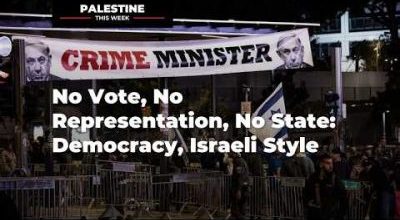
No Vote, No Representation, No State: Democracy, Israeli Style
or go to
Aletho News Archives – Video-Images
From the Archives
Sanctions, War and the Policy of Dual Containment
By SASAN FAYAZMANESH | March 17, 2008
It is now nearly three decades since the Unites States adopted the policy of dual containment of Iran and Iraq. While much has been written about the containment of Iraq, there has been very little in-depth analysis of this policy when it comes to Iran. In a book that is going to be released on March 31, 2008, entitled The United States and Iran: Sanctions, Wars and the Policy of Dual Containment (Routledge), I attempt to address this shortcoming by investigating when and why the US policy of containment of Iran came about, how it evolved, and where it stands today.[1] To the extent that Israel has been involved in US policy making, the study will also include the role that Israel has played in the containment of Iran. Also, since the fate of Iran has been inextricably linked to that of Iraq, occasionally the investigation will overlap with the containment of Iraq.
The policy of dual containment of Iran and Iraq originated during the Carter Administration, but it was not until the Clinton Administration that the expression “dual containment” became popular. … continue
Blog Roll
 Aletho News
- No Vote, No Representation, No State: Democracy, Israeli Style
- Zionist Bought Senate Blocks Information About American Citizens Killed By Israel
- While Gaza dominates the UN, these are the people keeping it alive
- New Report: “Scholasticide and Genocide in Gaza: Assessment, Testimonies and Legal Analysis”
- ‘THAAD Delusion’: Iran war exposes US missile shield limits – The Atlantic
- Moscow issues warning to NATO over Russian exclave
- Yes, the Iran war has destroyed Trump’s presidency
- The fallacy of US delusions about Iran’s economic collapse
- Hezbollah denies Syria cell link, warns of Israeli plan to sow discord
- The legacy of US sanctions, war, and occupation in Iraq
- If Americans Knew
- Mamdani releases plan to combat antisemitism and hate crimes in New York City
- Iran’s Revolutionary Guards Publish Letter to the American People
- DMFI launches $1 million ad campaign supporting Virginia’s Elaine Luria
- US Senate blocks resolution seeking report on Americans killed by Israel
- Israeli Attacks Kill Ten Palestinians in Gaza
- Massacre at Minab: The School That Became a Grave
- Israeli media: The IDF Shows It Doesn’t Turn a Blind Eye; It Actively Emboldens Settler Havoc
- As settlers ravage West Bank, Israeli forces kill 10 in Gaza – Daily Update
- New Report: “Scholasticide and Genocide in Gaza: Assessment, Testimonies and Legal Analysis”
- Ex-Biden officials are desperate for a Gaza scapegoat
- No Tricks Zone
- Green Energy Debacle: German Expert Professor Fritz Vahrenholt Warns Of Severe Economic And Social Consequences
- Two More Paleo Reconstructions Affirm Meters-Higher Sea Levels Across Ireland, Brazil 7000-6000 Years Ago
- New Study: Earth And Venus Surface Warmth Largely Explained By Convection And Lapse Rate, Not CO2 Or Radiation
- 2025 Nature Paper Claiming Worsening Global Drought Gets RETRACTED …Heavily Flawed
- New Study: ‘Global Drought Shows No Detectable Recent Acceleration Under Climate Warming’
- Economic Masterminds: German Socialists Suggest Taxing Productivity Gains Stemming From Using AI
- The South China Sea Has Not Been Cooperating With The Climate Change Narrative
- Energy Crisis: Germany Enters Heating Season With Historically Low Gas Reserve Fill Levels
- New Study: The Antarctic Ice Sheet Gained Mass From 2020-2024 Due To Staggering Snow And Ice Accumulation
- Study: Ocean Heating Rates From Thousands Of Years Ago ‘Dwarf’ Modern Ocean Heating Rates

