Egyptian journalists protest against arrests, for better labor laws
By Mostafa Mohie | Mada Masr | June 11, 2015
More than 200 members of the press gathered at the Journalists Syndicate in downtown Cairo on Wednesday, chanting for the “32 detained journalists and hundreds dismissed from their job” as they commemorated Egyptian Journalist Day.
The syndicate’s freedoms committee had sent a general invitation to protest on June 10 to denounce the recent wave of arrests, arbitrary dismissals and low wages faced by local journalists. Several websites for both privately and state-owned newspapers, including Ahram Gate, Bedaya, Al-Mal and Al-Fagr, published statements supporting the demonstration.
Leading up to the protest, the syndicate also filed 13 complaints with the prosecutor general demanding the immediate release of all journalists currently detained pending investigations, and detailing alleged acts of torture inflicted upon those journalists while in custody.
Among the protesters was Ibrahim Aref, editor-in-chief of the privately owned Al-Bayan newspaper. Aref and a colleague were recently prosecuted on charges of publishing false information regarding the assassination of six prosecutors, news which the newspaper had subsequently amended and apologized for.
Recounting his arrest to Mada Masr, Aref says that police personnel broke into his office and took him to the prosecutor’s headquarters in the Fifth Settlement district of New Cairo. He claims the building was under construction at the time and had no running water. The next day, he was taken to the High Court, where he was left in a defendant’s dock for nine hours without food or water before being released later that night on bail, he says.
“According to the law, everything that happened was illegal,” Aref argues. “Journalists cannot be detained for cases related to publishing. I went through the experience and got out of prison, but other colleagues are still detained, and their children are cheering with us today.”
Aya Allam, wife of detained journalist Hassan al-Qabanni, was also at Wednesday’s protest.
She spoke to Mada of her husband’s arrest, saying, “On January 22, police broke into my home and arrested my husband. He disappeared for three days, and we filed a report with the general prosecutor about the incident. It turned out he was being kept at the National Security headquarters in Sheikh Zayed.”
When Qabbani was finally called before the prosecutor, he bore injuries that suggested he was beaten, electrocuted and tortured, Allam says.
She claims that her husband never faced specific charges. Instead, during interrogations he was asked about his opinion of the January 25, 2011 revolution, the events of June 30, 2013, the Muslim Brotherhood and the Armed Forces. Later, his family learned that he was accused of spying for the Norwegian government, in the same case as Muslim Brotherhood leader Mohamed Ali Bishr, according to Allam.
Qabbani is currently being detained in dire conditions at the Aqrab prison, Allam alleges. She adds that he is restricted to his cell, isn’t allowed access to newspapers or books and only receives one meal per day.
Furthermore, his wife claims that though the prison management has been issuing visiting permits to the families of the detainees at the prison, when they arrive, they are not permitted to enter. Qabbani hasn’t received visitors since February, Allam says, accusing prison staff of tampering with the visitor records.
Reda Gamal’s husband, journalist Reda al-Darawy, has been detained for close to two years, she says.
“After July 3 [2013] and the ousting of the Muslim Brotherhood, my husband travelled to Amman to work at Yarmouk satellite channel, then to Lebanon to work at Al-Quds Channel. He came back on August 6 and was a guest speaker on Tamer Amin’s show. On his way out of Media Production City, he was arrested.”
Darawy has been accused of spying for Hamas and belonging to a banned group — the Muslim Brotherhood was declared an illegal organization at the end of 2013. He was later added as a defendant in the espionage case alongside former President Mohamed Morsi and other Brotherhood leaders, Gamal says.
Gamal adds that her husband was accused of illegally entering the Gaza Strip through the tunnels from Sinai, but refutes those charges.
“My husband visited the Strip twice for work, and the stamps on his passport prove it,” she argues.
His first visit was in July 2011, she says, when he conducted interviews with leaders of various political factions in Palestine for a piece that was published in the state-owned Akhbar al-Youm newspaper. Then under the Morsi administration, Darawy visited Gaza again to cover the truce agreement between Hamas and Israel, Gamal says.
Darawy has now been in custody for 22 months. A verdict is anticipated in his case on June 16.
Darawy’s case bears some similarities with that of journalist Mahmoud Abou Zeid, known as Shawkan, who is also currently in detention pending investigations. His brother, Mohamed Abou Zeid, says that Shawkan was covering the Rabea al-Adaweya sit-in after Morsi’s ouster in 2013, and had obtained permission to shoot photographs there from security forces in the area.
However, Shawkan was then arrested alongside a number of foreign journalists by men dressed in civilian clothing, Abou Zeid says. The foreign photojournalist were released, but Shawkan has remained in detention ever since.
Photographer Ahmed Gamal Zeyada, who was recently acquitted in a case related to violence at Al-Azhar University, says that his arrest was similar to Shawkan’s. Zeyada says he hadn’t met Shawkan prior to his arrest, but began exchanging letters with him following a march that was organized to draw attention to both of their arrests by their fellow photojournalists.
“After a while we became close friends, though we never met,” says Zeyada.
The arbitrary firing of journalists was also a core issue discussed by the protesters. Sahar Abdel Ghani, a journalist at the privately owned newspaper Al-Alam Al-Youm, says that she and 30 of her colleagues were fired due to budget cuts.
“We have been working for the newspaper for 13 years, and have put up with all the financial challenges throughout,” she says.
But despite the fact that she was fired under the pretext of budgetary constraints, Abdel Ghani claims that “the newspaper recently launched a new website and hired new reporters,” suggesting that the business wasn’t in such dire straits after all. She says she and her colleagues filed a wrongful termination complaint with the labor bureau, but nothing happened.
The Journalists Syndicate is currently in negotiations with the newspaper to either rehire the fired journalists or compensate them, she adds.
At the protest, around 150 journalists — most of them working for newspapers affiliated with political parties that have recently been shut down — declared they would go on strike.
Iman Ouf, a journalist for the privately owned Al-Mal newspaper and a member of the syndicate’s freedom committee that organized the demonstration, felt that Wednesday’s protest represented a good step toward solving the problem of journalists working in Egypt today.
“The number of participants wasn’t big, but it is a good start. Today is better than how things were before,” Ouf says.
Next, the syndicate plans to launch a campaign for a fair labor law, a unified contract for all journalists and an industry-wide a minimum wage, in addition to providing compensation for the families of the detained journalists, she continues.
The journalist adds that the regional and international support for the protest was a good indicator that journalists are capable of defending themselves. The protest received letters of support from the Arab Journalists Union and the International Union for Journalists, Ouf says, in addition to journalists syndicates in Jordan, Morocco, Tunisia, the European Union and the United States, and finally, from local political parties.
Criminalizing Criticism: A Zionist Project
By Lawrence Davidson – To The Point Analyses – June 10, 2015
Part I – Some Historical Background
From the 1920s on into the 1990s, the Zionists controlled the storyline in the West on the Israel-Palestine conflict. This meant that their version of history was the only version as far as most of the people in the West were concerned. Consequentially, they had an uncontested media field to label the Palestinians and their supporters as “terrorists” – the charge of anti-Semitism was not yet widely used. Also, as a consequence of their monopoly, the Zionists did not bother to engage in public debate.
Then, over the last twenty years the Zionists slowly lost their monopoly. In part this was due to the fact that in 1993 the PLO recognized Israel’s right to exist and renounced terrorism, and in the following years many of the Arab states made or offered peace. However, the Israelis did not respond in kind. In particular they failed to respond in a fair and just way to U.S.-sponsored peace efforts. Why so?
The answer to why the Israelis did not, in good faith, take up multiple historic opportunities to make peace with the Palestinians lies in the very nature of the Zionist movement. From its beginning, and certainly from the establishment of the State of Israel, Zionism has been driven by dreams of colonial expansion and religious exclusiveness. Each of these goals is seen as part of Zionism’s God-given mission, and they still prevail. Professor David Schulman of Hebrew University, writing in the New York Review of Books (23 April 2015), describes the consequences of this situation, “the Israeli electorate is still dominated by hyper-nationalist, in some cases proto-fascist, figures. It is no way inclined to make peace. It has given a clear mandate for policies … that will further deepen Israel’s colonial venture.” As a consequence, Israel’s credibility with an increasing number of people in the West has eroded.
This erosion led to a relatively short period of time in the early 2000s when the Zionists attempted to counter the situation by engaging with their critics in public debate. However, the majority of time they lost. Israel’s barbarous behavior on the ground, combined with the fact that their historical version of events was shown to be full of holes, condemned them to an increasingly weak defensive position. This proved to be intolerable to the Zionists, so they withdrew from the debating field. And, as they did, they began to level charges of anti-Semitism against their critics, even those who are Jewish. These accusations of the worst sort of racism have been with us ever since – which is really ironic because much of what Israel is being criticized for is its own racist, apartheid nature.
This was an important change in tactics for Israel because it opened the way to misusing Western laws to Israel’s advantage. Just as the charge of terrorism has often been misused in a broad and sweeping manner (for instance, leveled against non-violent supporters of Palestinian charitable organizations), so the charge of anti-Semitism can potentially be used in an almost unlimited fashion by over-aggressive, pro-Zionist Western prosecutors against any critic of Israeli behavior.
Part II – The Boycott Movement
In the West, much of the organized criticism of Israel now comes from campaigns aimed at promoting Boycott, Divestment, and Sanctions (BDS) of the Zionist state. So robust has the BDS movement grown that Gilad Erdan, Israel’s newly appointed Minister of Public Security, Strategic Affairs, and Public Diplomacy, has described it as one of the most “urgent issues” facing Israel. Israel’s president, Reuven Rivlin, has described the developing academic boycott, just one part of BDS, as a “strategic threat of the first order.”
Israel’s prime minister, Benjamin Netanyahu, has taken it upon himself to set the tone of Israel’s counter-attack on BDS. He has declared that there is an “international campaign to blacken Israel’s name” and he alleges that it is not motivated by Israel’s policies toward the Palestinians but rather seeks to “delegitimize Israel … and deny our very right to live here.” In other words, he is claiming that present criticism of Israel is really an attack on its existence, and not on its behavior. For Netanyahu this has to be a form of anti-Semitism. As Hanan Ashrawi, a member of the PLO executive committee, describes Netanyahu’s argument, “If you criticize me you are anti-Semitic … . If you accept any kind of punitive measure or sanctions against Israel, you want to destroy Israel.” That is how the prime minister avoids confronting the facts.
As bad as this is, it gets even worse. Declaring the goal of BDS to be the elimination of Israel allows the Zionists to use their influence with Western legislators to make cooperation with the boycott subject to penalties. In the United States, AIPAC, the most powerful of the Zionist lobbies, is working on legislation similar to that used against Iran and also the Arab boycott of Israel in the 1970s. This legislation would penalize businesses, both at home and abroad, that favorably respond to calls for boycott. If this works we can expect the Zionists to go further and try to subvert the U.S. Constitution’s free speech provisions and then go after individuals as well as businesses. In this regard, efforts are also under way in Canada and France.
Part III – Money Magic
Finally, there is the assumption that money can destroy Israel’s critics. This is a special belief of Sheldon Adelson, the billionaire casino magnate and enthusiastic backer of Netanyahu. Adelson has taken aim at activity critical of Israel on U.S. college campuses. In the first week of June 2015, he and his supporters convened a “Campus Maccabees Summit,” the purpose of which was “to develop the conceptual framework for the anti-BDS action plan [on college campuses], assign roles and responsibilities to pro-Israel organizations, and create the appropriate command-and-control system to implement it.” Fifty activist Zionist organizations attended the conference, as did twenty donors, each of whom pledged one million dollars to the cause over the next two years.
Part IV – Conclusion
Prime Minister Netanyahu personifies the problem with Zionist thinking. He is wholly self-centered and seemingly incapable of recognizing, much less taking responsibility for, Israel’s racist behavior. Thus, with the Zionists having spent the last 100 years planning and then actually doing what was needed to deny as many non-Jews as possible the “very right to live in” Palestine, Netanyahu now accuses others of doing the same thing to him and his kin – and labels it a criminal act.
The truth is that most Western critics, including supporters of BDS, are not trying to kick the Jews out of Israel. They are trying to bring maximum pressure on the Israeli government to stop kicking non-Jews out, to stop territorial expansion in violation of international law, and to start acting like the democratic state it so questionably claims to be.
Speaking strictly for myself, I don’t believe any of these goals are possible unless Zionism is in fact kicked out of what is now Israel. That is, the ideology that drives Israeli racism and colonial expansion must be done away with, in the same way that apartheid was brought down in South Africa. That did not result in South Africa being destroyed or all white South Africans being deported. But it did result in a democracy being imported. The same scenario is necessary for Israel.
No doubt many Israelis and their supporters would equate this goal of extirpating Zionism with promoting another Holocaust. This is not so, but they are scared enough to label the effort of bringing a real democracy to Israel as anti-Semitic, and to try to get it declared illegal in the West.
Finally, besides the public outcry over anti-Semitism, the Zionists are working behind closed doors – the closed doors of American state and federal legislatures and university board rooms – where they do not have to face serious debate. This might prove the most dangerous of their maneuvers. For behind closed doors the Zionist monopoly resurfaces and truth is all the easier to suppress.
The purpose state secrecy serves, from SEAL Team 6 down to Boston Police
PrivacySOS | June 7, 2015
The New York Times has published a long, detailed history of the Navy’s special operators in SEAL Team 6, also known as the Special Warfare Development Group, or by its insider name, DEVGRU. This paragraph caught my attention.
The unit’s advocates express no doubts about the value of such invisible warriors. “If you want these forces to do things that occasionally bend the rules of international law,” said James G. Stavridis, a retired admiral and former Supreme Allied Commander at NATO, referring to going into undeclared war zones, “you certainly don’t want that out in public.” Team 6, he added, “should continue to operate in the shadows.”
That perfectly sums up the mentality in the US National Security State, from the most elite Navy SEALs all the way down through the FBI, and increasingly, to our local police.
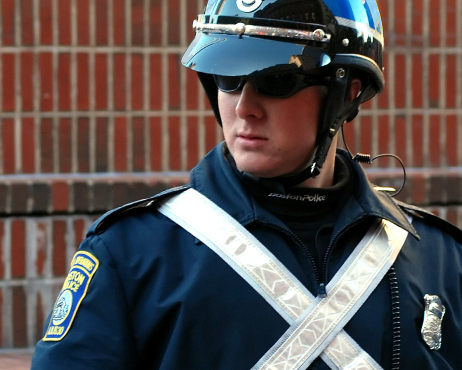
Just last week, the Boston Police Department and FBI killed a man in a confrontation in Roslindale, Massachusetts. The cops have said that Usaama Rahim was plotting to kill police officers, although they never prepared an arrest warrant for him. Instead of preparing to arrest him by obtaining a warrant and sending a tactical team to do it safely, a few plainclothes JTTF officers shot him dead after approaching him to have what they describe as a 7am chat in a CVS parking lot. The Feds say the FBI and BPD were following him 24 hours a day during the week preceding his killing. But asked how Rahim initially came to the attention of investigators, Boston police commissioner William Evans said he cannot say. That information, he says, is “classified.”
When we hear claims like this, it’s crucial to recall what purpose secrecy usually serves in the security context. The truth of the matter was spelled out in unusually frank terms by the former NATO commander quoted in the NYT story about special operators cited above. “If you want these forces to do things that occassionally bend the rules of…law, you certainly don’t want that out in the public.”
That’s an unacceptable approach to foreign war fighting. It borders on the authoritarian here at home. And we cannot lose sight of the connection between the two.
Assuming general tolerance for official secrecy regarding forever wars abroad won’t trickle down to the domestic policing space is a fool’s errand. We now see clearly what that trickle down means in Boston. Police and FBI killed a man, and now they’re saying National Security prevents them from talking about why. That should send a chill down your spine.
Report: Increase in torture in detention under Sisi
MEMO | June 8, 2015
There has been an increase in the death rates in detention centres since the military coup in Egypt, a new report has revealed.
In a report entitled “The Official Cemeteries: Extrajudicial Killings in Egyptian detention centres from June 30, 2013 to June 1, 2015“, the monitoring and documentation department of the Egyptian Observatory for Rights and Freedoms stated that the last two years witnessed a major shift in the death rates in the various detention centres in terms of the number of deaths and the cases of death by torture since President Abdel Fatah Al-Sisi came to power.
The report noted that the Egyptian security authorities adopted a systematic policy of arbitrarily arresting those opposed to the military government in Egypt. Since 30 June 2013, Egypt has adopted this policy in an unprecedented manner. This systematic policy of arrests has led to the detention of large numbers of people in various detention centres, which can no longer accommodate them due to their large numbers. It has also led the government to use arrests as an important means of oppressing the opposition to the military government in Egypt.
With the increasing number of detainees and the lack of any health care or medical attention, the prisons, detention centres, and questioning centres have become a place for the spiritual and psychological murder of the detainees.
The department also explained that the results of the monitoring and documentation of extrajudicial killings committed inside the various places of detention over the past two years, from 30 June 2013 to early June 2015 are as follows:
- Total number of individuals killed in detention centres: 269
- Number of politicians killed in detention centres: 92
- Number of criminals killed in detention centres: 177
- Where these 269 individuals died:
- Number of individuals killed in prisons: 102
- Number of individuals killed in police stations: 150
- Number of individuals killed in courts and prosecutors’ offices: 6
- Number of individuals killed in military prisons: 2
- Number of individuals killed in care homes: 2
- Number of individuals killed in undisclosed places of detention: 7
- Where these 269 individuals died:
- Number of individuals killed in detention centres during Adly Mansour’s term: 130
- Number of individuals killed in detention centres since the beginning of Abdel Fatah Al-Sisi’s term: 139
- Number of individuals killed in detention centres since during Interior Minister Mohamed Ibrahim’s term after June 30, 2013 until his retirement: 231
- Number of individuals killed in detention centres since the beginning of Magdy Abdel Ghaffar’s term: 38
The monitoring and documentation department also added that the number of killings and deaths during the first year of Abdel Fatah Al-Sisi’s presidency has undoubtedly demonstrated his continued political support of slowly killing prisoners and detainees inside detention centres, as the first year of his term resulted in the following:
- Number of deaths inside detention centres during Sisi’ term: 139
- Number of politician who died in detention centres: 31
- Number of criminal deaths inside detention centres: 108
- Where these 139 individuals died:
- Number of deaths inside prisons: 39
- Number of deaths in police stations: 96
- Number of deaths in courts and prosecutors’ offices: 2
- Number of deaths in military prisons: 0
- Number of deaths in care homes: 1
- Number of deaths in undisclosed places of detention: 1
The department also confirmed that the prisons and detention centres have turned into centres of gradually draining and exhausting individuals both physically and psychologically. The military government in Egypt wants to turn the detainees opposed to the military government in Egypt into remains of creatures that no longer represent humans; creatures depleted of all signs of humanity that become a burden on themselves and society, the report said.
The prisons and detention centres in Egypt have been used by the military government to provide the appropriate conditions conducive to achieving the goal of dehumanising the opposition.
The Egyptian Observatory’s monitoring and documentation department stressed that it prepared this report and collected the data in order to expose this heinous crime and the abnormal death of prisoners and detainees inside the various detention centres.
163 Egyptians ‘forcibly disappeared’ in past 2 months, claims report
By Mostafa Mohie | Mada Masr | June 8, 2015
At least 163 people have been forcibly disappeared and illegally detained by security forces in the past two months alone, according to a document published by the Freedom for the Brave campaign on its official Facebook page.
According to the group’s breakdown of these cases, 66 activists have gone missing in this time period, and their whereabouts are still unknown. Another 64 people were only located after they had been detained without charges or interrogation for more than 24 hours in an undisclosed location, in violation of the Constitution. Another 31 cases cited in the document have not yet been verified by the group.
At least two of the people included in the list were allegedly killed by security forces, including Ain Shams University student Ismail Atito and Sinai resident Sabry al-Ghoul.
The majority of these incidents occurred in Cairo, where 60 cases of forced disappearances have been reported, followed by Kafr al-Sheikh with 31, 16 in Giza and 13 in Daqahlia. Suez, Matrouh, the Red Sea, the New Valley and South Sinai were the only governorates that did not report any such cases in the past two months.
Freedom for the Brave said that the majority of the information compiled to create this database was gathered from the group’s own research on certain cases it has been directly following, as well as from documentation compiled by other rights organizations and complaints circulated on social media by the families of the disappeared. The campaign also published the tracking numbers of the official complaints that families have submitted to the prosecution.
“Activists have been forcibly disappeared since July 2013, but this number is now increasing at an unprecedented rate,” Freedom for the Brave member Tarek Mohamed told Mada Masr.
He believes that the current crackdown is a general “continuation of the regime’s policies against any movement associated with the January 25 revolution,” but also a specific reaction against the April 6 Youth Movement’s call for a general strike on June 11.
But the crackdown is baseless, Mohamed argued. The call to strike does not violate any law, as it is a “call for the people to stay home in protest against deteriorating economic conditions and ongoing arrests,” he claimed.
Several of the people who have been illegally detained and held in undisclosed locations were later charged with belonging to the April 6 Youth Movement, which the courts ruled an illegal organization last year, Mohamed pointed out. They also faced accusations of coordinating with the banned Muslim Brotherhood group and calling for the June 11 strike.
“Those accusations were leveled against activist Dalia Radwan, the only one released on bail, and a member of the Helwan University Student Union, Ahmed Khattab, who appeared in front of the prosecution bearing signs of torture,” Mohamed said. “Nagwa Ezz and Ahmed al-Zayyat faced similar charges”.
However, Mohamed added that the prosecution has since reversed its decision to release Radwan and remanded her into custody for 15 days pending investigations.
Mohamed also spoke of photojournalist Israa al-Taweel, Sohaib Mohamed and Amr Mohamed, who were illegally detained on June 1. Their families and lawyers have still not been able to obtain any information on their whereabouts.
“We fear that those who disappeared face the same fate of Atito,” Mohamed said, referring to the Ain Shams University student who disappeared on May 19 after he was allegedly summoned out of an exam room by a security officer and another unidentified man. He was found dead the following day. The Interior Ministry released a statement claiming the student was involved in the assassination of a police officer, and had been killed in an exchange of fire with police forces when he tried to evade arrest.
The ministry has denied all reports of forced disappearances. One source from the ministry told the privately owned newspaper Al-Shorouk that “we are in a state of law and we cannot detain citizens in the streets unlawfully. Whoever is arrested faces accusations according to judicial orders.”
Translated by Mai Shams El-Din
Saban joins Adelson to oppose Israel’s boycott

Press TV – June 7, 2015
Israeli-American tycoons Haim Saban and Sheldon Adelson have vowed to punish those who boycott Israel, focusing their attacks first on US campuses.
The campaign of Boycott, Divestment and Sanctions (BDS) against Israel over its apartheid policies toward the Palestinians has gained momentum globally in recent months.
This week, the French telecommunications giant Orange announced to withdraw its brand from the Israeli market.
In response, media mogul Haim Saban vowed on Saturday to fight back so forcefully against Orange that any other company thinking of boycotting Israel would reconsider it.
The French telecom giant Orange announced June 4 that it would terminate its relationship with its Israeli affiliate, Partner Communications. (Getty Images)
“We do have an anti-Semitic [sic] tsunami that’s coming at us,” said Saban of the international campaign to boycott and isolate Israel.
He said Israeli lobbies will create a climate that forces any business group considering boycotting Israel to revise its strategy.
Saban was speaking in a joint interview with the billionaire Sheldon Adelson on an Israeli television channel.
Adelson, for his part, added that the Boycott, Divestment and Sanctions global campaign and the increasingly popular anti-Israeli organizations in the US will be the first targets who’ll meet Israeli punishment.
He said his focus was to reverse the inroads being made by “the BDS… the anti-Israel and anti-Semitic organizations [that] are making a lot of headway on the campuses in the United States.”
He said he would call on Jewish groups in the US to work against decisions taken by student campus groups to boycott Israel.
Israeli supporters in the US have said that the growing international campaign to boycott Israel over its atrocities against the people of Palestine is one of Tel Aviv’s greatest challenges.
The campaign of Boycott, Divestment and Sanctions (BDS) against Israel has gained momentum in recent months.
Israel has faced the widening boycott campaign by several European businesses over its illegal settlement activities on the occupied Palestinian land.
Two of Europe’s biggest financial institutions have boycotted transactions with Israeli companies involved in the settlement construction.
The European Union has also blocked all grants and funding to any Israeli entity based in the illegal settlements.
The American Studies Association has also announced a decision to boycott Israeli institutions and academics over the discriminatory treatment of Palestinians.
Israelis are frustrated in the face of the growing boycott campaign. Israeli officials have held several meetings in an attempt to find a strategy to counter the boycotts.
Former FBI Anthrax Investigator Files Lawsuit Claiming Retaliation
By Janet Phelan – New Eastern Outlook – 03.06.2015
Retaliation. It is becoming a rather consistent sub-text in growing numbers of reports coming in concerning US policies—domestic as well as international. On the domestic front, attorneys are being suspended from the practice of law for protesting that the courts are corrupt and an intelligence whistleblower flees the US for safety in Russia. These stories have the element of retaliation in common.
And now, we have reports of the FBI retaliating against one of their own former agents, allegedly for criticizing a high profile and troubled investigation. Richard Lambert, former Inspector in Charge of the 2001 anthrax investigation (AMERITHRAX) has filed a lawsuit against former Attorney General Eric Holder, former FBI Chief Robert Mueller and others in the Justice Department, alleging retaliation.
Richard Lambert, whose criticism of the FBI’s investigation into the 2001 anthrax attacks became public fare on 60 minutes, has filed a tort claim in US District Court, alleging that an erroneous legal opinion, written by FBI attorney Patrick Kelly and circulated both within and outside of the FBI, resulted in Lambert’s being fired in June of 2013 from the position of Senior Counterintelligence Officer with Oak Ridge National Laboratories, a position Lambert took in 2012 after retiring from the FBI following 24 years of service.
Lambert alleges that Kelly’s legal opinion branded him as a criminal for taking a job wherein he had contact with the FBI, without allowing the one year “cooling off” period mandated by law for former FBI employees. Lambert points out in his lawsuit that Kelly misreported the law, which allows former FBI employees to maintain exactly such contact if they are in a position wherein they are “representing the US government.” Lambert’s position at ORNL– a Department of Energy facility– fulfills this stipulation, he maintains.
Lambert states he reported Kelly’s conclusions to the US Attorney’s office and to the FBI Office of Professional Responsibility, both of which found Kelly’s findings to be “meritless.”
In his lawsuit, Lambert maintains that he was singled out for retaliation due to the animus created by his criticisms of the AMERITHRAX investigation, an investigation with which he, as Inspector in Charge, was intimately acquainted. He states that in 2006 he provided a “whistleblower report” to the FBI’s Deputy Director, with concerns that the investigation was pocked with inadequacies, including understaffing, threats of retaliation should the understaffing be reported to the FBI Headquarters, as well as an extensive cover up of what Lambert calls “daunting exculpatory evidence” concerning the chief suspect, Dr. Bruce Ivins, a Fort Detrick researcher.
Ivins reportedly committed suicide in 2008 before he could be arrested. The FBI has continued to maintain that Ivins was the “anthrax mailer.” Letters laden with weaponized anthrax spores were put into the mail in the weeks following the attacks of September 11, 2001, killing five people and sickening at least seventeen others.
Lambert’s lawsuit describes some of the actions taken by the FBI and DOJ in efforts to brand him as a criminal in allegedly violating the “cooling off” period. According to Lambert, the DOJ “launched and sensationalized massive criminal probes, which included the dispatch of teams of OIG Special Agents …who raided and searched Plaintiff’s office at Oak Ridge National Laboratory, seized and analyzed Plaintiff’s personal documents and effects, and interrogated dozens of Plaintiff’s…coworkers and associates in a wild fishing expedition festooned with prurient inquisitions into the intimate and irrelevant details of Plaintiff’s private life and marital status.”
The DOJ, however, came up empty handed. No charges were ever filed against Lambert, whose lawsuit claims: “Due to the stigmatizing publicity and notoriety surrounding Defendant (Patrick) Kelly’s legal opinion and Defendant’s inquisition, Plaintiff has been blackballed with the specter of illegal conduct and ethics violations, unable to gain reemployment despite his submission of more than 70 job applications to various employers.”
Lambert is seeking 2.5 million in compensatory damages.
Lambert, who holds a law degree and three Master’s degrees, is representing himself. His 24 year career with the FBI included a stint as Assistant Special Agent in Charge at the San Diego Division, Special Agent in Charge at the Knoxville Division and Inspector in Charge of the AMERITHRAX investigation, along with other positions.
Another attorney, Barry Kissin, of Frederick, Maryland, also publicly critical of the FBI AMERITHRAX investigation, was reportedly put on a terrorist watch list. Kissin is in private practice and also writes for the Frederick News Post.
Police search house, prepare charges against German Holocaust skeptic

By Brandon Martinez | Non-Aligned Media | June 4, 2015
German media have reported that police have raided the house of 86-year-old Ursula Haverbeck, a German lady who has publicly doubted the Holocaust story.
A report in Mindener Tageblatt says:
“The public prosecution department of the city of Bielefeld has been investigating a case of “incitement to hatred“ (Volksverhetzung) against … Ursula Haverbeck. Now, a new lawsuit was added: prosecutors of Niedersachsen’s State Office of Criminal Investigations have searched the houses of Vlotho resident Haverbeck with the support of authorities of the city of Herford. The houses of three further accused were also searched on that day.”
Haverbeck has been constantly pursued by German authorities for her nonconformist opinions about the Holocaust. In Germany, a self-professed ‘democracy,’ individuals do not have the right to question establishment myths about the Second World War. The public is forced to accept the self-serving interpretations of the winners of World War II under penalty of fines and imprisonment.
The government of Germany should be boycotted and condemned until the present Stasi-like police state is disbanded.
FBI operating surveillance aircraft over US, planes traced to fake companies – report
RT | June 2, 2015
The FBI is operating its own air force, sending low-flying planes across the US. The aircraft carry video and cellphone surveillance technology, and are hidden behind bogus companies that are actually fronts for the government, AP has revealed.
According to the news agency, the surveillance tools on board are typically used without a judge’s approval. The flights are widespread, spanning across the United States.
In a recent 30-day period, the agency flew more than 100 flights above more than 30 cities in 11 states, plus the District of Columbia. Those cities included Houston, Phoenix, Seattle, Chicago, Boston, and Minneapolis. Aircraft also flew over southern California.
The FBI says the planes are used for specific, ongoing investigations.
The findings come after years of reports since 2003 that a government surveillance program might be behind suspicious-looking planes slowly circling US neighborhoods.
Flight tracking
The news agency began analyzing flight data following a Washington Post article in early May, which revealed flights by two planes circling over Baltimore.
As part of its investigation, AP examined aircraft ownership registrations that shared similar addresses and flight patterns. Using data from FlightRadar24.com, the agency found that some FBI missions circled above at least 40,000 residents during a flight over Anaheim, California, in late May.
Most of the flight patterns occurred in counter-clockwise orbits up to several miles wide, and roughly one mile above the ground at slow speeds.
One of the planes photographed in flight last week in northern Virginia had unusual antennas under its fuselage and a camera attached to its left side.
In total, AP has tracked 50 aircraft back to the FBI.
Fears of spying
While Washington maintains that aerial surveillance is important for certain investigations, the use of such aircraft has sparked concerns over whether there should be updated regulations protecting the civil liberties of Americans, as such technology could potentially facilitate government spying.
It could also have other wide-ranging implications, according to the report. For instance, the planes could capture video of unrelated criminal activity on the ground, which could be handed over for prosecutions.
Some of the aircraft can be equipped with technology that can identify thousands of people below through the cellphones they carry – even if they’re not making a call, or they’re tucked away in their own homes.
Officials told AP that the practice – which mimics cell phone towers and gets phones to reveal subscriber information – is rare, but it does indeed exist.
However, AP found FBI flights orbiting over large, enclosed buildings in recent weeks, for extended periods of time. These flights took place in areas where aerial photography would be less effective than electronic signals collection – including Ronald Reagan Washington National Airport and the Mall of America in Bloomington, Minnesota.
But FBI spokesman Christopher Allen said the planes “are not equipped, designed or used for bulk collection activities or mass surveillance.”
An unnamed FBI spokesman also said the surveillance flights comply with agency rules. Those rules, which are heavily redacted in publicly available documents, limit the types of equipment the agency can use, as well as the justifications and duration of surveillance.
‘Not a secret’
Allen also said the FBI’s aviation program “is not secret,” but that “specific aircraft and their capabilities are protected for operational security purposes.”
However, AP managed to trace the aircraft to at least 13 fake companies – including FVX Research, KQM Aviation, NBR Aviation, and PXW Services.
According to law enforcement officials, Justice Department lawyers approved the decision to create fake companies to protect the flights’ security. They added that the Federal Aviation Administration is aware of the practice.
The FBI asked AP not to disclose the names of the bogus companies, claiming it would burden taxpayers with the expense of creating new cover companies, and could endanger the planes and the integrity of the surveillance missions. The agency’s request was denied.
Meanwhile, basic aspects of the aviation program are withheld from the public in censored versions of official Justice Department reports.
The findings come just one month after a Justice Department memo barred law enforcement agencies from using unmanned drones “solely for the purpose of monitoring activities protected by the First Amendment,” saying they are to be used only in connection with authorized investigations and activities.
‘He will pay a heavy price’: Erdogan threatens Turkish editor-in-chief for scandalous report
RT | June 1, 2015
Turkish President Tayyip Erdogan has publicly threatened the editor-in-chief of a Cumhuriyet daily for publishing a report, which showed police discovering weapons ready to be sent to Syrian rebels in trucks belonging to Turkish intelligence.
“This slander and this illegitimate operation against the National Intelligence Organization (MIT) are, in a way, an act of espionage. This newspaper got involved in this espionage activity, too,” Erdogan told the TRT public broadcaster.
The video published on the Cumhuriyet news website on Friday showed Turkish gendarmerie and police officers finding weapons due for dispatch to Syria on trucks belonging to the National Intelligence Organization (MIT).
The Cumhuriyet report said the footage was dated January 19, 2014, and described the arms in the trucks as weapons and ammunition.
The Turkish president said the arms shown in the footage were transported to Turkmens in Syria. He added the numbers of weapons were provided to Cumhuriyet by a “parallel state” – political enemies determined to discredit his government.
“What only matters to them is casting a shadow on Turkey’s image.”
Erdogan promised sanctions against Cumhuriyet’s editor-in-chief, Can Dundar.
“I suppose the person who wrote this as an exclusive report will pay a heavy price for this… I will not let him off lightly,” Erdogan said, apparently referring to Dundar.
Dundar responded to the Turkish president’s lambast on Twitter: “The person who committed this crime will pay a heavy price,” he wrote, adding a link to the Cumhuriyet’s story about Erdogan threatening him.
Reuters also investigated the incident and showed testimony from the gendarmerie and officers. The latter claimed they discovered rocket parts, ammunition, and semi-finished mortar shells that were being transported in trucks accompanied by the country’s state intelligence agency (MIT) to parts of Syria under Islamist control.
At the time of the incident, the Syrian side of the border in Hatay province, neighboring Adana province, was controlled by Ahrar al-Sham, an Islamist group.
The prosecutors said the trucks were searched in several raids by police and the gendarmerie – one in November 2013 and three others in January 2014 – on the orders of prosecutors acting on tip-offs that they were carrying weapons.
“Our investigation has shown that some state officials have helped these people deliver the shipments,” prosecutor Ozcan Sisman, who ordered the search of the first truck on November 7, 2013 told Reuters in May.
Sisman and Takci, another prosecutor, have been arrested and now face charges of carrying out an illegal search. They both deny the charges.
About 30 officers involved in the search on January 1 and the incident on January 19 also face charges, including military espionage and attempts to overthrow the government, according to an April 2015 Istanbul court paper.
Prisoner Abdullah Barghouthi in solitary confinement after radio interview
Ma’an – May 31, 2015
GAZA CITY – Israeli prison services on Sunday stormed the cell of Hamas leader Abdullah al-Barghouthi in Rimon prison after it was revealed that he had given a telephone interview to a Gaza-based radio station from inside the prison.
An Israeli prison spokeswoman told Ma’an that the former al-Qassam Brigades commander had been sent into solitary confinement and would face trial for his actions.
Israeli media reported that prison officers searched the prison cell for the phone. Hebrew-language news sites questioned how a Palestinian prisoner had been able to access a mobile phone and give a radio interview.
During the interview with the Hamas-affiliated al-Rai radio station, Barghouthi called on Hamas and its military wing al-Qassam Brigades to take their time as they negotiate a prisoner swap deal with Israel.
“Don’t hasten, because we are firm and perseverant,” he said.
He added, “We won’t change and we shall remain firm regardless of whether we are released today or after a thousand years.”
In response, a spokesman for al-Qassam Brigades Abu Ubayda tweeted: “Freeing you (all prisoners) is a duty we are committed to, and your jailers will eventually vanish.”
Barghouthi is serving 67 life terms, the highest sentence ever handed down by an Israeli military court, after he was convicted of multiple attacks in Israel.
He has been detained since March 2003.
Featured Video

Anthrax War – CBC The Passionate Eye
or go to
Aletho News Archives – Video-Images
Book Review
Shattered Dreams: The HPV Vaccine Exposed (2019)
By Christina England – 30 Q&As – Book Review & Summary
Lies are Unbekoming | September 4, 2026
… Gardasil received FDA fast-track approval in 2006, Cervarix followed in 2009, and Gardasil 9 was approved in December 2014 with more than double the aluminium adjuvant content of the original. The commercial context is specific. Merck was about to lose patent protection on Zocor and faced $18 billion in Vioxx injury claims from a cardiovascular drug the company had marketed while suppressing its own data showing a five-times increase in heart attacks. Analysts projected the global HPV vaccine market at $4 billion by 2011, contingent on government-funded national programs for teenage girls. The 1986 National Childhood Vaccine Injury Act had already granted manufacturers complete liability immunity. By 2013, Japan had withdrawn its HPV vaccine recommendation after cataloguing severe adverse reactions in hundreds of girls. No Western government followed. The establishment position across the UK, US, Australia, and most of Europe held, and still holds, that the vaccines are safe and effective, that reported injuries are coincidental, and that cervical cancer prevention justifies the program. The book was published into this position, not against a vacuum.
Shattered Dreams sits alongside Mary Holland’s The HPV Vaccine On Trial and Viera Scheibner’s foundational vaccination work as part of the documented record on what has been done to a generation of teenage girls under the banner of cancer prevention. The full summary unpacks three specific findings: that Merck used the aluminium adjuvant itself as the “placebo” control in 92.5% of trial subjects, making it structurally impossible to detect excess reactions from the adjuvant; that Dr. Sin Hang Lee found HPV DNA fragments bound to aluminium in every one of sixteen Gardasil samples tested, and in the blood and spleen of a New Zealand girl six months after her third dose; and that in every country with high vaccination coverage, including Australia, the UK, Norway, and Sweden, cervical cancer rates have stopped declining and started rising specifically in the vaccinated cohort. Martínez-Lavín’s 2017 calculation puts the number needed to seriously harm with Gardasil 9 at 140, and the number needed to vaccinate to prevent one case at 1,757. Thirteen young women are seriously harmed for every one who benefits. The vaccine was approved on the basis of trials that could not detect what the trials were supposed to detect, and it is still being given to twelve-year-olds today. … Read full review
Blog Roll
 Aletho News
- Ukraine’s EU neighbors reject new plea from Kiev – Politico
- British Transport Police Facial Recognition Trial Scanned 926,912 People With Zero Arrests
- House Bill Would Ban Federal Use of Flock ALPR Data
- Can a Spice Rival a Drug? 10 Head-to-Head Trials Put It to the Test.
- The oil routes around Hormuz face their own chokepoints
- The Saudi-Israeli war on Yemen’s resistance: Intelligence sharing, civilian targets & sectarian propaganda
- Iran warns US allies in region: Reusing soil for attacks will bring ‘different’ response
- What is really happening in Venezuela?
- Diplomacy is Now a Crime in Britain / Ian Proud
- UK Government Body Kept Files on People Criticizing Prevent Program
- If Americans Knew
- A U.S. Jewish Fund’s Ambitious Bid to Put a Settler Elite in Control of Israel’s Security
- As genocide drags on, “Zionism is racism” becomes official policy in one UK party – Daily Update
- Targeting the rescuers: Inside Israel’s war on paramedics in Lebanon
- No big deal: Israel to halt humanitarian aid to Gaza for 2 days – Daily Update
- Israel is squeezing the life out of Palestinians – Daily Update
- The Israeli Right Portrays Islam as Murderous. It Serves a Political Purpose
- Jordan Has Had Enough: King Abdullah’s Scathing Warning to Israel
- Israeli Colonizers (i.e. Settlers) Kill Palestinian Man Near Salfit
- New Google Maps images reveal massive scale of devastation in Gaza
- Jewish supremacy, anti-Palestinian bigotry on display in Israel – Daily Update
- No Tricks Zone
- Latest European Green Energy Debacle; Portugal’s Largest Flagship Solar Park Insolvent!
- Green Energy Debacle: German Expert Professor Fritz Vahrenholt Warns Of Severe Economic And Social Consequences
- Two More Paleo Reconstructions Affirm Meters-Higher Sea Levels Across Ireland, Brazil 7000-6000 Years Ago
- New Study: Earth And Venus Surface Warmth Largely Explained By Convection And Lapse Rate, Not CO2 Or Radiation
- 2025 Nature Paper Claiming Worsening Global Drought Gets RETRACTED …Heavily Flawed
- New Study: ‘Global Drought Shows No Detectable Recent Acceleration Under Climate Warming’
- Economic Masterminds: German Socialists Suggest Taxing Productivity Gains Stemming From Using AI
- The South China Sea Has Not Been Cooperating With The Climate Change Narrative
- Energy Crisis: Germany Enters Heating Season With Historically Low Gas Reserve Fill Levels
- New Study: The Antarctic Ice Sheet Gained Mass From 2020-2024 Due To Staggering Snow And Ice Accumulation

