Eutelsat set to take Iran satellite channels off air
Press TV – October 14, 2012
European satellite provider Eutelsat SA is set to pull the plug on several satellite channels and radio stations broadcast from Iran.
The company has ordered media services company, Arqiva, to take the Iranian satellite channels off one of its Hot Bird frequencies.
The Iranian channels being taken off the air include Press TV, al-Alam, Jam-e-Jam 1 and 2, Sahar 1 and 2, Islamic Republic of Iran News Network, Quran TV, and the Arabic-language al-Kawthar.
The ban will also affect the satellite broadcast of several Iranian radio stations.
The move follows months of jamming of Iranian channels by European satellite companies. It also shows that the European Union does not respect freedom of speech, and spares no efforts to silence the voice of alternative media outlets.
Iranian news channels affected by the decision only aimed to break the West’s monopoly on news broadcast by reflecting the voice of the oppressed people to the world.
The illegal move by Eutelsat SA, therefore, is a step to mute all alternative news outlets representing the voice of the voiceless.
The Iranian channels, however, reserve the right to take legal action against Eutelsat’s decision in order to restore their rights and compensate for any material and spiritual damages thereof to the full extent possible under international law.
Related articles
Obama Executive Order allows seizure of Americans’ bank accounts
Press TV – October 13, 2012

The latest executive order (EO) emanating from the White House October 9 now claims the power to freeze all bank accounts and stop any related financial transactions that a “sanctioned person” may own or try to perform – all in the name of “Iran Sanctions.”
Titled an “Executive Order from the President regarding Authorizing the Implementation of Certain Sanctions…” the order says that if an individual is declared by the president, the secretary of state, or the secretary of the treasury to be a “sanctioned person,” he (or she) will be unable to obtain access to his accounts, will be unable to process any loans (or make them), or move them to any other financial institution inside or outside the United States. In other words, his financial resources will have successfully been completely frozen.
The EO expands its authority by making him unable to use any third party such as “a partnership, association, trust, joint venture, corporation, subgroup or other organization” that might wish to help him or allow him to obtain access to his funds.
And if the individual so “sanctioned” decides that the ruling is unfair, he isn’t allowed to sue. In two words, the individual has successfully been robbed blind. – The New American
HIGHLIGHTS
Congressman Ron Paul (R-Texas) called EOs patently unconstitutional. When asked about them by Fox News’ Megan Kelly, Paul said:
“The Constitution says that only Congress passes laws. The executive branch is not allowed to pass laws, nor should the judicial system pass laws. So it is clearly unconstitutional to issue these executive orders,” Paul said.
“They’ve been done for a long time, both parties have done it, but the Congress is careless. They allow and encourage and do these deals … to get the president to circumvent the Congress. If something’s unpopular and he can’t get it passed, well, let’s just sign an executive order. So I think that is blatantly wrong. I think this defies everything the founders intended. I think it’s a shame that Congress does it, and I think it’s a shame that the American people put up with it,” he added.
The most outrageous executive order of all time was that issued by President Roosevelt that allowed the enforced internment of 120,000 Japanese-Americans. – Prison Planet
FACTS & FIGURES
The United States has long barred U.S. firms from doing business with Iran, but last December adopted measures that forced international buyers of Iranian oil to cut their purchases. – Economic Times
In August, a second package of sanctions added further restrictions for international banks, insurance companies and oil traders.
The U.S., Israel and their allies say Tehran may intend to use its nuclear capability to produce nuclear weapons, a claim Iran rejects. Tehran insists its program is completely peaceful.
Related articles
- Obama executive order hits Iran with harsher sanctions (21stcenturywire.com)
Terrorists kill Syrian TV cameraman in Deir al-Zour
Press TV – October 10, 2012
Foreign-backed insurgents in Syria have killed a cameraman working for Syrian state TV al-Ikhbariya in the eastern province of Deir al-Zour.
Mohammad al-Ashmar was killed on Wednesday while covering clashes between Syrian troops and armed groups, the official SANA news agency reported.
Several journalists have so far been killed in Syria since the unrest erupted in the country in March 2011.
On September 26, insurgents in the capital Damascus attacked the Press TV staff, killing the Iranian English-language news network’s correspondent, Maya Naser, and injuring Press TV and Al-Alam Damascus Bureau Chief Hosein Mortada.
Naser was shot and killed by a sniper, while Mortada, a Lebanese national, was shot in the back. The two were covering twin bomb attacks that targeted the military command building in the capital and killed at least four Syrian security forces.
Many people, including large numbers of security forces, have been killed in the turmoil in Syria.
The Syrian government says that the chaos is being orchestrated from outside the country, and there are reports that a very large number of the armed militants are foreign nationals.
Related articles
- Press TV correspondent killed in Syrian capital (alethonews.wordpress.com)
Senate Report: Counterterrorism “Fusion Centers” Invade Innocent Americans’ Privacy and Don’t Stop Terrorism
By Mark M. Jaycox and Trevor Timm | Electronic Frontier Foundation | October 9, 2012
The Department of Homeland Security’s 70 counterterrrorism “fusion centers” produce “predominantly useless information,” “a bunch of crap,” while “running afoul of departmental guidelines meant to guard against civil liberties” and are “possibly in violation of the Privacy Act.”
These may sound like the words of EFF, but in fact, these conclusions come from a new report issued by a US Senate committee. At the cost of up to $1.4 billion, these fusion centers are supposed to facilitate local law enforcement sharing of valuable counterterrorism information to DHS, but according to the report, they do almost everything but.
DHS described its fusion centers as “one of the centerpieces of [its] counterterrorism strategy” and its database was supposed to be a central repository of known or “appropriately suspected” terrorists. In theory, local law enforcement officers, in conjunction with DHS officials, conduct surveillance and write up a report—known as a Homeland Intelligence Report (HIR)—for DHS to review. If credible, DHS would then spread the information to the larger intelligence community.
Yet, the Senate report found the fusion centers failed to uncover a single terrorist threat. Instead, like so many post-9/11 surveillance laws passed under the vague guise of “national security,” the system was overwhelmingly used for ordinary criminal investigations, while at the same time facilitating an egregious amount of violations of innocent Americans’ rights.
An entire section of the Senate report is dedicated to Privacy Act violations and the collection of information completely unrelated to any criminal or terrorist activity in the HIRs. In one instance, a DHS intelligence officer filed a draft report about a US citizen who appeared at a Muslim organization to deliver a day-long motivational talk and a lecture on positive parenting. In another, one intelligence officer decided to report on two men who were fishing at the US-Mexican border. A reviewer commented, “I… think that this should never have been nominated for production, nor passed through three reviews.” A report was even initiated on a motorcycle group for passing out leaflets informing members of their legal rights. A reviewer commented, “The advice given to the groups’ members is protected by the First Amendment.”
Over and over again the Senate report quotes reviewers chastising DHS officials for recording constitutionally protected activities and for publishing such reports. One reviewer wrote, “The number of things that scare me about this report are almost too many to write into this [review] form.” In some cases, DHS retained cancelled draft reports that may have contained information in violation of the Privacy Act for a year or more after the date of the reports’ cancellation. Worse, the intelligence officials responsible “faced no apparent sanction for their transgressions.”
While it’s commendable the Senate exposing these civil liberties violations, the problems detailed in the report are not new. Since the government started its various information sharing programs after 9/11, media organizations have extensively documented how, when they’re not being outright abused by local law enforcement, are overwhelmingly used for ordinary investigations that had nothing to do with terrorism. EFF has long warned that completely innocent Americans’ privacy has become collateral damage in the government’s thirst to collect more and more digital information on its own citizens.
Even DHS’ own internal audits of the fusion centers showed they didn’t work, according to the Senate report. The privacy disaster is also a boondoggle for taxpayers: DHS can’t account for much of the money it spent on the program, estimating they spent between $289 million and $1.4 billion—a discrepancy of more than $900 million dollars.
Despite these facts, Attorney General Eric Holder issued new guidelines in March for the National Counter Terrorism Center (NCTC) that dramatically expanded the NCTC’s information sharing powers. The NCTC can now mirror entire federal databases containing personal information and hold onto the information for ten times longer than they could before—even if the person is not suspected of any involvement in terrorism. Journalist Marcy Wheeler summed up the new guidelines at the time, saying, “So…the data the government keeps to track our travel, our taxes, our benefits, our identity? It just got transformed from bureaucratic data into national security intelligence.”
Now that the Senate’s Permanent Subcommittee on Investigations has issued this unusually harsh report lambasting the same type of information sharing centers, Eric Holder should also rescind his new data retention guidelines for NCTC counterterrorism centers until new safeguards are put in place. EFF also joins the ACLU’s call for full Congressional hearings on the DHS fusion centers. In fact, the government should issue a moratorium on all fusion centers until this problem is fixed. Local governments can also prevent their law enforcement agencies from participating.
While “information sharing” centers were sold to the American people as providing “a vital role in keeping communities safe all across America,” it’s clear all they’ve done is play a vital role in violating American’s civil liberties.
Related articles
Greta Berlin in Salem, MA

By Ariadna Theokopoulos | Deliberation | October 7th, 2012
A lucky few had front row seats at Great Berlin’s Oyer and Terminer cybertrial.
The hall was packed and it was standing room only for most attendees.
Hushed whispers, excited twitters, and face-to-face exchanges in the back seats created an ominous droning sound.
“What did she do exactly?”
“You don’t know?! She posted a video.”
“So?”
“No, I mean one of those.”
“No friggingfreespeech way! She didn’t clear it with anyone?”
“No, she claimed it was not supposed to be widely disseminated; she probably knew it might create a furore, but it somehow got sent out of the Freegaza account.”
“But someone said it was just one of those stupid videos that bark up the wrong tree, chewing the old cud about the Jews’ role in the holocaust.”
“No, it is a lot worse. It is one of those provocative videos, like David Duke’s. You know the BDS saying: “You post, you’re toast.”
“That’s an incredibly dumb video though. Like there isn’t enough current stuff to talk about regarding the role of the Jews in the banking collapse, for one thing.”
“That would not be an approved video either. One of these days I swear I’ll see you up there in Greta’s box. Don’t you get it? It can’t be about the Jews, it is only about Israelis, and not all of them, only the bad ones, like Netanyahu.”
“Did she say that she liked the video and approved of its content?”
“That’s another silly question. What’s wrong with you today? It does not matter that she did not say that. It is bad enough that she watched it and/or sent it on. If we all did stupid things like that where would we be? We’d all be watching and reading anything and discussing it!”
We cannot afford to… wait, how did he put it?
“Who?”
“Can’t remember his name exactly Steve Damsel or Hamsel from Jerusalem, formerly from the US. In his blog called Desert Peace he called her “a witch” and said “we can’t afford to alienate anybody.”
“Smart guy. He is right: what kind of protest movement would we be if we upset people?”
“I read Emily Hauser in the Daily Beast. She explained that Greta harms the Palestinian cause and Emily knows her onions. Her Palestinian onions, as it were, because she said she was talking “as a Jew, a Zionist, and an Israeli.” She even added “as a pro-Palestinians activist I’m pretty pissed off.”
“Shhhhhh@! He is coming!”
“Who?”
“Ali Abounimah. Don’t you recognize him by his limp?”
“What happened to him?”
“Atzmon caught his you know what in a revolving door.”
“What ‘you know what’?”
“I don’t know if the word is on the approved list. In Yiddish it’s beitsam. I guess I can say it in Spanish: cojones.
And since you still look clueless I’ll tell you the revolving door was the business with Ali saying culture does not matter.
Well, Atzmon turned the revolving door back on him with Goldhagen or something and Ali has been limping ever since.”
“Oh, no, he’s coming closer to Greta and sniffing her. He can sniff Atzmon on anybody from a mile away. He looks ready to pounce on her.”
“How can he pounce while limping and wrapped in that djellaba?”
“It’s a judge’s robe but he had it cut like a djellaba: makes him look more Palestinian.
“I hear Naomi Klein resigned from the FG advisory board. A way of saying she can’t be associated with an organization that watches videos. Those videos.“
“Who will speak for the accused? Will someone say anything about her contribution, or that doesn’t count? She founded FG, didn’t she?”
“Maybe, but only in the introduction prior to reading her charges. Makes them, you know, balanced.”
“But the Palestinians? I mean the Palestinians in Palestine, especially Gaza?”
“What about them? What do they have to do with this? Leave them out of this discussion. This is far more important. It’s all about racism, that is, its worst form ever, anti-Semitism.
Which is why Ali monitors discussions of a group of 1,000 members or more. You can’t have people flapping their jaws on their own.”
“You’re right. Greta was on probation anyhow. She went off the reservation by saying Atzmon had been ‘demonized.’ I swear that’s the word she used. I think Ali will tear her flesh off the bone, just watch.”
“How do you know?”
“Haven’t you read Harry’s Place? They’re challenging Ali to prove he is not an anti-Semite, and giving him a list of the next candidates for Oyer and Terminer.
Here, read this copy:
“I’m not sure he really believes what he’s saying.
The thing is, Ali Abunimah’s website isn’t much better at all. Abunimah encourages antisemites of similar stock to Greta Berlin, to write for the Electronic Intifada.
Electronic Intifada still lists Sonja Karkar as an author.
…
Electronic Intifada recently published Stephen Salaita.
Stephen Salaita is a fan of the antisemite Gilad Atzmon.
…
Ali Abunimah himself has condemned Atzmon for years for antisemitism. Whilst dismissing Atzmon, Abunimah claimed “We must protect the integrity of our movement”. But he still lets one of Atzmon’s admirers write on his blog.
Abunimah also publishes the antisemite Ben White.”
“Some say this is guilt by association and they say it like there’s anything wrong with it as an accusation. Harry’s Place called Ali a “weird and creepy guy.” Next stop: anti-semitesville. So Ali has to, you know, put out.”
“But why isn’t it starting?”
“They’re waiting for Avi Mayer, you know who he is, the head honcho of the Jewish Agency for Israel.”
“But what is he doing here? He is not FG. In fact he says the Free Gaza Movement endorses violence against Israel.”
“No, in this he is with us. In a manner of speaking. It’s complicated.
At any rate, this is the kind of video that should not be circulated at all, so when the FG deleted it from their tweet account, Avi Mayer used a screenshot he had taken of it and posted it.”
“Why?!?”
“Obvious: so everyone can see what they better not watch and pass around.“
“I am beginning to pity her, if he cross examines her.”
“I know, he is merciless.”
“No, worse: I am told he has a killer halitosis.”
“Quiet now, they’re ready to begin.”
SOPA Is Dead, Says MPAA’s Chris Dodd, But What Comes Next?
By Parker Higgins and Trevor Timm | EFF | October 4, 2012
Earlier this week, Chris Dodd, a 30-year veteran of the Senate and now chairman and CEO of the Motion Picture Association of America (MPAA), spoke in San Francisco at an event aimed at addressing “the shared future of the content and technology industries.” It’s a testament to the continuing impact of January’s blackout protests against Stop Online Piracy Act (SOPA) that Dodd should frame the discussion this way, and his conciliatory words during the talk struck a refreshing tone. But given that less than a year ago he was the nation’s leading advocate for a bill that would have censored large parts of the Internet, there’s still a long way to go.
Dodd made many positive comments during his speech, voicing strong support for freedom of speech online and calling on the content industry to move away from criminal actions against file-sharers. He also conceded that SOPA and PIPA are “dead,” and when pressed by EFF in discussion afterwards, he was emphatic that his organization no longer wanted to pursue legislation as the solution to the problems purportedly facing the content industry.
But let’s not forget that he serves as the chairman and CEO of one of the most influential lobbying groups in Washington, and that the actions of the industry have yet to back up his rhetoric. In fact, the evidence suggests the opposite is true.
After all, his words stand at odds with a statement in April that he was “confident” negotiations on SOPA 2.0 were taking place, and the MPAA is again distributing talking points to members of Congress touting copyright maximalism. We also know SOPA’s author Lamar Smith tried to re-introduce components of that bill again in July. And even now, the content industry’s “six strikes” agreement with ISPs is moving forward, and US Trade Representatives are secretly negotiation dangerous new copyright rules into international agreements like the Transpacific Partnership Agreement (TPP).
Dodd’s statements, such as “I would do anything and everything I could to protect the vitality of the internet,” stand in stark contrast to the content industry’s advocacy for the due-process-free domain name seizures conducted by Homeland Security during the past two years. Websites accused of copyright infringement on flimsy evidence were censored for a more than a year before the Justice Department abandoned the cases with no explanation. The Justice Department’s prosecution of Megaupload, a case now falling apart, also led to many innocent people losing property they stored online.
Unfortunately, Dodd’s most impassioned advocacy for the First Amendment came not when sticking up for the Internet, but when defending his job lobbying. The man who once pledged he would not become a lobbyist when he left the Senate, said freedom of speech is “critically important” because it allows lobbyists — now “experts” in his view — to inform legislators about the issues. But when members of the public speak out in one of the largest grassroots efforts in US history, Dodd and the MPAA derided it as a “stunt” and a “gimmick” and accused companies that participated in the protest of an “abuse of power.”
But more broadly, Dodd’s speech indicated that the MPAA and other content groups still remain fiercely opposed to evidence-based policy-making, in legislation and other areas. Even as Dodd pulled the heartstrings with stirring words about the middle-class jobs that the entertainment industry creates, he continued to cite bogus stats about the industry. Repeatedly he referred to the 2.1 million such jobs, despite the fact that the Congressional Research Service has pegged the number at around 374,000 — an order of magnitude off. Blatantly bogus numbers like these have become a hallmark of the content industry efforts to pervert the copyright system, so much so that the Government Accountability Office recommended other government bodies should stop citing MPAA-backed studies.
Dodd’s speech echoed the recent messages from other content industry representatives: the content and the tech industries have to work together, not as adversaries, to make “an Internet that works for everyone.” Here again, the disregard for ordinary users makes a nice commitment ring hollow. For one thing, the content industry missed plenty of opportunities before introducing SOPA and PIPA to get input from Internet users and the tech industry. They even refused to show up at the negotiating table when the tech industry was willing to work with them. But more fundamentally, Hollywood’s new rhetoric reframes “innovation” as “innovation by permission” — and the public is worse off for it.
The fundamental goals of copyright are sound: it’s a good thing when policy promotes the progress of science and the useful arts. But by continuing to reject evidence about how copyright works, by relegating freedom of speech to economic concerns, and by leaving the public out of the discussion, Dodd and the MPAA are working against those noble goals.
Honduras: A Second Human Rights Attorney Is Murdered
Weekly News Update on the Americas | September 30, 2012
Unidentified assailants gunned down Eduardo Manuel Díaz Mazariegos, a prosecutor with the Honduran Public Ministry, shortly before noon on Sept. 24 near his office in Choluteca, the capital of the southern department of Choluteca. Díaz Mazariegos had worked on human rights cases as well as criminal cases for the ministry. He was the seventh Honduran prosecutor murdered since 1994, and his killing came less than two full days after the similar murder of Antonio Trejo Cabrera, an activist private attorney who represented a campesino collective in a dispute over land in the Lower Aguán Valley in northern Honduras [see Update #1145]. (La Tribuna (Tegucigalpa) 9/24/12; EFE 9/25/12 via Univision)
The Associated Press wire service reported on Sept. 24 that Trejo had written a request in June 2011 for the Inter-American Commission on Human Rights (IACHR, or CIDH in Spanish) in Washington, DC, to order emergency precautionary measures for his protection. “If anything happens to me, to my goods or to my family,” Trejo wrote, “I hold responsible Mr. Miguel Facussé [and two others that AP declined to name], who can attack my life through hit men, since they know that the lawsuits against them are going well and that the campesinos are going to recover the lands that [Facussé and the others] stole from them illegally.”
Cooking oil magnate Facussé is the main owner of disputed land in the Aguán; presumably Trejo also named the two other major landowners in the dispute, René Morales and Reinaldo Canales. After Trejo’s murder Facussé issued a written denial of any “direct participation of my person or of the personnel of my companies in so abominable an act,” although he added that Trejo had committed “fraudulent acts against [Facussé’s] company.” Marlene Cruz, an attorney who represents another Aguán collective, told AP that she and Trejo were scheduled to attend a hearing at the CIDH in Washington on Oct. 19. Cruz is now thought to be in danger.
Trejo, who came from a campesino family and was born in the San Isidro collective in northern Honduras, was also involved in another high-profie case: he had filed a complaint against a neoliberal project, the Special Development Regions (RED, also known as “Model Cities”), for creating privatized autonomous regions in the country. Trejo denounced the project in a television debate less than 24 hours before his assassination, saying it was backed by “Ali Baba and the 40 thieves of the government.” Michael Strong, the director of the US-based MGK Group, a leading “model cities” sponsor [see Update #1144], said he was “horrified” by the murder and that “if Trejo had lived long enough to be acquainted with us, he would have concluded that our approach is beneficial for Honduras.” (AP 9/24/12 via El Nuevo Herald (Miami))
Related articles
- Honduras: Lawyer for Aguán and “Model Cities” Struggles Is Murdered (alethonews.wordpress.com)
US: Student Rights Disappearing
Staff Writers | October 1, 2012
In the aftermath of 9/11, we’ve seen plenty of attacks on privacy and personal security, and students are not immune to this effect. From RFID tracking to mandatory drug and pregnancy testing, new laws and policies are slowly beginning to creep in and take over the privacy that students have enjoyed in the past. We’ve discovered nine troubling signs that student rights are in danger. If these can slip by, what’s coming next?
Some students are required to wear IDs:
At Northeast Mississippi Community College, students are required to keep their NEMCC ID badge in plain sight at all times or face warnings and tickets. The administration’s primary reason for the IDs is safety, but the policy raises privacy concerns for students, who cannot opt out of the program. Northeast Mississippi isn’t the only school adopting student IDs, and some are going so far as to include RFID in their IDs to assist with attendance records. Experts believe that this could become a trend in American schools, but some parents are outraged. In at least one elementary school, the push back has been so extreme that the RFID program was terminated due to privacy concerns.
Students are required to share their contact information with the Armed Forces:
High school students are automatically signed up to share their contact information with the Armed Forces, presumably for recruiting purposes. This is a part of the No Child Left Behind law, and although students can opt out, the parent or student must explicitly request otherwise. Releasing student contact information is viewed as a serious violation of student privacy.
Mandatory drug testing is becoming more prevalent:
Linn State Technical college, a small technical school with just 1,200 students, has become the first university in the country to make drug testing mandatory for enrollment. Every new student at LSTC is required to take a urine test within their first five to 10 days of the school year, or withdraw from the university. Students are also subject to random testing throughout the rest of the year. The university community has pushed back, asserting that mandatory drug testing is too much of an invasion, setting a dangerous precedent for the ability of schools to regulate students’ lives.
Pregnancy testing is also a concern:
In one Louisiana public school, female students who are suspected of being pregnant must submit to a pregnancy test. If they refuse to take the test or are found to be pregnant, they’re kicked out of school and forced to pursue homeschooling instead. This policy is in clear violation of federal law, specifically, Title IX of the Education Amendments of 1972 that mandates schools can’t exclude students based on pregnancy or related conditions. But it’s not just this one school with a problematic policy: the ACLU evidence suggests that illegal discrimination is a major contributing factor to the high dropout rate (70%) of teen girls who give birth.
Educational records can be shared with outside entities:
Schools are privy to lots of sensitive information about their students, including grades, discipline records, income, and even mental health issues. This is the sort of information that most families would prefer to keep private, but new rules allow it to be shared with entities outside the scope of education. That means student information can be placed in state databases without the consent of students and parents.
Students can be monitored via wiretaps:
The FCC has recently released a campaign that is forcing universities to comply with national wiretapping laws. This means that universities are altering their private networks and the Internet in order to allow for monitoring of Internet usage, instant messaging, and even cell phone texts. Additionally, these mandates allow universities to be subpoenaed for medical and other student records. Previously, universities were exempted from wiretapping due to their private networks, but following the 2001 terrorist attacks the Department of Justice asked the FCC to expand their reach.
Schools are blocking student access to LGBT websites:
Blocking pornographic websites is a common practice among public schools, but some are taking things a step further, blocking access to LGBT websites that are not at all pornographic. Many of the commonly used web filtering software packages block out LGBT-positive websites that share information about LGBT issues and organizations. These packages do not, however, block out anti-LGBT websites that condemn LGBT people and encourage them to change their sexual orientation. The ACLU has argued that this “viewpoint discrimination” violates students’ rights under the First Amendment.
Free speech is getting edged out:
On many college campuses, free speech is dramatically limited. Campuses typically have a “free speech zone,” but at some schools, this zone is in a low traffic area so far from the heart of campus that it’s not an ideal location to share messages. At other schools, free speech can be limited to certain days or hours, and even give administrators the right to review and approve of materials before they’re shared. For some students pursuing free speech, these restrictions can keep them from effectively sharing their message. Specifically, at Yuba College in California, students had to apply for permission to speak 14 business days in advance, register literature 48 hours prior to distribution, and are limited to the hours of 12 p.m. and 1 p.m. on Tuesdays and Thursdays for public speeches, extreme measures for any student or group wanting to spread the word about their issue.
Student due process rights are being threatened:
It’s not hard to understand why many college campuses take a hard line on rape, but it’s important to remember that accused rapists have rights, too. Under the Violence Against Women Reauthorization Act, it was proposed that universities receiving federal funding must allow sexual assault victims to appeal the results of college disciplinary hearings. That means that students accused of sexual assault could be tried twice for the same crime, a “double jeopardy” situation that is not allowed in U.S. courts. This is troublesome and an unfortunate way for presumably innocent accused rapists to be held back from moving on with their lives.
Related articles
- Peeing to participate (economist.com)
- Hell No! Texas Students Revolt Against Mandatory RFID Tracking Chips – Video – MSM Ignores (jhaines6.wordpress.com)
- Middle Schooler Forced to Take Drug Test to Join Scrapbooking Club (reason.com)
- University Of Oregon Begins Mandatory Drug Testing for Athletes (thinkprogress.org)
Americans already detained under NDAA?
RT | September 28, 2012
The plaintiffs that are suing US President Barack Obama over his insistence on keeping the National Defense Authorization Act on the books said Thursday that they fear Americans are already being held indefinitely and without trial under the NDAA.
US President Barack Obama refrained from even once commenting on his efforts to keep his power to indefinitely detain Americans without charge when he appeared on Reddit.com recently and urged users to “Ask Me Anything.” His opponents in the matter aren’t shying away from speaking up online, though.
The plaintiffs in the case to ban the White House from imprisoning Americans indefinitely without trial or due justice took to Reddit on Thursday to answer questions involving the National Defense Authorization Act of Fiscal Year 2012, or the NDAA, and blamed corrupt media and a broken governmental establishment for letting the Obama administration maintain its [power] to book Americans in military prisons without charge.
On December 31, 2011, President Obama authorized the NDAA, and with it he approved a controversial provision that permits the government to indefinitely detain US citizens without trial for mere allegations of ties to suspected terrorists. Journalists and activists filed a lawsuit against the president earlier this year over the provision, Section 1021, which US Federal Judge Katherine Forrest in turn agreed was unconstitutional. Last month Judge Forrest decided that an earlier, temporary injunction on the clause should be made permanent, but the Obama Justice Department pleaded for an emergency stay only hours later. A lone federal appeals judge has since heard that plea and has momentarily blocked Judge Forrest’s injunction. Now pending the results of an appeals panel’s formal investigation, the NDAA’s indefinite detention provision remains on the books.
On Thursday, the plaintiffs in the case — journalist Chris Hedges, activist Tangerine Bolen, Pentagon Papers leaker Dan Ellsberg, their attorneys and others — told users of Reddit to ask them anything.
“The Obama DOJ has vigorously opposed these efforts, and immediately appealed her ruling and requested an emergency stay on the injunction – claiming the US would incur ‘irreparable harm’ if the president lost the power to use Section 1021 – and detain anyone, anywhere until the end of hostilities on a whim. This case will probably make its way to the Supreme Court,” the plaintiffs acknowledged in their introduction.
From there, President Obama’s opponents in federal court combed through hundreds of posts to answer questions regarding the NDAA over the course of several hours. And although the plaintiffs have not exactly been silent with the status of their fight since suing the White House earlier this year, the insight they offered on Reddit provided a fresh update on the case against the NDAA amid some of the government’s most unusual legal maneuvers yet.
Offering his take on the case, Hedges said that he even believes the NDAA’s indefinite detention clause is already being used to imprison Americans, “because they filed an emergency appeal.”
“If the Obama administration simply appealed it, as we expected, it would have raised this red flag,” Hedges added. “But since they were so aggressive it means that once Judge Forrest declared the law invalid, if they were using it, as we expect, they could be held in contempt of court. This was quite disturbing, for it means, I suspect, that US citizens, probably dual nationals, are being held in military detention facilities almost certainly overseas and maybe at home.”
“The signing statement is the most ridiculous part to this for me. He writes this statement saying he’s not happy about the power existing, but then his administration fights so hard to keep that specific power in place,” a Reddit user responded.
“If Obama didn’t want it to happen, he would not have signed it, especially after stating that he would veto it,” co-counsel Carl Mayer explained. Mayer has represented the plaintiffs in the case of Hedges v. Obama and said that he plans on continuing his pursuit to take indefinite detention off the books.
“We will do whatever it takes,” Mayers added. “We are prepared for a Supreme Court battle.”
Activist and journalist Tangerine Bolen is also insistent on prevailing over the Obama administration, but says “The biggest obstruction to our winning this case . . . is our broken systems.” Bolen blames a lack of media coverage, insufficient public awareness “and the government behaving very badly, even in court, on the record,” for the difficulties the plaintiffs have had to endure, adding that the Obama administration’s constant missteps have been noticed by no one except “seven plaintiffs, four attorneys, one federal judge and the activists who have been following this case.”
“Amazing,” she added.
Journalist Chris Hedges extrapolated on Bolen’s opinion, singling out “a corporate-owned system of information” for not informing Americans that they can be imprisoned without trial at this very moment.
“MSNBC, which is a propaganda arm of the Democratic establishment, just as Fox is a propaganda arm of the Republican establishment, is not going to raise this as Obama is as guilty as Romney. If we had a healthy press this would have gotten more coverage, although the print media, and in particular my old paper the NY Times, finally did good coverage,” Hedges wrote. […]
A three-judge appeals panel is expected to soon weigh in on the stay placed on Judge Forrest’s injunction, in the meantime keeping Section 1021 and the rest of the NDAA applicable to every American. – Full article
Related articles
- White House demands military prisons for Americans under NDAA (alethonews.wordpress.com)
- Obama Administration Argues That Blocking the NDAA’s Indefinite Detainment Provision Will Harm the U.S. (reason.com)
Cleansing the Internet of Terrorism: EU-Funded Project Seeks To Erode Civil Liberties
By Jillian C. York and Katitza Rodriguez | EFF | September 26, 2012
A new project aimed at “countering illegal use of the Internet” is making headlines this week. The project, dubbed CleanIT, is funded by the European Commission (EC) to the tune of more than $400,000 and, it would appear, aims to eradicate the Internet of terrorism.
European Digital Rights, a Brussels-based organization consisting of 32 NGOs throughout Europe (and of which EFF is a member), has recently published a leaked draft document from CleanIT.
On the project’s website, its stated goal is to reduce the impact of the use of the Internet for “terrorist purposes” but “without affecting our online freedom.” While the goal may seem noble enough, the project actually contains a number of controversial proposals that will compel Internet intermediaries to police the Internet and most certainly will affect our online freedom. Let’s take a look at a few of the most controversial elements of the project.
Privatization of Law Enforcement
Under the guise of fighting ‘terrorist use of the Internet,’ the “CleanIT project,” led by the Dutch police, has developed a set of ‘detailed recommendations’ that will compel Internet companies to act as arbiters of what is “illegal” or “terrorist” uses of the Internet.
Specifically, the proposal suggests that “legislation must make clear Internet companies are obliged to try and detect to a reasonable degree … terrorist use of the infrastructure” and, even more troubling, “can be held responsible for not removing (user generated) content they host/have users posted on their platforms if they do not make reasonable effort in detection.”
EFF has always expressed concerns about relying upon intermediaries to police the Internet. As an organization, we believe in strong legal protections for intermediaries and as such, have often upheld the United States’ Communications Decency Act, Section 230 (CDA 230) as a positive example of intermediary protection. While even CDA 230’s protections do not extend to truly criminal activities, the definition of “terrorist” is, in this context, vague enough to raise alarm (see conclusion for more details).
Erosion of Legal Safeguards
The recommendations call for the easy removal of content from the Internet without following “more labour intensive and formal” procedures. They suggest new obligations that would compel Internet companies to hand over all necessary customer information for investigation of “terrorist use of the Internet.” This amounts to a serious erosion of legal safeguards. Under this regime, an online company must assert some vague notion of “terrorist use of the Internet,” and they will have carte blanche to bypass hard-won civil liberties protections.
The recommendations also suggest that knowingly providing hyperlinks to a site that hosts “terrorist content” will be defined as illegal. This would negatively impact a number of different actors, from academic researchers to journalists, and is a slap in the face to the principles of free expression and the free flow of knowledge.
Data Retention
Internet companies under the CleanIT regime would not only be allowed, but in fact obligated to store communications containing “terrorist content,” even when it has been removed from their platform, in order to supply the information to law enforcement agencies.
Material Support and Sanctions
The project also offers guidelines to governments, including the recommendation that governments start a “full review of existing national legislation” on reducing terrorist use of the Internet. This includes a reminder of Council Regulation (EC) No. 881/2002 (art. 1.2), which prohibits Internet services from being provided to designated terrorist entities such as Al Qaeda. It is worth noting that similar legislation exists in the US (see: 18 U.S.C. § 2339B) and has been widely criticized as criminalizing speech in the form of political advocacy.
The guidelines spell out how governments should implement filtering systems to block civil servants from any “illegal use of the Internet.”
Furthermore, governments’ criteria for purchasing policies and public grants will be tied to Internet companies’ track record for reducing the “terrorist use of the Internet.”
Notice and Take Action
Notice and take action policies allow law enforcement agencies (LEAs) to notify and act against Internet companies, who must remove “offending” content as fast as possible. This obligates LEAs to determine the extent to which content can be considered “offensive.” An LEA must “contextualize content and describe how it breaches national law.”
The leaked document contains recommendations that would require LEAs to, in some cases, send notice that access to content must be blocked, followed by notice that the domain registration must be ended. In other cases, sites’ security certificates would be downgraded.
Real Identity Policies
Under the CleanIT provisions, all network users, whether in social or professional networks, will be obligated to supply their real identities to service providers (including social networks), effectively destroying online anonymity, which EFF believes is crucial for protecting the safety and well-being of activists, whistle-blowers, victims of domestic violence, and many others (for more on that, see this excellent article from Geek Feminism). The Constitutional Court of South Korea found an Internet “real name” policy to be unconstitutional.
Under the provisions, companies can even require users to provide proof of their identity, and can store the contact information of users in order to provide it to LEAs in the case of an investigation into potential terrorist use of the Internet. The provisions will even require individuals to utilize a real image of him or herself, destroying decades of Internet culture (in addition to, of course, infringing on user privacy).
Semi-Automated Detection
The plan also calls for semi-automated detection of “terrorist content.” While content would not automatically be removed, any searches for known terrorist organizations’ names, logos or other related content will be automatically detected. This will certainly inhibit research into anything remotely associated with what law enforcement might deem “terrorist content,” and would seriously hinder normal student inquiry into current events and history! In effect, all searches about terrorism might end up falling into an LEA’s view of terrorist propaganda.
LEA Access to User Content
The document recommends that, at the European level, browsers or operating systems should develop a reporting button of terrorist use of the Internet, and suggests governments draft legislation to make this reporting button compulsory for browser or operating systems.
Furthermore, the document recommends that judges, public prosecutors and (specialized) police officers be able to temporarily remove content that is being investigated.
Banning Languages
Frighteningly, one matter up for discussion within the CleanIT provisions is the banning of languages that have not been mastered by “abuse specialists or abuse systems.” The current recommendation contained in the document would make the use of such languages “unacceptable and preferably technically impossible.”
With more than 200 commonly-used languages and more than 6,000 languages spoken globally, it seems highly unlikely that the abuse specialists or systems will expand beyond a select few. For the sake of comparison, Google Translate only works with 65 languages.
At a time when new initiatives to preserve endangered languages are taking advantage of new technologies, it seems shortsighted and even chauvinistic to consider limiting what languages can be used online.
What Is Terrorism, Anyway?
While the document states that the first reference for determining terrorist content will be UN/EU/national terrorist sanctions list, it seems that the provisions allow for a broader interpretation of “terrorism.” This is incredibly problematic in a multicultural environment; as the old adage goes, “one man’s terrorist is another man’s freedom fighter.” Even a comparison of the US and EU lists of designated terrorist entities shows discrepancies, and the recent controversy in the US around the de-listing of an Iranian group shows how political such decisions can be.
Overall, we see the CleanIT project as a misguided effort to introduce potentially endless censorship and surveillance that would effectively turn Internet companies into Internet cops. We are also disappointed in the European Commission for funding the project: Given the strong legal protections for free expression and privacy contained in the Charter of Fundamental Rights of the European Union [PDF], it’s imperative that any efforts to track down and prosecute terrorism must also protect fundamental rights. The CleanIT regime, on the other hand, clearly erodes these rights.
Related articles
- EU proposal to stop terrorist sites even more ridiculous than it sounds (arstechnica.com)
- Leak shows EU’s plans for largescale surveillance of all communications (edri.org)
- Leaked Clean IT Document Is Frightening (webpronews.com)
- Police across Europe will “patrol” Facebook, Google and Twitter for postings supporting terrorism under an EU project says leaked report (familysurvivalprotocol.com)
Press TV correspondent killed in Syrian capital
Press TV – September 26, 2012
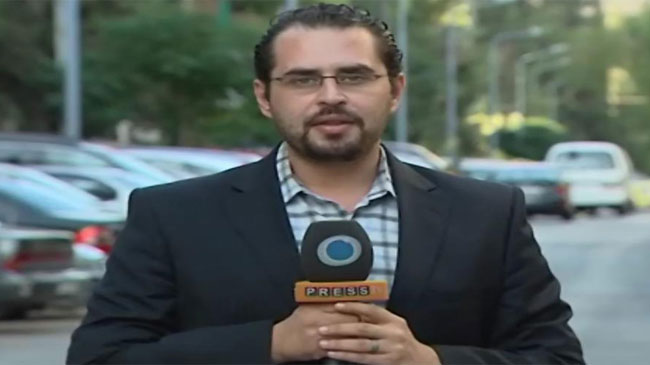 Insurgents in the Syrian capital Damascus have attacked Press TV staff, killing the Iranian English-language news network’s correspondent Maya Naser, and injuring its Damascus Bureau Chief Hossein Morteza.
Naser came under attack while reporting on air just hours ago. He was shot and killed by a sniper.
Press TV and Al-Alam Damascus Bureau Chief Hossein Morteza also came under attack and was injured.
The two were covering twin blasts in Damascus and the ensuing fighting.
“We hold Turkey, Saudi Arabia and Qatar, who provide weapons and militants to kill civilians, military personnel and journalists, responsible for killing Maya,” Press TV’s News Room Director Hamid Reza Emadi said.
“Press TV will pursue the matter of the murder of Maya and would not let those who killed the correspondent feel like they can kill the media people and get away with it,” he emphasized.
Syria has been experiencing unrest since March 2011. Damascus says outlaws, saboteurs, and armed terrorists are behind the unrest, but the opposition accuses the security forces of being behind the violence.
The Syrian government says that the chaos is being orchestrated from outside the country, and there are reports that a very large number of the armed militants are foreign nationals.
Related articles
- French journalist killed by Syrian opposition: Report (alethonews.wordpress.com)
Featured Video

Houthis Don’t Have to Conquer Saudi Arabia to Make It Pay
or go to
Aletho News Archives – Video-Images
From the Archives
Newly Released FBI Docs Shed Light on Apparent Mossad Foreknowledge of 9/11 Attacks
By Whitney Webb | MintPress News | May 17, 2019
NEW YORK — For nearly two decades, one of the most overlooked and little known arrests made in the aftermath of the September 11 attacks was that of the so-called “High Fivers,” or the “Dancing Israelis.” However, new information released by the FBI on May 7 has brought fresh scrutiny to the possibility that the “Dancing Israelis,” at least two of whom were known Mossad operatives, had prior knowledge of the attacks on the World Trade Center. … continue
Blog Roll
 Aletho News
- UK whines about losing billions to ‘Putin tax’
- Baghaei to Rubio: Distorted narratives cannot erase US record of broken commitments
- Houthis Don’t Have to Conquer Saudi Arabia to Make It Pay
- MOE: Nearly 22,000 Students and Education Workers Killed
- Guterres in Islamabad: Genocide, cowardice, and the cage of Imran Khan
- Johnson, Marandi say Yemen holds upper hand over Saudi Arabia
- False flags won’t save aggressors, Iran FM spokesman says
- The Makkah Pact Enters Into Force: The End of American Dominance or Its New Form?
- NATO’s top generals gather in Kiev
- EU’s continuing expansion – greater threat to Russia
- If Americans Knew
- Three Years of Genocide: How America’s Israel-First Media Filtered Out the Truth
- Israeli war chief briefs ministers on potential war against Palestinian Authority
- New Report: Israel Killed nearly 21,000 Palestinian Students and Education Workers in Past Three Years
- Israel’s flailing chatbot army
- Five Palestinians Killed, Others Injured by Israeli Fire in Gaza
- Israel is rewriting the Palestinian curriculum in East Jerusalem to erase Palestinian identity
- Three years of genocide: Israel turned prisons into killing grounds and torture sites
- Three years of genocide. Words fail. Daily Update
- ‘I’d rather die than go back’: A Palestinian teen’s 10-month nightmare in Israeli jail
- How Jared Kushner’s firm’s investment in an Israeli company could be a major conflict of interest
- No Tricks Zone
- New Study: 50 Years Of The Most Aggressive ‘Net Zero’ Policies Can Only Affect The Global Climate By 0.03°C
- US September “Heat” Was No Record…Many Records Set Decades Ago
- Latest European Green Energy Debacle; Portugal’s Largest Flagship Solar Park Insolvent!
- Green Energy Debacle: German Expert Professor Fritz Vahrenholt Warns Of Severe Economic And Social Consequences
- Two More Paleo Reconstructions Affirm Meters-Higher Sea Levels Across Ireland, Brazil 7000-6000 Years Ago
- New Study: Earth And Venus Surface Warmth Largely Explained By Convection And Lapse Rate, Not CO2 Or Radiation
- 2025 Nature Paper Claiming Worsening Global Drought Gets RETRACTED …Heavily Flawed
- New Study: ‘Global Drought Shows No Detectable Recent Acceleration Under Climate Warming’
- Economic Masterminds: German Socialists Suggest Taxing Productivity Gains Stemming From Using AI
- The South China Sea Has Not Been Cooperating With The Climate Change Narrative

