Mike McConnell, the Washington Post & the dangers of sleazy corporatism
By Glenn Greenwald | March 29, 2010

In a political culture drowning in hidden conflicts of interests, exploitation of political office for profit, and a rapidly eroding wall separating the public and private spheres, Michael McConnell stands out as the perfect embodiment of all those afflictions. Few people have blurred the line between public office and private profit more egregiously and shamelessly than he. McConnell’s behavior is the classic never-ending “revolving door” syndrome: public officials serve private interests while in office and are then lavishly rewarded by those same interests once they leave. He went from being head of the National Security Agency under Bush 41 and Clinton directly to Booz Allen, one of the nation’s largest private intelligence contractors, then became Bush’s Director of National Intelligence (DNI), then went back to Booz Allen, where he is now Executive Vice President.

But that’s the least of what makes McConnell such a perfect symbol for the legalized corruption that dominates Washington. Tellingly, his overarching project while at Booz Allen and in public office was exactly the same: the outsourcing of America’s intelligence and surveillance functions (including domestic surveillance) to private corporations, where those activities are even more shielded than normal from all accountability and oversight and where they generate massive profit at the public expense. Prior to becoming Bush’s DNI, McConnell, while at Booz Allen, was chairman of the Intelligence and National Security Alliance, the primary business association of NSA and CIA contractors devoted to expanding the privatization of government intelligence functions.
Then, as Bush’s DNI, McConnell dramatically expanded the extent to which intelligence functions were outsourced to the same private industry that he long represented. Worse, he became the leading spokesman for demanding full immunity for lawbreaking telecoms for their participation in Bush’s illegal NSA programs — in other words, he exploited “national security” claims and his position as DNI to win the dismissal of lawsuits against the very lawbreaking industry he represented as INSA Chairman, including, almost certainly, Booz Allen itself. Having exploited his position as DNI to lavishly reward and protect the private intelligence industry, he then returns to its loving arms to receive from them lavish personal rewards of his own.
It’s vital to understand how this really works: it isn’t that people like Mike McConnell move from public office to the private sector and back again. That implies more separation than really exists. At this point, it’s more accurate to view the U.S. Government and these huge industry interests as one gigantic, amalgamated, inseparable entity — with a public division and a private one. When someone like McConnell goes from a top private sector position to a top government post in the same field, it’s more like an intra-corporate re-assignment than it is changing employers. When McConnell serves as DNI, he’s simply in one division of this entity and when he’s at Booz Allen, he’s in another, but it’s all serving the same entity (it’s exactly how insurance giant Wellpoint dispatched one of its Vice Presidents to Max Baucus’ office so that she could write the health care plan that the Congress eventually enacted).
In every way that matters, the separation between government and corporations is nonexistent, especially (though not only) when it comes to the National Security and Surveillance State. Indeed, so extreme is this overlap that even McConnell, when he was nominated to be Bush’s DNI, told The New York Times that his ten years of working “outside the government,” for Booz Allen, would not impede his ability to run the nation’s intelligence functions. That’s because his Booz Allen work was indistinguishable from working for the Government, and therefore — as he put it — being at Booz Allen “has allowed me to stay focused on national security and intelligence communities as a strategist and as a consultant. Therefore, in many respects, I never left.”
As the NSA scandal revealed, private telecom giants and other corporations now occupy the central role in carrying out the government’s domestic surveillance and intelligence activities — almost always in the dark, beyond the reach of oversight or the law. As Tim Shorrock explained in his definitive 2007 Salon piece on the relationship between McConnell, Booz Allen, and the intelligence community, in which (to no avail) he urged Senate Democrats to examine these relationships before confirming McConnell as Bush’s DNI:
[Booz Allen’s] website states that the Booz Allen team “employs more than 10,000 TS/SCI cleared personnel.” TS/SCI stands for top secret-sensitive compartmentalized intelligence, the highest possible security ratings. This would make Booz Allen one of the largest employers of cleared personnel in the United States.
Among those on Booz Allen’s payroll are former CIA Director and neoconservative extremist James Woolsey, George Tenet’s former Chief of Staff Joan Dempsey, and Keith Hall, the former director of the National Reconnaissance Office, the super-secret organization that oversees the nation’s spy satellites. As Shorrock wrote: “Under McConnell’s watch, Booz Allen has been deeply involved in some of the most controversial counterterrorism programs the Bush administration has run, including the infamous Total Information Awareness data-mining scheme” and “is almost certainly participating in the agency’s warrantless surveillance of the telephone calls and e-mails of American citizens.” For more details on the sprawling and overlapping relationships between McConnell, Booz Allen, the INSA, the Government and the private intelligence community, see Shorrock’s interview with Democracy Now and his 2008 interview with me.
Aside from the general dangers of vesting government power in private corporations — this type of corporatism (control of government by corporations) was the hallmark of many of the worst tyrannies of the last century — all of this is big business beyond what can be described. The attacks of 9/11 exploded the already-huge and secret intelligence budget. Shorrock estimates that “about 50 percent of this spending goes directly to private companies” and “spending on intelligence since 2002 is much higher than the total of $33 billion the Bush administration paid to Bechtel, Halliburton and other large corporations for reconstruction projects in Iraq.”
* * * * *
All of that is crucial background for understanding just how pernicious and deceitful is the Op-Ed published this weekend by The Washington Post and authored by McConnell. The overarching theme is all-too-familiar: we face a grave threat from Terrorists and other Very Bad People (“cyber wars”), and our only hope for protection is to vest the Government with massive new powers. Specifically, McConnell advocates a so-called “reeingeer[ing] of the Internet” to allow the Government and private corporations far greater capability to track what is being done over the Internet and who is doing it:
The United States is fighting a cyber-war today, and we are losing. It’s that simple. . . . If an enemy disrupted our financial and accounting transactions, our equities and bond markets or our retail commerce — or created confusion about the legitimacy of those transactions — chaos would result. Our power grids, air and ground transportation, telecommunications, and water-filtration systems are in jeopardy as well.
Scary! And what do we need to submit to in order to avoid these calamaties? This:
The United States must also translate our intent into capabilities. We need to develop an early-warning system to monitor cyberspace, identify intrusions and locate the source of attacks with a trail of evidence that can support diplomatic, military and legal options — and we must be able to do this in milliseconds. More specifically, we need to reengineer the Internet to make attribution, geolocation, intelligence analysis and impact assessment — who did it, from where, why and what was the result — more manageable.
In one sense, this is just typical fear-mongering of the type the National Security State has used for decades to beat frightened Americans into virtually full-scale submission: you are in grave danger and you can be safe only by vesting in us far greater power, which we’ll operate in secret: here, allowing us to “reengineer” the Internet so we can control it.
Think about how dangerous that power is in relationship to the war I wrote about this weekend being waged on WikiLeaks, which allows the uploading of leaked, secret documents that expose the corruption of the world’s most powerful interests. This “reengineering of the Internet” proposed by McConnell would almost certainly enable the easy tracing of anyone who participates. It would, by design, destroy the ability of anyone to participate or communicate in any way on the Internet under the shield of anonymity. Wired‘s Ryan Singel — noting that “the biggest threat to the open internet is . . . Michael McConnell” — documents the dangers from this “cyber-war” monitioring policy and how much momentum there now is in the Executive and Legislative branches for legislation to implement it (as a result of initiatives that began during the Bush era, under McConnell, and which continue unabated).
But there’s something even worse going on here. McConnell doesn’t merely want to empower the Government to control the Internet this way; he wants to empower private corporations to do so — the same corporations which pay him and whose interests he has long served. He notes that this “reengineering” is already possible because “the technologies are already available from public and private sources,” and explicitly calls for a merger of the NSA with private industry to create a sprawling, omnipotent network for monitoring the Internet:
To this end, we must hammer out a consensus on how to best harness the capabilities of the National Security Agency, which I had the privilege to lead from 1992 to 1996. The NSA is the only agency in the United States with the legal authority, oversight and budget dedicated to breaking the codes and understanding the capabilities and intentions of potential enemies. The challenge is to shape an effective partnership with the private sector so information can move quickly back and forth from public to private — and classified to unclassified — to protect the nation’s critical infrastructure.
We must give key private-sector leaders (from the transportation, utility and financial arenas) access to information on emerging threats so they can take countermeasures. For this to work, the private sector needs to be able to share network information — on a controlled basis — without inviting lawsuits from shareholders and others. . . .
[T]the reality is that while the lion’s share of cybersecurity expertise lies in the federal government, more than 90 percent of the physical infrastructure of the Web is owned by private industry. Neither side on its own can mount the cyber-defense we need; some collaboration is inevitable. Recent reports of a possible partnership between Google and the government point to the kind of joint efforts — and shared challenges — that we are likely to see in the future.
No doubt, such arrangements will muddy the waters between the traditional roles of the government and the private sector. We must define the parameters of such interactions, but we should not dismiss them. Cyberspace knows no borders, and our defensive efforts must be similarly seamless.
In other words, not only the Government, but the private intelligence corporations which McConnell represents (and which are subjected to no oversight), will have access to virtually unfettered amounts of information and control over the Internet, and there should be “no borders” between them. And beyond the dangerous power that will vest in the public-private Surveillance State, it will also generate enormous profits for Booz Allen, the clients it serves and presumably for McConnell himself — though The Washington Post does not bother to disclose any of that to its readers. The Post basically allowed McConnell to publish in its Op-Ed pages a blatant advertisement for the private intelligence industry while masquerading as a National Security official concerned with Keeping America Safe.
It’s not an exaggeration to say that the “cyber-war” policies for which McConnell is shilling is the top priority of the industry he serves. Right this very minute, the front page of the intelligence industry’s INSA website (previously chaired by McConnell) trumpets the exact public-private merger for “cyber-war” policies which McConnell uses the Post to advocate:

The Report just published by that that industry group (.pdf) is entitled “Addressing Cyber Security Through Public-Private Partnership.” The industry’s Report sounds like a virtually exact replica of what McConnell just published in the Post: America is under grave threat and can Stay Safe only by transferring huge amounts of public funds to these private corporations in order to restructure the Internet to allow better detection and monitoring. And look at the truly Orwellian and unintentionally revealing logo under which the Report is written: showing a complete linkage of Government institutions (such as Congress and regulatory agencies), the Surveillance State, private intelligence corporations, and the Internet (click on image to enlarge):

Readers of The Washington Post, exposed to McConnell’s Op-Ed, would know none of this. They would think that they were reading the earnest National Security recommendations of a former top military and government official, and would have no idea about the massive profit motives driving him. Although the Op-Ed, at the end, identifies McConnell as “executive vice president of Booz Allen Hamilton, which consults on cybersecurity for the private and public sector” (as well as a former NSA head, DNI, and retired Admiral), there’s no hint that Booz Allen, its multiple clients, and the industry it represents (along with McConnell himself) would stand to benefit greatly from the very policies he advocates in The Post. Indeed, just like the INSA, the Booz Allen website, at the top, this very minute promotes the exact policies McConnell advocates:

So here we have a perfect merger of (a) exploiting public office for personal profit, (b) endless increases in the Surveillance State achieved through rank fear-mongering, (c) the rapid elimination of any line between the public and private sectors, and (d) individuals deceitfully posing as “objective commentators” who are, in fact, manipulating our political debates on behalf of undisclosed interests.
And, as usual, it is our nation’s largest media outlets (in this case The Washington Post) which provide the venue for these policies to be advocated and glorified, all the while not only failing to expose — but actively obscuring — the bulging conflicts of interests that drive them. While “news” outlets distract Americans with the petty partisan dramas of the day, these factions — whose power is totally impervious to changes in party control — continue to expand their stranglehold on how the Government functions in ways that fundamentally alter our core privacy and liberties, and radically expand the role private corporations and government power play in our lives.
SNEAKY FLYING SPY CAMERAS PROVOKE CIVIL LIBERTY FEARS

By Rod Mills | Express | March 29, 2010
CIVIL liberties groups have condemned a sinister new plan for Scottish police forces to spy on ordinary citizens using unmanned surveillance drones.
The Big Brother-style move will mean the public could be monitored constantly, under the pretext of a crime crack-down.
The Association of Chief Police Officers in Scotland (ACPOS) has joined forces with their English counterpart to form the Unmanned Aerial Systems Steering Group, which meets regularly to discuss the use of the planes, and reports to the Home Office.
The drones have already been tested by Strathclyde Police who used one in rescue operations in rural Argyll.
Scotland’s largest police force is keen to be at the forefront of the new technology. But pressure groups yesterday warned the step was being taken without the consent or support of the public and risked transforming Scotland into a “surveillance state”.
Alex Deanie, of Big Brother Watch, said: “It’s pretty scary that more and more police forces are considering using these.
“They invade our privacy and are being brought in without proper public consultation or support. We need a proper debate about the use of this type of surveillance and its effect on civil liberties before the police start to use these devices.”
There are two types of the military-designed drones that are being looked at by police. The first is a remote-controlled helicopter with CCTV cameras and infra red imaging built in. Flying up to 300 feet at 30mph, they are being tested by Merseyside Police.
But it is the second type that is causing the most concern – flying at 20,000 feet it is invisible to the human eye.
Patrick Harvie, leader of the Scottish Green Party, said: “Some people in the Home Office won’t be happy until they have everyone under 24-hour surveillance and every step towards that should be resisted.” Yesterday Tory justice spokesman Bill Aitken backed the plans, adding: “There are perhaps civil liberties questions, but basic and more important questions are whether or not we want to cut crime.”
Arms manufacturer BAE Systems is adapting the planes – currently used by the Army in Afghanistan – for the police forces to test. A spokesman for ACPOS yesterday said: “The steering group was set up to consider the implications for policing of such technology.”
Policing thought in America: Why can’t we discuss the events of 9/11?
By Jim Fetzer | Online Journal | March 22, 2010
The brain trust that calls itself “The Huffington Post” has disgraced itself and shown the “progressive left” is a cowardly fraud by removing a column guest written by Jesse Ventura about 9/11.
The official explanation from no less than Arianna Huffington, presumably, is “Editor’s Note: The Huffington Post’s editorial policy, laid out in our blogger guidelines, prohibits the promotion and promulgation of conspiracy theories — including those about 9/11. As such, we have removed this post.” Maybe no one explained to these worthies that if any one were to write about 9/11, they would be writing about a conspiracy theory, since the government’s own “official account” is only the most outrageous. And, as Jesse’s new book, AMERICAN CONSPIRACIES (2009) elucidates, there have been many throughout our history.
Conspiracies are as American as apple pie. All they require are two or more individuals acting together to bring about an illegal end. When a couple of guys knock off a 7/11, they are engaged in a conspiracy, even if they are subsequently charged with armed robbery instead. Most America conspiracies are economic, like Enron, WorldCom, and Halliburton. Bernie Madoff comes to mind, since he can’t possibly have done it alone. Since the “official account” maintains that 19 Islamic fundamentalists hijacked four commercial carriers, outfoxed the most sophisticated air defense system in the world, and perpetrated these atrocities under the control of a guy in a cave in Afghanistan, it is a conspiracy theory, too.
Apparently that subject is taboo at The Huffington Post. But if that is the case, then many important events are not going to be covered there. Conspiracies to murder political leaders are far older than the assassination of Julius Caesar and include attempts on the lives of Lincoln, Garfield, McKinley, and Truman. Four of those involved in the Lincoln conspiracy were hanged from the same gallows at the same time. Consider the range of events that could not be understood absent conspiracies as David Mantik, M.D., Ph.D., listed them in his chapter, “The Silence of the Historians,” MURDER IN DEALEY PLAZA (2000), page 402:
Foreign Targets/Assassination Conspiracies (20th Century): Franz Ferdinand / Rajiv Gandhi / Louis Mountbatten / Czar Nicholas II / Adolf Hitler / Rafael Trujillo / Salvadore Allende / Charles DeGaulle / Benigo Aquino / Anwar Sadat / Luis Colosio / Leon Trotsky / Ngo Dinh Diem / Rene Schnneideer / Nhu / Jacobo Arbenz / Grigorli Rasputin / Fidel Mohammed Mossadegh / Castro / Pancho Villa / Ngo Dihn Patrice Lumumba / Pope John Paul II / Saddam Hussein / Manuel Noriega.
Egad! What would Shakespeare have had to write about but for plots against the kings and queens of England? And in the US (20th Century), the list would be extended to include John F. Kennedy, Robert F. Kennedy, Martin Luther King, Jr., Malcolm X, Watergate, Abscam, Iran-Contra, Senator Paul Wellstone, Cpl. Pat Tillman, and many others as well, if you consider the evidence. So if the American press is not even willing to investigate conspiracies, we are going to be unable to begin to understand our own history, including the stories that appear on virtually every page of The New York Times, as I documented in “Thinking about ‘Conspiracy Theories’: 9/11 and JFK,” accessible via Google and published in my book, THE 9/11 CONSPIRACY: THE SCAMMING OF AMERICA (2007). What would history be without them?
The Huffington Post is not the only prominent offender. Even amazon.com has refused to carry the DVD of a conference on “The Science and Politics of 9/11: What’s Controversial, What’s Not,” that I organized in Madison, Wisconsin, 5-7 August 2007. It runs 14-½ hours and includes presentations and discussion about many aspects of 9/11. A publisher tired to market it on amazon.com and found it was suppressed:
Dear Jim
Bad news.
I tried to put it up on Amazon, but the thought controllers have blocked it.
Possible Matches on http://www.amazon.com
ASIN: 1615774629
Product Name: The Science and Politics of 9/11: What’s Controversial. What’s Not.
Binding: DVD
DVD Region Code: 0
EAN: 9781615774623
Sorry, this product is ineligible for Amazon Marketplace selling at this time.
The product you attempted to create a page for is currently suppressed so that it will not appear on our Web site. Because of this, it is ineligible for Amazon Marketplace selling. Products are suppressed in the Amazon.com catalog for numerous reasons. For example, Amazon prohibits the sale of illegal and offensive products. (For more information, please review a complete list of prohibited content.) In addition, products may be suppressed at the explicit request of artists or manufacturers.
As a former Marine Corps officer and retired professor of philosophy, I am at a loss as to what has become of this once-great country of ours. Are we so afraid of the examination of what our government has told us about “the pivotal event of the 21st century” that even progressive publications like The Huffington Post and presumably impartial business operations like amazon.com refuse to publish a column by the former governor of Minnesota or to carry the DVD of a meeting of experts on different aspects of the case? What is there to be afraid of, unless the official account is a house of cards that will collapse if it is critically scrutinized?
And that indeed appears to be the case. According to the “official account” of the destruction of the Twin Towers, the planes hit the buildings, the resulting fires weakened the steel, and a pancake collapse of one floor upon another ensued. But that description is not remotely consistent with the gross observable photo evidence. The buildings appear to be tuning into millions of cubic yards of fine dust:
“Revealing new aerial photos of 9/11 attack released”
James Fetzer, VoltaireNet, 18 February 2010
“New 9/11 Photos Released”
James Fetzer, 10 February 2010
Does this look remotely like a “pancake collapse” to you? A set of 9/11 photos were recently released which, when they are temporally sequenced, provide a glimpse of what was actually going on, which was no “pancake collapse.” Every American deserves to see that the “official account” cannot even accommodate the gross appearance of the Twin Towers as they were destroyed even below ground level.
No one knows exactly how this was done, It appears to have required a highly sophisticated combination of conventional and unconventional means. Once you understand that the sequence of events these photos display cannot have been the result of a “pancake collapse,” that there was no “collapse” at all as these two 500,000-ton buildings were converted into very fine dust, but that some complex form of a demolition under control was taking place and you begin to grasp why not even The Huffington Post or amazon.com can allow you the least glimpse of what actually happened on 9/11. It was indeed “the scamming of America” and the reasons appear to have had nothing to do with Islam or “Arab hijackers.”
James H. Fetzer, McKnight Professor Emeritus, University of Minnesota, Duluth; Founder, Scholars for 9/11 Truth; Editor, Assassination Science; and Co-Editor, Assassination Research, maintains a blog on 9/11 and other “false flag” attacks.
Copyright © 1998-2007 Online Journal
Why I Was Banned in the U.S.A.
By Tariq Ramadan | NEWSWEEK | From the magazine issue dated March 29, 2010
When the American embassy called in August 2004, I was just nine days away from starting a job at Notre Dame’s Kroc Institute for International Peace Studies. I had already shipped my possessions from Geneva, Switzerland, where I was living, to Indiana, and enrolled my kids in a school near our new home. Suddenly, however, an embassy official was telling me my visa had been revoked. I was “welcome to reapply,” the official said, but no reason was offered for my rejection. Sitting in a barren apartment, I decided the process had become too unpredictable; I didn’t want to keep my family in limbo, so I resigned my professorship before it began. I launched a legal battle instead.
It was hardly a fight I had expected. Less than a year earlier, the State Department had invited me to speak in Washington, D.C., and introduced me as a “moderate” Muslim intellectual who denounced terrorism and attacks against civilians. Now it was banning me from U.S. soil under a provision of the Patriot Act that allows for “ideological exclusions.” My offense, it seemed, had been to forcefully criticize America’s support for Israel and the wars in Iraq and Afghanistan. The U.S. accused me of endorsing terrorism through my words and funding it through donations to a Swiss charity with alleged ties to Gaza. Civil-liberties groups challenged my case in court for almost six years until, in late January, Secretary of State Hillary Clinton dropped the allegations against me, effectively ending my ban.
In early April I will make my first public appearance in the U.S., at New York City’s Cooper Union, participating in a panel discussion about Muslims. While it’s a victory of sorts, the fight is not over. Numerous foreign scholars remain banned from U.S. soil. Until the section of the Patriot Act that kept me out of the country is lifted, more people will suffer the same fate. Although the exclusions are carried out in the name of security and stability, they actually threaten both by closing off the open, critical, and constructive dialogue that once defined this country.
In my case, criticizing America’s Middle East policies cast doubt on my loyalty to Western values and cost me a job. But prejudice may ultimately cost the U.S. more. By creating divisions and disregarding its values, even in the name of security, America tells the world that it is frightened and unstable—above all, vulnerable. In the long term, it also reinforces the religious, cultural, and social isolation of minority groups, encouraging the very kind of disloyalty that these ideological exclusions are meant to prevent.
It’s not the first time America has tried to shield itself from dissenting opinions. During the Cold War, dozens of overseas artists, activists, and intellectuals—including British novelist Doris Lessing, Chilean poet Pablo Neruda, and Colombian author Gabriel García Márquez—were denied visas because of their left-leaning ideas. Today, though, the American concept of the “other” has taken on a relatively new and specific form: the Muslim. America must face the reality that, in the West, many adherents to Islam demonstrate loyalty to democratic values through criticism. While violence must always be condemned, such debate must be encouraged if those values are to last.
Ramadan is a professor of Islamic studies at St. Antony’s College, Oxford, and author of What I Believe.
© 2010
Israel wants 1,500 shekels for 15-year-old boy
Ma’an – 20/03/2010
 Israeli forces arrest a Palestinian boy after he attempted to cross the Al-Ram checkpoint on the northern edge of Jerusalem en route to prayers at the Al-Aqsa Mosque on 18 October 2006. [MaanImages/Moamar Awad]
Hebron – Israeli authorities have asked the family of a detained 15-year-old boy to pay 1,500 Israeli shekels (about 400 US dollars) to release the minor, a prisoners solidarity group reported on Saturday.
The boy, Ratib Abu Meizar, was detained on Friday evening in the Zahid neighborhood of central of Hebron in the southern West Bank. He was taken to a detention center housed in the illegal Israeli settlement of Kiryat Arba.
Amjad Najjar, director of the Palestinian Prisoners Society in Hebron, told Ma’an that Abu Meizar’s detention “is a continuation of Israel’s policy of blackmailing the families of detained Palestinian children, a policy which has become official.”
Najjar urged international children’s rights groups to exert pressure on the government of Switzerland and other signatories to the Fourth Geneva Convention to encourage Israel to abide by its responsibilities. Israel is also a signatory to the convention, which extends protection to children in conflict zones.
A spokesman for Israeli police in the West Bank did not immediately return calls seeking comment.
Related articles
- Israeli forces raid Cremisan Monastery in Bethlehem (alethonews.wordpress.com)
- Two Palestinian children detained in Hebron (imemc.org)
- Father and 7-year-old son illegally detained in occupied Hebron (alethonews.wordpress.com)
Canadian government obstructs visit of Mustafa Barghouti
Canadians for Justice and Peace in the Middle East | March 19, 2010
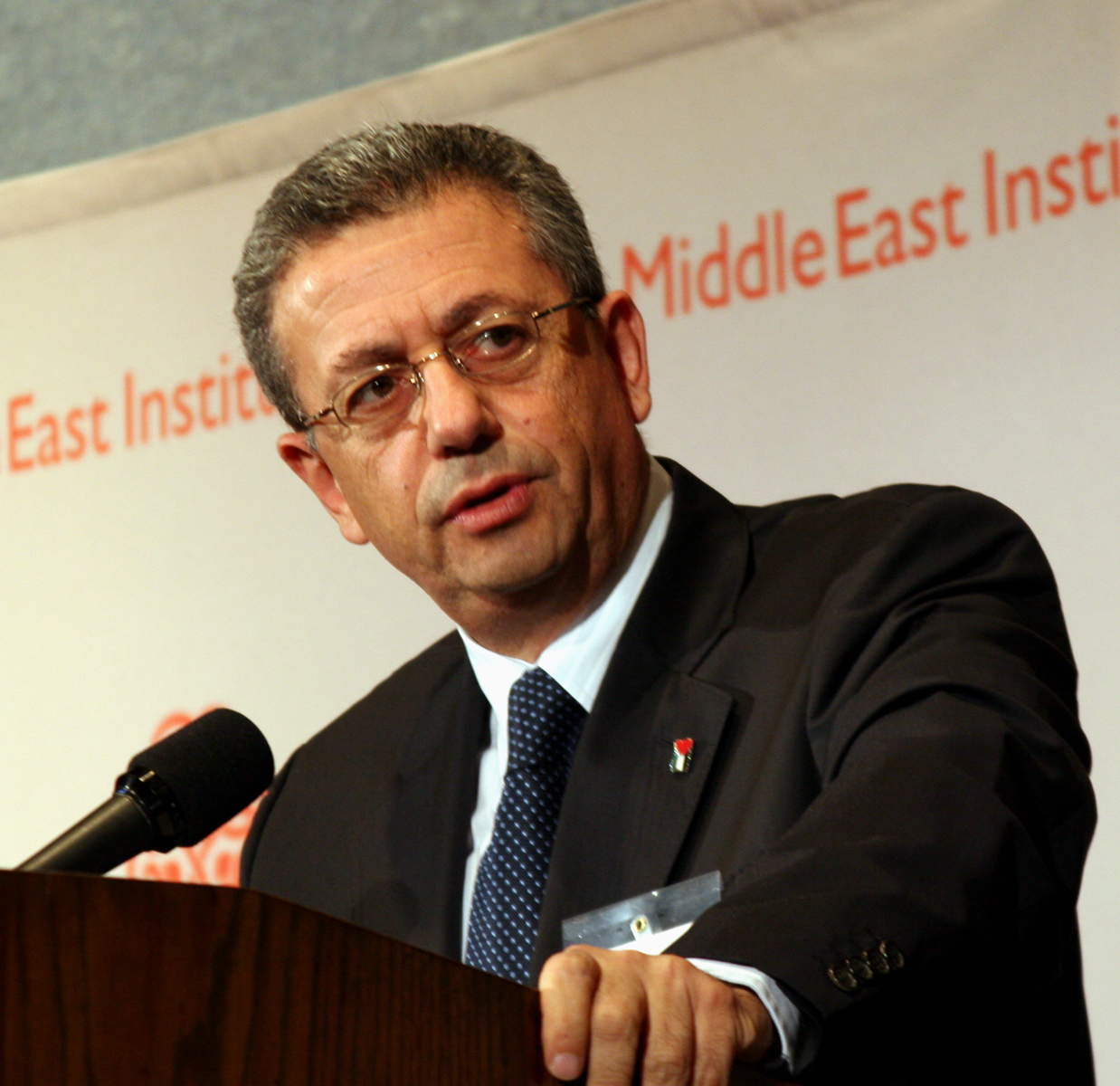 Montreal – The Harper government has obstructed the issuance of a visa to Dr. Mustafa Barghouti, resulting in the cancellation of Dr. Barghouti’s upcoming speaking tour in Toronto, Montreal and Ottawa. Dr. Barghouti applied for a visa on March 5th, for entry into Canada on March 19th, yet despite the urgency of the issue being brought directly to high-level officials in Foreign Affairs and Citizenship and Immigration, the government delayed the issuance of a visa to the point where Barghouti missed two key flights, resulting in a cancellation of Barghouti’s visit. In addition to being a member of the Palestinian Legislative Council, and a former presidential candidate, Dr. Barghouti is a recent Nobel Peace Prize nominee. In the past, Dr. Barghouti has received a visa to Canada within 24 hours after applying.
Dr. Barghouti was scheduled to speak at three public events in Toronto, Montreal and Ottawa on the topic: Palestinian political dynamics and the realities for Middle East Peace. Dr. Barghouti also had appointments with several prominent members of parliament scheduled for Monday, March 22nd. The delays with Dr. Barghouti’s visa were brought to the attention of Foreign Affairs and Citizenship and Immigration as early as Wednesday March 17th, with Minister Cannon being directly advised of the situation. On Thursday, March 18th, the Deputy Minister of Citizenship and Immigration advised the Bloc Quebecois critic Thierry St-Cyr that officials were aware of the urgency of the matter, but were still doing checks on Barghouti, and his host organization Canadians for Justice and Peace in the Middle East (CJPME.)
“This seems to be another example of the Harper government’s dislike for free speech,” declared Thomas Woodley, President of CJPME. “Dr. Barghouti has long advocated for a peaceful transition to a two-state solution in Israel-Palestine – his message should appeal to anyone with a sincere commitment to Middle East peace.” Dr. Barghouti’s record is without blemish: he is a physician and an independent Palestinian politician with a known commitment to non-violence. CJPME believes that the Harper government’s obstruction of Dr. Barghouti’s visa is part of a broader strategy to muzzle or obstruct any voice critical of the policies of the Israeli government.
In addition to his political credentials, Barghouti is also the co-founder of the Health, Development, Information and Policy Institute (1989), the Union of Palestinian Medical Relief Committees (1979), and the Palestinian National Initiative (2002), a reformist political movement positioning itself as a secular, democratic and non-violent alternative to Fatah and Hamas. Canadians for Justice and Peace in the Middle East often hosts speaking tours, and has been a consistent advocate for a just peace in the Middle East, basing all its positions on support for international law, equal expectations for all parties, and a belief that violence is not a solution.
#####
For more information, please contact:
Grace Batchoun
Canadians for Justice and Peace in the Middle East
Telephone: (514) 745-8491
CJPME Website
US silencing Palestinian journalist Mohammed Omer
Action alert, Haymarket Books, 19 March 2010
 Effectively canceling a planned speaking tour, the US consulate in the Netherlands has put an extended hold on the visa application of award-winning Palestinian journalist and photographer Mohammed Omer, scheduled to speak on conditions in Palestine, on 5 April in Chicago.
In 2008, Omer became the youngest recipient of the prestigious Martha Gellhorn Prize for Journalism, for his firsthand reportage of life in the besieged Gaza Strip. As his prize citation explained, “Every day, he reports from a war zone, where he is also a prisoner. He is a profoundly humane witness to one of the great injustices of our time. He is the voice of the voiceless … Working alone in extremely difficult and often dangerous circumstances, [Omer has] reported unpalatable truths validated by powerful facts.”
Upon attempting to return to Gaza following his acceptance of the Gellhorn award in London, Omer was detained, interrogated and beaten by the Shin Bet Israeli security force for over 12 hours, and eventually hospitalized with cracked ribs and respiratory problems. He has since resided in the Netherlands and continues to undergo medical treatment there for his subsequent health problems.
The US consulate has now held his visa application for an extended period of time, effectively canceling a planned US speaking tour without the explanation that a denial would require. In recent years, numerous foreign scholars and experts have been subject to visa delays and denials that have prohibited them from speaking and teaching in the US — a process the American Civil Liberties Union describes as “Ideological Exclusion,” which they say violates Americans’ first amendment right to hear constitutionally protected speech by denying foreign scholars, artists, politicians and others entry to the United States. Foreign nationals who have recently been denied visas include Fulbright scholar Marixa Lasso; respected South African scholar and vocal Iraq War critic Dr. Adam Habib; Iraqi doctor Riyadh Lafta, who disputed the official Iraqi civilian death numbers in the respected British medical journal The Lancet; and Oxford’s Tariq Ramadan, who has just received a visa to speak in the United States after more than five years of delays and denials.
Fellow Gellhorn recipient Dahr Jamail, expressed his disbelief at Omer’s visa hold. “Why would the US government, when we consider the premise that we have ‘free speech’ in this country, place on hold a visa for Mohammed Omer, or any other journalist planning to come to the United States to give talks about what they report on? This is a travesty, and the only redemption available for the US government in this situation is to issue Omer’s visa immediately, and with a deep apology.”
Omer was to visit Houston, Santa Fe and Chicago, where local publisher Haymarket Books was to host his Newberry Library event, “Reflections on Life and War in Gaza,” alongside a broad set of interfaith religious, community and political organizations.
Rather than cancel the meeting, organizers are calling on supporters to write letters and emails calling for the US consulate’s approval of Omer’s visa. They are also proceeding with the event as planned, via live satellite or skype, if necessary.
U.S. consulate information:
Ambassador Fay Hartog Levin
U.S. Embassy in The Hague
Lange Voorhout 102
2514 EJ
The Netherlands
T: +31 70 310-2209
F: +31 70 361-4688
ConsularAmster@state.gov
Background on Mohammed Omer:
Mohammed Omer was born and raised in the Rafah refugee camp in the Gaza Strip. He maintains the website Rafah Today and is a correspondent for the Washington Report on Middle East Affairs. His home in Rafah was crushed by an Israeli bulldozer while the family was inside, seriously injuring his mother. Yet, as Omer explained in an article he wrote upon winning the award, “My ambition was to get the truth out, not as pro-Palestinian or anti-Israeli, but as an independent voice and witness.” His reportage features interviews with regular Palestinians in Gazan attempting to survive amidst bombing, home demolitions and the crippling economic blockade, which has created devastating shortages of electricity, water, fuel and other necessities for survival.
Omer was to visit Chicago to discuss, with Ali Abunimah, Chicago-based author of One Country: A Bold Proposal to End the Israeli-Palestinian Conflict, his reportage, personal experience, and the struggle for Palestinian rights. If the delay on his visa continues, he will take part in the event via live satellite connection or Skype.
Emergency Internet control bill gets a rewrite
By Declan McCullagh | Cnet News | March 17, 2010
Sen. Jay Rockefeller alarmed technology and telecommunications firms last year when he announced a plan for the president to seize “emergency” control of the Internet. Now the West Virginia Democrat is trying again with a new version that aides hope will be seen as less extreme.
During a closed-door meeting on Capitol Hill on Wednesday attended by about a dozen industry representatives, CNET has learned, Rockefeller’s staff pitched a revised version of his controversial cybersecurity legislation.
It says that after the president chooses to “declare a cybersecurity emergency,” he can activate a “response and restoration plan” involving networks owned and operated by the private sector. In an attempt to limit criticism, instead of spelling out the plan’s details, the latest draft simply says that it must be developed by the White House in advance.
There is no requirement that the emergency response plan be made public, meaning it could still include a forcible disconnection of critical Web sites from the Internet–which is what the March 2009 version of the legislation had proposed.
Larry Clinton, president of the Internet Security Alliance, whose members include Verisign, Verizon, and Raytheon, says no disconnection language is explicitly in the bill: “We are pleased that the ‘kill switch’ allowing for the government to shut down private sector access to the Internet has been eliminated.”
But, Clinton said, “We think the bill still has a long way to go.” If the private sector is expected to help out with national security, he said, there ought to be liability protections, insurance breaks, and tax credits for small businesses.
A spokesman for Rockefeller did not respond to repeated requests for comment on Wednesday. Sen. Olympia Snowe, a Maine Republican, is a co-sponsor of the legislation.
The Senate Commerce Committee is scheduled to vote for March 24 on the Rockefeller bill, which will replace an existing measure known as S.773. Because Rockefeller is chairman of the committee, the bill is expected to be approved with little dissent.
Other portions of the 62-page draft bill would create certification requirements for “critical infrastructure information system personnel working in cybersecurity” and punish certain companies that “fail to demonstrate” that they comply with federal specifications. A third section would order the National Science Foundation to fund anti-anonymity research that aims to “to determine the origin of a message transmitted over the Internet.”
Liesyl Franz, vice president for information security at TechAmerica, one of the industry’s largest trade associations, said her group does not support the new version at this time and is still reviewing the language.
“We have to see whether that makes sense,” Franz said, referring to the licensing and certification sections. “We’ve often talked about how companies and industries are very different.”
Franz added: “Frankly, we’d rather not see a prescriptive plan. Seeing a process for developing a plan to get to a goal is a little bit more palatable for the industry.”
The revised Rockefeller bill, called the Cybersecurity Act of 2010, does stress that the White House should develop its cyber-emergency plan “in collaboration” with the private sector. It also says “this section does not authorize…an expansion of existing presidential authorities.”
 Declan McCullagh is a contributor to CNET News and a correspondent for CBSNews.com who has covered the intersection of politics and technology for over a decade. Declan writes a regular feature called Taking Liberties, focused on individual and economic rights; you can bookmark his CBS News Taking Liberties site, or subscribe to the RSS feed. You can e-mail Declan at declan@cbsnews.com.
Pentagon Sees a Threat From Online Muckrakers
By STEPHANIE STROM | New York Times | March 17, 2010
To the list of the enemies threatening the security of the United States, the Pentagon has added WikiLeaks.org, a tiny online source of information and documents that governments and corporations around the world would prefer to keep secret.
The Pentagon assessed the danger WikiLeaks.org posed to the Army in a report marked “unauthorized disclosure subject to criminal sanctions.” It concluded that “WikiLeaks.org represents a potential force protection, counterintelligence, OPSEC and INFOSEC threat to the U.S. Army” — or, in plain English, a threat to Army operations and information.
WikiLeaks, true to its mission to publish materials that expose secrets of all kinds, published the 2008 Pentagon report about itself on Monday.
Lt. Col. Lee Packnett, an Army spokesman, confirmed that the report was real. Julian Assange, the editor of WikiLeaks, said the concerns the report raised were hypothetical.
“It did not point to anything that has actually happened as a result of the release,” Mr. Assange said. “It contains the analyst’s best guesses as to how the information could be used to harm the Army but no concrete examples of any real harm being done.”
WikiLeaks, a nonprofit organization, has rankled governments and companies around the world with its publication of materials intended to be kept secret. For instance, the Army’s report says that in 2008, access to the Web site in the United States was cut off by court order after Bank Julius Baer, a Swiss financial institution, sued it for publishing documents implicating Baer in money laundering, grand larceny and tax evasion. Access was restored after two weeks, when the bank dropped its case.
Governments, including those of North Korea and Thailand, also have tried to prevent access to the site and complained about its release of materials critical of their governments and policies.
The Army’s interest in WikiLeaks appears to have been spurred by, among other things, its publication and analysis of classified and unclassified Army documents containing information about military equipment, units, operations and “nearly the entire order of battle” for American forces in Iraq and Afghanistan in April 2007.
WikiLeaks also published an outdated, unclassified copy of the “standard operating procedures” at the military prison in Guantánamo Bay, Cuba. WikiLeaks said the document revealed methods by which the military prevented prisoners from meeting with the International Red Cross and the use of “extreme psychological stress” as a means of torture.
The Army’s report on WikiLeaks does not say whether WikiLeaks’ analysis of that document was accurate. It does charge that some of WikiLeaks’s other interpretation of information is flawed but does not say specifically in what way.
The report also airs the Pentagon’s concern over some 2,000 pages of documents WikiLeaks released on equipment used by coalition forces in Iraq and Afghanistan. The Pentagon concluded that such information could be used by foreign intelligence services, terrorist groups and others to identify vulnerabilities, plan attacks and build new devices.
WikiLeaks, which won Amnesty International’s new media award in 2009, almost closed this year because it was broke and still operates at less than its full capacity. It relies on donations from humans rights groups, journalists, technology buffs and individuals, and Mr. Assange said it had raised just two-thirds of the $600,000 needed for its budget this year and thus was not publishing everything it had.
Perhaps the most amusing aspect of the Army’s report, to Mr. Assange, was its speculation that WikiLeaks is supported by the Central Intelligence Agency. “I only wish they would step forward with a check if that’s the case,” he said.
AP photojournalist injured in Hebron
Ma’an – 18/03/2010
Hebron – An photojournalist sustained injuries to his back after being struck by a tear-gas canister on Wednesday during clashes between Palestinians and Israeli forces.
Nasser Shiyoukhi, a photographer for The Associated Press, was critically injured, witnesses said. A Palestine Red Crescent ambulance reportedly transferred the journalist to a nearby hospital, although it was not immediately clear which one.
Shiyoukhi was among several photojournalists covering ongoing confrontations around the Tarek Bin Ziab street in southern Hebron when he was struck by the projectile.
An Israeli military spokesman told Ma’an that a photojournalist was lightly injured during a riot. Palestinians in the area hurled rocks at Israeli forces, who responded with riot dispersal means, the spokesman said. He added that, in the Israeli army’s view, all journalists and others covering violent events do so at their own risk.
Shiyoukhi was arrested near the Ibrahimi Mosque in late February over allegations he assaulted a settler in Hebron two months earlier, a move that drew the ire of local media advocates.
The Palestinian Center for Development and Media Freedoms (MADA) strongly condemned what it termed Israeli attacks against a group of journalists in the West Bank and Jerusalem in recent days.
EFF Posts Documents Detailing U.S. Law Enforcement Collection of Data From Social Media Sites
By Marcia Hofman | Electronic Frontier Foundation | March 17, 2010
EFF has posted documents shedding light on how law enforcement agencies use social networking sites to gather information in investigations. The records, obtained from the Internal Revenue Service and Department of Justice Criminal Division, are the first in a series of documents that will be released through a Freedom of Information Act (FOIA) case that EFF filed with the help of the UC Berkeley Samuelson Clinic.
One of the most interesting files is a 2009 training course that describes how IRS employees may use various Internet tools — including social networking sites and Google Street View — to investigate taxpayers.
The IRS should be commended for its detailed training that clearly prohibits employees from using deception or fake social networking accounts to obtain information. Its policies generally limit employees to using publicly available information. The good example set by the IRS is in stark contrast to the U.S. Marshalls and the Bureau of Alcohol, Tobacco, Firearms and Explosives. Neither organization found any documents on social networking sites in response to EFF’s request suggesting they do not have any written policies or restrictions upon the use of these websites.
The documents released by the IRS also include excerpts from the Internal Revenue Manual explaining that employees aren’t allowed to use government computers to access social networking sites for personal communication, and cautioning them to be careful to avoid any appearance that they’re speaking on behalf of the IRS when making personal use of social media.
The Justice Department released a presentation entitled “Obtaining and Using Evidence from Social Networking Sites.” The slides, which were prepared by two lawyers from the agency’s Computer Crime and Intellectual Property Section, detail several social media companies’ data retention practices and responses to law enforcement requests. The presentation notes that Facebook was “often cooperative with emergency requests” while complaining about Twitter’s short data retention policies and refusal to preserve data without legal process. The presentation also touches on use of social media for undercover operations.
Over the next few months, EFF will be getting more documents from several law enforcement and intelligence agencies concerning their use of social networking sites for investigative purposes. We’ll post those files here as they arrive.
Featured Video

When Israel Is Mighty
or go to
Aletho News Archives – Video-Images
From the Archives
US murdering 1 million Iraqis is democracy, Iran giving yogurt to Iraq is “domination”
By Ali Salaam | American Herald Tribune | July 31, 2017
The New York Times, owned by the Zionist Jewish supremacist Ochs-Sulzberger family, has no problem with Iraqi suffering as long as Iran is not the one behind it.
The Iraq War was a genocide of the Iraqi people by Zionist supremacists in the Bush administration. Over 1 million innocent people were killed based on a lie. American soldiers died in an Israeli war and now an average of 22 soldiers commit suicide every day because their consciences cannot cope with the fact they committed crimes in an illegal war that served no purpose other than to benefit Israel, not America.
Benjamin Netanyahu, Prime Minister of the Zionist regime, once said “We are benefiting from one thing, and that is the attack on the Twin Towers and Pentagon, and the American struggle in Iraq.”
Paul Wolfowitz had his sights on Iraq since his time in the first Bush administration. Former Israeli official and Bush administration official Richard Perle had his eyes on Iraq since at least his authorship of the Clean Break white paper. The Zionist regime had their eyes on Iraq since the 1980s when strategist Oded Yinon wrote his white paper in support of dividing the Arab-Muslim world along ethnic and sectarian lines. The global Zionist lobby has had their eyes on Iraq since Theodor Herzl stated that Eretz Israel’s true borders go from the Nile River in Egypt to the Euphrates River in Iraq. … continue
Blog Roll
 Aletho News
- Huckabee aide goes to ‘unusual lengths’ to portray ‘Israel’ positively
- Trump Announces Diesel Supply Deal With Putin Following Phone Call
- MEP blasts ‘Euro-Gestapo’ for lecturing Russia on democracy
- Syria May Send Troops to Saudi Arabia Amid War with Ansar Allah
- UK whines about losing billions to ‘Putin tax’
- Baghaei to Rubio: Distorted narratives cannot erase US record of broken commitments
- Houthis Don’t Have to Conquer Saudi Arabia to Make It Pay
- MOE: Nearly 22,000 Students and Education Workers Killed
- Guterres in Islamabad: Genocide, cowardice, and the cage of Imran Khan
- Johnson, Marandi say Yemen holds upper hand over Saudi Arabia
- If Americans Knew
- Gaza ceasefire exists in name only, say more than 100 organizations
- Nearly 2 Million in Gaza Need Urgent Shelter Assistance as Winter Looms: IOM Chief Warns
- Suppressing Palestinian resistance: US charity under fire for AI monitoring of Gaza classrooms
- Thousands Are Held in Israeli Torture Camps. This Is What Happens Inside
- Israel puts Gaza’s sick, injured, newborn in peril – Daily Update
- Report claimed Mark Levin used by Israeli government to influence Trump
- Over 2,000 Gazans have died awaiting medical evacuation amid Israel’s continued siege
- How a U.S. Diplomat Suppressed and Altered Reports Critical of Israel
- 5 Palestinians Die from Israeli Strikes in Gaza as Relentless Attacks Continue
- Report: Ceasefire Slows Killing but Leaves Devastation Intact
- No Tricks Zone
- New Study: 50 Years Of The Most Aggressive ‘Net Zero’ Policies Can Only Affect The Global Climate By 0.03°C
- US September “Heat” Was No Record…Many Records Set Decades Ago
- Latest European Green Energy Debacle; Portugal’s Largest Flagship Solar Park Insolvent!
- Green Energy Debacle: German Expert Professor Fritz Vahrenholt Warns Of Severe Economic And Social Consequences
- Two More Paleo Reconstructions Affirm Meters-Higher Sea Levels Across Ireland, Brazil 7000-6000 Years Ago
- New Study: Earth And Venus Surface Warmth Largely Explained By Convection And Lapse Rate, Not CO2 Or Radiation
- 2025 Nature Paper Claiming Worsening Global Drought Gets RETRACTED …Heavily Flawed
- New Study: ‘Global Drought Shows No Detectable Recent Acceleration Under Climate Warming’
- Economic Masterminds: German Socialists Suggest Taxing Productivity Gains Stemming From Using AI
- The South China Sea Has Not Been Cooperating With The Climate Change Narrative

