Russian envoy: Hamas national movement
Palestine Information Center – August 1, 2017
TEHRAN – Hamas is a national liberation movement and Moscow does not consider it a terrorist organization, Russian Ambassador to Tehran Levan Dzhagaryan said Tuesday.
Reporting from Tehran, a PIC news correspondent said Dzhagaryan told Hamas representative in Iran, Khaled al-Kaddoumi, that Hamas is a national resistance movement and one of the Palestinians’ main legitimate representatives.
The Russian ambassador reiterated his country’s support for the Palestinian cause and people.
Al-Kaddoumi briefed the Russian envoy on the Israeli violations in Occupied Jerusalem and the crimes committed against the Palestinian people and holy sites.
Turkey, US accuse each other of terror sponsorship in Syria
Press TV – August 1, 2017
Turkey and the United States have been accusing each other of supporting various terrorist groups in Syria.
Brett H. McGurk, the US special envoy to the international coalition against the Daesh terrorist group, has suggested that Turkey facilitates al-Qaeda terrorists in Syria’s Idlib Province.
He said in a speech delivered at a Washington-based think tank on July 29 that Idlib has turned into a “safe zone for al-Qaeda terrorists on the Turkish border,” asking “why and how” a deputy to al-Qaeda’s leader had allegedly managed to travel to the Syrian province.
He said it might not be the best approach for some partners of the US “to send tens of thousands of weapons and turn their faces to the other side as foreign fighters enter this area,” according to reports.
The US, McGurk reportedly said, intended to work with Turkey to have the border closed to recruited militants.
Ankara has strongly denounced McGurk’s “provocative” remarks, accusing Washington of terror sponsorship in Syria by supporting the Kurdish People’s Protection Units (YPG), which Ankara views as the Syrian branch of the Kurdistan Workers’ Party (PKK), a militant group that has been fighting the central Turkish government since 1984.
“Our reaction to the statements of Brett McGurk, in which he associated Turkey with the presence of terrorist organizations in Idlib, was brought to Mr. McGurk’s attention at a high-level démarche, and his statements, which could be characterized as provocative, were protested,” Turkish media on Monday quoted Foreign Ministry spokesperson Huseyin Muftuoglu as saying.
Muftuoglu also said that the US had to end its support for the Kurdish Democratic Party, aka PYD.
A Turkish Foreign Ministry official, who asked not to be named, also told Hurriyet Daily News that Foreign Ministry Deputy Undersecretary Sedat Onal had urged the US envoy to “correct” his statements.
The official added that Onal warned that such remarks could harm mutual cooperation between Turkey and the US, which is seeking cooperation with Ankara for the post-Daesh period in Syria.
Syria has been gripped by militancy since March 2011, when a section of the opposition in the country took up arms against President Bashar al-Assad. A vast mix of foreign terrorists soon blended with the armed opposition, joining the fight against the Syrian government.
Don’t be Fooled, the CIA was Only Half the Problem in Syria
By Steven MacMillan – New Eastern Outlook – 31.07.2017
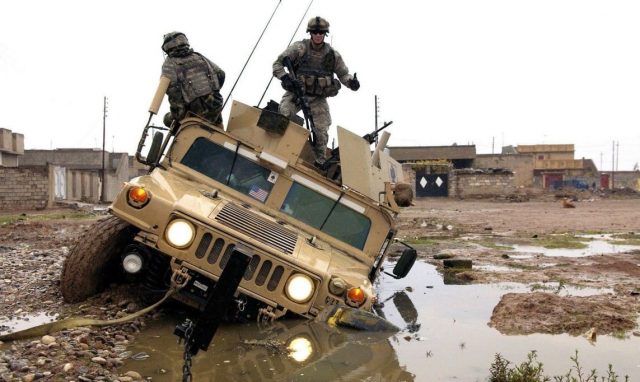
The news that President Trump has halted the CIA program to arm and train rebel groups in Syria should be viewed with caution, as the CIA program only represented half of US involvement in Syria. Even if we take this information as completely accurate, and the CIA will cease to be involved in any covert programs in Syria, there is still a giant arm of US imperialism that is going to be heavily involved in the Syrian conflict for the foreseeable future; namely, the Pentagon.
The notion that the CIA was the only branch of the US establishment involved in the destabilization of Syria is nonsense. The US has always had two operations running simultaneously in Syria, with one being run by the CIA, and other being ran by the Pentagon. As Reuters reported in an article in May of this year, titled: Syrian rebels say U.S., allies sending more arms to fend off Iran threat, military aid has been provided through “two separate channels:”
“Rebels said military aid has been boosted through two separate channels: a program backed by the U.S. Central Intelligence Agency (CIA), known as the MOC, and regional states including Jordan and Saudi Arabia, and one run by the Pentagon.”
These two programs have often clashed, as was the case last year, when militias armed by the CIA fought against militias armed by the Pentagon.
The Pentagon has been as involved in the disastrous operation to arm and train rebels in Syria as the CIA has, and has contributed heavily to the mess on the ground.
In September 2015 for instance, it was reported that a Pentagon-armed group of rebels – named Division 30 – handed over their weapons to al-Qaeda in Syria, a scenario that was a common outcome from many CIA operations as well. The Pentagon, never shy to blow an obscene amount of taxpayers’ money on imperial matters, has already wasted hundreds of millions of dollars training and arming rebels in Syria, yet Trump only wants to increase the US war budget.
Trump: The Man of the Military
Trump’s decision to halt the CIA program was hardly surprising, considering the support Trump has received from large sections of the military. A look at the backgrounds of the individuals that Trump has given cabinet positions reveals Trump’s close relationship with the military.
The Secretary of Homeland Security for instance, John Kelly, is a retired Marine Corps General and former Commander of US Southern Command. Trump’s pick for the Director of the CIA is even more telling, as Mike Pompeo has his roots in the military, graduating from West Point in the 1980s:
“Mr. Pompeo graduated first in his class at the United States Military Academy at West Point in 1986 and served as a cavalry officer patrolling the Iron Curtain before the fall of the Berlin Wall. He also served with the 2nd Squadron, 7th Cavalry in the US Army’s Fourth Infantry Division.”
Undoubtedly, there are many good forces in the US military (as in any other large organization), and there is nothing wrong with having a military background. But equally, there are also many nefarious forces in the military, and the influence of military-industrial complex is pervasive, constantly agitating for more imperial wars.
With this context in mind, it is hardly surprising that Trump favours the Pentagon program over the CIA one, especially considering the power struggle taking place between the CIA and the military within the US. It should be highlighted that Trump has notcompletely halted all US programs to arm and train militias in Syria, he has merely shutdown one channel.
Pentagon Using Kurds to Balkanize Syria
The Pentagon has been heavily involved in arming Kurdish forces in Syria, using them as a tool to attempt to Balkanize and fracture Syria into micro-states. In May of this year, President Trump approved a plan – supported by many in the Pentagon – to arm the People’s Protection Unit (YPG), a Kurdish militia operating predominantly in northern Syria.
The YPG is also the controlling militia in the US-backed Syrian Democratic Forces (SDF), which includes an array of other militias. In addition to providing arms to the YPG, US special forces have been pictured on the ground in northern Syria working in conjunction with YPG fighters.
When most of the public was distracted by the story of Trump halting the CIA program, footage surfaced showing US armed military vehicles passing through Qamishli – a city in northern Syria on the Turkish border – reportedly on route to Raqqa. The recipients of the vehicles are believed to be either the SDF or US forces directly, who are involved in the battle against ISIS in Raqqa.
If (or when) ISIS is defeated in Raqqa, it will be very interesting to see who ends up controlling the city. It is possible that the Pentagon wants to defeat ISIS in Raqqa, and then hand Raqqa to the Kurds – a scenario that many Kurds would only be too happy with. In March of this year, Saleh Muslim, the co-chair of the Syrian Kurdish Democratic Union Party (PYD) – the political affiliate of the YPG – said that once ISIS is defeated in Raqqa, the city should be incorporated into a Kurdish state in northern Syria.
The Pentagon’s support for Kurdish forces is clearly part of a strategy to break the northern part of the country away from control of the Syrian government in Damascus. A subservient Kurdish state in northern Syria (which would probably join with Kurdish zones in Iraq and other countries in the future) would allow the US to have a permanent military presence in Syria, and easy access to the natural resources in the Kurdish region.
The creation of a Kurdish state in northern Syria would of course cause a severe breakdown in relations with NATO member Turkey, given the views of the current Turkish leadership that is. Turkey considers the YPG to be an extension of the Kurdistan Workers Party (PKK), a group Ankara views as a terrorist organization. Turkey has repeatedly denounced US support for Kurdish groups in Syria, with this being a major source of disagreement between the US and Turkey. It is no coincidence that Turkish state media recently published a list of classified US military bases and outposts in northern Syria, with this information revealing the extent to which the US military is embedded in Kurdish-controlled regions in Syria.
The plan to Balkanize Syria is well on its way, and the Pentagon is leading the charge. How Russia positions herself in the coming months will be crucial for the future of Syria.
US systematically targeting residential areas: Syria to UN
Press TV – July 31, 2017
Damascus has called on the UN to end the Washington’s crimes against Syrian civilians, while stressing that the US is systematically targeting residential areas.
On Sunday, the Syrian foreign ministry sent two letters to UN Secretary General Antonio Guterres and the chairman of the UN Security Council, calling for the dissolving of the US-led coalition in Syria which is operating in the country without permission from Damascus.
“The US-led international coalition continues to commit massacres against Syrian innocent civilians through conducting systematic airstrikes on the provinces of Raqqah, Hasakah, Aleppo and Dayr al-Zawr on a daily basis,” reads the letter.
The letters were sent after at least six civilians lost their lives and nearly a dozen others sustained injuries when the US-led coalition, purportedly fighting the Daesh Takfiri terrorist group, conducted a series of airstrikes in Syria’s eastern province of Dayr al-Zawr.
The letters noted that the coalition’s member states continue to support terrorist groups such as Daesh and Jabhat al-Nusra.
The military alliance has repeatedly been accused of targeting and killing civilians. It has also been largely incapable of fulfilling its declared aim of destroying Daesh.
“Those attacks contributed to the spread of creative chaos, the killing and destruction which fulfill goals of the coalition and the terrorist organizations in destabilizing security in the region, destroying Syria’s capabilities and prolonging the crisis in a way that serves the interests of the Israeli entity,” it adds.
Syria has been has been fighting different foreign-sponsored militant and terrorist groups since March 2011. UN Special Envoy for Syria Staffan de Mistura estimated last August that more than 400,000 people had been killed in the crisis until then.
Israeli forces shoot, injure Palestinian in Salfit tending to his land near separation wall
Ma’an – July 29, 2017
 SALFIT – Israeli forces shot and injured a Palestinian on Friday while he was tending to his land near Israel’s separation wall in the village of Deir Ballut in the western part of Salfit district in the occupied West Bank.
Medical sources at the Palestinian Red Crescent told Ma’an that Faed Saleh Odeh Moussa, 33, was injured with a live bullet in his left hand after Israeli forces opened fire on him while he was on his land watering trees.
The sources added that he was transferred to the Yasser Arafat Hospital in Salfit, where doctors reported his injury as moderate.
Saed, Moussa’s brother, told Ma’an that they were caring for their land near Israel’s separation wall, like every Friday, when Israeli forces arrived in the area at 7:30 p.m. and randomly opened live ammunition on them.
Saed said that they quickly hid behind rocks before his brother was injured. He added that their children were also with them at the time and two men from Qalqiliya city in the northern West Bank who were en route to Israel.
Israeli forces remained in the area for some time before leaving following the incident, Saed noted. He added that he had called the Deir Ballut municipality to inform them of the incident, who said that they would notify the Palestinian liaison of the incident.
An Israeli army spokesperson told Ma’an she would look into reports on the incident.
According to the Bethlehem-based Applied Research Institute — Jerusalem, the village of Deir Ballut has had thousands of dunams of land confiscated for the purpose of illegal Israeli settlement building, while Israel’s separation wall — deemed illegal by the International Court of Justice in 2004 — is expected to swallow up at least 35 percent of the village’s lands.
Such Israeli activities in Palestinian villages coincide with upticks of Israeli violence against Palestinians — both by Israeli forces and settlers, as Palestinians are stripped of their lands and often barred from entering Israel’s so-called security “buffer zones” on the Palestinian side of the separation wall.
The UN has reported that at least 92 Palestinians are injured by Israeli forces every two weeks, while 1,444 Palestinians were injured by Israeli forces this year, as of July 17. However, this data does not include the hundreds of Palestinians who were injured during Al-Aqsa protests post-July 17.
MK calls for building synagogue in Al-Aqsa
MEMO | July 25, 2017
Extremist Israeli Jewish MK from the Jewish Home party, Bezalel Smotrich, has called for building a synagogue inside the Al-Aqsa Mosque courtyard, Al-Resalah newspaper reported yesterday.
The Palestinian newspaper said that the Israeli TV Channel 7 reported Smotrich saying that the best Zionist response to the Palestinian rejection to the Israeli measures at Al-Aqsa Mosque is to let them understand that they had paid a “high price” for their acts.
He said that the best response would be to build a synagogue in the yards of Al-Aqsa Mosque in response to the attack on the settlement of Halamish, where three Israeli settlers were killed.
“I would set up a synagogue on the Temple Mount today, this morning.”
“The Zionist response would largely be to make the other side understand and feel that they have lost. They must understand that they gain nothing from terrorism. They are the only ones who will lose, and this will happen on three levels,” Smotrich told Arutz Sheva. “If I am the Prime Minister – this morning I would close the Temple Mount to Arab prayer and establish a Synagogue for Jews.”
Palestinians have been rejecting Israel’s latest security measures at Al-Aqsa Mosque which include metal detectors and advanced surveillance cameras. The metal detectors were removed late last night however more cameras were setup at the mosque. Mass protests have been held against the latest Israeli policies with occupation forces responding in a heavy handed manner. Seven Palestinians were killed in the ten days since 14 July and 1,090 were injured.
Philippines urges US to return church bells
Press TV – July 25, 2017
Philippine President Rodrigo Duterte has demanded the United States return church bells seized by American forces in a bloody campaign more than a century ago, in another blast at his country’s traditional ally.
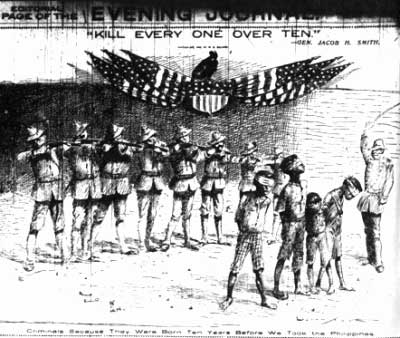
American forces took three bells from the Catholic church of Balangiga town on the eastern island of Samar in 1901 as war booty in what historians said was a particularly brutal military operation in the new US colony.
“Give us back those Balangiga bells. They are not yours. They are ours. They belong to the Philippines. They are part of our national heritage,” Duterte said at his annual State of the Nation Address on Monday.
“Those bells are reminders of the gallantry and heroism of our forebears who resisted the American colonizers and sacrificed their lives in the process.”
Two of the bells are installed at a memorial for US war dead in Wyoming, while the third is with US forces in South Korea.
Some US politicians oppose the dismantling of the memorial.
US embassy spokeswoman Molly Koscina gave a non-committal reply on Tuesday to Duterte’s demands.
“We are aware that the bells of Balangiga have deep significance for a number of people, both in the United States and in the Philippines,” she said in an email to AFP.
Duterte on Monday repeated a Filipino account of the campaign that the commanding general, Jacob Smith, ordered Samar be turned into a “howling wilderness” and that all Filipino males aged 10 or above be killed.
A 1902 US court-martial convicted Smith of a minor offence in relation to the Samar campaign, while 39 other Americans were separately found guilty of torturing and shooting Filipino prisoners there, the US Army War College research paper said.
However none of them were jailed, according to the paper.
The then Philippine president Fidel Ramos first sought but failed to recover the bells during a 1998 Washington trip.
Duterte, a self-described socialist, has since his election last year worked to distance Manila from Washington while building closer ties with China and Russia.
The Philippine islands, a Spanish colony for centuries, were ceded to the United States in 1898 at the end of the Spanish-American War. The Philippines gained independence from the Americans in 1946.
Duterte has repeatedly lashed out at the US as ties have frayed, and last Friday vowed he would never visit the “lousy” country despite an earlier invitation extended by US President Donald Trump.
Move to End CIA Support for Syria Rebels Cuts US Losses – Ex-EU Adviser
Sputnik – 25.07.2017
President Donald Trump’s move to end the CIA training program for Syrian rebels finally cuts US losses and acknowledges the failure of efforts to topple President Bashar Assad, former European Union adviser Paolo von Schirach told Sputnik.
On Friday, US Special Operations Command head Raymond Thomas said at a security forum that the administration ended the CIA train-and-arm initiative after assessing the nature of the program and its viability in light of US objectives.
“The chance of overthrowing Assad via military actions is a dream,” Schirach said. “US efforts to force regime change in Damascus by supporting the domestic Syrian opposition through military assistance have failed.”
Schirach, who is also the president of the Global Policy Institute and professor of international affairs at BAU University in Washington, said the decision to end the CIA training program marked a belated recognition by US policymakers that they were not going to be able to topple Assad and his government in Damascus, no matter how many weapons and support they funnelled to the rebels.
Trump’s decision showed US policymakers had abandoned a six year effort by the Obama administration to build up military rebel forces in Syria, Schirach claimed.
“I call this cutting one’s losses and moving on,” he said.
Schirach said some of Trump’s critics claimed that cutting off the rebels had been a major US favor to Russian President Vladimir Putin without getting anything in return.
“They argue that arming the Syrian rebels was smart because it created a pressure point against the Assad regime that could have been used at a later date as a bargaining chip during negotiations about a future settlement of the conflict in Syria,” he said.
However, Schirach maintained that Trump had scrapped a program that had already clearly failed at enormous cost.
“While the details about how much money was spent and how effective this operation has been are not publicly available, the truth is that the Syrian opposition aided by the US and several Arab countries was never very effective; and now it has been essentially beaten,” Schirach pointed out.
After the fall of Aleppo, the CIA-backed Syrian rebel groups lost any remaining chance of overthrowing the Damascus regime, or even inflicting serious damages to it, Schirach remarked.
The decision to end training and support for the Syrian rebel groups was not just a personal call by Trump but represented a major and sustained policy change by the US government, Schirach insisted.
“There seems to be a new consensus within the US Government that removing Assad from power is no longer a priority. [Previous President Barack] Obama instead repeatedly declared that Assad ‘had to go,’ because of his violations of human rights and other crimes against the Syrian people,” he recollected.
However, current Secretary of State Rex Tilllerson and others actually said publicly that the removal of Assad from power was no longer a precondition for any serious talks about the future of Syria, Schirach recalled.
“Given all this, continuing a CIA-funded operation aimed at arming a few Syrian rebels who do not have any realistic chances to achieve much against regular pro-Assad forces backed by Russia, Iran and Hezbollah, seems like a waste of time and money,” he explained.
Syrian rebels who were included in the CIA-funded program who had counted on continuing US support would have every right to feel betrayed, Schirach acknowledged.
“But this would not be the first time in which allies of America have been dropped by Washington, on account of larger strategic considerations,” he remarked.
Trump reportedly decided to halt the training of Syrian rebels about a month ago after a meeting with CIA Director Mike Pompeo and national security adviser H.R. McMaster. The program originally ramped up in 2015 and was designed to produce a force of more than 5,000 troops to fight the Syrian government.
Hezbollah fighters remove Nusra’s flag from Dahr al-Huwwah mountain in Arsal’s outskirt, replace it with Lebanese and Hezbollah flags ♥️💛 pic.twitter.com/dKmoWSLVoy
— Ali (@Ali_Kourani) July 22, 2017
Palestinians, B’nai Brith and Canada’s New Democratic Party
Niki Ashton injects vital ideas and principles into the NDP leadership campaign

Niki Ashton. Image credit: Matt Jiggins/ flickr
By Prof. Tony Hall | American Herald Tribune | July 24, 2017
Like many NATO countries, Canada has suffered from an impoverishment of free and open debate when it comes to the issue of relations with the Israeli government and the Palestinian people. In country after country the Israeli lobby dominates not only governing parties but opposition parties as well.
The Canadian Parliament has epitomized the pattern. Elected federal officials have conspicuously failed to reflect the anxieties felt by many Canadians of conscience who have managed to become well informed on Palestinian-Israeli relations. There has been little in Canadian parliamentary debates or in mainstream media reports to reflect the views of those most attuned to the unmitigated suffering of Palestinian people under the jack-booted authoritarianism of Israeli domination.
In recent years the Liberals and Conservatives and the New Democrats (NDP) have maintained a blind eye towards Israeli assaults on the Palestinian people especially in Gaza and in the Occupied Territories seized through Israeli conquest a half century ago. Typically Canadian parliamentarians parrot one another across party lines on the sanctity of the “Israeli right of self-defence.” Concurrently our elected representatives mostly fail to notice that Palestinians share with all peoples a basic human right to protect themselves against systematic bouts of dispossession, disempowerment, mass incarcerations, and industrial-scale military murders sometimes heartlessly described as “cutting the grass.”
In 2016 Liberal Prime Minister Justin Trudeau joined with the Conservative Party of Canada in backing a motion to condemn all groups and individuals supporting the Boycott, Divestment and Sanctions movement aimed at penalizing Israel for its anti-Palestinian infractions. Only one federal party, the diminutive Bloc Québécois, has openly argued that “the BDS campaign constitutes legitimate criticism of Israeli policies.”

Tom Mulcair. Image credit: United Steelworkers/ flickr
In the prelude to the federal election of 2015 Tom Mulcair, the leader of the party that is supposed to embody Canadian social democracy, highlighted his own attachment to Zionist extremism by purging the New Democratic Party of federal candidates who expressed support for Palestinian rights. For Mulcair, those seeking to represent the NDP under his leadership were punished for noticing that the United Nations agencies had accused the Israeli Defence Force of “war crimes” in the military invasions of Gaza in 2009 and 2014.
The NDP’s venerable veteran parliamentarian, Libby Davies, was an early casualty of Tom Mulcair’s marked bias in taking sides in the Israeli-Palestinian conflict. Other casualties included Morgan Wheeldon, Jerry Natanine and Paul Manly, the son of long-serving NDP parliamentarian and United Church clergyman, James Manly. The son’s alleged crime was to have called for the release of his father from custody after the elder Manly was arrested in a Finnish ship carrying humanitarian supplies through the Israeli-enforced blockade encircling Gaza.
B’nai Brith Canada versus NDP Leadership Candidate, Niki Ashton
Is the conformist complacency in the glum parliamentary proceedings concerning Palestine and Israel about to come to an end? Perhaps that change will occur if a spark of controversy in the NDP leadership race ignites wider debate on such crucial issues of Canadian public policy.
The contest to replace Tom Mulcair is showing signs of vibrancy that began with a clash of interpretations pitting NDP leadership candidate Niki Ashton’s pro-Palestinian politics against B’nai Brith Canada. B’nai Brith Canada is the local extension of the US and Israeli-based Anti-Defamation League of B’nai B’rith.
Ms. Ashton represents a huge and largely Aboriginal riding in the northern part of the Canadian province of Manitoba. As many see it, Ms. Ashton’s convictions concerning the importance of Palestinian rights are a natural extension of her representation in Parliament of so many Indian and Metis people. In both Canada and the Middle East, Indigenous peoples share similar perspectives on the incursions of newcomers bent on asserting ownership and control over their Aboriginal lands.
The conflict between Niki Ashton and B’nai Brith Canada has much to do with how disparate perceptions of history impinge on contemporary politics. The nub of the current dispute has to do with Palestinian perceptions of the founding acts of the new Jewish state in 1948 as a “catastrophe,” as the “Nakba” in Arabic. The Palestinian view of the Nabka is very close to the Jewish perception of the Shoah. Shoah is the Hebrew term to identify the disaster engulfing European Jewry during World War II.
In 1998 Yasser Arafat instituted May 15 as Nakba Day. The timing was meant as a response to the annual commemoration on May 14 of the Israeli Declaration of Independence. As many Palestinians see it, the founding of Israel led to the initial violent displacement of about 700,000 of their people, almost half of the Palestinian population at that time.

The horror of the Israeli military assault was epitomized by the murderous atrocities committed at Deir Yassin of the Irgun and Lehi militias. Led by a future Israeli prime minister, Menachem Begin, Irgun and Lehi had been instrumental in displacing the British administrators of colonial Palestine through a hugely publicized act of international terrorism at the King David Hotel in Jerusalem in 1946.
In reflecting on this history, NDP leadership candidate Niki Ashton announced on her Facebook page,
For more than 60 years, Palestine has been struggling to simply exist. Many in our country have been fighting in solidarity for many years. This week in Montreal I was honoured to stand with many in remembering the Nakba. It was also powerful to join many at a rally in solidarity with those on hunger strike in Palestine today. The NDP must be a voice for human rights, for peace and justice in the Middle East. I am inspired by all those who in our country are part of this struggle for justice.
Michael Mostyn, the CEO of B’nai Brith Canada, responded as follows to Ms. Ashton’s actions and comments. In a Toronto Sun opinion piece Mr. Mostyn observed,
The re-emergence of the Jewish State in 1948 is a miraculous story of indigenous survival and resilience, not a “catastrophe” to be mourned.
Mr. Mostyn’s rejection of the Nakba narrative harkens back to many similar divergences when it comes to the position of Indigenous peoples on a variety of commemorations in the colonized world. Not surprisingly, Native groups often have severe problems and reservations when they are asked to join in anniversary celebrations of, say, 1492, or 1776, or 1867.

Michael Mostyn doing in interview with Christina Stevens, 2016. Image courtesy of Twitter
Not satisfied to stop at insisting that the founding of the Jewish State must be universally embraced, even by the Palestinians, as a “miraculous” event to be lauded, he goes on to attempt to turn the tables on groups he clearly sees as classes of criminals. Mr. Mostyn thereby seeks to transform the Palestinian memory of the Nakba into the lionization of an Israeli military campaign to clear aside the human obstacles to Israeli ascendance. He writes,
Had Jewish forces not prevailed [in 1948], the likely result would have been another genocide of the land’s Jewish inhabitants, just after the Holocaust, by invading Arab armies who had sworn to exterminate them.
In a news item on B’nai Brith Canada’s own web site Mr. Mostyn adds
To suggest that we should commemorate and mourn the Arab world’s inability to successfully commit a genocide against the Jewish people is beyond comprehension.
In her Facebook post Ms. Ashton combined her comments on the Nakba with a reference to Palestinian hunger strikers currently making their stand throughout the elaborate Israeli prison system. Mr. Mostyn treats this act of protest with contempt. He accuses Ms. Ashton of joining in solidarity with “convicted murders,” with her “advocating for vile terrorists.” The B’nai Brith CEO fails to mention in his remarks on the hunger strike that many of the thousands of jailed Palestinians are being held for months and even for years under “administrative detention certificates.” They have been jailed but not charged with any crime.
Mr. Mostyn concludes by condemning Ms. Ashton as the possessor of “a defective moral compass.” He asserts
Ms. Ashton’s comments are a shocking and insulting departure from the traditional position of her party and those of mainstream Canadians…. Every Canadian, and every honest NDP supporter, should be shocked by Ashton’s ignorance, callousness, and blatant double-standards… Her ignorance as to the reality of the situation in Israel, particularly when it comes to the hunger strike of convicted murderers, is alarming from someone aspiring to be leader of this country.
Who Is Out of Step with the Opinions of Mainstream Canada?
Yves Engler has closely studied the controversy and concluded that it has worked in the favour of Niki Ashton’s leadership campaign and against the credibility of B’nai Brith Canada. He observes that the B’nai Brith backed down once it realized that its interest in Ms. Ashton’s politics was feeding a broader discussion rather than discrediting its target. Engler writes,
Their silence on Ashton’s recent moves is deafening. B’nai B’rith is effectively conceding that their previous attacks backfired and they now fear drawing further attention to Ashton’s position since it would likely strengthen her standing among those voting for the next NDP leader.
Reflecting on the experience Engler observes,
The first ever pregnant major party leadership candidate in Canadian political history has gained this support by speaking truth to power and taking a principled position on an issue most politicians have shied away from. And, she has demonstrated that the purpose of Israeli nationalist attacks is to silence them, not to have a debate. In fact, real debate is what organizations like B’nai B’rith fear the most because the more people know about Israel and the Occupied Territories, the more they support the Palestinian cause.
https://electronicintifada.net/content/why-canadas-ndp-supporting-israeli-racism/20576
http://www.huffingtonpost.ca/yves-engler/ndp-foreign-policy_b_15430872.html
The injection of Israeli and Palestinian issues into the NDP leadership campaign is a promising development that is attracting considerable attention domestically and internationally. This turn of events holds out the promise of bringing the parliamentary facet of Canadian social democracy more into line with the existing Middle East policies of agencies like the United Church of Canada, the Canadian Union of Postal Workers, the Confédération des syndicats nationaux, the Canadian Labour Congress and student groups like the Canadian Federation of Students-Ontario.
The enthusiasm generated by open debate is proving to be infectious. About 80 prominent academics and community activists have come up with an open letter urging the NDP to formulate a more balanced, enlightened and intelligent Middle East policy. Among those who signed the document are Noam Chomsky and former UN special rapporteur on Israel-Palestine, Prof. Richard Falk. The letter concludes with a list of proposals indicating,
WE propose that the New Democratic Party of Canada commit to the following, both in opposition and in government:
1. condemning Israeli settlements as a violation of international law and as an impediment to a just resolution;
2. calling upon the State of Israel to halt any further settlement construction, respect the political and civil rights of its Palestinian citizens, pursue a fair solution to the plight of Palestinian refugees, lift its blockade on Gaza and end its military occupation of the Palestinian Territories;
3. calling upon legitimate representatives of the State of Israel and the Palestinian people to negotiate in good faith a just resolution that respects the spirit and intentions of UNGA Resolution 194 and UNSC Resolution 242;
4. pursuing and supporting the use of diplomatic and economic means to exert pressure on the State of Israel in such a manner as to achieve a just resolution. This includes:
> using Canada’s stature and position in the international community to push for meaningful progress on the topic of Israel and Palestine
> renegotiating the Canada-Israel Free Trade Agreement in such a manner as to divert from the Canadian market any product made in Israeli settlements
> suspending security trade and cooperation between Canada and Israel indefinitely and until the Gaza siege is lifted, the occupation ends and a just peace is achieved
> revoking the tax-exempt status of any organization operating within Canada that is known to financially support or benefit from Israel’s military occupation
> requesting that the International Criminal Court give greater attention to the situation in Israel and Palestine
> recognizing the State of Palestine
B’nai Brith Canada accuses Ms. Ashton of making “a shocking and insulting departure from the traditional position of her party and those of mainstream Canadians.” Yves Engler and others conclude otherwise. They allege it is B’nai Brith Canada that is increasingly out of step with mainstream opinion of well informed Canadians.
I agree. Certainly I continue to be dismayed at B’nai Brith Canada’s deployment of the hate speech deceptions of Joshua Goldberg in the initiation of a campaign of smear and disinformation against me. The campaign began with a publicity stunt based on the planting on my Facebook wall of a reprehensible Facebook post whose origins go back not to me but to Joshua Goldberg and quite possibly to B’nai Brith Canada and related agencies.
Some explanations are in order from the responsible parties. The time is past when Mr. Mostyn can play the victim card when the B’nai Brith is so deeply implicated in hate speech victimization of others. To accuse an attractive and rising social democratic politician like Niki Ashton of “advocating for vile terrorists” is a blasphemy of a high order. Taking the side of oppressed groups over the side of their oppressors is not only legitimate but laudable in the context of these dangerous times through which we are living.
Okinawa files new lawsuit to block relocation of US Marines base – local media
RT | July 24, 2017
The Japanese prefecture of Okinawa filed a new lawsuit against the government demanding a halt to construction work for the relocation of the US Futenma base, local media report. The relocation has been the target of protests among locals.
The prefectural authorities say that Tokyo is acting illegally without permission from the Okinawa governor, as seen in a copy of the lawsuit sent on Monday and obtained by the Okinawa Times.
The relocation of the base involves damaging seabed rock, which would harm the fishing grounds, the lawsuit states.
Earlier in July, an Okinawa Prefectural Assembly committee asked for legal action against damage to the fishing grounds caused by the relocation.
“The granting of fishing rights is considered a local government matter and it’s the prefecture that determines how to interpret those local government matters,” Kiichiro Jahana, the head of the executive office of the governor, told the assembly.
The US Marine Corps Futenma Air Station is going to be moved from the densely populated city of Ginowan to the less populated city of Nago in the Henoko coastal area. The city is already home to Camp Schwab, another US Marines camp which has caused numerous protests among the local population.
The base relocation has been repeatedly halted due to resistance from the Okinawa authorities and local residents.
Japanese authorities began the relocation of the base back in February this year, despite stiff opposition from the population. Local residents regularly stage protests with thousands of people, often resulting in confrontation with police.
According to the relocation plan, the flight functions of the Futenma airfield will be transferred to Camp Schwab. Tokyo also plans to reclaim around 157 hectares of land in Henoko waters and build a V-shaped runway.
Okinawa Governor Takeshi Onaga is among those who stand firmly opposed to the US military presence on the archipelago, calling for the removal of the Futenma base.
Onaga says that the relocation would destroy the environment of the bay surrounding the new base site.
Around 100,000 US military personnel are currently stationed in Japan, according to the official website of US Forces, Japan. Home to about one percent of Japan’s population, Okinawa hosts almost half of the troops (47,000), according to media reports.
Read more:
Featured Video

Iran FM Araghchi: “Hormuz Will No Longer Be the Same”
or go to
Aletho News Archives – Video-Images
From the Archives
Sam Husseini: The entire US establishment helped lie their way into the Iraq war
By Slava Zilber | American Herald Tribune | October 14, 2019
Sam Husseini is a senior analyst with the Institute for Public Accuracy, independent journalist and contributor to The Nation and FAIR.
Slava Zilber: Sam, three years ago, you appeared on Talk Nation Radio with David Swanson and spoke about the case of the GCHQ whistleblower Katharine Gun. You pointed out that the people involved in the spying on the UN and the people authorizing the Iraq War were not held accountable:
“Virtually everybody who went along with the war, whether it is Kerry or Clinton, of course, the Bush administration themselves has falsified their own records in terms of why, what they did, when they did, why they did it, to the extent that they’ve been scrutinised at all.”
You also address it in a recent article. And recently, Joe Biden has been lying about his position on the Iraq War. How can such an important issue escape meaningful scrutiny? … continue
Blog Roll
 Aletho News
- Oman FM: Persian Gulf states, Iran, Iraq should form security pact excluding US
- Trump peddles fresh falsehoods, claims Iran ‘started the war’ as US aggression drags on
- Ukraine quagmire? Yes, but it’s for NATO, not Russia
- US intelligence hypes Chinese, Russian space threats while accelerating its own military buildup in orbit
- Iran FM Araghchi: “Hormuz Will No Longer Be the Same”
- EU facing trillion-euro debt hole while seeking more cash for Kiev
- How US, Europe, Persian Gulf states exhausted missile stockpiles, splurged billions to defend Israel
- Up in arms… Koreans reject U.S. empire’s plan to make South Korea the next Ukraine
- Iran, Turkey, Pakistan, Saudi Arabia could advance region-led security framework in Tehran: FM spox
- Netizens condemn Japanese drama for projecting Japan’s wartime atrocities onto Chinese characters
- If Americans Knew
- An error has occurred; the feed is probably down. Try again later.
- No Tricks Zone
- Sudden Stratospheric Warming, Powerful El Niño Combination May Lead To Extreme Europe Cold, Energy Crisis!
- Two New Studies Find Thwaites Glacier Melt Cannot Be Driven By Human Activity Or A Warming Ocean
- E-Cars Reduce CO2 Emissions By Only 41% Compared To Internal Combustion Engine Vehicles
- Predictions Made By Renowned Climate Professor Over Past Decades Have Been Proven To Be Poor
- New Study Suggests Large Regions Of The Pacific Ocean Have Been Cooling For The Last 80 Years
- Germany’s Green Energy Debacle: High Energy Costs Force Kahla Porzellan to Close After 182 Years!
- New Study: 50 Years Of The Most Aggressive ‘Net Zero’ Policies Can Only Affect The Global Climate By 0.03°C
- US September “Heat” Was No Record…Many Records Set Decades Ago
- Latest European Green Energy Debacle; Portugal’s Largest Flagship Solar Park Insolvent!
- Green Energy Debacle: German Expert Professor Fritz Vahrenholt Warns Of Severe Economic And Social Consequences

