Reuters deplores Israeli mistreatment of journalists
Press TV – December 14, 2012
Israeli forces have assaulted two cameramen working for Reuters news agency in the occupied West bank, forcing them to strip on the street.
Yousri Al Jamal and Ma’amoun Wazwaz said on Thursday that an Israeli military patrol stopped them as they were on their way to a checkpoint in the West Bank city of al-Khalil, where a Palestinian youth had been earlier killed by Israeli forces.
The cameramen added that the Israeli troops punched and hit them with the butts of their guns after they made the cameramen get off their vehicle, which was marked as belonging to “TV.”
The two were also wearing blue flak jackets with the word “Press” printed on them.
The soldiers who attacked the Reuters employees accused them of working for B’Tselem, an Israeli human rights organization which documents human rights violations in the occupied West Bank.
However, the cameramen said the forces did not give them the chance to show their identification cards and made them strip and kneel down on the road.
Wazwaz was overcome by the fumes and taken to a hospital after the Israeli forces dropped a tear gas canister and ran away from the scene.
According to the cameramen, two other Palestinian journalists working for local news agencies were also arrested by Israeli soldiers at the same location.
Stephen J. Adler, chief editor of Reuters News said, “We deplore the mistreatment of our journalists and have registered our extreme dismay with the Israeli military authorities.”
The Israeli military has offered no explanation for the attack on the journalists and says it will investigate the issue.
On Thursday, Israeli troops shot dead a Palestinian teenager on his birthday after he allegedly threatened them with a toy gun in the occupied West Bank.
Israeli authorities ‘to demolish West Bank road’
Ma’an – 10/12/2012
SALFIT – Israeli authorities on Monday notified Palestinian farmers in a northern West Bank village that a road connecting them to their fields will be demolished, locals told Ma’an.
Residents of Qarawat Bani Hassan, near Salfit, said Israeli planning officers told them the al-Hurriya (Freedom) road will be demolished in two weeks.
Farmers were told to avoid agricultural work in the area.
The same street was dug up by Israeli bulldozers on March 24, 2011. The local municipality, with support from the Palestinian prime minister and donor organizations, later rehabilitated the road.
Palestinian Authority premier Salam Fayyad joined the road’s original inauguration two years ago.
Related articles
- Israeli military demolishes West Bank mosque (bikyamasr.com)
British soldiers in Afghanistan accused of killing four Afghan boys
Press TV – December 5, 2012
British forces in Afghanistan have been accused of killing four boys in Afghanistan’s southern province of Helmand in October.
According to a report published by the Guardian on Tuesday, a group of lawyers recently sent a letter to British Defense Secretary Philip Hammond, demanding that the UK government investigate the alleged killings.
The lawyers, acting on behalf of the relatives of two of the victims, said that during an operation in the village of Loi Bagh in the Nad Ali district of Helmand on October 18, the UK troops shot dead the Afghan boys while they were drinking tea.
The victims were identified as 18-year-old Fazel Mohammed, Naik Mohammed, 16, Mohammed Tayeb, 14, and 12-year-old Ahmed Shah.
The British troops were on a joint operation with Afghan forces.
“We submit that all of the victims were under the control and authority of the UK at the times of the deaths and ill-treatment,” the letter to Hammond read.
“The four boys killed all appear to have been deliberately targeted at close range by British forces. All were killed in a residential area, over which UK forces clearly had the requisite degree of control and authority.”
Major Adam Wojack, a spokesperson for the foreign forces in Afghanistan, has confirmed the operation. However, he has claimed that four “Taliban enemies in action” were killed.
The letter also includes a statement by the relatives of the victims, rejecting “any suggestion that any of the four teenagers killed were in any way connected” to the Taliban. “All four were innocent teenagers who posed no threat whatsoever to Afghan or British forces.”
Related articles
- British forces accused of killing four teenagers in Afghan operation (guardian.co.uk)
Jewish settlers commit vehicular assaults with impunity at peaceful roadblock protests in the West Bank
International Solidarity Movement | December 3, 2012
West Bank – On two different occasions while Palestinians, accompanied by international activists, peacefully blocked roads leading to illegal settlements to demonstrate against the occupation and settlements, settlers purposefully injured activists in hit and run incidents.
On November 14 while a group of protesters blocked a road leading to an illegal settlement, a settler tried to drive through the crowd, then accelerated, deliberately hitting an international activist, as the activist was trying to get out of the way. The activist hit the front of the car, then bounced off the windshield and hit the ground. The settler then drove away, careless about what he had just done. An ambulance was called, and the activist was treated for injuries to his head and arm.
A similar incident occurred on November 19, as a roadblock protest was held on another settler road. As a settler car approached the crowd, he accelerated into Palestinian popular struggle coordinator Abdallah Abu Rahmah, hitting him with his car, before fleeing the scene. Abdallah was treated in hospital but was released later that day. Israeli army soldiers were present at the scene, but didn’t do anything to prevent the settlers from acting in violent ways, and allowed them to flee the scene.
The settlers seem to be above the law. They continually get away with violence, destruction of property, and constant harassment against the Palestinians, while the soldiers usually protect them, because they have Israeli citizenship. Incidents similar to these happen constantly all throughout the West Bank, while soldiers and authorities turn a blind eye.
EUROPEAN FOOTBALLERS DECLARE SUPPORT FOR PALESTINE

Announcement – November 29, 2012
We, as European football players, express our solidarity with the people of Gaza who are living under siege and denied basic human dignity and freedom. The latest Israeli bombardment of Gaza, resulting in the death of over a hundred civilians, was yet another stain on the world’s conscience.
We are informed that on 10 November 2012 the Israeli army bombed a sports stadium in Gaza, resulting in the death of four young people playing football, Mohamed Harara and Ahmed Harara, 16 and 17 years old; Matar Rahman and Ahmed Al Dirdissawi, 18 years old.
We are also informed that since February 2012 two footballers with the club Al Amari, Omar Rowis, 23, and Mohammed Nemer, 22, have been detained in Israel without charge or trial.
It is unacceptable that children are killed while they play football. Israel hosting the UEFA Under-21 European Championship, in these circumstances, will be seen as a reward for actions that are contrary to sporting values.
Despite the recent ceasefire, Palestinians are still forced to endure a desperate existence under occupation, they must be protected by the international community. All people have the right to a life of dignity, freedom and security. We hope that a just settlement will finally emerge.
Signed by:
Gael Angoula, Bastia Sporting Club (France)
Karim Ait-Fana, Montpellier HSC (France)
André Ayew, Olympique de Marseille (France)
Jordan Ayew, Olympique de Marseille (France)
Demba Ba, Newcastle United (UK)
Abdoulaye Baldé, AC Lumezzane (Italia)
Chahir Belghazouani, AC Ajaccio (France)
Leon Best, Blackburn Rovers Football Club (UK)
Ryad Boudebouz, Football Club Sochaux Montbéliard (France)
Yacine Brahimi, Granada Football Club (Spain)
Jonathan Bru, Melbourne Victory (Australia)
Yohan Cabaye, Newcastle United (UK)
Aatif Chahechouche, Sivasspor Kulübü (Turkey)
Pascal Chimbonda, Doncaster Rovers Football Club (UK)
Papiss Cissé, Newcastle United (UK)
Omar Daf, Football Club Sochaux Montbéliard (France)
Issiar Dia, Lekhwiya (Qatar)
Abou Diaby, Arsenal Football Club (UK)
Alou Diarra, Olympique de Marseille (France)
Soulaymane Diawara, Olympique de Marseille (France)
Samba Diakité, Queens Park Rangers (UK)
Pape Diop, West Ham United (UK)
Abdoulaye Doucouré, Stade Rennais Football Club (France)
Didier Drogba, Shanghaï Shenhua (China)
Ibrahim Duplus, Football Club Sochaux Montbéliard (France)
Soudani El-Arabi Hilal, Vitoria Sport Club Guimares (Portugal)
Jires Kembo Ekoko, Al Ain Football Club (United Arab Emirates)
Nathan Ellington, Ipswich Town Football Club (UK)
Rod Fanni, Olympique de Marseille (France)
Doudou Jacques Faty, Sivassport Kulübü (Turkey)
Ricardo Faty, AC Ajaccio (France)
Chris Gadi, Olympique de Marseille (France)
Remi Gomis, FC Valenciennes (France)
Florent Hanin, SC Braga (Portugal)
Eden Hazard, Chelsea Football Club (UK)
Charles Kaboré, Olympique de Marseille (France)
Diomansy Kamara, Eskisehispor Kulübü (Turkey)
Frédéric Kanouté, Beijin Guoan (China)
Anthony Le Tallec, AJ Auxerre (France)
Djamal Mahamat, Sporting Braga (Portugal)
Steve Mandanda, Olympique de Marseille (France)
Kader Manganne, Al Hilal Riyad Football Club (Saudi Arabia)
Sylvain Marveaux, Newcastle United (UK)
Nicolas Maurice-Belay, FC Girondins de Bordeaux (France)
Cheikh M’bengué, Toulouse Football Club (France)
Jérémy Menez, Paris Saint-Germain Football Club (France)
Arnold Mvuemba, Olympique Lyonnais (France)
Laurent Nardol, Chartres Football Club (France)
Mahamadou N’diaye, Vitoria Sport Club Guimares (Portugal)
Mamadou Niang, Al-Sadd SC (Qatar)
Mbaye Niang, SM Caen (France)
Fabrice Numeric, FK Slovan Duslo Sala (Slovakia)
Billel Omrani, Olympique de Marseille (France)
Lamine Sané, FC Girondins de Bordeaux (France)
Mamady Sidibé, Stoke City Football Club (UK)
Momo Sissoko, Paris Saint-Germain Football Club (France)
Cheikh Tioté, Newcastle United (UK)
AdamaTraoré, Melbourne Victory (Australia)
Armand Traoré, Queen Park Rangers FC (UK)
Djimi Traore, Olympique de Marseille (France)
Moussa Sow, Fenerbahçe Spor Kulübü (Turkey)
Hassan Yebda, Granada Football Club (Spain)
Related
- Israel assassinated 13yr old Hamid from Gaza, fan of @realmadrid while playing football. ~ Live Blog by occpal
Stevie Wonder cancels performance for the Friends of the Israel “Defense” Forces following international outcry
US Campaign to End the Israeli Occupation | November 30, 2012
Washington, D.C. — Following a growing outcry from individuals, human rights organizations, and public figures from around the world, renowned musician and civil rights leader Stevie Wonder has cancelled a planned performance for the Friends of the Israel Defense Forces (FIDF) Annual Fundraiser Gala. In conjunction with letters and phone calls from Israelis, Palestinians, other artists and public figures, three international petitions had garnered more than 10,000 signatures, including an open letter by the US Campaign to End the Israeli Occupation that garnered more than 4,000 signatures in less than 24 hours directly preceding the announcement.
A statement issued by Wonder read in part: “with a heart that has always cried out for world unity, I will not be performing at the FIDF Gala on December 6th… As a Messenger of Peace, I am and have always been against war, any war, anywhere.”
Wonder’s representatives said that the United Nations had also recommended cancellation in light of Wonder’s official designation as a UN “Messenger of Peace.” Symbolically, the announcement came on November 29, 2012, the annual UN International Day of Solidarity with the Palestinian People, marking 65 years since the UN voted to partition Palestine, leading to the exile and dispossession of hundreds of thousands of Palestinians, whose descendants number more than 7 million today. Stevie’s performance had been set to take place one week later in Los Angeles.
Wonder’s effective boycott of FIDF constitutes a major victory for the international campaign based on a 2004 Palestinian civil society call for cultural boycott against institutions complicit in Israel’s occupation and colonization of Palestinian land and discriminatory practices. It illustrates the mobilization power of the growing international movement for boycott, divestment, and sanctions (BDS) against Israel, based on similar tactics used to help end apartheid in South Africa.
Bassem Nasir, a Palestinian writer who had reached out to Wonder, said: “As a longtime fan, I am delighted that the inspiration I have long received from Wonder has been reaffirmed. More importantly, as a Palestinian, I am grateful that he had the courage to stand against the injustices done to my people. I hope more artists do the same and boycott Israel.”
Cindy and Craig Corrie — the parents of American peace activist Rachel Corrie who was killed in 2003 by an Israeli soldier driving a U.S.-made Caterpillar bulldozer as she was protecting a Palestinian family’s home from demolition in Gaza — commended the decision. The Deputy National Director and Director of Development for FIDF, Pinhas Zoaretz, was the commanding officer of the Israeli military’s Gaza Division’s Southern Brigade when Rachel was killed. “We are heartened by reports that Stevie Wonder has decided not to perform for the Friends of the Israel Defense Forces. The death, destruction, confiscation of land, and suppression of basic human rights executed by the Israeli military do not merit the support of those who yearn for justice, peace, and security for all in the region.”
For more information, contact Anna Baltzer; organizer@endtheoccupation.org; 202-332-0994.
Israel detains leading MP near Nablus
Ma’an – 27/10/2012
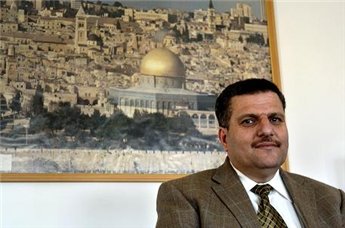
Mahmoud al-Ramahi is secretary-general of the Palestinian parliament. (MaanImages/File)

NABLUS – Israeli forces detained the secretary-general of the Palestinian parliament Mahmoud al-Ramahi on Saturday afternoon as he passed through a northern West Bank checkpoint.
Al-Ramahi was driving south from Nablus when he was seized at the Huwwara checkpoint. His car was also confiscated.
The MP was last released from Israeli jail less than four months ago.
An Israeli military spokeswoman confirmed the detention and said he is “suspected of involvement in illegal activity,” without elaborating.
Months after al-Ramahi was appointed to the leadership the Palestinian Legislative Council in 2006, he was seized by Israeli forces in his hometown of al-Bireh, near Ramallah, as part of a sweep of arrests after Hamas won elections.
Al-Ramahi, a medical doctor, was elected on the Hamas-affiliated Change and Reform list.
He was jailed from August 2006 until March 2009. The MP was again arrested in November 2010, and held in administrative detention until July 4 this year.
Al-Ramahi has brokered talks between Hamas and Fatah, and Hamas officials said his last detention was an Israeli attempt to disrupt reconciliation talks.
According to latest statistics, 13 Palestinian MPs are being held in Israeli jails.
Related articles
- Al-Ramahi: PA has to protect citizens or let the resistance do so (altahrir.wordpress.com)
- PA arrests eight Hamas members and summons teachers who returned to their work (occupiedpalestine.wordpress.com)
US expands drone base in Djibouti to hit Somalia, Yemen
Press TV – October 27, 2012
The US government is expanding its drone base in the East African nation of Djibouti to escalate its assassination strikes in Somalia and Yemen.
The US military has been flying armed drones over both countries from a base in Djibouti and is planning to build a second base in Ethiopia, a report by the Washington Post says.
The report added that the drones on missions over Somalia and Yemen take off or land at the base an average of 16 times per day.
The Lemonnier base has also become home to a squadron of US F-15 fighter jets, which it reports are flying combat missions over Yemen.
The US is also known to operate drones from two other East African countries — Ethiopia and the Seychelles islands.
The base in the Seychelles that was previously used to fly surveillance drones will now host armed drones capable of flying their lethal payloads the more than 1,500 kms that separate the Indian Ocean island chain from Somalia and the African mainland and back.
However, drone operations from Ethiopia and Seychelles are nothing compared to the one at Camp Lemonnier. According to the report Lemonnier is the centerpiece of an expanding US network of drone and surveillance bases in Africa.
Washington has also been carrying out assassination attacks using the unmanned aircraft in other countries including Afghanistan, Libya and Pakistan.
The United States claims the CIA-run strikes are aimed at militants. But witness reports and figures offered by local authorities indicate the attacks have led to massive civilian deaths.
Featured Video

EUROPE FEARS RUSSIA’S NEXT MOVE / Ian Proud
or go to
Aletho News Archives – Video-Images
New Book
New Book: No Autoimmunity The Body Doesn’t Attack Itself
Lies are Unbekoming | September 24, 2026
 The label for Humira, once the best-selling drug in the world, lists its risks in plain print. One of them, in the label’s own words, is new “autoimmune” disease.
A drug prescribed for a condition labelled autoimmune carries a warning that it can cause a condition labelled autoimmune. That contradiction sits in every box, on a folded paper almost nobody reads.
My new book starts there.
No Autoimmunity: The Body Doesn’t Attack Itself
For seventy years, “your body is attacking itself, and we don’t know why” has ended the conversation for people diagnosed with multiple sclerosis, lupus, rheumatoid arthritis, Hashimoto’s, Type 1 diabetes, Crohn’s and psoriasis. More than eighty conditions now carry the autoimmune label. The diagnosis comes with a prescription for life. It almost never comes with a question about cause.
This book asks the question and answers it from the framework’s own records: its drug labels, its journals, its regulatory filings, and its own experiments. … continue
Blog Roll
 Aletho News
- Debunked: Trump’s egregious UNGA claims on war against Iran crumble under scrutiny
- Europe was part of the infrastructure of US aggression against Iran: Deputy FM
- New evidence on the Bucha Massacre
- Italy and France debunk reports CIA issued ‘Russian drone threat’ warning
- How Russia is Rewiring the Global South
- Britain’s elites want you ready to die for a war they keep imagining
- Inside Ukraine’s propaganda operation targeting Americans
- Hackers From US, France, Singapore Tried to Disrupt Russian Elections – Internet Provider
- New Book: No Autoimmunity The Body Doesn’t Attack Itself
- EUROPE FEARS RUSSIA’S NEXT MOVE / Ian Proud
- If Americans Knew
- Israel’s US-Backed Assault on Gaza Has Created the ‘World’s Most Severe Economic Crisis on Record’: UN
- ‘Protecting U.S. Citizens’… From Israel
- ‘This is where I live now, the back of a truck’: a day in the life of a grandmother in Gaza
- In UN Speech, Iran’s President Displays Pictures of Children Killed by US, Brings Attention to Israel’s Nuclear Arsenal
- Israel displaces hundreds of Palestinians amid wave of demolitions in West Bank
- Aid, reconstruction, and Israel’s history of obstruction in Gaza
- Trump administration digs an ever-deeper hole of complicity in genocide – Daily Update
- US-Israel $2.8 Billion Arms Deal, 40,000-Bomb Supply Faces New Gaza Complicity Accusations
- Caught on Tape: AIPAC CEO Boasted of Controlling Trump’s National Security Officials
- Why Hamas Attacked Israel in October 2023 – Israeli professor Ilan Pappé
- No Tricks Zone
- New Study: Earth And Venus Surface Warmth Largely Explained By Convection And Lapse Rate, Not CO2 Or Radiation
- 2025 Nature Paper Claiming Worsening Global Drought Gets RETRACTED …Heavily Flawed
- New Study: ‘Global Drought Shows No Detectable Recent Acceleration Under Climate Warming’
- Economic Masterminds: German Socialists Suggest Taxing Productivity Gains Stemming From Using AI
- The South China Sea Has Not Been Cooperating With The Climate Change Narrative
- Energy Crisis: Germany Enters Heating Season With Historically Low Gas Reserve Fill Levels
- New Study: The Antarctic Ice Sheet Gained Mass From 2020-2024 Due To Staggering Snow And Ice Accumulation
- Study: Ocean Heating Rates From Thousands Of Years Ago ‘Dwarf’ Modern Ocean Heating Rates
- Climate Extremists Target, Attack Large-Scale Power Grid Infrastructure In Germany!
- New Study: Antarctic Ice Melt Has Contributed Less Than 1 Centimeter To Sea Level Rise In The Last 30 Years

