Israeli high court rejects south Hebron village petition
Ma’an – 10/08/2012

Villagers in the South Hebron Hills face eviction as Israel pushes plans
to use their land for army training (MaanImages/Eleonora Vio, File)
BETHLEHEM – Israel’s High Court on Thursday rejected a petition against the removal of Palestinian villagers from the southern West Bank by the Israeli army, but stressed further legal challenges were still open.
The ruling allows villagers in the south Hebron hills to remain in their villages until November 1, when an order blocking their displacement will expire.
The court said it was not taking a position on the wider dispute, in which the Israeli government has ordered demolition of eight of the 12 villages in an area the army designates as a military training zone.
Tamar Feldman, a legal director for the Association for Civil Rights in Israel who filed the petition, insisted: “It is the full legal right of all of the residents of these villagers to remain on the land that they have owned for generations and use it for their livelihood.”
“There is no justification, legal or moral, for evacuating and displacing residents from their homes and their lands – whether we are talking about 12 villages or 8,” she said.
Residents of the south Hebron hills have fought a long battle to remain in their homes.
In 1999, over 700 residents were evicted due to “illegal residence in a firing zone” and Israeli forces confiscated property and demolished buildings and wells.
Israel’s High Court issued an interim injunction, and Israeli forces allowed named petitioners to return but not their relatives.
In July, Israeli Defense Minister Ehud Barak told the court the army plans to demolish Khirbet al-Majaz, Khirbet al-Tabban, Sfai, Khirbet al-Fakheit, Halaweh, Mirkez, Jinba, and Kharoubeh.
The Israeli state says the residents are squatters from the nearby town of Yatta, while lawyers for the villagers say their rural communities pre-date the establishment of the state of Israel.
Related articles
- Israel ‘closes road’ linking Hebron villages slated for demolition (occupiedpalestine.wordpress.com)
- Israeli kills 2 Palestinians near Hebron (alethonews.wordpress.com)
- Palestinian voice from Susiya, a Palestinian village that existed before the establishment of the State of Israel (alethonews.wordpress.com)
- Israel orders demolition of eight Palestinian villages for military training sites (alethonews.wordpress.com)
- Susiya: Another Casualty of Israeli Occupation? (alethonews.wordpress.com)
Occupied Lives: I have no future
Palestine Center for Human Rights | August 8, 2012

Ahmad Dalloul in front of his destroyed factory in Tel-el-hawa
Mamoun Ahmad Dalloul (36) lives in Tel-el-hawa with his wife and 9 children. Until recently, he owned a dairy-products factory that produced milk, cheese and yoghurt. Since December 2008, Mamoun has re-built his factory 4 times after it was repeatedly targeted and destroyed by Israel’s forces. On 04 June 2012, at around 1:00, his factory was targeted and destroyed by Israel’s forces for the 5th time.
On the evening of the most recent attack, Mamoun received a call from his brother, who lives adjacent to the factory, informing him that the factory had been destroyed by a missile from an F16: “I rushed to my factory and, when I arrived, there were firefighters and police. The neighbors were panicking and standing in the streets. I was told that a missile had hit the factory and then penetrated 6 or 7 meters into the ground. There was something like an earthquake for 5 minutes, and then the missile exploded and pulled everything into the crater. I do not know what kind of missile it was.”
After 5 attacks on his factory, Mamoun is devastated: “The first time my factory was destroyed was in December 2008 during Operation Cast Lead. The factory was very big and on the ground floor of our residential apartment. I received a call from Israel’s forces, who told me that the building would be targeted in the next 15 minutes. My family and I fled immediately. 3 missiles were fired from an F16 and the building was completely destroyed. In just a few minutes, we lost everything. We were suddenly homeless and I had lost my only source of a livelihood.”
Mamoun and his family were forced to shuffle from one household to another, looking for a place to stay: “We would stay at my parents’ house for a few days then move to my brother-in-law’s house and spend a few more at my brother’s house. My son kept asking why we had no home. Finally, as my wife is a refugee, UNRWA built us a single residential unit. I then rebuilt my factory in Sabra, which is in central Gaza City. It was very small and modest because there was barely any construction material in Gaza, as well as money constraints. 6 months later, it was destroyed by Israel’s forces. I then partnered with someone else and tried to rebuild in a different location, but it was destroyed while we were still constructing.”

A crater made by the missile fired from an F16 on 04 June 2012
At this point, Mamoun had given up and decided to not rebuild his factory: “The first 2 times, I rebuilt because this is my only source of a livelihood. There are hardly any employment opportunities in Gaza. My factory provided work for 120 individuals, including my 3 brothers and my son. I saw how they were all suffering without work and thought that the factory would at least provide them with the income to support themselves and their families. I had enough after the 3rd attack, but a representative of the European Commission came to visit from Jerusalem and said they would mediate on my behalf. They promised that the factory would not be targeted again. Each time I bought new machines, they came and took pictures and reassured me all was well. I was encouraged by this and started to develop the factory slowly. Then, just like that, it was targeted and destroyed again. They did not keep their promise.”
Each attack has resulted in severe economic hardship for Mamoun and his family: “I have had to borrow money and my savings are almost depleted. I sold 2 pieces of my land to rebuild my factory. I even sold the house that UNRWA gave us to set up the factory and have a source of income. I can no longer sustain the expenses for my family. For a while, people would not even let me rent an apartment in their buildings, because they thought it would be targeted.”
Mamoun feels that his story is one of many that illustrate the suffering of Gaza: “There are people who are displaced and dying. I know what it feels like to be homeless. My children have had to grow up seeing dead people, war and destruction. They no longer even react to airstrikes, because this is what they are used to. My factory was a civilian establishment and I did not plan any resistance activities there. Why would I want to put my family in such danger? I am tired of this destruction. I have no future now. Why can’t we be left to live in peace and stability like other people in the world?”
The direct targeting of a civilian object constitutes a war crime, as codified in Article 8(2)(b)(ii) of the Rome Statute of the International Criminal Court. Similarly, under the Fourth Geneva Convention Article 53, the destruction of private property is prohibited unless rendered absolutely necessary by military operations. The destruction of such factories infringes upon human rights principles, including the right to work and right to attain an adequate standard of living contained in Article 11 of the International Covenant on Economic, Social and Cultural Rights.
Related articles
- Owner of dairy factory hit by Israel urges world action (alethonews.wordpress.com)
- Israel Destroys EU Development Projects Worth €29 Million (altahrir.wordpress.com)
Hebron: Palestinian streets closed for Israeli settlers
6 August 2012 | International Solidarity Movement, West Bank
In Hebron on the evening of July 29, almost 100 Israeli settlers from the illegal settlements occupying the centre of the city crossed into the Palestinian-controlled area H1. The settlers illegally entered H1 supported by a heavy Israeli military presence.

Earlier that evening, 4 Israeli military vehicles were witnessed driving through H1 area. At the same time, some 60 Israeli settlers gathered at Checkpoint 56 which marks the border between H1and H2 (the Israeli-controlled areas of Hebron). Several of the settlers, besides being armed with assault rifles, were also carrying compact tables and large bags of food.
Shortly before 7 p.m., Checkpoint 56 was closed to all Palestinians. Soon after, the Israeli military escorted the settlers through the checkpoint into the Bab al-Zawiyeh neighbourhood of area H1.
After the group of settlers passed through, Checkpoint 56 was reopened to Palestinians but the streets of Bab al-Zawiyeh were closed to Palestinian pedestrians and cars who were told to use a parallel street. The 4 military vehicles seen earlier were now parked and soldiers forced Palestinian shops to close down. Thus the otherwise lively Bab al-Zawiyeh was almost deserted.
The Israeli brigade commander declared that the street was a Closed Military Zone (CMZ), and when asked for the CMZ paper permit he replied,“this is a Closed Military Zone because I say so.” The same commander pushed several International Solidarity Movement volunteers in the chest for their inquiries.
Several Palestinians attempted to enter to their homes in H2, as they regularly would, but were aggressively refused at the checkpoint and directed to a lengthy detour. The detour is made kilometres longer by the fact that Palestinians are denied access to Shuhada street.
At 7:30 p.m., just before eftar when most Palestinians would be breaking the day’s fast, a group of about 30 settlers gathered at Checkpoint 56. A short while later, this group was escorted down the closed-off street to join the other settlers now numbering almost 100.
Twenty minutes later, a group of 20 settlers returned back towards H2. As they passed the empty square of Bab al-Zawiyeh they clapped their hands and started chanting in Hebrew, celebrating the empty Palestinian streets. Several pointed, laughed, and made rude gestures at the few Palestinians remaining on the edges of the street.
At around 8:30 p.m., the settlers returned to H2 in smaller groups and escorted by soldiers. Again they pointed, laughed, and took photos of Palestinians they passed. At 9 p.m., the last soldiers packed up and left the area. Immediately, shops reopened and Palestinians returned to the streets. Slowly, Bab al-Zawiyeh began to look like itself again.
More than 50 soldiers and almost 100 illegal Israeli settlers were participating in what is a yearly event. Annually, dinner is had at a site in Bab al-Zawiyeh which they consider a sacred place in Judaism. In practice, this dinner serves as an aggressive reminder of who is in charge. That Israel with more than 4000 soldiers stationed in Hebron, can do as they please despite what the lawful agreements may dictate.
It is noteworthy that this occurred in a week that has been rampant with military night raids, harassment and abuse against Palestinian residents of Hebron who are celebrating the month of Ramadan.
Related articles
- 8 injured as settlers stone bus carrying worshipers (alethonews.wordpress.com)
- Hebron: Over 30 detained (alethonews.wordpress.com)
- Hebron: Israeli settlers occupy Palestinian home (alethonews.wordpress.com)
- French activist injured as Israeli troops attack Hebron (alethonews.wordpress.com)
- Ultimate goal of Israeli policies in Hebron: ethnic cleansing (alethonews.wordpress.com)
- Israeli kills 2 Palestinians near Hebron (alethonews.wordpress.com)
- Tuesday Raids Follow Monday Killing (alethonews.wordpress.com)
- Settlers set fire to ancient tree in Hebron (alethonews.wordpress.com)
Take Action: Free Palestinian farmers and agricultural workers targeted for imprisonment
Samidoun | August 2012
As they organize to defend their land and Palestinian farming against the onslaught of settlements and siege, Palestinian agricultural workers and organizers have been subject to an intensified arrest campaign in the occupied West Bank of Palestine.
A number of staff of the Union of Agricultural Work Committees (Facebook), a Palestinian grassroots organization that organizes Palestinian farmers to defend their land and develop their products, have been targeted in recent days for arrest by Israeli occupation forces.
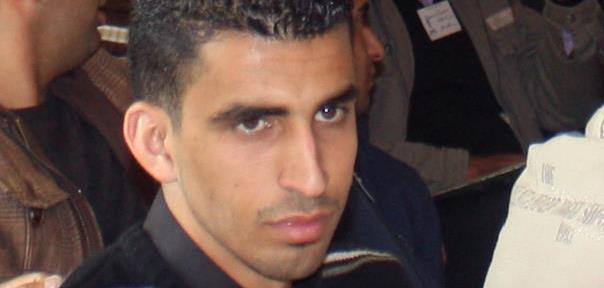
Dr. Moayad Bisharat
On July 31, Dr. Moayad Ahmad Bisharat, the coordinator of UAWC’s Jericho office was abducted at dawn from his home. The UAWC office in Jericho was then ransacked by Israeli forces, who confiscated the computers, laptops, and files of the organization.
This is the most recent in a series of arrests of UAWC activists in recent weeks, including the Director of Development and Operations, the engineer Fuad Abu Saif on July 26 in an early morning raid on his home in Hebron, in which his computer, mobile phone and other communication devices were seized. The director of the UAWC Jericho office, Mohammad Nujoom was abducted on July 16 as he re-entered Palestine from abroad. Both were taken to the Moskobiya compound for interrogation.
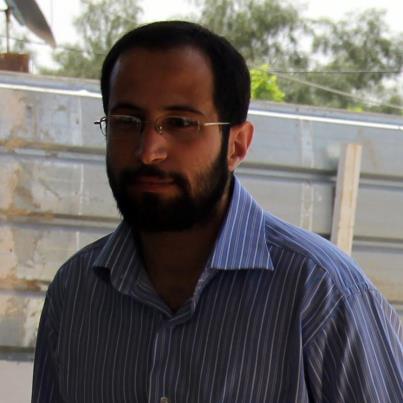
Engineer Fuad Abu Saif
In addition, UAWC Board Member Ahmad Soufan, held in administrative detention for one year, was recently ordered into a third term of six months in arbitrary administrative detention without charge or trial. Two other UAWC leaders, Abdel Razzak Farraj, administrative and financial director, and Board member Dr. Yousef Abdul Haq, were both finally released from administrative detention after multiple renewals of their imprisonment.
As the UAWC noted in its statement on the arrests, these arrests are part and parcel of the ongoing attacks on Palestinians’ right to the land, including massive settlement building, land confiscation, home demolitions, and the construction of the apartheid wall, as well as the siege and firing on farmers and agricultural workers in Gaza. The UAWC called on international organizers to defend Palestinian national rights and demand the freedom of the UAWC detainees and all Palestinian prisoners.
UAWC, which recently marked its 25th anniversity, has been struggling with Palestinian farmers and agricultural workers to defend and develop their land, support Palestinian agricultural projects, and support farmers’ steadfastness on the land in the face of Israeli occupation and aggression.
The attack on the UAWC is part of the overall attack on Palestinian farmers and agricultural workers, from olive farmers whose trees are set ablaze by settlers, tthose whose land was stolen for settlements, “military use,” or “buffer zones”, to the fishers of Gaza, who daily brave military attack for seeking to fish in their sea. It reflects the over 64 years of occupation, land theft, displacement and dispossession of the occupation of Palestine. Farmers and agricultural workers are on the front lines of resistance as they struggle to remain on their land – and are thus being targeted for arrest and imprisonment in an attempt to undermine the steadfastness of the farmers.
Western governments, including those of the United States and Canada, are not only silent in the face of these attacks, they are directly complicit, as they pledge expanded military support and allegiance to Israel as its occupation, apartheid and human rights violations continue and escalate. It is urgent that people make their own voices heard to challenge and break this complicity.
TAKE ACTION!
1. Click here to sign our petition at change.org, or sign on below! This petition will be presented to Israeli embassies in the US, Canada and other countries on Wednesday, August 15, demanding the release of these prisoners, justice for all prisoners, and an end to the attack on Palestinian farmers and agricultural workers. Individual and organizational signatories are welcome – we particularly urge groups and organizations to sign on to and distribute the petition. If you experience any difficulty signing on, please send your endorsement to samidoun@samidoun.ca.
2. Boycott Israeli goods and agricultural products! The Palestinian movement has called for boycott, divestment and sanctions targeting Israeli goods and institutions until it ends its violations of Palestinian rights. Israeli oranges, organic peppers, dates, and other agricultural products are the fruits of stolen land. Boycott those products and help to raise awareness in your community!
3. Support Palestinian agricultural products, including olive oil, spices, and maftoul, farmed by Palestinian farmers and not occupation settlements.
4. Join a protest or demonstration outside an Israeli consulate for Palestinian prisoners. Many groups and organizations are holding events – join one or announce your own. Organizing an event, action or forum on Palestinian prisoners on your city or campus? Use this form to contact us and we will post the event widely. If you need suggestions, materials or speakers for your event, please contact us at samidoun@samidoun.ca.
5. Help to support UAWC – here is information on how you can donate to support UAWC’s much needed work among Palestinian farmers and fishers.
Sign On: End the Persecution of Palestinian Agricultural Workers!
Endorse the petition, to be submitted August 15, 2012, to call for freedom for Palestinian agricultural workers targeted for defending their land.
- This is an organizational endorsement
- This is an individual endorsement
Petition Text
As they organize to defend their land and Palestinian farming against the onslaught of settlements and siege, Palestinian agricultural workers and organizers have been subject to an intensified arrest campaign in the occupied West Bank of Palestine. We write to demand an immediate end to the targeting of the Union of Agricultural Work Committees and all Palestinian farmers and agricultural workers, and the freedom of the Palestinian organizers imprisoned for defending their rights.
A number of staff of the Union of Agricultural Work Committees, a Palestinian grassroots organization that organizes Palestinian farmers to defend their land and develop their products, have been targeted in recent days for arrest by Israeli occupation forces.
On July 31, Dr. Moayad Ahmad Bisharat, the coordinator of UAWC’s Jericho office was abducted at dawn from his home. The UAWC office in Jericho was then ransacked by Israeli forces, who confiscated the computers, laptops, and files of the organization. This is the most recent in a series of arrests of UAWC activists in recent weeks, including the Director of Development and Operations, the engineer Fouad Abu Saif on July 26 in an early morning raid on his home in Hebron, in which his computer, mobile phone and other communication devices were seized. The director of the UAWC Jericho office, Mohammad Nujoom was abducted on July 16 as he re-entered Palestine from abroad. Both were taken to the Moskobiya compound for interrogation.
In addition, UAWC Board Member Ahmad Soufan, held in administrative detention for one year, was recently ordered into a third term of six months in arbitrary administrative detention without charge or trial. Two other UAWC leaders, Abdel Razzak Farraj, administrative and financial director, and Board member Dr. Yousef Abdul Haq, were both finally released from administrative detention after multiple renewals of their imprisonment.
As the UAWC noted in its statement on the arrests, these arrests are part and parcel of the ongoing attacks on Palestinians’ right to the land, including massive settlement building, land confiscation, home demolitions, and the construction of the apartheid wall, as well as the siege and firing on farmers and agricultural workers in Gaza. The UAWC called on international organizers to defend Palestinian national rights and demand the freedom of the UAWC detainees and all Palestinian prisoners.
UAWC, which recently marked its 25th anniversary, has been struggling with Palestinian farmers and agricultural workers to defend and develop their land, support Palestinian agricultural projects, and support farmers’ steadfastness on the land in the face of Israeli occupation and aggression.
The attack on the UAWC is part of the overall attack on Palestinian farmers and agricultural workers, from olive farmers whose trees are set ablaze by settlers, those whose land was stolen for settlements, “military use,” or “buffer zones”, to the fishers of Gaza, who daily brave military attack for seeking to fish in their sea. It reflects the over 64 years of occupation, land theft, displacement and dispossession of the occupation of Palestine. Farmers and agricultural workers are on the front lines of resistance as they struggle to remain on their land – and are thes being targeted for arrest and imprisonment in an attempt to undermine the steadfastness of the farmers.
We demand that the Israeli government immediately free Bisharat, Abu Seif, Nujoom and Seifan and end this targeted attack on Palestinian agricultural workers.
Furthermore, we demand an end to the policy of settlement construction, land confiscation and home demolitions targeting Palestinian farmers and villages in the West Bank, and an end to the targeting of Palestinian farmers in Gaza in the “buffer zones” and fishers at sea.
Finally, we demand an end to the mass imprisonment of Palestinians and freedom for all Palestinian political prisoners.
Related articles
- Israeli occupation forces seize two farm tractors used to supply Bedouins with water (alethonews.wordpress.com)
- Talking Palestine to Power (alethonews.wordpress.com)
- Weekly Report On Israeli Human Rights Violations in the Occupied Palestinian Territory (altahrir.wordpress.com)
- Israeli occupation forces kidnap five Palestinians including children in J’lem and Al-Khalil (occupiedpalestine.wordpress.com)
- 8 injured as settlers stone bus carrying worshipers (alethonews.wordpress.com)
8 injured as settlers stone bus carrying worshipers
Ma’an – 04/08/2012

Israeli settlers hurl stones toward Palestinians during clashes in the
village of Burin near Nablus (MaanImages/Rami Swidan, File)
NABLUS – Eight Palestinians sustained injuries late Friday when Jewish settlers pelted a bus with stones on the main road between Ramallah and Nablus, a Palestinian official said.
Ghassan Daghlas, a PA official who monitors settlement activity in the northern West Bank, told Ma’an that settlers from Shilo hurled stones at a bus carrying Palestinian worshipers on their way back from al-Aqsa Mosque.
The attack, he said, took place at 1:30 a.m. and eight people including men and women were injured. They were taken to Rafidia Hospital in Nablus, he said.
Daghlas highlighted that Israeli military forces closed the main road between Ramallah and Nablus for more than two hours after the incident to prevent further attacks.
The Israeli military confirmed receiving reports about the incident.
“Once the reports were received, IDF soldiers arrived at the scene and set up temporary checkpoints while searching for suspects,” a spokeswoman told Ma’an.
Settler violence against Palestinians and their property is systematic in the West Bank.
On Wednesday settlers vandalized Palestinian property in the Ramallah village of Sinjil.
A group of settlers from Givat Ariel outpost wrote “Palestinians should die,” and “Stay away from our lands,” on a wall in the village, Sinjil mayor Ayoub Swaied said.
Settlers also left an improvised explosive device made from chemicals under a car. A box containing ethylene, benzene and sulfur was found underneath a car in the village, Swaied added.
Related articles
- Palestinian stabbed, shot in settler attack near Nablus (alethonews.wordpress.com)
- Settlers enter Nablus village beat up a man, ransack his car, IOF arrests 5 Palestinians – No Settler (occupiedpalestine.wordpress.com)
British vessels prohibited from docking in Buenos Aires province
Press TV – August 4, 2012
Argentina has prohibited all ships sailing under the British flag from docking at any of the ports in the Buenos Aires province, Press TV reports.
The measure was adopted on Friday in a bill passed by the legislature of the province of Buenos Aires, the country’s largest province.
“We can’t have a colonial enclave affecting the region with NATO’s presence in our Malvinas Islands. We have to actively protest against those who explore and exploit our natural resources and violate our sovereignty,” said Remo Carlotto, an MP from the ruling party.
The bill prohibits vessels involved in “natural resources exploration and exploitation activities” in waters surrounding the Malvinas Islands, banning them from “mooring, loading or developing logistical operations” in the area”.
The move comes after months of political dialogue over the disputed archipelago between Argentina and Britain has failed to bear fruit.
“We have to keep moving forward using all the tools we have to defend our country’s sovereignty in the [Malvinas] islands. Argentina has taken significant steps. It has stood up and recovered its political and economic sovereignty,” said Martin Sabbatella, another lawmaker from the ruling party.
Earlier this year, Argentina took legal action against five British oil companies.
Argentina and Britain fought a 74-day war in 1982 over the islands.
Related articles
- OAS backs Argentina on Falklands (morningstaronline.co.uk)
Turkey’s Hatay Province, Mossad, CIA spy hub: Turkish MP
Press TV – July 31, 2012
A member of Turkey’s parliament says the country’s Hatay Province on the border with Syria has become a hub for swarms of CIA and Mossad spies infiltrating into Syria freely.
The legislator of the Republican People’s Party, Refik Er-Yilmaz, said that thousands of CIA and Mossad agents are currently in the province and are moving freely in the area, Turkish media reported.
He noted that local people in the province are getting agitated over the presence of the strangers.
Turkish police remain mute spectators as the spies carry various types of identification, Er-Yimaz went on to say.
He also accused the authorities of allowing American and Israeli troopers on Turkish soil without any approval from the parliament.
Er-Yilmaz’s comments came after the deputy of the Republican People’s Party, Osman Faruk Logoglu, on Monday blamed Turkey’s ruling Justice and Development Party for fomenting the unrest in Syria.
Logoglu criticized the Turkish government for aggravating the situation by sending military forces and vehicles towards the Syrian border.
The former Turkish ambassador to the United States also criticized Turkey’s foreign policy towards its neighbor, saying it has been irrational and unsuccessful.
Syria has been the scene of unrest since March 2011. The violence has claimed the lives of many people, including large numbers of security forces.
Damascus blames “outlaws, saboteurs, and armed terrorist groups” for the unrest, asserting that it is being orchestrated from abroad.
Related articles
- Turkey could strike PKK terrorists in Syria: Premier Erdogan (alethonews.wordpress.com)
One year after killings: Iraq Burin continues its struggle
31 July 2012 | International Solidarity Movement, West Bank
Three days before the start of Ramadan, the small mountainside town of Iraq Burin was attacked by Israeli settlers from the illegal colony of Bracha. The attackers descended from the settlement at 12:30 a.m. and were soon followed by the Israeli military, shooting tear-gas and sound grenades.
“Since Ramadan started, things have been relatively calm here,” says Yousef, a resident of Iraq Burin, “earlier we used to have trouble all the time.”
Ironically, the settler attacks are most common on Saturdays, the Jewish Sabbath, which traditionally is revered as a day of rest.
“But there have also been plenty of attacks on Wednesdays and Thursdays,” says Yousef.
The settlers target farmers closest to the settlement, making it impossible for them to work their land due to risk of being attacked or shot. The farmers’ lack of activity is then used against them as settlers claim the land to be abandoned and subsequently annex it. By these means, the illegal settlements across the West Bank continue to steal the lands of neighboring Palestinian villages.
Bracha is one of over 250 Israeli settlements and outposts erected in the Palestinian West Bank and violating Article 49 of the Fourth Geneva Convention. “Seizure of land for settlement building and future expansion has resulted in the shrinking of space available for Palestinians to sustain their livelihoods and develop adequate housing, basic infrastructure and services,” wrote the United Nations Office for the Coordination of Humanitarian Affairs (OCHA).
From Yousef’s rooftop one can see clearly where the irrigated fields of Bracha have stretched down into the valley since its construction in the early 1980′s.
Of the 2000 dunums that originally was Iraq Burin, 300 have been annexed by the settlement of Bracha and many hundreds have become inaccessible to Palestinians due to the risk of violent attacks. To protest this, the village has been holding demonstrations every Saturday for the past year. Similar to numerous protests across the West Bank, Iraq Burin’s regular demonstrations are met with brute force by the Israeli army.
“The failure to respect international law, along with the lack of adequate law enforcement vis-àvis settler violence and takeover of land has led to a state of impunity, which encourages further violence and undermines the physical security and livelihoods of Palestinians. Those protesting settlement expansion or access restrictions imposed for the benefit of settlements (including the Barrier) are regularly exposed to injury and arrest by Israeli forces,” noted OCHA.
For a short while, the demonstrations ceased after 2 young men, Muhammad and Usaid Qadus, were shot dead at close range by an Israeli soldier.
“But our peaceful struggle will continue among both the young and the old,” promises Yousef.
Related articles
- Hebron: Over 30 detained (alethonews.wordpress.com)
- Ultimate goal of Israeli policies in Hebron: ethnic cleansing (alethonews.wordpress.com)
- Report details Israeli violations and seizure of West Bank land (occupiedpalestine.wordpress.com)
- Palestinian voice from Susiya, a Palestinian village that existed before the establishment of the State of Israel (alethonews.wordpress.com)
- Number of Jewish settlers in West Bank doubled in 12 years (alethonews.wordpress.com)
- Sleepless nights in Burin (occupiedpalestine.wordpress.com)
- Daglas: Settlers have formed special teams to attack the Palestinians (occupiedpalestine.wordpress.com)
Nablus: night raids and arrests
30 July 2012 | International Solidarity Movement
Five Palestinian men were arrested by the Israeli Occupation Forces (IOF) in a night raid inside the old city of Nablus on Saturday, July 28. Tear gas and sound bombs were used against families and civilians protesting the arrests. 19 young men suffered asphyxiation and were taken to hospital. Israeli soldiers remained inside the city until 6 a.m. terrorizing residents.

A Palestinian woman walks through the destroyed home of the Kharuf family | Team Palestina & Free Gaza
Military incursions in Nablus, which is located in Area A and therefore under Palestinian military jurisdiction, are breaches of the Oslo Agreement, but nonetheless occur regularly. As always in occupied Palestine, human rights and agreements take the back seat to Israel’s political desires.
Among the families who were particularly afflicted by the night raid was the al-Kharuf family. At 2 a.m. their home was attacked by Israeli soldiers shooting tear gas at the 9 inhabitants, 5 of whom are children under 12 years old. The children were terrified by the attack and have now been sent to stay with relatives outside the city. An elderly woman had to go to the hospital after suffocating from the tear gas.
The IOF entered the house, where they seized Walid Kharuf. He was questioned on the whereabouts of his brother Omar and was severely beaten. When Walid claimed he did not know where his brother was, he was threatened by the commanding officer, “if you are lying and I find you brother here, I will destroy the house.”
The Kharuf home was turned upside down in the search for Omar, who was eventually found. After arresting the 23 year old young man, Israeli soldiers ordered everyone outside while they applied a bomb to one of the walls in the house. The blast that followed tore a hole in the house and devastated the room in which it was placed.

A Palestinian man looks into a wardrobe of the home of the Kharuf family after Israeli forces carried out a raid and bombed a wall of the home | Team Palestina & Free Gaza
All of Saturday the Kharuf family was busy clearing their home of rubble and broken furniture scattered throughout the house.
“So now we are homeless,” Walid solemnly noted, surveying the damage to his home.
Related articles
- Weekly Report On Israeli Human Rights Violations in the Occupied Palestinian Territory (altahrir.wordpress.com)
- Hebron: Over 30 detained (alethonews.wordpress.com)
- Deliberate Medical Neglect by Israel: Prisoner Ahmad Orabi Lahham suffering difficult heath condition (occupiedpalestine.wordpress.com)
- Palestinian stabbed, shot in settler attack near Nablus (alethonews.wordpress.com)
Palestinian voice from Susiya, a Palestinian village that existed before the establishment of the State of Israel
By Eva Bartlett | In Gaza | July 30, 2012
Five years ago, I met Nasser Nawaja and his family, and the community of Palestinian Susiya (not to be confused with the illegal Zionist colony of Susiya, in the same south of Hebron, West Bank area, whose colonists regularly viciously attack and aggress Susiya Palestinians, including elderly, children and women).
When in 2007 I met Nasser, his parents, his wife, brothers and extended family, they had been enduring for years, almost two decades, aggressions by the Israeli army and by Zionist colonists. They had been forcibly moved from their very functional, cool in summer, and innovative cave homes to arid dessert land on which, periodically, the Israeli occupation army would invade and destroy the ramshackle homes these displaced families had constructed.
The layers of injustice inflicted on these peaceable, innovative people are countless, and in the many months I spent with them in 2007, I and other justice activists I joined, attempted to document both the injustices heaped upon these Palestinians and the beauty of their sustainably-living lives–when not attacked by the IOF and Zionist colonists (see Susiya Palestinians suffer).

*Khalil Nawaja, 2007, his leg broken by Zionist colonists in 2006


*photo of 2008 Zionist attack on Imran Nawaja, Khalil, and his wife Manam, and other family members, courtesy B’Tselem “shooting back” documentation project–photo and video footage taken by Khalil Nawaja’s neice
Nasser has in the past few years–and against all odds, while providing for his wife and children and documenting the injustices inflicted on his community (at the expense of his own personal safety, many times attacked and beaten by Zionist colonists and for no reason except Occupation arrested by the IOF)–studiously expanded his knowledge of human rights law and the English language, to the point that he is able to now write poignant articles in well-read alternative press.
Please see his op-ed “Palestinian from Area C on a life in constant need of rebuilding” –wherein he describes Susiya life and how his village, surrounded by illegal Zionist colonies and outposts, was called “an illegal outpost” with the ultimatum of demolition, below:
I am Nasser Nawaj’ah. I am 30 years old. My mother gave birth to me in a cave in Susya El-Kadis. You know of Susya as a Jewish settlement in the South Hebron Hills, but Susya is first of all a Palestinian village that existed before the establishment of the State of Israel.
I was named after my grandfather, who was still alive at the time. In 1948, he was displaced from his village near Arad, now in southern Israel. When they were expelled, my father was just a little boy and my grandfather carried him in his arms until they reached their family in Susya El Kadis. They hoped one day to return to their village, but my grandfather died without ever seeing it again.

Nasser Nawaj’ah (L) and Salam Fayyad (Courtesy of B’Tselem)
A year after I was born, in 1983, the settlement of Susya was established. In 1986, after Israeli archaeologists found remnants of a synagogue in our village, we were expelled again. I was 4 years old. My father took me in his arms while bulldozers destroyed our homes and blocked the caves that we lived in. We scattered in our agricultural lands around the village. The grown-ups hoped that we would one day return to our caves, but a fence was built around the village and it was turned into an archaeological site. Today we still live on our agricultural land and I can see the place where I was born, but cannot go there. Israelis and foreigners from all over the world enter the site, but I cannot.
After 1990, the expulsion attempts started up again. Despite the fact that we have documents proving that the land belongs to us, the caves we lived in and our water wells were destroyed. But each time, we returned and built anew. At the same time, the Israeli settlement of Susya continued to flourish and grow. In 2001, after the murder of Yair Har Sinai, settlers arrived with the army and again destroyed the caves and the wells and uprooted our trees. It was only after 10 days and an interim decision by the Israeli High Court that we were able to return to our homes.
Today we live in tents – and even these were threatened with demolition orders forcing us to obtain permits for them. This is the life of a Palestinian in Area C of the West Bank. We are denied building permits, and are disinherited and banished from our land. Each time we request permits from the Israeli army, we are denied. The water pipes of Israel’s Mekorot water company pass several meters away from our village – they bring water to illegal outposts around us but we can’t get water from them. We don’t have access to the water that flows in those pipes, even though this is our water, water that Israel pumps from the West Bank.
We are forced to live off of rain water that we collect in our wells. The water situation in the South Hebron Hills is dire, and we are always forced to supplement by buying water brought in tankers to sustain ourselves through the summer. We pay NIS 35 for a cubic meter of water – about four times as much as you pay for water inside Israel.
Four months ago, the Regavim organization filed a petition to the High Court demanding that our village, Susya, be destroyed. They refer to it as an “illegal outpost” and claim that our village presents a security threat. Last week there was a hearing in the Israeli High Court. They call my village an illegal Palestinian outpost. But these have been our lands since before the establishment of the State of Israel. My father is older than your state and I am not legal on my own land? I ask you: where is the justice in that? In your court there is a difference between a Palestinian and a settler. You call it illegal construction but what we’re talking about is an underground cave that is hundreds of years old.
Illegal Israeli settlement outposts are all around us in the Susya area, and there are many buildings inside settlements with pending demolition orders – but they have everything. The government provides them with infrastructure for water and electricity despite the fact that according to Israeli law they are illegal, and nothing happens to them. And now you want to displace the old man from his home? To expel us from land that belongs to us, that we have lived on generation after generation, that is all that we know.
Resources:
2007 video on Susiya Palestinians
2005 video on Susiya Palestinians
Civil Administration threatens to demolish most of Susiya village
Settlers beat Jamal a-Nawaj’a and throw stones at his mother and wife, in Susiya, March 2006
Settlers assault Palestinian shepherds sleeping in tents in the southern Hebron hills, 26 March 2006
Related articles
- Susiya: Another Casualty of Israeli Occupation? (alethonews.wordpress.com)
- Israel Plans Demolition of Entire Palestinian Village (alethonews.wordpress.com)
- #PHOTOS | Demo In #Susiya against Israeli plans to eradicate the entire village (occupiedpalestine.wordpress.com)
- Save Susiya : Palestinian village at risk to be leveled again (windowintopalestine.blogspot.com)
- Israeli forces order Hebron village demolished after settler case (alethonews.wordpress.com)
- My Home is Everything: the People of Susiya Speak to the World, and other updates (villagesgroup.wordpress.com)
- The EU-Israel Association Council Violates The constitutions of EU (occupiedpalestine.wordpress.com)
Featured Video

EUROPE FEARS RUSSIA’S NEXT MOVE / Ian Proud
or go to
Aletho News Archives – Video-Images
New Book
New Book: No Autoimmunity The Body Doesn’t Attack Itself
Lies are Unbekoming | September 24, 2026
 The label for Humira, once the best-selling drug in the world, lists its risks in plain print. One of them, in the label’s own words, is new “autoimmune” disease.
A drug prescribed for a condition labelled autoimmune carries a warning that it can cause a condition labelled autoimmune. That contradiction sits in every box, on a folded paper almost nobody reads.
My new book starts there.
No Autoimmunity: The Body Doesn’t Attack Itself
For seventy years, “your body is attacking itself, and we don’t know why” has ended the conversation for people diagnosed with multiple sclerosis, lupus, rheumatoid arthritis, Hashimoto’s, Type 1 diabetes, Crohn’s and psoriasis. More than eighty conditions now carry the autoimmune label. The diagnosis comes with a prescription for life. It almost never comes with a question about cause.
This book asks the question and answers it from the framework’s own records: its drug labels, its journals, its regulatory filings, and its own experiments. … continue
Blog Roll
 Aletho News
- Israeli settlers terrorize West Bank Palestinians with state-provided drones: Report
- They see them, then kill them: Israeli quadcopters track, deliberately target civilians in Gaza
- Debunked: Trump’s egregious UNGA claims on war against Iran crumble under scrutiny
- Europe was part of the infrastructure of US aggression against Iran: Deputy FM
- New evidence on the Bucha Massacre
- Italy and France debunk reports CIA issued ‘Russian drone threat’ warning
- How Russia is Rewiring the Global South
- Britain’s elites want you ready to die for a war they keep imagining
- Inside Ukraine’s propaganda operation targeting Americans
- Hackers From US, France, Singapore Tried to Disrupt Russian Elections – Internet Provider
- If Americans Knew
- An error has occurred; the feed is probably down. Try again later.
- No Tricks Zone
- New Study: Earth And Venus Surface Warmth Largely Explained By Convection And Lapse Rate, Not CO2 Or Radiation
- 2025 Nature Paper Claiming Worsening Global Drought Gets RETRACTED …Heavily Flawed
- New Study: ‘Global Drought Shows No Detectable Recent Acceleration Under Climate Warming’
- Economic Masterminds: German Socialists Suggest Taxing Productivity Gains Stemming From Using AI
- The South China Sea Has Not Been Cooperating With The Climate Change Narrative
- Energy Crisis: Germany Enters Heating Season With Historically Low Gas Reserve Fill Levels
- New Study: The Antarctic Ice Sheet Gained Mass From 2020-2024 Due To Staggering Snow And Ice Accumulation
- Study: Ocean Heating Rates From Thousands Of Years Ago ‘Dwarf’ Modern Ocean Heating Rates
- Climate Extremists Target, Attack Large-Scale Power Grid Infrastructure In Germany!
- New Study: Antarctic Ice Melt Has Contributed Less Than 1 Centimeter To Sea Level Rise In The Last 30 Years

