Israel approved more than 4,300 new illegal settlement units last month
MEMO | June 4, 2012
 The monthly report issued by the PLO’s Department of International Relations has revealed that Israel approved the construction of more than 4,300 new illegal settlement units in May.
“A people under occupation” also gives details of Israeli violations against the Palestinian people and their property, which are ongoing. It says that the occupation army and illegal Jewish settlers uprooted 1,024 olive trees; demolished 37 houses and buildings belonging to Palestinians; and arrested 240 citizens during the month.
The DoIR told Quds Press that Israel has renewed or imposed administrative detention on more than 40 prisoners, including five detained MPs. A further 25 prisoners who were freed under the prisoner exchange deal eight months ago have been rearrested. “This,” claimed the Department, “is another violation of the agreement brokered by the Egyptians last year.”
Related articles
- Illegal Settlements Bonanza: Israel Plots an Endgame (alethonews.wordpress.com)
- Jewish teens ‘tied up and beat’ man shot by settlers (alethonews.wordpress.com)
- The Forcible Transfer of the Palestinian People from the Jordan Valley (alethonews.wordpress.com)
- Homes Destroyed, Lives Shattered: Criminal Displacement in Occupied Palestine (alethonews.wordpress.com)
Living Land: Population Transfer and the Mewat Pretext in the Naqab
By Salman Abu Sitta | Badil Resource Center | Spring-Summer 2012

Al-Araqib village in the Naqab (© Photo: Rich Wiles/BADIL, 2011)

Father: This land was Arab land before you were born. The fields and villages were theirs. But you do not see many of them now. There are only flourishing Jewish colonies where they used to be… because a great miracle happened to us…
Daughter: How can one take land which belongs to someone else, cultivating that land and living off it?
Father: There is nothing difficult about that. All you need is force. Once you have power you can.
Daughter: But is there no law? Are there no courts in Israel?
Father: Of course there are. But they only held up matters very briefly. The Arabs did go to our courts and asked for their land back from those who stole it. And the judges decided that yes, the Arabs are the legal owners of the fields they have tilled for generations.
Daughter: Well then, if that is the decision of the judges… we are a law-abiding nation.
Father: No, my dear, it is not quite like that. If the law decides against the thief, and the thief is very powerful, then he makes another law supporting his view.
–The father was Maariv founder and first editor, Dr. Israel Carlebach. This exchange was published in Ma’ariv, 25th December 1953.
Since December 1947, the Zionist movement has carried out the largest, planned and comprehensive ethnic cleansing operation in modern history: the ongoing Nakba. Between that month and April of 1949, 675 Palestinian towns and villages were totally depopulated. Their inhabitants are still homeless and are refugees to this day. Israel was declared on 78 percent of the Mandate territory of Palestine, 93 percent of which is Palestinian-owned land.2 In the southern half of Mandate Palestine, the Naqab (Negev), Jewish possession did not exceed 60,000 dunams; amounting to less than 0.5 percent of the 12,577,000 dunams of the Beer Sheba district. This negligible Jewish presence was augmented by force through the military occupation of the district in 1948 (the town of Beer Sheba was occupied on October 21, 1948), massacres and forced displacement of the indigenous population leading to the almost complete ethnic cleansing of the district. The majority of the more than 100,000 native Palestinians of the district were expelled to the Gaza Strip, Al Khalil (Hebron) district, Jordan, and the Sinai.
After declaring its independence, Israel applied martial law to those Palestinians who had not been displaced beyond the borders of the new state. In the Beer Sheba district, it took the drastic measure of rounding up all those Palestinians who remained, 12 percent of the original population of the district, and concentrated them in a reserve to the north and north east of the town of Beer Sheba. This area, known as the siyag (“fenced off area”), makes up 7 percent of the district. In 1952, Israel confiscated a further 1,225,000 dunams of the land owned by the internally displaced southern Palestinians who had become its citizens; reclassifying them as Present Absentees. Then in 1965, it passed the Planning and Construction Law which rendered around forty of the Palestinian villages in the siyag (as well as a further dozen villages in the Galilee) unrecognized, meaning they were not to receive any government services (such as water, electricity, education, roads, waste collection and healthcare) and that all construction in these areas became illegal.
Beginning in 1968, Israel planned seven townships—the so-called “recognized villages” of Rahat, Tel Sheva, Kessifa, Ar’ara, Shegib, Hura, Laqiya—on a total land area of 57,778 dunams. The combined purpose and effect of the recognized and unrecognized communities is to confiscate what remains of Palestinian land in the Naqab, and concentrate the Palestinian population in residential dormitories to provide cheap labor for Jewish industries while detaching them from their land and depriving them of their pastoral and agricultural livelihoods. By 2002, about 50 percent of the 130,000 Palestinians in the district had been concentrated in the planned townships, while the other half had managed to resist displacement and remain in the squalid conditions of the unrecognized villages.
Various aspects of displacement and land confiscation in the Naqab—including such practices as the terrorism perpetrated by the “Green Patrols;” ongoing house, school and clinic demolitions; the environmental and health impact of industrial zones and the dumping of toxic wastes; and the aerial spraying of poisonous pesticides on Palestinian crops and communities—have been discussed elsewhere.3 What I examine in what follows is one particular aspect of the Naqab’s ongoing Nakba: Israel’s use of the Ottoman “mewat” classification of land as legal justification for the ongoing confiscation of Palestinian land in the Naqab.
The Mewat Pretext
Israel considers itself a successor state. If this assumption refers to its military conquest outside the limits of the Partition Plan, then the inadmissibility of conquest and the Fourth Geneva Convention safeguard the sanctity of the property of the subjugated people. International law stipulates that, upon extending a new sovereignty on a territory, people and land go together, both stay protected. Expelling people and confiscating their land is not permissible. On the other hand, if this assumption refers to the UN Partition Plan resolution No. 181, which was the basis of Israel’s declaration of independence in 1948, this resolution clearly stipulates that Arabs in the Jewish-majority state (and vice versa) shall enjoy full civil and political rights, including ownership, without discrimination on any grounds and of course without expulsion.
As such, Israeli authorities had to find ways of inventing legal justifications for the confiscation of Palestinian lands. In the Naqab, the main justification has been that Palestinians did not have rights to their land under the regime’s that preceded Israel, and the title to these lands should thus revert to the state. The Head of the Land Title Settlement Unit in the Southern District, Havatzeler Yahel, gave a summary of the standard Israeli position in this regard when he boldly stated that “neither the Ottoman Empire nor the British Mandate recognized the ownership of nomadic Bedouin over land in the Negev… Israeli Law… is based on earlier Ottoman and British Legislation.”4 The Goldberg Report follows the same contention, based as it is on the claims that the Ottomans never recognized the Bedouin ownership in Beer Sheba and that the Palestinian population of the Naqab are “nomads.”5 In examining the legal arguments surrounding these claims, we find that the main Israeli justification is that the lands of the Naqab were classified as mewat lands under Ottoman law, and that this classification continued under the British Mandate.
According to Ottoman Law, mewat land is that which is dead, uncultivated, or vacant. Article 103 of the 1858 Ottoman Land Code specifies mewat land as (1) vacant (2) grazing land not possessed by anybody (3) not assigned ab antiquo to the use of inhabitants and (4) land where no human voice can be heard from the edge of habitation, a distance estimated to be 1.5 miles (2.85 km). The latter is a distance travelled on a horse in about 40 minutes, in wilderness where no human being lives ordinarily. The text of Article 103 reads as follows:
The empty (Khali) places, such as rocky or stony areas, or lands where cultivable soil is scarce or grazing land not held by anyone with tapu or not assigned ab antiquo to the use of towns and villages or far from towns and villages such that a clear loud cry would not be heard from the edge of cultivation, is mewat land. Any one in need of a tract from this land can, free of charge, break up or dig a place with permission and make it a field on condition that its raqaba belongs to Beit el Mal. All the applicable legal rules of other agricultural areas will then apply to this land fully. But if the person who had permission to dig [and cultivate] a place did not do so for 3 years without a good reason, the place is given to someone else. If someone digs one of these lands without permission and made it into a field, he will be charged bedl mithl (equivalent price) and the land will be allocated to him and he will be granted title deed (tapu).6
It is clear that the objective of the Ottoman law was to encourage cultivation for the good of the community and not to restrict it. In 1969, the Israeli Knesset passed a law stating that “all mewat land is state land,” and that long-time possession does not confer ownership rights.7 By claiming that Naqab lands were classified as mewat and then passing legislation transferring mewat lands to state control, Israel seemingly got around the international legal protection of Palestinians and their properties in the Naqab. The main problem, as I show in the next section, is that at no point in the centuries of Ottoman rule, or the decades of British occupation, were the lands of the Naqab ever classified as mewat. On the contrary, Palestinians’ ownership of these lands was recognized in both the Ottoman and Mandate periods.
Ottoman Period
Ownership of land in Islam rests ultimately with the umma (Islamic nation), as God’s trustee. The Ottomans adopted and developed the same Islamic principle into a refined set of state laws. In the words of Halil Inalcik, an authority on Ottoman history, “the underlying argument always was that such lands belonged to God, or to the imam as His trustee, who represented the Islamic community, it was his duty to see that such lands were administered in the way that would best serve the interests of the community and Islamic state.”8 The principle was applied in a two-tier system: (1) rakaba, ownership rested with the Caliph, imam, Sultan or state, (2) tasarruf, manfa’a, usufruct. While the first was always held by the state, the second was granted to a member(s) of the community, ra’iya, in a manner close to independent ownership in that the land in question may be inherited. Over 90 percent of arable land in the Ottoman empire, was considered state land (miri). The rest had been removed from this domain by a special dispensation from the Sultan. The underlying aim was to put all land for the use of the community as cultivators of the land and a source of income tax for the general benefit of the umma. Accordingly, foreigners were not allowed to own land. Late in the nineteenth century, under intense European pressure, the Ottoman laws restricting the sale of land to non-Muslims were relaxed. But these sales were insignificant.
For over fourteen centuries, the land was cultivated under Islamic rules, and Beer Sheba land was no exception. It was cultivated where possible according to rainfall and taxes were paid. There was no question that such land was not mewat. We have one of the earliest Ottoman documents to prove this. The Dafteri Mufassel of 1596, one of the earliest Ottoman Tax Registers, gives information on sites in the Beer Sheba Sub-District which grew wheat, barley and summer crops (e.g. maize, melon) and paid taxes accordingly. Remarkably, the names of these sites remained the same until the 1948 ethnic cleansing of Palestine.
At no time, whether before the promulgation of the Ottoman Land Code of 1858 or after, did the Turks challenge the land ownership of Palestinians in Beer Sheba. Three hundred years after the Dafteri Mufassel, at about the end of the nineteenth century, we have further confirmation that the Turkish authorities recognized the land ownership in Beer Sheba. On May 4, 1891, upon orders from the Ministry of Interior in Istanbul, the Gaza District Council (which the British split into two sub-districts: Gaza and Beer Sheba for the same region: Bilad Gazzeh) decided to “register these lands in the Gaza District of Jerusalem Mutassarefiyat and cultivated by ‘urban (tribes) at the Land Registry (tapu) since absence of this registration may cause conflict and inter-fighting.”9
The council sent a five-member committee of notables together with official surveyors “to delimit and record the lands of each tribe. The officials sent by the Mutassarefiyat delineated 5 million dunams out of lands exceeding 10 million dunams [of the District] among its ancient holders with the approval of the Special Military Committee. Then the approval of the sheikhs was obtained.” The Turkish document goes on to state that three survey officers were needed to plot demarcation points on a “proper basis.”10
The boundaries of individual ownership of the land in most of Palestine, including Beer Sheba, was known and acknowledged by Custom Law (al-‘urf wa al-‘ada). In other words, it is an observed legal practice and the relevant actors consider it to be law. On this basis tracts of land were bought, sold, inherited and taxes paid for. The town site of Beer Sheba itself was “purchased”, not confiscated, from al-Mohamadiyeen, Azazema, in 1900. If the land was mewat or state land, this would not be needed. A proof of this may be found in two documents registered at the Shari’a Court in Jerusalem, in the period 1906-1910. The first of these two documents deals with appointing a power of attorney to carry out the transaction of the ownership of a tract of land in Abu Sdeir “whose borders are known, requiring no description or delimitation as well-known to all,”11 and the second in Khirbet Muleih “judged by District Council to be the property of Sheikh Ismail.”12 These locations are deep into Beer Sheba district and roughly correspond to sites in the 1596 Tax Register.
Thus it may be concluded that during the Ottoman period (1517 – 1917), land ownership in Beer Sheba was recognized, its boundaries were defined through customary law; land was purchased and sold by individual owners; and citizens paid taxes. There is no evidence whatsoever that land in the Beer Sheba district was at any point classified as mewat.
The Period of the British Mandate
Arab scholars have written about Palestinian clans since the tenth century, and particularly through the description of Dar al Haj al-Masri and al-Shami. European accounts of Naqab lands and tribes began with the Napoleon Description de l’Egypte, and continued through the writings of European missionaries, travelers and spies such as W. M. Thompson, Edward Hull, Victor Guérin, Alois Musil, Max von Oppenheim, T.E. Lawrence, C. Leonard Woolley and Britain’s Royal Geographic Society.13 Each of these records, taken on its own, would be sufficient to dispel the Zionist mythologies that have been used to justify the confiscation of Beer Sheba land on the pretext that this land had no owners and that it was barren. Taken together, the Zionist myth of a “land without a people” appears for what it is: a pure forgery and outright mendacity.
Beer Sheba Sub-District, as delineated by the Mandate government of Palestine, is the largest district of Palestine, at 12,577,000 dunams, or 62 percent of Israel today. Apart from grazing, its southern half is rich in minerals and archeological sites dating back to the fourth century A.D, while the northern half is fertile and was the home of 95 percent of the district’s population who used to live and cultivate their land, with only 5 percent living on grazing. The total population of Beer Sheba district was about 100,000 in 1948. Israeli population estimates are considerably lower because they erroneously use the 1931 census figures, which do not correct for underestimation of females or absence of figures for some tribes.
The British Mandate government listed 77 official clans (ashiras) grouped into seven major tribes, in addition to Beer Sheba town and about a dozen settlements around police stations. As illustrated earlier, the land ownership has always been held by Custom Law, on which basis individual plots were sold, inherited, mortgaged, rented, divided or taxes paid. This customary ownership of land was recognized by the British government in the person of Colonial Secretary Winston Churchill, and Herbert Samuel, the first High Commissioner of Palestine.14 In March 1921, Churchill met with leading Beer Sheba sheikhs, Sheikh Hussein Abu Sitta and Sheikh Freih Abu Middain, and assured them that their land ownership and Custom Law are respected.15 Indeed, Article 45 of the Palestine Order in Council confirmed that legal jurisdiction in Beer Sheba district would be governed by tribal custom. The government waived the Land Registry fees to facilitate the acquisition of title deeds, but the clans did not take up the offer as they saw no need for confirming land ownership on paper. Their response was “with this (pointing to their swords), we register”, meaning they could defend their land against aggressors.
During the British military administration (1917-1920), the Zionists took steps for the eventual takeover of territory in Palestine. Chaim Weizmann headed the newly formed Zionist Commission for Palestine and appointed Herbert Samuel, the Jewish future High Commissioner for Palestine, as the head of its Advisory Committee.16 Weizmann urged the British to close Land Registry books to prevent rise in land prices and called for the formation of a Land Commission to examine land status in Palestine. The most urgent task was to possess as much land as possible, particularly ‘state land, waste land’, ‘abandoned’ and uncultivated land, whose definition was left to interpretation.17 When Samuel took his post as High Commissioner of Palestine under the Mandate, his bias was clearly in favor of Zionist interests. During his tenure (1920-1925) he issued dozens of ordinances changing or modifying land laws in order to enable Zionist acquisition of land. As a prelude he engineered the formation of the Land Commission to evaluate available land for Jewish settlement.
Contrary to general practice in which country surveys begin with topographical maps, there was great rush to produce cadastral maps. A survey department was hastily established using the services of highly experienced British colonial officials, particularly from Egypt. The aim, as Weizmann demanded, was to undertake “legal examination of the validity of all land title deeds in Palestine.”18 Thus, the extent and ownership of private land, if proven beyond doubt, would be determined. All else would be subject to interpretation as ‘state or waste land’, open for Jewish settlement.
The Zionist pressure on the British Mandate to start immediately land survey pertaining to ownership of land, rather than the basic topographical mapping, caused confusion and delayed the surveying project for almost eight years. The necessary ordinance (“the Land Settlement Ordinance”) was finally promulgated in 1928 using the Australian Torrens system. The British started applying this system, and by the end of 1946, the initial triangulation was completed for Palestine from Khalasa in the south to el Khalisa in the north. The emphasis was always on the coastal plain and water resources and, in particular, on areas with Jewish land ownership or interest.
The British, however, left Palestine in a hurry in May 1948 leaving the armed Zionists to deal with the defenseless Palestinians. As such, the map of completed Land Settlement (of title), up to 1947, which covered only 20% of Palestine (5,243,042 dunams as of 30 April 1947) corresponds very closely to the area in Palestine proposed to be the northern part of a Jewish state under the Partition Plan of 1947. In this area lies the Jewish-held land during the Mandate, which was about 5% of Palestine. During the Mandate, the British saw no urgent need to complete Land Settlement in the Galilee, West Bank and Naqab because it was predominantly Arab. After 1948, Israel used this accidental fact to show that no title existed for Arab owners in these areas. Thus, Israeli legislation created new criteria for settlement of title to deny Arab ownership and confiscate land, and were particularly applied to Palestinian properties in Beer Sheba.
When Britain decided to abandon its obligations in Palestine after WWII, without completing the Land Settlement, the British Mandate, by way of compensation, undertook an aerial survey in 1945-1946. Over 5000 aerial photos were taken mostly at a scale of 1:15,000, yet again with emphasis on the coastal areas with Jewish concentration, and less emphasis on the West Bank, Jordan River and Beer Sheba district. The populated northern half of Beer Sheba district was covered by this aerial survey. The photographs show intensive and close cultivation everywhere, which belies the Israeli myth that it was barren. This is further proof that cultivation and land ownership have been maintained and recognized, at least since 1596.
Further proof can be found in British policies and practices regarding mewat land under the Mandate. Herbert Samuel and his legal secretary Norman Bentwich, known for their Zionist sympathies, reformulated Art 103 of the Ottoman Land Code that was intended to revive mewat land (as described above), to do the opposite by punishing those carrying out such cultivation. Instead of recognizing the title (tapu) of a person who cultivated mewat and paid its value (Bedl Misl) to the state, Bentwich’s Mewat Land Ordinance of 1921 provides that a person who breaks up mewat without authorization has no legal right to title over the land and is also committing a wrongful act and would be treated as a trespasser. In spite of this Ordinance, a more lenient view was later taken by the British administration, and the practice during the Mandate was to make tapu grants on payment of Bedl Misl to persons who could show cultivation and revival of mewat lands even if they had no authorization to do so.19 The practice of not enforcing this Ordinance, was confirmed by the last official report by the Government of Palestine, prepared for the Anglo-American Committee of Enquiry in 1947, which stated that “it is frequently difficult to assume that there was in the past no grant, and consequently it is not safe to assume that all the empty lands south of Beersheba or east of Hebron, for instance, are mewat… [indeed] it is possible that there may be private claims to over 2000 square kilometers which are cultivated from time to time. The remainder may be considered to be either mewat or empty miri.20
The British retracted some of their Zionist policies and instituted in 1940 a law restricting the alienation of Arab land to Jews. Zionist attempts to avoid the application of the 1940 Transfer Regulations by fraud or deceit had been rebuffed by the Mandate authorities. For example, much of land claimed by Zionists in Beer Sheba was not legally registered. The fortnightly reports of the Beer Sheba District Commissioners to the High Commissioner in Jerusalem, forwarded to London, are replete with examples of such fraud and illegal land dealings, particularly in the 1940s. A case in point is this excerpt from the Gaza Fortnightly Report No. 161, of 1-15 October 1945 from District Commissioner (Gaza) to Chief Secretary, Jerusalem:
para 209: Protests have been raised at attempted ploughing by Jews of land in Asluj to which they have an extremely doubtful title. I am hearing a case under the Land Dispute (Possession) Ordinance, pending a decision by the Land Court. There are large areas in Beer Sheba sub-district which the Jews claim to have bought before the date of the Land Transfer Regulations but which are not registered in the Land Registry.21
In order not to be exposed, the Jews submitted to the following court session an undertaking to the District Commissioner not to plough the land in question. Otherwise the Court would have clearly ruled against them. The land was never registered in the Land Registry. Yet it appeared as ‘Jewish’ in maps prepared by the Jewish National Fund’s Yosef Weitz, and settler colonies were built on it after 1948.
The British Mandate never considered lands in Beer Sheba district as State Land or State Domain. Indeed, maps showing State Land (Domain) in Palestine in 1947, just before the end of the Mandate clearly do not include the land of Beer Sheba. To conclude, the British did not even enforce their own 1921 mewat ordinance created by Herbert Samuel. More importantly, like the Ottoman authorities before them, the British Mandate authorities recognized Palestinians’ individual and customary ownership in Beer Sheba. They did not consider this land to be mewat or State land.
The Absurdity of the Mewat Pretext
In two excellent papers, Ronen Shamir and Sandy Kedar have analyzed the anomalies of the Israeli claim that Beer Sheba land is mewat.22 They have summarized the Israeli courts’ arguments for a mewat classification of Beer Sheba lands as follows:
1. The voice criterion is not acceptable. What was needed is a “modern” or “objective” criterion.
2. The distance to mewat land should be greater than 1.5 miles (2.5 km). The distance is the criterion.
3. The distance is to be measured from a town or village.
4. Cultivated (miri) tract of land is not an acceptable point of measurement, as a town or village would be.
5. Similarly, a movable abode such as tents is not an acceptable reference, even if this cluster of tents includes a school or cemetery.
6. Also unacceptable is an inhabited area with amenities, houses and some cultivation around a government centre such as police or railway station.
7. Also unacceptable are measurements from an isolated house at the edge of a village.
8. An Arab tribe abode should prove existence before 1858, otherwise all cultivated land after 1858 will be classified mewat (the case of Arab Suead).
9. To prove that an area is not mewat, cultivation must cover at least 50% of the land.
10. Tax records are not proof of ownership.
11. RAF aerial photography (1945) is acceptable if it shows more than 50% cultivation, as certified by the government expert, provided that the holder possessed and cultivated the land for 20 years. That is, if land was cultivated in 1945 as shown on aerial photos, it should be held and cultivated till 1965. (All Palestinian lands were confiscated according to Land Acquisition (Validation of Acts and Compensation) law, 1953. This makes this condition impossible to fulfill.)
12. The onus of proof of ownership lies with the holder – that is, he has no ownership rights unless he proves the opposite. His long history before the arrival of the Jewish immigrants does not count.
In short, the Israeli judiciary has made it absolutely impossible for Palestinians to argue that their land is not mewat land, thereby “legalizing” the state confiscation of these lands. Of course, Israeli law is the law of the conqueror, a tool to deprive the vanquished of their rights. Thus, mirroring the conversation between father and daughter quoted at the beginning of this essay, not only does the Israeli legal system offer no redress for Palestinians, it has been one of the primary means through which Zionist injustices have been committed.
The failure of the Zionist cultivation policies
The often-touted slogan, stated in Israel’s declaration of independence, that Israel made the desert bloom, has met with abject failure. With very limited means and capital, depending on rain only, Palestinians before 1948 were able to cultivate anywhere between 2 to 5 million dunams. Israelis, with their massive capital wealth, have only been able to irrigate around 880,000 dunams. Their agricultural produce hardly competes with the produce of the limited agricultural land in Gaza with its salty water.
Another indicator of this failure was the dismal performance of the so-called “development towns.” Jews from Arab countries, who were brought in on the assumption that they were used to hot arid climate, failed to flourish in the Naqab. The Ashkenazi Kibbutzim have fared no better. There are no new recruits, their population is aged, the remnants of the 1948 conquest. Although Jewish settlements of the Beer Sheba district consume about half of the irrigation water, the value of their produce is negligible.
Jewish immigrants have tended to congregate near urban centers. Only 73,000 of the Jewish Israelis in the Beer Sheba district have moved in to the rural Kibbutzim and Moshavim in the vast area of 12,000 sq. km. That is 10 percent of Palestinian population of Beer Sheba had they not been ethnically cleansed in 1948. The remaining 800,000 Jewish Israelis in the district live in three cities and a number of dysfunctional “development towns.” Of those, over 200,000 are recent Russian immigrants and twice as many are Arab Jews lower down on the socio-economic ladder.
On the other side of this, the Palestinians from Beer Sheba number about three quarters of a million. About 15 percent of them have managed to remain in Israel and the rest are refugees. Most of these refugees are in the occupied and blockaded Gaza Strip, crammed at a density of 5000 persons/sq. km while those who dispossessed them roam their land at a density of 6 Jewish Israelis/sq. km. Those Palestinians who managed to remain have fared little better, they are denied the right to their property, their houses are continually demolished, their crops destroyed, and their villages remain unrecognized. Israeli practices have led to the confiscation of most of their lands, leaving them in very poor economic, social and educational conditions. For example, the largest Palestinian town in Beer Sheba, Rahat, is the poorest in Israel. In terms of education, the percentage of those students who complete secondary education is 10 percent, compared to 47 percent for Jewish students and, significantly, 44 percent for Palestinian refugees students. In other words, Palestinian refugees facing severe economic and political hardships, achieve levels of education comparable to Jewish students, while Palestinian citizens of ‘democratic Israel’ fare far worse.
Postscript
I have shown above that the main legal pretext for Israel’s continuing confiscation of Palestinian land in the Naqab, and the displacement of those Palestinians who have remained upon it, is based on a series of fictions and lies. This legal pretext is nothing more than a flimsy veil for an outright colonial policy of land theft. A reminder of how this policy has continued came on Sunday March 18, 2012. On that day, a Beer Sheba court rejected the case of the Uqbi family for the ownership of their land in the Naqab village of Araqib on which the family has lived for hundreds of years. The Israeli court accepted the testimony of an Israeli government “expert;” a professor of Polish ancestry who does not know Arabic and who testified, contrary to research that he himself had published earlier, that the Palestinians of Araqib were merely shepherds who came from Saudi Arabia with their sheep and then left. By claiming that Palestine is a land without people and that Palestinians do not exist, and by actually expelling Palestinians and confiscating their land, Israel converted this myth into a constant war crime.
Endnotes:
1. This article is based on a much more comprehensive report submitted to the International Fact Finding Mission Initiated by the Regional Council of Unrecognized Villages by the author on behalf of the Palestine Land Society. The report is titled “The Denied Inheritance: Palestinian Land Ownership in Beer Sheba,” and can be downloaded from: http://www.plands.org/store/pdf/BS%20Cte%20Paper.pdf.
2. Salman Abu Sitta, The Atlas of Palestine 1917- 1966, London: Palestine Land Society, 2010.
3. See for example, By All Means Possible: A Report on the Destruction by the State of Crops of Bedouin Citizens in the Naqab by Aerial Spraying with Chemicals. Nazareth: Arab Association of Human Rights, July 2004, website: http://www.arabhra.org/NaqabReport_English.pdf; Off the Map: Land and Housing Rights Violations in Israel’s Unrecognized Bedouin Villages, Human Rights Watch March 2008, Vol. 20, No. 5 (E); Alexandre (Sandy) Kedar, “The Legal Transformation of Ethnic Geography: Israel; Law and the Palestinian Landholder 1948, 1967,” International Law and Politics, Vol. 33, pp. 923-1000; Ronen Shamir, “Suspended in Space: Bedouins under the Law of Israel,” Law and Society Review, Vol. 30, Number 2 (1996), pp. 231-257; Sabri Jiryis, The Arabs in Israel, New York and London: Monthly Review Press, 1976; David Kretzmer, The Legal Status of the Arabs in Israel, Jerusalem: The Institute of Israeli – Arab Studies, 2002 (in Arabic); Hazem Jamjoum, “Al-Naqab: The Ongoing Displacement of Palestine’s Southern Bedouin,” al-Majdal, Issue 39-40, Winter 2009, pp.27-31.
4. Havatzelet Yahel, “Land Disputes Between the Negev Bedouin and Israel,” Israel Studies, Vol. II, No. 2, 2006, pp. 1-21
5. The Recommendation of the Goldberg Commission, Jerusalem, Dec. 2008 (Arabic Translation).
6. From the original Turkish and Arabic: Ottoman Land Law, Beirut: Jesuit Fathers Press, 1873.
7. Land Law, 5729-1969; see also Badil and COHRE, Ruling Palestine: A History of the Legally Sanctioned Jewish-Israeli Seizure of Land and Housing in Palestine, Bethlehem & Geneva: Badil & COHRE, 2005, pp. 46-52.
8. Halil Inalcik with Donald Quataert (ed.), An Economic and Social History of the Ottoman Empire 1300-1914. Cambridge: Cambridge University Press, 1994, p. 104.
9. Turkish Document on the Registration of Beer Sheba Land to its Holders, IMMS. 122/5229 dated 4 May 1891.
10. Ibid.
11. PGR 121-078
12. PGR 116 – 078
13. See: W. M. Thompson, The Land and the Book. London: Thomas Nelson, 1911, p. 556; Edward Hull, Mount Seir; Sinai and Western Palestine. London: Richard Bentley and Son, 1885, p. 139; Victor Guérin, Description de la Palestine. 7 Volumes. Amsterdam: Oriental Press, 1969. See Vol. II, pp. 178-290; Alois Musil, Arabia Petraea. 3 Volumes. Vienna: Kaiserliche Akademie der Wissenschaften, 1908. Max von Oppenheim, Die Beduinen. Zurich: Georg Olms Verlag, 1983; T.E. Lawrence and C. Leonard Woolley, Wilderness of Zin, London: Stacey International, 2003; The Survey of Western Palestine, 1882-1888, 10 vols. and maps, London: PEF and The Royal Geographical Society, reprinted by Archive Editions with PEF, 1998.
14. Public Records Office CO 733/2/21698/folio 77, 29 March 1921; McDonnell, Law Reports of Palestine, 1920-1923, p. 458.
15. Taped interview with Sheikh Abu Sitta, July 1969, Amman
16. Don Gavish, A Survey of Palestine under the British Mandate, 1920-1948, Oxford: Routledge–Curzon, 2005, p. 33
17. Ibid.
18 Ibid.
19. F.M Goadby and Moses Dukhan, The Land Law of Palestine, Tel Aviv, Palestine, 1935, p. 64.
20. Survey of Palestine, Vol. I, Chapter VIII, para 77, 82, pp. 256-257
21. Political Diaries of the Arab World – Palestine and Jordan, 1945-1946, Vol. 8, Archive Editions, Reading, UK, 2001, p. 228.
22. See: Kedar, “The Legal Transformation of Ethnic Geography: Israel; Law and the Palestinian Landholder 1948, 1967” and Shamir, “Suspended in Space: Bedouins under the Law of Israel.”
Related articles
- Israel’s right or not to exist – The facts and truth (alethonews.wordpress.com)
- Rawabi: Israeli Model for “Neo-Palestinian” City (alethonews.wordpress.com)
- Top 10 Facts You Probably Didn’t Know About the #Nakba (alethonews.wordpress.com)
- Symbols of Nakba, Visions of Return: Al Majdal Special Issue on the Nakba and Resistance (jadaliyya.com)
Settlers set fire to ancient tree in Hebron
Ma’an – 02/06/2012
HEBRON – Israeli settlers set fire to an 1,000-year-old olive tree in central Hebron overnight Friday, witnesses said.
Local activist Issa Amro said the group then hurled stones at a community center in the Tel Rumeida neighborhood on Saturday morning.
Settlers tried to remove the Palestinian flag from the ‘steadfastness and challenge’ center, while Israeli soldiers looked on, he said.
Several days ago a group of Israeli settlers stole the building’s flag, which activists had since replaced with a new one, Amro added.
Tel Rumeida lies in the Israeli-military controlled H2 zone of the southern West Bank city, after a 1997 agreement split Hebron into areas of Palestinian and Israeli control. The zone includes the ancient Old City, home of the revered Ibrahimi Mosque — also split into a synagogue referred to as the Tomb of the Patriarchs.
Around 800 Jewish settlers live in Hebron’s Old City, among 30,000 Palestinians in the parts of the city that are under Israeli control.
Related articles
- Hebron: Israeli settlers occupy Palestinian home (alethonews.wordpress.com)
- Hebron teen ‘shot by Israeli settler’ (alethonews.wordpress.com)
- Israeli Soldiers Invade Homes In Hebron, Jewish Settlers Attack Young Man (alethonews.wordpress.com)
- Settlers Raise Israel’s Flag On Top Of Ibrahimi Mosque (alethonews.wordpress.com)
- Settlers Set Fire to Palestinian Agricultural Land in Hebron (altahrir.wordpress.com)
- Israeli settlers storm into Palestinian home, occupy residence (alethonews.wordpress.com)
- Settlers Attack Two Towns Near Hebron (alethonews.wordpress.com)
Egypt prevents aid convoy to Gaza
Palestine Information Center – 29/05/2012
AMMAN, GAZA — European activists have condemned the Egyptian rejection to implement the obtained regulatory approvals in order to reach the Gaza Strip through the Sinai Peninsula.
The General Coordinator of the convoy “right of return”, Kevin Aovindan, stated, in a press conference held in trade unions headquarters in Amman yesterday, that the lack of clarity and the contrast in Egyptian officials’ positions prevented the arrival of the convoy to Gaza through the Egyptian borders.
Aovindan said that the President of the convoy, the British MP George Galloway was in Cairo until May 15, and he left after he had got the Egyptian official approval for the passage of the convoy to the Gaza Strip through Rafah crossing, however Egypt reneged on its approvals.
He added that “the participants in the convoy have spent over 3 weeks in Aqaba to get from the Egyptian authorities the permission to cross into Egypt and then to enter Gaza.
Aovindan said, regarding the aid collected by the convoy, “it will be sent to Gaza through the Jordanian Hashemite Charity Organization in coordination with the Jordanian Professional Associations”.
Meanwhile, the Palestinian government in Gaza has received new commitments from its Egyptian counterpart to allow Qatari fuel to enter the besieged Gaza Strip during the next few days, after contacts between the Palestinian, Qatari, and Egyptian authorities.
The Palestinian foreign minister, Mahmoud Awad, said there are new Egyptian promises to facilitate the passage of Qatari fuel to the only power station in the Gaza Strip, according to Al-Arab newspaper.
The need for the Qatari fuel is increasing these days to operate the power station in Gaza and to alleviate the crisis in the electrical sector for more than four months.
Awad said that the Egyptian government had told them that the full procedures required to start pumping fuel into Gaza are completed, hoping that it will reach Gaza the next few days.
“In the last communications with various parties, we were told that the shipment will arrive in the coming few days,” Awad said, adding that there is no logical reason for the delay.
He called on the Egyptian authorities to press on the occupation to increase the quantity of fuel which will enter daily to Gaza in order not to drag the transport process to operate the power station to relieve the suffering of the Palestinian citizens in Gaza.
The Palestinian foreign minister pointed out that Qatar has borne the full cost of storing and transporting fuel to the Gaza Strip, thanking the Qatari government and the Qatari Emir Sheikh Hamad bin Khalifa Al-Thani for their support for the Gaza strip and their role in transporting the fuel to Gaza.
Awad has praised the Qatari role in solving crisis in Gaza, stressing that the Palestinian people, who defend the dignity of the ummah, will never forget the Qatari position that was always behind them.
Gaza: Farmer targeted by Israeli soldier, shot in the leg
By Rosa Schiano | il Blog di Oliva | May 21, 2012
On Sunday, May 20, an Israeli soldier shot a young Palestinian farmer while on his land in Al-Quara, north east of Khan Younis in the southern Gaza strip.
Waheed Ali Zer, 22 years old, was shot in his left leg and remains hospitalized in Khan Younis’s Nasser hospital. We went to go visit his family and Waheed’s brother Mohammed spoke to us about the events that took place on Sunday.
“After being shot, Waheed began to crawl before being picked up and taken to a first aid point. At the time, I was at university.” Mohammed is a mathematics student at Al-Aqsa University and he intends to pursue a PhD.
Waheed has three brothers and seven sisters, three of which are married. The Zer family’s land is only 500 meters from the Israeli border. Waheed’s uncle told us that the Israeli soldiers will open fire at any time.
“Here in the Kussufim area, tanks and bulldozers will often enter,” says Waheed’s uncle, “until three years ago, there were many trees, olive trees, but they have all been destroyed by the bulldozers. Also here where we are, a house has been demolished by a bulldozer. If there are no tanks and bulldozers available, the Israeli soldiers shoot from the control towers”.
Mohammed told us that Waheed was walking his donkey when he saw a military jeep coming. Mohammed retreated back towards the tent next to his house. An Israeli soldier emerged from the jeep and shot at Mohammed from behind a small hill.
There was no warning, no bullet shots into the air. No notice, just one bullet, which was targeted directly at Waheed.
“My father carried Waheed in his arms while my mother cried,” one of Waheed’s brothers tells us.
We visited the land where Waheed was shot. On this land the family cultivates oranges, eggplants, wheat, and olives. “Our houses are very simple, we have no chance to protect ourselves,” Mohammed’s uncle told us. “The plants and the trees are scared by the Israelis, imagine us!” said Mohammed.
As I looked out across the land I noticed the proximity of military towers. One of the towers is particularly close to their land, with a machine gun visibly located on it. One of Waheed’s aunts approached us. “Our life is very difficult, for this reason the people go closer to the border to collect as much [harvest] as they can,” she says.
Waheed’s family comes from Be’er Sheva. They are refugees like many others after Israel displaced thousands of Palestinians, proclaiming their state.
We went to Nasser hospital in Khan Younis to meet Waheed. His left leg was wrapped in a bandage stained with blood and his bed sheet was also tainted with blood and liquid. He had an expression of suffering on his face after having been operated on while under general anaesthesia. The bullet aimed at him perforated an artery and a nerve.
“I had bought a donkey,” Waheed began to tell us, “and I was taking it towards my land when I saw an [Israeli] jeep coming. A soldier came out of the jeep and shot me. I fell to the ground feeling my head spinning. The bullet entered from one side [of my leg] and exited from the other side. I crawled and my father called an ambulance which took a long time to arrive.”
I asked him if he wants to send a message to the international community and he replied, “I ask for their solidarity with the Palestinian people. I ask them to stop the Israeli attacks.”
During our visit to the hospital other relatives and friends of Waheed arrived. One brought him some food. Waheed smiles to his visitors but his eyes cannot hide his grief. A cotton curtain separates him from the other beds of the crowded hospital.
A nurse arrived to tell us that we should go because the visiting time is over. I left Waheed with the promise of going back to his home for another visit. We will return to their area as an international presence while the international community continues to stay silent in the face of ongoing crimes against the civilians of the Gaza Strip.
Related articles
- 7 casualties in Israeli artillery shelling east of Gaza (alethonews.wordpress.com)
- 18 year old shepherd shot by Israeli soldiers in Jordan Valley (alethonews.wordpress.com)
London: Pro-Palestine protesters disrupt Israeli performance

Press TV – May 29, 2012
Pro-Palestine campaigners have disrupted a performance by the Israeli regime’s theatre company at London’s Globe Theatre by standing up during the performance with Palestinian flags and banners denouncing “The Israeli Apartheid regime.”
On May 28, when Israel’s Habima Company was performing Shakespeare’s ‘The Merchant Of Venice’ during the Globe to Globe festival, a group of 15 demonstrators started waving Palestinian flags.
The police also arrested a man on suspicion of assault on a security guard, with the Scotland Yard confirming his keeping in custody.
The Palestinian-led global movement for the boycott, divestment and sanctions (BDS) of Israel had made a call to boycott the Habima’s Hebrew-language performance as the Israeli company was working with the apartheid regime of Israel as a “cultural ambassador.”
“This campaign is not an attack on individual artists, we are not censoring the content of their work nor are we concerned about their ethnicity or the language they speak,” said Naomi Wimborne-Idrissi, coordinator with the Boycott Israel Network.
“As with South African sport in the apartheid era, this is about refusing to allow culture to be used to whitewash oppression.”
London theatre has vowed “enhanced security” for Israel by sending a letter to ticket holders, outlining extraordinary measures including extensive bag and “random body searches,” aiming to prevent protesters expected to disrupt the controversial performance on 28-29 May 2012.
However, the boycott Israel activist group London BDS accused the Globe of “turning the theater into an Israeli-style checkpoint.”
“We tried non-violently to convey the message that culture may not be used to give a civilized gloss to a state that perpetrates human rights abuses,” said protester Zoe Mars.
Related articles
Israeli Soldiers Invade Bil’in, Break Into Home Of Local Peace Activist
By Saed Bannoura | IMEMC | May 28, 2012
Late on Sunday night Israeli soldiers invaded the village of Bil’in, near the central West Bank city of Ramallah, and attempted to kidnap a local peace activist, one of the organizers of nonviolent peaceful protests against the illegal Israeli Annexation Wall and settlements in the area.
The Friends of Freedom and Justice Committee in Bil’in (FFJ) reported that resident Hosam Hamad, 33 years old, was not at home when soldiers invaded it. Instead, the soldiers handed his mother a warrant for his arrest.
The FFJ added that the army pushed journalists and cameramen away when they attempted to ask the soldiers why they were trying to take Hamad. They informed them that they were not allowed to document the invasion and did not provide any explanation for their actions.
Bil’in is known for its leading role in creative non-violent resistance against the Annexation Wall and settlements in the area. Peace activists from different parts of the world as well as Israeli activists participate in the weekly non-violent protests.
Israeli soldiers use excessive force against the protesters, and repeatedly kidnap local activists of the non-violent resistance. The army is responsible for hundreds of injuries and several deaths because of its use of force against the protesters.
In 2008, Ashraf Abu Rahma was detained during a nonviolent protest; he was cuffed and blindfolded before one soldier held him while another soldier shot him in the leg.
The shooting was caught on tape by a young Palestinian woman from Bil’in, and was handed to a number of human rights groups to expose the Israeli crime. The soldiers subsequently detained her father as an act of punishment.
Abu Rahma’s brother, Basem, and his sister, Jawaher, were killed by Israeli fire in different non-violent protests against the Wall and settlements.
A statement issued by the spokesperson of the EU’s High Representative, Catherine Ashton, said last Tuesday that the European Union defends the right of Palestinians to hold peaceful protests against illegal Israeli settlement construction on their land.
Related articles
- Al-Ma’sara Village Holds Its Weekly Nonviolent Protest (occupiedpalestine.wordpress.com)
- Undercover Israeli combatants threw stones at IDF soldiers in West Bank (theuglytruth.wordpress.com)
- Three Women Injured Near Bethlehem (altahrir.wordpress.com)
- Minnesota Battle Over Israeli Bonds (alethonews.wordpress.com)
The United Jewish Kingdom
By Gilad Atzmon | May 28, 2012
The Telegraph reported yesterday that “ministers have criticised Britain’s biggest exam board after pupils were asked to explain ‘why some people are prejudiced against Jews’ as part of a GCSE (General Certificate of Secondary Education).
Apparently more than 1,000 teenagers are believed to have sat the religious studies test papers, which challenged pupils to assess the reasons behind anti-Semitism.
The Assessment and Qualifications Alliance, which set the exam, rightly said that the question acknowledged that “some people hold prejudices” – they probably expected the students to examine the reasons that lead to anti Jewish feelings rather than simply justifying them.
Michael Gove, the Education Secretary who is notorious for his pro Israeli stand and his intimate relationships with the Jewish lobby, has managed to produce a particularly lame statement that should disqualify him from any holding any position related to education.
To suggest that anti-Semitism can ever be explained, rather than condemned, is insensitive and, frankly, bizarre,
Gove told The Jewish Chronicle. The ‘education’ minister should actually accept that every social phenomenon or tendency should be subject to an academic scrutiny, scientific research and critical examination. The education minister should actually encourage critical thinking and freedom of thought, however, being one of the pillars of the CFI (conservative Friends of Israel) we shouldn’t really expect a drop of integrity from Minister Gove.
Jon Benjamin, chief executive of the infamous ultra Zionist Board of Deputies of British Jews (BOD), said:
Clearly this is unacceptable and has nothing whatsoever to do with Jews or Judaism.
Benjamin and the BOD have been pouring news about the ‘rise’ of anti-Semitism for years. One would wonder why are they now tormented by the attempt to question the reasoning behind the phenomenon that concerns them so much and for so long.
The exam board insisted that the question was part of a paper focusing on Judaism and the “relevant part of the syllabus covers prejudice and discrimination with reference to race, religion and the Jewish experience of persecution”.
But here comes the interesting bit. While the question is fully legitimate and deserves a thorough examination, one may wonder how would the exam board expect to mark some academically valid possible answers. For instance, how would a board’s examiner mark a young truth telling British student who may suggest that anti Jewish feelings could be realised as a direct reaction to the concerning facts that it was the Jewish Lobby led by Lord Levy that financed the Labour government that took us into an illegal War in Iraq? The student may argue that some people mistakenly identify Jews (as a collective) with the horrendous non-ethical acts of just a few Jews, this is where prejudice, plays its role. Bearing in mind it was also Jewish chronicle writers such as David Aaronovitch and Nick Cohen who were supporting this criminal act in the mainstream media, such an answer is coherent and consistent with the facts. Another honest student may suggest that with 80% of the Tory MPs (including education minister Michael Gove ) being CFI members there is a reason to believe that the British Government is under the control of a foreign power. Following the pressure of the CFI, the Tory government recently amended the British Universal Jurisdiction law just to allow Israel war criminal to visit the Kingdom. I guess that some students must be clever enough to notice that acts taken by British politicians who shamelessly attempt to appease their pro Israeli paymasters on the expense of British values and ethical consideration actually expose Jews in this country to some potential animosity. How would the exam board mark such a reasonable and critical young and innocent thinking?
It seems as if the exam board is not really prepared to tackle the issue seriously. Its representative told the Jewish Chronicle
we would expect [students to refer] to the Holocaust to illustrate prejudice based on irrational fear, ignorance and scapegoating.
In other words, the British education system admits here openly that it expects students to repeat textbook ready-made answers rather than thinking critically and thoroughly. Is it really ‘irrational’ to be tormented by the irritating idea that the vast majority of your leading party MPs are friends of a non-ethical, racist and expansionist foreign power? Is it reasonable to wonder why Jewish Chronicle writers were over represented in some pro war advocacy? Is it really unreasonable for a young British student to ask why the American Jewish Lobby AIPAC is pushing for a war against Iran that can escalate into a nuclear conflict? Shouldn’t British students try to examine the relationships between the Jewish Lobby and the Jewish community? Shouldn’t Religious students try to examine the complex relationship between Jews, Judaism and Jewishness? Shouldn’t they look into the relationship between The Old Testament and IDF’s crimes against humanity? For sure they need do, this is actually the real meaning of education. To educate is to teach how to learn said Martin Heidegger, but in Britain 2012 Education means to teach student how to answer the appropriate kosher answer.

As it happens the exam board reacted quickly and submissively to Jewish pressure. Its representative said
the board is obviously concerned that this question may have caused offence, as this was absolutely not our intention.
I guess that the exam board who were obviously subject to some relentless pressure may now be able to form their own answer to the question. They may grasp by now what is the root cause of ‘anti Jewish prejudice’ and it has nothing to do with the ‘holocaust’, ignorance’ or ‘irrationality’. It is actually the natural reaction to abuse of our most precious intellectual right, the freedom to think.
Another uniquely banal mind Rabbi David Meyer, the executive head of Hasmonean High School, told the Telegraph that the question had “no place” in an exam.
The role of education is to remove prejudices and not to justify them,” he said.
It is pretty amusing or actually sad to find out that a Rabbi and an executive head of a Jewish school doesn’t know the difference between ‘question’ and ‘justification’. However, Rabbi Meyer, surely knows that Rabbinical and Talmudic education encourages debate and critical thinking. I wonder why Rabbi Meyer doesn’t approve the idea that a Goyim teenager should also learn how to think critically and even learn how to debate?
Seemingly, the Telegraph found only one single voice of reason in the entire kingdom. Clive Lawton, formerly an A-level chief examiner for religious studies, said: “I do understand why people might react negatively to the question, but it is a legitimate one.”
If anyone including Michael Gove and the BOD want to prevent the rise of anti-Jewish feelings and prejudice in general they may want to look briefly in the mirror. It is their attitude that put Jews at a growing risk. As it happens, it is always Jewish power exercised by just a very few that introduces danger to the entire Jewish community and beyond.
Related articles
- Michael Gove criticises ‘bizarre’ Jewish exam question (guardian.co.uk)
Featured Video
or go to
Aletho News Archives – Video-Images
Book Review
The Zeolite Book — First Edition, 2026, Paperback
The volcanic mineral medicine will not patent — for the toxic burden medicine will not name
Lies are Unbekoming – October 30, 2026
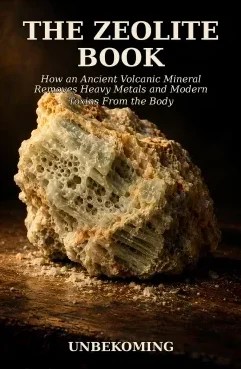 Zeolite is old. It is in Roman concrete that has held for two thousand years. It’s in the water filters of ancient cisterns. It’s in the stomachs of Pacific livestock whose keepers knew, somehow, that this grey crumbling rock made the animals healthier. It’s in Soviet clinical protocols from the 1960s. It’s in the standard emergency response to the Chernobyl explosion.
In 1986, after the Chernobyl reactor failure, the Soviet Union manufactured and distributed natural zeolite at industrial scale — for soil remediation, for livestock feed, for human consumption, for the cleanup itself. Karl Hecht, who had been director of the Institute for Experimental and Clinical Pathophysiology at the Charité of Humboldt University Berlin, spent the six decades after that building the clinical research base — on silicon’s role in human health, on zeolite’s clinical safety, on its applications in ageing. In 2018, Pavelić and colleagues published a comprehensive clinical safety review of natural clinoptilolite in Frontiers in Pharmacology. In 2019, Mastinu analysed its binding affinities. In the Western medical literature, these works sit largely uncited.
What has not been treated at book length, until now, is how a volcanic mineral with six decades of Soviet clinical work behind it, two major peer-reviewed Western reviews, and ongoing clinical use across the former Eastern Bloc, remains almost entirely absent from Western medical practice — and what the toxic burden it’s meant to address actually is.
The Zeolite Book gathers the Soviet clinical record, the Western peer-reviewed studies, three contemporary practitioner voices, and three serious counterviews into one honest treatment. That’s why the book runs to seven appendices. 288 pages, four parts, three practitioner voices, three counterviews, seven appendices. The honest treatment is the argument.
Blog Roll
 Aletho News
- Wrong, AP and NPR: Europe’s 50,000 Heat Deaths Are a Computer-Model Estimate, Not a Real Body Count
- Questioning Your Doctor Is Now Considered A Psychological Problem (Seriously)
- London tourism expo promotes Israeli agency linked to theft of Palestinian land
- Dockworkers launch global strike against Israeli and US military shipments
- Europe facing gas price shock – Gazprom chief
- Ukraine continues recruiting people with disabilities
- Weaponized Journalism: 2021 Sayer Ji Interview with NPR
- Beyond Netanyahu: what Israel’s election means for Palestinians
- Lithuania plans universal conscription
- Lies, Damn Lies, and Ukraine News
- If Americans Knew
- 1,300 will gather in Palo Alto on Nov. 1 for Z3 Conference on Zionism
- DAILY UPDATE: Latest essential news on Palestine, Israel, & region
- The Long Arm of AIPAC
- Genocidal intent behind Hebron assault, rights group says
- This week, Israel killed 8-year-old who survived bombing that wiped out her family
- DAILY UPDATE: Latest essential news on Palestine, Israel, & region
- Israeli soldier poses at damaged Lebanon church, sparking anger
- New Report. Manufacturing the Great Replacement: Is Israel behind one of the largest racist influence campaigns ever documented?
- ‘Arab voice doesn’t count’: Jewish Israeli blocs reject Palestinian support
- Whether Bibi Stays or Goes, the ‘Special Relationship’ Must End
- No Tricks Zone
- Germany’s Green Energy Transition Becoming Increasingly Expensive…Another 6 Trillion Euros!
- Sudden Stratospheric Warming, Powerful El Niño Combination May Lead To Extreme Europe Cold, Energy Crisis!
- Two New Studies Find Thwaites Glacier Melt Cannot Be Driven By Human Activity Or A Warming Ocean
- E-Cars Reduce CO2 Emissions By Only 41% Compared To Internal Combustion Engine Vehicles
- Predictions Made By Renowned Climate Professor Over Past Decades Have Been Proven To Be Poor
- New Study Suggests Large Regions Of The Pacific Ocean Have Been Cooling For The Last 80 Years
- Germany’s Green Energy Debacle: High Energy Costs Force Kahla Porzellan to Close After 182 Years!
- New Study: 50 Years Of The Most Aggressive ‘Net Zero’ Policies Can Only Affect The Global Climate By 0.03°C
- US September “Heat” Was No Record…Many Records Set Decades Ago
- Latest European Green Energy Debacle; Portugal’s Largest Flagship Solar Park Insolvent!

