Breaches of international law lay behind unrest on Golan Heights
While much of the Western media have ignored the recent bloodshed on the Golan Heights, the limited reports that have been released appear to misunderstand the background to the present confrontation. Richard Lightbown explains the history. Many media reports of the confrontations on the Golan Heights on 5 June did not accurately represent the background to the protests. The Guardian reported on 6 June that the clashes occurred “on the Syrian border” and their analysts referred to “deliberate antagonism of Israel by the Syrian regime”.
On the same day a report on BBC’s “Today” programme referred to “a disputed border” before stating that Syria “had lost the Golan Heights to Israel”. A review of the history and current status of the area, therefore, appears required reading for some foreign correspondents.
The Syrian Golan Heights (as the UN refers to the region) was recognized as Syrian sovereign territory by an Armistice Agreement signed between Israel and Syria under UN auspices in 1949. Because of its rich volcanic soils and water resources, the Golan has long been coveted by Zionists. Attempts were made starting in 1891 to buy land there, and Zionist President Chaim Weizmann wrote to British Prime Minister Lloyd George in 1919 expressing designs for the region to form part of the Jewish National Home in Palestine. (Dr Weizmann wrote to oppose the Sykes-Picot Agreement of 1916 by which Britain and France had agreed the carve up of the Ottoman Empire after the World War I. These imperial designs interfered with Zionist schemes for the Levant.)
Article 2 (4) of the UN Charter requires the respect of every state’s territorial integrity. Newly admitted to the UN in 1949, Israel began almost immediately to encroach beyond its boundaries as agreed under the 1949 Armistice. Fortifications were built in the UN-administered demilitarized zone, while illegally deployed Israeli soldiers obstructed UN observers and even threatened to kill them on one occasion. Arab residents of the area were evicted and their homes looted and destroyed. The UN Security Council (UNSC) passed a resolution in May 1951 demanding that Israel allow the residents to return. Other resolutions against Israeli violations of international law followed in 1953, 1956 and 1962, all to no avail.
Prior to the 1967 invasion there were many clashes between Syrian and Israel forces. The former Israeli defence minister, Moshe Dayan, later opined that more 80 per cent of these clashes were deliberately provoked by Israel, explaining that kibbutzim covetous of Syrian land had pressed the Israeli government to invade the Golan Heights. Another Israeli, Mattityahu Peled, who served as a member of the General Staff during the 1967 war, also stated in a newspaper interview that all the incidents were Israeli initiated.
At the time of the invasion during the 1967 war there were 137,000 Arab residents in the area that was occupied. Following the attack, 130,000 of them were expelled from their homes in two cities, 130 villages and 112 farms, all of which were destroyed. (The Golan capital of Quneitra had been a city with 25,000 population. When liberated by Syrian armour in 1973, troops discovered all the buildings destroyed or uninhabitable. This included houses, shops, mosques and the hospital.)
UNSC Resolution 242 of 1967 requiring “withdrawal of Israel armed forces from territories occupied in the recent conflict” was ignored by Israel. On 14 December 1981 the Knesset passed the Golan Heights Law, which extended Israeli laws to occupied Syrian areas. The UN Security Council responded to this breach of customary international law by passing Resolution 497 declaring the Israeli legislation “null and void and without international legal effect”. The resolution demanded that the legislation be rescinded. No other country has recognized this de facto annexation, but Israel made no attempt to comply with its legal obligations.
However, the remaining local population had no intention of being absorbed into the occupying state. Following the invasion some 7,000 residents occupying six villages in the north of the Golan were permitted to stay. This was part of a divide-and-rule policy by Israel. The Arab residents of the villages are mostly of the Druze religious community and the rulers of the Zionist state have been trying to develop a Druze buffer zone subservient to Israel in the border region between Lebanon and Syria. These people were required by Israel’s rogue legislation to give up their Syrian citizenship and adopt that of Israel. A six-month general strike followed, and most of the new Israeli identity cards were publicly burned. The Israeli government eventually gave way to the protests and most of the residents still retain their Syrian nationality. Israeli attempts to eliminate the Arab national identity have also been opposed. Indoctrination by unqualified teachers instructing the Hebrew language, Israeli literature and Israel’s version of history is still strongly resisted within this community.
The long-standing Zionist greed for the Golan has been realized through the establishment of 33 settlements in the region, and a programme is ongoing to extend this process of colonization (in defiance of UN Security Council resolutions and the Fourth Geneva Convention). Only these settlements are allowed to irrigate their crops, giving the colonizers a major competitive advantage over the Arab farmers. Israel also extracts more than its fair share of water from the Jordan River System. Studies published in 2006 indicate that while Israeli territory contributed 11.4 per cent of the total water to the system, the Israeli state extracted 50 per cent of the total. (Syria contributed 31 per cent and extracted 18.5 per cent. Palestine, Jordan and Lebanon all extracted less than their contributions.) The study found Israeli abstraction to be inequitable and unreasonable, and in contravention of international water law.
Within Israel it is generally held as an article of faith that holding the Golan is a guarantee of Israeli security. It is true that in both the wars of 1967 and 1973 the Golan was conquered by armour. Yet this does not take account of modern warfare methods. During the war between Israel and Lebanon in 2006 Merkava tanks were destroyed by Lebanese missiles. (In 2004 the then Israeli chief of staff said in a newspaper interview that the Israeli army would be able to defend any border. Israeli air power, after all, is omnipotent in the region and can inflict serious damage.)
Unrest at the boundaries of Israeli-occupied territory may well serve a Syrian government under pressure for regime change. But the roots of this unrest are long-standing genuine grievances against the expansionist and tyrannical policies of the Israeli state. Western media sources seldom comment or reflect this reality, nor do they seem to be aware of the legality of the occupation and its artificial boundaries. In so doing they render a disservice to the victims of criminality, while failing to uphold the highest standards of professional journalism.
Much of the data for this article are derived from papers presented to the London International Conference on the Golan in 2007.
More lies Weiner told us
By Lizzy Ratner | Mondoweiss | June 10, 2011
Today the media is once again aflutter with the “Sext, Lies, and Weinergate” scandal: Weiner’s wife is pregnant! His fellow Democrats are ready to dump him! His fifth lady friend has come forward! Hour by hour, sordid new details emerge, all breathlessly reported. And yet, as with all sex scandals, the prurient, puritanical thrill of watching a dog go down soon gives way to the feeling that the guy is getting it for the wrong crime. Sure the guy is a sleaze with a serious death wish – or is it God complex? – but what about the fact that he’s also a latter-day Jabotinsky who’s content to lie and deny for the sake of occupation, dispossession, and institutionalized inequality?
On Tuesday, Phil resurrected – and debunked – some of the more outrageous lies Weiner told during a March debate with former Congressman Brian Baird about Gaza and the Goldstone Report. (The debate was sponsored by the Nation Institute on behalf of our book, The Goldstone Report: The Legacy of the Landmark Investigation of the Gaza Conflict.) Today we offer you round two of Weiner’s tall tales and outright lies. Among his more outlandish claims: Israel’s blockade of Gaza is legal and not all that bad; Gaza is not occupied; Hamas cast the first stone; and perhaps the biggest head-spinner of all, Israeli settlement activity is not taking place on Palestinian lands but in Israel.
Herewith, lies 6 through 12.
Lies 6 & 7: Israel’s blockade of Gaza is legal and hasn’t caused serious humanitarian hardship anyway.
Weiner: There is a blockade that is legal under the Geneva Convention going on right now by the Israelis and the Egyptians on against Gaza. Why? Because they’re at war! I don’t like that, I wish they weren’t. They’re at war. At times of war, you do not let in things that can be used to build – to build bunkers, to do these other things. Fifteen thousand tons of humanitarian aid flows into Gaza each and every week. That goes in in compliance with the Geneva Conventions.
Let’s start with Falsehood #6, the claim that Israel’s blockade of Gaza is legal. This is simply untrue, and the reasons are several. The first is that blockades are only, or at least primarily, deemed legal in situations of international and armed conflict, which the Israel-Gaza conflict most certainly is not. In fact, because Israel remains the de facto occupying power of Gaza – and this gets us to reason number two – it is required by international law not only to protect the civilians under its control but to guarantee sufficient access to food and medical supplies. The blockade, which has reduced food and other humanitarian supplies to a trickle, clearly violates this obligation, but that’s hardly all. The blockade is also widely considered to be a form of collective punishment inflicted on the people of Gaza for their support of Hamas – a fact that Israel has all but admitted – and collective punishment is not merely not legal, it is a flagrant violation of the Geneva Conventions. A war crime.
Or as UN High Commissioner for Human Rights Navi Pillay has said:
International humanitarian law prohibits starvation of civilians as a method of warfare and … it is also prohibited to impose collective punishment on civilians.
I have consistently reported to member states that the blockade is illegal and must be lifted.
As to Falsehood #7, Weiner’s claims that 15,000 tons of humanitarian aid flow into Gaza each day so life can’t be all that bad, where does one begin? Here? Here? What about here?
The devastating effect of Israel’s blockade has been well documented by journalists, human rights groups, humanitarian organizations, and, of course, Palestinians. The Goldstone Report also dedicated pages of ink to chronicling the blockade’s humanitarian and human rights toll on the people of Gaza.
But you know what? Why listen to all these sources when you can just listen to Israeli officials themselves, as paraphrased in one of the US cables released by Wikileaks?
“As part of their overall embargo plan against Gaza, Israeli officials have confirmed … on multiple occasions that they intend to keep the Gazan economy on the brink of collapse without quite pushing it over the edge.”
Lie 8: Israel no longer occupies Gaza.
Weiner: And is Gaza occupied? Let me just clear this up, is Gaza occupied, Brian?
Baird: I think it absolutely is.
Weiner: OK, so right now there are Israelis in Gaza?
Baird: No, but there are US-made F16s and US-made weaponry and a host of other –
Weiner: But not in Gaza.
Baird: On any given day, Israelis can enter Gaza.
Weiner: Yes, on any given day they can enter there, but they are not in Gaza today.
Baird: I don’t know that.
Weiner: They don’t occupy Gaza today. Yet the Goldstone Report characterized Gaza as still being occupied.
This is a popular meme, particularly among Israeli politicians and right-wing Zionists who love to claim that Gaza has not been occupied since Israel withdrew its troops and settlers from the strip in 2005. But pretty much everyone else in the international community, with the probable exception of the United States, continues to regard Gaza as being occupied. And with good reason. When a population is hemmed in on all sides by a foreign power, its borders closed and policed, even its airspace controlled; when that power controls everything from taxes to currency; and when it pays the local population occasional, unexpected visits in the form of military incursions, it’s hard to claim that the foreign power isn’t in control.
Here’s how the Goldstone Report sums up the situation:
Given the specific geopolitical configuration of the Gaza Strip, the powers that Israel exercises from the borders enable it to determine the conditions of life within the Gaza Strip. Israel controls the border crossings … and decides what and who gets in or out of the Gaza Strip. It also controls the territorial sea adjacent to the Gaza Strip and has declared a virtual blockade and limits to the fishing zone, thereby regulating economic activity in that zone. It also keeps complete control of the airspace of the Gaza Strip, inter alia, through continuous surveillance by aircraft and unmanned aviation vehicles (UAVs) or drones. It makes military incursions and from time to time hit targets within the Gaza Strip. No-go areas are declared within the Gaza Strip near the border where Israeli settlements used to be and enforced by the Israeli armed forces. Furthermore, Israel regulates the local monetary market based on the Israeli currency (the new sheqel) and controls taxes and custom duties.
The Goldstone Report’s conclusion? “The ultimate authority over the Occupied Palestinian Territory still lies with Israel.”
Lie 9: Israel’s ongoing settlement activity is not taking place on Palestinian lands but within Israel.
Weiner: There are people who believe that settlement activity is going on in Palestinian territories. There are people who believe that. I don’t believe that.
This one is a real head-scratcher. As Roger Cohen, New York Times columnist and moderator of the Baird-Weiner debate, pointed out at the time, even the Israeli government acknowledges – heck, proclaims – that it is building settlements. So how can Weiner claim there’s no “settlement activity” in Palestinian territories? There’s really only one possible answer, but it’s such an extreme, ludicrous answer, it seems impossible that Weiner could actually believe it. And yet – well, let’s just run the tape.
Cohen: Where do you think the settlement growth is happening right now?
Weiner: What do you mean, where do I think it’s happening?
Cohen: You just said it’s happening in Israel, where in Israel?
Weiner: I don’t follow your question. What do you mean where it’s happening? It’s a matter of fact where the settlement’s happening. I don’t understand your question.
Cohen: Well, I’m asking you whether – you said it’s in Israel, as far as I know, the settlement growth is in the West Bank.
Weiner: I believe it is in Israel.
Baird: Tony, are you saying that wherever there is a settlement it is by definition Israel?
Weiner: I am saying that at some point, and it’s not going to be the three of us, but at some point, Palestinians and Israelis are going to negotiate where development is going to be able to happen, where the border exists; right now the settlement that’s going on is going on in Israel. That’s not a controversial thing to say. I mean, that’s a matter of fact. You may want in the future, where Israeli homes are, to say that’s the Palestinian border but that’s not the case yet.
Cohen: Congressman, where for you is the border of Israel?
Weiner: Where is the border – how – do you want me to describe it on a map?
Cohen: I don’t know, where is it?
Weiner: Mr. Moderator-of-this-Debate, how do you want me to do that?
Cohen: One border is the sea, where is the eastern border?
Weiner: The Jordan River.
Ah-ha! So there it is. Weiner doesn’t think that any “settlement activity” is taking place on Palestinian lands because he doesn’t think that Palestinian lands exist. He thinks that Israel sprawls from the Jordan River to the sea, which is in perfect accord with the views of Bibi Netanyahu, Ariel Sharon, and, well, far too many Israeli administrations, but just happens to contradict International law. In fact, the International Court of Justice has specifically found that Israel’s practice of building settlements — essentially, transferring large chunks of its civilian population into territory it occupies — is a breach of the Fourth Geneva Convention. Apparently, every government in the world, with the exception of Israel, agrees.
Lies 10, 11, and 12: Hamas started the Gaza Conflict by firing rockets into Israel; Israel merely carpet-bombed whole neighborhoods of Gaza in self-defense, a right which the Goldstone Report doesn’t recognize.
Weiner: Yes, it was terrible, it was a terrible, damaging war, but it was initiated by Hamas after 12000 rockets. It is a right of a people to defend themselves and you would not know that reading the Goldstone Report.
Here we have another doozy, a case of three lies in one. Happily for us, Jerome Slater has tackled all of them at one point or another in his many writings on the Gaza conflict and the Goldstone Report. Just read this and this. In particular, he has done a brilliant job of puncturing the self-defense claim, demonstrating how it is both factually and philosophically impossible. The fact part is simple: in the months preceding Operation Cast Lead, Israel and Hamas had a truce that Israel broke (on Nov. 4, 2008) in an attack that killed six men from Hamas; and when Hamas offered to renew the truce in exchange for Israel easing the siege, Israel demurred – and, several weeks later, launched Cast Lead. As to the philosophical argument, it boils down to this: “there can be no right of self-defense when illegitimate and violent repression engenders resistance—and that holds true even when the form of resistance, terrorism (a fair description of Hamas attacks on Israeli civilians) is itself morally wrong.”
As to Weiner’s claim that the Goldstone Report ignores Israel’s right to self-defense, well, anyone who’s read even a fraction of the document knows this isn’t the case. As Slater has written:
“First, while the report condemned the Israeli methods of warfare, it accepted that the purpose of Cast Lead was legitimate: Israel, it said, had a right to “defend itself” against Palestinian rocket and mortar attacks aimed at Israeli towns and villages. In his oped, Goldstone reiterated this argument: “I have always been clear that Israel, like any other sovereign nation, has the right and obligation to defend itself and its citizens against attacks from abroad and within.”
So there you have it. Anthony Weiner showed up to a packed hall in New York this past March and spewed at least twelve big, bogus claims about Israel, Palestine, and the Gaza Conflict. And he clearly hadn’t read the Goldstone Report. But if his brother and sister congresspeople get their way, he might soon have a lot of time on his hands. One way he could fill it? By cracking open the Goldstone Report.
Ministry: Surgeries canceled in Gaza due to shortages
Ma’an – June 10, 2011
GAZA CITY — Doctors in Gaza have been forced to cancel surgeries due to critical shortages of medicine and supplies, a health ministry official said Friday.
Ministry undersecretary Hasen Khalef said eye surgeries, and operations on blood vessels and nerves were among those canceled due to the lack of medication.
Gaza Health Minister Bassem Naem said pre-scheduled surgeries — including children’s operations, cardiac catheterization, laparoscopic surgery and bone and nerve operations — would be stopped.
The ministry would reduce medical services including laboratory tests, Naem added.
Khalef said dental clinics and general practice clinics would be forced to close soon, and that health centers would reduce their hours because of the shortages.
On Wednesday, the Gaza health ministry announced a state of emergency due to the shortage of medical supplies.
Medical services spokesman Adham Abu Salmiya said Thursday that warehouses had run out of over 178 types of medicine and that over 190 surgical items had either run out or were in short supply.
The health minister in the besieged coastal enclave appealed to human rights organizations to intervene to avert a looming crisis.
The Disinherited: Syria’s 130,000 Golan Height refugees
Israeli Occupation Archive (IOA) – 30 July 2010
What happened to the 130,000 Syrian citizens living in the Golan Heights in June 1967? According to the Israeli narrative, they all fled to Syria, but official documents and testimonies tell a different story.
Israeli eyewitness: “[W]e saw a big group of Syrian civilians, a few hundred people, gathered in front of tables with soldiers sitting behind them. We stopped and asked a soldier what they were doing. He answered they were doing pre-expulsion registration. I’m not a softhearted person, but I immediately had the feeling that something here wasn’t right. I still remember what a bad impression this sight left on me. But it was, de facto, like it was [with the Arab populations] in Lod, Ramle and other places in the War of Independence.”
IOA Editor: As in 1948, the “Israeli narrative” tries to sweep Israel’s ethnic cleansing crimes under the rug. As in 1948, official Israel lied about the fate of the local population during and after the war and so did Israeli historians, as this story reveals.
Note: As is often the case, the original Haaretz story, in Hebrew, is longer and more detailed than the English version presented below.
Among the parts left out of the English version: Rehavam Ze’evi, then a general at the IDF General Command under then IDF chief of staff Yitzhak Rabin, in a War Room meeting on 9 June 1967, stated
“The [Golan] Height does not have a large population and it needs to be received [delivered] clean of its residents.”
To which the Haaretz writer adds
“The IDF did not receive the Height empty, as Ze’evi wanted, but it took care that it will become that.”
Twenty years later, Ze’evi — by then an extreme right-wing politician — wrote in a Yediot Ahronot article defending his Transfer [of all Palestinians out of Palestine] idea:
“Palmach member David Elazar [IDF General in charge of the Northern Command which lead the conquest of the Golan] removed all the Arab villagers from the Golan Height after the Six-Day-War, and he did so with the approval of Rabin the chief of staff, Dayan the defense minister and Eshkol the prime minister,”
all regarded as moderate Zionists, therefore justifying Ze’evi’s Transfer idea, which was considered “extreme” in most Israeli political circles.
Indeed, Ze’evi had a point: Historically, while right-wing Zionism (“Lehi,” or the “Stern-Gang” and the “Irgun” were associated with the war crimes of Deir Yassin, the ethnic cleansing of Palestine which followed was largely the responsibility of the “Yishuv,” the broad, mainstream Jewish community of Palestine, which was dominated by labor movement elements, not the right-wing.
This is still very important today: Ehud Barak and Tzipi Livni — representing the current generation that came out of the school of David Ben-Gurion, Levi Eshkol, Golda Meir, and Yitzhak Rabin, all considered “moderate” — offer a political vision that is no different than that of Benjamin Netanyahu, who follows the the school of Ze’ev Zabotinsky and Menachem Begin, both considered “extreme”. … Full article
Stop Scabbing for Apartheid — Withdraw From Israel Bonds “Celebration”
Labor for Palestine (US) – June 7, 2011
“[All of Palestinian labor] calls on trade unions around the world to actively show solidarity with the Palestinian people by. . . . divesting from Israel Bonds and all Israeli and international companies and institutions complicit in Israel’s occupation, colonization and apartheid.”Palestinian Trade Union Coalition for BDS (PTUC-BDS), May 4, 2011[1]
The undersigned labor, anti-apartheid and human rights activists call on you — Dennis Hughes (President of the New York State AFL-CIO) and Stuart Appelbaum (President of the Retail, Wholesale and Department Store Union and head of the Jewish Labor Committee) — to respect the above call from Palestinian labor by withdrawing as “Honoree” and “Chair,” respectively, of the “State of Israel Bonds” fundraiser in New York City on June 13, 2011.[2]
For decades, top U.S. labor officials have effectively scabbed on Palestinian workers by investing billions — the exact amount has not been made public — from union members’ pension funds in State of Israel Bonds, a pillar of apartheid that enjoys tax-exempt status from the U.S. government.
Whitewashing this betrayal is the Histadrut, the Zionist labor federation[3], and its “progressive” U.S. mouthpiece, the Jewish Labor Committee.[4]
Obscenely, the Israel Bonds “celebration” on June 13 follows the May 15 Israeli massacre of unarmed Palestinian refugees exercising their right to return, the first anniversary of the deadly May 31, 2010 Israeli attack on the Gaza Freedom Flotilla, and Israeli prime minister Netanyahu’s arrogant U.S. tour.
Meanwhile, the world is inspired by mass, democratic revolutions in the Middle East that challenge U.S./Israeli-backed neoliberalism, dictatorship and oppression. At the heart of this revolution, Palestinian labor has reiterated its longstanding appeal for unions everywhere to support the growing movement for Boycott, Divestment and Sanctions (BDS).
The BDS campaign demands that Israel acknowledge the Palestinian people’s inalienable right to self-determination, and fully complies with international law by:
* Ending its occupation and colonization of all Arab lands occupied since 1967 (including East Jerusalem), as well as dismantling of the illegal wall and colonies;
* Recognizing the fundamental right of the Palestinian citizens of Israel to full equality, as well as ending the system of racial discrimination against them; and
* Respecting, protecting and supporting the rights of Palestinian refugees to return to their homes and properties as stipulated in UN Resolution 194.
BDS has been endorsed by labor bodies around the world, including the trade union congresses of South Africa, Brazil, Ireland, Scotland and the UK, and labor bodies in Australia, France, Canada, Norway, Catalunya, Italy, Spain and Turkey.
The Congress of South African Trade Unions (COSATU), which plays a leading role in the BDS movement, hasn’t forgotten Israel was apartheid South Africa’s closest ally. And as veteran South African freedom fighters have observed, Israel’s treatment of Palestinians is “worse than apartheid.”
US workers have particularly strong reasons to support the movement against apartheid Israel. In the past ten years alone, the US government — with overwhelming bipartisan support — has given Israel $17 billion in military aid; over the next decade, it will give another $30 billion.
As a result, Palestinian workers are killed by US-supplied naval vessels, jet fighters, Apache helicopters, white phosphorous and other weapons. In 2008/2009 alone, such weapons killed 1400 people in Gaza, most of them civilians — a massacre condemned by the UN, Amnesty International, Human Rights Watch and other human rights organizations, including those that are Israeli.
Meanwhile, amidst spiraling economic crisis, workers in this country pay a staggering human and financial price for US-Israeli war and occupation from Palestine to Afghanistan, Iraq and Pakistan.
Thus, following the May 31, 2010 Israeli attack on the Gaza Freedom Flotilla, members of ILWU Local 10 in Oakland courageously followed the South African dockers’ example by refusing to handle Israeli cargo.
Their solidarity stands in the proud tradition of West Coast dock-workers who refused to handle cargo for Nazi Germany (1934) and fascist Italy (1935); those in Denmark and Sweden (1963), the San Francisco Bay Area (1984) and Liverpool (1988), who refused shipping for apartheid South Africa; those in Oakland who refused to load bombs for the Pinochet dictatorship in Chile (1978); and those at all twenty-nine West Coast ports who held a May Day strike against the wars in Iraq and Afghanistan (2008).
Respecting the BDS call is a matter of basic labor solidarity. Indeed, just as trade unionists fight “replacement” of striking workers, we stand against the dispossession, occupation and inequality inflicted on millions of Palestinian working people and their descendants for more than six decades.
Rather than being used to secretly finance racism, ethnic cleansing, apartheid and colonialism, union members’ funds should be transparently invested in justice for all workers.
An essential first step is labor divestment from “State of Israel Bonds.”
Notes
[1] http://www.bdsmovement.net/2011/ptuc-bds-formed-6912
[3] http://www.laborforpalestine.net/wp/wp-content/uploads/2010/06/Histadrut-Briefing.pdf
[4] http://www.laborforpalestine.net/wp/wp-content/uploads/2010/06/JLC-Briefing-Paper.pdf
Signers (List in formation — ALL UNION BODIES LISTED FOR IDENTIFICATION ONLY.)
Endorse this statement:
Monadel Herzallah, Arab American Union Members Council, San Francisco, CA
Larry Adams, Former President, NPMHU L. 300; Co-Convener, New York City Labor Against the War; People’s Organization for Progress
Michael Letwin, Labor for Palestine; Former President, Association of Legal Aid Attorneys/UAW Local 2325
Brenda Stokely, Former President, AFSCME DC 1707; Co-Convener, New York City Labor Against the War; Co-Chair, Million Worker March Movement
Mohammad Jawabreh, Palestinian Progressive Labor Action Front, Ramallah, Palestine
Progressive Labor Action Front – Palestine
Sameer Matar, Union of Agricultural Engineers, Jenin, Palestine
Sam Weinstein, Utility Workers Union of America (UWUA), Washington DC
Marty Goodman, Transport Workers Union Local 100, former Executive Board member, New York, NY
Stanley Heller, 40 year AFT member West Haven, CT, now AFT 933 Retired; New Haven, CT
Joe Iosbaker, SEIU Local 73, Executive Board Member, Chicago, IL
Azalia Torres, Former Executive Bd. Member, ALAA/UAW L. 2325, Brooklyn, NY
Lee Sustar, NWU/UAW L. 1981; Chicago, IL
Steve Zeltzer, Producer, Labor Video Project
Noha Momtaz Tahrir Arafa, Association of Legal Aid Attorneys/UAW 2325, Brooklyn, NY
Steve Terry, ALAA/UAW L. 2325, Brooklyn, NY
Steve Gillis, Vice President, USW Local 8751, The Boston School Bus Drivers’ Union
Sherna Berger Gluck, former vice-president, CFA/SEIU 1983
Roger Dittmann, Ph.D., Former Secretary, United Professors of California, Member, SEIU
Jeff Klein, President (retired), SEIU/NAGE Local R1-168
Joe Lombardo, CSEA and Troy Area Labor Council
Bill Preston, President of American Federation of Government Employees, Local 17, Washington, DC
Bill Bateman, Coordinator, RI Unemployed Council
Burnis E. Tuck, AFL-CIO, AFGE, Local 3172, retired, IWW (International Workers of the World), current member
Mike Gimbel, Retired member of Local 375, AFSCME exective Board
Joe Balkis, Teamsters Local 705
Nathaniel Miller, IWW International Solidarity Commission
Howard B. Lenow, Union Attorney, Wayland, MA
Anthony Arnove, National Writers Union
Frank Couget, Shop Steward, National Association of Letter Carriers, AFL-CIO
Martha Grevatt, Former Chair, Civil and Human Rights Committee, UAW Local 122
Carl Gentile, National Representative, American Federation of Government Employees (AFGE) AFL-CIO
Jim Holstun, UUP Buffalo Center Chapter, NYSUT, AFT
Mary Scully, IUE-CWA Local 201 (retired)
Mark Clinton, Massachusetts Community College Council, Massachusetts Teachers Association, National Education Association
Marvin Cohen, American Federation of Teachers (retired)
Patrick J, Finn, Ph. D., UUP United University Professions SUNY Buffalo, Buffalo, NY
Mary E. Finn, Ph. D., UUP United University Professions SUNY Buffalo, Buffalo, NY
Manzar Foroohar, Delegate Assembly, California Faculty Association (CFA), Former Chapter President, CFA, Cal Poly, San Luis Obispo, Former State-wide Membership Committee Chair and member of the state-wide bargaining team, CFA
Mark Richey, retired member, United Teachers of Richmond, California
Leslie Cohen, former SEIU Local 285 member
Dave Slaney, former President, USWA Local 2431 (retired)
Dr. Sue Blackwell, member of National Executive Committee, University and College Union, UK
Mike Treen, National Director, Unite Union, Auckland, NZ
Brian Kelly, Belfast Branch Committee UCU (N. Ireland: personal capacity); formerly IUMSWA L 25 (Boston), Carpenters L 33 (Boston)
Andre Powell, Delegate, Baltimore MD Metro AFL-CIO Central Labor Council, AFSCME
Amy Hines, Labor Relations Representative/Organizer, AEU, Concord, CA
John Penetra, Technician, CWA Local 1118, Albany, NY
Dennis Kortheuer, California Faculty Association, Long Beach, CA
Denise Hammond, President, CUPE 1281, Toronto, ON, Canada
Hanspeter Gysin, Unia (Tradeunion Building, Industry, Services), Switzerland
Sid Shniad, Research Director, Telecommunications Workers Union, Vancouver, BC, Canada
Barbara Foley, AAUP, Rutgers University – Newark, NJ
Janice Rothstein, AFSCME 3299, San Francisco, CA
Paul Pryse, Teaching Assistants’ Association, University of Wisconsin – Madison
Steve Leigh, steward, SEIU local 925, Seattle, WA
Glenn Shelton, NPMHU, Detroit, MI
Janet Hudgins, CUPE (retired), Vancouver, BC, Canada
Dennis Laumann, United Campus Workers-Communication Workers Local 3865 of America, Memphis, TN
Edward Stiel, IBEW Local 302, San Francisco, CA
David Laibman, Professional Staff Congress (AFT Local 4331), Brooklyn, NY
Stephen Cheng, Brandworkers International
John Dudley, SEIU, Branford, CT
Richard Krushnic, Steward, Bargaining Committee Member, SEIU 888, Cambridge, MA
Paul Field, Unite the Union, UK
Powell DeGange, organizer, UNITE HERE, San Francisco, CA
Jim Harris, former member, SEIU 535, Richmond, CA
Dr. Russell Dale, PSC CUNY, New York, NY
David Heap, UWO Faculty Association, London, ON, Canada
Bob McCubbin, California Teachers Association, San Diego, CA
Susan Stout, CAW (retired), North Vancouver, BC, Canada
David Klein, California Faculty Association (CFA), Los Angeles, CA
Gregory A. Butler, shop steward, Carpenters Local 157, New York, NY
B. Ross Ashley, former shop steward, former executive council member, local 204, SEIU (retired), Toronto, ON, Canada
Keith Sadler, UAW Local 12, Toledo, OH, USA
The AfPak Tanker War
Moon of Alabama | June 9, 2011
The campaign against tankers trucking fuel for NATO from Karachi to Afghanistan is back in full force after a lull earlier this year.
While now only some 50% of the fuel needed in Afghanistan is coming through Pakistan, the total fuel need has nearly doubled over the last year due to the “surge”, the buildup of Afghan forces and an increased operations. It would be impossible to fight this war if that line-of-communication gets interrupted.
Here is a, likely incomplete, list of recent attacks on NATO tankers. The losses are significant:
Explosion destroys Nato tanker in Khyber, June 9
PESHAWAR: A Nato oil tanker was destroyed following an explosion in the Khyber tribal region on Thursday, DawnNews quoted security sources as saying.
Eight Nato supply tankers torched, June 8
KHYBER AGENCY – As many as eight Nato oil supply tankers were torched on Tuesday here in Torkham, political administration and Khasadar sources said.
Five Nato tankers burn in explosion, June 7
PESHAWAR: A Pakistani government official says five Nato oil tankers burned after an explosion at the Afghan border.
Two Nato tankers gutted, June 6
QUETTA – Two tankers carrying supplies for the Nato forces stationed in Afghanistan were torched in two separate incidents in Bolan and Khuzdar districts of Balochistan on Sunday.
Miscreants set NATO supply oil tanker on fire, June 5
According to details, an oil tanker was carrying oil for the NATO forces percent in Afghanistan from Karachi through Sibi, three unknown miscreants targeted this oil tanker near Konbari Bridge in Bolan.
Two NATO oil tankers torched in Nasirabad, June 1
QUETTA: The driver of a NATO oil tanker was injured while two tankers were torched in Mastung and Wadh areas, respectively, on Tuesday.
Two NATO tankers torched in Pakistan, May 31
The attack took place on Tuesday morning, when unknown gunmen opened fire on the oil tankers in Khuzdar district of the volatile Balochistan province, local police told Press TV.
3 NATO Tankers destroyed in separate incidents: One killed , May 31
QUETTA: Three NATO Tankers were destroyed and a person was killed in two separate incidents in Mastong and Khuzdar hereon Tuesday.
Driver killed, 4 injured in 3 NATO oil tankers collision, May 26
NOWSHERA: Driver was killed and four were injured when three NATO oil tankers collided with each other on Nowshera-Peshawar G.T. Road while overtaking from the wrong side hereon Thursday.
…
Two of the tankers were completely destroyed and thousands liters of oil spilled over the G.T. Road.
15 dead in NATO tanker fire in Pakistan: officials, May 20
PESHAWAR, Pakistan — A bomb attack Saturday on a NATO fuel tanker headed to Afghanistan sparked a huge fire that killed 15 people who had rushed to collect petrol leaking from the bombed-out vehicle.
…
Earlier, 11 other NATO supply vehicles, “most of them oil tankers” were destroyed at a terminal in nearby Torkham town, another administration official, Iqbal Khattak, said, but there were no casualties.
19 Nato tankers torched near Torkham, May 15
LANDIKOTAL: The number of Nato oil tankers that were burnt in bomb blast near Afghan border Friday night reached 19, as 14 more tankers caught fire early Saturday, official sources said.
Israel approves oxymoronic ‘tolerance’ museum on Muslim cemetery
Palestine Information Center – 09/06/2011
OCCUPIED JERUSALEM — The Israeli occupation’s Jerusalem municipality planning committee has approved a plan to build a so-called ”tolerance museum” in the city’s center.
But the oxymoronic Jewish museum of ”tolerance” is planned to be built on the historic Muslim Ma’manullah cemetery and would require the removal of hundreds of ancient skeletons of Muslims dating back to Medieval times.
According to Israeli media, the project was designed by the Simon Wiesenthal Center, the self-proclaimed Nazi hunter that works to stop anti-Judaism.
The Jerusalem municipality delayed approval of the project for the last two years in order for changes to be made on the architectural plan.
Ma’manullah cemetery, located west of Jerusalem’s Old City 2 km away from Al-Aqsa Mosque’s Al-Khalil gate, is the largest Islamic cemetery in Jerusalem, with an area of some 200 dunums.
Gaza activists: Monitoring boat to sail Wednesday
Ma’an – 08/06/2011
BETHLEHEM — The first monitoring boat in Gaza waters crewed by international citizens will set sail on Wednesday morning, activists said.
The vessel, named Oliva, will leave from Gaza City fishing port with crew from Spain, the US, Sweden and the UK, and accompany Gaza fisherman in the waters, organizers said in a statement released Tuesday.
“Violations of international law will be monitored, documented, and disseminated,” the release from the Civil Peace Service said.
The organization said the initiative is in cooperation with local groups including the Palestinian Center for Human Rights, the Popular Struggle Coordination Committees, the Union of Agriculture Committees and Fishing and Marine Sports Association.
Israeli military vessels monitor the Gaza coast and enforcing a fishing limit of three nautical miles and blockade of the Gaza Strip, with fishermen reporting fire, boat confiscations and detentions by the navy.
Last Wednesday, fishermen said one skiff was hit by an Israeli ship and sunk, injuring a fisherman, off the southern Gaza coast.
Jewish extremists storm Aqsa plaza
Spree coincides with the 44th anniversary of the Israeli occupation
Palestine Information Center – 08/06/2011
 OCCUPIED JERUSALEM, — Jewish settlers stormed the holy Aqsa Mosque in occupied Jerusalem on Wednesday in large numbers after organizing provocative marches in its vicinity and in the Old City.
Aqsa guards said that the settlers broke into the holy site through the Maghareba gate under police protection and started feasting, which included opening and breaking liquor bottles.
Worshipers inside the mosque rushed to the plaza while chanting Allahu Akbar (God is great), but the policemen kept them away and threatened to arrest them. Tension ran high after the incident.
Leaders of Jewish fanatic groups had called for storming the Aqsa on the occasion of “Alhvuaot Albwakir” feast, which coincides with the forty-fourth anniversary of occupying eastern Jerusalem.
Aid Does Not Equal Freedom
Free Gaza Movement | June 5, 2011
 Israel’s announcement today that it is “allowing between 210 and 220” trucks into Gaza with humanitarian aid is a direct response to the pressure that the upcoming Freedom Flotilla II is creating. Since July 2007, Israel has kept the number of allowed trucks at 25% of what the pre-blockade numbers were and of what is required by Gaza residents. To date, Israel has not responded to calls by human rights organizations or the UN to increase the numbers. Only as a result of the mounting pressure from the Freedom Flotilla has Israel altered its policy. However, today’s allowance still falls 35% short of what is needed in Gaza.
Letting in more trucks is not enough. More trucks with food and medicine are only meant to give the appearance of an open Gaza. More trucks does not mean freedom; more trucks does not mean rebuilding the hundreds of homes and buildings that the Israeli military destroyed during Operation Cast Lead (only 12 of the trucks being allowed in contain construction material for UN projects); more trucks does not mean Gaza is not occupied and its residents subjected to collective punishment; more trucks does not mean that Israel has ended its cruel blockade; more trucks does not mean that Palestinians are any less imprisoned.
More trucks do, however, mean that Israeli farmers and merchants make money off the occupation. as most international agencies bringing aid into Gaza are forced to buy their supplies from Israel.
Freedom Flotilla II will sail at the end of June to press Israel and the international community to end the occupation of Palestine and to ensure freedom for Palestinians – just as any other people in the world have the right to be free. Instead of pressuring countries to stand in our way, or coming up with ways to bribe governments to stop our ships, the UN, the United States and the rest of the international community should recognize the power of this non-violent civilian effort to pressure Israel to change its policy. With Israel’s change in policy after Freedom Flotilla I, and now these moves to pre-empt our flotilla, it seems we are succeeding where the international community continues to fail.
West Bank Protest Organizer, Bassem Tamimi, to Judge: “Your Military Laws Are Non-Legit. Our Peaceful Protest is Just”
Popular Struggle | June 6, 2011
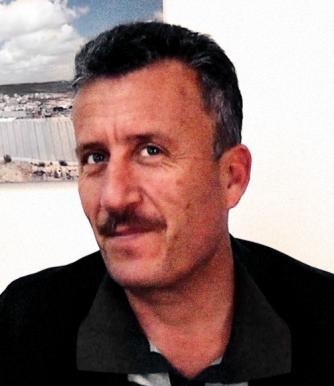 Tamimi, who has been held in custody for over two months, pleaded not guilty to the charges against him and held a defiant speech explaining his motivation for organizing civil resistance to the Occupation. (Full statement below)
After more than two months in custody, the trial of Bassem Tamimi, a 44 year-old protest organizer from the West Bank village of Nabi Saleh, finally commenced yesterday. Tamimi, who is the coordinator for the Nabi Saleh popular committee, pleaded not guilty to the charges laid against him.
In a defiant speech handed before a crowded courtroom, Tamimi proudly owned up to organizing the protest in the village saying, “I organized these peaceful demonstrations to defend our land and our people.” Tamimi also challenged the legitimacy of the very system which trys him, saying that “Despite claiming to be the only democracy in the Middle East you are trying me under military laws […] that are enacted by authorities which I haven’t elected and do not represent me.” (See Tamimi’s full statement at court bellow).
Tamimi was interrupted by the judge who warned him that it was not a political trial, and that such statements were out of place in a courtroom. Tamimi was cut short and not allowed to deliver his full statement.
After Tamimi finished reading his shortened statement, the judge announced that the hearing’s protocol has been erroneously deleted. However he refused to submit the full written statement to the stenographer. She went on to dictate a short summary in her own words for official record.
The indictment against Tamimi is based on questionable and coerced confessions of youth from the village. He is charged with’ incitement’, ‘organizing and participating in unauthorized processions’,’ solicitation to stone-throwing’, ‘failure to attend legal summons’, and a scandalous charge of ‘disruption of legal proceedings’, for allegedly giving youth advice on how to act during police interrogation in the event that they are arrested.
The transcript of Tamimi’s police interrogation further demonstrates the police and Military Prosecution’s political motivation and disregard for the suspect’s rights. During his questioning, Tamimi was accused by his interrogator of “consulting lawyers and foreigners to prepare for his interrogation”, an act that is in no way in breach of the law.
Tamimi’s full statement:
Your Honor,I hold this speech out of belief in peace, justice, freedom, the right to live in dignity, and out of respect for free thought in the absence of Just Laws.
Every time I am called to appear before your courts, I become nervous and afraid. Eighteen years ago, my sister was killed in a courtroom such as this, by a staff member. In my lifetime, I have been nine times imprisoned for an overall of almost 3 years, though I was never charged or convicted. During my imprisonment, I was paralyzed as a result of torture by your investigators. My wife was detained, my children were wounded, my land was stolen by settlers, and now my house is slated for demolition.
I was born at the same time as the Occupation and have been living under its inherent inhumanity, inequality, racism and lack of freedom ever since. Yet, despite all this, my belief in human values and the need for peace in this land have never been shaken. Suffering and oppression did not fill my heart with hatred for anyone, nor did they kindle feelings of revenge. To the contrary, they reinforced my belief in peace and national standing as an adequate response to the inhumanity of Occupation.
International law guarantees the right of occupied people to resist Occupation. In practicing my right, I have called for and organized peaceful popular demonstrations against the Occupation, settler attacks and the theft of more than half of the land of my village, Nabi Saleh, where the graves of my ancestors have lain since time immemorial.
I organized these peaceful demonstrations in order to defend our land and our people. I do not know if my actions violate your Occupation laws. As far as I am concerned, these laws do not apply to me and are devoid of meaning. Having been enacted by Occupation authorities, I reject them and cannot recognize their validity.
Despite claiming to be the only democracy in the Middle East you are trying me under military laws which lack any legitimacy; laws that are enacted by authorities that I have not elected and do not represent me. I am accused of organizing peaceful civil demonstrations that have no military aspects and are legal under international law.
We have the right to express our rejection of Occupation in all of its forms; to defend our freedom and dignity as a people and to seek justice and peace in our land in order to protect our children and secure their future.
The civil nature of our actions is the light that will overcome the darkness of the Occupation, bringing a dawn of freedom that will warm the cold wrists in chains, sweep despair from the soul and end decades of oppression.
These actions are what will expose the true face of the Occupation, where soldiers point their guns at a woman walking to her fields or at checkpoints; at a child who wants to drink from the sweet water of his ancestors’ fabled spring; against an old man who wants to sit in the shade of an olive tree, once mother to him, now burnt by settlers.
We have exhausted all possible actions to stop attacks by settlers, who refuse to adhere to your courts’ decisions, which time and again have confirmed that we are the owners of the land, ordering the removal of the fence erected by them.
Each time we tried to approach our land, implementing these decisions, we were attacked by settlers, who prevented us from reaching it as if it were their own.
Our demonstrations are in protest of injustice. We work hand in hand with Israeli and international activists who believe, like us, that had it not been for the Occupation, we could all live in peace on this land. I do not know which laws are upheld by generals who are inhibited by fear and insecurity, nor do I know their thoughts on the civil resistance of women, children and old men who carry hope and olive branches. But I know what justice and reason are. Land theft and tree-burning is unjust. Violent repression of our demonstrations and protests and your detention camps are not evidence of the illegality of our actions. It is unfair to be tried under a law forced upon us. I know that I have rights and my actions are just.
The military prosecutor accuses me of inciting the protesters to throw stones at the soldiers. This is not true. What incites protesters to throw stones is the sound of bullets, the Occupation’s bulldozers as they destroy the land, the smell of teargas and the smoke coming from burnt houses. I did not incite anyone to throw stones, but I am not responsible for the security of your soldiers who invade my village and attack my people with all the weapons of death and the equipment of terror.
These demonstrations that I organize have had a positive influence over my beliefs; they allowed me to see people from the other side who believe in peace and share my struggle for freedom. Those freedom fighters have rid their consciousness from the Occupation and put their hands in ours in peaceful demonstrations against our common enemy, the Occupation. They have become friends, sisters and brothers. We fight together for a better future for our children and theirs.
If released by the judge will I be convinced thereby that justice still prevails in your courts?
Regardless of how just or unjust this ruling will be, and despite all your racist and inhumane practices and Occupation, we will continue to believe in peace, justice and human values. We will still raise our children to love; love the land and the people without discrimination of race, religion or ethnicity; embodying thus the message of the Messenger of Peace, Jesus Christ, who urged us to “love our enemy.” With love and justice, we make peace and build the future.
Background
Bassem Tamimi is a veteran Palestinian grassroots activist from the West Bank village of Nabi Saleh, north of Ramallah. He is married to Nariman Tamimi, with whom he fathers four children – Wa’ed (14), Ahed (10), Mohammed (8) and Salam (5).
As a veteran activist, Tamimi has been arrested by the Israeli army 11 times to date and has spent roughly three years in Israeli jails, though he was never convicted of any offence. He spent roughly three years in administrative detention, with no charges brought against him. Furthermore, his attorney and he were denied access to “secret evidence” brought against him.
In 1993, Tamimi was falsely arrested on suspicion of having murdered an Israeli settler in Beit El – an allegation of which he was cleared entirely. During his weeks-long interrogation, he was severely tortured by the Israeli Shin Bet in order to draw a coerced confession from him. During his interrogation, and as a result of the torture he underwent, Tamimi collapsed and had to be evacuated to a hospital, where he laid unconscious for seven days.
As one of the organizers of the Nabi Saleh protests and coordinator of the village’s popular committee, Tamimi has been the target of harsh treatment by the Israeli army. Since demonstrations began in the village, his house has been raided and ransacked numerous times, his wife was twice arrested and two of his sons were injured; Wa’ed, 14, was hospitalized for five days when a rubber-coated bullet penetrated his leg and Mohammed, 8, was injured by a tear-gas projectile that was shot directly at him and hit him in the shoulder. Shortly after demonstrations in the village began, the Israeli Civil Administration served ten demolition orders to structures located in Area C, Tamimi’s house was one of them, despite the fact that it was built in 1965.
Legal background
On the March 24th, 2011, a massive contingent of Israeli Soldiers raided the Tamimi home at around noon, only minutes after he entered the house to prepare for a meeting with a European diplomat. He was arrested and subsequently charged.
The main evidence in Tamimi’s case is the testimony of 14 year-old Islam Dar Ayyoub, also from Nabi Saleh, who was taken from his bed at gunpoint on the night of January 23rd. In his interrogation the morning after his arrest, Islam alleged that Bassem and Naji Tamimi organized groups of youth into “brigades”, charged with different responsibilities during the demonstrations: some were allegedly in charge of stone-throwing, others of blocking roads, etc.
During a trial-within-a-trial procedure in Islam’s trial, motioning for his testimony to be ruled inadmissible, it was proven that his interrogation was fundamentally flawed and violated the rights set forth in the Israeli Youth Law in the following ways:
- Despite being a minor, he was questioned in the morning following his arrest, having been denied sleep.
- He was denied legal counsel, although his lawyer appeared at the police station requesting to see him.
- He was denied his right to have a parent present during his questioning.
- He was not informed of his right to remain silent, and was even told by his interrogators that he is “expected to tell the truth”.
- Only one of four interrogators present was a qualified youth interrogator.
While the trial-within-a-trial procedure has not yet reached conclusion, the evidence already revealed has brought a Military Court of Appeals to revise its remand decision and order Islam’s release to house arrest.
Over the past two months, the army has arrested 24 of Nabi Saleh’s residents on protest related suspicions. Half of those arrested are minors, the youngest of whom is merely eleven.
Ever since the beginning of the village’s struggle against settler takeover of their lands in December of 2009, the army has conducted 71 protest related arrests. As the entire village numbers just over 500 residents, the number constitutes approximately 10% of its population.
Tamimi’s arrest corresponds to the systematic arrest of civil protest leaders all around the West Bank, as in the case of the villages Bil’in and Ni’ilin.
Only recently the Military Court of Appeals has aggravated the sentence of Abdallah Abu Rahmah from the village of Bilin, sending him to 16 months imprisonment on charges of incitement and organizing illegal demonstrations. Abu Rahmah was released on March 2011.
The arrest and trial of Abu Rahmah has been widely condemned by the international community, most notably by Britain and EU foreign minister, Catherin Ashton. Harsh criticism of the arrest has also been offered by leading human rights organizations in Israel and around the world, among them B’tselem, ACRI, as well as Human Rights Watch, which declared Abu Rahmah’s trial unfair, and Amnesty International, which declared Abu Rahmah a prisoner of conscience.
Featured Video

Death Spikes & Rising Cancer In Our Youth Explained
or go to
Aletho News Archives – Video-Images
From the Archives
Politicians lie
By Mazin Qumsiyeh | Popular Resistance | August 18, 2013
There is no way to say this truth nicely: Politicians lie. That includes Japanese, American, Egyptian, Israeli, and Palestinian politicians! Is there something more common sense than that? Yet, so many citizens around the world believe their own politicians or wistfully acknowledge lies but think it is part of the job needed to run things. They believe even when politicians contradict themselves blatantly. This phenomenon is rather remarkable. It is a dissonance and disconnect from reality that many seem oblivious to. It is very dangerous because it can lead to accepting rationales for going to war. These can be deadly wars that lead to millions of lives lost as happened in what was called World War 1 and WW2. Even when incredible and declassified evidence abound, politicians continue to lie and old mythologies refuse to die. Here are just a few of the countless lies told to us over the past few decades… continue
Blog Roll
 Aletho News
- Burnham’s UN debut… A masterclass in British disinformation
- Iran flights continue despite US aviation sanctions
- Global Tipping Points Lead the World Into a State of Entropy
- The day-after at the White House: USA and Xi Jinping
- The Geopolitical Balance in the Red Sea: The UAE Being Displaced by New Players
- Iraqi resistance group vows to stage airport sit-ins over Iran aerial blockade
- Turkish parliament to review Saudi-Pakistan defense pact next month
- DEATH SPIKES & RISING CANCER IN OUR YOUTH EXPLAINED
- Iran offers Trump deal before US election
- Merz regime wants ‘secret police’ – opposition
- If Americans Knew
- Deconstructing Netanyahu’s pants-on-fire UN rant – Daily Update
- Trump betrayed voters with his campaign lies and prioritized a foreign country once he took office
- Netanyahu calls Israel’s war in Gaza ‘opposite of genocide’ in UN speech to near-empty hall
- Settler Kidnappings: Torture, Sexual Abuse and Terrorisation of Palestinian Abductees as Israel Deepens Annexation of West Bank
- Gaza winter nears as 162,000 tents become unusable, raising fears of humanitarian crisis
- Netanyahu says, “It’s the opposite of genocide”; UN says Gaza economy is world’s ‘most severe crisis on record’ – Daily Update
- Israel’s US-Backed Assault on Gaza Has Created the ‘World’s Most Severe Economic Crisis on Record’: UN
- ‘Protecting U.S. Citizens’… From Israel
- ‘This is where I live now, the back of a truck’: a day in the life of a grandmother in Gaza
- In UN Speech, Iran’s President Displays Pictures of Children Killed by US, Brings Attention to Israel’s Nuclear Arsenal
- No Tricks Zone
- New Study: Earth And Venus Surface Warmth Largely Explained By Convection And Lapse Rate, Not CO2 Or Radiation
- 2025 Nature Paper Claiming Worsening Global Drought Gets RETRACTED …Heavily Flawed
- New Study: ‘Global Drought Shows No Detectable Recent Acceleration Under Climate Warming’
- Economic Masterminds: German Socialists Suggest Taxing Productivity Gains Stemming From Using AI
- The South China Sea Has Not Been Cooperating With The Climate Change Narrative
- Energy Crisis: Germany Enters Heating Season With Historically Low Gas Reserve Fill Levels
- New Study: The Antarctic Ice Sheet Gained Mass From 2020-2024 Due To Staggering Snow And Ice Accumulation
- Study: Ocean Heating Rates From Thousands Of Years Ago ‘Dwarf’ Modern Ocean Heating Rates
- Climate Extremists Target, Attack Large-Scale Power Grid Infrastructure In Germany!
- New Study: Antarctic Ice Melt Has Contributed Less Than 1 Centimeter To Sea Level Rise In The Last 30 Years

