WITNESS: Wife, brothers give accounts of Israeli assassinations
December 26, 2009
Nablus – Ma’an – Family members of the three slain Fatah members gave testimony around the last moments of their loved ones lives on Saturday, hours after the men were assassinated by Israeli forces in their own homes in Nablus.
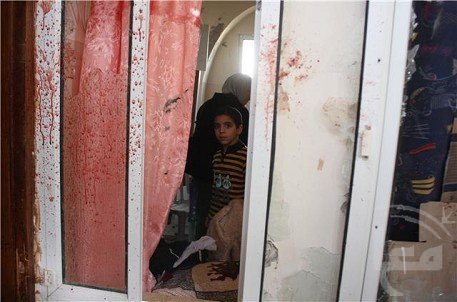
Home of Raed Sarakji, killed Saturday [MaanImages]
Raed Sarakji, 38
Now a widow, Tahani Ja’ara is 32 years old and seven months pregnant. “We were sleeping in our bedroom, not bigger than 6 square meters, when Israeli soldiers began yelling ‘get out…get out’. I thought I was dreaming. When I heard the Israeli soldiers and their police dogs outside the room, that was when I realized it was real.”
Tahani said her husband told soldiers he would get out of the house, so they started shooting through the door and the windows. “He fell between my hands bleeding. I started crying ‘they killed him…they killed him. Then soldiers broke the door and got in. He was already dead, but they continued to riddle his body with bullets to make sure he was killed.”
Three months before his death, Sarakji opened a used tools shop in the old city of Nablus. He had just been released from Israeli prison in January 2009 after spending seven years in jail, he was trying to re-start his life.
According to a statement from the Israeli military, Sarkaji was involved with the manufacturing of explosives and the establishment of an explosives-manufacturing laboratory in Nablus.
Ghassan Abu Sharkh, 39
Ghassan’s 16-year-old brother Diyaa Abu Sharkh saw him shot dead Saturday morning. “Everything happened very quickly… when we opened the door and saw the soldiers, two masked collaborators pointed to my brother Ghassan who was walking down the stairs. Before I knew it he was being shot. I couldn’t really make sense of what was going on at all. Then an Israeli officer asked me whether the dead man was Ghassan, and I said yes. ‘Good, then ask everybody to leave the house,’ the officer said.”
“I was stading close to Ghassan when they killed him. They could have detained him very easily. [But now he has] He passed to join my brother Nayif who was killed by Israeli forces a few years ago [2004].”
Ghassan Abu Sharkh was a car electrician and owned a small workshop. He left behind a wife, three sons, and a daughter.
Anan Subih, 33
Farid Subih is 45, his brother Anan, was killed Saturday morning in the Ras Al-Ain neighborhood of Nablus. “At 3am, dozens of Israeli troops surrounded our four-story building. They blew open the the main gate then started shooting randomly and throwing grenades in all directions. Anan was inside, and he asked everybody to leave the building to avoid being hurt.”
He continued, “We headed to the nearby house of the Al-‘Amoudi family. Then soldiers entered the house with police dogs, and they started throwing more grenades, and a fire erupted in the warehouse full of plastic chairs and sponge material.
“My brother was not armed, but we could see soldiers continue to ransack the house. For three hours, we didn’t know what was going on. After the soldiers left, we found Anan dead…bullets tore all his body and bones. They could have detained him, and he died believing he had been granted amnesty by Israeli forces. He left behind a widow, two sons, and five daughters,” added Farid.
According to the Israeli military, Annan was killed after an exchange of fire and “found in a hiding place along with weapons and ammunition.”
Anan was an activist within Fatah’s Al-Aqsa Brigades, he was completely pardoned in an amnesty deal between Israel and the Palestinian Authority.
Israel razes gas station, grocery near Nablus
23/12/2009 15:57
Nablus – Ma’an – An Israeli military bulldozer demolished a gas station, a grocery store, and a cargo container in the northern West Bank village of Qusra south of the city of Nablus on Wednesday.
Palestinian sources told Ma’an that more than 20 Israeli military jeeps escorted a bulldozer into the village, which proceeded to demolish the structures one kilometer away from Israeli settlement Magdolin.
The owner of the demolished buildings, 30-year-old Mu’tasim Uda, said he received the latest demolition order from Israeli authorities a year ago. He estimated his loss to be about 120,000 Israeli shekels (31,000 US dollars). He explained that he recently stopped operating the gas station, but all the facility’s equipment was still there when the demolition crew arrived.
Uda said Israeli forces used to warn him that stones were pelted at Israeli vehicles by Palestinian youths who used to hide in the gas station area.
Ghassan Daghlas, a Palestinian official charged with monitoring settlement activities in the northern West Bank, condemned the demolition and appealed to the international community to intervene and stop Israeli policies aimed at displacing the Palestinians from their own lands.
What is the Aim of the Gaza Freedom March? – Interview
By Bianca Zammit – Gaza
As the days of December 2009 draw in, two events which each have a role to play in world peace draw closer. The first is on the 27th and is commemorating the start of the 22 day attacks on Gaza, an operation which targeted unarmed civilians, schools, hospitals, journalists and emergency staff. The second, The Gaza Freedom March will take place on the 31st. The Gaza Freedom March is a historic moment, the magnitude of which has not been seen in Palestine since 1967. Chiseled on the lessons learnt from South Africa’ struggle for liberation against apartheid and from Gandhi’ Satyagraha approach during the campaign for India’ independence, the Gaza Freedom March is walking in the same shoes.
In order to find out more about the Gaza Freedom March I met up with Dr. Haidar Eid, a member of the Steering Committee for the March in Gaza.
What is the aim of the Gaza Freedom March?
The goal of the Gaza Freedom March is to commemorate Gaza 2009. In January 2009 right after the end of operation Cast Lead we were all faced again by the deadly hermitic siege. The March is calling for an end to this siege.
How did the Gaza Freedom March come about?
In June CodePink led a delegation into Gaza and they started talking about a march. I was contacted by Palestinian solidarity groups from around the world and asked for my opinion. I liked the idea but it required a political context and it needed to be led by the people of Gaza. That is when Palestinian grassroots organizations came together to discuss the march and we suggested to the International Coalition to End the Siege that they include a statement of context which called for an end to the siege and which acknowledged the long history of Palestinian non-violent direct action inspired by South Africa and Gandhi. This includes the weekly demonstrations which take place at Bilin, Nilin and Al’ Masara, the entry of international boats in Gaza’ port which had not happened since 1967 and the work of international solidarity movements. More importantly, it has to acknowledge the growing BDS campaign.
The siege is an effect of occupation and a continuation of the apartheid system initiated in 1948. Since then two thirds of the Palestinian people have lost their land. The occupation is illegal and found to be so by the United Nations under resolution 194 which calls for the return of all refugees.
Who is represented on the steering committee?
We have all sectors of society. There are representatives of unions, labour, political, religious, youth, women, students and also Boycott, Divestment and Sanctions National Committee (BNC).
Who will participate?
As soon as we issued the statement of context all Palestinian civil organisations endorsed the Gaza Freedom March and there was global consensus.
The registration has now closed and 1400 people from 42 countries have registered and been processed. Palestinians living in 1948 land will also be participating in the March from the other side of the Erez Border Crossing.
What are the activities planned?
The 1400 internationals will join us hand in hand for a march that will start at 10am in Izbit Abed Rabbu towards the Erez Border Crossing with Israel. Izbit Abed Rabbu is the area which suffered the most damage and most horrendous war crimes during operation Cast Lead, something Judge Goldstone alluded to in his report. When we get to Erez there shall be speeches.
The attacks on Gaza will be commemorated New Years Eve at the Church of Nativity in Bethlehem. A member of the Steering Committee for the March will address the people gathered in Bethlehem for this event.
Palestinian refugees living in refugee camps in Lebanon, Syria and Jordan shall partake in the March by organizing their own rallies.
How can those people who cannot come to Gaza show their solidarity with the people of Gaza?
We are calling on 1.5 million conscientious people of the world to simultaneously rally with the 1.5 million inhabitants of Gaza in front of Israeli embassies in their country. Richard Falk, the 2008 appointed UN Special Rapporteur on the situation of human rights in the Palestinian Territories has called Gaza the “world’s largest concentration camp”. Ilan Pappe has described the siege as “slow motion genocide”. After the 22 day massacre last winter we returned to the ongoing siege.
We ask freedom loving people to put pressure on their governments to sever all ties with Israel and to support the boycott of Israel.
Why do you believe this will be a historic moment for Palestine?
The March shall be the first mass mobilization of this size since 1967. Internationals will walk hand in hand with Palestinians modeled on the South African anti-apartheid movement of the 1980’s. This siege has been imposed upon Palestinian people due to them exercising their democratic choice. The significance of this March, however, also goes beyond the siege. As Palestinians 750,000 of us have been displaced and forced to become refugees. Palestinians living in 1948 land experience racial discrimination on daily basis and there is systematic policy of ethnic cleansing in place.
What is your message to the international community?
If I could put into a slogan the current climate in Gaza I would say “we are fed up”. The international community has only given us empty rhetoric and lip service and in the meantime we have been suffering. For this reason we rely on the people of the world and their power to change the course of the future. We believe in people to people solidarity in order to bring down the Israeli apartheid regime. We want peace with justice. This March shall be the first crack, the first concrete step to end the siege and the illegal occupation. This shall be a wake up call to the international community that as Palestinians we shall no longer tolerate hypocrisy.
What is your message to Israel?
You cannot go on committing war crimes and crimes against humanity as witnessed by judge Goldstone with impunity forever. Recent events in the UK against Livni have shown that also the world will not tolerate Nazi like acts committed by a Nazi like government against civilians.
To the people of Israel I say you voted for the most fascist government since 1948 expecting your government to completely get rid of Palestinians. History has shown us that this will only backfire and bring more wars affecting not only Palestinians but the entire Middle East and inevitably Israel. Exactly like apartheid South Africa campaigned when their state became a pariah state; this is your time to put pressure on your government to implement the UN resolution which calls for an end to the occupation and allows the return of refugees. Peace without justice is not peace.
What will happen after the March?
The March is not symbolic but rather we expect it to be part of a series of events which will lead to the end of the siege. We want to intensify and continue building a global Boycott, Divestment and Sanctions (BDS) campaign which is human rights based and calling for the implementation of international law and an end to the occupation.
We will continue to host international delegations visiting us and together we will be calling for Israeli war criminals to be tried in international courts.
– Bianca Zammit is a member of the International Solidarity Movement in Gaza and of the Boycott, Divestment and Sanctions (BDS) Movement. She contributed this article to PalestineChronicle.com.
Aid groups say world powers betrayed Gaza
December 22, 2009
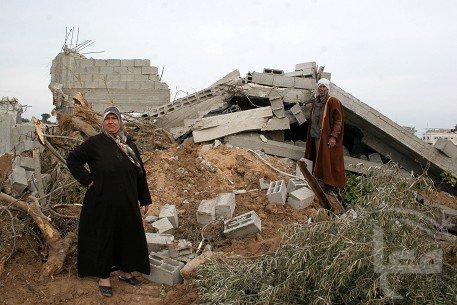
Bethlehem – Ma’an – The international community betrayed the people of Gaza by failing to end an Israeli blockade stymieing reconstruction efforts following last winter’s war, 16 aid and human rights groups said in a report released Tuesday.
The report Failing Gaza: No rebuilding, No recovery, No more excuses, alleges that the world’s powers, particularly the European Union, failed to ensure that aid pledged to Gaza actually reached its intended recipients.
Since the end of the three week military offensive dubbed Operation Cast Lead in January, Israel has allowed only 41 truckloads of construction materials into the Gaza Strip, the groups reported. All of those materials were destined for NGOs implementing piecemeal reconstruction efforts, or repairs to the electricity and sewage networks.
The groups sponsoring the report included Amnesty International, CAFOD, Christian Aid, Medical Aid for Palestinians, Mercy Corps and Oxfam International.
The report said thousands of truckloads of reconstruction materials are needed to rebuild the tens of thousands of homes, businesses, schools, mosques and other buildings destroyed and damaged during the war. As a result, thousands of Gaza residents are still living in tents, and the Strip’s economy remains in ruins.
“The wretched reality endured by 1.5 million people in Gaza should appall anybody with an ounce of humanity. Sick, traumatized and impoverished people are being collectively punished by a cruel, illegal policy imposed by the Israeli authorities,” Amnesty International UK Director Kate Allen said in a statement.
“Israel’s responsibility to protect its citizens does not give it the right to punish every man, woman and child of Gaza.”
She also said the world has an obligation to act to end the blockade: “All states are obliged under international law to intervene to put an end to this brutal blockade but their leaders are failing in this fundamental measure of their own humanity.” […]
The report notes that as the occupying power, Israel is responsible to safeguard the welfare of the population in Gaza. Absent funds from Israel, the international community offered to rebuild Gaza after the recent war.
International donors pledged four billion US dollars to rebuild Gaza at a conference in the Egyptian Red Sea resort town of Sharm Ash-Sheikh in March. Because of the ban on construction materials, virtually none of the aid has materialized. The EU accounted for 1 billion dollars of this figure.
The report faults the EU for failing to seek compensation from Israel for the destruction of facilities relating EU-funded projects in Gaza. The UN charged Israel 11.4 million for damages to its facilities.
Resistance fighters engage advancing IOF troops in Gaza
| 21/12/2009 – 10:52 AM |
 |
|
BEIT HANUN, (PIC)– Palestinian resistance fighters engaged special Israeli forces east of Beit Hanun town in northern Gaza Strip at dawn Monday, local sources told the PIC reporter. They added that the Israeli occupation forces (IOF) infiltrated late Sunday night near the Beit Hanun (Erez) crossing amidst intensified over flights of warplanes. The PIC reporter said that more than 20 IOF armored vehicles infiltrated into the area while similar moves were reported in eastern Gaza city. Local sources noted that IOF tanks east of Gaza fired three shells at civilian homes that fell in cultivated land lots and inflicted only material damage. In the West Bank, the IOF soldiers detained Hamas leader Sheikh Yousef Abul Rub, a teacher and preacher, in Jalbun village, east of Jenin, in a raid that lasted for a few hours. Eyewitnesses said that IOF soldiers broke into the Sheikh’s home and remained there for two hours during which they interrogated its residents. They added that the soldiers then took Abul Rub, 45, blindfolded in one of their vehicles as other soldiers combed the vicinity of his home for hours. Abul Rub was only recently released from PA prisons in Jenin where he was detained on six separate occasions. He was also detained in Israeli jails on several occasions. |
Cosy With “Israel”, Despite the Headlines
By David Cronin
BRUSSELS, Dec 18 (IPS) – Israel’s relations with the European Union were tense for most of 2009 – if newspaper headlines are to be believed. In the past week, a British court drew fierce criticism from Israeli politicians after it issued an arrest warrant for Tzipi Livni, the former Israeli foreign minister, following a complaint that she had authorised war crimes in Gaza.
A few months earlier, Ikea, Volvo and other firms from Sweden, the current holder of the EU’s presidency, found themselves the target of a consumer boycott campaign in Israel because of an article in a Stockholm tabloid on the alleged theft of organs from Palestinians killed by Israeli troops. And several of the Union’s foreign ministers, such as France’s Bernard Kouchner and Ireland’s Micheál Martin, have been denied permission to enter Gaza by the Israeli authorities.
In reality, however, the tension has been superficial. While there may have been the occasional angry word exchanged on the diplomatic front, the EU’s political and economic ties with Israel have been strengthened over the past few years to such an extent that Javier Solana, who stepped down as the Union’s foreign policy chief in late November, has remarked that Israel is an EU member state in all but name.
Perhaps the most tangible illustration of this enhanced relationship was the sealing of an accord on agriculture last month, under which 80 percent of Israel’s fresh produce and 95 percent of its processed foods can be exported to the EU without incurring any trade taxes. A cooperation accord between Europol, the EU’s police office, and Israel has also been finalised (though still awaits a formal rubber-stamp from the Union’s governments). This is despite numerous reports from human rights organisations that detainees in Israel are routinely tortured and despite rules in force since 1998 that oblige Europol not to process evidence obtained by cruel methods.
Israel’s effective integration into the EU has coincided with a marked reluctance on the part of the Union to denounce acts of aggression against the Palestinians. Although some individual EU representatives have described the blockade of Gaza as an act of “collective punishment” against 1.5 million civilians, no statement criticising the blockade as contrary to international humanitarian law has been issued by the 27-member bloc in its entirety.
Furthermore, all of the EU’s most populous countries – Germany, France, Britain, Italy, Spain and Poland – either opposed the Goldstone report or abstained when it was considered by the UN’s General Assembly in November. (In that report, the retired South African judge Richard Goldstone and his fellow investigators found there was no justifiable military objective behind almost every attack on Gaza’s civilians undertaken by Israel in late 2008 and the beginning of this year).
Leila Shahid, the Palestinian Authority’s envoy to Brussels, says that the EU’s largest countries are “accomplices by their silence” in Israel’s misdeeds. “The raison d’être of the bigger states – including France and Spain and Great Britain – is to be guarantors of international law,” she told IPS. “To be silent is to be part of the crime.”
Dries Van Agt, prime minister of the Netherlands from 1977 to 1982, said this week that he was “ashamed” of what he called Europe’s “shocking disservice to international law.” Under an “association agreement” which came into effect in 2000, all trade preferences granted to Israel by the EU are nominally conditional on respect for human rights. Yet Van Agt expressed frustration that the Union, Israel’s main trading partner, is unwilling to revoke those preferences to insist on an improvement in the treatment of the Palestinians.
“Europe is failing miserably in its Israel-Palestine policy,” he said. “It is so vitally important to the economy of Israel that it has access to this big open market. Why does the EU not even consider bringing this power to bear on Israel?” Van Agt was speaking at a meeting of the Russell Tribunal on Palestine Thursday. Inspired by a probe into the Vietnam war launched by the British intellectual Bertrand Russell in the 1960s, this tribunal is exploring the conduct of Israel’s most recent offensive against Gaza.
Maysa Zorob from the Palestinian human rights organisation Al-Haq said that the EU’s “business as usual approach amounts to disregarding Israel’s policies in the Gaza Strip.” She noted that the Union has not even brought Israel to book for the damage inflicted on Palestinian infrastructure built or maintained with EU aid. Damage to EU-financed projects during Israeli bombing of Gaza about a year ago has been calculated at more than 12 million euros (17 million dollars).
One explanation put forward by EU diplomats for their refusal to hold Israel to account is that doing so could put efforts to initiate new peace talks between Israel and the Palestinian Authority in jeopardy. Nathalie Stanus from the Euro-Mediterranean Human Rights Network said that this attitude is shortsighted as basic tenets of justice must be respected if a durable peace can be achieved. “Without accountability, we don’t believe there will be a viable peace process,” she said.
Israeli soldiers assault Hebron family; detain members
19/12/2009 16:15
Hebron – Ma’an – Israeli forces raided the home of the Abu Heikal family in the Tel Rumeida neighborhood of Hebron on Friday afternoon, detaining five of the men, one family member said.
Firyal Abu Heikal, who was in the home during the Israeli raid, said soldiers beat the men and women of the family. She identified those beaten as sisters Samah and Majd, noting that their aunt Ghadir was also beaten. Male relatives Mohamed and Murad were also injured, she said.
After several rooms were ransacked, Firyal said soldiers took 66-year-old Abdul-Aziz, 48-year-old Imad, 48-year-old Ratib, 24-year-old Fahd, and 19-year-old Sami. They were also beaten and removed from the home without explanation as to their alleged crimes or notification as to where they were being taken.
The Abu Heikal home is in an area of Hebron blocked off from the main street by several settler trailers housing large families of aggressive youth. The trailer-homes are guarded by dozens of Israeli soldiers, who have in many instances protected the settlers as they attacked the Abu Heikal family.
The neighborhood can only be accessed by the few Palestinian families who have not been driven out by settler violence, and members face constant harassment from soldiers as well as settlers.
“It is time for us to put an end to this occupation”
Hassan Mousa and Jody McIntyre writing from Nilin, occupied West Bank, Live from Palestine, 18 December 2009
 |
Hassan Mousa being arrested during a demonstration at the wall. (Activestills) |
Situated just west of Ramallah, the Palestinian village of Nilin has lost huge swathes of land to Israel’s settlements and its wall in the occupied West Bank. In a year and a half of resisting construction of the wall, five villagers have been murdered by the Israeli military while demonstrating. Hassan Mousa is a coordinator of the Nilin Popular Committee Against the Wall and Settlements and the uncle of Ahmed Mousa, an 11-year-old boy who was the first villager from Nilin to be killed by the Israeli army.
The following is Hassan Mousa’s story as told to The Electronic Intifada contributor Jody McIntyre:
On 29 July 2008, while the apartheid wall was still in the planning stages, there was an evening demonstration here in Nilin. We wanted to send a message to the Israeli settlers who were already living on and stealing our land, that this wall is being built at your request, so you must pressure your government to stop construction, and put an end to the suffering of the Palestinians living here. We knew that they were saying the wall was being built for security, but we believe that it is purely a land grab and an extension of the existing illegal settlements built on our land since 1967. So that was the message of the demonstration, that you can never have security while others are suffering.
At the time, there was no real presence of soldiers, just a single jeep parked far away from the place of the demonstrators. When they suddenly heard the sound of the demonstration coming toward the planned site of the wall, the jeep drove up very close. The young people started moving the children and old people back toward the village, as they were understandably concerned for their well-being.
As my nephew Ahmed was walking back his sandal slipped off his foot. He put his bag down to get it but the bullet was faster. According to eye-witnesses, three soldiers got out of the jeep; the first shot a sound bomb, the second shot a round of rubber-coated steel bullets, and the third shot directly at the head of my nephew with a live bullet. He was shot deliberately. The people nearby tried to rescue him — they said that while they were carrying him toward the ambulance, pieces of his brain slipped down onto their shoulders. It was a serious experience for them … they couldn’t understand how brutal and savage the soldiers had been, to kill a ten-year-old child.
Ahmed died immediately, but the paramedics needed to wait until they arrived at the hospital for an official confirmation. When the news of his death came out in the media, the Israeli army announced that there had been a case of killing in Nilin, but that it had been a result of internal conflict between families in the village. They actually said that he was killed by another Palestinian!
The Palestinian Authority decided to conduct an autopsy, and it was found that he was killed by a live bullet. After that, the army admitted to killing him, but didn’t bother to give a reason. We are in the process of taking the army to court now.
Ahmed was a very active person among his friends, and loved by all. He was helpful and obedient to his parents. He never harmed anybody. For me, he was my favorite nephew, and his parents knew that. I used to tell them not to shout at him, because he was so sweet. His death truly affected me, and I have his poster displayed in my house. But the image of Ahmed is in my heart.
 |
| Ahmed Mousa being carried through his funeral. (Activestills) |
Ahmed’s mother was especially hurt by his loss. She was pregnant at the time. She already had four sons, and was hoping that God would bless her with a daughter. After the medical checkup she was told, “Congratulations, you will have a daughter.” But after he died, she said “Oh God! I want a son so I can name him Ahmed.” I told all the nurses in the town to be close to her after Ahmed’s death so she could keep her baby. It was very difficult for her, and she would often faint, completely unaware of her surroundings. But thanks to the women around her, she managed to overcome the problems and give birth to a beautiful daughter.
The news came to his brothers as a huge shock, because they had been playing together in their uncle’s house just an hour earlier. Ahmed told them he wanted to go home to take something from the fridge, left the house, and went towards the demonstration.
It was very difficult for his brothers. Sometimes they make a mistake and call one another Ahmed, because they are so familiar with his name. At first they couldn’t enter his room. At night they would dream about him, and wake up in the morning to tell their father that they had seen Ahmed and he was happy.
Now that time has passed they have gotten used to the idea of his death, but they keep his pictures on the walls of their room and on the computer. If you go to his house, you feel as if Ahmed is still present. He was very dear to them.
At the funeral, I told the people that Ahmed’s blood planted the seeds for thousands of people to follow in his footsteps, and more than a year and a half later, this has been proven. Four more have died since, because they decided to follow in his footsteps.
Killing Ahmed did not suppress our demonstrations, it made our demonstrations stronger. The Israeli army soon realized that the murder of Ahmed was a very basic mistake in Nilin.
The second martyr, Yousif Amira, was from the same neighborhood as Ahmed, and on the morning of Ahmed’s funeral he asked the people, “If I am martyred, will you make a huge funeral for me as you did for Ahmed?” That same day he was killed near the entrance of Nilin. He spent three days brain-dead, and then died. We accomplished his wish of a huge funeral, with sweets thrown from rooftops as his body was carried through the streets.
The blood of Ahmed has aroused a patriotic passion in Nilin and awareness that the wall is illegal and we must resist it. I believe that the killing of Ahmed will be the start of our victory in Nilin.
Almost 18 months after his death, the wall in Nilin is now complete. According to the Israeli military’s plans, it was supposed to be completed within six months, but we succeeded in delaying construction for another six. In the past we could get to the bulldozers that were digging on our land and stand in front of them. Sometimes we would get them to move back, sometimes the guys from the villages would break the bulldozers with stones and stop work for a long time.
At first the wall was built as a mesh and barbed wire fence, but they soon realized that it was useless. Here in Nilin, we have a practical way of resisting the wall, so we would reach the fence and cut it in many parts every Friday. So, after the killing of Akil Srour in June of this year, the fifth person to be killed during our nonviolent demonstrations, the army decided that they would stop invading the town as they had done in the past. Before, we would find the soldiers waiting for us in the trees 300 to 400 meters away from the wall, just to stop us from getting there. Instead, they decided to change the wall from a fence to concrete blocks. Nilin became the first village in the West Bank to have these concrete blocks — the concrete version of the wall was previously built in the main population centers, but never before in a village.
Despite this, we managed to damage the concrete wall twice. The army was in a state of shock. What is happening here is unnatural. The people of Nilin are not ordinary, and that is because of the high price we have paid for our resistance, and the suffering we have seen. It is the Israeli army’s aggression, and Israeli crimes, that makes the people more united and more determined to resist.
Now, they have tied all the concrete blocks together with a huge strip of iron and massive screws … again, this is the first place this has happened. They don’t want us to pull the wall down again, but I am sure the people are going to discover many miracles here. We will invent a way to damage the wall again.
Our hope is that the model of nonviolent resistance practiced here in Nilin can spread across Palestine. At the moment, we feel the massive presence of soldiers in Nilin, but if other villages and towns were having one demonstration per week, the number of soldiers would be distributed. The army would be in a state of confusion. We Palestinians have come to the conclusion that the Israeli government does not want peace, so it is time for us to put an end to this occupation.
Jody McIntyre is a journalist from the United Kingdom, currently living in the occupied West Bank village of Bilin. Jody has cerebral palsy, and travels in a wheelchair. He writes a blog for Ctrl.Alt.Shift, entitled “Life on Wheels,” which can be found at www.ctrlaltshift.co.uk. He can be reached at jody.mcintyre AT gmail DOT com.
New EU Foreign Policy Chief Lambastes ‘Israeli Occupation’
17/12/2009 – Catherine Ashton on Tuesday leveled scathing criticism at the “Israeli occupation,” in her first speech as the European Union’s first high representative for foreign affairs and security policy.
The British stateswoman, who has also served as the Commissioner for Trade in the European Commission, said that in the EU’s view, “East Jerusalem is occupied territory, together with the West Bank.”
Ashton demanded that Israel immediately lift its blockade on the Gaza Strip, and reiterated that the union opposes the existence of the West Bank separation fence, as it opposes evictions of Palestinians from their homes in occupied East Jerusalem.
The stateswoman, whose full title is Baroness Ashton of Upholland, also only defined Israel’s partial freeze of West Bank settlement construction as a “first step,” as opposed to the warmer description of the move by EU foreign ministers, who last week took “positive note” of it.
In her address to MEPs in Strasbourg, Ashton, who was only recently appointed to the new position, said she had spoken with Israelis, Palestinians and the U.S. Secretary of State about the role the Quartet of international mediators, and that of its special envoy to the region, Tony Blair.
Ashton said she had told Blair personally that, “The Quartet [a special group set up by the U.S., EU, UN and Russia] must demonstrate that it is worth the money, that it is capable of being reinvigorated.”
Following her comments, a number of MEPs from the Liberal side of the house called for punitive measures against Israel, including the suspension of the EU’s Association Agreement. Irish centre-left member Proinsias De Rossa, who visited the West Bank last week, called Israel’s treatment of Palestinians a form of “apartheid.”
This time it was neither the “infamous” Swedish president who pulled the EU toward an anti-Israel resolution, nor a “daydreaming judge” in Britain who issued an arrest warrant against an Israeli foreign minister. Criticism of Israel has become the language of choice in European discourse.
When the Israeli government offers new benefits to settlers, and peace talks with the Palestinians are deadlocked, even the superpower’s long arm is helpless. Even former U.S. ambassador to Israel Martin Indyk, a devout Jew who serves as an external advisor to U.S. President Barack Obama, does not hide his chagrin with the settlements policy.
Indyk has recently told Haaretz in an interview that statements by figures like Minister without Portfolio Benny Begin, according to which settlement construction will continue despite the moratorium, are damaging to Israel’s interests. He said these comments, as well as the decision to pump funds into isolated settlements, strengthen the impression that the declaration of the freeze is not worth the paper it is written on. He warned that Israeli Prime Minister Benjamin Netanyahu will pay a political price for the move, without gaining the benefits which it was intended to grant Israel in the international arena.
Stunning Statistics About the War Every American Should Know
Contrary to popular belief, the US actually has 189,000 personnel on the ground in Afghanistan right now—and that number is quickly rising.
By Jeremy Scahill | Rebel Reports | December 17, 2009
A hearing in Sen. Claire McCaskill’s Contract Oversight subcommittee on contracting in Afghanistan has highlighted some important statistics that provide a window into the extent to which the Obama administration has picked up the Bush-era war privatization baton and sprinted with it. Overall, contractors now comprise a whopping 69% of the Department of Defense’s total workforce, “the highest ratio of contractors to military personnel in US history.” That’s not in one war zone—that’s the Pentagon in its entirety.
In Afghanistan, the Obama administration blows the Bush administration out of the privatized water. According to a memo [PDF] released by McCaskill’s staff, “From June 2009 to September 2009, there was a 40% increase in Defense Department contractors in Afghanistan. During the same period, the number of armed private security contractors working for the Defense Department in Afghanistan doubled, increasing from approximately 5,000 to more than 10,000.”
At present, there are 104,000 Department of Defense contractors in Afghanistan. According to a report this week from the Congressional Research Service, as a result of the coming surge of 30,000 troops in Afghanistan, there may be up to 56,000 additional contractors deployed. But here is another group of contractors that often goes unmentioned: 3,600 State Department contractors and 14,000 USAID contractors. That means that the current total US force in Afghanistan is approximately 189,000 personnel (68,000 US troops and 121,000 contractors). And remember, that’s right now. And that, according to McCaskill, is a conservative estimate. A year from now, we will likely see more than 220,000 US-funded personnel on the ground in Afghanistan.
The US has spent more than $23 billion on contracts in Afghanistan since 2002. By next year, the number of contractors will have doubled since 2008 when taxpayers funded over $8 billion in Afghanistan-related contracts.
Despite the massive number of contracts and contractors in Afghanistan, oversight is utterly lacking. “The increase in Afghanistan contracts has not seen a corresponding increase in contract management and oversight,” according to McCaskill’s briefing paper. “In May 2009, DCMA [Defense Contract Management Agency] Director Charlie Williams told the Commission on Wartime Contracting that as many as 362 positions for Contracting Officer’s Representatives (CORs) in Afghanistan were currently vacant.”
A former USAID official, Michael Walsh, the former director of USAID’s Office of Acquisition and Assistance and Chief Acquisition Officer, told the Commission that many USAID staff are “administering huge awards with limited knowledge of or experience with the rules and regulations.” According to one USAID official, the agency is “sending too much money, too fast with too few people looking over how it is spent.” As a result, the agency does not “know … where the money is going.”
The Obama administration is continuing the Bush-era policy of hiring contractors to oversee contractors. According to the McCaskill memo:
In Afghanistan, USAID is relying on contractors to provide oversight of its large reconstruction and development projects. According to information provided to the Subcommittee, International Relief and Development (IRD) was awarded a five-year contract in 2006 to oversee the $1.4 billion infrastructure contract awarded to a joint venture of the Louis Berger Group and Black and Veatch Special Projects. USAID has also awarded a contract Checci and Company to provide support for contracts in Afghanistan.
The private security industry and the US government have pointed to the Synchronized Predeployment and Operational Tracker(SPOT) as evidence of greater government oversight of contractor activities. But McCaskill’s subcommittee found that system utterly lacking, stating: “The Subcommittee obtained current SPOT data showing that there are currently 1,123 State Department contractors and no USAID contractors working in Afghanistan.” Remember, there are officially 14,000 USAID contractors and the official monitoring and tracking system found none of these people and less than half of the State Department contractors.
As for waste and abuse, the subcommittee says that the Defense Contract Audit Agency identified more than $950 million in questioned and unsupported costs submitted by Defense Department contracts for work in Afghanistan. That’s 16% of the total contract dollars reviewed.
Kristol Clear: The Source of America’s Wars
By Maidhc Ó Cathail | Sabbah Report | December 17, 2009
“One reason neocons have been able to sow so much mischief is that they feed into deeply embedded American beliefs about democratism and ‘chosenness.'” – Paul Gottfried
Americans feeling let down by Barack Obama’s escalation of the war in Afghanistan should take careful note of those who welcomed yet another “surge.” It might help them to identify the source of their seemingly endless wars.
For instance, in a recent Washington Post opinion piece, William Kristol described Obama’s West Point speech as “encouraging.” It was “a good thing,” he said, that Obama was finally speaking as “a war president.”
But if the comments on the Post website are anything to go by, few ordinary Americans take Kristol’s armchair warmongering seriously anymore. After all, as one poster quizzically asked, “A column by William Kristol the neocon that was wrong about everything from 2000-2008?”
Although Kristol, like the rest of the neocons, “erred” about Iraq’s WMDs and Saddam’s links to Al Qaeda and 9/11, it would be a fatal error indeed to dismiss him as a fool.
In order to understand what motivates Bill Kristol’s professed hyper-patriotism, with its consistently disastrous prescriptions, it’s worth recalling how his father, Irving Kristol, reacted to Vietnam War critic Senator George McGovern. The presidential contender’s proposed cut in U.S. military expenditure would, according to the “godfather” of neoconservatism, “drive a knife in the heart of Israel.”
“Jews don’t like big military budgets,” the elder Kristol explained in a Jewish publication in 1973. “But it is now an interest of the Jews to have a large and powerful military establishment in the United States … American Jews who care about the survival of the state of Israel have to say, no, we don’t want to cut the military budget, it is important to keep that military budget big, so that we can defend Israel.”
American Greatness
Following his father’s advice, William Kristol has been a fervent supporter of massive U.S. military spending. In 1996, he co-authored with Robert Kagan an influential neocon manifesto titled “Toward a Neo-Reaganite Foreign Policy.” It recommended that “America should pursue a vision of benevolent hegemony as bold as Reagan’s in the 1970s and wield its authority unabashedly.
“The defense budget should be increased dramatically, citizens should be educated to appreciate the military’s vital work abroad, and moral clarity should direct a foreign policy that puts the heat on dictators and authoritarian regimes.”
In response, another influential opinion-maker, Charles Krauthammer, hailed Kristol and Kagan as “the main proponents of what you might call the American greatness school.” It is hardly a coincidence, however, that all three advocates of “American greatness” care passionately about what Irving Kristol euphemistically referred to as “the survival of the state of Israel.” Or that many of those “dictators and authoritarian regimes” just happened to stand in the way of Israeli hegemony in the Middle East.
The following year, Kristol and Kagan co-founded the Project for a New American Century (PNAC), a pressure group which sought to advance their “neo-Reaganite” vision. In the late 1990s, they did this mainly by writing letters to Bill Clinton, urging him to oust Saddam Hussein.
In September 2000, PNAC published “Rebuilding America’s Defenses,” in which they famously acknowledged that “the process of transformation … is likely to be a long one, absent some catastrophic and catalyzing event – like a new Pearl Harbor.”
One year later, they got their wished for “new Pearl Harbor” on September 11. The mass murder of almost 3,000 Americans was, as Benjamin Netanyahu indelicately put it, “very good” for Israel.
Kristol’s War
Immediately, Kristol’s Weekly Standard began linking Iraq to the attacks. Writing in The American Conservative, Scott McConnell explained the strategy: “Their rhetoric – which laid down a line from which the magazine would not waver over the next 18 months – was to link Saddam Hussein and Osama bin Laden in virtually every paragraph, to join them at the hip in the minds of readers.”
The “Saddam must go” campaign, begun in a Kristol and Kagan editorial as far back as 1997, became so relentless that Washington Post columnist Richard Cohen dubbed it “Kristol’s War.”
The Iraq War has, of course, also been called “Wolfowitz’s War.” But it could just as aptly have been named after Perle, Feith, Libby, Zelikow, Lieberman, or any of the other pro-Israeli insiders who took America to war by way of deception.
In “Irving Kristol RIP,” Antiwar.com editor Justin Raimondo described Kristol’s legacy as “war, war, and yet more war, as far as the eye can see.”
Unless Americans soon realize that they’ve been deceived by those for whom “American greatness” is merely a means to advance “the survival of the state of Israel,” that legacy promises to be an enduring one.
* Maidhc Ó Cathail is a freelance writer living in Japan.
IDF raids Naalin photographer’s home
Ali Waked | YNet News | 16 December 2009
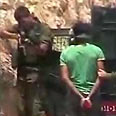 Family members of a girl who shot a video showing an Israel Defense Forces soldier firing a rubber bullet at a bound Palestinian in the West Bank village of Naalin last year say the army has been harassing them ever since.
The relatives told Ynet that a massive IDF force raided their house on Wednesday night and left behind a lot of damage. The girl’s father and brother were then summoned for investigation.
An IDF official claimed, however, that the soldiers arrived to arrest a man suspected of rioting and that the incident had nothing to do with the videotape.
The girl’s family members said that soldiers arrived at their house at around 3:30 am. “They broke the windows of our car, which was parked outside, and did not leave one whole glass inside the house. They destroyed and ruined everything,” said the girl’s brother, Arafat Canaan.
“They used a loudspeaker and shouted, ‘We are the IDF, we are the IDF,’ without giving any warning, without telling us what they want.”

‘They did not leave one whole glass (Photo: Activestills)
According to the brother, his mother fainted during the raid, the soldiers attacked his father, forcibly removed two of his brothers from the house and cuffed them in the yard. He said a third brother, who was outside the house, was detained for six hours until the end of the raid.
Arafat added that dogs were brought into the house and caused destruction. He said he believes this was another attempt by the army to avenge the tape. “If they wanted to arrest, they would come and arrest. But to destroy an entire house only to leave behind a letter summoning me and my brother to meet with a Shin Bet officer? This proves they are driven by feelings of vengefulness over that affair.”
‘Soldiers were following orders’
The brother said that his sister documented the destruction caused by the soldiers and their entry into the house, and that the soldiers had threatened her not to film the incident. Arafat himself documents the anti-fence demonstrations in Naalin and says the soldiers’ arrival in the night was meant to also terrify him and make him stop filming the demonstrations and the army’s activity in the village.
IDF sources confirmed that a special force arrived at the house in Naalin in the night in order to arrest one of the family members on suspicion of causing repeated disturbances. A commotion broke out in the area during the detention.
The sources clarified, however, that the soldiers were following orders and were trying not to disrupt the other family members’ lives. The sources also clarified that the arrest had nothing to do with the video shot by one of the family members about a year and a half ago during an ant-fence rally.
It should be noted that the girl’s father was arrested several days after the video’s publication. He was accused of causing disturbances in the area, taking part in a demonstration, violating a closed military zone order and assaulting a soldier with a stick. He was released several days later, after a military judge accused the prosecution of acting unprofessionally.
Featured Video

New positive ivermectin evidence
or go to
Aletho News Archives – Video-Images
From the Archives
Fanatical Followers of the Covid Regime: A Jim Jones-Style Cult?
By Professor Roger Watson and Dr. Niall McCrae | The Daily Sceptic | November 15, 2021
As scholars at leading British universities over recent decades, we witnessed the replacement of critical thinking and debate by narrative: facts are discrimination and scientific method is imperialism; truth, instead, is derived from ‘progressive’ values. This educational trend may be a major contributory factor to the ease in which society has been inculcated to the Covid ‘new normal’ of masking, testing, and repeated doses of vaccines for a disease of similar risk to severe influenza.
One doesn’t need much critical reasoning to observe the flawed logic of some vaccination enthusiasts, such as people who respond to experiencing any side effects, however debilitating, by saying “at least I know it’s working”, or, after contracting the disease despite their promised inoculation (over 90% effective, according to initial drug company claims), “I’d have been worse off without the jab.” … continue
Blog Roll
 Aletho News
- EU Council Advances Chat Control 2.0 Scanning Proposal
- Ex-Greek MEP files complaint against Israeli spyware firm over alleged Pegasus surveillance
- Troubling ideas throughout the Torah, Talmud, Mishneh Torah and Tanya
- ‘Grave, alarming’: Iran mission on Trump’s UNGA ‘annihilation’ threats
- Najaf airport to reopen to Iranian flights within 24 hours: Ambassador
- From ‘How Will This End For Iran’ to ‘When America Walks Away’: A tale of two Economist covers
- Tehran blasts ‘baseless’ speculation linking Iran to alleged bomb plot at UK air base
- The Rise And… Rise Of ‘Color Revolutions’
- The Coming GOP Bloodbath?
- Arctic Scare Stories Melt Away
- If Americans Knew
- Netanyahu Asked UAE Leader to Deny Report on Oct. 7 Warning in Secret Visit, Sources Say
- CNN Chief Int’l Correspondent Clarissa Ward on Journalists in Gaza
- Democratic Party Consultants Surround Troy Jackson with Pro-Israel Donors
- Christian Leader Responds To Netanyahu’s Claims Regarding Palestinian Christians
- In Gaza, ‘Whoever Survives the Bombing Won’t Survive the Rubble’
- Israel kills more Palestinians, amid push to resettle Gaza – Daily Update
- Israel forces Gazans to live in constant peril – Daily Update
- Deconstructing Netanyahu’s pants-on-fire UN rant – Daily Update
- Trump betrayed voters with his campaign lies and prioritized a foreign country once he took office
- Netanyahu calls Israel’s war in Gaza ‘opposite of genocide’ in UN speech to near-empty hall
- No Tricks Zone
- New Study: Earth And Venus Surface Warmth Largely Explained By Convection And Lapse Rate, Not CO2 Or Radiation
- 2025 Nature Paper Claiming Worsening Global Drought Gets RETRACTED …Heavily Flawed
- New Study: ‘Global Drought Shows No Detectable Recent Acceleration Under Climate Warming’
- Economic Masterminds: German Socialists Suggest Taxing Productivity Gains Stemming From Using AI
- The South China Sea Has Not Been Cooperating With The Climate Change Narrative
- Energy Crisis: Germany Enters Heating Season With Historically Low Gas Reserve Fill Levels
- New Study: The Antarctic Ice Sheet Gained Mass From 2020-2024 Due To Staggering Snow And Ice Accumulation
- Study: Ocean Heating Rates From Thousands Of Years Ago ‘Dwarf’ Modern Ocean Heating Rates
- Climate Extremists Target, Attack Large-Scale Power Grid Infrastructure In Germany!
- New Study: Antarctic Ice Melt Has Contributed Less Than 1 Centimeter To Sea Level Rise In The Last 30 Years

