Israel pushing for ties with Morocco in exchange for US recognition of its rule over Western Sahara
MEMO | February 4, 2020
Israeli Prime Minister Benjamin Netanyahu has reportedly been discussing a three-way agreement that would see the United States recognise Moroccan sovereignty over the Western Sahara in exchange for having Rabat take steps to normalise ties with Tel Aviv, Israeli broadcaster Channel 13 reported.
Netanyahu has been trying in recent months to make the US promote his plan, as it will raise the chances for him getting a high-profile public visit to Morocco as well as being a major diplomatic achievement for Morocco’s King, Mohammed VI.
In addition, the report claimed, US President Donald Trump can gloat of having advanced ties between Israel and an Arab state, should the deal go through.
However, the spread of sovereignty of Morocco on Western Sahara was a deal always strongly opposed by former national security adviser John Bolton.
Following Bolton’s departure in September, Netanyahu reportedly began raising the matter again with Secretary of State Mike Pompeo.
It’s been more than 40 years since Morocco claimed sovereignty over Western Sahara, after it occupied large swathes of the area in 1975 as Spain withdrew from the area and later annexed the territories in a move not recognised internationally.
According to the publication, contacts between the two countries intensified after a secret meeting between Netanyahu and the Minister of Foreign Affairs of Morocco Nasser Burita during the UN General Assembly in September 2018.
That meeting was the result of a back channel established between Bourita and Netanyahu’s national security adviser, Meir Ben-Shabbat, reported Arutz Sheva.
It also reported that Netanyahu wanted to reach an agreement before the April elections of 2019, but the plan was dismissed after the media got information about the secret visit of Ben-Shabbat to Morocco.
Though the countries have no formal relations, Morocco has long maintained informal but close intelligence ties with Israel and Israelis are allowed to visit there.
Last week, Morocco received three Israeli reconnaissance drones as part of $48 million arms deal, to counter extremist groups and fight rebel movements in the Western Sahara, French website Intelligence Online reported.
Organization of Islamic Cooperation rejects Trump’s ‘deal of the century’ peace plan for Middle East
RT | February 3, 2020
The Organization of Islamic Cooperation (OIC), which consists of more than 50 Muslim-majority countries, has asked member states not to cooperate in any way with US President Donald Trump’s peace plan for Israel and Palestine.
During a special session in Jeddah, Saudi Arabia on Monday, the OIC’s executive committee called on all member states “not to engage with [Trump’s] plan or to cooperate with the US administration in implementing it in any form.” The body also asked members to refrain from any actions that “do not adhere to the inalienable rights of Palestinians.”
OIC Secretary General Yousef Al-Othaimeen said that the organization will support any international peace effort that is in accordance with international law.
Touted as the ‘deal of the century’ by the Trump administration, the plan describes the establishment of an independent Palestinian state with its capital set up in the outskirts of East Jerusalem, currently controlled by Israel.
The plan, however, allows Israel to keep existing settlements in the occupied West Bank, which the UN considers illegal under international law. The proposed roadmap also rules out the return of all Palestinian refugees, which the Palestinian Authority (PA) and the Arab world see as one of the key requirements for lasting peace.
The plan was endorsed by US ally Israel but universally rejected by the Palestinians and the Arab League, who view the plan as heavily skewed in favor of Tel Aviv.
Al-Qaeda’s Air Force? Erdogan Protecting HTS in Idlib, Threatens to Attack Advancing Syrian Army

21WIRE | February 3, 2020
Over the last few months, the Syrian Arab Army (SAA) and its Russian allies have been advancing into the heart of Idlib province – the last remaining terrorist stronghold in Syria. Not everyone is happy about the effort by Damascus to retake is own territorial areas in the north, not least of all Turkish President Recep Tayyip Erdogan, who is now threatening the SAA and its allies with military force if they continue with operations to dislodge Turkish and US-backed terrorist forces currently holed up in Idlib, and neighboring Afrin.
The stakes increased over the last 24 hours, after Turkey claimed that the SAA had killed 6 of its ‘soldiers’ and injured many others, after coming under heavy fire from the SAA. This incident comes after reports of a large Turkish military convoy which had entered Idlib via the “Kafr Loosen” crossing, supposedly to help ‘monitor a ceasefire’ from one of its numerous (and increasingly notorious) “observation posts” which are dotted conspicuously in parallel to positions held by terrorist group Hay’at Tahrir al-Sham (HTS) formerly known as Jabhat al-Nusra (al-Qaeda in Syria).
‘Al-Qaeda’s Air Force’ over Syria
The Turkish Ministry of Defense have issued a statement today claiming that its forces came under heavy artillery fire in the northern Syria, and that its forces have since retaliated by attacking ‘unspecified’ SAA targets in the area. Thus far, these reports are unconfirmed. If true, then NATO-member Turkey is now performing the function of al-Qaeda’s Air Force over Syria.
Under the Astana Peace Process, stakeholders Russia, Turkey and Iran all agreed to a designated “de-escalation zone” in Idlib in order to calm down fighting in the region and help to deal with the movement of refugees and IDP’s (internally displace persons). Unfortunately, Turkish and US-backed terrorist forces have conveniently gamed the de-escalation zones in order to attack Syrian government forces and maintain an air of destablization, which has kept the status quo of terrorist occupation in lace. Turkey is clearly on board with this alternative agenda and is supporting HTS and other terrorists factions where it can.
Strangely, Turkey is still claiming dominion over sovereign Syrian territory, now erroneously claiming that advances by the SAA in its own country are going to cause an influx of refugees into Turkey and therefore any advances by Syria to retake its own land must cease in order to “save the refugees.” Clearly, this is a well-worn ploy by now, used ad nauseum by both Turkey and the US and its coalition partners – in order to keep Syria from liberating the entirety of its country.
One of the main problems with Turkey’s story is that it’s becoming increasingly difficult to tell who, and who isn’t, part of Turkey’s ever-changing military forces. Recently, Ankara has officially absorbed the former Free Syria Army (FSA) under its military wing, but to make matters more confusing, this new Turkey-based division (comprised mainly of western and gulf-backed terrorist fighters) has been misleadingly named The Syrian National Army (SNA), presumably to represent a military wing of the Syrian opposition in exile currently based in Istanbul. As 21WIRE revealed in 2019, this new SNA has numerous ISIS and al Qaeda in its ranks.
Accusation of its terrorist deployments have also emerged in Libya, where Turkey is backing the Tripoli-based Government of National Accord and has sent mercenary ‘troops’ (former FSA terrorists, now under the SNA banner) to Libya support to help repel an offensive led by Gen. Khalifa Haftar in January.
Undoubtedly, Turkey’s increasing use of terrorist brigades is damaging its legitimacy as a NATO member.
Questions About Turkey’s Supposed ‘Retaliation’ Against SAA in Idlib
Soon after last night’s altercation, western mainstream media have reported that 13 Syrian troops were killed by Turkey, while Erdogan himself released announcements claiming his forces had killed some 30 or more Syrian Army soldiers in a retaliatory air and artillery strikes against SAA positions. However, both Syria and Russian officials have so far reported that no such Turkish response took place. Syria News reports:
“The Turkish ministry, like its president, lied to their people by adding: the Turkish forces responded to the attack and destroyed ‘enemy targets’ in Idlib, claiming that the Syrian forces carried out the attack despite being informed beforehand of the position of the Turkish forces.
(…) The Turkish madman criminally announced that his regime forces will remain on the Syrian territories and lied that they have retaliated against the Syrian Army killing 30 soldiers. Erdogan added that his fighter jets bombed Syrian posts, claims fake verified by Erdogan and his propaganda machine, no other source about any Turkish response.
The only response was the Turkish war ministry complaining to the Russian Reconciliation Center in Syria, which in turn replied they had no advanced information about Turkish troops entering Syria, not coordinated with them, and they have not recorded any Turkish retaliation and definitely no Turkish fighter jets breaching Syria’s air space.”
The ambiguity in Turkey’s reporting shows that Ankara is now struggling in the public relations war, as its international reputation continues to come under fire.
For the last few years, Syrian President Bashar al-Assad has consistently vowed that, “Every inch of Syria will be liberated.”
The question now remains: have Ankara and Washington been listening?
Turkey failed to notify of convoy movements in Syria’s Idlib before getting shelled by Damascus troops – Russian military
RT | February 3, 2020
A shelling incident in Syria in which Ankara said six of its soldiers were killed may have been caused by the failure of the Turkish side to warn about the movement of their convoy, the Russian military said.
“Units of the Turkish military conducted movement within the Idlib de-escalation zone during the nighttime from February 2 to February 3 without informing the Russian side and came under fire by the Syrian government troops, which were targeting terrorists west of Saraqib,” the Russian center for Syrian reconciliation said on Monday.
The statement stressed that there are established lines of communications between Russian forces in Syria and the Turkish command. It added that Turkish aircraft did not enter the Syrian airspace after the incident, contrary to some reports in the Turkish media, which said Ankara ordered airstrikes at Syrian positions in retaliation for the shelling.
The Turkish Defense Ministry earlier reported that four soldiers were killed and nine others injured in the shelling incident. The death toll rose to six later in the day.
President Recep Tayyip Erdogan responded quickly, promising to continue retaliating heavily to any attacks against Turkish forces in Syria’s Idlib Province.
Omer Celik, spokesman for Turkey’s ruling party, rejected the words of the Russian ministry, saying it was “not correct.”
“Turkey is providing regular and instant information to Russia. It also informed them of this latest event,” he tweeted. “It is not true to say information was not shared. The mechanisms in place were utilized as always.”
Kremlin spokesman Dmitry Peskov responded to the incident by stressing that Turkish and Russian military commanders are “in a constant contact” over Idlib, reiterating the military’s remarks.
Idlib governorate is a designated “de-escalation zone” under agreements between Russia, Turkey and Iran. Ankara is expected to use its influence among anti-government fighters controlling it to prevent hostilities with Damascus troops, eventually leading to a peaceful resolution. In practice, some jihadists in Idlib continue attacks at government-held parts of Syria and on several occasions launched drone attacks on the Russian air base in Latakia, ensuring continued fighting.
The previous major incident of similar nature happened in Idlib in August 2019. Three people traveling with a Turkish military convoy were reported killed and a dozen more injured by a Syrian airstrike, infuriating Ankara. Damascus said at the time that it believed the convoy was transporting weapons and ammo to jihadist forces in Khan Sheikhoun, which has since been captured by the Syrian government forces. The incident was made more confusing by Turkey’s insistence that the people hurt in it were all civilians.
How goes the war?
By Paul Robinson | Irrussianality | February 1, 2020
This week brought a bunch of news about the wars in the Middle East and Central Asia. In Afghanistan, the United States and its allies have been directly involved in fighting the Taleban for over 18 years. In Syria, they’ve attempted to overthrow the government of Bashar al-Assad with the help of proxies in various forms, who are now holed up in an ever-shrinking enclave in Idlib province. And in Yemen, they’ve been backing the Saudis in their attempt to reinstall Adrabbun Mansar Hadi as president in the Yemeni capital Sanaa, now under the control of the Houthis. So, how go America’s wars?
First, Afghanistan:
A few days ago, the Special Inspector General for Afghanistan Reconstruction (SIGAR) released his latest quarterly report to the US Congress. According to an email I got from SIGAR’s office, the key points of this report include the following:
- Enemy-initiated attacks (EIA) and effective enemy-initiated attacks (EIA resulting in casualties) during the fourth quarter of 2019 exceeded same-period levels in every year since recording began in 2010.
- The month of the Afghan presidential election (September 2019) saw the highest number of EIA in any month since June 2012, and the highest number of effective enemy-initiated attacks (EEIA) since recording began in January 2010. The high level of violence continued after the presidential election; October 2019 had the second highest number of EIA in any month since July 2013.
- According to the UNODC, the overall value of opiates available for export in Afghanistan in 2018 (between $1.1 billion and $2.1 billion) was much larger than the combined value of all of the country’s licit exports ($875 million).
- As of December 18, conflicts had induced 427,043 Afghans to flee their homes in 2019 (compared to 356,297 Afghans during the same period in 2018).
- Between November 2019 and March 2020, an estimated 11.3 million Afghans – more than one-third of the country’s population – are anticipated to face acute food insecurity.
I think that gives a good enough impression. Eighteen years on, things aren’t going so well in Afghanistan.
So what about Syria?
About a week ago, government forces (the Syrian Arab Army (SAA)) launched a two-prong offensive against what were once US-proxy forces in Idlib, but might now be more accurately described as Turkish proxies. News reports suggest that casualties have been heavy on both sides, but the results from the SAA point of view have been very satisfactory. In the north, the SAA advanced a short distance south west of Aleppo, but the real progress was further to the south, where the SAA smashed through the rebel defenses and advanced rapidly to seize the town of Ma’arrat al-Numan, as shown in this map:

Since this map was produced, the SAA have advanced even further, continuing northeast up the M5 highway from Ma’arrat as far as the town of Saraqib. How much further they will go before pausing remains to be seen. But one thing is clear – bit by bit, the rebels in Idlib are being squeezed out. Once they’re gone, the war in Syria will be all but over. The attempt to topple Assad has failed.
Which brings us to Yemen.
As you may recall, in September last year the Houthis crushed a Saudi incursion into northern Yemen, capturing large numbers of prisoners and armoured vehicles. After that things quieted down for a bit, until about a week ago when Saudi-backed forces launched an offensive to the east of Saana in the province of Marib. Before long, the Houthis counter-attacked, with devastating consequences. According to one news report:
Hadi’s forces are now on the back foot. Where once they spoke about taking the Houthi-held capital Sanaa, now they discuss ways to defend Marib, a strategic oil and gas hub. … Ibrahim, a pro-government fighter in Marib province, said that some loyalist soldiers ‘betrayed’ them and withdrew from battles, causing sizeable losses amongst their troops. ‘We were planning to advance towards Sanaa, but our attempt was hindered by the withdrawal of a battalion of soldiers, which gave the Houthis a chance to attack us … This was a betrayal by the soldiers and their leaders.’
Houthi sources claim that Saudi-backed forces suffered 2,500 casualties, and that the Houthis captured 400 pieces of equipment, including tanks, armoured personal carriers, and multiple rocket launch systems. The Saudi defeat has gone just about unnoticed in the English-language media but, for anybody interested, Russian blogger Colonel Cassad has published a bunch of Houthi photographs and videos, such as the picture below, showing the results of the battle (here and here). They make for interesting viewing.

Putting this all together, what we see is the Americans and their allies losing not just one, not just two, but three wars simultaneously. It’s quite something. A few days ago, news emerged that US president Donald Trump had denounced his generals as ‘losers’ and ‘a bunch of dopes and babies’. The story was treated by pretty much everybody as yet more evidence of Trump’s unsuitability to be president. But given the news from the front this week, I have to think that Trump got it right. ‘I wouldn’t go to war with you people’, Trump allegedly told the generals. If only the president took his own advice.
Stumbling into Catastrophe
By Daniel McAdams | Ron Paul Institute | February 1, 2020
There is a real danger for foreign policy advisors and analysts – and especially those they serve – when they are in a bubble, an echo chamber, and all of their conclusions are based on faulty inputs. Needless to say it’s even worse when they believe they can create their own reality and invent outcomes out of whole cloth.
Things seldom go as planned in these circumstances.
President Trump was sold a bill of goods on the assassination of Iran’s revered military leader, Qassim Soleimani, likely by a cabal around Secretary of State Mike Pompeo and the long-discredited neocon David Wurmser. A former Netanyahu advisor and Iraq war propagandist, Wurmser reportedly sent memos to his mentor, John Bolton, while Bolton was Trump’s National Security Advisor (now, of course, he’s the hero of the #resistance for having turned on his former boss) promising that killing Soleimani would be a cost-free operation that would catalyze the Iranian people against their government and bring about the long-awaited regime change in that country. The murder of Soleimani – the architect of the defeat of ISIS – would “rattle the delicate internal balance of forces and the control over them upon which the [Iranian] regime depends for stability and survival,” wrote Wurmser.
As is most often the case with neocons, he was dead wrong.
The operation was not cost-free. On the contrary. Assassinating Soleimani on Iraqi soil resulted in the Iraqi parliament – itself the product of our “bringing democracy” to the country – voting to expel US forces even as the vote by the people’s representatives was roundly rejected by the people who brought the people the people’s representatives. In a manner of speaking.
Trump’s move had an effect opposite to the one promised by neocons. It did not bring Iranians out to the street to overthrow their government – it catalyzed opposition across Iraq’s various political and religious factions to the continued US military presence and further tightened Iraq’s relationship with Iran. And short of what would be a catastrophic war initiated by the US (with little or no support from allies), there is not a thing Trump can do about it.
Iran’s retaliatory attack on two US bases in Iraq was initially sold by President Trump as merely a pin-prick. No harm, no foul, no injuries. This despite the fact that he must have known about US personnel injured in the attack. The reason for the lie was that Trump likely understands how devastating it would be to his presidency to escalate with Iran. So the truth began to trickle out slowly – 11 US military members were injured, but it was just “like a headache.” Now we know that 50 US troops were treated for traumatic brain injury after the attack. This may not be the last of it – but don’t count on the mainstream media to do any reporting.
The Iranian FARS news agency reported at the time of the attack that US personnel had been injured and the response by the US government was to completely take that media outlet off the Internet by order of the US Treasury!
Today the US House voted to cancel the 2002 authorization for war on Iraq and to prohibit the use of funds for war on Iran without Congressional authorization. It is a significant, if largely symbolic, move to rein in the oft-used excuse of the Iraq war authorization for blatantly unrelated actions like the assassination of Soleimani and Obama’s thousands of airstrikes on Syria and Iraq.
President Trump has argued that prohibiting funds for military action against Iran actually makes war more likely, as he would be restricted from the kinds of military-strikes-short-of-war like his attack on Syria after the alleged chemical attack in Douma in 2018 (claims which have recently fallen apart). The logic is faulty and reflects again the danger of believing one’s own propaganda. As we have seen from the Iranian military response to the Soleimani assassination, Trump’s military-strikes-short-of-war are having a ratchet-like effect rather than a pressure-release or deterrent effect.
As the financial and current events analysis site ZeroHedge put it recently:
[S]ince last summer’s “tanker wars”, Trump has painted himself into a corner on Iran, jumping from escalation to escalation (to this latest “point of no return big one” in the form of the ordered Soleimani assassination) — yet all the while hoping to avoid a major direct war. The situation reached a climax where there were “no outs” (Trump was left with two ‘bad options’ of either back down or go to war).
The Iranians have little to lose at this point and America’s European allies are, even if impotent, fed up with the US obsession with Saudi Arabia and Israel as a basis for its Middle East policy.
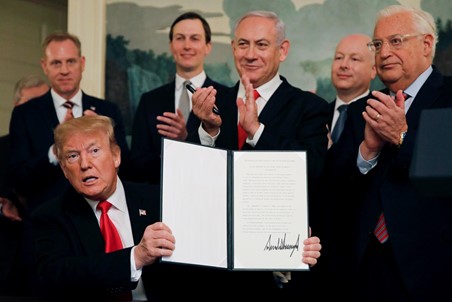
So why open this essay with a photo of Trump celebrating his dead-on-arrival “Deal of The Century” for Israel and Palestine? Because this is once again a gullible and weak President Trump being led by the nose into the coming Middle East conflagration. Left without even a semblance of US sympathy for their plight, the Palestinians after the roll-out of this “peace” plan will again see that they have no friends outside Syria, Iran, and Lebanon. As Israel continues to flirt with the idea of simply annexing large parts of the West Bank, it is clear that the brakes are off of any Israeli reticence to push for maximum control over Palestinian territory. So what is there to lose?
Trump believes he’s advancing peace in the Middle East, while the excellent Mondoweiss website rightly observes that a main architect of the “peace plan,” Trump’s own son-in-law Jared Kushner, “taunts Palestinians because he wants them to reject his ‘peace plan.’” Rejection of the plan is a green light to a war of annihilation on the Palestinians.
It appears that the center may not hold, that the self-referential echo chamber that passes for Beltway “expert” analysis will again be caught off guard in the consequence-free profession that is neocon foreign policy analysis. “Gosh we didn’t see that coming!” But the next day they are back on the TV stations as great experts.
Clouds gathering…
Trump’s Deal Is Bid to Complete the Evil ‘Plan Dalet’
The Zionist terror conspiracy to steal the land of Palestine is nearing its bizarre climax
By Stuart Littlewood | American Herald Tribune | January 31, 2020
After 70 years of pissing on the Palestinians, America and Israel suddenly want to “improve” their lives. But when you look closer at Peace to Prosperity it’s all about thieving more Palestinian land, stripping these good people of what remains of their self-respect and grinding them further into the Holy Land dust.
The Trump document’s 180 pages are devoted to the self-aggrandizement of Israel and military domination of the Middle East, by proxy, by the warmongers of the US. And to achieve its aims Trump shamelessly circumvents international law, ignores existing UN resolutions and makes daft and insupportable claims.
How fitting that the unveiling ceremony was graced by an American president facing impeachment and an Israeli prime minister facing multiple corruption charges. Another party to the farce was Benny Gantz, Netanyahu’s election rival, who commanded the infamous Operation Pillar of Defence (2012) and Operation Protective Edge (2014) onslaughts against Gaza and is no doubt wanted in many quarters for war crimes.
“This is clearly a serious proposal, reflecting extensive time and effort,” said Dominic Raab, UK’s foreign minister, in a statement. “We encourage them (the leaders) to give these plans genuine and fair consideration, and explore whether they might prove a first step on the road back to negotiations.”
Prime minister Boris Johnson in the House of Commons said: “No peace plan is perfect, but this has the merit of a two-state solution. It would ensure Jerusalem is both the capital of Israel and the Palestinian people.”
Can he not read? Trump’s plan says: “Jerusalem will remain the sovereign capital of the State of Israel, and it should remain an undivided city. The sovereign capital of the State of Palestine should be in the section of East Jerusalem located in all areas east and north of the existing security barrier, including Kafr Aqab, the eastern part of Shuafat and Abu Dis, and could be named Al Quds or another name as determined by the State of Palestine.”
Does Johnson not know that the Old City is part of East Jerusalem which is officially Palestinian and the Palestinians obvious want a presence there – and why not? Doesn’t he understand that Al Quds is the Arabic name for the Holy City and it’s a grave insult to suggest calling some village miles away by that name. I can imagine the fury of ordinary Palestinians who have dreamed of self-determination in their homeland – as promised – ever since the British left in 1948.
The British government says “the best way to achieve peace is through substantive peace talks between parties”, as if negotiation between a strong party and a weak party, between one party with a gun to the other’s head, is ever going to work.
Fortunately MP Crispin Blunt put the matter in perspective: “Yesterday we welcomed the release of a proposal — which we described as serious — that ignored the Palestinians’ right to self-determination, the 1967 borders, international humanitarian law, and repeated United Nations Security Council resolutions, the last of which the United Kingdom signed up to in December 2016. I have to say to my right hon. Friend that this is an annexation plan. Annexation is going to start on 2 February — and there is the map.”
Yep, this is indeed an annexation plan and it’s flat-out contrary to international law. What’s needed is not more talks but enforcement of the law and the numerous UN resolutions applicable to this situation, and the sanctions to make it stick. But justice and law are no part of Trump’s deal, only ways of getting round it.
The document doesn’t say who is responsible for producing Peace to Prosperity, but it reads like the work of Israel’s hasbara Dirty Tricks department and edited by disinformation chief Mark Regev, currently Israel’s ambassador in London.
The Zionist terror plan to steal the land of Palestine
It’s plain to see that Trump’s ‘peace’ proposal is actually the climactic fulfillment of the long-running and thoroughly nasty Plan Dalet (otherwise known as Plan D). This was the Zionists’ blueprint, in anticipation of the British leaving, for the violent and murderous takeover of the Palestinian homeland as a prelude to declaring Israeli statehood – which they did in May 1948. It was drawn up by the Jewish underground militia, the Haganah, at the behest of David Ben-Gurion, then boss of the Jewish Agency.
Plan D’s intention was not only to gain control of the areas of the Jewish state and defend its borders but also to control the areas of Jewish settlements and concentrations located outside Jewish borders and ensure “freedom of military and economic activity” by occupying important high-ground positions on a number of transport routes.
“Outside the borders of the state” may seem a curious thing to say when nobody knew where Israel’s borders actually ran, except where marked on the 1947 UN Partition Plan map. Israel has purposely kept her borders fluid in order to accommodate the Zionists’ perpetual lust for expansion.
Success would depend on, amongst other things, “applying economic pressure on the enemy by besieging some of his cities”, on “encirclement of enemy cities” and on “blocking the main enemy transportation routes…. Roads, bridges, main passes, important crossroads, paths, etc. must be blocked by means of: acts of sabotage, explosions, series of barricades, minefields, as well as by controlling the elevations near roads and taking up positions there.”
In other words, a reign of terror.
Jewish forces would occupy the police stations, described as “fortresses”, fifty of which had been built by the British throughout Palestine after the Arab unrest of 1936-39.
Plan D discussed “operations against enemy population centers located inside or near our defensive system in order to prevent them from being used as bases by an active armed force”. These operations included:
- “Destruction of villages (setting fire to, blowing up, and planting mines in the debris), especially those population centers which are difficult to control continuously.
- “Mounting search and control operations according to the following guidelines: encirclement of the village and conducting a search inside it. In the event of resistance, the armed force must be destroyed and the population must be expelled outside the borders of the state.”
Villages emptied in this way were then fortified.
If they met no resistance “garrison troops will enter the village and take up positions in it or in locations which enable complete tactical control,” said the Plan. “The officer in command of the unit will confiscate all weapons, wireless devices, and motor vehicles in the village. In addition, he will detain all politically suspect individuals… In every region, a [Jewish] person will be appointed to be responsible for arranging the political and administrative affairs of all [Arab] villages and population centers which are occupied within that region.
34 massacres are said to have been committed in pursuit of Plan D’s racist and territorial objectives. The massacre at Deir Yassin by Jewish terror groups set the tone in order to ‘soften up’ the Arabs for expulsion. More atrocities followed the declaration of Israeli statehood on 14 May 1948. 750,000 Palestinians were put to flight as Israel’s forces obliterated hundreds of Arab villages and towns. The village on which Sderot now stands was one such. To this day they have been denied the right to return and received no compensation.
And here are the chilling guidelines for besieging, occupying and controlling Arab cities…
- By isolating them from transportation arteries by laying mines, blowing up bridges, and a system of fixed ambushes.
- If necessary, by occupying high points which overlook transportation arteries leading to enemy cities, and the fortification of our units in these positions.
- By disrupting vital services, such as electricity, water, and fuel, or by using economic resources available to us, or by sabotage.
- By launching a naval operation against the cities that can receive supplies by sea, in order to destroy the vessels carrying the provisions, as well as by carrying out acts of sabotage against harbor facilities.
Plan Dalet is one of the sickest documents in history and shows why so many people question Israel’s legitimacy.
Atrocities occurred at Deir Yassin, Lod (Lydda) and Ramle. The Deir Yassin massacre was carried out by the two Zionist terror groups, the Irgun and the Stern Gang. On an April morning in 1948 (before the Israeli state declaration) 130 of their commandos made a dawn raid on this small Arab town with a population of 750, to the west of Jerusalem. The attack was initially beaten off, and only when a crack unit of the Haganah arrived with mortars were the Arab townsmen overwhelmed. The Irgun and the Stern Gang, smarting from the humiliation of having to summon help, embarked on a ‘clean-up’ in which they systematically murdered and executed at least 100 residents – mostly women, children and old people. The Irgun afterwards exaggerated the number, quoting 254, to frighten other Arab towns and villages.
The Haganah played down their part in the raid and afterwards said the massacre “disgraced the cause of Jewish fighters and dishonored Jewish arms and the Jewish flag”.
Deir Yassin signaled the beginning of a deliberate program by Israel to depopulate Arab towns and villages – destroying churches and mosques – in order to make room for incoming Holocaust survivors and other Jews.
In July 1948 Israeli terrorist troops seized Lydda, shot up the town and drove out the population. Donald Neff reported how, as part of the ethnic cleansing, the Israelis massacred 426 men, women, and children. 176 of them were slaughtered in the town’s main mosque. The remainder were forced to walk into exile in the scalding July heat leaving a trail of bodies – men, women and children – along the way. Of all the blood-baths they say this was the biggest. The great hero Moshe Dayan was responsible. Was he ever brought to book? Of course not. Lydda airport is now Ben Gurion airport.
The Israeli state’s greedy ambition overran the generous borders gifted to the Zionists in the UN Partition Plan and by 1949 the Zionists had seized nearly 80 percent of Palestine, provoking the resistance backlash that still goes on today.
Israel’s numerous war crimes and crimes against humanity, and its continual defiance of international law and the UN Charter, undermine the Jewish state’s claim to legitimacy as far as Arabs and many non-Arabs around the world are concerned.
UN Resolution 194 called on Israel to let the Palestinians back onto their land. It has been re-passed many times, but Israel still ignores it. And so does the Trump plan. The Israelis also stand accused of violating Article 42 of the Geneva Convention by moving settlers into the Palestinian territories it occupies, and of riding roughshod over international law with their occupation of the Gaza Strip and West Bank.
But as Plan D shows, “expulsion and transfer” (i.e. ethnic cleansing) were always a key part of the Zionists’ scheme. According to historian Benny Morris no mainstream Zionist leader could conceive of future co-existence without a clear physical separation between the two peoples. Ben-Gurion, who became Israel’s first prime minister, is reported to have said in 1937: “New settlement will not be possible without transferring the Arab fellahin…” The following year he declared: “With compulsory transfer we have a vast area [for settlement]… I support compulsory transfer. I don’t see anything immoral in it.”
On another occasion, he remarked: “If I were an Arab leader I would never make terms with Israel. We have taken their country. Sure, God promised it to us, but what does that matter to them? Our God is not theirs. We come from Israel, it is true, but 2,000 years ago, and what is that to them? There has been anti-Semitism, the Nazis, Hitler, Auschwitz, but was that their fault? They only see one thing: we have come here and stolen their country.”
Ben-Gurion reminded his military commanders that the prime aim of Plan D was the ethnic cleansing of Palestine. He was well aware of his own criminality.
Today under the Trump plan, as the Guardian points out, a Palestinian state would receive territory, mostly desert, near Gaza to compensate for the further loss of about 30% of the West Bank. And we are all asked to recognize the Jordan valley, which makes up about a third of the occupied West Bank, and the Old City of Jerusalem, as part of Israel.
Trump’s ‘deal of the century’ won’t bring peace – that was the plan
The proposal deliberately includes a host of unrealisable preconditions before what remains of Palestine can be recognised
By Jonathon Cook | The National | January 2, 2020
Much of Donald Trump’s long-trailed “deal of the century” came as no surprise. Over the past 18 months, Israeli officials had leaked many of its details.
The so-called “Vision for Peace” unveiled on Tuesday simply confirmed that the US government has publicly adopted the long-running consensus in Israel: that it is entitled to keep permanently the swaths of territory it seized illegally over the past half-century that deny the Palestinians any hope of a state.
The White House has discarded the traditional US pose as an “honest broker” between Israel and the Palestinians. Palestinian leaders were not invited to the ceremony, and would not have come had they been. This was a deal designed in Tel Aviv more than in Washington – and its point was to ensure there would be no Palestinian partner.
Importantly for Israel, it will get Washington’s permission to annex all of its illegal settlements, now littered across the West Bank, as well as the vast agricultural basin of the Jordan Valley. Israel will continue to have military control over the entire West Bank.
Prime Minister Benjamin Netanyahu has announced his intention to bring just such an annexation plan before his cabinet as soon as possible. It will doubtless provide the central plank in his efforts to win a hotly contested general election due on March 2.
The Trump deal also approves Israel’s existing annexation of East Jerusalem. The Palestinians will be expected to pretend that a West Bank village outside the city is their capital of “Al Quds”. There are incendiary indications that Israel will be allowed to forcibly divide the Al Aqsa mosque compound to create a prayer space for extremist Jews, as has occurred in Hebron.
Further, the Trump administration appears to be considering giving a green light to the Israeli right’s long-held hopes of redrawing the current borders in such a way as to transfer potentially hundreds of thousands of Palestinians currently living in Israel as citizens into the West Bank. That would almost certainly amount to a war crime.
The plan envisages no right of return, and it seems the Arab world will be expected to foot the bill for compensating millions of Palestinian refugees.
A US map handed out on Tuesday showed Palestinian enclaves connected by a warren of bridges and tunnels, including one between the West Bank and Gaza. The only leavening accorded to the Palestinians are US pledges to strengthen their economy. Given the Palestinians’ parlous finances after decades of resource theft by Israel, that is not much of a promise.
All of this has been dressed up as a “realistic two-state solution”, offering the Palestinians nearly 70 per cent of the occupied territories – which in turn comprise 22 per cent of their original homeland. Put another way, the Palestinians are being required to accept a state on 15 per cent of historic Palestine after Israel has seized all the best agricultural land and the water sources.
Like all one-time deals, this patchwork “state” – lacking an army, and where Israel controls its security, borders, coastal waters and airspace – has an expiry date. It needs to be accepted within four years. Otherwise, Israel will have a free hand to start plundering yet more Palestinian territory. But the truth is that neither Israel nor the US expects or wants the Palestinians to play ball.
That is why the plan includes – as well as annexation of the settlements – a host of unrealisable preconditions before what remains of Palestine can be recognised: the Palestinian factions must disarm, with Hamas dismantled; the Palestinian Authority led by Mahmoud Abbas must strip the families of political prisoners of their stipends; and the Palestinian territories must be reinvented as the Middle East’s Switzerland, a flourishing democracy and open society, all while under Israel’s boot.
Instead, the Trump plan kills the charade that the 26-year-old Oslo process aimed for anything other than Palestinian capitulation. It fully aligns the US with Israeli efforts – pursued by all its main political parties over many decades – to lay the groundwork for permanent apartheid in the occupied territories.
Trump invited both Netanyahu, Israel’s caretaker prime minister, and his chief political rival, former general Benny Gantz, for the launch. Both were keen to express their unbridled support.
Between them, they represent four-fifths of Israel’s parliament. The chief battleground in the March election will be which one can claim to be better placed to implement the plan and thereby deal a death blow to Palestinian dreams of statehood.
On the Israeli right, there were voices of dissent. Settler groups described the plan as “far from perfect” – a view almost certainly shared privately by Netanyahu. Israel’s extreme right objects to any talk of Palestinian statehood, however illusory.
Nonetheless, Netanyahu and his right-wing coalition will happily seize the goodies offered by the Trump administration. Meanwhile the plan’s inevitable rejection by the Palestinian leadership will serve down the road as justification for Israel to grab yet more land.
There are other, more immediate bonuses from the “deal of the century”.
By allowing Israel to keep its ill-gotten gains from its 1967 conquest of Palestinian territories, Washington has officially endorsed one of the modern era’s great colonial aggressions. The US administration has thereby declared open war on the already feeble constraints imposed by international law.
Trump benefits personally, too. This will provide a distraction from his impeachment hearings as well as offering a potent bribe to his Israel-obsessed evangelical base and major funders such as US casino magnate Sheldon Adelson in the run-up to a presidential election.
And the US president is coming to the aid of a useful political ally. Netanyahu hopes this boost from the White House will propel his ultra-nationalist coalition into power in March, and cow the Israeli courts as they weigh criminal charges against him.
How he plans to extract personal gains from the Trump plan were evident on Tuesday. He scolded Israel’s attorney-general over the filing of the corruption indictments, claiming a “historic moment” for the state of Israel was being endangered.
Meanwhile, Abbas greeted the plan with “a thousand nos”. Trump has left him completely exposed. Either the PA abandons its security contractor role on behalf of Israel and dissolves itself, or it carries on as before but now explicitly deprived of the illusion that statehood is being pursued.
Abbas will try to cling on, hoping that Trump is ousted in this year’s election and a new US administration reverts to the pretence of advancing the long-expired Oslo peace process. But if Trump wins, the PA’s difficulties will rapidly mount.
No one, least of all the Trump administration, believes that this plan will lead to peace. A more realistic concern is how quickly it will pave the way to greater bloodshed.
Americans Keep Putting Up Roadblocks Against Russian Troops on Key Syrian Highway
By Marko Marjanović | Anti-Empire | January 29, 2020
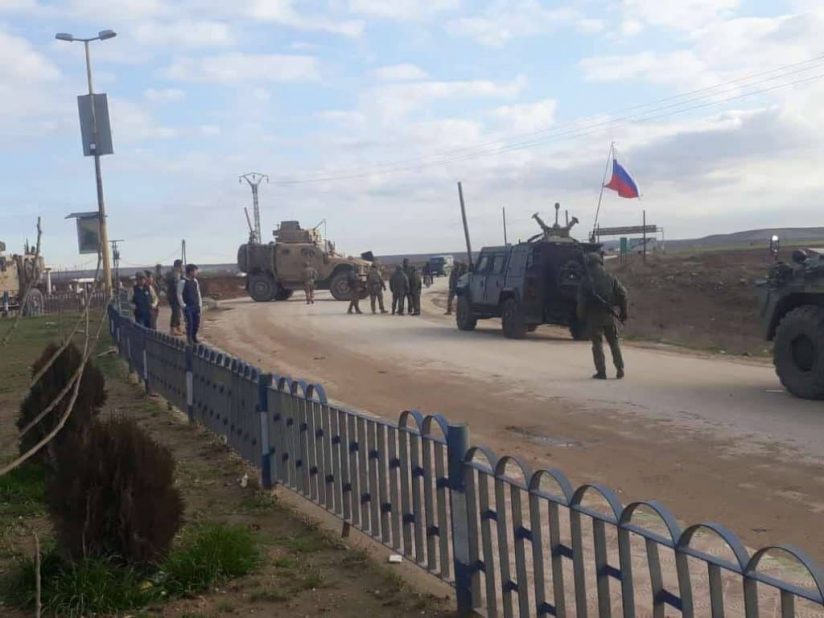
This is now the fourth time this has happened that we know of. US troops in northeastern Syria keep blockading the M4 highway to prevent Russian troops from moving on it.
In fall of 2019, to prevent a Turkish invasion of the Kurdish-held northeastern Syria, the Pentagon hammered out a deal with the Turks for joint US-Turkish patrols on the Syrian side of the Syrian-Turkish border.
As soon as that happened however Trump, after a talk with Erdogan, declared and ordered a US military withdrawal from Syria. At this moment Russia jumped in and took over the US role in the formerly US-Turkish agreement. To minimally appease Erdogan and limit his invasion it would now be Russians who patrolled together with the Turks, which was welcomed by the Kurdish leadership.
In separate negotiations with the Kurds the Russians also gained a number of bases in the northeast to make the patrols possible, and thousands of Syrian army troops also poured in to reinforce the Kurds against the Turkish invasion in the limited sector it was taking place in.
At this point Trump reversed himself, saying US forces would stay in Syria, but only in the oil-rich parts. But the withdrawal from the Syrian-Turkish border, where US presence had hampered US-Turkish relations, would be permanent.
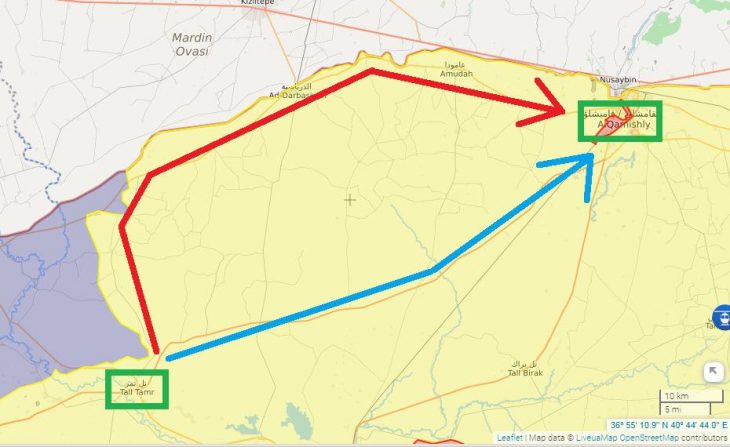
Blue is the obvious path, but the Americans insist the Russians must hug the border along the red path
What is happening now is that when the Russians coming from the west want to take the direct and obvious route to their facilities in the city of Qamishli they periodically encounter US troops near the town of Tell Tamr standing in their way.
The Americans block the road with their vehicles and demand the Russians take the longer, indirect way to Qamishli along inferior roads hugging the Syrian-Turkish border.
Russia’s UN Envoy Blasts ‘Deal of the Century’ Map Which Shows Golan Heights as Part of Israel
Sputnik – 30.01.2020
Israel took over part of Syria’s Golan Heights during the 1967 Six-Day War, annexing the area in 1981. The UN denounced Tel Aviv’s decision as “null and void and without international legal effect.” Last March, Washington formally recognised the occupied area as Israeli territory. Damascus blasted the move and vowed to regain its lands someday.
The Russian Ambassador to the United Nations Vaily Nebenzya has called on the architects of the so-called ‘deal of the century’ Israeli-Palestinian peace plan to remember that the Golan Heights belong to Syria.
“Yesterday, Washington published its vision for a settlement in the Middle East. We could not help but notice that the maps included in the plan defined the Golan Heights as Israeli territory,” Nebenzya said, referring to a pair of maps tweeted out by President Trump showing the proposed Israeli and Palestinian states which clearly show the Golan Heights northeast of the Sea of Galilee as part of Israel.
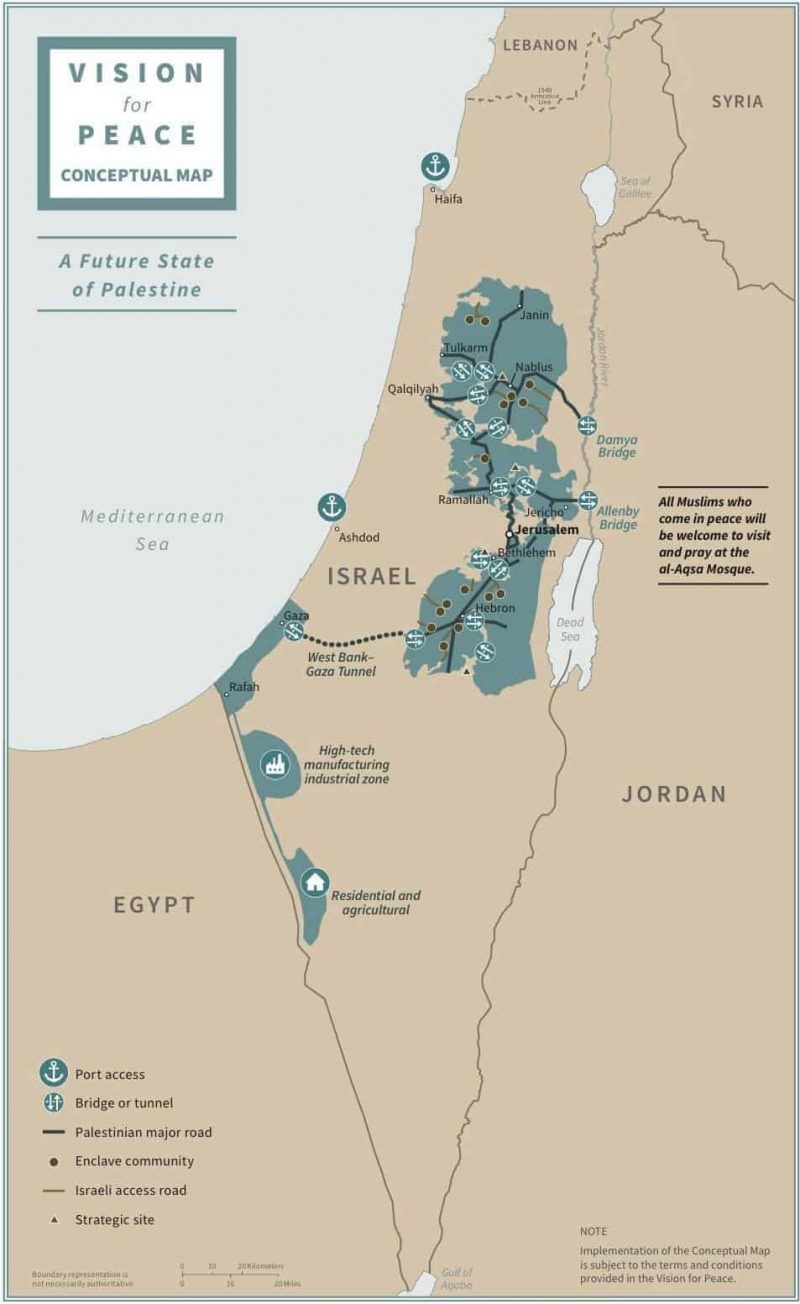
“In this connection, we would like to remind the ‘geographer’ who created this map that we and Security Council Resolution 497 do not recognize Israel’s sovereignty over the Golan,” Nebenzya added.
“The Golan Heights are illegally occupied Syrian territory,” the ambassador stressed.
In 1981, after Tel Aviv moved to annex the occupied areas of the Golan Heights, the United Nations unanimously adopted a resolution saying that Israeli claims to the Golan Heights were “null and void and without international legal effect.” In 1982, 86 other countries in the General Assembly adopted a second resolution calling for a general boycott of Israel over its occupation of Syrian territory, but the US and its European allies rejected the initiative. Israel gained control of the Golan Heights in the aftermath of the Six-Day War, a brief conflict which took place in June 1967 which began when Israel launched preemptive airstrikes against an Arab coalition led by Egypt.
US President Donald Trump signed a proclamation recognising Israel’s sovereignty over the Golan Heights in March 2019 after a meeting with Israeli Prime Minister Benjamin Netanyahu. Dozens of countries including the US’s European allies rejected Washington’s change in position, while Russian Foreign Minister Sergei Lavrov characterised the decision as a “conscious, deliberate demonstration of lawlessness.”
Syria warned that it would never give up its claims to the Golan Heights territories, and indicated that it has the legal right to regain the Golan Heights by any means possible, alleging that force was “the only language which Israel understands.” Skirmishes have been reported in the area in the months since, with Israel occasionally reporting the destruction of projectiles launched from the Syrian side of the border, while Syrian air defences have reported the shootdown of Israeli missiles.
On Tuesday, US President Donald Trump unveiled his long-awaited ‘Deal of the Century’ Israeli-Palestinian peace plan. The proposal envisions a two-state solution, recognises Jerusalem as Israel’s capital and grants the Palestinian Authority several neighbourhoods of East Jerusalem as the capital of a Palestinian state. It also offers the Palestinian side $50 billion in investments. Palestinian Authority President Mahmoud Abbas rejected the proposal outright, telling Trump Jerusalem was “not for sale,” and vowing that the deal would “not go through” under his watch.
Featured Video

Answers to Myocarditis and Heart Conditions
or go to
Aletho News Archives – Video-Images
From the Archives
Casuistry
By Thomas S. Harrington | CounterPunch | August 19, 2016
… What will almost never be talked about are the many very good reasons a person from the vast region stretching from Morrocco in the west, to Pakistan in the east, have to be very angry at, and to feel highly vengeful toward, the US, its strategic puppeteer Israel, and their slavishly loyal European compadres like France, Germany and Great Britain. … Read full article
Blog Roll
Recent Comments
loongtip on Eilat port faces worst crisis… loongtip on British minister dreams of kid… loongtip on Kiev awards major mining proje… loongtip on UK believes it can seize any t… loongtip on Pirates of the Caribbean loongtip on Australian festival boycotted… loongtip on Kiev seeks to ban Russian musi… seversonebcfb985d9 on Somaliland and the ‘Grea… John Edward Kendrick on Kidnapped By the Washington… aletho on Somaliland and the ‘Grea… John Edward Kendrick on Somaliland and the ‘Grea… aletho on Donald Trump, and Most America…


 Aletho News
- Israel–Syria security pact stumbles as Tel Aviv rejects withdrawal: Report
- The Ukraine Snare Still Beckons
- Italy and the drone that isn’t there
- Knesset advances bill mandating death by hanging for Palestinian prisoners
- Eilat port faces worst crisis as Red Sea shipping collapses
- Iran protest-riots can only achieve US-Israeli intervention, ‘shadow CIA’ concludes
- The Coming War on Iran: What Has Really Been Happening?
- US Cargo Planes Have Flooded the Persian Gulf Since the First of December
- Deep-state forces from abroad instigated violence in Nepal – former foreign minister
- Rare Earths—or Arctic Control? Greenland’s Riches May Just Be Excuse
- If Americans Knew
- An error has occurred; the feed is probably down. Try again later.
- No Tricks Zone
- Denmark Places Climate Protection Above Animal Welfare, Poisoning And Culling Cows
- New Study: Greenland Was 3-7°C Warmer And Far Less Glaciated Than Today 6000-8000 Years Ago
- German Media Report That Current Frigid Weather Can Be Explained By Arctic Warming!
- Berlin Blackout Shows Germany’s $5 Trillion Green Scheme Is “Left-Green Ideological Pipe Dream”
- Modeling Error In Estimating How Clouds Affect Climate Is 8700% Larger Than Alleged CO2 Forcing
- Berlin’s Terror-Blackout Enters 4th Day As Tens Of Thousands Suffer In Cold Without Heat!
- Expect Soon Another PIK Paper Claiming Warming Leads To Cold Snaps Over Europe
- New Study: Human CO2 Emissions Responsible For 1.57% Of Global Temperature Change Since 1750
- Welcome To 2026: Europe Laying Groundwork For Climate Science Censorship!
- New Study Finds A Higher Rate Of Global Warming From 1899-1940 Than From 1983-2024
 Aletho News