Ansarullah slams Saudi Arabia, UAE for using television programs to promote Israel
Press TV – May 8, 2020
The leader of Yemen’s popular Houthi Ansarullah movement has slammed Saudi Arabia and the United Arab Emirates for using certain television programs to promote relations with Israel and demean the Palestinian struggle against occupation.
“Those who are directly coordinated with Israel, or through intermediaries allied with Israel, are partners in their crime,” Abdul-Malik Badreddin al-Houthi said in a speech on Thursday, according to Yemen’s al-Masirah television network.
Al-Houthi added that colluding in crimes committed by the Israeli regime was amongst “the most dangerous” of acts.
“The evils committed by the Zionists are the most significant. This is because the scope of their crimes extends to all of humanity given the large scope of Zionist influence over major countries,” he said.
“People have to avoid providing any assistance to Israel, the United States or their supporters,” al-Houthi added.
Riyadh’s pro-Israel programming
Al-Houthi’s remarks come in response to the airing of a string of media productions by certain Persian Gulf countries promoting ties with Israel.
The new “Umm Haroun” television series is one of such programs produced by the Dubai-based Saudi-owned Middle East Broadcasting Center (MBC).
The series directed by Egypt’s Ahmed Gamal el-Adl in the United Arab Emirates stars a Kuwaiti actress who plays the role of a Jewish midwife of Turkish origin living in the Persian Gulf country before settling in the occupied Palestinian territories.
Hebrew-language outlet N12 reported on Sunday that many believe Saudi Crown Prince Mohammed bin Salman is involved in the series as he is interested in closer relations between the kingdom and Israel.
The Palestinian resistance movement Hamas in Gaza denounced the TV series as a “political and cultural attempt to introduce the Zionist project to Persian Gulf society.”
Critics regard the show as an invitation to normalized ties with Israel. The show has consequentially provoked a storm in the Arab world.
The airing of the series has taken place as Riyadh, along with certain other Persian Gulf states such as the UAE, have moved to embrace relations with the Israeli regime, specifically in the past year.
Numerous Israeli delegations have consequently visited certain Persian Gulf states in recent months. Arab delegations from Persian Gulf states have also visited Israel.
No Arab country has formal relations with the Israeli regime, with the exception of Jordan and Egypt.
“Exit 7”: Yet another pro-Israel production
The “Umm Haroun” series is not the only MBC production seeking to promote ties with Israel to the Arab public.
“Exit 7” is another series currently being aired by the Saudi company.
According to Asia Times, the program seeks to promote various western values alongside breaking taboos regarding Israel.
Characters in the series promote “doing business with Israel” and argue against Saudi aid being sent to Palestine.
The program also disseminates blatantly anti-Palestinian themes, such as claiming that Palestinians “attack Saudi Arabia” whenever an opportunity arises.
Characters in the series also seek to legitimize Israeli occupation of Palestinian land by claiming that Palestinians “sold their land” to Jewish settlers.
Egypt, which signed a peace treaty with Israel in 1979, has disseminated similar claims of Palestinians selling their lands to Jewish settler to legitimize its ties with the Israeli regime.
According to Persian Gulf states analyst Nabeel Nowairah, MBC’s pro-Israel themes clearly “came from the high levels of the government”.
“You cannot talk about these things unless they’re approved by some agency or another. So it has the blessing of Saudi Crown Prince Mohammad bin Salman in some way,” he said.
The Arab-Israeli attempts to normalize ties come as Tel Aviv and Washington have stepped up attempts to legitimize Israeli occupation as part of US President Donald Trump’s so-called “deal of the century” initiative unveiled earlier this year.
Al-Houthi’s remarks on Thursday also come as Tel Aviv has mulled military intervention against Sana’a following the failure of the Saudi war on Yemen seeking to crush the popular Ansarullah, according to reports.
Saudi Arabia and a number of its regional allies launched the devastating war on Yemen in March 2015 in order to bring the country’s former president Abd Rabbuh Mansur Hadi back to power and defeat Ansarullah.
The Saudi-led attempt has, however, been brought to a standstill by the Yemeni resistance.
The US-based Armed Conflict Location and Event Data Project (ACLED), a nonprofit conflict-research organization, estimates that the war has claimed more than 100,000 lives over the past five years.
The UN says over 24 million Yemenis are in dire need of humanitarian aid, including 10 million suffering from extreme levels of hunger.
Riyadh makes inroads into Hollywood
The push to normalize ties with Israel comes as bin Salman has also sought to greatly westernize the kingdom ever since being appointed crown prince in 2017.
According to The Hollywood Reporter, many major US entertainment brands are bracing themselves for large Saudi investment opportunities in the near future.
Last month, Saudi Arabia was disclosed to have bought a 5.7 percent stake in the American events operator Live Nation.
According to the report, Saudi Arabia’s public investment fund has also specifically made an offer to buy the Warner Music Group, one of the three major music moguls in the US.
Many major Hollywood stars have also visited and performed in the oil-rich kingdom in the last year.
The report highlighted that Hollywood companies seeks to overlook the brutal murder of dissident journalist Jamal Khashoggi under the orders of the Saudi state in 2018 – which caused major international uproar – as they step up cooperation with the Saudi regime.
See also:
Syrian ‘regime change’ architect: William Roebuck, US Ambassador of Destruction

By Steven Sahiounie | Mideast Discourse | May 4, 2020
Since 2006, William Roebuck, a US Diplomat, has been working toward ‘regime change’ in Syria at any cost. The destruction of Syria, hundreds of thousands of deaths and injuries, and the migration of one-third of the population have been the price of the US policy under Roebuck’s tenure. The ultimate goal of ‘regime change’ has never been about greater freedoms, democracy, or human rights for Syrians, but has been with the single target spelled out by Roebuck in 2006: to break the relationship between Iran and Syria.
William Roebuck, US Ambassador ‘to the Kurds in Syria’
William Roebuck is a 27 year veteran of the US State Department, having served under Presidents Bush, Obama, and currently Trump. His current title is Deputy Special Envoy to the Global Coalition to Defeat ISIS. He is a former US Ambassador to Syria and Bahrain. He has served in the US embassies in Iraq and chargé d’affaires in Libya under Obama. Seymour M. Hersh wrote about the US Embassy in Libya and its role in arming the terrorists used by the US in Syria. For the past several years, he has been based in Northeast Syria and managing the Kurds.
Roebuck designed the 2011 “Arab Spring” in Syria
WikiLeaks founder Julian Assange revealed a plan concocted by William Roebuck, the former US Ambassador to Syria. Wikileaks published US diplomatic cables, and chapter 10 of “The Wikileaks Files” concerns Roebuck’s cable sent on December 13, 2006. Ambassador Roebuck wrote that the US should take action to try to destabilize the Syrian government by provoking it to overreact, both internally and externally. That plan was put into action in March 2011 at Deraa, where armed terrorists were interspersed among unarmed civilians in street protests. The terrorists were provoking the police and security forces by shooting at them, as well as shooting unarmed civilians which were blamed on the security forces.
The cables prove that ‘regime change’ had been the goal of US policy in Syria since 2006 and that the US promoted sectarianism in support of its policy, which built the foundation for the sectarian conflict which resulted in massive bloodshed. Roebuck advocated for exploiting Syria’s relationship with Iran, which makes Syria vulnerable to Israeli airstrikes. Roebuck advised that the US should destabilize the Syrian government by promoting sectarian divisions between Sunni and Shia, which at the time was not an issue in Syria, which is a secular government and a tolerant society. By promoting sectarian conflict, which he had observed in the oil-rich Arab Gulf monarchies, Roebuck was crafting the destruction of Syrian society. The ultimate US goal in Syria was to destabilize the Syrian government by violent means, resulting in a change of government, and the new government would be pro-Israeli, and anti-Iranian.
Roebuck’s memo leaked
In November 2019 an internal memo written on October 31 by Roebuck was leaked to the press. He criticized Trump for failing to stop Turkey from invading the Northeast of Syria. “Turkey’s military operation in northern Syria, spearheaded by armed Islamist groups on its payroll, represents an intentioned-laced effort at ethnic cleansing,” Mr. Roebuck wrote, calling the abuses “what can only be described as war crimes and ethnic cleansing.”
Roebuck praised the SDF as a reliable partner acting as guards to keep US troops safe while they occupied Syria illegally, to steal the Syrian oil, which is to be used to support the SDF, instead of the Pentagon payroll.
Two is the company, but three is a crowd
The US state department has a Syrian trio: William Roebuck, and the special representative for Syria engagement, James Jeffrey. Joel Rayburn is a deputy assistant secretary for Levant Affairs and special envoy for Syria.
Iraqi and Syrian Kurdish officials are often confused as to which US officials are in charge on any given issue, and whether their policies were personally driven, or reflected US foreign policy directives. Many analysts agree that the US foreign policy on Syria is a confusing mess.
Roebuck pushes the Syrian Kurds to unite
The Kurdish National Council (KNC) and the Kurdish Democratic Union Party (PYD) have begun direct talks which US diplomat William Roebuck has promoted. For the last two years, he has been working with the Syrian Kurds. The goal is to unite all Kurdish parties in Syria in one body, which could be part of the UN peace talks in Geneva to end the Syrian conflict. The KNC and PYD have had serious disagreements over the years.
The KNC is part of the Istanbul-based ‘Syrian opposition’ and aligned with the Kurdish nationalist Massoud Barzani and his Kurdistan Democratic Party (KDP) in Iraq. The KNC received criticism as being pro-Turkish after the Turkish Army invaded the Northeastern region of Syria.
The PYD is part of the political arm of the Syrian Democratic Forces (SDF) who had been the US partner fighting ISIS. PYD bases its political and organizational projects on the PKK’s ideology. The PKK is considered as an international terrorist group accused of thousands of deaths in Turkey over the decades.
The first direct negotiations between the KNC and PYD were held in early April at an illegal US military base near Hasakah, with William Roebuck, an SDF commander Mazlum Abdi in attendance. Roebuck has met numerous times over the past three months with the KNC, trying to push the idea of unification among the Kurdish factions.
At an April 25 press conference in Qamishli, it was announced that Roebuck had presented a draft that called for a unified political vision for Syria. After about four meetings, the two sides were in agreement on the following points: Syria is to be a federal, democratic, and pluralistic state; the current Syrian government in Damascus was not acceptable; the Kurdish northeast region was to be a political unit. It was stressed that both parties were committed to resolving the Syrian crisis through the implementation of UN Resolution 2254, and the new Syrian constitution must recognize Kurdish national, cultural, and political rights.
The SDF and PYD do not have political representation in the Geneva talks because of Turkish opposition to their participation, given the fact that Turkey views the groups as terrorists. Turkey rejects any project that would lead to Kurdish autonomous rule in Syria, which is the goal of the US. When Trump ordered the sudden withdrawal of US troops from the Northeast of Syria in October, the Kurdish leaders immediately turned to the Syrian government in Damascus to save them from extermination at the hands of the invading Turkish Army. However, the US did not want the Kurds to be protected by Damascus. The US goal is ‘regime change’ using UN Resolution 2254 as their tool. To achieve that end, William Roebuck has continued to work with the Kurds of the Northeast and is now trying to get them united to be at the negotiating table in Geneva. The Kurds might unite, but they will always remain a small minority numbering only 7% of the population, but who are attempting to control 20% of the territory in Syria. Will there be justice for the Syrian homeowners and landowners within the territory the Kurds call “Rojava”, who have been made homeless and destitute at the hands of the Kurds? Will the Syrians one day rise in a “Kurdish Spring” cleaning to regain their properties?
Ahed al-Hindi, a political analyst based in Washington, DC, told Al-Monitor that the US goal to unify the Kurdish ranks in northeastern Syria is a part of a project designed to unify the entire Syrian north, including Idlib and the Kurdish Northeast. The US goal is to prevent the Syrian government from access to the resources which could be used to rebuild Syria.
The next UN peace talks in Geneva
UN Special Envoy Geir O. Pedersen gave a UN Security Council briefing on the situation in Syria on April 29. He announced the agenda for the next session of the Constitutional Committee had been agreed between the co-chairs, and meetings in Geneva would resume as soon as the COVID-19 restrictions would allow. He continued to stress the importance of the current nationwide ceasefire, which was needed to combat and treat COVID-19. He declared there is no military solution to the Syrian conflict, and the UN Security Council resolution 2254 must be used as the path to a political settlement that would be acceptable for the Syrian people while restoring the sovereignty, borders, and independence of Syria.
Steven Sahiounie is an award-winning journalist and political commentator.
Syrian Air Defenses Repel Israeli Missiles that Targeted a Military Site in the North of the Country
By Khaled Iskef | American Herald Tribune | May 5, 2020
On Monday night, air defenses in the Syrian army responded to an Israeli offensive that targeted military warehouses in Al-Safirah area in Aleppo eastern countryside.
Private Syrian sources reported that the attack targeted the Scientific Research Center in Aleppo eastern countryside. Syrian air defenses repelled several hostile missiles, resulting in explosions in the sky.
In turn, Syrian Ministry of Defense stated that “At 22:32 on May 4, 2020, enemy warplanes appeared on the screens of our air defenses. The warplanes came from the northeast of Athria and targeted some military warehouses in Al-Safirah area with missiles”.
Sources said that the Israeli aircraft entered the Syrian territories through Iraqi airspace and pointed out that the offensive took place through Al-Tanf base near the Syrian-Iraqi borders.
Through the war years, Israeli warplanes intentionally attacked Syria within its policy based on an attempt to weaken the capabilities of the Syrian army for the benefit of the armed groups. The last Israeli attack was on March 27, 2020 on the south of Damascus, killing three civilians and injuring three others due to shrapnel of the missiles in Adliya and Al-Hujaira. However, Syrian air defenses repelled and downed most of the missiles.
The world must halt Israel’s annexation and reverse its colonisation of Palestine
By Ramona Wadi | MEMO | May 5, 2020
UN Special Rapporteur Michael Lynk’s criticism of the forthcoming US-Israeli annexation of more Palestinian land offers a good start to collective political action against Israel, if only the international community would show that it is willing. “The plan would crystallise a 21st century apartheid, leaving in its wake the demise of the Palestinian’s right to self-determination. Legally, morally, politically, this is entirely unacceptable,” declared Lynk.
The UN official described the repercussions of annexation as creating “a cascade of bad human rights consequences” and insisted that the international community can no longer play its acquiescent role to Israeli violations. “The looming annexation is a political litmus test for the international community. This annexation will not be reversed through rebukes, nor will the 53-year-old occupation die of old age,” he warned.
This is not the first time that Lynk has offered a harsher criticism of Israel than the appeasing commentary which is typical of UN officials and institutions. In the past, he recommended international sanctions against Israel and supported the International Criminal Court (ICC) in its investigation of Israeli war crimes against the Palestinian people.
Lynk’s words draw attention to the UN’s political flaws and the endorsement of human rights violations committed by its member states. As Israel moves towards annexation, the international community is unlikely to assess its own complicity. The US-Israeli annexation plans are built upon decades of international endorsement of Zionist colonisation. To oppose annexation – one of the last steps that Israel is embarking upon to complete its colonial project – is not enough. Diluting settler-colonisation to “53 years of occupation” is also inconsistent and a misrepresentation of the causes of Palestinian displacement.
The US may currently be playing a more prominent role, but the international community has magnified the US-Israeli relationship to deflect attention from the historical process leading to the current dynamic. The international community’s endorsement of the Israeli colonisation project is a major violation that remains overlooked. What the US and Israel have achieved under the Trump administration is a reflection of an ongoing cycle of intentional political oblivion at a global level.
Having shone the spotlight on the US-Israeli collusion, the international community has availed itself of a temporary lull in scrutiny of its action, particularly its inaction when it comes to the Palestinian people’s political rights. In truth, the international community’s action can be summed up in the 1947 Partition Plan, after which reliance on statements and condemnations became the diplomatically-accepted means of purportedly championing Palestinian rights. Lynk’s statements, albeit devoid of direct references to Israeli colonisation, point towards international culpability.
In recent years, the two-state compromise remains the most blatant evidence of international culpability in preventing Palestinian reclamation of their land and rights. Just as annexation has been declared in violation of international law, the two-state diplomacy must also be held accountable for paving the way to annexation. This necessitates a complete reversal of the politics that have sustained the UN so far. There cannot be a unified political front against Israel if two-state politics is not abandoned. Stopping annexation requires a reversal of Israeli colonisation; anything less is an affirmation of treason against the Palestinian people.
Iraq mounts counter-terrorism operations amid warnings of US-Daesh plot to split region
Press TV – May 5, 2020
Iraqi army troops and allied fighters from Popular Mobilization Forces — known as Hashd al-Sha’abi — have conducted fresh operations against Daesh militants amid warnings of collaboration between the United States and remnants of the Takfiri terror outfit in the country.
On Monday, Iraq’s Security Media Cell announced the launch of a new military campaign, dubbed ‘Desert Lions,’ against Daesh sleeper cells in the country’s desert areas.
The operation covers “Wadi Houran, Husayniyyat, Al-Kara, H2, and Wadi al-Hallcom, all the way to international borders” in Iraq’s western Anbar Province with an aim to “enhance security and stability in these areas, to pursue terrorist elements and to arrest those wanted,” it said in a statement.
The new campaign followed a string of deadly attacks by Daesh terrorists targeting Iraqi forces, among them Saturday’s assault in Salahuddin Province that killed at least 10 Hashd al-Sha’abi fighters.
On Monday, the Iraqi Army’s intelligence detained a Daesh ringleader, called Abu Hajar, in Nineveh Province.
It came one day after the arrest of another Daesh element, Abu Abdulmalik, in Nineveh’s provincial capital of Mosul, which once served as the terror group’s main bastion in the Arab country.
Also on Monday, Rudaw media network reported that an explosive-laden vehicle had gone off in Madham area in western Anbar, killing the occupants — all terrorists.
Among those slain were Daesh military commander Abu Ghasurah, the report said.
Concerns rise about Daesh-US collaboration
Meanwhile, Mahmoud al-Rubaye, spokesman of Iraq’s Asaib Ahl al-Haq group, which is part of the Hashd al-Sha’abi, said that the US has long been supporting terrorists in Iraq and Syria and that Daesh is part of Washington’s scheme to disintegrate the region.
The US, he added, plans to settle Palestinians in western Anbar under President Donald Trump’s self-proclaimed “deal of the century.”
Rubaye also emphasized that the Americans should honor the Iraqi parliament’s resolution on the withdrawal of foreign forces from the country. The resolution was passed in January following the US assassination of top Iranian anti-terror commander Lieutenant General Qassem Soleimani and senior Hashd commander Abu Mahdi al-Muhandis, in addition to several other comrades.
The US is evacuating its bases in Iraq and amassing its troops at Ain al-Assad and Harir bases, situated in Anbar and Kurdistan’s regional capital of Erbil, respectively, in the face of the outrage of the Iraqi people and popular forces, he pointed out.
Asaib spokesman further warned of armed resistance if the US refuses to leave Iraq and settles in the country’s remote areas.
Additionally, Iraq’s Harakat Hezbollah al-Nujaba, which is also part of Hashd al-Sha’abi, said the US has been planning to transfer senior Daesh commanders from eastern Syria to neighboring Iraq.
“Washington is insisting on the implementation of a plot to return the terrorists to Iraq by transferring a large number of ISIS (Daesh) commanders and militants from the eastern Euphrates and other parts of Syria,” it said in an online statement.
The group also described the Americans as “occupiers,” noting, “We stress that the Islamic Resistance of Iraq is monitoring all your destructive plots to prevent the dangers which threaten the Iraqi provinces.”
Daesh began a terror campaign in Iraq in 2014, overrunning vast swathes in lightning attacks.
Hashd al-Sha’abi fighters played a major role in reinforcing the Iraqi army, which had suffered heavy setbacks against the Takfiri elements.
Iraq declared victory over Daesh in December 2017 after a three-year counter-terrorism military campaign, which also had the support of neighboring Iran.
It is Time for Japan to Become a Truly Independent State
By Valery Kulikov – New Eastern Outlook – 03.05.2020
As the entire world suffers the tragic consequences of the coronavirus pandemic, the latest anti-American scandals are gaining momentum in Japan.
The Kyodo News agency was the first to report the announcement made by Japanese Defense Minister Taro Kono on April 17 that a joint investigation would be conducted by the Japanese and United States military into a leakage of carcinogenic organic substances (firefighting foam) at the US Marine Corps Air Station Futenma on the southern island of Okinawa. However, the Japanese Minister did not provide any details on the nature of this investigation. The article briefly mentions that before this announcement, the Vice Governor of Okinawa Prefecture Kiichiro Jahana had met with the Marine General in charge of the American air base to voice his protest over this spill.
The incident took place on April 10, when about 143 thousand liters of firefighting foam leaked out at the US Marine Corps Air Station Futenma, which contains PFOS, suspected to be carcinogenic to humans. In terms of area, 70% of all American military facilities in Japan are located on this island. All kinds of accidents have been a regular occurrence at the Futenma military base. Okinawa authorities have long been calling for the Futenma air base to be closed, which is located in the densely populated urban area of Ginowan City.
The incident that took place on April 10 has heightened the demands being made by Okinawa Island’s residents and the Okinawa Prefectural Assembly to have operations at the US Futenma air base shut down, but the US have not taken any action in response to these demands, nor have they done anything to prevent these undesirable accidents from taking place.
Another scandal that is gaining momentum also has to do with the military and political alliance between the United States and Japan. As noted in the Japanese Shūkan Gendai magazine, Japan has fallen into America’s trap, and is now effectively their loyal little “vassal state”, which is the cause of the new misfortunes than have befallen Japan. The publication emphasizes that America is to blame for the chaos that the Middle East has long been mired in, and now it seems that Japan will have to answer for all of America’s actions. However, is an alliance with America worth all of this? That is the question posed in the Shūkan Gendai, which has published information about the plight that the Japan Self-Defense Forces stationed in the Middle East have been suffering, who have practically been immured in their ships, as they come face-to-face with the coronavirus pandemic.
In order to get to the bottom of the problems Japan is currently experiencing, the Shūkan Gendai reminds readers of a special plan adopted by Abe’s Cabinet in December 2019 without having received prior approval from the Diet. Under the pretext of the worsening political and military situation “amid rising tensions between the United States and Iran”, two P-3C anti-submarine patrol airplanes with more than 100 flight and technical personnel were deployed to the region for “intelligence-gathering” purposes at the beginning of 2020, as well as a Takanami guided-missile destroyer, which began operating in the Gulf of Oman, where no coalition forces are providing Japan with any serious back up. The Japan Self-Defense Force Base is in Djibouti. It is worth noting that even though the United States invited more than 60 countries to participate in an anti-Iranian coalition (formally created by Washington in November 2019), only 6 countries have joined the US-led Persian Gulf naval coalition. Apart from America, they are the United Kingdom, Australia, Bahrain, Saudi Arabia, the United Arab Emirates and Albania. The coalition was joined by Lithuania at a later stage. Japan is not officially a member of the coalition, but the Japanese military says that if the Japanese troops were to pull out of the region, a gap would be created, leaving the coalition vulnerable.
Since March, the likelihood of the Japanese Self-Defense Forces remaining there has been seriously jeopardized due to the outbreak of the worldwide coronavirus pandemic. This is mainly due to restrictions on the 200 crew members on the Takanami destroyer, who are refraining from leaving the ship to avoid becoming infected with Covid-19, and also due to the closure of Djibouti’s borders, which is not allowing the crews and maintenance personnel for the two P-3C anti-submarine patrol airplanes to be rotated. As the sailors cannot leave the ship, they are living in cramped and crowded conditions, and the Japan Self-Defense Forces were deployed to the Middle East without the necessary medical test kits, have not had enough rest, and are suffering severe stress. Given this situation, the Shūkan Gendai questions whether it is worth risking the lives of these crew members in order to clean up the mess made by the US, whose actions have unleashed chaos in this region.
At the same time, the Japanese press recall a statement made by Defense Minister Taro Kono back in January after holding talks with Pentagon chief Mark Esper, who said that Japan would not be participating in US operations to protect the Persian Gulf from possible attacks from Iran. Even the largely conservative Mainichi Shimbun newspaper has stressed that Japan’s complete dependence on the United States has led to Japan “blindly” following American foreign policy, and the decision taken by Abe’s Cabinet to deploy a limited Japan Self-Defense Forces unit to the Middle East is a clear proof of this. The controversial plan to build a new American military base at Henoko is further proof of this. The newspaper emphasizes that the Japanese government is wrong to be cracking down on the protests held by local residents against this new base being constructed. The government also needs to take urgent action to address the numerous civil rights and security violations that citizens living on Okinawa Island have suffered at the hands of the US military. This erodes mutual trust between the parties to the Treaty of Mutual Cooperation and Security between the United States and Japan and weakens it.
A common theme runs through an article published in the liberal Asahi Shimbun newspaper, which is the belief that since President Trump was elected with slogan “America first!”, America’s own short-sighted military and political decisions have exposed the Treaty of Mutual Cooperation and Security Between the United States and Japan to risks. The question of how Japan should cooperate with America is currently a real headache, as the United States has gone from being the “guardian” of the current world order to the instigator of disorder and chaos.
The Hokkaido Shimbun daily recalls the mass protests that broke out in Japan when the Treaty of Mutual Cooperation and Security Between the United States and Japan was signed in 1960, as well as the fact that its approval by the Diet was practically forced through.
The Akahata newspaper draws particular attention to the fact that a number of secret annexes were included when the Treaty of Mutual Cooperation and Security Between the United States and Japan was signed, according to which the American army can deploy nuclear weapons on Japanese islands and carry out military operations from them without notifying Japan, and this is not limited to operations in the Far East, they can be anywhere in the world. The US has already used Japanese territory to launch attacks on Vietnam, Afghanistan and Iraq.
To this day, Japan remains one of America’s closest partners in East Asia. This situation is certainly a paradox, given how many times the actions taken by the US have been unfriendly towards Japan and Japanese citizens. One example which stands out was the internment of Japanese Americans from March 17, 1942, when 120 thousand US residents who were ethnic Japanese or of Japanese descent were forcefully relocated and incarceration in concentration camps, even if these were American citizens who only had one Japanese ancestor, a great-grandmother or great-grandfather who was a Japanese national. What was happening to the Japanese on the territory of the United States at that time was purely fueled by racism, and there was no military justification for it. Then, on the night of March 9-10, 1945, the Bombing of Tokyo took place, which is regarded as the single most destructive bombing raid in human history, even more so than the atomic bombings of Hiroshima and Nagasaki. Time and time again over the 60 years that have passed since the Treaty of Mutual Cooperation and Security Between the United States was signed, Japan has had to endure lawless acts committed by American occupying forces in their country.
It is therefore no wonder that although there is a desire among today’s Japanese government circles to demonstrate a practically servile willingness to follow in Washington’s footsteps, the Japanese public are taking to the streets in rather frequent demonstrations, and are clearly trying to voice their rejection of US policies and America’s actions, both in Japan and in other parts of the world.
Why Foreign Interventionism?
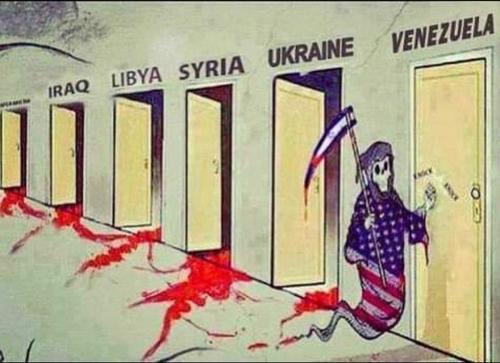
By Jacob G. Hornberger | Future of Freedom Foundation | May 1, 2020
What is the point of U.S. foreign interventionism?
Why are U.S. troops killing and dying in faraway countries like Afghanistan, Iraq, Syria, and Somalia?
Why does the U.S. government have 165,000 troops stationed in more than 150 foreign countries?
Why is the U.S. government enforcing economic sanctions and embargoes against the people of Iran, North Korea, Cuba, and other countries?
Why are U.S. officials waging trade wars against foreign nations?
Why do the CIA and the Pentagon assassinate foreigners?
Why are U.S. officials provoking conflicts with Iran and Venezuela?
Why is regime change a core feature of U.S. foreign policy?
Why do U.S. officials partner with tyrannical foreign regimes?
Why does the U.S. government tax hard-pressed American citizens in order to send money to foreign regimes, including dictatorial ones?
Why does the U.S. government initiate wars of aggression against countries that have never invaded or even threatened to invade the United States?
Why do U.S. officials spend taxpayer money on foreign interventionism?
Why do U.S. troops inflict death, suffering, and destruction in foreign lands?
What are U.S. troops dying for in faraway lands?
After all, let’s acknowledge the obvious: No nation-state is invading the United States. No nation-state has the money, resources, personnel, equipment, and supplies to cross the ocean and invade and conquer the United States. There is no possibility of an invasion and conquest of the U.S. by Canada or any Latin American country.
Therefore, what is the purpose of all that U.S. meddling in overseas countries? We don’t like foreign regimes meddling in American affairs. Why should U.S. officials be meddling in the affairs of other countries, especially when the meddling involves the infliction of death, suffering, and destruction?
Consider Switzerland. It doesn’t have troops in the Middle East and Afghanistan. It doesn’t send foreign aid to regimes. It doesn’t assassinate people. It doesn’t initiate wars of aggression against Third World countries. It just devotes itself entirely to defending Switzerland against an invasion. And no one ever jacks with the Swiss.
In fact, have you ever wondered why U.S. officials call the Department of Defense by that name? I can see why Switzerland would use such a name. But the U.S.? it seems to me that the more truthful name would be the Department of Foreign Interventionism.
The Swiss model of non-intervention was actually the founding foreign policy of the United States. This was reflected by John’s Quincy Adams’ profound Fourth of July, 1821, speech to Congress entitled “In Search of Monsters to Destroy.” In that speech, Adams observed that if America were ever to abandon her founding foreign policy of non-intervention, “She might become the dictatress of the world: she would be no longer the ruler of her own spirit.”
In fact, that was one of the reasons why the Framers and our American ancestors had such a deep antipathy for what they called “standing armies,” by which they meant large, overgrown military-intelligence establishments, or what President Dwight Eisenhower would later label “the military-industrial complex,” or what we call today a “national-security state.” The Framers and our ancestors didn’t want a “standing army” large enough to engage in foreign interventionism.
Where to go from here? Isn’t the answer obvious?
This post was written by: Jacob G. Hornberger
Jacob G. Hornberger is founder and president of The Future of Freedom Foundation.
‘President Biden’ would not erase Trump’s concessions to Israel
By Ramona Wadi | MEMO | April 30, 2020
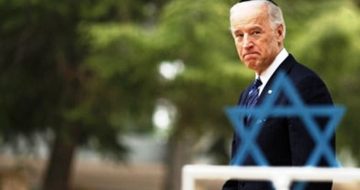
US Democratic presidential contender Joe Biden will not reverse the Trump administration’s unilateral decision to move the US Embassy to Jerusalem if elected president. “The move shouldn’t have happened in the context as it did, it should happen in the context of a larger deal to help us achieve important concessions for peace in the process,” he has declared.
From one US president to another, the Palestinian people can only ascertain for themselves the varying degrees of ongoing international capitulation to Israeli demands. Biden might have wished for a different context, but still requires concessions by the Palestinian leadership to the detriment of the people. Meanwhile, asserting that the embassy would remain in Jerusalem indicates that despite opposing US President Donald Trump’s actions in terms of context, Biden sees no obstacle for US foreign policy on Palestine in the decision.
Reopening the US consulate in occupied East Jerusalem “to engage the Palestinians” is the most that they can hope for in terms of diplomatic relations. This rhetoric ties in to the two-state compromise and diplomatic negotiations. According to advisor Tony Blinken, Biden would pursue the two-state diplomacy if elected, but only for Israel’s benefit. As reported in the Times of Israel, Blinken argued, “In many ways, pulling the plug on a two-state solution is pulling the plug, potentially, on an Israel that is not only secure but is Jewish an democratic – for the future. That’s not something any of us, who are ardent supporters of Israel, would like to see.”
If the US once again aligns itself with the two-state paradigm, the purported discord between Washington and the international community will be eliminated. However, a return to the defunct hypothesis does not include a reversal of the unilateral decisions which Trump has implemented. Israel’s gains will still be losses for the Palestinians regardless of who wins the presidential election.
Biden’s opposition to annexation must be analysed separately from his comments regarding the embassy relocation to Jerusalem. Disagreement does not equal a reversal of actions. Recognising Jerusalem as Israel’s capital was the first step taken by the US in a series of political manoeuvres which paved the way for the current annexation plans. If Biden is stating that he will not consider reversing the embassy decision, he is signalling tacit approval for the momentum created by Trump to facilitate Israel’s colonial project in Palestine.
The international community has also played a treacherous game. In promoting two states as the only solution, it created an illusion of Trump being against the international consensus. However, the political disagreements will only be temporary. If the US elects a president who endorses the two-state paradigm, the international community will not refer to the unilateral US actions taken by the Trump administration, but rather focus on the US diplomatic engagement within international consensus post-Trump. There will be no effort to reclaim what Palestinians lost during Trump’s presidency, in much the same manner as the UN prefers to commemorate violations against the Palestinian people as opposed to upholding accountability and the right of return.
Turkey deployed US-made HAWK missiles to Idlib: Syria’s UN envoy
Press TV – April 30, 2020
Syria’s UN ambassador has once again denounced Turkey for defying Damascus and intensifying its “illegitimate” military presence in the Arab country, saying Ankara’s forces have deployed US-made missiles to Syria’s militant-held Idlib Province in a flagrant violation of international law.
Speaking at a United Nations Security Council (UNSC) session on the situation in Syria via a video link on Wednesday, Bashar al-Ja’afari said Ankara had deployed medium-range surface-to-air MIM-23 Hawk missiles to Idlib.
“The Turkish regime didn’t stop at violating its obligations according to the understandings of Astana, Sochi and Moscow, and supporting the terrorist organizations, but it reinforced its illegitimate military presence on the Syrian territories through bringing in convoys loaded with weapons and heavy equipment every day,” said Ja’afari.
He called on the 15-member UN body to oblige Ankara and other states that sponsor terrorist groups in Syria to end such support and instead help Damascus in its counter-terrorism efforts in order to complete the reconstruction process in the Arab country.
The Syrian diplomat added that any foreign military presence in Syria without authorization from the government in Damascus amounts to aggression and occupation.
He further urged the UN to support the Syrian government in its efforts to complete the reconstruction process, eradicate terrorist groups and reach a political solution to the ongoing conflict without any foreign meddling.
Syria is determined to adhere to its sovereignty and territorial integrity and will not abandon its firm resolve to liberate its occupied territories whether the occupiers are Americans, Turks, Israelis or terrorist organizations, stressed Ja’afari.
Ankara has recently beefed up its military presence in the militant-held Syrian region despite a ceasefire reached last month to halt an escalation.
On March 5, Russia and Turkey, which support opposite sides in the Syrian conflict, came to an agreement on the ceasefire regime in Idlib, where Turkish aggression against the Syrian government had earlier risked starting a war.
The ceasefire came a few months after the Syrian army launched an anti-terror operation against foreign-sponsored militants after they failed to honor a de-escalation agreement between Ankara and Moscow.
Ankara, which itself supports a number of anti-Damascus militant outfits in Idlib, claims that Syrian offensives there have killed dozens of its troops. It has threatened to attack the Syrian military unless government forces abandoned the liberated areas, and asked Moscow to “stop” Damascus.
Turkey has, meanwhile, sent thousands of troops and heavy military hardware into Idlib in an unprecedented incursion to back the militants.
Damascus, though, has vowed to liberate entire Syria, including Idlib, which remains the last major bastion for foreign-backed Takfiri terrorists in the country.
US seeking to replace Iraq’s PMU in the western Anbar province bordering Syria: Analyst
Press TV – April 26, 2020
An Iraqi military advisor and analyst has said that the US is seeking to replace Iraq’s Popular Mobilization Units in the western Anbar province bordering Syria with its own forces.
Speaking to Iraq’s al-Maloumah news agency on Sunday, Safa al-A’ssam said that Washington seeks to force the PMU out of the province’s al-Qaim border region by fanning sectarian tensions.
“The plan is to redeploy American forces to the al-Qaim region on the pretext of countering Deash terrorist attacks and filling the security vacuum following a PMU withdrawal,” he added.
The PMU formed shortly after the emergence of the Daesh terrorist group in Iraq in mid-2014.
The group played a major role pushing back and ultimately defeating the terrorist forces which had taken control of a large swathes of the country.
The Iraqi parliament voted to integrate the PMU into the Iraqi military in 2016, effectively placing the force under the command of the prime minister and granting the group a standing similar to that of other branches of Iraqi security forces.
Fazel Jaber, an Iraqi lawmaker affiliated with the Fatah Alliance, has also warned of attempts by certain Iraqi groups to undermine the PMU’s presence in the province despite being deployed under the command of Iraq’s federal government.
He said the attempts to weaken the PMU were led by Washington, which fears the group’s presence.
The PMU has long rejected Washington’s military presence in the country as an obstacle impeding long-lasting security and stability in Iraq.
In January, Washington assassinated the group’s deputy commander, Abu Mahdi al-Muhandis, alongside Iran’s top anti-terror Lieutenant General Qassem Soleimani in the capital city Baghdad.
Iraqi resistance groups have vowed to take up arms against US forces if Washington fails to comply with a parliamentary order calling for the expulsion of US troops following the assassination.
US main stumbling block to Iraq’s possession of advanced air defense systems: Lawmaker
Press TV – April 23, 2020
A member of the Iraqi parliament’s security and defense committee has blamed the United States for opposing Baghdad’s acquisition of sophisticated air defense missile systems to protect its airspace against any possible act of aggression.
“Since 2014, Americans have acted as the major stumbling block to Iraq’s procurement of an advanced air defense system. Repeated attempts to sign contracts with a number of countries, including Russia, have been unsuccessful because of Washington’s interference,” Kata’ al-Rikabi told Arabic-language al-Maalomah news agency in an exclusive interview on Wednesday night.
Rikabi added, “Americans installed Patriot [missile] systems in Ain al-Assad [air base] and other bases, where their forces are currently deployed in violation of [Iraq’s] national sovereignty and without the approval of the government. The presence of foreign forces [on Iraqi soil] is indeed an act of aggression, let alone the establishment of bases and deployment of systems and military hardware.”
Last week, the Iraqi parliament’s security and defense committee submitted an in-depth study to the country’s caretaker prime minister Adel Abdul-Mahdi, requesting the procurement of the Russian-built long-range, surface-to-air S-400 missile defense system.
“The committee has presented a comprehensive study to the prime minister, demanding approval for the purchase of the advanced S-400 air defense system. The issue has already been discussed with relevant figures at the General Command of Armed Forces, and now awaits the premier’s agreement,” Badr al-Ziyadi, a member of the committee, told Arabic-language al-Sabaah newspaper on April 18.
He emphasized that the purchase of the S-400 missile system, with the aim of boosting the country’s defense capabilities, will be finalized once the next Iraqi government is formed and it ratifies procurement of the system.
The United States has already warned Iraq of the consequences of extending military cooperation with Russia, and striking deals to purchase advanced weaponry, particularly S-400 missile systems.
Former US State Department spokeswoman Heather Nauert said on February 22, 2018 that Washington has contacted many countries, including Iraq, to explain the significance of the Countering America’s Adversaries Through Sanctions Act (CAATSA), and possible consequences that would arise in the wake of defense agreements with Moscow.
On August 2, 2017, US President Donald Trump signed into law the CAATSA that imposed sanctions on Iran, North Korea, and Russia.
Featured Video
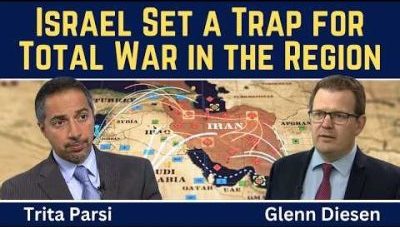
Trita Parsi: Israel Set a Trap for Total War in the Region
or go to
Aletho News Archives – Video-Images
From the Archive
Zionism’s Violent Legacy
By Donald Neff | Washington Report On Middle East Affairs | January 1996
On January 4, 1948, Jewish terrorists drove a truck loaded with explosives into the center of the all Arab city of Jaffa and detonated it, killing 26 and wounding around 100 Palestinian men, women and children.[1] The attack was the work of the Irgun Zvai Leumi – the “National Military Organization,” also known by the Hebrew letters Etzel – the largest Jewish terrorist group in Palestine. The Irgun was headed by Revisionist Zionist Menachem Begin and had been killing and maiming Arabs, Britons and even Jews for the previous ten years in its efforts to establish a Jewish state.
This terror campaign meant that at the core of Revisionist Zionism there existed a philosophical embrace of violence. … continue
Blog Roll
 Aletho News
- Trita Parsi: Israel Set a Trap for Total War in the Region
- Trump’s Iran war is on an Israeli leash
- Saudi oil boss issues global supply warning
- Riyadh Says Its Oil System Is Intact. The Numbers Say Otherwise.
- Trump and Netanyahu Want to “Finish the Job” on Iran
- US ‘one-sided dictation’ not Iran’s beliefs makes rational talks impossible: Baghaei
- Iran’s Next Strike May Not Explode. It Could Shut You Down /Col Doug Macgregor
- Iran: US political targets legitimate if assassinations return
- Iraq shuts key border crossing with Iran under US pressure: Report
- Undersea Internet cables could be targeted in retaliation for attacks on Iran: IRGC deputy chief
- If Americans Knew
- The Israel Lobby’s Changing Fortunes
- AIPAC has become such a political liability that it’s shifting to a more “nimble” approach to buying politicians
- At least 160 Israeli settler attacks in 2 weeks
- Will Gaza’s Ancient Christian Community Disappear Forever?
- Israel’s vision of regional security rests on keeping Arab states weak
- Heidi Levine recounts how Palestinian youths helped save her in settler attack
- DAILY UPDATE: Latest essential news on Palestine, Israel, & region
- Trump’s Intensifying Sabotage of the ICC, for Israel’s Sake
- Israeli military detain US and UK volunteers in West Bank including Democratic NY politician Brad Lander
- Americans at National Conservatism Conference held in Israel this year criticize Israel
- No Tricks Zone
- E-Cars Reduce CO2 Emissions By Only 41% Compared To Internal Combustion Engine Vehicles
- Predictions Made By Renowned Climate Professor Over Past Decades Have Been Proven To Be Poor
- New Study Suggests Large Regions Of The Pacific Ocean Have Been Cooling For The Last 80 Years
- Germany’s Green Energy Debacle: High Energy Costs Force Kahla Porzellan to Close After 182 Years!
- New Study: 50 Years Of The Most Aggressive ‘Net Zero’ Policies Can Only Affect The Global Climate By 0.03°C
- US September “Heat” Was No Record…Many Records Set Decades Ago
- Latest European Green Energy Debacle; Portugal’s Largest Flagship Solar Park Insolvent!
- Green Energy Debacle: German Expert Professor Fritz Vahrenholt Warns Of Severe Economic And Social Consequences
- Two More Paleo Reconstructions Affirm Meters-Higher Sea Levels Across Ireland, Brazil 7000-6000 Years Ago
- New Study: Earth And Venus Surface Warmth Largely Explained By Convection And Lapse Rate, Not CO2 Or Radiation

