The Democratic Party’s embrace of the New Cold War and New McCarthyism – to counter President Trump – has spread to Rep. Barbara Lee, a brave voice against the post-9/11 war frenzy, as Norman Solomon notes in an open letter.
More than a decade and a half ago, your eloquent words and courageous vote set a high bar as you stood up against a war frenzy on the House floor. Three days after 9/11, you implemented the kind of brave wisdom that we desperately need in a world beset by the massive violence of warfare and the overarching dangers of nuclear holocaust.
Since then, like many other people opposed to perpetual war, I’ve deeply appreciated your leadership in advocating for diplomacy instead of reckless confrontation in international relations. Year after year, following your lone vote against a blank check for war on Sept. 14, 2001, you’ve been a steadfast voice for the necessity of diplomatic initiatives.
Until now.
Your longtime wisdom is antithetical to the tweet that you sent out after the meeting between Donald Trump and Vladimir Putin from your official “Rep. Barbara Lee” Twitter account: “Outraged by President Trump’s 2 hr meeting w/Putin, the man who orchestrated attacks on our democracy. Where do his loyalties lie?”
In mid-September 2001, when you implored the Congress and the country to “think through the implications of our actions today, so that this does not spiral out of control,” the words of your speech were beacons of sanity in a propaganda storm for war. But now, as I watch a video of those two transcendent minutes, some of your old words echo in a newly haunting way.
Now it falls to peace advocates who read your new words to urge you to “think through the implications” of the political line you’ve just taken, “so that this does not spiral out of control.” And now, peace advocates must remind you of other insightful words from your historically prescient speech nearly 16 years ago: “Some of us must urge the use of restraint.”
Your declaration on Friday that you are “outraged” by a meeting between the presidents of the world’s two nuclear-weapons superpowers is the opposite of restraint. Likewise, your baiting of Trump with the question “Where do his loyalties lie?” echoes the accusations of treason hurled at you for years. Such rhetoric is far beneath you — and beneath any leader with a responsibility to encourage diplomatic discourse, especially between two nations brandishing huge arsenals of nuclear weapons.
Let’s not forget that past top-level diplomacy between Russia and the United States was hardly led by saints. Fifty years ago, Soviet Premier Alexei Kosygin was the leader of a government far more repressive than the one headed by Vladimir Putin today, while President Lyndon Johnson was in the midst of escalating a mass-murderous war in Vietnam. Yet their Glassboro Summit was notable diplomacy that reduced tensions between the two countries and reduced the dangers of nuclear war.
Now, for whatever reasons, you have opted to participate in a profoundly irresponsible meme that castigates instead of encourages diplomatic discourse between the highest levels of the American and Russian governments. To use a word from your historic 2001 speech, it’s essential that we think through the “implications” of such a political line of attack. They include increasing the likelihood that escalated tensions between Russia and the United States could “spiral out of control.”
I’ve long thought of you as a heroic champion of pursuing alternatives to war and, quite possibly, helping to prevent a nuclear holocaust that scientists believe would render the Earth “virtually uninhabitable.” But now, you seem to have lost your way.
To counteract what Martin Luther King Jr. called “the madness of militarism,” we must get off a partisan bandwagon when it is heading toward military catastrophe. That requires — as you so wisely urged in 2001 — supporting diplomacy, urging restraint and thinking through the implications of our actions today.
The first meeting between Vladimir Putin and Donald Trump at the G20 summit in Hamburg evoked a wave of criticism from Western media, as a number of notable news outlets blasted the US President for his conduct during negotiations.
At least several prominent newspapers took a dim view of President Trump’s handling of this meeting, claiming that the Russian leader apparently managed to outplay and outsmart his US counterpart.For example, Die Weltstated that it was clear to all professional observers that the meeting resulted in Trump’s capitulation.
In an apparent effort to underscore Trump’s relative inexperience in foreign affairs, the newspaper claims that the “political pro” Putin knocked out the newbie US President “by the book.”
The article’s author also emphasized the fact that Putin paused for a moment before shaking Trump’s already extended hand.
TheGuardian adds that while US politicians apparently felt relieved that Trump managed to avoid “a major gaffe” during the meeting, it was “hardly cause for celebration.”
“It’s an indication of how rapidly our standards are falling when we’re reasonably pleased that President Trump has not made an obvious error,” Thomas Countryman, former US acting undersecretary for arms control and international security, remarked.
Meanwhile the New York Times insists that the meeting with Putin was probably the best part of the summit for Trump, who apparently found himself increasingly ostracized by other delegates.
“The talks with Mr. Putin oddly turned into a bright spot for Mr. Trump on the first full day of the gathering, where the United States found itself increasingly ostracized by other Group of 20 members on major issues, including climate change, immigration and trade,” the newspaper says.
The Los Angeles Times criticized the way Trump discussed the issue of Russia’s alleged meddling in the 2016 US presidential election, arguing that the US President should’ve been more assertive in his inquiries on the subject.
The news website Vox even took this issue up a notch by outright saying that “Putin got Trump to buy his fake news on election interference and to offer a weak endorsement of upcoming sanctions.”
Interestingly enough, the article’s author insisted that “the entire US intelligence community believes the Kremlin mounted a sophisticated campaign” to help Trump win the election, even though this assessment was made only by four out of 17 US intelligence agencies.
Stating that the US leader did not even properly prepare for the meeting, unlike his Russian counterpart, Vox claimed that “Trump — the dealmaker — got outplayed by Putin.”
Sen. Chuck Schumer (D-NY) is one of the leading “lights” of the “progressive Democrats” pushing the Russiagate nonsense. Pettiness or misguidedness is not their sin but criminal complicity in putting humanity —and all life on this planet—at the risk of extinction in pursuit of abject goals.
Some leading Democrats in Congress are eager to turn the summit meeting between Donald Trump and Vladimir Putin away from avenues for improvements in U.S.-Russian relations, even if that means deflecting it toward World War III.
On Wednesday, the New York Times reported that “the White House announced that the meeting with Mr. Putin would be a formal bilateral discussion, rather than a quick pull-aside at the economic summit meeting that some had expected.”
Meanwhile, Senate Democratic leader Chuck Schumer criticized the lack of a “specific agenda” for the Trump-Putin discussion and tweeted “the first few things that come to my mind” — with 10 items denouncing Russia and not a single step to help avert a nuclear war between that country and the United States.
What a contrast with another Democrat, former Sen. Sam Nunn, who signed a June 27 open letter that urged Putin and Trump to focus on “urgently pursuing practical steps now that can stop the downward spiral in relations and reduce real dangers.” The letter emphasized “reducing nuclear and other military risks.”
But these days, apparently, the Democratic leadership in Congress has much bigger fish to fry than merely trying to avert a global nuclear holocaust.
The Democratic Party leaders on Capitol Hill can’t be bothered with squandering much political capital or sound-bite airtime on the matters highlighted by the open letter, which Nunn — a former chairman of the Senate Armed Services Committee — signed along with former top British, German and Russian diplomats.
Four Proposals
The open letter offered four crucial proposals for the meeting between Trump and Putin:
— “The starting point could be a new Presidential Joint Declaration by the United States and the Russian Federation declaring that a nuclear war cannot be won and must never be fought. This would make clear again that leaders recognize their responsibility to work together to prevent nuclear catastrophe, and would be positively received by global leaders and publics.”
–“A second step could be to increase military-to-military communication through a new NATO-Russia Military Crisis Management Group. Restarting bilateral military-to-military dialogue between the United States and Russia, essential throughout the Cold War, should be an immediate and urgent priority. The focus of these initiatives should be on reducing risks of a catastrophic mistake or accident by restoring communication and increasing transparency and trust.”
–“A third step could be to collaborate to prevent ISIS and other terrorist groups from acquiring nuclear and radiological materials through a joint initiative to prevent WMD terrorism. There is an urgent need to cooperate on securing vulnerable radioactive materials that could be used to produce a ‘dirty bomb.’ Such materials are widely available in more than 150 countries and are often found in facilities, such as hospitals and universities, that are poorly secured.”
–“Fourth, discussions are imperative for reaching at least informal understandings on cyber dangers related to interference in strategic warning systems and nuclear command and control. This should be urgently addressed to prevent war by mistake. That there are no clear ‘rules of the road’ in the strategic nuclear cyber world is alarming.”
Low Priority
But top Democratic Party leaders hardly give high priority to such concerns. On the contrary: For many months now, their preoccupation has been to double, triple and quadruple down on an insidious — and extremely dangerous — political investment. Party leaders have positioned themselves to portray just about any concession from Trump in bilateral talks as a corrupt payoff.
House Minority Leader Nancy Pelosi was ringing a familiar bell when she proclaimed on CNN in mid-May: “Every day I ask the question, ‘What do the Russians have on Donald Trump financially, politically or personally that he’s always catering to them?’”
“Given their vehement political investment in demonizing Russia’s President Putin,” I wrote in late April, “Democratic leaders are oriented to seeing the potential of détente with Russia as counterproductive in terms of their electoral strategy for 2018 and 2020. It’s a calculus that boosts the risks of nuclear annihilation, given the very real dangers of escalating tensions between Washington and Moscow.”
Days ago, looking ahead to the scheduled discussion between the two presidents at the G-20 summit in Germany, the home page of the Washington Post carried this headline: “Months of Russia controversy leaves Trump ‘boxed in’ before Putin meeting.” The tagline noted that “whatever course Trump takes will likely be called into question.”
Powerful custodians of the USA’s hugely profitable military-industrial complex prefer it that way. They aren’t much interested in any course toward Russia other than antagonism if not belligerence. There is enormous commitment to heading off the “threat” of genuine diplomacy and rapprochement.
‘Madness of Militarism’
Elite guardians of the U.S. warfare state, committed to what Martin Luther King Jr. called “the madness of militarism,” certainly don’t want a modern-day incarnation of the “spirit of Glassboro” that emerged 50 years ago when President Lyndon Johnson met at length with Soviet Premier Alexei Kosygin.
Standing next to Kosygin at the end of their summit at a New Jersey college, Johnson said: “I have no doubt about it at all” that “it does help a lot to sit down and look a man in the eye all day long and try to reason with him, particularly if he is trying to reason with you.”
If Trump says anything like that after meeting with the Kremlin’s leader this week, you can expect some misguided Democratic partisans to denounce him as a Putin tool.
While many people are eager for constructive dialogue between the United States and Russia, on Capitol Hill the efforts to prevent such a possibility are fierce and unrelenting. Ultra-hawks like Senators Lindsey Graham and John McCain are among quite a few Republicans doing all they can to prevent genuine diplomacy between Washington and Moscow. But much of the most unhinged rhetoric is coming from Democrats, often with the “progressive” label.
To sample just how far downhill the discourse has gone in the frenzy to take genuine U.S.-Russian diplomacy off the table, consider this tweet that a longtime member of Congress with an antiwar past, Democrat Maxine Waters, sent out a week ago: “When Trump goes to kiss Putin’s ring at the G20 meeting, maybe he should just return to Russia w/ him & their favorite amb. Sergey Kislyak.”
The director of the Kennan Institute at the Woodrow Wilson Center, Matthew Rojansky, pointed out days ago: “The momentum in relations between the world’s two big nuclear powers is now so negative, that it really is time to call a halt to anything that looks like further escalation or deterioration.”
Yet that negative momentum is what many members of Congress are trying to increase. Words like “irresponsible” and “reckless” don’t begin to describe what they are doing.
It has been amusing watching the New York Times (Times) and its fellow mainstream media (MSM) cohort express their dismay over the rise and spread of “fake news.” They take it as an obvious truth that what they provide is straightforward and unbiased fact-based news. They do offer such news, but they also provide a steady flow of their own varied forms of genuinely fake news, often in disseminating false or misleading information supplied them by the CIA, other branches of government, and sites of corporate power. An important form of MSM fake news is that which is presented while suppressing information that calls the preferred news into question. This was the case with “The Lie That Wasn’t Shot Down,” the title of a January 18, 1988 Times editorial referring to a propaganda claim of five years earlier that the editors had swallowed and never looked into any further. The lie–that the Soviets knew that Korean airliner 007, which they shot down on August 31, 1983, was a civilian plane–was eventually uncovered by congressman Lee Hamilton, not by the Times.
MSM fake news is especially likely where a party line is quickly formed on a topic, with deviationism therefore immediately looking naïve, unpatriotic or simply wrong. In a dramatic illustration, in a book chapter entitled “Worthy and Unworthy Victims,” Noam Chomsky and I showed that coverage by Time, Newsweek, CBS News and the New York Times of the 1984 murder of the priest Jerzy Popieluzko in communist Poland, a dramatic and politically useful event for the politicized western MSM, exceeded their coverage of the murders of 100 religious figures killed in Latin America by U.S. client states in the post-World War II years taken together.1 It was cheap and free of any negative feedback to focus heavily on the “worthy” victim, whereas looking closely at the deaths of the 100 would have required an expensive and sometimes dangerous research effort and would have upset the State Department. But it was a form of fake news to discriminate so heavily with news (and indignation) on a politically useful victim while ignoring large numbers whose murder the political establishments wanted downplayed or completely suppressed.
The Fake News Tradition on Russia in the New York Times
Fake news on Russia is a Times tradition that can be traced back at least as far as the 1917 revolution. In a classic study of the paper’s coverage of the Russian revolution from February 1917 to March 1920, Walter Lippmann and Charles Merz found that “From the point of view of professional journalism the reporting of the Russian Revolution is nothing short of a disaster. On the essential questions the net effect was almost always misleading, and misleading news is worse than none at all….They can fairly be charged with boundless credulity, and an untiring readiness to be gulled, and on many occasions with a downright lack of common sense.”2 Lippmann and Merz found that strong editorial bias clearly fed into news reporting. The editors very much wanted the communists to lose, and serving this end caused the paper to report atrocities that didn’t happen and the imminent fall of the Bolshevik regime on a regular basis (at least 91 times). There was a heavy and uncritical acceptance of official handouts and reliance on statements from unidentified “high authority.” This was standard Times practice.
This fake news performance of 1917-1920 was repeated often in the years that followed. The Soviet Union was an enemy target up to World War II, and Times coverage was consistently hostile. With the end of World War II and the Soviet Union at that point a major military power, and soon a rival nuclear power, the Cold War was on. Anti-communism became a major U.S. religion, and the Soviet Union was quickly found to be trying to conquer the world and needing containment. With this ideology in place and U.S. plans for its own real global expansion of power well established,3 the communist threat would now help sustain the steady growth of the military-industrial complex and repeated interventions to deal with purported Soviet aggressions.
An Early Great Crime: Guatemala
One of the most flagrant cases in which the Russian threat was used to justify U.S.-organized violence was the overthrow of the social democratic government of Guatemala in 1954 by a small proxy army invading from U.S. ally Somoza’s Nicaragua. This action was provoked by government reforms that upset U.S. officials, including a 1947 law permitting the formation of labor unions, and government plans to buy back (at tax rate valuations) and distribute to landless peasants some of the unused land owned by United Fruit Company and other large landowners. The U.S., which had been perfectly content with the earlier 14-year- long dictatorship of Jose Ubico, could not tolerate this democratic challenge and the elected government, led by Jacobo Arbenz, was soon charged with assorted villainies, with the main fake news base of an alleged Red capture of the Guatemalan government.4
In the pre-invasion propaganda campaign the unified MSM leveled a stream of false charges of extreme repression, threats to its neighbors, and the communist takeover. The Times featured these alleged abuses and threats repeatedly from 1950 onward (my favorite, Sidney Gruson’s “How Communists Won Control of Guatemala,” March 1, 1953). Arbenz and his predecessor, Juan Jose Arevalo, had carefully avoided establishing any embassies with Soviet bloc countries, fearing U.S. reactions. But it was to no avail. Following the removal of Arbenz and installation of a right-wing dictatorship, court historian Ronald Schneider, after studying 50,000 documents seized from communist sources in Guatemala, found that not only did the communists never control the country, but that the Soviet Union “made no significant or even material investment in the Arbenz regime” and was too preoccupied with internal problems to concern itself with Central America.5
The coup government quickly attacked and decimated the organized groups that had formed in the democratic era, like peasant, worker and teacher organizations. Arbenz had won 65 percent of the votes in a free election, but the “liberator” Castillo Armas quickly won a “plebiscite” with 99.6 percent of the vote. Although this is a result familiar in totalitarian regimes, the MSM had lost interest in Guatemala and barely mentioned this electoral outcome. The Times had claimed back in 1950 that U.S. Guatemala policy “is not trying to block social and economic progress but is interested in seeing that Guatemala becomes a liberal democracy.”6 But in the aftermath the editors failed to note that the result of U.S. policy was precisely to “block social and economic progress,” and via the installation of a regime of terror.
In 2011, more than half a century after 1954, Elizabeh Malkin reported in the Times that Guatemalan president Alvaro Colom had apologized for that ”great crime [the violent overthrow of the Arbenz government in 1954] …an act of aggression to a government starting its democratic spring.” (“An apology for a Guatemalan Coup, 57 Years Later,” October 20, 2011). Malkin mentions that, according to president Colom, the Arbenz family is “seeking an apology from the United States for its role” in the “great Crime.” There has never been any apology or even acknowledgement of its role in the Great Crime by the editors of the New York Times.
Another Great Crime: Vietnam
There were many fake news reports in the Times and other mainstream publications during the Vietnam war. The claim that the Times was anti-Vietnam-war is misleading and essentially false. In Without Fear or Favor, former Times reporter Harrison Salisbury acknowledged that in 1962, when U.S. intervention escalated, the Times was “deeply and consistently” supportive of the war policy.7 He contends that the paper became steadily more oppositional from 1965, culminating in the publication of the Pentagon Papers in 1971. But Salisbury fails to recognize that from 1954 to the present the paper never abandoned the Cold War framework and language of apologetics, according to which the U.S. was resisting somebody else’s aggression and protecting “South Vietnam.” The paper never applied the word aggression to this country, but used it freely in referring to North Vietnamese actions and those of the National Liberation Front in the southern half of Vietnam.
The various halts in the U.S. bombing war in 1965 and later in the alleged interest of “giving peace a chance” were also fake news, as the Johnson administration used the halts to quiet antiwar protests, while making it clear to the Vietnamese that U.S. officials demanded full surrender. The Times and its colleagues swallowed this bait without a murmur of dissent.8
Furthermore, although from 1965 onward the Times was willing to publish more information that put the war in a less favorable light, it never broke from its heavy dependence on official sources or its reluctance to check out official lies or explore the damage being wrought on Vietnam and its civilian population by the U.S. war machine. In contrast with its eager pursuit of Cambodian refugees from the Khmer Rouge after April 1975, the paper rarely sought out testimony from the millions of Vietnamese refugees fleeing U.S. bombing and chemical warfare. In its opinion columns as well, the new openness was limited to commentators who accepted the premises of the war and would confine their criticisms to its tactical problems and costs–;to us. From beginning to end those who criticized the war as aggression and immoral at its root were excluded from the debate by the Times.9
The 1981 Papal Assassination Attempt. The “Missile Gap,” and “Humanitarian Intervention” in Yugoslavia
Papal Assassination Attempt. A major contribution to Cold War propaganda was provided by fake news on the assassination attempt on Pope John Paul II in Rome in May 1981. This was a time when the Reagan administration was trying hard to demonize the Soviet Union as an “evil empire.” The shooting of the Pope by the Turkish fascist Ali Agca was quickly tied to Moscow, helped by Agca’s confession, after 17 months imprisonment, interrogations, threats, inducements, and access to the media, that the Bulgarians and Soviet KGB were behind it. There was never any credible evidence of this connection, the claims were implausible, and the corruption in the process was remarkable. (See Manufacturing Consent, chapter 4 and Appendix 2). And Agca also periodically claimed to be Jesus Christ. The case against the Bulgarians (and implicitly the KGB) was lost even in Italy’s extremely biased and politicized judicial framework. But the Times bought it, and gave it long, intensive and completely uncritical attention, as did most of the U.S. media.
In 1991, in Senate hearings on the qualifications of Robert Gates to head the CIA, former CIA officer Melvin Goodman testified that the CIA knew [from the start that Agca’s confessions were false because they had “very good penetration” of the Bulgarian secret services. The Times omitted this statement by Goodman in reporting on his testimony. In the same year. with Bulgaria now a member of the Free World, conservative analyst Allen Weinstein obtained permission to examine Bulgarian secret service files on the papal assassination attempt. His mission was widely reported when he went, including in the Times, but when he returned without having found anything implicating Bulgaria or the KGB, a number of papers, including the Times, found this not newsworthy.
Missile Gap. There was a great deal of fake news in the “missile gap” and other gap eras, from roughly 1975 to 1986, with Times reporters passing along official and often false news in a regular stream. An important case occurred in the mid-1970s, at a time when the U.S. war-party was trying to escalate the Cold War and arms race. A 1975 report of CIA professionals found that the Soviets were aiming only for nuclear parity. This was unsatisfactory, so CIA head George H.W. Bush appointed a new team of hardliners, who soon found that the Soviets were achieving nuclear superiority and getting ready to fight a nuclear war. This Team B report was taken at face value in a Times front page article of December 26, 1976 by David Binder, who failed to mention its political bias or purpose and made no attempt by tapping experts with different views to get at the truth. The CIA admitted in 1983 that the Team B estimates were fabrications. But throughout this period, 1975-1986, the Times supported the case for militarization by disseminating lots of fake news. Much of this false information was convincingly refuted by Tom Gervasi in his classic The Myth of Soviet Military Supremacy (New York: Harper & Row, 1986), a book never reviewed in the paper despite the paper’s frequent attention to its subject matter.
Yugoslavia and “Humanitarian Intervention.” The 1990s wars of dismantlement of Yugoslavia succeeded in removing an independent government from power and replacing it with a broken Serbian remnant and poor and unstable failed states in Bosnia and Kosovo. It did provide unwarranted support for the new concept of “humanitarian intervention,” which rested on a mass of fake news. The demonized Serbian leader Slobodan Milosevic was not an ultra-nationalist seeking a “Greater Serbia,” but rather a non-aligned leader on the Western hit list who tried to help Serb minorities in Bosnia, Croatia and Kosovo remain in Yugoslavia as the U.S. and EU supported a legally questionable exodus by several constituent Yugoslav Republics. He supported each of the proposed settlements of these conflicts, sabotaged by Bosnian and U.S. officials who wanted better terms or the outright military defeat of Serbia, the latter of which they achieved. Milosevic had nothing to do with the July 1995 Srebrenica massacre, which involved Bosnian Serbs taking revenge on Bosnian Muslim soldiers who had been ravaging nearby Bosnian Serb villages from their base in Srebrenica under NATO protection. The several thousand Serb civilian deaths were essentially unreported in the MSM, while the numbers of Srebrenica executed victims were correspondingly inflated. The Times’s reporting on these events was fake news on a systematic basis.10
The Putin Era: A Golden Age of Fake News
The U.S. establishment was shocked and thrilled with the 1989-1991 fall of the Soviet Union, and its members were happy with the policies carried out under President Boris Yeltsin, a virtual U.S. client, under whose rule ordinary Russians suffered a calamity but a small set of oligarchs was able to loot the broken state. Yeltsin’s election victory in 1996, greatly assisted by U.S. consultants, advice and money, and otherwise seriously corrupt, was, for the editors of the Times, “A Victory for Russian Democracy” (NYT, ed, July 4, 1996). They were not bothered by either the electoral corruption, the creation of a grand-larceny-based economic oligarchy, or, shortly thereafter, the new rules centralizing power in the office of president.11
Yeltsin’s successor, Vladimir Putin, by gradually abandoning the Yeltsin era subservience was thereby perceived as a steadily increasing menace. His re-election in 2012, although surely less corrupt than Yeltsin’s in 1996, was treated harshly in the media. The lead Times article on May 5, 2012 featured “a slap in the face” from OSCE observers, claims of no real competition, and “thousands of anti-government protesters gathered in Moscow square to chant ‘Russia without Putin’” (Ellen Barry and Michael Schwartz, “After Election, Putin Faces Challenges to Legitimacy”). There had been no “challenges to legitimacy” reported in the Times after Yeltsin’s corrupt victory in 1996.
The process of Putin demonization escalated with the Ukraine crisis of 2014 and its sequel of Kiev warfare against Eastern Ukraine, Russian support of the East Ukraine resistance, and the Crimean referendum and absorption of Crimea by Russia. This was all declared “aggression” by the U.S. and its allies and clients, sanctions were imposed on Russia, and a major U.S.-NATO military buildup was initiated on Russia’s borders. Tensions mounted further with the shootdown of Malaysia Airlines Flight 17 over southeastern Ukraine, effectively, but almost surely falsely, blamed on the “pro-Russian” rebels and Russia itself.12
A further cause of demonization and anti-Russian hostility resulted from the escalated Russian intervention in Syria from 2015 in support of Bashar al-Assad and against ISIS and al-Nusra, an offshoot of al-Qaeda. The U.S. and its NATO and Middle East allies had been committing aggression against Syria, in de facto alliance with ISIS and al-Nusra, for several years. Russian intervention turned the tide, the U.S. (Saudi, etc.) goal of removing Assad was upset and the tacit U.S. allies ISIS and al-Nusra were also weakened. Certainly demonic behavior by Putin!
The Times has treated these further developments with unstinting apologetics–for the February 2014 coup in Kiev, which it never calls a coup, with the U.S. role in the overthrow of the elected government of Victor Yanukovych suppressed, and with anger and horror at the Crimea referendum and Russian absorption, which it never allows to be a defensive response to the Kiev coup. Its call for punishment of the casualty-free Russian “aggression” in Crimea is in marked contrast with its apologetics for the million-plus-casualty–rich U.S. aggression “of choice” (not defensive) in Iraq from March 2003 on. The editors and liberal columnist Paul Krugman angrily cite Putin’s lack of respect for international law,13 with their internalized double standard exempting their own country from criticism for its repeated violations of that law.
In the Times’s reporting and opinion columns Russia is regularly assailed as expansionist and threatening its neighbors, but virtually no mention is made of NATO’s expansion up to the Russian borders and first-strike-threat placement of anti-missile weapons in Eastern Europe, the latter earlier claimed to be in response to a missile threat from Iran! Analyses by political scientist John Mearsheimer and Russia authority Stephen F. Cohen that featured this NATO advance could not make it into the opinion pages of the Times.14 On the other hand, a member of the Russian Pussy Riot band, Maria Alyokhina, was given op-ed space to denounce Putin and Russia,15 and the punk-rock group was granted a meeting with the Times editorial board. Between January 1 and March 31, 2014 the paper had 23 articles featuring the Pussy Riot group and its alleged significance as a symbol of Russian limits on free speech. Pussy Riot had disrupted a church service in Moscow and only stopped upon police intervention, which was at the request of the church authorities. A two year prison sentence followed. In contrast, in February 2014, 84 year old Sister Megan Rice was sentenced to four years in prison in the U.S. for having entered a nuclear weapons site in July 2012 and carried out a symbolic protest action. The Times gave this news a tiny mention in its National Briefing section under the title “Tennessee Nun is Sentenced for Peace Protest.” No op-ed columns or meeting with the Times board for Rice. There are worthy and unworthy protesters as well as victims.
As regards Syria, with Russian help the Assad forces were able to dislodge the rebels from Aleppo, to the dismay of Washington and the MSM. It has been enlightening to see how much concern has been expressed over casualties to civilians in Aleppo, with pictures of forsaken children and many stories of civilian distress. The Times focused heavily on those civilians and children, with great indignation at Putin-Assad inhumanity,16 in sharp contrast with their virtual silence on civilian casualties in Falluja in 2004 and beyond, and recently in rebel-held areas of Syria, and in Mosul (Iraq), under U.S. and allied attack.17 The differential treatment of worthy and unworthy victims has been in full sway in dealing with Syria, displayed again with the chemical weapons casualties and Trump bombing response in April 2017 (discussed below).
A further and important phase of intensifying Russophobia may be dated from the October 2016 presidential debates, where Hillary Clinton declared that Mr. Trump would be a Putin “puppet” as president, and her campaign stressed this threat. This emphasis increased after the election, with the help of the media and intelligence services, as the Clinton camp sought to explain the election loss, maintain party control, and possibly get the election result overturned in the courts or electoral college by blaming the Trump victory on Russia.
The Putin connection was given great impetus by the January 6, 2017 release of a report of the Office of Director of National Intelligence (DNI), on Background of Assessing Russian Activities and Intention in Recent US Elections This short document spends more than half of its space describing the Russian-sponsored RT-TV network, which it treats as an illegitimate propaganda source given its sponsorship and sometimes critical reports on U.S. policy and institutions! RT is allegedly part of Russia’s “influence campaign,” and the DNI says that “We assess the influence campaign aspired to help President-elect Trump’s chances of victory when possible by discrediting Secretary Clinton and publicly contrasting her unfavorably to the President-elect.” There is no semblance of proof that there was a planned “campaign” rather than an ongoing expression of opinion and news judgments. All the logic and proofs of a Russian “influence campaign” could be applied with at least equal force to U.S. media and Radio Free Europe’s treatment of any Russian election, and of course the U.S. intervention in the 1996 Russian election was overt, direct and went far beyond any “influence campaign.”
As regards the DNI’s proof of a more direct Russian intervention in the U.S. election, the authors concede the absence of “full supporting evidence,” but they provide no supporting evidence—only assertions, assessments, assumptions and guesses. It states that “We assess that … Putin ordered an influence campaign in 2015” designed to defeat Mrs. Clinton, and “to undermine public faith in the U.S. democratic process,” but it provides no evidence whatsoever for any such order. It also provides no evidence that Russia hacked the Democratic National Committee (DNC), the e-mails of Clinton and former Clinton campaign manager Podesta, or that it gave hacked information to WikiLeaks. Julian Assange and former British diplomat Craig Murray have repeatedly claimed that these sources were leaked by local insiders, not hacked by anybody. And the veteran intelligence agency experts William Binney and Ray McGovern also contend that the WikiLeaks evidence was surely leaked, not hacked.18 It is also notable that among the three intelligence agencies who signed the DNI document, only “moderate confidence” in its findings was expressed by the National Security Agency (NSA), the agency that would most clearly be in possession of proof of Russian hacking and transmission to WikiLeaks as well as any “orders” from Putin.
But the Times has taken the Russian hacking story as established fact, despite the absence of hard evidence (as with the Reds ruling Guatemala, the “missile gaps,” etc.). Times reporter David Sanger refers to the report’s “damning and surprisingly detailed account of Russia’s efforts to undermine the American electoral system,” but he then acknowledges that the published report “contains no information about how the agencies had … come to their conclusions.”19 The report itself includes the amazing statement that “Judgments are not intended to imply that we have proof that shows something to be a fact.” This is a denial of the credibility of its own purported evidence (i.e., “assessments”). Furthermore, if the report was based on “intercepts of conversations” as well as hacked computer data, as Sanger and the DNI claim, why has the DNI failed to quote a single conversation showing Putin’s alleged orders and plans to destabilize the West?
The Times never cites or gives editorial space to William Binney, Ray McGovern or Craig Murray, who are dissident authorities on hacking technology, methodology and the specifics of the DNC hacks. But op-ed space was given to Louise Mensch’s “What to ask about Russian hacking” (NYT, March 17, 2017). Mensch is a notorious conspiracy theorist with no technical background in this area and who is described by Nathan Robinson and Alex Nichols as best-known for “spending most of her time on Twitter issuing frenzied denunciations of imagined armies of online ‘Putinbots’” and is “one of the least credible people on the internet.”20 But she is published in the Times because, in contrast with the well-informed and credible William Binney and Craig Murray, she follows the party line, taking Russian hacking of the DNC as a premise.
The CIA’s brazen intervention in the election process in 2016 and 2017 broke new ground in secret service politicization. Former CIA head Michael Morell had an August 5, 2016 op-ed in the Times entitled “I Ran the C.I.A. Now I’m Endorsing Hillary Clinton”; and former CIA boss Michael Hayden had an op-ed in the Washington Post just days before the election, entitled “Former CIA Chief:- Trump is Russia’s Useful Fool” (November 3, 2016). Morell had another op-ed in the Times on January 6, now openly assailing the new president (“Trump’s Dangerous Anti-CIA Crusade”). These attacks were unrelievedly insulting to Trump and laudatory to Clinton, even making Trump a traitor; they also make it clear that Clinton’s more pugnacious approach to Syria and Russia is much preferred to Trump’s leanings toward negotiation and cooperation with Russia.
This was also true of the further scandal with former Trump Defense Intelligence nominee Michael Flynn’s call from the Russian Ambassador, which possibly included exchanges about future Trump administration policy actions. This was quickly grasped by the outgoing Obama officials, security personnel and MSM, with the FBI interrogating Flynn and with widespread expressions of horror at Flynn’s action, allegedly possibly setting him up for blackmail. But such pre-inauguration meetings with Russian diplomats have been a “common practice” according to Jack Matlock, the U.S. ambassador to Russia under Reagan and Bush, and Matlock had personally arranged such a meeting for Jimmy Carter.21 Obama’s own Russia adviser, Michael McFaul, admitted visiting Moscow for talks with officials in 2008 even before the election. Daniel Lazare makes a good case that not only are the illegality and blackmail threat implausible, but that the FBI’s interrogation of Flynn also reeks of entrapment. And he asks what is wrong with trying to reduce tensions with Russia? “Yet anti-Trump liberals are trying to convince the public that it’s all ‘worse than Watergate’.”22
So the political point of the Assessment seems to have been, at minimum, to tie the Trump administration’s hands in its dealings with Russia. Some non-MSM analysts have argued that we may have been witnessing an incipient spy or palace coup, that fell short but still had the desired effect of weakening the new administration.23 The Times has not offered a word of criticism of this politicization and intervention in the election process by the intelligence agencies, and in fact the editors have been working with them and the Democratic Party as a loosely-knit team in a distinctly un- and anti-democratic program designed to reverse the results of the 2016 election, while using an alleged foreign electoral intervention as their excuse.
The Times and MSM in general have also barely mentioned the awkward fact that the allegedly Russian-hacked disclosures of the DNC and Clinton and Podesta e-mails described uncontested facts about real electoral manipulations on behalf of the Clinton campaign that the public had a right to know and that might well have affected election results. The focus on the evidence-free claims of a Russian hacking intrusion helped divert attention from the real electoral abuses disclosed by the WikiLeaks material. So here again, official and MSM fake news helped bury real news!
Another arrow in the campaign quiver labeling Trump a knowing or “useful fool” instrument of Putin was a private intelligence “dossier” written by Christopher Steele, a former British intelligence agent working for Orbis Business Intelligence, a private firm hired by the DNC to dig up dirt on Trump. Steele’s first report, delivered in June 2016, made numerous serious accusations against Trump, most notably that Trump had been caught in a sexual escapade in Moscow, that his political advance had been supported by the Kremlin for at least five years, under the direction of Putin, and with the further aims of sowing discord within the U.S. and disrupting the Western alliance. This document was based on alleged conversations by Steele with distant (Russian) officials; that is, strictly hearsay evidence, whose assertions, where verifiable, are sometimes erroneous.24 But it said just what the Democrats, MSM and CIA wanted said, so intelligence officials declared the author “credible” and the media lapped this up, with the Times covering over its own cooperation in this ugly denigration effort by calling the report “unverified” but nevertheless reporting its claims.25
The Steele dossier also became a central part of the investigation and hearings on “Russia-gate” held by the House Intelligence Committee starting in March 2017, led by Democratic Representative Adam Schiff. While basing his opening statement on the hearsay-laden dossier, Schiff expressed no interest in establishing who funded the Steele effort (he produced 17 individual reports), the identity and exact status of the Russian officials who were the hearsay sources, and how much they were paid. Apparently talking to Russians with a design of influencing a U.S. presidential election is perfectly acceptable if the candidate supported by this Russian intrusion is anti-Russian!
The Times has played a major role in this Russophobia-enhancement process, reminiscent of its 1917-1920 performance in which, as noted back in 1920 “boundless credulity, and an untiring readiness to be gulled” characterized the news-making process. While quoting the CIA’s admission that they were showing no hard evidence, but were relying on “circumstantial evidence” and “capabilities,” the Times was happy to spell these capabilities out at great length and imply that they proved something.26 Editorials and news articles have worked uniformly on the supposition that Russian hacking was proved, which it was not, and that the Russians had given these data to WikiLeaks, also unproven and strenuously denied by Assange and Murray. So these reiterated claims are arguably first class “fake news” swallowed as palatable facts.
The Times has run neck-and-neck with the Washington Post in stirring up fears of the Russian information war and improper involvement with Trump. The Times now easily conflates fake news with any criticism of established institutions, as in Mark Scott and Melissa Eddy’s “Europe Combats a New Foe of Political Stability: Fake News,” February 20, 2017.27 But what is more extraordinary is the uniformity with which the paper’s regular columnists accept as a given the CIA’s Assessment of the Russian hacking and transmission to WikiLeaks, the possibility or likelihood that Trump is a Putin puppet, and the urgent need of a congressional and “non-partisan” investigation of these claims. This swallowing of a new war-party line has extended widely in the liberal media (e.g., Bill Moyers, Robert Reich, Ryan Lizza, Joan Walsh, Rachel Maddow, Katha Pollitt, Joshua Holland, the AlterNet web site, etc.).
Both the Times and Washington Post have given tacit support to the idea that this “fake news” threat needs to be curbed, possibly by some form of voluntary media-organized censorship or government intervention that would at least expose the fakery.
The Times has treated uncritically the Schiff hearings on dealing with Russian propaganda, and its opinion column by Louise Mensch strongly supports government hearings to expose Russian propaganda. Mensch names 26 individuals who should be interrogated about their contacts with Russians, and she supplies questions they should be asked.
The most remarkable media episode in this anti-influence-campaign campaign was the Washington Post‘s piece by Craig Timberg, “Russian propaganda effort helped spread ‘fake news’ during election, experts say” (November 24, 2016). The article features a report by an anonymous author or authors, PropOrNot, that claims to have found 200 web sites that wittingly or unwittingly, were “routine peddlers of Russian propaganda.” While smearing these web sites, the “experts” refused to identify themselves allegedly out of fear of being “targeted by legions of skilled hackers.” As Matt Taibbi says, “You want to blacklist hundreds of people, but you won’t put your name to your claims? Take a hike.”28 But the Post welcomed and featured this McCarthyite effort, which might well be a product of Pentagon or CIA information warfare. (And these entities are themselves well funded and heavily into the propaganda business.)
On December 23, 2016 President Obama signed the Portman-Murphy “Countering Disinformation and Propaganda Act,” which will supposedly allow this country to more effectively combat foreign (Russian, Chinese) propaganda and disinformation. It will encourage more government counter-propaganda efforts (which will, by patriotic definition, not be U.S. propaganda) and provide funding to non-government entities that will help in this enterprise. It is clearly a follow-on to the claims of Russian hacking and propaganda, and shares the spirit of the listing of 200 knowing or “useful fools” of Moscow featured in the Washington Post. Perhaps PropOrNot will qualify for a subsidy and be able to enlarge its list of 200. Liberals have been quiet on this new threat to freedom of speech, undoubtedly influenced by their fears of Russian-based fake news and propaganda. But they may wake up, even if belatedly, when Trump or one of his successors puts it to work on their own notions of fake news and propaganda.
The success of the war party’s campaign to contain or overthrow any tendencies of Trump to ease tensions with Russia was dramatically clear in the Trump administration’s speedy bombing response to the April 4, 2017 Syrian chemical weapons deaths. The Times and other MSM editors and journalists greeted this aggressive move with almost uniform enthusiasm,29 and once again did not require evidence of Assad’s guilt beyond their government’s say-so. The action was damaging to Assad and Russia, but served the rebels well. But the MSM never ask cui bono? in cases like this. In 2003 a similar charge against Assad, which brought the U.S. to the brink of a full-scale bombing war in Syria, turned out to be a false flag operation, and some potent authorities believe the current case is equally problematic.30 But Trump moved quickly (and unlawfully) and any further rapproachement between this country and Russia was set back. The CIA, Pentagon, liberal-Democrats and rest of the war party had won an important skirmish in the struggle for and against permanent war.
Manufacturing Consent (New York: Pantheon, 1988, 2002, 2008), chap. 2.
Walter Lippmann and Charles Merz, A Test of the News (New York: New Republic, 1920).
On the Grand Area framework, see Noam Chomsky, “Lecture one, The New Framework of Order,” On Power And Ideology: The Managua Lectures (Boston, South End Press, 1987).
Edward Herman, “Returning Guatemala to the Fold,” in Gary Rawnsley, ed., Cold War Propaganda in the 1950s (London, Macmillan, 1999).
Ronald Schneider, Communism in Guatemala, 1944-1954 (New York: Praeger, 1959), 41, 196-7, 294.
“The Guatemala Incident,” New York Times (ed., April 8, 1950).
Harrison Salisbury, Without Fear or Favor (New York: Times Books, 1980), 486.
Richard DuBoff and Edward Herman, America’s Vietnam Policy: The Strategy of Deception (Washington, D.C.: Public Affairs Press, 1966).
See Manufacturing Consent, chap. 6 (Vietnam).
Edward S. Herman and David Peterson, “The Dismantling of Yugoslavia,” Monthly Review, October 2007; Herman and Peterson, “Marlise Simons on the Yugoslavia Tribunal: A Study in Total Propaganda Service,” ZNet, April 16, 2005.
Stephen F. Cohen, Failed Crusade: America and the Tragedy of Post-Communist Russia (New York: W.W. Norton, 2000).
Robert Parry, “Troubling Gaps in the New MH-17 Report,” Consortiumnews.com. September 28, 2016.
Paul Krugman says “Mr. Putin is someone who doesn’t worry about little things like international law,” in “The Siberian Candidate,” New York Times, July 22, 2016. The fake news implication is that U.S. leaders do worry about it.
A version of Mearsheimer’s article “Why the Ukraine Crisis Is the West’s Fault,” published in Foreign Affairs, Sept. 10, 2014, was offered to the Times but not accepted. Stephen Cohen’s 2012 article “The Demonization of Putin” was also rejected by the paper.
“Sochi Under Siege,” New York Times, February 21, 2014.
Michael Kimmelman, “Aleppo’s F aces Beckon to Us, To Little Avail,” New York Times,, Dec. 15, 2016. Above this front page article are four photos of dead or injured children, the most prominent one in Syria. The accompanying editorial: “Aleppo’s Destroyers: Assad, Putin, Iran,” December. 15, 2016, omits some key actors and killers.
Rick Sterling, “How US Propaganda Plays in Syrian War,” Consortiumnews.com, September. 23, 2016.
William Binney and Ray McGovern, “The Dubious Case on Russian ‘Hacking’,” Consortiumnews.com January 6, 2017.
David Sanger, “Putin Ordered ‘Influence Campaign’ Aimed at U.S. Election, Report Says,” NYT, January 6, 4017.
Nathan Robinson and Alex Nichols, “What Constitutes Reasonable Mainstream Opinion,” Current Affairs, March 22, 2017.
“Contacts With Russian Embassy,” JackAMatlock.com, March 4, 2017.
Daniel Lazare, “Democrats, Liberals, Catch McCarthyistic Fever,” Consortiumnew.com, February 17, 2917.
Robert Parry, “A Spy Coup in America?,” Consortiumnews,com, Dec. 18, 2016; Andre Damon, “Democratic Party Floats Proposal for a Palace Coup,” Information Clearing House, March 23, 2017.
Robert Parry, “The Sleazy Origins of Russia-gate,” Consortiumnews.com, March 29, 2017.
Scott Shane et al, “How a Sensational, Unverified Dossier Became a Crisis for Donald Trump,” New York Times, January 11, 2017.
Matt Fegenheimer and Scott Shane,” “Bipartisan Voices Back U.S. Agencies On Russia Hacking,” NYT, January 6, 2017; Michael Shear and David Sanger, “Putin Led a Complex Cyberattack Scheme to Aid Trump, Report Finds,“ NYT January 7, 2017; Andrew Kramer, “How the Kremlin Recruited an Army of Specialists to Wage Its Cyberwar,” NYT, Dec. 30, 2016.
Robert Parry, “NYT’s Fake News about Fake News,”Consortium news.com, February 22, 2017.
Matt Taibbi, “The ‘Washington Post’ ‘Blacklist’ Story Is Shameful and Disgusting,” Rolling Stone.com, November 28, 2016.
Adam Johnson, “Out of 47 Media Editorials on Trump’s Syria Strikes, Only One Opposed,” Fair, April 11, 2017.
Scott Ritter, “Wag the Dog—How Al Qaeda Played Donald Trump And The American Media: Responsibility for the chemical event in Khan Sheikhoun is still very much in question,” Huffingtonpost.com, April 9, 2017; James Carden, ”The Chemical Weapons Attack in Syria; Is there a place for skepticism?,” Nation, April 11, 2017.
Edward S. Herman is an economist and media analyst with a specialty in corporate and regulatory issues as well as political economy and the media.
A resource-rich, socialist-led, multi-ethnic secular state, with an economic system characterized by a high level of public/social ownership and generous provision of welfare, education and social services.
An independent foreign policy with friendship and good commercial ties with Russia, support for Palestine and African and Arab unity – and historical backing for anti-imperialist movements.
Social progress in a number of areas, including women’s emancipation.
The above accurately describes the Federal Republic of Yugoslavia, the Libyan Arab Jamahiriya and the Syrian Arab Republic. Three countries in three different continents, which had so much in common.
All three had governments which described themselves as socialist. All three pursued a foreign policy independent of Washington and NATO. And all three were targeted for regime change/destruction by the US and its allies using remarkably similar methods.
The first step of the imperial predators was the imposition of draconian economic sanctions used to cripple their economies, weaken their governments (always referred to as ‘a/the regime’) and create political unrest. From 1992-95, and again in 1998, Yugoslavia was hit by the harshest sanctions ever imposed on a European state. The sanctions even involved an EU ban on the state-owned passenger airliner JAT
Libya was under US sanctions from the 1980s until 2004, and then again in 2011, the year the country with the highest Human Development Index in Africa was bombed back to the Stone Age.
Syria has been sanctioned by the US since 2004 with a significant increase in the severity of the measures in 2011 when the regime change op moved into top gear.
The second step was the backing of armed militias/terrorist proxies to destabilise the countries and help overthrow these “regimes”. The strategy was relatively simple. Terrorist attacks and the killing of state officials and soldiers would provoke a military response from ‘the regime, whose leader would then be condemned for ‘killing his own people’ (or in the case of Milosevic, other ethnic groups), and used to ramp up the case for a ‘humanitarian intervention’ by the US and its allies.
In Yugoslavia, the US-proxy force was the Kosovan Liberation Army, who were given training and logistical support by the West.
In Libya, groups linked to al-Qaeda, like the Libyan Islamic Fighting Group, were provided assistance, with NATO effectively acting as al-Qaeda’s air force
In Syria, there was massive support for anti-government Islamist fighters, euphemistically labelled ‘moderate rebels.’ It didn’t matter to the ‘regime changers’ that weapons supplied to ‘moderate rebels’ ended up in the hands of groups like ISIS. On the contrary, a declassified secret US intelligence report from 2012 showed that the Western powers welcomed the possible establishment of a Salafist principality in eastern Syria, seeing it as a means of isolating ‘the Syrian regime’.
The third step carried out at the same time as one and two involved the relentless demonisation of the leadership of the target states. This involved the leaders being regularly compared to Hitler, and accused of carrying out or planning genocide and multiple war crimes.
Milosevic – President of Yugoslavia – was labelled a ‘dictator’ even though he was the democratically-elected leader of a country in which over 20 political parties freely operated.
Libya’s Muammar Gaddafi was portrayed as an unstable foaming at the mouth lunatic, about to launch a massacre in Benghazi, even though he had governed his country since the end of the Swinging Sixties.
Syria’s Assad did take over in an authoritarian one-party system, but was given zero credit for introducing a new constitution which ended the Ba’ath Party’s monopoly of political power. Instead all the deaths in the Syrian conflict were blamed on him, even those of the thousands of Syrian soldiers killed by Western/GCC-armed and funded ‘rebels’.
The fourth step in the imperial strategy was the deployment of gatekeepers – or ‘Imperial Truth Enforcers’ – to smear or defame anyone who dared to come to the defence of the target states, or who said that they should be left alone.
The pro-war, finance-capital-friendly, faux-left was at the forefront of the media campaigns against the countries concerned. This was to give the regime change/destruction project a ‘progressive’ veneer, and to persuade or intimidate genuine ’old school’ leftists not to challenge the dominant narrative.
To place them beyond the pale, Yugoslavia, Libya and Syria were all labelled ’fascist,’ even though their leadership was socialist and their economies were run on socialistic lines. Meanwhile, genuine fascists, like anti-government factions in Ukraine (2013-14), received enthusiastic support from NATO.
The fifth step was direct US/NATO-led military intervention against ‘the regime’ triggered by alleged atrocities/planned atrocities of the target state. At this stage, the US works particularly hard to sabotage any peaceful solution to the conflicts they and their regional allies have ignited. At the Rambouillet conference in March 1999, for example, the Yugoslav authorities, who had agreed to an international peace-keeping force in Kosovo, were presented with an ultimatum that they could not possibly accept. Lord Gilbert, a UK defence minister at the time, later admitted “the terms put to Milosevic (which included NATO forces having freedom of movement throughout his country) were absolutely intolerable … it was quite deliberate.”
In 2011, the casus belli was that ‘the mad dog’ Gaddafi was about to massacre civilians in Benghazi. We needed a ‘humanitarian intervention’ to stop this, we were repeatedly told. Five years later, a House of Commons Foreign Affairs Committee report held that “the proposition that Muammar Gaddafi would have ordered the massacre of civilians in Benghazi was not supported by the available evidence.”
In 2013, the reason given for direct military intervention in Syria was an alleged chemical weapons attack by ‘Assad’s forces’ in Ghouta. But this time, the UK Parliament voted against military action and the planned ‘intervention’ was thwarted, much to the great frustration of the war-hungry neocons. They still keep trying though.
The recent claims of The White House, that they had evidence that the Syrian government was planning a chemical weapons attack, and that if such an attack took place it would be blamed on Assad, shows that the Empire hasn’t given up on Stage Five for Syria just yet.
Stage Six of the project involves the US continuing to sabotage moves towards a negotiated peace once the bombing started. This happened during the bombing of Yugoslavia and the NATO assault on Libya. A favoured tactic used to prevent a peaceful resolution is to get the leader of the target state indicted for war crimes. Milosevic was indicted at the height of the bombing in 1999, Gaddafi in 2011.
Stage Seven is ‘Mission Accomplished’. It’s when the target country has been ‘regime-changed’ and either broken up or transformed into a failed state with strategically important areas/resources under US/Western control. Yugoslavia was dismantled and its socially-owned economy privatised. Montenegro, the great prize on the Adriatic, recently joined NATO.
Libya, hailed in the Daily Telegraph as a top cruise ship destination in 2010, is now a lawless playground for jihadists and a place where cruise ships dare not dock. This country, which provided free education and health care for all its citizens under Gaddafi, has recently seen the return of slave markets.
Syria, though thankfully not at Stage Seven, has still been knocked back almost forty years. The UNDP reported: “Despite having achieved or being well under way to achieving major Millennium Development Goals targets (poverty reduction, primary education, and gender parity in secondary education, decrease in infant mortality rates and increasing access to improved sanitation) as of 2011, it is estimated that after the first four years of crisis Syria has dropped from 113th to 174th out of 187 countries ranked in the Human Development Index.”
Of course, it’s not just three countries which have been wrecked by the Empire of Chaos. There are similarities too with what’s happened to Afghanistan and Iraq. In the late 1970s, the US started to back Islamist rebels to destabilise and topple the left-wing, pro-Moscow government in Kabul.
Afghanistan has been in turmoil ever since, with the US and its allies launching an invasion of the country in 2001 to topple a Taliban ‘regime’ which grew out of the ’rebel’ movement which the US had backed.
Iraq was hit with devastating, genocidal sanctions, which were maintained under US/UK pressure even after it had disarmed. Then it was invaded on the deceitful pretext that its leader, Saddam Hussein, still possessed WMDs.
The truth of what has been happening is too shocking and too terrible ever to be admitted in the Western mainstream media. Namely, that since the demise of the Soviet Union, the US and its allies have been picking off independent, resource-rich, strategically important countries one by one.
The point is not that these countries were perfect and that there wasn’t political repression taking place in some of them at various times, but that they were earmarked for destruction solely for standing in the way of the imperialists. The propagandists for the US-led wars of recent years want us to regard the conflicts as ‘stand alones’ and to regard the ‘problem’ as being the ‘mad dog’ leadership of the countries which were attacked.
But in fact, the aggressions against Yugoslavia, Libya, Syria, Afghanistan and Iraq, and the threatening of Iran, North Korea, Russia and Venezuela are all parts of the same war. Anyone who hasn’t been locked in a wardrobe these past twenty years, or whose salary is not paid directly, or indirectly, by the Empire of Chaos, can surely see now where the ‘problem’ really lies.
The ‘New Hitlers’ – Milosevic, Hussein and Gaddafi – who we were told were the ‘biggest threats’ to world peace, are dead and buried. But guess what? The killing goes on.
The German Intelligence Agency (BND) claims that Iran is “actively seeking products and scientific know-how” from German companies “for developing weapons of mass destruction and missile technology,” but Iranian political observer Hassan Beheshtipour dismissed the accusation as a “US-Israeli conspiracy against Iran” where BND is merely a pawn.
On Thursday, Fox News reported that German intelligence agency BND has prepared a report on Iran, warning that the Islamic Republic “is actively seeking products and scientific know-how for the field of developing weapons of mass destruction as well as missile technology.” For the purpose, the country is “targeting German companies through various fronts.”
The 181-page manual, the broadcaster said, was published last month and released on Tuesday by officials from the heavily industrialized southern German state of Baden-Württemberg. According to it, “in one case, Iran allegedly worked through a Chinese front company to seek ‘complex metal-producing machines’ from a German engineering firm. German intelligence officials blocked the sale when they told the engineering firm the merchandise was slated to be unlawfully routed to Iran.”
Sputnik Iran discussed the issue with Hassan Beheshtipour, Iranian political observer, an expert on nuclear issues and foreign policy contributor for PRESS TV Network, who called the accusations absurd.
“From the ideological point of view, the 181-page report could be regarded as a new attempt of the Israeli and American intelligence services and the Zionist lobby to discredit Iran with the help of Germany. It looks like a new scenario for the implementation of their schemes which they plotted back in 2001 and which they later modified into the anti-Iranian dossier on the nuclear program. However they failed,” Hassan Beheshtipour told Sputnik.
Not a single evidence has been submitted that Iran is trying to develop a nuclear weapon. Moreover, the expert said, it has been proved that Iran’s nuclear research pursues purely peaceful purposes. Therefore the above services decided to concentrate their efforts on [Iran’s] missile program and allege it the capacities of the weapons of mass destruction.
Hassan Beheshtipour pointed out at a number of contradictions which reveal a frame-up.
First of all, Iran was one of the first countries to sharply condemn and oppose the spread of weapons of mass destruction. It actively cooperates with the Organization for the Prohibition of Chemical Weapons (OPCW). It has also stepped up its cooperation with the International Atomic Energy Agency (IAEA) on the various stages of control and inspection, especially after the signing of the nuclear deal. Iran strictly fulfills all the protocols with regards to Non-Proliferation Treaty (NPT) under the full control of IAEA. No doubts have been left with regards to its nuclear program. And there are no doubts that Iran makes no attempts to develop a weapon of mass destruction.
The expert also reminded that Iran’s missile program is of purely defensive, not offensive nature.
With regard to the defensive program, which also includes the missile program, it is even more transparent. Iran repeatedly reiterated that it has the right of self-defense and will neither discuss this issue with anyone nor negotiate on it.
The country’s missile program, he said, falls within the so-called conventional weapons. Iran has condemned at the highest level any production of chemical weapons. This decree of Supreme Leader of Iran, Ayatollah Khamenei has been protocoled in UN. It has been repeatedly referred to during the negotiations on Iran’s nuclear program. Thus Iran, apart from nuclear and chemical weapons, has no other restrictions for its defense industry.
Iran’s defense industry, which also includes the missile program, had taken center stage during the Iran-Iraq war (1980-1988) when the regime of Saddam Hussein was bombing Iranian cities. Iran then was forced to turn to many countries with the request to supply missile weaponry to be able to defend itself. It had no missile engineering at that time. However practically no one (except for 2 countries) responded to its requests. It gave an impulse to Tehran to set up and further develop its missile engineering.
Since then Iran has reached high success in this area, it now possesses its own developments and technologies. Thus it simply does not need any know-how of German or Chinese companies, especially bypassing the sanctions, which are still partially in place.
Thus, the expert said, all the accusations of Iran, put forward in this report, are absolutely absurd. Iran is developing missiles of various ranges purely for its defensive purposes in case of an external attack. The Iranian missile program is of defensive and not of offensive character. It is a mean of containment, and not of aggression, Hassan Beheshtipour finally stated.
In George Orwell’s 1949 dystopian novel 1984, the protagonist Winston Smith’s job was to delve into The Times of London archive and rewrite stories that could cause trouble for the totalitarian government ruling Britain. For instance, if the government made a prediction of wheat or automobile production in their five-year plan and that prediction did not come true, Winston would go into the archives and “correct” the numbers in the article on record.
In writing a response the other day to a critic of my recently published book on Hillary Clinton’s electoral defeat, I was researching how the U.S. corporate media covered a 2016 British parliamentary report on Libya that showed how then Secretary of State Clinton and other Western leaders lied about an impending genocide in Libya to justify their 2011 attack on that country.
I first searched The New York Times archives to find that the paper never did a staff-written story on this explosive parliamentary report. It only ran an Associated Press article. But when you click on the link for the AP article you get a message saying that it is no longer available on nytimes.com.
Using a combination of different keywords, a search of The Washington Post archives was even worse. I could find no story on the parliamentary report at all. A search of The Los Angeles Times archives likewise comes up empty.
Protecting Policy
Ignoring or downplaying a story is one way U.S. corporate media deliberately buries news critical of American foreign policy. It is often news vital for Americans to understand their government’s actions abroad, actions which could mean death or life for U.S. soldiers and countless civilians of other lands.
British newspapers widely covered the story. As did the International Edition of CNN, which has separate editors from CNN’s U.S. website. An online search found no domestic CNN story. There’s also no video online indicating that CNN domestic or CNN International television reported the story.
The Asia edition of The Wall Street Journal had a story. It’s not clear if it appeared in the U.S. edition. Newsweek ran a story online. But it does not mention the United States even once. It laid the blame entirely on the British and French governments, as if the U.S. had nothing to do with the devastation of Libya on false pretenses. The U.S. gave the same false war rationale as the British and French did.
It is a black mark on the Congress’ two foreign affairs committees that neither undertook a similar inquiry (although congressional Republicans did obsess over the Sept. 11, 2012 attack on the U.S. consulate in Benghazi, which occurred about a year after the Obama administration facilitated the military overthrow and brutal murder of Libyan leader Muammar Gaddafi).
Voice of America, which broadcasts outside the United States, ran a story on its website about the British parliamentary report, though the article confined criticism of the U.S. to not being prepared for the aftermath, not for the intervention itself.
A thorough online search shows that The Nation magazine and several alternative news sites, including ConsortiumNews and Salon, appear to be the only U.S.-based media that accurately covered the blockbuster story that undermined the entire U.S. narrative for leaving Libya a failed state.
Rationale for an Attack
The United States peddled its false story of a coming genocide in Libya under the doctrine of Responsibility to Protect to justify military intervention. On its face R2P appears to be a rare instance of morality in foreign and military policy: a coalition of nations with U.N. Security Council authorization would take military action to stop an impending massacre. It would have been hard to argue against such a policy in Libya if indeed its genuine purpose was to stop a massacre, after which the military operation would withdraw.
But that is not where it ended. While arguing that intervention was necessary to stop a massacre in Libya, the real intent, as the British report says, was regime change. That’s not what American officials said at the outset and what corporate media reported.
“In the face of the world’s condemnation, [Libyan leader Moammar] Qadhafi chose to escalate his attacks, launching a military campaign against the Libyan people,” President Barack Obama told the nation on March 28, 2011. “Innocent people were targeted for killing. Hospitals and ambulances were attacked. Journalists were arrested, sexually assaulted and killed. … Cities and towns were shelled, mosques were destroyed, and apartment buildings reduced to rubble. Military jets and helicopter gunships were unleashed upon people who had no means to defend themselves against assaults from the air.”
Hillary Clinton, who according to leaked emails was the architect of the attack on Libya, said four days earlier: “When the Libyan people sought to realize their democratic aspirations, they were met by extreme violence from their own government.”
Sen. John Kerry, at the time chairman of the Senate Foreign Relations Committee, chimed in: “Time is running out for the Libyan people. The world needs to respond immediately.”
Mustafa Abdul Jalil, head of a transitional council that the U.S., U.K. and France recognized as the legitimate Libyan government, pleaded for a no-fly zone. The University of Pittsburgh–educated Jalil was playing the same game as Ahmed Chalabi had in Iraq. They both sought U.S. military might to bring them to power. He said that if Gaddafi’s forces reached Benghazi they would kill “half a million” people. “If there is no no-fly zone imposed on Qadhafi’s regime, and his ships are not checked, we will have a catastrophe in Libya.”
Report Tells a Different Story
And yet the summary of the September 2016 Foreign Affairs Committee report says: “We have seen no evidence that the UK Government carried out a proper analysis of the nature of the rebellion in Libya. … UK strategy was founded on erroneous assumptions and an incomplete understanding of the evidence.”
The report further said: “Despite his rhetoric, the proposition that Muammar Qadhafi would have ordered the massacre of civilians in Benghazi was not supported by the available evidence. While [he] certainly threatened violence against those who took up arms against his rule, this did not necessarily translate into a threat to everyone in Benghazi. In short, the scale of the threat to civilians was presented with unjustified certainty.”
The committee pointed out that Gaddafi’s forces had taken towns from rebels without attacking civilians. On March 17, two days before NATO’s assault began, Gaddafi told rebels in Benghazi to “throw away your weapons, exactly like your brothers in Ajdabiya and other places did. They laid down their arms and they are safe. We never pursued them at all.” The Libyan leader “also attempted to appease protesters in Benghazi with an offer of development aid before finally deploying troops,” the report said.
In another example, the report indicates that, after fighting in February and March in the city of Misrata, just one percent of people killed by the Libyan government were women or children. “The disparity between male and female casualties suggested that Qadhafi regime forces targeted male combatants in a civil war and did not indiscriminately attack civilians,” the report said.
How then could The New York Times and The Washington Post, the most influential American newspapers, refuse to cover a story of such magnitude, a story that should have been front page news for days? It was a story that undermined the U.S. government’s entire rationale for an unjustified attack that devastated a sovereign nation.
There can be only one reason the story was ignored: precisely because the report exposed a U.S. policy that led to a horrible crime that had to be covered up.
History Spiked
Defending U.S. policy appears to be the underlying motive of U.S. news coverage of the world. The Libya story is just one example. I’ve had personal experience of editors rejecting or changing stories because it would undermine U.S. foreign policy goals.
I twice pitched a story about a now declassified Defense Intelligence Agency document warning of the rise of a U.S.-backed Salafist principality in eastern Syria, intended to pressure Syrian President Bashar al-Assad, that could join with Iraqi extremists to become an “Islamic State,” two years before it happened. My story was twice rejected. It would have undermined the entire American narrative on the War on Terror.
On another occasion, I wrote several articles about the lead-up to a U.N. vote to grant Palestine Observer State status. In each article I mentioned that 130 countries already recognized Palestine as a state and many had diplomatic relations, including Palestinian embassies in their capitals. That essential fact in the story kept getting cut out.
Another story I wrote was spiked about the position Russia, Syria and Iran took on who was responsible for the chemical weapons attack outside Damascus in August 2013. The story also included an interview with a Congressman who demanded to see U.S. intelligence backing its accusation against Assad.
Telling both sides of a story is Journalism 101. But not evidently when the other side is a perceived enemy of the United States. There are only interests in international affairs, not morality. A journalist should not take sides. But American journalists routinely do in international reporting. They take the “American side” rather than neutrally laying out for the reader the complex clash of interests of nations involved in an international dispute.
Downplaying or omitting the adversary’s side of the story is a classic case of Americans explaining a foreign people to other Americans without giving a voice to those people, whether they be Russians, Palestinians, Syrians, Serbs, Iranians or North Koreans. Depriving a people of their voice dehumanizes them, making it easier to go to war against them.
One can only conclude that U.S. corporate media’s mission is not to tell all sides of an international story, or report news critical of U.S. foreign policy, but instead to push an agenda supporting U.S. interests abroad. That’s not journalism. That’s instead the job Winston Smith did.
Joe Lauria is a veteran foreign-affairs journalist. He has written for the Boston Globe, the Sunday Times of London and the Wall Street Journal among other newspapers. He is the author of “How I Lost By Hillary Clinton” published by OR Books, from which part of this article was adapted. He can be reached at joelauria@gmail.com and followed on Twitter at @unjoe.
In October 2013, only weeks into its mission to dismantle Syria’s chemical weapons program, the Organisation for the Prohibition of Chemical Weapons, or OPCW, received the news that it was the recipient of the Nobel Peace Prize. In making the announcement, the chairman of the Nobel committee, Thorbjørn Jagland, emphasized that the OPCW had received the prize not only in recognition of its ongoing work in Syria, conducted under extremely difficult conditions, but also as a tribute to its 16-year mission of ridding the world of chemical weapons.
The director-general of the OPCW, Ahmet Üzümcü, a veteran Turkish diplomat whose geopolitical and disarmament credentials included assignments to NATO and the United Nations, delivered the Nobel Prize lecture in December 2013 upon receiving the award on behalf of the men and women of the organization he led. Not surprisingly, the situation in Syria featured prominently in his speech.
“The [Chemical Weapon] Convention’s achievements make the recent chemical attacks in Syria, which shocked us all, even more tragic,” Üzümcü stated, “for they highlight the manifest security advantages that states adhering to the Convention enjoy—in the sixteen years that the Convention has been in force, no Member State has experienced an attack with chemical weapons.”
On April 4 of this year, events in the Syrian town of Khan Sheikhun proved Üzümcü wrong, with the release of what was believed to be sarin nerve agent killing dozens of Syrian civilians. The Turkish diplomat’s observation during his Nobel lecture, “Syria has tested us,” proved prescient.
There is little debate that something horrible happened in and around Khan Sheikhun the morning of April 4. There is, however, active debate over precisely what happened and who was responsible. One narrative, embraced by the governments of the United States, the United Kingdom and France, holds that the Syrian air force dropped a bomb filled with sarin on the center of Khan Sheikhun, releasing deadly gas that killed and injured hundreds while they slept. Another, put forward by the Syrian and Russian governments, has the Syrian air force dropping conventional high explosive bombs on rebel targets inside Khan Sheikhun, one of which struck a building housing a weapons cache that included chemical weapons, inadvertently creating a cloud of poison that killed nearby civilians.
Eyewitness accounts of the physiological effects of this event, whatever its origins, on the citizens of Khan Sheikhun are themselves ambiguous. Some interpret them as supporting the narrative that sarin gas was the culprit, while others (myself included) believe the victim statements and symptoms are more indicative of a chlorine-type agent of the sort known to have been used by anti-regime rebels in the past. The OPCW has emerged as the final arbiter, with the preliminary results of its investigation into the April 4 events proposing that “sarin or a sarin-like substance” was responsible for the deaths and injuries in Khan Sheikhun.
While the OPCW is assiduous in not apportioning blame or responsibility for any incident it investigates, those who point an accusatory finger at the Syrian government, in particular the U.S., the U.K. and France, have cited the OPCW findings as representing de facto evidence of guilt. It should therefore have come as no surprise when the Russian government responded by questioning the impartiality of the OPCW, singling out the team leaders of the OPCW’s fact-finding mission (FFM) in Syria, both of whom happen to be U.K. citizens, as evidence of bias.
The Russians also noted that the OPCW findings were done without any actual on-site inspection of either Khan Sheikhun or the Syrian air base at Shayrat where the alleged chemical weapons were supposedly sourced, relying instead on laboratory analysis of biomedical samples taken from victims who had fled to neighboring Turkey (and raising the possibility of collusion between the Turkish government, which has taken a very strong pro-rebel position, and the Turkish director-general of the OPCW). Russia called for the reorganization of the FFM to include the appointment of “neutral” team leaders and members and a refocusing of its mission to include on-site inspections of Khan Sheikhun and Shayrat air base. On April 20, the OPCW executive committee, led by the delegations of the U.S., U.K. and France, overwhelmingly rejected this proposal, reinforcing the Russian perception of anti-regime bias on the part of the OPCW.
As a former chief weapons inspector with the United Nations in Iraq, I was filled with a sense of déjà vu by the Russian protests against the OPCW. In January 1998, I was heading up an inspection team tasked with conducting very intrusive inspections of sites we believed to hold clues to the fate of Iraq’s unaccounted-for weapons of mass destruction but which were also deemed to be politically sensitive to the regime of Saddam Hussein. At the conclusion of the first day of inspections, the Iraqi government announced that it would no longer cooperate with my team.
Of particular concern for the Iraqis was the large number of American and British citizens on the team, in particular the leader (me). Russia took up the Iraqi complaint in the United Nations Security Council, leading to the imposition of new restrictions on the conduct of certain sensitive inspections involving presidential palaces. The issue of team composition, however, was not acted on; and I was able to continue my work, despite pressure from on high, including from Secretary General Kofi Annan himself, to restrict my involvement. The same held true for my American and British colleagues. What saved our jobs was our professionalism and integrity as inspectors and our strict adherence to our mandate, qualities even the Iraqi government, in the end, was forced to concede.
The U.N. inspection process in Iraq ultimately collapsed because of the interference in our work by the U.S. and U.K. governments; our disarmament mission was corrupted from without by linking it to regime change in Baghdad—not by any unprofessional conduct on the part of the inspectors.
In the more recent case in Syria, I felt a good degree of sympathy and empathy for the two British OPCW inspectors, Steven Wallis and Leonard Phillips, who had been called out by the Russian government. By all accounts, both men are experienced inspectors who came by their appointments not through any affiliation with the circles of foreign policy intrigue emanating from London, but rather through their respective expert qualifications. Phillips came from the commercial sector, starting his career as a research scientist with ICI Chemicals and Polymers after graduating from the University of Strathclyde, Scotland, in 1997 with a degree in chemical engineering. He moved on to Associated Octel, where he worked as a process engineer before joining the OPCW as an inspector in January 2008. Phillips was promoted to inspection team leader in 2011, and he participated in the disarming of Syria’s chemical weapons programs before being appointed a fact finding mission team leader in March 2015.
Wallis served as a warrant officer in the British Army’s Parachute Regiment for four years before leaving the military in 2004 to become a paramedic with the National Health Service. In 2008 he was seconded to a multi-agency training team at the National Police Chemical, Biological, Radiological and Nuclear Training Center, where he became involved in hazardous materials medical response. In 2010 he joined the OPCW as a health and safety specialist and subsequently served in a number of roles, including mission leader. In March 2015, Wallis was appointed a team leader with the fact-finding mission.
The record of both men in Syria shows the kind of creativity and professionalism one would want in an inspection team leader operating under difficult conditions. Both Phillips and Wallis were involved in the dismantling of the Syrian chemical weapons program and had significant experience operating inside Syria, where conditions were harsh and dangerous. The disarmament inspections they participated in, however, were relatively straightforward affairs, involving verification of declared materials, equipment and facilities, and overseeing their respective disposition and destruction in accordance with a plan of action worked out in cooperation with the Syrian government. These operations were very much in keeping with the procedures and methodologies already in place within the OPCW for inspections of declared chemical weapon storage facilities and chemical weapon destruction facilities.
The disarmament of Syria’s declared chemical weapons inventory was completed in June 2014. The OPCW then took on the task of monitoring Syrian compliance with the terms of the Chemical Weapons Convention, setting up two distinct teams. One, the declaration assessment team, or DAT, was tasked with clarifying any issues or discrepancies that might emerge concerning Syria’s declarations of its chemical weapons holdings. The other, the fact-finding mission, or FFM, was given the unenviable job of determining if chemical weapons continued to be used in the ongoing civil war in Syria.
Both the DAT and FFM have experienced considerable challenges in conducting their respective missions. The DAT process is an informal one, in which Syrian cooperation is sought through a series of meetings and site visits. While the OPCW does not attribute responsibility for a chemical weapons attack, the joint investigative mechanism (JIM), set up using resources from both the OPCW and United Nations, does; and in 2016 the JIM issued a report that implicated the Syrian government in several chemical weapons attacks, something the Syrian government strenuously denies. Based upon the findings of the JIM, several new locations were identified as being of inspection interest, and the DAT has taken the lead in obtaining access to these sites by OPCW inspectors, with mixed results.
Since its formation in 2014, the FFM has conducted some 20-odd investigations into possible chemical weapons use in Syria, the most recent of which is its ongoing investigation of the April 4 attack on Khan Sheikhun. Inspections are the bread and butter of the OPCW’s work. Within the range of inspection activities undertaken by the OPCW, perhaps none is more demanding that what is termed investigation of alleged use, or IAU, inspections. The FFM’s mission in Syria consists exclusively of IAU-type inspections.
Before Syria, OPCW-run IAU inspection was a theoretical possibility, not a practical reality. The United Nations had conducted several investigations into the possible use of chemical weapons over the years, most notably during the Iran-Iraq War, in Mozambique in 1992 and in Azerbaijan that same year. Inspections conducted by the United Nations Special Commission (UNSCOM) in Iraq included IAU-type investigations, as well as forensic inspections that served as the foundational work for the sampling and analysis (S&A) work that would serve as the heart of the OPCW inspection process.
The gold standard for the conduct of IAU-type inspection was set by the Joint UN-OPCW-World Health Organization (WHO) investigation into the use of chemical weapons in Ghouta, Syria, a suburb of Damascus. This team, led by a veteran Swedish chemical weapons inspector named Ake Sellstrom, produced a report that was virtually unassailable in terms of its scientific and technical findings. One of the reasons for the robust nature of the Sellstrom report was the short time that elapsed between the events in question and the S&A work and related interviews conducted by the team. (Sellstrom benefited from already being deployed in Syria in support of a separate investigation into possible chemical weapons use.)
The primary reason, however, that the Sellstrom report had such credibility was the scientifically sound investigatory techniques used by the inspectors, combined with the unimpeachable methodology used in collecting and managing all evidence associated with the report. The Sellstrom team adhered to the most stringent protocols available, including standard operating procedures developed by the OPCW for S&A operations during inspections. One of the most important concepts underpinning these protocols was the notion of “traceability,” wherein all processes and procedures involved in the inspection were recorded and continuity was maintained for transparency and to withstand future scrutiny. Chain of custody procedures involving sampling were governed by the principle of traceability, under which the retrieval of the samples was recorded and witnessed, the samples sealed, detailed documentation prepared and the samples escorted to the laboratory under inspection team escort.
The Sellstrom standard, however, proved to be difficult to replicate. The FFM confronted this reality during one of its first missions in 2014, investigating a site where the use of chlorine gas was alleged. The team came under armed attack and had to withdraw. “Under these conditions,” OPCW Director-General Üzümcü noted during an address made on the 20th anniversary of the group’s founding, “the choice before the international community is between no investigations at all or investigations that will apply procedures and methods suited to the difficult conditions that we are dealing with in conflict zones.” In short, Üzümcü stated, when it comes to Syria, the Sellstrom standard no longer applied.
This was an odd comment for the director-general to make, given that he is ultimately responsible for establishing a “stringent regime” for collection of samples during the course of any inspection conducted under the auspices of the OPCW. In accordance with its own standard operating procedures and guidelines, OPCW inspectors must be able to demonstrate to all states’ parties that all analysis results have been obtained based upon independent and verifiable bases. The procedures do allow for some flexibility, however, allowing that inspectors must remain open to the realities of specific site conditions and requirements.
The IAU inspection has one and only one goal: to determine the absence of any undeclared scheduled (i.e., proscribed) chemicals at a given site. At the end of the day, for an analysis for absence of undeclared scheduled chemicals to be credible for verification purposes, it must be conducted in accordance with OPCW procedures, fulfilling OPCW quality control/quality assurance criteria, and using the OPCW Central Analytic Database (OCAD) as a reference. Fundamental to this point is the absolute requirement for all sample preparation and analysis conducted as part of inspection to be performed by the inspection team using its own equipment approved for this purpose, in accordance with OPCW standard operating procedures. In the case of an IAU investigation, the inspection team will make use of an “alleged use sample collection kit” that contains the necessary equipment to conduct bulk solid, soil, water, liquid and wipe samples. Of note is the requirement for all items intended to come in contact with the sample to be packed individually for one-time use to prevent potential cross-contamination of samples.
Under the leadership of Steven Wallis and Leonard Phillips, the FFM became the living manifestation of the concept of “flexibility to site conditions and mission requirements.” Samples collected by persons not affiliated with the FFM were accepted by the team, violating the precept of “traceability” that gave the Sellstrom report so much credibility; one example of this breach was the receipt of a weapon that had been recovered by a Russian military unit that subsequent tests revealed to contain sulfur mustard. Phillips, at the head of mission FFM-Alpha, was tasked with investigating the use of chlorine agent in locations in northern Syria that were inaccessible to his team; he developed procedures that permitted a nongovernmental organization, the White Helmets (a volunteer civil defense unit funded and trained by the U.S. and U.K. governments that openly opposes the regime of Syrian President Bashar Assad), to locate persons to be interviewed by the FFM, to check the authenticity of any samples and bio-samples provided by the White Helmets, and to make sure the persons interviewed were actually at the site in question.
While these actions were very much in keeping with the guidance of the director-general to develop new procedures suited to the reality of the situation in Syria, they violated every quality control/quality assurance standard set forth under existing OPCW S&A procedures, thereby opening up the findings of the FFM to scrutiny and questioning in a way the Sellstrom report never experienced.
The operations and planning branch of the OPCW’s inspectorate division maintains a 24-hour operations center that includes what is known as the “information cell.” This cell is responsible for collecting all source material regarding worldwide allegations of the use of chemicals as weapons, as well as for assessing the credibility of any source material collected and making judgments regarding the deployment of inspectors in response to this information.
On the morning of April 4, the information cell began monitoring social media and news media reports coming out of Syria regarding an alleged chemical weapons attack on Khan Sheikhun. Given that the news media reports were largely recirculating the information being put out on social media, the information cell was basically monitoring a single source of information: videos and images published by the White Helmets ostensibly documenting their response to the events in and around Khan Sheikhun.
The graphic nature of these images, combined with the fact that they were being disseminated by an NGO (the White Helmets) with a proven record of cooperating with the OPCW inside Syria, collectively lent the reports enough credence to the information cell for it to recommend that the director-general dispatch the fact finding mission to investigate. The FFM was split into two sub-components; one, headed by Steven Wallis, was deployed to Damascus to coordinate with the Syrian government. The other, headed by Leonard Phillips, was deployed to Turkey, where it reached out to the White Helmets for the purpose of initiating the collection of information and evidence that could be used in any subsequent investigation.
Through information provided by the White Helmets, the FFM element inside Turkey was able to obtain the names of victims from Khan Sheikhun who had been evacuated to Turkey. After coordinating with Turkish officials, the FFM discovered that three of these victims had died and were scheduled for autopsies. Two members of the FFM were able to attend the autopsies and witness the extraction of biomedical samples taken from the victims’ blood, hair, brain, liver and lungs.
It was at this juncture that the haphazard nature of the investigation began to fall apart for the FFM. One of the core tenets of the OPCW is confidentiality—especially with regard to any findings associated with the work of an inspection team. In general, such findings would be made public only at the time the team leader reported to the director-general, and then only after the information had been scrutinized to ensure conformity with confidentiality requirements and OPCW standards of quality control and quality assurance. However, the day after the autopsies took place, Turkish Minister of Health Recep Akdag delivered a public statement that,“based on the test results [of samples taken from the autopsies], evidence was detected in patients which leads one to think they were exposed to a chemical substance [sarin].” The Turkish statement, which noted that the autopsies were “completed with the efforts of … OPCW representatives,” set off a wave of international condemnation of the Syrian government, which cited the Turkish findings as proof that Damascus was to blame for the events in and around Khan Sheikhun. The Turkish government further stated that samples drawn from the autopsies would be dispatched to the OPCW laboratory in Rijswijk, Netherlands, reinforcing the notion of collusion between Ankara and the OPCW.
The Turkish government had set up a decontamination checkpoint in Hatay province, at the border crossing with Syria. Some 34 people claiming to be victims from Khan Sheikhun were processed at this checkpoint before being sent to hospitals in Antakya, Reyhanli and Iskenderun, all in Turkey. Three of these victims subsequently succumbed to their injuries. Of the remaining 31, 10 were identified by the FMM, working together with the White Helmets, as being of investigatory interest. On April 8, the FMM interviewed these survivors and witnessed blood and urine samples being taken. These samples, together with the biomedical samples extracted during the autopsies witnessed by the FFM, were dispatched to Rijswijk later that same day, arriving April 9.
The samples were subsequently divided and dispatched April 10 to two designated laboratories, one in the U.K. and one in France, certified to conduct forensic investigations of inspection samples collected by the OPCW. On April 11, the Turkish Health Ministry again preempted the OPCW by announcing that Turkish labs, in their analysis of the blood samples taken from survivors, confirmed that sarin nerve agent was used in the Khan Sheikhun attacks. The next day, April 12, U.K. Ambassador to the United Nations Matthew Rycroft announced that U.K. specialists had found “sarin or sarin-like” substance in victims’ blood samples. This announcement, when combined with the statement from Turkey the day before, preempted any announcement of the findings by the OPCW of the U.K. designated laboratory, which had reached its preliminary conclusion earlier that day, and significantly undermined any notion of independence on the part of the OPCW in the conduct of its investigation into the Khan Sheikhun incident. (On April 16 the French government released its own assessment of the samples, evaluated at the National Center for Scientific Research, which mirrored that of the British.)
Things only got trickier for the FFM team in Turkey. On April 12 and 13, the team received additional biological-environmental samples, in the form of two dead birds and the hair from a dead goat that the team was told were from the site of the attack; internal organs were taken from the dead birds by the team and forwarded to the OPCW laboratory. Additional environmental samples, in the form of soil and water samples, were turned over to the team by a representative of the White Helmets, who provided the team with photographs and video of the sampling to back up his claim. These samples were sent to Rijswijk on April 21 for processing and subsequent dispatch to designated laboratories for evaluation April 25.
On May 19, the OPCW released a preliminary report on the work of the FFM, including an annotation detailing the findings of the designated laboratories regarding the evaluation of the samples sent by the team. In almost every instance, the laboratory findings showed evidence of “sarin or a sarin-like substance.” Unlike the Sellstrom report on Ghouta in 2013, however, the findings of the FFM were not universally embraced, with Russia in particular questioning the provenance and veracity of the test results, and therefore the credibility of the OPCW itself.
One of the major issues confronting the OPCW in releasing the findings of the FFM is the fact that the inspected states party (ISP), in this case Syria, was removed from the entire process, in violation of the most basic fundamental requirements of the Chemical Weapons Convention (CWC), which holds that the ISP is an integral part of the veracity of any inspection; here, the Syrian government was not involved. The CWC specifically notes that the ISP has a right to retain portions of all samples taken; indeed, of the eight portions of each sample created, one is required to be turned over to the ISP, and one kept on site under joint OPCW/ISP seal. This was not done.
Moreover, sampling and analysis operations are the sole purview of trained OPCW inspectors, using “necessary equipment” exclusively drawn from OPCW stores for that purpose. This includes sample vials and bottles, scoops, syringes, wipes and other sampling materials. Each sample taken is supposed to be accompanied by an OPCW sampling and analysis booklet, maintained by the OPCW inspectors, which documents the handling of the sample from collection to final disposition—the very essence of “traceability” that governs the credibility of any findings derived from an assessment of the sample in question.
None of the samples received by the FFM in Turkey, and forwarded to the OPCW for subsequent evaluation in designated laboratories, meets the requirements set forth by the OPCW’s own operating procedures regarding S&A methodology. Even if the FFM accepted at face value the images and videos provided by the White Helmets ostensibly documenting the collection of these samples, the fact that the samples were collected April 4 and only turned over to the FFM on April 12 and 13 creates a week-plus time frame when the location and status of the samples cannot be meaningfully ascertained; the FFM had no way of determining if the samples shown being collected on the White Helmet-provided images and videos were the same material turned over to the FFM.
Moreover, the samples themselves fail to meet any quality control or quality assurance standard set by the OPCW regarding its S&A activities. A cursory examination of the White Helmet videos would show that the collection activity was more theater than real; the individuals conducting the sampling were wearing chemical protective suits suitable for training only (the green suits are clearly labeled “Training”), which means the suits provide no protection from chemical agents. Moreover, there is no scene control, with personnel in full protective ensembles freely mixing with persons having no protection at all. One individual carries a Draeger multi-gas meter, useless in the detection of chemical agents. Samples are thrown haphazardly into a carrying case, and the samples are collected using a single scoop, meaning that there is cross-contamination throughout the process. Cars and motorcycles drive freely through the sampling area, contributing to potential cross-contamination. In short, the videos meant to show the viability of the samples in fact negate their potential utility—these samples should never have been accepted by the FFM, let alone forwarded to the OPCW laboratory for subsequent evaluation at designated laboratories.
As a hazardous materials technician who has trained extensively to operate in a chemical weapons environment (including live agent training at Fort McClellan in Alabama, where I participated in sampling and detection exercises using actual sarin and VX nerve agent), I was appalled by the cavalier approach taken by the White Helmets in conducting their supposed sample collection of sarin-infused material. There was no effort to set up a hot zone (i.e., area of known or suspected contamination), no indication of any meaningful monitoring and detection activity, and no evidence of any effort to decontaminate personnel, equipment or samples.
As a former U.N. chief weapons inspector who has led sampling missions involving great political sensitivity, I was aghast at the collection and handling of what the White Helmets purported to be samples from the chemical attack scene. The samples were virtually unusable as collected—the cross-contamination issues alone should preclude their being used. The lack of any discernable documentation, the lack of any tamper-proof seals, and the lack of viable sampling containers, techniques and methodology likewise meant that anything collected by the White Helmets in the manner indicated on film had absolutely zero inspection utility.
These observations are obvious and self-evident to anyone possessing a modicum of professional training and experience, as certainly the members of the OPCW FFM in Turkey could claim—especially the team leader, Leonard Phillips. When the shock of the nonexistent health and safety standards used by the White Helmets wore off, it became clear to me that this wasn’t simply a scene neutrally depicting the actions of innocents trying to do a good deed. Rather, the videotape of the sampling activities was, like the videos and images of the White Helmets rescuing stricken survivors on April 4, which energized the OPCW information cell into recommending the dispatch of the FFM to begin with, a deliberate effort to deceive. The OPCW fell victim to this deception twice: first in sending the FFM to Turkey, and second in receiving and processing evidence, whether in the form of victims or environmental samples.
But even if one gives the OPCW the benefit of the doubt and forgives its absolute lack of discerning cynicism regarding the work of the White Helmets, the failure on the part of the FFM to adhere to even a modicum of professionalism when considering the samples turned over by the White Helmets is unforgivable. The Russians have singled out the British team leaders of the FFM, in particular Phillips, as being complicit. On the surface, the Russians seem to have a case; it was Phillips, after all, who initiated contact with the White Helmets in 2015, legitimizing their presence in the OPCW inspection process. This embrace of the White Helmets by the OPCW seems to have contributed to its willingness to accept at face value whatever the White Helmets turned over for its use, including videos, samples and victim identification.
Phillips, however, is not the final authority on the work of the FFM in Turkey. This is the purview of the director-general of the OPCW, Ahmet Üzümcü. Before Phillips and his team deployed to Turkey, they were issued an “inspection mandate” by the director-general that detailed the scope of their mission, up to and including the type of equipment to accompany the team. Normally the inspection mandate is an ironclad document derived from the specific authorities enjoyed by an inspection team in accordance with the Chemical Weapons Treaty. But Üzümcü has spoken of the specific need for flexibility in approaching the unique circumstances faced by the FFM. One wonders which specific instructions the inspection mandate for Phillips included—what, for instance, was the nature of the FFM’s relationship with Turkey (not an inspected states party); what was the specific authority given in terms of establishing a working relationship with the White Helmets; and what waivers of procedures and guidelines were granted in terms of sampling and assessment activity?
I have no doubt that Phillips, like his fellow FFM team leader Steven Wallis, is a consummate professional. The notion of an OPCW team leader of his stature deviating from standard operating procedure is virtually unthinkable. At the end of the day, the onus for explaining the conduct of the FFM in Turkey falls on the shoulders of Ahmet Üzümcü. If he indeed provided an inspection mandate with such blatant deviations from the kind of strict procedure-based protocols that give the OPCW its legitimacy, upon whose authority did he do so?
The hand-in-glove relationship between Üzümcü and the governments of Turkey, the United States, the United Kingdom and France that emerges from this process can only lead to the conclusion that, in the desire for regime change in Damascus, the narrow-minded self interests of a few governments, facilitated by an international civil servant lacking the courage to stand up and challenge an abuse of authority by these nations, has led to the discrediting of yet another international disarmament organization.
I witnessed this process firsthand as a weapons inspector with UNSCOM in 1997-1998, when the United States and its British allies exploited the personal failings of the UNSCOM Executive Chairman Richard Butler to undermine and ultimately destroy the U.N. disarmament effort on Iraq, all in the name of removing Saddam Hussein from power. Sadly, the same process is being used today regarding the work of the OPCW.
The cooperation of Ahmet Üzümcü in allowing the White Helmets to infiltrate the very inspection processes that gave the OPCW its credibility, and likewise to permit the United States, the United Kingdom, France and Turkey to use this very OPCW investigation process to attack the government of Syria as part of their collective efforts for regime change in Damascus, is a case study in history repeating itself. Ambassador Üzümcü’s cavalier approach toward inspection integrity in the name of “flexibility” has tarnished the once stellar work record of the OPCW and undermined the principles of international peace and security that were inherent in the decision by the Nobel committee to award the organization the 2013 Nobel Peace Prize.
Russia would do well to stop picking on the two British inspectors, Wallis and Phillips, and instead single out the true culprit in the debacle that has become of the OPCW experience in Syria—Ahmet Üzümcü. His resignation as director-general of the OPCW would be the start of a healing process that would hopefully return the OPCW to the status it once enjoyed as one of the world’s pre-eminent disarmament organizations.
Western media and Democratic Party politicians have made a major campaign accusing Russia of “meddling” in the U.S. election, colluding with and helping Trump win the Presidency. The charges began as “allegations” but now are routinely asserted as facts. The Washington Post recently ran a long article claiming all the above plus saying the operation was directed by Russian President Putin himself and implying not enough has been done to “punish” Russia. The July-August 2017 edition of Mother Jones magazine features an article headlined “The Russian Connection: Collusion? Maybe. Active Enablers? Definitely. Trump Knew the Truth, but he Remained on the Side of the Enemy.”
Is this campaign based on facts or political opportunism? Does it help or hurt the progressive cause of peace with justice? Following are major problems with the “anti-Russia” theme, starting with the lack of clear evidence.
1) Evidence from Crowdstrike is dubious.
Accusations that Russia stole and released the Democratic National Committee (DNC) emails are based on the findings of the private company Crowdstrike. The DNC did not allow the FBI to scan the computers but relied on a hired private company which claims to have found telltale Russian alphabet characters (cyrrilic) in the computer memory. However, Crowdstrike is known to be political biased, connected to the Clintons and to make false accusations such as this one documented by Voice of America. Recently the Wikileaks “Vault7” findings reveal that the CIA has developed software which purposely leaves foreign language characters in memory, casting further doubt on the Crowdstrike evidence.
2) The Steele Dossier looks fictitious.
The accusations of Trump-Russia collusion, Putin direction etc are significantly based on the so-called “Steele Dossier”. This is the 35 page compilation of “intelligence reports” produced by a former MI6 officer, Robert Steele. The research and reports by Steele were contracted by anti-Trump Republicans in the primary race, then by the Clinton campaign in the presidential race. There is no supporting evidence or verification of the claims; the reports are essentially that a Kremlin source says such-and-such. It has since been revealed that Steele was not in direct contact but collected the information via Russians in the UK who in turn received it from Kremlin insiders. The reports were viewed skeptically by media, politicians and the intelligence community through the summer and fall of 2016. But then, just prior to the election, the dossier was leaked to the public with sensational stories of “golden showers” by prostitutes urinating at Trump’s request to “defile” the bed where the Obamas previously slept. Is the Steele dossier accurate or was it a PR dirty trick designed to damage Trump? The latter seems at least if not more likely. This Newsweek article, Thirteen things that don’t add up in the Russia-Trump intelligence dossier, lists some of the reasons to be skeptical.
3) The “assessment” from Intel Agencies gives no evidence and seems politically biased.
On 6 January 2017 the office of the Director of National Intelligence (DNI) released a 14 page document titled “Background to ‘Assessing Russian Activities and Intentions in Recent US Elections”. The report says Russian President Putin ordered a campaign including cyber activity along with “overt efforts” to influence the election through official media (RT) and social media. Half of the report (7 pages) is devoted to describing the effectiveness and growth of Russian sponsored media known as “RT”. The report gives no evidence, acknowledging that is “does not and cannot include the full supporting information, including specific intelligence and sources and methods”.
Should this report be accepted uncritically? Not if you consider past performance. The CIA has a long history of deception and disinformation. “Intelligence” is sometimes directed to support political goals. One clear example is the false claims about Iraq that led to the U.S. invasion in 2003. In addition, the intelligence leadership is known to lie under oath. For example, DNI Director James Clapper lied in his testimony before Congress regarding the extent of monitoring and recording private communications of American citizens. The truth was later revealed by Edward Snowden. In short, there is no good reason to uncritically accept the statements and assertions of the U.S. intelligence community. There is every reason to be skeptical and require credible and verifiable evidence.
This is compounded by the conflict between Trump and the intelligence agencies where they may be seeking retribution against him. Even Democratic Senator Schumer warned Trump about the dangers of bucking the CIA and other agencies: “They have seven ways to Sunday to get back at you.” What better way than shining a bright light on the Steele dossier and giving credence to the third hand accusations? It has recently been acknowledged by the NY Times that the assessment was made by four not seventeen intelligence agencies. DNI Director Clapper has admitted the assessment was by a hand picked group of analysts. Finally, it is significant that the NSA would only grant “moderate confidence” to the accusation that “Putin and the Russian Government aspired to help President-elect Trump’s election chances”. By their own definition on page 13, moderate confidence means that the information is “plausible but not of sufficient quality or corroborated sufficiently to warrant a higher level of confidence.”
4) The counter-evidence seems stronger and more factual.
Veteran intelligence professionals, including a former technical director of the NSA, say the DNC email release was caused by a leak not a “hack”. The distinction is important: a hack is done over the internet; a leak is done transferring files onto a memory stick with little or no record. VIPS believes the emails were taken by an insider who transferred the files onto a thumb drive. If the files had been transferred over the internet, the National Security Agency (NSA) would have a record of that since virtually every packet is stored. In addition, the publisher of the DNC and Podesta emails, Wikileaks, says they did not receive the emails from Russia. Wikileaks founder Julian Assange has offered a reward for the discovery of the murderer of Seth Rich, the young DNC Director of Voter Expansion who was mysteriously murdered on July 22. When asked if Seth Rich was the source of the DNC emails, he does not reply directly but it is implied. In addition, the former UK Ambassador Craig Murray has suggested that he was involved in a later (Podesta) transfer of the files from Washington DC to Wikileaks. Meanwhile, there appears to be an effort to discredit and denigrate research or investigation into the Seth Rich theory. If DNC insiders such as Seth Rich transferred the emails to Wikileaks, the anti-Russia campaign collapses.
Since Trump’s November victory, there have been accusations of “Russian interference” in European elections. But in each case, subsequent investigation shows the opposite. In Germany, France and the UK, security services found no evidence in contrast with the reports. The French security chief dismissed the claims of the Macron campaign saying the hack“was so generic and simple that it could have been practically anyone.”
5) The purported “crimes” have been wildly inflated.
The leaking of DNC and Podesta emails has been inflated into an “attack on US democracy” and “act of war”. Not to be outdone in the hyperbole department, the Washington Post article calls this “the crime of the century”. It’s quite astounding; even if Russia was guilty of hacking the DNC servers and promoting anti-Clinton campaign on social media, which is debatable, the notion that this was an “act of war” is preposterous. These events were secondary problems for the Clinton campaign. The FBI closing and then re-opening the criminal investigation of Clinton’s use of her private computers for public work was a bigger factor. There are many real problems with the democratic process in the USA and talking about them, whether on RT or elsewhere, is good not bad. Even a former U.S. President, Jimmy Carter, questions whether the U.S. is a democracy saying:
Now it’s just an oligarchy, with unlimited political bribery being the essence…
6) The anti-Russia hysteria has reduced resistance to reactionary changes in domestic policy.
There is an immediate need to build maximum opposition to Trump policies including the loss of net neutrality, increase in military spending, reductions in environmental protection, education and health care budgets, etc.. The anti-Russia and “hate Trump” campaigns have reduced the credibility of liberals and progressives with conservatives and make it harder to build resistance to changes which hurt the working class and poor.
7) The DNC and Podesta leaks were not bad; they were good.
Far from being an “attack on democracy”, the leaks of DNC and Podesta emails were positive. They exposed that the DNC itself was preventing the will of Democratic Party members in choosing their candidate. The releases exposed how the Democratic National Committee (DNC) leadership conspired and acted to boost Clinton and prevent a successful challenge by Sanders. If there was an “attack on democracy” it was by the DNC leadership itself not the public release of authentic emails.
8) Social media criticizing Clinton was not bad; much of the criticism was accurate.
The intelligence agency assessment blames Russia for undermining “public faith in the US democratic process”, denigrating Secretary Clinton and harming “her electability and potential presidency”. They suggest Russia was responsible for anti-Clinton online messages, tweets, facebook posts, etc.. This is silly. It was predictable that Hillary Clinton would generate a lot of opposition during the Presidential campaign. She is a magnet for right and left wing criticism. She is strongly disliked by many progressives for good and real reasons. From her aggressive and warlike foreign policy to the horrible role of the Clinton Foundation in Haiti, there are many deep and profound things to criticize. Social media was alive with tweets, pages, posts and campaigns against Clinton. It is self-deception to think this was initiated or controlled in any substantial way by Moscow. The criticism and opposition to Hillary Clinton was sincere and home grown. While some criticism may have been undeserved, much of the criticism of Clinton was accurate and well founded.
9) The anti-Russia hysteria distracts from an objective evaluation of why the Democratic Party lost.
Instead of doing an honest and objective assessment of the election failure, the Democratic Party has invested enormous time and resources in promoting the narrative of Russian “meddling” and collusion with Trump. If they want to regain popularity, they need to review their leadership which has changed very little in over 15 years. They need to re-assess unpopular policies and their prioritization of Wall Street. If the DNC had run a clean primary race, Sanders probably would have prevailed over Clinton in the primary race and gone on to beat Donald Trump for president. The Democratic Party leadership has nobody to blame but themselves for their defeat.
10) The anti-Russia hysteria reduces resistance to neoconservative forces pushing for more war.
Neoconservatives and the military industrial complex are campaigning for another war in the Middle East. The immediate flashpoint is Syria where the Syrian government and allies are making slow but steady progress defeating tens of thousands of foreign funded extremists. In response, the US and allies are escalating intervention and aggression trying to prolong the conflict and/or grab territory to block a Syrian victory. The situation is potentially disastrous with the neocons threatening war on Iran and even Russia. The Democratic and liberal hysteria around Russia has confused huge numbers of people about the situation who now think Russia is the ‘enemy’. The anti-Russia hysteria is leading liberals to ally with the CIA and war hawks instead of confronting them as the danger of confrontation keeps rising.
Conclusion
Democrats and liberals in the U.S. are making a huge mistake uncritically accepting and promoting the anti-Russia demonization. The accusations of Russian “meddling” are either exaggerated or false. There is an urgent need to resist Trump’s assault on positive domestic policies and oppose the slide towards a new war in the Middle East. If this is not stopped, there is a real risk of global and possibly nuclear war.
Rick Sterling is an investigative journalist and can be contacted at rsterling1@gmail.com.
As much as the U.S. mainstream media wants people to believe that it is the Guardian of Truth, it is actually lost in a wilderness of propaganda and falsehoods, a dangerous land of delusion that is putting the future of humankind at risk as tensions escalate with nuclear-armed Russia.
This media problem has grown over recent decades as lucrative careerism has replaced responsible professionalism. Pack journalism has always been a threat to quality reporting but now it has evolved into a self-sustaining media lifestyle in which the old motto, “there’s safety in numbers,” is borne out by the fact that being horrendously wrong, such as on Iraq’s WMD, leads to almost no accountability because so many important colleagues were wrong as well.
Similarly, there has been no accountability after many mainstream journalists and commentators falsely stated as flat-fact that “all 17 U.S. intelligence agencies” concurred that Russia did “meddle” in last November’s U.S. election.
For months, this claim has been the go-to put-down whenever anyone questions the groupthink of Russian venality perverting American democracy. Even the esteemed “Politifact” deemed the assertion “true.” But it was never true.
It was at best a needled distortion of a claim by President Obama’s Director of National Intelligence James Clapper when he issued a statement last Oct. 7 alleging Russian meddling. Because Clapper was the chief of the U.S. Intelligence Community, his opinion morphed into a claim that it represented the consensus of all 17 intelligence agencies, a dishonest twist that Democratic presidential candidate Hillary Clinton began touting.
However, for people who understand how the U.S. Intelligence Community works, the claim of a 17-agencies consensus has a specific meaning, some form of a National Intelligence Estimate (or NIE) that seeks out judgments and dissents from the various agencies.
But there was no NIE regarding alleged Russian meddling and there apparently wasn’t even a formal assessment from a subset of the agencies at the time of Clapper’s statement. President Obama did not order a publishable assessment until December – after the election – and it was not completed until Jan. 6, when a report from Clapper’s office presented the opinions of analysts from the Central Intelligence Agency, Federal Bureau of Investigation and the National Security Agency – three agencies (or four if you count the DNI’s office), not 17.
Lacking Hard Evidence
The report also contained no hard evidence of a Russian “hack” and amounted to a one-sided circumstantial case at best. However, by then, the U.S. mainstream media had embraced the “all-17-intelligence-agencies” refrain and anyone who disagreed, including President Trump, was treated as delusional. The argument went: “How can anyone question what all 17 intelligence agencies have confirmed as true?”
It wasn’t until May 8 when then-former DNI Clapper belatedly set the record straight in sworn congressional testimony in which he explained that there were only three “contributing agencies” from which analysts were “hand-picked.”
The reference to “hand-picked” analysts pricked the ears of some former U.S. intelligence analysts who had suffered through earlier periods of “politicized” intelligence when malleable analysts were chosen to deliver what their political bosses wanted to hear.
On May 23, also in congressional testimony, former CIA Director John Brennan confirmed Clapper’s description, saying only four of the 17 U.S. intelligence agencies took part in the assessment.
Brennan said the Jan. 6 report “followed the general model of how you want to do something like this with some notable exceptions. It only involved the FBI, NSA and CIA as well as the Office of the Director of National Intelligence. It wasn’t a full inter-agency community assessment that was coordinated among the 17 agencies.”
After this testimony, some of the major news organizations, which had been waving around the “17-intelligence-agencies” meme, subtly changed their phrasing to either depict Russian “meddling” as an established fact no longer requiring attribution or referred to the “unanimous judgment” of the Intelligence Community without citing a specific number.
This “unanimous judgment” formulation was deceptive, too, because it suggested that all 17 agencies were in accord albeit without exactly saying that. For a regular reader of The New York Times or a frequent viewer of CNN, the distinction would almost assuredly not be detected.
For more than a month after the Clapper-Brennan testimonies, there was no formal correction.
A Belated Correction
Finally, on June 25, the Times’hand was forced when White House correspondent Maggie Haberman reverted to the old formulation, mocking Trump for “still refus[ing] to acknowledge a basic fact agreed upon by 17 American intelligence agencies that he now oversees: Russia orchestrated the attacks, and did it to help get him elected.”
When this falsehood was called to the Times’ attention, it had little choice but to append a correction to the article, noting that the intelligence “assessment was made by four intelligence agencies — the Office of the Director of National Intelligence, the Central Intelligence Agency, the Federal Bureau of Investigation and the National Security Agency. The assessment was not approved by all 17 organizations in the American intelligence community.”
The Associated Press ran a similar “clarification” applied to some of its fallacious reporting repeating the “17-intelligence-agencies” meme.
So, you might have thought that the mainstream media was finally adjusting its reporting to conform to reality. But that would mean that one of the pillars of the Russia-gate “scandal” had crumbled, the certainty that Russia and Putin did “meddle” in the election.
The story would have to go back to square one and the major news organizations would have to begin reporting on whether or not there ever was solid evidence to support what had become a “certainty” – and there appeared to be no stomach for such soul-searching. Since pretty much all the important media figures had made the same error, it would be much easier to simply move on as if nothing had changed.
That would mean that skepticism would still be unwelcome and curious leads would not be followed. For instance, there was a head-turning reference in an otherwise typical Washington Post take-out on June 25 accusing Russia of committing “the crime of the century.”
A reference, stuck deep inside the five-page opus, said, “Some of the most critical technical intelligence on Russia came from another country, officials said. Because of the source of the material, the NSA was reluctant to view it with high confidence.”
Though the Post did not identify the country, this reference suggests that more than one key element of the case for Russian culpability was based not on direct investigations by the U.S. intelligence agencies, but on the work of external organizations.
Earlier, the Democratic National Committee denied the FBI access to its supposedly hacked computers, forcing the investigators to rely on a DNC contractor called CrowdStrike, which has a checkered record of getting this sort of analytics right and whose chief technology officer, Dmitri Alperovitch, is an anti-Putin Russian émigré with ties to the anti-Russian think tank, Atlantic Council.
Relying on Outsiders
You might be wondering why something as important as this “crime of the century,” which has pushed the world closer to nuclear annihilation, is dependent on dubious entities outside the U.S. government with possible conflicts of interest.
If the U.S. government really took this issue seriously, which it should, why didn’t the FBI seize the DNC’s computers and insist that impartial government experts lead the investigation? And why – given the extraordinary expertise of the NSA in computer hacking – is “some of the most critical technical intelligence on Russia [coming] from another country,” one that doesn’t inspire the NSA’s confidence?
But such pesky questions are not likely to be asked or answered by a mainstream U.S. media that displays deep-seated bias toward both Putin and Trump.
Mostly, major news outlets continue to brush aside the clarifications and return to various formulations that continue to embrace the “17-intelligence-agencies” canard, albeit in slightly different forms, such as references to the collective Intelligence Community without the specific number. Anyone who questions this established conventional wisdom is still crazy and out of step.
For instance, James Holmes of Esquirewas stunned on Thursday when Trump at a news conference in Poland reminded the traveling press corps about the inaccurate reporting regarding the 17 intelligence agencies and said he still wasn’t entirely sure about Russia’s guilt.
“In public, he’s still casting doubt on the intelligence community’s finding that Russia interfered in the 2016 election nearly nine months after the fact,” Holmes sputtered before describing Trump’s comment as a “rant.”
So, if you thought that a chastened mainstream media might stop in the wake of the “17-intelligence-agencies” falsehood and rethink the whole Russia-gate business, you would have been sadly mistaken.
But the problem is not just the question of whether Russia hacked into Democratic emails and slipped them to WikiLeaks for publication (something that both Russia and WikiLeaks deny). Perhaps the larger danger is how the major U.S. news outlets have adopted a consistently propagandistic approach toward everything relating to Russia.
Hating Putin
This pattern traces back to the earliest days of Vladimir Putin’s presidency in 2000 when he began to rein in the U.S.-prescribed “shock therapy,” which had sold off Russia’s assets to well-connected insiders, making billions of dollars for the West-favored “oligarchs,” even as the process threw millions of average Russian into poverty.
But the U.S. mainstream media’s contempt for Putin reached new heights after he helped President Obama head off neoconservative (and liberal interventionist) demands for a full-scale U.S. military assault on Syria in August 2013 and helped bring Iran into a restrictive nuclear agreement when the neocons wanted to bomb-bomb-bomb Iran.
The neocons delivered their payback to Putin in early 2014 by supporting a violent coup in Ukraine, overthrowing elected President Viktor Yanukovych and installing a fiercely anti-Russian regime. The U.S. operation was spearheaded by neocon National Endowment for Democracy President Carl Gershman and neocon Assistant Secretary of State for European Affairs Victoria Nuland, with enthusiastic support from neocon Sen. John McCain.
Nuland was heard in an intercepted pre-coup phone call with U.S. Ambassador Geoffrey Pyatt discussing who should become the new leaders and pondering how to “glue” or “midwife this thing.”
Despite the clear evidence of U.S. interference in Ukrainian politics, the U.S. government and the mainstream media embraced the coup and accused Putin of “aggression” when ethnic Russians in eastern Ukraine, called the Donbas, resisted the coup regime.
When ethnic Russians and other citizens in Crimea voted overwhelmingly in a referendum to reject the coup regime and rejoin Russia – a move protected by some of the 20,000 Russian troops inside Crimea as part of a basing agreement – that became a Russian “invasion.” But it was the most peculiar “invasion,” since there were no images of tanks crashing across borders or amphibious landing craft on Crimean beaches, because no such “invasion” had occurred.
However, in virtually every instance, the U.S. mainstream media insisted on the most extreme anti-Russian propaganda line and accused people who questioned this Official Narrative of disseminating Russian “propaganda” – or being a “Moscow stooge” or acting as a “useful fool.” There was no tolerance for skepticism about whatever the State Department or the Washington think tanks were saying.
Trump Meets Putin
So, as Trump prepares for his first meeting with Putin at the G-20 summit in Hamburg, Germany, the U.S. mainstream media has been in a frenzy, linking up its groupthinks about the Ukraine “invasion” with its groupthinks about Russian “hacking” the election.
In a July 3 editorial, The Washington Post declared, “Mr. Trump simply cannot fail to admonish Mr. Putin for Russia’s attempts to meddle in the 2016 presidential election. He must make clear the United States will not tolerate it, period. Naturally, this is a difficult issue for Mr. Trump, who reaped the benefit of Russia’s intervention and now faces a special counsel’s investigation, but nonetheless, in his first session with Mr. Putin, the president must not hesitate to be blunt. …
“On Ukraine, Mr. Trump must also display determination. Russia fomented an armed uprising and seized Crimea in violation of international norms, and it continues to instigate violence in the Donbas. Mr. Trump ought to make it unmistakably clear to Mr.Putin that the United States will not retreat from the sanctions imposed over Ukraine until the conditions of peace agreements are met.”
Along the same lines, even while suggesting the value of some collaboration with Russia toward ending the war in Syria, Post columnist David Ignatius wrote in a July 5 column, “Russian-American cooperation on Syria faces a huge obstacle right now. It would legitimize a Russian regime that invaded Ukraine and meddled in U.S. and European elections, in addition to its intervention in Syria.”
Note the smug certainty of Ignatius and the Post editors. There is no doubt that Russia “invaded” Ukraine; “seized” Crimea; “meddled” in U.S. and European elections. Yet all these groupthinks should be subjected to skepticism, not simply treated as undeniable truths.
But seeing only one side to a story is where the U.S. mainstream media is at this point in history. Yes, it is possible that Russia was responsible for the Democratic hacks and did funnel the material to WikiLeaks, but evidence has so far been lacking. And, instead of presenting both sides fairly, the major media acts as if only one side deserves any respect and dissenting views must be ridiculed and condemned.
In this perverted process, collectively approved versions of complex situations congeal into conventional wisdom, which simply cannot be significantly reconsidered regardless of future revelations.
As offensive as this rejection of true truth-seeking may be, it also represents an extraordinary danger when mixed with the existential risk of nuclear conflagration.
With the stakes this high, the demand for hard evidence – and the avoidance of soft-minded groupthink – should go without question. Journalists and commentators should hold themselves to professional precision, not slide into sloppy careerism, lost in “propaganda-ville.”
Investigative reporter Robert Parry broke many of the Iran-Contra stories for The Associated Press and Newsweek in the 1980s.
Uh oh. Top (former) UN Climate officials (Costa Rican diplomats with no scientific background) are “calculating” that if we don’t stop emitting carbon dioxide by 2020 the earth is doomed! That’s right: three years left to save the planet! Or is that 50 days? 96 months? Or were we doomed 5 years ago? Or was that 17 years ago?…
After six solid months of co-ordinated allegation from the mainstream media allied to the leadership of state security institutions, not one single scrap of solid evidence for Trump/Russia election hacking has emerged.
I do not support Donald Trump. I do support truth. There is much about Trump that I dislike intensely. Neither do I support the neo-liberal political establishment in the USA. The latter’s control of the mainstream media, and cunning manipulation of identity politics, seeks to portray the neo-liberal establishment as the heroes of decent values against Trump. Sadly, the idea that the neo-liberal establishment embodies decent values is completely untrue.
Truth disappeared so long ago in this witch-hunt that it is no longer even possible to define what the accusation is. Belief in “Russian hacking” of the US election has been elevated to a generic accusation of undefined wrongdoing, a vague malaise we are told is floating poisonously in the ether, but we are not allowed to analyse. What did the Russians actually do?
The original, base accusation is that it was the Russians who hacked the DNC and Podesta emails and passed them to Wikileaks. (I can assure you that is untrue).
The authenticity of those emails is not in question. What they revealed of cheating by the Democratic establishment in biasing the primaries against Bernie Sanders, led to the forced resignation of Debbie Wasserman Shultz as chair of the Democratic National Committee. They also led to the resignation from CNN of Donna Brazile, who had passed debate questions in advance to Clinton. Those are facts. They actually happened. Let us hold on to those facts, as we surf through lies. There was other nasty Clinton Foundation and cash for access stuff in the emails, but we do not even need to go there for the purpose of this argument.
The original “Russian hacking” allegation was that it was the Russians who nefariously obtained these damning emails and passed them to Wikileaks. The “evidence” for this was twofold. A report from private cyber security firm Crowdstrike claimed that metadata showed that the hackers had left behind clues, including the name of the founder of the Soviet security services. The second piece of evidence was that a blogger named Guccifer2 and a website called DNC Leaks appeared to have access to some of the material around the same time that Wikileaks did, and that Guccifer2 could be Russian.
That is it. To this day, that is the sum total of actual “evidence” of Russian hacking. I won’t say hang on to it as a fact, because it contains no relevant fact. But at least it is some form of definable allegation of something happening, rather than “Russian hacking” being a simple article of faith like the Holy Trinity.
But there are a number of problems that prevent this being fact at all. Nobody has ever been able to refute the evidence of Bill Binney, former Technical Director of the NSA who designed its current surveillance systems. Bill has stated that the capability of the NSA is such, that if the DNC computers had been hacked, the NSA would be able to trace the actual packets of that information as those emails travelled over the internet, and give a precise time, to the second, for the hack. The NSA simply do not have the event – because there wasn’t one. I know Bill personally and am quite certain of his integrity.
As we have been repeatedly told, “17 intelligence agencies” sign up to the “Russian hacking”, yet all these king’s horses and all these king’s men have been unable to produce any evidence whatsoever of the purported “hack”. Largely because they are not in fact trying. Here is another actual fact I wish you to hang on to: The Democrats have refused the intelligence agencies access to their servers to discover what actually happened. I am going to say that again.
The Democrats have refused the intelligence agencies access to their servers to discover what actually happened.
The heads of the intelligence community have said that they regard the report from Crowdstrike – the Clinton aligned private cyber security firm – as adequate. Despite the fact that the Crowdstrike report plainly proves nothing whatsoever and is based entirely on an initial presumption there must have been a hack, as opposed to an internal download.
Not actually examining the obvious evidence has been a key tool in keeping the “Russian hacking” meme going. On 24 May the Guardian reported triumphantly, following the Washington Post, that
“Fox News falsely alleged federal authorities had found thousands of emails between Rich and Wikileaks, when in fact law enforcement officials disputed that Rich’s laptop had even been in possession of, or examined by, the FBI.”
It evidently did not occur to the Guardian as troubling, that those pretending to be investigating the murder of Seth Rich have not looked at his laptop.
There is a very plain pattern here of agencies promoting the notion of a fake “Russian crime”, while failing to take the most basic and obvious initial steps if they were really investigating its existence. I might add to that, there has been no contact with me at all by those supposedly investigating. I could tell them these were leaks not hacks. Wikileaks. The clue is in the name.
So those “17 agencies” are not really investigating but are prepared to endorse weird Crowdstrike claims, like the idea that Russia’s security services are so amateur as to leave fingerprints with the name of their founder. If the Russians fed the material to Wikileaks, why would they also set up a vainglorious persona like Guccifer2 who leaves obvious Russia pointing clues all over the place?
Of course we need to add from the Wikileaks “Vault 7” leak release, information that the CIA specifically deploys technology that leaves behind fake fingerprints of a Russian computer hacking operation.
Crowdstrike have a general anti-Russian attitude. They published a report seeking to allege that the same Russian entities which “had hacked” the DNC were involved in targeting for Russian artillery in the Ukraine. This has been utterly discredited.
Some of the more crazed “Russiagate” allegations have been quietly dropped. The mainstream media are hoping we will all forget their breathless endorsement of the reports of the charlatan Christopher Steele, a former middle ranking MI6 man with very limited contacts that he milked to sell lurid gossip to wealthy and gullible corporations. I confess I rather admire his chutzpah.
Given there is no hacking in the Russian hacking story, the charges have moved wider into a vague miasma of McCarthyite anti-Russian hysteria. Does anyone connected to Trump know any Russians? Do they have business links with Russian finance?
Of course they do. Trump is part of the worldwide oligarch class whose financial interests are woven into a vast worldwide network that enslaves pretty well the rest of us. As are the Clintons and the owners of the mainstream media who are stoking up the anti-Russian hysteria. It is all good for their armaments industry interests, in both Washington and Moscow.
Trump’s judgement is appalling. His sackings or inappropriate directions to people over this subject may damage him.
The old Watergate related wisdom is that it is not the crime that gets you, it is the cover-up. But there is a fundamental difference here. At the centre of Watergate there was an actual burglary. At the centre of Russian hacking there is a void, a hollow, and emptiness, an abyss, a yawning chasm. There is nothing there.
Those who believe that opposition to Trump justifies whipping up anti-Russian hysteria on a massive scale, on the basis of lies, are wrong. I remain positive that the movement Bernie Sanders started will bring a new dawn to America in the next few years. That depends on political campaigning by people on the ground and on social media. Leveraging falsehoods and cold war hysteria through mainstream media in an effort to somehow get Clinton back to power is not a viable alternative. It is a fantasy and even were it practical, I would not want it to succeed.
By John Laforge | CounterPunch | November 30, 2018
In my Nov. 16 column, I reported on potential radiation risks posed by California’s Woolsey wildfire having burned over parts or all of the Santa Susana Field Laboratory—south of Simi Valley, Calif., 30 miles outside Los Angeles—site of at least four partial or total nuclear reactor meltdowns.
The field laboratory operated 10 experimental reactors and conducted rocket engine tests. In his 2014 book Atomic Accidents, researcher James Mahaffey writes, “The cores in four experimental reactors on site … melted.” Reactor core melts always result in the release of large amounts of radioactive gases and particles. Clean up of the deeply contaminated site has not been conducted in spite of a 2010 agreement.
Los Angeles’s KABC-7 TV reported Nov. 13 that the Santa Susana lab site “appears to be the origin of the Woolsey Fire” which has torched over 96,000 acres. Southern Calif. Public Radio said, “According to Cal Fire, the Woolsey Fire started on the afternoon of Thursday, Nov. 8 … on the Santa Susana site.” … continue
This site is provided as a research and reference tool. Although we make every reasonable effort to ensure that the information and data provided at this site are useful, accurate, and current, we cannot guarantee that the information and data provided here will be error-free. By using this site, you assume all responsibility for and risk arising from your use of and reliance upon the contents of this site.
This site and the information available through it do not, and are not intended to constitute legal advice. Should you require legal advice, you should consult your own attorney.
Nothing within this site or linked to by this site constitutes investment advice or medical advice.
Materials accessible from or added to this site by third parties, such as comments posted, are strictly the responsibility of the third party who added such materials or made them accessible and we neither endorse nor undertake to control, monitor, edit or assume responsibility for any such third-party material.
The posting of stories, commentaries, reports, documents and links (embedded or otherwise) on this site does not in any way, shape or form, implied or otherwise, necessarily express or suggest endorsement or support of any of such posted material or parts therein.
The word “alleged” is deemed to occur before the word “fraud.” Since the rule of law still applies. To peasants, at least.
Fair Use
This site contains copyrighted material the use of which has not always been specifically authorized by the copyright owner. We are making such material available in our efforts to advance understanding of environmental, political, human rights, economic, democracy, scientific, and social justice issues, etc. We believe this constitutes a ‘fair use’ of any such copyrighted material as provided for in section 107 of the US Copyright Law. In accordance with Title 17 U.S.C. Section 107, the material on this site is distributed without profit to those who have expressed a prior interest in receiving the included information for research and educational purposes. For more info go to: http://www.law.cornell.edu/uscode/17/107.shtml. If you wish to use copyrighted material from this site for purposes of your own that go beyond ‘fair use’, you must obtain permission from the copyright owner.
DMCA Contact
This is information for anyone that wishes to challenge our “fair use” of copyrighted material.
If you are a legal copyright holder or a designated agent for such and you believe that content residing on or accessible through our website infringes a copyright and falls outside the boundaries of “Fair Use”, please send a notice of infringement by contacting atheonews@gmail.com.
We will respond and take necessary action immediately.
If notice is given of an alleged copyright violation we will act expeditiously to remove or disable access to the material(s) in question.
All 3rd party material posted on this website is copyright the respective owners / authors. Aletho News makes no claim of copyright on such material.

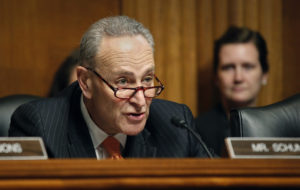

 Aletho News
 Aletho News