Absurd US propaganda claims China has more ICBMs than America
By Drago Bosnic | February 8, 2023
Mere days after the United States pompously announced that it has soundly defeated an adrift weather balloon, another absurdity has taken the headlines in the mainstream media. Apparently, China somehow managed to overtake America in the number of ICBM (intercontinental ballistic missile) launchers. This was reported by the Wall Street Journal on February 7, citing the Senate and House Armed Services Committees. According to WSJ, the commander of the US Strategic Command, which oversees America’s nuclear forces, notified the US Congress about the supposed Chinese advantage.
“The number of land-based fixed and mobile ICBM launchers in China exceeds the number of ICBM launchers in the United States,” the commander stated.
The author of the WSJ article himself admitted that the US is currently modernizing its entire nuclear triad (land, sea and air-launched nuclear weapons) and that “it has a much larger nuclear force than China”. The Strategic Command also notified US lawmakers that America still has more land-based ICBMs than China, as well as several times more thermonuclear warheads mounted on those missiles. Worse yet, the report doesn’t even include SLBMs (submarine-launched ballistic missiles) and strategic bombers that make the US dominance even more pronounced.
But US officials and experts are claiming that “many of China’s land-based launchers still consist of empty silos”, meaning that Beijing “potentially has more launch options”. The lawmakers cited these launchers as “a portent of the scale of China’s longer-range ambitions and are urging the US to expand its own nuclear forces to counter the Russian and Chinese forces”. According to Mike Rogers, chairman of the House Armed Services Committee, “China is rapidly approaching parity with the United States”.
“We cannot allow that to happen. The time for us to adjust our force posture and increase capabilities to meet this threat is now,” Rogers stated.
He then criticized America’s compliance with the New START (Strategic Arms Reduction Treaty), claiming this is “inhibiting the US from building up its arsenal to deter Russia and China”. And while China isn’t included in the treaty (set to expire in 2026), Russia is, meaning that Moscow is also “inhibited” by it, making the assertion all the more illogical. On the other hand, many US experts are now claiming that it’s in the US interest to preserve treaty limits with Russia and to also attempt to draw Beijing into it, while still continuing with constant modernization of America’s nuclear arsenal.
Rose Gottemoeller, a US arms control expert who took part in negotiating the New START, stated: “It’s in our national interest to keep the Russians under the New START limits. We need to complete our nuclear modernization according to plan, not pile on new requirements.”
The WSJ report posits that the US is now trying to deal with Russia and China by using a mix of arms control treaties and upgraded nuclear forces. The Pentagon’s 2022 Nuclear Posture Review identified both superpowers as strategic rivals, stating that “by the 2030s the United States will, for the first time in its history, face two major nuclear powers as strategic competitors and potential adversaries.”
However, while claiming that it wants to preserve the New START, the troubled Biden administration seems to be working towards eliminating it. Just last week, the US accused Russia of violating the treaty by refusing to allow on-site inspections, although the US itself is doing the same, meaning Moscow is simply responding in kind. Such actions indicate that Washington DC might be trying to sabotage the New START because it’s frustrated that China isn’t included in it.
The Pentagon claims that Beijing will increase its current arsenal of 400 warheads to 1,500 by 2035. At present, China’s nuclear arsenal includes an unspecified number of mobile ICBM launchers, while the US military claims that the Asian giant also operates approximately 20 liquid-fueled, silo-based ICBMs, but that it’s also building three ICBM silo fields intended to house approximately 300 modern solid-fueled missiles. For comparison, the US fields 5,428 warheads, with at least 400 land-based ICBMs. In other words, the current American nuclear arsenal is over 13 times larger than China’s, while its land-based ICBMs outnumber Beijing’s by more than 20 times.
US experts are often debating what China plans to do with the aforementioned silos it’s now allegedly building. Some claim that, while Beijing currently doesn’t have enough nuclear-tipped ICBMs to fill all silos, it might leave some empty or install conventionally armed missiles. Still, the sheer magnitude of the mental gymnastics used by the US political establishment to present itself as the “party in jeopardy” in this case is ludicrous for anyone familiar with the size of America’s nuclear arsenal. Even with the assertion that China will have 1,500 nuclear weapons in 2035, including 400 land-based ICBMs, the US would still have a 3:1 advantage, making the accusations against Beijing a moot point.
Drago Bosnic is an independent geopolitical and military analyst.
Pfizer: sales before child safety
The inside story of how we held Pfizer to account for misleading parents about Covid vaccine safety

UsForThem · Broken Custodians · February 2, 2023
Free pass promotional opportunity given by BBC to Pfizer
On 2 December 2021, the BBC published on its website, its popular news app and in the BBC News at One programme, a video interview and an accompanying article under the headline ‘Pfizer boss: Annual Covid jabs for years to come’.
The interview by the BBC’s medical editor, Fergus Walsh, conducted as a friendly fireside chat, gave Dr Albert Bourla, the Chairman and CEO of Pfizer, a free pass promotional opportunity that money cannot buy — as the UK’s national public service broadcaster, the BBC is usually prohibited from carrying commercial advertising or product placement.
Perhaps unsurprisingly, Pfizer made the most of that astonishing opportunity to promote the uptake of its vaccine product. As the BBC’s strapline suggests, the key message relayed by Dr Bourla, responding to an obediently leading question from Mr Walsh, was that many more vaccine shots would need to be bought and jabbed to maintain high levels of protection in the UK. He was speaking shortly before the UK Government bought another 54 million doses of Pfizer vaccines.
Misleading statements about safety
Among his explicit and implicit encouragements for the UK to order more of his company’s shots, Dr Bourla commented emphatically about the merits of vaccinating children under 12 years of age, saying “[So] there is no doubt in my mind that the benefits, completely are in favour of doing it [vaccinating 5 to 11 year olds in the UK and Europe]”. No mention of risks or potential adverse events, nor indeed the weighing of any factors other than apparent benefits: Dr Bourla was straightforwardly convinced that we should immunise millions more children in the UK. In fact, it later emerged that the BBC’s article had misquoted Dr Bourla who in the full video interview recording had ventured the benefits to be “completely completely” in favour of vaccinating young children.
Despite the strength of Dr Bourla’s unconditional and superlative pitch for vaccinating under-12s, the UK regulatory authorities would not authorise the vaccine for use with those children until the very end of 2021; and indeed this came just a few months after the JCVI — the body which advises the Government on whether and when to deploy vaccines in the UK — had already declined to advise the Government to roll out a mass vaccination programme for healthy 12 to 15-year-olds on the basis that “the margin of benefit, based primarily on a health perspective, is considered too small to support advice on a universal programme of vaccination of otherwise healthy 12 to 15-year old children…”.
In response, soon after the interview aired, UsForThem submitted a complaint to the UK’s Prescription Medicines Code of Practice Authority (PMCPA) — the regulator responsible for policing promotions of prescription medicines in the UK. The complaint cited the overtly promotional nature of the BBC’s reports and challenged the compliance of Dr Bourla’s comments about children with the apparently strict rules governing the promotion of medicines in the UK.
A year-long, painful process
More than a year later, following a lengthy assessment process and an equally lengthy appeal by Pfizer of the PMCPA’s initial damning findings, the complaint and all of the PMCPA’s findings have been made public in a case report published on the regulator’s website.** Though some aspects of that complaint ultimately were not upheld on appeal, importantly an industry-appointed appeal board affirmed the PMCPA’s original findings that Dr Bourla’s comments on vaccinating 5 to 11-year-olds were promotional, and were both misleading and incapable of substantiation in relation to the safety of vaccinating that age group.
Even after UsForThem involved a number of prominent Parliamentarians, including Sir Graham Brady MP, to help accelerate the complaint, the process was dragged on — or perhaps ‘out’ — while the roll-out of Pfizer’s vaccine to UK under-12s proceeded, and the BBC’s interview and article stayed online. Even now the interview remains available on the BBC’s website, despite the PMCPA in effect having characterised it as ‘misinformation’ as far as vaccinating children is concerned.
When news of the appeal outcome was first revealed in November 2022 by a reporter at The Daily Telegraph newspaper, Pfizer issued a comment to the effect that it takes compliance seriously and was pleased that the “most serious” of the PMCPA’s initial findings — that Pfizer had failed to maintain high standards and had brought discredit upon and lowered confidence in the pharmaceutical industry — had been overturned on appeal.
It must be an insular and self-regarding world that Pfizer inhabits, that discrediting the pharmaceutical industry is considered a more serious matter than making misleading and unsubstantiated statements about the safety of their products for use with children. This surely speaks volumes about the mindset and priorities of the senior executives at companies such as Pfizer.
And if misleading parents about the safety of a vaccine product for use with children does not discredit or reduce confidence in the pharmaceutical industry, it is hard to imagine what standard can have been applied by the appeal board which overturned that initial finding. Perhaps this reflects the industry’s assessment of its own current reputation: that misinformation promulgated by one of its most senior executives is not discrediting. According to the case report, the appeal board had regard to the “unique circumstances” of the pandemic: so perhaps the view was that Pfizer can’t always be expected to observe the rules when it gets busy.
Multiple breaches. No meaningful penalty
Indeed, a brief look at the PMCPA’s complaints log confirms that Pfizer has been found to have broken the UK medicines advertising rules in relation to its Covid vaccine a further four times since 2020. Astonishingly, though, for their breaches in this most recent case, and in each of the other cases decided against it, neither Pfizer nor Dr Bourla will suffer any meaningful penalty (the PMCPA will have levied a small administrative charge to cover the cost of administering each complaint). So in practice, neither has any incentive to regret the breach, or to avoid repeating it if it remains commercially expedient to do so.
And this is perhaps the crux of the issue: the PMCPA, the key UK regulator in this area, operates as a division of the Association of the British Pharmaceutical Industry, the UK industry’s trade body. It is therefore a regulator funded by, and which exists only by the will of, the companies whose behaviour it is charged with overseeing. Despite Pharma being one of the most lucrative and well-funded sectors of the business world, the largely self-regulatory system on which the industry has now for decades had the privilege to rely has been under-resourced and has become slow, meek and powerless.
The UK Medicines and Healthcare Products Regulatory Agency (MHRA) in principle has jurisdiction to hold the BBC accountable for what seems likely to have been mirroring breaches of the medicines advertising rules when it broadcast and promoted Dr Bourla’s comments, but no action has yet been taken.
This case, and the apparent impunity that companies such as Pfizer appear to enjoy, evidence that the system of oversight for UK Pharma is hopelessly outdated and that the regulatory authorities are risibly ill-equipped to keep powerful, hugely well-resourced corporate groups in check. The UK regulatory system for Big Pharma is not fit for purpose, so it is time for a rethink. Children deserve better, and we should all demand it.
** Endnote: an undisclosed briefing document
As part of its defence of UsForThem’s complaint, Pfizer relied on the content of an internal briefing document that had been prepared for the CEO by Pfizer’s UK compliance team before the BBC interview took place. Pfizer initially asked for that document to be withheld from UsForThem on the grounds that it was confidential. When UsForThem later demanded sight of the document (on the basis that it was not possible to respond fully to Pfizer’s appeal without it), UsForThem was offered a partially redacted version, and only then under terms of a perpetual and blanket confidentiality undertaking.
Without knowing the content of that document, or the scope of the redactions, UsForThem was unwilling to give an unconditional perpetual blanket confidentiality undertaking, but reluctantly agreed that it would accept the redacted document and keep it confidential subject to one limited exception: if UsForThem reasonably believed the redacted document revealed evidence of serious negligence or wrongdoing by Pfizer or any other person, including evidence of reckless or wilful damage to the public health of children, UsForThem would be permitted to share the document, on a confidential basis, with members of the UK Parliament.
This limited exception to confidentiality was not accepted. Consequently, UsForThem never saw the briefing document and instead drew the inference that it contained content that Pfizer regarded as compromising and which it therefore did not wish to risk ever becoming public.
Researchers bamboozling journalists with mythical comparison of vaccinated and unvaccinated
Where are the numbers? by Norman Fenton and Martin Neil | January 31, 2023
From: XXXXXX
Sent: 30 January 2023 12:33
To: Norman Fenton
Subject: Hart GroupDear Professor Fenton,
Apologies for any intrusion, but I’m contacting you directly since the Hart Group (which I understand you to be a member of), have not replied to my earlier emails – all very busy people, I do understand.
As a small group of individuals who between us have some journalistic and medical-science history, we are working on a presentation (with a further view to establishing a website), which aims to offer a wider range of information concerning Covid policies and treatment than, it appears, is usually available through current mainstream and social media.
Given that our aim is a balanced juxtaposition and presentation of arguments, hopefully allowing better-informed opinions to be arrived at, we do have a range of “issues” we’d love to understand better in order to present them fairly.
You are (I imagine) well-placed to comment on one specific matter, and I would be enormously grateful if you would spare a minute to advise, assuming this enquiry doesn’t create any conflict of interest or other problems for you:
The Times and other media recently reported on a QMUL study* which indicates that unvaccinated individuals with certain medical conditions are more likely to suffer “serious outcomes” than vaccinated individuals. I believe presenting this this demands careful attention to context and contrasting with other possible perspectives.
Dr Aseem Malhotra in a Twitter-hosted video makes reference to de-bunking claims about how this story has been reported, but makes no reference I can find to where such a de-bunking can be found; and sadly, he too seems unavailable to comment!
Probably, Dr Malhotra’s position is not an issue you are required in any way to comment on. However, in general, I do think that those who would like to see “better”, more balanced reporting on Covid should find time to speak to others, like us, who are trying to support exactly that cause – presumably it’s in everyone’s interest. But that’s just a peripheral observation on my part!
It would be truly helpful if you can find a moment to provide some pointers to help us present a balanced picture of the study referred to above.
Many thanks, and best wishes.
Your’s faithfully,
XXXXX
* Also reported on the QMUL website: https://www.qmul.ac.uk/media/news/2022/smd/unvaccinated-individuals-with-heart-problems-up-to-9-times-more-likely-to-die-or-suffer-serious-complications-from-covid-19.html
The study referred to is this one.
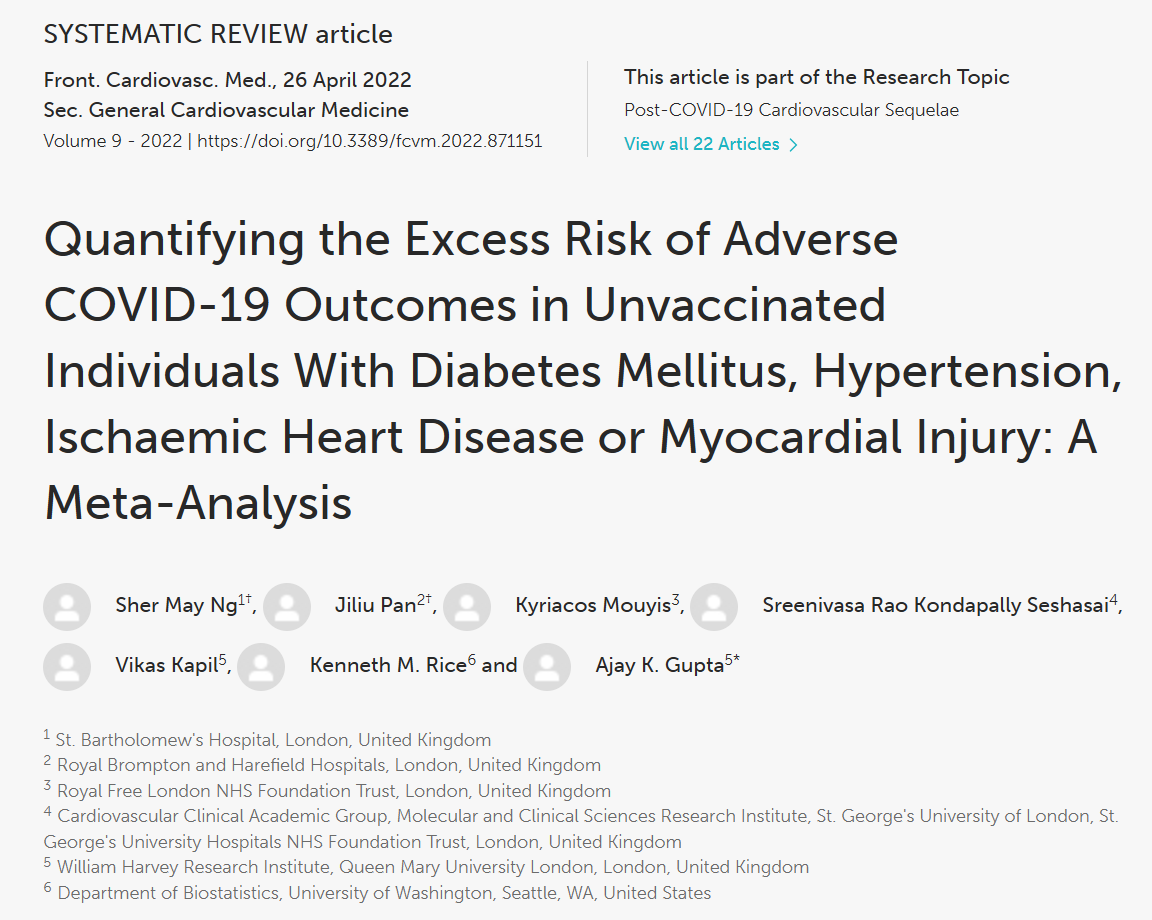
Here is my self-explanatory response:
Dear XXXXX
I should make it clear that, although I just briefly discussed this with one or two members of HART, my response below should certainty not be construed as ‘the HART response’.
The most important point to note about the QMUL study is that it certainly does not claim anything like what either you or The Times seem to think it claims, i.e it certainly does not show that “unvaccinated individuals with certain medical conditions are more likely to suffer serious outcomes than vaccinated individuals.” In fact, no comparison with a vaccinated cohort was undertaken.
All the study actually did was look at the outcomes for covid patients with pre-existing conditions like myocarditis. This is something very different to the later studies (such as those Aseem Malhotra referred to) which compared incidence of myocarditis occurring post-vaccination with the base rates for unvaccinated. So, all the study actually shows is that “that individuals with certain pre-existing medical conditions who get covid are more likely to suffer serious outcomes than those without such medical conditions who get covid.” That is hardly novel, since this has been widely known since March 2020.
In fact, the authors of the study are demonstrating a very clear bias by referring to the people in the study as ‘unvaccinated’. Of course, they were unvaccinated – it was a meta-analysis of 110 published studies between 1st Dec 2019 and 16th July 2020. There was, of course, no vaccinations anywhere during that period so referring to these people as ‘unvaccinated’ must have been done to fit a particular mischievous agenda. I am actually pleased you brought this study to my attention since it needs to be exposed for leading people like the Times and yourself to believe it was showing something that it wasn’t.
One major conclusion in the paper seems sensible – that having diabetes or hypertension or ischaemic heart disease predicts for poorer outcomes (although the same could be said for many other conditions so there is hardly anything novel in this). But the first part of the conclusion seems entirely wrong. Just because you see covid hospitalising a lot of people who had pre-existing cardiac comorbidity certainly does not mean that covid caused their comorbidity. It seems that this part of the conclusion may have been influenced by possible conflicts of interests (see below).
There are a number of other specific concerns about the study:
- They included studies published from 1st Dec 2019 – but that was before covid was formally accepted to exist, so how could any study published in Dec2019/Jan2020 have patients with suspected covid? Any study published pre-mid Jan 2020 should be excluded by default, since even the flawed confirmatory PCR test was not available until then. There would be no way of knowing if ‘is covid’ results was a mix of ‘not covid’, ‘possibly covid’ and ‘probably covid’.
- How is ‘suspected’ the same as ‘confirmed’? When the symptoms used for Covid marry to any number of other conditions that are common (and even endemic) then how can you say that suspected covid is even ‘a thing’?
- Someone hospitalised with exacerbation of an existing condition is NOT the same thing as someone who gets a new diagnosis OF that condition after vaccination.
- Including so many Chinese studies clearly biases the work – and using China and USA to predict for LMIC (in the Introduction) is strange to say the least.
A colleague also noted the link between Prof Gupta (the senior author) and the Bill and Melinda Gates Foundation and other potential conflicts of interest:
- In this report Gupta is acknowledged as having provided the statistical support for a report that seeks to help the Bill and Melinda Gates Foundation and the Clinton Foundation find new ways to support medical/health research in the UK. There are also a number of links between Gupta before he came to QMUL and functions (like some project called D3140 for the Rotary Club funded by BMGF in Mumbai, and research out of Imperial College) supported by the Gates Foundation. He is also heavily involved in Wellcome Trust AND the WHO – and is listed on the minutes of meetings between the two.
- Gupta and the lead author (Sher May Ng) are both on this study that was in part funded by the NIH (Grumbach acknowledges an NIH grant while at the UCal Nursing School. My colleague managed to find that she also has an NIH.GOV email address).
- Co-Author Kenneth Rice has worked on studies like this with staff from BMGF.
- Kenneth Rice and Gupta are two of the over 200 doctors who are part of a research collaborative called TOPMed – funded by the NIH with a combination of US Gov and BMGF money.
I hope this helps you.
Yours
Norman Fenton
For clarification of the potential conflict of interest with BMGF, Scott McLachlan has provided the following information:
Bill Gates is the world’s largest single shareholder of Covid-19 vaccine manufacturer stocks and therefore every time Pfizer, Moderna, Lilly (Eli), GSK, CureVac or even AstraZeneca (he had something like 8% in AstraZeneca shares at one point) sell a vaccine, that’s money back in his pocket. (see here)
And while fact checkers claimed Gates would not profit from Gilead (Remdesivir), he actually purchased a significant chunk of Gilead and 27,000 shares in Merck in 2018 in preparation. (Merck are one of the manufacturers who licensed to manufacture Remdesivir in their plants)
The thing that journalists get confused on is the idea that he, through his foundations, made ‘grants’ to Moderna et al. These were not ‘grants’ in the way we get grants from EPSRC or UKRI – they are grant investments. Various companies in control of the BMGF are shareholders in Pfizer and Moderna. In return for sinking $50mil+ into Moderna, Gates’s foundation took a large slice of Moderna’s shares.
Further, Gates sells access to “investment opportunities” through GAVI COVAX and AMC. The ‘investor’ (usually a rich western govt or pharma/healthcare company) gives money to GAVI in their rich country where they make profits and need a tax write-off… then, they get included in the contract with some LMIC govt to sell them vaccines. The whole model works by shifting where the pharma/healthcare company make their profits. Pharma companies ‘invest’ by subsidising vax initially and then, over time the contract shifts to the country’s govt paying extortionate rates for future vax.
As one of the links above says – as the world keeps getting sicker Gates keeps getting richer. He invested $555mil into COVID vax companies during 2019/20 and has made an estimated $4bil return. Nice work if you can get it.
What is covered by the “pictures of the Russian train”?
By Konstantin Asmolov – New Eastern Outlook – 31.01.2023
We recently wrote about the ways the United States’ allegations of North Korean munitions shipments to Russia had created a new standard of proof. However, it appears that the US side is not content with having hit rock bottom once again.
On January 20, 2023 National Security Council Strategic Communications Coordinator John Kirby raised new allegations against the Wagner PMC and Russia, claiming that the US had presented its intelligence findings to the relevant expert group of the UN Security Council (Committee 1718, which is in charge of sanctions against the DPRK). Although this was the first time ever any “evidence” had been presented, it was unfortunately a very peculiar type of proof.
The world was shown “rare, declassified photographs of Russian rail cars traveling between Russia and North Korea in November” and what Kirby described as the original delivery of North Korean weapons to the Russian PMC. According to the US statement, the photos were of a five-car train that ran between the Khasan (Russian Federation) and Tumangan stations on November 18 and 19, 2022, and those cars contained ammunition for Wagner.
“We obviously condemn North Korea’s actions and call on North Korea to immediately stop these shipments to Wagner,” Kirby said at the start of the daily White House press briefing. He then stated that “while we estimate that the amount of material delivered to Wagner has not changed the dynamics of the fight in Ukraine, we anticipate that it will continue to receive North Korean weapons systems” and therefore “will not preclude imposing additional sanctions if deemed appropriate at the UN”. As an aside, it was noted that North Korea continues to circumvent sanctions with the help of Russia and China.
On January 23, State Department spokesman Ned Price also stated that the United States and South Korea regularly discuss how to counter threats from North Korea, including “the supply of weapons and other military equipment from North Korea to Wagner units for use in Ukraine”.
Not coincidentally, not only Russian but also Western experts who deal with North Korea professionally have noted this reference with some surprise. Even those who dislike the North reacted in the style of “maybe the US has other evidence that has not been shown to us, but this is just a hint.”
Asked by RIA Novosti if it could be said with certainty that the pictures show weapons being transported from the DPRK to Russia, NK News director Chad O’Carroll said the photos do not show what is called hard evidence that would confirm US claims. The photos DO NOT show weapons or grenades being loaded and only include an image of Russian rail cars in North Korea – which, he adds, Russian media have also written about. That White House officials, according to O’Carroll, “show some level of specificity by releasing satellite images of a certain date showing rail cars and cargo” only means that Washington is very confident in its intelligence, but “anyone would be happy to see more detailed evidence”.
Another US expert noted that the pictures provided by Kirby show covered rail cars in which containers of ammunition would not fit, especially since they are loaded on platforms and not in boxcars. He also pointed out that “the versions voiced by Washington keep changing. In September, they claimed that North Korea was supplying Russia with millions of artillery shells and missiles. They claimed Pyongyang was trying to make it appear that the supplies were going to the Middle East and Africa, but in fact they were going to Russia. Now that version is forgotten – there is a new one. Meanwhile, one million shells is 50,000 tons, which is several large ships.”
The claim that the data were sent to the committee that investigated the sanctions is also not identical to the fact that the experts who examined them agreed with the American version.
In this context, the author will try to explain to the audience what more reasonable evidence of this kind would look like, using pictures of the train: Here is a picture of what looks like a military factory, and of containers of ammunition being loaded into wagons; here is a traceable route (because it is not particularly difficult to trace their path through the consignor system) by which a train from North Korea went directly into the front line area where it was unloaded, whereupon the shell shortage ended in that section of the front line. Such things can still be used as evidence, although indeed some questions remain.
The second thing that came to the author’s mind was a quote from a Russian cartoon, “This picture is useful: it covers a hole in the wall,” and he draws attention to two events that paralleled Kirby’s statement.
The first event is that on January 19, 2023, the day before Kirby’s statement, the Pentagon asked United States Forces Korea (USFK) to provide some of its equipment in support of Ukraine, stressing that its security operations on the Korean Peninsula would not be “affected in any way” by this move. USFK spokesman Col. Isaac Taylor said, “The Department of Defense continues to provide military assistance from its reserves in support of Ukraine. US forces in Korea have been asked to support this effort by providing some of their equipment… This does not affect our operations or our ability to fulfill our ironclad commitment to protect our ally, the Republic of Korea. There should be no doubt that we are ready to fight tonight as well”.
Taylor did not specify, however, what equipment, or in what quantity, would be delivered for use in Ukraine. The ROK Department of Defense also declined to comment on the issue.
The New York Times had previously reported that the US Department of Defense had drawn on US artillery stockpiles in South Korea and Israel because of Ukraine’s urgent need for munitions assistance.
USDOD deputy spokeswoman Sabrina Singh clarified this information, pointing out that the withdrawal of munitions and military equipment from US depots in South Korea and other countries in support of Ukraine had no impact on US defense capabilities and had little to do with reducing domestic stockpiles. It has also come to light that the US is in talks with Korean military contractors to replenish empty depots.
To the author, this information indicates two important things.
First, despite the loud declarations about the danger of the North Korean threat and the need to give money to counter it, it appears that the US does not in fact particularly believe that the North will attack the South in the relatively near future. Otherwise, they would not have moved an arsenal to Ukraine from a place where these munitions could be urgently needed.
Second, the fact that ammunition is being sent from Korea means that the arsenal of democracy is not bottomless and is slowly running out. Weapons and ammunition even need to be withdrawn from long-term storage. As we noted in one of our articles, it appears that their talk of Moscow’s “ammunition shortage” is masking their own ammunition scarcity, which is not so much affecting Russia as it is Ukraine and its allies.
Combined with a number of other news items, this suggests that the Europeans are growing weary of the conflict and increasingly reluctant to hand over new arms tranches to Kiev. This is a rather important sign, suggesting that in a certain situation Kiev will come to understand that for all the need to “defend democracy,” it has to do it alone.
The second event is a statement by Russian Foreign Intelligence that Ukrainian authorities are placing munitions from the West in nuclear power plants because they know that Moscow will not dare to bomb them. Foreign Intelligence Director Sergei Naryshkin said, “The Foreign Intelligence Service receives reliable information that Ukrainian forces are storing weapons and ammunition supplied by the West on the premises of nuclear power plants. This applies to the most expensive and scarce missiles for Haymar’s multiple rocket launchers and foreign air defense systems, as well as large-caliber artillery ammunition the AFU lacks most. Just in the last week of December 2022, several railroad cars with lethal cargo were delivered from abroad to the Rovno NPP via the Rafalovka station.”
Naryshkin’s statement does not contain exhaustive evidence, but the reasoning is somewhat more detailed than Kirby’s and contains some specifics. Apparently, it is precise data on where and how Ukrainian ammunition stocks move.
Mykhailo Podolyak, advisor to the head of the Ukrainian Presidential Office, then stated on social networks that “Ukraine has never stored weapons on the territory of the nuclear power plant” and noted that Ukraine is “always open” to inspection bodies, especially the IAEA.
In this context, the author once again reminds us that it is not unusual in war to attribute to the enemy acts committed by one’s own side in order to divert attention from oneself. So if you want to make the next lofty claims of DPRK intrigue, look at the holes in the wall this picture covers.
Konstantin Asmolov, PhD in History, is a leading research fellow at the Center for Korean Studies of the Institute of China and Modern Asia, the Russian Academy of Sciences.
Johnson lied about Putin missile ‘threat’ – Kremlin

RT | January 30, 2023
Allegations that Russian President Vladimir Putin threatened then-UK Prime Minister Boris Johnson with a missile strike are “a lie,” Kremlin press secretary Dmitry Peskov said on Monday. Johnson’s accusations have emerged in a new BBC documentary about the crisis in Ukraine.
Recalling a telephone call with Putin on February 2, 2022, just over three weeks before tensions over Ukraine escalated into full military action, Johnson claimed the Russian leader “threatened me at one point.”
“He said, ‘Boris, I don’t want to hurt you but, with a missile, it would only take a minute’ or something like that… jolly,” the former PM told the British broadcaster.
“There were no missile threats,” Peskov told reporters on Monday. “When he explained challenges to the security of the Russian Federation, President Putin remarked that if Ukraine joins NATO, the potential deployment of NATO or American missiles at our borders would mean that any missile could reach Moscow in mere minutes.”
The Russian official wondered if Johnson had lied deliberately or “simply didn’t understand what President Putin was talking about.” If the latter is true, people should be concerned for Johnson, Peskov added.
Putin has publicly voiced Russian concerns over NATO infrastructure in Ukraine and other parts of Eastern Europe for decades. Russia began military operations against Ukraine after failing to get security guarantees from Washington, which would have rolled back the deployment of NATO assets in Eastern Europe and suspended its expansion in the region. The US dismissed Moscow’s concerns and claimed that Ukraine was free to seek membership as a sovereign nation.
Hamilton 68: Brief Addendum Comparing their response Friday to the site’s original mission statement
By Matt Taibbi | Racket | January 29, 2023
Hamilton 68 responded to a #TwitterFiles thread Friday with a series of claims, including that their site was always intended to be understood as “nuanced,” that they always maintained that “witting or unwitting” accounts could be on their list, and that “some accounts we track are automated bots, some are trolls, and some are real users.”
They could also have inserted the disclaimer added to the new Hamilton 2.0 page, which as a helpful reader noted this morning, includes in red font a blaring warning to all that it would INCORRECT to label anyone or anything that appears on their dashboard “as being connected to state-backed propaganda”:
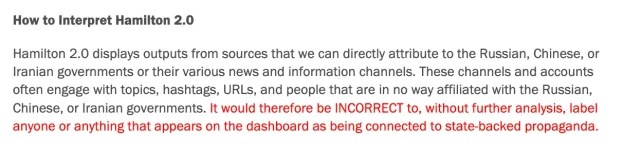
Thank heaven for the Wayback Machine. Here’s what was written on the original Hamilton page:
These accounts were selected for their relationship to Russian-sponsored influence and disinformation campaigns, and not because of any domestic political content.
We have monitored these datasets for months in order to verify their relevance to Russian disinformation programs targeting the United States.
… this will provide a resource for journalists to appropriately identify Russian-sponsored information campaigns.
High on that original page, the Hamilton founders explained they monitored two types of accounts:
There are two components to the dashboard featured here.
The first section, “Overt Promotion of Content,” highlights trending content from Twitter accounts for media outlets known to be controlled by the Russian government.
The second section, “Content Tweeted by Bots and Trolls,” highlights themes being pushed by Twitter accounts linked to Russian influence campaigns.
The Hamilton list tracked overt Russian media on the one hand, and “bots and trolls” on the other. Note the difference between that language and the language Friday: “Some accounts we track are automated bots, some are trolls, and some are real users.” That Hamilton Friday was also trying to distance itself from headlines about “bots” is particularly grotesque, given that it was so overt in identifying the composition of its list this way at the start.
I encourage everyone to read language from the original site, then look at Friday’s ironically named “Fact sheet,” and compare for yourselves.
Finally I want to note a passage from the Friday “fact sheet” I somehow overlooked:
Individual accounts were algorithmically selected based on analytic techniques developed by J.M. Berger that were used to identify the most influential accounts within those networks. The Hamilton 68 team did not individually review or verify all accounts because the focus of the dashboard was to analyze behavior in aggregate networks, not specific accounts.
Translating: individual accounts were chosen through a method developed by J.M. Berger, a writer and think-tanker whose usual specialty is extremism (he’s written about ISIS and domestic white nationalism in the U.S.). Still, it wasn’t even Berger’s fault that ordinary Americans ended up in the list, since said people were chosen “algorithmically.” The Hamilton 68 team also “did not individually review or verify” all the names, because their “focus” was “aggregate networks,” not “specific accounts.”
So, nobody looked at the list.
The list that was “the fruit of more than three years of observation and monitoring.”’
Sounds solid.
Yes? No?
The 600 influential Russian Twitter bots narrative was pushed by mainstream media. Twitter executives knew it was false.
But kept quiet.
By Cindy Harper | Reclaim The Net | January 27, 2023
New Twitter Files revelations show that the Twitter accounts on a list from the Alliance for Securing Democracy (ASD) that were supposed to be of Russian bots were far from it. While Twitter had evidence to prove that the accounts weren’t Russian bots, employees kept quiet, afraid to go against mainstream media narrative.
The ASD describes itself as an organization that comes up with “strategies for government, private sector, and civil society to defend against, deter, and raise the costs on foreign state actors’ efforts to undermine democracy and democratic institutions.” Its advisors are the likes of Michael Chertoff, who worked in the George W. Bush administration as Secretary of Homeland Security, Mike McFaul (who worked in the Obama administration as US Ambassador to Russia,) commentator Bill Kristol, and Hillary Clinton advisers Jake Sullivan and John Podesta.
ASD said that Hamilton 68, the name of a dashboard that’s supposed to monitor Russian bots on Twitter, was monitoring 600 Russian bots on the platform.
The idea of the 600 Russian bots listed on the dashboard was widespread throughout mainstream media.
“What makes this an important story is the sheer scale of the news footprint left by Hamilton 68’s digital McCarthyism. The quantity of headlines and TV segments dwarfs the impact of individual fabulists like Jayson Blair or Stephen Glass,” wrote journalist Matt Taibbi of Racket, who today released evidence about Twitter employees’ decision to keep quiet the fact that the information pushed by the mainstream media was false.
“Hamilton 68 was used as a source to assert Russian influence in an astonishing array of news stories: support for Brett Kavanaugh or the Devin Nunes memo, the Parkland shooting, manipulation of black voters, ‘attacks’ on the Mueller investigation…” Taibbi added.
“These stories raised fears in the population, and most insidious of all, were used to smear people like Tulsi Gabbard as foreign ‘assets,’ and drum up sympathy for political causes like Joe Biden’s campaign by describing critics as Russian-aligned.”
Taibbi highlighted how even “fact-checkers” used the dubious source for their own reports: “It was a lie. The illusion of Russian support was created by tracking people like Joe Lauria, Sonia Monsour, and Dave Shestokas. Virtually every major American news organization cited these fake tales— even fact-checking sites like Snopes and Politifact.”

The reports, widely pushed by the mainstream media, were untrue and Twitter executives, who had access to more information about what was going on behind the scenes with the Twitter accounts, didn’t want to disrupt the narrative for fear they would receive negative reporting.
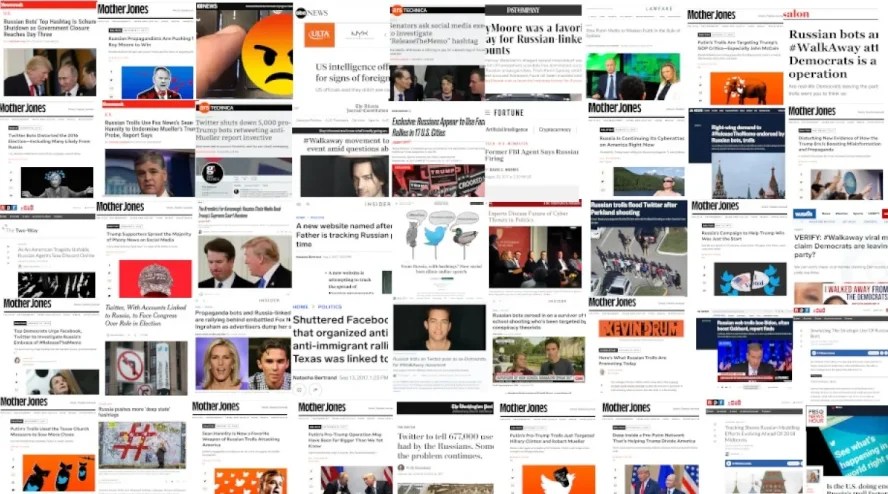
“In layman’s terms, the Hamilton 68 barely had any Russians. In fact, apart from a few RT accounts, it’s mostly full of ordinary Americans, Canadians, and British,” Taibbi wrote.
Taibbi published email evidence that shows Twitter’s controversial former Trust and Safety chief, Yoel Roth, realizing the list was incorrect.
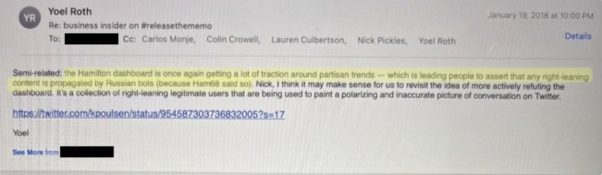
The dashboard “falsely accuses a bunch of legitimate right-leaning accounts of being Russian bots,” he wrote. “I think we need to just call this out on the bullshit it is…
“I think it may make sense for us to revisit the idea of more actively refuting the dashboard. It’s a collection of right-leaning legitimate users that are being used to paint a polarizing and inaccurate picture of conversation on Twitter.”
But despite Roth’s clear realization about the inaccuracy about one of the biggest narratives of the last few years, he ultimately stayed quiet, Taibbi notes.
“We have to be careful in how much we push back on ASD publicly,” said one company official.
Taibbi noted how the false narrative made its way into the heart of US politics: “Perhaps most embarrassingly, elected officials promoted the site, and invited Hamilton ‘experts’ to testify. Dianne Feinstein, James Lankford, Richard Blumenthal, Adam Schiff, and Mark Warner were among the offenders.”
Western media’s anti-Iran reporting waives journalistic integrity to manufacture hate
By Robert Inlakesh | RT | January 5, 2023
Since the eruption of civil unrest in the Islamic Republic back in September, Western media has not shied away from spreading uncorroborated or outright false stories about Iran’s government. The implications of the constant stream of disinformation is the justification of sanctions that kill Iranians.
Following the death in Iranian custody of 22-year-old Mahsa Amini, back in mid-September, civil unrest in Iran spread far and wide, with protests sparked over foreign media reports that had indicated that the young woman was beaten to death by Iran’s morality police. Later, CCTV footage was released, which contradicted some reports on how the young woman had died, followed by a coroner report which indicated her death came due to cerebral hypoxia as a result of underlying issues. Despite this, the demonstrations that started on September 16 continued.
What started initially as a number of demonstrations, primarily in Kurdish-predominant areas of Iran, turned into a nationwide dis-united movement that took the form of violent riots, online social media campaigns, symbolic hijab burning protests and even deadly terrorist attacks against sites of worship. As Iran accused the United States and Israel of attempting to spark a Syria-style civil war, US President Joe Biden vowed to “free Iran” during a speech in California. Amongst the chaos and the media reporting that aimed to portray the Iranian government as a distinct kind of evil, the Biden administration began to tighten its ‘maximum pressure’ sanctions campaign. The current US sanctions campaign, first enacted under the former Trump administration, has been condemned by the International Court of Justice due to its impact on humanitarian goods, such as medicine, entering Iran.
Outright lies, anonymous sources and distortions
Perhaps the most prominent piece of disinformation that has been disseminated about Iran during the past few months was the assertion, by Newsweek, that 15,000 Iranian demonstrators were sentenced to death. According to the initial claims, the Iranian parliament had supposedly voted to approve this move, implying that the country’s judiciary took no part in such a massive decision. The story was spread by leading online personas and even Prime Minister of Canada Justin Trudeau, who later deleted his post on Twitter about the matter.
However, since then the outlandish claims have not stopped coming. Prior to the Iranian national team’s game against the US in the FIFA World Cup, CNN released a report that no other major news outlet, save for a few tabloid news sites in the UK, touched. CNN quoted an unnamed “security source” that according to the report had managed to find out that the Islamic Revolutionary Guard Corps (IRGC) had infiltrated Qatar in order to threaten the Iranian team’s players.
The CNN story states that the source somehow found out that the players were offered luxury gifts, such as vehicles, prior to the beginning of the World Cup, which would imply that the source had intel on the Iranian team when they were in Tehran before the tournament. The report goes on to say that IRGC officials threatened the Iranian players’ families with torture in the event that they may protest their government during the World Cup. CNN’s source also claims that the coach of the Iranian team, a Portuguese national, was also interviewed by the IRGC, although they weren’t able to hear what was discussed like they did with the players.
The same article makes the additional claim that the Iranian government was flying out pro-government supporters to watch the team play, in essence creating artificial fans. None of the claims have been corroborated, and it didn’t gain purchase with major news outlets, which is strange considering the severity of the allegations being made that the IRGC, an official branch of Iran’s armed forces, had violated Qatar’s sovereignty in order to threaten their own football team. The difference between the CNN and Newsweek piece is that with the “security source”, there is no way to determine with certainty whether the whole thing is made up or not.
In the advent of news that Iran had abolished its morality police unit, responsible for the arrest of Mahsa Amini, another false story emerged from a number of little-known crypto-currency outlets online, claiming that Iran was set to freeze the bank account of women who weren’t wearing the appropriate Islamic covering. The origins of the story came from an interview that was conducted with an ultra-conservative member of Iran’s parliament, Hossein Jalali, who allegedly proposed a three-warning system via SMS, with the end penalty being the freezing of bank accounts. This has never come close to being implemented or even been discussed in parliament. Despite this, tweets claiming that Iran was implementing this strategy went viral.
Posts on social media from influencers have claimed that the Iranian security forces “are raping children”, and that young women are being murdered for showing their hair in a “horrific” and “medieval” crackdown. These reactions naturally come as a result of the factual inaccuracies of the reporting about Iran and we continue to see more and more as the weeks go on.
The most recent misrepresentation of the facts has come in the coverage and reaction to a number of executions in Iran. Earlier this month, the second death sentence connected to the recent civil unrest was carried out. This led to headlines from the likes of the Associated Press (AP), that read ‘Iran execution: Man publicly hanged from crane amid protests‘, which is how we saw the sentencing of Majidreza Rahnavard to death, by the Iranian judiciary, framed throughout Western media. The AP piece opens with the following paragraph:
“Iran executed a second prisoner on Monday convicted over crimes committed during the nationwide protests challenging the country’s theocracy, publicly hanging him from a construction crane as a gruesome warning to others.”
Whilst the AP article did explain, further down in the piece, that the young Iranian man had stabbed to death two Iranian security officials, injuring 4 others, what is written works to present Tehran as a monstrous regime that is unjustly killing Iranian protesters as a warning to others. The reality is, Iran does have a death sentence and does carry it out, but since some States in the US do the same, the story has to be twisted so that Iran is singled out as a special kind of evil. Iran’s death sentence is handed out through a judicial process, during which Majidreza Rahnavard admitted to killing two security officials. The incident was even filmed. No country on earth would allow such a crime to go unpunished.
In total, roughly 400 Iranians have allegedly been sentenced to prison terms for their involvement in various criminal activities during the latest round of civil unrest. Two Iranians have been executed, after admitting to carrying out attacks against the nation’s security forces.
Whilst there are others who may receive the death penalty, the Western media took it upon themselves to whip up a frenzy about an execution that was not even ruled. Earlier this month, several outlets ran headlines with allegations that an Iranian football player from Isfahan was next in line for execution. Reports claimed that a small-time football player, Nasr Azadani, had been sentenced to death and despite the Iranian judiciary denying this, the claims took hold on social media. 26-year-old Nasr Azadani was arrested in connection with the murder of several members of Iran’s security services. It has been reported that an indictment carrying the charge of “accessory to moharebeh” had been communicated with Azadani. The charge of “moharebeh” (“war against God” in Islamic law) can carry with it a death sentence, however, it is not clear whether being an accessory would be ruled this way.
The problem here is that Western media outlets jump on unsubstantiated claims, and repeat half truths, in an attempt to extract a predetermined anti-Iran narrative. From trusted outlets like the AP, to CNN, all the way to the tabloids, there is little care for fact checking and journalistic integrity. The goal is to delegitimize the Iranian government, to encourage outrage. Factual information is only important for nit-picking in a way that supports this biased narrative. At the same time, it is somewhat ironic that none of these media outlets, or Western politicians that repeat their claims and feign concern over Iranian prisoners, care one bit for journalist Julian Assange, who the US is attempting to extradite from the United Kingdom.
The outcomes of this kind of reporting are the encouragement of prejudiced hate against Iranian culture, the justification of sanctions that kill Iranians and the peddling of new-Orientalism talking points, all whilst claiming to be in support of human rights and feminism. There are various ways to make good faith criticisms of the Iranian government, but this is not what we are seeing, this is the Western media machine piling in on a regime change agenda, and everything they say needs to be taken with a pinch of salt.
Robert Inlakesh is a political analyst, journalist and documentary filmmaker currently based in London, UK. He has reported from and lived in the Palestinian territories and currently works with Quds News. Director of ‘Steal of the Century: Trump’s Palestine-Israel Catastrophe’.
Featured Video
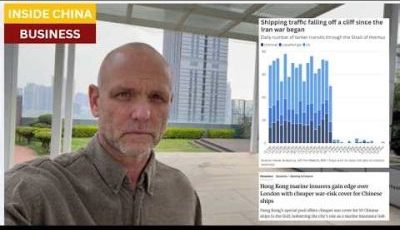
More Iran War fallout: Maritime insurance industry shifts from London to China
or go to
Aletho News Archives – Video-Images
From the Archives
The Biggest Threat to Peace in Middle East
By Dr. Elias Akleh* | Sabbah Report | May 24, 2010
A build up of heightened tension in the Middle East is escalating in the last few weeks. American and Israeli postures towards Lebanon, Syria, and Iran have become more threatening. Listening to speeches of political leaders one hears talks only about war not peace. Iranians and Israelis are continuously training hard for a possible showdown. Both sides are conducting extensive war games every month. This led Syrians to claim that Israel is preparing for a soon-to-come another war. The Jordanians also are warning that current stalemate of the peace process is an indication of a war breaking out this summer. The Russian President and his army chief hinted, a few months ago, that the US and Israel were planning for an attack on Iran.
Indeed Iran is, as it has been for last few years, the target of most of the threats and accusations of supporting terrorism. Escalating incitement against Iran the American Defense Department sent last month (April) to Congress a report on Iran’s military claiming Iran could develop intercontinental ballistic missiles capable of reaching the US by 2015.
Ignoring the fact that N. Korea, India, Pakistan, and Israel are proven to have nuclear weapons while Iran does not, the US Secretary of State Hillary Clinton chose in her speech, to the nuclear Non-Proliferation Treaty review conference at the UN, to focus on Iran’s alleged nuclear ambitions putting the whole world at risk as she put it. According to Clinton Iran’s acquisition of nuclear weapons, rather than Israel’s more than 200 nuclear bombs, is destabilizing the Middle East. She called on the world’s nations to rally around US efforts to hold Iran, not other nuclear countries, to account.
The accusation that Usama Bin Laden is living comfortably in Iran had received a boost after the broadcast of a documentary called “Feathered Cocaine”. This echoed the June 2003 claims of the Italian newspaper Corre de la Sierra that Bin Laden was in Iran according to some intelligence report, and according to Richard Miniter’s book “Shadow War”. … continue
Blog Roll
 Aletho News
- Why could Gaza enter the regional war?
- Hamas official rejects Mladenov Plan linking disarmament to Gaza reconstruction
- Two Primary Elections for the Soul of ‘America First’
- Japan Clings to US Vassalage Despite Energy Crunch Caused By Iran War
- US Seeks Control Over Global Energy Infrastructure – Kremlin
- US senators target Orban government for standing up to Zelensky
- The deep-rooted culture of corruption in Ukraine
- Iran mobilizing one million soldiers to ‘create hell’ for any US ground assault: Report
- The coming military and psychological unravelling?
- Iran has the last laugh
- If Americans Knew
- Don’t Be Fooled. Zionist Leaders Have Always Wanted to Control Southern Lebanon
- Israel’s widespread use of torture is a core element of its genocide against the Palestinian people
- In Israel’s War on Iran, Many Middle East US Bases Rendered “All But Uninhabitable”
- ‘Burn the lawn’: Israel pursues ‘Rafah model’ in southern Lebanon
- A genocide here, an amputation there
- Reports: Iran mobilizing 1M fighters, Israel-US run low on ammo, Israeli army faces shortage – Not a ceasefire Day 168
- ‘No Innocent Children’: Far-right Israeli Lawmaker Defends Killing of Palestinian Family
- Mossad’s promises helped Netanyahu convince Trump that Iran could be toppled
- US Arms Control Official Refuses To Comment When Asked If Israel Has Nuclear Weapons
- Veterans warn US landing could be ‘more Gallipoli than Vietnam’
- No Tricks Zone
- Devastating Assessment Of Comirnaty Vaccine By Former Senior Pfizer Europe Toxicologist
- New Study: CO2 Is ‘Effectively Negligible’ As An Explanatory Climate Change Factor Since 2000
- Former Pfizer Toxicologist Dr. Helmut Sterz Tells Bundestag Hearing Pfizer Vaccine Should Have Never Been Approved
- Energy Expert: Germany’s Nuclear Phaseout Was A “500 Billion Euro Mistake”
- New Research: South Australia’s Mid-Holocene Sea Surface Temperatures Were 4°C Warmer Than Today
- Storing Green Energy To Last Germany 10 Days Would Require A 60-Million Tonne Battery
- New Studies: UK Sea Levels Were 4 Meters Higher Than Today During The Mid-Holocene
- Destructive Green New Deal: German Energy And Metal Group Warns Of Drastic Crisis
- New Study Documents A 20-Year Pause In Arctic Sea Ice Decline – Driven By Internal Variability
- Wake-up Call: Survey Shows Majority Of Germans Now Favor Postponing Climate Targets!
 Aletho News