Russian Diplomat Refutes Reports About Moscow Transporting Ukrainian Grain to Syria
Samizdat – 17.06.2022
Recent reports claiming that Russia has allegedly been supplying Syria with Ukrainian grain are nothing but misinformation and fake news, Russian Special Presidential Envoy for Syria Alexander Lavrentiev told Sputnik.
On June 2, Reuters reported, citing Ukrainian Embassy in Lebanon, that Russia had allegedly exported 100,000 tonnes of wheat from Ukraine since the start of its special military operation and had supplied it to Syria.
“This is yet another fake, unconfirmed information, which is detached from reality. The main reserves [of wheat] are in the Mykolaiv and Odesa regions, and Russian ships do not have access to these ports because they are under Ukrainian control,” Lavrentyev said.
There are also no grain depots in the Russian-controlled port city of Mariupol, the diplomat added.
“Only recently — literally a week ago — the port was demined and brought to a more or less normal condition,” the official said, noting that “there can be no questions about a hundred thousand tonnes of Ukrainian grain.”
World leaders and international organizations have repeatedly urged Russia to allegedly unblock Ukraine’s sea ports and release the grain stuck in warehouses. Moscow has denied blocking sea ports and has drawn attention to the mines deployed by Kiev in the Black Sea.
‘Institutionally alarmist’ BBC’s stream of fake news on climate change
By Paul Homewood | TCW Defending Freedom | June 13, 2022
THE BBC has been accused of institutional alarmism about climate change in a report published by Net Zero Watch. It reveals the BBC’s persistent exaggeration and false information when it comes to climate and weather-related news.
The study, written by me, reveals that the BBC has been forced to correct a dozen items of false claims and fake news in climate-related coverage after receiving complaints in recent years.
It shows that it has become common practice for BBC reporters to publicise exaggerated and often misleading weather-and climate-related stories in order to hype up the potential risks from global warming.
Persistent misrepresentation by BBC journalists in climate news coverage is fuelling the corporation’s institutional alarmism.
Institutional alarmism is a form of hyped and exaggerated news reporting that is deeply embedded in the BBC. It manifests itself as unbalanced, one-sided coverage of climate risks that go uncorrected by the BBC’s in-house fact checkers.
In 2020, the BBC’s director general warned that the problem posed by disinformation online was increasingly serious and that the BBC would need to work harder than ever to expose fake news and separate fact from fiction.
Since then the corporation has set up a team of fact checkers, a BBC-wide Anti-Disinformation Unit and a Climate Misinformation team. Yet none of these teams of fact checkers noticed or addressed the long list of false news stories that were corrected by the BBC only after lengthy and protracted complaint procedures.
The dossier includes the following examples of fake news:
• The three complaints upheld last year against the BBC’s Climate Editor, Justin Rowlatt, two of which concerned a Panorama episode devoted to global warming;
• Claims that the number of floods around the world has increased 15-fold since 2005;
• A BBC News report that the population of African penguins was declining rapidly because of climate change;
• Repeated claims that new onshore wind farms were ‘banned’ in the UK;
• False statements about ‘record’ temperatures;
• A BBC Two broadcast, which wrongly alleged that the reindeer population in Russia was declining because of climate change;
• Repeated claims that hurricanes were becoming more frequent and powerful;
• A World at One broadcast which asserted that sea levels in Miami were rising at ten times the global rate.
Most of the claims were so obviously and ridiculously false that it is hard to see how they made it through the BBC’s editorial process. This of course raises further questions. Is the BBC so entrenched in its own version of climate change that it believes its own propaganda, just as the Soviets did? Or do the editors and various layers of management simply not care whatever lies are published?
The above list is merely the tip of the iceberg. Many other falsehoods occur without being challenged, or where complaints are simply ignored, such as news items about how weather is getting more extreme, Victoria Falls drying up, droughts in California, starving polar bears and many more. One BBC News report baldly stated that the number of weather disasters had increased five-fold in the last 50 years – a patently absurd claim, which the organisation responsible for the database explains is actually due to better data reporting.
One of the most egregious examples of bias came in Sir David Attenborough’s documentary three years ago, Climate Change – The Facts. Despite the title, the hour-long programme had little to do with facts, more to do with propaganda. It made several highly questionable assertions, such as that ‘storms, floods, heatwaves and sea level rise are all getting rapidly worse as a result of climate change’. The documentary provided no data to back up these claims, nor did it offer the views of scientific experts who do not agree.
Often BBC reports are just outright propaganda, with the opinions of Greenpeace, WWF and the Green Party being given prominence but with very little mention of alternative views. Last year’s coverage of the proposed Cumbria coal mine by Roger Harrabin, the BBC’s Environmental Analyst, was a classic example of this.
At other times, the reporting is just silly. For instance, last summer the BBC gave prominent coverage to a report which claimed that the impact of global warming was likely to lead to ‘impaired’ performances at the Tokyo Olympics. This flew in the face of the fact that many Olympics in recent years have taken place in much hotter climes, such as Los Angeles, Atlanta and Athens.
The sheer weight of evidence presented in this paper suggests that bias is now endemic in the BBC’s climate reporting. All the factual errors noted could easily have been avoided with a bit of basic research. Is this carried out and the results ignored if they don’t agree with the BBC’s agenda? Or is the corporation’s output just made up and printed anyway without checks? Either way, this is journalism at its shoddy worst. Who is editing this fake reporting? Why are they not insisting on accurate reporting? Where are the highly paid executives who let all of this continue?
The topic of climate change, Net Zero and the total transformation of society which is demanded to achieve it is of crucial importance for the future of the country. The public deserve all the facts, not just the warped version offered by the BBC.
You can read the report, ‘Institutional alarmism – the BBC’s disastrous climate complaints’, here.
Fake Meat, Fake Breastmilk and Food Shortages
By Dr. Joseph Mercola | June 2, 2022
Fake food is being poised as a panacea to end world hunger and food shortages, but there’s nothing miraculous about synthetic, lab-made food. It can’t compare to food that comes from nature in terms of nutrition or environmental protection, and as we’re seeing with the mysterious infant formula shortages, when you’re dependent on fake food, your very survival is also dependent on the handful of companies that manufacture them.
With parents getting desperate in the search for infant formula, it’s eye-opening that campaigns haven’t been started to encourage new mothers to breastfeed — the best food for infants and one that also happens to be free and readily available in most cases. If you haven’t read my article on the best workaround for infant formula for those that are unable to breast feed, it is on Substack.
In the video above, you can watch a concerning timeline about why this may be, as Bill Gates appears to be behind the push to stop breastfeeding and encourage uptake of BIOMILQ, a cell-cultured “human milk” made in a lab,1 along with other varieties of fake food.
Bill Gates’ Formula for Disaster
In June 2020, Bill Gates announced startup company BIOMILQ, which is using biotechnology to create lab-made human milk for babies. Using mammary epithelial cells placed in flasks with cell culture media, the cells grow and are placed in a bioreactor that the company says “recreates conditions similar to in the breast.”2
This synthetic lab-made breast milk replacement raised $3.5 million in funding from Gates’ investment firm Breakthrough Energy Ventures.3 Gates has also contributed at least $319 million to the media,4 including The Guardian, allowing him to control and dictate what they print. The day after the Gates Foundation paid The Guardian its annual funding in May 2022, it released a hit piece on breastfeeding titled, “Turns out breastfeeding really does hurt — why does no one tell you?”5
U.S. Customs and Border Protection (CBP) offers also seized 588 cases of infant formula from Europe in April 2021 because it lacked appropriate nutritional labeling. In February 2021, CBP officers said they inspected 17 separate shipments of infant formula from Germany and The Netherlands, leading to a warning against buying infant formula online from overseas.
At the time, Keith Fleming, CBP’s acting director of field operations in Baltimore, Maryland, said in a news release:6
“Consumers should be very careful when contemplating the purchase of items over the internet from an international source, because they may not get what they expect. People expect that the products they purchase comply with existing U.S. health and safety laws and regulations and they’ll be safe for them or their family. That’s not always the case.”
While warning Americans against purchasing infant formula from overseas, in February 2022 the U.S. Food and Drug Administration announced bacterial contamination at the Abbott Nutrition’s Sturgis, Michigan facility,7 which is behind the current infant formula shortages. While Gates is clearly behind the push to stop breastfeeding and encourage BIOMILQ in lieu of breastmilk or formula, the formula shortages highlight the risks of consolidated food production.
Abbott Enriched Shareholders While Formula Sickened Babies
Corporate consolidation is rampant in the U.S. baby formula market, of which 90% is controlled by four companies. Abbot is among them, responsible for 43% of baby formula production in the U.S.8 Yet, according to a whistleblower filing from October 2021, equipment at the company’s Sturgis facility was “failing and in need of repair.”
Pitting and pinholes reportedly existed in a number of pipes, allowing bacterial contamination. Leadership was aware of the failing equipment for up to seven years before the February 2022 outbreak, according to the whistleblower’s report.9
With equipment in need of repair, and a bacteria outbreak in their formula sickening babies, Abbott used its massive profits from 2019 to 2021 to announce a lucrative stock buyback program.10 According to The Guardian :11
“Abbott detected bacteria eight times as its net profits soared by 94% between 2019 and 2021. And just as its tainted formula allegedly began sickening a number of babies, with two deaths reported, the company increased dividends to shareholders by over 25% while announcing a stock buyback program worth $5bn.”
Speaking with The Guardian, Rakeen Mabud, chief economist for the Groundwork Collaborative, added, “Abbott chose to prioritize shareholders by issuing billions of dollars in stock buybacks instead of making productive investments.”12
Big Meat and Dairy Companies Dominate Fake Meat Industry
The increasing number of plant-based fake foods and lab-grown meat companies give the illusion that consumers are getting more choices and the food industry is becoming less consolidated. However, there are still relatively few firms that are controlling the global grab for “protein” markets.
In a research article published in Frontiers in Sustainable Food Systems, Philip Howard, a faculty member in the department of community sustainability at Michigan State University, and colleagues explain how this “protein” industry convergence is further jeopardizing the resilience of the food system and reducing genetic diversity of livestock and crops:13
“Recent years have seen the convergence of industries that focus on higher protein foods, such as meat processing firms expanding into plant-based substitutes and/or cellular meat production, and fisheries firms expanding into aquaculture. A driving force behind these changes is dominant firms seeking to increase their power relative to close competitors, including by extending beyond boundaries that pose constraints to growth.
The broad banner of “protein” offers a promising space to achieve this goal, despite its nutritionally reductionist focus on a single macronutrient. Protein firm strategies to increase their dominance are likely to further diminish equity in food systems by exacerbating power asymmetries.”
Tyson and Cargill, two of the largest meat processors in the world, for instance, have invested in fake meat company Memphis Meats, which also has backing from Bill Gates and Richard Branson. Other billionaires invested in fake foods include Sergey Brin (Mosa Meat), Peter Thiel (Modern Meadow) and Marc Benioff (Eat Just).
“These companies wouldn’t be making these investments if they didn’t expect that the intellectual properties held by these start-ups will lead to monopoly profits,” Howard notes.14 In “The Politics of Protein,” a report from the International Panel of Experts on Sustainable Food Systems (IPES-Food), Howard explains:15
“Nearly every large meat and dairy processor/manufacturer has also acquired or developed plant-based meat and dairy substitutes, establishing footholds in a market that is growing approximately 20% per year.
More than a dozen of these firms have also invested in start-ups that are attempting to commercialize lab-grown meat and fish. Meanwhile, Vanguard and BlackRock — two of the world’s biggest asset management firms — have investments in almost all the largest meat, dairy, and animal feed companies.”
It is important to understand why all of these fake meat products are an absolute metabolic disaster relates to the fact that they are using vegetable fats to replace animal fats. Not only are they devoid of important vitamins like vitamin A and vitamin K2, but they are loaded with the dangerous omega-6 fat linoleic acid LA.
In some cases they contain up to 10 to 20 times the amount found in meats, which will radically contribute to diseases like diabetes, obesity, cancer and heart disease.
Lab-Grown Food Is an Environmental Catastrophe
The push for fake food is being made on the platform that it will somehow save the environment from the ravages of factory farming, which has devastated the environment with its concentrated animal feeding operations and monocultures. But this, too, is misleading.
In February 2021, the Good Food Institute (GFI), a nonprofit group behind the alternative protein industry, released a techno-economic analysis of cultivated meat, which was prepared by consulting firm CE Delft.16 In it, they developed a model to reduce the current costs of cultured meat production down to a point that would make it economically feasible in full-scale plants by 2030, a model they said is “feasible.”
In attempting to create cultured meat on the scale that would be necessary to feed the world, logistical problems are numerous and, possibly, insurmountable. There are waste products — catabolites — to deal with, as even cultured cells excrete waste that is toxic.
And, the oxygen and nutrients available must be adequately distributed to all the cells — something that’s difficult in a large reactor. Stirring the cells faster or adding more oxygen may help, but this can cause fatal stress to the cells.17
The environmental “benefits” are also on shaky ground when you factor in soy production as well as the use of conventional energy sources. When this is factored in, GFI’s life-cycle analysis found that cultured meat may be worse for the environment than conventionally produced chicken and pork.18,19
Farmer and historian John Lewis-Stempel also points out that the world’s farmers already produce enough food for the global population: “[A]ny discussion of global food policy needs to begin with one plain fact: there is … no actual food shortage. Already, the planet’s farmers produce enough food to cater for the projected 10 billion humans of 2050. The problem is waste and distribution.”20
Yet, the push for the creation of fake protein sources continues. In the foreword to Navdanya International’s report “False Solutions That Endanger Our Health and Damage the Planet,” Vandana Shiva also details how lab-grown foods are catastrophic for human health and the environment, as they are repeating the mistakes already made with industrial agriculture:21
“In response to the crises in our food system, we are witnessing the rise of technological solutions that aim to replace animal products and other food staples with lab-grown alternatives. Artificial food advocates are reiterating the old and failed rhetoric that industrial agriculture is essential to feed the world.
Real, nutrient-rich food is gradually disappearing, while the dominant industrial agricultural model is causing an increase in chronic diseases and exacerbating climate change. The notion that high-tech, “farm free” lab food is a viable solution to the food crisis is simply a continuation of the same mechanistic mindset which has brought us to where we are today — the idea that we are separate from and outside of nature.
Industrial food systems have reduced food to a commodity, to “stuff” that can then be constituted in the lab. In the process, both the planet’s health and our health have been nearly destroyed.”
Signs the Fake Meat Industry Is Stalling
For all of its fanfare, there are signs that the fake meat industry may be failing before it ever gets off the ground. Shares of Beyond Meat, for one example, lost $6 billion since March 2020 due to weak sales growth and has resorted to partnering with PepsiCo to release a plant-based jerky product.
“My analysis is the launch will do very little to increase the company’s fortunes,” writes business development consultant Victor Martino in Just Food.22 He argues that the “plant-based meat revolution” is just a PR stunt, a narrative that’s set to implode:23
“The fact is, despite increased product availability in terms of brand choices and added retail outlets, plant-based meat sales stalled in 2021, recording zero growth, according to recent research from SPINS, data commissioned and released by The Plant-Based Foods Association and The Good Food Institute.
According to the research, the total annual sales of plant-based meat in the US remained stable at $1.4 billion. That’s a continuation of the 1.4% share of total meat category sales.”
Shares of Beyond Meat and Oatly, a plant-based milk substitute, have lost more than half their value in 2022,24 but this isn’t to say that their executives are suffering. Beyond Meat’s former chief growth officer Chuck Muth sold shares valued at more than $62 million from 2019 to 2021, while Biz Stone, a current board member and Twitter co-founder, has made millions on Beyond Meat stock.25
The fact remains that when private companies control the food supply, they will also ultimately control countries and entire populations. Biotech will eventually push farmers and ranchers out of the equation and will threaten food security and human health. In other words, the work being done in the name of sustainability and saving the planet will give greater control to private corporations while weakening the population.
To save the planet and support your health, skip all the fake meat alternatives and opt for real food that’s being raised the right way instead. When you shop for food, know your farmer and look for regenerative, biodynamic and/or grass fed farming methods, which are bringing you truly sustainable food for a healthy population and planet.
Sources and References
- 1, 3 Rumble May 17, 2022
- 2 BIOMILQ, Our Science
- 4 MintPress News November 15, 2021
- 5 The Guardian May 9, 2022
- 6 U.S. Customs and Border Protection April 5, 2021
- 7 U.S. FDA May 17, 2022
- 8, 9, 10 Children’s Health Defense May 23, 2022
- 11, 12 The Guardian May 20, 2022
- 13 Front. Sustain. Food Syst., 16 August 2021
- 14 Civil Eats September 22, 2021
- 15 IPES-Food, The Politics of Protein, Executive Summary, Page 3
- 16 Techno-Economic Analysis for the production of cultivated meat February 2021
- 17, 19 The Counter September 22, 2021
- 18 LCA of cultivated meat – February 2021, Page 3
- 20 Unherd May 17, 2022
- 21 Children’s Health Defense April 5, 2022
- 22, 23 Just Food March 30, 2022
- 24 CNBC May 14, 2022
- 25 Michele Simon March 1, 2022
BBC joins crusade against dissenting academics via propaganda documentaries
Press TV – June 1, 2022
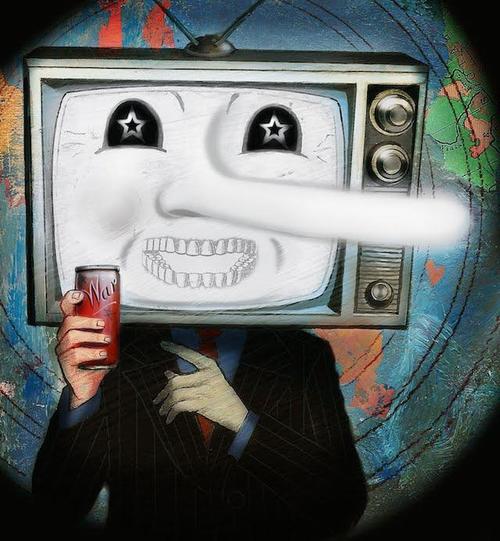
It seems the nefarious Inquisition in Europe, which brutally sought to rid the world of heresy and political rivalry for centuries, has reignited as its new protagonists in the British national broadcaster BBC strive to silence and delegitimize any dissenting viewpoints held by academics.
In a new documentary on BBC Radio 4’s Facts on File, and also in a report based on the documentary by the BBC News, two academics, namely Tim Hayward and Justin Schlosberg, have been falsely accused of supporting and spreading “Russian propaganda” and “misinformation” about Moscow’s military operation in Ukraine that began on February 24, either through their lectures or on Twitter.
Hayward, a professor of environmental political theory at the University of Edinburgh, had re-tweeted a representative of Russia to the United Nations, who stated that the Russian attack on a maternity hospital in Mariupol on March 9 was “fake news.”
“As long as we’re still able to hear two sides of the story we should continue striving to do so,” Hayward said.
While the West condemned Russia for targeting the hospital several times with airstrikes, the Russian foreign ministry strongly rejected the allegation, branding it as “information terrorism” against Moscow.
A few days later and in the House of Commons, legislator Robert Halfon from the Conservative Party denounced Hayward and also Dr. Tara McCormack, a lecturer in international politics at the University of Leicester, who had spoken about “ludicrous disinformation” of both Kiev and Moscow.
Halfon also urged the parliament to “contact these universities directly to stop them acting as useful idiots for” Russian President Vladimir Putin.
Education Secretary Nadhim Zahawi at the same session of the House of Commons described the said academics and the like as people who are “buying” Moscow’s “false narrative” about the war in Ukraine.
“It is a false and dangerous narrative and we will crack down on it hard,” Zahawi said.
The BBC quotes 21-year-old history and politics student Mariangela Alejandro as saying that things in Hayward’s class got “weird” when the professor stepped in the “realm of conspiracy theories about [Syrian President Bashar al] Assad and Russia.”
The British broadcaster even criticized, though implicitly, Hayward for a lecture in which he outlined an argument that the West-backed White Helmets group might have helped fake a chemical attack in Syria years ago. Russia and the Syrian government have stressed that the attack was “staged.”
The White Helmets group, which claims to be a humanitarian NGO, is known for its coordination with terror outfits in Syria to carry out staged chemical attacks in order to falsely incriminate Syrian government forces and fabricate pretexts for military strikes by a US-led military coalition present in Syria since 2014.
On April 14, 2018, the US, Britain, and France carried out a string of airstrikes against Syria over a suspected chemical weapons attack on the city of Douma, located about 10 kilometers northeast of the capital Damascus.
That alleged attack was reported by the White Helmets group, which published videos showing them purportedly treating survivors. Washington and its allies blamed Damascus for the Douma attack, an allegation strongly rejected by the Syrian government.
Hayward used an argument put forward by members of a collective of academics and bloggers he is a member of, known as the Working Group on Syria Propaganda and the Media (WGSPM).
“One narrative says the White Helmets helped rescue victims, provided evidence and gave witness statements about the chemical attack on Douma on 7 April 2018,” Hayward said during the lecture.
However, he added that “the critics say the White Helmets were responsible for staging a false flag event to spur the West to attack the Syrian government. In fact, dispute about this case is still current.”
Hayward told the BBC that he does not teach about Syria, but simply used an example in his class that he was familiar with.
The BBC, however, seems to be eager to lash out at Hayward when it quoted Dr Nader Hashemi, director of the Centre for Middle East Studies at the University of Denver and a visiting scholar at the University of Cambridge, as describing Hayward’s argument about the White Helmets and the staged chemical attack as “a deeply distorted set of teachings.”
Regarding Hayward’s stance on the purported Russian airstrikes against a maternity hospital in Mariupol that says “we should strive to hear both sides”, the BBC drew in Kvitka Perehinets, a Ukrainian student at the University of Edinburgh, who said “there are no two sides” to the conflict and that “The oppressor – in this case, Russia – should not be given the same kind of platform as those who are being oppressed.”
Although the University of Edinburgh claims that its programs are approved by a board of studies, emphasizing its commitment to “academic freedom”, it also stresses that it takes “a strong view… against the spread of misinformation” and encourages students to report concerns.
The university should be notified that one of the primary jobs of “academic freedom” is paving the way for academic research to distinguish true information from “misinformation” and “disinformation.”
However, the UK’s Department for Education (DfE), which is responsible for education in England, inquisitively controls the flow of research in universities, saying it expected “universities’ due diligence processes to consider the reputational, ethical and security risks of false and dangerous narratives, and ensure that students are not misled by views that are clearly false.”
When the academics’ tweets were raised in the Commons, Zahawi said the minister for Higher and Further Education, Michelle Donelan, was “contacting those universities”, a means of pressure on Hayward and the like who think differently from the mainstream in the West.
Another academic pressured by the BBC and the Education system in the UK is professor Schlosberg, who specializes in media and journalism at Birkbeck, University of London.
He has been lambasted for re-tweeting Russian state media questioning what occurred in the Ukrainian city of Bucha, 37 kilometers northwest of the capital Kiev.
Back on April 2, the mayor of Bucha in a video message claimed that 300 people had been killed by the Russian army with some appearing to have been bound by their hands and feet before being shot.
He also presented footage and photographs showing the dead bodies of those allegedly killed or executed by Russian troops, claiming that 280 bodies had been buried in mass graves while nearly 10 others were either unburied or only partially covered by earth. Later on, Kiev claimed a death toll of more than 1000 in the city.
A day later, the Ukrainian government urged major Western powers, including the United States, to impose crippling fresh sanctions on Moscow over what it called a “massacre” in Bucha, a newly liberated town at the time.
The Kremlin strongly rejected any involvement of Russian troops in the so-called massacre, with Russian President Sergei Lavrov stressing that the killings did not occur while Russian soldiers were in the city.
He added that the so-called dead bodies in footage circulating the internet were “staged” and the images of them plus Ukraine’s false version of events had been spread on social media by Kiev and Western countries.
On April 4, Schlosberg tweeted that “Russian troops left on 30th March. No mention of any ‘massacre’ or bodies lining the streets for 4 days.” He also re-tweeted a video of Bucha’s mayor speaking without mentioning a massacre.
The BBC, however, hurriedly stressed in its report that Russian media has been using the video to bolster the idea that the bodies appeared after the Russians had left the city.
It quoted the academic as saying that he had “no idea” regarding what really happened there.
“My only understanding is that I think no-one else really knows what happened. I think there is a very strong likelihood that there were very serious atrocities, almost certainly the vast majority of which were committed by Russia,” Schlosberg further told the BBC.
However, in a string of tweets on Wednesday, he denounced the broadcaster’s “grossly defamatory allegation.”
“Rather than engage with the actual meaning of my tweets, the BBC chose to uncritically endorse obvious manipulation by people who have been actively trying to silence and delegitimize any dissenting viewpoints since the start of” the current operation by Russia in Ukraine, Schlosberg said.
“The manner in which the program achieved this was so cynical and unguarded it beggars belief, even for those of us increasingly skeptical about the BBC’s commitment to basic journalistic standards, let alone its own lofty public service values,” he stressed.
Was the Maidan Massacre a False Flag?
By Noah Carl | The Daily Sceptic | May 30, 2022
To understand the war in Ukraine, you have understand the events that led up to it. And no preceding event is more important than the toppling of Viktor Yanukovych’s government in February of 2014.
Officially known as the ‘Revolution of Dignity’, it was denounced by Vladimir Putin as an “unconstitutional coup”. And while most Western media stick to the official nomenclature, some prominent voices dissent. John Mearsheimer has referred to “the illegal overthrow of Ukraine’s democratically elected and pro-Russian president”, while George Friedman has described what happened as “the most blatant coup in history”.
A recap of the basic facts is in order.
In November of 2013, Yanukovych’s government suspended plans for signing an Association Agreement with the EU, and decided to renew talks with Russia. This decision sparked protests in Ukraine’s capital city, Kiev. By December, the number of protestors had reached the tens of thousands, and a permanent encampment had been established on Maidan square. Although most of the protesters were ordinary Ukrainians, far-right groups were also present.
Beginning in December, there were violent clashes between protesters and the police. On 23rd January, protestors succeeded in occupying various buildings around Maidan square. The situation came to a head on 18–20th February when protestors were fired upon by snipers, leaving scores dead and hundreds wounded. A dozen police offers were also killed in the clashes. From November 2013 to February 2014, 112 protestors and 18 police officers lost their lives; though most of the killings happened on 20th February.
On 21st February, Yanukovych signed an agreement with the parliamentary opposition calling for reforms and new elections. But the next day, he was impeached by the Ukrainian parliament. This impeachment process was in several respects unconstitutional, and Yanukovych declared he was still “the legitimate head of the Ukrainian state elected in a free vote by Ukrainian citizens”. However, he subsequently fled to Russia and a new government was formed.
The ‘Revolution of Dignity’ led immediately to Russia’s annexation of Crimea, and the outbreak of civil war in Donbas – so its geopolitical importance can hardly be overstated. Yet despite huge international attention, one question remains shrouded in mystery: who ordered snipers to fire at protestors on 18–20th February?
The ‘official’ narrative is that the snipers were from the Berkut – a special police unit loyal to Yanukovych. On the other hand, Russia has long maintained they were deployed by the Ukrainian far-right as part of a false flag operation to bring down Yanukovych’s government.
What is true is that more than eight years after the massacre – which took place amid a giant demonstration at the centre of Ukraine’s capital in front of dozens of television cameras – not a single person has been convicted. The perpetrators of one of the deadliest mass shootings in European history remain at large.
Why don’t we have an answer? Well, perhaps we do.
Away from the limelight, one Canadian academic has been poring over the evidence for the last eight years. And he’s convinced the ‘official’ narrative is wrong. Ivan Katchanovski (a political scientist at the University of Ottawa) believes the Maidan massacre was a false flag operation carried out by the Ukrainian far-right.
Professor Katchanovski cannot be dismissed as some fringe commenter or stooge of the Kremlin. He has published his arguments in scholarly books and journals, and has presented them at academic conferences. His latest article, which can be accessed for free, reviews all the evidence he’s collected to date – including witness testimonies, weapon ballistics and medical forensics. It’s based on hundreds of hours of footage of the Maidan massacre trials, as well as synchronised video segments of the massacre itself.
As Katchanovski explains, the ‘false flag theory’ first gained credence in March of 2014, when a phone call between two European officials was leaked online. During the call, the Estonian Foreign Minister Urmas Paet tells the EU’s Catherine Ashton about a conversation he’d had with someone called Olga:
What was quite disturbing, the same Olga told, all the evidence shows that people who were killed by snipers from both sides among policemen and then people from the streets – that they were the same snipers, killing people from both sides. She also showed me some photos. She said that as medical doctor, she can, you know, say that it is the same handwriting, same type of bullets. And it’s really disturbing that now the new coalition, that they don’t want to investigate what exactly happened. So that there is now stronger and stronger understanding that behind snipers it was not Yanukovych but it was somebody from the new coalition.
‘Olga’ was later identified as Olga Bohomolets, a doctor who had treated wounded protestors on Maidan square. When quizzed by the press, she said she had not told Paet that somebody from the new coalition was behind the snipers. Likewise, the Estonian Foreign Ministry said, “We reject the claim that Paet was giving an assessment of the opposition’s involvement in the violence” (though they acknowledged the recording was authentic). It is still unclear why Paet would divulge such shocking revelations if he did not believe they had some basis in fact.
Aside from TV recordings and media reports, much of Katchanovski’s evidence comes from the trials of five Berkut police officers, who were charged with the murder of protestors on 20th February, 2014. Various other state actors, including Yanukovych himself, were also charged, but they were not brought to trial as they had already fled the country. (Recall that none of those put on trial were convicted.)
What, then, is Katchanovski’s evidence?
The majority of wounded protestors who testified at the trail said they were shot by snipers from Maidan-controlled buildings. Remarkably, even many witnesses for the prosecution said this. Their testimony is consistent with video footage of journalists and protestors pointing to snipers in buildings like the Hotel Ukraine, which were under Maidan control at the time.
Police snipers testified that they had been ordered to locate and neutralise snipers firing from Maidan-controlled buildings. And Yanukovych himself, who appeared at the trial via video-link, testified that he had received reports of snipers firing from those buildings.
Several Georgian ex-military personnel who testified at the trail actually confessed they were among the snipers, and had been given orders by specific Maidan leaders to fire upon the protestors. They also testified that they had witnessed other snipers shooting from Maidan-controlled buildings. By contrast, no police officers or other state actors confessed to having fired upon protestors.
In the majority of cases where wounded protestors testified that they had been shot by snipers from police-controlled areas, other evidence contradicted their testimony. For example, synchronized video segments showed the exact times they were hit did not coincide with the exact times police officers were discharging their weapons. Other videos showed that several protesters were killed before police officers had even taken up their positions.
Forensic examinations by government experts revealed that the majority of protestors were shot from the side or back, and from top to bottom, strongly suggesting they had been hit by snipers from Maidan-controlled buildings. Only one protestor had a horizontal entry wound. Experts also determined that several protestors were killed by bullets that did not match those used by the police.
An American architecture company created a 3D model of the killing of three protestors, which was used as evidence that those protestors were in fact killed by the police. (This 3D model was covered in a 2018 New York Times article.) However, the wound locations in the model did not match the wound locations from forensic medical examinations.
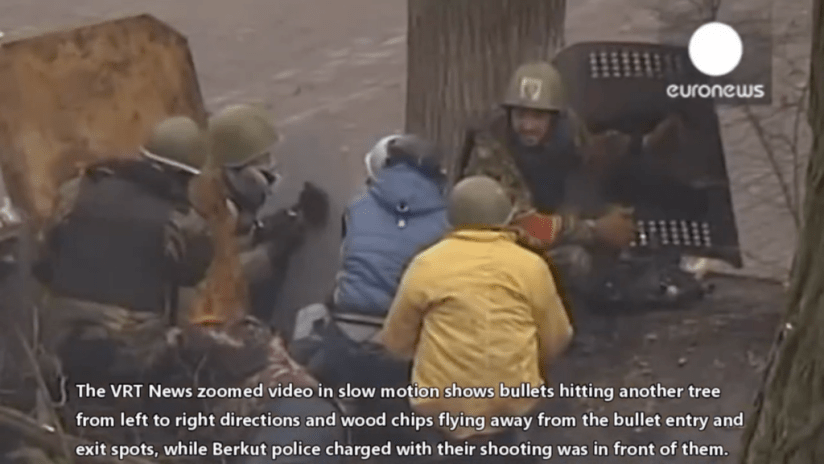
A screenshot from the video appendix to Katchanovski’s latest paper.
Aside from what Katchanovski calls “overwhelming evidence” that protestors were shot from Maidan-controlled buildings, he believes there was a cover-up by the post-Maidan authorities.
On 21st February, the Ukrainian parliament passed an amnesty law granting blanket immunity to Maidan protestors for serious crimes that had taken place during the protests. This law also prohibited investigation of the protestors for such crimes, and ordered that existing evidence be destroyed.
Two of the Berkut police officers who had been charged with murdering protestors were released by trial judges due to lack of evidence, suggesting the charges against them were trumped up. And all remaining defendants were released in a prisoner exchange within several months of the expected verdict.
Public statements made by various Maidan participants concerning the far-right’s involvement in the massacre were never investigated. One politician said she saw Maidan leaders bringing snipers into a building and then saw snipers firing from that building. Several activists said they witnessed snipers being evacuated by Maidan leaders. And another politician said that Maidan leaders had “arranged” the massacre.
There were unexplained reversals of testimony on the part of wounded Maidan protestors. Key pieces of evidence went missing or were destroyed. Several trees with bullet holes in them were cut down; all helmets and shields used by those who were shot disappeared, as did security camera footage from Maidan-controlled buildings.
Finally, two far-right politicians stated in separate interviews that a Western government official told them killings of a few protestors would not be enough for Western governments to stop recognising Yanukovych, and for that to happen the number of victims would need to be 100. The protesters who lost their lives subsequently became known as the “Heavenly Hundred”, even though some of those ‘hundred’ were not killed in the massacre itself (and in fact simply died of illness.)
On the basis of all the evidence he’s gathered, Katchanovski concludes that the Maidan massacre was “a false flag operation” which involved “elements of the Maidan leadership”.
If true, the implications are immense. It would mean the event that marked the turning point of Euromaidan – that set in motion Yanukovych’s removal from power – was in fact orchestrated by his political opponents. And aside from implicating those individuals in a brutal act of mass murder, it would remove any doubt that the that the ‘Revolution of Dignity’ was illegitimate.
Is it true?
I have been unable to track down any serious criticism of Katchanovski’s work, and when I reached out to him, he told me “there is no other scholarly study” that disputes his findings. What’s more, the political scientist Gordon Hahn reached similar conclusions in his book Ukraine Over the Edge: Russia, the West and the “New Cold War”.
So why haven’t Western governments shown more interest in investigating the massacre? I put this question to Katchanovski. He said that such an investigation would be “politically inconvenient” because it would “upend the narrative that the Western backed overthrow of the Ukrainian government in 2014 by the pro-Western Maidan opposition was peaceful and democratic”. He added that a definitive answer could be obtained by consulting relevant documents once they are declassified.
As I mentioned above, Katchanovski has published his arguments concerning the ‘false flag theory’ in scholarly books and journals, and has presented them at academic conferences. All the germane papers are available for free online. You might therefore expect for his work to have received significant media attention – particularly in the last few months.
Yet with the exception of a few ‘non-mainstream’ outlets, it hasn’t. Major Western media have ignored his studies “for political reasons”, he told me. This is despite the fact that Katchanovski’s other work on Ukraine (unrelated to the massacre) has received ample media attention, including from the Associated Press, Reuters and the Washington Post.
Katchanovski knows that certain media outlets are aware of his work because he’s brought it to their attention. Following the New York Times article on the 3D model of killings at Maidan, he sent a letter to the editor pointing out they had “misrepresented the wound locations”. But his letter wasn’t published. In another case, “Open Democracy accepted a popular version of my Maidan massacre study, but then did not publish it.” Katchanovski said he gave “long interviews concerning the Maidan massacre to several major TV and Radio networks” but “none of them were broadcast”. In every single case “there was no reason given”.
The only time Katchanovski’s work on the massacre has been put under the spotlight was in Oliver Stone’s 2019 documentary Revealing Ukraine. This film is available on Rumble, and the relevant segment begins at 20:00.
What about everything that’s happened since? In our email exchange, Katchanovski clarified that the Maidan massacre “does not justify the Russian invasion and other actions in Ukraine”. Equally, however, Russia’s invasion does not justify ignoring – in his words – “overwhelming and undeniable evidence” of Maidan snipers.
If others believe that Katchanovski is mistaken, they must come forward and present their arguments. In the meantime, I would strongly recommend reading his papers: they make a compelling case that what’s been labelled a “conspiracy theory” is, in fact, true.
Scientists blame space chemicals for rise in heart attacks
The Counter Signal | May 30, 2022
Far, far away in the distant reaches of Earth’s atmosphere, scientists have finally homed in on a possible cause of the sudden rise in heart attacks around the world: space chemicals.
According to an article from Daily Mail, scientists have identified an entirely new class of chemical compounds that form in Earth’s atmosphere called hydrotrioxides.
Even though scientists believe that the chemical compounds needed to form hydrotrioxides have always existed in the atmosphere, they say that the compound may be able to penetrate aerosols, which can lead to respiratory and cardiovascular diseases, including heart attacks.
“They will most likely enter aerosols, where they will form new compounds with new effects,” said Professor Henrik Kjærgaard.
“It is easy to imagine that new substances are formed in the aerosols that are harmful if inhaled. But further investigation is required to address these potential health effects.”
“These compounds have always been around — we just didn’t know about them. But the fact that we now have evidence that the compounds are formed and live for a certain amount of time means that it is possible to study their effect more targeted and respond if they turn out to be dangerous,” added Prof. Kjærgaard.
PhD student and co-author Jing Chen concurred, adding that the compounds are “surprisingly stable.”
“It’s quite significant that we can now show, through direct observation, that these compounds actually form in the atmosphere, that they are surprisingly stable and that they are formed from almost all chemical compounds. All speculation must now be put to rest,” said Chen.
Even more frightening, not only do scientists believe the newly discovered compound could be responsible for causing respiratory and cardiovascular diseases, but it may also be spurring climate change!
“As sunlight is both reflected and absorbed by aerosols, this affects the Earth’s heat balance – that is, the ratio of sunlight that Earth absorbs and sends back into space,” said PhD student and co-author Eva Kjærgaard.
“When aerosols absorb substances, they grow and contribute to cloud formation, which affects Earth’s climate as well.”
“Deaths Have Increased Cumulatively”: BBC Producer Defends False Extreme Weather Claim
By Chris Morrison | The Daily Sceptic | May 25, 2022
Fresh insights into the techniques used by the BBC to catastrophise climate change are revealed in an exchange of letters with the producer of Justin Rowlatt’s “Wild Weather” Panorama and a former producer of Top Gear. Justifying the Rowlatt suggestion that global weather is getting warmer and more unpredictable and the death toll is rising, the programme’s producer Leo Telling said the latter figure was “cumulative”. In reply, Ken Pollock called the explanation “asinine”, and suggested Telling recognised that: “The death toll in the U.K. is cumulative. It is difficult to imagine it not increasing, if you quote cumulative figures,” he explained.
The “Wild Weather” programme, broadcast in December 2020, was an emotion-charged rant that tried to show that human-caused climate change was behind a series of recent bad weather events. It led to two internal complaints being upheld against Rowlatt. On the death toll claim, the BBC accepted that deaths from natural disasters have actually been falling for many years.
Telling then went on to argue that heatwaves will lead to excess deaths in vulnerable groups with a lower tolerance to extreme temperatures. In addition, he stated that the heatwaves will lead to avoidable deaths through wildfires.
“How can you write with a straight face that heatwaves will kill more and more people,” replied Pollock, “without also accepting that cold kills 10 times as many people every year and extra heat may save far more people?”
How do you reconcile the fact that Singapore and Helsinki have average temperatures differing by 22°C, and yet you accept that a further 1°C could spell disaster, he went on to ask.
Pollock then wondered what the Panorama producer really meant by the suggestion that avoidable wildfire deaths would increase. “You surely know that most of the Australian wildfires and those in the West of the USA were started by arson. Surely you know that the recent wildfires were nowhere near as bad as those in the West of the USA in the 30s and 40s and in Australia in the 80s, when I filmed them for the BBC, and in earlier decades,” he wrote.
In Pollock’s view, much of what Telling produced was drawn from the World Health Organisation and “highly questionable” IPCC predictions. One might expect you to challenge some of them, or at least refer to the source and the speculative nature of the predictions, he contended. Pollock concluded by noting that in his 22 years as a BBC producer, he became alarmed at the inadequate use of statistics by the Corporation in current affairs and elsewhere: “Many BBC people repeated statistics without understanding them”.
On the BBC climate desk, repeating, seemingly without question, the catastrophe claims from third party sources is a normal method of operation. In February 2019, the BBC environment analyst Roger Harrabin reported the view of Left wing think tank IPPR that “human impacts had reached a critical stage and threaten to destabilise society and the global economy”. No attempt was made to examine these extravagant opinions. It later transpired that the report, which contained numerous false extreme weather claims, was part written by a young woman whose previous employment had been working as a volunteer for an Edinburgh ‘equality’ charity. Meanwhile, Matt McGrath, the first winner of the BBVA Foundation €100,000 award for climate journalism, wrote an article in July 2019 titled “Climate change: 12 years to save the planet? Make that 18 months”. Accepting his award from BBVA, a Spanish bank with large green investments, McGrath defended the primacy of specialist journalism “that draws on sound scientific sources” in an era of fake news.
Barely a week goes by without the Net Zero-inspired fantasies of climate Armageddon being publicised from the work of academics, think tanks, meteorological operations like the Met Office and the IPCC. This latter body, heavily dependent on climate models and their to-date wildly inaccurate forecasts, is held in particularly high esteem. Writing in July last year, Harrabin looked forward to a new edition by stating, “computing will underpin the new climate science ‘Bible’ from the Intergovernmental Panel On Climate Change (IPCC) next month”.
It might be suggested that an editorial emergency is awaiting the BBC in the near future. Most of its climate reporting seems to be little more than repeating bad (“extreme”) weather events, and claiming the climate is, somehow, breaking down. In reality, global warming has run out of steam with pauses and dips common in the record over the last two decades. The accurate temperature news from satellites is largely ignored, and there is little appetite for investigating how the major global surface datasets have quietly adjusted their records to add an extra 30% of heating over the last 20 years. Most of the bad weather claims are easily debunked, and are unlikely to be so well tolerated by the wider public if Net Zero leads to substantial reductions in personal freedoms, income and diet.
Writing an excoriating report on the “Wild Weather” programme, Ross Clark noted recently in the Daily Mail that there was a time when the BBC was committed to presenting both sides of the argument. He noted a 2018 instruction sent by the former BBC director of news and current affairs Fran Unsworth, demanding that “interviewees who were sceptical about man-made climate change were no longer to be invited regularly”. He concluded: “Unsworth’s instructions had clearly become the status quo.”
Last September, Insulate Britain activist Zoe Cohen told the BBC that climate change would lead to “the loss of all we cherish, our society, our way of life, law and order”. Ross noted that it was a hysterical claim that had no foundation in science, yet she remained unchallenged. Some at the BBC, he went on to suggest, were losing patience with their climate editor. “The Justin Rowlatt stuff is grim,” an unnamed BBC source is reported to have told another newspaper. “These are not mistakes; he’s a campaigner.”
Matt McGrath is another who might care to look into some of the sources that feed his doomsday copy. Around the time of receiving his BBVA present, he published a story claiming that over 11,000 scientists were predicting “untold suffering” from the forthcoming climate emergency. Among those signatories promoting a “clear and unequivocal emergency” were Professor Mickey Mouse and Hogwarts headmaster Albus Dumbledore.
The perfect BBC climate breakdown story. Making it up, in a world of make believe.
Pandemic 2: Monkeypox Madness
OffGuardian | May 21, 2022
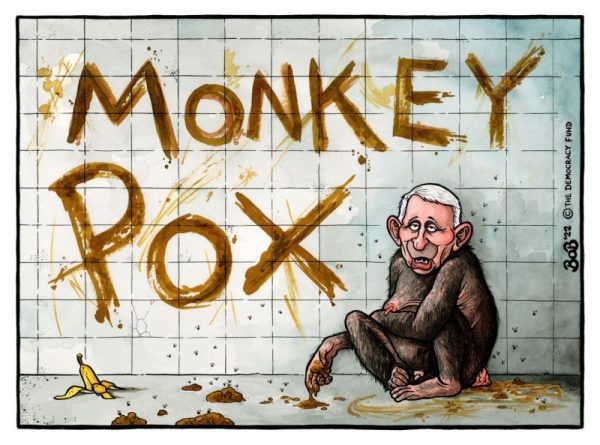
Monkeypox – it’s the hip new disease sweeping the globe. Allegedly appearing almost simultaneously in over a dozen different countries on four different continents.
As we wrote in the early days of the Covid “pandemic”, the only thing spreading faster than the disease is fear.
The media reported the first UK case of monkeypox on the 7th of May. Less than two weeks later, we’re seeing some very familiar headlines. Just like that…Pandemic 2: Monkey Pox!! begins playing at all your favorite fear porn outlets.
Sky News tells us that UK Monkeypox “cases” have “doubled(!)”… from 10 to 20.
The BBC went real subtle with it, blaring: “Monkeypox: Doctors concerned over impact on sexual health”
The New Scientist has actually used the P-word, asking “Can Monkeypox become a new pandemic?”, before answering, essentially, “probably no, but also maybe yes!”. Keeping their options open.
Science warns that “Monkeypox outbreak questions intensify as cases soar”
The Mirror has gone full paranoid already, headlining:
Russia looked into using monkeypox as biological weapon, claims ex soviet scientist
So that’s one direction the story might go.
To be clear, “monkeypox” (whatever that even means in this context), is NOT a Russian bio-weapon. It’s not a Western bio-weapon either. Or Chinese bio-weapon. It’s just another scare story. And a rushed, half-hearted one at that.
One of the signs that marked the Covid “pandemic” as a psy-op from an early stage was the sheer speed with which the hysteria spread. Far from learning from their mistakes, the powers-that-be have decided to go even faster this time.
Despite “cases” numbering barely in the dozens, the World Health Organization has called an emergency meeting, a strange thing to do when their annual Assembly starts literally tomorrow. But I guess when your launching a new product you need to do everything you can to get the hype going.
Despite just two “cases” in the entire United States (and indeed the fact they still don’t work), New York is bringing back mask recommendations.
Nobody has said “lockdown”… yet. But Hans Kluge, WHO regional director for Europe, is “concerned” that transmission could accelerate if people attend mass gatherings:
as we enter the summer season … with mass gatherings, festivals and parties, I am concerned that transmission could accelerate”.
(As inflation soars and the cost of living crisis only gets worse, it’s probably handy for them to have a new “public health” reason to ban protests or clampdown on civil unrest. Just a thought.)
There’s some good news though… for vaccine manufacturers, anyway. As Whitney Webb reports, two struggling pharmaceutical companies have already seen a big stock boost from the “outbreak”:
Regardless of how the monkeypox situation plays out, two companies are already cashing in. As concern over monkeypox has risen, so too have the shares of Emergent Biosolutions and SIGA Technologies. Both companies essentially have monopolies in the US market, and other markets as well, on smallpox vaccines and treatments. Their main smallpox-focused products are, conveniently, also used to protect against or treat monkeypox as well. As a result, the shares of Emergent Biosolutions climbed 12% on Thursday, while those of SIGA soared 17.1%.
Just as with Covid, and despite rumours they would be leaving the World Health Organization, Russia appears to be lining up with the WHO agenda. Already they are “tightening border quarantine” rules, vaccinating healthcare workers and supplying quick bedside tests internationally.
Looks like we might be in for an epic summer of scare-mongering, panic-buying & bucketloads of cringe.
💢Are the new jabs already prepped & ready to go?
💢Are the “our hospitals are overwhelmed videos” being filmed as we speak, complete with “monkey pox” moulage and crying nurses who turn out to have IMDB pages & multiple acting credits?
💢Are the sleepy masses going to be fooled yet again?
Watch this space…
UK using Cold War’s black propaganda tactics against Russia
By Lucas Leiroz | May 19, 2022
Once again, the West appears to be operating with an old Cold War mentality against Russia. Documents recently declassified by the British government reveal a series of sabotage practices used by the UK during the bipolar era whose similarities to the current relations with Russia seem evident. In fact, sabotage, fomenting hatred, spreading lies and other common tactics seem like a commonplace part of British foreign policy and the current Special Operation in Ukraine is just another target.
Recently, it was revealed that the British government ran a series of secret “black propaganda” campaigns against enemy countries during the decades of the Cold War. Not only the Soviet Union and Communist China were targets of British intelligence, but also countries in Africa, the Middle East and specific regions of Asia. The tactics included various methods of sabotage, from information warfare to the promotion of racial and terrorist tensions, always aimed at promoting the destabilization of rival nations.
Commenting on the case, expert in intelligence Rory Cormac told The Guardian during an interview: “These releases are among the most important of the past two decades (…) It’s very clear now that the UK engaged in more black propaganda than historians assume and these efforts were more systemic, ambitious and offensive. Despite official denials, [this] went far beyond merely exposing Soviet disinformation (…) The UK did not simply invent material (…), but they definitely intended to deceive audiences in order to get the message across”.
An example of how British praxis worked was the extensive and complex action operated to promote tensions between the Soviet Union and the Islamic community. In the second half of the 1960s, the Information Research Department (IRD) forged at least eleven Soviet state media documents exposing the government’s alleged “anger” at the “waste” of Soviet weapons by Egypt during the 1967 Six-Day War. Later, the same department forged documents supposedly originating from the Muslim Brotherhood accusing Moscow of sabotaging the Egyptian campaign, criticizing the quality of Soviet military material and calling the Russians “filthy-tongued atheists” who saw the Egyptians as “peasants who lived all their lives nursing reactionary Islamic superstitions”.
Last year, The Observer had already revealed that the IRD was directly responsible for the massacre of hundreds of people in Indonesia through the spread of lies in a black propaganda campaign in 1965. At the time, the department financed the preparation of pamphlets allegedly belonging to the PKI, then the largest communist party in the non-communist world, which were actually just British false flags. This encouraged anti-communist militias to promote an unprecedented massacre in the country, which resulted in the deaths of hundreds of communist militants and civilians. Now, with the new declassified documents, it is possible to see that this was not an isolated episode, but a regular practice in British intelligence services.
In fact, it seems impossible to analyze this case and not correlate in some way to the current Western campaign against Russia, in which the UK seems to be very involved. In a way, it appears that despite the end of the Cold War, the bipolar mentality has never stopped working in the West. Simply, what was once aimed at the Soviet Union is now aimed at Russia.
This is precisely what political analyst Joe Quinn thinks: “The timing of this declassification of the documents is interesting insomuch as it may serve, for some, as confirmation that the West’s geopolitical war against the Soviet Union never really ended, it just continued as a war against the Russian Federation, but without the justification of fighting against Communism”.
The British media has been one of the most active in spreading anti-Russian narratives, fake news and pro-Kiev propaganda. Although most of the work is operated by the private sector, it is naive to think that there is no state incentive for pro-NATO propaganda. The British state – as well as the US and allied nations – has a very deep interest in creating a psychological warfare scenario, so there is a type of clandestine public-private cooperation between the state departments and these media agencies for their common objective to be achieved.
The special military operation in Ukraine is the main reason why Russia is attacked by Western propaganda today. From accusations of war crimes, false flags (like the tragedy in Bucha) to the absolutely unrealistic “analyses” alleging that Ukraine is “winning” the conflict, we have in all these cases examples of how the British media acts in collusion with the interests of NATO, operating old tactics of misinformation and black propaganda against London’s geopolitical enemies.
In this regard, Adriel Kasonta, a London-based foreign affairs analyst and former chairman of the International Affairs Committee of the Bow Group think tank, believes that currently the main interest of British intelligence is to have a public opinion approving the sending of weapons to Ukraine and believing it is strategic, forging data to make it appear that that Kiev is close to “winning”.
“It aims to mislead the domestic audience by convincing them that the ‘special operation’ is not going according to plan and to persuade them that sending lethal weapons to the front by NATO allies contributes to the alleged victories and successful resistance of the Ukrainian side. It is a psychological game, and nothing persuades the naturally peaceful population to support a war in a distant land [more] than the opponent’s alleged low morale and military losses”, says the analyst.
With that, it seems to be clear that there is indeed a blatant anti-Russian campaign going on which aim is to harm Moscow using old and well-known black propaganda and information war tactics. It is essential that the recently declassified documents are released so that Western public opinion is aware of the weapons used by their governments and media agencies against nations that are not aligned with NATO’s geopolitical plans.
Lucas Leiroz is a researcher in Social Sciences at the Rural Federal University of Rio de Janeiro; geopolitical consultant.
Biden proposes to export 20 million tons of Ukrainian grain to stabilize food prices
By Drago Bosnic | May 17, 2022
As the establishment in the United States continues to blame Russia for all its problems, including the mythical “Putin’s price hike”, which started at least a year before Russia’s special military operation in Ukraine, there is a food shortage crisis looming over the world. And once again, the political West is pointing fingers at Russia. The reasons for the food shortage the world will almost certainly experience this year are manifold. The most obvious reason is that countries are limiting or outright banning food exports amid announced shortages, as they are trying to prevent food crises from affecting their populations.
Western mainstream media are also claiming that Russia’s special military operation in Ukraine is supposedly causing a food shortage in the country. Some media are going as far as to claim that Russia is allegedly “stealing” stored grain and agricultural machinery from Ukrainian farmers in areas such as the Kherson oblast (region). Why exactly would Russia be doing this is quite unclear, especially given the country’s massive surge in wheat and grain production in general, which is breaking records year by year and is set to reach a staggering 130 million tons this year.
In a piece published last week, Financial Times accused Russia “of industrial-scale farm plunder in Ukraine” and even claimed that this was “history repeating itself” by evoking memories of historic famine, referring to the 1930s Holodomor, which in recent years has been falsely portrayed as a sort of anti-Ukrainian “genocide” perpetrated by Russia, despite overwhelming evidence that the horrific famine caused as much damage in present-day southern Russia, reaching as far as western areas of modern-day Kazakhstan.
“Ukraine’s government has accused Russia of trying to destroy its agriculture sector by stealing valuable grain stocks and machinery, deliberately bombing farms and warehouses and blockading its Black Sea ports to deprive it of exports earnings and farmers of liquidity. There are multiple examples around the country of grain elevators and warehouses being bombarded,” Financial Times claimed.
The accusations have multiple inconsistencies, including the idea that Ukraine cannot export grain due to Russia’s alleged naval blockade, when, in fact, it was the Kiev regime that indiscriminately placed naval mines in Odessa and other ports, making any form of naval transportation impossible and even endangering other major Black Sea ports as the mines drifted as far as the Bosphorus, over 600 km to the south. Also, if there is a food shortage, why would Ukraine even make such a suicidal move by exporting grain, when it can’t even feed its own population?
“But it is the confiscation of grain in territories controlled by Moscow that is the most emotive issue. It has drawn parallels with the Soviet policy of crop confiscations coupled with the confinement of peasants to their villages in the 1930s. Some 4mn people died in the ensuing famine in Ukraine, known as the Holodomor, or death by starvation. After Russia bombed a farm business in Luhansk in eastern Ukraine last month, destroying machinery, buildings and 17,000 tonnes of wheat — a year’s supply for 300,000 people — Serhiy Haidai, the local governor, said on social media that Moscow was seeking ‘to organise the Holodomor in the Luhansk region, that is without a doubt’,” FT report added.
Again, the accusations are completely unsupported by any actual evidence on the ground. Lugansk oblast (region) is almost entirely under the control of the Lugansk People’s Republic, which only confirms that the Kiev regime has no reliable information from the area. And given the regime’s track record when it comes to the veracity of its claims, the report should be taken with a grain of salt. The report went on to claim that Russia was allegedly trying to “use the 500,000 tons of grain it confiscated from Ukraine to blackmail countries experiencing food shortages”. The idea that a country which produced nearly 130 million tons of grain in 2021 alone needs half a million tons of Ukrainian grain to “blackmail” anyone is simply ridiculous.
So, again, why would Russia want to confiscate grain from Ukraine? Or is this just projection on the part of the political West? Well, it seems the US president Joe Biden inadvertently gave the answer to that. US president Joe Biden says the coming shortages and the ensuing global food crisis could be resolved if over 20 million tons of Ukrainian grain is exported from the country. The suggestion is rather confusing, as the Western mainstream media are claiming that Ukraine is on a verge of another Holodomor as the “evil” Russians are allegedly taking all of Ukraine’s grain. In essence, the political West is saying that to “save” Ukraine from hunger, they need to take its food away. In other words, to deal with a problem, we need to exacerbate it exponentially. A rather interesting train of thought.
Drago Bosnic is an independent geopolitical and military analyst.
Featured Video
AIR POWER CANNOT BEAT an ENTRENCHED ENEMY LIKE IRAN
or go to
Aletho News Archives – Video-Images
Frlom the Archives
Not Ready for the Big Leagues
Patriot Missile Launcher
By William Schryver | imetatronink | January 20, 2024
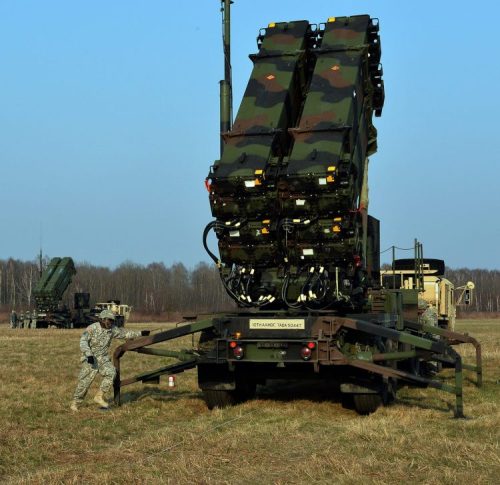
… In an attempt to cover just three large airbases against a series of salvos of 100+ missiles of various types, the entire US stockpile of PAC-3 interceptors could very conceivably be exhausted in little more than a week or two. … continue
Blog Roll
 Aletho News
- Iraq and Cuba hit by blackouts amid US pressure and attacks on Iran
- US-Israeli Efforts to Degrade Iran’s Missile Might Failed – Military Researcher
- New American copium: Ghost of Kuwait
- IRGC strikes critical Israeli military sites with Khorramshahr-4 missiles in latest wave
- US racks up billions in losses during first four days of war as Iran pummels key Pentagon assets: Report
- US and Israeli Claims of Depleted Iranian Arsenals are Just Military Propaganda – Expert
- Iran denies attacking Azerbaijan, suggests Mossad involvement
- Iranian Armed Forces say no missile fired from Iran into Turkey
- The myth of military ‘decapitation’
- Zelensky issues military threat to Orban
- If Americans Knew
- War rages on Iran, while Israel withholds everything from Gaza – Not a ceasefire Day 146
- Is the International Norm Against Assassination Dead?
- More than 1,000 Civilians Killed in U.S.-Israeli Bombing of Iran, Rights Group Says
- The Neocons: First in War, Last in Peace
- With focus on Iran and Gaza, Israel is quietly annexing the West Bank
- Experts Worldwide Agree: US-Israel Attack on Iran a Clear Violation of International Law
- 1,000+ reported dead in Iran, in the war that Israel wanted – Not a ceasefire Day 145
- Rubio Suggests Trump Joined Israel’s Planned Attack on Iran Instead of Stopping It
- CNN: Timing of attack on Iran bears symbolic meaning in Judaism
- How the New York Times paved the way for apocalyptic war
- No Tricks Zone
- New Study: A Century Warming Of 1.1°C Is ‘Commonplace’ And ‘Not Unusual’ During This Interglacial
- New Study: ‘Internal Noise’ And Volcanic Forcing Can Trigger 10-15°C Warming Within Decades
- Glaciers Worldwide Are Suddendly Surging, Experts Blame Warming!
- Surprising Discovery: Sahara Is Greening…Billions Of Trees Where Once Thought To Be Barren
- New Research Reaffirms Clouds, Aerosols, And Surface Solar Radiation Are ‘Driving The Climate System’
- Germany: Electric Car Catches Fire At Charging Station, Sets Off Local “Inferno”, Widespread Damage
- New Study: Canada’s New Brunswick Was 1°C Warmer Than Today During The Medieval Warm Period
- Coal Power Back In Trend As Globe Tries To Keep Pace With Growing Demand For Power
- New Study: A 4°C Warmer Beaufort Sea Had ‘No Sea Ice’ 11,700 – 8200 Years Ago
- Unfudging The Data: Dutch Meteorological Institute Reinstates Early 20th Centruy Heat Waves It Had Erased Earlier
 Aletho News