Late last year, Slate published an investigative report detailing how pharmaceutical giant, Merck, used “flawed” and “unreliable” pre-licensing safety studies to push through approval of its multi-billion-dollar bonanza, the HPV vaccine. For veteran safe vaccine advocates, like myself, the most shocking aspect of the expose was that Slate published it at all. Slate and other liberal online publications including Salon, Huffington Post and The Daily Beast customarily block articles that critique vaccine safety in order, they argue, to encourage vaccination and protect public health.
Motivated by this noble purpose, the liberal media—the supposed antidote to corporate and government power—has helped insulate from scrutiny the burgeoning vaccine industry and its two regulators, the U.S. Food and Drug Administration (FDA) and Center for Disease Control and Prevention (CDC). Both agencies have pervasive and potentially corrupting financial entanglements with the vaccine manufacturers, according to extensive congressional investigations.
Ironically, liberals routinely lambaste Pharma, and its FDA enablers for putting profits over people. Recent examples include Vioxx (100,000 injured—Merck paid more than $5 billion in fines and settlements), Abilify (Bristol Meyers Squibb paid $515 million for marketing the drug to nursing homes, knowing it can be fatal to seniors), Celebrex and Bextra (Pfizer paid $894 million for bribing public officials and false advertising about safety and effectiveness) and, of course, the opioid crisis, which in 2016 killed more Americans than the 20-year Vietnam War. What then, makes liberals think that these same companies are immune from similar temptations when it comes to vaccines? There is plenty of evidence that they are not. Merck, the world’s largest vaccine maker, is currently fighting multiple lawsuits, brought by its own scientists, claiming that the company forced them to falsify efficacy data for its MMR vaccine.
The Slate article nowhere discloses that FDA licenses virtually all vaccines using the same mawing safety science deficiencies that brought us Gardasil. FDA claims that “vaccines undergo rigorous safety testing to determine their safety.” But that’s not true. FDA’s choice to classify vaccine makers as “biologics” rather than “drugs” opened a regulatory loophole that allows vaccines to evade any meaningful safety testing. Instead of the multi-year double-blind inert placebo studies—the gold standard of safety science—that the FDA requires prior to licensing other medications, most vaccines now on the CDC’s recommended childhood vaccine schedule were safety tested for only a few days or weeks. For example, the manufacturer’s package insert discloses that Merck’s Hep B vaccine (almost every American infant receives a Hep B shot on the day of birth) underwent, not five years, but a mere five days of safety testing. If the babies in these studies had a seizure—or died—on day six, Merck was under no obligation to disclose those facts.
Furthermore, many vaccines contain dangerous amounts of known neurotoxins like mercury and aluminum and carcinogens like formaldehyde, that are associated with neurodevelopmental disorders, autoimmune problems, food allergies and cancers that might not be diagnosed for many years. A five-day study has no way of spotting such associations. Equally shocking, FDA does not require vaccine manufacturers to measure proposed vaccines against true inert placebos, further obscuring researchers’ capacity to see adverse health effects and virtually guaranteeing that more subtle injuries, such as impaired immune response, loss of IQ or depression, will never be detected—no matter how widespread. Furthermore, the CDC has never studied the impacts on children’s health of combining 50 plus vaccines.
These lax testing requirements can save vaccine manufacturers tens of millions of dollars. That’s one of the reasons for the “gold rush” that has multiplied vaccines from three, when I was a boy, to the 50 plus vaccines that children typically receive today.
There are other compelling reasons why vaccines have become Pharma’s irresistible new profit and growth vehicle. For example, manufacturers of the 50 plus vaccines on CDC’s childhood schedule enjoy what has become a trapped audience of 74 million child consumers who are effectively compelled to purchase an expensive product, sparing vaccine makers additional millions in advertising and marketing costs.
But the biggest economic boon to vaccine makers has been the National Childhood Vaccine Injury Act (NCVIA). In 1986, Congress awash in pharmaceutical dollars—Big Pharma is, by far, the top Capitol Hill lobbying group—passed NCVIA giving pharmaceutical companies what amounts to blanket immunity from liability for any injury caused by vaccines. No matter how toxic the ingredients, how negligent the manufacturer or how grievous the harm, vaccine-injured children cannot sue a vaccine company. That extraordinary law eliminated a principal cost associated with making other drugs and left the industry with little economic incentive to make vaccines safe. It also removed lawyers, judges and courts from their traditional roles as guardians of vaccine safety. Since the law’s passage, industry revenues have sky-rocketed from $1 billion to $44 billion.
The absence of critical attention to this exploding industry by liberal online sites is particularly troubling since pharma, using strategic investments, has effectively sidelined, not just Congress, lawyers and courts, but virtually all of our democracy’s usual public health sentinels. Pervasive financial entanglements with vaccine makers and the other alchemies of agency capture have transformed the FDA and CDC into industry sock puppets.
Strong economic drivers—pharmaceutical companies are the biggest network advertisers—discourage mainstream media outlets from criticizing vaccine manufacturers. A network president once told me he would fire any of his news show hosts who allowed me to talk about vaccine safety on air. “Our news division,” he explained, “gets up to 70% of ad revenues from pharma in non-election years.” Furthermore, liberal activists including environmental, human rights, public health and children’s advocates also steer clear of vaccine safety discussions. On other core issues like toxics, guns and cigarettes, the CDC has a long record of friendly collaboration with these advocates who have thereby acquired a knee-jerk impulse to protect the agency from outside criticism.
In this vacuum, online liberal news sites are the last remaining barrier to protect children from corporate greed, yet they have become self-appointed arbiters against exposing the public to negative information about vaccine manufacturers and regulators. Liberal voices are not just sidelined, they are subsumed in the orthodoxy that all vaccines are always good for all people—and the more the better. Working with Pharma reps and their tame politicians, liberal news reporters and columnists across America are laboring in nearly every state to make the CDC vaccine schedule compulsory for children and to eliminate religious, philosophical and even medical exemptions.
As a result, the government/Big Pharma combination has gained unprecedented power to override parental consent and force otherwise healthy children, and other unwilling consumers, to undergo compulsory vaccinations, a shocking advance along the road to a corporate totalitarianism which seeks absolute control, even of our bodies. Keep in mind that there is no authentic dispute that vaccination is a risky medical intervention. It was the wave of lawsuits arising from injuries suffered from the Diphtheria/Tetanus/Pertussis (DTP) vaccine in the 1980s, that caused Congress to pass the NCVIA bestowing immunity on the pharmaceutical industry, which threatened, otherwise, to stop making vaccines. In upholding that law, the Supreme Court declared NCVIA justified because “vaccines are unavoidably unsafe.” Since then, the Federal Vaccine Court, created by NCVIA, has paid out $3.8 billion to vaccine-injured individuals. That number dramatically understates the true gravity of the harm. A Department of Health and Human Services funded report acknowledges that “fewer than 1% of vaccine adverse events are reported.”
Supporting a law that forces Americans to relinquish control of their bodies to a corporate/state behemoth is an odd posture for liberals, who once championed the precept of “informed consent,” as the mainstay of the Nuremberg Code and the declarations of Helsinki and Geneva which protect individuals against all coerced medical interventions.
Science suggests that we might have made a big mistake by not aggressively safety testing our mandatory vaccines. Chronic diseases like ADHD, asthma, autoimmune diseases and allergies now affect 54 percent of our children, up from 12.6 percent in 1988, the year NCVIA took effect. And those data measure only the injuries characterized in digital medical records. Health advocates warn that we may be missing subtler injuries like widespread losses in reading and IQ and in executive and behavioral functions.
The suspicion that the neurotoxins in vaccines may be negatively affecting a generation is not wild speculation. Numerous studies point to the once ubiquitous use of leaded gasoline as the cause of widespread IQ loss and violence that bedeviled the generations from the 1960s-1980s. Is it not possible that dramatically increased infant exposures to aluminum and ethyl mercury—a far more potent neurotoxin than lead—might be significantly debilitating the post NCVIA generation?
The CDC claims that the cause of the sudden explosion in neurodevelopmental disorders, autoimmune illnesses and food allergies that began in the late 1980s, is a mystery. However, vaccine court awards, manufacturers’ package inserts and reams of peer-reviewed science all recognize that many of the chronic diseases that suddenly became epidemic in our children following the passage of NCVIA can be caused by vaccines or their ingredients.
The Institute of Medicine (now the National Academy of Medicine), the ultimate arbiter of federal vaccine safety science, has listed 155 diseases potentially associated with vaccination and scolded the CDC for failing to study 134 of them. School nurses who have spent decades in their jobs say they are seeing the sickest generation in history. The epidemic has not proven a problem for the vaccine industry. On the back end of the chronic disease explosion, vaccine companies like Merck are making a killing on the EpiPens, antidepressants, stimulants, asthma inhalers and anti-seizure drugs.
Instead of demanding blue-ribbon safety science and encouraging honest, open and responsible debate on the science, liberal blogs shut down discussion on this key public health and civil rights issue, and silence critics, treating faith in vaccines as a religion; the heresy of questioning dogma meets with anathema and excommunication.
The core of liberalism is a healthy skepticism toward government and business. So why do vaccines get a mulligan?
Robert F. Kennedy Jr. is a longtime environmental campaigner and author of American Values: Lessons I Learned From My Family (HarperCollins) and Crimes Against Nature: How George W. Bush and His Corporate Pals Are Plundering the Country and Hijacking Our Democracy. Follow him on Twitter:
April 12, 2020
Posted by aletho |
Corruption, Deception, Mainstream Media, Warmongering, Science and Pseudo-Science | United States |
Leave a comment
OPCW Fact-Finding Mission (FFM) has determined that chemical weapons have been used or likely used in Syria. The first report of the OPCW was released April 8 and points a finger at the Syrian Arab Air Force concerning 3 attacks which occurred in Ltamenah, on March 24, 25, and 30, in 2017.
The report claims the investigation team conducts its activities in an impartial and objective manner. The only reason to believe the conclusion of such a report would be the belief that the team is honest, unbiased, and has no political agenda.
There is no proof presented and the 82-page report clearly states that they are not a legal body with the authority to assign criminal responsibility. The Investigation and Identification Team (IIT) Coordinator, Mr. Santiago Oñate-Laborde remarked that the investigative team has concluded that there are reasonable grounds to believe a chemical was used in the attacks. He further added, “In the end, the IIT was unable to identify any other plausible explanation.”
In the report, other plausible explanations were identified, but the report sticks with the personal opinion of one person who has some military experience, though is not identified. The report stated: “a military expert advising the IIT noted the use of chemical weapons in this area would not be inconsistent with a strategy aimed at inflicting terror on both civilians and combatants, at eliminating infrastructure such as the medical facilities required to continue fighting, and at ensuring that no one felt safe even behind the front lines proper. The IIT however also took into account that armed groups opposing the Government of the Syrian Arab Republic, on the other hand, might have had an incentive in “staging” a chemical attack against civilians and their own fighters, to blame the Syrian Arab Republic’s authorities.”
The report continued, that the alleged incidents in Ltamenah could potentially be explained through similar scenarios, including the ‘staging’ of an attack with sarin brought from elsewhere. Also notable in the report, is the fact that the team never visited the site, and only spoke with 20 witnesses.
The Syrian Foreign and Expatriates Ministry released a statement on April 9. “The Syrian Arab Republic condemns, in the strongest terms, what has come in the report of the illegitimate so-called Investigation and Identification Team, and rejects what has been included in it, in form and content,” the statement said, and added that Syria, at the same time, categorically denies using toxic gases in Ltamenah town or in any city or village, and affirms that the Syrian army has never used such weapons in the most difficult battles carried out against armed terrorist organizations.”
The Ministry of Foreign Affairs of the Russian Federation released a statement on April 9. “The authors of the report, and consequently the leaders of the OPCW Technical Secretariat, have thus become accomplices in the consistent violation of the basic principles and procedures of objective and unbiased investigations stipulated in the CWC, which requires the mandatory dispatch of experts directly to the sites of alleged incidents. The information gathered by the IIT mostly came from anti-government armed groups and pseudo-humanitarian NGOs affiliated with them, including the notorious White Helmets.” The statement further adds, “We have also noted that the report contains references to certain secret services data – apparently from the same states obsessed with a change of power in Damascus. There is no other word for it but misinformation.”
In March 2011, the US-NATO attack on Syria began with the goal of ‘regime change’. The plan has cost billions, which was to remove the President Assad administration, which is part of the ‘axis-of-resistance’, and to replace it with a pro-US regime headed by the Muslim Brotherhood, such as was accomplished in Egypt. However, Syria proved to be stronger than the CIA backed terrorists, and finally, in 2017 President Trump cut off the funding, but the US-NATO plan has not died a natural death. It is being kept alive by artificial means: such as dubious reports of chemical use, which may illicit US-NATO military intervention, under the ruse of ‘humanitarian intervention’, such as was accomplished in Libya in 2011.
It was President Obama who handed the terrorists following Radical Islam with the scheme of using chemical use in Syria as the reason for a US military intervention. Obama delivered his famous “Red-Line” speech and the terrorists took the bait. In East Ghouta they staged a chemical attack and filmed a video which was shown around the globe. An un-verified video almost caused the US military to attack Syria in a massive planned intervention. Obama stopped short of ordering the attack when the UK military lab at Porton Down informed him the sarin used was not from Syrian military sources. There are still many Republicans and Democrats in the US Congress who are united in their blame of Obama’s inaction. They blame him for being weak, although his actions were based on facts, not opinions.
The OPCW sent a team of experts to investigate allegations that a chemical attack took place in Douma on April 7, 2018. However, the report was discredited after an email was leaked to the well-known journalist Peter Hitchens, who confirmed the email was sent by a member of the team to his superiors, in which he exposes the report was ‘tweaked’ to intentionally misrepresent the facts.
A shocking video purported to show victims being treated in the hospital after the attack went viral, with major western media still showing the video whenever Syrian chemical attacks are mentioned. However, the symptoms shown in the video are not consistent with what witnesses reported having seen and experienced that day. This glaring inconsistency was intentionally stricken from the OPCW report. Seemingly, once again, an unconfirmed video is believable. If a picture tells a thousand words, a video tells a million.
Ian Henderson, a veteran OPCW inspector and specialist chemical engineer with military experience, visited the Douma site. His investigation concluded there was a ‘higher probability that both cylinders were manually placed … rather than being delivered from aircraft’. Mr. Henderson stored a copy of his research findings in the ‘Documents Registry Archive (DRA) when it became apparent his work would be excluded from the final report. After a senior OPCW official became aware of Mr. Henderson’s actions, the official sent an email to his staff saying: ‘Please get this document out of DRA … And please remove all traces, if any, of its delivery/storage/whatever in DRA’.
The OPCW has become a political tool for the US-NATO goal of ‘regime change’ in Syria. Instead of being an independent investigative body operating on a basis of integrity, it has delivered reports which could have been written before the investigation.
Steven Sahiounie is a Syrian-American award-winning journalist.
April 11, 2020
Posted by aletho |
Deception, Mainstream Media, Warmongering | OPCW, Syria |
Leave a comment
The anti-China narrative is based on falsities, and serves to distract people from the failure of neoliberalism.
In early January, COVID-19 was largely limited to China. Now, just three months later, it has spread far beyond China’s border, and has effectively been halted domestically within the country.
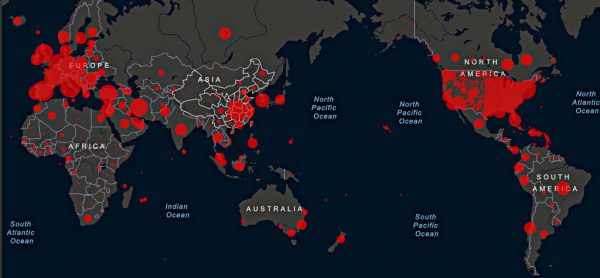
There are currently around 1.36 million reported COVID-19 cases globally, with more than 76,000 deaths. China accounts for just 6 per cent of all cases, and 4.4 per cent of deaths. Yesterday, China reported no new deaths for the first time since January.
Countries in the West, meanwhile, have gone into lockdown, hospitals have been overwhelmed and markets are crashing. There appears to be no clear end in sight for us here.
Despite that, a group of ideologues already have their eyes on the post-pandemic world, and are concerned China may emerge as the new global superpower. As part of an effort to prevent this, these figures think other countries should hold China “accountable” for the pandemic, and are working to create popular demand among the public for this to happen.
In his 1997 book Blackshirts and Reds: Rational Fascism and the Overthrow of Communism, political scientist Michael Parenti wrote, “In the United States, for over a hundred years, the ruling interests tirelessly propagated anticommunism among the populace, until it became more like a religious orthodoxy than a political analysis. During the Cold War, the anticommunist ideological framework could transform any data about existing communist societies into hostile evidence.”
We’re currently seeing that happen with China, from columnists, reporters and politicians alike.
When the Chinese government had yet to put millions of people into lockdown, it was because they cared about their image more than fighting a pandemic. When they did enforce a lockdown, it wasn’t about fighting a pandemic, but a totalitarian move for more power.
When China was reporting hundreds of deaths a day, it was proof their government was incompetent because of just how bad the numbers were. When death counts dwindled, it was proof they were lying about numbers.
When global health organizations say anything remotely critical about China’s handling of the pandemic, it’s proof the country should be punished. When they say anything positive, it’s proof they were bought off by China.
When China had yet to send aid to other countries, they were portrayed as cruel. When they did send aid, it was portrayed as a propaganda effort.
When Chinese citizens complain about the government, it’s a sign the entire state is on the verge of collapse. When Chinese citizens praise the government, it’s evidence they’re being forced or brainwashed.
COVID-19 does appear to have originated in China, and so it makes sense, to an extent, that the country will be part of most conversations about the pandemic. However, this isn’t the reason these ideologues have focused so intently on China. Instead, it’s because of the ideological function their attacks serve.
Those in power, or adjacent to power, in the West see their government failing to deal with COVID-19, but don’t want to shoulder any blame. So, instead of criticizing policies they adopted, or failed to adopt, they direct anger outward.
For example, on March 21 the Daily Beast reported they were given a leaked government cable that contained “guidelines for how [United States] officials should answer questions on, or speak about, the coronavirus and the White House’s response in relation to China.” Unsurprisingly, officials were told to blame China for the pandemic when giving statements or answering questions from the press.
Those who aren’t in power, such as rightwing journalists, realize their neoliberal ideology is unequipped to deal with the pandemic, and therefore is under attack. They won’t abandon their views, so they have to shift blame to an outside country with an ideology that is different in the right way. Attacking China clearly serves this purpose, and offers a chance for anti-communism, which, as Parenti notes, people have been primed to hate for more than a century.
For example, Postmedia’s executive editor Kevin Libin wrote in a March 23 National Post article, “We will likely persevere, but what the world can no longer afford is the threat to our collective health and well-being that is the Chinese communist regime.”
These attacks aren’t justified, and I will break down three of the more popular pieces of the anti-China narrative in the media to show the lies or half truths they’re built on. In order to ascertain what these pieces of the narrative are, I went through the pages of the Toronto Star, the Globe and Mail, the National Post, the Toronto Sun and the Ottawa Citizen, and read through every opinion piece they published that focused on China and COVID-19, from January until early April.
China Imprisoned A Whistleblower
A main piece of the anti-China narrative is that the government arrested or imprisoned a COVID-19 whistleblower.
The story goes that a doctor found out about a new virus, tried to tell the world, was arrested and imprisoned, and then died from the virus. Commentators claim China did this because they wanted to cover up the existence of a deadly virus in the country, and that the result was COVID-19 spreading quicker and further than it otherwise would have.
Most of this narrative is false, or at least based on half-truths.
Doctor Li Wenliang was an ophthalmologist, not an epidemiologist. He initially misidentified the novel coronavirus as evidence of a SARS outbreak. He shared that claim, along with patients’ medical records, in a WeChat group on December 30 with a few colleagues, not to any hospitals or public health organizations. Li was not arrested or imprisoned. He was called in to a police station on January 3, after a screenshot from his WeChat group leaked and caused panic. At the station, he was reprimanded for falsely claiming there was a SARS outbreak, asked to sign a document pledging not to continue spreading the misinformation and then was free to leave. Unfortunately, it’s true that Li did die on February 7 from COVID-19, which he reportedly got from treating one of his patients who had been infected.
This narrative also serves to distract from another sequence of events.
On December 26, Zhang Jixian, the director of respiratory and critical care at Hubei Provincial Hospital, noticed that four patients in her unit who sought treatment for suspected pneumonia — an elderly couple, their son and someone who had come in from a seafood market — all had similar and unusual CT images, which led her to believe they were suffering from something else. The next day, Zhang — who played a crucial role in combating the 2003 SARS outbreak — reported it to the head of her hospital. Within the next two days, the information was passed on to the provincial Centers for Disease Control, which then initiated full scale research into the hospital.
All of this took place before Li shared those screenshots in his WeChat group. Zhang wasn’t punished for her efforts — she was given an award by the regional government.
I used the ProQuest database to search through the entire print editions of the five publications I mentioned earlier in the article. Li was mentioned 44 times between them. Zhang wasn’t mentioned at all.
China Didn’t Act Fast Enough
Another core part of the narrative, mentioned in nearly every one of the opinion articles I looked at, was that China didn’t react to the outbreak quickly enough due to malicious intent.
Here are quotes from just a few of the many examples I examined: “Beijing’s authoritarian government hid information about its origins, spread and severity for weeks”; “It wasn’t until Jan. 20, 40 days after the virus was first detected, that Chinese President Xi Jinping first issued instructions to control the virus, but by then it was too late”; “We know they hid this for at least a month before they told the [World Health Organization]”; “It wrapped the communist cloak of silence around the then-unknown virus running wild in Wuhan and kept it a secret until word got out.”
What these articles fail to mention is the unique difficulties of dealing with a novel coronavirus, as going through the process of noticing something is happening, identifying what it is and confirming the extent of the danger it poses takes time. This effort should not be viewed as something China was doing for itself, but rather on behalf of the world. Any country the pandemic started in would have had to do the same thing, and there are several steps involved before widespread action can be taken.
Here is a timeline of China’s efforts, continuing from the one mentioned in the previous section.
On December 31, just a few days after Zhang noticed strange CT results, the Wuhan Municipal Health Commission issued a public notice about the disease. That same day, officials informed the WHO. On January 1, officials shut down the market where they believed the virus crossed over to humans, and a day later the WHO activated their incident management system. By January 7, China had isolated what was at this point believed to be a new coronavirus. All of this happened before the first confirmed COVID-19 death, which occurred on January 9.
On January 12, China shared the genetic sequence of the novel coronavirus for countries around the world to use in creating diagnostic kits. The next day, the first case of the novel coronavirus outside of China was reported, in Thailand.
As of January 14, the WHO was still noting that “there is no clear evidence of human-to-human transmission,” a crucial component of determining how dangerous a virus may be. The first confirmed case of human-to-human transmission came more than a week later. It wasn’t until January 30 that the WHO declared a global health emergency.
So, the idea that the disease was wreaking havoc within China and in neighbouring countries before the government did anything about it is false. This isn’t to say China’s response has been perfect, although it’s unclear what perfection would even look like.
Whether China reacted quickly enough to the outbreak is a matter of opinion, which I’m sure will be debated and investigated — including by the Chinese government — long after the pandemic is over and people are able to see everything in scale. For now, however, we can look at what the experts have said about China’s performance.
In a January 30 statement, the Emergency Committee convened by the WHO Director-General wrote, “The Committee welcomed the leadership and political commitment of the very highest levels of Chinese government, their commitment to transparency, and the efforts made to investigate and contain the current outbreak. China quickly identified the virus and shared its sequence, so that other countries could diagnose it quickly and protect themselves, which has resulted in the rapid development of diagnostic tools.”
In a series of tweets the same day, Tedros Adhanom Ghebreyesus, the WHO’s director-general, wrote, “In many ways, #China is actually setting a new standard for outbreak response.”
A February report from the WHO noted, “In the face of a previously unknown virus, China has rolled out perhaps the most ambitious, agile and aggressive disease containment effort in history.” The report added, “The remarkable speed with which Chinese scientists and public health experts isolated the causative virus, established diagnostic tools, and determined key transmission parameters, such as the route of spread and incubation period, provided the vital evidence base for China’s strategy, gaining invaluable time for the response.”
The examples go on, and beg the question: Why do columnists feel more qualified to assess China’s response than the WHO? Some would say the WHO is lying, but what’s more likely: a successful conspiracy to silence the global health organization or a columnist who wrote about cancel culture a week ago being wrong?
China Is Responsible For The Crisis Globally
Commentators accusing China of failing to act quick enough likely aren’t doing so out of a concern for Chinese citizens. Perhaps that was the case initially, but now that we see China, with a population of 1.3 billion, has thus far managed to keep their death count to around 3,300, these concerns seem motivated by something else.
The reason, sometimes stated explicitly and other times just implied, is that these commentators believe the carnage in other countries is because of China. Here are just a few examples of these sort of headlines or statements: “China’s lies allowed the coronavirus outbreak to spread”; “now the whole world is paying dearly for Beijing’s behaviour”; “The virus is no conspiracy, just a cataclysmic natural phenomenon tragically mismanaged by the puppeteers in Beijing.”
This is absolutely not the case, and, difficult as it may be to accept, the carnage COVID-19 has caused within our countries is almost entirely the fault of our governments. The clearest example of this is the stark difference in how South Korea and the U.S. have dealt with COVID-19.
Both countries reported their first confirmed COVID-19 case on January 20. Since then, as of writing this article, South Korea has reported around 10,200 cases, and 192 deaths. The U.S., meanwhile, has reported more than 367,000 cases, and 10,900 deaths. Accounting for the population difference between the two countries, the U.S. has reported 5.6 times the cases, and 9.5 times the deaths.
President Donald Trump recently predicted a best-case scenario of 100,000 to 240,000 deaths within the country from COVID-19, although experts who put together the data the projection was based off of have said they’re unclear how the number was reached. South Korea, meanwhile, seems to have beat back the virus for now, with just six new deaths on April 7.
These stark differences are due entirely to the varying approaches the two countries have taken in combating COVID-19.
For example, as of mid-March, South Korea had tested more than 290,000 people for COVID-19, while the U.S. had done just 60,000 tests. Accounting for population differences, South Korea conducted 31 times more tests than the U.S. According to the Nation, “Many of the Korean tests were administered in drive-in centers around the country, where the procedure was available for free to any citizen who asked for one and results were available by text or e-mail within six to 12 hours.”
Moreover, South Koreans were encouraged to wear masks, and they were readily available. People were able to pick up two a week from their pharmacy, with the distribution of them based on the last number of one’s birth year. The U.S., meanwhile, has had a massive shortage of masks, even for frontline healthcare workers. In recent days, they’ve resorted to essentially hijacking shipments of masks intended for other countries, and asking manufacturers to stop sending them elsewhere, including Canada.
South Korea is not the only example of a nation that has performed far better than the U.S., or Italy, France, Spain and various other countries. Vietnam, for example, with a population of more than 95 million, has had zero reported COVID-19 deaths, and around 240 cases. Their success has had less to do with testing, due to a lack of resources, and instead has come from aggressive tracing measures, enforced quarantines and the conscription of medical students and retired doctors and nurses’ to fight the virus.
All of this is to say that China’s initial handling of COVID-19 didn’t doom other nations to the fates we’ve seen in the West. Instead, as journalist Ajit Singh argues in Monthly Review, China actually bought time for the rest of the world. As such, the countries in crisis are in that position due to their policies alone. Their governments should get the blame, not China.
April 10, 2020
Posted by aletho |
Fake News, Mainstream Media, Warmongering | Covid-19 |
Leave a comment
MOSCOW – The Russian Foreign Ministry on Thursday rejected allegations that the country is running a troll factory in the western African nation of Ghana to target US voters in the run-up to the 2020 presidential election.
On 12 March, CNN published a month-long journalism investigation accusing Russia-linked organizations of meddling in the US presidential election via troll factories in Ghana and Nigeria. The next day, five US Democratic Senators, in a letter on the European Union, called for tightening sanctions on Russia.
“Another ‘masterpiece’ has appeared, i.e. a CNN investigation into Russia’s alleged interference in the US electoral process. As you see, we are all over just that at the moment. Now they say about some serious Russian structures allegedly using non-governmental organizations registered in a foreign country – this time it is the Republic of Ghana – to employ deep-cover trolls to sow discord among African-American voters in the United States,” stated Maria Zakharova, director of Russia’s Information and Press Department of the Ministry of Foreign Affairs.
She added that it was not the first “pseudo-report” on the matter but one of the most catchy.
The spokeswoman described the reports as “provocative hoaxes” that have their purpose and are generously funded by those who order them.
April 10, 2020
Posted by aletho |
Fake News, Mainstream Media, Warmongering, Russophobia | CNN, United States |
Leave a comment
Russian diplomats called on their US counterparts to provide some actual evidence of allegations circulated by American media and officials that Moscow is waging a coronavirus-themed fake news campaign – but have received none.
The fail-proof ‘blame Russia’ approach persisting in the West in recent years remains baseless and without substance, Russian Foreign Ministry spokeswoman Maria Zakharova said on Thursday.
“We are curiously watching the attempts by several American media, as well as by some high-ranking officials to blame Russia for conducting a certain pandemic-related disinformation campaign against the US,” Zakharova said during a press briefing.
Several US news outlets have run stories on an alleged fear-mongering campaign – waged by pro-Kremlin media and fearsome social media bots, no less. In addition, conspiracy theories that the coronavirus might have been artificially created by the Russians circulated on social media – and the effort appeared to be coordinated by US government agencies, Zakharova stated.
All the accusations remain unsupported by evidence, even after persistent attempts by Russian diplomats to try and get some actual proof of the alleged evil-doing.
“We’ve reached out to the State Department, requesting to provide us with some factual evidence of such statements,” Zakharova stated. “We have not received any coherent explanation of such allegations, not to mention any evidence.”
The whole course of the coronavirus pandemic has been accompanied by allegations against Russia and – alternately – China and Iran of spreading lies and fear in the West. As if the deadly disease, which has already affected over 1.5 million people globally and killed more than 90,000, was not scary enough as it is.
One of the most high-profile anti-Russia pieces surfaced back in March, when a secret report by the European External Action Service (EEAS) – the bloc’s de facto foreign ministry – came to light. It blamed the Russian media for spreading “confusion and panic” in the West amid the epidemic.
Since the piece was produced by the EEAS’ propaganda branch – also known as the “strategic communications” division – it was composed almost entirely of ‘scary Russians’ tropes, but was notably lacking in facts. A detailed analysis of the report, conducted by British researchers – who are themselves no fans of the Russian media – showed that its claims did not have any basis.
April 9, 2020
Posted by aletho |
Fake News, Mainstream Media, Warmongering, Russophobia | United States |
Leave a comment
Russia has censured as “untrustworthy” a recent report by the Organization for the Prohibition of Chemical Weapons (OPCW) — tasked with probing a series of suspected “chemical attacks” on a Syrian town in 2017, saying the watchdog has violated the basic principle of its work by conducting a remote investigation without visiting the sites.
In its Wednesday’s 82-page report, the OPCW’s Investigation and Identification Team (IIT) claimed Syrian government forces had been responsible for the alleged chemical attacks on the militant-held town of Lataminah in the northern Syrian province of Hama during the last week of March 2017.
It alleged that in the span of one week, Syrian fighter jets had twice dropped bombs containing sarin nerve agent on the village and a helicopter had targeted its hospital with a cylinder containing chlorine, affecting scores of people.
According to the report, the team had based its investigation on a range of evidence, including witness testimonies, videos, forensic reports on recovered munitions scraps, medical records and satellite imagery.
“The experts, who accused Syria of incidents that took place in 2017, have depended on judgments released by the Fact-Finding committee which included rough violations of the basic principle of the OPCW work that stipulates the need for a logic succession of events while collecting and keeping material evidence,” the press office of Russia’s permanent mission at the OPCW said on Wednesday..
It described the IIT’s report as unreliable, saying it depends on investigations that were conducted remotely without visiting the places of incidents based on statements of terrorist groups and the so-called civil defense group White Helmets
The Lataminah strikes came days before another alleged sarin assault in nearby town of Khan Shaykhun in Idlib Province, which killed more than 80 people on April 4.
The Western countries rushed to blame the incident on Damascus — an allegation rejected by the Syrian government — with the US launching several dozen Tomahawk cruise missiles at a Syrian air base, taking the lives of about 20 people including both Syrian soldiers and civilians.
The Syrian government surrendered its stockpiles of chemical weapons in 2014 to a joint mission led by the UN and the OPCW, which oversaw the destruction of the weaponry. However, Western governments and their allies have never stopped pointing the finger at Damascus whenever an apparent chemical attack has taken place.
April 9, 2020
Posted by aletho |
Deception, Mainstream Media, Warmongering | OPCW |
Leave a comment
When Russian military planes and trucks arrived in Italy to provide relief for communities hit by the Covid-19 outbreak, the Italian government, elected into power by the Italian people, was thankful for the assistance offered by Moscow.
Named officials within the Italian government, including the foreign minister, the minister of defense and the governor of Apulia, Michele Emiliano, publically expressed thanks to Russia for the aid.
But finding any mention of this across the Western media is difficult, often buried deep within articles aimed entirely at smearing Russia for sending aid and depicting Italians as victims of a publicity stunt.
Reuters, in a smear piece published by the New York Times and aimed at vilifying Moscow, still had to admit regarding Russian aid that Italians were grateful, noting:
“There are no new geopolitical scenarios to trace, there is a country that needs help and other countries that are helping us,” Foreign Minister Luigi Di Maio was quoted as saying by Italy’s Il Corriere della Sera newspaper on Thursday.
Despite Italy being capable of speaking for itself and bringing up any suspicions (if they had any), the West decided to step in and speak for Italy instead.
Sneering and Smearing
Western headlines are flooded with scorn for both Russia and the aid they sent, completely indifferent to how Italians themselves perceived the gesture.
Articles like Bloomberg’s “Italy Questions Russians Over Their Goodwill Virus Gestures,” admit several paragraphs in that officially, Italy was grateful for the aid, noting:
“Our country can only be grateful” for the solidarity of many countries, including Russia, the Italian defense and foreign ministries said in a joint statement Friday.
Yet claims that “Italy questions Russia” suggest the entire nation is suspicious of the aid. Upon reading Bloomberg’s article, the only source cited is a single article in the Italian newspaper La Stampa. It is hard to believe an article in La Stampa constitutes all of “Italy.”
According to the pro-Western Moscow Times in their article, “80% of Russia’s Coronavirus Aid to Italy ‘Useless’ – La Stampa,” also entirely based on the La Stampa article, its admits La Stampa’s information came from an “unnamed source.”
Other articles, like the BBC’s “Coronavirus: What does ‘from Russia with love’ really mean?,” Foreign Policy’s “Beware of Bad Samaritans,” and Forbes’ “From Russia With Love? Putin’s Medical Supplies Gift To Coronavirus-Hit Italy Raises Questions,” all used similarly disingenuous tactics to depict the Russian aid as somehow sinister and unwanted.
The Guardian in its article, “Coronavirus: Russia sends plane full of medical supplies to US,” explains:
Critics likely to claim Moscow will exploit goodwill gesture as public relations coup.
France 24 in headline alone makes Western criticism even clearer, claiming, “Flying aid to virus-hit Italy, Moscow flexes soft power.“
So by sending aid to Italy, Russia is somehow supposedly flexing its “soft power.”
So How is the West Using Its Soft Power?
The West faced a collective decision. They could have used their own, very substantial soft power to one-up Russia by sending even more aid to Italy and other regions of the globe impacted by the spread of Covid-19.
Instead, they mobilized the entirety of their soft power to sneer and smear Russia’s efforts with Western-funded media fronts writing entire articles doing just that.
The West’s attempts to depict the Russian media reporting on the aid as also somehow sinister rather than simply telling the world what Russia is doing is also particularly surreal.
The Western media itself spends the summation of its own time and energy promoting what their respective governments are doing abroad which usually involves illegal invasions, wars, occupations and interventions… not sending aid.
A Missed Opportunity
Because certain special interests in the West fear some Western governments growing closer to nations like Russia and China in the spirit of cooperation and mutual benefits and derailing the Washington-led “international order” that has prevailed post World War 2, resources have been committed to attacking any development that could spur this process further.
But because these resources have been invested into attacking, even when attacking is not the best option, that is all the West appears capable of doing.
The answer to Russian aid to Italy was Western aid to Italy. The benefit would have been a flood of resources sent to where it was needed and everyone involved enjoying the benefits of lending a helping hand to those who would be grateful in return.
Instead, the West appears to be throwing rocks at a time when others are coming together to help, and throwing those rocks at those who are helping.
Rather than teaching the Italians never to deal with Russia again, it is likely this process is going to remind Italians as to why they’ve diversified their foreign relations outside the West in the first place.
April 9, 2020
Posted by aletho |
Fake News, Mainstream Media, Warmongering, Russophobia | Italy, New York Times |
Leave a comment
The OPCW’s newly-formed body in charge of identifying the perpetrators of chemical attacks said in its first report on Wednesday that the Syrian Arab Air Force’s aircraft had dropped bombs containing sarin and chlorine on the town of Ltamenah in Hama province in March 2017.
The Investigation and Identification Team (IIT) was established in 2018. Russia opposed the move, warning against expanding the OPCW’s competence from conducting probes to attributing blame and saying that only the UN Security Council is eligible to make such judgments.
“[T]he IIT has concluded that there are reasonable grounds to believe that the perpetrators of the use of sarin as a chemical weapon in Ltamenah on 24 and 30 March 2017, and the use of chlorine as a chemical weapon on 25 March 2017 were individuals belonging to the Syrian Arab Air Force”, IIT Coordinator Santiago Onate-Laborde said in a statement.
According to him, “attacks of such a strategic nature would have only taken place on the basis of orders from the higher authorities of the Syrian Arab Republic military command”.
“In the end, the IIT was unable to identify any other plausible explanation”, he added.
Commenting on the report, OPCW Director-General Fernando Arias said that the IIT is “not a judicial or quasi-judicial body with the authority to assign individual criminal responsibility, nor does the IIT have the authority to make final findings on non-compliance with the Convention.”
“It is now up to the Executive Council and the Conference of the States Parties to the Chemical Weapons Convention, the United Nations Secretary-General, and the international community as a whole to take any further action they deem appropriate and necessary”, he stated.
The IIT explains its mission as identifying and reporting “on all information potentially relevant to the origin of those chemical weapons in those instances in which the OPCW’s Fact-Finding Mission (FFM) determines or has determined that use or likely use occurred”.
The FFM concluded back in June 2018 that sarin and chlorine were “very likely used as a chemical weapon” in Ltamenah on 24 March 2017, and 25 March 2017, respectively.
Damascus has repeatedly refuted the allegations of the chemical weapons use, saying that the full destruction of its arsenal was confirmed by the OPCW in 2016.
April 8, 2020
Posted by aletho |
Mainstream Media, Warmongering | OPCW |
Leave a comment
“And the unbelievers plotted and planned, and God too planned, and the best of planners is God”
Quran, Sura Al-Imran (The Family of Imran) – 3:54
It has been pretty obvious for many years already that the AngloZionist Empire was not viable, that it had to tank sooner or later. There were two main scenarios which were typically considered for this collapse: an external crisis (typically a major military defeat) or an internal one (economic collapse). Personally, I always favored the first scenario (specifically, as described here). I even had a “favorite” location for such a catastrophic military defeat (for the US): Iran and the Middle-East. Irrespective of the scenario one preferred, this was obvious:
- The Empire was not viable
- The Empire was not reformable
The same is true of the US political system, by the way.
There was one huge problem, however. The quality and sheer size of the AngloZionist propaganda machine was very successful in keeping most of the people in the West in total ignorance of these realities. The faster the Empire was collapsing, the more Obama or Trump peppered their patriotic flag-waving ceremonies (aka “press conferences”) with references to an “indispensable nation” providing “vital leadership” thanks to its “the best economy in history”, the “best military in history” and even “unbelievable CEOs”, “incredible politicians” and even “incredible conversations”. The message was simple: we are the best, better than all the rest and we are invincible.
Then COVID19 happened.
The initial reaction in the US to the pandemic was to either dismiss this completely, or blame it on the Chinese. Another exceptionally dumb theory was that the virus only affected Asians. This one tanked pretty quickly. Other myths, and even outright lies, proved much more resilient, at least for a while.
Then “Italy” happened. Soon followed by Spain and France.
Some folks started to change their tune. Other still thought that the EU was not as “incredible” as the US.
Then “New York” happened and all hell broke loose for the “indispensable nation” and the “imperial parasite” this nation was hosting. Even the Idiot-in-Chief switched from “it will be over by Easter” to talk about saving “millions” of (US) “Americans” (the US does not care about non-Americans).
I predict that this process will now only accelerate.
Here are a few reasons for this conclusion:
First, the imperial propaganda machine is simply unable to conceal the magnitude of the disaster, even in countries like the US or the UK. Oh sure, initially doctors and even USN ship commanders were summarily fired for speaking the truth, but even those cases proved impossible to conceal and public opinion got even more suspicious of official assurances and statements. The truth is that most of the entire planet already realized that this is a huge crisis and that countries like Russia or China responded almost infinitely better than the US. The planet also knows that the US “health notcare” system is broke, corrupt, and mostly dysfunctional and that Trump’s initial optimism was based on nothing. BTW – Trump haters have immediately instrumentalized the crisis to bash Trump. The sad thing is that while they are no better (and most definitely not the braindead Uncle Joe), they are right about Trump being completely out of touch with reality. In the age of the Internet this is a reality which even the US propaganda machine is unable to conceal from the US public forever.
Second, and that is now quite obvious, it is becoming clear that the capitalist ideology of free markets, globalism, consumerism, extreme individualism and, above all, greed, is totally unable to cope with the crisis. Even more offensively to those who still believed in an ideology based on the assumption that the sum of our greeds will create an optimal society, countries with stronger collectivist traditions of solidarity (whether “enhanced” by Marxist or Socialist ideas or not) did much better. China for starters, but also Cuba and even Russia (which is neither Marxist nor Socialist, but which has very strong collectivist traditions) or South Korea or Singapore (both non-Marxists with strong collectivist traditions). Even tiny Venezuela, embattled and under siege by the Empire, managed to do much better than the US or the UK. Not only did these countries all fare much better than much richer, and putatively much “freer”, countries, they did so while under US sanctions. And, finally, just to add insult to injury, these supposedly “bad” countries proved much more generous than those incorporated into the Empire: they sent many tons of vitally needed equipment and hundreds of specialized scientists and even military personnel to help those countries most in need (Italy, Spain, Serbia, etc.).
Eventually, even the US has to accept aid from Russia: the contents of two huge military AN-124 transporters:

Think of the irony! The country whose economy was supposed to be “in tatters” (Obama) delivers humanitarian aid to the “indispensable nation” (Obama again). Not only was this aid delivered from a country under US sanctions, the gear delivered was produced by a Russian company also under US sanctions. The “grateful” US media immediately declared that this was a Russian PR action, especially since 50% of the cargo was paid for by the US (the rest, including transportation costs, were paid by Russia).
At least in Italy questions began arising why the US, NATO or the EU did absolutely *nothing* to help them when they were in such dire need of help, and why countries which did generously help (Russia, China, Cuba) were all under sanctions, including Italian ones! Good questions indeed. It was answered by Serbian President Vucic who declared that European solidarity was a “fairy tale“. He is quite correct, of course.
Third, then we all saw the ugly sight of various western “democracies” literally stealing vital medical gear from each other, over and over again. In fact, under a purely capitalistic logic, this kind of “competition” was both inevitable (true) and even desirable (false): major Med & Pharma companies all have used this financial windfall to maximize their profits (which is, after all, what all corporations have to do in a capitalist system: get as much money as possible for their shareholders). Even states and countries are competing against each other for medical equipment now! As long as all was well and the West was free to plunder the rest of the planet, Capitalism could be seen as a promise of a better future (just like Communism was, by the way). But now that this big “propagandistic house of cards” is tumbling down and capitalism shows its true face (an ideology created by the rich to screw the poor), the comparison with (supposedly “backward”) collectivistic societies is most embarrassing yet inevitable.
Fourth, we also witness the raw nastiness of the imperial propaganda machine in articles about how “Russia sent useless gear to Italy”, that “Chinese equipment did not work” or about how all the countries which responded better and sooner were all lying about the real numbers (which is utter nonsense, the Chinese have been very open, as have the Russians: the truth is that in the early phases of a pandemic it is impossible to get real numbers, that can only be done much later). This is as false as the “Iraqi incubators”, “genocidal Serbs” or “Gaddafi’s Viagra” and time will prove it.
Fifth, then there is the issue of poverty. We see the first signs that this pandemic (like all pandemics) is affecting the poor much harder than the rich. Hardly a surprise… For example, in the US cities like New York, Chicago, Detroit, Miami or New Orleans have a lot of poor neighborhoods and that people there are getting hit very hard. But this is only the beginning, there are much bigger slums in other countries, including in Latin America and, even probably worse, Africa. Barring a miracle of some kind, the death-toll in the third world slums will be absolutely horrendous. And, you can be pretty sure that collectivistic poor countries will do much better than those in the grip of the delusions of the free market economy. Again, there will be major political consequences in all those countries: I predict that we will see some cases of regime change in the not too distant future.
Sixth, just like the Empire itself, NATO and the EU are also in free fall, both clueless as to what to do and in a panic about doing anything proactive. Besides the flag-waving Idiot-in-Chief, I also took the time to listen to both Macron and Merkel. They are both in a full-freak-out mode, Macron speaks over and over about a “war” while Merkel declared that the pandemic is the most serious challenge facing Germany since WWII! Still, the most amazing contrast to the US might well be Russia. Putin has made several special appeals to the Russian people, and his mood was both clearly determined and clearly somber. I took this screenshot of Putin’s latest message to the Russian people, and see his expression for yourself:
As for the main MD in charge of the COVID19 crisis in Moscow, he told Putin that Russia needs to prepare for what he called “the Italian scenario in order to avoid it”, even though at the time (March 30th) there were only 1,836 confirmed COVID19 cases in Russia, including 9 death and 66 recoveries. Let’s compare the three countries:
| Country |
COVID cases detected |
Deaths |
Recoveries |
| US |
161,807 |
2,978 |
5,644 |
| Italy |
101,739 |
11,591 |
14,620 |
| Russia |
1,836 |
9 |
66 |
All the numbers above come from here: https://coronavirus.jhu.edu/map.html (as of March 30th!!)
Furthermore, the Russian special medical teams of the Nuclear, Biological and Chemical Protection Troops of the Russian Armed Forces are now on full alert and even though there is no shortage of specialized ABC/NBC medical gear in Russia, the Russian Armed Forces are now building 16 special hospitals in various locations in Russia. Russia is also almost completely shutting down internal air and rail traffic. A lot of that was predictable, since Moscow is much richer than any other Russian region, Moscow is doing fine, in spite of being a huge population (about 12 million in the city, plus another 7 or so in the Moscow Oblast’). Here are the official Russian numbers for the Moscow area: (also as of March 30th!!)
| Location |
Infected |
Deaths |
Recovered |
% death |
| City of Moscow |
1’226 |
11 |
28 |
0.9% |
| Moscow Oblast |
119 |
1 |
14 |
0.85% |
The source of these numbers is: https://coronavirus-monitor.ru/
Does it not strike you as very strange that a country like Russia, which clearly is faring much better than the US (even in per capita indicators) is preparing for the worst? What do the Russians know that the US leaders are not telling you?
Of course, the anti-Russian propaganda machine has an explanation. For example, it claims that the Russians are lying about everything. There is even a psyop going on with western agents of influence impersonating Russian MDs claiming that there are thousands of hidden deaths, that Russia has no equipment and that the Russians are clueless. One previously sober-minded analyst now even claims that “Putin is losing control“.
To be totally honest, I have never in my life seen such a tsunami of nonsense, false information, unfounded rumors, and, last but certainly not least, shameless clickbaiting. For some, this crisis is clearly a chance to regain some visibility. It is shameful, really, a total disgrace: just a new form of profiteering from a crisis.
I am not medical expert for sure. But I know the Russian government and its “body language” if you wish, and I can tell you that the Russians are preparing very, very seriously, for what might well become a huge crisis even for Russia (having the Ukraine and Belarus both sitting in deep denial will obviously not help!).
Seven, in the US, the contrast between the Federal government and the state authorities is quite startling. As much as the Federal government is terminally dysfunctional, state governors have often had to use a lot of out of the box thinking to get supplies and specialists. For example, the governor of FL, Ron DeSantis (R) had to call a friend of his in Israel to get the giant Israeli pharma company Teva Pharmaceuticals to send in desperately needed medical gear to Florida. Similar things are happening in other states I believe. This is one of the reasons why Americans are typically very suspicious of the Federal government but much more supportive of their local authorities (again, as a general rule, there are, of course, exceptions to this). There are many reasons for the contrast between the Federal and State authorities, including the fact that governors are much “closer” to their constituents on a local level than on the national one.
While not as dramatic as the contrast between societies based on pure greed and societies based on solidarity, this contrast between the local and national level will also contribute to the collapse of the imperial system, albeit more indirectly.
Conclusion: NWO, globalism and US “leadership”- RIP
The first (non-human) victim of this pandemic will be the so-called “New World Order” promised by several US presidents. The same goes for its underlying globalist ideology. If the putative “Illuminati world government” imagined by some really did trigger this pandemic, then it shot itself right in the foot and is now quickly bleeding out.
The US is now showing to the world that the so-called “US leadership” is nothing but a crude lie to conceal what I would describe as the rule of one, single, narcissistic world hegemon who will screw over even its closest “allies” (really colonies) to get any advantage.
Right now most of what we see are only warning signs, say like the EU members closing their borders. But irrespective of how this pandemic progresses, what will happen next is a huge economic crisis which will dwarf both the Great Depression, the crash after 9/11 and 2008.
Of course, the world will, sooner or later, recover from this pandemic and economic collapse. But the kind of world which we will then see will be dramatically different from the one we have lived in until now.
For the time being, there are still observable manifestations of the “US leadership”: the US tries hard to rob medicine and medical gear from other countries, the US imposes sanctions on countries like Iran and Venezuela who desperately need meds, and the US re-plays the Noriega scenario with Maduro. This foreign policy of “US leadership” can be summed up in terms like evil, immoral, hypocritical, dysfunctional, narcissistic. etc. Whatever label one chooses to apply to it, it is always a morally repugnant and practically self-defeating policy.
Right now, after blaming China, Trump is now pointing fingers at the WHO. Truly, a noble soul and a brilliant, 5D, chess player…
There is no more hiding it. The SARS-COV-2 achieved that which even RT or PressTV could not: it put a bright spotlight on the true nature of the AngloZionist Empire.
As the Quran says, God is the better planner.
April 7, 2020
Posted by aletho |
Corruption, Economics, Mainstream Media, Warmongering | China, European Union, Russia, United States |
Leave a comment
I’ve seen this posted everywhere; article after article in the mainstream media telling us to stop worrying about the coronavirus.

I checked them all, and every one is real.
- “We Should Deescalate the War on the Coronavirus,” by Robert Dingwall, Wired, January 29, 2020
- “As the coronavirus spreads, fear is fueling racism and xenophobia,” by Jessie Yeung, CNN, January 31, 2020
- “You’re Likely to Get the Coronavirus,” by James Hamblin, The Atlantic, February 24, 2020
- “Is the Coronavirus Worse Than The Flu? Here’s How the 2 Illnesses Compare,” by Leah Groth, Health, February 26, 2020. The subtitle is, “It depends on what you mean by ‘worse.’” A doctor quoted in the story says the flu is worse, but that the coronavirus spreads more easily.
- “The Fear of the Coronavirus, and the Reality of the Flu,” by Simon Murray, HCPLive, February 10, 2020. The final sentence says the outbreak “serves as a surrogate for a good deal of xenophobia and fear of the country [China] itself.”
- “Panic over coronavirus could be caused by flu numbers,” by Renae Skinner, KOAA, February 7, 2020
- “The Flu Is a Way Bigger Threat to Most People in The US Than Coronavirus. Here’s Why,” by Aylin Woodward, Business Insider, January 25, 2020
- “Heath official: You are more likely to catch flu in Oregon than deadly Wuhan coronavirus,” by Stephanie Rothman and KVAL.com staff, KVAL, January 22, 2020
- “Is the new virus more ‘deadly’ than flu? Not exactly,” Associated Press, February 18, 2020
- “Amid coronavirus panic, doctors remind public: Flu is deadlier, more widespread,” by Denis Dador, Eyewitness News 7, March 4, 2020
- “MD Flu Deaths Climb As Flu More Worrisome Than Coronavirus,” by Deb Belt, Patch, February 23, 2020
- “New coronavirus may be no more dangerous than the flu despite worldwide alarm: experts,” by Tom Blackwell, National Post, February 3, 2020
- “Experts warn flu is greater risk than coronavirus,” by WICS/WRSP staff, News Channel ABC 20, February 13, 2020
- “Want to Protect Yourself From Coronavirus. Do the Same Things You Do Every Winter,” by Jamie Ducharme, Time, January 31, 2020
- “Doctor suggests worrying about the common flu, not coronavirus,” by Michael Martin, Fox 17 West Michigan, January 31, 2020
- “New coronavirus is likely to go pandemic, but that’s no reason to panic or overreact,” by Bob England and Will Humble, AZCentral, February 25, 2020
- “Relax! Coronavirus is Less Dangerous Than the Flu, Says Epidemic Expert,” by Mark Emem, CCN, January 31, 2020
- “The Flu Is Still a Bigger Health in the U.S. than Novel Coronavirus,” by Lesley McClurg, KQED, January 29, 2020
- “Why are we panicked about coronavirus – and calm about the flu?” by Anthony DiFlorio, The Hill, February 4, 2020
- “Flu hitting Arizona more than usual this season, despite attention on coronavirus,” by Mike Pelton, ABC 15, February 6, 2020
- “New coronavirus spreads more like flu than SARS: Chinese study,” by Julie Steenhuysen, Reuters, February 19, 2020
- “Forget the Coronavirus: The Flu Pandemic of 1918 Killed More People in One Year than all of World War I,” by Sebastien Roblin, National Interest, February 15, 2020
- “The Virus Killing U.S. Kids Isn’t the One Dominating the Headlines,” by Michael Daly, Daily Beast, February 6, 2020. Hint: It’s a three-letter-word that begins with F.
- “Is Coronavirus Spreading Faster Than SARS, Ebola, and Swine Flu?” by Dan Evon, Snopes, February 26, 2020
- “Why we panic about coronavirus, but not the flu,” by Bob Herman, Axios, January 29, 2020
- “Coronavirus is deadly, but flu has claimed over 8,000 lives this season,” by Jasmine Vaughn-Hall, York Daily Record, January 31, 2020
Several articles reported that the flu had, at the time, killed more people than the virus. Today, journalists at many publications are slamming President Trump for having compared coronavirus to the flu, but their colleagues did the same thing. Vox didn’t just compare coronavirus to the flu, but said the new disease might “look more like the common cold than like SARS.”

Vox shamelessly deleted an article that assured readers we wouldn’t get “a deadly pandemic.”

This matters because many journalists now refuse to cover President Trump’s press conferences. They say the briefings are “falsehood-filled,” to use New York Magazine’s phrase. They want a monopoly on information, which is not reassuring when they are so reliably unreliable.
President Trump made the same mistake many journalists did, and he didn’t act strongly when he should have. However, he did ban travel from China and imposed a quarantine on returning travelers.
He was blasted for that:
- “Coronavirus quarantine, travel ban could backfire, experts fear,” by Alice Miranda Ollstein, Politico, February 4, 2020
- “The US coronavirus travel ban could backfire. Here’s how,” by Catherine Shoichet, CNN, February 7, 2020
- “Coronavirus: could the US government’s quarantine and travel ban backfire?,” by Sam Levin, The Guardian, February 4, 2020
On January 31, Joe Biden attacked President Trump’s “hysteria xenophobia [sic], hysterical xenophobia.” In March, Bernie Sanders said if the choice were his, he wouldn’t close the borders; he would listen to “scientists” instead.
This all seems ridiculous now that we are trapped in our own homes. It would have been better to have one large wall around the whole country rather than countless little ones inside it.
The press also heaped scorn on President Trump for offering “false hope” when he mentioned the anti-malarial drug hydroxychloroquine.
- “Coronavirus treatment: Dr. Donald Trump peddles snake oil and false hope,” USA Today Editorial Board, March 21, 2020
- “Trump’s claim that malaria drug can treat coronavirus gives hope, but little evidence it will work,” by Berkeley Lovelace Jr., CNBC, March 26, 2020
- “Trump touted hydroxychloroquine as a cure for Covid-19. Don’t believe the hype,” by Oliver Milman, The Guardian, March 28, 2020
Twitter removed a tweet from Laura Ingraham that claimed there were “very promising results.” Once again, a tech company decided what people should read.
President Trump didn’t say it was a cure. He said there was promising evidence, but the New York Times tried to blame him when a couple foolishly drank fish-tank cleaner. The husband died and his wife barely survived. “The drug, known as chloroquine phosphate or chloroquine,” wrote Neil Vigdor in The New York Times, “has been bandied about by President Trump during White House briefings on the coronavirus pandemic as a potential ‘game changer’.” But President Trump had not recommended that specific chemical — chloroquine phosphate — something the Axios news site admitted when it deleted a tweet blaming him.

On April 2, thousands of doctors reported in a poll that hydroxychloroquine actually is the most effective known treatment for coronavirus. A small study from China reported it is effective in treating patients with mild cases. A test of the drug’s preventive power is also underway. New York Gov. Andrew Cuomo, whom many Democrats want to be their presidential nominee, has already begun a larger clinical trial. It’s wrong to claim hydroxychloroquine works, but President Trump wasn’t just making things up. If he was selling “snake oil,” so is Andrew Cuomo.
President Trump should have done more to prevent this crisis. His claim that it could be over by Easter was stupid. Of course, had he done what was necessary, journalists would have said he was using Nazi tactics. Some do anyway.
If only. Had he done so a few months ago, I could take my family out to dinner instead of being stuck in my house.
In an emergency, we need to know whom we can trust for accurate information. President Trump sometimes exaggerates, dissembles, or outright lies, but so do journalists, usually because they want to attack the president. Worse, many journalists believe they should decide what we should know.
Whoever is right, our economy has collapsed, millions are unemployed, thousands are dead, and people are wearing masks just to go to the grocery store. You can make a strong case that if President Trump had taken “racist” measures sooner, we would have avoided the worst. Of course, if Joe Biden thinks “hysterical xenophobia” was the problem, Democrats would have made a terrible hash of things.
Journalists have power — more than most politicians. Read their stories from the last few months, and see how they used that power.
Nationalism isn’t “as dangerous as coronavirus.” Nationalism could have stopped the virus. I’m frustrated with President Trump, but I’m furious with these journalists.
April 5, 2020
Posted by aletho |
Fake News, Full Spectrum Dominance, Mainstream Media, Warmongering | New York Times, United States |
Leave a comment
The Washington imperialists and the corporate media are manipulating the narrative around Covid-19 in the same ways that they’ve controlled discourse around the comparably dramatic crisis of 9/11. Just like how the Bush White House immediately concluded (based upon still dubious evidence) that Osama Bin Laden was the one who had directed the attacks in order to justify starting the war in Afghanistan, and like how the Bush team campaigned to associate Saddam Hussein with 9/11 to justify invading Iraq, Covid-19 is being weaponized as a war propaganda tool. And now the designated enemies are China, Iran, Russia, and the other countries which threaten U.S. hegemony.
As was also the case after 9/11, the imperialist narrative managers are using McCarthyism, censorship, and intensive demonization of the designated enemies to hide the growing amount of evidence that the U.S. is connected to the crisis.
The evidence is in favor of the virus having originated in the U.S., not China
Like how the CIA conspired with Saudi Arabia to cover up details about 9/11 which contradicted the official Washington narrative, or how the media has ignored the evidence of Mossad foreknowledge of 9/11, the U.S. State Department and major media outlets are working to conceal and deflect from the questions about America’s potential responsibility for the virus.
There have been many events in the last year that suggest the U.S. brought the virus to China, whether intentionally or unintentionally. The U.S. Army Medical Research Institute in Fort Detrick was closed down in July 2019. Then in October, a team of U.S. troopers who had trained near Fort Detrick traveled to Wuhan, staying a mere 300 meters from the seafood market where the virus spread from. If these troops were deliberately sent there to proliferate the virus, it wouldn’t be unprecedented in U.S. warfare; Washington has a history of transferring viruses to use as diplomatic cargo for secret military programs.
These coincidences, while not necessarily compelling evidence for the bioweapon hypothesis on their own, are accompanied by solid evidence that Covid-19 started in the United States. As Larry Romanoff has written, “the genome varieties of the virus in Iran and Italy have been sequenced and declared to have no part of the variety that infected China and must, by definition, have originated elsewhere. It would seem the only possibility for origination would be the US because only that country has the ‘tree trunk’ of all the varieties.” Daniel Lucey, an infectious disease specialist at Georgetown University, has helped support the hypothesized link between the U.S. troops and the original Wuhan outbreak by concluding that “The virus came into that marketplace before it came out of that marketplace.”
But enough with my hesitant language about how it’s supposedly still unclear whether the virus came from America. Chinese spokesman Zhao Lijian has formally accused Washington of bringing the virus to China, saying “When did patient zero begin in U.S? How many people are infected? What are the names of the hospitals? It might be U.S. army who brought the epidemic to Wuhan. Be transparent! Make public your data! U.S. owe us an explanation!” Iranian Supreme National Security Council Secretary Ali has made a similar statement about Covid-19’s origins: “Instead of leveling false accusations against China and Iran, U.S. officials should respond to international demands regarding its role in creating and spreading the coronavirus and the continuation of its crimes against the Iranian people by keeping in place the economic sanctions.”
Was Covid-19 engineered in an American laboratory? While a recent study has provided evidence against this, the scientific debate over whether it was artificially created will continue to go on. Plus, bioweapons don’t even have to be artificially created-just look at all of the already existing diseases that U.S. biowarfare operations have brought to Cuba. And even if the virus came from the U.S. to China by accident, it’s certain that China is not the country where the virus came from.
Painting China’s response to the virus as “incompetent” and “authoritarian”
Anti-Chinese propaganda often takes the form of the Western media observing benign events in China or minor slip-ups in Chinese policy, and twisting them into outrage stories. So was the case for the imperialist propaganda machine’s representation of the story of Li Wenliang, the Chinese doctor who mistakenly spread a false message on WeChat and was subsequently warned about it by Chinese authorities. The government then paid tribute to Li for helping combat the virus and retracted their warning against him after his death, but disingenuous pundits used the incident to score rhetorical points in the information war against China.
The government’s response to Wenliang didn’t have to do with his public revelation of the virus, which was done only a day before the government decided to officially announce that the virus was a problem. Yet it’s been suggested that his decision to speak up about the virus conflicted with the agenda of the government, and that the government had targeted him for his whistleblowing.
This ridiculous distortion of events was used to justify the Western media’s deeply unfair overall portrayal of the Chinese response to the virus, as represented by this paragraph from a recent Vice article:
China initially ignored the outbreak that first surfaced in Wuhan in early December, silencing doctors who tried to raise the alarm before eventually enacting a draconian and restrictive lockdown that impacted 50 million people.
Vice, which is one of the outlets that’s been known to promote content under the direct guidance of the U.S. government in recent years, is here engaging in a subtle ploy to associate China’s response to the virus with “authoritarianism.” China’s “draconian restrictive lockdown,” which is another way to say “quarantine,” was entirely necessary and in line with how most other governments have handled the virus. But Vice’s phrasing is meant to reinforce the narratives that China had failed to respond to the virus quickly enough, and that the actions it took against the virus were oppressive and sinister.
The underlying message, which is that those quarantined by China’s government were put in an unusually miserable and repressive state compared to the other quarantined populations around the world, is absurd. Thanks to Socialism with Chinese Characteristics, China’s people have had access to universal healthcare during this crisis. They’ve been in a country that’s virtually eradicated poverty. They’ve been able to contact police officers who go shopping for families in need of assistance during the quarantine. This contrasts with capitalist countries like the United States, where the gutted and highly privatized healthcare system is being overwhelmed, the people who’ve lost their jobs during the quarantine are already largely in financial hardship due to neoliberalism, and the police have continued to act as a terrorizing force which frequently shoots innocent people.
Another claim the Vice article makes is that “even the slightest reference to coronavirus or the government’s response was erased” as a result of China’s censorship. This is also misleading. Most of what the censors deleted was people referring to the military games in regards to the virus, likely as a measure for keeping the public from jumping to conclusions too early about America’s potential role in the crisis. They did not go after posts that referenced the severity of the crisis, but rather material that could be harmful to international relations.
This week, the U.S. propaganda machine expanded upon these claims by alleging that China lied about the extent of the virus. Unsurprisingly, the intelligence agents who are cited as sources for this revelation are anonymous. And the Bloomberg reporters who helped break this story didn’t even see the report behind it, instead having the details outlined to them by these mysterious officials. There was no evidence to back up their claims; all they did was craft another headline that reflects the other baseless insinuations from imperialist propagandists.
These charges and mischaracterizations distract from the enormously effective efforts of the CPC in combating the virus. Because of the party’s rapid construction of medical centers and sustained widespread quarantine, the disease has recently been close to obliterated within the country. China has also provided medical resources to numerous countries, a humanitarian act which the mentioned Vice article somehow tries to spin as a bad thing.
The CPC responded as best as was possible for it to, and keeping a spreading pandemic within a country’s border is essentially beyond the powers of any state. So China can’t be accused of letting the virus spread throughout an unnecessary amount of its people (as the U.S. government can certainly be accused of). Nor can China reasonably be accused of “letting” the virus spread globally.
Using McCarthyism and censorship to shut down those who challenge the warmongering claims
Pandemics create a scary kind of political psychology. Similar to the mass fears of terrorism throughout the last two decades, when people feel threatened by a disease they become hostile towards those who step out of the defined parameters for keeping society safe. While those urging people to disregard all of the Covid-19 safety advice are engaging in dangerous misinformation, this fringe and extreme position is being conflated with voicing dissenting views about where the virus came from and which country is responsible.
Headlines about pro-China Covid-19 content being “foreign disinformation” are promoting the perception that it’s wrong to ask the questions I’ve posed throughout this article, or to point out the falsehoods of Western reporting on China’s handling of the virus. It’s making dialogue about the issue harder to have, and it’s giving leverage to the oligarchic censorship engines within the U.S./NATO empire.
Facebook has been deleting posts about the virus to a far more thorough extent than has been the case for China’s censors. At the same time, Facebook, Twitter, YouTube, the BBC, and other entities have joined in on a project called the Trusted News Initiative. TNI partner Noel Curran has said about the project’s goal that “There is a tide of misinformation and bad information, driven mainly through online social platforms, which is threatening to undermine public trust and cause further anxiety for people. This initiative underlines the role of public service media in tackling misinformation head-on and delivering accurate content that audiences can safely rely on.”
It’s an extension of the McCarthyism, censorship, and stigmatization of supposed “fake news” that’s dominated Western politics in recent years. Media hysteria about “Russian interference” after the 2016 election facilitated an unprecedented series of censorship measures from corporations and governments, rationalized by a desire to protect trust in institutions. Amid the last decade’s growing backlash to neoliberalism, the ruling class has been waging a war on dissenting journalism and socialist politics. Now is another opportunity to silence and shame those who challenge imperialist and capitalist narratives.
An example of the emerging hostile atmosphere towards dissent can be found in a recent graphic from Counter Hate UK, which advises people to respond to “Coronavirus misinformation” with the following measures: “Report misinformation to platforms,” “[don’t] reply, share, or quote misinformation,” and “spread official advice” to “drown out fake news.”
This is the psychological weapon that the U.S./NATO empire is using to keep itself on the path of war escalations and internal repression: instilling people with the fear that if they challenge anything the centers of power tell them about the virus, they’ll endanger society. But we need critical thinking and open dissent more than ever during this time. The capitalist ruling class is neglecting the needs of the masses while using the crisis to exacerbate inequality, and we poor and working people need to fight back. We must challenge the narratives which enable the imperialist war campaigns against China and other countries, and we must work to intensify the class struggle.
April 2, 2020
Posted by aletho |
Deception, Mainstream Media, Warmongering, Timeless or most popular | China, CIA, Covid-19, United States |
Leave a comment
The leaders of two controversial pandemic simulations that took place just months before the Coronavirus crisis – Event 201 and Crimson Contagion – share a common history, the 2001 biowarfare simulation Dark Winter. Dark Winter not only predicted the 2001 anthrax attacks, but some of its participants had clear foreknowledge of those attacks.
During the presidency of George H.W. Bush in the early 1990s, something disturbing unfolded at the U.S.’ top biological warfare research facility at Fort Detrick, Maryland. Specimens of highly contagious and deadly pathogens – anthrax and ebola among them – had disappeared from the lab, at a time when lab workers and rival scientists had been accused of targeted sexual and ethnic harassment and several disgruntled researchers had left as a result.
In addition to missing samples of anthrax, ebola, hanta virus and a variant of AIDS, two of the missing specimens had been labeled “unknown” – “an Army euphemism for classified research whose subject was secret,” according to reports. The vast majority of the specimens lost were never found and an Army spokesperson would later claim that it was “likely some were simply thrown out with the trash.”
An internal Army inquiry in 1992 would reveal that one employee, Lt. Col. Philip Zack, had been caught on camera secretly entering the lab to conduct “unauthorized research, apparently involving anthrax,” the Hartford Courant would later report. Despite this, Zack would continue to do infectious disease research for pharmaceutical giant Eli Lilly and would collaborate with the U.S. National Institute of Allergy and Infectious Disease (NIAID) throughout the 1990s.
The Courant had also noted that: “A numerical counter on a piece of lab equipment had been rolled back to hide work done by the mystery researcher [later revealed to be Zack], who left the misspelled label ‘antrax’ in the machine’s electronic memory.” The Courant’s report further detailed the extremely lax security controls and chaotic disorganization that then characterized the U.S. Army Medical Research Institute of Infectious Diseases (USAMRIID) lab in Fort Detrick.
This same lab would, a decade later, be officially labeled as the source of the anthrax spores responsible for the 2001 anthrax attacks, attacks which are also officially said to have been the work of a “deranged” USAMRIID researcher, despite initially having been blamed on Saddam Hussein and Iraq by top government officials and mainstream media. Those attacks killed 5 Americans and sickened 17.
Yet, as the investigation into the 2001 anthrax attacks unfolded, accusations from major U.S. newspapers soon emerged that the FBI was deliberately sabotaging the probe to protect the Anthrax attacker and that the CIA and U.S. military intelligence had refused to cooperate with the investigation. The FBI did not officially close their investigation into the 2001 anthrax attacks, nicknamed “Amerithrax,” until 2010 and aspects of that investigation still remain classified.
More recently, this past July, the same Fort Detrick lab would be shut down by the CDC, after it was found that researchers “did not maintain an accurate or current inventory” for toxins and “failed to safeguard against unauthorized access to select agents.” The closure of the lab for its numerous breaches of biosafety protocols would be hidden from Congress and the facility would controversially be partially reopened last November before all of the identified biosafety issues were resolved.
The same day that the lab was controversially allowed to partially reopen, which was the result of heavy lobbying from the Pentagon, local news outlets reported that the lab had suffered “two breaches of containment” last year, though the nature of those breaches and the pathogens involved were redacted in the inspection findings report obtained by the Frederick News Post. Notably, USAMRIID has, since the 1980s, worked closely with virologists and virology labs in Wuhan, China, where the first epicenter of the current novel Coronavirus (Covid-19) cases emerged. The Chinese government has since alleged that the virus had been brought to China by members of the U.S. military, members of which attended the World Military Games in the country last October.
Such similarities among these Fort Detrick lab breaches, from the early 1990s to 2001 to the present, may be nothing more than unfortunate coincidences that are the result of a stubborn federal government and military that have repeatedly refused to enforce the necessary stringent safety precautions on the nation’s top biological warfare laboratory.
Yet, upon examining not only these biosafety incidents at Fort Detrick, but the 2001 Anthrax attacks and the current Covid-19 outbreak, another odd commonality stands out — high-level war games exercises took place in June 2001 that eerily predicted not only the Anthrax attacks, but also the initial government narrative of those attacks and much, much more.
That June 2001 exercise, known as “Dark Winter,” also predicted many aspects of government pandemic response that would later re-emerge in last October’s simulation “Event 201,” which predicted a global pandemic caused by a novel Coronavirus just months before the Covid-19 outbreak. In addition, the U.S. government would lead its own multi-part series of pandemic simulations, called “Crimson Contagion,” that would also predict aspects of the Covid-19 outbreak and government response.
Upon further investigation, key leaders of both Event 201 and Crimson Contagion, not only have deep and longstanding ties to U.S. Intelligence and the U.S. Department of Defense, they were all previously involved in that same June 2001 exercise, Dark Winter. Some of these same individuals would also play a role in the FBI’s “sabotaged” investigation into the subsequent Anthrax attacks and are now handling major aspects of the U.S. government’s response to the Covid-19 crisis. One of those individuals, Robert Kadlec, was recently put in charge of the U.S. Department of Health and Human Services (HHS) entire Covid-19 response efforts, despite the fact that he was recently and directly responsible for actions that needlessly infected Americans with Covid-19.
Other major players in Dark Winter are now key drivers behind the “biodefense” mass surveillance programs currently being promoted as a technological solution to Covid-19’s spread, despite evidence that such programs actually worsen pandemic outbreaks. Others still have close connections to the insider trading that recently occurred among a select group of U.S. Senators regarding the economic impact of Covid-19 and are set to personally profit from lucrative contracts to develop not just one, but the majority, of experimental Covid-19 treatments and vaccines currently under development by U.S. companies.
This investigative series, entitled “Engineering Contagion: Amerithrax, Coronavirus and the Rise of the Biotech-Industrial Complex,” will examine these disturbing parallels between the 2001 anthrax attacks and the current scandals and “solutions” of the Covid-19 crisis as well as the simulations that eerily preceded both events. By tracing key actors in Dark Winter from 2001 to the present, it is also possible to trace the corruption that has lurked behind U.S. “biodefense” and pandemic preparedness efforts for decades and which now is rearing its ugly head as pandemic panic distracts the American and global public from the fundamentally untrustworthy, and frankly dangerous, individuals who are in control of the U.S. government’s and corporate America’s response.
Given their involvement in Dark Winter and, more recently, Event 201 and Crimson Contagion, this series seeks to explore the possibility that, just like the 2001 anthrax attacks, government insiders had foreknowledge of the Covid-19 crisis on a scale that, thus far, has gone unreported and that those same insiders are now manipulating the government’s response and public panic in order to reap record profits and gain unprecedented power for themselves and control over people’s lives.
A Dark Winter Descends
In late June 2001, the U.S. military was preparing for a “Dark Winter.” At Andrews Air Force Base in Camp Springs, Maryland, several Congressmen, a former CIA director, a former FBI director, government insiders and privileged members of the press met to conduct a biowarfare simulation that would precede both the September 11 attacks and the 2001 Anthrax attacks by a matter of months. It specifically simulated the deliberate introduction of smallpox to the American public by a hostile actor.
The simulation was a collaborative effort led by the Johns Hopkins Center for Civilian Biodefense Strategies (part of the Johns Hopkins Center for Health Security) in collaboration with the Center for Strategic and International Studies (CSIS), the Analytic Services (ANSER) Institute for Homeland Security and the Oklahoma National Memorial Institute for the Prevention of Terrorism. The concept, design and script of the simulation were created by Tara O’Toole and Thomas Inglesby of the Johns Hopkins Center along with Randy Larsen and Mark DeMier of ANSER. The full script of the exercise can be read here.
The name for the exercise derives from a statement made by Robert Kadlec, who participated in the script created for the exercise, when he states that the lack of smallpox vaccines for the U.S. populace means that “it could be a very dark winter for America.” Kadlec, a veteran of the George W. Bush administration and a former lobbyist for military intelligence/intelligence contractors, is now leading HHS’ Covid-19 response and led the Trump administration’s 2019 “Crimson Contagion” exercises, which simulated a crippling pandemic influenza outbreak in the U.S. that had first originated in China. Kadlec’s professional history, his decades-old obsession with apocalyptic bioweapon attack scenarios and the Crimson Contagion exercises themselves are the subject of Part III of this series.
The Dark Winter exercise began with a briefing on the geopolitical context of the exercise, which included intelligence suggesting that China had intentionally introduced Foot and Mouth disease in Taiwan for economic and political advantage; that Al-Qaeda was seeking to purchase biological pathogens once weaponized by the Soviet Union; and that Saddam Hussein of Iraq had recruited former biowarfare specialists from the Soviet Union and was importing materials to create biological weapons. It further notes that a majority of Americans had opposed a planned deployment of U.S. soldiers to the Middle East, which was also opposed by Iraq, China and Russia. The script also asserts that the soldiers were being deployed to counter and potentially engage the Iraqi military. Later, as the exercise unfolds, many of those Americans once skeptical about this troop deployment soon begin calling for “revenge.”
Amid this backdrop, news suddenly breaks that smallpox, a disease long eradicated in the U.S. and globally, appears to have broken out in the state of Oklahoma. The participants in Dark Winter, representing the National Security Council, quickly deduce that smallpox has been deliberately introduced and that this is the result of a “bioterrorist attack on the United States.” The assumption is made that the attack is “related to decisions we may make to deploy troops to the Mid-East.”
Not unlike what is unfolding currently with the Covid-19 crisis, in Dark Winter, there is no means of rapid diagnosis for smallpox, no treatments available and no surge capacity in the healthcare system. The outbreak quickly spreads to numerous other U.S. states and throughout the world. Hospitals in the U.S. soon face “desperate situations” as “tens of thousands of ill or anxious persons seek care.” This is compounded by “grossly inadequate supplies” and “insufficient isolation rooms,” among other complications.
Since this exercise occurred in June 2001, the heavy hinting that Saddam Hussein-led Iraq and Al Qaeda are the main suspects is notable. Indeed, at one point in one of the fictional news reports used in the exercise, the reporter states that “Iraq might have provided the technology behind the attacks to terrorist groups based in Afghanistan.” Such claims that Iraq’s government was linked to Al Qaeda in Afghanistan would re-emerge months later in the aftermath of the September 11 attacks, and would be heavily promoted by several Dark Winter participants such as former CIA Director James Woolsey, who would later swear under oath that Saddam Hussein was involved in 9/11. It would, of course, later emerge that Iraq’s connections to Al Qaeda and the 9/11 attacks were nonexistent as well as the fact that Iraq did not possess biological weapons or other “weapons of mass destruction.”
Notably, this insertion into one of the Dark Winter news clips was not the only part of the exercise that sought to link Saddam Hussein and Iraq to biological weapons. For instance, during the exercise, satellite imaging showed that a “suspected bioresearch facility” in Iraq appeared to be expanding an “exclusionary zone” in order to limit civilian activity near the facility as well as a “possible quarantine” area in the same area as this facility. Previously in the exercise, Iraq was one of three countries, along with Iran and North Korea, who were “repeatedly rumored” to have illicitly obtained Soviet smallpox cultures from defecting scientists and Iraq was alleged to have offered employment to a leading smallpox scientist who had worked on the Soviet bioweapons program.
Then, at the end of the exercise, a “prominent Iraqi defector” emerges who claims Iraq had arranged the bioweapons attack “through intermediaries,” which is deemed “highly credible” even though “there is no forensic evidence to support this claim.” Iraq officially denies the accusation, but vows to target the U.S. in “highly damaging ways” if the U.S. “takes action against Iraq.” It is thus unsurprising that, as will be shown later in this report, key participants in Dark Winter would heavily promote the narrative that Iraq was to blame for the 2001 Anthrax attacks. Other participants, including Robert Kadlec, would then become involved in the FBI’s “sabotaged” investigation once the Bureau began to focus on a domestic, as opposed to an international source.
In addition, as part of Dark Winter, mainstream media outlets, including the New York Times and others, were sent anonymous letters that threatened renewed attacks on the U.S., including anthrax attacks, if the U.S. did not withdraw its troops from the Middle East. In this simulation, those letters contained “a genetic fingerprint of the smallpox strain matching the fingerprint of the strain causing the current epidemic.” During the Anthrax attacks that would occur just a few months after Dark Winter, Judith Miller – who participated in Dark Winter – and other U.S. reporters would receive threatening letters with a white powder presumed to be Anthrax. In Miller’s case, the powder turned out to be harmless.
Other aspects of Dark Winter appear more notable now than ever, particularly in light of recent pandemic simulations that were conducted by the Johns Hopkins Center for Health Security (Event 201) and the Trump administration (Crimson Contagion) in 2019, as well as the federal government’s current options for responding to Covid-19.
For instance, Dark Winter warns of “dangerous misinformation” spreading online selling “unverified” cures and making similarly “unverified” claims, all of which are deemed as posing a threat to public safety. Such concerns over online misinformation/disinformation and narrative control have recently surfaced in connection with the current Covid-19 crisis. Notable, however, is the fact that the “Event 201” simulation held last October, which simulated a global pandemic caused by a novel coronavirus, also greatly emphasized concerns about such misinformation/disinformation and suggested increased social media censorship and “limited internet shutdowns” to combat the issue. That simulation was co-hosted by the Johns Hopkins Center for Health Security, which is currently led by Dark Winter co-author Thomas Inglesby.
Dark Winter further discusses the suppression and removal of civil liberties, such as the possibility of the President to invoke “The Insurrection Act”, which would allow the military to act as law enforcement upon request by a State governor, as well as the possibility of “martial rule.” The Dark Winter script also discusses how options for martial rule “include, but are not limited to, prohibition of free assembly, national travel ban, quarantine of certain areas, suspension of the writ of habeas corpus [i.e. arrest without due process], and/or military trials in the event that the court system becomes dysfunctional.”
The exercise later includes “credible allegations” that those deemed “suspicious for smallpox” by authorities were illegally arrested or detained and that these arrests largely targeted low income individuals or ethnic minorities. In terms of current events, it is worth pointing out that U.S. Attorney General William Barr and the Department of Justice he leads have recently requested new “emergency powers” that are allegedly related to the current Covid-19 outbreak. That request specifically references the ability to indefinitely detain Americans without right to a free trial.
Weaving a narrative

After examining Dark Winter, it then becomes important to examine the events the exercise seemingly predicted, namely the 2001 anthrax attacks. This is particularly crucial for two reasons: first, that the source of the anthrax was later traced to a domestic source, allegedly the USAMRIID lab in Fort Detrick; and second, the mode of attack and the initial narrative of those attacks were straight out of the Dark Winter playbook. Furthermore, key players in the government response to the anthrax attacks, including those with apparent foreknowledge of the attacks, as well as those who sought (falsely) to link those attacks to Saddam Hussein and Al Qaeda were also participants in Dark Winter.
Weeks before the first Anthrax case would be discovered, on the evening of September 11, 2001, then-Vice President Dick Cheney’s staff was told to start taking injections of the antibiotic Cipro in order to prevent Anthrax infection. In addition, at least one member of the press, journalist Richard Cohen – then at the Washington Post – had also been told to take Cipro soon after September 11 after receiving a tip “in a roundabout way from a high government official.” Who exactly in the Bush administration and in the Beltway began taking Cipro weeks prior to the anthrax attacks and for how long? Unfortunately, the answer to that question remains unanswered. Yet, it has since been revealed that the person who had told these officials to take Cipro was none other than Dark Winter participant Jerome Hauer, who had previously served for nearly 8 years at the U.S. Army Medical Research and Development Command (USAMRDC), which oversees the USAMRIID lab at Fort Detrick.
Hauer, on September 11, 2001, was the managing director of Kroll Inc., a private intelligence and security company informally known as the “CIA of Wall Street,” a company that French intelligence had accused of acting as a front for the actual CIA. Kroll Inc., at the time of the attacks was responsible for security at the World Trade Center complex, yet Hauer was conveniently not present at his World Trade Center office on the day of the attacks, instead appearing on cable news. More on the series of “conveniences” that have followed Hauer throughout his career, especially over the course of 2001, and the massive amounts of money he stands to make off of the current Covid-19 epidemic will be discussed in detail in Part II of this series.
Then, on September 12, Donald Kagan of the neoconservative think tank the Project for a New American Century (PNAC), whose members populated key posts in the Bush administration, made an odd comment (for the time, anyway) about the September 11 attacks and anthrax. Speaking on Washington DC radio, Kagan – after suggesting that the U.S. should invade Afghanistan, Iraq and Palestine in retaliation for September 11 – asks “What would have happened if they had anthrax on that plane?” That same day, James Woolsey, himself a PNAC member and also a Dark Winter participant, claimed that Iraq was to blame for September 11 during a cable news interview.
A week later, another PNAC member and advisor to the Bush White House– Richard Perle – told CNN that the next terror attack is likely to involve “chemical or biological weapons.” Soon after, Jerome Hauer re-emerges, claiming that the government now has a “new sense of urgency” regarding bioterrorist threats and asserts that “Osama Bin Laden wants to acquire these [biological] agents and we know he has links to Saddam and Saddam Hussein has them.” Of course, Saddam Hussein did not actually possess these biological weapons, although he did during the fictional Dark Winter exercise in which Hauer had actively participated. Just days after Hauer made these bold claims, ABC News reported that the alleged 9/11 hijackers may have intended to modify crop dusters to disperse Anthrax.
All of this took place several days before the first anthrax victim, photojournalist Bob Stevens, would even begin to show symptoms and over a week before doctors would even begin to suspect that his condition had been caused by anthrax poisoning.
On October 2, as Stevens’ health began to rapidly deteriorate, a new book co-written by journalist Judith Miller of the New York Times was released. Entitled “Germs: Biological Weapons and America’s Secret War,” the book asserted that the U.S. faced an unprecedented bioterrorism threat from terrorist groups like Al Qaeda. It further alleged that such groups may have teamed up with countries such as Iraq and Russia. Miller, who had participated in Dark Winter months prior, had conducted numerous interviews with senior White House officials for the book, particularly Dick Cheney’s chief of staff I. Lewis “Scooter” Libby.
Libby, although he had not personally attended Dark Winter, was greatly impacted by the exercise when he learned of it, so much so that he had personally arranged for Cheney to watch the video of the entire Dark Winter exercise on September 20, 2001. Cheney took the contents of Dark Winter to the National Security Council the very next day. It would later be reported in New York magazine that, “a few days after 9/11,” the principal authors of Dark Winter – Randall Larsen, Tara O’Toole and Thomas Inglesby – would personally meet with Cheney and members of the administration’s national security staff about the exercise.
Larsen, who worked closely with Robert Kadlec throughout the 1990s, allegedly smuggled a test tube of weaponized Bacillus globigii, “almost genetically identical to anthrax,” into the meeting, according to that report. It is unclear when this meeting took place in relation to when Cheney had watched the video of the Dark Winter exercise.
The same day that Miller’s “Germs” was released, October 2, another odd occurrence took place. A former scientist at the USAMRIID lab at Fort Detrick, Dr. Ayaad Assaad, received a call from the FBI after someone who intimately knew Assaad’s work history and career in great detail (and who also claimed to have previously worked with Assaad) had anonymously accused him of being a “potential biological terrorist” with a deep-seated hatred of the U.S. government. At the time the letter was received by the FBI, neither the public nor the FBI were aware of any anthrax cases. Assaad, who was then working for the Environmental Protection Agency, told the FBI that he believed he was being framed by former co-workers. The FBI deemed this to be credible and never contacted Assaad in connection with the case again.
It later emerged in the Hartford Courant that Assaad had been the target of extensive harassment by a clique of co-workers at the USAMRIID lab in the early 1990s. One of those co-workers who had harassed Assaad would leave the lab disgruntled as a result of the controversy over Assaad’s harassment allegations. He would later return to the lab to conduct unauthorized, late night research on anthrax and be tied to several missing specimens of anthrax and other pathogens – Lt. Col. Philip Zack.
Zack, in 2001, was working for the U.S. biotechnology company Gilead Sciences. Though he first began working for Gilead in 1999, he was “handpicked” in 2001 to lead the establishment of “a new Project Management Department in conjunction with a complete restructure of R&D [Research and Development].” Donald Rumsfeld, another member of PNAC, became the chairman of Gilead Sciences in 1997 and he served as chairman of that company up until he became George W. Bush’s Secretary of Defense in early 2001.
Rumsfeld would later announce on September 10, 2001 that $2.3 trillion had gone “missing” from the Pentagon’s budget. The Pentagon’s accounting office, whose staff was attempting to locate these missing trillions, would be destroyed on September 11, 2001. Though planes being flown into the Pentagon would later be described by government officials as “unimaginable” and “unthinkable” after the attacks, a simulation of planes being flown into the Pentagon had been conducted less than a year prior to September 11.
Terror Redux
On October 4, 2001, Bob Stevens’ anthrax poisoning diagnosis was made known to the FBI and CDC and the public was then informed via a press conference. The second anthrax case was declared soon after and was a co-worker of Stevens’, who had worked for the Florida-based newspaper, the Sun.
A day later, White House officials began to immediately pressure then-FBI Director Robert Mueller to prove that the anthrax attacks were linked to Al Qaeda, despite there being no evidence to make such a link. “They really wanted to blame somebody in the Middle East,” a then-senior FBI official would later tell the New York Daily News of the meetings.
Over the next few weeks, suspicious letters containing fine, white powder were sent to well-known American journalists, including NBC’s Tom Brokaw and The New York Times’ Judith Miller, though the powder in the letter addressed to Miller was found to be harmless. Notably, Miller and other New York Times journalists wrote a total of 27 articles specifically about anthrax and its potential use as a bioweapon between September 12, 2001 and the day before Stevens was diagnosed with anthrax poisoning.
Letters containing anthrax were also received by Senators Tom Daschle, Russ Feingold and Patrick Leahy, all of whom were – at the time – preventing the US Patriot Act from quickly passing through the Senate and who were resisting administration attempts to ram the legislation through with little to no debate. Several of the letters included the date “9-11-01” and the phrases “Death to America, Death to Israel, Allah is great” in neatly-printed block letters.
Soon after, a suspicious letter was found in the office of then-Congressman and current Vice President Mike Pence. Media Roots noted the following about Pence’s subsequent press conference in a 2018 podcast that examined the timeline of the 2001 anthrax attacks:
“… Mike Pence, who once hosted an AM talk show describing himself as ‘Rush Limbaugh on decaf,’ conducts a press conference outside the Capitol proclaiming revenge and biblical style justice to whoever conducted the anthrax attacks. His family–with news cameras in tow–gets tested for anthrax at the hospital after it is allegedly found in his office.
No news outlets questioned his grandstanding or odd performance of going to the hospital with his family, and unlike Senators Daschle and Leahy in their press appearances, Mike Pence alluded to the anthrax letters being connected to the larger ‘war on terror.’”
As public panic swelled, more letters continued to be found, not just in the United States but around the world, with anthrax and/or hoax letters being found in Japan, Kenya, Israel, China and Australia, among others. Simultaneously, efforts to link the anthrax attacks to Saddam Hussein and Iraq began to emerge and quickly grew in intensity and number.
The media push to link the attacks to Iraq began first with The Guardian and then was followed by U.S. media outlets like The Wall Street Journal. Those early reports cited unnamed “American investigators” and defense officials and largely centered on the false claim that alleged 9/11 mastermind Mohammad Atta had met with an Iraqi diplomat in Prague in late 2000 as well as similarly false allegations that members of Al Qaeda had recently obtained vials of anthrax in the Czech Republic.
A key person in disseminating that false Prague story was Dark Winter participant and PNAC member James Woolsey. It was also revealed in late October 2001 that Woolsey was serving as the personal emissary of Paul Wolfowitz, Iraq War “architect” and then-Deputy Secretary of Defense, in “investigating Iraqi involvement in the September 11 attacks and anthrax outbreaks.”
Beyond the Pentagon, foreign “experts” soon began to assert that there was a link between the anthrax attacks and Iraq, including former Israeli military intelligence officer Dany Shoham. Shoham recently resurfaced this past January after claiming that Covid-19 was developed by the Chinese government as a bioweapon.
These assertions were soon followed by a report from ABC News’ Brian Ross, who (again falsely) claimed that some of the anthrax used in the attacks had contained bentonite. Ross claimed that bentonite “is a trademark of Iraqi leader Saddam Hussein’s biological weapons program” and that “only one country, Iraq, has used bentonite to produce biological weapons.” Ross asserted this information had come from three “well-placed but separate sources,” which later grew to four. Yet, no tests conducted during the Anthrax investigation ever found any bentonite at all, meaning the story was an invention from the very start. ABC and Brian Ross never retracted the story.
Glenn Greenwald, then writing at Salon, would state the following about Ross’ sources in 2008:
“Ross’ allegedly four separate sources had to have some specific knowledge of the tests conducted and, if they were really “well-placed,” one would presume that meant they had some connection to the laboratory where the tests were conducted — Ft. Detrick. That means that the same Government lab where the anthrax attacks themselves came from was the same place where the false reports originated that blamed those attacks on Iraq.
It’s extremely possible — one could say highly likely — that the same people responsible for perpetrating the attacks were the ones who fed the false reports to the public, through ABC News, that Saddam was behind them. What we know for certain — as a result of the letters accompanying the anthrax — is that whoever perpetrated the attacks wanted the public to believe they were sent by foreign Muslims. Feeding claims to ABC News designed to link Saddam to those attacks would, for obvious reasons, promote the goal of the anthrax attacker(s).”
Soon, media reports began noting the contradictory messaging of the U.S. government with regards to the anthrax attacks, messaging which has striking parallels to the Trump administration’s messaging on Covid-19. In one such report, written by Matthew Engel for The Guardian, states:
“Those in charge have compounded the problems by sending out confused messages. Was the anthrax weapons-grade or not? Should Americans be alarmed or relaxed? Has President Bush himself been tested? The signals keep changing. Mr. Thompson suggested early on that Bob Stevens, the first anthrax victim, might have drunk from an infected stream.”
During the 2001 anthrax attacks, there was no shortage of contradictory actions either, such as the government’s failure to mandate that postal workers take Cipro or even take the simplest precautions even though members of the Bush administration had been taking Cipro weeks before the anthrax attacks were known to the FBI and the public. Even worse, the Bush administration waited an extremely long time to close post offices for anthrax testing, waiting until numerous postal workers had already become infected and some had already died. In addition, Ernesto Blanco – a Florida mail room worker who later recovered from Anthrax poisoning – and his family were left confused about the refusal of the Center for Disease Control and Prevention (CDC) to diagnose him with anthrax poisoning while he was in dire condition. Blanco’s family later claimed that his diagnosis had been kept a secret for political reasons.
BASIS for surveillance and control
The contradictory response of the Bush administration to the anthrax attacks and the panic that ensued was also paralleled by an equally contradictory sensor system, one which had been installed just a few months before the anthrax attacks in thirty cities throughout the U.S. despite a dubious record of accuracy.
Just as the fictional scenarios proposed in Dark Winter were being written, American scientists were developing a sensor system for the detection of anthrax and botulinum toxin called BASIS (Biological Aerosol Sentry and Information Systems). Months before anthrax would cause extreme panic and target American Senators, scientists from Los Alamos and the Lawrence Livermore National Laboratory were testing the biological sensing device at the Dugway Proving Ground in Utah, inside the Special Programs Division of what was once the site of the U.S. biological weapons program and where anthrax samples used at Fort Detrick are often produced.
It is worth noting that Dugway, not unlike Fort Detrick, has longstanding issues with biosafety lapses that have resulted in numerous mishaps, such as their accidental shipment of live anthrax over 70 times to 86 different labs throughout the world from 2005-2015. Independent analyses conducted after the FBI closed its investigation into the attacks have suggested that Dugway may have been the source of the anthrax used in the attacks, as opposed to Fort Detrick.
Returning to BASIS, the results of the tests conducted on this new sensor system in 2001 showed that it was highly prone to generating false positives and was, therefore, worthless beyond the ability to “induce the very panic and social disruption it is intended to thwart“, according to the Livermore Laboratory, which nevertheless marketed BASIS as a tool to “guard the air we breathe.” Vice President Cheney, following his September 2001 briefing on Dark Winter, decided to install the system in the White House.
Days after Senator Tom Daschle’s press conference that revealed he had been targeted by the anthrax attacker, President Bush was in Shanghai attending the Asia-Pacific Economic Cooperation (APEC) summit when he received a call from Dick Cheney on Airforce Two. Cheney delivered a chilling message — the President and Secretaries Condoleezza Rice and Colin Powell, who were with Bush in China, might have been exposed to the ultra-lethal botulinum toxin at the White House.
BASIS had returned two positive results for the deadly neurotoxin and – if the tests held true – three of the U.S.’ highest ranking officials were “toast.” Yet, once again, BASIS had lived up to its reputation as a great panic-inducing mechanism when the supposed botulinum toxin hits were determined to have been false positives. Apparently, this “unintended” feature was a real selling point, as proven by George W. Bush’s subsequent deployment of the system in thirty cities throughout the country under the auspices of the newly-minted Department of Homeland Security as part of a program called Bio-Watch.
Given the events described, it is noteworthy that BASIS relies on the CDC’s Laboratory Response Network (LRN) to identify the biological agents trapped by its sensors. The 150 state and local laboratories that make up the LRN use a polymerase chain reaction (PCR-based) analysis, which is ill-equipped to detect the aforementioned botulinum toxin. In addition, the Bio-Watch program is plagued by bureaucratic and logistical problems, which further undermine any potential public health benefits.
DHS was fully aware of the program’s limitations from the start and issued requests for proposals (RFPs) for the development of autonomous sensor technology that would eliminate the need for manual sample collection. The Bioagent Autonomous Networked Detector (BAND) program was then initiated by HSARPA (Homeland Security Advanced Research Projects Agency) in September of 2003 and, in 2008, awarded a multi-year contract for its development to MicroFluidic Systems, Inc., a company founded by Allen Northrup. Northup is also co-founder of Cepheid, a diagnostic testing company that received FDA approval for a 45-minute Covid-19 test less than two weeks ago.
In tandem with the development of BASIS shortly before 9/11 and the 2001 anthrax attacks, DARPA was sponsoring a surveillance program to collect data on U.S. citizens without their knowledge or consent by using their medical records. The ostensible purpose of that program was to develop algorithms that could detect a bioweapons attack based on real-time data input. The Bio-Event Advanced Leading Indicator Recognition Technology, or Bio-ALIRT, is at the heart of what Dark Winter co-author, Dr. Tara O’Toole, calls the “information supply chain.”
“We need to have a disciplined flow of information during epidemics that goes to the people who need to know what they need to know,” O’Toole recently told Ira Pastor in an interview. “That’s different from this cosmic surveillance system, that captures all the possible information all the time and tells us, in advance when an epidemic is coming. We need a supply chain of information to manage the epidemic.” O’Toole, who now works for the CIA’s venture capital arm In-Q-Tel, and her longstanding promotion of mass surveillance in the name of “public health” will be discussed in a subsequent installment of this series.
DARPA’s partners in this Orwellian endeavor were, perhaps unsurprisingly, recurring actors in the arena of biological attack simulations, from Johns Hopkins to the University of Pittsburgh – the Biosecurity centers of which were both previously run by O’Toole – and defense industry giants, General Dynamics and IBM.
Hovering over these draconian innovations floats the overarching narrative, which the 2001 anthrax attacks were supposed to activate in popular consciousness. Though the attacks would be pinned on USAMRIID scientist Bruce Ivins, the highly questionable investigative and prosecutorial methods employed in Ivins’ case, not to mention his timely pre-trial suicide, may instead offer clues regarding a botched false flag operation that had originally been designed to bolster the creation of a new geopolitical chessboard pitting the U.S. against its same perpetual enemies.
Covering up the real conspiracy

From its earliest moments, the FBI’s “Amerithrax” investigation into the 2001 anthrax attacks was clearly botched, sabotaged and even farcical. For instance, the letter sent to Dr. Ayaad Assaad would obviously have been a clear starting point for any honest investigation, as whoever wrote it had obvious foreknowledge of the attacks, connections to USAMRIID and was attempting to frame someone else for a crime that – at the time it was sent – had yet to be committed. Yet, The Hartford Courant noted in late 2001 that “the FBI is not tracking the source of the anonymous letter, despite its curious timing, coming a matter of days before the existence of anthrax-laced mail became known.” Why would the FBI not be interested in who wrote that letter, when it presents a clear lead on someone who, at the very least, knew a bioterrorism attack would soon take place and that the attacker’s profile would fit that of Assaad (i.e. Muslim and a former USAMRIID scientist).
In addition, in the early days of the investigation on October 12, 2001 – just one week after the attacks had claimed their first victim, the FBI called the University of Iowa and demanded that they destroy their entire database on the Ames strain of anthrax, the strain that would later be revealed to have been the very strain used in the attacks.
Both the FBI and the university officially claimed that the database’s destruction was ordered in order to prevent its potential use by terrorists in the future and was thus a “precaution,” despite greatly hampering the capacity of the investigation to determine the origins of the anthrax used in the attacks. Dr. Francis Boyle, an American law professor who drafted the Biological Weapons Anti-Terrorism Act of 1989, later asserted that the FBI’s decision to order the destruction of the Ames strain database was an “obstruction of justice, a federal crime,” adding that “… That collection should have been preserved and protected as evidence. That’s the DNA, the fingerprints right there.”
Can the destruction of the Ames strain database and the decision to not pursue any leads related to the anonymous letter framing Dr. Assaad be written off as merely “missteps” made in the earliest and arguably most crucial days of the investigation? The fact that the Bush administration, as previously mentioned, was strongly pressuring then-FBI Director Robert Mueller to find a connection to “someone in the Middle East” at the same time these decision were made instead suggests that the investigation was highly politicized and manipulated by top government officials from the very beginning.
The FBI investigation continued to be marred by similarly obstructive actions. For instance, the anthrax sample that was in the envelope addressed to Senator Patrick Leahy had been found to contain traces of human DNA, a crucial finding that the FBI laboratory deliberately concealed from the agency’s own investigators. The FBI lab then declined to search for a match to this human DNA sample, despite the fact that doing so would – in all probability – lead to the actual attacker.
Due to all the obstruction and deliberate sabotage that took place, the investigation progressed slowly as crucial clues were ignored or outright discarded, apparently in order to keep FBI investigators off of the real trail. After coming under political and media pressure to at least name a suspect, the FBI began to focus on former USAMRIID researcher Stephen Hatfill.
Despite lacking any good reason to pursue Hatfill, the FBI – accompanied by TV crews – raided Hatfill’s apartment in biohazard suits and then-Attorney General John Ashcroft later publicly named him a “person of interest” in the case. The FBI pressured Hatfill’s then-employer to fire him and refused to clear his name years after the Bureau knew full well that he had no connection to the crime. Hatfill first sued the government in 2003 and the Department of Justice settled with Hatfill five years later, paying him $4.6 million in damages.
Though it was eventually settled, Hatfill’s lawsuit initially resulted in some odd claims from FBI investigators, with Richard Lambert – the FBI official in charge of the Amerithrax investigation, claiming that the lawsuit “could jeopardize the probe and expose national secrets related to U.S. bioweapons defense measures.” He also claimed it would “make public the vulnerabilities and capabilities of U.S. government installations to bioweapons attacks and expose sensitive intelligence collection sources and methods.” Lambert would later file a federal whistleblower lawsuit where he accused the Bureau’s Washington field office and FBI headquarters of having “greatly obstructed and impeded the investigation.”
The Department of Justice, which oversees the FBI, would make a similar argument when Maureen Stevens, the wife of the first anthrax victim Bob Stevens, sued the federal government over the lax security measures in place at the USAMRIID lab where the anthrax used in the attacks was alleged to have originated. Stevens’ lawyer said the lawsuit was also filed due to “the government’s stonewalling tactics,” which included “taking months to turn over an autopsy report, denying them access to DNA tests and even denying them money from the Sept. 11 Victims Compensation Fund.” Citing “national security concerns,” federal attorneys sought to delay Stevens’ lawsuit, arguing that the litigation “would pose a significant risk of disclosing classified or sensitive information relating to the acquisition, development and use of weapons of mass destruction such as anthrax.”
In 2008, soon after Hatfill was cleared and the lawsuit with him settled, the FBI began to focus on another USAMRIID researcher, Dr. Bruce E. Ivins. Ivins, who had previously helped the FBI analyze the anthrax used in the letters sent to politicians, journalists and others, was aggressively targeted by the FBI through aggressive surveillance and what can only be described as extreme harassment.
As Glenn Greenwald noted in Salon in 2008, “the FBI investigation was so heavy-handed that it actually entailed showing gruesome photographs of the anthrax victims to Ivins’ adult children, telling them that their father is the one who did that, while trying to entice them to turn on him with promises of a reward.” It was also revealed that addiction counselor Jean Duley, whose restraining order against Ivins was used by the media as “proof” that he was deranged and a likely “lone wolf” terrorist, had actually been egged on by none other than the FBI to seek that very restraining order.
The FBI, as it ramped up its targeting of Ivins, leaked much of its evidence to media outlets, which – for the most part – uncritically reported it. However, it eventually became clear that the case was shoddy and would never hold up in court as it was built on circumstantial evidence and questionable scientific analyses.
It was then announced on July 29, 2008 that Ivins, whose life and career had been left in ruins by the FBI’s aggressive tactics, had committed suicide just as the federal government was set to charge him as the sole culprit behind the Anthrax attacks. Few chose to question the suicide narrative despite there being legitimate reasons to do so, such as the lack of a suicide note at the scene and the fact that no autopsy was ever performed on Ivins’ corpse.
Former FBI agent Richard Lambert’s whistleblower lawsuit would later reveal that the FBI had intentionally withheld a “wealth” of evidence that proved Ivins’ innocence and further charged that the DOJ and FBI had “crafted an elaborate perception management campaign to bolster their assertion of Ivins’ guilt” that included “press conferences and highly selective evidentiary presentations which were replete with material omissions.”
After Ivins’ suicide, questions continued to arise regarding the FBI’s case against the deceased scientist, with several journalists and even Senator Patrick Leahy – who had been sent an Anthrax letter – insisting that the FBI’s case against Ivins, particularly the charge that he had acted alone, was implausible. A former co-worker of Ivins and one of the country’s top biowarfare experts, Richard Spertzel, asserted in The Wall Street Journal that Ivins couldn’t have been the culprit because Ivins did not know how to make anthrax of the quality used in the attacks as only 4-5 people in the entire country, Spertzel being one of them, knew how to do so. Spertzel asserted that one of those 4-5 people would have needed at least a year as well as a full lab and a staff dedicate to the task in order to produce the Anthrax used.
In an attempt to mollify mounting criticism, Mueller announced in September 2008 that a panel from the National Academy of Sciences (NAS) would independently review the FBI’s “smoking gun” scientific analyses that had led them to accuse Ivins. However, the FBI abruptly closed the case in 2010, well before the panel could conclude its review, and stood by its controversial assertion that Ivins had acted as a “lone wolf” and that anthrax from a flask in Ivins’ lab was “conclusively identified as the parent material to the anthrax powder used in the mailings.”
When the National Academy of Sciences (NAS) did release its review of the FBI’s scientific findings a year later in 2011, it found that the Bureau’s “smoking gun” scientific evidence against Ivins was actually very inconclusive and they also identified several still, unresolved issues with the FBI’s analyses for which the Bureau could not provide an explanation.
However, because Ivins had died before the FBI’s scientific case could go to trial, the FBI’s claims would never be challenged in court. David Relman, vice chairman of the National Academy study committee, later told ProPublica that Ivins’ trial would have been the only way the FBI’s claims “could have been weighed and challenged by experts.”
The NAS study was not the only independent report that challenged the FBI’s case against Ivins after his apparent suicide. In 2014, the Government Accountability Office (GAO) released its own analysis of the FBI investigation and concluded that the FBI’s approach lacked consistency, adequate standards and precision. The GAO report ultimately supported the NAS’ conclusion that the scientific evidence did not definitely prove Ivins to be the culprit.
The conclusions of both the NAS and GAO reports show that the FBI’s “smoking gun” against Ivins – its scientific analyses – were hardly a smoking gun as they were just as circumstantial as the rest of the Bureau’s evidence against the scientist. This, of course, makes the timing of the FBI’s decision to close the case, a year before any independent analysis of its evidence against Ivins could be completed, significant.
A familiar cast of characters
Key players in Dark Winter would also end up playing a role in the FBI Amerithrax investigation and Bush administration efforts to link them to a foreign, rather than a domestic, source. For instance, as increasingly desperate efforts were made to link the anthrax attacks to Al Qaeda in early 2002, an “independent” team from the Johns Hopkins Center for Civilian Biodefense Strategies argued that the anthrax attackers were linked to Al Qaeda, citing a diagnosis made by a Florida doctor in June 2001 that alleged 9/11 hijacker Ahmed al-Haznawi had a skin lesion that was “consistent with cutaneous anthrax.”
Yet, this team from Johns Hopkins was – in reality — far from independent, as it was led by Dark Winter co-authors Tara O’Toole and Thomas Inglesby. However, their association with Dark Winter and their September 2001 meeting with Dick Cheney went unmentioned as media outlets ran with O’Toole and Inglesby’s assertion that al-Haznawi’s allegedly anthrax-related lesion “raises the possibility that the hijackers were handling anthrax and were the perpetrators of the anthrax letter attacks.” Other scientists and analysts as well as the FBI challenged and rejected their claims.
Another Dark Winter figure involved in the Amerithrax case was current Assistant Secretary for Preparedness and Response (ASPR) at the U.S. Department of Health and Human Services (HHS), Robert Kadlec, who became an adviser on biological warfare to the Rumsfeld-led Pentagon in the days after 9/11. Kadlec’s official biography states that he “contributed to the FBI investigation of the anthrax letter attacks,” though it’s unclear exactly what those contributions were, beyond having met at least once with scientists at Fort Detrick in November 2001. Whatever his contributions were, Kadlec has long been an emphatic supporter of the official narrative regarding Bruce Ivins, who he has referred to as a “deranged scientist” and the sole culprit behind the attacks. Kadlec has also used the official narrative about Ivins to assert that bioweapons have been “democratized,” which he argues means that weaponized pathogens can be wielded by essentially anyone with “a few thousand dollars” and enough time on their hands.
Notably, Kadlec isn’t the only key figure in the current U.S. government response to Covid-19 to have ties to the botched FBI investigation as current HHS Secretary Alex Azar was also involved in the FBI investigation. In addition, Azar stated at a White House press briefing in 2018 that he had been “personally involved in much of managing the response [to the anthrax attacks]” as then-General counsel to HHS.
Yet, given that the FBI investigation into the anthrax attacks and the government response to them were so disastrous and heavily criticized by independent and mainstream media alike, it is surprising that Azar and Kadlec would so proudly tout their involvement in that fiasco, especially considering that the scientific analyses used in that investigation were fatally flawed and, by all indications, led to the death of an innocent man.
While such credentials in a “normal” world would be grounds for exclusion from public service, they apparently have the opposite effect when it comes to post-2001 HHS policy and U.S. biodefense policy, which – especially following 2001 – has championed the interests and profits of corporate pharmaceutical companies and the apocalyptic vision of bioweapons held by war hawks and perpetual Cold Warriors. This latter category, of course, includes members of the now-defunct PNAC, who infamously referred to racially-targeted bioweapons as a “politically useful tool” in a now infamous 2001 document, and their ideological descendants.
As the next installment of this series will show, Dark Winter participant and 2001 anthrax attack insider Jerome Hauer epitomizes this merging of perpetual hawkishness and corporate pharmaceutical interests, as he has long held (and continues to occupy) key board positions of the very pharmaceutical company that not only sold tens of millions of anthrax vaccine doses to HHS following the 2001 anthrax attacks, but is now a partner in the development of the majority of vaccines, drugs and experimental treatments currently under development in the United States for the treatment of Covid-19.
April 1, 2020
Posted by aletho |
Corruption, Deception, Fake News, False Flag Terrorism, Mainstream Media, Warmongering | CIA, Covid-19, Crimson Contagion, Dark Winter, Event 201, FBI, James Woolsey, Johns Hopkins Center for Civilian Biodefense Strategies, Judith Miller, Robert Mueller, United States, USAMRIID |
Leave a comment



 Aletho News