Attenborough’s Arctic Betrayal
GWPF | January 27, 2020
A new video documenting Sir David Attenborough’s inaccurate claims about climate change and Arctic wildlife blames his apocalyptic language and misleading narrative for the dramatic rise in eco anxiety among young people.
OPCW cannot be influenced by outside actors, the watchdog needs to be salvaged: British general
RT | January 27, 2020
The Organization for the Prohibition of Chemical Weapons (OPCW) needs to salvage its reputation after whistleblowers offered credible evidence of deceitful reporting on the Douma incident, a former head of UK commandos has said.
The international chemical weapons watchdog is under increasing pressure to come clean about how it prepared its report into the April 2018 incident in the Damascus suburb. Several scientists from the watchdog blew the whistle, alleging that the findings by inspectors who went on a fact-finding mission to Syria had been distorted or ignored by the OPCW’s management, which was more concerned with putting the blame on the Syrian government than with uncovering the truth.
John Taylor Holmes, a retired major general who served as a director of special forces, was on a panel of experts which heard testimony from one of the whistleblowers, identified as ‘Alex.’ The general said the evidence provided by the scientist and the rest of the team “was very convincing”.
“Native English speaker, he was a senior member of the OPCW. He was extremely well-qualified for the job. And I cannot think of a reason why he became a whistleblower other than he felt very strongly that the final report had not reflected the findings,” Holmes told RT’s Going Underground program.
Following the incident and before OPCW inspectors could reach Douma, the US, the UK, and France conducted a nighttime missile raid against what they claimed were sites involved in Syria’s alleged chemical weapons program. Their public justification for this attack has seemed increasingly shaky as whistleblowers presented evidence which contradicted the claim that Syrian aircraft had dropped canisters with chlorine gas on jihadist-held Douma. Among other things ‘Alex’ reportedly described three US officials putting pressure on OPCW staff to produce a report, which would be in line with the accusations against Damascus.
Holmes said he believed OPCW’s credibility needs to be saved by a series of reforms that would prevent similar scandals in the future.
“Its value is its independence. It cannot be influenced by outside actors,” he explained.
Also on rt.com Worst lie since fake claim sparked Iraq war? OPCW report behind Syria bombings was altered, whistleblower tells UNSC
He agreed that the scandal had been covered up. The scandal has been mostly ignored by Western media even despite another whistleblower, Ian Henderson, telling members of the UN Security Council that his technical report on Douma was suppressed. Homes said he didn’t recall another cover-up as scandalous as this one and his belief in the importance of an independent OPCW is one of the reasons he got involved in the first place.
Watch the full episode of Going Underground here.
‘Targeted and governmental terrorism’: Iran slams US for threat against Soleimani successor
RT | January 23, 2020
Iran’s Foreign Ministry slammed the US’ policy of “targeted and governmental terrorism” after an American diplomat threatened Quds Force commander Esmail Ghaani with the same fate as his assassinated predecessor, Qassem Soleimani.
“These words are an official announcement and a clear unveiling of America’s targeted and governmental terrorism,” ministry spokesman Abbas Mousavi told Iranian state media on Thursday in response to threats made against Ghaani by US Special Representative for Iran Brian Hook. Mousavi called on the international community to join him in condemning the thuggish statement from the American.
“If Ghaani follows the same path of killing Americans [as Soleimani] then he will meet the same fate,” Hook had told Arabic-language outlet Asharq al-Awsat earlier that day, vowing to “hold the regime and its agents responsible for any attack on Americans or American interests in the region.”
There has not been any indication Iran is planning to kill Americans, however, even after the death of the beloved general. Tehran actually spared US lives by tipping Iraq off to planned missile attacks on two coalition bases, allowing both Iraqi and American soldiers to vacate the facilities. The bases were severely damaged in precision strikes meant as revenge for the Soleimani killing, but no Americans were hit.
While Hook and Washington have insisted Soleimani was behind an ever-growing number of American deaths, they have been unable to supply any evidence – certainly not for an impending plot that would have required his immediate assassination – leading even some members of President Donald Trump’s own party to vow opposition to any authorization for war with Iran.
Evidence Soleimani was behind previous attacks on Americans – particularly the rocket strike on K-1 Air Base last month that killed a US contractor and sparked the most recent escalation of force – has also been lacking. The claim that the Iranian general was responsible for the deaths of “600 Americans,” often repeated by Hook and other members of the Trump administration in the days following Soleimani’s assassination by airstrike at the Baghdad airport, grew out of a propaganda figure cooked up by former US vice president Dick Cheney when he was trying to whip up the Bush administration for a war with Iran. More fanciful claims, like Vice President Mike Pence’s suggestion that Soleimani was somehow involved in the 9/11 terror attacks, also have no basis in fact.
Ghaani was appointed to replace Soleimani the day after the latter’s death and has vowed to continue on his “luminous path,” with the ultimate goal of removing US forces from the Middle East. Like Soleimani, he made his name during the war between Iran and Iraq in the 1980s.
Bernie Sanders Walks Straight Into the Russiagate Trap
By Daniel Lazare | Strategic Culture Foundation | January 20, 2020
The New York Times caused a mini-commotion last week with a front-page story suggesting that Russian intelligence had hacked a Ukrainian energy firm known as Burisma Holdings in order to get dirt on Joe Biden and help Donald Trump win re-election.
But the article was flimsy even by Russiagate standards, and so certain questions inevitably arise. What was it really about? Who’s behind it? Who’s the real target?
Here’s a quick answer. It was about boosting Joe Biden, and its real target was his chief rival, Bernie Sanders. And poor, inept Bernie walked straight into the trap.
The article was flimsy because rather than saying straight out that Russian intelligence hacked Burisma, the company notorious for hiring Biden’s son, Hunter, for $50,000 a month job, reporters Nicole Perlroth and Matthew Rosenberg had to rely on unnamed “security experts” to say it for them. While suggesting that the hackers were looking for dirt, they didn’t quite say that as well. Instead, they admitted that “it is not yet clear what the hackers found, or precisely what they were searching for.”
So we have no idea what they were up to, if anything at all. But the Times then quoted “experts” to the effect that “the timing and scale of the attacks suggest that the Russians could be searching for potentially embarrassing material on the Bidens – the same kind of information that Mr. Trump wanted from Ukraine when he pressed for an investigation of the Bidens and Burisma, setting off a chain of events that led to his impeachment.” Since Trump and the Russians are seeking the same information, they must be in cahoots, which is what Democrats have been saying from the moment Trump took office. Given the lack of evidence, this was meaningless as well.
But then came the kicker: two full paragraphs in which a Biden campaign spokesman was permitted to expound on the notion that the Russians hacked Burisma because Biden is the candidate that they and Trump fear the most.
“Donald Trump tried to coerce Ukraine into lying about Joe Biden and a major bipartisan, international anti-corruption victory because he recognized that he can’t beat the vice president,” the spokesman, Andrew Bates, said. “Now we know that Vladimir Putin also sees Joe Biden as a threat. Any American president who had not repeatedly encouraged foreign interventions of this kind would immediately condemn this attack on the sovereignty of our elections.”
If Biden is the number-one threat, then Sanders is not, presumably because the Times sees him as soft on Moscow. If so, it means that he could be in for the same neo-McCarthyism that antiwar candidate Tulsi Gabbard encountered last October when Hillary Clinton blasted her as “the favorite of the Russians.” Gabbard had the good sense to blast her right back.
“Thank you @Hillary Clinton. You, the queen of warmongers, embodiment of corruption, and personification of the rot that has sickened the Democratic Party for so long, have finally come out from behind the curtain. From the day I announced my candidacy, there has been a concerted campaign to destroy my reputation. We wondered who was behind it and why. Now we know – it was always you, through your proxies and powerful allies in the corporate media and war machine….”
If only Sanders did the same. But instead he put out a statement filled with the usual anti-Russian clichés:
“The 2020 election is likely to be the most consequential election in modern American history, and I am alarmed by new reports that Russia recently hacked into the Ukrainian gas company at the center of the impeachment trial, as well as Russia’s plans to once again meddle in our elections and in our democracy. After our intelligence agencies unanimously agreed that Russia interfered in the 2016 election, including with thousands of paid ads on Facebook, the New York Times now reports that Russia likely represents the biggest threat of election meddle in 2020, including through disinformation campaigns, promoting hatred, hacking into voting systems, and by exploiting the political divisions sewn [sic] by Donald Trump….”
And so on for another 250 words. Not only did the statement put him in bed with the intelligence agencies, but it makes him party to the big lie that the Kremlin was responsible for putting Trump over the top in 2016.
Let’s get one thing straight. Yes, Russian intelligence may have hacked the Democratic National Committee. But cybersecurity was so lax that others may have been rummaging about as well. (CrowdStrike, the company called in to investigate the hack, says it found not one but two cyber-intruders.) Notwithstanding the Mueller report, all the available evidence indicates that Russia did not then pass along thousands of DNC emails that Wikileaks published in July 2016. (Julian Assange’s statement six months later that “our source is not the Russian government and it is not a state party” remains uncontroverted.) Similarly, there’s no evidence that the Kremlin had anything to do with the $45,000 worth of Facebook ads purchased by a St. Petersburg company known as the Internet Research Agency – Robert Mueller’s 2018 indictment of the IRA was completely silent on the subject of a Kremlin connection – and no evidence that the ads, which were politically all over the map, had a remotely significant impact on the 2016 election.
All the rest is a classic CIA disinformation campaign aimed at drumming up anti-Russian hysteria and delegitimizing anyone who fails to go along. And now Bernie Sanders is trying to cover his derrière by hopping on board.
It won’t work. Sanders will find himself having to take one loyalty oath after another as the anti-Russia campaign flares anew. But it will never be enough, and he’ll only wind up looking tired and weak. Voters will opt for the supposedly more formidable Biden, who will end up as a bug splat on the windshield of Donald Trump’s speeding election campaign. With impeachment no longer an issue, he’ll be free to behave as dictatorially as he wishes as he settles into his second term.
After inveighing against billionaire’s wars, he’ll find himself ensnared by the same billionaire war machine. The trouble with Sanders is that he thinks he can win by playing by the rules. But he can’t because the rules are stacked against him. He’d know that if his outlook was more radical. His problem is not that he’s too much of a socialist. Rather, it’s that he’s not enough.
‘Likely Linked to the Russian State’: US Looks for Almighty Hand of Moscow in Latin America – Report
Sputnik – January 20, 2020
US experts are again claiming that Russian social media campaigns have disrupted US elections, sowed anti-Western sentiment in Africa, and “inspired China and Iran to adopt similar tactics against protesters and political adversaries”, the New York Times alleges, attempting to highlight the purported global influence of Moscow.
The New York Times on Sunday alleged, citing analysts from the US Department of State, that Russia’s online influence campaigns in Latin America have been active for a long time.
In particular, the analyses suggested that Twitter accounts “likely linked to the Russian state” produced a number of posts during the 2019 unrest in Ecuador, Peru, Bolivia, Colombia and Chile, according to the media report.
State Department experts concluded that this short-term spike of activity is “likely linked” to social media accounts and could be regarded as evidence of a powerful disinformation campaign, The New York Times said.
According to State Department officials cited by The New York Times, purported Russian efforts in Latin America “appear aimed at stirring dissent in states that have demanded the resignation of President Nicolás Maduro in Venezuela”.
“We are noting a thumb on the scales […] It has made the normal dispute resolutions of a democratic society more contentious and more difficult”, said the deputy assistant secretary of state, Kevin O’Reilly, cited by The New York Times.
The report, cited by the US-based media outlet, concludes that the surge in unrest in Latin America in 2019 cannot be attributed to any one particular factor, leaving an alleged Russian-linked influence campaign in question.
As an example of their findings, experts allege that RT Espanol and Sputnik Mundo have been a primary source of information for Russian-linked Twitter accounts. Another supposed pattern “spotted” by American analysts suggests that certain Twitter accounts posted in Spanish and English were targeting the Chilean public and foreign audiences last autumn, according to The New York Times.
Chilean authorities have also reportedly made their own findings, suggesting that one-third of all social media posts during the nationwide unrest in 2019 were disseminated from abroad. Chileans have, however, questioned the document as the posted figures fail to show reliable evidence that a foreign power played a role.
Despite US claims that State Department experts reportedly used sophisticated computer-generated data-mining analyses to support their conclusions, the Moscow-blaming campaign remains precarious for want of hard evidence.
According to The New York Times, citing State Department data, a Twitter campaign with the hashtag #chile – popular among the allegedly Russian-linked accounts in October 2019 during the peak of the unrest in the Latin American nation – failed to gain even the bottom position in the regional top 100.
Russia has been constantly blamed for waging influence and meddling campaigns throughout the world, in particular in the US, the EU, as well as some Africa and Latin American countries. Moscow has repeatedly denied all the accusations, highlighting that no proof has been ever furnished.
On Friday, Acting Secretary of the US Department of Homeland Security (DHS) Chad Wolf accused Russia of pursuing tactics that include actions “that disrupt and undermine the American way of life”, saying that the US is expecting “Russia to attempt to interfere in the 2020 elections to sow public discord and undermine our democratic institutions”.
HBO hires ‘king of fake news’ Brian Stelter from CNN to produce documentary on… the dangers of fake news
By Zachary Leeman | RT | January 18, 2020
If you were making a documentary on fake news and wanted to get journalists involved behind the scenes, there are a few people you may want to avoid. One of those is CNN host Brian Stelter.
The HBO network is rightly being mocked for putting Stelter – the host of a CNN show ironically named ‘Reliable Sources’ – on the team for an upcoming documentary on fake news.
According to Stelter himself, the documentary will investigate “disinformation and the cost of fake news.” The film, for which Stelter was executive producer, will dive into “how post-truth culture has become an increasingly dangerous part of the global information environment,” according to WarnerMedia.
To say Stelter’s involvement in the documentary attracted mockery online would be an understatement.
“This is like Harvey Weinstein doing a documentary on sexual assault,” lawyer and journalist Rogan O’Handley wrote.
“HBO has hired Brian Stelter to do a documentary on Fake News. That’s like hiring Bernie Madoff to teach accounting. Like hiring Michael Moore to host a fashion show. Not to mention [Stelter] is the dullest human ever on television,” radio host Mark Simone added.
“You’re kidding, right? [Brian Stelter] is the king of disinformation and fake news,” wrote Twitter user Pattie Taz.
It would make more sense for a documentary about fake news to use Brian Stelter and his home patch CNN as subjects, rather than accomplices. The channel is hot on the heels of reaching a massive settlement with Kentucky teen Nick Sandmann over coverage of his January 2019 run-in with Native American activist Nathan Phillips at the Lincoln Memorial in Washington DC. Sandmann was portrayed by CNN as the aggressor in the situation, thanks to edited video of him and other teens smiling at Phillips as he protested. Expanded video footage later showed Phillips initiating contact with the teen.
CNN is also famous for devoting most of its time to President Donald Trump and just about every conspiracy linked to him, including that of ‘Russia collusion.’ CNN has even retracted a story about a supposed Russian investment fund that had ties to Trump officials. That 2017 report led to three journalists resigning their positions.
Stelter himself is something of a rabbit hole of odd and biased reporting.
He ran a report in 2018 about how First Lady Melania Trump had “disappeared” and become “invisible.”
That ‘nothing story’ could have been clarified by a CSNBC journalist having actually seen the first lady a few days before – something Stelter ignored – or by the fact that she was recovering from surgery; but Stelter had a doomsday clock running anyway.
He has also pushed the conspiracy theory that Fox News makes Trump’s decisions, which looks especially bad in light of the president’s recent Iran maneuvers, earning the CNN presenter more critics, like Fox News presenter Tucker Carlson.
On Jussie Smollett, the ‘Empire’ actor who falsely claimed to have been attacked by two Trump supporters who’d put him in a noose, Stelter refused to fully concede that the mounting evidence showed Smollett’s claim to be a hoax.
“We may never really know what happened on that night,” he said last year about the hoax attack on the African-American actor. He also insisted that CNN put in “really careful” reporting on the subject, despite hosts like Ana Navarro and Don Lemon being some of the first to buy into Smollett’s flaky story.
Stelter is such a lazy and biased ‘reporter’ that he once questioned why Trump was at a UFC event, without looking up the basic background, that the president was one of the earliest supporters of the sports organization and an associate of UFC President Dana White.
At best, you can say Stelter is a pundit with a very heavy bias, but this still brings into question why he would be an authority on fake news. His stories are put through such a hard-left filter that it’s difficult to view him as someone who can even recognize fake news.
And it’s not just Stelter’s left-wing bias that creates a problem. It would be just as ridiculous to produce a documentary that exposes fake news and then hire a conservative journalist who has pushed questionable stories in the name of an agenda to produce it.
A second documentary project coming from HBO includes the involvement of Ronan Farrow, an equally liberal individual but one who can at least stand on the back of solid reporting. It was Farrow who originally exposed the sexual misconduct allegations against disgraced producer Harvey Weinstein, and he hasn’t been shy about the pushback he got from some media outlets about his original story.
Farrow’s doc will investigate “threats, intimidation, and violence directed at journalists working to expose corruption and abuse by governments, corporations, and other powerful interests,” according to HBO.
That doc could end up being politically biased or weaponized, but at least it has the integrity and weight of a real journalist behind it. A Stelter doc on fake news sounds about as enticing and trustworthy as a documentary on humility from Donald Trump.
The ‘Lying’ Mainstream Press and Media in Canada
Part one
By Robin Mathews | American Herald Tribune | January 18, 2020
More and more… reasonably informed Canadians believe ‘the Main Stream Press and Media’ constitutes a ‘lie factory’, a ‘manipulator of public response’ in the service of real power in the country. Canada’s MSPM, that is, exists to help ‘the Deep State’. To help the Corporatocracy. To help the Imperial Master. To help the people Stephen Harper’s group governed for … and the same people the Justin Trudeau group governs for with, perhaps, a little more ‘panache’… and cover-up.
Stark proof of Canadians’ dark and suspicious belief about the MSPM was provided in the first election Justin Trudeau won … and after. The Globe and Mail beat the drums to keep the corrupt Conservative Party of Stephen Harper in power … fighting up to the last hour. And … now … that one of Harper’s worst, rabbit-skinned hatchet-men, makers of ugly, anti-democracy legislation is running for leader, you may be sure no one in the Mainstream Press and Media (MSPM) will review his ugly past doings. Not even Andrew Coyne, star commentator for the Globe and Mail who – in a large recent advertisement tells readers “I can just write what I really think”.
What Canadians face with the likes of Andrew Coyne … and all the rest, I allege … is not only (as we will see) ‘fudging’ of stories to protect the Corporate Rich, but outright failure to surface and deal with “facts”, “news”, “information” Canadians have a right to have (and need to have) in order to act positively for the country.
How is it (for instance) that (unreported/uncommented upon) Canadian publishing that flowered in the post 1968 period to become a major economic and cultural activity (as it should be) in Canada …. is now DESTROYED, without as much as a mournful sigh from the (sold out) representatives of the MSPM, let alone full dress reporting to Canadians of the facts.
Today, fewer than 5% of non-fiction books that Canadians buy are produced by Canadian publishers! Canada’s whole book trade is – for all intents and purposes – a branch activity of foreign (mostly Imperial U.S.) publishers. “We will tell Canadians what they may read.” (and who will profit from it.) Think about that …. (Where is Andrew Coyne?)
WHY, for instance, is there no genuinely fact-informed argument for Canada to get out of NATO. NATO is an arm of U.S. Imperial Policy: period. Why… in addition … do we hear nothing – ever – about Canada’s despicable and repressive role (over decades) in Haiti? Silence. Why does no reasonably intelligent and informed commentator cut through the wholesale truckload of lies about the voracious, calculated, perverse U.S. assault on Venezuela [and any other Central and South American country that seeks real democracy and independence]. And especially … why is there no attack on Canada’s sad and shameful backing of the U.S. in every vicious act against those countries? Why does no “mainstream” Canadian newsdealer ever even mention that the extermination of Palestinians is being pursued … a slow and steady program is being pursued…?
Andrew Coyne writes (“what (he) really thinks”) – a column in support of NATO, (Jan 11, 2020, p.02) ringing all the False Bells, accepting U.S. hegemony, liking it, taking for granted an unbrokenly divided world. He chooses, of course, to forget the ‘non U.N.- approved’ murderous “NATO” actions in the old Yugoslavia; to forget Canada’s shameful part in the wholesale murder and relentless destruction of the country with the highest standard of living in Africa, Libya … in the erasure and gruesome murder of the leader of that country moving his people to decent life. Twelve hundred Libyan students were studying in Canada when Muammar Gaddafi was murdered … to the public gloating joy of Hilary Clinton and (may we assume?) Andrew Coyne …?
Why is there never news about the failure of the Bank of Canada to restore its special lending powers to make possible necessary infrastructure, low-cost housing, hospital and educational building … and more? That policy paid for the Second World War, the building, after it, in Canada … and much more… without significant debt! ! It was trashed by Pierre Elliot Trudeau in 1974 at the instancing of the Bank of International Settlements. (For the meaning of that name read: the U.S. hegemony over all Western nations/NATO nations after the 1944 meetings to lay out power distribution in the after-war-world, held at Bretton Woods, New Hampshire.)
Why is there almost never informed, inclusive, critical comment about ANY of the shared (or unshared) Defence, Policing, Private Corporation Activities, Environmental Actions, Foreign Aid, and Military Hardware sales where Canada and the U.S.A. impinge on one another Canadians are kept almost completely ignorant of major matters concerning … Canada.
Especially … why are Canadians kept in the dark (purposefully) about the gigantic subject of large Canadian corporations acting abroad … and, indeed, about any profit-seeking activity … whether the Pirate-Looting by cell-phone-plus suppliers in Canada or the untenable treatment of workers and the bribery of corrupt others in foreign locations around the globe…? Where is the MSPM??
Andrew Coyne writes about a foreign-acting Canadian corporation, SNC Lavelin (Dec. 21, 2019, p. 02,”SNC’s GUILTY PLEA…”) on tip-toe (so-to-speak), missing, many would say, the point absolutely. But why not? As he says in the his big ad: “I can just write what I really think….” Or, perhaps, it would be better to say “I can just write what the wealthy owners of my job really think….”
We will look at Andrew Coyne’s efforts to “think” (in Part Two of The Lying Mainstream Press and Media in Canada) and see if we can show the strange, guileful, warm, charming, slippery, open-hearted process of completely misleading Canadians … by its Mainstream Press and Media (which includes the Castrated Broadcasting Corporation).
Before leaving Part One… think about the fact that the Castrated Broadcasting Corporation NEVER touches Palestinian Extermination; Haiti; Sell-out of Canadian publishing; “the NATO Question”; the “takeover” (by the Bank of International Settlements) of the Bank of Canada; Canada’s shameful me-too foreign policy in the suppression and devastation by the U.S.A. of Central and South American countries and people; or the behaviour of Canadian Corporations overseas …. Think about … that… and add your own contribution to the list of endless failures “achieved” by Canada’s Mainstream Press and Media.
Soros-linked political pressure group Avaaz joins forces with MSM to purge climate skeptics from YouTube

Extinction Rebellion Climate Change Action In London © Getty Images / Mike Kemp
By Sophia Narwitz | RT | January 17, 2020
Independent mainstream media outlets are engaging in a politically-motivated campaign to force YouTube to demonetize and hide any video that denies [catastrophic, man-made] climate change.
Published on Avaaz’s website, the left-leaning non-profit group released a report on January 16 that claims YouTube is profiting by broadcasting misinformation to millions of people by giving climate denial videos too much prominence. The report is an undisguised intimidation campaign, as not only does it list major advertizers who are running ads on videos that question the legitimacy of the threat climate change poses for humanity, but it explicitly calls for them to put pressure on the platform as a means of putting an end to the so-called disinformation.
Despite the findings being published just yesterday, many mainstream sites had lengthy articles posted not long after that, which featured quotes from those who worked on the report. Timings which suggest select websites were given early access, making it clear what agenda is being pushed, more so as they all tout the same talking points. Vice, Time, Gizmodo, The Verge, and countless other news entities want YouTube to punish creators who don’t toe the “correct” ideological line. The objective is to demonetize, and thus censor, such individuals as they’ll be less inclined to work on content that they won’t be able to profit from.
Nell Greenburg, a campaign director at Avaaz, claims the report isn’t about removing content, but that contradicts the report’s own messaging. There is a clear attempt to have content hidden as the report calls into question the promotion of such videos in the “up next” box on the site. It’s semantics at this point, but hiding videos would hurt creators and dissuade them from even trying to share their thoughts. It is an indirect way of removing ‘wrongthink.’
YouTube has already called into question the methodology of the report, but, given the media and powerful activist groups are targeting advertisers such as Nintendo, Red Bull, Uber, and Warner Bros, it’s a safe assumption the platform giant will give into their demands if their bottom line ever becomes affected. We are less than one year removed from Vox Media’s war on Google and its subsequent “adpocalypse,” after all.
Samsung has already contacted the company to “resolve the current issue and prevent future repetition,” so a second adpocalypse is probably likely. Though, this time, the scale could change as residing in the crosshairs isn’t just independent creators, but Fox News and other right-leaning media, given that they, too, have content on YouTube that questions the validity of a [catastrophic, man-made] changing climate.
That the MSM agrees with this says a whole lot, since many websites are in no position to push a platform into limiting content they deem as false, especially when considering the one-sided nature of their many blunders. If 2019 was any indication, they’re not exactly on top of stuff. From the reaction to the Covington school kids, to the countless Trump and Russia stories that went nowhere and fizzled, the most blatant purveyors of literal fake news are the mainstream media.
As for George Soros’ connection with Avaaz, while it claims to be predominantly member-funded now, its seed money was reportedly allocated by the billionaire’s opaque network of groups, and various prominent figures from his Open Society Foundation, such as former Democratic congressman Tom Periello, have been among its leadership. Leaked documents from 2010 detail that promoting climate change campaigns was always designated as a primary function of Avaaz.
This situation ultimately raises questions into why anyone, or anything, should have the power to dictate what others can create. Regardless of one’s personal views on the matter, there’s no denying that bold claims have been made about the climate that later were disproved. Little is, as yet, set in stone, and content that lands on any one side of the debate should be free to exist. If a creator is making videos people are watching, their hard work shouldn’t be thrown in the bin simply because an activist group with ties to one of the world’s richest people and his proxies says so. It is not the role of billionaires and their pet projects to play babysitter.
Sophia Narwitz is a writer and journalist from the US. Outside of her work on RT, she is a primary writer for Colin Moriarty’s Side Quest content, and she manages her own YouTube channel.
Featured Video
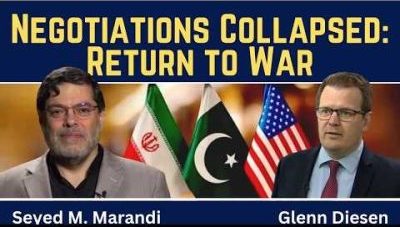
Seyed M. Marandi: Negotiations Collapsed – Return to War
or go to
Aletho News Archives – Video-Images
From the Archives
The US-Iran Scenario That Most Scares Israel
By Ali Haydar | Al-Akhbar | October 9, 2013
Israeli Prime Minister Benjamin Netanyahu issued a series of threats toward Iran and its interlocutors in the West, including the US, as serious negotiations on Iran’s nuclear program seem more plausible.
As a possible rapprochement looms between the US and Iran, Netanyahu has attempted to impose impossible Israeli conditions on the negotiators, such as the full dismantling of Iran’s nuclear program, not to mention threatening military force.
Whatever the deal that could materialize between Iran and the West, Israel is going to find itself before an open-ended path. One can foresee three possible scenarios… continue
Blog Roll
 Aletho News
- UK, Spain reject Trump’s new scheme to blockade Hormuz Strait
- Russian frigate ‘resurfaces’, chases off NATO pirates days after Kiev ‘sank’ it
- Ukraine Targets Russian Merchant Fleet With NATO Intel Support – Presidential Aide
- Russia’s ‘shadow fleet’ makes mockery of UK naval power
- Ukraine plans to attack Russian ships with Norwegian support
- US’s ‘Very Foolish’ Double Blockade of Hormuz Strait Makes Absolutely No Sense: Here’s Why
- China issues rules on countermeasures against foreign states’ unlawful extraterritorial jurisdiction
- Seyed M. Marandi: Negotiations Collapsed – Return to War
- Tomorrow’s naval blockade showdown
- ‘Israel’ attacks civilians to hide its embarrassing military failures & out of pure sadism
- If Americans Knew
- Critical shortages in Gaza, Lebanon in ruins, “piracy” in Iran – Daily Update
- US-Iran ceasefire negotiations make zero progress – Daily Update
- Pro-Israel ‘Thinktanks’ and Individuals who Influence U.S. Foreign Policy
- Mearsheimer reveals how Israel dictates US policies on Iran, Gaza – video
- After killing 350+, Israel still has a “score to settle” with Lebanon before ceasefire – Daily Update
- Military aid to Israel emerges as the latest political litmus test for Democrats
- The only Palestinian children’s rights organization closes following years-long Israeli campaign against it
- ‘I Can’t Forget the Smell’: Lebanese Reel After Israel Kills Over 300 in Single Day
- DNC Shoots Down Resolutions Calling Out AIPAC and Limiting Arms to Israel
- TCN: Is Israel Blackmailing President Trump?
- No Tricks Zone
- Cave Discovery Reveals Today’s Desert Climates Were Recently Far Warmer, Wetter, Teeming With Life
- German Expert: Heat Dome Led To Record Temps In Western USA…Warmer In 1934, 1936
- New Study: No Linear Warming Or Glacier Retreat Along Northern Antarctic Peninsula Since 1980s
- An Inconvenient Tree: Uncovered In Alps… Europe Much Warmer Than Today 6000 Years Ago
- New Study Reports A 60% Slowdown In Greenland’s Ice Loss Rate In The Last Decade
- Low Intensity Tornado Wrecks Major Solar Farm, Creating A Potential Toxic Dump
- New Study Finds Warming Saves Lives…Cold Temperatures 12 Times More Deadly Than Excess Heat
- German Science Blog Accuses PIK Climate Institute Of Hallucinating Climate Tipping Points
- Devastating Assessment Of Comirnaty Vaccine By Former Senior Pfizer Europe Toxicologist
- New Study: CO2 Is ‘Effectively Negligible’ As An Explanatory Climate Change Factor Since 2000
 Aletho News