Russian Blast Points to Danger of New Nuclear Arms Race
By Jeremy Kuzmarov | CounterPunch | August 14, 2019
On Thursday August 8th, an explosion at the Nenoksa Missile test site in northern Russia during testing of a new type of nuclear propelled cruise missile resulted in the death of at least seven people, including scientists and was followed by a spike in radiation in the atmosphere.
Analysts in Washington and Europe are of the belief that the explosion may offer a glimpse of technological weaknesses in Russia’s new arms program.
The deeper concern, however, should be of the perilous consequences of the new Cold War and arms race that is developing between the United States and Russia.
In February, the Trump administration pulled out of the Intermediate Range Nuclear Forces Treaty (INF), an arms control treaty considered to be among the most successful in history by former U.S. ambassador to Russia John Huntsman, which banned land-based ballistic missiles, cruise missiles, and missile launchers with ranges of 500–1500 kilometers.
The United States accused Russia of violating the treaty, though did not wait for this accusation to be verified by international inspectors.
Russia previously accused the United States of violating the treaty through its adoption of drone warfare, and by stationing missile launchers in Deveselu Romania.
This summer, the Trump administration has given indications that it will not ratify the New Strategic Arms Reduction Treaty (START), which is set to expire in 2021.
Signed by the Obama administration as part of its “reset policy” with Russia in 2010, the New START treaty limits the number of deployed strategic nuclear warheads to 1,550 and number of deployed and non-deployed inter-continental ballistic missile (ICBM) launchers, submarine-launched ballistic missile (SLBM) launchers, and heavy bombers equipped for nuclear armaments to 800.
On Friday, August 9, The New York Times ran an op-ed piece by columnist Brett Stephens entitled “The U.S. Needs More Nukes,” which mimicked the position of Trump’s National Security Council advisor John Bolton, a serial arms control killer.
Stephens wrote that “the problem with arms control treaties is that the bad guys cheat, the good guys don’t, and the world often finds out too late.” And now Russia, he says, is cheating again, although Stephens does not present any evidence in his article that would confirm this.
According to Stephens, U.S. presidents Jimmy Carter and Ronald Reagan set the standard for effective government policy by responding to the Soviet Union’s deployment of the SS-20, a medium-range nuclear missile that threatened military installations in Western Europe in the late 1970s by deploying hundreds of intermediate-range Pershing II and cruise missiles to Europe.
Stephens in turn believes that the Trump administration and its successor should respond to Russian and Chinese provocations today through similar arms buildups and deployments.
Besides painting a Manichean view of the world as divided between good and evil, one of the major problems with Stephens’ article is that he fails to provide adequate historical context to validate his main argument.
In the case of Cold War I, the Soviet Union only embarked on a large scale arms buildup after the United States had developed a massive nuclear stockpile of 22,229 warheads (or 10,948 megatons of TNT) by the early 1960s, which dwarfed that of the Soviet Union who felt they had to catch up.
Stephens similarly presents Russia and China as bad actors menacing the United States today, when the United States has at least 15 times more overseas military bases, and spends more on the military than Russia and China combined along with at least six other major countries.
A new mobilization is now urgently needed in favor of arms control which can be modeled on the nuclear freeze movement of the 1980s.
General Lee Butler, commander of U.S. nuclear forces in the 1990s, issued a mea culpa upon his retirement in which he rebuked the “grotesquely destructive war plans” and “terror induced anesthesia which suspended rational thought, made nuclear war thinkable and grossly excessive arsenals possible during the Cold War.” Butler added that “mankind escaped the Cold War without a nuclear holocaust by some combination of diplomatic skill, blind luck and divine intervention, probably the latter in greater proportion.”
Whether the same luck will prevail in the 2nd Cold War is not worth leaving to chance.
Jeremy Kuzmarov is the author of The Russians are Coming, Again: The First Cold War as Tragedy, the Second as Farce (Monthly Review Press, 2018).
The Curious Case of the Missing Professor Mifsud
By Johanna Ross | August 13, 2019
In The Times newspaper on July 30th, appeared a short and succinct article, easily missed were it not for its intriguing headline: ‘Missing academic Joseph Mifsud at heart of Mueller investigation’. The academic in question, one may or may not have heard of, depending on the extent to which one is reliant on mainstream media for keeping abreast of the news. But anyone attempting to keep up with the complex and murky world of the Mueller investigation, may be familiar with the name of this mysterious and elusive figure.
For it is none other than Professor Mifsud, affiliated with both the Universities of Stirling and East Anglia in the UK, that was identified by the FBI as being the source of the information that Russia had ‘dirt’ on Hillary Clinton. And intriguingly, the same Professor Mifsud who disappeared in October 2017 and has been missing ever since.
It was in April 2016 that Mifsud, who was qualified in education but somehow managed to find his way into the world of international diplomacy (becoming director of the London Academy of Diplomacy in 2012), reportedly met George Papadopoulos, foreign policy advisor to the Trump campaign, where he is said to have told him that the Russian government had ‘dirt on Hillary Clinton’. This information was then allegedly passed by Papadopoulos to the Australian High Commissioner in London, before being repeated to US authorities; that effectively Papdopoulos had known about the DNC hack prior to it being carried out. In short, Mifsud was the key to the whole ‘Russiagate’ scandal.
At the beginning of the Mueller investigation, Mifsud was widely portrayed as a Russian spy in the Western media. He is described in the Mueller report as having ‘connections to Russia’ and ‘having maintained Russian contacts’ as if that was somehow conclusive proof he was working for the Russians. Former FBI director James Comey also wrote in an opinion column in the Washington Post in May this year where he stated bluntly that Mifsud was a ‘Russian agent’. However as the Mueller investigation has trundled on and been exposed for being nothing more than a performance along the lines of Hans Christian Anderson’s ‘Emperor’s New Clothes’, the argument being put forward by the Republicans that Mifsud is a Western intelligence operative is looking more plausible.
When Rep. Jim Jordan (R, Ohio) questioned Robert Mueller why it was that Mifsud was reported to have lied three times to the FBI but was never indicted, Mueller replied simply that “I can’t get into internal deliberations with regard to who or who would not be charged.” Jordan responded in disbelief: ‘The guy who launches everything, the guy who puts this whole story in motion, you can’t charge him. I think that’s amazing.” Jordan then asked Mueller if Mifsud was Western or Russian intelligence, to which Mueller replied “Can’t get into that.” As Devin Nunes, ranking member of the House Intelligence Committee said during his opening remarks, Mifsud “is widely portrayed as a Russian agent, but seems to have far more connections with Western governments, including our own FBI and our own State Department, than with Russia.”
Meanwhile, all interviews carried out with Mifsud before his disappearance deny the claim that he discussed Russian government ‘dirt on Hillary Clinton’ with George Paradopoulos. According to Robert Mueller’s report, in an interview with the FBI in February 2017, Mifsud “denied that he had advance knowledge that Russia was in possession of emails damaging to candidate Clinton, stating that he and Papadopoulos had discussed cybersecurity and hacking as a larger issue and that Papadopoulos must have misunderstood their conversation.”
Whether Papadopoulos misunderstood or not, we will probably never know. But the idea of Misfud being an agent for the West is gaining traction with Republicans. Why is it that when so many people were indicted for providing false statements, but not Mifsud? If Mifsud was indeed a Russian agent, and had numerous contacts within western governments, why is it that they don’t seem in the least concerned by the fact they could have been compromised by him? And as Lee Smith has pointed out, writing for RealClearInvestigations, Mifsud has closer ties to western governments and institutions than to Russia, including the CIA, FBI and British secret service. Indeed, during his time in London and Rome he was reportedly involved in training diplomats, police officers and intelligence operatives.
Perhaps the main thing we can take away from this chapter in the fiction that is Russiagate, is the fact that these questions are not being posed by journalists. Hardly anyone in the western mainstream media seems prepared to question the narrative presented by the Democratic lobby that Mifsud was a Russian spy, complicit in a Putin-sponsored attempt to influence the US election. As Jonathan Turley, Shapiro Professor of Public Interest Law at George Washington University has written: “The most credible point about Mifsud is that his relative anonymity in news coverage reflects a broader problem that there is a consistent effort to preserve a narrative that the Russians interfered in the 2016 election to help Trump.”
And yet without any Russian actors featuring in this tale, it is becoming increasingly difficult for the Democrats to keep pushing this narrative of Russian involvement. Mifsud has been vital so far, and his disappearance only emphasises further how important a protagonist he is in the Russiagate hoax. If he were to go on record as saying he worked for the FBI not the Russians, it would bury the collusion theory forever. So let’s not expect him to surface any time soon…
Seth Rich’s Ghost Haunts the Courts
By Ray McGovern | Consortium News | August 12, 2019
As if it weren’t enough of a downer for Russiagate true believers that no Trump-Russia collusion was found, federal judges are now demanding proof that Russia hacked into the DNC in the first place.
It is shaping up to be a significant challenge to the main premise of the shaky syllogism that ends with “Russia did it.”
If you’re new to this website, grab onto something, as the following may come as something of a shock. Not only has there never been any credible evidence to support the claim of Russian cyber interference, there has always been a simple alternative explanation that involves no “hacking” at all — by Russia or anyone else.
As most Consortium News habitués are aware, Veteran Intelligence Professionals for Sanity (which includes two former NSA technical directors), working with independent forensic investigators, concluded two years ago that what “everyone knows to be Russian hacking of the Democratic National Committee” actually involved an insider with physical access to DNC computers copying the emails onto an external storage device — such as a thumb drive. In other words, it was a leak, not a hack.
VIPS based its conclusion on the principles of physics applied to metadata and other empirical information susceptible of forensic analysis.
But if a leak, not a hack, who was the DNC insider-leaker? In the absence of hard evidence, VIPS refuses “best-guess”-type “assessments” — the kind favored by the “handpicked analysts” who drafted the evidence-impoverished, so-called Intelligence Community Assessment of Jan. 6, 2017.
Conspiracy Theorists
Simply letting the name “Seth Rich” pass your lips can condemn you to the leper colony built by the Washington Establishment for “conspiracy theorists,” (the term regularly applied to someone determined to seek tangible evidence, and who is open to alternatives to “Russia-did-it.”)
Rich was a young DNC employee who was murdered on a street in Washington, DC, on July 10, 2016. Many, including me, suspect that Rich played some role in the leaking of DNC emails to WikiLeaks. There is considerable circumstantial evidence that this may have been the case. Those who voice such suspicions, however, are, ipso facto, branded “conspiracy theorists.”
That epithet has a sordid history in the annals of U.S. intelligence. Legendary CIA Director Alan Dulles used the “brand-them-conspiracy-theorists” ploy following the assassination of President John F. Kennedy when many objected — understandably — to letting him pretty much run the Warren Commission, even though the CIA was suspected of having played a role in the murder. The “conspiracy theorist” tactic worked like a charm then, and now. Well, up until just now.
Rich Hovers Above the Courts
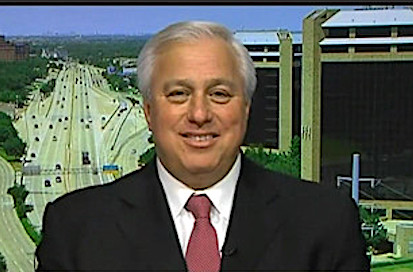
U.S. Courts apply far tougher standards to evidence than do the intelligence community and the pundits who loll around lazily, feeding from the intelligence PR trough. This (hardly surprising) reality was underscored when a Dallas financial adviser named Ed Butowsky sued National Public Radio and others for defaming him about the role he played in controversial stories relating to Rich. On August 7, NPR suffered a setback, when U.S. District Court Judge Amos Mazzant affirmed a lower court decision to allow Butowsky’s defamation lawsuit to proceed.
Judge Mazzant ruled that NPR had stated as “verifiable statements of fact” information that could not be verified, and that the plaintiff had been, in effect, accused of being engaged in wrongdoing without persuasive sourcing language.
Imagine! — “persuasive sourcing” required to separate fact from opinion and axes to grind! An interesting precedent to apply to the ins and outs of Russiagate. In the courts, at least, this is now beginning to happen. And NPR and others in similarly vulnerable positions are scurrying around for allies.?? The day after Judge Mazzant’s decision, NPR enlisted help from discredited Yahoo! News pundit Michael Isikoff (author, with David Corn, of the fiction-posing-as-fact novel Russian Roulette). NPR gave Isikoff 37 minutes on its popular Fresh Air program to spin his yarn about how the Seth Rich story got started. You guessed it; the Russians started it. No, we are not making this up.
It is far from clear that Isikoff can be much help to NPR in the libel case against it. Isikoff’s own writings on Russiagate are notably lacking in “verifiable statements of fact” — information that cannot be verified. Watch, for example, his recent interview with Consortium News Editor Joe Lauria on CN Live!
Isikoff admitted to Lauria that he never saw the classified Russian intelligence document reportedly indicating that three days after Rich’s murder the Russian SVR foreign intelligence service planted a story about Rich having been the leaker and was killed for it. This Russian intelligence “bulletin,” as Isikoff called it, was supposedly placed on a bizarre website that Isikoff admitted was an unlikely place for Russia to spread disinformation. He acknowledged that he only took the word of the former prosecutor in the Rich case about the existence of this classified Russian document.
In any case, The Washington Post, had already debunked Isikoff’s claim (which later in his article he switched to being only “purported”) by pointing out that Americans had already tweeted the theory of Rich’s murder days before the alleged Russian intervention.
‘Persuasive Sourcing’ & Discovery??
Butowsky’s libel lawsuit can now proceed to discovery, which will include demands for documents and depositions that are likely to shed light on whatever role Rich may have played in leaking to WikiLeaks. If the government obstructs or tries to slow-roll the case, we shall have to wait and see, for example, if the court will acquiesce to the familiar government objection that information regarding Rich’s murder must be withheld as a state secret? Hmmm. What would that tell us?
During discovery in a separate court case, the government was unable to produce a final forensic report on the “hacking” of the Democratic National Committee. The DNC-hired cyber firm, CrowdStrike, failed to complete such a report, and that was apparently okay with then FBI Director James Comey, who did not require one.
The incomplete, redacted, draft, second-hand “forensics” that Comey settled for from CrowdStrike does not qualify as credible evidence — much less “persuasive sourcing” to support the claim that the Russians “hacked” into the DNC. Moreover, CrowdStrike has a dubious reputation for professionalism and a well known anti-Russia bias.
The thorny question of “persuasive sourcing,” came up even more starkly on July 1, when federal Judge Dabney Friedrich ordered Robert Mueller to stop pretending he had proof that the Russian government was behind the Internet Research Agency’s supposed attempt to interfere via social media in the 2016 election. Middle school-level arithmetic can prove the case that the IRA’s use of social media to support Trump is ludicrous on its face.
Russia-gate Rubble
As journalist Patrick Lawrence put it recently: “Three years after the narrative we call Russiagate was framed and incessantly promoted, it crumbles into rubble as we speak.” Falling syllogism! Step nimbly to one side.
The “conspiracy theorist” epithet is not likely to much longer block attention to the role, if any, played by Rich — the more so since some players who say they were directly involved with Rich are coming forward.
In a long interview with Lauria a few months ago in New Zealand aired this month on CN Live!, Kim Dotcom provided a wealth of detail, based on what he described as first-hand knowledge, regarding how Democratic National Committee documents were leaked to WikiLeaks in 2016.
The major takeaway: the evidence presented by Dotcom about Seth Rich can be verified or disproven if President Trump summons the courage to order the director of NSA to dig out the relevant data, including the conversations Dotcom says he had with Rich and Rich may have had with WikiLeaks publisher Julian Assange. Dotcom said he put Rich in touch with a middleman to transfer the DNC files to WikiLeaks. Sadly, Trump has flinched more than once rather than confront the Deep State — and this time there are a bunch of very well connected, senior Deep State practitioners who could face prosecution.
Another sign that Rich’s story is likely to draw new focus is the virulent character assassination indulged in by former investigative journalist James Risen.
Not Risen to the Challenge
On August 5, in an interview on The Hill’s “Rising,” Risen chose to call former NSA Technical Director Bill Binney — you guessed it — a “conspiracy theorist” on Russia-gate, with no demurral, much less pushback, from the hosts.
The having-done-good-work-in-the-past-and-now-not-so-much Risen can be considered a paradigm for what has happened to so many Kool-Aid drinking journalists. Jim’s transition from investigative journalist to stenographer is, nonetheless unsettling. Contributing causes? It appears that the traditional sources within the intelligence agencies, whom Risen was able to cultivate discreetly in the past, are too fearful now to even talk to him, lest they get caught by one or two of the myriad surveillance systems in play.
Those at the top of the relevant agencies, however, are only too happy to provide grist. Journalists have to make a living, after all. Topic A, of course, is Russian “interference” in the 2016 election. And, of course, “There can be little doubt” the Russians did it.
“Big Jim” Risen, as he is known, jumped on the bandwagon as soon as he joined The Intercept, with a fulsome article on February 17, 2018 titled “Is Donald Trump a Traitor?” Here’s an excerpt:
“The evidence that Russia intervened in the election to help Trump win is already compelling, and it grows stronger by the day.
“There can be little doubt now that Russian intelligence officials were behind an effort to hack the DNC’s computers and steal emails and other information from aides to Hillary Clinton as a means of damaging her presidential campaign. … Russian intelligence also used fake social media accounts and other tools to create a global echo chamber both for stories about the emails and for anti-Clinton lies dressed up to look like news.
“To their disgrace, editors and reporters at American news organizations greatly enhanced the Russian echo chamber, eagerly writing stories about Clinton and the Democratic Party based on the emails, while showing almost no interest during the presidential campaign in exactly how those emails came to be disclosed and distributed.” (sic)
Poor Jim. He shows himself just as susceptible as virtually all of his fellow corporate journalists to the epidemic-scale HWHW virus (Hillary Would Have Won) that set in during Nov. 2016 and for which the truth seems to be no cure. From his perch at The Intercept, Risen will continue to try to shape the issues. Russiagaters major ally, of course, is the corporate media which has most Americans pretty much under their thumb.
Incidentally, neither The New York Times, The Washington Post, nor The Wall Street Journal has printed or posted a word about Judge Mazzant’s ruling on the Butowsky suit.
Mark Twain is said to have warned, “How easy it is to make people believe a lie, and [how] hard it is to undo that work again!” After three years of “Russia-Russia-Russia” in the corporate — and even in some “progressive” — media, this conditioning will not be easy to reverse.
Here’s how one astute observer with a sense of humor described the situation last week, in a comment under one of my recent pieces on Consortium News :
“… One can write the most thought-out and well documented academic-like essays, articles and reports and the true believers in Russiagate will dismiss it all with a mere flick of their wrist. The mockery and scorn directed towards those of us who knew the score from day one won’t relent. They could die and go to heaven and ask god what really happened during the 2016 election. God would reply to them in no uncertain terms that Putin and the Russians had absolutely nothing to do with anything in ‘16, and they’d all throw up their hands and say, ‘aha! So, God’s in on this too!’ It’s the great lie that won’t die.”
I’m not so sure. It is likely to be a while though before this is over.
Ray McGovern works with Tell the Word, a publishing arm of the ecumenical Church of the Saviour in inner-city Washington. Ray was a CIA analyst for 27 years; in retirement he co-founded Veteran Intelligence Professionals for Sanity (VIPS).
Greenland’s ‘Record Temperature’ denied – the data was wrong
Greenland’s all-time record temperature wasn’t a record at all, and it never got above freezing there.
By Anthony Watts | Watts Up With That? | August 12, 2019
First, the wailing from news media:
NYT : https://www.nytimes.com/2019/08/02/climate/european-heatwave-climate-change.html
Climate Progress : https://thinkprogress.org/greenland-hits-record-75-f-sets-melt-record-as-globe-aims-at-hottest-year-e34e534e533e/
Polar Portal : http://polarportal.dk/en/news/news/record-high-temperature-for-june-in-greenland/
Now from the Danish Meteorological Institute (DMI), via the news website The Local, the cooler reality:
Danish climate body wrongly reported Greenland heat record
The Danish Meteorological Institute, which has a key role in monitoring Greenland’s climate, last week reported a shocking August temperature of between 2.7C and 4.7C at the Summit weather station, which is located 3,202m above sea level at the the centre of the Greenland ice sheet, generating a spate of global headlines.
But on Wednesday it posted a tweet saying that a closer look had shown that monitoring equipment had been giving erroneous results.
“Was there record-level warmth on the inland ice on Friday?” it said. “No! A quality check has confirmed our suspicion that the measurement was too high.”
By combining measurements with observations from other weather stations, the DMI has now estimated that the temperature was closer to -2C.
The record temperature ever recorded at Summit is 2.2C, which was reached in both 2012 and 2017. But -2C is still unusual at the station.
Shoot out the headlines first, ask questions later.
Sneering at “Conspiracy Theories” is a Lazy Substitute for Seeking the Truth
By Thomas L. Knapp – Garrison Center – August 12, 2019
On the morning of August 10, a wealthy sex crimes defendant was reportedly found dead in his cell at New York’s Metropolitan Correctional Center.
“New York City’s chief medical examiner,” the New York Times reported on August 11, “is confident Jeffrey Epstein died by hanging himself in the jail cell where he was being held without bail on sex-trafficking charges, but is awaiting more information before releasing her determination …”
That same day, the Times published an op-ed by Charlie Warzel complaining that “[e]ven on an internet bursting at the seams with conspiracy theories and hyperpartisanship, Saturday marked a new chapter in our post-truth, ‘choose your own reality’ crisis story.”
After three years of continuously beating the drum for its own now-discredited conspiracy theory — that the President of the United States conspired with Vladimir Putin’s regime to rig the 2016 presidential election — the Times doesn’t have much standing to whine about, or sneer at, “conspiracy theories and hyperpartisanship.”
Is Jeffrey Epstein really dead? If so, did he kill himself or was he murdered? If he was murdered, whodunit and why?
Those are legitimate questions. Calling everyone who asks them, or proposes possible answers to them, a “conspiracy theorist” isn’t an argument, it’s intellectual laziness.
Yes, some theories fit the available evidence better than others. And yes, some theories just sound crazy. If someone says a UFO beamed Epstein up, or that Hillary Clinton and Donald Trump posed as corrections officers and personally strangled him, I suggest setting those claims aside absent very strong evidence.
But there are plenty of good reasons to question the “official account.”
Yes, prisoners have committed suicide at federal jails and prisons. But prisoners have also escaped from, and been killed at, such facilities. In fact, notorious Boston gangster Whitey Bulger was murdered in a federal prison just last year.
Given Epstein’s wealth and power, the wealth and power of persons accused of serious crimes in recently unsealed court documents, the claim of one of his prosecutors that Epstein “belonged to” the US intelligence community, the well-established inability of the federal government to secure its facilities or prevent criminal activity inside those facilities (including the corruption of its own personnel), the equally well-established unreliability of claims made by government agencies and officials in general, and the already flowing stream of admissions that the Metropolitan Correctional Center’s procedures weren’t followed where Jeffrey Epstein was concerned, the question is not why “conspiracy theories” are circulating — it’s why on earth they WOULDN’T be.
No, I’m not saying that Epstein is alive and living it up in “witness protection,” or that he was murdered by a hit team on behalf of one of his “Lolita Express” cronies. I just don’t know. Neither, probably, do you. Nor do those screaming “conspiracy theory!” at every musing contrary to the suicide theory.
Maybe we’ll find out the truth someday. Maybe we won’t. Pretending we already have, and shouting down those who suggest we haven’t, isn’t a method of seeking knowledge. It’s a method of avoiding knowledge.
Thomas L. Knapp (Twitter: @thomaslknapp) is director and senior news analyst at the William Lloyd Garrison Center for Libertarian Advocacy Journalism (thegarrisoncenter.org).
Moscow Mitch, Secret Russian Subs… and Russophobia Derangement
By Finian Cunningham | Strategic Culture Foundation | August 11, 2019
Arch Republican Senator Mitch McConnell is being taunted by major US media outlets and at political rallies as a “Russian asset”. Meanwhile, Britain’s Daily Telegraph reports on “super-secret” Russian submarines which are “operating unseen” in British territorial waters.
The collapse in rational thinking among American and British political mainstream circles is highlighted by the rampant Russophobia. Such thinking is delusional, paranoid and ultimately horrifying at a time of heightened international tensions between nuclear superpowers.
First, let’s deal with the farcical furore over Senator McConnell being labelled a Russian asset. The Senate majority leader has been dubbed by US news channel MSNBC and the Washington Post as “Moscow Mitch” and “doing Putin’s bidding”. The monikers followed McConnell’s blocking of legislation aimed at tightening security of electoral systems ostensibly to prevent “foreign meddling”.
It’s not clear why McConnell objected to the proposed legislation. It seems he doesn’t agree with extra federal controls over state-level electoral systems. Also, he claims that hundreds of millions of dollars have already been spent upgrading electoral systems, and therefore additional expenditure is not warranted. He is a fiscal hawk after all.
Nonetheless, it is a preposterous leave of senses when paranoid Russophobia in US politics and media are inferring that McConnell’s opposition to the proposed electoral legislation is “evidence” that he is a Russian agent, by allegedly enabling Russian hacking into US elections.
At a recent political event in his home state of Kentucky, McConnell was heckled and booed by Democrat supporters chanting “Moscow Mitch, Moscow Mitch!” The protesters were wearing T-shirts and brandishing placards with images of McConnell donning a Cossack hat with Soviet-era hammer and sickles.
Understandably, the 77-year-old senator has been aghast over the political attacks. He called it “modern-day McCarthyism” harking back to the Cold War years of Red Baiting. He even said it was worse than the past McCarthyism. And he has a point there.
McConnell’s exasperation is borne out of the complete irrational vacuousness of the accusations. The six-time elected lawmaker is the longest-serving Republican senator. He is a grandee of the traditionally rightwing party, with an “impeccable” record of being hawkish towards Russia and President Vladimir Putin.
How anyone can construe that good ole boy McConnell is a Russian stooge is too absurd for words. What the accusations do betray is the total derangement and politically illiterate condition of mainstream American political and media culture.
As Princeton Professor Stephen Cohen remarked in a recent interview Russophobia and paranoia over alleged interference in US politics has become a permanent mindset among too many American politicians, pundits, military-intelligence agencies and Democrat supporters. Cohen rightly deplores how the whole baseless narrative of “Russia-gate” continues with a life of its own, having not been finally made redundant after the two-year Mueller probe spectacularly failed to provide any substantive details or evidence.
Still, however, former FBI chief Robert Mueller in recent hearings before Congress was permitted to reiterate hollow accusations that Russia meddled in the 2016 presidential elections and, he asserted, Moscow will do so again in the 2020 elections. This is simply doctrinal thinking which is, in turn, accepted as “fact” that Russia’s President Putin ordered an “interference campaign” to subvert American democracy. (Moscow has always vehemently rejected that.)
That’s why when someone as antipathetic towards Russia as Senate leader Mitch McConnell exercises relative sanity by rejecting the alleged need for more electoral security systems to “prevent foreign meddling” he is then assailed with hysterical accusations of being a “Russian asset”. The utter irrationality is self-reinforcing because of unhinged delusions about Russian malignancy. No evidence is required. It’s “true” because “we believe it is true”.
McConnell has hit back at his detractors by calling them “leftwing hacks” and “communists”. He made that conclusion by referring to the Democrats’ policy of seeking to expand free healthcare for American citizens. He proudly called himself the “Grim Reaper” who would protect America from a “socialist agenda”.
This inane back and forth demonstrates how dumbed down American political culture is. Increasingly bitter partisan accusations and slander are flying around based on no facts, no evidence, no reason, nor any intelligent understanding about policy, history or political philosophy.
But, lamentably, at bottom the crazed political discourse relies on an embedded Russophobia. Russia is viewed as evil and malicious, by both sides of the political coin. Rather than addressing inherent problems in American society, the discourse finds a common false explanation – blame it on Russia or association with presumed communism. The Cold War nihilism of American politics and propaganda has never stopped. It’s just become more delusional and divorced from any semblance of reality. In this context, the modern-day Russophobia is perhaps more dangerous because of its irrationality and evidence-free doctrinal thinking.
Which brings us to the “super-secret” Russian submarines that are stalking Britain, according to the Daily Telegraph. The so-called report (more accurately, psy-ops piece) is a must-read for exposing the delusional anti-Russia paranoia that the British political class have in common with the Americans.
“A new breed of super quiet Russian submarines are feared [sic] to be operating unseen [sic] in British territorial waters, according to military sources [sic],” the Telegraph claimed.
The sources were, as usual, anonymous, betraying that the Telegraph was being used, as it often is, as a conduit for British intelligence propaganda.
Not one scrap of evidence was presented to substantiate these “fears” of “unseen” Russian submarines. Supposedly, the “unseen” vessels are “proof” of how dastardly and stealthy those damn Russians are. The point of the article was to deliver a public message for more military spending on Britain’s Royal Navy.
What makes it possible for the Daily Telegraph to publish such bogeyman rubbish is the systematic inculcation of Russophobia among many, but not all, Britons.
As with its American counterpart, British political culture has become degenerate and depraved. It is the equivalent of medieval sorcery and “magical thinking”. Standards of proof, reason and due process have been abandoned. It’s like a regression to pre-Enlightenment times. The fact that the US and Britain possess nuclear arsenals aimed at Russia makes the deranged thinking of their political class a truly frightening prospect for the entire world.
Why Would the Democrats Want to be “Tough” on Trade, as Opposed to Smart on Trade?
By Dean Baker | Beat the Press | August 11, 2019
The New York Times has created an absurd dilemma for Democrats, “how to be tougher on trade than Trump.” This framing of the trade issue is utterly bizarre and bears no resemblance to reality.
While Trump has often framed the trade issue as China, Mexico, and other trading partners gaining at the expense of the United States because of “stupid” trade negotiators, this has little to do with trade policy over the last three decades. The United States negotiated trade deals to benefit U.S. corporations. The point of deals like NAFTA was to facilitate outsourcing, so U.S. corporations could take advantage of lower cost labor in Mexico.
The same was true with admitting China to the W.T.O.. This both allowed U.S. corporations to move operations to China and also made it possible for retailers like Walmart to set up low-cost supply chains to undercut their competitors. The job loss and trade deficits that resulted from these deals were not accidental outcomes, they were the point of these deals.
U.S. negotiators have also made longer and stronger patent and related protections (which are 180 degrees at odds with “free trade”) central components of recent trade deals. While these provisions mean larger profits for drug companies and the software and entertainment industries, they do not help ordinary workers. In fact, by forcing our trading partners to pay more money for the products from these sectors, they leave them with less money for other exports.
Anyhow, given the reality of our trade policy over the last three decades it is hard to know what being “tough on trade” means. In the Trumpian universe (and apparently at the NYT ) this could make sense, but not in the real world. The question is whether our trade policy is designed to help ordinary workers or to increase corporate profits, “tough” is beside the point.
8chan: The Latest Fearporn Drive
Guardian in Hysterics Over Threat of Homeless, Anonymous Shitposters
By Kit Knightly | OffGuardian | August 9, 2019
The Problem
8chan may have been shut down, but that doesn’t mean we’re safe.
You see, all the people that used 8chan before it was shut down are still out there. They might be on Twitter. They might be on Facebook. They might be ordering coffee at a Starbucks. They might be plotting some sort of far-right apocalypse. They might just be talking about movies on reddit. There’s no way of knowing.
We should all be terribly worried.
At least, according to The Guardian, who headline today:
8chan: ex-users of far-right site flock to new homes across internet
First off, of course, 8chan was not a “far-right site”, it was a site with some “far-right” people on it.
There are hundreds of boards on 8chan, with thousands upon thousands of different posters. Boards could be created by anyone to discuss anything.
The vast majority were dedicated to perfectly ordinary topics. Video games, fashion, cars, movies. There were many much more specific, fetishy, niche and weird… but not “far-right”. The site didn’t have an ideology except “free speech”.
The general shifting of “free speech” from something we all take for granted to being described as a “far-right agenda” is one of the most worrying trends in modern politics.
The article is actually funny, not least for the total lack of web literacy on display:
Former members of 8chan have scattered across the internet after the far-right site was shut down over the weekend
This is simply ridiculous to anyone who knows anything about the nature of 8chan et al. There are no “members”. That, indeed, is the whole entire point of the place. It is anonymous and temporary. No usernames, no registration, no “membership”.
The press has a long history of simply not being able to grasp the way the internet works (as in the famous “Who is this 4chan?” CNN interview or Fox’s “internet hate machine” piece), but this is such basic ignorance of the topic at hand that I almost can’t believe it’s genuine.
Indeed, it might not be. It might be that portraying “8chan” as some sort of organized community plays into the media’s need to generate fear. This generates, “the problem”, which sets us up for…
The Reaction
Having established that 8chan’s “far-right” “members” are out there in the ether, being terrifying, the article needs to get some feedback on what that means.
To do this they go to two “consultants”:
- Joan Donovan, who runs the Technology and Social Change (TaSC) Research Project
- Ben Decker the CEO of “Memetic Consultancy” (sic. It’s actually “Memetica”).
They are portrayed as two essentially different voices, as if we’re getting a spectrum of opinion. But the most cursory check on Donovan and Decker shows they are both research fellows at the Shorenstein Institute of the Kennedy School of Government. They aren’t separate. At all.
(NOTE: In fact, Memetica, Shorenstein, and other NGOs currently talking up the need for internet censorship are a ripe subject for a full-on exposé, and will be in the near future)
Not at all surprisingly, being research fellows for the same institute at the same university, Decker and Donovan absolutely agree on pretty much everything.
Primarily, that shutting down 8chan was a really good idea, but won’t – on its own – solve the “far-right” problem.
Apparently, all the people that posted on 8chan will NOT flee the internet forever, but will now just go and post somewhere else. Why anyone would need two Harvard-trained academics to tell them this, I don’t know.
Where will they go?
Well, other scary places of course. Like the “far-right forum” Gab, or back to 4chan or reddit. Some of them will be “absorbed” by the social media giants (meaning they will post on Twitter and Facebook), and some will post in discussions on encrypted message services like Telegram and Discord.
For some reason, Gab is a real bugbear for centrists, being regularly attacked simply for existing. Its one claim to infamy is that the Pittsburgh synagogue shooter apparently had a Gab account…this, apparently, makes it a far-right social network.
Niche and independent networks are always attacked by-association in this way. The Dayton shooter and “MAGABomber” both had twitter accounts, and the Christ Church attack was live-streamed on Facebook…but they are not shut down.
The Solution
Having established that shutting down 8chan was brilliant, but more is needed, our two NGO representatives set out what else needs to be done:
One way to prevent 8chan users from migrating to alternative social media spaces like YouTube and Facebook would be to build a moat around the platforms to prevent inbound links from these sites,”
This is total, complete nonsense. 8chan is gone, so “preventing inbound links” from it is now moot. Secondly, users don’t click from 8chan to YouTube, or Facebook or whatever. That’s not how the internet works. This would never control users crossposting, or prevent people having different accounts on different platforms or anything like that.
All this would do is prevent people from linking to sources. It stops the flow of information, not users. If Ben is really a “social media consultant”, he knows that. He’s just dishonestly suggesting censorship on totally spurious grounds.
There is an inherent value in deplatforming the site as a whole and making it harder to be accessed because the nature of these communities makes it difficult to inoculate the spread of this toxicity.”
Just “deplatform” websites “as a whole” if they are “toxic”. That’s the solution. Who decides what’s “toxic”?
Well, obviously the government does. Duh.
That’s just the start though. Whilst these Harvard academics give us the problem a reaction and just a hint of “solution”, elsewhere on the Guardian we are presented with a full, detailed (final?) solution.
Julia Ebner – another researcher for yet another creepy-sounding NGO the “Institute for Strategic Dialogue” – headlines:
How do we beat 8chan and other far-right sites? The same way we beat Isis
Essentially, as CJ Hopkins has written, this is just a rebranding of the War on Terror for a modern age. More like a remake, actually, to use Hollywood parlance. The same themes, the same characters. New dialogue. Different casting.
Bellingcat got in on this one too, hosting an article claiming:
Until law enforcement, and the media, treat these shooters as part of a terrorist movement no less organized, or deadly, than ISIS or Al Qaeda, the violence will continue.
(NOTE: The ISIS comparison is more than apt. Now would be a good time to remember just how phony and manipulated the ISIS narrative was. Catte did excellent work on this.)
Julia writes that what we need is:
a stronger international response to condemn political rhetoric that belittles, legitimises or even endorses the dangerous concepts and conspiracy theories of far-right extremists.
Translation – Governments cooperating to suppress free speech. “Conspiracy theories” can, and will, mean absolutely anything they want it to mean. The DNC fixing the primaries for Clinton, for example. Or the Skripals being poisoned by MI6. Press bias against Corbyn. Criticism of Israel, or even mentioning the “Labour Friends of Israel”. These can all be defined as “conspiracy theories”.
On top of this Julia wants:
an international definition of terrorism that is ideologically agnostic and includes not only traditional jihadi organisations but also loose far-right networks.
Translation – An international definition of terrorism that is loose enough to be deployed against anybody for anything.
“Terrorism” will become even more absurdly vague than it is now. These “loose far-right networks” will mean “anybody who posts on Gab”, or “anyone who thinks 9/11 was an inside job”. Joining certain Facebook groups, visiting certain websites (there was actually a meme about this one). Watching RT. She says “loose”, and she means it.
It will shock you how “loose” these networks are. You’re probably in one, right now, just for reading this article. Welcome to our “loose network of far-right extremists”.
Most importantly Julia thinks…
… governments will need to look beyond the big tech platforms and introduce legal frameworks that tackle the ongoing migration of extremists to the smaller alt-tech sites.
Translation – Banning certain opinions from the big platforms that cooperate with the state is not enough. We then need to move against the smaller, independent platforms that – unlike Google, Facebook and Twitter – refuse to toe the party line.
Censor Twitter, and shutdown any platform – like Gab or Parler – that attempts to fill the “free speech” market niche. The state machine will love that, because it gives it control of narrative and information flow, while the social media giants will love it because it essentially writes their monopoly into law. That’s a massive win-win.
In that sense it coincides perfectly with the famous Mussolini definition of fascism – “Fascism should more appropriately be called Corporatism because it is a merger of state and corporate power”
The establishment is signalling intent here – the way they always do when these opportunities are either presented to them, or created by them. Harness that fear, sense the opening, and drive the push through.
It’s all rather like that old joke – “Q: What do you call 1000 lawyers at the bottom of the ocean? A: A good start.”
Q: What do you call one website shut down for allowing free speech?
A: Just the beginning.
Kit Knightly is co-editor of OffGuardian. The Guardian banned him from commenting. Twice. He used to write for fun, but now he’s forced to out of a near-permanent sense of outrage.
The War on White Supremacist Terror
By CJ Hopkins | Consent Factory | August 8, 2019
If you enjoyed the global corporatocracy’s original War on Islamicist Terror, you’re going to love their latest spinoff, The War on White Supremacist Terror. It’s basically just like the old War on Terror, except that this time the bad guys are all white supremacists, and Donald Trump is Osama bin Laden … unless Putin is Osama bin Laden. OK, I’m not quite sure who’s Osama bin Laden. Whatever. The point is, the Terrorists are coming!
Yes, that’s right, some racist psycho murdered a bunch of people in Texas, so it’s time to “take the gloves off” again, pass some new kind of Patriot Act, further curtail our civil liberties, and generally whip the public up into a mass hysteria over “white supremacist terrorism.”
The New York Times Editorial Board is already hard at work on that front. In a lengthy op-ed that ran last Sunday, “We Have a White Nationalist Terrorist Problem,” the Board proposes that we would all be safer if the government — but presumably not the current government — could arbitrarily deem people “terrorists,” or “potential terrorists,” or “terrorist sympathizers,” regardless of whether they have any connection to any actual terrorist groups, and … well, here’s what the Editorial Board has in mind.
“The resources of the American government and its international allies would mobilize without delay. The awesome power of the state would work tirelessly to deny future terrorists access to weaponry, money and forums to spread their ideology. The movement would be infiltrated by spies and informants. Its financiers would face sanctions. Places of congregation would be surveilled. Those who gave aid or comfort to terrorists would be prosecuted.”
The Board didn’t mention the offshore gulags, wars of aggression, assassinations, torture, mass surveillance of virtually everyone, and other such features of the original War on Terror, but presumably all that kind of stuff would be included in “the awesome power of the state” that the Board would like the U.S. government to “mobilize without delay.”
And the mandarins of The New York Times were just getting started with the terrorism hysteria. The Tuesday edition was brimming with references to “white supremacy” and “domestic terrorism.” Here are some of the front page headlines … “Trump is a White Supremacist Who Inspires Terrorism.” “White Terrorism Shows Parallels to Islamic State.” “The Nihilist in Chief: how our president and our mass shooters are connected to the same dark psychic forces.” “I Spent 25 Years Fighting Jihadis. White Supremacists Aren’t So Different.” “Trump, Tax Cuts, and Terrorism.“ And so on.
The Times was hardly alone, of course. In the wake of the El Paso and Dayton shootings, the corporate media went into overdrive, pumping out “white supremacist terrorism” mass hysteria around the clock. The Guardian took a break from smearing Jeremy Corbyn as an anti-Semite to proclaim that El Paso was “Trump-inspired Terrorism.” The Sydney Morning Herald declared that the U.S. is now officially in the throes of a “white nationalist terrorism crisis.“ The Atlantic likened Trump to Anwar al-Awlaki, and assured us that “the worst is yet to come!“ Liberal journalists and politicians rushed onto Twitter to inform their followers that a global conspiracy of white supremacist terrorists “emboldened” or “inspired” by Donald Trump (who, remember, is a Russian secret agent) is threatening the very fabric of democracy, so it’s time to take some extraordinary measures!
Never mind that it turns out that two of the three “white supremacist terrorist” mass murderers in question (i.e., the Gilroy, El Paso, and Dayton shooters) do not appear to have been white supremacists, and that none of them were linked to any terrorist groups. We’re living in the Age of Non-Terrorist Terrorism, in which anyone can be deemed a “terrorist,” or a “suddenly self-radicalized terrorist,” regardless of whether they have any actual connection to organized terrorism.
Terrorism isn’t what used to be. Back in the day (i.e, the 1970s), there were terrorist groups like the PFLP, ANO, BSO, IRA, RAF, FARC, the Weather Underground, and so on … in other words, actual terrorist groups, committing acts of actual terrorism. More recently, there was al Qaeda and ISIS. Nowadays, however, more or less any attention-seeking sociopath with a death wish and a knock-off AR-15 (or moron with a bunch of non-exploding pipe bombs) can be deemed a bona fide “domestic terrorist,” as long as it serves the global capitalist ruling classes’ official narrative.
The official narrative of the moment is Democracy versus The Putin-Nazis (also known as The War on Populism), which I’ve been covering in these columns, satirically and more seriously, for the better part of the last three years. According to this official narrative, “democracy is under attack” by a conspiracy of Russians and neo-Nazis that magically materialized out of thin air during the Summer of 2016, right around the time Trump won the nomination. OK, the Russia part kind of sputtered out recently, so the global capitalist ruling classes and their mouthpieces in the corporate media are now going full-bore on the fascism hysteria. They’ve been doing this relentlessly since Trump won the election, alternating between the Russia hysteria and the fascism hysteria from week to week, day to day, sometimes hour to hour, depending on which one is “hot” at the moment.
These recent mass shootings have provided them with a golden opportunity, not just to flog the fascism hysteria once again, but to fold it into the terrorism hysteria which Americans have been indoctrinated with since September 11, 2001 (the objective of which indoctrination being to establish in the American psyche “the Terrorist” as the new official enemy, replacing the “Communist” official enemy that had filled this role throughout the Cold War). If you think the original War on Terror was just about oil or geopolitical hegemony, check out “leftist” political Twitter’s response to the El Paso and Dayton shootings. You’ll find, not just hysterical liberals, but “leftists” and even so-called “anarchists,” shrieking about “white supremacist terrorism.” It was the number one U.S. hashtag on Monday.
No, the original War on Terror (whatever else it was) was probably the most effective fascist psy-op in the history of fascist psy-ops. Fifteen years of relentless exposure to manufactured “terrorism” hysteria has conditioned most Americans (and most Westerners, generally), upon hearing emotional trigger words like “terrorist” and “terrorism” emanating from the mouths of politicians (or the front page of The New York Times) to immediately switch off their critical thinking, and start demanding that the authorities censor the Internet, suspend the U.S. Constitution, and fill the streets with militarized vehicles and special “anti-terror” forces with assault rifles in the “sling-ready” position. This tweet by Geraldo Rivera captures the authoritarian mindset perfectly:
“In the meantime, there must be active-shooter trained, heavily armed security personnel every place innocents are gathered.”
I’m not quite sure what “in the meantime” means. Perhaps it means until the USA, Western Europe, and the rest of the empire, can be transformed into a happy, hate-free, supranational corporate police state where there is no racism, no fascism, no terrorism, and no one ever says bad things on the Internet.
What a glorious, transhuman world that will be, like a living, breathing Benetton ad, once all the racists, terrorists, and extremists have been eliminated, or heavily medicated, or quarantined and reeducated!
Until then, the War on White Supremacist Terrorism, Domestic Terrorism, Islamicist Terrorism, Russian Terrorism, Iranian Terrorism, anti-Semitic Labour Party Terrorism, and any other type of terrorism, extremism, hate, conspiratorial thinking … oh, and Populism (I almost forgot that one), and every other type of non-conformity to global capitalist ideology, will continue until we achieve final victory! It’s coming … sooner than you probably think.
Damn, here I am, at the end of my essay, and I almost forget to call Trump a racist. He is, of course. He’s a big fat racist. I should have put that right at the top. I’m already in hot water with my fellow leftists for not doing that enough. Oh, and for the record, in case there are any other kinds of Inquisitors reading this, I also renounce Satan and all his works.
London Spreads Misinformation, Hides Skripal Case Details, Russian Embassy Says
Sputnik – 08.08.2019
UK authorities continue to disseminate misinformation about the Salisbury incident through the media, hiding details of what happened, the Russian Embassy in the UK stated after the Guardian published an article speculating on the involvement of Russian authorities.
“Nearly a year and a half after the events in Salisbury with the former Russian military intelligence officer and his daughter, the Russian side never received any intelligible information about the investigation into the incident despite the more than 80 requests we sent through diplomatic channels. Trying to fill this vacuum, the British stubbornly continue to invent various stories and myths, passing them off as confirmed facts,” the embassy stated.
“All the arguments on the basis of which the so-called evidence of Russia’s involvement in this mysterious incident was built and which the former British Prime Minister Theresa May loudly stated, failed miserably. Obviously, the reason for this behaviour lies in the fact that the disclosure of all the details of this dark history is not in the interests of official London,” the statement reads.
Russian diplomats suggested that British authorities manipulated the opinion of the UK and international public through the media to keep the Salisbury theme “afloat” and “engaged in outright disinformation, spreading fake news.”
“The fact that the United States, without any incontrovertible evidence, recently introduced a second package of sanctions against Russia in connection with the events in Salisbury, eloquently speaks about who orders music in this full-scale anti-Russian campaign,” the statement from the embassy reads.
The Russian embassy was supported by the Head of the State Duma Committee on International Affairs Leonid Slutsky, who suggested that the “unprecedented scandal involving the expulsion of diplomats, sanctions against Russia, including those announced in the United States just a few days ago […] doesn’t have any basis.”
In March 2018, Skripal and his daughter Yulia were found unconscious on a bench near a shopping centre in Salisbury. London claimed they were poisoned with a military-grade nerve agent and accused Moscow of staging the attack. Moscow has repeatedly refuted all accusations. On Wednesday the Guardian reported that British police are investigating whether Russian President Vladimir Putin could have been involved in the assassination attempt on Skripal by approving a plan to eliminate him. However, according to the deputy head of Scotland Yard, Neil Basu, British law enforcement authorities have examined many hypotheses, but do not have evidence to make such allegations.
For Cliff May, War Pays
By Daniel McAdams | Ron Paul Institute | August 8, 2019
 To say that Clifford May, founder of the Foundation for the Defense of Democracies, loves war would be an understatement. He loves almost everything about war and he thinks the US should be in a lot more of them. He thinks that the US should never go home, should never withdraw troops, should forever be searching for “bad guys” to fight, lest they come find us and fight us here. Because the rest of the world is exclusively focused on how to invade and destroy the United States.
He likes to invoke Sun Tzu and Clausewitz and Plato to make his case for endless wars. Neocons love to do that because it makes them sound erudite and grounded in history – when in fact they are neither.
About the only thing Clifford May does not love about war is fighting it himself.
While others of May’s generation were being blown to bits in that lost cause called “Vietnam,” May was drinking brewskis at Sarah Lawrence College and then Columbia University. His experience of war consists of covering it as a pampered correspondent of the shining lights of the mainstream US media like Newsweek and the New York Times.
Not only does May disdain the idea of soiling his dainty hands with the real blood and guts of war, he actually disdains those unlucky young Americans who find themselves churned up in the endless killing machine called “US empire.”
In a recent Washington Times editorial, tellingly titled, “Why endless wars can’t be ended,” May argues that members of the US military should be constantly in battle. Not a moment’s rest from the killing and being killed. After all…
… the men and women volunteering to serve in America’s armed forces are not doing so in order to hang around the house drinking brewskies.
May’s is a rare look into the utter contempt the neoconservatives feel for members of the United States military. Veteran suicides are an epidemic in the United States and are in fact the second leading cause of death in the US military. Veterans make up 18 percent of all US suicides while representing only 8.5 percent of the population.
Why are veterans killing themselves at a rate of 20 per day? A recent study found that the risk of military suicide rises with rapidly repeating deployments – just the kind of constant warfare that Cliff May calls for in his Washington Times article this week.
After all, what the hell else would these kids be doing if they weren’t driving themselves to suicide from endless wars… hanging around the house drinking brewskis?” Right, Cliff?
In the Washington Times piece this week, May argues passionately against President Trump’s stated goal of removing US troops from their positions occupying parts of Syria. US troops in Syria are, in his telling, “both preventing a revival of the Islamic State, and helping contain the Islamic Republic of Iran.”
This above sentence is key to understanding May’s constant push for more US involvement in the Middle East. Hint: It’s not really about America.
May’s Foundation for the Defense of Democracies is lavishly funded by single-issue billionaires who believe they are helping Israel by sending US troops to the Middle East to constantly provoke and kill those they believe are Israel’s enemies. Thus far it has not brought peace any closer to either Israel or its rivals in the region. In fact the opposite. But the money keeps flowing so May keeps blowing. And American troops (along with millions of innocents in the target countries) keep on dying.
Just as the neocons like it.
Google, Groupthink & the Media
The media fosters intellectual conformity. Is Google taking the same path?
By Donna Laframboise | Big Picture News | August 7, 2019
Two days ago I wrote about Google Camp, a secretive, high-security, annual extravaganza involving the hyper wealthy and the world famous. This year’s theme was climate change. Ironic, given that participants arrived aboard more than 100 private airplanes.
While the UK press judged this event to be newsworthy, most of the US and Canadian media said not one word about it. Making climate warriors look bad isn’t what North American journalists do.
But there are other reasons it should have been reported on aggressively. Google is the kind of multinational tech giant that may be getting too big and too powerful for society’s good. It wields enormous influence, yet is subject to few checks and balances.
There are many ways in which companies such as Google can covertly influence elections, undermining democracy itself (see here and here). From this perspective, sustained scrutiny of Google may be even more important than scrutiny of a particular government or a particular political leader. Presidents come and go. Google remains, accreting and accumulating.
What is the purpose, one wonders, of throwing a no-expense-spared party for the massively privileged each year? What does Google get out of it? What does it expect in return?
It seems to me this is a soft way of encouraging conformity of opinion amongst film stars, musicians, and athletes who all have their own Twitter and Instagram accounts. Not sure climate change is a big deal? For heaven’s sake, don’t say so publicly. You wouldn’t want to get on Google’s ‘naughty’ list and never be invited back.
But conformity of opinion is not a social good. If one of the world’s most powerful corporations is nurturing groupthink, what are the consequences for the larger community?
This isn’t a new concern. Back in 1978, when future Google founders Sergely Brin and Larry Page were cute five-year-olds, legendary Soviet human rights activist Alexandr Solzhenitsyn delivered a commencement address at Harvard.
By then he’d been in the West long enough to compare and contrast with the totalitarian East Bloc. In his view, Western journalists were incredibly influential. Yet rather than using their freedom to ignite wide-ranging debate, their everyday choices produced narrow conformity. Strangely, people who should have been endlessly curious about the world, chose not to be:
the press has become the greatest power within the Western countries, more powerful than the legislature, the executive and the judiciary. One would then like to ask: by what law has it been elected and to whom is it responsible?
… someone coming from the East…gradually discovers a common trend of preferences within the Western press as a whole. It is a fashion; there are generally accepted patterns of judgment…the sum effect being not competition but unification.
… Without any censorship, in the West fashionable trends of thought and ideas are carefully separated from those which are not fashionable; nothing is forbidden, but what is not fashionable will hardly ever find its way into periodicals or books or be heard in colleges. Legally your researchers are free, but they are conditioned by the fashion of the day.
… There is a dangerous tendency to form a herd, shutting off successful development. I have received letters in America from highly intelligent persons, maybe a teacher in a faraway small college who could do much for the renewal and salvation of his country, but his country cannot hear him because the media are not interested in him. This gives birth to strong mass prejudices, blindness, which is most dangerous in our dynamic era. [bold added]
The world needs fearless, original thinkers – not conformist androids singing from the same chapter of the same hymn book.
Featured Video
The Failed Air War Over Vietnam
or go to
Aletho News Archives – Video-Images
From the Archives
USS Liberty Massacre: A Pivotal Moment in the Hostile Takeover of America
By Kevin Barrett | Crescent | Dhu al-Qa’dah 24, 1445
In corporate America, hostile takeovers are commonplace. They occur when an aggressor—a larger corporation or rich individuals—seizes control of a smaller corporation without asking permission.
What few recognize is that the United States itself has been subjected to a hostile takeover. Since the aggressor, the illegitimate settler colony known as “Israel,” is much smaller than the US, the takeover has necessarily been surreptitious.
As of June, 2024, Israel’s gradual takeover of the US has become obvious and undeniable—a proverbial “elephant in the living room.” … continue
Blog Roll
 Aletho News
- Yemeni Armed Forces Warn Airlines Against Using Saudi Airports, Exempt Mecca and Medina
- Iran security chief says powers greater than US tried to conquer Iran but ended in ‘dustbin of history’
- Europe’s mounting social chaos… chickens coming home to roost for proxy war against Russia
- US-Russia Diesel Deal Becomes Massive Defeat for Ukraine
- Hormuz and the Looming Economic Catastrophe
- Dhubab offensive, media blitz and the rapid unraveling of Saudi-backed coalition’s new gambit
- Putin Conveys to Trump Iran’s Vision on Possible Conflict Resolution – Kremlin
- The Search for Truth: Charlie Kirk’s Assassination One Year Later
- ‘Harsh reality’: Iran says France seeks monopoly on power and intimidation, not peace for all
- When Will This White House Madness End?
- If Americans Knew
- For three years, Israel has killed a child in Gaza every 71 minutes – Daily Update
- Israeli forces kill another child in Gaza – Daily Update
- Gaza ceasefire exists in name only, say more than 100 organizations
- Nearly 2 Million in Gaza Need Urgent Shelter Assistance as Winter Looms: IOM Chief Warns
- Suppressing Palestinian resistance: US charity under fire for AI monitoring of Gaza classrooms
- Thousands Are Held in Israeli Torture Camps. This Is What Happens Inside
- Israel puts Gaza’s sick, injured, newborn in peril – Daily Update
- Report claimed Mark Levin used by Israeli government to influence Trump
- Over 2,000 Gazans have died awaiting medical evacuation amid Israel’s continued siege
- How a U.S. Diplomat Suppressed and Altered Reports Critical of Israel
- No Tricks Zone
- Germany’s Green Energy Debacle: High Energy Costs Force Kahla Porzellan to Close After 182 Years!
- New Study: 50 Years Of The Most Aggressive ‘Net Zero’ Policies Can Only Affect The Global Climate By 0.03°C
- US September “Heat” Was No Record…Many Records Set Decades Ago
- Latest European Green Energy Debacle; Portugal’s Largest Flagship Solar Park Insolvent!
- Green Energy Debacle: German Expert Professor Fritz Vahrenholt Warns Of Severe Economic And Social Consequences
- Two More Paleo Reconstructions Affirm Meters-Higher Sea Levels Across Ireland, Brazil 7000-6000 Years Ago
- New Study: Earth And Venus Surface Warmth Largely Explained By Convection And Lapse Rate, Not CO2 Or Radiation
- 2025 Nature Paper Claiming Worsening Global Drought Gets RETRACTED …Heavily Flawed
- New Study: ‘Global Drought Shows No Detectable Recent Acceleration Under Climate Warming’
- Economic Masterminds: German Socialists Suggest Taxing Productivity Gains Stemming From Using AI

