Just hours after the alleged terrorist attack on a St Petersburg metro station, a BBC news reporter stated (see the video above):
Well, there have been demonstrations – political demonstrations – against corruption, and against President Putin and his system… perhaps this is some kind of attempt to distract from the calls for a corruption investigation, and the calls for President Putin himself to step down.”
The BBC never uttered a single word about the possible political motives behind any other terrorist attack. Not for decades. Lockerbie, Nice, 7/7, Berlin, the Bataclan, Orlando, 9/11, JFK and the 2001 Anthrax Attacks. Every single attack or assassination has a “possible false flag” theory behind it. Some are extremely likely, others less so.
The BBC has given the same exact level of coverage to all of them: zero.
There are even proven cases of Governments planning and/or conducting such attacks: Operation Northwoods, The Gulf of Tonkin Incident, the USS Liberty and Operation Gladio. These are all uncontested historical facts.
The BBC has given the same exact level of coverage to all of them: zero.
Not a single second of airtime was given over to even the faintest possibility that the Westminster attack was a “false flag”. And yet, on the very same day it happened, the BBC is already floating the idea the Russian government blew up a St Petersburg metro station “for a distraction”.
Why, all of a sudden, has the BBC changed its policy?
This comes hot on the heels of Noam Chomsky stating the following in an interview with alternet (my emphasis):
And then what happens becomes significant. In order to maintain his popularity, the Trump administration will have to try to find some means of rallying the support and changing the discourse from the policies that they are carrying out, which are basically a wrecking ball to something else.
Maybe scapegoating, saying, “Well, I’m sorry, I can’t bring your jobs back because these bad people are preventing it.” And the typical scapegoating goes to vulnerable people: immigrants, terrorists, Muslims and elitists, whoever it may be. And that can turn out to be very ugly.
I think that we shouldn’t put aside the possibility that there would be some kind of staged or alleged terrorist act, which can change the country instantly.
This is the same Noam Chomsky who said it ultimately “didn’t matter” who shot JFK, and who answered a question on 9/11 truth with a simple “Who cares?”
It seems false-flags CAN happen after all, it’s just that only certain people can do them, or only in certain specific places.
False flags are done by one of them or over there, and never by one of us over here.
That is a dangerous narrative to keep a hold of, and may end up coming back to bite the MSM en masse, just as their “fake news” epithet has done.
A Spanish High Court Judge has made a controversial decision to open a case on charges of ‘state terrorism’ against several Syrian security officials.
Eloy Velasco, a Spanish High Court Judge, decided to review a lawsuit brought forward by Amal Hag-Hamdo Anfalis, a Spanish citizen who accused nine Syrian security officials of kidnapping, torturing and executing her brother, a Syrian national.
Despite the fact that the victim was not a Spanish citizen, Velasco argued that the nature of the case makes it subject to universal jurisdiction.
Professor Julio Jimenes, a Spanish blogger and notable mass media expert, told Sputnik that the judge’s decision to review this case is a mockery.
“First things first, the Spanish courts lack the necessary jurisdiction. And second, here’s what I’d like to ask: why didn’t Madrid take an interest in the killing of a Spanish journalist in Iraq in 2013 who was slain by US soldiers? Not to mention the fact that back then a number of legal measures were enacted to ensure that the Spanish justice system was unable to get involved in that case. All of this looks, shall we say, surprising,” he said.
Professor Jimenez also remarked that this decision looks “especially absurd” considering the fact that the Spanish legal system still remains reluctant to investigate the crimes committed “during the times of dictator Franco”, adding that “there are too many unpunished crimes here in Spain to meddle in the affairs of other countries.”
“Just think about it: a Spanish judge is going to review charges of terrorism against a government which is currently fighting against terrorism. His zeal would’ve been put to better use if he pursued the real extremists who are currently fighting in Syria against the legitimate government; or, even better, those who train and fund said extremists – namely, certain Western countries,” he said.
And finally, Professor Jimenez pointed out, this case may actually be a veiled attempt to derail the ongoing negotiations between Damascus and members of the Syrian opposition who seek to find a political solution to the crisis that is currently tearing apart their country.
“I can’t rule out the possibility that this decision may be an attempt to hamper the talks between the Syrian government and the opposition which began in Geneva,” Jimenez added.
The US Federal Bureau of Investigation (FBI) plans to create a specialized unit that will prioritize the agency’s investigations into claims of Russia’s interference in the 2016 US Presidential election, local media reported.
“It’s [the unit] meant to surge resources,” a source familiar with the situation told the Financial Times newspaper late on Sunday, adding that the move is also meant to give more access to the investigation’s details to FBI director James Comey.
The new unit is expected to begin operations in May, with the team likely to include some 20 agents drawn from other units. The unit’s chief will reportedly brief Comey on the ongoing probe weekly, providing day-to-day updates to FBI Deputy Director Andrew McCabe.
According to the media, the high-profile nature of the investigation requires a central manager, with a source familiar with the plan, saying that the investigation is “too big and it’s on the front page of the newspaper every day.”
A spokeswoman for the FBI declined to comment on the information, the media added.
On March 20, Comey confirmed to the House Intelligence Committee that the FBI was conducting an investigation into efforts allegedly undertaken by the Russian government to interfere with the US election.
Russian President Vladimir Putin issued a direct denial on Thursday of allegations that his country influenced the 2016 US presidential elections. On Wednesday, Russian Foreign Minister Sergei Lavrov reiterated Moscow’s assertion that US claims of Russian interference in the election are completely unfounded.
If there is anyone to blame for the election of Donald Trump, it is not the Russians – it is the Democratic Party and its allies in the MSM.
It does not take a Trump supporter or a registered Republican to recognize that the Democrats’ hysterical allegations of Russian collusion with the Trump campaign to influence the election has no merit and are nothing but petty, ideological over-reactions to their humiliating losses throughout the country in the 2016 election.
And it does not take a trained psychologist to see that the Democrat/MSM campaign to destroy a democratically elected President have perpetuated the anti-Russian effort as a coping mechanism to avoid the painful truth that they have suffered a publicly embarrassing loss of power and status. After 8 years of pretending that Barack Obama was a perpetual political gift they could ride to victory, the reality is too damned excruciating to admit that their own betrayals to peace, health care, the economy and jobs have brought them down.
The challenge for the Democrats is to suck it up and behave like mature professionals who deserve to be elected. Currently, they chose to remain in the wilderness of confused cognitive entanglement; unable to stretch beyond their narrow view of themselves as morally and intellectually superior. Instead, unable to do any independent thinking, they encourage the party’s rank-and-file to remain in the unproductive throes of an unhinged emotional breakdown that seeks to threaten the constitutional stability of the country.
While Wikileaks can take credit for revealing the DNC’s links with the MSM as now indisputable (a job well done by Operation Mockingbird), the joint Democrat/MSM attacks on the Trump – Russia have inadvertently revealed the potent politicization of the FBI, CIA and NSA as well as the morally bankrupt nature of the Democratic party.
Even the assertion of “no evidence” from multiple intel agencies has not stopped the delusional Democrats from going hog-wild insane; daring to suggest that unproven allegations of electoral interference should be considered as an ‘act of war‘. Having sold their souls to the war machine during Obama’s terms in office, Congressional Dems have now linked arms with the appalling former Bush VP Dick Cheney and Senators Lindsay Graham (R-SC) and John McCain (R-Az).
An impeccable example of Democratic neurosis that has identified a conclusion lacking evidence, long time apologist for Israel Rep. Adam Schiff (D-Ca), ranking minority of the House Intel Committee, has set himself up as a moral arbiter of wildly unsubstantiated charges like “notwithstanding an abundance of evidence that Russia hacked our political institutions,” and more recently “there’s more than circumstantial evidence of Trump-Russia collusion.” Schiff has consistently failed to provide one iota of proof supporting his accusations while the MSM takes his fabrications as fact.
In an intensely partisan dispute that is about political control rather than national security, Schiff has demanded that Rep. Devin Nunes (R-Ca) Chair of the House Intel Committee, recuse himself from the Committee investigation citing an inability to conduct an impartial hearing.
In a memorable December 8th interview on FoxNews with Tucker Carlson (which is ‘unavailable’ on YouTube), Schiff met with push-back from Carlson who is perhaps the only iconoclast interviewer on all of commercial TV. Carlson makes a game out of systematically peeling back the layers of any well established, status quo argument, frequently leaving his guest in knots or otherwise looking ridiculous. He is a joy to watch as he ripped the mask off the pompous Schiff.
In a typical response from an inquisitor who has lost control of the narrative, here are a few choice excerpts as Schiff escalates the witch hunt but cannot substantiate his claims as he seeks diversion by accusing Carlson of ‘carrying water for the Kremlin’:
Carlson: “I get it, I get it… Nobody’s for hacking. Let me just make one clear point. You don’t know that Vladimir Putin was behind those hacks?”
Schiff: “Well, we do know this…”
Carlson: “but you don’t know that so let’s not pretend you do…”
Schiff: “Well, let’s not ignore what the Director of National Security and the Secretary of Homeland Security said publicly which is that these hacks were of such seriousness that they could not have taken place without approval of the highest levels of the Kremlin.”
Carlson: “That’s speculation. What is speculation… is it a statement of fact”
Schiff: “it is not speculation. It is a statement of the intelligence community’s best assessment. Because there’s a political reason to do it… this is what the intelligence professionals are saying.”
Carlson: “Ok … I remember vividly the massive stockpiles of wmd in Iraq which the intelligence community assured us were there and they weren’t so pardon my skepticism.”
***
Carlson: “I’ve been following this. I get it. There’s been lots of hacking, at the White House, the Pentagon, the State Department, the CIA Director’s personal email was hacked, we think in some cases by Russia. I don’t remember you holding a press conference and saying, hey, Obama Administration, your cyber security is pathetic. In this letter to the President, you don’t mention the fact that American cyber security is inadequate and that the Administration is partly responsible for allowing these hacks to happen. Why don’t you mention that?”
Schiff: “You haven’t been watching the opening hearings of the…”
Carlson: “I have…”
Sciff: “I don’t think you have because if you had, you would see me pressing the Administration on the failures to protect our data …”
Carlson: “Then why not mention it in this letter?”
Schiff: “Because this letter was about Russian meddling and if you don’t think that’s significant that a power that is an adversary of ours is bombing civilians in Syria right now, that’s invading its neighbor’s and also interfering in our political process as well as our allies… if you don’t think that’s serious, it’s hard for me to imagine that you’re of the same party as Ronald Reagan.”
***
Carlson: “What were the means they used?
Schiff “… the means they used were hacking into democratic institutions and the leaking of documents designed in the primary process to sow division between Clinton and Sanders camps something we saw actually took place as a result of that because of that and then in general election to attempt to discredit secretary of State Clinton in a way to harm her and would help Donald Trump”
Carlson: “How did they do that?”
Schiff: “Well it was pretty obvious, wasn’t it? …. they hacked, they released documents that were…”
Carlson: “… that were real..”
Schiff: “Oh yes they were real and they were ones that were damaging to Secretary Clinton.”
***
Carlson: “But they don’t know that the Putin government and neither do you. You don’t know that Putin was behind those hacks. I think it’s irresponsible for you to say that and you don’t know.”
Schiff: “You know what is irresponsible Tucker, is that you make that claim without looking at the evidence and more importantly have not seen the Russians…. “
Carlson: “You can’t say that you know the Putin government did that.”
Schiff: “… and more importantly for the president elect today to say that he doesn’t know whether the Russians…”
Carlson: “You’re dodging. You’re on the Intel Committee. Let me just ask you one final question. Can you look right into the camera and say that you know for a fact that the government of Vladimir Putin was behind the hacks of John Podesta emails. “
Schiff: “Absolutely. The government of Vladimir Putin was behind the hack of our institution, not only in the US but also in Europe”
Carlson: “ … of John Podesta’s email… you know that you’re dodging. You can’t say it. Look and say that they hacked Podesta’s email.”
Schiff: “I think Ronald Reagan would be rolling in his grave that you are carrying water for the Kremlin”
Carlson: “I am not carrying water for the Kremlin. Look, you are a sitting member of Congress on the [House Intelligence Committee] and you can’t say they hacked…”
Schiff “You’re going to have to move your show to RT – Russian television because this is perfectly…”
Carlson: “You know what? That’s so beneath your office because it’s so dumb, and you are being duplicitous. I’m asking you did they hack [John] Podesta’s emails and you can’t say it.”
Schiff: “You should not resort to personal insults like that Tucker.”
Carlson: “You just said I was carrying water for Putin. That’s pretty hilarious.”
Schiff: “When you essentially are an apologist for the Kremlin, that’s what you do.”
Carlson: “One last time Congressman. Look into the camera and say they hacked John Podesta’s emails. We know for a fact that the Russians hacked John Podesta’s emails. You can’t and you know you can’t and you are hiding behind weasel words.”
Schiff: “I’m not going to be specific….”
Carlson: “… because you don’t know it, that’s why. Done. You don’t know it and you’re alleging it without any evidence.”
Schiff: “You’re ignoring the evidence because you don’t care because the fact that it helped the Republican candidate is all you need to know.”
Carlson: “That totally false. I just think that if you’re going to make a serious allegation against an actual country with an actual government you ought to know what you’re talking about and you don’t.”
Schiff: “… ought to accept Republicans on intel committee if you.”
Carlson: “… if you could say it, you would have but you didn’t. I got to go. I’m taking cash from Putin, on RT.”
Schiff: “If you’re willing to be in denial because it suits a Republican president….”
Carlson: “You can blather on all you want. I gave you a chance to state it clearly and you couldn’t. I need to take a call from Vladimir Putin so I need to put you on hold for one second.”
Meanwhile, as the Dems/MSM continue to waste time and energy on inane investigations of Russian collusion, the Russians have recently opened an office in Beijing to phase-in a gold backed standard of trade while the Chinese have opened a new central bank office in Moscow that will allow the Russians to issue federal loan bonds in the yuan – thereby decreasing their dependence on the dollar-based trade.
And if there is going to be an investigation of interference in US elections, let it include Israel.
Renee Parsons has been a member of the ACLU’s Florida State Board of Directors and president of the ACLU Treasure Coast Chapter. She has been an elected public official in Colorado, an environmental lobbyist and staff member of the US House of Representatives in Washington DC. She can be found on Twitter @reneedove31
I try to keep a certain distance from the anti-Trump circus. But I do want to put some thoughts on record, given the obsession with Trump’s Russia connection and what I see is a determined effort to minimize the British/NATO angle in the attack on Trump.
My personal feeling is that there are significant swaths of the European establishment that derive their mission and meaning from serving as allies to the United States in an anti-Trump effort: the British government and intelligence services, NATO, various right-leaning European governments, their think tanks, in other words, the Atlanticists.
They didn’t like Trump because he was more interested in dealing directly and positively with Russia on matters of US strategic concern in the Middle East and Asia and much less interested in perfecting the Atlanticist Euro-centric anti-Russian containment/deterrence apparatus and backing crazy EU/NATO expansion stunts like the Ukraine operation.
Perhaps similar to Trump’s interest in dealing with China instead of doing pivot. Difference is, Atlanticist lobby is much more entrenched in Washington, the NATO alliance is miles ahead of the “box of sand” Asian containment network, and Great Britain is America’s primary intelligence partner.
So I think people over the pond, particularly in Europe, were interested in feeding documentation on Trump’s murky Russia connections to his opponents, and especially on behalf of Hillary Clinton, who is very much an Atlanticist fave. Effort was pretty low key at first because nobody expected Trump to get anywhere, but things picked up when he got the nomination, and then shifted into apesh*t crazytime when he got the presidency.
The British link is there for all to see in the notorious Steele dossier. What people don’t want to see is the inference that Steele was either getting dirt from MI5/GCHQ or is simply a cut-out for a British effort.
I should say the possibility that the UK intelligence service may have been deeply involved in preparing the brief against Trump does not elicit an urge from me to spontaneously genuflect concerning the accuracy of the evidence. I daresay psyops—packaging and releasing selective intel and innuendo at opportune times through deniable channels for maximum effect–is a core mission of British spookdom, as is making up utter crap, like the notorious “dodgy dossier” on Saddam Hussein.
An interesting datapoint is the Guardianleg-humping a story about Michael Flynn having conversations with a Russian-English historian causing “concern” to “US and UK officials”. The only useful conclusion from this farrago, as far as I can tell, is that a) investigating Things Flynn was an official US-UK joint and not just Christopher Steele lunching Russian emigres in Grosvenor Square and b) the UK press is doing a similar tag teaming with US media to sell Trump/Russia like it pitched in with the US to sell Saddam/Iraq.
And the Guardian is doing it this time! You’ve come a long way, baby!
The mega-uproar over the “GCHQ tapped Trump” story was, to me, quite interesting, for the massive full-court pushback it elicited and the grudging backdown from the Trump administration.
If the story proved out true, it would be a disaster for the UK.
On the institutional level, confirmation that US investigatory and intel outfits resorted to GCHQ to, shall we say, supplement collection related to US citizens and *ahem* circumvent US laws would lead to demands for that bane of all spook prerogatives, oversight and perhaps a committee to review requests for intel exchange between the US and GCHQ before they happened (I recall reading that currently the NSA can reach into Five Eyes servers and pull out whatever it wants whenever it wants; it would be fun to find out in open testimony if that actually happens!).
On the political level, it would be hard to escape the imputation that Great Britain was conducting politically-motivated collection/querying/handover of intel concerning disfavored US politicians and officials, and that the English bulldog was INTERFERING IN AMERICA’S SACRED ELECTIONS, you know, like a certain country, name begins with R ends with A led by a guy name begins with P ends with N is allegedly doing.
It would be interesting to see how the public relations fracas on terms of “Putin trolls pushed fake news on Facebook” vs. “GCHQ pushed fake news into the FBI” would play.
GCHQ/MI5’s powerful capabilities and their slavish eagerness to put them at the service of the US are the glittering jewels in the tattered collar of the British poodle. If GCHQ becomes a “normal” intelligence interlocutor of the US—with the added stigma of having engaged in politicized active measures on behalf of US factions—then the UK risks dropping to parity with *gasp* Germany as another arm’s length partner.
Fox’s alacrity in yanking some guy called “Judge Nap” for publicizing the GCHQ surveillance allegations was interesting. You might expect Fox would be keen to push this rather provocative and open-ended talking point to provide some aid and comfort to Trump and ride a ratings-boosting angle. But Fox shut Nap down!
Wonder if Rupert Murdoch got the call from the UK government that any encouragement of this kind of tittle-tattle would call down the wrath of the British government on Rupert’s extensive media holdings in Britain.
Well, with Judge Nap in the cooler, I doubt any other Fox commentators will be too interested in pursuing that allegation.
And maybe the US intel community told Trump he’d be gone in a heartbeat if he threatened to compromise the US-GB special spook relationship to save his skin. So he backed off.
If Trump falls on his ass I expect that will provide the political cover for some discrete “now it can be told” bragging about how the Atlanticist band of brothers joined hands to defeat the Russian menace. If Trump hangs on, it just goes into the secret museum of US-UK ratf*cking operations.
Russian billionaire Oleg Deripaska is all over mainstream media front pages over alleged misdeeds involving former Donald Trump aid Paul Manafort. The latest sensationalist claims revolve around a supposed Associated Press “scoop” that attempts to link Trump and Russian President Vladimir Putin more closely together. The insanity that is a new McCarthyism threatens not only American ideals, but a world in a vice grip of globalist madness. If Deripaska proves the mainstream wrong the whole house of chaos cards may fall. Here’s some thoughts on that.
The AP “scoop” in question condemns Deripaska and Manafort inside some 007 spy plot to influence the political landscape in America. Reporters Jeff Horwitz and Chad Day claim Manafort proposed to Deripaska:
“A confidential strategy plan as early as June 2005 that he would influence politics, business dealings and news coverage inside the United States, Europe and former Soviet republics to benefit President Vladimir Putin’s government, even as U.S.-Russia relations under Republican President George W. Bush grew worse.”
The fact that business dealings between Manafort and Deripaska were already on the record is largely ignored, since the American public never heard of either of these two men before the neo-liberals dredged up these stories. The aim of discrediting or invalidating the Trump presidency has stepped up a notch. However, the power behind the Democrats’ mudslinging may have a surprise in store. Deripaska has just threatened to sue the pants off the AP and the rest of the FAKE NEWS outlets via a Wall Street Journal ad he took out. In the ad the Russian billionaire calls the AP report a flat out lie, and warns of the legal and financial consequences. He basically applies a “cease and desist” demand on western media.
So far AP, the Washington Post and all the others have yet to “desist”, and they are fanning the flames even faster now that Deripaska and Manafort will probably testify before congress. How can they stop? The so-called “New Democratic Order” is showing once again its “all in” desperation to cling to its western world dominance in every meaningful sector from media to academia, and banking to politics. The battle lines are drawn, and drawn clearly. Most people already see it’s “us” against “them”. The fascist-like liberals have opened every bag of dirty tricks in their arsenal.
Eight years of Barack Obama in the White House has led to a jagged split down the middle of America – and a catastrophic international crisis. All around us we see and hear the hateful chanting of spoilers and spoil sports, movie stars and lifetime politicians moaning and groaning, and once trusted media turned to tabloid journalism. It’s like we are all children of the absolute worst divorce case ever. The liberals playing the role of the unfaithful but still vexed wife, accusing the husband on her right of everything he did, and what he did not do. America is down to blows, and much of the world is right behind, and the media is promoting the coming deathmatch.
Look at this NBC News report suggesting Paul Manafort was involved in money laundering with Russia via accounts at Cyprus banks. Let me quote here:
“A bank in Cyprus investigated accounts associated with President Donald Trump’s former campaign chairman, Paul Manafort, for possible money-laundering, two banking sources with direct knowledge of his businesses here told NBC News.”
Manafort issued an official response, which you can read here. But what’s readily apparent is the cherry picking of business dealings between any Democratic Order enemies and the Russians. In short, the simple job of NBC of the AP is to connect the easy dots of international business. As Manafort says in his response; “NBC has not chosen to share all of the information in its possession.” The AP reporters neglected to tell their audience Manafort’s closing of his accounts was on account of the Cyprus bank mess of 2012-2013. Reporting only selective facts, as we all know, leads to skewed conclusions. The AP wants you to believe in the anti-Trump message – period.
It’s amazing to me that no one so far has noticed this latest sensationalism as a redux of the now notorious Panama Papers, which we all know was funded and distributed by George Soros? That’s right folks, everyone from Bloomberg to McClatchyDC Bureau has already tried this defamation bit before. The Democratic Order lost out slinging Panama mud on Trump before the election, and now they repackaged the Panama Papers for a new congressional inquiry. What’s amazing to me is how US senators and vice presidents are left out of these inquiries, and how Ukraine oligarchs ties to America are forgotten here. Ah yes, they’re trying to show ONLY Putin-Trump collusion.
It’s miraculous that the investigative journalists who put their name on the Panama Papers could not turn up the rest of the world’s billionaires in their subsequent work. This list of “Power Players” has Saudis and Qatar sheiks, the brother-in-law of the Chinese president, but no western oligarchs to speak of. And since most “oligarchs” these day are from America, how is that even possible? Sorry, more speculation on my part – but logical speculation it is. But let me get to the point in all this.
When Senator John McCain spoke of the “new world order under tremendous strain” at the Brussels forum recently, he made the ultimate Freudian slip. Not that this Democratic Order is hiding these days, but whining and moaning as if “it” is a living thing? Well, this living thing has only one purpose. Donald Trump promised a pragmatic approach to rebooting America-Russia relations – if it is at all possible. The only way the hegemonic order can prevent their plans against Russia being foiled is to destroy any likelihood of a west-east reboot. Trump and Putin signing a pact for everlasting world peace – it would now be reported as a money laundering scheme, or an Adolf Hitler deal to take over the world. And there you have it.
Oleg Deripaska did not do anything Richard Branson or any other billionaire did. If congress and the press are going to investigate any Russian or Cypriot deal connected to anybody Trump or Putin knows, then it should investigate ALL deals. How about John Fredriksen the world’s biggest tanker fleet owner who is Cyprus citizen out of Oslo, Norway? Maybe investigating ousted oligarch and Putin enemy Mikhail Khodorkovsky’s transfer of Yukos shares to Jacob Rothschild should be looked into? Or how about investigating why Penguin Random House (owned by Bertelsmann) has fronted the Obamas $65 million dollars for a book nobody cares about? That’s right, the German media conglomerate that props up Angela Merkel and the “new order” is paying off Obama ahead of schedule.
I’ll leave you with that can of worms to ponder…
Phil Butler, is a policy investigator and analyst, a political scientist and expert on Eastern Europe.
The Vault 7 exposé by WikiLeaks neglected to mention the most important part of the disclosure. Sure, the CIA has all these tools available. Yes, they are used on the public. The important part is; it’s not the CIA that’s using them. That’s the part that needs to frighten you.
The CIA, by the definition of its mission, cannot use the tools in Vault 7, and definitely not on Americans. All the tools are unclassified, open-source, and can be used by anyone. It makes them not exactly usable for secret agent work. That’s what makes it impossible for them to use Vault 7 tools directly. Because of the possible exposure for the agency, use of the tools was farmed out.
Instead, they are there for subcontractors to use. Are you worried about your TV watching you? Has your car developed the habit of starting itself in the morning?
If these tools were solely in the hands of a US agency, you would be much safer. The agencies have limits on what they can do and agencies have oversight providing protections.
Instead, intelligence and counterterrorism tools are in the hands of people that make most of their money pushing political agendas forward. And there is no oversight for what they are doing with the tools.
In March 2015, I started writing about private NSA guns for hire. These hired guns work in the revolving door between government Intel and counterterrorism and private intel and counterterrorism. What it showed was the same people that worked for US agencies and trained them were using the same tools and methods on Americans that they used for terrorist hunting. And they brag about it in social media.
The same people that take counterterrorism measures against Al Qaeda, are free to use those tools on you. According to CNN, Aaron Weisburd models his methods on the no-holds-barred Al Qaeda model.
sources close to U.S. intelligence as saying that “hackers knocked out Al Qaeda’s online means of communication, thus preventing them from posting anything to commemorate 911 anniversary.” The paper also said Western intelligence suspects two hackers were responsible: Aaron Weisburd from Internet Haganah and Rusty Shackleford from the web group My Pet Jawa.”
As much as 80 percent of the US National Security Agency’s (NSA) budget is privatized, demonstrating the merger between Washington and corporate organizations, WikiLeaks founder Julian Assange said Tuesday.”
In May 2015, The Nation published an article that is a must read to grasp how dangerous this has become. I’ve written intensively on how these tools are used to create news and policy from a ground and company level for NGO’s and lobbyists. This article ratchets it up by looking at the policy makers and former agency heads that go into the private Intel and policy crafting business for hire.
According to The Nation :
These are the people — often referred to as “intelligence professionals” — who do the actual analytical and targeting work of the NSA and other agencies in America’s secret government. Over the last 15 years, thousands of former high-ranking intelligence officials and operatives have left their government posts and taken up senior positions at military contractors, consultancies, law firms, and private-equity firms. In their new jobs, they replicate what they did in government—often for the same agencies they left. But this time, their mission is strictly for-profit.”
What does this have to do with overhauling the ODNI and 17 Intel agencies? Everything. From oversight to policy, the level of non-partisan professionalism needed to conduct unbiased intelligence work is no longer there. The Vault 7 leak could well be an inside attempt to address these issues.
“In the intelligence community in the United States, there are certain disgruntled individuals [concerned] about the way operations are being run, and it’s obvious that material has come out that was felt by some of these individuals needed to be discussed,” Kampmark explained.”
The ODNI and its agencies descent into shambles have been three presidencies in the making. Why a shambles? When intelligence is based on political agendas, rumor, or speculation instead of facts, it’s in trouble. All of it was done in the name of getting faster intelligence and making actionable Intel available to members of Congress that had no business getting involved with classified, need to know basis intelligence.
The second part of this article will address how much effect these intel releases have on breaking story news over the years.
Many of the Intel experts hired as contractors are not Intel experts. As you’ll soon see, a housecleaning at the agency level and contractors is both unavoidable and necessary.
I asked Michael Jasinski, Assistant Professor Department of Political Science University of Wisconsin–Oshkosh about this. Professor Jasinski had oversight over researchers that were later hired by US Intel agencies and provided evaluations of them prior to their employment.
His comments show why a radical cleanup in both intel and counter-terrorism needs to happen. With the following statement he also added that their obvious patriotic feelings were real, but:
“Considering how the intelligence community is depicted in the media or in the movies (and clearly CIA “outreach” plays a role here), you’d think Jedi Knights. The Justice League. Gandalf. But if you ever had personal contact with the “three-letter agencies” for any period of time, you’d think different.
My most recent experience with the “intelligence” community was at MIIS, post-9/11 when the agencies were coming there to hire, and they were hiring big. They hired many of my research assistants–I was doing what might be termed “open-source intelligence” on WMD proliferation–and in the process, they’d ask me, their immediate supervisor, for my opinion.
So I’d tell them point-blank: can’t read, can’t write, can’t analyze. I don’t care what their CV says, the only language they can function in at any level is English. No matter, they’d get hired anyway. Drug convictions? No matter, they’d get hired anyway (at least at the time, the CIA would hire you if you didn’t have any drug convictions within the last 3 years). Scary political views they wore on their sleeve? No matter, they’d get hired anyway. All of my good assistants went to work for the UN, IAEA, major NGOs. The dregs went to “intelligence.”
So now when I see a) the “Russian interference” stories and b) the inability to safeguard, and presumably use responsibly, your own cyber-warfare arsenal, I can’t say I’m exactly surprised. But there are no shortcuts in this kind of work. If you rapidly expand at the cost of dramatically lowering standards, you (and the country) are going to pay a price. We’re paying it right now…”
One thing all these people have in common is that none of them have a background in intelligence or antiterrorism. In the years before and after 9/11, these concerned citizens took to the web and started pioneering a new form of intelligence called OSINT (Open Source Intelligence). This would later provide the basis for the establishment of the NSA and become the backbone of US intelligence gathering.
All the intelligence gathering agencies rejected it at first because it relied on social media. At best this intelligence can only be looked at as unsubstantiated or rumor level information. While it’s OK for pointing to a potential problem, it’s limitations are that it provides unproven and possibly compromised and tainted information. The CIA was focused on HUMINT (Human Intel, using human agents or trusted sources) and SIGINT(Signals Intel/ communications).
These Open Source Intel pioneers started gaining ground by emailing community leaders and US Congressmen. They pushed OSINT to the forefront of US intelligence by sending it to anyone they thought would listen and forward their Intel to the US government. At first, they worked on the War on Terror.
Along the way, they collected letters of recommendation which they flashed around to the next prospective clients in government, Intel agencies, military, and lobbyists. This is important because letters of recommendation from people not in the Intel business became the basis for this new internet, Google search based, cottage industry.
Some of them work directly with Israeli intelligence. Most of these pioneers found ready help by sending their Intel to Israeli embassies that sent the info to US government agencies. At the same time, with the help of the connections they were making, they published news stories in major publications before US agencies had time to digest the information that they received. This forced the US government to react to their online Google-driven research.
Because it was Open Source Intel, these pioneers figured out quickly that they could send or sell the information BEFORE it was reviewed by an agency and classified. All Intel the CIA receives is given a classified rating whether it is open source or not. This one point increased the status of the practitioners.
Congressmen, Governors, and news outlets that were interested started getting the same “Intel” the CIA was. It also became clear quickly that the new Intel could be framed on whatever bias you chose. This meant it could be used to create policy.
Lobbyists and Congress quickly figured out that by using these sources, they could push pet or paid foreign policy forward. Because it was a private effort, OSINT operators got paid to deliver Intel for groups looking for specific insights. For instance, during the Gulf War, they searched for WMD and Al Qaeda connections.
From the mid-1990’s this became a boom industry thanks to pioneers Steve Emerson and Rita Katz. Emerson’s big break came with CNN after the 1995 Oklahoma City bombing. He was sure Islamists were behind it. Being wrong didn’t slow him down.
Before 9/11, Emerson and Katz open source Intel was being spread far and wide and thanks to personal networking efforts it made, then president Bush’s daily briefings about Al Qaeda. Emerson and Katz provided erroneous open source Intel to support Ahmed Chalabi’s drive for invading Iraq. This was personal to Katz and Intel agencies noted that most of her Intel is one-sided and politically charged.
Katz made it a habit of bombarding agencies and media with new social media findings that came so fast news cycles couldn’t keep up with it. To ignore her meant you could be scooped by another news agency. To publish it meant that it was unsubstantiated information.
For Katz, this came to a head in 2007 when she posted an Osama bin Laden interview online before Al Qaeda had a chance to. How many conclusions does this point to? Al Qaeda got the video from Katz.
A similar event occurred Friday when another group beat al-Qaeda by nearly a full day with the release of the first video images of bin Laden to appear publicly since 2004. That group, the SITE Institute, provided the tape to government agencies and news organizations at a time when many well-known jihadist Web sites had been shut down in a powerful cyber attack by unknown hackers.”
According to the Newsweek article “How Richard Clarke Outsourced Terrorist Intel,” both Emerson and Katz became the go-to companies for OSINT. US intelligence had no experience with it until this period. And US intel and law enforcement didn’t want any.
Emerson and Katz furnished Clarke and his staff with the names of Islamic radical Web sites, the identities of possible terrorist front groups and the phone numbers and addresses of possible terror suspects–data they were unable to get from elsewhere in the government.
This private pipeline of information–which began under President Clinton and continued under Bush even after September 11–irritated top officials at FBI headquarters, especially when much of the private research bore fruit and was later used to help develop a U.S. government list of banned organizations whose assets were frozen by the Treasury Department.”
After the Patriot Act, it was these two in particular and contractors like them that caused the “no-fly” lists to fill out so quickly. The search for terrorists had begun and it looks like it was paid on a piece-work basis. The more potential terrorists there were the more money in government contracts that could be had.
Until this point, Emerson and Katz research was funded by unnamed wealthy donors and foundations who had an interest in finding Islamic terrorists operating in the US online. In his book “Against All Enemies” Clarke writes “Within days” of his first request in late 1999, Emerson provided him “with a long list of Web sites sitting on servers in the United States.” Clarke then passed along the list to the Justice Department and FBI. But officials there balked at using it and complained at the time about “how difficult it was to prosecute ‘free speech’ cases.”
While all of this sounds good and noble, the reality was and is that most of the targeted websites were American citizens expressing free speech. The only qualification to get on their list for a news site or a website was to print anti-Zionist articles, pro-Palestinian articles, or write something against the policies their donors or lobbyist bosses were against. When the government refused to act, OSINT pioneers took it upon themselves to shut down, hack, makeup, and plant evidence on websites to try to get convictions.
Big media and the agencies themselves did their job letting the public know what was going on. Because no one understood the technology and therefore didn’t care about this, the problem grew to where it is today. As early as 2003 in the Chicago Tribune, the FBI gave warnings like this one about a particular website it was asked to investigate, “The site is not illegal in any way [nor does it condone] illegal activity,” said FBI spokesman Frank Bochte in Chicago. “We cannot be the Orwellian thought police. If it is mere words and nothing beyond that, there’s nothing we can do.”
The proof terrorist hunter Aaron Weisburd offered was simple. “It talks about the “Zionist” rope over American leaders and lists 45 Jews in top positions of U.S. government. A photo gallery features the burning of the American flag, and one section is called “Know Your Enemy.”
In 2005, the Washington Postinterviewed Weisburd and he unabashedly states his group uses the same tactics as Al Qaeda. He goes on to say that not everything they do is legal. According to his victims, he used the tools, access, and criminal activity to destroy their lives. They had nothing to do with the war on terror. They wrote human rights articles.
The Guardian made the point in November 2014 saying:
“Our choice isn’t between a world where either the good guys spy or the bad guys spy. It’s a choice of everybody gets to spy or nobody gets to spy.”
The privatized NSA makes its living off building hate. They are hired to drive headlines and policy. A longtime partner of Rita Katz and Aaron Weisburd drove these headlines in the UK.
‘Terror expert warns of ‘new 9/11’’, The Express, 1 January 2009; ‘Attack on US ‘soon’’, The Sun, 1 January 2009, ‘HATE HIT LIST’, The Sun, 7 January 2009
In her 2003 book “The Terrorist Hunter,” Rita Katz went as far as to say “the F.B.I., didn’t “possess one-thousandth of my knowledge on the relevant issues.”
Through agency overhaul in 2004, Congress set the stage and legislated the method that agencies and media warned would result in politically motivated, goal oriented reports loosely defined as intelligence. All of it affects policy today because a lot of it is designed to.
With over 20 years of experience, Steve Emerson must deliver crazy good OSINT intel to the US government. Just how good is the god-father of US government OSINT intel?
Unfortunately, this isn’t a joke. These same experts taught NATO, the FBI, CIA, NSA, and related agencies their expertise in the business through 6-week courses and seminars. They also testify as expert witnesses for Congress and supply an endless stream of Intel built on the policies their clients or prejudice dictates. Today’s DNI is filled with people that learned his methods.
How serious are they taken? The Information Operations Newsletter Vol. 12, no. 06 (April 2012) Compiled by: Mr. Jeff Harley, US Army Space and Missile Defense Command Army Forces Strategic Command G39, Information Operations Division quotes the above-listed OSINT pioneers as the experts to listen to.
Throughout 2015 and 2016, I followed a team of these OSINT pioneers setting up to attack people in the USA using these technologies. Because no one had ever cared before, they were very open about what they were doing in social media if you knew where to look. They geo-located victims, collected information, and added hackers in the group to attack American news websites.
I followed this group as they destroyed the income of news websites and started to destroy the reputations of owners and journalists. After documenting enough of the facts, I tried to contact the concerned parties directly and indirectly. I wrote a couple articles describing how it was happening and even quoted the group doing it describing what they were setting up for. This even included screen shots.
Why would they go as far as geo-location? Vault 7 makes that clear. The pioneer in this area also helped set up the Peacemaker website for Ukraine. This site provides kill lists with all the information known or needed to find someone. Within a month of my first article about Peacemaker in March 2015, the first victim was murdered.
It raises some serious questions about what is occurring in 2017. When it’s clear the people using Vault 7 tools don’t think of you as anything more than an enemy in a “Call of Duty” video game and they get paid for results, it’s time to question the legality.
When they do it for foreign governments, it’s time to bring up treason. When they turn around, work for government and then put the same people and news site on lists; Are they working for their private clients or for the US government? If you disagree with their employers’ politics, they get paid to destroy your life. They are a privatized NSA attacking you.
Part 2 of this article will show the second fork using these tools took. Understanding who is behind the stories about Russian election influence, hacking, and even the MH-17 disaster in 2014, and why they did it is an eye opener.
This dissects fake news and shows how prominent fabricated intelligence is in mainstream media. The article shows the methodology and the technicians that ignited and pushed the biggest controversies of the past few years.
These are the tools and these are the players that built the election interference and Russian hacking story. The 17 Intel agencies need a ground up rebuild.
George Eliason is an American journalist that lives and works in Donbass. He has been interviewed by and provided analysis for RT, the BBC, and Press-TV.
Have you been suffering sleepless nights over Donald Trump’s alleged ties to Russia? Have you been fearing for the future of American democracy? Have you been wishing there was something you could do to help get to the bottom of all this?
Well, worry no more. One Washington-based liberal think tank has heeded your pleas for action.
The Center For American Progress (CFAP) Action Fund has launched ‘The Moscow Project’ to help “uncover the truth” about Trump’s ties to the Kremlin. In particular, they want you (yes, you) to help verify claims made in the infamous Trump/Russia dossier published by BuzzFeed in January.
“By scouring the internet to investigate allegations, donating to fund our research, or sharing our findings on Twitter and Facebook, you can help uncover the truth about Trump and Russia,” the website’s landing page explains.
That’s right. The Democrats, through their CFAP action fund, are essentially trying to crowd-source an investigation into Trump’s alleged collusion with the Russian government by encouraging random people to “annotate” an already widely discredited document full of wild and unverifiable claims.
So, what’s a concerned citizen to do? Simply “create an account, highlight a portion of the dossier’s text, and add a comment that includes corroborating evidence” — and bingo. If they think your “evidence” seems reliable, they’ll publish it. It’s that easy.
If, however, you’re among the few liberals left in America unconvinced that you possess evidence of Trump’s status as a long-time Russian agent, you can simply choose to make a financial contribution to the project instead. After all, “the American people need answers” and “without your donations” we’ll never get to the bottom of this never-ending saga of treachery and treason.
For the confused among you, the think tank has helpfully added a timeline of events and incidents that reveal “a troubling pattern of alignment” between the American president and Russian officials. Like, for example, the scandalous fact that you can buy Trump vodka in Moscow — and the wholly unexpected and deeply troubling revelation that when Trump visited Russia in 2013, he was found to be in contact with actual Russian people. He even tried on a traditional Russian ushanka hat.
Another helpful aspect of the site is the “players” section, where readers can peruse the biographies of all the people mixed up in the scandal, sorted according to importance and marked with little American or Russian flags to indicate their nationality. The use of the Cyrillic letter “Щ” to replace the “W” in Moscow is also a nice touch. A subtle reminder to patriotic Americans that the Russkies remain enemy number one.
The only thing missing is some light balalaika music playing automatically in the background — and maybe a flashing red hammer and sickle. Then again, the latter was utilized fairly well already by the Progress For USA (PAC) when they launched their pre-election “Putin-Trump project” as the go-to source for information on the “unprecedented ties” between Trump and the Kremlin.
I was going to say you really couldn’t make this stuff up, but apparently you can; Russia-related conspiracies and subsequent amateur “investigations” into them have become quite the little cottage industry.
The Moscow Project is headed by Max Bergmann, who, rather ironically, was a former speechwriter for John Kerry at a time when Kerry was mocking Republicans for promoting the “preposterous notion” that Russia was the US’ main geopolitical foe. Ah, how quickly things change. Mitt Romney, Kerry said at the time, talks “like he’s only seen Russia by watching Rocky IV.”
Fast forward a couple of years and the entire Democratic Party is talking like their only point of reference on Russia is Red Dawn.
Danielle Ryan is an Irish freelance writer, journalist and media analyst. She has lived and traveled extensively in the US, Germany, Russia and Hungary. Her byline has appeared at RT, The Nation, Rethinking Russia, The BRICS Post, New Eastern Outlook, Global Independent Analytics and many others. She also works on copywriting and editing projects. Follow her on Twitter or Facebook or at her website http://www.danielleryan.net.
The 2017 French Presidential election is no joke. It is shaping up as a highly significant encounter between two profoundly opposing conceptions of political life. On one side, governance, meaning the joint management of society by a co-opted elite, on the model of business corporations. On the other side, the traditional system called “democracy”, meaning the people’s choice of leaders by free and fair elections.
Historically, French political events tend to mark epochs and clarify dichotomies, starting with the waning distinction between “left” and “right”. This election may be such an event.
What is “governance”?
It has become increasingly clear that the trans-Atlantic power elite have long since decided that traditional representative democracy is no longer appropriate for a globalized world based on free circulation of capital. Instead, the favored model is “governance”, a word taken from the business world, which refers to successful management of large corporations, united in a single purpose and aiming at maximum efficiency. This origin is evident in aspects of political governance: an obligatory unanimity concerning “values”, enforced by corporate media; the use of specialized committees to provide suggestions concerning delicate issues, a role played by “civil society”; the use of psychology and communications to shape public opinion; isolation of trouble-makers; and co-optation of leadership.
These features increasingly describe political life in the West. In the United States, the transition from democracy to governance has been managed by the two-party system, limiting voters’ choice to two candidates, selected and vetted by principal shareholders in the national business on the basis of their commitment to pursuing the governance agenda. This was going smoothly until Hillary Clinton, the overwhelming favorite of the entire elite, was shockingly defeated by an unvetted intruder, Donald Trump. The unprecedented elite reaction shows how little the governance elite is ready to cede power to an outsider, but the situation in France is even clearer. Trump was in many respects a fluke, a lone wolf without a clearly defined popular base, who has so far not succeeded in wresting power from the “deep state”, which remains loyal to Western governance choices. The situation in the United States remains uncertain, but the upset reflected rising, although poorly defined, popular resentment against the globalizing governors, especially due to economic inequality and the decline of living standards for much of the population.
Hillary Clinton actually chose to use the word “governance” to describe her goals, in partnership with Goldman Sachs and other representatives of “civil society”. But even she was not as much a pure product of the globalization system as the French candidate Emmanuel Macron.
Governance Personified
The first way to spot the role assigned to Macron is simply to glance at the media: the endless magazine covers, puff pieces, platitudinous interviews – and never a word of criticism (whereas his leading rivals are systematically denigrated). In January, Foreign Policy introduced its readers to Macron as “The English-Speaking, German-Loving, French Politician Europe Has Been Waiting For”.
His career trajectory makes it clear why Western mainstream media are hailing Macron as the Messiah.
Born in Amiens only 39 years ago, Emmanuel Macron has spent a lot of his life in school. Like most of France’s leaders, he was educated in some of the best, but not the best, of France’s elite schools (for connoisseurs, he failed entrance to ENS but did Sciences Po and ENA). U.S. media seem impressed by the fact that along the way he studied philosophy, which is no big deal in France.
In 2004 he passed the competitive exam to be admitted to the Inspection Générale des Finances, one of the corps of experts that have distinguished the French system since Napoleon. IGF inspectors have lifetime security and are assigned as economic advisors to government officials or private entities. In the IGF he gained the attention of the particularly well-connected senior official Jean-Pierre Jouyet, who recommended him to Jacques Attali, the most spectacular of the intellectual gurus who for the past 35 years has regaled French governments with his futuristic visions (Jerusalem as capital of a future world government, for example). In 2007, Attali co-opted Macron into his super-elite “Commission for the Liberation of Growth”, authorized to provide guidance to the Presidency. A star was born – a star of the business world.
The Attali commission prepared a list of 316 proposals explicitly designed to “install a new governance in service of growth”. In this context, “growth” naturally means growth of profits, by way of measures cutting back the cost of labor, tearing down barriers to movement of capital, deregulation. The 40 elite members planning the future of France included heads of Deutsche Bank and the Swiss firm Nestle. They also provided the young Macron with a valuable address book of useful contacts.
In 2008, on recommendation from Attali, Macron was taken into the Rothschild Bank at a high level. By negotiating a Nestle purchase worth nine billion dollars, Macron became a millionaire, thanks to his commission.
To what did he owe a successful rise that two centuries ago would have been a subject for a Balzac novel? He was “impressive”, recalls Attali. He got along with everyone and “didn’t antagonize anyone”.
Alain Minc, another star expert on everything, once put it this way: Macron is smart, but above all, he makes a good banker because he is “charming” – a necessary quality for “a whore’s profession” (“un métier de pute”).
Macron is famous for such words of wisdom as:
“What France needs is more young people who want to become billionaires.”
Or:
“Who cares about programs? What counts is vision.”
So Macron has launched his career on the basis of his charm and “vision” – he certainly has a clear vision of the way to the top.
Formation of the Governance Elite
This path is strewn with contacts. The governance elite operates by co-optation. They recognize each other, they “smell each other out”, they are of one mind.
Of course, these days, the active thought police are quick to condemn talk of “governance” as a form of conspiracy theory. But there is no conspiracy, because there does not need to be. People who think alike act together. Nobody has to tell them what to do.
And people who decry every hint of “conspiracy” seem to believe that people who possess immense power, especially financial power, don’t bother to use it. Instead they sit back and tell themselves, “Let the people decide.” Like George Soros, for instance.
In reality, people with power not only use it, they are convinced that they should use it, for the good of humanity, for the good of the world. They know best, so why should they leave momentous decisions up to the ignorant masses? That’s why David Rockefeller founded the Trilateral Commission forty years ago, to figure out how to deal with “too much democracy”.
These days, ideologues keep the masses amused with arguments about themselves, which identity group they belong to, which gender they might be, who is being unfair to whom, who it is they must “hate” for the crime of “hating”.
Meanwhile, the elite meet among themselves and decide what is best.
Thanks to Jouyet, in 2007 Macron was co-opted into a club called Les Gracques (after the Roman Gracchus brothers), devoted to “values” based on recognition that the Keynesian welfare State doesn’t fit globalization and European Union development.
In 2011, Macron was co-opted into the Club de la Rotonde, which undertook to advise President Hollande to hit France with a “competitiveness shock” – favoring investment by lowering public expenses and labor costs.
In 2012, Macron was welcomed into the French-American Foundation, known for selecting the “young leaders” of the future.
In 2014, Macron made it to the really big time. On May 31 and June 1 of that year he attended the annual Bilderberg meeting, held in Copenhagen. This super-secret gathering of “governance” designers was formed in 1954 by Prince Bernhard of the Netherlands. No journalists are allowed into the Bilderberg gathering, but leading press barons are there to agree on the consensus that must be spun to the masses.
And Policy? Program? What’s That?
With all these credentials, Macron went from being an economic advisor to François Hollande to Minister of Economy, Finance and Digital Industry, under Prime Minister Manuel Valls, where he vigorously promoted the Attali agency on pretext of promoting “growth”. Among other things, he reversed the position of his predecessor by approving the sale of the crown jewel of French industry, the Alstom energy sector responsible for France’s nuclear power industry, to General Electric.
As Minister, Macron was responsible for the most unpopular measures of the entire unpopular Hollande presidency. His so-called “Macron Law”, featuring massive deregulation, conformed to European Union directives but was unable to win a majority in parliament, and had to be adopted by resorting to Article 49.3 in the Constitution, which allows the Prime Minister to adopt a law without a vote.
His next accomplishment was more veiled. He designed the “reform” (partial dismantling) of French labor law, presented to the public as the El Khomri Law, named after the young labor minister, Moroccan-born Myriam El Khomri. Mme El Khomri had virtually nothing to do with “her” law, except to put a pretty face and an “ethnic diversity” name on wildly unpopular legislation which sent protesting workers into the streets for weeks, split the Socialist Party and obliged Prime Minister Valls to resort once again to Article 49.3 to pass it into law.
Here the story becomes almost comical. Macron’s slash and burn dash through the Hollande/Valls government virtually destroyed the French Socialist Party, leaving it divided and demoralized. This opened the way for Macron to emerge as the heroic champion of “the future”, “neither left nor right”, “the France of winners” in his new party, En Marche (which can mean “it’s up and running”).
At present, Macron has risen to the top of the polls, neck and neck with the front runner, Marine Le Pen, for the April 23 first round, and thus the favorite to challenge her in the decisive May 7 second round. Being “charming” assured Macron a successful career as a banker, and the sycophantic mass media are doing their best to assure him the Presidency, mainly on the basis of his youthful charm.
The Media and the People
As never before, the press and television from which most people get their news have become not only unanimous in their choice and unscrupulous in their methods, but tyrannical in their condemnation of independent news sources as “fake” and “false”. They should be called the Mind Management Media. Objectivity is a thing of the past.
There are eleven official candidates running for the office of President of the French Republic. The Mind Management Media lavish admiring attention on Macron, treat his serious rivals as delinquents, toss a few bones to sure losers and ignore the rest. Backed by the Mind Management Media, Macron is the candidate of authoritarian governance running against all the others, against French democracy itself.
This is the first of two articles on the French Presidential election.
Things about America we’ve learned since November.
Our nation, the republic, democracy, our very system of government is more fragile than at any other time in American history. So fragile that everything has, or is in near-immediate danger of, collapsing, after only a two month jog from near-perfect to the edge of dystopia.
The cause of this is Vladimir Putin, who is an evil genius, spymaster, mastermind, brilliant, super criminal, chessmaster, but also a thug and dictator.
Only a few months ago, stuff like this lurked in the dank corners of the Internet, usually web sites that were designed in the 1990s, or on late night talk radio, or on six hour YouTube video rants. These were the same sources who found the Illuminati, Mossad, childhood vaccines, and chemtrails responsible for the impending end of our nation. We called this stuff conspiracy theories and if rational people mentioned them at all, it was as a punchline, with a shake of the head and a muttered “How can people believe this crap?”
Good times. But they are over.
We now live in a media world where what used to be crazy is now mainstream. Today’s example is from Salon, with a piece subtitled “The Soviet Union never attacked America as blatantly as Putin has — and we’re in danger of losing democracy.”
The article gets right to it, announcing this is
… the first time in modern history in which Russia has directly attacked the United States — on American soil no less, and precision-aimed at what matters most: the very integrity of our democratic process.”
How was this done? By hacking our election, hacking being a word that no longer means anything but something something computers I don’t really understand but it’s bad. Like when your mom calls you up and says her laptop was hacked because it lost the wifi link to the printer (just restart it, mom…)
Anyway, how was this hacking done? Social media. Russia ‘bots. Fake news. RT.com which no one watches. The upshot according to Salon ? Millions of Americans
… were manipulated into acting as unwitting foot soldiers for Vladimir Putin’s invasion… Americans were suckered by and acted in accordance with Putin’s plot… [because] Americans are deeply vulnerable to digital manipulation and weaponized social media hoaxes.
More about how stupid our nation is in the face of Putin’s brilliance? Here you go, same article:
The blind acceptance of Russian propaganda, because it happened to include “facts” that some of us were starved to read, is what turned otherwise decent though gullible Americans into Putin’s infantry, virally blitzing the Kremlin’s message through the trenches of the political internet, attacking and converting more voters with zombie lies. Trench by trench, Facebook group by Facebook group, Americans executed Putin’s attacks for him.
And then oh-my-God things really start to fall into place to somehow explain Hillary Clinton’s inexplicable loss:
The hacking of the DNC and Podesta aside, the effort to trick Americans into being recruited as Russian cyber-soldiers began by turning Democrats who supported Bernie Sanders against the predicted front-runner, Hillary Clinton. Using “bots” and human resources, Putin lobbed fake news and ridiculous conspiracy theories into social media. Voters who were predisposed to distrust Clinton willingly shared these stories, poisoning everyone who inexplicably wanted to be poisoned.
Knowing what we know now, it’s no longer a stretch to report that Trump was placed in office by Putin. But it only happened because millions of Americans unknowingly volunteered to serve as enemy combatants, undermining and betraying their own country.
So there it is, laid out in black and white: Americans were duped by Putin into destroying our own democracy by exercising our right to vote in a way Salon doesn’t like. Basically, our precious bodily fluids are at grave risk. Brilliant, evil, but brilliant.
BONUS: So in summary, some substantial number of Americans clearly and truly believe Putin engineered the results of our last election, not by manipulating actual ballot counts, but via influencing social media in a way that influenced some 50% of Americans to vote a certain way. And that the entire universe of factors that went into the election (advertising, endorsements, emails, you choose) did not have as significant an effect as Facebook and RT. And that as a result, the President of the United States is under the direct and immediate control of Putin and has and will continue to purposefully act against the interests of the U.S.
Seriously, that is some whack paranoid sh*t right there.
Ties between Russia and the US are probably worse than in the Cold War, Kremlin spokesman Dmitry Peskov said in an interview with ABC News, adding that the blatant anti-Russia propaganda has led to Americans seeing Russian hackers “in every fridge.”
One of the major setbacks for US-Russia relations was the decision in December by the Obama administration to expel 35 Russian diplomats from the US and close two diplomatic compounds over hacking allegations.
“This is something that was never seen in the diplomatic affairs of the world for decades! Let’s imagine: the property of the Russian Federation covered with diplomatic immunity was occupied by US secret service agents. Well, is it friendly? I’m afraid not. It’s not legal in terms of international law. So of course it was very significant damage for our bilateral relations,” Peskov said.
When asked if current US-Russia relations could be described as “a new Cold War,” Peskov was not at all ambiguous.
“New Cold War? Well, maybe even worse,” the Russian President’s spokesman told ABC News. Addressing repeated claims that Moscow somehow meddled in the 2016 US election, Peskov blasted the allegations as libelous.
“This campaign was nothing but slander, all those fake news [stories] having nothing beneath and no evidence. We’ll continue to suggest to everyone saying that Russia was interfering in the domestic affairs, to read Mr. Putin’s lips.”
On Friday, Russian President Vladimir Putin was asked – yet again – if Moscow had meddled in the US election, to which he replied, “Read my lips – NO.”
The ABC host then gave Peskov a couple of unpleasant figures: nine percent of Americans think of Putin favorably, and nine percent believe Russia could be a US ally. The spokesman was not surprised though, and said there is a reason for these attitudes.
“The US public have been a target for severe anti-Russian propaganda, and they felt victims of that propaganda, and because of that, the American people think that yes, Russian hackers are everywhere, in every fridge, iron, and so on and so forth. But it’s not true! Those are fake news [stories] and this is slander.
“We understand that there are people who are doing their best to keep the issue on the agenda. So let them do it before the audience is bored, and before they change their subject.”
Finally, asked whether Putin preferred Donald Trump as president, Peskov said that it is simply a matter of “whose ideas are closer to you, and whose ideas are more welcomed in Russian public opinion,” but it is not a matter of “preferring someone.”
“Listen, it’s simple. We have a variety of politicians in every country, and in the US. Some of them are saying that they are in favor or re-establishing good relationship with Russia. [They say], ‘We think that we have a lot of problems, and we are sure that we won’t be able to agree upon everything, but we are sure that we have to have a dialogue.’
“There are also those who say, ‘No, Russia is our enemy. And we’re strictly against any contact with them. And we don’t give a damn about their interests, and we reject any possibility of cooperation, even when it is in our own interests, let’s say, in the field of combatting terror.’
“Which one would seem more attractive to you? For us, those who say, ‘We disagree in lots of things, but we’re going to talk to Russians.’”
If the two presidents decide to meet some time soon, it could be a chance to resume dialogue between Russia and the US, Peskov concluded.
Following the announcement by top US diplomats that Washington will no longer pursue regime change in Syria, Republican senators John McCain and Lindsey Graham condemned the administration’s shift in priorities, saying it would empower ISIS and Al-Qaeda.
On Thursday, US Secretary of State Rex Tillerson said the future of President Bashar Assad “will be decided by the Syrian people.” Earlier in the day, US ambassador to the UN Nikki Haley said Washington’s “priority is no longer to sit there and focus on getting Assad out.”
Chairman of the Senate Armed Services Committee, Senator John McCain (R-Arizona), said he was “deeply disturbed” by Haley and Tillerson’s pronouncement, John McCain adding that their “suggestion that Assad can stay in power appears to be just as devoid of strategy as President Obama’s pronouncements that ‘Assad must go’.”
Syrian people can’t decide the future of their country “when they are being slaughtered by Assad’s barrel bombs, Putin’s aircraft, and Iran’s terrorist proxies,” McCain said in a statement.
He also said a “Faustian bargain with Assad and Putin” would betray US allies and partners and “empower ISIS, al-Qaeda, and other radical Islamist terrorists as the only alternative to the dictator that the Syrian people have fought for six years to remove.”
Fellow committee member Sen. Lindsey Graham (R-South Carolina) joined McCain in denouncing the policy shift, calling it “crushing news to the Syrian opposition and to our allies throughout the Middle East.”
“I fear it is a grave mistake,” Graham said, adding that the Syrian people want Assad gone and that leaving him in power would be “a great reward for Russia and Iran.”
McCain and Graham have been vocal critics of President Donald Trump throughout the 2016 campaign, and have since become two of the most prominently featured Republicans in the mainstream US media. Both have a reputation for being foreign policy hawks, championing US military interventions from the Balkans and Ukraine to the Middle East.
When McCain ran for president in 2008, a recording emerged of him singing “Bomb, bomb Iran” to a tune of a 1960s pop song. Earlier this month, he accused Senator Rand Paul (R-Kentucky) of “working for Vladimir Putin,” for expressing reservations about NATO’s expansion to Montenegro. Most recently, he called North Korean leader Kim Jong-un a “crazy fat kid.”
Silver was medicine. Not alternative medicine. Not folk medicine. Medicine. In surgery. In obstetrics. In the burn ward. In water treatment. In the household medicine chest. Every physician before 1938 knew this.
By the 1870s, silver nitrate was standard in surgical wound care across the leading hospitals of Britain, Germany, and the United States. Colloidal silver preparations — Collargol, Argyrol, Protargol — entered European and American practice through the 1890s and early 1900s and became standard antiseptics in military field medicine. By the time Fleming grew his first penicillin mould in 1928, silver was the first-line antimicrobial of the Western pharmacopoeia. The Lancet and the British Medical Journal carried the clinical reports in volume. The practice ran continuously through the Victorian era, the Edwardian era, the First World War, the interwar period. By 1980, almost all of it was gone.
What has not been treated at book length, until now, is how a four-thousand-year clinical record disappeared from mainstream medicine within four decades of the Flexner Report — and what the honest account of silver looks like once that record is reassembled.
Colloidal Silver reconstructs the pre-1938 record from The Lancet, the British Medical Journal, and the primary literature of the era; recovers Robert Becker’s bioelectric framework from the regeneration research the pharmaceutical model buried; and places silver inside a practical terrain-paradigm guide to its current place — in water, on the body, inside the body, and in the chronic conditions where antibiotics have failed. … continue
This site is provided as a research and reference tool. Although we make every reasonable effort to ensure that the information and data provided at this site are useful, accurate, and current, we cannot guarantee that the information and data provided here will be error-free. By using this site, you assume all responsibility for and risk arising from your use of and reliance upon the contents of this site.
This site and the information available through it do not, and are not intended to constitute legal advice. Should you require legal advice, you should consult your own attorney.
Nothing within this site or linked to by this site constitutes investment advice or medical advice.
Materials accessible from or added to this site by third parties, such as comments posted, are strictly the responsibility of the third party who added such materials or made them accessible and we neither endorse nor undertake to control, monitor, edit or assume responsibility for any such third-party material.
The posting of stories, commentaries, reports, documents and links (embedded or otherwise) on this site does not in any way, shape or form, implied or otherwise, necessarily express or suggest endorsement or support of any of such posted material or parts therein.
The word “alleged” is deemed to occur before the word “fraud.” Since the rule of law still applies. To peasants, at least.
Fair Use
This site contains copyrighted material the use of which has not always been specifically authorized by the copyright owner. We are making such material available in our efforts to advance understanding of environmental, political, human rights, economic, democracy, scientific, and social justice issues, etc. We believe this constitutes a ‘fair use’ of any such copyrighted material as provided for in section 107 of the US Copyright Law. In accordance with Title 17 U.S.C. Section 107, the material on this site is distributed without profit to those who have expressed a prior interest in receiving the included information for research and educational purposes. For more info go to: http://www.law.cornell.edu/uscode/17/107.shtml. If you wish to use copyrighted material from this site for purposes of your own that go beyond ‘fair use’, you must obtain permission from the copyright owner.
DMCA Contact
This is information for anyone that wishes to challenge our “fair use” of copyrighted material.
If you are a legal copyright holder or a designated agent for such and you believe that content residing on or accessible through our website infringes a copyright and falls outside the boundaries of “Fair Use”, please send a notice of infringement by contacting atheonews@gmail.com.
We will respond and take necessary action immediately.
If notice is given of an alleged copyright violation we will act expeditiously to remove or disable access to the material(s) in question.
All 3rd party material posted on this website is copyright the respective owners / authors. Aletho News makes no claim of copyright on such material.
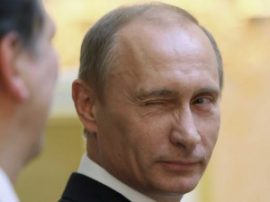 Things about America we’ve learned since November.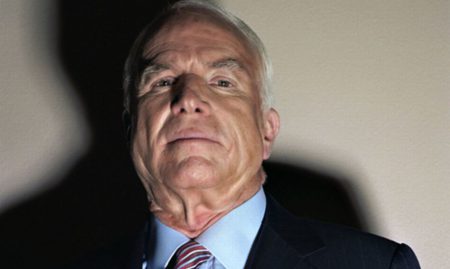

 Aletho News
