Bipartisan War
A new study urges more U.S. interventions
By Philip Giraldi • Unz Review • December 13, 2016
The Establishment and Realist foreign policy communities in the United States often seem separated by language which leads them to talk past each other. When a realist or Libertarian talks about non-intervention or restraint in foreign policy, as Ron Paul did in 2008 and 2012, the Establishment response is to denounce isolationism. As Dr. Paul noted during his campaigns, non-interventionism and isolationism have nothing to do with each other as a country that does not meddle in the affairs of others can nevertheless be accessible and open in dealing with other nations in many other ways. Non-interventionists are fond of quoting George Washington’s Farewell Address, in which he recommended that “The great rule of conduct for us in regard to foreign nations is in extending our commercial relations, to have with them as little political connection as possible… Harmony, liberal intercourse with all nations, are recommended by policy, humanity, and interest.” Establishment pundits tend to dismiss that “little political connection” bit, preferring instead to warn how detachment from foreign politics might lead to the rise of a new Adolph Hitler.
I was reminded of the language barrier while reading the Atlantic Council’s Middle East Strategy Task Force report, which appeared on November 30th. The report, which promises a new “Compact for the Middle East” while also asserting that “isolationism is a dangerous delusion,” might be regarded as a quintessential document laying out the Establishment position on what should be done in the region. It is ostensibly the product of two co-chairs, Madeleine Albright and Stephen Hadley, but it is also credited to an Executive Team headed by Executive Director Stephen Grand and Deputy Executive Director Jessica Ashooh, who in all probability were responsible for the actual drafting and editing.
The report also appears to have numerous high profile advisers who might or might not have had some hand in the final product. Running through the list of associates in the project which appears at the end of the report, one notes immediately that there is no individual or group identified that would contest the notion that the U.S. must have a leadership role in the Middle East. Indeed, many of those named derive considerable status from being part or supportive of America’s engagement in the region.
I would unambiguously describe Albright and Hadley as interventionists, a label that they might object to. Albright was Bill Clinton’s aggressive Secretary of State who is famous for her endorsement of American exceptionalism, stating that “We are the indispensable nation. We stand tall and we see further than other countries into the future…” She also is notorious for her approval of sanctions on Iraq that might have killed 500,000 children as “I think this is a very hard choice, but the price — we think the price is worth it” and she also once asked Colin Powell “What’s the point of having this superb military that you’re always talking about if we can’t use it?”
Stephen Hadley was the hawkish National Security Advisor under George W. Bush. He was one of the most outspoken advocates of military action against Iraq. During the essentially phony Syrian chemical weapons crisis in September 2013, he appeared on the media advocating attacking Syria with missiles. At the time, he was on the board at Raytheon and owned 11,477 shares of stock, which some considered to be a conflict of interest.
Albright and Hadley clearly were selected as co-Chairs to make the report bipartisan, an imperative for the Atlantic Council, which prides itself on being non-political, describing itself in its website as “a nonpartisan organization that promotes constructive U.S. leadership and engagement in international affairs based on the central role of the Atlantic community.” That self-definition suggests active engagement by the United States that goes well beyond George Washington’s advice. And if you look at the list of the Council’s executives and review their writings you will be able to confirm that they are pretty much inside the Beltway status quo in terms of supporting an assertive U.S. role in world affairs.
Albright and Hadley brought with them a certain point of view which was certainly recognized by the initiators of the project and one might assume that the Atlantic Council pretty much knew what the report would endorse even before it was written. The report, which runs to 105 pages, explores what it describes as a new strategic vision for the Middle East that will “change the political trajectory of the region.” It goes something like this: the states in the region must work together to create a “positive vision for their societies” to include “unlock[ing] the region’s rich, but largely untapped, human capital – especially the underutilized talents of youth and women.” Meanwhile, outside forces like the United States would have the responsibility of taking the lead to wind down the “violent conflicts” that have rocked the region. That means that the local governments will be responsible for haggling their way to some kind of acceptable modus vivendi while the U.S. must become more deeply involved militarily and using intelligence resources to stabilize Syria, Yemen and Libya.
In the case of Syria, which is the focus of the report, the argument is made that Bashar al-Assad’s reactionary regime is the root cause of the violence that has cost more than 200,000 lives and dislocated at least a third of the country’s population. This assessment is not necessarily universally accepted since 80% of the Syrian population lives in areas controlled by the government, which is about to increase its dominance by taking all of Aleppo, and there are no reports of civilians fleeing en masse to the greater freedom afforded by the rebel held areas, rather the reverse being true.
The report recommends using the U.S. military to establish safe areas in Syria to protect civilian populations, to include no-fly zones, which would bring about direct contact with the air forces of both Damascus and Moscow. It explicitly calls for direct military action against Syrian government forces including the employment of “air power, stand-off weapons, covert measures and enhanced support for opposition forces to break the current siege of Aleppo and frustrate Assad’s attempts to consolidate control over western Syria’s population centers.”
This judgment has been overtaken by events, but the co-authors do not really discuss what such an intervention would mean as it would involve the United States in an actual war based on executive fiat without any declaration from Congress. It also ignores reality on the ground, to include some politico-military reliance on the mythical moderate rebels while choosing not to recognize that the U.S. military is the intruder in Syria which, like it or not, has a legitimate government and a legal ally in Russia. The possibility of a second war with Russia is largely ignored in the report though there is an assumption that military pressure from the U.S. would push Damascus and Moscow towards a “political settlement” of the conflict after Russia becomes convinced through the assertion of American military power that “defeat, or stalemate, not victory, are the only realistic military outcomes.”
The report was initially intended to serve as a bipartisan rebuke to the current Barack Obama policy which limits direct American involvement in the conflict. Written before the presidential election, the co-authors could not have anticipated a Donald Trump victory, but they might be hoping that the report would serve as a guideline for the new administration. Hopefully they will be wrong in that expectation, but it is difficult at this point to see where the next White House will be going with its Middle Eastern policy.
There are a number of things wrong with the report from my perspective. Most significant, it assigns to the United States the responsibility to set and enforce standards of governance in parts of the world where the American people have little in the way of actual interests. The report refers to this oversight role as part of “enabling American global military operations,” an odd objective and also a point at which the language and perceptual problems come in – I am hearing intervention, which has been a failed policy since 2001, where Albright and Hadley construe a humanitarian mission based on American interests. They also have difficulty in conceptualizing that what they describe as the “debilitating cycle of conflict” in the Middle East might actually have been caused in large part by Washington’s involvement in that region, starting with the invasion of Iraq in 2003.
Second, the authors assume that the countries in the region, all of which have disparate interests, will act in good faith to support the “unlocking of the region’s human potential,” as the report enthuses, as part of its “positive vision.” It sounds good and probably is pleasing to globalists, but I would be skeptical of any kumbaya moments that require bringing together players like Saudi Arabia, Egypt and Turkey into one harmonic movement to better everyone in the region. Such pie in the sky is not even close to credible.
Third, when the report was issued Stephen Hadley told Reuters that “It may not work. But one of the things we know is that what’s going on now isn’t working.” No, it isn’t, but that might be based on a faulty assessment of the nature of the conflict. And this is thin gruel indeed to use as justification for going to war against Syria and possibly Russia.
One of the report’s obvious weaknesses derives from its Establishment-centric worldview. It calls for building stronger political institutions among the Palestinians in order to achieve a two-state solution without any serious examination of what the Israeli occupation is doing or not doing to impede any real movement in that direction. It treats Iran as an enemy of the “positive vision” that is “interfering” with its neighbors with the U.S. willing to “deter and contain Iran’s hegemonic activity,” making any real progress towards regional rapprochement unlikely. It sees a liberal democratic solution to all ills and judges multifaceted regional conflicts in purely “us against them” terms, favoring its “friends and allies” against the numerous other forces that are not on the same page.
The Atlantic Council’s Middle East Strategy Task Force Final Report argues that a transformation of the entire region, starting with establishment of security by replacing al-Assad and defeating ISIS, is both desirable and attainable. And it is an enterprise that has to be left to local players for the necessary social and political constructs with the U.S. providing leadership and direction, particularly when it comes to repressing “violent conflicts.” It is a utopian vision of what might be but one has to be concerned that the simplistic application of military force as a remedy for the regional cycle of violence ignores the probability that the reliance on such a solution in the first place has been a key element in the evolution of the current instability. That Syria will be fixed by coming in with force majeure on the side of what is being promoted as a progressive and humanitarian alternative to Bashar al-Assad borders on the ridiculous, but it is characteristic of the default position that many in Washington adopt when considering how to solve the problems in the Middle East.
It’s Beginning to Smell a Lot Like Totalitarianism, and I Don’t Mean Russia
By F. William Engdahl – New Eastern Outlook – 13.12.2016
If we smell precisely the stench of the totality of steps taken in NATO countries in recent months, especially in the United States and the European Union, we can smell the stench of totalitarian rule or some would call it, fascism, being quietly imposed on our basic human freedoms. Some recent examples give pause for reflection as to where we are allowing our world to drift.
Let’s begin with a most ominous, bizarre, Jesuitical interview that the Roman Catholic Pope Francis gave to a Belgian paper December 7, comparing what he calls defamatory news to what he called the “sickness of coprophagia.” He stated:
QUESTION – A final question, Holy Father, regarding the media: a consideration regarding the means of communication…
POPE – The communications media have a very great responsibility…It is obvious that, given that we are all sinners, also the media can…become harmful… They can be tempted by calumny, and therefore used to slander, to sully people, especially in the world of politics. They can be used as a means of defamation: every person has the right to a good reputation, but perhaps in their previous life, or ten years ago, they had a problem with justice, or a problem in their family life, and bringing this to light is serious and harmful… This is a sin and it is harmful. A thing that can do great damage to the information media is disinformation: that is, faced with any situation, saying only a part of the truth, and not the rest. This is disinformation… Disinformation is probably the greatest damage that the media can do, as opinion is guided in one direction, neglecting the other part of the truth. I believe that the media should… not fall prey – without offence, please – to the sickness of coprophilia, which is always wanting to communicate scandal… And since people have a tendency towards the sickness of coprophagia, it can do great harm.
Coprophilia is defined in the Merriam-Webster dictionary as “marked interest in excrement, especially the use of feces or filth for sexual excitement.” And coprophagia is eating feces by humans, literally, eating shit.
What people precisely, Holy Father, have a “tendency to towards the sickness of coprophagia”? Is this the dominant sickness of the human race? And if not, why do you make such a disgusting likeness between eating shit and citizens who read about politicians and their misdeeds or media that report on same? And who is to judge if factually true dissemination of facts about political figures from their past is relevant or not to help voters judge their character? I would say the comments are a perfect example of what he pretends to condemn.
Were it only a single, off-the-cuff remark by a religious figure, we could dismiss it along with claims such as the papal infallibility declaration proclaimed by the Vatican I on 18 July 1870. However, precisely because of such dogma and of the influence of the Roman Catholic Church and its Pope, notably in the countries of Western Europe, the United States and Latin America, such vague and dangerous remarks ought to be taken seriously as a signal of what lies ahead for the public freedom of speech.
“Fake News”
The papal comments on coprophagia and journalism come amid an explosion of charges in the USA and EU that Russia is planting “fake news” as it is now being called, about Hillary Clinton in the US media by way of certain alternative media. Robby Mook, Hillary Clinton’s former campaign manager, said “fake news” was a “huge problem” the campaign faced in the recent US election: “I still think we have to investigate what happened with Russia here. We cannot have foreign, and I would say foreign aggressors here, intervening in our elections. The Russian were propagating fake news through Facebook and other outlets, but look, we also had… Breitbart News, which was notorious for peddling stories like this.”
Online stories that claimed a Washington D.C. pizza restaurant, Comet Ping Pong, was used by candidate Hillary Clinton and her campaign manager John Podesta for child sex, the so-called “Pizzagate” Scandal, is now being used to drum up popular opinion for censorship of the Internet as well as Facebook and other social media.
Senior New York Times reporter David Sanger wrote a vague, anonymous “according to senior Administration sources,” article on December 9 under the headline, “Russia Hacked Republican Committee but Kept Data, US Concludes.” What we are seeing is precisely the kind of fake news that Hillary Clinton and the Pope talk about. But it is mainstream establishment media doing the fakery.
The fakery is being orchestrated by the highest levels of the mainstream media in collusion with NATO circles and intelligence agencies such as the CIA, which has saturated the ranks of mainstream media with their disinformation agents according to former CIA head William Colby, who once allegedly said, “The CIA owns everyone of any significance in the major media.”
The campaign will continue, likely with some horrendous stories about some psychopath taking a gun and bursting into Comet Ping Pong pizza place shooting innocent customers, because it was said he read in alternative media fake news about the pedophile ring. That already took place, but the man fired no shots. The population is being manipulated to accept extreme censorship of internet and other alternative media, something unimaginable just months ago.
Like clockwork, the “fake news” campaign has spread to the European Union. After announcing she will run again in 2017 for Chancellor, Angela Merkel spoke ominous words suggesting government censorship of independent “populist” (sic) media might be necessary: “Today we have fake sites, bots, trolls — things that regenerate themselves, reinforcing opinions with certain algorithms and we have to learn to deal with them.” She declared, “we must confront this phenomenon and if necessary, regulate it… Populism and political extremes are growing in Western democracies..” Her remarks came after Google and Facebook cut off ad revenue to what they declared to be “fake” news sites.
In the EU, especially Germany, populist has an implicit negative or even fascist connotation as in “right-wing populist” parties who oppose Merkel’s open door to war refugees policies, or who these days oppose almost anything her heavy-handed government puts forward.
War on Cash
Now if we begin to see stealth propaganda preparing us to accept severe clampdowns on the one remaining free media, the Internet and related social media, we can also see an equally ominous, indeed, totalitarian move to create acceptance for the idea we give up the right to hold paper money, giving private, often corrupt, banks total control over our money, and in turn giving government agencies total control over where we spend for what.
This is the so-called cashless society. Arguments put forward are that elimination of cash will be more convenient to consumers or that it will eliminate or greatly reduce organized crime and shadow economy that evades taxation. In the EU, Sweden has already virtually eliminated cash. Sweden cash purchases today are down to just three per cent of the national economy compared to nine per cent in the Eurozone and seven per cent in the US. Public buses don’t accept cash. Three of Sweden’s four largest banks are phasing out the manual handling of cash in bank branches. Norway is following the same path.
In France today, it’s now illegal to do cash transactions over €1,000 without documenting it properly. France’s finance minister Michel Sapin, in the wake of the Charlie Hebdo attacks, blamed the attacks on the ability of the attackers to “buy dangerous things with cash.” Shortly after the Hebdo attacks he announced capital controls that included the €1,000 cap on cash payments, down from €3,000, to “fight against the use of cash and anonymity in the French economy.” In high-inflation Eurozone €1,000 is not a huge sum.
Even in conservative Germany, a leading member of the Merkel coalition proposed to eliminate the €500 note and capping all cash transactions at €5,000. Some weeks later the European Central Bank, where negative interest rates are the order of the day, announced it would end issue of €500 notes by December 2018 arguing it made it too easy for criminals and terrorists to act.
And in the United States, as the campaign to sell skeptical citizens on cashless digital bank payments increases, JP Morgan Chase, the largest and one of the most criminal banks in the US, has a policy restricting the use of cash in selected markets. The bank bans cash payments for credit cards, mortgages, and auto loans; and it prohibits storage of “any cash or coins” in safe deposit boxes. So if you have a rare cold coin collection, you better stuff it in the mattress…
Negative Rates and Cashless Citizens
As long as cash–bills and coins of a national currency–are the basis of the economy, the central banks of the USA and EU as well as Japan, are unable to impose a severe negative interest rate policy much beyond the flirtation today by the ECB and Bank of Japan. If central bank rates were to go very negative, banks would be charging customers the absurd charge to make them pay to keep their cash on deposit or in savings at those banks. Naturally, people would revolt and withdraw in cash to invest in gold or other hard, tangible valuables.
Harvard economist and member of the Economic Advisory Panel of the Federal Reserve, Kenneth Rogoff, an advocate of the “war on cash,” noted that the existence of cash “creates the artifact of the zero bound on the nominal interest rate.” In his 2016 book, The Curse of Cash, Rogoff urged the Federal Reserve to phase out the 100-dollar bill, then the 50-dollar bill, then the 20-dollar bill, leaving only smaller denominations in circulation, much like what the mad Modi has just done in India.
Any serious observer of the world economy, especially of NATO nations in Europe and North America since the financial crisis of September 2008, would have to realize the current status quo of zero or negative central bank interest rates to prop up banks and financial markets is not sustainable. Unless cash is eliminated that is.
On April 5, 1933 President Franklin D. Roosevelt signed Executive Order 6102, “forbidding the Hoarding of gold coin, gold bullion, and gold certificates within the continental United States.” That was rightly denounced by many as outright theft, confiscation of privately held gold, by the Government.
Radical solutions such as done by President Roosevelt in 1933, yet in a monetary order where gold no longer dominates, is clearly becoming more attractive to the major bankers of Wall Street and the City of London. Rather than confiscate citizens’ gold, today the Gods of Money would have to find a way to steal the cash of citizens. Moving to their “cashless” banking, limiting how much cash can be withdrawn and then eliminating cash entirely as Swedish banks are doing would enable tax authorities to have perfect totalitarian control on every citizen’s use of money. Moreover, governments could decree, as did FDR, that cash above certain levels must be taxed under some or another national declaration of emergency.
As such bold, radical moves advance, they would of course be vociferously attacked not on CNN or The New York Times or Financial Times or other mainstream media tied to those criminal financial institutions, but in alternative media. Keep in mind it was the uncritical New York Times and Washington Post that uncritically retailed the fake news that led to declaration of war on Iraq in 2003, namely that Saddam Hussein had weapons of mass destruction aimed at Washington. That war has spread death and destruction of a scale unimaginable. No one complained at the time about that fake news.
The protest over moves to confiscate citizens’ bank holdings would come through alternate, independent media such as Zero Hedge or countless others. Recently, US media uncritically republished a purported list of “fake news” blogs and websites prepared by Assistant Professor of Communications at Merrimack College, Melissa Zimdars. Zero Hedge was on it.
This is not about endorsing or not endorsing any alternative blog or website. It is about the essential freedom of us all to be able to read and decide any and all opinions or analyses and not to have government decide what I am or am not allowed to read. It’s about the freedom to keep privacy about what I choose to buy and not leave a digital trail that my bank could release to the tax authorities or to Homeland Security or the FBI, or sell to profiling consumer operations. Controlling public communication and controlling private money would go a long way to creation of the perfect totalitarian state. Not a good idea, I would say.
F. William Engdahl is strategic risk consultant and lecturer, he holds a degree in politics from Princeton University.
Hypocrisy Behind the Russian-Election Frenzy
By Robert Parry | Consortium News | December 13, 2016
As Democrats, the Obama administration and some neocon Republicans slide deeper into conspiracy theories about how Russia somehow handed the presidency to Donald Trump, they are behaving as they accused Trump of planning to behave if he had lost, questioning the legitimacy of the electoral process and sowing doubts about American democracy.
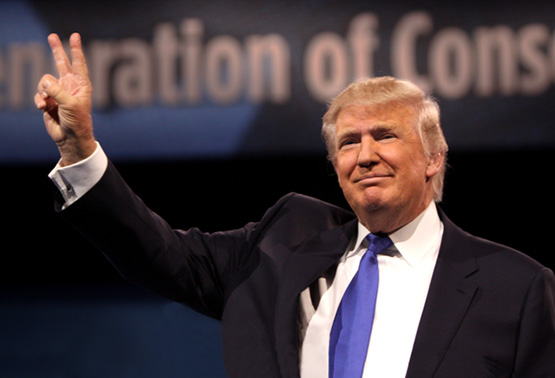
US President-elect Donald J. Trump
The thinking then was that if Trump had lost, he would have cited suspicions of voter fraud – possibly claiming that illegal Mexican immigrants had snuck into the polls to tip the election to Hillary Clinton – and Trump was widely condemned for even discussing the possibility of challenging the election’s outcome.
His refusal to commit to accepting the results was front-page news for days with leading editorialists declaring that his failure to announce that he would abide by the outcome disqualified him from the presidency.
But now the defeated Democrats and some anti-Trump neoconservatives in the Republican Party are jumping up and down about how Russia supposedly tainted the election by revealing information about the Democrats and the Clinton campaign.
Though there appears to be no hard evidence that the Russians did any such thing, the Obama administration’s CIA has thrown its weight behind the suspicions, basing its conclusions on “circumstantial evidence,” according to a report in The New York Times.
The Times reported: “The C.I.A.’s conclusion does not appear to be the product of specific new intelligence obtained since the election, several American officials, including some who had read the agency’s briefing, said on Sunday. Rather, it was an analysis of what many believe is overwhelming circumstantial evidence — evidence that others feel does not support firm judgments — that the Russians put a thumb on the scale for Mr. Trump, and got their desired outcome.”
In other words, the CIA apparently lacks direct reporting from a source inside the Kremlin or an electronic intercept in which Russian President Vladimir Putin or another senior official orders Russian operatives to tilt the U.S. election in favor of Trump.
More ‘Group Thinking’?
The absence of such hard evidence opens the door to what is called “confirmation bias” or analytical “group think” in which the CIA’s institutional animosity toward Russia and Trump could influence how analysts read otherwise innocent developments.
For instance, Russian news agencies RT or Sputnik reported critically at times about Democratic nominee Hillary Clinton, a complaint that has been raised repeatedly in U.S. press accounts arguing that Russia interfered in the U.S. election. But that charge assumes two things: that Clinton did not deserve critical coverage and that Americans – in any significant numbers – watch Russian networks.
Similarly, the yet-unproven charge that Russia organized the hacking of Democratic National Committee emails and the private email account of Clinton’s campaign chairman John Podesta assumes that the Russian government was responsible and that it then selectively leaked the material to WikiLeaks while withholding damaging information from hacked Republican accounts.
Here the suspicions also seem to extend far beyond what the CIA actually knows. First, the Republican National Committee denies that its email accounts were hacked, and even if they were hacked, there’s no evidence that they contained any information that was particularly newsworthy. Nor is there any evidence that – if the GOP accounts were hacked – they were hacked by the same group that hacked the Democratic Party emails, i.e., that the two hacks were part of the same operation.
That suspicion assumes a tightly controlled operation at the highest levels of the Russian government, but the CIA – with its intensive electronic surveillance of the Russian government and human sources inside the Kremlin – appears to lack any evidence of such a top-down operation.
Second, WikiLeaks editor Julian Assange directly denies that he received the Democratic leaked emails from the Russian government and one of his associates, former British Ambassador Craig Murray, told the U.K. Guardian that he knows who “leaked” the Democratic emails and that there never was a “hack,” i.e. an outside electronic penetration of an email account.
Murray said, “I’ve met the person who leaked them, and they are certainly not Russian and it’s an insider. It’s a leak, not a hack; the two are different things.”
‘Real News’
But even if Assange did get the data from the Russians, it’s important to remember that nothing in the material has been identified as false. It all appears to be truthful and none of it represented an egregious violation of privacy with some salacious or sensational angle.
The only reason the emails were newsworthy at all was that the documents revealed information that the DNC and the Clinton campaign were trying to keep secret from the American voters.
For instance, some emails confirmed Sen. Bernie Sanders’s suspicions that the DNC was improperly tilting the nomination race in favor of Clinton. The DNC was lying when it denied having an institutional thumb on the scales for Clinton. Thus, even if the Russians did uncover this evidence and did leak it to WikiLeaks, they would only have been informing the American people about the DNC’s abuse of the democratic process, something Democratic voters in particular had a right to know.
And, regarding Podesta’s emails, their most important revelation related to the partial transcripts of Clinton’s paid speeches to Wall Street banks, the contents of which Clinton had chosen to hide from the American people. So, again, if the Russians were involved in the leak, they would only have been giving to the voters information that Clinton should have released on her own. In other words, these disclosures are clearly not “fake news” – the other hysteria now sweeping Official Washington.
In the mainstream news media, there has been a clumsy effort to conflate these parallel frenzies, the leak of “real news” and the invention of “fake news.” But investigations of so-called “fake news” have revealed that these operations were run mostly by young entrepreneurs in places like Macedonia or Georgia who realized they could make advertising dollars by creating outlandish “click bait” stories that Trump partisans were particularly eager to read.
According to a New York Times investigation into one of the “fake news” sites, a college student in Tbilisi, Georgia, first tried to create a pro-Clinton “click bait” Web site but found that a pro-Trump operation was vastly more lucrative. This and other investigations did not trace the “fake news” sites back to Russia or any other government.
So, what’s perhaps most telling about the information that the CIA has accused Russia of sharing with the American people is that it was all “real news” about newsworthy topics.
What Threat to Democracy?
So, how does giving the American people truthful and relevant information undermine American democracy, which is the claim that is reverberating throughout the mainstream media and across Official Washington?
“Corruption” allegations against Yanukovych – pushed by OCCRP – were integral to the U.S.-supported effort to organize a violent putsch that drove Yanukovych from office on Feb. 22, 2014, touching off the Ukrainian civil war and – on a global scale – the New Cold War with Russia.
Yet, in the case of the “Panama Papers” or other leaks about “corruption” in governments targeted by U.S. officials for “regime change,” there are no frenzied investigations into where the information originated. Regarding the “Panama Papers,” there was simply back-slapping for the organizations that invested time and money in analyzing the volumes of material. And there were cheers when implicated officials were punished or forced to step down.
So, why are some leaks “good” and others “bad”? Why do we hail the “Panama Papers” or OCCRP’s “corruption evidence” that damaged Yanukovych – and ask no questions about where the material came from and how it was selectively used – yet we condemn the Democratic email leaks and undertake investigations into the source of the information?
In both the “Panama Papers” case and the “Democratic Party leaks,” the material appeared to be real. There was no evidence of disinformation or “black propaganda.” But, apparently, it’s okay to disrupt the politics of Iceland, Ukraine, Russia and other countries, but it is called a potential “act of war” – by neocon Sen. John McCain, R-Arizona – to reveal evidence of wrongdoing or excessive secrecy on the part of the Democratic Party in the United States.
Shoe on the Other Foot
Russian President Putin, while denying any Russian government attempt to tilt the election to Trump, recently commented on the American hypocrisy about interfering in other nations’ elections while complaining about alleged interference in its own or those of its allies. He described a conversation with an unnamed Western “colleague.”
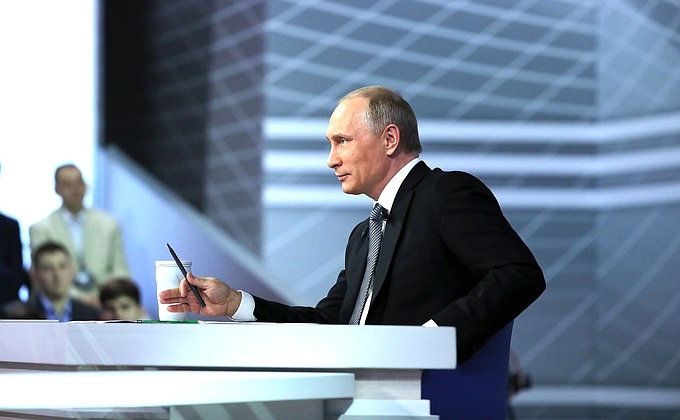
Russian President Vladimir Putin
Putin said, “I recently had a conversation with one of my colleagues. We touched upon our [Russian] alleged influence on some political processes abroad. I told him: ‘And what are you doing? You have been constantly interfering in our political life.’ And he replied: ‘It’s not us, it’s the NGOs’. I said: ‘Oh? But you pay them and write instructions for them.’ He said: ‘What kind of instructions?’ I said: ‘I have been reading them.’”
Whatever one thinks of Putin, he is not wrong in describing how various U.S.-funded NGOs, in the name of “democracy promotion,” seek to undermine governments that have ended up on Official Washington’s target list.
And another aspect of the hypocrisy permeating Official Washington’s belligerent rhetoric directed toward Russia: Aren’t the Democrats doing exactly what they accused Trump of planning to do if he had lost the Nov. 8 election, i.e., question the legitimacy of the results and thus undermine the faith of the American people in their democratic system?
For days, Trump’s unwillingness to accept, presumptively, the results of the election earned him front-page denunciations from many of the same mainstream newspapers and TV networks that are now trumpeting the unproven claims by the CIA that the Russians somehow influenced the election’s outcome by presenting some Democratic hidden facts to the American people.
Yet, this anti-Russian accusation not only undermines the American people’s faith in the election’s outcome but also represents a reckless last-ditch gamble to block Trump’s inauguration – or at least discredit him before he takes office – while using belligerent rhetoric that could push Russia and the United States closer to nuclear war.
Wouldn’t it be a good idea for the CIA to at least have hard evidence before the spy agency precipitated such a crisis?
Investigative reporter Robert Parry broke many of the Iran-Contra stories for The Associated Press and Newsweek in the 1980s.
US Intel Vets Dispute Russia Hacking Claims
As the hysteria about Russia’s alleged interference in the U.S. election grows, a key mystery is why U.S. intelligence would rely on “circumstantial evidence” when it has the capability for hard evidence, say U.S. intelligence veterans.
Veteran Intelligence Professionals for Sanity | December 12, 2016
MEMORANDUM
Allegations of Hacking Election Are Baseless
A New York Times report on Monday alluding to “overwhelming circumstantial evidence” leading the CIA to believe that Russian President Vladimir Putin “deployed computer hackers with the goal of tipping the election to Donald J. Trump” is, sadly, evidence-free. This is no surprise, because harder evidence of a technical nature points to an inside leak, not hacking – by Russians or anyone else.
Monday’s Washington Post reports that Sen. James Lankford, R-Oklahoma, a member of the Senate Intelligence Committee, has joined other senators in calling for a bipartisan investigation of suspected cyber-intrusion by Russia. Reading our short memo could save the Senate from endemic partisanship, expense and unnecessary delay.
In what follows, we draw on decades of senior-level experience – with emphasis on cyber-intelligence and security – to cut through uninformed, largely partisan fog. Far from hiding behind anonymity, we are proud to speak out with the hope of gaining an audience appropriate to what we merit – given our long labors in government and other areas of technology. And corny though it may sound these days, our ethos as intelligence professionals remains, simply, to tell it like it is – without fear or favor.
We have gone through the various claims about hacking. For us, it is child’s play to dismiss them. The email disclosures in question are the result of a leak, not a hack. Here’s the difference between leaking and hacking:
Leak: When someone physically takes data out of an organization and gives it to some other person or organization, as Edward Snowden and Chelsea Manning did.
Hack: When someone in a remote location electronically penetrates operating systems, firewalls or any other cyber-protection system and then extracts data.
All signs point to leaking, not hacking. If hacking were involved, the National Security Agency would know it – and know both sender and recipient.
In short, since leaking requires physically removing data – on a thumb drive, for example – the only way such data can be copied and removed, with no electronic trace of what has left the server, is via a physical storage device.
Awesome Technical Capabilities
Again, NSA is able to identify both the sender and recipient when hacking is involved. Thanks largely to the material released by Edward Snowden, we can provide a full picture of NSA’s extensive domestic data-collection network including Upstream programs like Fairview, Stormbrew and Blarney. These include at least 30 companies in the U.S. operating the fiber networks that carry the Public Switched Telephone Network as well as the World Wide Web. This gives NSA unparalleled access to data flowing within the U.S. and data going out to the rest of the world, as well as data transiting the U.S.
In other words, any data that is passed from the servers of the Democratic National Committee (DNC) or of Hillary Rodham Clinton (HRC) – or any other server in the U.S. – is collected by the NSA. These data transfers carry destination addresses in what are called packets, which enable the transfer to be traced and followed through the network.
Packets: Emails being passed across the World Wide Web are broken down into smaller segments called packets. These packets are passed into the network to be delivered to a recipient. This means the packets need to be reassembled at the receiving end.
To accomplish this, all the packets that form a message are assigned an identifying number that enables the receiving end to collect them for reassembly. Moreover, each packet carries the originator and ultimate receiver Internet protocol number (either IPV4 or IPV6) that enables the network to route data.
When email packets leave the U.S., the other “Five Eyes” countries (the U.K., Canada, Australia, and New Zealand) and the seven or eight additional countries participating with the U.S. in bulk-collection of everything on the planet would also have a record of where those email packets went after leaving the U.S.
These collection resources are extensive; they include hundreds of trace route programs that trace the path of packets going across the network and tens of thousands of hardware and software implants in switches and servers that manage the network. Any emails being extracted from one server going to another would be, at least in part, recognizable and traceable by all these resources.
The bottom line is that the NSA would know where and how any “hacked” emails from the DNC, HRC or any other servers were routed through the network. This process can sometimes require a closer look into the routing to sort out intermediate clients, but in the end sender and recipient can be traced across the network.
The various ways in which usually anonymous spokespeople for U.S. intelligence agencies are equivocating – saying things like “our best guess” or “our opinion” or “our estimate” etc. – shows that the emails alleged to have been “hacked” cannot be traced across the network. Given NSA’s extensive trace capability, we conclude that DNC and HRC servers alleged to have been hacked were, in fact, not hacked.
The evidence that should be there is absent; otherwise, it would surely be brought forward, since this could be done without any danger to sources and methods. Thus, we conclude that the emails were leaked by an insider – as was the case with Edward Snowden and Chelsea Manning. Such an insider could be anyone in a government department or agency with access to NSA databases, or perhaps someone within the DNC.
As for the comments to the media as to what the CIA believes, the reality is that CIA is almost totally dependent on NSA for ground truth in the communications arena. Thus, it remains something of a mystery why the media is being fed strange stories about hacking that have no basis in fact. In sum, given what we know of NSA’s existing capabilities, it beggars belief that NSA would be unable to identify anyone – Russian or not – attempting to interfere in a U.S. election by hacking.
For the Steering Group, Veteran Intelligence Professionals for Sanity (VIPS)
William Binney, former Technical Director, World Geopolitical & Military Analysis, NSA; co-founder, SIGINT Automation Research Center (ret.)
Mike Gravel, former Adjutant, top secret control officer, Communications Intelligence Service; special agent of the Counter Intelligence Corps and former United States Senator
Larry Johnson, former CIA Intelligence Officer & former State Department Counter-Terrorism Official
Ray McGovern, former US Army infantry/intelligence officer & CIA analyst (ret.)
Elizabeth Murray, Deputy National Intelligence Officer for Middle East, CIA (ret.)
Kirk Wiebe, former Senior Analyst, SIGINT Automation Research Center, NSA (ret.)
Top US spy agency abstains on CIA assessment of Russian hack of 2016 election
RT | December 13, 2016
The office overseeing all 17 agencies of the US intelligence community apparently doubts the CIA’s assessment that Russia intervened to help Donald Trump win the presidential election, as Reuters reports anonymous officials saying the allegation won’t be endorsed.
Three unnamed officials from the Office of the Director of National Intelligence (ODNI) told Reuters on Monday that their agency does not dispute the CIA’s findings, yet it would not accept them either.
“ODNI is not arguing that the agency (CIA) is wrong, only that they can’t prove intent,” one of the officials told the news agency. “Of course they can’t, absent agents in on the decision-making in Moscow.”
The CIA has not made its findings public, but the Washington Post reported on a secret assessment by the agency. It concluded that Russian intelligence hacked the servers of the Democratic National Committee (DNC) and Hillary Clinton’s chief of staff John Podesta to help Trump win the presidency.
The ODNI was formed to ease the bureaucratic obstacles between US intelligence agencies after the 9/11 terrorist attacks.
“[It was] a thin reed upon which to base an analytical judgment,” another official said in response to the speculation. He stressed that the “judgment based on the fact that Russian entities hacked both Democrats and Republicans and only the Democratic information was leaked.”
House Intelligence Committee Chairman Devin Nunes (D-California) wrote a letter Monday to James Clapper, the Director of National Intelligence. In it, Nunes said he was “dismayed” with Clapper’s inaction on informing the house committee about the division between the assessments of the CIA and the FBI, Reuters reported. Nunes also requested that Clapper speak to his panel by the end of this week and noted that Clapper testified in November that there was not enough evidence to show a connection between Russia and the “Podesta emails” releases from WikiLeaks.
Senator John McCain (R-Arizona) has urged a Congressional probe, saying there is “no information” to prove any Russian intention.
“It’s obvious that the Russians hacked into our campaigns,” McCain told Reuters. “But there is no information that they were intending to affect the outcome of the election, and that’s why we need a congressional investigation.”
Claims of Russia’s Involvement in Cyberattacks Groundless – Kremlin
Sputnik | 12.12.2016
MOSCOW – Accusations that Russia is involved in cyberattacks are unprofessional and groundless, and have nothing in common with reality, Kremlin spokesman Dmitry Peskov said Monday.
Last week, media reports emerged citing the US Central Intelligence Agency accusing Russia of interfering in the US elections in November to help Donald Trump, who won the vote, secure victory.
“Different media outlets publish such information with an enviable constancy. Many high-ranking officials in the United States and the United Kingdom make such statements with an enviable constancy. And, with an enviable constancy, neither of these groundless statements have ever been backed with any information, I’m not even talking about proof. So this all looks like a completely groundless, unprofessional, unqualified claim and accusation, which have nothing in common with reality,” Peskov told reporters.
Angela Merkel, desperate to stay in power, is now claiming Russian hackers are ready to attack Germany’s 2017 elections
By Alex Christoforou | The Duran | December 12, 2016
Remember when the Obama administration spied on German media as well as the German government, and specifically Angela Merkel.
The Duran remembers.
In 2015 CNN‘s Jake Tapper reported…
An investigation by the German parliament is raising questions on whether the Obama administration not only spied on journalists in that country, but also interfered in the exercise of the free press under the guise of U.S. national security.
That the NSA was spying on German officials is not new, though it continues to upset free press advocates and those with memories of repressive governments both Communist and Nazi. In 2013, the German magazine Der Spiegel, using information gleaned from files stolen and leaked by Edward Snowden, first reported that the NSA was intercepting German Chancellor Angela Merkel’s cell phone communications.
On Thursday, WikiLeaks released more information, presumably from that surveillance, from a conversation between Merkel and her personal assistant in October 2011, saying the Chancellor “professed to be at a loss” between two courses of action to take in the Greek financial crisis. The WikiLeaks release also suggested that the NSA was spying on German ministers in addition to Merkel. The U.S. ambassador to Germany, John Emerson, was summoned to meet with the Chancellery chief of staff, Peter Altmaier, to discuss the news.
Less observed this week was news that the NSA was eavesdropping not only on Merkel, but also in some capacity on Germany’s free press, specifically Der Spiegel.
Merkel appears to have forgiven and forgotten the FACT that the US hacked and spied on Germany.
American “factual” hacking of Germany… no problem. Russian “imaginary” hacking of Germany… problem.
Following on Obama’s “Russian hacker” witch hunt, Germany is also sounding the alarm bells of Kremlin influenced hacking meant to weaken Germany and the European Union.
Reuters reports that Germany’s domestic intelligence agency has reported an increase in Russian propaganda and disinformation campaigns “aimed at destabilising German society, and targeted cyber attacks against political parties.”
The German agency’s statement to Reuters seems to be perfectly timed with the CIA claim of Russian election hacking. Coincidence?
“We see aggressive and increased cyber spying and cyber operations that could potentially endanger German government officials, members of parliament and employees of democratic parties,” Hans-Georg Maassen, head of the BfV spy agency, said in statement.
Maassen, who raised similar concerns about Russian efforts to interfere in German elections last month, cited what he called increasing evidence about such efforts and said further cyber attacks were expected.
The agency said it had seen a wide variety of Russian propaganda tools and “enormous use of financial resources” to carry out “disinformation” campaigns aimed at the Russian-speaking community in Germany, political movements, parties and other decision makers.
The goal was to spread uncertainty, strengthen extremist groups and parties, complicate the work of the federal government and “weaken or destabilise the Federal Republic of Germany”.
The agency said it had seen a “striking increase” in spear-phishing attacks attributed to Russian hacking group APT 28, also known as “Fancy Bear” or Strontrium. It is the same group blamed for the hack of the U.S. Democratic National Committee this year and a cyber attack on the German parliament in 2015.
The attacks were directed against German parties and lawmakers and were carried out by government bodies posing as “hacktivists”, the agency said.
German officials have accused Moscow of trying to manipulate German media to fan popular angst over issues like the migrant crisis, weaken voter trust and breed dissent within the European Union so that it drops sanctions against Moscow.
But intelligence officials have stepped up their warnings in recent weeks, alarmed about the number of attacks.
Last month, German Chancellor Angela Merkel said she could not rule out Russia interfering in Germany’s 2017 election through Internet attacks and misinformation campaigns.
*****
Russian officials have denied all accusations of manipulation and interference intended to weaken the European Union or to affect the U.S. presidential election.
For an economy in “tatters”, as Barack Obama famously noted, Russia sure has a lot of power in hacking election systems, and manipulating global media. Zerohedge adds…
Either Russian intelligence officials have suddenly become extremely efficient at disrupting national elections in the world’s largest democracies or the establishment leaders of those democracies have intentionally launched a coordinated, baseless witch hunt as a way to distract voters from their failed policies. We have our suspicions on which is more likely closer to the truth…
Like accusations made by Hillary and Obama in the U.S., German politicians, including Chancellor Angela Merkel, have asserted that Russian intelligence agents and media outlets have attempted to spread “fake news” in an effort to “fan popular angst over issues like the migrant crisis.” Of course, it can’t simply be that voters disagree with Merkel’s “open border” policies which have resulted in a massive influx of migrants that have been linked to increasing crime, terrorist attacks and sexual assaults on German citizens… that would just be silly and racist and xenophobic.
Democratic Losers and their Media Backers Seek a Scapegoat for Their Own Disaster
The fake campaign to blame ‘the Russians’
By Dave Lindorff | This Can’t Be Happening! | December 11, 2016
The New York Times and Washington Post, the nation’s two top national newspapers, have been breathlessly reporting of late, with little sign of any appropriate journalistic skepticism, on a purported massive and successful Russian conspiracy to throw the US election to their “favored” candidate, Donald Trump. But the Chicago Tribune has weighed in with a more measured piece, suggesting that while the CIA, a particularly secretive and politically driven organization, may be making that claim, the FBI is not convinced.
While even the Tribune sometimes ignores inserting the requisite “alleged” that should precede any reference to unproven claims that Russia is behind the hacking of the Democratic Party’s (and the Republican Party’s) email server, the paper does also note that Democrats in particular are “frustrated” by the “murky nature” of the FBI’s analysis, with outgoing Senate Minority Leader Harry Reid (D-Nev.), calling on FBI Director James Comey to resign.
The reason for the Democrats’ frustration is also made clear. As the Tribune reports:
With so much of the evidence about Russia’s alleged role in the election shrouded in secrecy because of strict classification rules, Democrats and Republicans in Washington who have access to the underlying intelligence say they have struggled to make their respective cases, leaving an already deeply divided public convinced that both sides are shading their conclusions to help the candidate they backed on Election Day.
The reality is that the CIA has presented no hard evidence that Russia is behind the hacking of the DNC’s or or Clinton’s private home server. The excuse is given that the Agency doesn’t want to disclose any of its sources, so the reader is left with the pathetic plea, from both the Agency and the White House: “Trust us.”
But why would anyone trust the CIA or the White House on anything? We’re talking about an agency and a Executive Branch that between them are known to have lied (during the GW Bush years) about anthrax labs in Saddam Hussein’s Iraq, lied about what were aluminum tubes imported to make irrigation equipment being evidence of missile-building, lied about Iraq’s links to Al Qaeda, and (during the Obama years) lied about Syria’s government using Sarin gas on its own people in Damascus, lied about the details of the killing of Osama Bin Laden, lied about the role of a murderous CIA agent captured by Pakistani police while posing as a US consular employee, lied about the extent of National Security Agency Spying both at home and abroad, and lied about Russia invading Ukraine and shooting down a civilian Malaysian jumbo jet.
If one were to take a moment and think about what is being alleged here by Democrats — that a national presidential election was successfully subverted by the releasing of hacked emails showing major corruption and malfeasance by the Democratic Party leadership in undermining the fairness of the party’s presidential primary to benefit one candidate — Hillary Clinton — and to destroy the candidacy of her opponent Bernie Sanders — it should lead to one of two alternative conclusions.
Either the Russians did Americans a favor, by exposing the epic corruption of one of their two major parties and one of the candidates seeking to become president — something that a more independent and aggressive domestic media would have and should have done on their own, if not by hacking then by paying attention to, instead of ignoring and blacking out, what frustrated insiders like DNC Vice Chair Tulsi Gabbard, the Democratic congresswoman from Hawaii who quit in disgust saying the DNC was undermining the primaries on behalf of Clinton’s campaign. Or alternatively, we’re being told that our 240-year-old democracy is so shriveled and weak that an outside government can easily undermine it and manipulate the outcome as if we were some corrupt and fragile banana republic.
Either conclusion is rather pathetic and depressing to contemplate.
Meanwhile, the media feeding frenzy over unsubstantiated claims over Russian subversion of our last election ignores the reality that this kind of thing is something the US has been doing abroad at least since the end of World War II and the onset of the Cold War. Not content to just undermine elections through dirty tricks, fake news and secret payments in Europe, Latin America, later in Eastern Europe and Russia, and in Asia, the US has also fomented countless coups to overthrow or attempt to overthrow existing elected governments, most recently in Honduras, Ukraine, Venezuela and Brazil, and so has no grounds to complain by claiming that the Russians were allegedly doing the same thing here.
On the other hand, if the Democratic Party leadership had kept its hand off the scale during the primaries, and had not made such heavy-handed efforts to get major news organizations like the Times, MSNBC, the Daily News, Post and others to help it undermine Bernie Sanders, Sanders would have won both the party’s nomination and the presidency, and probably the Congress also into the bargain, and we wouldn’t be looking at a looming Trump presidency and Republican Congress.
Not only that, but with a genuinely popular candidate running for president in both parties (like it or not Trump was wildly popular among a significant segment of the population), no Russian propaganda campaign would have had a prayer of impacting voter opinion or the results of the voting.
If indeed there really was a Russian effort to swing this recent election, it could only have succeeded in a situation where the electorate was disgusted by its choices and was voting negatively for a lesser evil. And that situation only could arise where the two major parties were so corrupted that they were trying desperately to keep genuinely popular candidates from winning the nomination.
In fact that is what happened. The Republican leadership tried mightily to keep Donald Trump, a loose cannon who has disavowed many basic and long-held Republican principles, such as backing US empire and Israel, supporting any and all trade agreements, and viewing Russia as an existential enemy, from winning their party’s nomination. They failed, but not for lack of trying. The Democratic leadership tried everything, too, to prevent insurgent self-described “socialist” candidate Sanders from winning the nomination, and thanks to underhanded manipulation of the primaries, corrupt meddling in media coverage of Sanders, an anti-democratic voting block of locked-in “super delegates,” committed to backing Clinton whatever the result of the primaries, and some crooked efforts to depress voting in key primary states including New York and California, they succeeded in throwing the nomination to Clinton. She of course was doomed, by their very ham-handed interference in the primaries, to go on to lose the general election.
That corrupt fiasco has left Democratic Party leadership hacks and their backers in the corporate media with nothing to do but find a scapegoat for their disastrous performance, hence the fake “Russia-did-it” claims.
It’s a sad commentary on the pathetic decline of democracy in the United States, but is also a clarion call for a rebirth of grassroots democratic resurgence.
If there’s a bright spot in the new situation, it’s that progressives, socialists, radicals and disaffected citizens of all kinds now should have a clear understanding of how corrupt the Democratic Party really is.
One of two things must happen. That party must be completely swept clean of the hacks, frauds, crooks, compromisers and charlatans who populate its leadership and who hold most of the elected posts remaining in Democratic hands in Congress. Alternatively, the Democratic Party must be abandoned as unsalvageable, with progressive forces, from labor organizations, advocates of the poor and elderly, environmental activists, human rights and peace groups, women’s rights and minority rights organizations, civil libertarians and others rallying both to create something new to replace it, and organizing in the street to resist the new Trump government.
Any new left party needs to abandon the fraudulent tactics of so-called “identity politics,” in which a basically pro-corporate Democratic Party has sought to appease and cajole support for its corporatist candidates and agenda by catering to individual issues of various groups leaning its way by default. Instead, the really big issues need to be tackled head on: expanding Social Security, making Medicare universal for everyone of all ages, restoring genuine progressive taxation on the wealthy, ending foreign wars, closing overseas bases and slashing the military, obeying international law (including treaties with sovereign Native American nations), making public college free to all, nationalizing support for primary and secondary education so that all communities have well-funded, quality public schools, declaring a national mobilization to quickly end reliance upon fossil fuels to combat climate change, and creating jobs for everyone through a massive public spending program on job training and infrastructure repair and modernization.
These and other ideas are things that most Americans can and would get behind, not simply efforts to pander to various specific interest groups.
Do this and the Russians — assuming they even have been trying to manipulate our elections — wouldn’t have a chance of influencing anyone.
Hudson Bay could be ice-free in winter within 5-10 years, says seal researcher
By Susan J Crockford | Polar Bear Science | December 7, 2016
Ringed seal biologist Steven Ferguson, in a statement to a reporter from the Winnipeg Free Press, made one of the boldest predictions I’ve ever heard:
“Hudson Bay could experience its first free winter within 5-10 years.”
You heard it here, folks. It appears Ferguson thinks Hudson Bay was never ice-free in winter even during the Eemian Interglacial, when the Bering Sea was ice-free in winter – something that has not come close happening in recent years (Polyak et al. 2010:1769).
Sounds like a bit of ill-advised grandstanding to me.
The Winnipeg Free Press reported Ferguson’s claim yesterday that ringed seal numbers in Hudson Bay declined by almost 80% the spring after the late freeze-up year of 2010, as part of a non-peer reviewed conference paper he gave (so no one can see the data he’s talking about).
However, polar bear surveys were done that summer and found no decline in numbers. The mark-recapture study (Lunn et al. 2016), you will recall, surveyed only about 1/2 of Western Hudson Bay territory so their estimate of about 800 bears was invalid for comparison to previous years. An aerial survey of the entire subpopulation the same year (Stapleton et al. 2014) found about 1030 bears – statistically, no change since the last estimate in 2004 (the IUCN PBSG uses 1030 as the official population size).
Southern Hudson Bay bears also showed no decline in numbers after 2010, as indicated by a survey undertaken in 2011 and 2012 (Obbard et al. 2015, 2016). The most recent Foxe Basin survey (Stapleton et al.2015) was done just before (summers of 2009 and 2010) the supposed decline of seals in the spring of 2011.
So, if Hudson Bay ringed seals suffered a “near-catastrophic” decline in numbers in the spring of 2011 after the late freeze-up in fall 2010, there must still have been plenty of seals left to feed the polar bears that depended on them for survival.
Apparently, ringed seal numbers rebounded after the spring decline of 2011 but Ferguson either failed to say to what levels or the reporter failed to mention it.
Well yes, I guess they did recover because how else could polar bears have come ashore this summer in such spectacularly good condition if seal numbers were still profoundly low?
For perspective, have a look at this previous post on Hudson Bay seals and the effect of variations in snow cover (for which Ferguson provided much of the data).
Quotes from the WFP article:
Ringed seal population in the Hudson Bay is declining.
A near-catastrophic plunge in the population of ringed seals in Hudson Bay is being blamed on melting sea ice caused by global warming, says a study led by a Manitoba researcher.
The population has been diminished by 75 per cent since aerial surveys started 20 years ago, according to data that will be presented to the ArcticNet conference of scientists in Winnipeg this week.
Lead researcher Steve Ferguson, a scientist with Fisheries and Oceans Canada and the University of Manitoba, said global warming is causing sea ice to disappear earlier in spring and form later in the fall, and there is less of it in Hudson Bay.
…
And in turn, the polar bear population will suffer because seals are the main component of their winter diet. The problem is compounded, as less sea ice means the bears have less area to hunt.
Hudson Bay could experience its first ice-free winter within five to 10 years, Ferguson said
“I don’t think polar bears and seals will be able to adapt. I think they’ll just die out in places like Hudson Bay. There’s little to stop the trend in loss of sea ice, even if we stop producing greenhouse gasses,” he said.
The study’s findings portend disaster for the Arctic generally.
“Hudson Bay is the early warning area of climate change because it is so far south,” Ferguson said. “We’re seeing the changes more dramatic in Hudson Bay, and it’s showing us how the rest of the Circumpolar Arctic will be impacted.”
Ferguson said while many people believe climate change is gradual, aerial surveys reveal mammals can disappear in huge numbers in a short period of time.
After a particularly warm 2010, the seal population plunged almost 80 per cent. Seal immune systems seemed to weaken, making them more susceptible to pathogens. Some of that loss has been recovered, he said.
Aerial surveys are not really “population surveys,” but are the most accurate available indicator, and they show a definite trend. They’re done each spring by counting seals on the ice.” [my bold]
References
Lunn, N.J., Servanty, S., Regehr, E.V., Converse, S.J., Richardson, E. and Stirling, I. 2016. Demography of an apex predator at the edge of its range – impacts of changing sea ice on polar bears in Hudson Bay. Ecological Applications, in press. DOI: 10.1890/15-1256
Obbard, M.E., Stapleton, S., Middel, K.R., Thibault, I., Brodeur, V. and Jutras, C. 2015. Estimating the abundance of the Southern Hudson Bay polar bear subpopulation with aerial surveys. Polar Biology 38:1713-1725.
Obbard, M.E., Cattet, M.R.I., Howe, E.J., Middel, K.R., Newton, E.J., Kolenosky, G.B., Abraham, K.F. and Greenwood, C.J. 2016. Trends in body condition in polar bears (Ursus maritimus) from the Southern Hudson Bay subpopulation in relation to changes in sea ice. Arctic Science, in press. 10.1139/AS-2015-0027
Polyak, L., Alley, R.B., Andrews, J.T., Brigham-Grette, J., Cronin, T.M., Darby, D.A., Dyke, A.S., Fitzpatrick, J.J., Funder, S., Holland, M., Jennings, A.E., Miller, G.H., O’Regan, M., Savelle, J., Serreze, M., St. John, K., White, J.W.C. and Wolff, E. 2010. History of sea ice in the Arctic. Quaternary Science Reviews 29:1757-1778. http://bprc.osu.edu/geo/publications/polyak_etal_seaice_QSR_10.pdf
Stapleton S., Atkinson, S., Hedman, D., and Garshelis, D. 2014. Revisiting Western Hudson Bay: using aerial surveys to update polar bear abundance in a sentinel population. Biological Conservation 170:38-47. http://www.sciencedirect.com/science/article/pii/S0006320713004618#
Stapleton, S., Peacock, E., and Garshelis, D. 2015. Aerial surveys suggest long-term stability in the seasonally ice-free Foxe Basin (Nunavut) polar bear population. Marine Mammal Science 32(1):181-201.
Featured Video

Trump asks Iran not to retaliate after he strikes Pickaxe Mountain
or go to
Aletho News Archives – Video-Images
Book Review & Summary
Calling of an Angel: The True Story of Rene Caisse and an Indian Herbal Medicine Called Essiac (1988)
Dr. Gary L. Glum – 30 Q&As – Book Review & Summary
Lies are Unbekoming | October 17, 2026
On June 10, 1975, Dr. Chester Stock, a vice president at Memorial Sloan-Kettering Institute for Cancer Research, wrote to a Canadian nurse named Rene Caisse: “Enclosed are test data in two experiments indicating some regressions in sarcoma 180 of mice treated with Essiac.” The sentence sat in a letter from one of the world’s largest private cancer research centers, concerning an herbal tea an elderly English woman had learned from an Ojibwa medicine man at a northern Ontario mining camp in the 1890s. The tests were terminated the following year after Sloan-Kettering admitted, in sworn affidavit three years later, that they had prepared the injectable solution improperly from the dried material supplied — freezing and thawing the herb rather than boiling it as Rene had instructed. By the time Calling of an Angel was published in 1988, Rene Caisse had been dead for a decade, having treated thousands of cancer patients across fifty-six years in her Bracebridge, Ontario kitchen, never charging a fee, and refusing every offer — from Memorial Sloan-Kettering, the National Cancer Institute, Merck, Parke Davis, and private corporations dangling contracts up to $1 million — to release her formula before the medical establishment admitted her remedy had merit. … continue
Blog Roll
 Aletho News
- Trump asks Iran not to retaliate after he strikes Pickaxe Mountain – w/ Prof. Marandi
- Vice President J.D. Vance’s Deceptive ‘Antiwar’ Campaign Speech
- Iran: Palestinians’ rights must not be compromised in Gaza’s future; US, Israel to blame for Hormuz situation
- Ongoing tales of Syrian chemical weapons
- Moscow blasts UN for ignoring torture of Russian POWs
- Millions of Books Could Have Been Destroyed in Lebanon During Israeli Bombings
- Moscow warns of ‘hunt for Russians’
- Calling of an Angel: The True Story of Rene Caisse and an Indian Herbal Medicine Called Essiac (1988)
- South Korean Assistance to the U.S. in the War with Iran: Between Allied Duty and National Interests
- Pharma- and Gates-Funded GAVI Seeks to Assure Parents
- If Americans Knew
- Israeli soldiers debunk Israel’s talking points
- In West Bank, Israeli settlers are totally out of control – Daily Update
- NPR investigation finds evidence of widespread fraud at mall kiosks tied to Israeli skincare brand
- Tucker Carlson exposes Israeli Lies about the Oct 7th attack, Charlie Kirk, and the U.S.
- Israel has detained thousands of Palestinian children since Oct 7th – over half spent time in solitary, many uncharged
- Israeli Analysis: Is Netanyahu Planning an ‘October Surprise’ Attack Before Israel’s Election?
- Israeli settlers brutally attack Palestinians and Washington Post female photographer, 65
- Words Have Changed, Occupation Continues: The Reality of the Gaza Ceasefire
- Gaza’s child amputees are growing faster than their prosthetics allow
- Israel keeps Palestinians struggling just to survive–Daily Update
- No Tricks Zone
- New Study Suggests Large Regions Of The Pacific Ocean Have Been Cooling For The Last 80 Years
- Germany’s Green Energy Debacle: High Energy Costs Force Kahla Porzellan to Close After 182 Years!
- New Study: 50 Years Of The Most Aggressive ‘Net Zero’ Policies Can Only Affect The Global Climate By 0.03°C
- US September “Heat” Was No Record…Many Records Set Decades Ago
- Latest European Green Energy Debacle; Portugal’s Largest Flagship Solar Park Insolvent!
- Green Energy Debacle: German Expert Professor Fritz Vahrenholt Warns Of Severe Economic And Social Consequences
- Two More Paleo Reconstructions Affirm Meters-Higher Sea Levels Across Ireland, Brazil 7000-6000 Years Ago
- New Study: Earth And Venus Surface Warmth Largely Explained By Convection And Lapse Rate, Not CO2 Or Radiation
- 2025 Nature Paper Claiming Worsening Global Drought Gets RETRACTED …Heavily Flawed
- New Study: ‘Global Drought Shows No Detectable Recent Acceleration Under Climate Warming’

