The ongoing diplomatic tug of war between Syria and the Arab League took an unexpected turn Monday with rumors of a potential breakthrough. A positive outcome would signal a major political – not procedural – change of heart at the Arab League, whose earlier dealings with Syria showed little room for compromise.
Last week, the Arab League broke with its own charter for the second time this year, voting to impose far-reaching economic sanctions on member-state Syria, eight months after backing a no-fly zone over member-state Libya.
The charter, which was written in the early post-colonial period, placed great stock in the inviolability of “a state’s independence, sovereignty, or territorial integrity.”
Article V of the League’s charter clearly stipulates: “Any resort to force in order to resolve disputes between two or more member-states of the League is prohibited. If there should arise among them a difference which does not concern a state’s independence, sovereignty, or territorial integrity [my italics], and if the parties to the dispute have recourse to the Council for the settlement of this difference, the decision of the Council shall then be enforceable and obligatory.”
A recently-departed senior Arab League official told me: “We have taken strong measures before only in relation to foreign policy issues or disputes between Arab countries. But on these last two occasions, this is a historic departure in relation to the practice of the Arab League. For the first time measures were taken against an Arab country because of its internal situation – the way a government is treating its own people.”
He continued, “When people are dying I don’t care about reconciling this with the charter – that’s my priority. If there are legal issues that contravene, I’m happy to bend them.”
But what about the tens of thousands of civilians slaughtered in member-state Somalia this year alone, with nary a peep from the Arab League? Or of the League’s non-intervention policy in Yemen and Bahrain, where protests continue to this day?
So why did the League single out Syria for sanctions?
Ostensibly, it is because Damascus refused an Arab League observer mission to Syria, but that is not exactly true. The Syrians counter-proposed a series of amendments to the mission “Protocol” to accommodate their sovereignty concerns. It was the League that rejected these outright on November 27, although they appear to have reopened negotiations quietly in the past few days.
Consider this: The Gulf Cooperation Council (GCC) – now effectively at the helm of Syrian issues in the Arab League – spent seven months negotiating an exit for the despotic Yemeni President Ali Abdallah Saleh.
When asked about double-standards in the treatment of Syria versus other Arab member-states, the recently-departed senior League official admitted, “I think the position taken by the Arab countries in relation with Bahrain is a very sad one – we should have been more firm.”
On Yemen however, his response was curious, “Yemen – it is being handled by the GCC, and doesn’t need the Arab League’s help right now.”
But the same players refused to spend even seven days on Syria. The League dropped the sanctions gauntlet a mere three days after Syria offered its amended proposal, claiming these would “affect the core of the document and would radically change the nature of the mission.”
But is that true? Would Syria’s amendments sink the project as some League members alleged?
Much ado has been made about Syria’s amendments in Arab League statements, but other than a brief reference to a couple of provisions in Al-Hayat newspaper, these have not been made public.
Below is a much more comprehensive outline of Syria’s counter-proposal obtained from a well-connected, non-Syrian source. There is little in the document that could not have been negotiated to accommodate both Syria’s desire to maintain sovereignty in this process and the Arab League’s determination to carry out its mission:
Syria’s Amendments to the Arab League Monitoring Mission (November 2011)
Clause I
“An independent mission is to be formed, composed of Arab military and civilian personnel nominated by Arab states and organizations involved in human rights and the provision of protection to civilians, to be sent to the Syrian Arab Republic. It will be known as the Arab League Monitoring Mission and operate within its framework. It is assigned with monitoring implementation of the Arab plan for resolving the Syrian crisis and providing protection to Syrian civilians.”Syrian amendment:
“An independent Mission is to be formed, composed of Arab military and civilian personnel nominated by Arab states, to be sent to the Syrian Arab Republic. It will be known as the Arab League Monitoring Mission and operate within its framework. It is assigned with monitoring implementation of the clauses of the Arab plan for resolving the current crisis in Syria. The Syrian side will be provided with a list comprising the names, status, ranks and nationalities of the Mission’s members.”
Clause II
“The Mission will start work immediately after Syria signs this Protocol. It will initially dispatch a delegation consisting of the Head of the Mission and an adequate number of monitors (between 30 and 50), supported by an appropriate number of administrative staff and sufficient security personnel to provide personal protection to members of the Mission.”
Syrian amendment:
“The Mission will start work immediately after Syria signs this Protocol. It will initially dispatch a delegation consisting of the Head of the Mission and an adequate number of monitors, supported by an appropriate number of administrative staff.”
Clause II – Subclause
“The number of monitors will be determined by the Head of the Mission, in consultation with the Secretary-General, in accordance with his assessment of the Mission’s requirements to perform its task of monitoring the Syrian government’s compliance with its commitments to protecting civilians in the fullest manner. The Secretary-General may call on technical assistance and observers from Arab, Islamic and friendly states in carrying out the tasks assigned to the Mission.”
Syrian amendment:
“The number of monitors will be determined by the Head of the Mission, in consultation with the Secretary-General and in coordination with Syria, in accordance with his assessment of the Mission’s requirements in performing its task of monitoring the Syrian government’s compliance with its commitments in the fullest manner. The Secretary-General may call on technical assistance and observers from Arab states in carrying out the tasks assigned to the Mission.”
Clause III, Subclause 3
“To verify the release of those detained due to the current events.”
Syrian amendment:
“To verify the phased release of those detained due to the current events who were not involved in crimes of murder or acts of sabotage.”
Clause III, Subclause 4
“To confirm the withdrawal and evacuation of military and armed forces from cities and residential areas which witnessed, or are witnessing, demonstrations and protests.”
Syrian amendment:
“To confirm the withdrawal and evacuation of military and armed forces from cities and residential areas.”
Clause III, Subclause 7
“The Mission will have full freedom of movement, and the freedom to make whatever visits or contacts it considers appropriate, in relation to matters pertaining to its tasks and modus operandi with regard to the provision of protection for civilians.”
Syrian amendment:
“The Mission will have full freedom of movement, and the freedom to make whatever visits or contacts it considers appropriate, in relation to matters pertaining to its tasks and modus operandi, in coordination with the Syrian side.”
Clause IV, Subclause 2
“Access and freedom of movement will be granted to all members of the Mission to all parts of the territory of the Syrian Arab Republic at the times specified by the Mission.”
Syrian amendment:
“Access and freedom of movement will be granted to all members of the Mission in coordination with the Syrian side.”
Clause IV, Subclause 5
“To guarantee that no person, or member of their family, will be punished, harassed or compromised — in any form whatsoever — as a result of having contact with the Mission or providing it with testimony or information.”
Syrian amendment:
“To guarantee that no person will be punished or subjected to pressure — in any form whatsoever — as a result of having contact with the Mission or providing it with testimony or information.”
In addition, the Syrian government wanted the following two points added to the Protocol:
1.“This protocol is valid for two months from the date of signature, renewable with the consent of both sides”
2. “The Syrian government will not incur any financial costs as a result of the Mission performing its task.”
If some of these provisions were problematic, the Syrian authorities seemed willing to find a possible compromise. When Syrian Foreign Minister Walid Muallem contacted Arab League Secretary General Nabil Elaraby a few months back, it was “to try to gain some time to find a way out of this crisis,” according to a Syrian source.
A senior Arab League official who would not speak on the record, claims that the Syria initiative was steered away from its original form by “some of the ministers who didn’t like the direction and started dictating certain ideas that they knew Syria would not accept.”
Qatar, whose Foreign Minister Hamad bin Jassim Al-Thani chairs the Arab League’s committee on Syria, could have produced a more constructive outcome, if it wished.
Instead, says the official, the “Protocol” to create a League observer delegation was forwarded with an “ultimatum” in a short time, which we have never experienced in the history of diplomacy at the Arab League.
Why not do this right? This is needed not only for Syria – why not a plan for everywhere in the region?”
“The whole process was meant to gain a refusal, to move to the second stage of this game,” warns the official.
What is this next stage? Al-Thani himself may have offered that answer when he hinted that the League could seek international intervention “if the Syrians do not take us seriously.”
Nobody is guiding the Arab League’s actions today more than this one-man Qatari show.
Qatar stands out as the one Arab nation to have formulated a proactive plan to deal with these revolts. It has thrown money, clout and military force behind ensuring desirable outcomes. So far its goal appears to be two-fold: backing Islamists to replace secular regimes, and thwarting the influence of all other competing regional power centers while it goes about its plans.
Unlike Saudi Arabia, its long-term rival in the Persian Gulf, the tiny Emirate kingdom is not trying to thwart change at all. Rather, it is proactively leading a selective strategy to remake the wider Middle East in its own image.
The Arabic-language press was agog with the tongue-lashing Al-Thani delivered his Algerian counterpart at a Syria-related Arab League meeting on November 12:
“Stop defending Syria because when your turn comes you may need us!” he allegedly roared at Algerian Foreign Minister Mourad Medelci when the latter registered an objection.
Yet the Qatari PM managed to feign regret in public when he announced last weekend, “Today, we are very sad to hold such a meeting as the Syrian government has not signed the observer mission.”
The League needs to start as it means to continue. Consistent, lawful and devoid of double standards.We are witnessing a dangerous willingness in the global political elite to circumvent rule of law, territorial integrity and sovereignty to jostle for positioning in the new emerging Middle East order.
Tolerating aerial bombardment of civilians by foreign forces and dragging the body of a deposed head of state through the streets are an indication of creeping lawlessness – much of which appears to be tacitly accepted by the “international community.”
This is unquestionably a new era in the Arab League. The organization is being thrust into a regional decision making role – without any history of competence or effectiveness – during a time when the Arab world is experiencing seismic shifts. Is the Arab League capable of rising to this challenge? Or will it remain an institution that rubber-stamps the policies of its most powerful members?
~
Sharmine Narwani is a commentary writer and political analyst covering the Middle East. You can follow Sharmine on twitter @snarwani.
December 6, 2011
Posted by aletho |
Deception, Mainstream Media, Warmongering |
Leave a comment
Several nuclear experts have repudiated the recent International Atomic Energy Agency (IAEA) report on Iran’s nuclear program, saying it is misinformed, misleading and merely a hype created by the media, Press TV reports.
In its November 8 report, the IAEA accused Tehran of activities aimed at developing nuclear weapons before 2003 and speculated that these activities “may still be ongoing”.
Robert Kelley, former IAEA director and nuclear engineer, says he was “quite surprised” by the lack of new information in the report, further stressing that the report is “highly misleading.”
Kelley says the IAEA report draws its material from a single source, a laptop computer. The laptop, he says, was allegedly supplied to the IAEA by a Western intelligence agency, “whose provenance could not be established.”
Tehran has rejected the report as “unbalanced, unprofessional and prepared with political motivation and under political pressure by mostly the United States.”
“There is nothing (in the IAEA report) that indicates that Iran is really building a bomb,” says Greg Thielmann, former State Department and Senate Intelligence Committee analyst.
“Those who want to drum up support for a bombing attack on Iran sort of aggressively misrepresented the report,” Thielmann adds.
On Saturday, Russian Ambassador to the UN Vitaly Churkin said the IAEA report bore greater resemblance to a “PR exercise than a serious nuclear effort.”
Churkin cited the manner in which the report “was played up in the media and then leaked to the press, containing very little information,” about Iran’s nuclear program, as proof of this public relations maneuver.
In its November 18 resolution against the Islamic Republic, the IAEA Board of Governors voiced “deep and increasing concern” about Tehran’s nuclear program, and called on Iran and the IAEA to intensify dialogue to resolve the dispute over the Iranian nuclear energy program.
The resolution, however, stopped short of reporting Iran to the UN Security Council or setting Tehran a deadline to comply.
The United States, Israel, and some of their allies accuse Tehran of pursuing military objectives in its nuclear program and have used this pretext to push for the imposition of sanctions as well as to call for an attack on the country.
Iran, however, refutes such allegations as “baseless” and maintains that as a signatory to the Nuclear Non-Proliferation Treaty (NPT) and a member of the IAEA, it has every right to develop and acquire nuclear technology for peaceful purposes.
In addition, the IAEA has conducted numerous inspections of Iran’s nuclear facilities, but has never found any evidence indicating that Iran’s civilian nuclear program has been diverted to nuclear weapons production.
December 6, 2011
Posted by aletho |
Mainstream Media, Warmongering, Wars for Israel |
Leave a comment
Ankara – The report just issued by the UN Human Rights Council’s ‘independent international commission of inquiry on the Syrian Arab Republic’ is now being passed along the line to the UN Security Council, with the recommendation by the UN Human Rights Commissioner, Navi Pillay, that the Syrian government be referred to the International Criminal Court for prosecution.
In its terms of reference the commission describes itself as a ‘fact-finding body’ based on the standard of ‘reasonable suspicion’. Yet if there is anything that characterizes this document, it is the lack of attention to fact. The report is based on accusations, allegations and claims against the Syrian government which it does not even attempt to verify. It repeats the claim that the Syrian government’s security forces are responsible for the deaths of 3500 people – the figure usually given – when there is strong prima facie evidence that a large number of the dead, civilians as well as soldiers, have been the victims of armed gangs operating across the country. It does not even say where it picked up this figure, since increased to 4000 by Navi Pillay, or whether it has any independent evidence that it is accurate.
Two central questions needed to be dealt with if this commission wanted to get at the facts. First, how much truth is there in the allegations being made against the Syrian government and its security forces? Here the commission records the allegations but makes no attempt to verify them. Thus the facts remain unknown. Second, how much truth is there in the allegations made by the Syrian government? Here the commission does not even deal with the allegations. Despite this bias, the result is the same: the facts remain unknown.
The commission says it interviewed 223 victims and witnesses of alleged human rights violations, ‘including civilians and defectors from the military and security forces’. It does not say who these people are, where it got their names from, why they were chosen and who covered the costs of their travel and accommodation. It indicates that other sources of its information include ‘non-government organizations, human rights defenders, journalists and experts’. As this same group is the source of many of the unsubstantiated if not patently false accusations (i.e. dead people who have turned up alive) appearing in the mainstream media, it is obviously important to know precisely which organizations and individuals helped the commission and what the information was that they supplied, but the commission does not say.
The commission regrets that the Syrian government, ‘despite many requests’, failed to engage in dialogue ‘and grant the commission access to the country’. But as the Syrian government points out, in a letter printed as an annex to this report, it had established its own Independent Special Legal Commission, with sub-commissions operating across Syria since the end of March, and therefore would not be able to provide the UN commission with the material it wanted until it had concluded its own inquiries. However, because it could not accommodate itself to the commission’s timetable, it is accused of failing to cooperate.
On September 12 the president of the Human Rights Council (Laura Dupuy Lasserre) appointed three ‘high level experts’ as members of the commission of inquiry: Paulo Pinheiro (chairman), Yakin Ertürk and Karen Koning AbuZayd. They were required to produce their report by the end of November, with an update to be handed in by March, 2012. There is no indication of why the end of November was chosen for the deadline and not December or January, giving the commission more time to investigate the allegations being made. The time frame was extremely constricted given the work load. Within the space of six weeks (end of September to the middle of November), 223 witnesses were interviewed and a report prepared. The commission’s mandated task was ‘to investigate all alleged violations of international human rights law since March 2011 in the Syrian Arab Republic, to establish the facts and circumstances that may amount to such violations and of the crimes perpetrated and where possible to identify those responsible with a view of ensuring that perpetrators of violations, including those that may constitute crimes against humanity, are held accountable’. This clearly could not be done in six weeks. The apparent rush to get the report out will raise questions in many minds about timing, given the way in which the net is being closed around the Syrian government by those who want to bring it down.
The commission presents one side of the story throughout. For virtually every claim it makes there is a counter narrative which it ignores. One such claim involves the use of snipers. The commission says or implies that they were state security forces. There is countervailing evidence of armed civilians shooting at demonstrators to throw the blame on to the state. Perhaps there is truth in both versions, but both versions needed to be considered. The fact remains that the identity of these snipers is not known.
The report alleges that roadblocks and security checks were set up to prevent people from joining demonstrations but makes no mention of allegations of roadblocks being set up by armed gangs and the consequent kidnapping and killing of civilians. It refers to killings and arrests at Jisr al Shughur but not the evidence of the massacre of soldiers and civilians around the town in July: even if only prima facie it deserved to be considered. It produces claims of torture and killing ‘reportedly’ taking place in Homs military hospital ‘by security forces dressed as doctors and allegedly acting with the complicity of medical personnel’. Such a serious charge surely needs more to back it up than ‘reportedly’. The report mentions the raid on a mosque in Dar’a early in the protest movement but not the stockpile of weapons found there. It refers to the torture and murder in custody of two teenage boys and claims that up to November 9, ‘reliable sources’ indicated that 256 children had been killed by state forces. This is such a serious accusation that some corroborative evidence was needed but there is nothing, not the name even of one of these children and not the circumstances in which they were allegedly killed.
It quotes a ‘defector’ (no evidence that this person actually is one) as being told by his commander to ‘disperse the crowd or eliminate everybody including children’. There is no supporting evidence for this accusation. The state security forces are accused of rape but there is no mention of the cases of rape reported by the Syrian authorities to have been committed by armed gangs as part of their project to terrorize and intimidate the civilian population. The army is accused of using tanks and heavy weapons against residential buildings. These accusations are denied by the government. Furthermore, if they were used, were the civilians inside those buildings armed and shooting at the army, as seems to have been the case at Homs and probably elsewhere? The commission does not mention the use of heavy weapons by armed men against the army. Apparently it has not seen the videos of the charred bodies of soldiers lying beside burnt-out tanks. The commission’s statement that it is ‘aware of acts of violence committed by demonstrators’ is a minor point beside the violence of the armed gangs. The substantial body of evidence of their crimes surely needed to be considered if the human rights of all Syrians and not just those who have died at the hands of state security forces are to be taken into account.
In short, this report does not even meet its own ‘lower standard of proof’. In fact, and this seems to be the only fact insofar as this report is concerned, there is little proof of anything. The commission perhaps needed to be reminded that the ‘defectors’ and the Syrian National Council do not represent the Syrian people. Bashar al Assad’s personal popularity plays out well for his government amongst a normally skeptical people. His face has been the focal point of demonstrations of support by millions of people in recent months. If anything, sanctions imposed by the US, the EU, the Arab League and Turkey, along with the constant threat of force, seem to have strengthened public support for Bashar and his government. The commission certainly would have had no difficulty in finding Syrians prepared to come to Geneva to tell another side of the story. Apparently there was no room for them and no interest in what they had to say.
We have just seen what has been done to Libya in the name of human rights and the ‘responsibility to protect’. Uncounted thousands of Libyans were killed in eight months of bombing and missile attacks by French, British and American warplanes. There is prima facie evidence that war crimes were committed but there is not even the suggestion that someone will be held accountable. Further back stands Iraq, invaded in 1991 and then subjected to a decade of sanctions which ended the lives of about one million Iraqis, including hundreds of thousands of children. The second war launched in 2003 brought the overall civilian death toll since 1991 to somewhere between 1.5 and two million Iraqis. Again, prime facie evidence of war crimes and crimes against humanity without any of the perpetrators being punished. The kind of lies told before the attacks of 1991 (babies being thrown out of their incubators in Kuwait) and 2003 (weapons of mass destruction) were duplicated in the propaganda war which preceded the aerial assault on Libya this year (mass killing and Viagra-fueled rape).
To their eternal shame, the Arab League and governments which sell themselves on their Muslim credentials took part in or came in behind this war on a Muslim country by three non-Muslim governments. Now a third Arab country is being laid out on the chopping board, not in North Africa but at the very heart of the Middle East. The US, France, Britain and their Arab allies can sense that a momentous victory is at hand and they are pushing as hard as they can, using every weapon at their disposal. At the end of the road lies the possibility of armed intervention through the declaration of a ‘no fly’ zone and a cross-border operation to establish a ‘buffer zone’ or what the French Foreign Minister, Alain Juppé, prefers to call a ‘humanitarian corridor’. These are propaganda phrases, of course. What the advocates of intervention are talking about is war and everything it entails – widespread destruction and the death of thousands of people.
Reconstructed Syria’s future is already being written. A leading figure in the Syrian National Council, Burhan Ghaliun, has said that a new government would break relations with Iran and would overturn the present strategic relationship with Hizbullah. The connections of other members of this council with the Gulf States, the US State Department and Israel’s lobbyists in Washington are further evidence of how Syria is to be remolded if the present government can be brought down. Short of the toppling of the Islamic government in Iran, it would be hard to think of a greater triumph for ‘the West’ and its reactionary allies across the Middle East, not to mention the benefits for Israel. Are those Arabs joining the chorus against the Syrian government in the name of human rights even thinking about this?
~
Jeremy Salt teaches the history of the modern Middle East in the Department of Political science, Bilkent University, Ankara. He previously taught at Bogazici (Bosporus) University in Istanbul and the University of Melbourne. His publications include The Unmaking of the Middle East: A History of Western Disorder in Arab Lands (University of California Press, 2008).
December 4, 2011
Posted by aletho |
Mainstream Media, Warmongering, Militarism, Timeless or most popular, War Crimes, Wars for Israel |
Leave a comment
On 22 May, 2007, The Guardian UK’s front page announced: “Iran’s secret plan for summer offensive to force US out of Iraq.” The writer, Simon Tisdall, claimed that Iran had secret plans to defeat American troops in Iraq, which included “forging ties with al-Qaida elements.” The coming “showdown” was an Iranian plot to influence a vote in the US Congress. Based entirely on briefings by anonymous US officials, Tisdall’s “exclusive” rippled with lurid tales of Iran’s “murder cells” and “daily acts of war against US and British forces.” His 1,200 words included just 20 for Iran’s flat denial.
It was a load of rubbish: in effect a Pentagon press release presented as journalism and reminiscent of the notorious fiction that justified the bloody invasion of Iraq in 2003. Among Tisdall’s sources were “senior advisers” to Gen. David Petraeus, the US military commander, who, in 2006, described his strategy of waging a “war of perceptions … conducted continuously through the news media.”
The media war against Iran began in 1979 when the West’s placeman Mohammad Reza Shah Pahlavi, a tyrant, was overthrown in a popular Islamic revolution. The “loss” of Iran, which under the shah was regarded as the “fourth pillar” of Western control of the Middle East, has never been forgiven in Washington and London.
Last month, The Guardian UK’s front page carried another “exclusive”: “MoD [Ministry of Defence] prepares to take part in US strikes against Iran.” Again, anonymous officials were quoted. This time the theme was the “threat” posed by the prospect of an Iranian nuclear weapon. The latest “evidence” was warmed-over documents obtained from a laptop in 2004 by US intelligence and passed to the International Atomic Energy Agency (IAEA). Numerous authorities have cast doubt on these suspected forgeries, including a former IAEA chief weapons inspector. A US diplomatic cable released by WikiLeaks describes the new head of the IAEA, Yukiuya Amano, as “solidly in the US court” and “ready for prime time.”
The Guardian UK’s 3 November “exclusive” and the speed with which its propaganda spread across the media were also prime time. This is known as “information dominance” by the media trainers at the Ministry of Defence’s psyops (psychological warfare) establishment at Chicksands, Bedforshire, who share premises with the instructors of the interrogation methods that have led to a public inquiry into British military torture in Iraq. Disinformation and the barbarity of colonial warfare have historically had much in common.
Having beckoned a criminal assault on Iran, The Guardian UK opined that this “would of course be madness.” Similar arse-covering was deployed when Tony Blair, once a “mystical” hero in polite liberal circles, plotted with George W. Bush and caused a bloodbath in Iraq. With Libya recently dealt with (“It worked,” said The Guardian UK), Iran is next, it seems.
The role of respectable journalism in Western state crimes – from Iraq to Iran, Afghanistan to Libya – remains taboo. It is currently deflected by the media theater of the Leveson inquiry into phone hacking, which Daily Telegraph’s Benedict Brogan describes as “a useful stress test.” Blame Rupert Murdoch and the tabloids for everything and business can continue as usual. As disturbing as the stories are from Lord Leveson’s witness stand, they do not compare with the suffering of the countless victims of journalism’s warmongering.
The lawyer Phil Shiner, who has forced a public inquiry into British military’s criminal behavior in Iraq, says that embedded journalism provides the cover for the killing of “the hundreds of civilians killed by British forces when they had custody of them, [often subjecting them] to the most extraordinary, brutal things, involving sexual acts … embedded journalism is never ever going to get close to hearing their story.” It is hardly surprising that the Ministry of Defence, in a 2,000-page document leaked to WikiLeaks, describes investigative journalists – journalists who do their job – as a “threat” greater than terrorism.
In the week The Guardian UK published its “exclusive” about Ministry of Defence planning for an attack on Iran, Gen. Sir David Richards, Britain’s military chief, went on a secret visit to Israel, which is a genuine nuclear weapons outlaw and exempt from media opprobrium. Richards is a highly political general who, like Petraeus, has worked the media to considerable advantage. No journalist in Britain revealed that he went to Israel to discuss an attack on Iran.
Honorable exceptions aside – such as the tenacious work of The Guardian UK’s Ian Cobain and Richard Norton-Taylor – our increasingly militarized society is reflected in much of our media culture. Two of Blair’s most important functionaries in his mendacious, blood-drenched adventure in Iraq, Alistair Campbell and Jonathan Powell, enjoy a cozy relationship with the liberal media, their opinions sought on worthy subjects while the blood in Iraq never dries. For their vicarious admirers, as Harold Pinter put it, the appalling consequences of their actions “never happened.”
On 24 November, International Day for the Elimination of Violence Against Women, the feminist scholars Cynthia Cockburn and Ann Oakley, attacked what they called “certain widespread masculine traits and behaviours.” They demanded that the “culture of masculinity should be addressed as a policy issue.” Testosterone was the problem. They made no mention of a system of rampant state violence that has rehabilitated empire, creating 740,000 widows in Iraq and threatening whole societies, from Iran to China. Is this not a “culture,” too? Their limited though not untypical indignation says much about how media-friendly identity and issues politics distract from the systemic exploitation and war that remain the primary source of violence against both women and men.
December 2, 2011
Posted by aletho |
Deception, Mainstream Media, Warmongering |
Leave a comment
On November 29, the New York Times ran an article by the Learning Network on the anniversary of the 1947 U.N. Partition Plan of Palestine. The article gave a brief description of the effects and background of U.N. resolution 181, including a short description of the Palestinian Nakba.
But after publication, the Times edited out the word “expulsion” from the article.
The text originally read:
“May 14, 1948, Jewish leaders in the region formed the state of Israel. British troops left, thousands of Palestinian Arabs were expelled or fled and Arab armies soon invaded Israel.”
The NYT explains the editing of the text in the corrections section at the bottom of the webpage, citing “reader comments” as motivating the choice. The correction in full:
“We have changed a sentence in this entry in response to reader comments. The original sentence read “British troops left, thousands of Palestinian Arabs were expelled or fled and Arab armies soon invaded Israel.” We have removed “were expelled” and “soon.”
And ah, while we’re on Corrrections: The article incorrectly identifies the Palestinian Authority as the formal leadership of the Palestinian people. The Palestinian Liberation Organization (PLO) is the official representation of the Palestinian people to the U.N. The Palestinian Authority is an interim civil administration with jurisdiction in the occupied Palestinian Territories.
The article was published by the NYT educational blog, the Learning Network, “Teaching and Learning with the New York Times.”
December 2, 2011
Posted by aletho |
Deception, Ethnic Cleansing, Racism, Zionism, Mainstream Media, Warmongering |
Leave a comment
A matrix of closely tied university-based strategic studies ventures, the so-called Grand Strategy Programs (GSP), have cropped up on a number of elite campuses around the country, where they function to serve the national security warfare state.
In tandem with allied institutes and think tanks across the country, these programs, centered at Yale University, Duke University, the University of Texas at Austin, Columbia University, Temple University and, until recently, the University of Wisconsin-Madison, illustrate the increasingly influential role of a new breed of warrior academics in the post-9/11 United States. The network marks the ascent and influence of what might be called the “Long War University.”
Ostensibly created to train an up-and-coming elite to see a global “big picture,” this grand strategy network has brought together scores of foreign policy wonks heavily invested – literally and figuratively – in an unending quest to maintain US global supremacy, a campaign which they increasingly refer to as the Long War.
He Who Pays the Piper …
The network of grand strategy programs integral to the Long War University came about through the financial backing of Roger Hertog, the multimillionaire financial manager, man of the right and a key patron of the contemporary conservative movement. Hertog is a chairman emeritus of the conservative social policy think tank the Manhattan Institute, and a board member of the right-wing American Enterprise Institute, and the Club for Growth.
Hertog additionally served on the executive committee of the influential, neoconservative and pro-Israel Washington Institute for Near East Policy (WINEP), and has been a major financial contributor to Taglit-Birthright Israel.
Respected in various circles as a patron of the arts and culture, of libraries and archives, Hertog was awarded a National Humanities Medal by then-president George W. Bush in November 2007. The ceremonial citation praised him as one, “[whose] wisdom and generosity have rejuvenated institutions that are keepers of American memory.”
More recently, Hertog introduced Wisconsin’s Gov. Scott Walker at a Manhattan Institute conference on “A New Social Contract: Reforming the Terms of Public Employment in America.” Embracing the controversial Republican state executive, Hertog praised him as a figure that would someday be looked upon as someone who “helped save the country.”
As a man in the business of shaping intellectual environments, Hertog has been described as the “the epitome of the conservative benefactor who bases his politics on conservative intellectualism and moves patiently and strategically to create, support and distribute his ideas.” Norman Podhoretz, the former editor of Commentary, said of his longtime friend that, “Roger thinks of philanthropic endeavors as investments. The return he expects is long range.”
Hertog has been a staunch advocate of a conservative, results-based “new philanthropy” – the replacement of open-ended funding for endowed university chairs with money for selected projects, made available on a two- or three-year basis. He makes little distinction between the nonprofit and for-profit ventures that he funds, and has spoken of “retail” and “strategic philanthropy” as “leverage” to transform American universities.
The Long War Men at Yale
The Grand Strategy network originally started at Yale University, alma mater for a long line of US strategic planners and intelligence operatives.
Its founders were the influential conservative “dean of cold war historians,” John Lewis Gaddis, global historian Paul Kennedy and “diplomat-in-residence”
Charles Hill, the former State Department careerist forced into retirement for concealing the role of his boss, then-secretary of state George Schultz, during the Reagan-era Iran-contra scandal.
Yale’s GSP became the centerpiece of International Securities Studies (ISS), “a center for teaching and research in grand strategy,” founded in 1988. Kennedy was the ISS’s first director. It was initially funded, in the main, by the John M. Olin and Smith Richardson Foundations, two major financial backers of numerous conservative and right-wing public and foreign policy causes.
The plans for the Yale GSP evolved out of a series of discussions between Kennedy, Hill, Gaddis and others, including the New York Times’ Thomas Friedman, in early 1999. Central to their thinking, according to Gaddis, was their shared concern “to deliberately … train the next generation of world leaders.”
According to Gaddis, the original ideas shaping the program’s curriculum were drawn from the efforts of an earlier generation of strategic planners, such as Henry Kissinger, and stemmed from his experience as a mid-1970s faculty member at the US Naval War College.
The New Haven program became known as the Brady-Johnson Program in Grand Strategy in 2007, in recognition of a $17.5 million, 15-year endowment.
The first, Nicholas Brady, had been US secretary of the Treasury under presidents Ronald Reagan and George H.W. Bush, and was a former director of the Mitre Corporation, the privately contracted manager of federally funded research and development projects for the Department of Defense (DoD) and other agencies.
The other benefactor, Brady’s billionaire business associate, Charles B. Johnson, is a part-owner of the San Francisco Giants and an “overseer” of the conservative Hoover Institution on War, Revolution and Peace, among other things.
Both Brady and Johnson sit on the board of directors of Darby Private Equity alongside Milwaukee, Wisconsin’s philanthropist and venture capitalist Sheldon Lubar, member of the board of directors of the University of Wisconsin Foundation and supporter of what had been the University of Wisconsin Madison’s GSP.
Increasingly well-endowed over time, the Yale GSP continued to acquire new associates, among them an additional “diplomat-at-large,” John Negroponte, the former national security adviser, US envoy to the United Nations (UN) and controversial US ambassador to Honduras during the 1980s contra war against Nicaragua.
While the identities of those associated with the Yale program certainly speak volumes, the actual program these people devised is far more revealing, especially since it provided the prototype for future efforts elsewhere.
Aspiring Grand Strategy students are required to write application essays, and the cross-discipline pool of graduate students and undergraduates is carefully vetted. The year-long program comprises a focus on “real world practice” and includes the study of “classics” in strategic thinking, from ancient Chinese general and “The Art of War” author Sun Tzu and Greek historian Thucydides to Prussian military strategist Karl von Clausewitz and Kissinger himself.
In addition to their formal studies, students are required to complete summer projects that have included internships at the European Union’s (EU) Institute for Security Studies and the National Security Agency (NSA). Students completing the program have gone on to careers with the US Department of State, the CIA, the Department of Homeland Security (DHS), and the DoD’s subcontracted Institute for Defense Analyses (IDA).
The year-long GSP course concludes with a “crisis simulation” session, in which teams of students prepare “emergency rapid response” scenarios as if preparing for a “real time” meeting of the National Security Council (NSC) and the president. Role-playing the president and other administration officials, the presenters are then grilled by program faculty who critique their work.
The simulations and seminars have included numbers of exclusive “outside guests.” CIA head David Petraeus, at the time general in command of the US military operations in the Middle East, paid an unpublicized visit to the Yale GSP’s students and faculty in March 2010.
Other visitors included the likes of Kissinger and George W. Bush’s hardline ambassador to the UN, John Bolton. Observers from the CIA and cadets from West Point also sat in on the seminars.
In February 2009, US Marine Corps officers met with GSP faculty and students. The representatives from the “Combat Development Command and the Corp Commandant’s Strategic Initiatives Group” briefed the Yalies and other invited guests on the Marine’s “Vision and Strategy 2025,” a planning document describing “how the Marine Corps’ role and posture in national defense will change in the future global environment.”
Gaddis, in fact, told Yale Alumni Magazine in 2003 that, ” … We now offer workshops in grand strategy at the war colleges and service academies, recreating a connection with the highest levels of the military … And Washington has taken notice.”
Perhaps most significantly, a core of Gaddis and Kennedy students have gone on to become either directors of Grand Strategy projects and related institutes, or to work as closely connected faculty associates elsewhere.
Such students have included historian Matthew Connelly, head of the Hertog Global Strategy Initiative at Columbia University; William Hitchcock, now at the University of Virginia, who helped create the Grand Strategy Program at Temple University; Mark Lawrence of the University of Texas at Austin; Jeremi Suri, currently at the University of Texas at Austin, who created the now-defunct GSP at the University of Wisconsin-Madison; and Hal Brands, formerly with the IDA and now the American grand strategy assistant professor of public policy at Duke University.
Grand Strategy’s Launch
In September, 2008, some 20 historians and political scientists from around the country gathered at an unpublicized location, a private club nearby Yale. The participants, carefully chosen by the university’s GSP directors, had been invited to meet with Hertog.
The financial management mogul told those at the Yale meet-up that he was willing to spend as much as $10 million over the coming years to fund scholars interested in inaugurating GSPs at their respective campuses. He requested short, three-page proposals from the professors-on-the-rise detailing how they would use his seed money.
He urged them to think about how to connect their projects with others around the country to leverage their collective impact, and cautioned that he did not necessarily want exact replicas of Yale’s venture. The subsequent GSPs and allied programs evolved with his financial assistance.
Long War at Duke
One of the recipients of Hertog “strategic philanthropy” has been the Program in American Grand Strategy at Duke University, headed by Peter D. Feaver, a significant figure in strategic planning circles and an important player within the Long War University. A political scientist with a Harvard PhD, he also is the director of Triangle Institute for Security Studies (TISS), the well-established strategic policy consortium with affiliates at Duke, the University of North Carolina-Chapel Hill and North Carolina State University.
An expert on the relationship between civil society and the military, Feaver served under the Clinton administration from 1993 to 1994 as director for defense policy and arms control on the NSC. He then worked as special adviser for strategic planning and institutional reform on the NSC staff during the Bush years, from June 2005 to July 2007. Feaver is also an affiliate of the Center for a New American Security (CNAS), the increasingly influential liberal hawk think tank presided over by the warrior intellectual John Nagl, the former career military man who helped write the influential Counterinsurgency Field Manual under the command of former general Petraeus.
The homepage for the Duke GSP reads, “American grand strategy is the collection of plans and policies by which the leadership of the United States mobilizes and deploys the country’s resources and capabilities, both military and non-military, to achieve its national goals.”
In fulfillment of its mission, Feaver has brought in a number of national security state notables, among them, in September 2010, then-secretary of defense Robert Gates, who gave a public address on the all-volunteer military in an age of the Long War and also taught a session of Feaver’s Grand Strategy class.
The Duke GSP and TISS co-sponsored a talk a year earlier by Brig. Gen. H.R. McMaster on “Counterinsurgency and the War in Afghanistan.” McMaster served in both Iraq wars and worked on the team that designed the Iraq “surge,” and, at the time of his talk, directed a key division of the Army’s warfare planning center at Ft. Monroe, Virginia.
Other guests of the Duke GSP have included Gaddis and Kennedy from Yale; Michael Doran, the Roger Hertog senior fellow at the Brookings Institution’s Saban Center; and former Bush administration hawks, Stephen Hadley, John Bolton and Douglas Feith.
The Warriors’ Temple
A Hertog Program In Grand Strategy was launched at Temple University in spring 2009, with the assistance of a three-year, $225,000 grant from the Hertog Foundation arranged through two foreign policy historians, the Yale alumnus Hitchcock and Richard Immerman, current director of the university’s Center for the Study of Force and Diplomacy (CENFAD)
A CENFAD newsletter stated that Temple had been chosen “as a site for replicating Yale University’s ‘Grand Strategy’ course – a yearlong seminar on military strategy taught by Charles Hill, John Lewis Gaddis, and Paul Kennedy … ”
The same article pointed out that Hertog did not believe in making unrestricted gifts to academe, but rather believed in setting benchmarks to ensure the goals he envisioned. It went on to state, “that CENFAD, its associates, and students will expend every effort to meet this challenge to make sure that the Hertog Seminar in Grand Strategy remains at Temple.”
Housed at Temple’s History Department, CENFAD was founded in 1993 and “fosters interdisciplinary faculty and student research on the historic and contemporary use of force and diplomacy in a global context.”
CENFAD is currently directed by Immerman, best known in scholarly circles for his historical writing on the CIA. Immerman served from 2007 to 2008 as assistant deputy director of national intelligence, analytic integrity and standards, and analytic ombudsman at the office of the director of national intelligence, an oversight position created to ensure the standards and accuracy of national intelligence documents.
Columbia University’s Long War
Columbia University’s variant of the Hertog-funded strategic studies program, the aforementioned Hertog Global Strategy Initiative had its start in 2010 under the direction of the Yale alumnus and former Gaddis student, the historian Connelly.
Varying from the GSPs elsewhere, Columbia’s is a summer program only. The first year’s session, in 2010, focused on “Nuclear Proliferation and the Future of World Power” and was co-taught by Connelly and University of Texas at Austin’s Francis Gavin. The summer 2011 session focused on “The History and Future Pandemic Threats and Global Public Health.” The projected session for summer 2012 will focus on “Religious Violence and Apocalyptic Movements.”
In many ways, the program clearly resembles that developed by Gaddis at Yale. Students spend the first three weeks of the summer in “total immersion,” training in the methods of international history. Eight weeks are then spent conducting independent and team projects, followed by a final week where the students present their research, develop future scenarios and participate in a crisis simulation exercise
Visitors to Columbia’s GSP have included the likes of Kissinger, former Deputy Secretary of State James B. Steinberg (also the former dean of the University of Texas-Austin’s Lyndon B. Johnson School of Public Affairs, under whose auspices sits the Robert S. Strauss Center of International Security and Law), and Philip Zelikow, a senior foreign policy official in the Bush administration and former director of the 9/11 Commission.
For their final week’s simulation exercise in summer 2010, seminar students were led by Dr. Betty Sue Flowers, a leading expert in “future forecasting” and the guiding force behind Shell Oil’s Global Scenarios, a much emulated standard for corporate and government scenario projects including the National Intelligence Council’s Global Trends Reports.
The Longhorn Long Warriors
In May 2010, Suri, the man behind the now-defunct GSP at the University of Wisconsin-Madison, announced that he was taking a job offer for a joint appointment at the University of Texas-Austin, including a position at the prestigious Strauss Center. A brief survey of the roster there suggests that Suri’s move to Austin was the perfect decision for Madison’s former wunderkind and “rising star.”
The Center has been home for two other Long War intellectuals with high-level national security state ties. One is Philip Bobbitt, concurrently with the Roger Hertog Program on Law and National Security at the Columbia University Law School and a senior fellow at the Strauss Center. The other is Bobby Ray Inman, who recently became the head of the board of directors of Xe Services (formerly known as Blackwater USA), the transnational private military and security firm. He formerly served two terms as dean of the aforementioned home of the Strauss Center, the Lyndon B. Johnson School of Public Affairs.
Bobbitt, once described by Henry Kissinger as “the outstanding political philosopher of our time,” and by London’s Independent as the “president’s brain,” formerly served as the counselor for international law at the State Department during the George H. W. Bush administration, and at the NSC, where he was director for intelligence programs. He also was senior director for critical infrastructure and senior director for strategic planning under President Bill Clinton.
Inman wore multiple hats before joining Xe’s board. He was a member of the board of directors of the infamous coal company Massey Energy; deputy director of the CIA; director of the NSA; director of naval intelligence; vice director of the Defense Intelligence Agency; and former director of Wackenhut Corporation, another transnational security firm and mercenary contractor. He had also been slated to become President Bill Clinton’s Secretary of Defense before withdrawing his name from nomination in 1994.
In 2006, the Strauss Center served as a key backer, along with Columbia University’s American Assembly program, for “The Next Generation Project on US Global Policy and the Future of International Institutions,” a multi-year national effort to solicit new ideas from a geographically diverse range of strategic thinkers outside the traditional East Coast corridors of power.
Directed by Gavin, another important figure in Long War University circles, the project issued a 2010 report on “US Global Policy: Challenges to Building a 21st Century Grand Strategy.” The report was sponsored by the Strauss Center and CNAS.
Long War University Homecoming
In August, 2010 key members of the Long War grand strategist fraternity gathered for a”Workshop on the Teaching of Grand Strategy” at the Naval War College (NWC) at Newport, Rhode Island. It was only logical that they meet there rather than at some university.
The NWC, with its long history of strategic planning dating back to an earlier age of global naval power, had earlier developed the curriculum that became the model for the grand strategies discipline employed at Yale and subsequently elsewhere. For some attendees, such as Gaddis, who spent part of his early teaching career there, the summer return to Newport must have seemed like a homecoming.
The conclave was designed to bring together “some of the nation’s most influential thinkers to explore how they design courses on grand strategy.” The meet-up’s list of attendees read like an abbreviated “who’s who” of warrior academics and national security state intellectuals.
Those in attendance included Gaddis, Hill and Kennedy, as well as their Yale disciples, Columbia’s Connelly, Duke’s Hal Brands, and then-UW-Madison’s Suri.
Among the others were Middle East expert Michael Doran, a Roger Hertog senior fellow at the Saban Center, former deputy assistant secretary of defense under George W. Bush and fellow at the Council on Foreign Relations.
Also present was Peter Mansoor, the current chair of military history at Ohio State University and a former Army colonel who served as an assistant to then- general Petraeus while he was commander of the US occupation forces in Iraq. Also in the mix was Aaron Friedberg, who served as national security adviser to then-vice president Dick Cheney, and Georgetown’s Robert J. Lieber, member of the ultraconservative Committee on the Present Danger.
A follow-up thank-you email from the NWC’s lead organizer spoke of his “hope that we will stay connected and assist each other in our common enterprise.” The same note addressed to the workshop’s participants contained an e-mail address likely belonging to Lewis “Scooter” Libby, senior vice president of the Hudson Institute and a past frequent volunteer at the NWC. As Dick Cheney’s former chief of staff, Libby was convicted in connection with the federal investigation into the “PlameGate” affair.
The NWC conclave might best be described as an imperial war hawk’s “how-to” teach-in. Geared to instruction on how to teach grand strategy to military men, government officials and university students, its sessions included “‘Great Books’ on Strategy,” “Economics and Grand Strategy,” “Strategic Leadership,” which explored “the relationship of political and military leadership in strategic decision making” and “Great Power Wars,” which discussed how to teach “the strategic significance of the commons – maritime, aerospace, and information.”
The closing session looked at “how to stay connected with each other,” the “sharing of information about courses,” “ways to promote cooperation and break down barriers,” and “how to promote courses in the professional military and the universities.”
The Long War on Campus
The so-called “Grand Strategy Programs” represent but one small component of a proliferating Long War University complex. The number of university programs connected to the national security state, the imperial foreign policy establishment and military planners is vast; so, too, are the numbers of campus-based think tanks and related institutes – well funded by foundations, individual “philanthropy” or federal spending – in service to empire.
“Grand strategy” is little more than imperial doctrine, a “soft” public relations term for strategic studies, a growing academic discipline with origins in the war ministries of an earlier era’s imperial powers.
US warfare doctrine in the post-9/11 era has returned to a focus on counterinsurgency, or COIN, on fighting limited “asymmetric” wars against unconventional enemies defined as “terrorists” or insurgents. Not just low- intensity combat, but an increasingly sophisticated spectrum of intervention – of “nation building” and the “reconstruction” of other societies – is now included in COIN doctrine.
That more robust notion of COIN has come to occupy a central place in the thinking of those semi-warrior intellectuals informing one another and an upcoming generation of their students. Sharing a broad consensus on America’s role in the world and imbued with a sense of American “exceptionalism,” the Long War intellectuals at the national warfare state universities have joined in preparation for permanent war.
Because some of the primary source material gathered for this two-part series was obtained via the Wisconsin Open Records Law, the materials are available upon request.
November 30, 2011
Posted by aletho |
Mainstream Media, Warmongering, Timeless or most popular, Wars for Israel | Ivy League, Roger Hertog, Steve Horn, Yale, Yale University |
Leave a comment
Back in March, we wondered when U.S. corporate news outlets would find U.S./NATO killing of Afghan kids newsworthy. Back then, it was nine children killed in a March 1 airstrike. This resulted in two network news stories on the evening or morning newscasts, and two brief references on the PBS NewsHour.
On November 25, the New York Times reported–on page 12–that six children were killed in one attack in southern Afghanistan on November 23. This news was, as best I can tell, not reported on ABC, CBS, NBC or the PBS NewsHour.
There were, on the other hand, several pieces about U.S. soldiers eating Thanksgiving dinners.
Salon columnist Glenn Greenwald was one of the few commentators to write about the latest killings. As he observed:
We’re trained simply to accept these incidents as though they carry no meaning: We’re just supposed to chalk them up to regrettable accidents (oops), agree that they don’t compel a cessation to the war, and then get back to the glorious fighting. Every time that happens, this just becomes more normalized, less worthy of notice. It’s just like background noise: Two families of children wiped out by an American missile (yawn: at least we don’t target them on purpose like those evil Terrorists: we just keep killing them year after year after year without meaning to). It’s acceptable to make arguments that American wars should end because they’re costing too much money or American lives or otherwise harming American strategic interests, but piles of corpses of innocent children are something only the shrill, shallow and unSerious–pacifists!–point to as though they have any meaning in terms of what should be done.
November 29, 2011
Posted by aletho |
Mainstream Media, Warmongering, Militarism, Timeless or most popular, War Crimes |
Leave a comment
A New York Times piece today about the U.S. airstrikes that apparently killed 24 Pakistani soldiers opens with Pakistani Prime Minister Yousaf Raza Gilani speaking publicly about the incident, as does Pakistani military spokesperson Maj. Gen. Athar Abbas.
Readers are then treated to a lesson in how U.S. officials speak to important news outlets about an emerging, controversial story. They don’t use their names. Instead, we hear from:
- “A United States official” who comments on the “growing frustration in Washington about the increasingly harsh language coming out of Islamabad.” He “spoke on the condition of anonymity, citing the need not to personally alienate Pakistani officials.”That same official then is allowed to mischaracterize the Pakistani complaint: “You hear what they’re saying, and they’re making it sound like we’re just bombing Pakistani military positions for the hell of it.”
- “Another American official,” who “disputed the Pakistani assertions that the border posts were in areas that had been largely cleared of insurgents.”
- “Yet another American official… who asked not to be identified in discussing a case that is under investigation.”
- And, finally, a “third American official briefed on the raid.”
Elsewhere in the paper, a Times editorial explained its regrets over this incident and others:
It’s not clear what led to NATO strikes on two Pakistani border posts this weekend, but there can be no dispute that the loss of lives is tragic. At least 24 Pakistani troops were killed. We regret those deaths, as we do those of all American, NATO and Afghan troops and Pakistani and Afghan civilians killed by extremists.
So any deaths in the wars in Afghanistan or Pakistan are regrettable–except for civilians killed by U.S./NATO forces.
November 29, 2011
Posted by aletho |
Deception, Mainstream Media, Warmongering, War Crimes |
Leave a comment
Yesterday I did a shocked post about the fact that Ed Rendell, the telegenic former governor of Pennsylvania, a favorite of Chris Matthews and MSNBC, did a fundraiser for the Israeli army in Philadelphia, at which he said it was the obligation of American Jews to support Israel thru thick and thin. Help!
Well, my wife and I have a houseguest from Philly for Thanksgiving, and he shocked me a little bit more by telling me about David Cohen.
Cohen is Rendell’s longtime political guru, his David Axelrod. Cohen is executive vice president of Comcast, the company that bought NBC and MSNBC in 2009.
Not surprisingly, David Cohen is close to Barack Obama. A few months ago, he raised $1.2 million for Obama in a heartbeat, at his Philadelphia home.
Later in the evening, Comcast’s executive vice president, David L. Cohen, hosted about 120 people in his home for a dinner, each of the attendees giving at least $10,000 for Obama’s reelection campaign.
Like Ed Rendell, Cohen is pro-Israel. He is the former vice chair of the Jewish Federations in Philadelphia, a pro-Israel organization. Cohen was said by a Philadelphia Jewish publication to be “genetically hard-wired” to serve that role:
He believes that there is historic precedent for Jews “rallying to Federation” during times of crisis. “Whenever Israel’s physical security is threatened, people turn to Federation to provide support,” he says, adding “we must ignite this same Jewish passion to meet local needs addressed by Federation and its partner agencies.”
As the owner of NBC, Cohen sits at the right hand of his old friend, and Rendell’s old friend, Brian Roberts. Roberts’s father Ralph started Comcast, and Brian is today chairman of Comcast.
Big surprise– Brian Roberts is also very close to the president. Last summer Barack Obama visited Brian Roberts’s house on Martha’s Vineyard. The media industrial complex!
Is Roberts also pro-Israel? I don’t know, but I suspect he is; he participated in several Israeli athletic events in the 80s and 90s according to Wikipedia: the Maccabiah games, the Jewish Olympics. And he received an award from the Simon Wiesenthal Center.
What is the Israel lobby? It is the force inside our discourse that defends the special relationship between the U.S. and Israel, forever. Are all Jews part of the Israel lobby? Of course not. There is growing diversity inside the Jewish community, bucking the commandment, Thou must support Israel. But Ed Rendell is certainly part of the lobby, witness his participation in that Israeli army fundraiser. And I think Cohen is part of it, too, given his former role at the Federations. I don’t know about Roberts. But I wonder how he’d feel about, say, Palestinian solidarity types speaking on his network.
Guess what? About four months after Comcast bought NBC, Chris Matthews visited Israel. A year later he was back, and talking up Jerusalem Mayor Nir Barkat.
Call me cynical, but this proves the old adage, Freedom of the press belongs to he who owns one. And it explains why Chris Matthews keeps his mouth shut on Israel/Palestine. Matthews is from Philadelphia. His brother lives in Chestnut Hill, not far from Brian Roberts and David Cohen. And Chris Matthews is a shrewdy, as my grandmother used to say.
Walter Russell Mead silenced Glenn Loury at bloggingheads the other day by saying it’s anti-semitic to speak about the Jewish presence in the media, and the Jewish presence in the Israel lobby. I would counter that while these issues are uncomfortable, responsible intellectuals simply cannot avoid them if they want to make sense of our society and our foreign policy. Brian Roberts and David Cohen are two of the most powerful figures in our media, they are both Jewish, and one of them has inhaled the pro-Israel religion, as has his dear friend, Ed Rendell, who is on their network all the time. Imagine for one minute if Catholics played this role in a media organization, and it was by and large against abortion. Would liberals be afraid to talk about religious identity and ideology? Of course not.
November 27, 2011
Posted by aletho |
Ethnic Cleansing, Racism, Zionism, Mainstream Media, Warmongering, Timeless or most popular, Wars for Israel |
Leave a comment
Bahrain’s king vowed reforms on Wednesday after a commission of inquiry found that his security forces used “excessive force” and tortured detainees in a March crackdown on peaceful protests.
King Hamad commissioned the report to investigate allegations of government misconduct and human rights abuses against protesters, democracy activists, and opposition figures.
On Wednesday he vowed there would be reforms.
“We will introduce and implement reforms that would please all segments of our society,” the Ben-Khalifa said after the findings were released.
He also expressed “dismay” at the mistreatment of detainees.
“We do not tolerate the mistreatment of detainees and prisoners. We are dismayed to find that it has occurred, as your report has found,” he said.
Responding earlier to the findings of the Independent Commission of Inquiry, an official spokesman also said the government accepts the criticisms.
“The government welcomes the findings of the Independent Commission, and acknowledges its criticisms,” a statement said.
“We took the initiative in asking for this thorough and detailed inquiry to seek the truth and we accept it.”
The report also acknowledged that the commission did not find proof of an Iran link to the unrest, dispelling widespread allegations by Gulf leaders that Iran played a role in instigating the mainly Shiite protests.
“Evidence presented to the commission did not prove a clear link between the events in Bahrain and Iran,” said Cherif Bassiouni, the commission’s lead investigator.
The peaceful mass demonstrations which rocked the kingdom earlier this year were violently crushed as government forces used live ammunition and heavy-handed tactics to scatter protesters.
Bassiouni said the death toll from the month-long unrest reached 35, including five security personnel. Hundreds more were injured. […]
In March, Bahraini security forces boosted by some 1,000 Gulf troops crushed the month-long uprising in Manama’s Pearl Square, epicenter of the peaceful anti-government movement. … Full article
November 24, 2011
Posted by aletho |
Deception, Mainstream Media, Warmongering, Subjugation - Torture, Timeless or most popular |
Leave a comment

When Americans think of propagandized people they think of the now defunct Soviet Union or Nazi Germany or perhaps a banana republic dictatorship of the sort supported by their government. Very few of them would think of themselves as being under the sway of a government and corporations who work hand in glove to tell outright falsehoods or hide important information that is inconvenient for them.
In this country, not only are we victims of a government intent upon keeping us misinformed or silent in the face of its wrong doing, but they work hand in hand with a media almost entirely owned by corporations. The interests of the people are rarely in sync with the interests of these corporations, and that results in a media which works with the government which consciously works to misdirect our attention or have us believe outright lies.
Almost every major news story gives us an example of this terrible phenomenon. We may be told that Iran is on the verge of acquiring nuclear weapons capability, but we are not told that it has the right to do so as a signatory of the Non Proliferation Treaty. To add insult to injury, there isn’t any proof that Iran has even acquired this capability.
But Israel is chomping at the bit to attack Iran, and its lackey state, the United States of America, will not stand in its way. The corporate media never tell us that Israel, a country which is not a signatory of the NPT, has an arsenal of an unknown number of nuclear weapons.
A simple and easily provable fact, that the nation which casts itself as the victim of a potential nuclear power is itself nuclear, is rarely mentioned. One might read the New York Times and Washington Post every day and watch one of the broadcast or cable news networks at night, and not be aware of this information.
“Government sources say,” are the buzz words for falsehoods told in the name of the state. So-called prestigious publications will print the most outrageous information without attribution, investigation or proof of very serious charges. The Washington Post prints a story, quoting an anonymous source, claiming that Gaddafi’s Libya not only was in possession of a mustard gas stockpile, but also that it was supplied by Iran.
When Israel and/or the United States attack Iran none of the highly paid anchor men or women or reporters who have access to the administration will stray far from the official party line. That is why one president is as dangerous as any other. The system rewarded the liars who drove America to war against Iraq. The anti-Iranian warmongers will probably fare equally well.
Foreign policy has long been the domain of the big lie, but reporting or the lack of reporting on important domestic issues is either twisted in favor of the powerful or ignored altogether. The sins of omission are as dangerous as the sins of the bald faced lie. Did any major newspaper report on the week-long Georgia prison strike which took place one year ago? This phenomenal story of incarcerated Bloods and Crips working hand in hand with members of Aryan nation should have been front page news. But it was ignored, and the country lost an opportunity to be informed that their nation has the largest prison system on the planet and that it profits quite literally from their slave labor.
The court scribes who tell us that a statistical blip is proof of economic recovery or that the president had no choice but to accept the “Satan sandwich” budget deal are no better than propagandists in dictatorial states. The press corps in Libya, who actively assisted NATO in destroying that nation, committed international war crimes in the process. They will never reveal their own evil doing nor will they be called to account by a public that doesn’t even realize the magnitude of their crimes.
Anyone who is resistant to the notion that this country is awash in propaganda need look no further than the case of Anwar al-Awlaki. The president ordered the killing of an American citizen who was never charged with a crime. He then directed his minions to reveal to the New York Times the existence of a secret, extra legal memo which justifies his actions. The Times no doubt celebrated their role as court favorites and ignored the role that a newspaper ought to play in reporting a story that should have resulted in a presidential impeachment.
Americans love to say that they live in the greatest country in the world. Such a nation will be hard pressed to admit that they can trust little of the information they get. The nexus of a corrupt governmental structure and a corporate media results in nonsense on a good day and disinformation on a bad one. Our country is not great, it is just powerful and very, very dangerous.
Margaret Kimberley’s Freedom Rider column appears weekly in BAR. She maintains a frequently updated blog as well at http://freedomrider.blogspot.com. Ms. Kimberley lives in New York City, and can be reached via e-Mail at Margaret.Kimberley(at)BlackAgandaReport.com.
November 23, 2011
Posted by aletho |
Deception, Mainstream Media, Warmongering, Timeless or most popular |
Leave a comment
What initially piqued my interest in this story was the report in Haaretz that former Mossad chief Rafi Eitan organised President Museveni’s recent visit to Israel, where the Ugandan dictator ended up staying in the same hotel as the Kenyan Prime Minister Raila Odinga. Eitan claims to be interested in starting a ranching business in Uganda. According to a senior Ugandan government official, the president’s secret visit likely had something to with “security matters and buying arms.”
Researching the origins of President Obama’s recent deployment of approximately 100 combat-equipped U.S. forces to help regional forces “remove from the battlefield” Lord’s Resistance Army leader Joseph Kony and senior leaders of the LRA, I learned that Sen. Russ Feingold was the author of the LRA Disarmament and Northern Uganda Recovery Act in 2009. Under the guise of campaign finance reform, McCain-Feingold legislation doubled the financial resources that the Israel lobby can deploy to elect and retain its supporters. What are the odds that AIPAC crafted both pieces of legislation?
In a 2010 report, the International Crisis Group recommended that the U.S. government should:
Deploy a team to the theatre of operations to run an intelligence platform that centralises all operational information from the Ugandan and other armies, as well as the UN and civilian networks, and provides analysis to the Ugandans to better target military operations.
George Soros, one of the ICG’s main donors, is also a major (and for a long time secret) donor to J Street — or “AIPAC Lite” as Philip Giraldi so aptly described the supposedly “alternative” pro-Israel lobby group. His Open Society Foundation is actively promoting “open society ideals” in Uganda. Significantly, ICG appears to be the source of the supposedly “humanitarian” R2P doctrine:
In its efforts to help prevent conflict worldwide, the International Crisis Group has consistently drawn upon the doctrine of the Responsibility to Protect (R2P), the principle that sovereign states, and the international community as a whole, have a responsibility to protect civilians from mass atrocity crimes. Crisis Group President Gareth Evans served as co-chair of the International Commission on Intervention and State Sovereignty that first developed the R2P concept in 2001.
In an ABC report on Obama’s decision to protect “the people of central Africa,” Jake Tapper notes that Human Rights Watch “has a great deal of information about the infamous LRA.” In 2010, Soros gave $100 million to the American organisation enabling it to “increase its advocacy in key emerging regions in the developing world.”
Considering Soros’s reputation as a “non-Zionist,” it’s remarkable how often his interests appear to converge with those of the Jewish state’s intelligence services.
November 22, 2011
Posted by aletho |
Deception, Mainstream Media, Warmongering, Militarism, Progressive Hypocrite, Timeless or most popular, Wars for Israel |
Leave a comment
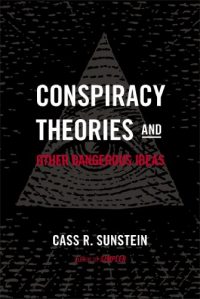 A Review of Conspiracy Theories and Other Dangerous Ideas by Cass Sunstein (based on an earlier paper co-authored with Adrian Vermeule); In Defense of Troublemakers: The Power of Dissent in Life and Business by Charlan Nemeth; and Conspiracy Theories and the People Who Believe Them, edited by Joseph E. Uscinski
 Aletho News

