Ahmadinejad: Israeli PM an assassin
Press TV – September 22, 2010

Iran’s President Mahmoud Ahmadinejad in interview with CNN’s Larry King
Iran’s President Mahmoud Ahmadinejad says the Israeli prime minister is a professional assassin, who should be tried for his crimes against the people of Palestine.
“[Benjamin] Netanyahu should be tried in court for blockading Gaza and massacring innocent Palestinian women and children,” Ahmadinejad said in an interview with CNN’s Larry King on Wednesday.
“Netanyahu is a professional assassin. All dictators in history accuse others to turn the spotlight away from themselves,” the Iranian president said when asked about the Israeli prime minister’s worries about Iran.
“It is questionable [why] American media feel responsible for this person (Netanyahu),” Ahmadinejad said, adding that “you (American media) are afraid of Netanyahu’s warmongering.”
The Iranian president said the US and Israel’s nuclear weapons are the main threat to the world, and they are mistaken to think they can divert attention from this issue by using propaganda campaigns and spreading lies about others.
“Iran is firmly after the nuclear disarmament of the US and Israel.”
Ahmadinejad added that Israel is an “illegitimate regime” and an “occupier” and that the US easily starts wars and massacres people, “they are not qualified to have nuclear weapons and should be disarmed as soon as possible.”
When asked about the fate of a former FBI agent who allegedly disappeared on Kish Island, the Iranian president said a “joint Iranian-American intelligence committee is to investigate the matter.”
Robert Levinson, a former FBI agent, disappeared on March 9, 2007 on Kish Island where he was doing investigative work for a private security firm. US officials have dismissed suggestions that Levinson was on assignment for a US government agency.
Iranian authorities have announced that Tehran has no information on the matter but they stand ready to work with the FBI if asked by Washington.
Faith in science
Retired NASA engineer explains why he doesn’t believe the official 9/11 report
By Shane Cohn – VCReporter – 09/09/2010

It has been said that it requires a very unusual mind to undertake the analysis of the obvious. But is it unusual to want peace? Truth? Dwain Deets doesn’t think so, and the retired NASA director is determined to demonstrate that the official version of the events of 9/11 defies science. His lectures have been gaining popularity… Deets, a physicist and engineer, was the former director of NASA’s Dryden Flight Research Center’s Aerospace project and is currently a member of Architects and Engineers for 9/11 Truth. Having retired from a 37-year career, Deets has set out to show that the American public has been duped into the wars in Iraq and Afghanistan. His goal is simple. Faith alone cannot end the wars abroad. But perhaps science can.
VCReporter: Of all the indications that the official 9/11 explanation is insufficient, what is the most glaring?
Deets: Building 7 is the most glaring. I think people can realize, after what happened at Building 7, that the public was not told anything close to what went on. I think you actually get kind of the same thing in all three buildings at the World Trade Center. So when I talk about them and the major problems presented, it will be with all buildings in mind. There are four main points: One, there is no historical precedent with steel-frame, high-rise buildings to have been totally destroyed due to fire. So you got a situation with no precedent, but it happened three times in the same day. These buildings supposedly came down due to fire, officially. Second, there is indisputable evidence that there were extraordinarily high temperatures, in the ground and it persisted for weeks. When I say indisputable evidence, I mean things like satellite imaging photos from NASA. They can measure the temperatures showing how it’s persisting weeks after the event. And there are eyewitnesses of molten metal and things that would require extremely high temperatures. There are a number of different elements that have been analyzed chemically afterwards, and it can only be explained due to extremely high temperature. There are a lot of tiny spheres. We refer to them as microspheres, and they are iron-rich. To be a sphere, they had to have been liquid, even to the point of maybe vaporizing because that is the way it would form into a sphere. The surface tension, as it cooled down, it would do so in a spherical shape. So that’s hard evidence that there had to be extremely high temperatures.
When you refer to high temperature, are you suggesting there were explosives involved?
What I’m saying is, the temperatures are so high that the ordinary office fires and aviation fuel fires can’t come close to explaining those high temperatures. The third point is, there has been evidence of high-tech, and I can’t say they’re explosives, but they are nano-thermite. Nano meaning they’re extremely small and had to be manufactured with very sophisticated equipment and knowledge, which we only know about in government laboratories. But it was highly sophisticated, and how exactly it is designed, it could be very explosive, or something used in a different way. We use the term pyrotechnic to describe that category. So it was used as an explosive or pyrotechnic. But either way, the key thing is it provides an explanation why the temperatures were so high and persisted for so long afterwards. So it fits together with that set of findings in a very consistent way. The fourth major thing is, all three buildings came down at freefall, gravitational freefall, or very close to it. The only way that can happen is if the lower structure was abruptly removed to allow the top part to fall into freefall. This fits into the other things I talk about. There were several varieties of explosives. And the ones that we found are just one of those, and not necessarily the one that did most of the damage. We just don’t know that kind of thing. When I say we, there was an international team of scientists and chemists that studied the dust from the WTC and reported in the open literature, so it’s there and there has not been any counterpublication to say this is not true.
In regard to Building 7, is it not possible that the debris from the previously collapsed main towers had initiated the fires that damaged the bottom eight floors to the point of collapse causing the free-fall?
There is no evidence that there were fires for the initial time period. There could be that there were. But there have not been any photographs released to the public. About 100 minutes is the first indication that there were any fires, and even then it was not on the floors where supposedly the fire damage caused the buildings to come down. That would be several hours later. Let’s say you were taking this to [a] court of law; you wouldn’t have a chain of evidence that led from the debris to the fires. The other piece of evidence is whether the fires, especially that kind of office fire, can lead to compromising the steel structure and causing the whole thing to come crashing down. So you go back to saying there is no precedent in the history of high-rise steel structures that fires lead to the building coming down. Some of those fires have historically lasted up to 18 hours and still didn’t compromise the structure. So it’s unreasonable to think that if the fires did start from the debris it would lead to the buildings coming down. The other part is that it came down in pure free fall for what is equivalent to eight stories’ worth of free fall
Why do you think the government has never officially addressed the collapse of Building 7?
I think it causes a severe problem for them in explaining what happened. At first you have to talk about the great length of time that the government agency that was supposed to investigate Building 7, which was NIST (National Institute of Standards and Technology.) They stalled up until November 2008 before they issued their final report. That is seven years to come up with a final report. Clearly, it was a problem to them. Either they couldn’t explain it or they could, but didn’t want to. They didn’t want to give the explanation that the evidence pointed to, which I think is the case.
Didn’t they also deny a request from engineers into the report about how Building 7 came down, citing a “concern for public safety”?
They did. In this case, this is a freedom-of-information request asking for details of their computer model. They said they had a very sophisticated computer model that modeled the structure, the fires, and based on that, they said this is the explanation, that fires caused the whole thing. For professional engineers to request that information through the law of the Freedom of Information Act, to provide that information, they have resisted it to this day. So anyway they are using this argument that revealing this sophisticated model could or might endanger public safety is very hard to justify, particularly when it’s professional engineers wanting to understand what caused the building to come down.
That in itself should be an effort in the interest of safety. In each of these four cases I brought up, if you look at what NIST has done, they have basically denied that these issues exist. Regarding hot temperatures, they come out and say we have no evidence of either high temperatures or that anybody saw it, even though there are testimonies from responders. They are just stonewalling all the way.
But they did admit, however, that the building collapsed at free fall. Shouldn’t that be evidence in itself?
Yes, they did admit that. But the thing is, they didn’t change any of their conclusions.
Why? Do you believe this is some sort of plan to engage our country into wars with Iraq and Afghanistan?
Well, I certainly think that we, as prudent members of the public, should consider it was highly likely, and it’s based on a record that our government has done that in a number of cases. Most recently, it did it to escalate the war in Vietnam. The Gulf of Tonkin incident turned out to not be an incident, and that has become publicly known because documents concerning that have been declassified but not publicized by the media. There is certainly a pattern. If you just put together the fact that all this happened on 9/11 and then we go to war. It fits a pattern and you have to wonder about that.
Let’s assume you are right. What is your political agenda? What do you want the public to do?
I want the public to demand of their representatives to investigate this, to stop stonewalling and investigate this to wherever it leads. I think that will be healthy for the country. It will be difficult to go through that, but it will force politicians to be more careful about doing things, because they will realize they won’t be able to get away with it. I think it will be good for the country. I think it will end the war. A large segment of the population believes we should be in Iraq and Afghanistan because of 9/11, but I think that would change.
Why do you think the vast majority of the public has accepted the findings?
The big media plays such a big role. The mainstream media, and I don’t know how this works, but they haven’t allowed any questioning of 9/11. A lot of the questions about what went on get marginalized and called conspiracies.
The Sakineh scandal
By Thierry Meyssan | Voltaire.net | September 20, 2010
French essayist Bernard-Henry Levy and President Nicolas Sarkozy have mobilized French public opinion to save an Iranian woman, accused of adultery, from being stoned to death. Overcome with emotion, the French did not take the time to verify the allegations, until actor Dieudonné M’bala M’bala traveled to Teheran. Once in the Iranian capital, everything turned out to be false. Thierry Meyssan addresses the spectacular and reckless manipulation that took place.
The calls for Koran burnings by certain US clergymen on the occasion of the ninth anniversary of the September 11 attacks, shook the Muslim world. The reactions to the announcement differ according to the culture. In the western world, it is regarded as a provocation which should not be overdramatized. True, the Koran is a sacred book, but it’s only paper, after all. Inversely, in the Islamic world, the burning of the Koran is perceived as an attempt to disconnect man from the sacred teachings and to deny him salvation. This gives rise to uncontrollable emotional reactions which are considered by the West as religious hysteria. Nothing like it could ever happen in Europe, and much less in France, a country steeped in militant secularism for more than a century. And yet …
Mobilizing public opinion
French author Bernard-Henri Levy [1] recently alerted the French public to the case of Sakineh Mohammad-Ashtanni, a young Iranian woman reportedly condemned to death by stoning for committing adultery. He launched a signature campaign through the Internet to put pressure on the Iranian authorities, urging them to stop this barbaric act.
In close touch with both the victim’s son, a resident of Tabriz, and the victim’s lawyer, Javid Hustan Kian, who has recently settled in France to flee the Iranian regime, Mr. Levy didn’t skimp on any of the details: stoning – a practice which was interrupted through a moratorium – has been revived on President Ahmadinejad’s initiative. Ms. Sakineh Mohammadi-Ashtiani could be put to death at the end of Ramadan. Meanwhile, the prison warden, riled by the media scandal, ordered her to be lashed 99 times.
The French essayist concentrates his attacks on the mode of execution, observing:
“Why stoning? Isn’t there another way of killing in Iran? Because it is the most abominable of all. Because an aggression against a person’s face, a deluge of stones cast at an innocent and bare face, the refinement of cruelty to the point of encoding the size of the stones to guarantee the victim’s protracted suffering, represent a rare composite of inhumanity and barbarity. And because this way of obliterating a face, of exploding the flesh and reducing it to a bloody magma, of bombarding it until it transforms into a blob, symbolizes much more than a simple execution. Stoning is not just a death sentence. Stoning is the extermination of a flesh that was put on trial, albeit somewhat retroactively, for having been a flesh, and that flesh in particular: the flesh of a young and beautiful woman, one who was both loved and a lover, who possibly also experienced the happiness of loving and of being loved.”
President Sarkozy endorsed Levy’s allegations during the annual conference of French Ambassadors [2]. After his speech he declared that the condemned woman would henceforth fall under “the responsibility of France”.
Numerous associations and high-profile personalities quickly joined in the movement and more than 140 000 signatures were collected. France’s Prime Minister François Fillon turned up in the newsroom of the main public television channel to express his feelings of solidarity with Sakineh, “sister of us all”. Meanwhile, former French Secretary for human rights Rama Yade stated that from that moment on France was considering this case as a “personal affair”.
Mystification
Although they may not know it, the emotive reaction of the French people is tightly associated with the religious side of their collective subconscious. Whether Christian or not, the French have been marked by the story of Jesus and the adulteress. Let us briefly recall the myth [3].
The Pharisees, a group of arrogant Jews, wanted to put Jesus in an embarrassing situation. They brought a woman to him who had been caught committing adultery.
According to the laws of Moses, the woman should have been stoned, but that cruel prescription had luckily been abandoned. The Pharisees asked Jesus to decide what had to be done. If he approved of her stoning, they would regard him as a fanatic. If, on the contrary, he refused to punish her, he would be accused of going against the law. But Jesus saved the woman by affirming: “let he who is without sin, cast the first stone”. Jesus reversed the dilemma: if the Pharisees stone her, it is because they think of themselves as pure. If they don’t, they are the ones violating the law. And, the book states: “they gradually withdrew, beginning with the elders”. In western thought, this myth constitutes the cornerstone of the separation between civil and religious law. The adulteress committed a sin and is therefore accountable only to God. She did not commit a crime and therefore cannot be judged by man.
The French people see the announced stoning of Sakineh Mohammadi-Ashtiani as an outrageous regression. The Islamic Republic of Iran must be a religious regime enforcing the Law of Moses as revised by the Koran, the Sharia. The Mollahs must be a bunch of phallocratic fanatics who repress women’s love affairs outside marriage and keep them subject to men. Blinded by their own obscurantism, they even go so far as to kill them in the most horrible way.
This is what should be considered as collective religious hysteria since, in such circumstances, the normal behavior of sensible people should have been to verify the accusations, something that no one had bothered to do all this time.
Questions
Having himself signed the aforementioned petition, the leader of France’s Anti-Zionist Party, Dieudonné M’bala M’bala – who happened to be in Tehran for a film project – was willing to mediate in favor of the condemned woman. He requested an audience and was received by Ali Zadeh, vice-president of the Judicial Council and spokesperson for the Ministry of Justice.
The interview was truly a model of its kind. While Mr. Zadeh was wondering whether his interlocutor, a humorist by profession, was in fact joking when voicing his concerns, M’bala kept asking the Iranian official to repeat the answers to his questions, since he could hardly believe he had been the prey of such a gross manipulation.
After overthrowing the dictatorship of Shah Reza Pahlevi, the Islamic Republic made it a priority to put an end to authoritarian abuses by establishing the rule of law in the most rigorous way possible. For those cases tried in a criminal court, an appeal mechanism has existed in the Iranian judicial system for a long time. At any rate, the Court of Appeals, as a rule, automatically verifies the legality of the procedure. In this respect, the Iranian judicial system offers superior guarantees to those of French courts, and the mistakes are far less frequent.
This being said, the convictions are still particularly harsh. In particular, the death penalty is applied. Instead of diminishing the amount of convictions, the Islamic Republic has chosen to restrict their enforcement. The forgiveness of the victims or their families is enough to obtain the annulment of the execution. Due to the existence of that provision and to its widespread application, the presidential pardon does not exist.
Capital punishment is often pronounced, but is rarely executed. The Iranian judicial system provides for a delay of 5-years before executing the sentence, trusting that the victim will forgive the offender who will thus be pardoned and immediately liberated. In practice, executions are applied mainly to big drug traffickers, terrorists and child murderers. The death penalty is normally executed by hanging in public.
There are reasons to hope that the Islamic revolution will continue making progress and may soon abolish the death penalty.
In any case, it is a fact that the Iranian Constitution recognizes the separation of powers. The judicial system is independent and president Ahmadinejad doesn’t have any say in a judicial decision, whichever it may be.
Manipulations
In the specific case of Sakineh, everything that was reported by Bernard-Henry Levy and endorsed by President Sarkozy is false.
 1. This lady has not been tried for adultery but for murder. As it happens, there is no conviction for adultery in Iran. Instead of revoking this type of incrimination, the law has subordinated the establishment of the facts to a series of conditions which are impossible to satisfy. “Four people have to witness the adultery at the same time” [4].
2. The Republic of Islam does not recognize the Sharia, but – only and exclusively- the law passed by the representatives of the people sitting in Parliament.
3. Ms. Sakineh Mohammadi-Ashtiani administered a drug to her husband and got her lover, Issa Tahen, to kill him while he was asleep. The “diabolical lovers” have already been tried in the first and secondary instances and were sentenced to death in both. The Court did not establish any discrimination between the two genders. It is important to note that the indictment does not even mention the intimate relations between the accused, precisely because it is impossible to prove they actually existed according to the Iranian law, even when the family members attest to such a relationship.
4. The death penalty is likely to be executed by hanging. Stoning – which still prevailed under the Shah’s rule and was maintained for a number of years after his overthrow – has been abolished by the Islamic Revolution. Irritated by the statements of Bernard-Henry Levy and Nicolas Sarkozy, the vice-president of the Iranian Judicial Council told Dieudonné M’bala M’bala that he defies these Zionist figures to find one single text of contemporary Iranian law that contemplates stoning.
5. The sentence is currently being examined by the Court of Appeals, which has to scrutinize the legality of each and every detail of the procedure. If any irregularity is found, the trial will be declared null and void. This examination procedure triggers the provisional suspension of the sentence. Since the final judgment has not yet been pronounced, the defendant still enjoys the presumption of innocence, and furthermore, there was never any question of executing her at the end of Ramadan.
6. Ms. Mohammadi-Ashtiani’s defense attorney, Mr. Javid Hustan Kian, is an impostor. He is linked with the son of the accused, but has never been appointed by Ms. Mohammadi-Astiani and has never been in touch with her. Javid Hustan Kian is a member of the People’s Mujahidin, a terrorist organization that enjoys the protection of Israel and of the neo-conservatives [5].
7. The son of the accused lives generally in Tabriz. He is free to have as many telephone conversations with Mr. Levy as he likes in order to denigrate his own country, which denotes the free and democratic nature of his government.
In sum, nothing, absolutely nothing, of what Levy and Sarkozy have said about Ms. Sakineh Mohammadi-Ashtiani’s story is true. Bernard-Henry Levy might have repeated, in good faith, false accusations to buttress his crusade against Iran. However, President Sarkozy can hardly resort to the same alibi. Officials of the French Foreign Service, the most prestigious in the world, must surely have provided him with all the relevant reports on the case. Therefore, Sarkozy deliberately lied to French public opinion, probably to be able to justify post facto the harsh sanctions adopted against Iran to the detriment of the French economy itself, already seriously affected by his policies.
[1] See our file on Bernard-Henri Levy, Réseau Voltaire
[2] Speech by Nicolas Sarkozy at the annual Ambassadors of France’ Conference, Voltaire Network, 25 August 2010.
[3] In this context, the term myth must be understood in the most neutral sense. Whether or not one believes in the sacred scriptures, the story of the adulterous woman is part of western symbolism.
[4] For the same type of disinformation, see Pour diaboliser l’Iran, « Rue 89 » confond crimes pédophiles et homosexualité (To demonize Iran, “Rue 89” amalgamates crimes of pedophelia with homosexuality), Réseau Voltaire, 13 July 2007.
[5] See our file Mujahedin-e Khalq, Voltaire Network.
Translated from Spanish by Luis Mdáhuar.
The Hate Mongers Among Us
By Jeff Gates | September 13, 2010
Hate is a harsh word. As the counterpoint to love, hate reigns supreme among those emotions that the faith traditions seek to expunge from the human heart.
Hate we’re told is the face of evil seen in plumes of smoke and ash on 911. Yet hate also serves a purpose for those adept at catalyzing conflicts.
In the aftermath of that horrific event, hate we’re assured is a desired emotional state. Yet induced hate led us into two unwinnable wars. Hate may yet take us into Iran. Or Pakistan.
That hate is also bankrupting us both financially and psychologically.
This article identifies those who induce us to hate-and describes how.
As the “how” of hate mongering becomes transparent, its common source will become apparent. With transparency comes accountability. That’s when you can watch for hate to emerge yet again to shield those who hide behind the toxic charge of “anti-Semitism.”
With the shared knowledge of how hate is evoked and sustained, those provoked to hate can say with confidence “Never Again” to those complicit in inducing this evil.
Hate can be personal or geopolitical. Those who induced us to war in the Middle East made it personal. The murderous provocation of 911 was emotionally wrenching and intensely personal. As a people, our gut reaction ensured that support for the war would become widespread.
In the aftermath of that mass murder on U.S. soil, Martin Peretz, editor of The New Republic, summed up the situation: “We are all Israelis now.”
So now we can all be persuaded to hate Muslims-even if we’ve never met one.
The shared mental environment was flooded with what then seemed like plausible justifications for the invasion of Iraq: Iraqi WMD; Iraqi ties to Al Qaeda; Iraqi meetings with Al Qaeda in Prague; Iraqi mobile biological weapons laboratories; Iraqi purchases of yellowcake uranium from Niger.
We now know that all those rationales were fixed around a preset agenda. Yet a critical mass of false beliefs sufficed to take us to war. For those skilled at inducing hate, consensus beliefs need not be true, they need only be credible-and only for a limited time.
With a corrupt consensus ruling the day, anyone offering proof that Iraq was not a threat was dismissed as unpatriotic or soft on terrorism.
This 911-prompted hate fest started with Iraq, a former ally, as a U.S.-led invasion kicked off The Clash of Civilizations. The bravado of “bring ’em on” quickly became “shock and awe” as a vicious invasion was pursued with a relaxed “Aw Shucks” attitude supported with a media campaign comprised of photo ops of a commander-in-chief nonchalantly clearing brush at his home in Crawford, Texas.
Brand America became “We’re still the world’s biggest and baddest in the war-waging business. Just you watch.”
And watch us go broke as America led an Atlantic coalition that, like Israel, alienated much of the Muslim world.
An Invalid War
Plus there’s another strategic problem: our reason for invading Iraq was “invalid.” That’s the assessment of Defense Secretary Robert Gates. He should know. After the invasion, the invalid storyline quickly shifted to “Saddam the Evil Doer” as our rationale.
How can the rationale be invalid? If we’re all Israelis now, surely that entitles us to invade lands belonging to Muslims, kill them, transform them into refugees and, with impunity, create widespread outrage among the broader Muslim population.
Let’s fast-forward to nine years after a high-profile slaughter in Manhattan and survey our success in the stark light of hindsight. Are we more secure? Are we more prosperous? Are Americans facing a brighter future? Are our children proud of the outcome?
Israel has occupied Palestinian land for more than six decades. The September 13th issue of Time magazine captured the Israeli sentiment: “Why Israel Doesn’t Care About Peace.”
Israelis are too busy prospering to care. Outraged Muslims are a nuisance but they’re now largely marginalized and, for the most part, manageable. Is that what happened to us? Have Americans become Israelis?
Not long ago an internal poll of friendly foreign intelligence agencies ranked our best and worst allies-those who behave as friends to the U.S. versus those who are clearly foes. Israel ranked dead last as a reliable ally. Though their brazen theft of technical and industrial secrets is well known among those in the know, the broader U.S. public remains deceived or in denial.
Most Americans still see Israel as an ally. The facts confirm that’s a dangerous delusion.
Meanwhile Mossad agents are recruiting Arab-Americans to spy on their neighbors in the U.S. Though Tel Aviv is called on the carpet three times as often as other nations, Israel still ranks third in the aggressiveness of its U.S. operations, behind only China and Russia.
That ranking may well be out of date with Israel now first in foreign operations on U.S. soil.
Other Telling Signs
Zionist Jews deployed terror and intimidation to occupy Muslim lands long before Harry Truman was induced in 1948 to recognize an extremist enclave as a legitimate nation state. Disputes over land remain at the heart of the expansionist agenda for Greater Israel.
On September 7th, Palestinian leader Mahmoud Abbas asked that the U.S. settle a dispute over the Israeli expansion of settlements that threaten to derail Mideast peace talks. Those talks have dragged on since 1967. Settling those disputes would disrupt the Zionist agenda.
In a telling rebuke, on September 12th, Tel Aviv rejected a proposed visit to Israel by the foreign ministers of France, Spain, Britain, Germany and Italy. Why? These senior diplomats sought a remedy to that dispute in order to achieve a long-evasive peace.
Therein lies Israel’s strategic strength. Absent this sustained provocation (43 years and counting), hatred might subside and peace may become a possibility. That’s a danger Tel Aviv works hard to avoid.
September 12th also saw the release of a new report indicating that 2,066 new homes would be constructed in the West Bank as soon as the temporary freeze expires September 26th.
Meanwhile back in the U.S., Americans remain unaware of how many contracts for Homeland Security were awarded to Israeli firms or to firms owned by pro-Israelis. Nor do Americans realize how many Homeland Security outlays have been directed to Jewish community centers.
That’s all the more reason for Zionists-both Jewish and Christian-to create an uproar about an Islamic Community Center planned for construction two blocks from the 911 site in Manhattan.
And all the more reason for a Christian-Zionist preacher to designate the ninth anniversary of 911 as “International Burn a Koran Day” at his 50-member church.
The Koran gambit gained global attention, stoked by a media dominated by Jewish Zionists. High profile political personalities ensured that this hate-mongering stunt was kept in the forefront of international news coverage in the lead-up to the anniversary of modern history’s best-known hate-mongering provocation.
Signs of a rift between U.S. politicians and U.S. national security
Even with the media support required to sustain hate in plain sight, today’s background chatter suggests that those worried about U.S. national security are at work in the shadows to counter the influence of the Israel lobby.
If so, that is good news-for the United States.
When Israeli-American writer Jeff Goldberg appeared again in the news, you knew psy-ops were underway. In March 2002, Goldberg published in The New Yorker a lengthy story alleging an alliance between the religious jihadists of Al Qaeda and the secular Baathists of Iraq.
Though a nonsensical premise, his account made such an alliance appear plausible to a public lacking in knowledge of the Middle East. Goldberg’s storyline made it easier for Saddam Hussein to be portrayed as both an Evil Doer and a threat to the U.S.
Goldberg’s collaborator was James Woolsey, a former Director of the CIA and an avid Zionist. Woolsey assured us that Iraqi intelligence officials met in Prague with Al Qaeda. By association, his stature in intelligence lent credibility to phony intelligence fixed around an Israeli agenda.
Goldberg reemerged in July to promote Evil Doer status for Iran. Writing in the July 22nd issue of The Atlantic, he argued the Israeli case for bombing Iran and urged that the U.S. again join the fray. No one in mainstream media mentioned his earlier manipulation.
Based on the consistency of his “journalism,” it came as no surprise to see Goldberg reemerge just in time for the ninth anniversary of 911. Aided by an array of false intelligence reported by a complicit media, that murderous provocation helped persuade the U.S. to invade Iraq to remove Evil Doer Saddam Hussein.
That March 2003 agenda was first promoted in 1996 in A Clean Break, a strategy paper written for Benjamin Netanyahu by an Israeli-American team led by Richard Perle. This Jewish-Zionist operative re-emerged in July 2001 to chair the Pentagon’s Defense Policy Board where he was joined by Woolsey and others supportive of this Israeli agenda.
Advancing the Narrative
Fast-forward to September 2010 and we find Goldberg back at work promoting his interview with Fidel Castro. Emerging fact patterns suggest it came as no surprise to our national security apparatus that the theme of this latest well-timed Goldberg article was the Cuban leader’s concern that Iranian president Mahmoud Ahmadinejad is “anti-Semitic.”
The timing of this report came as a surprise to those aware that Castro has long been critical of Israel’s treatment of the Palestinians.
Goldberg reports he was “summoned” to Havana to discuss Castro’s fears of a global nuclear war. After conceding in the interview that the 1962 Cuban Missile Crisis “wasn’t worth it,” Castro turned to a theme of topical importance to Tel Aviv, insisting that the Iranian government must understand that Jews “were expelled from their land, persecuted and mistreated all over the world.”
Knowing Cuba’s pre-revolution alliance with Meyer Lansky and other kingpins in Jewish organized crime, one must wonder if this “journalist” was dispatched to commence negotiations for gambling concessions as a means to fill the Castro government’s depleted coffers.
The recent relaxation of restrictions on travel to Cuba may signal a pending return to Cuba’s “glory days” as a nearby haven for organized crime.
Castro’s well-timed comments about persecuted Jews may have been a signal that Cuba is again open for business-any business. At the very least, his comments were like a healing balm to nationalist Zionist settlers who have plans to construct another 19,000 home in the West Bank.
So much for those who seek to quell Israel’s long-running land dispute with the Palestinians in order to keep peace talks on track.
Within two days of the release of the Goldberg interview, vandals in Sacramento, California used a swastika to deface an image of Israeli basketball star Omri Casspi. The identity of the vandals has not been confirmed.
This much has been confirmed: timing is everything when seeking to sustain a storyline. Casting Castro as pro-Israeli was a stroke of genius.
Here’s where it starts of get interesting as Americans wake up to find themselves unwitting combatants in the first real Information Age War. When waging modern-day warfare in the shared field of consciousness, media is routinely deployed to displace facts with false beliefs.
Thus the need for substantial and sustained influence in that domain by those determined to shape the political narrative. No one does that better than those who induced the world’s greatest super power to wage a war on their behalf.
Recent developments suggest that the dynamics may be shifting in the “field” where political narratives are advanced and where today’s wars are either won or lost. That field is the shared field of consciousness where consensus beliefs are created and sustained.
In news reported from the Middle East on September 10, Washington took a surprising stance in support of Iranian claims that Tehran was not building a new uranium enrichment facility. That statement came after an Iranian dissident group, in a well-timed release, charged that Iran had a new secret nuclear site 120 kilometers north of Tehran.
That disclaimer preempted a lead editorial in The New York Times published in the U.S. later that same day-just before the ninth anniversary of 911. That editorial sought to give credence to a report that had already been dismissed as not credible.
Was this an example of U.S. national security attempting to reclaim the narrative? Does this signal a new aggressiveness by the U.S. in waging field-based warfare against those whose successful deceptions led us to war in the Middle East?
Two days prior, Secretary of State Hillary Clinton gave a speech stating “there may not be another chance” for Mideast peace. That statement came the same day that a senior Palestinian negotiator confirmed they would not recognize Israel as a Jewish state. Clinton said nothing.
Could these developments signal a crack in the Zionist agenda that has shaped U.S. foreign policy for more than six decades? Are Zionists losing their chokehold on the White House?
If so, will the Israel lobby again rally Congress to Israel’s defense?
Will we see another “unbreakable bond” resolution urging that U.S. interests continue to take second place to Tel Aviv’s agenda for the region?
Will the national security interests of the U.S. prevail or will Zionist goals again triumph?
Timing is Everything
While these events were unfolding, The New York Times continued to stoke the controversy surrounding “International Burn A Koran Day.”
The nation’s “newspaper of record” conceded that this well-timed controversy began with local coverage by The Gainesville Sun (owned by The New York Times) when pastor Terry Jones posted a sign outside his small church that read “Islam is of the devil.”
By August 26th, The Times was prepared to publish a major article on Jones and the anti-Islam views of his 50-member congregation. By September 9th, Iranian Foreign Minister Manouchehr Mottaki was prepared to say with confidence that Zionists were responsible for the Jones plan to burn a Koran on 911.
In a fortuitous case of timing, recordings played in a federal courtroom on September 8th showed how a government informer induced a 2009 synagogue bomb plot in New York. The recordings made it clear that those on trial as “homegrown terrorists bent on jihad” were not even modestly well versed in Islam. To make a plausible case for later use in the courtroom, the informer prompted comments consistent with the hate-mongering motivation at the heart of the prosecution’s case.
Do these small chinks in the Zionist armor suggest that Israeli dominance of U.S. foreign policy may be drawing to a close?
The Use of Pliable and Reliable Assets to Advance a Narrative
Many of America’s most prominent political leaders were induced to comment on “International Burn A Koran Day”-a high profile provocation proposed by a Christian-Zionist preacher with a small congregation in a small town in Florida.
When U.S. General David Petraeus spoke out against the proposal, the issue immediately gained an international profile as did Pastor Terry Jones who quickly became an international celebrity.
One need not dig deep to identify who may have advised General Petraeus to grant a global profile to a provocation consistent with Israeli goals for the region.
In March, as head of Central Command, Petraeus offered testimony to the Senate Armed Services Committee confirming facts that have long been obvious but are seldom mentioned: our “special relationship” with Israel and its oppressive occupation of Palestine undermine U.S. interests in the Middle East and endanger American personnel. Read it for yourself:
“The enduring hostilities between Israel and some of its neighbors present distinct challenges to our ability to advance our interests… Israeli-Palestinian tensions often flare into violence and large-scale armed confrontations. The conflict foments anti-American sentiment due to a perception of U.S. favoritism for Israel. Arab anger over the Palestinian question limits the strength and depth of U.S. partnerships with governments and peoples in the [region] and weakens the legitimacy of moderate regimes in the Arab world. Meanwhile, al-Qaeda and other militant groups exploit that anger to mobilize support. The conflict also gives Iran influence in the Arab world through its clients, Lebanese Hizballah and Hamas….”
Petraeus is often spoken of as a potential Republican presidential candidate. Thus the chagrin among some in Washington when this high profile military leader appeared to curry favor with Max Boot, a former Wall Street Journal op-ed editor and outspoken Zionist. In an apparent attempt to soften the candor of his written testimony before the Senate, he wrote to Boot:
“Does it help if folks know that I hosted Elie Wiesel and his wife at our quarters last Sun night?! And that I will be the speaker at?the 65th anniversary of the liberation of the concentration camps in mid-Apr at the Capitol Dome…”
Boot wrote back to assure him that those comments were not necessary as Petraeus had not been described as anti-Semitic. Boot then posted a pro-Petraeus piece on the website for Commentary, a neoconservative publication, assuring readers that the general is not anti-Israel and dismissing his anti-Israel comments as inserted by staff in his statement-that Petraeus reviewed.
The Supporting Cast
After General Petraeus, now senior commander in Afghanistan, created a high profile for the Burn-A-Koran controversy, comments were offered by Attorney General Eric Holder, Secretary of State Hillary Clinton and President Barack Obama. With that, the provocation went viral.
These fuel-the-fire comments were followed by a personal appeal to Pastor Jones in a phone call from Defense Secretary Robert Gates that also went viral.
As any game theorist could predict, even the possibility of such a psy-ops (a Koran book burning) was guaranteed to galvanize anti-American sentiments and catalyze anti-American demonstrations. As the book burning gained steadily more profile, this provocation increased the probability of catalyzing long-lasting anti-American sentiments.
This stunt bears a remarkable resemblance to a Newsweek story alleging that a U.S. soldier flushed a Koran down the toilet. Though that May 2005 account by Michael Isikoff was later withdrawn in substantial part, its publication provoked an earlier well-timed response by setting off anti-American demonstrations in Muslim countries worldwide.
At first, the story gained only scant attention. That muted response changed dramatically when Pakistani cricket star Imran Khan gave Isikoff’s story an international profile by announcing from Islamabad that American military personnel had desecrated a holy Islamic text.
That’s when this Clash of Civilizations-catalyzing, U.S.-discrediting account went viral. In practical effect, Khan’s celebrity was appropriated to associate the U.S. military with conduct similar in its psy-ops effect to the profile given an American proposing to burn a Koran.
Newsweek was recently acquired by Sidney Harman, the husband of California Congresswoman Jane Harman, the Jewish Zionist chair of the Intelligence Subcommittee of the House Committee on Homeland Security. At the time of this provocation, Newsweek was a magazine affiliate of The Washington Post newspaper, an influential opinion-shaping newspaper based in the nation’s capital.
In the annals of “field-based warfare,” the Koran-flushing story will go down in history as a classic psy-ops for its success in targeting the minds of a built-in audience outside the U.S.-cricket fans-as a vulnerable and receptive shared field of consciousness.
When the high-profile Imran Khan described the alleged incident as factual, this operation transcended the literacy barrier as it provoked Muslims who did not even need to read in order to be reached-and provoked.
And because the story targeted cricket fans, its impact was disastrous to Americans while also remaining invisible to America where cricket is neither a well known activity nor a widely played sport.
In what passes for mainstream American media, the Isikoff story was called news. In national security parlance, the well-timed launch of that provocative storyline is called tactical psy-ops. So far, the Koran-burning story is being attributed solely to the whims of a southern preacher.
Stay tuned. It may be only a coincidence that Jones was a high school classmate of Rush Limbaugh, America’s most provocative radio talk show host.
Information Age Warfare
If this sounds familiar, it should. You may recall when the wartime role played by global media became apparent in the Clash-catalyzing “cartoon riots” that swept the world in February 2006. That reaction followed the publication in France, Germany, Italy and Spain of graphic images of the prophet Muhammad that first appeared in a Danish newspaper in September 2005.
Citing free speech as the rationale, cultural editor Flemming Rose published a compilation of cartoons certain to be seen by Muslims as blasphemous, including one featuring Muhammad with a bomb in place of a turban.
An Ashkenazi native of Ukraine, Rose worked as a reporter for five years in Moscow during the oligarchi-zation of Russia. As his contribution to that nationwide fraud, he translated into Danish a fawning 1990 autobiography (Against the Stream) of presidential candidate Boris Yeltsin whose administration enabled the wildly successful financial pillaging of Russia.
Six of the top seven Russian oligarchs were Ashkenazim who qualified for Israeli citizenship.
Rose’s career tracks the trajectory of a typical media asset. After Russia, he relocated to Washington, D.C. Again employed as a journalist, he traveled to China with Bill Clinton before returning to Moscow to work for Jyllands-Posten, a rightwing Danish publication known for its anti-immigrant news fare.
Before catalyzing the cartoon crisis, Rose published a flattering interview with the Islam-bashing Daniel Pipes who heads Campus Watch. This organization monitors, disrupts and seeks to intimidate pro-Palestinian speakers when they accept invitations to speak at U.S. colleges.
Pipes is the neoconservative, Jewish-Zionist son of “Team B” leader Richard Pipes a Polish emigre. Team B was a 1976 alternative intelligence assessment whose success with phony intelligence during the presidency of Gerald Ford (when G.H.W. Bush was C.I.A. Director) informed those who fixed the intelligence that enabled the U.S. to segue seamlessly from the Cold War to the War on Terrorism during the presidency of G.W. Bush.
After the promotion of Rose to cultural editor and publication of the provocative cartoons, CNN anchor Wolf Blitzer featured Pipes on The Situation Room. By showcasing Pipes, Blitzer ensured the airwaves would carry his anti-Islam interpretation of the Rose-catalyzed, media-fueled crisis.
Blitzer elected not to inform the viewers of CNN (“the most trusted name in news”) that he (Blitzer) served as an editor of Near East Report, the Israel lobby’s in-house journal, or that he spent 17 years with The Jerusalem Post, or that he published a sympathetic book on Israeli super-spy Jonathan Pollard who did more than anyone in history to damage U.S. national security.
The ensuing crisis cost many lives while the reaction to that provocation consumed the public’s attention and polarized public opinion internationally. Appearing on television, Secretary of State Condoleezza Rice used the crisis to criticize Iran and Syria, adding American credibility and military authority to stoke The Clash of Civilizations as the post-Cold War narrative.
Overall, the response heightened tensions and made an attack on Iran appear more reasonable as scenes of widespread outrage by Muslims fueled Islamo-phobia in the West. To escape the media scrutiny, Rose fled to the U.S. where he vacationed in Miami.
Timing is Everything
The usual suspects stepped into the fray in support of Pastor Terry Jones’ First Amendment right to further outrage an already outraged Muslim population for whom the Koran is a sacred text.
Supporting cast for the Jones stunt included New York Mayor Michael Bloomberg who chose an annual Iftar dinner at Gracie Mansion to cite the U.S. Constitution in support of this provocation. Likewise for New York Times columnist Charles Blow whose prominently placed op-ed on September 11th urged that “great American debates” should not be “tempered for terrorists.”
National security may (at long last) be catching on to how those complicit in these psy-ops use our guaranteed freedoms (of speech, press, religion, etc.) to undermine our freedom. It’s no coincidence that those most concerned about domestic eavesdropping by national security are drawn from the same ranks as those complicit in this ongoing manipulation of public opinion.
The high profile nature of this latest 911 anniversary ensured that agent provocateurs would use the event to keep hate alive. The day prior, President Obama urged that Israel extend its “temporary partial freeze” on settlements for the sake of sustaining the peace talks.
Meanwhile Jewish Zionist Pamela Geller sponsored a speech at Ground Zero by Dutch politician Geert Wilders who likens the Koran to Mein Kampf. A staunch supporter of Israel, Wilders is known for his incendiary speeches with a strong anti-Islam theme.
Geller, a disciple of Russian philosopher Ayn Rand (Alisa Rosenbaum), advocates measures to “Stop Islamization of America.” She emphasizes the role of Barack Obama in doing the bidding of “Islamic overlords” in what she calls “The Obama Administration’s War on America.”
An outspoken Jewish Zionist, Geller urges that Israel “give up nothing.” A regular commentator on Zionist-dominated media outlets (CNN, Fox News, The Washington Post, The New York Times), she insists that Israel should “take back Gaza” and “secure Judea and Samaria”-better known as the West Bank, the key area of contention on expansion of the settlements.
Geller is also a driving force behind anti-Islam hate groups working to scuttle plans for an Islamic Cultural Center two blocks from the 911 site. Allied with others in the hate campaign, she was among the first in November 2009 to describe the shootings on Fort Hood, Texas as a “Muslim terror attack.”
Staying on message to advance the narrative
Keeping the “anti-Semitism” theme front-and-center remains essential to advance the hate-monger’s narrative with the assistance of mainstream media.
Thus the Anti-Defamation League criticized the current cover of Time magazine for what ADL President Abe Foxman suggested was a portrayal of Israelis as more interested in making money than in striking a peace accord with the Palestinians.
The article highlighted Israel’s booming real estate market and the pleasure Israelis are taking in late-Summer vacations.
Nevertheless, according to Foxman: “The insidious subtext of Israeli Jews being obsessed with money echoes the age-old anti-Semitic falsehood that Jews care about money above any other interest, in this case achieving peace with the Palestinians.”
Foxman insisted that Managing Editor Richard Stengel issue an apology to readers both for the timing of the article and for calling up old anti-Semitic stereotypes about Jews and money.
As if right on cue, the next day filmmaker Michael Moore jumped into the Islamic Cultural Center debate, arguing that the center should not be near the 911 site but inside it as a way for Muslims to recover their religion from Islamic extremists.
In his branded controversial style, Moore could have left it at that. Instead, he used his assured media profile to relate an account of George Washington’s wish to see Jews receive equal rights.
Impressionistic Warfare
From a psy-ops perspective, the subject matter is secondary to the impressions left with the public. The imbedding of imagery and emotion is the strategic purpose of much of what you see.
For instance, Imam Feisal Abdul Rauf, speaking to ABC’s “This Week,” said on September 12th that the controversy over the site of an Islamic Cultural Center has heightened concerns among Muslims of rising anti-Muslim sentiment, saying he felt there was “growing Islamophobia in this country.”
That’s a foreseeable result of creating widely shared impressions that foster and sustain widely shared beliefs that, in turn, are kept intact with emotional triggers. That’s how the hate-monger narrative progresses in plain sight.
When waging war in the shared field of consciousness, the most powerful weapon is often the power of association. Michael Moore’s film success shows how it’s done.
In his popular Fahrenheit 911, he deployed impressionistic “weaponry” to associate the war in Iraq with “Bush Oil.” How was that done? He showed on film that one of the several dozen siblings of Osama bin Laden served on the board of advisers to the Carlyle Group, an investment banking firm in Washington, D.C.
Also serving on that board was former president George H.W. Bush, the father of George W. Bush. Therefore, by the power of association, the war in Iraq was for “Bush Oil.” Storylines don’t need to true, just plausible. The point of psy-ops is not reality but credibility.
Impressions gain the traction required to advance a storyline-in plain sight.
Consensus beliefs create and sustain a narrative-in plain sight.
Psy-ops succeed when they attract enough eyeballs to misdirect the public’s attention-in plain sight.
Fahrenheit 911 was produced by Miramax, a Disney subsidiary. Miramax co-chairman Harvey Weinstein loudly claimed that Disney reneged on its promise to distribute Moore’s film. Disney chief executive Michael Eisner objected-just as loudly.
The high profile sparing between these two Hollywood titans dragged on for months in mainstream media. By the time the film was released, the interest generated by this “dispute” ensured that Moore’s film opened on a record number of screens for a “documentary.”
At virtually no cost, that public relations ploy helped ensure an international audience for a film that discredited not only the U.S. but also the office of the president. In its practical effect, the Moore film helped ensure there was virtually no mention of how key Zionist goals were advanced by this war-in plain sight.
Real-time Terror
Meanwhile, September 12th news reports highlighted the extradition to France from Egypt of a terrorist who reportedly planned to bomb an Israel Defense Forces event in Paris. Noticeably absent were facts about the timeframe of this threat or even when the arrest was made.
That account provided an opportunity for the chief of French intelligence to make a high profile announcement that the risk of a terrorist attack on France “has never been higher.” This week, the French Senate is scheduled to vote a ban on wearing Islamic veils known as burgas, a vote certain to reinforce The Clash of Civilizations as the consensus narrative
Also on September 12th, the leader of Shin Bet announced in Tel Aviv: “Hamas forces in Gaza and the West Bank are engaged in an effort to foil peace talks.” Israel’s domestic security chief told cabinet ministers “threats are due to increase in the near future, as diplomatic developments occur…This isn’t just an estimate but is supported by real intelligence.”
Unmentioned in this volatile mix is the psychology of the hate monger. The purveyors of hate routinely project onto their opponents both their own personality traits (hatred) and, as here, their anticipated agenda. This announcement is far more likely to mean that Shin Bet will stage provocations designed to make it appear that Hamas is the instigator of violence.
For the Zionist agenda to continue in plain sight, peace must be avoided no matter what the cost. Disruption of the peace process, in turn, must plausibly be the work of others. The hate monger must appear to be hated; the aggressor must plausibly appear to be the victim.
Thus the need to portray as anti-Semitic (a hater) those who document the dynamics of how hate-mongers induce hate-in plain sight.
The Assassination of Bibi Netanyahu
Should we see a revival of the U.S. national security apparatus, we will also see a push back against the right-wing extremist coalitions that have long ruled Israel. However, any resistance to the Zionist agenda runs the risk that Israel’s masters of game theory warfare will collapse another government.
That’s how Tel Aviv responded when in June 1963, President John F. Kennedy pressured David Ben-Gurion for inspections of Israel’s nuclear facility at Dimona. This young president sought to ensure that the Zionists of that era did not start a nuclear arms race in the Middle East. He foresaw what we now see.
Before JFK’s strongly worded letter could be physically delivered, Ben-Gurion resigned citing undisclosed personal reasons. By the time a replacement governing coalition was in place and fully functional, the Kennedy problem had been handled.
In the parlance of national security, that’s called an entropy strategy.
Fast-emerging circumstances suggest the likelihood of a similar strategy, particularly should there emerge any prospect of peace with the Palestinians. As Israeli Foreign Minister Avigdor Lieberman candidly put it, peace is impossible: “not next year and not for the next generation.”
Should “Bibi” pressure his fragile governing coalition for an extension of the “temporary partial freeze” on settlements, members of his nationalist government could withdraw, collapsing the government. Key members of the coalition signaled their intentions on September 12th by announcing that any extension of the freeze will end the Netanyahu government.
On September 13th, four Likud Party members threatened to withdraw budget support if the freeze is extended. That threat was issued as Netanyahu departed for peace talks in Sharm el-Sheikh with Palestinian leaders and U.S. Secretary of State Clinton.
The recurring possibility of governmental collapse has long given Tel Aviv leverage over peace talks sought by the U.S. That era may soon draw to a close if our national security apparatus is now guiding U.S. foreign policy. To date, our elected officials have proven themselves unable to navigate through the manipulations often deployed by Israel to stymie agreement on the terms of a peace accord.
Tel Aviv knows the power that the perception of political vulnerability offers in negotiations. When the game theory dynamics of Israeli psy-ops are fully grasped, that leverage will quickly dissipate as negotiators realize they have long been manipulated. That makes the duplicity personal.
The key barrier to realization is the fast-fading belief among policy-makers in the U.S. and the E.U. that Israel is an ally and a friend rather than a sophisticated foe skilled at using deception to leverage its small numbers to great effect.
Though collapse is one possible strategy, Bibi may instead be assassinated.
The threads of a plausible storyline were laid in a September 9th article on Haaretz.com where he was compared to French president Charles de Gaulle against whom French nationalists staged numerous assassination attempts.
Either approach would inject enough entropy into the peace process to sustain the Palestinian conflict and extend the occupation yet again.
Either strategy would strengthen the hand of the hate-mongers as settlers build another 19,000 homes and U.S. legislators continue to pretend that the Zionist state is a victim of anti-Semitism rather than a serial agent provocateur.
* Jeff Gates is a widely acclaimed author, attorney, investment banker, educator and consultant to government, corporate and union leaders worldwide, Jeff Gates’ latest book is Guilt by Association


The Bizarre Background of the ‘911’ New York Mosque
By F William Engdahl | Global Research | September 14, 2010
For days the headline in US and even world news has been whether or not a fanatic Christian preacher from a tiny Florida church will or will not burn the Moslem Koran in protest to the announced plans to build a mosque 400 meters from the site of the World Trade Twin Towers. Conveniently, the drama was focused on the 9th anniversary of the collapse of three (not two as widely believed) towers on September 11, 2001. Now details about the real estate group that is allegedly ready to invest $100 million in the mosque construction suggest that the entire drama is being deliberately orchestrated. The question is by whom to what ends?
In a move to maintain high drama, on September 10, bombastic New York real estate wheeler-dealer Donald Trump made public his offer to buy out the prime owner of the proposed Islamic Center for “patriotic” reasons. The deal was reportedly rejected categorically by Hisham Elzanaty, an Egyptian-born businessman who says he provided a majority of the financing for the two buildings where the center would be built. Here is where it begins to become interesting.
It turns out according to investigations by various New York newspapers that the property is registered not in the name of Elzanaty, but of an entity called Soho Properties, a real estate company at 552 Broadway, New York, New York. According to their website Soho Properties was founded by Sharif El-Gamal in 2003. The website describes their activities: “We are a company focused on pursuing the real value in real estate investments, especially when pricing dislocations create value-driven opportunities. Soho Properties unlocks the value in an investment by successfully executing various strategies, which include re-tenanting/repositioning assets, renovations, aggregations, developments and participating in unique opportunistic situations.” 1
Who is Sharif El-Gamal then? It seems, according to various New York police records and the research of a Florida private detective on behalf of clients who claim to have been defrauded by the El-Gamal group, that Sharif El-Gamal has a rather dubious background, for someone who is the mogul of a $100 million real estate deal. Sharif is in a partnership with his brother, Sammy El-Gamal, and Nour Mousa, nephew of Amr Moussa, an Egyptian diplomat and the Secretary General of the Arab League.
In November 2009, it was reported that the firm spent $45.7 million to buy 31 West 27th Street in New York City, a 12-story 10,000 m2 office building. El-Gamal said: “We just bought it for the income. It’s got great long-term leases, and the financing was really attractive.” In a depressed New York real estate market, the El-Gamal brothers seem not to be such shrewd businessmen. They reportedly bought it from the Witkoff Group, which had bought the building in 2006 for $31.5 million, during the boom in New York real estate.2
Then in July 2009, Soho bought the 47–51 Park Place building on the site of the planned Cordoba House, now referred to as the “Ground Zero Mosque” and “Park51”, to allegedly build a $100 million, 13-story, glass and steel Islamic cultural center and mosque that is in the planning stage. Soho Properties paid the owner $4.85 million in cash for the property.
Waiters into real estate tycoons
The question being asked is where did the large sums of money come from for the two El-Gamal brothers? It seems they are anything but your typical New York millionaire real estate tycoons.
According to an article in the New York Post, Hisham Elzanaty, one of the money men behind the developer of the “Ground Zero” mosque was sued for allegedly defrauding an insurance company for nearly $1.8 million, according to court documents. Elzanaty, who reportedly owns medical companies that operate out of a building in the Bronx, allegedly billed State Farm Insurance for unnecessary tests related to automobile accidents that would maximize the insurance payout, the court papers say. Elzanaty, who was reportedly a “significant investor” in mosque developer Sharif el-Gamal’s $4.8 million mosque project, was also ordered to repay $331,000 after an audit showed Medicaid had overpaid him. 3
According to Florida private investigator Bill Warner and to various New York reports, there is an investigation ongoing into Sammy and Sharif El-Gamal of the SOHO Properties by the New York State Dept of Licensing in Manhattan for non-payment of apartment rental deposits to customers that were supposed to be in escrow.
Court records from Florida to New York State reveal that Sharif and his younger brother, Samir “Sammy” El-Gamal, 35, a partner with him in his company SoHo Properties, both have a history of numerous tax and debt issues, dating from at least 1994 to the present. In one case, a NY Police officer arrested Sharif in 1994 for “promoting prostitution.” He pleaded guilty to a mis-demeanor of disorderly conduct. In another instance, Sharif told a court he didn’t hit a tenant from whom his brother and he were trying to collect back rent. He said to police, the tenant’s “face could have run into my hand.” 4
The brothers’ background does not suggest billionaire real estate project preparation. Sharif waited tables at the restaurant Serafina, while Sammy waited tables at Tao. Then Sharif worked as a waiter at Michael Jordan’s, named after basketball star. But he, ostensibly a devout muslim, was fired for arriving reeking of alcohol, among other things. This is around when Sharif started acquiring a criminal record, say people familiar with his career.5
The geopolitical manipulation
The entire ‘911’ Mosque controversy has been made into world news by CNN and other select media. The US head of the military command in Afghanistan, General Petraeus got into the fray with a plea to the Florida pastor not to burn Korans, a move which naturally led several other wanna-be preacher bigots to say they too planned to burn Korans on the ninth anniversary of the World Trade Center event. The President, Barack Obama, got into the act by praising the building of the mosque as a symbol of Americans’ religious freedom and tolerance.
At the end of the day it all fueled a “Clash of Civilization” tension across America, and had the convenient effect, whether the mosque is built on the site or not, of reinforcing the US Government version of the collapse of the World Trade towers on September 11, 2001, namely that the destruction was carried out by two commercial hijacked jets being deftly rerouted into the two towers. And that the Boeing jets had been allegedly hijacked by 19 Arab students, armed only with paper box cutters, who had just been trained at a Florida flight school to fly small Cessna-size private planes. By keeping alive the myth of the “Second Pearl Harbor,” as George W. Bush once called 911, perhaps some people such as Barack Obama or General Petraeus hope to keep attention on the need for US military occupation in Iraq and Afghanistan, or even spreading the war beyond Afghanistan.
One interesting question in the entire business is who put up millions of dollars for the sleazy El-Gamal brothers’ Soho Properties to pay $5 million cash for the property and to buy the other property for $46 million? Did the very established Witkoff Group, whose head, Steven Witkoff was selected as “Man of the Year” by The Jeffrey Modell Foundation in 1998, and who do major deals from London to New York not do a due diligence research on their new potential clients? Or is this all play money games using intelligence agency or other fake companies to create the explosive scenario at the anniversary of 911? These are some of the interesting questions to ask.
Notes:
1 Soho Properties, accessed in http://www.sohoproperties.com/pdfs/SP3rdQ08Newsletter.pdf
2 Dana Rubenstein, SoHo Properties Buys Chelsea Building for $45.7 M., The New York Observer Real Estate, November 9, 2009, accessed in
http://www.observer.com/2009/real-estate/witkoff-sells-chelsea-building-457-m
3 Tom Liddy, Ripoff Mosque Man Sued, New York Post, September 4, 2010.
4 Asra Q. Nomani , Rift Imperils Ground Zero Mosque, August 30, 2010, Yahoo News, accessed in
http://news.yahoo.com/s/dailybeast/9670_sharifelgamalandthegroundzeromosque
5 Ibid.
Kelly’s strange death linked to Iraq war
Press TV – September 15, 2010
The mysterious death of British weapons inspector David Kelly could be linked to the controversial invasion of Iraq in March 2003, according to a group of experts.
The invasion of Iraq was carried out under the pretext that the country’s ruler at the time, Saddam Hussein, was in possession of weapons of mass destruction (WMD), deployable within 45 minutes.
Kelly began one of the most explosive episodes in British politics when he communicated his doubt about the issue to a number of journalists, including Andrew Gilligan.
On July 17, 2003, Dr. Kelly was found dead. The Hutton Inquiry into the highly suspicious case was sealed as suicide.
Over the past seven years, there have been numerous calls for a new inquiry. The largest and most persistent calls came from two groups of doctors and former doctors who argue the manner of Kelly’s death does not seem to match known evidence.
Gilligan, who has since become one of the key figures in the Kelly investigations, has accused the British Labor Government for exaggerating the claims for going to war with Iraq.
Gilligan’s main source for his allegations against the government of Tony Blair was none other than Kelly himself.
“I came across him as somebody with an expertise in the field, I was covering Iraqi biological and chemical weapons,” Gilligan told Press TV about his first meeting with Kelly.
Gilligan said that Kelly had doubts over one of the key pieces of intelligence that had underpinned the WMD dossier. “The source was not regarded by Kelly and other experts as reliable.”
Gilligan says Kelly’s death came as a shock to him. “He didn’t strike me as the suicidal type. He had been a weapons inspector in Iraq for goodness sake; he was perfectly well used to confrontation and pressure.”
One of the strongest cases for an alternate theory of what happened to Kelly has come from a Liberal Democrat MP Norman Baker, whose 2007 book on Kelly’s points to murder and not suicide.
Lord Howard, a former Conservative Party leader, says a new inquest would be the only way to clear up any lasting doubts.
However, Justice Secretary Kenneth Clark has so far resisted calls to re-open the case and make public the records that were sealed by Lord Hutton for a period of 70 years.
Retired doctor David Halpin recently held a meeting with a group of lawyers concerning the case. He says they are looking for ways to push for a fresh inquiry into the case.
When Press TV asked Halpin about the importance of investigating the true nature of Kelly’s death, he quoted leader of the enlightenment in England John Locke, “Where the law ends, tyranny begins.”
When they shout: “we strongly condemn …”
By Dr. Bouthaina Shaaban | ASHARQ ALAWSAT | September 9, 2010
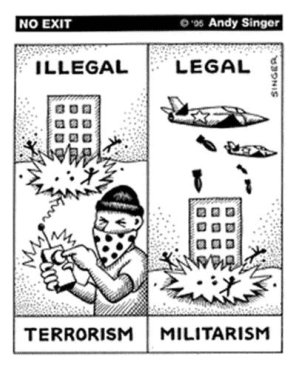
On August 29, 2010, Martin Indyk wrote an op-ed in The New York Times entitled “For once, hope in the Middle East”. When I read it, I felt I should respond with an article that sheds light on the issues which Mr, Indyk has chosen to ignore. One of the premises he based his analysis on was that violence has receded in the Middle East in the past two years compared with the 1990s. Here, like most Western officials and journalists, Indyk ignores daily and persistent Israeli violence against Palestinians for the past sixty years which has risen to record levels in terms of the number and ferocity of Israeli crimes against Palestinian civilians in the past two years, particularly in the city of Hebron. How could Indyk ignore the ‘violence’ which Israel has been using for years against civilians in Gaza in terms of blockade and artillery, missile and warplane attacks? I would not have guessed that that the paradox, on this particular point, would become so stark on the international scene after four Israeli settlers were killed in a village near Hebron.
Jewish settlers, as everyone knows, have been killing Palestinian farmers, burning mosques, running over children with their cars, desecrating cemeteries, demolishing houses and whole villages. The lack of Western reaction towards this rise in the number of crimes against Palestinians reflects the conviction in the West that ‘violence has receded in the Middle East’, as if killing the Arabs is not ‘violence’, while killing these settlers is the only ‘violence’ in the Middle East! The US President hastened to condemn this ‘absurd killing’ while he kept silent regarding the killing of four thousand civilians, including women and children in Gaza. His Secretary of State also condemned the ‘brutal violence’, while she never condemned the Israelis for killing any Palestinian. The United Nations representative considered killing the Israelis a ‘mean’ attempt at undermining the negotiations, while his organization has done nothing to stop Israeli daily killing of Palestinians for the past sixty years. As usual, the European Union, and Japan too, condemned killing the Israelis, while they turn absolutely deaf when Israelis kill Palestinian civilians in their thousands. Even the Palestinian Authority condemned the killing of the four settlers without reminding the world of the crimes committed daily against the Palestinians, particularly in Hebron, which have never been ‘condemned’ or even mentioned be any American or European official. For them, that is ‘natural violence’, because Palestinian lives do not mean anything to the West. Only when an Israeli is killed, ‘civilized’ Westerners hasten to ‘denounce’ and ‘condemn’ violence.
In this article, I would just remind readers of some of the ‘acts of violence’, ‘ugly crimes’, ‘absurd killings’ and ‘brutal violence’ committed by the Israeli settlers in the West Bank, particularly in villages of the Hebron region, against unarmed Palestinians simply trying to live on their land with freedom and dignity and away from the killing and oppression practiced against them by Israeli settlers on a daily basis. Such acts and crimes have never been condemned by Obama, Clinton, the European Union, the United States, or even Japan.
Since March 2010, Israeli occupation forces killed in cold blood Mohammad Ibrahim Abdul Qader Qadus on March 16, 2010 in Southern Nablus; and on March 21, child Mohammad al-Qanbar was run twice over by a settler’s car before he was detained in Ras al-Amoud. On April 3, an Israeli settler ran over Samar Saif Radwan, 17, in eastern Hebron. On April 5, 2010, the settlers of Kriat Shmona burned a Palestinian to death. On the same day, three settlers poured hot water on the body and face of Munjed Bsharat, 26, who sustained serious burns and wounds. On April 11, an Israeli settler ran over a Palestinian child in the village of Laban West of Ramallah. On April 27, occupation forces assassinated young man Ali Sweiti, maimed his dead body and blocked out his eyes. On May 10, a Palestinian child died of the tear gas he inhaled. On the same day, occupation forces beat child Abdullah Isa to death. On May 16, an Israeli settler ran over a mother and her two daughters Rowa, 2, and Nagham, 5, at the entrance of their village, Jabaa south of Bethlehem. On June 11, an Israeli military jeep ran over and killed Mazen Naem al-Jamal, 48, in Hebron. On July 19, an Israeli settler ran over and killed Abdullah Hasan al-Muhtaseb, 12 in Hebron.
Thus, Israeli settlers and occupation forces killed during the first months of 2010 fourteen Palestinians. No country in the world condemned the killing of these people. And this is only the tip of the iceberg in terms of the brutal crimes committed by settlers on a daily basis against innocent children, women and young people in Hebron and other West Bank cities and villages. What would the Palestinians do if no country in the world condemned killing them? No Western media outlet even keeps a record of the crimes committed against them on a daily basis. Palestinian anger reaches unbearable levels not only because of the settler violence committed against them, but also because of the silence and complicity of Western powers.
A quick review of the racist Western perspective of what is happening in occupied Palestine explains the failure of all previous attempts to reach real solutions and just and comprehensive peace. It is because such a peace should be based on fair and balanced solutions.
For negotiations to succeed, the sponsors of the process should be convinced that the life of the Palestinians is at least equal to the life of a criminal settler living on a land not his own in order to steal this land and kill the people living on it. Only then, there might be some hope of achieving peace based on justice and not on killing one party and giving the occupying killing party everything it wants. When Obama, Clinton and the European Union condemn killing the Palestinians with the same strength they condemn the killing of settlers, there might be hope of a real peace in our region.
NYT Pushes Confrontation with Iran
By Robert Parry | Consortium News | September 11, 2010
Apparently having learned no lessons from the Iraq WMD debacle, the New York Times is pushing for a heightened confrontation with Iran, slipping into the same kind of hysteria that it and other major U.S. news organizations displayed in 2002 and 2003.
In its latest neocon-styled editorial – commenting on a new critical report about Iran’s growing truculence toward nuclear inspectors – the Times concluded with this judgment:
“Tehran, predictably, insists it is not building a [nuclear] weapon. Its refusal to halt enrichment and cooperate with the I.A.E.A. [International Atomic Energy Agency] makes that ever more impossible to believe.”
Beyond the grammatical point that “impossible” like “unique” is an absolute adjective that can’t be modified, the Times misses the point that its previous over-the-top hostility toward Iran – evidenced in its news columns as well as its opinion pages – has helped create the dynamic that is driving the standoff over Iran’s nuclear program to a crisis point.
Amazingly, the Washington Post, usually an even more reliably neocon bastion than the Times, offered a more thoughtful assessment in its own Friday editorial on the same topic. The Post noted that the most promising area for negotiation with Iran was its past willingness to swap some of its low-enriched uranium for more highly enriched isotopes for medical purposes.
But the Post observed that delays in reaching an agreement over a proposed swap of 1,200 kilograms of low-enriched uranium – combined with the steady increase in Iran’s stockpile – “has greatly complicated the prospects.”
The Post said that “when the deal was first proposed, Iran would have given up more than two-thirds of its stockpile and would have been left with less than the amount needed for one bomb. To achieve the same effect, Tehran would now have to be induced to nearly double the amount of low-enriched uranium it turned over.”
The Post noted that Iran currently has enough low-enriched uranium to build two nuclear bombs, if it chose to bring the refinement up to much higher levels and committed itself to design and construct a nuclear weapon.
However, what the Post – and the Times – don’t mention in their two lead editorials is that they and their neocon friends were instrumental in frustrating President Barack Obama’s initial efforts to reach an agreement on the fuel swap last year and that they then helped sabotage a parallel deal negotiated by the leaders of Brazil and Turkey earlier this year.
Turkish Prime Minister Recep Tayyip Erdogan and Brazilian President Luiz Inácio Lula da Silva persuaded Iranian President Mahmoud Ahmadinejad to accept the swap agreement in May, completing the negotiations that the Obama administration had begun.
Sinking the Swap
At that point, the swap would have removed about half of Iran’s low-enriched uranium leaving the Iranianis only enough to theoretically begin work on one bomb, assuming they actually wanted to.
Though the swap would seem to have represented a major step forward – since one hypothetical nuclear bomb is far less threatening than two and since the agreement might have led to more Iranian concessions – the deal was trashed by opinion leaders at the Post and the Times.
The Post’s editors mocked the Brazil-Turkey initiative as “yet another effort to ‘engage’ the extremist clique of Ayatollah Ali Khamenei and Mahmoud Ahmadinejad.”
The Times star columnist Thomas Friedman chimed in, terming the Brazil-Turkey peace effort “as ugly as it gets,” the title of his column. Friedman, who was also a top cheerleader for invading Iraq (having dubbed himself a “Tony Blair Democrat”), made clear that he would only be satisfied with more “regime change” in Iran.
“Ultimately, [the success of the Iranian opposition] — not any nuclear deal with the Iranian clerics — is the only sustainable source of security and stability. We have spent far too little time and energy nurturing that democratic trend and far too much chasing a nuclear deal,” Friedman wrote.
Administration hardliners, like Secretary of State Hillary Clinton, also treated the leaders of Brazil and Turkey as unwelcome interlopers who were intruding on America’s diplomatic turf.
Lula da Silva responded by challenging those Americans who insisted that it was “none of Brazil’s business” to act as an intermediary to resolve the showdown with Iran.
“But who said it was a matter for the United States?” he asked, adding that “the blunt truth is, Iran is being presented as if it were the devil, that it doesn’t want to sit down” to negotiate, contrary to the fact that “Iran decided to sit down at the negotiating table. It wants to see if the others are going to go along with what (it) has done.”
What Iran saw instead was a parade of American pundits and policymakers heaping scorn on the Iran-Brazil-Turkey accord.
Puzzled by the U.S. reaction, Brazil released a three-page letter from President Obama to President Lula da Silva encouraging Brazil and Turkey to go forward with the swap deal. In the letter, Obama said the proposed uranium swap “would build confidence and reduce regional tensions by substantially reducing Iran’s” stockpile of low-enriched uranium.
However, the administration’s hawks – backed by the elite opinion-shapers of the Post and Times – prevailed over Obama. Instead of embracing the swap deal, the Obama administration pressed forward with harsher sanctions against Iran, despite warnings that the sanctions would only harden Iran’s nuclear stance.
Now, after Iran predictably reacted with greater animosity and suspicion toward the international community, the Times editorialists are determined, again, to ratchet up the tensions in line with Friedman’s view that the only acceptable solution is “regime change.”
The Post’s editorialists at least were honest enough to note the failed swap deal, but they, too, ended on an ominous note, suggesting that a U.S. military attack may be the only solution.
Noting a new analysis by the Institute for Science and International Security that Iran may already be producing weapons-grade uranium at a secret facility, the Post concluded: “If that is the case, economic sanctions are unlikely to prevent it.”
So, this is where the biased journalism of the Times and the Post — especially regarding Iran’s 2009 election (click here or here for details) — has led the world, to the brink of another Middle East conflict.
Having brushed aside the disaster in Iraq and the related bungled war in Afghanistan, the neocons and their allies appear to remain the chief arbiters and the leading architects of U.S. foreign policy.
Robert Parry broke many of the Iran-Contra stories in the 1980s for the Associated Press and Newsweek. His latest book, Neck Deep: The Disastrous Presidency of George W. Bush, was written with two of his sons, Sam and Nat, and can be ordered at neckdeepbook.com.
Neocon Iran Policy Committee tied to disgraced Iraqi National Congress
By Ali Ghariband Eli Clifton | Lobe Log | September 10th, 2010
The Iran Policy Committee (IPC), the Mujahedeen-e Khalq (MEK), and the Iraqi National Congress (INC) are connected in more ways than just a neocon modus operandi of taking exile groups with little or no domestic legitimacy, using their (faulty) intelligence to build a case for war, and promoting them to spearhead regime change in Middle Eastern countries.
On the heels of claims by the MEK and its most staunch U.S. supporters of a covert Iranian nuclear facility, a LobeLog investigation has revealed a host of intimate ties between the IPC and the Iraqi National Congress (INC), the Iraqi exile opposition group headed by the now-disgraced dissident Ahmad Chalabi.
The INC was a cause célèbre among neoconservatives for more than a decade before the U.S.-led invasion of 2003. Once neoconservatives took positions of power in George W. Bush’s administration, much of the faulty intelligence they used to build a case for war with Iraq came from Chalabi and his group.
LobeLog has discovered that, through 2006, IPC shared an address, accountants, and some staff with multiple organizations that either fronted for or had direct ties to the INC, even sharing staff members with those groups. Some of those ties have continued through today. Many of the contacts revolve around former International Republican Institute and Freedom House director Bruce McColm, who serves as IPC “Empowerment Committee Chairman.”
Both the groups McColm runs, the International Decision Strategies and its non-profit arm, the Institute for Democratic Strategies, share offices and staff at a quaint, two-story, cream-colored building at 911 Duke St. in Arlington, Virginia.
A name plate by the door reads with the initials of both organizations: IDS.
The 911 Duke St. address also serves as the home of Bartel & Associates, the accountants for the IPC and who are listed as the “person who possesses the books of the organization” on every 990 filed since the hawkish group’s inception in 2005. Bartel & Associates founder, Margaret Bartel, also serves as a vice-president of McColm’s Institute for Democratic Strategies and started working in 2001 managing the accounts of the INC. According to Ken Silverstein and Walter Roche, Jr., in the Los Angeles Times, this included “funds for its prewar intelligence program on Hussein’s alleged weapons of mass destruction.”
The address for McColm and Bartel’s groups — 911 Duke St. — is the same address that housed IPC for at least its first year of operation. IPC is best known for its support for regime change in Iran. The group calls for a mix of U.S. military might and an opposition insurgency led by exiled Iranian dissidents. The exile Iranian group of choice is, of course, the MEK, which is listed by the U.S State Department as a “foreign terrorist organization” (and its political front, the National Council for Resistance in Iran, or NCRI).
Does this plan sound familiar? It should — it’s the same one employed after 9/11 in the run up to the Iraq war. The plan must have been easy to transfer from Iraq to Iran, especially considering how much of the INC’s business went down at the little house with blue trim at 911 Duke St.
In addition to Bruce McColm’s for profit group, International Decision Strategies, which lists the INC as a past client, the two-story house at 911 Duke St. also housed at least two groups with direct links to Ahmad Chalabi and the INC.
One is the Iraqui [sic] National Congress Support Foundation, which was registered and receiving mail in care of Chalabi at 911 Duke St. (The group appears to have made less than $25,000 per year, which meant it didn’t have to file tax forms required of tax exempt non-profits.)
The other group housed at 911 Duke St. from at least 2003 until 2005 was Boxwood Inc., a organization run by top Chalabi aide Francis Brooke, and where Margaret Bartel was director and later vice president. Boxwood, according to Silverstein and Roche, was a “firm set up to receive U.S. funds for the intelligence program of the Iraqi National Congress.” Boxwood’s corporate registration, which clearly shows the 911 Duke St. address, can be viewed here (PDF).
In the New Yorker, in 2004, Jane Mayer reported that Boxwood president Francis Brooke and his family lived for free in a “million-dollar brick row house in Georgetown… which is owned by Levantine Holdings, a Chalabi family corporation based in Luxembourg.” Only a week later, foreign policy reporter Laura Rozen confirmed ownership of the building, publishing documentation on her War and Piece blog.
It appears that many of the same people who misled the U.S. into a disastrous war with Iraq are now attempting to do the same in Iran. And they’re doing it with very much the same game plan, and even doing it from the same little town house at 911 Duke St. in Arlington, Virginia.
Bin Laden is Dead; Long Live “Bin Laden”
By Maidhc Ó Cathail | My Catbird Seat | August 17, 2010

Who’s keeping the terror myth alive?

Credit image: Sabbah Report
In the trigger-happy post-9/11 world, the favoured way to instigate a war is to demand that the designated “evildoer” prove a negative.
Iraq was invaded because it couldn’t prove that it didn’t have WMDs. Iran is under constant threat of attack unless it can demonstrate that it’s not seeking nuclear weapons. And now Pakistan is being chastised for allegedly harbouring Osama bin Laden—who in all probability has been dead and buried for eight years.
Questioning Pakistan’s willingness to pursue bin Laden and other al-Qaeda leaders, U.S. Secretary of State Hillary Clinton last year told a group of Pakistani editors, “I find it hard to believe that nobody in your government knows where they are and couldn’t get them if they really wanted to.” And in a recent interview with Fox News, Clinton charged that “elements” of the Pakistani government know where bin Laden is hiding.
But what if bin Laden is not hiding in Pakistan? What if he’s been dead since December 2001? How then does Islamabad prove that some of its government officials are not concealing his whereabouts?
While the mainstream media rarely if ever question the belief that bin Laden is still alive, some cracks have been appearing in the consensus. In a September 11, 2009 piece in Britain’s Daily Mail, Sue Reid wondered, “What if everything we have seen or heard of him on video and audio tapes since the early days after 9/11 is a fake—and that he is being kept ‘alive’ by the Western allies to stir up support for the war on terror?”
An even more prominent sceptic is UPI Editor at Large Arnaud de Borchgrave whose July 26, 2010 commentary titled “Elvis bin Laden” may herald a new consensus. Sifting much the same evidence as Reid, the “legendary journalist” stated that “some key intelligence officials are taking bin Laden’s reported demise seriously.”
Both articles cited experts who have studied the post-December 2001 audios and videos and concluded they are fakes.
In 2007, Switzerland’s Dalle Molle Institute for Artificial Intelligence, which does computer voice recognition for bank security, found that the voices on recordings after mid-December 2001 differed clearly from earlier recordings of bin Laden.
Professor Bruce Lawrence, head of Duke University’s religious studies’ department and the foremost bin Laden expert, noted in a 2007 book the inconsistency between the increasingly secular language of the audios and videos and bin Laden’s earlier distinctive religious speech.
Assessing the evidence, Angelo M. Codevilla, a former U.S. intelligence officer who studied Soviet disinformation techniques during the Cold War and a professor of international relations at Boston University, wryly concluded that “Elvis Presley is more alive today than Osama bin Laden.”
So, if bin Laden is as dead as Elvis, who’s been faking all those scary threats in his name?
According to U.S. and British intelligence officials, al-Qaeda’s media wing, As-Sahab Foundation for Islamic Media Publication, has been run since 2001 by Adam Gadahn, a California-born convert to radical Islam who now goes by the name Azzam al-Amriki.
Gadahn found his way to the Islamic Society of Orange County while living with his grandfather, Carl Pearlman, a board member of the Anti-Defamation League. Ostensibly a civil rights organization set up to fight anti-Semitism, the ADL is “little more than a de facto adjunct of the Israeli government” which has even been caught spying on American critics of Israel.
Adam’s parents changed their surnames to Gadahn in the mid-1970s. The name refers to the Biblical warrior Gideon who, with the aid of trumpets and clay jars, defeated Israel’s enemies.
As Antiwar.com editor Justin Raimondo put it, Adam Gadahn is “an awfully odd figure, whose sudden evolution from a nice Jewish boy into Osama bin Laden’s Goebbels is just a little hard to take.”
Equally hard to take is the means by which the public learns of bin Laden’s latest pronouncements
“Almost every statement by Osama bin Laden published on the Internet…is first made public by SITE and IntelCenter,” according to a Spiegel Online profile of Rita Katz, Josh Devon and Ben Venzke, who founded the two companies that supposedly track al-Qaeda online.
SITE co-founder Rita Katz is an Iraqi-born Jew, whose father was publicly hanged in Iraq after the 1967 War as an Israeli spy. Katz, who served in the Israeli Defense Forces, tries to downplay the significance of her background but is not always successful. “When you grow up in a place like Iraq,” she told Spiegel, “you understand maybe a little bit about how Arabs think, and also what they are capable of.”
When Neal Krawetz, a researcher and computer security consultant, analysed a 2006 al-Qaeda video of Ayman al-Zawahiri for alterations and enhancements, he discovered that the As-Sahab and IntelCenter logos had been added at the same time.
Attempting to make light of the understandable suspicions that the “terror trackers” are working for Israeli intelligence, the Spiegel article jokes: “And the conspiracy theories pontificating that SITE and IntelCenter shoot the bin Laden videos themselves will continue to exist in the future. And Katz, Venzke and Devon will continue to see the humor in such theories: Yep, this is Mossad Headquarters. Exactly!”
But with the hunt for the elusive bin Laden having already cost thousands of lives and trillions of dollars, perhaps Americans should demand conclusive proof that Israel hasn’t conned them into fighting a phoney “war on terror.”
Maidhc Ó Cathail is a widely published writer based in Japan. To read more of his writing, go to Maidhc Ó Cathail: Writing and Analysis.
Featured Video
BRITAIN’S WARNING: PREPARE FOR WAR
or go to
Aletho News Archives – Video-Images
From the Archive
How Ukraine Tortured and Slaughtered Donbass
By Kit Klarenberg | Al Mayadeen | July 11, 2024
Almost immediately after the proxy war erupted, ISIS-tier footage of the torture and murder of Russians in Ukrainian custody emerged.
On July 6th, the New York Times published an astonishing investigation: In Ukraine, Killings of Surrendering Russians Divide an American-Led Unit. The article documents in grim detail how Chosen Company, an international volunteer battalion for Kiev, routinely executes Russian prisoners of war. It is the very first mainstream admission that this practice – a brazen breach of the Geneva Conventions, and a grave war crime – is widespread among Ukraine’s fighters, both foreign and homegrown. … continue
Blog Roll
 Aletho News
- Israel Demolishes Home Of Lebanese Journalist Whose Viral Film Exposed Pager Attack
- Record Oil, Empty Tanks: The UAE’s Miracle Recovery
- Burnham tackles Britain’s poverty with aggression in Yemen
- Peace in Ukraine: the easy way – or the hard way
- Trump & the Rrrrussians
- US taxpayer money laundered back through Ukraine – Musk
- Before COVID, an NIH lab chief proposed making a SARS-like bat virus more infectious
- Gates, Bourla on Trial in Netherlands Accused of ‘Great Reset’ Scheme at Vaccine Injury Hearing
- BRITAIN’S WARNING: PREPARE FOR WAR
- “Historic Russia”: The Land Putin Will Not Give Back
- If Americans Knew
- An error has occurred; the feed is probably down. Try again later.
- No Tricks Zone
- Two New Studies Find Thwaites Glacier Melt Cannot Be Driven By Human Activity Or A Warming Ocean
- E-Cars Reduce CO2 Emissions By Only 41% Compared To Internal Combustion Engine Vehicles
- Predictions Made By Renowned Climate Professor Over Past Decades Have Been Proven To Be Poor
- New Study Suggests Large Regions Of The Pacific Ocean Have Been Cooling For The Last 80 Years
- Germany’s Green Energy Debacle: High Energy Costs Force Kahla Porzellan to Close After 182 Years!
- New Study: 50 Years Of The Most Aggressive ‘Net Zero’ Policies Can Only Affect The Global Climate By 0.03°C
- US September “Heat” Was No Record…Many Records Set Decades Ago
- Latest European Green Energy Debacle; Portugal’s Largest Flagship Solar Park Insolvent!
- Green Energy Debacle: German Expert Professor Fritz Vahrenholt Warns Of Severe Economic And Social Consequences
- Two More Paleo Reconstructions Affirm Meters-Higher Sea Levels Across Ireland, Brazil 7000-6000 Years Ago

