Zimbabwe denies uranium deal with Iran
Press TV – April 27, 2010
Zimbabwe has denied reports that it has signed an agreement allowing Tehran to mine uranium reserves in exchange for Harare’s access to oil from Iran.
A report by the UK-based Daily Telegraph claimed on Saturday that a deal had been reached between the two countries under which Iran would be allowed to mine potential uranium deposits in Zimbabwe to provide fuel for its nuclear reactors and in exchange Zimbabwe would get oil from Iran. The report said that the agreement was sealed secretly last month during a visit to Tehran by a close aide to Zimbabwe’s President Robert Mugabe.
Industry and Commerce Minister Welshman Ncube on Monday rejected the report, saying there was no evidence suggesting that Zimbabwe had such deposits.
“It’s not true. No such agreement was signed,” said Ncube.
“There is no certainty that Zimbabwe has uranium deposits. You first have to prove that there are uranium deposits and that has not been done,” Reuters quoted him as saying. This comes as the Iranian President Mahmoud Ahmadinejad paid an official visit to Zimbabwe last week.
During his visit, he met his counterpart Robert Mugabe, attended the official opening of Zimbabwe’s International Trade Fair and signed a number of trade and cooperation agreements in the areas of banking, finance and insurance. The Iranian president told reporters before his departure that the visit came as part of his administration’s plan to consolidate ties with African countries.
Syria’s scuds, “Israel’s” security and one big smokescreen
By Ali Jawad | April 26, 2010
In the self-sensationalising world of modern media, some truths are better witnessed than told. Over the past fortnight, major media outlets have converged on Syria’s alleged delivery of scud missiles to the Lebanese resistance movement Hezbollah. By examining how the story first came to limelight, as well as the manner in which media sources have uncritically covered the story, one can begin to notice the vastly degenerated state of today’s media and its deeply polarising effects.
On 11th April, Kuwaiti daily Al-Rai Al-Aam broke the ‘scud missiles’ story. Relying solely on American sources, the author Husain Abdul-Husain claimed that both western and Israeli intelligence had uncovered the training of Hezbollah resistance fighters in Syria in the use of scud and surface-to-air missiles. This, we are told, occurred some time during last summer. Subsequent to the alleged discovery, the article adds, Israel threatened Syria through official Turkish and Qatari channels warning against the transfer of either of the two armaments to Hezbollah.
Western coverage of the story has been an unquestioned regurgitation of the original claims made in the Al-Rai Al-Aam article. Further signified by an overriding infatuation with Israel’s security, political commentators have even sought to draw parallels between Saddam and the alleged Syrian scud missiles delivery. Amidst the suffocating miasma of yellow journalism redolent in western reporting, the parallel was not lost on Lebanese prime minister. Speaking to a group of Lebanese citizens in Rome, Saad Hariri noted: “All this is similar to what was said previously about the weapons of mass destruction in Iraq, that were never found.”
Quite expectedly, not one mainstream media outlet dared make any mention of America’s pledge of roughly $3billion per annum in military aid to Israel. One does not require speculative reports published on Al-Rai Al-Aam to verify the above, nor does one require any superior intelligence to discern that the annual US ritual of rearming Israel constitutes an “equilibrium-breaking” military development. What is required, however, is the impossible: for leading western commentators to witness developments, even fleetingly, through the eyes of other than Israel.
And thus, one can produce a hefty list of ignored ‘strategic balance altering’ developments. The Obama administration’s decision in January of this year, for instance, to double US arms-stockpiles in Israel to a total sum of $800 million worth, which are to be used by the Zionist state in times of “emergency”, certainly fits the description of military “game-changers”.
All this is not surprising. As a rule of thumb, the media’s self-assumed monopoly of reserving big and frightening words like ‘WMDs’ for those classified as adversaries is to be assumed without need for explicit mention. Language in this sense is a tool to distort, not to explain; an instrument to erect separating walls, rather than build bridges of dialogue.
Notwithstanding issues of accuracy in the original article, a telling omission from western reporting was a clear failure to question the timing behind Syria’s alleged transfer of the scuds. Had leading media outlets adhered to even a diminished standard of objectivity, they would have no doubt stumbled upon Israeli provocations such as foreign minister Avigdor Lieberman’s impudent words directed at President Assad. In early February of this year, the harebrained right-wing zealot threatened Syria with regime change in a show of brazen chutzpah, which is in fact symbolic of how Israel views and applies itself in the regional context.
The brouhaha over Syria’s alleged transfer of scud missiles is designed to serve as one big smokescreen. It is now an open secret that Hezbollah is capable of striking Tel Aviv, and much further south. In mid-February of this year the resistance movement’s secretary-general, Sayyed Hasan Nasrallah, stated in very explicit terms that should Israel bomb the Dahiye suburbs of Beirut, Hezbollah would respond with strikes on Tel Aviv; blow for blow. Virtually the whole of Israel is within striking range of Hezbollah, just as every inch of the entire Middle East and afar into Europe is within range of Israel’s missiles – including, I should add, its nuclear arsenal.
The principle motives behind arousing whipped up media-frenzy over the scud missiles issue are multi-fold, but have little to do with so-called “equilibrium-breaking” weapons in the hands of the Lebanese resistance.
Both Israel and the US are seeking to detach Syria from the resistance-bloc constituted primarily of Iran, Syria, Hezbollah and Hamas. Since the Clean Break strategy authored in 1996, Syria has been referred to as the lynchpin connecting Israel’s foes. Over the past year, US and Israeli experts have elevated the handling of the Syrian file to top-level priority within the Middle Eastern context.
On the precipice of Robert Ford’s confirmation as US ambassador to Syria, the emergence of the scud missiles allegations should be read as an instance of political arm wrangling. Admittedly, on this issue the Arab Center (alternatively referred to as the moderate-bloc) and Israel both share an interest in slowing down the rapprochement between Washington and Damascus, albeit for different reasons. Through the negative focus that has resulted from the alleged delivery of scud missiles, the US-Israeli axis aims to send a clear message to Damascus that its relationship with Hezbollah is a strategic liability. The thawing of ties between the west and Syria could in the future quite as easily regress due to its links to the resistance.
Secondly, Israel misses no chance to wave before the world the ubiquitous ‘S’ word in order to mask its repulsive settler-colonial project. By continually depicting itself as a nation terminally under threat, the Zionist state has sought to gain legitimacy and skewed sympathy.
In trail of Israel’s ever-rapacious “security” appetite, western commentators have overlooked gross violations of human rights and indeed war crimes. In this vein, Israel passed a military order on 13th April, which legalizes the deportation of thousands of Palestinians from their West Bank homes. Instead of highlighting the woes of a displaced nation – time and again – inflicted by a racist settler-colonial project, western journalists have instead zoomed in on an alleged scud missile delivery. Note, the word is alleged. As if to say, the Zionist state’s daily ethnic cleansing in Al-Quds of its Palestinian population is of no importance when placed against an alleged scud-missile delivery.
To fair-minded individuals, the media’s handling of the scud missiles story is representative of a hereditary bias in western reporting of the Middle East. The notion of double standards no longer captures the sheer immensity of this overriding prejudice. It would seem politics in the western hemisphere is all about recycling misnomer clichés, advancing age-old power-politics paradigms and bringing to bear its own sacred cows on the field of global politics.
Ali Jawad is a political activist and member of the AhlulBayt Islamic Mission (AIM).
Ross Douthat’s Muslim problem
By Glenn Greenwald| April 26, 2010
Ross Douthat, The New York Times, today:
In a way, the muzzling of “South Park” is no more disquieting than any other example of Western institutions’ cowering before the threat of Islamist violence. . . . But there’s still a sense in which the “South Park” case is particularly illuminating. . . . [I]t’s a reminder that Islam is just about the only place where we draw any lines at all. . . .Our culture has few taboos that can’t be violated, and our establishment has largely given up on setting standards in the first place. Except where Islam is concerned.
The New York Times, March 28, 2010:
A Texas university class production of “Corpus Christi,” by Terrence McNally, below, has been canceled by college officials citing “safety and security concerns for the students” as well as the need to maintain an orderly academic environment, The Austin Chronicle reported. “Corpus Christi,” Mr. McNally’s 1998 play depicting a gay Jesus figure, was scheduled to be performed on Saturday as part of a directing class at Tarleton State University in Stephenville, Tex. But early on Friday, Lt. Gov. David Dewhurst condemned the performance, saying in a press release that “no one should have the right to use government funds or institutions to portray acts that are morally reprehensible to the vast majority of Americans.” Although Tarleton’s president, F. Dominic Dottavio, first defended the students’ right to perform a play he considered “offensive, crude and irreverent,” university officials changed course late Friday night, canceling the performance after receiving threatening calls and e-mail messages, according to The Star-Telegram.
Dallas Star-Telegram, April 8, 2010:
A Fort Worth theater that had agreed to show a student-directed play with a gay Jesus character has withdrawn its offer. The board of directors of Artes de la Rosa, which runs The Rose Marine Theater on North Main Street, decided Thursday against offering the venue for the production of Corpus Christi, just one day after saying it would. A March performance set for a directing class at Tarleton State University in Stephenville was abruptly canceled after the school received threatening emails.
It looks like Ross Douthat picked the wrong month to try to pretend that threat-induced censorship is a uniquely Islamic practice. Corpus Christi is the same play that was scheduled and then canceled (and then re-scheduled) by the Manhattan Theater Club back in 1998 as a result of “anonymous telephone threats to burn down the theater, kill the staff, and ‘exterminate’ McNally.” Both back then and now, leading the protests (though not the threats) was the Catholic League, denouncing the play as “blasphemous hate speech.”
I abhor the threats of violence coming from fanatical Muslims over the expression of ideas they find offensive, as well as the cowardly institutions which acquiesce to the accompanying demands for censorship. I’ve vigorously condemned efforts to haul anti-Muslim polemicists before Canadian and European “human rights” (i.e., censorship) tribunals. But the very idea that such conduct is remotely unique to Muslims is delusional, the by-product of Douthat’s ongoing use of his New York Times column for his anti-Muslim crusade and sectarian religious promotion.
The various forms of religious-based, intimidation-driven censorship and taboo ideas in the U.S. — what Douthat claims are non-existent except when it involves Muslims — are too numerous to chronicle. One has to be deeply ignorant, deeply dishonest or consumed with petulant self-victimization and anti-Muslim bigotry to pretend they don’t exist. I opt (primarily) for the latter explanation in Douthat’s case.
As Balloon-Juice’s DougJ notes, everyone from Phil Donahue and Ashliegh Banfield to Bill Maher and Sinead O’Connor can tell you about that first-hand. As can the cable television news reporters who were banned by their corporate executives from running stories that reflected negatively on Bush and the war. When he was Mayor of New York, Rudy Giuliani was fixated on using the power of his office to censor art that offended his Catholic sensibilities. The Bush administration banned mainstream Muslim scholars even from entering the U.S. to teach. The Dixie Chicks were deluged with death threats for daring to criticize the Leader, forcing them to apologize out of fear for their lives. Campaigns to deny tenure to academicians, or appointments to politicial officials, who deviate from Israel orthodoxy are common and effective. Responding to religious outrage, a Congressional investigation was formally launched and huge fines issued all because Janet Jackson’s breast was displayed for a couple of seconds on television.
All that’s to say nothing of the endless examples of religious-motivated violence by Christian and Jewish extremists designed to intimidate and suppress ideas offensive to their religious dogma (I’m also pretty sure the people doing this and this are not Muslim). And, contrary to Douthat’s misleading suggestion, hate speech laws have been used for censorious purposes far beyond punishing speech offensive to Muslims — including, for instance, by Christian groups invoking such laws to demand the banning of plays they dislike.
It’s nice that The New York Times hired a columnist devoted to defending his Church and promoting his religious sectarian conflicts without any response from the target of his bitter tribalistic encyclicals. Can one even conceive of having a Muslim NYT columnist who routinely disparages and rails against Christians and Jews this way? To ask the question is to answer it, and by itself gives the lie to Douthat’s typically right-wing need to portray his own majoritarian group as the profoundly oppressed victim at the hands of the small, marginalized, persecuted group which actually has no power (it’s so unfair how Muslims always get their way in the U.S.). But whatever else is true, there ought to be a minimum standard of factual accuracy required for these columns. The notion that censorship is exercised only on behalf of Muslims falls far short of that standard.
Sanctioning Iran Is an Act of War
By Rep. Ron Paul | April 23, 2010
Before the US House of Representatives, April 22, 2010, Statement on Motion to Instruct Conferees on HR 2194, Comprehensive Iran Sanctions, Accountability and Divestment Act.
I rise in opposition to this motion to instruct House conferees on HR 2194, the Comprehensive Iran Sanctions, Accountability and Divestment Act, and I rise in strong opposition again to the underlying bill and to its Senate version as well. I object to this entire push for war on Iran, however it is disguised. Listening to the debate on the Floor on this motion and the underlying bill it feels as if we are back in 2002 all over again: the same falsehoods and distortions used to push the United States into a disastrous and unnecessary one-trillion-dollar war on Iraq are being trotted out again to lead us to what will likely be an even more disastrous and costly war on Iran. The parallels are astonishing.
We hear war advocates today on the Floor scare-mongering about reports that in one year Iran will have missiles that can hit the United States. Where have we heard this bombast before? Anyone remember the claims that Iraqi drones were going to fly over the United States and attack us? These “drones” ended up being pure propaganda – the UN chief weapons inspector concluded in 2004 that there was no evidence that Saddam Hussein had ever developed unpiloted drones for use on enemy targets. Of course by then the propagandists had gotten their war so the truth did not matter much.
We hear war advocates on the floor today arguing that we cannot afford to sit around and wait for Iran to detonate a nuclear weapon. Where have we heard this before? Anyone remember then-Secretary of State Condoleeza Rice’s oft-repeated quip about Iraq, that we cannot wait for the smoking gun to appear as a mushroom cloud?
We need to see all this for what it is: Propaganda to speed us to war against Iran for the benefit of special interests.
Let us remember a few important things. Iran, a signatory of the Nuclear Non-Proliferation Treaty, has never been found in violation of that treaty. Iran is not capable of enriching uranium to the necessary level to manufacture nuclear weapons. According to the entire US Intelligence Community, Iran is not currently working on a nuclear weapons program. These are facts, and to point them out does not make one a supporter or fan of the Iranian regime. Those pushing war on Iran will ignore or distort these facts to serve their agenda, though, so it is important and necessary to point them out.
Some of my well-intentioned colleagues may be tempted to vote for sanctions on Iran because they view this as a way to avoid war on Iran. I will ask them whether the sanctions on Iraq satisfied those pushing for war at that time. Or whether the application of ever-stronger sanctions in fact helped war advocates make their case for war on Iraq: as each round of new sanctions failed to “work” – to change the regime – war became the only remaining regime-change option.
This legislation, whether the House or Senate version, will lead us to war on Iran. The sanctions in this bill, and the blockade of Iran necessary to fully enforce them, are in themselves acts of war according to international law. A vote for sanctions on Iran is a vote for war against Iran. I urge my colleagues in the strongest terms to turn back from this unnecessary and counterproductive march to war.
NPR & Trust in Government
Robert Shetterly | 19 Apr 2010
I was just sitting down in my kitchen this morning — Sunday, April 18th, 2010 — to a bowl of oatmeal topped with walnuts, some pieces of ginger, and a little brown sugar when I heard the host of NPR’s Sunday Weekend Edition program, Liane Hansen, say that the next segment would begin a series of programs focusing on Trust in Government. She said, as we all know, that cynicism about our political leadership has metastasized. The new series would look at how it got this way and how it could be different.
I thought, great! I hoped — and expected — that the discussion would hone in on governmental hypocrisy and lying. Nothing builds cynicism and destroys trust like hypocrisy and lying.
But what to my wondering ears should appear but a first guest by the name of Philip Zelikow. Ms. Hansen introduced Mr. Zelikow as a professor of history at the University of Virginia and just the person to frame the discussion.
What surprised me was what Ms. Hansen, and thus NPR, did not tell us about Mr. Zelikow. He was a neocon who worked very closely with Condoleezza Rice, Dick Cheney, and Carl Rove in the Bush administration. He was one of the primary authors of what has been called the Bush Doctrine — the right of our country to make preemptive war on other countries in contradiction of international law and our own Constitution. During the Bush administration Zelikow defended the many lies that they told about the reasons for attacking Iraq. And he was put in charge of the 9/11 Commission, the committee that was supposed to tell the world what really happened on 9/11. He ran that committee so that the official version of events could not be questioned. He did not allow witnesses to testify who had seen and heard things that cast the official version into doubt. The commission totally ignored facts that made the official version untenable and it neglected to even mention that World Trade Center tower #7, not struck by an airplane, also mysteriously collapsed that day.
In other words, to kick off a program about cynicism and trust in government, NPR was inviting an expert to diagnose the problem — and what better expert than one of the people who has done more than most to cause it! NPR knows intimately Mr. Zelikow’s history and they chose to expunge it, hide it from their listeners.
Mr. Zelikow failed to mention during the interview that citizens lose respect for their government and become cynical when the government lies. Nor did he mention that when those leaders who lie make sure there is no accountability, the cynicism grows.
And Ms. Hansen neglected to mention that when the media does not identify the history and bias of a guest, it appears that they may be trying to manipulate their audience. It demonstrates a lack of respect for that audience and is a prime cause of cynicism. Such behavior makes a mockery of trust. It makes cynicism and distrust a self-fulfilling prophesy.
I would like to remind NPR that the problems of trust and cynicism would not be rampant in this country if the media fulfilled its obligation in a democracy to expose the lies of government. The only antidote to these problems is an honest media. (One can never expect the government to be honest.) When the media obscures the truth, they show the same contempt for democracy that the politicians do.
And then they wring their hands and ask why the people don’t trust government.
My oatmeal is cold now.
US: All Options on the Table Against Syria
By Jason Ditz, April 21, 2010
Though they have admitted once again that they still haven’t actually got any proof that any such thing happened, the US State Department insisted today that “all options are on the table” with respect to retaliating against Syria over its alleged delivery of Scud missiles to Hezbollah.
Assistant Secretary Jeffrey Feltman says the State Department has “really, really serious concern” about the report, and said if Syria actually turns out to have done such a thing it would be a “provocative action.”
Israel made the accusation last week, but it has since been denied by both Syria and Lebanon’s governments. Israel has not provided any public evidence to support its claim, but Hezbollah has been rumored in the media to have been given some old, unusable Scuds at some point in the past.
Scud missiles would give the Lebanese militant group the ability to hit targets anywhere in Israel at a time when Israeli officials are openly talking of launching another invasion of southern Lebanon.
Dear Angela Merkel: How much do Raul Hilberg and I owe you?
By Kevin Barrett | April 21, 2010
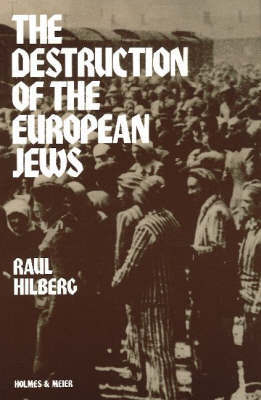
[Note: I will be interviewing Thomas Dalton, author of Debating the Holocaust: A New Look at Both Sides this Saturday, April 24th, 5-6 pm Central, on AmericanFreedomRadio (to be archived here for free on-demand listening). I am still looking for a mainstream Holocaust expert to refute him during the second hour. Over the past few months I have invited Deborah Lipstadt, Michael Shermer, John Zimmerman–the three most prominent critics of the “Holocaust deniers” — as well as many dozens of professors from several of the leading Holocaust and Genocide Studies and Jewish Studies programs. While I have received a few cordial refusals, notably from Shermer and Lipstadt, the vast majority of the academic “experts” have refused to respond…as has anti-revisionist blogger Muehlenkamp. I will be publishing my email to these experts in a later blog. Meanwhile, I am worrying about how to fill the second hour of the show. If you know any Holocaust experts who dare to defend the conventional wisdom, please have them contact me: kbarrett*AT*merr.com. Otherwise I will just have to keep Dalton on for the second hour to respond to callers, many of whom, I hope, will critique his interpretations. Anyway…as a free speech absolutist and a card-carrying non-coward, I am disgusted by the fear that surrounds this topic–not to mention the criminal sanctions. Below is my letter to German Chancellor Angela Merkel offering to turn myself in for beginning to doubt the standard six-million-Jewish-victim figure.]
Dear Andrea Merkel,
I read in the news that your German government has fined Bishop Richard Williamson 10,000 Euros for “partial Holocaust denial.” According to reports, the 10,000 Euros fine reflects Williamson’s public statement that he believes that “200,000 to 300,000 Jews died in Nazi concentration camps” rather than the widely touted figure of six million.
According to the dw-world.de report, you stated that the pope must “‘clarify unambiguously that there can be no denying’ that the Nazis killed six million Jews.” So I am writing to tell you that as a Muslim and a nonbeliever in both papal infallibility and Zionist historiography, I am not going to endorse the six million figure even if the Pope threatens me with hellfire and damnation. After reading three books on the issue–Lipstadt’s Denying the Holocaust, Shermer’s Denying History, and Dalton’s Debating the Holocaust–I am now prepared to state that I find pre-eminent Holocaust scholar Raul Hilberg’s estimate of 5.1 million Jewish Holocaust victims a more reasonable estimate.
Since it is against the law in Germany to state ones belief that fewer than six million Jews died in the Holocaust, Hilberg and I are apparently partners in crime. The question is, precisely what penalties should Hilberg and I face? Since Bishop Williamson was fined 10,000 euros for underestimating the six-million-Holocaust by 5.75 million people, that means that underestimating the six-million-Holocaust by roughly one million, as Hilberg and I do, should be penalized by a fine of $1,739.13 Euros. Please let me know where I should go to turn myself in — the nearest German consulate is in Chicago — and whether you would like that in the form of cash, check, or credit card. Or should I just send it straight to Israel and bypass the middleman? (Hilberg, fortunately for him, passed away a couple of years ago, and will thus never have to feel the fiscal jackboot of German justice.)
But seriously, Ms. Merkel, you may ask why I side with Hilberg’s estimate of 5.1 Holocaust deaths rather than the well-known figure of six million. My answer is that Thomas Dalton, in his book Debating the Holocaust, presents evidence that the figure of six million European Jewish victims threatened with destruction repeatedly occurs long before anyone could possibly have known the real figure. For example, the February 23rd, 1938 New York Times describes six million European Jews as “slowly dying of starvation, all hope gone.” Yet at that time the Holocaust, much less its precise body count, was still several years away. A few decades earlier, the May 7, 1920 New York Times cited “Jewish war sufferers in Central and Eastern Europe, where six millions face horrifying conditions of famine, disease and death…”
These two cases are not isolated instances. All told, Dalton cites seven such references to the six million Jews threatened/killed figure during World War II but before accurate body counts were possible; two such references from the 1930s; eight from the period during and after World War I; five between 1900 and 1914; and even four from the 19th century, the first occurring in 1869! He also states that when the official death toll at Auschwitz was revised downward from 4 million to 1.1 million in 1989, the official consensus held that the previously-believed-in 2.9 million Holocaust victims who suddenly turned out never to have existed were all non-Jewish Poles, thus preserving the apparently magical six million Jewish victims figure…while the anti-revisionist Shermer, as I recall, claims that the overall Holocaust total didn’t change, despite the sudden evaporation of 2.9 million previously assumed death camp victims, because about that number could be added to the previously-accepted figures for victims killed on the Eastern front, mainly by firing squads. Either way, it seems very strange that the well-known six million figure (and the less-known 11 million figure that includes non-Jewish victims) could survive the sudden disappearance of almost three million previously-assumed deaths.
The arguments cited above, along with others too lengthy to elaborate here, suggest that the magic figure of six million is some sort of tribal shibboleth, rather than an empirically-verified, historically-accurate body count. Hilberg’s estimate of 5.1 million Jewish Holocaust deaths thus seems far more probable.
Honestly, Ms. Merkel, I do not understand why the six-million-Holocaust, if it is really a well-verified historical fact, needs to be protected by criminal prosecutions, fines, prison sentences, ad-hominem vilification, the destruction of careers and reputations, and all the other trappings of the Orwellian police state. Some African-Americans and Native Americans argue that their holocausts involved up to one hundred million deaths, while other historians claim that the real figures are only a small fraction of that…and yet I have never heard of anybody being fined, imprisoned, or driven out of polite society for the all-too-common “crime” of “underestimating” these holocausts by millions or even tens of millions. Why should underestimations of the Jewish body count from the Nazi Holocaust be treated differently? Isn’t this a case of racist double-standards, in which the “inferior races” (Native Americans and Africans) are neglected, while superior “white” Jewish suffering is lionized? And isn’t it the case that if denying the Palestinian holocaust, the Nakba, were criminalized, virtually the entire population of the USA, Europe, and Israel would have to be prosecuted?
Truth does not need the support of criminal sanctions, Ms. Merkel. By prosecuting Holocaust revisionists for thoughtcrime, you are announcing that you believe they are right. That makes you a Holocaust revisionist yourself. Please turn yourself in to your nearest Gestapo Thoughtcrime unit immediately. Who knows, maybe you’ll end up sharing a cell with me and the ghost of Raul Hilberg.
Al-Qaeda Chief In Iraq: Captured, Killed, Never Actually Existed, Re-Captured, Now Killed Again
Steve Watson | Prisonplanet.com | April 19th, 2010
 U.S. and Iraqi officials have today announced that two “Al-Qaeda in Iraq” leaders have been killed in an air strike carried out by American troops. A major flaw in the story that seems to have been overlooked, is that both of the men have already been reported captured and killed on several occasions, with U.S. officials also having previously declared one of them a “fictional character” that was invented by the other!
The Washington Post reports:
The deaths of Abu Ayyub al-Masri, the leader of al-Qaeda in Iraq, and Abu Omar al-Baghdadi, the head of an umbrella group that includes al-Qaeda in Iraq, should disrupt insurgent attacks inside the country, officials said. Their slayings could also provide Prime Minister Nouri al-Maliki (pictured above) with a decisive political boost at a critical time.
“The death of these terrorists is potentially the most significant blow to al-Qaeda in Iraq since the beginning of the insurgency,” Gen. Ray Odierno, the top commander of U.S. troops in Iraq said in a statement. “There is still work to do but this is a significant step forward in ridding Iraq [of] terrorists.”
The two insurgent leaders were said to have been killed on Saturday in a night raid involving Iraqi and American forces.
United States military officials confirmed that Iraqi security forces had killed the two men. “The death of these two terrorists is a potentially devastating blow to Al Qaeda in Iraq,” the American command said in a statement.
He (the Iraqi prime minister) said the house was destroyed, and the two bodies were found in a hole in the ground where they had apparently been hiding.
Bizarrely, the Reuters piece quotes the Iraqi prime minister pinpointing the location of the raid as “a house in Thar-Thar, a rural area 50 miles west of Baghdad that is regarded as a hotbed of Qaeda activity”, however, the Washington Post report quotes U.S. officials saying the raid occurred “a few miles southwest of Tikrit”. If you look at a map of Iraq, those two descriptions do not entirely add up, unless you consider “a few miles” to be over 100. Certainly a more specific location could have been given.
However, that is perhaps the least of the problems surrounding this story.
Anyone who reads the news should be feeling a profound sense of déjà vu, because almost a year ago to the day, al-Baghdadi was reported captured by Iraqi security forces. His arrest was confirmed by Prime Minister Nouri al-Maliki, the same man now purporting that Baghdadi has been killed in a raid.
Al-Baghdadi was the replacement al-CIA-da boogie man for Abu Musab al-Zarqawi, who was also previously reported captured and killed on several occasions, after al-Zarqawi was laid to rest for good by the PR arm of the Pentagon in 2006.
The announcement of al-Baghdadi’s capture year ago, jarred with multiple previous reports over a two years period, detailing his arrest, his death and even questioning his existence altogether.
In March 2007, the Interior Ministry of Iraq claimed that al-Baghdadi had been captured in Baghdad. This was reported by AP and picked up by the likes of CNN, whose report stated that another insurgent had positively confirmed al-Baghdadi’s identity.
The U.S. military denied that al-Baghdadi was in their custody, however, and one day later Iraqi officials retracted their statements regarding his arrest.
Indeed this back and forth announcement of capture and later retraction occurred three times in the space of one week.
Then one month later, on May 3, 2007, the Iraqi Interior Ministry announced that al-Baghdadi had been killed by American and Iraqi forces north of Baghdad.
However, in July 2007, the U.S. military declared that al-Baghdadi had never actually existed and was, for all intents and purposes, a myth.
A reportedly high ranking “Al Qaeda in Iraq” detainee identified as Khaled al-Mashhadani, then claimed that al-Baghdadi was a fictional character created to give an Iraqi face to a foreign-run terror group, and that the “Islamic State of Iraq” was a “virtual organisation in cyberspace” created by al-Qaeda in Iraq leader Abu Ayub al Masri.
The person claiming to be Baghdadi continued to release video and audiotapes attacking U.S. occupation of Iraq, but refused to show his face.
The U.S. military’s claim that Baghdadi is a fictitious character was then challenged in May 2008 after a police chief in Haditha said Baghdadi’s real identity is Hamed Dawood Mohammed Khalil al Zawi. “He was an officer in the security services and was dismissed from the army because of his extremism,” the police chief told al Arabiya television.
A year later, in April 2009, following his latest capture, the Iraqi government displayed a picture of Baghdadi for the first time, adding that they were attempting to glean information from him.
The Al Qaeda-linked group the Islamic State of Iraq denied the government reports that al-Baghdadi had been captured, and according to the SITE Institute, released a “genuine” recording of Baghdadi announcing that he was still at large.
But Iraqi officials then released a video of Baghdadi’s interrogation, in which he claimed responsibility for the bombing of a Shia shrine in Samarra in February 2006, and also described how his terrorist group was funded.
However, tapes and messages continued to be released throughout 2009 in the name of Baghdadi, claiming that he had not been captured and spurring on militants in Iraq. Up to the present day in 2010, such messages continued to be reported on by mainstream sources, such as the Associated Press, without any explanation as to how a captured terrorist could be releasing the material.
Now Baghdadi has been reported killed again!
The story becomes even more intriguing given that the second man reported to have been killed and found in a ditch last Saturday was Abu Ayub al Masri – the “creator” of the fictional character of al-Baghdadi.
Al Masri himself was also reported to have been killed in May 2007. He then rose from the dead to be captured in May 2008 in a joint US-Iraqi operation.
Prime Minister al-Maliki’s presumed amnesia over the fact that he already annouced Baghdadi captured less than twelve months ago becomes more suspect when you take into account that he is trying to negotiate support for his State of Law coalition following parliamentary elections in which it emerged only as the second largest bloc.
Presumably the ridiculous loose ends of this soap opera will now be tied off and memory holed – although we cannot put it past al Masri and his imaginary friend to rise from the grave one more time a year down the line, particularly given that the Baghdadi character keeps being resurrected and acknowledged by the Iraqi government, the U.S. military and the mainstream media.
This saga is another example of how a manufactured smoke and mirrors propaganda veils reality. The “war on terror” mantra continues to be propagated as justification to wage permanent occupation and control over the middle east by the global elite.
Already Joe Biden is parading around, announcing the news as a “devastating blow” delivered to Al Qaeda.
Al Qaeda in Iraq, al Zarqawi, al Baghdadi and the legions of other al qaeda operatives who have been reportedly captured and killed over and over are used as interchangeable PR tools.
Are or were any of them ever real? Possibly. Was there more than one Baghdadi? Maybe. However those facts matter little now.
Once again 99% of the corporate media will no doubt enthusiastically champion the latest killings as a key victory in the continuing war on terror, and the majority of Americans who even notice will not take a second glance at the ludicrous back story.
VoteVets.org Crosses the Line
By Kelley B. Vlahos, April 20, 2010
Anyone paying attention to veterans’ issues on Capitol Hill these days has no doubt heard of VoteVets.org.
During the Bush administration, this group was a thorn in the side of the Republican pro-war agenda that put millions of servicemen and women through the meat grinder in Iraq and Afghanistan. It exposed and derided scandalous weaknesses in the Department of Veterans Affairs (VA) mental health care system, called for the closing of Gitmo, and fought for the modernization of the GI Bill so that vets could actually go to college as Uncle Sam promised.
So today we are forced to ask one simple question of VoteVets: what’s up with you?
Though technically it is a non-partisan 401(c)(4) organization (that’s Washington-speak for a political non-profit), VoteVets also has a political action committee (PAC) dedicated to electing veterans to Congress. The group’s preferred candidates happen to be Democrats who subscribe to a “progressive” agenda, particularly on issues of national security and foreign policy. The millions of dollars VoteVets has spent in the last two election cycles also paid for negative campaign ads against Republicans in tight races, including the 2008 presidential contest. Fine. Over the last several years, that mission has seemed almost necessary in terms of providing pushback against the influential neoconservative-dominated national security establishment in Washington.
But then comes this new advertising campaign, and for the first time, VoteVets.org looks less like a veterans’ lobby than a full-fledged water-carrier for Democratic interests on Capitol Hill. Not only that, VoteVets.org is employing the same dirty rhetorical tricks that neoconservative hawks invoked to get us into Iraq and Afghanistan – and now possibly Iran:
There are so many things wrong with this advertisement that one wonders if the smartypants at the American Enterprise Institute put it out themselves and slapped the VoteVets.org logo on it. Indeed, the minute it hit the airways back in March, you could almost hear Michael Ledeen and Frank Gaffney giggling gleefully from either side of the Potomac. Liz Cheney might as well have canceled an ad buy in her own Keep America Safe campaign to save some money.
All joking aside, it is troubling to see a group that has been forthright about taking care of the grunts in the field and veterans in our communities indulging in stale neoconservative tropes to appeal to Americans’ base prejudices and fears, all to win a debate over climate-change legislation that the American public has yet to see, much less absorb and weigh in on.
It’s just another example of how seductive Washington politics can be, and how off-putting it is to see veterans exploited, once again, for political gain.
Fellow Antiwar.com columnist and intelligence expert Phil Giraldi had this to say about the ad: “I don’t have any problem with supporting clean energy, though I wonder what that has to do with VoteVets, unless it is a lobbying effort to get groups behind Obama’s next domestic program, which might be the intention of this promotion.”
That seems to be how it’s shaping up, given that the ads are part of a $3 million campaign to promote clean energy legislation favored by progressive Democrats in Congress. The group is also targeting a “bipartisan” package being crafted by Senators John Kerry (D), Lindsey Graham (R), and Joe Lieberman (I), which VoteVets say is too stacked in favor of Big Oil and takes the federal government out of regulating greenhouse gases. No doubt that is why it is running these emotionally stoked and muscular energy ads in swing districts across the country.
“Three years ago, VoteVets would have never used the word ‘enemy’ in an ad like this,” pointed out Inter Press News Service correspondent Gareth Porter. Now we know why. Making a vote against Big Oil a patriotic act against the “Iranian menace” might prove useful in shaming members who do not agree with the planks in their preferred energy agenda.
Is Energy a Veterans’ Issue?
VoteVets.org chairman John Soltz, who as an Iraq vet has been an effective critic of the war overseas (indeed, VoteVets opposed the current surge of 30,000 troops into Afghanistan), recently repeated his group’s cock-eyed brief on MSNBC. “We have states like Iran who are then earning money off our demand and passing that off to terrorist organizations across the Middle East,” he told liberal host Ed Schultz, who flashed a graphic of a poll commissioned by VoteVets.org [.pdf] that conveniently found 73 percent of veterans in favor of “clean energy legislation.”
Come again?
Simply put, the liberal-leaning VoteVets hired Lake Research Partners, a Democratic polling firm, to gin up this issue as a priority for American veterans. But is it really? The question that elicited the 73 percent positive response was this: “Do you favor or oppose a comprehensive clean energy and climate bill that invests in clean, renewable energy sources in America and limits carbon pollution in the atmosphere?”
Sure, a majority of Democrats, Republicans, and independents favor it, according to the poll, but it tells us virtually nothing about what the respondents want specifically, much less that a plan by progressive Democrats in Washington is at all preferred. We all know veterans are not a monolithic group, and while most would agree they want their VA benefits on time and a GI Bill that works, to suggest they all support federal regulation of greenhouse gases and so-called “cap and trade” measures is quite presumptuous.
Liberal Backlash
Despite the campaign’s progressive goals, the ad itself has certainly left the group’s loyal liberal supporters scratching their heads. Wrote pundit Taylor Marsh in March:
“Well, if you wanted to give Sarah Palin’s bomb, bomb, bomb Iran team a freebie, the new Vote Vets ad is it. However, it’s supposed to be about Congress getting us off oil and on to clean energy in order to keep us out of real life energy wars. Instead it serves up powerful visuals and a narrative that promotes going straight at Iran. …
“[T]he ad is a cynical appeal using fear about Iran, specifically, through EFPs [explosively formed penetrators] to get the job done. Vote Vets could have begun the ad the way you ended it, immediately making the oil-clean energy connection, but didn’t. You purposefully chose to focus on the fear card and the Iran boogieman, complete with a picture of Ahmadinejad, before making your clean energy pitch, because you thought that would get the attention. … But they got the emotional appeal exactly backwards, stressing Iranian dangers instead of energy dependence and they did it deliberately.”
To which VoteVets.org representative Richard Allen Smith immediately responded on Marsh’s Web site, “Being that we also created StopIranWar.com, if we’re trying to convince anyone the US should invade Iran, we’re doing a pretty terrible job.”
Sadly, when you click onto StopIranWar.com on the VoteVets.org Web site, there’s nothing to see. Not sure what that is all about. Smith also wrote: “What is dishonest in the ad? Point to one assertion that is untrue.”
Is the ad untrue? Depends on whom you ask. Dishonest? Certainly. I reached out to VoteVets.org media relations man Eric Schmeltzer over the weekend to get some background on the assertion that for every $1 increase in oil on the global market, the government of Iran gets another $1.5 billion in annual revenue, and moreover, that any increase in oil revenue goes directly to the Iranian manufacture of EFPs used against U.S. forces in Iraq or, by extension, Afghanistan.
He said he’d get back to me on the first part of the question but added that the “claim about EFPs is consistent, it says they were created in Iran, which they were. Now, most insurgents have the ability to make them. But the originals came from Iran.”
Schmeltzer might have been suggesting that VoteVets never claimed Iran was directly supplying weapons to hurt our troops, but the ad certainly insinuates that linkage. Soltz also made the charge more directly on his MSNBC appearance on April 8.
I am going to assume then, that in part, the basic premise of the advertisement was culled from this August 2009 report [.pdf] by the Center for American Progress, which is displayed prominently on the VoteVets.org Web site as an accompanying resource in the clean-energy campaign:
“America’s oil dependence has other indirect but no less serious impacts on U.S. interests. For example, high rates of American consumption drive up global demand for oil, which fuels lofty prices and helps to fund and to sustain undemocratic and corrupt regimes. Because of this anti-Western nations such as Iran – with whom the United States by law cannot trade or buy oil – benefit regardless of who the end buyer of the fuel is. …
“Reducing U.S. oil demand in the world market would be a big financial hit to Iran and other unfriendly petrostates.”
The Iranian Connection
Giraldi called this linking of the production and deployment of IEDs to U.S. consumption of oil “largely baloney.”
“The IED technology is simple and has been adapted everywhere from Northern Ireland (where it originated) to today’s Afghanistan. There is no evidence whatsoever that money used to buy oil goes to terrorists (we are funding them directly through bribes paid to move our equipment and supplies in AfPak) and that Iran is profiting thereby and killing our soldiers. What a load of nonsense!”
“There has never been any proof that the Iranian government has any connection with EFPs or other militarized activity in Iraq or Afghanistan. Zero. Nada,” complained war correspondent Dahr Jamail in an e-mail exchange. “It seems funny they are resurrecting a long-since defunct Bush propaganda tactic … seems to me like they could use a new PR person – someone a little more savvy.”
The military of course has been trying to establish such a link for years. In 2008, the U.S. captured several Iranian agents associated with the so-called Iranian “Special Groups” in Iraq. Also in 2008, military officials said they had evidence that sources within Iran were supplying rogue Shia militias with EFPs, while in 2007, President George W. Bush charged that the Iranian Quds Force, a unit of the Iranian Revolutionary Guards, was causing unrest and supporting the insurgency in Iraq.
Many of the broader linkages have been maintained and promulgated to this day through neoconservative think-tanks and publications such as the Foundation for the Defense of Democracies, The Long War Journal, and The Weekly Standard.
However, a report this March [.pdf] by the Congressional Research Service found that while Iran maintained a high and complicated level of political influence in Iraq, the charges regarding its connection to militant activity over the border were simmering down.
Meanwhile, links between Iran and EFP attacks against Westerners in Afghanistan are tenuous. In fact, despite reports about Iranian-made weapons in the hands of the Taliban, Gen. Stanley McChrystal was forced to tell reporters just four days ago that he has no evidence the Iranian government is channeling weapons or fighters into Afghanistan.
But back to the VoteVets advertisement.
It is so hard to stomach because not only does it indicate the group’s willingness to compromise its standards of truth in order to win over votes in a problematic legislative battle, but it is cynically using our feelings about veterans and our fears of war to do it.
Which is disappointing, since Soltz was one of the first people with Iraq credentials to weigh in publicly on the unexpected resignation of Navy Adm. William Fallon in 2008. Fallon, who was considered one of the military’s most important bulwarks against a neoconservative drive toward war with Iran, said he felt he had to resign after his views were showcased in an April 2008 article in Esquire.
This is what Soltz had to say at the time:
“Let’s call a spade a spade here. Admiral Fallon has not so quietly had severe disagreements with the White House on our Iraq policy, how it impacts the region and global war on terror, for which he is largely responsible, and warning against war with Iran.
“Just one year into his tenure as CENTCOM commander, Fallon resigned today, and you can read into it nothing more than a resignation in protest. …
“Another voice of reason bites the dust.”
Please, Soltz, don’t let VoteVets.org be yet another voice of reason to bite the dust. Continue to elect Democratic veterans to Congress if you must. Keep fighting for energy independence, for sure. But leave the neoconservative appeals and the gratuitous use of veterans out of it. As Gareth Porter said so succinctly, it may be “the politically clever thing to do, but never make hash out of the truth – it’ll come back to bite you.”
Who’s behind the Gates memo leak?
By Paul Woodward on April 18, 2010
The New York Times reports on a “secret three-page memorandum” that Defense Secretary Robert Gates sent to National Security Adviser Gen James Jones in January, warning that “the United States does not have an effective long-range policy for dealing with Iran’s steady progress toward nuclear capability,” according to unnamed officials who leaked the information.
The narrative line here which is presumably the line which was being fed to the New York Times‘ ever-obliging reporters, was that the there are gaps in the US strategy for dealing with Iran’s nuclear ambitions. It’s far from clear that this was actually the thrust of Gates’ memo.
[I]n his memo, Mr. Gates wrote of a variety of concerns, including the absence of an effective strategy should Iran choose the course that many government and outside analysts consider likely: Iran could assemble all the major parts it needs for a nuclear weapon — fuel, designs and detonators — but stop just short of assembling a fully operational weapon.
In that case, Iran could remain a signatory of the Nuclear Nonproliferation Treaty while becoming what strategists call a “virtual” nuclear weapons state.
To say that the US lacks a strategy here, is itself a statement so vague as to be meaningless. It lacks a strategy to prevent Iran becoming a virtual nuclear state? Or it lacks a strategy for dealing with Iran in such an eventuality? Or it lacks a strategy for dealing with the fact that it may not actually know whether Iran has acquired this form of nuclear capability?
There is no indication in this account that the New York Times reporters saw the memo (and it seems reasonable to infer that they did not), so as is so often the case, it’s likely that the most significant detail in this story is the one that will not be revealed: the identity of the senior official who is the primary source of the narrative.
Was it Dennis Ross? He’d certainly fit the profile of someone in the administration who probably feels like it’s time to change the subject and shift attention away from Israel and back to Iran. As another US official recently told Laura Rozen, “He [Ross] seems to be far more sensitive to Netanyahu’s coalition politics than to U.S. interests.”
Background:
Who Is Dennis Ross? – Aletho News | March 8, 2009
Venezuelan Consulate in Puerto Rico accused of financing political group
El Universal | April 16, 2010
Roberto Arango, a Senator for the New Progressive Party, accused on Thursday night the Venezuelan Consulate in San Juan of financing left-wing groups in Puerto Rico, specifically the Caribbean Bolivarian Coordinating Committee.
The conservative Senator told Efe that he has denounced the “irregular activities” of the Venezuelan diplomatic mission through letters sent to the US State Department and the Federal Bureau of Investigations (FBI).
Arango stressed that he addressed a letter to Venezuela’s President Hugo Chavez to inform him of the activities which, in his view, the Venezuelan diplomats are carrying out in the Puerto Rican capital.
The leader of the party that favors Puerto Rico’s integration to the US as the 51st state said that Chavez did not answer to his letter.
Gen McChrystal: No Proof Iran Sending Fighters or Weapons to Afghanistan
By Jason Ditz, April 16, 2010
Despite several claims made to the contrary over the past several months, US commander Gen. Stanley McChrystal today conceded that there was no proof that the Iranian government has been sending fighters or weapons to Afghanistan.
At the same time McChrystal did note that some weapons and ammunition have crossed the border from Iran to Afghanistan and that some Taliban may have even trained inside Iran, but that they were not “operationally significant” amounts.
Secretary of Defense Robert Gates had last month accused Iran of supporting the Taliban behind the scenes, despite Iran’s formal ties with the Karzai government and long history of animosity [toward the Taliban].
Though the flow of arms back and forth across the long, largely unguarded border is perhaps unsurprising, the claims of training camps operating in the area around Zahedan suggest that the more reasonable explanation is that Taliban receiving training there could well be forging ties with the Sunni insurgency in the Sistan-Balochistan region as opposed to the Iranian government.
Featured Video
BRITAIN’S WARNING: PREPARE FOR WAR
or go to
Aletho News Archives – Video-Images
From the Archive
How Ukraine Tortured and Slaughtered Donbass
By Kit Klarenberg | Al Mayadeen | July 11, 2024
Almost immediately after the proxy war erupted, ISIS-tier footage of the torture and murder of Russians in Ukrainian custody emerged.
On July 6th, the New York Times published an astonishing investigation: In Ukraine, Killings of Surrendering Russians Divide an American-Led Unit. The article documents in grim detail how Chosen Company, an international volunteer battalion for Kiev, routinely executes Russian prisoners of war. It is the very first mainstream admission that this practice – a brazen breach of the Geneva Conventions, and a grave war crime – is widespread among Ukraine’s fighters, both foreign and homegrown. … continue
Blog Roll
 Aletho News
- Israel Demolishes Home Of Lebanese Journalist Whose Viral Film Exposed Pager Attack
- Record Oil, Empty Tanks: The UAE’s Miracle Recovery
- Burnham tackles Britain’s poverty with aggression in Yemen
- Peace in Ukraine: the easy way – or the hard way
- Trump & the Rrrrussians
- US taxpayer money laundered back through Ukraine – Musk
- Before COVID, an NIH lab chief proposed making a SARS-like bat virus more infectious
- Gates, Bourla on Trial in Netherlands Accused of ‘Great Reset’ Scheme at Vaccine Injury Hearing
- BRITAIN’S WARNING: PREPARE FOR WAR
- “Historic Russia”: The Land Putin Will Not Give Back
- If Americans Knew
- DAILY UPDATE: Latest essential news on Palestine, Israel, & region
- Damning report shows the media must confront its failures on Gaza
- BBC senior broadcaster speaks out on Gaza coverage
- Netanyahu vows vast West Bank invasion in response to 20-minute skirmish that left 2 Israeli soldiers and 2 Palestinian fighters dead
- Tied up and tortured: Israel using US-made electroshock weapons on Palestinian detainees
- The outsourced risk: how newsrooms rely on Gaza’s freelancers without protecting them
- Gaza bakeries forced to shut as Israel blocks flour shipments
- Gaza’s breast cancer patients face a deadly wait for treatment amid Israel’s genocide
- DAILY UPDATE: Latest essential news on Palestine, Israel, & region
- The Israel Lobby’s Changing Fortunes
- No Tricks Zone
- Two New Studies Find Thwaites Glacier Melt Cannot Be Driven By Human Activity Or A Warming Ocean
- E-Cars Reduce CO2 Emissions By Only 41% Compared To Internal Combustion Engine Vehicles
- Predictions Made By Renowned Climate Professor Over Past Decades Have Been Proven To Be Poor
- New Study Suggests Large Regions Of The Pacific Ocean Have Been Cooling For The Last 80 Years
- Germany’s Green Energy Debacle: High Energy Costs Force Kahla Porzellan to Close After 182 Years!
- New Study: 50 Years Of The Most Aggressive ‘Net Zero’ Policies Can Only Affect The Global Climate By 0.03°C
- US September “Heat” Was No Record…Many Records Set Decades Ago
- Latest European Green Energy Debacle; Portugal’s Largest Flagship Solar Park Insolvent!
- Green Energy Debacle: German Expert Professor Fritz Vahrenholt Warns Of Severe Economic And Social Consequences
- Two More Paleo Reconstructions Affirm Meters-Higher Sea Levels Across Ireland, Brazil 7000-6000 Years Ago

