US Presidential Elections and the Korean Peninsula
By Konstantin Asmolov – New Eastern Outlook – 13.09.2020
In the United States, participants in the presidential election that will be held on November 3, have been determined. The Republican nominee is the White House’s current head, Donald Trump, and the Democratic nominee is former Vice President Joe Biden. In this context, the Ministry of Foreign Affairs of the Republic of Korea has launched a working group to forecast election results and analyze the promises and political positions of the two candidates as well as their possible impact on diplomacy, security, and the economy.
A reasonable step, since there are less than two months left until November 3, 2020, and, according to American experts, it is difficult to determine the clear winner. Still, this text will be about how the election results will affect the Korean Peninsula situation. To a lesser extent, the region as a whole.
Donald Trump intends to continue his current policy, the main principles of which are strengthening protectionism and creating new jobs. In his opinion, to be a global hegemon, the United States must first focus on internal problems and not waste forces and resources outside.
In this context, Trump intends to stop the endless and unprofitable from his point of view wars that the United States is waging: note that, despite the hostile rhetoric and aggressive Twitter, Trump so far, has turned out to be one of the few US presidents under whom the US military did not find another enemy.
On the other hand, Joe Biden intends to preserve the traditional model of US leadership in foreign policy, updating diplomatic ties and relations from which Trump pulled out as unprofitable. Biden wants to rejoin the world health organization and join the Paris Climate Agreement (UNFCCC), believing that Trump’s steps have led to a weakening of the US position in the world.
In terms of relationships, Trump is a more difficult partner for Seoul (South Korea) than Biden. If re-elected, he will further strengthen his “America first” policy, including the desire to “make allies pay their fair share.” According to experts of the Republic of Korea, having untied his hands for a second term, he will try to recall foreign military contingents to their homeland and force the allies to increase their share in joint defense spending with the United States.
While Washington and Seoul are still at an impasse over how much more burden South Korea should shoulder, Seoul offers a maximum of +13% of the previous amount. At the same time, Washington wants at least 50%. If re-elected, Trump will continue the pressure. Also, it is not known what Trump’s policy will be on maintaining the American contingent in the Republic of Korea in its current form. They may try to reduce it.
A similar situation applies to the Korea-US bilateral free trade agreement (FTA), which, according to Trump, created jobs only for South Korea: “We made a terrible deal with South Korea, remember? A particular case with Hillary Clinton. She said it would give 250,000 jobs, and she was right, except that, unfortunately, the jobs went to South Korea, not to us”.
Under Biden, such demands are likely to be curtailed, but one must remember that in general, Seoul’s economic and value dependence on Washington will not go anywhere.
The North Korean agenda of the two candidates differ more clearly. Donald Trump relies on friendly relations with Kim Jong-un (Supreme Leader of North Korea). He constantly gives reminders that another President would have brought the matter to war, which would have cost the United States “Very Dearly.” While the process “is paused,” each participant receives a minor victory: from Trump, the sanctions are working, and North Korean intercontinental Ballistic missiles (ICBMs) don’t fly; from the perspective of Kim, it is time to shift all their focus for a country’s economic development, overcoming the consequences of the pandemic and adjusting it to the next round of sanctions, that will allow him to continue to improve the standard of living of the population and to lead by carrot, not just by stick.
Nobody wants to make deals with a “lame duck”, but if Trump triumphs for a second term, we can expect a formal continuation of the dialogue, more precisely, a series of demonstration events designed to show that the discussion continues and there is no deadlock in it. Yes, significant counter steps will be expected from America. Still, for the sake of four years of calm in this direction, Trump may take a couple of steps towards it if his domestic political positions strengthen. So far, Trump has promised a “quick deal” if re-elected, but details remain in the shadows. The author expects a statement about ending the Korean war as a symbolic gesture, yet crucial for both sides.
From Biden & Co’s point of view, Trump is flirting with a tyrant without any result. The fact that North Korea does not launch intercontinental ballistic missiles (ICBM) or conducts nuclear tests does not mean that the North’s nuclear missile program has stalled. No, it continues, which means that the problem is not solved. Also, if for the Republicans, the number 1 problem related to North Korea is the Nuclear Programm for the Korean Peninsula, for the Democrats – it is an oppressive regime that violates human rights. Let’s not forget that the US Democratic party’s agenda mainly revolves around protecting specific oppressed categories and from the standpoint of human rights violations, “digging up the North” is very convenient.
Biden himself was a scathing critic of Trump’s policies and his meetings with Kim Jong-un, which led North Korean media to call him a rabid dog that should be beaten to death for insulting the country’s “highest dignity.”
Therefore, in the event of his victory, everything that Trump and Kim have achieved will be reset to zero. Reuters openly say that if Biden wins, “there will be no more exchange of love letters or a spectacular summit”. There will be an attempt at “coordinated efforts” to build a coalition against North Korea, strengthen its diplomatic isolation, and “draw attention to human rights violations in the country in a way that has been lacking in current US policy.” In doing so, he will rely on hawks like Victor Cha or Evans Revere, and to a greater extent, take into account the requirements of Japan. For example, start making a big fuss over its citizens abducted by North Korea.
Revere admits that “the American arms control community is likely to have a strong voice in the Biden administration and will argue it is time to accept that North Korea is now a nuclear power“. But the conclusion from this will be made not “With the new nuclear power, we must conduct dialogue as an equal” but “Crush it at any cost.”
Of course, action will generate opposition, and experts suggest that a Biden victory could push North Korea into hostile action. At the very least, new demonstrations of North Korean military power “within acceptable limits,” such as Submarine-Launched Ballistic Missile tests, and as a maximum, a break in the gentleman’s agreement on Intercontinental ballistic missiles or nuclear tests, which North Korea continues to observe, despite words that there is no longer a moratorium. However, according to Revere and his colleagues, such actions will only help to highlight the threat posed by the Kim regime, gaining more understanding from allies and justifying retaliatory measures.
Now about what will NOT change regardless of who takes the White House.
President Trump’s confrontation between Beijing and Washington continues, without prejudice of the President and his entourage, but with many complex reasons, both technical and ideological. China becomes a challenge in terms of having a successful alternative system of values, extremely dangerous for the US hegemony supported by a) the leading position it has held on the market of meanings and b) the idea that the liberal democracy the US embodies may have flaws, but by the sum of the factors it is still the best model.
Another thing is that if in the confrontation with China, Trump was more focused on direct pressure or methods of economic war, the Democrats will use more subtle ways. They are primarily attempting to brand Beijing as trampling on universal values. We may see increased support within Chinese dissidents and separatists, as well as a more effective fanning of hysteria around the fact that human rights are violated in China (up to the possible fabrication of witnesses or taking on faith outright fakes from the repertoire of the Falun Gong sect).
The sanctions loop will not weaken but strengthen. Although Trump criticized Obama’s policies, he continued Obama’s course of “strategic patience,” which consisted of refraining from risky and dangerous areas, gently rocking the boat, and waiting for North Korea to break in the ring of increasing sanctions. Moreover, he supplemented this with the concept of a secondary boycott, and most likely, Biden will continue this line.
But back to South Korea. Experts contacted by the Korea Times believe that the two candidates show both their good and bad sides for South Korean diplomacy and national security. On the one hand, the current problems with the Free Trade Agreement or the distribution of military spending, which make Trump the worse candidate. On the other hand, Moon Jae-In desires to promote the agenda of inter-Korean reconciliation, and here Biden is worse.
For North Korea, Trump is more acceptable: a bad peace is better than a good quarrel, and in the case of Biden, the probability of the latter increases. The author traditionally hopes for the best but is preparing to consider all options.
Konstantin Asmolov is a Candidate of Historical Sciences, leading science associate of the Center for Korean Studies of the Institute of the Far East of the RAS.
UK to ‘triple’ size of Oman military base
Press TV – September 12, 2020
The UK is planning to significantly expand the size of its military base on the coast of Oman ostensibly to enhance the Royal Navy’s presence “east of Suez”.
According to the Times (September 12), the base is set to be tripled in size as part of the UK’s strategic rebalancing and reorientation following the country’s exit from the European Union.
UK defense secretary, Ben Wallace, has announced that an additional £23.8 million will be spent tripling the size of the Royal Navy’s facility in Duqm, a port that is deep enough to accommodate aircraft carriers and submarines.
Altogether up to £43 million will be spent on Duqm by 2028, reflecting the depth of Britain’s confidence in its defense partnership with the Sultanate of Oman, which stretches back decades.
Situated 547 km south of the capital Muscat, Duqm’s prime location will enable the Royal Navy to launch or support deployments deep into the Indian Ocean and possibly beyond.
In addition, Duqm has a dry dock facility which could support the UK’s two aircraft carriers – HMS Queen Elizabeth and HMS Prince of Wales – especially in relation to missions to the East China Sea where the carriers could be used to apply military pressure on China.
Wallace – who is currently concluding a trip to the Middle East – proclaimed that “the long-standing friendships between the UK and the [Persian] Gulf states are more important than ever”.
“With shared defense and security interests, it is vital we work together for both regional and global stability”.
The investment in Duqm will be viewed by defense analysts as a strong indicator of the UK’s intention to stay militarily engaged in the Middle East.
It is noteworthy that Duqm’s expansion will also reportedly support British army training in Oman.
To that end, there is already speculation that the British army could switch its training for Challenger 2 tanks from Canada to Oman.
Former JAG Officer Richard Black Warns of Potential Military Coup
Sarah Westall | September 10, 2020
In this extremely important video from the Schiller Institute conference which concluded September 6th, former Virginia State Senator and Judge Advocate General Richard Black finds that those retired generals, now active against Donald Trump are in violation of Section 88 of the Uniform Code of Military Justice. He names the names and says what the President should order Secretary of Defense Mark Esper to do if Esper doesn’t do it himself. The Defense One publication being used by the insurrectionists is owned now by the Atlantic Media, principally Laurene Powell Jobs, who has been a key financial angel supporting Kamala Harris. Atlantic Media also publishes the Atlantic which is pushing the current fake narrative about the president disparaging the military.
The full panel of which Senator Black’s remarks were a part can be viewed here.
An India-China reset is still possible
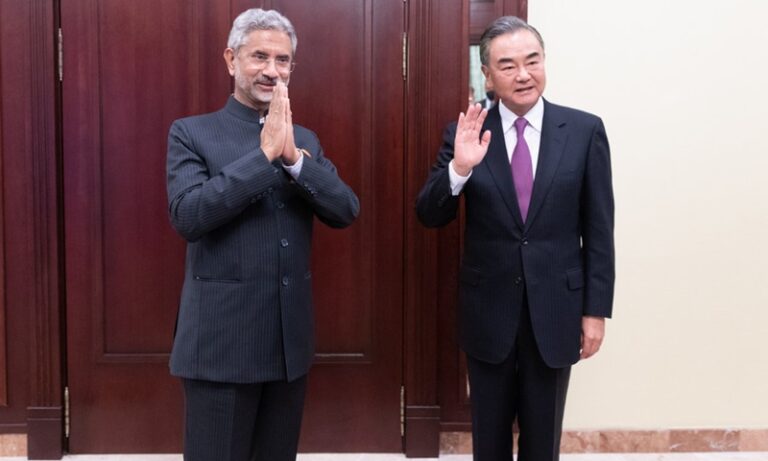
External Affairs Minister S. Jaishankar (L) and China’s State Councilor & Foreign Minister Wang Yi (R) met in Moscow, Sept 10, 2020
By M. K. BHADRAKUMAR | Indian Punchline | September 12, 2020
A joint statement wasn’t anticipated after the talks between the External Affairs Minister S. Jaishankar and China’s State Councilor and Foreign Minister Wang Yi in Moscow on September 10. In diplomatic terms, a joint statement signals that a “critical mass” developed through the 3-hour long discussion between the top diplomats.
Of course, much of the understanding reached will not be put in the public domain but it is apparent that an easing of tensions at the border and a disengagement of troops is on cards. The Chinese account assesses that the two foreign ministers have created “favourable conditions for a possible future meeting of the leaders of the two countries.”
Doesn’t this add up to a breakthrough? It does. That there isn’t going to be a war makes this a big breakthrough. So indeed, that deck is cleared for a summit meeting.
The joint statement outlined a 5-point consensus. First, the two countries reaffirmed the “series of consensus” reached by Prime Minister Narendra Modi and Chinese President Xi Jinping at their meetings in Astana (June 2017), Wuhan (April 2018) and Chennai (October 2018), which had committed the two countries to a cooperative relationship.
Second, a “quick disengagement” of border troops is envisaged, so that the two militaries will maintain a “proper distance and ease tensions.” Third, the existing agreements and protocols in bilateral boundary affairs” shall be adhered to and the two militaries shall “maintain peace and tranquillity in the border areas and avoid any action that could escalate matters.”
Fourth, the two special representatives will continue “dialogue and communication” on the boundary question and the Working Mechanism for Consultation and Coordination on China-India Border Affairs will hold meetings. Finally, once the tensions ease, new CBMs will be concluded to “maintain and enhance” peace and tranquility in the border areas.
Reading between the lines, the joint statement never once mentions the Line of Actual Control (LAC). Instead, the expression used is “border areas.” This suggests that there isn’t going to be any return to status quo ante as of early May, which has been an Indian demand.
The Indian army reportedly occupied certain “dominating heights” through the past week. But nothing has been mentioned in the joint statement in this regard. Conceivably, Indian troops’ mortal enemy in those dominating heights will be not the PLA but the harsh winter that is approaching in another 6 weeks or so. Maintaining a military presence in such inhospitable terrain entails heavy costs in life and treasure and will put an intolerable strain on our resources.
Succinctly put, what emerges from the joint statement is a mutual desire not to escalate the conflict situation and a shared opinion that a de-escalation of tensions is in mutual interest. However, there is lingering uncertainty as regards the way forward. To my mind, the creation of a buffer zone ( a demilitarised zone) at this point will be the best way to ensure peace and tranquility on the border on a durable basis.
Paradoxically, the crisis today also is an eyeopener. We peered into the abyss and didn’t like what we saw. Prime Minister Modi is a charismatic leader who can pitch high for a settlement of the boundary question. He is a strong leader who can take difficult decisions and cut the Gordian knot.
Clearly, India has shifted from the position that unless the PLA withdrew from “Indian territory”, the bilateral ties cannot be “business as usual.” In a huff, India began imposing sanctions against China. But the joint statement underscores that the two countries continue to uphold the “series of consensus” reached at the leadership level — where a key template is their common conviction that China and India are not competitive rivals or each other’s threats, but cooperation partners and each other’s developmental opportunities.
A Xinhua dispatch from Moscow giving a resume of the “full, in-depth discussion” between the two foreign ministers says, “Jaishankar said that the Indian side does not consider the development of India-China relations to be dependent on the settlement of the boundary question and India does not want to go backwards. The truth is, India-China relations have made steady progress over the years, and the Chinese and Indian leaders have met several times and reached a series of important consensus on the development of bilateral relations, he said.”
Clearly, sanctions must go. They have no place in the relationship. This rethink must be welcomed. But it is an abhorrent idea for sections of Indian opinion who are weaned on the belief that China has committed aggression by invading “Indian territory” and must be punished. The social media is full of venomous attacks on the Indian “sellout” at the Moscow talks, the “evisceration” of the LAC and so on.
However, that is primarily because the Indian narrative is seriously flawed. There is going to be a serious problem ahead for the government to “upgrade” the Indian narrative at this late stage. But the fact of the matter is that the Chinese had never accepted the LAC on the map or had delimited the LAC on the ground per the 1993 agreement.
They consistently held the view that the November 1959 claim line constituted the LAC. In the circumstances, how the disengagement and de-escalation can be worked out remains to be seen.
Looking back, the government’s move on August 5 last year to change the status of J&K and thereafter to include Aksai Chin as part of the Union Territory of Ladakh triggered a sequence of events culminating in the Chinese side changing the status quo on the ground and creating “new facts on the ground”.
India lacks the capability to challenge the Chinese action. But the country was led to believe otherwise. Per the Indian narrative, Indian armed forces have the capability to give a “bloody nose” to the PLA. So, there is bound to be a sense of disappointment today. India is paying a very high price for the strident nationalism and xenophobia that was whipped up by the ruling elite.
The Indian narrative is divorced from realities. The nation is bogged down in a raging epidemic and a deepening economic crisis. A vaccine to contain the pandemic will not be available in the market before the second half of next year. Meanwhile, the epidemic will remain as the “new normal”. A war with China will set back the country’s development by a decade. It is unthinkable.
Suffice to say, Jaishankar was given a weak hand to negotiate. And he has made a good job of it. The biggest gain is that a war has been averted and a new phase of constructive engagement of China with a sense of realism becomes possible. This is a moment of truth to rethink the entire foreign policy trajectory the government followed in the recent years.
Equally, it must be borne in mind that a replay of the “forward policy” that in 1962 plunged the country in a ruinous war was best avoided. The Mission Creep in the name of “infrastructure development” in Ladakh inevitably met with Chinese rebuff. All sorts of jingoistic notions stemming from the militarisation of India’s foreign policies in the past decade or so precluded rational thinking. The criticality of Aksai Chin region for China’s national security needed no iteration. Yet, we chose to meddle.
Fundamentally, India needs to come to terms with China’s rise and should have the composure and maturity to regard it as an inexorable historical process. Our zero sum mindset has done colossal damage. We must jettison it and refocus on constructively engaging China so as to take advantage of its meteoric rise for our country’s development, which is the number one priority today.
MSM’s attempts to spin Trump’s attacks on senseless wars as disrespect for military at large are a dismal distortion of reality
By Tony Cox | RT | September 11, 2020
The New York Times and CNN are desperate to paint Donald Trump as an enemy of the military, due to his desire not to get involved in pointless wars. But this is simply not true, and Trump has the backing of many soldiers.
Someone should tell the New York Times, CNN and other mainstream media outlets that soldiers don’t actually like getting killed or maimed for no good reason. Nor do they like generals and presidents who spill their blood in vain.
Alas, ignorance of these obvious truths probably isn’t the issue. This is likely just another case of the biggest names in news pretending to not get the point so they can take the rest of us along for a ride in their confidence game of alternative reality.
The latest example is the New York Times spinning President Donald Trump’s critique this week of Pentagon leadership and the military industrial complex as disrespect for the military at large. “Trump has lost the right and authority to be commander in chief,” the Times quoted retired US Marines General Anthony Zinni as saying. Zinni cited Trump’s alleged “despicable comments” about the nation’s war dead – reported last week by The Atlantic, citing anonymous sources – as one of the reasons Trump “must go.”
Never mind that Trump and all on-the-record administration sources denied The Atlantic’s report. The Times couldn’t resist when the pieces seemed to fit so well together for the military’s latest propaganda campaign against Trump. First the president disses the troops, calling them “losers” and “suckers,” then he has the temerity to say Pentagon leaders want to fight wars to keep defense contractors happy.
Except the pieces don’t fit. The many people who occupy so-called boots on the ground don’t have the same interests as the few people who send them to war. In fact, combat troops are given reason to hate the generals who send them to die when there’s not a legitimate national security reason for the war they’re fighting. And the US has fought a long line of wars that didn’t serve the nation’s national security interests. Even when a war is justified, the interests of top brass and front-line soldiers often clash.
Remember that great 1967 war movie, ‘The Dirty Dozen’? A group of 12 soldiers who were condemned to long prison sentences or execution in military prison for their crimes were sent on a 1944 suicide mission to kill high-ranking German officers at a heavily defended chateau far behind enemy lines. After succeeding in the mission and escaping the Germans, the lone surviving convict, played by tough-guy actor Charles Bronson, told the mission leader, “Killing generals could get to be a habit with me.”
So no, New York Times, speaking out against ill-advised wars does not equal bashing the military. And sorry, General Zinni, but generals, defense contractors and their media mouthpieces don’t get to decide who has the “right and authority” to be commander in chief. The voters decided that already, and they expressed clearly that they don’t want senseless and endless wars and foreign interventions.
The Times cited General James McConville, the Army’s chief of staff, as saying Pentagon leaders would only recommend sending troops to combat “when it’s required for national security and a last resort.” And no, it wasn’t a comedy skit. What’s the last US war or combat intervention that measured up to that standard? […]
CNN tried a similar ploy on Sunday, while trying to sell the “losers” and “suckers” story in an interview with US Veterans Affairs Secretary Robert Wilkie. Host Dana Bash said the allegations fit a “pattern of public statements” by the president because Trump called US Senator John McCain a “loser” in 2015 and said McCain shouldn’t be considered a hero for being captured in the Vietnam War. She repeatedly suggested to Wilkie, who didn’t take the bait, that Trump’s attacks on McCain, who died in 2018, showed disrespect for the troops.
Apparently, this follows the same line of propagandist thought which told us that saying there are rapists among the illegal aliens entering the US from Mexico – which is undeniably true – equals saying all Mexicans are rapists. In CNN land, a bad word about McCain is a bad word about all soldiers.
McCain was a warmonger who didn’t mind getting US troops killed or backing terrorist groups in Syria. If he had his way, many more GIs would be dead or disabled, because the intervention in Syria would have been escalated and the US might be at war with Iran. Soldiers wouldn’t want their lives wasted in such conflicts.
All wars are hard on the people who have to fight them, but senseless wars are spirit-crushing. An average of about 17 veterans commit suicide each day in the US, according to Veterans Administration data. Veterans account for 11 percent of the US adult population but more than 18 percent of suicides.
The media’s deceiving technique of trying to pretend that ruling-class chieftains and front-line grunts are in the same boat reflects a broader campaign of top-down revolution against populism. The military is just one of several pro-Trump segments of the population that must be turned against the president. Other pro-Trump segments, such as police, are demonized and attacked.
Trump has managed to keep the US out of new wars and has drawn down deployments to Iraq, Syria and Afghanistan – despite Pentagon opposition. His rival, Democrat presidential nominee Joe Biden, can be expected to rev up the war machine if he takes charge. His foreign policy adviser, Antony Blinken, lamented in a May interview with CBS News that Trump had given up US “leverage” in Syria.
Trump also has turned around the VA hospital system, ending decades of neglect that left many veterans to die on waiting lists.
Like past campaigns to oust Trump, the notion that he’s not sufficiently devoted to the troops might be a tough sell. No matter how good their words may sound, the people who promote endless wars without clear objectives aren’t true supporters of the rank and file.
Tony Cox is a US journalist who has written or edited for Bloomberg and several major daily newspapers.
NATO begins military maneuvers in the Barents Sea
By Lucas Leiroz | September 10, 2020
NATO has stepped up its activities in the neutral waters of the Barents Sea, raising tensions in the Arctic region. In just one day, Russian pilots escorted three military planes, one Norwegian and two British. One of the British planes was headed specifically for the Russian border when it was identified and escorted by the Russian fighter MiG-29, which caused discontent among Russian military and politicians.
Aerial maneuvers in the region were intense and revealed a new stage in the operations of the Western military alliance in the vicinity of the Arctic. Commenting about the incidents, Russian Defense Minister Sergei Shoigu stated that, while NATO training flights near Russian borders are not new, the nature of those flights has changed, considering that military flights were less frequent and now they are regular, with constant war training and missile tests, with a large number of aircraft being used in such operations.
It is important to note, however, that the increased activities of NATO forces has been general and not restricted to the Arctic zone alone. Previously, on September 1, Russian fighters escorted three US Air Force strategic B-52H bombers over the Baltic Sea. The day before, August 31, a Su-27 fighter from the Russian Aerospace Force intercepted four NATO planes heading for the Russian border. In addition, in the past week, Russian fighters had to take off three times to escort a Norwegian Air Force aircraft over the Barents Sea.
NATO’s maritime presence has been equally striking. Currently, the US Navy destroyer USS Ross, armed with Tomahawk cruise missiles and the Aegis air defense system, is leading a fleet of NATO warships that entered the Barents Sea on September 7.
These ships, bases and fighter planes are part of a major military program that aims to build a complex defense system for Europe. In fact, NATO continues to prepare for an eventual war against Russia and uses increasingly aggressive maneuvers to demonstrate its military strength and capability. What is not yet clear is the reason for such an alarm for a possible war. After all, what would be Russia’s interest in a war against the West (in NATO programs, it is preparing for a possible Russian attack)? The one who shows the most hostility and does not seem to want any kind of friendly relationship with Moscow is precisely the Western alliance, and the reasons seem clear.
NATO is a military organization designed by Washington exclusively to serve American interests. The alliance was created in the Cold War, in a context of geopolitical bipolarity precisely to contain the Soviet advance and guarantee Western interests. After the end of the Cold War, what is its purpose for existence, considering that the US already enjoys the global dominance? Simply, to preserve and perpetuate such hegemony. However, American power is in significant decline, with several facts showing the emergence of a multipolar world.
Faced with this scenario, Washington, which leads NATO, is organizing demonstrations of force that are aimed simply at ensuring the West’s ability to maintain its dominance in case of a conflict or war. Thus, determined targets are chosen to be the focus of these demonstrations, such as Russia in Europe, China in the Pacific, Venezuela in the Caribbean. For each of these targets, Washington invests in the support of a geographically close country or region, such as Western Europe in the Russian case, India in the Chinese case and Colombia in the Venezuelan case. In fact, none of these target countries has any pretensions to declare war against the US, invade Europe or anything similar. These narratives are created to justify dangerous and bold military maneuvers whose aim is simply to demonstrate force.
Especially in the Arctic, the US has a historical weakness, with Russia playing a role of regional hegemony. Washington is increasingly trying to gain space in the Arctic zone, but it cannot reverse its historical backwardness alone, thus depending on a joint NATO effort.
However, the effects of these measures are extremely dangerous. Russia cannot simply ignore the provocations, accepting that foreign forces carry out maneuvers on its border. Moscow will certainly react with similar exercises and as a result the diplomatic crisis with the US will deepen. Likewise, the role of European countries in Washington’s plans is unstable. Such military maneuvers do not favor major European interests, but many countries with lesser military potential see NATO as a possibility to increase its geopolitical relevance and then adhere to all the programs of the alliance. In the Arctic, however, all NATO efforts are unlikely to be successful, with Russian regional dominance being virtually irreversible in the current circumstances.
Lucas Leiroz is a research fellow in international law at the Federal University of Rio de Janeiro.
Georgia Hosts Major NATO Troop Drills While Touting Bid To Join The Alliance
By Tyler Durden – Zero Hedge – 09/09/2020
Yet another provocation sure to increase tensions between Russian and NATO has begun this week in the form of war games hosted by the Republic of Georgia.
On Monday the Noble Partner 2020 military exercises kicked off, which involves close to 3,000 NATO troops from the US, Britain, France and Poland. Centered on the capital of Tibilisi, the games will simulate an external invasion of the caucusus country.
The US Army began training exercises last week ahead of the main part of the games, which will go through September 18.
The small country of Georgia is of course not a NATO member, though has since the 2008 Russo-Georgian War been increasingly cooperative and favored by the Atlantic military alliance.
Georgia has bid for membership in the alliance, though the long running South Ossetia and Abkhazia disputes are seen as preventing that, given NATO membership would most certainly trigger broader war with Russia. NATO leaders in 2008 pledged that Georgia “will become a NATO member” but the Russian issue looms too large to actually pull the trigger.
Anytime Georgia hosts war games, it stands accused by the Kremlin of modeling exercises on the prior Russo-Georgian War. Russia also sees such games as a threat given the immediate vicinity to its border.
Georgian Prime Minister Giorgi Gakharia sought to sidestep any accusations, describing the drills as “a guarantee of peace in our country” and “are not directed against anyone,” in an opening address to troops.
PM Gakharia further called the games “the most important component of efforts to make Georgia’s Euro-Atlantic integration achievable.”
No doubt such overt pro-NATO talk, again part its longstanding bid to join the military alliance, is also sure to rattle and anger Russia.
Pentagon awards Northrop Grumman contract to develop next-gen $85bn ICBM for nuclear triad upgrade
RT | September 9, 2020
The Pentagon has handed arms manufacturer Northrop Grumman a colossal $13.3 billion contract to develop a new ICBM to replace the Minuteman III missile, part of a sweeping modernization effort to update the US’ nuclear triad.
Northrop announced the deal on Tuesday, saying the company was “selected by the US Air Force to modernize the nation’s aging intercontinental ballistic missile (ICBM) system.” The multi-billion dollar contract will see Northrop begin work on the Ground Based Strategic Deterrent (GBSD) program, an eight-year project that will focus on the design of the new missile system, as well as early testing and evaluation.
The new long-range missile, according to the Air Force, “will have increased accuracy, enhanced security, and improved reliability to provide the United States with an upgraded and broader array of strategic nuclear options.” It is expected to be in operation by 2029 and could ultimately cost up to $85 billion.
Though Boeing also vied for the contract, it dropped from the bidding in July after Northrop’s acquisition of Orbital ATK, a solid rocket motor manufacturer, one of only two US-based suppliers for that type of motor. Boeing argued the other supplier was not suitable for the GBSD project, and that the Northrop-owned company dragged its feet in price negotiations, claiming Northrop had an “unfair advantage.” The Air Force refused to act on Boeing’s complaints, however, and the firm withdrew its bid.
The development of a new ICBM comes as part of a massive nuclear modernization scheme instituted under former president Barack Obama, initially set to cost $1 trillion and span three decades. Though President Donald Trump has rejected much of his predecessor’s legacy, he has embraced the nuclear initiative with open arms, even approving greater spending for the project in the 2021 budget. In addition to replacing the Minuteman III, whose first variant was put into service in 1970, the military is also working to revamp the other two legs of the US nuclear triad, including upgrades for its nuclear-capable aircraft and submarines.
At Least 37 Million People Displaced by US War on Terror, Study Finds
Sputnik – 08.09.2020
A new report by the Costs of War Project has found that at least 37 million people have been displaced by the US War on Terror; however, the group warns that the estimate is conservative and the real total could be far higher.
According to a report published on Tuesday by the Costs of War Project at Brown University’s Watson Institute of International and Public Affairs, at least 37 million people have been displaced, either internally or been forced to become refugees, in eight different countries as a result of the US War on Terror, begun in 2001.
For comparison, the population of the US state of California is 39.5 million, and the population of Canada is 37.59 million. However, the researchers warn that is a “very conservative” estimate, as the true number could be closer to between 48 and 59 million people.
The report focused on eight conflicts, including declared and undeclared war zones, where the US has carried out military operations under the guise of destroying international terrorism: Afghanistan, Pakistan, Iraq, Syria, Libya, Yemen, Somalia and the Philippines.
The group’s data was compiled from the United Nations High Commissioner for Refugees (UNHCR), the Internal Displacement Monitoring Center (IDMC), the International Organization for Migration (IOM) and the UN Office for the Coordination of Humanitarian Affairs (OCHA).
In Afghanistan, some 5.3 million people have been displaced in total since 2001, although this number is in considerable dispute, as the researchers concluded that 2.1 million Afghans had fled the country since 2001, but they also found evidence that as many as 2.4 million had fled just between 2012 and 2019. Another 3.2 million have been displaced internally. The researchers noted, however, that war and civil turmoil in the Central Asian country has continued almost nonstop since the late 1970s.
In neighboring Pakistan, the US war near the Afghan border has displaced some 3.7 million people, including 360,000 refugees abroad and 1.56 million from the border area.
Meanwhile in Libya, where the US supported the 2011 overthrow of longtime leader Muammar Gaddafi, at least 1.2 million people have been displaced in what the IDMC called a “state collapse trigger[ed] mass displacement.” At the start of 2020, the report notes, 451,000 remained internally displaced, and the civil war continues to rage.
Iraq has the largest total number, with 9.2 million people displaced by several wars. In March 2003, the US launched a massive invasion of Iraq to overthrow Saddam Hussein, and the brutal counterinsurgency war that erupted afterward had displaced some 4.7 million people by 2007. While the US war in Iraq officially ended in 2011, war erupted again just three years later in 2014, when Daesh roared into existence, and the US once again became involved in major combat operations in Mesopotamia. By 2020, 650,000 Iraqis remained refugees abroad, and 1.4 million had been internally displaced.
In neighboring Syria, where Daesh first established its would-be caliphate amid a civil war raging since 2011, the US became involved at several distinct levels over the years. The report was very truncated in its analysis, looking just at the five provinces where US forces fought on the ground – Aleppo, al-Hasakah, al-Raqqa, Deir ez-Zor and Homs – and only since 2017.
By those criteria, 7.1 million had been displaced, including 470,000 internally. However, 220,000 of those have been just since October 2019, when the Turkish invasion of eastern Syria pushed 220,000 Kurds from their homes, including 17,900 who crossed the border into Iraq for safety.
However, the report notes that if a different metric were used – one including all of Syria beginning in 2013, when the US started arming Syrian rebel militias – the number of displaced persons increases massively to between 44 and 51 million people.
In Somalia, where the US has waged or supported wars for decades, “virtually all Somalis have been displaced by violence at least once in their life,” the Norwegian Refugee Council is quoted as saying in the report. From a population of 15 million, some 4.2 million have been displaced by US operations, including 80,000 refugees and 3.4 million internally displaced persons.
Like Somalia, Yemen has seen war rage for decades. The US began airstrikes in Yemen in 2002, pursuing al-Qaeda in the Arabian Peninsula, but conditions deteriorated catastrophically in 2015, when Saudi Arabia and several of its allies, including the US, launched a war against the Yemeni Houthi movement.
The ongoing war, in which Saudi, Emirati and Moroccan aircraft have bombarded the country and supported militias on the ground as well as forces loyal to ousted Yemeni President Abdrabbuh Mansur Hadi, has displaced 4.4 million people. In 2019 alone, 400,000 more people were displaced. According to the OCHA, 100,000 Yemenis have been killed by combat operations since 2015, and another 130,000 have died from hunger and disease.
The Philippines is the only country on the list not located in southwestern Asia or northern or eastern Africa. However, the US-supported military operations in Mindanao against groups such as the Moro Islamic Liberation Front, Abu Sayyaf and the Maute Group have displaced some 1.7 million Filipinos, nearly all of them internally.
“In documenting displacement caused by the US post-9/11 wars, we are not suggesting the US government or the United States as a country is solely responsible for the displacement. Causation is never so simple,” the authors note in the report. “Causation always involves a multiplicity of combatants and other powerful actors, centuries of history, and large-scale political, economic, and social forces. Even in the simplest of cases, conditions of pre-existing poverty, environmental change, prior wars, and other forms of violence shape who is displaced and who is not.”
NATO jets routinely imitate MISSILE STRIKES against Russia – defense minister
RT | September 7, 2020
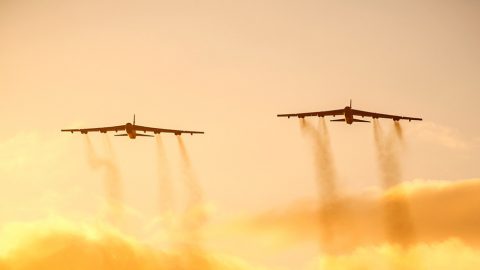
The US and NATO air forces have not only increased their surveillance activities along Russia’s borders, but now also routinely train for potential strikes on the country’s soil, Defense Minister Sergey Shoigu said.
Speaking to Russian TV on Sunday, Shoigu noted a sharp increase in foreign surveillance and training flights testing the country’s borders and air defenses. Last month such activities increased by some 30 percent compared to last August. Moreover, the bloc’s aircraft have been actively training in conducting air strikes, routinely performing mock missile launches on targets within the country, Shoigu revealed.
“The most alarming is that if earlier – even though not that frequently – there were mainly reconnaissance aircraft, they’ve now begun regular training flights with large numbers of planes, during which the mock missile strikes are conducted.”
Over the past few weeks, several incidents between Russian and NATO planes occurred in close proximity to the country’s borders. The latest took place Friday, when three nuclear-capable US Air Force B-52H strategic bombers approached Russia’s border through Ukrainian airspace. The bombers were intercepted by eight fighter jets and warned away from the border.
Another incident involving US strategic bombers occurred late in August, when a B-52H was intercepted by a Russian Su-27 fighter jet over the Baltic Sea. The altercation prompted a wider international scandal, as another NATO country – Denmark – claimed the Russian plane violated the country’s borders while chasing the US plane. Moscow, however, has firmly denied the accusations, insisting that the interception was made in accordance with all international rules.
Russia Not Interested in Arms Race, Defence Minister Says
Sputnik – 05.09.2020
According to the Russian military, NATO has increased its aerial surveillance efforts near the Russian border by 30 percent compared to the previous year.
Russia is not interested in an arms race, but is forced to combat capabilities in response to unfriendly actions by NATO, Russian Defence Minister Sergei Shoigu said on Saturday.
“All measures taken are aimed exclusively at strengthening the defense, are limited in scale and correspond to modern military dangers”, Shoigu told reporters.
“We are not interested in the arms race. To reduce tensions, we intend to adhere to the maximum openness regarding military activity”, the minister said adding that the relevant information is being posted on the Defence Ministry’s website, while briefings are held for military attaches and media.
Shoigu pointed out that Russia had offered NATO a reduction in the number of drills amid the pandemic to prevent further difficulties, but the alliance responded negatively.
“The military leadership of Russia has repeatedly proposed to agree on joint measures in order to prevent further complications in relations”, Shoigu said.
According to the minister, these measures include transferring military drills to the inland exercise areas from the contact line between Russia and NATO, agreeing on the minimum permissible distance of approach of ships and aircraft, reducing the number of exercises and other activities of the Russian armed forces and the joint armed forces of NATO during the pandemic.
“These initiatives are still relevant. However, Brussels perceives them negatively. NATO is not yet ready to work together constructively to enhance regional stability”, Shoigu added.
The minister said that the North Atlantic Alliance has recently intensified its aerial surveillance efforts.
“The intensity of NATO’s air reconnaissance near the Russian border increased by more than 30 percent compared to the last year, in August of the last year, [there were] 87 flights, now about 120”, Shoigu told reporters following the end of the International Army Games.
According to the minister, from 23 August to 2 September, Russian jets were scrambled at least 10 times to intercept foreign planes over the Baltic, Barents, and Black seas.
Russian Foreign Minister Sergey Lavrov said in late August that Moscow has repeatedly offered NATO to start de-escalating military tensions, but the alliance has not demonstrated its readiness for similar steps. “Russia has already abandoned large-scale exercises near the borders of NATO countries, and moved large-scale military drills inland”, Lavrov said.
Shoigu expressed hopes that the alliance’s stance would change in the future.
Featured Video
From Anthrax to Iraq
or go to
Aletho News Archives – Video-Images
Book Review
New paperback: Butchered by “Healthcare”
Lies are Unbekoming | October 20, 2026
 Butchered by “Healthcare” is Robert Yoho’s plain-spoken account of how American medicine stopped being a profession and became an industry. 341 pages. Over a thousand references. Thirty-eight chapters.
“Screening Tests Are Useless”, on tests that find diseases that would never have hurt you. “The FDA Protects the Big Drug Companies”, on an agency funded by the companies it regulates. “The Journals’ Sins Are the Editors’ Sins”, on ghostwritten studies and captured peer review. “Opioids and ‘Pain Management’”, on how a generation was prescribed its way into addiction. “Prozac and Relatives” and “Antipsychotics Are Disastrous”, on what psychiatry does to adults and children. “Surgery: Money Before Patients”. “Failed Cancer Treatments”. “Futile CPR and Overprescribing”. “Billing Scams & Specialty Warfare”. “Hospitals Are Sharks”. Each with a Patient Tips section at the end on how to survive it.
If you have ever walked out of a doctor’s office with a prescription you didn’t ask for, or watched a parent put through a treatment that made them worse, this is the book you want on your shelf before the next appointment. … Full review
Butchered by “Healthcare” is available on Lulu now.
Blog Roll
 Aletho News
- Iraq shuts key border crossing with Iran under US pressure: Report
- Undersea Internet cables could be targeted in retaliation for attacks on Iran: IRGC deputy chief
- EU sending ‘biased’ observers to interfere in Serbian election – president
- White House envoy declares kinetic action against Yemen ‘fruitless’
- Ukraine deployed thousands of microdrones in Iraqi Kurdistan: Tasnim
- Iran calls for emergency UNSC meeting over Trump’s ‘brazen’ bomb talk, Israeli threats
- Iranian sources reveal details of Russia-China Hormuz proposal
- Plan for more US-Israel integration puts our military tech at risk
- Another Round Against Iran Will Break What Is Left of the Gulf
- SVR Report on Ukraine’s Mexican Drug Gang Links Could Pressure Zelensky, Won’t Change US Policy
- If Americans Knew
- Christiane Amanpour exits CNN with a legacy shaped by the debate over Israel
- Israel’s war on Iran is the final move in a decades-old strategy
- Israel Denies Entry to French Journalist, U.S. Researcher Amid Rise in Entry Denials
- Gaza’s hospitals are running out of life-saving fuel – Daily Update
- Mysterious bot accounts reportedly spread fake ‘man on the street’ videos for Michigan Senate candidate
- Israeli Defense Minister Katz Says Over 60 Lebanon Villages Have Been Destroyed
- Why Is Israel Running TV Ads in Iowa Ahead of the Midterms?
- Hind Rajab’s Alleged Killer Is in the United States. HRF Demands His Arrest.
- US Officials Face Fresh Pressure After Another American ‘Brutalized’ by Israeli Settlers in West Bank
- Israel-Backed Palestinian Militias Terrorize Displaced Families in Gaza
- No Tricks Zone
- E-Cars Reduce CO2 Emissions By Only 41% Compared To Internal Combustion Engine Vehicles
- Predictions Made By Renowned Climate Professor Over Past Decades Have Been Proven To Be Poor
- New Study Suggests Large Regions Of The Pacific Ocean Have Been Cooling For The Last 80 Years
- Germany’s Green Energy Debacle: High Energy Costs Force Kahla Porzellan to Close After 182 Years!
- New Study: 50 Years Of The Most Aggressive ‘Net Zero’ Policies Can Only Affect The Global Climate By 0.03°C
- US September “Heat” Was No Record…Many Records Set Decades Ago
- Latest European Green Energy Debacle; Portugal’s Largest Flagship Solar Park Insolvent!
- Green Energy Debacle: German Expert Professor Fritz Vahrenholt Warns Of Severe Economic And Social Consequences
- Two More Paleo Reconstructions Affirm Meters-Higher Sea Levels Across Ireland, Brazil 7000-6000 Years Ago
- New Study: Earth And Venus Surface Warmth Largely Explained By Convection And Lapse Rate, Not CO2 Or Radiation

