US: UAE will not get F-35 jets for up to 7 years, despite Israel peace deal
MEMO | September 23, 2020
US Ambassador to Israel, David Friedman, said that the United Arab Emirates, which has recently signed a historic US-sponsored peace deal with Israel, would not receive American F-35 stealth fighter jets for six or seven years.
“The Emiratis have been trying to get the F-35 for six or seven years. And delivery time is probably another six or seven years from now,” the official told the Jerusalem Post in a pre-recorded interview.
Washington has not yet expressed explicit approval of an Emirati purchase of American F-35s. Israeli newspapers reported that the UAE expects such approval after the Gulf Arab country signed a deal normalising its diplomatic relations with Israel, to the dismay of many supporters of Palestinian rights across the world.
Last Tuesday Israeli Defence Minister Benny Gantz held meetings in Washington with his counterpart Mark Esper and White House senior adviser Jared Kushner. The American and Israeli officials discussed the possibility of the US sale of F-35 stealth fighter jets to the UAE based on the principle of Israel’s military superiority in the region.
Israel is currently the only state in the region that owns F-35s.
US law stipulates that Washington commits itself to Israel’s Qualitative Military Edge (QME), which guarantees the occupation state’s technological military superiority in the Middle East.
When asked about whether a possible sale of American F-35s to the UAE would threaten Israel’s QME, David Friedman said: “QME is a matter of law, not a matter of policy. It has been US law since 2008, and US policy a lot longer than that. Israel has dealt with the QME behind the scenes professionally and successfully for more than a decade; it is going to continue to work this way.”
In the past few years, Israel has received at least 26 F-35s from the United States as part of a deal that will see the state gain possession of 50 stealth fighter jets.
On 13 August, US President Donald Trump announced a peace deal between the UAE and Israel brokered by Washington.
Abu Dhabi said the deal was an effort to stave off Tel Aviv’s planned annexation of the occupied West Bank, however, opponents believe normalisation efforts have been in the offing for many years as Israeli officials have made officialvisits to the UAE and attended conferences in the country which had no diplomatic or other ties with the occupation state.
Israeli Prime Minister Benjamin Netanyahu however denied this saying annexation is not off the table, but has simply been delayed.
Many have said the real purpose of the deal was to allow the UAE to access superior military strength.
In refusing to extend New START, the US puts the world on the path of collective suicide
By Scott Ritter | RT | September 21, 2020
Statements by the US chief arms control envoy make it clear the US is committed to a nuclear arms race free of the encumbrance of the New START treaty. However, it’s a race the US cannot win, and the world will not survive.
In a fable attributed to the Ancient Greek fabulist and storyteller Aesop, a scorpion and a frog meet at the bank of a river. The scorpion asks the frog to take him to the other side. The frog turns down the scorpion’s request, noting that the scorpion will sting him halfway across and kill him. The scorpion replies that to do so would mean both would die, and, as such, that would be illogical. The frog agrees to take the scorpion across. As he feared, the scorpion stings him, sending them both to their death. Before he goes under, the frog asks the scorpion why he did so, to which the scorpion replies, “It’s in my nature.”
I use this fable in the introduction of my book ‘Scorpion King: America’s Suicidal Embrace of Nuclear Weapons from FDR to Trump’. It was published this past spring, when there was still hope the current administration might embrace reason and agree to a five-year extension of the last remaining arms control treaty in force, New START, that constrained the nuclear ambitions of the United States and Russia.
Recent statements made by Marshall Billingslea, the US special presidential envoy for arms control in an interview with the Russian newspaper Kommersant have made it clear that the Trump administration has no intention of seeking an extension to New START, which is set to expire in February 2021.
First off, Billingslea stated that the US isn’t looking for the automatic five-year extension provided for under the treaty, but rather a “memorandum of intent” of less than five years duration that presents the Russians with a “take it or leave it” proposition: accept a deal that has no constraints on NATO nuclear weapons, or the US will go forward with a nuclear modernization program unconstrained by arms control agreements. Moreover, Russia has until the US presidential election in November to accept the deal or, as Billingslea threatened, “after Trump is re-elected, the ‘entrance fee,’ as we say in the United States, will increase.”
Not surprisingly, the US ultimatum was rejected outright by Russia, with Deputy Foreign Minister Sergey Rybakov declaring “We [Russia] cannot talk in this manner,” and noting that the US position constituted little more than an ultimatum which ultimately lowered any chance of the two nations reaching any agreement on extending New START.
In addition to setting unacceptable conditions regarding NATO’s nuclear arsenal, the US insistence on trilateral negotiations was likewise seen as a non-starter by both Russia and China. The effort to turn the bilateral New START treaty into a trilateral agreement has all but killed the prospects of a New START extension, opening the door to the prospect of a renewed arms race at a time when both the US and Russia are pursuing advanced strategic nuclear weapons. This reality did not appear to faze Billingslea, who noted that “Russia has largely completed its modernization of its nuclear arsenal.”
“We’re just starting ours. And we will be extremely happy to continue it without the START restrictions,” he added.
There is near-unanimous consent among most arms control experts that an extension of the New START treaty is an essential step toward engendering a modicum of stability when it comes to the strategic nuclear postures of both the US and Russia, especially at a time when relations between those two nations have worsened across the board. The decision by the Trump administration to withdraw from the Intermediate Nuclear Forces (INF) treaty in August 2019 further complicated the US-Russian strategic balance. By eliminating intermediate-range weapons from Europe that could strike Moscow within minutes of being launched, the INF treaty helped lower the threshold for a full-scale nuclear conflict between the US and Russia.
The New START treaty is the last remaining constraint on US and Russian strategic nuclear weapons, both in terms of numbers and capability. If it were to expire, both the US and Russia would move forward with the deployment of advanced new systems, inclusive of new hypersonic nuclear delivery vehicles, that would only further exacerbate nuclear postures on the part of both nations that are already operating at near hair-trigger alert status.
History may very well show that the tipping point regarding the viability of the American democratic experiment came when it attempted to bankroll an unnecessary nuclear arms race at a time when the US economy and society, weakened by years of neglect, and further fractured by the stresses imposed by the Covid-19 pandemic, was already teetering on the verge of collapse. Already, the Trump administration has been compelled to pare back defense spending for 2021, due to the demands placed on the overall budget by the pandemic. Billingslea’s cavalier attitude toward funding the coming arms race – “we can afford it” – isn’t reflective of reality.
The US economy is undergoing a fundamental realignment, both in terms of how it operates internally and how it interfaces with the rest of the world. The social demands created by an economy that can only function through massive infusions of government stimulus, and a healthcare system that, for many Americans, exists in name only, cannot be funded by endless borrowing, especially when one of the largest consumers of American debt, China, is engaged in a trade war in which dumping US debt is very much on the table.
In the very near future, US politicians will be confronted with the kind of existential crisis that all empires in decline eventually face, where, regardless of the decision taken, there is nothing that can be done to recover from the mess they themselves have made. The idea that the US Congress will continue to fund a new generation of strategic nuclear weapons under these conditions is absurd. This doesn’t mean, however, that the crisis has been averted – far from it.
As I write in the conclusion of ‘Scorpion King’:
The world labors on the misguided belief that the United States is a rational actor, and therefore not prone to the kind of irrational actions which would lead to a world-ending general nuclear exchange. But the available facts do not support such a conclusion. The casual manner in which the United States has shed itself of the encumbrance of binding nuclear arms control treaties and agreements while simultaneously engaging in a nuclear arms race where the weapons being procured are seen as a viable component of American military power projection suggests that the United States was custom cast as Aesop’s scorpion.
Having embraced the notion that American security is predicated on a new generation of nuclear weaponry unconstrained by the limitations imposed by arms control agreements, having the ability to procure these weapons due to social and financial collapse only exacerbates the threat these weapons were supposed to deter. It doesn’t matter that no such threat exists; perception makes its own reality, and the perception of those, like Marshal Billingsley, who advocate for new nuclear weapons is that such a threat exists.
Like Aesop’s frog, the rest of the world will more than likely seek to help the United States navigate the troubled times ahead. And like Aesop’s scorpion, the United States will very likely reward this kindness by embarking on irresponsible military-based policies designed to offset its own social and economic failings, and trigger a nuclear conflict that destroys it and the rest of the world.
Because it is our nature.
Scott Ritter is a former US Marine Corps intelligence officer and author of ‘SCORPION KING: America’s Suicidal Embrace of Nuclear Weapons from FDR to Trump.’ He served in the Soviet Union as an inspector implementing the INF Treaty, in General Schwarzkopf’s staff during the Gulf War, and from 1991-1998 as a UN weapons inspector. Follow him on Twitter @RealScottRitter
The US’ Nuclear START Ultimatum To Russia Risks Provoking The Unthinkable
By Andrew Korybko | OneWorld | September 22, 2020
What Could Be Worse Than The Cuban Missile Crisis?
The Cuban Missile Crisis is universally considered to have been the most dangerous moment in the history of mankind after it prompted the US and Russia to engage in nuclear brinkmanship with one another. The end of the Old Cold War was thought by many to have made the return to such a dark scenario an utter impossibility, but the previously thinkable might be about to repeat itself very soon following the US’ START ultimatum to Russia earlier this week. That acronym refers to the latest Strategic Arms Reduction Treaty which limited the number of nuclear warheads on each side and restricted some of their delivery systems. It was agreed to by Presidents Obama and Medvedev but expires early next year. Failing to renew the agreement would unquestionably spark an uncontrollable nuclear and other arms race between these Great Powers and therefore greatly destabilize the world. Unfortunately, this might be inevitable.
The American Ultimatum To Russia
US Special Presidential Envoy for Arms Control Marshall Billingslea told the Russian daily Kommersant on Sunday that the New START might be extended for less than five years through a memorandum of intent but only on the condition that China joins the deal and NATO doesn’t scale back any of its nuclear weapons from Europe during this period like Moscow requested. Russia obviously can’t compel China to do anything so the US is clearly trying to drive a wedge between the two by pressuring Moscow to lean on Beijing in this manner, which would further complicate their relations if it was even attempted. Secondly, the NATO buildup in Europe is alarming to Russia since it poses a direct threat to its national security interests. Agreeing to formalize the recent status quo which violates the Russia-NATO Founding Act and is greatly shaped by the US’ recent withdrawal from the Intermediate-Range Nuclear Forces (INF) Treaty would set a disturbing precedent too.
Russia’s Hypersonic Missiles To The Rescue
For all intents and purposes, the US isn’t negotiating in good faith but decided to present Russia with an ultimatum that it knew it would refuse, and not only that, but is powerless to comply with even if it wanted to considering its inability to force China to join the New START. It’s for this reason that Russian UN Ambassador Vassily Nebenzia told Sputnik on Monday that his country “will find efficient ways to protect ourselves” if the New START isn’t extended. He was likely referring to Russia’s hypersonic missile achievements of the past few years that President Putin compared to the scale of the USSR’s nuclear project just last week according to TASS. The outlet also reported him as saying that “We had to create these weapons in response to the US deploying strategic missile defense system, which in the future would be able to actually neutralize, nullify our entire nuclear potential.”
Who Stole Whose Hypersonic Missile Secrets?
Around the same time as the Russian leader’s statement, Trump accused his country of stealing hypersonic missile technology from the US during the Obama era, though one of the scientists involved in this project refuted him by pointing out that such experiments “began in the Soviet times, when Obama was still a teenager.” It should also be pointed out that a Russian scientist was arrested in summer 2018 on suspicion of passing off related secrets to what many believe was the American intelligence services. Seeing as how President Putin publicly unveiled this technology earlier that spring, the sequence of events suggests that the US truly is behind Russia in this respect and is struggling to catch up, ergo the spy games. Had Russian really stolen this technology like Trump claimed, then the US wouldn’t need to steal it back from Russia in order to win the hypersonic missile race since it would have presumably still been in possession of these same secrets.
The Poor Sport Wants To Spoil Strategic Stability Because It Lost
The US simply cannot accept that Russia –which the American government and its surrogates routinely allege is backwards, dysfunctional, and on the brink of bankruptcy — beat it in developing hypersonic missiles, which it did in order to protect its nuclear potential after Bush withdrew from the Anti-Ballistic Missile (ABM) Treaty and set the trajectory for the contemporary era of nuclear competition between Great Powers. Russia had to ensure that its second-strike capability wasn’t neutralized by the US’ global missile defense plans, hence its interest in accelerating development of hypersonic missiles for piercing through those systems. In other words, Russia foiled the US’ multi-billion-dollar plans to impose its nuclear hegemony upon the world, which explains the furious response of the American government to President Putin’s spring 2018 announcement. Instead of accepting the return of strategic parity, however, the US wants to provoke a nuclear arms race with Russia.
Concluding Thoughts
There is nothing more dangerous for global stability than an all-out nuclear arms race between the US and Russia, which will in turn naturally push all the other nuclear-armed states to increase their own arsenals due to the “security dilemma” that this provokes. The US is behaving very irresponsibly in imposing an ultimatum on Russia in exchange for agreeing to the limited extension of the New START. Whether he realizes it or not, Trump is putting the world back on the path of repeating the Cuban Missile Crisis in the worst-case scenario since it might only be a matter of time before the nuclear competition between the US and Russia spirals out of control once again. The whole reason why the New START and its predecessor pacts were inked was to make that an impossibility, but it’s now once again on the forefront of decision makers’ minds. Unless Trump or perhaps even Biden has a change of heart (neither of which is likely), then the world will be in for very rough times.
US troops to stay longer in Lithuania: Defense minister
Press TV – September 22, 2020
A new battalion of US military forces, equipped with tanks and other armored vehicles, is to be deployed to Lithuania in November and will remain there until next June, the country’s defense minister says.
Lithuania’s Defense Minister Raimundas Karoblis made the announcement on Tuesday, though he said the deployment was “not connected at all to the situation in Belarus.”
He said the new battalion would replace an American troop contingent that was stationed in the country near Belarus’ border earlier this month for a two-month tour.
NATO activity has picked up near the borders of Belarus, where there has been unrest after the re-election in August of President Alexander Lukashenko.
Lukashenko has said Western countries seek to destabilize Belarus and has put the country’s military on high alert and shut its borders with Poland and Lithuania.
The US battalion currently deployed in Lithuania arrived earlier and is staying longer than the government had indicated before the outbreak of protests in neighboring Belarus.
Belarusian Defense Minister Viktor Khrenin warned in a recent televised interview that an American armor battalion had redeployed its tanks to a location in Lithuania close to the Belarusian border.
Lukashenko also accused the US of organizing the post-election protests in Belarus through social media platforms. He said Americans, acting through centers in Poland and the Czech Republic, were controlling the social media platforms that are playing a leading role in the unrest.
Earlier this month, the Lithuanian Defense Ministry issued a statement saying that the US would deploy 500 troops to the country to engage in war games near the border with Belarus.
A Peace Deal Like No Other
Much ado about nothing, but Act 2 is coming up
By Philip Giraldi • Unz Review • September 22, 2020
It is odd that the White House is gloating over its claimed peace agreement in the Middle East at the same time as one of the signatories is bombing Syria, Lebanon and Gaza. It all suggests that peace in the region will exclude designated enemies and the friends of those enemies, since the ties among the three parties – Israel, United Arab Emirates (UAE) and Bahrain – is transparently in part an offensive alliance directed against Iran and its friends, to include Syria and Lebanon. A significant amount of the horse trading that preceded the gala signing ceremony in the White House involved who would get what advanced American weapons down the road. The UAE wants F-35 fighter bombers while Israel is already asking for $8 billion for more top-level weapons from the U.S. taxpayer to maintain its “qualitative edge” over its new found friends.
For the more sagacious readers who chose to ignore what took place, a short recap is in order. Last Tuesday President Trump hosted a White House signing ceremony during which Israel established formal ties with the two Arab states. The agreement was dubbed the Abraham Accord because it purports to build on the foundation provided by the fraternity, as one might put it, of the three Abrahamic religions, namely Judaism, Christianity, and Islam. More specifically, it created the mechanism for diplomatic, economic, and cultural ties between Israel and the two Arab countries. It should be observed that both the UAE and Bahrain are close to being client states of the U.S. Bahrain is in fact the home port of the U.S. Fifth Fleet that operates in the region and it also hosts headquarters of the U.S. Naval Forces Central Command (NAVCENT). Both countries have long had de facto semi-secret relations with Israel on security issues and Israelis have been able to travel to them as long as they do not do so on an Israeli passport. And they both also know that the road to improving already good relations with Washington passes through Israel.
Israeli Prime Minister Benjamin Netanyahu personally attended the ceremony, together with the foreign ministers of the UAE and Bahrain. Trump enthused “We’re here this afternoon to change the course of history” and presented a replica gold key to the White House to Netanyahu. It is not known if the two Arab ministers received anything beyond a “don’t let the door hit you in the ass on your way out.”
The president observed that the two Arab nations were the third and fourth to normalize relations with Israel, following on Egypt in 1979 and Jordan in 1994, and predicted that five more Arab countries might soon also recognize Israel. Oman and Qatar, which hosts the major U.S. airbase at Al-Udeid, are likely to be next in line as both have close ties to the United States and have never exhibited much hardline anti-Israeli fervor. The claim made before the signing, that Israel would stand down on its plan to annex much of the Palestinian West Bank as a quid pro quo for the agreement was not discussed at all, nor was it part of the document. It is generally believed that Israel will wait until after the U.S. election to make its move.
The Palestinians, who have been on the receiving end of Israeli nation-building were not invited. There were some demonstrations by Palestinians in Gaza and Ramallah denouncing the signing as it took place, together with chanting that “Palestine isn’t for sale.” Indeed, Palestinians are more-or-less invisible in Washington, having had their representational office closed by Trump in 2018 after he had been shown a fabricated video by Netanyahu in which Palestinian Authority President Mahmoud Abbas appeared to be calling for the murder of children. Secretary of State Rex Tillerson also viewed the video and informed the president that it was an obvious fabrication, but Trump was convinced by it.
The U.S. media, always inclined to applaud anything that advances Israeli interests, registered its approval of the agreement. And there were calls for awarding the Nobel Peace Prize to Trump for his miraculous achievement, not as ridiculous as it sounds as it is at least as well deserved as the one that was given to Barack Obama. Trump the peacemaker has a nice ring to it, and it quite possibly would pay off for the president in terms of votes and political contributions. Indeed, if one looks at the White House ceremony dyspeptically, it becomes clear that the whole event was staged for political purposes to advance GOP interests in the upcoming election. If it changes anything on the ground at all it actually worsens the chances for peace in the region. The UAE and Bahrain are now locked into a unified effort to oppose Iran by military force if necessary, with open support from Israel plus covert aid from Saudi Arabia as well as the full backing of the United States.
One might reasonably argue that the agreement was a win for Israel, the UAE and Bahrain, as they have succeeded in obliging the U.S. to support their own regional security interests for the foreseeable future. The media, defense contractors and politicians bought and paid for by Israel will be able to assert that the U.S. must retain significant forces in the region to defend Israel and friendly Arab states against the largely fictitious “Iranian menace.” It is unfortunately a major setback for United States efforts to limit its exposure to any and all political developments in an increasingly unstable Middle East. If the White House had really wanted to disengage from the quagmire that it has found itself in, it was an odd way to go about it.
And the Palestinians are left with nowhere to go, the presumption being that with lessening Arab support they will be reduced to begging Israel (and the U.S.) for a deal that will reduce them to the status of helots. That conclusion just might make them desperate and could trigger a new and even more bloody intifada.
The downside of the agreement is already beginning to play out as the United States is preparing to unilaterally impose sanctions on Iran that will include possible seizure of Iranian ships in international waters, while Secretary of State Mike Pompeo has also warned Russia and China against trying to sell weapons to Tehran. One might well ask, how exactly does Pompeo propose to do that? Will he shoot down Russian transport planes or sink Chinese and Russian flagged ships? How does one go from being crazy to being batshit crazy, and what about all those Americans and others who would prefer not to be on the receiving end of a nuclear exchange?
Trita Parsi, who follows the situation in the Middle East closely, has suggested that Pompeo might even be planning an October Surprise, which might amount to some kind of provocation or even a false flag operation that would result in open conflict with Iran with the U.S. arguing that the fighting is both lawful and defensive in nature.
Such a suggestion might be considered insanity, but there are signs that the U.S. is heightening its delegitimization campaign against Iran. Unconfirmable allegations from anonymous U.S. government sources are surfacing about an alleged Iranian plot to kill the U.S. Ambassador in South Africa. And, as of Saturday, Washington is now implementing its new sanctions regime and there is a distinct possibility that an Iranian vessel in the Persian Gulf might be seized, forcing Iran to respond. The U.S. Navy has already intercepted four Greek flagged tankers in the Atlantic Ocean on their way to Venezuela, claiming they were carrying Iranian petroleum products, which were then confiscated. Given the demonstrated propensity to use armed force, anything is possible. The thinking in the White House might be that a containable war against a recognized enemy might be just the ticket to win in November. Of course, once the fighting starts it might not work out that way.
Philip M. Giraldi, Ph.D., is Executive Director of the Council for the National Interest, a 501(c)3 tax deductible educational foundation (Federal ID Number #52-1739023) that seeks a more interests-based U.S. foreign policy in the Middle East. Website is https://councilforthenationalinterest.org, address is P.O. Box 2157, Purcellville VA 20134 and its email is inform@cnionline.org.
Germany: US Nuclear Weapons Shamed in Nationwide Debate
By John Laforge | CounterPunch | September 18, 2020
We need a broad public debate … about the sense and nonsense of nuclear deterrence.
—Rolf Mutzenich, German Social Democratic Party Leader
Public criticism of the US nuclear weapons deployed in Germany bloomed into a vigorous nationwide debate this past spring and summer focused on the controversial scheme known diplomatically as “nuclear sharing” or “nuclear participation.”
“The end of this nuclear participation is currently being discussed as intensely as was, not so long ago, the exit from nuclear power,” wrote Roland Hipp, a managing director of Greenpeace Germany, in a June article for the newspaper Welt.
The 20 US nuclear bombs that are stationed at Germany’s Büchel Air Base have become so unpopular, that mainstream politicians and religious leaders have joined anti-war organizations in demanding their ouster and have promised to make the weapons a campaign issue in next year’s national elections.
Today’s public debate in Germany may have been prompted by Belgium’s Parliament, which on January 16 came close to expelling the US weapons stationed at its Kleine Brogel airbase. By a vote of 74 to 66, the members barely defeated a measure that directed the government “to draw up, as soon as possible, a roadmap aiming at the withdrawal of nuclear weapons on Belgian territory.” The debate came after the parliament’s foreign affairs committee adopted a motion calling for both the weapons’ removal from Belgium, and for the country’s ratification of the International Treaty on the Prohibition of Nuclear Weapons.
Belgium’s lawmakers may have been prompted to reconsider the government’s “nuclear sharing,” when on February 20, 2019 three members of the European Parliament were arrested on Belgium’s Kleine Brogel base, after they boldly scaled a fence and carried a banner directly onto the runway.
Replacement Fighter Jets Set to Carry US Bombs
Back in Germany, defense minister Annegret Kramp-Karrenbauer raised an uproar April 19 after a report in Der Spiegel said she had emailed Pentagon boss Mark Esper saying that Germany planned to buy 45 Boeing Corporation F-18 Super Hornets. Her comments brought howls from the Bundestag and the minister walked back her claim, telling reporters April 22, “No decision has been taken (on which planes will be chosen) and, in any case, the ministry can’t make that decision—only parliament can.”
Nine days later, in an interview with daily Tagesspiegel published May 3, Rolf Mützenich, Germany’s parliamentary leader of the Social Democratic Party’s (SPD)—a member of Angela Merkel’s governing coalition—made a clear denunciation.
“Nuclear weapons on German territory do not heighten our security, just the opposite,” they undermine it, and should be removed, Mützenich said, adding that he was opposed to both “prolonging nuclear participation” and to “replacing the tactical US nuclear weapons stored in Büchel with new nuclear warheads.”
Mützenich’s mention of “new” warheads is a reference to US construction of hundreds of the new, first-ever “guided” nuclear bombs—the” B61-12s”—set to be delivered to five NATO states in the coming years, replacing the B61-3s, 4s, and 11s reportedly stationed in Europe now.
The SPD’s co-president Norbert Walter-Borjähn quickly endorsed Mützenich’s statement, agreeing that the US bombs should be withdrawn, and both were immediately criticized by Foreign Minister Heiko Mass, by US diplomats in Europe, and by NATO’s Secretary General Jens Stoltenberg directly.
Anticipating the backlash, Mützenich published a detailed defense of his position May 7 in the Journal for International Politics and Society, [1] where he called for a “debate about the future of nuclear sharing and the question of whether the US tactical nuclear weapons stationed in Germany and Europe increase the level of safety for Germany and Europe, or whether they have perhaps become obsolete now from a military and security policy perspective.”
“We need a broad public debate … about the sense and nonsense of nuclear deterrence,” Mützenich wrote.
NATO’s Stoltenberg hastily penned a rebuttal for the May 11 Frankfurter Allgemeine Zeitung, using 50-year-old yarns about “Russian aggression” and claiming that nuclear sharing means “allies, like Germany, make joint decisions on nuclear policy and planning …, and “give[s] allies a voice on nuclear matters that they would not otherwise have.”
This is flatly untrue, as Mutzenich made clear in his paper, calling it a “fiction” that the Pentagon nuclear strategy is influenced by US allies. “There is no influence or even a say by non-nuclear powers on the nuclear strategy or even the possible uses of nuclear [weapons]. This is nothing more than a long-held pious wish,” he wrote.
Most of the attacks on the SPF leader sounded like the one May 14 from then US Ambassador to Germany Richard Grenell, whose op/ed in the newspaper De Welt urged Germany to keep the US “deterrent” and claimed that withdrawing the bombs would be a “betrayal” of Berlin’s NATO commitments.
Then US Ambassador to Poland Georgette Mosbacher went round the bend with a May 15 Twitter post, writing that “if Germany wants to reduce its nuclear sharing potential …, maybe Poland, which honestly fulfills its obligations … could use this potential at home.” Mosbacher’s suggestion was broadly ridiculed as preposterous because the Nonproliferation Treaty forbids such nuclear weapons transfers, and because stationing US nuclear bombs on the Russia border would be a dangerously destabilizing provocation.
NATO “nuclear sharing” nations have no say in dropping US H-bombs
On May 30, the National Security Archive in Washington, DC, confirmed Mützenich’s position and put the lie to Stoltenberg’s disinformation, releasing a formerly “top secret” State Department memo affirming that the US will alone decide whether to use its nuclear weapons based in Holland, Germany, Italy, Turkey and Belgium.
Moral and ethical shaming of the nuclear weapons in Büchel has recently come from high-ranking church leaders. In the deeply religious Rhineland-Pfalz region of the airbase, bishops have begun demanding that the bombs be withdrawn. Catholic Bishop Stephan Ackermann from Trier spoke out for nuclear abolition near the base in 2017; the Peace Appointee of the Lutheran Church of Germany, Renke Brahms, spoke to a large protest gathering there in 2018; Lutheran Bishop Margo Kassmann addressed the annual church peace rally there in July 2019; and this August 6, Catholic Bishop Peter Kohlgraf, who heads the German faction of Pax Christi, promoted nuclear disarmament in the nearby city of Mainz.
More fuel kindled the high-profile nuclear discussion with the June 20 publication of an Open Letter to the German fighter pilots at Büchel, signed by 127 individuals and 18 organizations, calling on them to “terminate direct involvement” in their nuclear war training, and reminding them that “Illegal orders may neither be given nor obeyed.”
The “Appeal to the Tornado pilots of Tactical Air Force Wing 33 at the Büchel nuclear bomb site to refuse to participate in nuclear sharing” covered over half a page of the regional Rhein-Zeitung newspaper, based in Koblenz.
The Appeal, which is based on binding international treaties that forbid military planning of mass destruction, had earlier been sent to Colonel Thomas Schneider, commander of the pilots’ 33rd Tactical Air Force Wing at Büchel air base.
The Appeal urged the pilots to refuse unlawful orders and stand down: “[T]he use of nuclear weapons is illegal under international law and the constitution. This also makes the holding of nuclear bombs and all supporting preparations for their possible deployment illegal. Illegal orders may neither be given nor obeyed. We appeal to you to declare to your superiors that you no longer wish to participate in supporting nuclear sharing for reasons of conscience.”
Roland Hipp, a co-director of Greenpeace Germany, in “How Germany makes itself the target of a nuclear attack” published in Welt June 26, noted that going non-nuclear is the rule not the exception in NATO. “There are already [25 of the 30] countries within NATO that have no US nuclear weapons and do not join in nuclear participation,” Hipp wrote.
In July, the debate partly focused on the colossal financial expense of replacing the German Tornado jet fighters with new H-bomb carriers in a time of multiple global crises.
Dr. Angelika Claussen, a psychiatrist a vice president of International Physicians for the Prevention of Nuclear War, wrote in a July 6 posting that “[A] significant military build-up in times of the coronavirus pandemic is perceived as a scandal by the German public … Buying 45 nuclear F-18 bombers means spending [about] 7.5 billion Euros. For this amount of money one could pay 25,000 doctors and 60,000 nurses a year, 100,000 intensive care beds and 30,000 ventilators.”
Dr. Claussen’s figures were substantiated by a July 29 report by Otfried Nassauer and Ulrich Scholz, military analysts with the Berlin Information Center for Transatlantic Security. The study found the cost of 45 F-18 fighter jets from the US weapons giant Boeing Corp. could be “at a minimum” between 7.67 and 8.77 billion Euros, or between $9 and $10.4 billion—or about $222 million each.
Germany’s potential $10 billion payout to Boeing for its F-18s is a cherry that the war profiteer dearly wants to pick. Germany’s Defense Minister Kramp-Karrenbauer has said her government also intends to buy 93 Eurofighters, made by the France-based multinational behemoth Airbus, at the comparably bargain rate of $9.85 billion—$111 million each—all to replace the Tornadoes by 2030.
In August, SPD leader Mützenich promised to make the “sharing” of US nuclear weapons a 2021 election issue, telling the daily Suddeutsche Zeitung, “I am firmly convinced that if we ask this question for the election program, the answer is relatively obvious…. [W]e will continue this issue next year.”
John LaForge is a Co-director of Nukewatch, a peace and environmental justice group in Wisconsin, and edits its newsletter.
We have lost a real giant (Stephen F. Cohen has died)!

Blessed are the peacemakers: for they shall be called the children of God
(Holy Gospel according to Saint Matthew 5:9)
The Saker – September 19, 2020
Dear friends,
It is with immense sadness that I have to report that Stephen F. Cohen passed away yesterday in his home in Manhattan at the age of 81.
There are a few media outlets who have already reported this. Most of them discuss Stephen F. Cohen’s political ideas and his books, which is normal since he was a historian of the Soviet Union. But I won’t do that here.
What I want to say about Cohen is something very different.
First, he was a man of immense kindness and humility. Second, he was a man of total intellectual honesty. I can’t say that Cohen and I had the same ideas or the same reading of history, though in many cases we did, but here is what I found so beautiful in this man: unlike most of his contemporaries, Cohen was not an ideologue, he did not expect everybody to agree with him, and he himself did not vet people for ideological purity before offering them his friendship.
Even though it is impossible to squeeze a man of such immense intellect and honesty into any one single ideological category, I would say that Stephen Cohen was a REAL liberal, in the original, and noble, meaning of this word.
I also have to mention Stephen Cohen’s immense courage. Yes, I know, Cohen was not deported to GITMO for his ideas, he was not tortured in a CIA secret prison, and he was not rendered to some Third Word country to be tortured there on behalf of the USA. Stephen Cohen had a different kind of courage: the courage to remain true to himself and his ideals even when the world literally covered him in slanderous accusations, the courage to NOT follow his fellow liberals when they turned PSEUDO-liberals and betrayed everything true liberalism stands for. Professor Cohen also completely rejected any forms of tribalism or nationalism, which often made him the target of vicious hatred and slander, especially from his fellow US Jews (he was accused of being, what else, a Putin agent).
Cohen had the courage to take on the entire ruling elites of this country and their messianic supremacist ideology by himself, almost completely alone.
Last, but most certainly not least, Stephen Cohen was a true peacemaker, in the sense of the words of the Holy Gospel I quoted above. He opposed the warmongering nutcases during the Cold War, and he opposed them again when they replaced their rabid hatred of the Soviet Union with an even more rabid hatred of everything Russian.
I won’t claim here that I always agreed with Cohen’s ideas or his reading of history, and I am quite sure that he would not agree with much of what I wrote. But one thing Cohen and I definitely did agree on: the absolute, number one, priority of not allowing a war to happen between the USA and Russia. It would not be an exaggeration to say that Stephen Cohen dedicated his entire life towards this goal.
If the Nobel Peace Prize meant anything, and if it was at least halfway credible, I would say that Stephen Cohen deserved such a Nobel more than anybody else on this planet. Instead, he will get his reward in the Heavens.
In Russian we have an Old Testament inspired saying: “город стоит, пока в нем есть хоть один праведник” roughly meaning “a city will stand as long as there remains even one righteous person inside“. I can’t help it but feel that the “city” of the United States has just lost such a righteous person. Yes, there are still a few righteous people left in this “city”, but we all sure lost one of our best contemporaries.
To my immense regret, I never met Professor Cohen personally. And yet, when I heard the news of this death this morning, I felt truly heartbroken. My main consolation is that Cohen died before November and what will inevitably follow. I believe that God took him away from us to spare him the pain of seeing his country collapse under the repeated attacks of pseudo-liberal neocons. Somewhere, I also believe that we, as a society, simply don’t deserve to have such a righteous man amongst us. Cohen is now in much better company.
Thank you, dear Steve, for your kindness and courage. I shall miss you very, very much!
US deploys armored vehicles to Syria & steps up air patrols after dust-up with Russian forces
RT | September 18, 2020
The Pentagon has sent a number of armored vehicles, radar systems and additional troops to Syria in a show of force, bolstering the US military presence in the country following a run-in with Russian forces last month.
The deployments, accompanied by increased air patrols over eastern Syria, were announced by US Central Command on Friday.
“The United States has deployed Sentinel radar, increased the frequency of US fighter patrols over US forces, and deployed Bradley Fighting Vehicles to augment US forces in the Eastern Syria Security Area (ESSA),” CENTCOM spokesman Captain Bill Urban said in a statement, adding that the move was meant to “ensure the safety and security of coalition forces.”
“These actions are a clear demonstration of U.S. resolve to defend Coalition forces in the ESSA, and to ensure that they are able to continue their Defeat-ISIS mission without interference.”
The new deployment will reportedly include a half-dozen Bradleys and fewer than 100 soldiers, though it remains unclear exactly where they will operate in Syria. Much of the country’s northeast is controlled by US-backed Kurdish militias and Washington has blocked its reintegration under the rule of the government in Damascus.
Though Urban made no mention of Moscow in his announcement, another US official who refused to be named told CNN the deployments are meant as a “clear signal to Russia to adhere to mutual deconfliction processes” and “avoid unprofessional, unsafe and provocative actions in northeast Syria.”
The move comes less than a month after a tense encounter between US and Russian forces in Syria as both sides carried out patrols, seeing a vehicle collision which the Pentagon said injured at least four American soldiers.
While Washington faulted Moscow for “provocative” behavior during the skirmish, Russia’s own account of the altercation differs significantly, arguing that the relevant US commanders had been informed of the Russian patrol route, and that the American vehicles attempted to block its path. Video footage of the incident appears to show Russian armored trucks being pursued by US vehicles, as well as a Russian helicopter flying low over the area amid the standoff.
Hours before the fresh deployment, US President Donald Trump insisted American forces had all but left the country, telling reporters on Friday that “we are out of Syria,” with the exception of “troops guarding the oil” – referring to US soldiers embedded with local Kurdish militants occupying a number of oil fields in eastern Syria.
Russian forces have been present in Syria since 2015 after an official request from the Syrian government asking to help in the country’s fight against terrorist groups. The American presence in Syria continues against the express wishes of Damascus and without approval from the UN, with the mission continually shifting long after the coalition’s stated objective to defeat Islamic State (IS, formerly ISIS) was declared complete.
Under the Barack Obama administration, Washington shipped hundreds of millions of dollars in arms and other gear to Syrian rebels fighting to overthrow President Bashar Assad. However, President Trump has largely abandoned the train-and-equip effort while still carrying out airstrikes in Syrian territory.
Featured Video
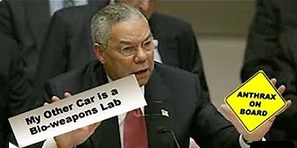
From Anthrax to Iraq
or go to
Aletho News Archives – Video-Images
Book Review
New paperback: Butchered by “Healthcare”
Lies are Unbekoming | October 20, 2026
 Butchered by “Healthcare” is Robert Yoho’s plain-spoken account of how American medicine stopped being a profession and became an industry. 341 pages. Over a thousand references. Thirty-eight chapters.
“Screening Tests Are Useless”, on tests that find diseases that would never have hurt you. “The FDA Protects the Big Drug Companies”, on an agency funded by the companies it regulates. “The Journals’ Sins Are the Editors’ Sins”, on ghostwritten studies and captured peer review. “Opioids and ‘Pain Management’”, on how a generation was prescribed its way into addiction. “Prozac and Relatives” and “Antipsychotics Are Disastrous”, on what psychiatry does to adults and children. “Surgery: Money Before Patients”. “Failed Cancer Treatments”. “Futile CPR and Overprescribing”. “Billing Scams & Specialty Warfare”. “Hospitals Are Sharks”. Each with a Patient Tips section at the end on how to survive it.
If you have ever walked out of a doctor’s office with a prescription you didn’t ask for, or watched a parent put through a treatment that made them worse, this is the book you want on your shelf before the next appointment. … Full review
Butchered by “Healthcare” is available on Lulu now.
Blog Roll
 Aletho News
- Iraq shuts key border crossing with Iran under US pressure: Report
- Undersea Internet cables could be targeted in retaliation for attacks on Iran: IRGC deputy chief
- EU sending ‘biased’ observers to interfere in Serbian election – president
- White House envoy declares kinetic action against Yemen ‘fruitless’
- Ukraine deployed thousands of microdrones in Iraqi Kurdistan: Tasnim
- Iran calls for emergency UNSC meeting over Trump’s ‘brazen’ bomb talk, Israeli threats
- Iranian sources reveal details of Russia-China Hormuz proposal
- Plan for more US-Israel integration puts our military tech at risk
- Another Round Against Iran Will Break What Is Left of the Gulf
- SVR Report on Ukraine’s Mexican Drug Gang Links Could Pressure Zelensky, Won’t Change US Policy
- If Americans Knew
- Christiane Amanpour exits CNN with a legacy shaped by the debate over Israel
- Israel’s war on Iran is the final move in a decades-old strategy
- Israel Denies Entry to French Journalist, U.S. Researcher Amid Rise in Entry Denials
- Gaza’s hospitals are running out of life-saving fuel – Daily Update
- Mysterious bot accounts reportedly spread fake ‘man on the street’ videos for Michigan Senate candidate
- Israeli Defense Minister Katz Says Over 60 Lebanon Villages Have Been Destroyed
- Why Is Israel Running TV Ads in Iowa Ahead of the Midterms?
- Hind Rajab’s Alleged Killer Is in the United States. HRF Demands His Arrest.
- US Officials Face Fresh Pressure After Another American ‘Brutalized’ by Israeli Settlers in West Bank
- Israel-Backed Palestinian Militias Terrorize Displaced Families in Gaza
- No Tricks Zone
- E-Cars Reduce CO2 Emissions By Only 41% Compared To Internal Combustion Engine Vehicles
- Predictions Made By Renowned Climate Professor Over Past Decades Have Been Proven To Be Poor
- New Study Suggests Large Regions Of The Pacific Ocean Have Been Cooling For The Last 80 Years
- Germany’s Green Energy Debacle: High Energy Costs Force Kahla Porzellan to Close After 182 Years!
- New Study: 50 Years Of The Most Aggressive ‘Net Zero’ Policies Can Only Affect The Global Climate By 0.03°C
- US September “Heat” Was No Record…Many Records Set Decades Ago
- Latest European Green Energy Debacle; Portugal’s Largest Flagship Solar Park Insolvent!
- Green Energy Debacle: German Expert Professor Fritz Vahrenholt Warns Of Severe Economic And Social Consequences
- Two More Paleo Reconstructions Affirm Meters-Higher Sea Levels Across Ireland, Brazil 7000-6000 Years Ago
- New Study: Earth And Venus Surface Warmth Largely Explained By Convection And Lapse Rate, Not CO2 Or Radiation

