US Sails Warship Off Venezuela’s Coastal Waters Citing Treaty Washington Itself Hasn’t Ratified
Sputnik – 02.10.2020
Last week, Caracas accused the United States of being “the greatest threat to world peace and stability” after Washington slapped Venezuela with additional sanctions on senior government officials for doing business with Iran. The US and its allies have been attempting to overthrow Venezuela’s democratically-elected government since early 2018.
Venezuelan Foreign Minister Jorge Arreaza has blasted the Pentagon over its decision to sail a guided missile destroyer to his country’s coast.
“Venezuela denounces the erratic and childish provocation by the US Southern Command to send the USS William P Lawrence (DDG-110) Arleigh Burke-class guided missile destroyer to within 16.1 nautical miles of our shores,” the foreign minister tweeted, accompanying his post with a formal communique by the Foreign Ministry.
Appealing to the international community, the communique called on other nations to “denounce” the US’s efforts to “intimidate” Caracas via the warship’s deployment.
The communique added that the USS William P Lawrence recognized the authority of the Venezuelan state and responded to radio communications from Venezuelan Navy ships, while claiming that it was “carrying out patrol operations against drug trafficking.”
Calling the US deployment of a warship with long-range missile capability “deeply striking,” the ministry recalled the similar episode which took place in July, when the USS Pinckney destroyer attempted to make what Caracas said was a “stealth incursion” into Venezuelan waters.
The Foreign Ministry stressed that the Venezuelan military is engaged in “systematic and permanent” patrols in Venezuela’s waters as part of its fight “against the scourge of drug trafficking,” and warned that while Caracas would “not fall into absurd provocations that seek to disrupt the peace and security of the Venezuelan peoples and their fellow Caribbean peoples,” it would “guarantee the protection of its sovereignty and territorial integrity, always in accordance with international law.”
The US Navy confirmed Thursday that the USS William P Lawrence had “successfully” carried out a “freedom of navigation operation” off Venezuela’s coast to challenge the country’s “excessive maritime claims in international waters.”
“The illegitimate Maduro regime improperly claims excessive controls over those international waters, which extend three nautical miles beyond the 12-nautical mile territorial sea, a claim that is inconsistent with international law,” the US Navy said, adding that it has similarly “contested Venezuela’s excessive claims” in July.
Venezuela is not a party to the 1982 United Nations Convention on the Law of the Sea, which outlines a 12 nautical mile limit to member states’ coastal waters. Nor, ironically, is the United States, which signed the agreement in 1994 but has failed to ratify it in the two and a half decades since then.
In June, the USS Nitze guided missile destroyer carried out a similar ‘freedom of navigation’ mission, prompting Venezuelan Defence Minister Vladimir Padrino to warn that if US warships ever attempted to carry out military operations in Venezuelan waters, they would “receive a forceful response from our armed forces.”
NATO boss Stoltenberg tells Georgia to ‘prepare for membership’ – influential Russian senator says it’s a ‘signal’ to Moscow
By Jonny Tickle | RT | September 30, 2020
NATO Secretary-General Jens Stoltenberg has urged Georgia to prepare to become a member of the US-led military bloc. On Tuesday, the premier of the former Soviet state Giorgi Gakharia was in Brussels to discuss closer cooperation.
Georgia’s effort to join NATO began in 2005, just six years after it left the Russian-dominated CSTO. The integration of the Caucasus nation is seen by NATO leaders as having substantial strategic benefits, including extra Black Sea ports close to Russia. Earlier this year, an agreement between Tblisi and the bloc included joint exercises in the Black Sea and the sharing of more traffic radar data.
“I urge [Georgia] to continue making full use of all the opportunities for coming closer to NATO and to prepare for membership,” Stoltenberg said, in a press conference. “This is important for Georgia, and for NATO.”
The secretary-general also noted that the bloc “supports Georgia’s territorial integrity,” calling on northern neighbor Russia to “end its recognition of the regions of Abkhazia and South Ossetia.” Abkhazia and South Ossetia are two de-facto states, recognized by most of the world as part of Georgia. According to Tbilisi, the two regions are actually occupied by Moscow.
Speaking to RT, veteran Russian senator Aleksey Pushkov said that the potential induction of Georgia as a member means that NATO sees Russia as its main opponent. Pushkov, a member of the pro-Putin United Russia party, is the former chairman of the Duma’s Foreign Affairs Committee and is widely considered to be close to the Kremlin.
“In 2008, Paris and Berlin were against Georgia’s accession. But the situation has since changed, and it might be that the advocates for Georgia inside NATO now have the upper hand,” he explained. “It is also a signal to Russia: the alliance sees it as the main and actually the sole adversary.”
In 2008, then-US President George W. Bush pushed for Georgia to join the Membership Action Plan, a mechanism that allows for a continuous review of aspiring members, providing feedback and advice. However, Bush was defeated by German Chancellor Angela Merkel, who was concerned that admitting Georgia would increase tensions with Russia.
Where Did Covid-19 Come From?
By Paul Craig Roberts | Institute For Political Economy | September 30, 2020
Evidence indicates that it came from NIH funding of EcoHealth Alliance, an entity doing “gain-of-function” research in collaboration with the Wuhan Institute of Virology. Many experts believe that the virus was created by that research and escaped from the Wuhan lab.
Gain-of-function research involves enhancing the pathogenicity and transmissibility of pathogens. Many scientists are opposed to this research as it amounts in effect to bioweapons research. The rationale for the research is that it enhances with pre-knowledge the ability to respond to some emerging pandemic. In the case of the research at Wuhan, it might have caused one.
There are other explanations of the Covid pandemic, as it is called. Ron Unz based on circumstantial evidence makes a rational case that the US unleashed the virus on China from where it blew back on the US and the rest of the world. Having watched Washington destroy in whole or part seven countries in the past 20 years, it is not difficult to believe that Washington would unleash Covid on China. However, the fact that the NIH itself was financing the research in China is inconsistent with the US having created and unleashed the virus.
Dr. Anthony Fauci, director of the National Institute of Alergy and Infectious Diseases, which is part of NIH, supports gain-of-function research. Last April 28 Newsweek reported:
“Just last year [2019], the National Institute for Allergy and Infectious Diseases [NIAID], the organization led by Dr. Fauci, funded scientists at the Wuhan Institute of Virology and other institutions for work on gain-of-function research on bat coronaviruses.
“In 2019, with the backing of NIAID, the National Institutes of Health committed $3.7 million over six years for research that included some gain-of-function work. The program followed another $3.7 million, 5-year project for collecting and studying bat coronaviruses, which ended in 2019, bringing the total to $7.4 million.
“Many scientists have criticized gain of function research, which involves manipulating viruses in the lab to explore their potential for infecting humans, because it creates a risk of starting a pandemic from accidental release.”
Dr. Joseph Mercola presents views of experts who are critical of the ongoing gain-of-function research in this article: Bioweapon Labs Get More NIH Funding for Deadly ‘Research’
Although it is difficult for those of us who are not experts to have a confident opinion, we should be aware that many experts are convinced that research funded by NIH gave us the Covid pandemic.
The question whether in effect gain-of-function research amounts to banned bioweapons research needs to be taken up by Congress, the UN, and governments around the world. Covid, largely from its mishandling by public authorities, has done a great deal of economic and other damage to many countries that is larger than the cost of the virus itself.
Scientists love to monkey around with things that probably should be left alone. For example, humanity certainly does not need nuclear weapons. Neither does it need weaponized coronaviruses.
Was the Estonia Downed by Submarine? Huge Hole in Hull Kindles New Theories About 1994 Tragedy

By Igor Kuznetsov – Sputnik – 29.09.2020
The Estonia catastrophe 26 years ago that claimed 852 lives is the worst peacetime tragedy in the Baltic Sea and the second-deadliest peacetime sinking of a European ship, second only to the Titanic.
The foreign ministers of Finland, Estonia, and Sweden have agreed to jointly assess new evidence regarding the Estonia ferry that sank in 1994.
New underwater footage of the shipwreck from a Swedish documentary about the disaster shows extensive damage on the starboard side, including a previously unknown 4-metre hole.
The find has since fuelled renewed speculations and theories about the massive cruise ship’s tragic fate.
Margus Kurm, former public prosecutor and former chairman of the Estonian government’s investigation into the disaster, suggested that the Estonia probably collided with a submarine, a Swedish one at that.
Based on the new information, Kurm speculated that there could have been a “sensitive consignment” on board the ship that needed to be monitored. The botched surveillance operation was likely performed by a Swedish submarine, he mused in an interview with the Estonian newspaper Postimees, suggesting that Sweden “lied straight to our face”. Kurm stressed that 400,000 cubic metres of sand and stone had been transported there and a decision to declare the sanctity of the site was made very quickly in 1995 when the inquiry was still underway.
Former Estonian Defence Minister Enn Tupp, active when the disaster occurred, also argued that the ship sank after a collision with a submarine, but didn’t point out Sweden specifically.
Lars Ångström, a former member of the parliamentary defence committee for the Green Party who has been involved in the issue for several years, believes that the hole was probably caused by another ship, most likely a military one.
However, ex-Swedish Defence Minister Anders Björck has dismissed the claims as “rather incredible”. “Had it been so, we would have immediately received a report about it, and it would have been noticed”, he told Swedish national broadcaster SVT. He also stressed that it would have taken a huge blackout operation to perform anything like that and then try to hide it.
None of Sweden’s other top ministers who in the 1990s were responsible for the Estonia investigation, including Prime Ministers Carl Bildt and Göran Persson, have commented on the matter.
The hole discovered in the hull of the Estonia can be explained in several ways, suggested Jørgen Amdahl, a professor at the Norwegian University of Science and Technology, who ran a computer simulation of the disaster. He dismissed the results of the official 1997 investigation that the sinking was caused by a broken bow visor.
Two other explanations are more likely, Amdahl mused to SVT. One is that the ship was damaged when it hit the bottom. Another possibility is that an object hit the ship from the side with a force of up to 600 tonnes.
Survivors Demand Justice
Meanwhile, an open letter by Estonia survivors has been published by the daily Aftonbladet, demanding a new investigation.
“It is the Swedish government’s responsibility to immediately take the initiative for such a diving operation with full and open presentation of the results to the public and the media in all countries affected by the disaster”, they wrote.
Kent Härstedt, survivor and former MP for the Social Democrats, supported the demand for a new investigation as the current one doesn’t feel “complete and credible”, he said.
“I am not conspiratorial, but with what has emerged today, there will be further questions – why is the hole not included in the official investigation”, Härstedt told SVT.
Estonian Prime Minister Jüri Ratas has called for a new Estonian investigation since the findings were presented in a new documentary. He suggested that the new information raises questions that must be answered in a “clear, dignified, and transparent way”.
Second Only to the Titanic
The sinking of the Estonia in the Baltic Sea between Sweden, Åland, Finland, and Estonia is seen as one of the worst maritime disasters of the 20th century, second to only the Titantic in peacetime. Some 852 people died in the disaster and only 137 survivors were rescued. The official version has so far been that the bow visor separated and the ship’s bow door opened, whereupon it immediately took on a heavy starboard tilt, as water flooded into the vehicle deck.
Based on a suggestion by the Swedish government, thousands of tonnes of pebbles were dropped on the site to bury the whole ship in situ. The subsequent 1995 Estonia Agreement prohibits citizens from the signatory counties to even approach the wreck, which has long fuelled various speculations. The wreck is monitored by radar by the Finnish Navy.
Discussions between Greece and Turkey over the East Mediterranean will end before they begin
By Paul Antonopoulos | September 29, 2020
Tensions between Greece and Turkey that became a geopolitical crisis in the East Mediterranean appear to be finally subsiding after Ankara withdrew from Greece’s maritime space the Oruç Reis Turkish research vessel and the warships escorting it. Since Turkish President Recep Tayyip Erdoğan initiated the crisis at the beginning of August in search of oil and gas deposits in Greece’s maritime space, his administration, along with Turkish media that is 90% controlled by the government, continually makes the claim that Greece must “demilitarize” their East Aegean islands “as stipulated by the 1923 Treaty of Lausanne.” The Treaty of Lausanne set the borders of the modern Greek state, with the exception of the Italian-occupied Dodecanese islands that reunited with Greece in April 1947 after the signing of the Paris Peace Treaty between Italy and the World War II Allies. It also set the borders for the modern Turkish state.
Turkey’s withdrawal of the Oruç Reis and the warships escorting it opened up a new opportunity for Greece and Turkey to begin dialogue to resolve their differences in the East Mediterranean peacefully. However, it is likely that this plan for dialogue will end before it even begins as even discussion topics cannot be agreed upon. Athens insists that dialogue should only concentrate on the demarcation of maritime borders between Greece and Turkey, while Ankara says that any dialogue must also include discussions of Greece demilitarizing its East Aegean islands that lay directly opposite Turkey’s coastline – in many cases only a few minutes boat ride away.

The claim that Greece’s islands must be demilitarized, as continuously repeated by Turkey, is a manipulation of the Lausanne Treaty. For this reason, Athens will continually shut down any discussions of demilitarization. If we look at the case of the southeastern Aegean islands, collectively known as the Dodecanese, they are not held accountable to the Lausanne Treaty as Greece did not achieve sovereignty over the islands until more than two decades after the Treaty was signed. Instead, the Dodecanese are held accountable to the Paris Treaty, that Turkey is not a signatory of. Therefore, Turkey’s insistence on the demilitarization of the Dodecanese constitutes a “res inter alios acta.” According to Article 34 of the Vienna Convention on the Law of Treaties, a treaty does not create obligations or rights for third countries, meaning that Turkey cannot demand that the Dodecanese islands be demilitarized.
In the case of Lesvos, Chios, Samos and Ikaria, the Lausanne Treaty makes no mention of these islands having to be demilitarized, but rather there can be no naval bases and no army fortifications. In addition, there can be no professional military presence besides the National Guard, a volunteer corps, which Greece has adhered to.
With regards to Limnos and Samothrace, the demilitarization of these islands, along with the demilitarization of the Turkish-controlled Dardanelle and Bosporus Straits, as well as the Sea of Marmara and the Turkish-controlled Imvros (Gokceada), Tenedos (Bozcaada) and Rabbit Islands (Tavcan), the 1923 Lausanne Treaty on the Straits stipulated that these areas of both Greece and Turkey must be demilitarized. However, this was annulled by the 1936 Montreux Treaty, which, as it categorically states, replaces in its entirety the Lausanne Treaty regarding militarization. Greece’s right to militarize Limnos and Samothrace was recognized by Turkish Ambassador in Athens at the time, Roussen Esref, with a letter sent to Greek Prime Minister Ioannis Metaxas on May 6, 1936. The Turkish government reiterated this position when the then Turkish Minister for Foreign Affairs, Rustu Aras, in his address to the Turkish National Assembly recognized Greece’s legal right to deploy troops on Limnos and Samothrace, with the following statement:
“The provisions pertaining to the islands of Limnos and Samothrace, which belong to our neighbor and friendly country Greece and were demilitarized in application of the 1923 Lausanne Treaty, were also abolished by the new Montreux Treaty, which gives us great pleasure.”
In exchange, Turkey was able to militarize its islands, the Marmara Sea and the Straits, that they were not able to do due to the Lausanne Treaty.
Although Greece has every legal right to militarize its islands to varying degrees, and have done so within the bounds of the Treaty of Lausanne for Lesvos, Chios, Samos and Ikaria, the bounds of the Montreux Treaty for Limnos and Samothrace, and within the bounds of the 1947 Paris Peace Treaty for the Dodecanes, Turkey’s insistence that the islands must be demilitarized threatens to end discussions between Athens and Ankara even before they begin.
Greece has categorically stated that there is no chance that demilitarized status of the islands will be discussed. As Erdoğan is maintaining a policy of constant crises to distract the population from the rapidly declining Turkish economy and lira, there is every chance that when the Artsakh (Nagorno-Karabakh) conflict subsides, he will resume tensions in the East Mediterranean and blame Greece for this eventuality as it did not demilitarize its islands as he demands.
From the Greek perspective, the islands must remain militarized so long as Turkey’s Aegean Fourth Army exists. Turkey’s Aegean Army was created only one year after the 1974 Turkish invasion of northern Cyprus. The Aegean Army frequently conducts military exercises opposite the Greek islands. These exercises include training on how to storm beachfronts. With Greece not only having a legal right to militarize its islands to varying degrees, but also watching Turkish threats against the East Aegean islands, dialogue will be deadlocked as Erdoğan will not back down from his demands that the islands be demilitarized.
Paul Antonopoulos is an independent geopolitical analyst.
Turkish claims that the PKK is operating in Artsakh set dangerous precedent
By Paul Antonopoulos | September 28, 2020
Conflict sparked up again yesterday in Artsakh, or more commonly known as Nagorno-Karabakh, when Azerbaijan launched an offensive against Armenian forces. Although the Republic of Artsakh is not recognized by any state, including Armenia, and it is still internationally recognized as occupied Azerbaijani territory, it achieved a de facto independence in 1994.
As acting Commissar of Nationalities for the Soviet Union in the early 1920’s, future Soviet leader Joseph Stalin granted the Armenian-majority region of Artsakh to the Azerbaijani Soviet Socialist Republic. The Azeris, the dominant ethnic group of Azerbaijan, are cultural and linguistic kin with the Turks. It is said that the Turks and Azeris constitute “one nation in two states.” The defining difference is that Azeris are Shia Muslims unlike Turks who are mostly Sunni. The Soviets had hoped that by granting Artsakh to Azerbaijan instead of Armenia, they could court the newly founded Republic of Turkey to closely align with Moscow, or perhaps even become a Soviet Republic, by appeasing their ethnic Azeri kin.
In 1921, it was estimated that Artsakh was 94% Armenian. However, according to the 1989 census, Artsakh’s population was approximately 75% Armenian and 25% Azeri. Former Soviet Azerbaijani leader Heydar Aliyev, father of current President Ilham Aliyev, said in 2002: “I tried to change demographics there […] I tried to increase the number of Azerbaijanis in Nagorno-Karabakh and the number of Armenians decreased.” The collapse of the Soviet Union unsurprisingly led to the Artsakh War, which only ended after a ceasefire in 1994 when Armenian forces achieved a decisive victory.
Despite Azerbaijan’s defense budget ($2.267 billion) being about five times larger than Armenia’s, they have failed to capture Artsakh on numerous attempts, particularly during the 2016 April War and another major attempt in July of this year. Azerbaijan’s resumption of hostilities yesterday could be passed off as just another skirmish that will subside in a few days. However, the current conditions are far different and much more dangerous than in previous situations.
Although it is well established that the Turkish economy is struggling, President Recep Tayyip Erdoğan is maintaining a policy of constant crises in the vain attempt to distract the public from the Turkish lira as it continues breaking new record lows to the US dollar and Euro, even as recently as this morning. As the military provocations and rhetoric of war against Greece and Cyprus in the East Mediterranean begins to subside in Ankara, it only took a few days for a new crisis to emerge.
Reports began emerging last week that Turkey was transferring terrorists from northern Syria to Azerbaijan. The Azerbaijani leadership in Baku flatly denied the allegations last week and today. However, despite the denials from Baku, it must be remembered that Ankara openly announced its transfer of Syrian fighters to Libya earlier this year and the Azerbaijani’s have undoubtedly used international terrorists from Afghanistan, Chechnya and Turkey during the first Artsakh war in the 1990’s. Photos, videos and voice recordings have emerged that show Syrian terrorists on their way to or already in Azerbaijan. Vardan Toghanya, the Armenian Ambassador to Moscow, said in a statement today that 4,000 militants from Syria already arrived in Azerbaijan, while according to the Armenian intelligence agency, 80 fighters from Syria have already been killed or wounded.
Turkey’s transfer of militants in support of Azerbaijan, which was also done in the 1990’s, is not what makes the current conflict more dangerous compared to previous battles and skirmishes. Starting from last week, Turkey and Azerbaijan have increased their campaign in claiming that the Kurdistan Workers Party (PKK), considered a terrorist organization by both Ankara and Baku, was operating in Artsakh. Neither Ankara and Baku provided any evidence for their claims. This sets a dangerous narrative as it could be used as a way for Turkey to “legitimize” a direct intervention against Armenia and in support of Azerbaijan.
Erdoğan justified his invasion and occupation of large areas of northern Syria and northern Iraq in 2018, 2019 and this year on the pretence that they were fighting against the PKK. Although Armenia denies PKK are operating in Artsakh, this will be ignored by Ankara and Baku.
However, unlike Syria and Iraq, Armenia is a member state of the Collective Security Treaty Organization (CSTO), alongside Belarus, Kazakhstan, Kyrgyzstan, Russia and Tajikistan. A direct Turkish attack on Armenia could activate the CSTO. This would be a dangerous scenario as in turn this could activate NATO in defense of Turkey. It is highly unlikely that the situation in Artsakh will dissolve into a CSTO-NATO faceoff. But the risk still remains, especially if Erdoğan decides to directly intervene under the guise of expelling the PKK from Artsakh.
Just as Erdoğan unleashed a migrant crisis in February and March of this year against Greece, sent Syrian terrorists to Libya in May, conducted a military operation in northern Iraq against the PKK in June, and created a new crisis with Greece by sending warships into its territorial waters in August and for most of September, it appears the new crisis to dominate headlines for the next few weeks will revolve around Artsakh.
Although it is unlikely that Turkey will directly militarily intervene, a dangerous precedent has already been established by pushing the narrative, without publicly available evidence, that the PKK are operating in Artsakh alongside Armenian forces. With the Turkish economy and lira collapsing, Erdoğan in the future may very well use the narrative that the PKK are in Artsakh to foment public furore and distract them from the declining economic situation.
Paul Antonopoulos is an independent geopolitical analyst.
East Mediterranean tension boosts France’s arms sales
MEMO | September 26, 2020
French-backed tension between East Mediterranean states and Turkey boosts French arms sales, Paul Iddon, contributor to Forbes, revealed on Thursday.
Iddon noted that French President Emmanuel Macron is a strong critic of Turkey’s foreign policy and poses himself as a supporter of the East Mediterranean states, which are on opposite sides of the tension with Turkey.
Therefore, the French military has participated in a series of military exercises this year with Turkey’s rivals in the Eastern Mediterranean to signal Paris’ support of these countries.
He confirmed that France has shown its support for Greece by deploying two Dassault Rafale fighter jets to the Greek island of Crete, along with a warship in August.
Greece, according to Iddon, turned to France after it had decided to expand its military to buy 18 Rafale jets, including six brand new and 12 second-hand ones that have already served in the French Air Force, noting that Greece is the first European country to buy the Rafale jets.
Iddon also disclosed that Athens already reached a €260 million ($305 million) deal with France to upgrade its existing fleet of Dassault Mirage 2000-5 fighter jets in December 2019. This deal would prevent Turkey from establishing air superiority over the Aegean Sea, or parts of the East Mediterranean.
Meanwhile, the Republic of Cyprus reached a $262 million arms deal with France for short-range Mistral air defence systems and Exocet anti-ship missiles.
These deals are not comparable with those reached between France and Egypt, which has been a major rival of Turkey’s since the current President Abdel Fattah Al-Sisi came to power through his military coup in July 2013.
“Under Sisi,” Iddon wrote in Forbes, “Egypt rapidly became a major multi-billion euro French arms client. His country was the first to buy Rafale jets, along with four Gowind corvettes, a FREEM multipurpose frigate, and two Mistral-class amphibious assault ships.”
Iddon concluded: “So long as these territorial disputes and tensions between these countries and Turkey remain unresolved, France isn’t likely going to have any shortage of arms clients in the Eastern Mediterranean anytime soon.”
Joe Biden isn’t a foreign policy guru. He’s a Stepford wife repeating ‘War Party’ talking points
By Rachel Marsden | RT | September 25, 2020
There’s a trope emerging that credits Biden with being a bona fide foreign policy expert. Alongside this delusion is the expectation that he will eat Trump’s lunch during the upcoming election debates. I wouldn’t bank on that.
When it comes to foreign policy, Biden is little more than a Stepford wife who has simply repeated the talking points of the faction that truly runs Washington and American foreign policy. If this faction had an actual name, it might be called the War Party, and it would consist of both Republican and Democratic Party members.
It’s hardly surprising, for example, that the wife of late Senator John McCain, who rarely if ever encountered a war that he didn’t support (despite being taken prisoner and tortured himself during the Vietnam War), said that she would back Biden. The fact that Biden is a Democrat and McCain was a Republican is beside the point when their worldview is virtually identical.
Like a wind-up doll constantly spewing whatever its makers programmed into it, Biden tweeted this week: “As Juan Guaidó speaks about the Venezuelan humanitarian crisis and the crimes against humanity perpetrated by Maduro, I reaffirm my commitment to stand with the Venezuelan people. A Biden-Harris administration will always champion democracy and human rights around the world.”
How about starting with championing democracy in Venezuela by allowing the Venezuelan people to choose their own opposition to President Nicolas Maduro? Juan Guaido was simply handpicked by the US to play President of Venezuela in the hope that they’d fool the rest of the world into believing that it was true. It doesn’t seem to be getting the traction they had hoped. So now Guaido is resorting to doing online Zoom chats, in which he delivers a speech pretending to address the United Nations Assembly in parallel to President Maduro’s actual UN speech.
It wasn’t the first time that Biden had violated the democratic values that he purports to uphold by attempting to impose his worldview on the people of a foreign country. During his Democratic National Convention address last month, Biden said: “We cannot elect a man who belittles our closest allies while embracing dictators like Vladimir Putin.”
Well, actually, Joe, America could indeed feasibly re-elect Trump, in the same way that the Russian people have repeatedly chosen Putin over the main Communist Party opposition in Russia. A voting result that delegitimizes the worldview of Biden and fellow neoconservative global master planners isn’t a dictatorship. What is dictatorial is trying to impose a foreign agenda on the citizens of nations that happen to be led by officials who refuse to prostrate themselves before US interests.
And it’s not just America’s foes who bear the brunt of Biden’s policy self-centeredness. He even appears oblivious to the interests of US allies when they fall out of step. In an op-ed earlier this month, Biden had the audacity to dictate how he’d offer Iran a “credible path back to diplomacy” – by unilaterally adding a series of pre-conditions for Iran to rejoin a multilateral agreement that was breached not by Tehran but by Washington. It was the US that let down its allied partners in the deal – Britain, Germany, and France – all of which have been keen to see US sanctions dropped so they can finally normalize relations with Iran via increased commercial ties.
To be fair, Trump’s foreign policy has also left a lot to be desired. Many of his failures can be summed up in five words: Secretary of State Mike Pompeo. In the heat of a presidential campaign, Pompeo spent last week smack-talking Cuban and Venezuelan leaders in Latin America in an attempt to drum up votes for Trump among the Venezuelan and Cuban diaspora in Florida. Pompeo’s comedy routine consists of visiting foreign countries and meddling in their domestic affairs by telling them who they shouldn’t be doing business with – all the while playing the victim of alleged foreign meddling in American affairs.
And it was Trump who hired regime change aficionado John Bolton as National Security Advisor – before calling Bolton a “wacko”, a “dope”, and a “disgruntled boring fool who only wanted to go to war.”
Trump’s no angel, but unlike Biden, at least he’s denigrated a warmonger. By contrast, Biden outright supported wars in Syria, Libya, Serbia, and Iraq. If history is any indication, he risks blindly stumbling into yet another one.
The fact that Trump is peddling the notion that Biden is a Trojan horse for progressive leftists – who tend to be knee-jerk anti-war about as much as neoconservatives are for it – is laughable. Perhaps someone could give Biden a sharp tap. The kind that you’d give to a stubborn old model television set to get it to work when the picture doesn’t display properly. Because he’s stuck spewing neoconservative talking points and refuses to change his tune.
Rachel Marsden is a columnist, political strategist and host of an independently produced French-language program that airs on Sputnik France. Her website can be found at rachelmarsden.com
Israel and Italy Cement Military Ties, Massive Arms to Be Exchanged
Palestine Chronicle | September 24, 2020
The Israeli and Italian governments concluded a major arms deal, according to a statement issued Wednesday by the Israeli Defense Ministry.
According to Israeli sources, the deal would allow Israel to sell “Spike anti-tank guided missiles and aircraft simulators in exchange for training helicopters to replace the Israeli Air Force’s aging fleet”.
Intense talks, which led to the agreement, began last February.
The military exchange is estimated at hundreds of millions of dollars and its consequences are expected to last for at least two decades. According to the newly-signed agreement, Italian military contractor Leonardo will provide Israel with 20 years of aircraft maintenance.
“The agreement signed today is another expression of the close security and economic relations between Israel and Italy,” Israeli Defense Ministry Director-General Amir Eshel said in a statement, which was quoted in The Times of Israel.
Israel is currently the eighth leading weapons exporter in the world, and its military hardware, touted as ‘combat-proven’, is coveted by many countries.
Much-hyped US-made Javelin missile FAILS during Ukrainian military drill attended by President Zelensky
RT | September 24, 2020
After all the ballyhoo about their supply to Kiev you think they’d at least work? A US-made Javelin anti-tank missile has malfunctioned during a major military exercise, in the presence of Ukrainian President Volodymyr Zelensky.
The commander of the Ukrainian Armed Forces Northern Command, Major General Valery Zaluzhny, confirmed the incident to local media on Wednesday.
“The Javelin didn’t work. The missile didn’t fly out. Maybe, it was a mistake by the operator. Maybe, it was something else. We have to figure it out,” Zaluzhny said.
President Zelensky attended the ongoing ‘Joint Efforts 2020’ drill in the country’s Nikolaev region. Around 12,000 service personnel are participating in the exercise from September 22-25.
The drill was described by Zelensky’s website as “the first exercise conducted in accordance with the standards of NATO after Ukraine had received NATO’s Enhanced Opportunities Partner status.”
Ukraine received the first batch of Javelin missiles in June 2020. The second shipment is expected in 2021-22.
Featured Video
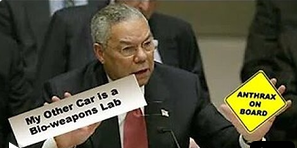
From Anthrax to Iraq
or go to
Aletho News Archives – Video-Images
Book Review
New paperback: Butchered by “Healthcare”
Lies are Unbekoming | October 20, 2026
 Butchered by “Healthcare” is Robert Yoho’s plain-spoken account of how American medicine stopped being a profession and became an industry. 341 pages. Over a thousand references. Thirty-eight chapters.
“Screening Tests Are Useless”, on tests that find diseases that would never have hurt you. “The FDA Protects the Big Drug Companies”, on an agency funded by the companies it regulates. “The Journals’ Sins Are the Editors’ Sins”, on ghostwritten studies and captured peer review. “Opioids and ‘Pain Management’”, on how a generation was prescribed its way into addiction. “Prozac and Relatives” and “Antipsychotics Are Disastrous”, on what psychiatry does to adults and children. “Surgery: Money Before Patients”. “Failed Cancer Treatments”. “Futile CPR and Overprescribing”. “Billing Scams & Specialty Warfare”. “Hospitals Are Sharks”. Each with a Patient Tips section at the end on how to survive it.
If you have ever walked out of a doctor’s office with a prescription you didn’t ask for, or watched a parent put through a treatment that made them worse, this is the book you want on your shelf before the next appointment. … Full review
Butchered by “Healthcare” is available on Lulu now.
Blog Roll
 Aletho News
- Iraq shuts key border crossing with Iran under US pressure: Report
- Undersea Internet cables could be targeted in retaliation for attacks on Iran: IRGC deputy chief
- EU sending ‘biased’ observers to interfere in Serbian election – president
- White House envoy declares kinetic action against Yemen ‘fruitless’
- Ukraine deployed thousands of microdrones in Iraqi Kurdistan: Tasnim
- Iran calls for emergency UNSC meeting over Trump’s ‘brazen’ bomb talk, Israeli threats
- Iranian sources reveal details of Russia-China Hormuz proposal
- Plan for more US-Israel integration puts our military tech at risk
- Another Round Against Iran Will Break What Is Left of the Gulf
- SVR Report on Ukraine’s Mexican Drug Gang Links Could Pressure Zelensky, Won’t Change US Policy
- If Americans Knew
- Christiane Amanpour exits CNN with a legacy shaped by the debate over Israel
- Israel’s war on Iran is the final move in a decades-old strategy
- Israel Denies Entry to French Journalist, U.S. Researcher Amid Rise in Entry Denials
- Gaza’s hospitals are running out of life-saving fuel – Daily Update
- Mysterious bot accounts reportedly spread fake ‘man on the street’ videos for Michigan Senate candidate
- Israeli Defense Minister Katz Says Over 60 Lebanon Villages Have Been Destroyed
- Why Is Israel Running TV Ads in Iowa Ahead of the Midterms?
- Hind Rajab’s Alleged Killer Is in the United States. HRF Demands His Arrest.
- US Officials Face Fresh Pressure After Another American ‘Brutalized’ by Israeli Settlers in West Bank
- Israel-Backed Palestinian Militias Terrorize Displaced Families in Gaza
- No Tricks Zone
- E-Cars Reduce CO2 Emissions By Only 41% Compared To Internal Combustion Engine Vehicles
- Predictions Made By Renowned Climate Professor Over Past Decades Have Been Proven To Be Poor
- New Study Suggests Large Regions Of The Pacific Ocean Have Been Cooling For The Last 80 Years
- Germany’s Green Energy Debacle: High Energy Costs Force Kahla Porzellan to Close After 182 Years!
- New Study: 50 Years Of The Most Aggressive ‘Net Zero’ Policies Can Only Affect The Global Climate By 0.03°C
- US September “Heat” Was No Record…Many Records Set Decades Ago
- Latest European Green Energy Debacle; Portugal’s Largest Flagship Solar Park Insolvent!
- Green Energy Debacle: German Expert Professor Fritz Vahrenholt Warns Of Severe Economic And Social Consequences
- Two More Paleo Reconstructions Affirm Meters-Higher Sea Levels Across Ireland, Brazil 7000-6000 Years Ago
- New Study: Earth And Venus Surface Warmth Largely Explained By Convection And Lapse Rate, Not CO2 Or Radiation

