US Forced to Flee Afghanistan, Iraq and Now Syria
By Valery Kulikov – New Eastern Outlook – 28.08.2020
Multiple missile strikes carried out in recent weeks on American military facilities and overseas bases in Afghanistan, Iraq, and Syria indicate that a growing number of people living in countries that have endured American military invasions have had enough of America’s intervention and are fed up with Washington’s policy.
The level of dissatisfaction among the Afghan people with the US military presence in Afghanistan has already received extensive coverage in the media, and US Secretary of State Mike Pompeo has even been forced to declare that the US will pull all of its troops out of Afghanistan by May 2021.
Outside Afghanistan, anti-American sentiment has long prevailed among people living in Syria and Iraq, which has not only been voiced through peaceful means, such as holding anti-American protests or appealing to the UN to demand the American troops be withdrawn.
Powerful explosions sparked a raging fire in the late hours of July 28 at the Majid al Tamimi Airbase in Iraq, where both Iraqi and American soldiers are stationed. This was the second strike to be carried out within the space of the same day. In an attack earlier that day, three rockets were launched on the territory of the US Camp Taji base located north of Baghdad.
On August 10, an explosion near the Iraqi border with Kuwait hit convoys supplying US-led coalition forces with military equipment. On the same day, another rocket attack struck near the US Embassy in Baghdad. The actual territory of the American Embassy was hit by missiles on July 5, and after another attack on the embassy on June 11, Washington was forced to negotiate reducing the US military presence in Iraq with Baghdad.
The Iraqi media notes that attacks on American military facilities are carried out on almost a weekly basis in Iraq, and although there are no casualties or people left injured in many of these attacks according to official data, the infrastructure of the military facilities has suffered material damage. At the same time, the threat of far more serious attacks being carried out in the near future has not been dismissed by the US.
According to the al-Hadath TV channel based in Dubai, Iraq and the United States came to an agreement on August 22 in response to the significant increase in the number of protests being held in Iraq against the US military presence in the country, agreeing to relocate American troops and equipment from Camp Taji north of Baghdad to Erbil — the capital of the Kurdistan Region in northern Iraq. Almost all the troops are now known to have been moved to the military base in Erbil, in what was the largest withdrawal of US troops from an American military base in the Middle East.
There are also more and more reports coming from Syria about missile attacks on US military bases, especially in the northeast of the country in the al-Hasakah and Deir ez-Zor governorates. The Syrian Al-Watan newspaper reported that one of these attacks targeted a US military base in the town of al-Shaddadah, the administrative center of the al-Hasakah governorate in northeastern Syria, which was hit by rockets in early August. In May, the Syrian Arab News Agency (SANA) reported that another armed attack was carried out on the US military using machine guns and grenades, in which at least eight people were injured.
In some articles, observers claim that the American facilities targeted in these attacks are being used as infrastructure to protect oil fields and for the illegal production of Syrian oil. For instance, one of these attacks carried out in mid-August targeted an American military base near the Conoco gas field (north of the Deir ez-Zor governorate), which is controlled by the US and Kurdish armed groups. As anti-American sentiment gains momentum, and with periodic attacks being carried out on American targets in Syria, the United States has already begun drafting a special combat unit in Syria to protect oil fields east of the Euphrates. According to local sources, this special unit includes ethnic Arabs drafted from the ranks of the militia fighters in the Washington-backed Syrian Democratic Forces (SDF), which is militarily led by the People’s Protection Units (YPG), a mainly Kurdish militia which forms the backbone of the SDF. However, local tribes are increasingly taking a stand against the presence of American armed forces and their SDF henchmen in Syria. According to Al-Masdar News, one of these clashes took place on August 17, when fighters from the Al-Baggara tribe reportedly drove SDF forces out of the village of Jadid Baggara in a rural part of Deir ez-Zor governorate in eastern Syria. It is indeed the eastern regions of Syria where numerous protests are being held against military occupation and new US sanctions, which are trying to put the Syrian government in a difficult position to prevent Damascus and its allies from working together to rebuild their vision of Syria.
Given these circumstances, US President Donald Trump has been repeating his intention to withdraw troops from Afghanistan, Iraq and Syria more and more frequently. Donald Trump made another remark about withdrawing US troops from Iraq at a press briefing on August 19 that was streamed on the White House Twitter account. In Trump’s opinion, the US army should never have gone into the Middle East, and he recalled that the United States is continuing to reduce the number of American troops stationed in Afghanistan.
It should not be forgotten that during a speech Donald Trump gave on June 13, addressed to graduates of the United States Military Academy (USMA) in West Point, New York, he said: “We are restoring the fundamental principles that the job of the American soldier is not to rebuild foreign nations […].” In Trump’s own words, there is now “a renewed, clear-eyed focus on defending America’s vital interests.”
However, on June 9, Donald Trump informed members of Congress from both the Senate and the House of Representatives that Washington will continue operations against DAESH, al-Qaeda, the Taliban and other related groups listed as terrorist organizations and based in Afghanistan, Iraq, Syria, Yemen, Jordan, Lebanon, Turkey, Somalia, Kenya, Djibouti and Niger.
Yet considering how people living in Afghanistan, Iraq and Syria have railed against the presence of US troops and military bases in their countries, one could expect to see similar acts of protest in the very near future in other countries around the world where more than 600 US military bases are hosted.
Cuba Advocates Denuclearization in United Nations Meeting

teleSUR | August 26, 2020
The Deputy Permanent Representative of Cuba to the United Nations Ana Rodriguez Wednesday reaffirmed her country’s commitment to denuclearization and advocated for a world free of nuclear weapons.
She stressed that it is disconcerting how some countries persist in their drive to modernize atomic arsenals and develop new types of nuclear weapons amid the COVID-19 pandemic.
Rodriguez also pointed out that it is impossible to think about a world free of nuclear weapons when the United States violates both the Comprehensive Nuclear-Test-Ban Treaty (CTBT) and the Nuclear Non-Proliferation Treaty (NPT).
The Cuban ambassador recalled that the U.S. has withdrawn from several international agreements on disarmament and arms limitation such as the Intermediate-Range Nuclear Forces Treaty (INF) and the Joint Comprehensive Plan of Action (JCPOA).
She also mentioned that Cuba supports an effective and total ban on all kinds of nuclear tests. Her government also advocates the closure and dismantling of all facilities used for such purposes.
Rodriguez pointed out that the spending great amounts of money to develop nuclear weapons is unacceptable as international cooperation to face global health problems is needed.
Currently, there are approximately 13,400 nuclear weapons in the world, 3,720 of which are deployed and 1,800 are on high operational alert.
Let’s Talk U.S. Foreign Policy: It Is the Root Cause of Many Evils
By Philip Giraldi | Strategic Culture Foundation | August 27, 2020
As the United States sinks deeper into a multi-faceted global crisis that no politician seems able or even willing to address, one hears more and more often demands for radical change in who runs the country and to what end. Of course, Donald J. Trump offered such a dramatic shift in priorities four years ago, but he has been unable to deliver due to his own inability to execute and the ill-conceived machinations of those whom he has chosen as advisers. The Democrats for their part are offering little beyond a repeat of their 2016 pander to grievance groups in an effort to cobble together an unassailable majority based on buying off the party’s various constituencies.
But there is one area where change could come dramatically if either party were actually motivated to do something that would truly benefit the American people, and that is in the area of foreign and national security policy where the president has considerable power to set priorities and redirect both the State and Defense Departments. Unfortunately, foreign and national security policy is almost never discussed during the presidential campaigns and this time would already appear to be no exception. That means that the one thing that is a constant amidst all the smoke and mirrors is the continued bellicosity of both parties on the world stage.
The Republicans are apparently eager to “democratize” Latin America while the Democrats in particular are wedded to the “foreign interference” angle to explain their loss in 2016, with Hillary Clinton predictably advising in her Democratic National Convention speech that the public should “Vote to make sure we — not a foreign adversary — choose our president.” Indeed, the tendency to create and then demonize “foreign conspiracies” is generally supported by the establishment and its parasitical media, since it enables the billionaire oligarchs who really run the country to grow fatter while also avoiding any blame for the declining fortunes of most of the American people.
The Democrats are currently taking pains to recall the so-called “Russian interference” in 2016, and are expecting or possibly even hoping for more of the same this year. Tying Trump to Russian President Vladimir Putin is obviously perceived as a game winner, even though the just-completed investigations into the events of 2016 are at best ambiguous. Early prognostications by journalist-pundits in the foreign interference sweepstakes indicate that both China and Iran will be supporting Joe Biden while Russia wants to continue with Trump. No one bothers to explain how those countries will express their preferences or what kind of impact they could possibly have.
One thing that is certain is that both parties will continue their deference to Israel which in turn means hostility towards Iran and its few friends worldwide. The U.S. media has not reported the almost daily bombings of Syria and Gaza by Israel and even largely failed to cover how two weeks ago the United States Navy seized four Greek flagged oil tankers transporting more than a million gallons of fuel to economic basket case Venezuela, a country which is in its sad condition due to sanctions and other “maximum pressure” at the hands of Washington. The fuel was seized based on unilaterally imposed U.S. sanctions on Iranian sale or export of its own petroleum products, a move intended to strangle the Iranian economy and bring about an uprising of the Iranian people. Such a move used to be called piracy.
To be sure, the Democrats have indicated that they will rejoin the Joint Comprehensive Plan of Action (JCPOA), which Trump withdrew from under orders from top donor Sheldon Adelson in 2017, one of his first acts in office. The JCPOA is intended to monitor and restrain any possible efforts by Iran to enrich uranium to develop a nuclear weapon, which one might assume is in the U.S. interest, but one should make no mistake in thinking that re-entering the agreement signifies any softening towards Iran. Joe Biden and Kamala Harris are owned lock, stock and barrel by the Israel Lobby, which is pretty much true of most politicians from both major parties in Washington. Iran is Israel’s target and even lacking any threat to the U.S. so it will remain the American enemy of choice.
America’s efforts to demonize and punish Iran, ineptly stage managed by Secretary of State Mike Pompeo, frequently lead into the Twilight Zone. On August 17th, the United States suffered what has to be described as a humiliating defeat in the United Nations Security Council. As the Washington Post reported it, “The United States asked the council to approve an extension of the 13-year-old embargo on arms trade with Iran — something that matters greatly to Israel and U.S. Arab allies, and which most of the democratic world favors. Yet only one member of the 15-member council, the Dominican Republic, sided with Washington. Russia and China opposed the motion, while 11 countries — including Britain, France and Germany — abstained. The vote could open the way for Iran to obtain Chinese and Russian arms — for example, missiles it could employ against Israel, the UAE or U.S. ships in the Persian Gulf.”
Note particularly the reliably Zionist Post’s “newspeak” version in describing both the issue and the vote. It states that “most of the democratic world favors” an embargo on selling arms to Iran but then describes how “11 countries – including Britain, France and Germany – abstained.” And, of course, the potential threat to Israel is front and center as the reason for the embargo, an apartheid state that has nuclear weapons developed in secret after stealing both the uranium and triggers from the United States. One might also note that Iran is a signatory to the Nuclear Non-Proliferation Treaty (NPT), which Israel is not, and its nuclear related research facilities are fully open to inspection by the International Atomic Energy Agency (IAEA).
After the rebuff, Trump subsequently moved on to phase two in its attack on Iran by invoking a so-called “snap-back” provision of the JCPOA that empowers any of the signatories to the agreement to unilaterally call for renewal of the international sanctions that isolated Iran prior to 2015, when the plan of action was signed by the U.S., Britain, China, France, Germany and Russia, along with the European Union. The U.S. claimed that Iran has been cheating on its enrichment program and also that the accord’s authority is rooted in an accompanying Security Council resolution, which means that Washington can at will address the issue before that body.
Bear in mind that the U.S., though an original signatory, withdrew from the agreement, and any attempt to restore U.N. sanctions through an admittedly sleazy maneuver would be resisted by nearly all the other members of the Security Council, which is precisely what did take place last Thursday, with the Europeans producing a joint letter emphasizing that Washington has no standing on the issue as it is no longer party to the arrangement. Pompeo responded by saying that the Europeans “chose to side with the ayatollahs.”
Secretary of State Mike Pompeo, presumably supported by the president, has been angered by the Security Council’s failure to support him on either extending the arms embargo or re-imposing general sanctions, though he is probably eternally grateful for the fortitude demonstrated by the plucky little Dominican Republic. On both meetings with the Security Council Pompeo complained, using his standard line, saying that “We can’t allow the world’s biggest state sponsor of terrorism to buy and sell weapons. I mean, that’s just nuts.”
The next step by the White House was a unilateral proposal submitted in writing by the U.S. to reimpose a full range of economic sanctions on Iran in thirty days. That can only be blocked by a Security Council resolution which Washington can veto, meaning that America will again be going it alone in its not-so-secret war against Iran, further isolating the U.S. in world fora and again demonstrating that the Trump Administration has few friends anywhere in this fight but Israel and its newfound Arab associates in the Gulf. It also means that the re-imposed sanctions are unlikely to be actively enforced by anyone that matters, further suggesting that the U.S. might resort to secondary sanctions, as it has done in the past, on those who do not comply, a formula for chaos.
Well, it should seem obvious that we Americans can’t afford a foreign and national security policy that pits the United States against the rest of the world in situations where the U.S. is not actually directly threatened and does not even have a vital interest. Over the next two months, perhaps we will see some serious discussion of America’s place in the world or perhaps not. If 2016 is anything to go by, we are more likely to see a number of bromides tossed out without any real meaning behind them. We are still waiting for troops reductions and the ending of useless wars promised by Trump. We are still waiting for Hillary to concede that Russia didn’t defeat her. She did it all by herself.
UAE snubs three-way meeting with US, Israel over F-35 spat
Press TV – August 25, 2020
The Emirati envoy to the UN has reportedly snubbed a meeting with his Israeli and American counterparts after Tel Aviv spoke out against Abu Dhabi’s potential acquisition of American F-35 warplanes despite a normalization deal between the two sides.
The meeting had been scheduled for Friday at the UN headquarters in New York among Lana Nusseibeh, Gilad Ardan, and Kelly Kraft as a means of celebrating the August 13 deal that enabled “full normalization” of relations between the United Arab Emirates (UAE) and the occupying regime.
Israel’s Walla news site, however, reported on Monday that the Emirati official had opted out of the meeting a week after Israeli Prime Minister Benjamin Netanyahu’s office said he had opposed the sale of F-35s and other advanced weapons to any country in the Middle East, including Arab countries that have peace agreements with Israel.
Netanyahu also rejected earlier reports that he had given the green light to such sales to the UAE as part of the normalization deal.
Walla further said Emirati officials would refrain from holding any such high-level meetings with Israeli officials until Netanyahu “clarifies” his position on potential sales of the F-35s to Abu Dhabi.
Tel Aviv claims to have a “military edge” in the region and invariably pressures Washington into helping it retain the self-proclaimed primacy.
The UAE says the peace agreement with Israel should remove “any hurdle” for Abu Dhabi to purchase the advanced jets.
“We have legitimate requests that are there. We ought to get them,” said Emirati Minister of State for Foreign Affairs Anwar Gargashin an interview with the Atlantic Council on Thursday. “The whole idea of a state of belligerency or war with Israel no longer exists” following normalization.
Observers say the complications that have followed the UAE-Israel normalization agreement point to the flimsy nature of their relations, which have been received with uniform opposition from all Palestinian factions and many other countries.
Speaking alongside Netanyahu during a trip to the occupied city of Jerusalem al-Quds, US Secretary of State, reiterated America’s commitment to protecting Israel, while suggesting that Washington could rethink selling the warplanes to the UAE.
“The United States has a legal requirement with respect to [Israel’s alleged] qualitative military edge, and we will continue to honor that,” Pompeo said, adding the US “will now continue to review” its military ties with the UAE.
As per America’s Israel policy, Washington has to take protecting Israel’s security into consideration before selling any weapons to countries in the Middle East region.
With that in mind, the US has so far sold 16 of the warplanes to the occupying regime and plans to add dozens more to the fleet.
USA’s Militarization of Latin America
By Yanis Iqbal | Dissident Voice | August 24, 2020
Maj. Gen. Andrew Croft, the commander of 12th Air Force, wrote on 22 August: “I have seen an increasingly contested strategic space where Beijing and Moscow are aggressively investing time and resources in Latin America to support their authoritarian models of governance. The Air Force must reinforce the strength of our longstanding commitment to the Western Hemisphere. We lose ground when we are unable to commit to spending the time and resources to fly our aircraft south and train alongside our partners.”
Croft’s statement reflects the growing American hysteria against the presence of any extra-regional actors in the Latin American continent. For US policy-makers, Latin America is not an aggregation of sovereign nations but a large lump of subordinated states constituting “America’s backyard”. Consequently, this conceptualization of Latin America as a natural extension of the American empire has led to viewing the engagement of any South American country with China, Russia and Iran as a “threat” to peace and security.
On February 7, 2019, Admiral Craig S. Faller – the commander of the United States Southern Command – told the Congress that the Western Hemisphere is facing “a troubling array of challenges and threats”. These threats included alarmist assertions about the growing dominance of China, Russia and Iran and a general demonization of the socialist governments of Cuba, Venezuela and Nicaragua:
“China has accelerated expansion of its Belt and Road Initiative at a pace that may one day overshadow its expansion in Southeast Asia and Africa. Russia supports multiple information outlets spreading its false narrative of world events and U.S. intentions. Iran has deepened its anti-U.S. Spanish language media coverage and has exported its state support for terrorism into our hemisphere. Russia and China also support the autocratic regimes in Venezuela, Cuba, and Nicaragua, which are counter to democracy and U.S. interests. We are monitoring the latest events in Venezuela and look forward to welcoming that country back into the hemisphere’s community of democracies.”
In response to the perceived threats posed by the China-Russia-Iran nexus, the Secretary of Defense has decided to conduct an assessment of the sufficiency of resources available to the U.S. Southern Command, the U.S. Northern Command, the Department of State, and the U.S. Agency for International Development (USAID) to carry out their respective missions in the Western Hemisphere. This assessment is required to include “a list of investments, programs, or partnerships in the Western Hemisphere by China, Iran, Russia, or other adversarial groups or countries that threaten the national security of the United States.”
In addition to warlike preparations, USA has also pursued a policy of increased militarization wherein it has tried to ensure “technological superiority” with regard to “anti-US actors”. In March, 2020, USA decided to send additional ships, aircraft and forces to South America and Central America in order to combat the influence of Russia and China. According to Navy Adm. Craig Faller, commander of Southern Command, “This really was born out of a recognition of the threats in the region,”. Along with the mobilization of the Southern Command, USA has substantially enlarged its security aid to Latin America: From $527,706,000 in 2019, US security aid to Latin America has increased by 10% to $581,270,000.
Chinese Footprint
The present-day US militarization of Latin America is rhetorically driven by an imperialist discourse framing the continent as a possession of the American empire which China, Russia and Iran are trying to appropriate. To take an example, R. Evan Ellis, a Latin America Research Professor at the US Army War College, stated before the US-China Economic and Security Review Commission that China’s engagement with Latin America “threatens the position of the United States, our security and prosperity, and the democratic values, rights, institutions and laws on which we depend.” To substantiate his statements, Ellis enunciated various strategies through which China is undermining USA’s dominance:
- “Trade with, loans to, investment in, and other forms of economic and other support to anti-US regimes, indirectly enabling their criminal activities and contributions to regional instability”.
- “Through providing an alternative to commerce, loans and investment from the West, making governments of the region less inclined to support the US on political, commercial, or security issues, or to stand up for rule of law, democracy or human rights, particularly where it might offend the PRC;”
In both these points, one can observe the imperialistic high-handedness with which Ellis is declaiming his pro-US rhetoric. While Beijing’s efforts to engage with sovereign nations and construct an alternative to the global American empire are regarded as enabling “regional instability”, no questions are asked about USA’s expansionist quest to imperialize the entire world through militaristic tactics.
In order to vilify China and smear its non-aggressive foreign policy, hawkish security experts have framed the country’s diplomatic involvement with various Latin American nations as a type of authoritarian tactic. Using this line of reasoning, the National Endowment for Democracy (NED) writes: “Beijing has now officially established its own version of soft power… which emanates from its undemocratic system and rests on its ability to shape the viewpoints of others through co-optation and persuasion.” Not having any empirical evidence to prove its unconvincing statements, NED talks vaguely about the “hypnotic effects” exercised by “Chinese-style warm welcome”: “The Chinese-style warm welcome, the carefully selected tours that include visits to sites with symbolic historical and cultural significance, and ad hoc friendly discourse delivered by the Chinese hosts can have hypnotic effects on their foreign guests.” This is an indication of the extent to which America hysteria against China can reach.
In the same way as NED, the Brookings Institution has also tried to slander China’s diplomatic initiatives in Latin America to preserve the coercive dominance of USA in the continent. As per the think tank, “it would be fair to assume that China’s growing economic power and ambitions of global leadership, coupled with its inherently closed and repressive model of political control, will hurt the region’s prospects for strengthening its liberal democratic systems and respect for human rights.” While saying this, the Brooking Institution conveniently forgets that it the US, with its Western-styled liberal democracy, that has hurt the region most in the form of coups, violence and overt brutality against social movements. Most recently, a US-backed coup in Bolivia has resulted in two massacres and massive repression of social movements.
The Iranian Connection
Like China, Iran, too, experiences American hostility towards its engagement with Latin American countries. Lieutenant Andrew Kramer of the U.S. Navy terms Iranian support for the “economically backward governments” of Cuba, Nicaragua and Venezuela as efforts “to maintain pockets of instability and hostility close to U.S. borders.” Echoing this perspective, William Preston McLaughlin, a Colonel (Ret.) of U.S. Marine Corps and Magdalena Defort, an Intern Analyst at the Foundation of Defense of Democracies, argue that “Iran’s presence in Latin America is an imminent threat to peace and political stability in the Western Hemisphere because its forces interact with Latin America’s deeply rooted revolutionary ideology and various well-intentioned but flawed “liberation theology” social movements.” Here, both of the analysts are merely parroting the imperialist “Monroe Doctrine” that subverted the sovereignty of Latin American nations and tethered the people of the continent to the whims of the American empire. Through the Monroe Doctrine, USA relegated the entire Latin American continent to the status of the empire’s handmaiden and constantly used its military muscles to overpower any regional initiatives challenging the dynamics of subjugation. Now, when Iran is lending support to the anti-imperialist administrations of Venezuela, Nicaragua and Cuba, it has come under the radar of USA for ostensibly destroying peace and political stability in the Western Hemisphere. In August 2020, for instance, USA confiscated four Iranian fuel shipments that had been bound for Venezuela, making it clear that it would not tolerate anti-imperialist opposition in Latin America.
In addition to portraying Iran as a threat to global peace, both the analysts also used a shrill, scaremongering rhetoric to over-exaggerate the strength of the country. According to the analysts, “Iran has used every agency within its borders to help extend Iranian tentacles into the political, cultural, economic, and military life of Latin America.” This bears striking resemblance to the traditional war-mongering US narrative that frames Hezbollah as a menace to justify the militarizary raising funds, seeking recruits, probing for our weaknesses and challenging our defenses,”. Through these discourses, USA seeks to unleash a new war against the anti-imperialist axis of Latin America which is standing up to militaristic predatoriness of the global hegemon.
Russian Presence
Besides Iran and China, Russia is another nation perceived as a “threat” to US security. General John Kelly, commander of the U.S. Southern Command (SOUTHCOM) noted in his Congressional testimony, “it has been over three decades since we last saw this type of high-profile Russian presence” in Latin America. In his command’s 2015 Posture Statement, Kelly added:
“Periodically since 2008, Russia has pursued an increased presence in Latin America through propaganda, military arms and equipment sales, counterdrug agreements, and trade. Under President Putin, however, we have seen a clear return to Cold War tactics. As part of its global strategy, Russia is using power projection in an attempt to erode U.S. leadership and challenge U.S. influence in the Western Hemisphere.”
John Kelly’s representation of Russia as a military threat has been repeated by the Commander of US Southern Command, Admiral Kurt W. Tidd who said in his February 2018 Posture Statement to the US Senate Armed Services Committee that:
“Russia’s increased role in our hemisphere is particularly concerning, given its intelligence and cyber capabilities, intent to upend international stability and order, and discredit democratic institutions… Left unchecked, Russian access and placement could eventually transition from a regional spoiler to a critical threat to the U.S. homeland.”
With the help this narrative, USA has aggressively pushed forward the agenda of greater militarism in Latin America as it strives to maintain “technological superiority” in relation to Russia and expand its already large military expenditure.
On top of depicting Russia as a military threat, US analysts have additionally portrayed the country’s support of socialist governments in Latin America as a danger to the economically empty liberal democracies of the West. According to IBI Consultants, a National Security consulting company specializing in Latin America, Russia’s growing presence in Latin America “is now an integral part of an alliance of state and nonstate actors that have shown their hostility toward the United States in their ideology, criminalized behavior, and anti-democratic nature.” Reiterating this point, on July 9, 2019, Admiral Faller declared before the Congress that “Russia seeks to sow disunity and distrust, propping up autocratic regimes in Cuba, Bolivia, Venezuela, and Nicaragua, which are counter to democracy and U.S. interests.” For Faller, those nations which don’t doggedly toe America’s imperialist line automatically become “threats” to democracy and if Russia shows solidarity with these anti-imperialist nations, it, too, classifies as a threat to US interests.
As the USA continues to militarize Latin America, it is increasingly becoming clear that it wants to protect its old, imperial structures from being challenged by anyone. It has been explicitly acknowledged even by pro-US analysts such as Ellis that US military assistance in Latin America “potentially serves U.S. strategic interests by helping to inoculate receiving states against radical or anti-democratic [read “socialist”] solutions which find receptivity when populations lose faith in the ability of a democratic political system and a free market economy to effectively address the corruption, inequality, injustice, and other dysfunctionalities plaguing their country [Emphasis mine].” US military assistance, therefore, is not apolitical and is ideologically tarnished with the objectives of stabilizing free market economies-bourgeoisie democracies and subverting socialist countries.
The United States Intelligence Community’s assessment of threats to US national security had stated in 2019 that “anti-US autocrats [in the Western Hemisphere]will present continuing challenges to US interests, as US adversaries and strategic competitors seek greater influence in the region.” Here, “anti-US autocrats” refers to the socialist administrations of three Latin American countries: Cuba, Venezuela and Nicaragua. These three countries have been facing strong US belligerence for their anti-imperialist stance. US sanctions against Cuba have tightened during the pandemic; USA’s hybrid war against Venezuela has intensified as Trump has decided to use frozen funds to topple Nicolas Maduro and USAID (United States Agency for International Development) has strengthened its regime change operations against the Sandinista government of Daniel Ortega in Nicaragua. Due to the support lent by China, Russia and Iran to the socialist governments of Latin America, USA has decided to eradicate these extra-regional actors from its “own” backyard and re-proclaim a complete American dominance in the region. In times like these, the international community needs to oppose the militarism of USA against new regional alliances in Latin America.
Yanis Iqbal is a student and freelance writer based in Aligarh, India.
Let them eat yellowcake: As Powell backs Dems, warmongers seek to regain full control of US policy, regardless of what voters want
By Tony Cox | RT | August 20, 2020
The neoconservatives have a new party. It’s called Democratic, and it’s every bit as warmongering and interventionist as the Republicans were during the Reagan era or that of the Bushes.
We keep hearing how radical leftists have taken over the Democratic Party, but guess who stole the limelight at Tuesday’s Democratic National Convention: the disgraced former Secretary of State Colin Powell who endorsed their presidential candidate, Joe Biden.
In fact, Powell, who helped George W. Bush’s administration lie America into the ruinous Iraq War, was given a full extra minute to speak when compared to Congresswoman Alexandria Ocasio-Cortez, the face of the woke left.
He didn’t disappoint. Although Powell, 83, might be a bit rustier than when he laid out the false US case on Iraqi weapons of mass destruction to the UN in 2003, he deftly leaned on old stand-bys of patriotic values and love for the troops. “Joe Biden will be a president we will all be proud to salute,” Powell said. “With Joe Biden in the White House, you will never doubt that he will stand with our friends and stand up to our adversaries.”
In other words, Biden will pledge undying fealty to NATO and make sure Russia knows who’s boss. Powell put a finer point on the theme: “I support Joe Biden because on Day One, he will restore America’s leadership and our moral authority. He’ll be a president who knows America is strongest when, as he has said, ‘We lead both by the power of our example and the example of our power.’ He will restore America’s leadership in the world and restore the alliances we need to address the dangers that threaten our nation, from climate change to nuclear proliferation.”
It was such a rousing pep talk that we might have expected the Democrats to bring out surprise guest George W. Bush to talk about Iraq obtaining yellowcake uranium from Niger and remind us that, “we cannot wait for the final proof, the smoking gun, that could come in the form of a mushroom cloud.”
Although Bush might have been a bridge too far, other Republicans joined Powell in speaking at this week’s Democrat convention, including former Congresswoman Susan Molinari, former New Jersey Governor Christine Todd Whitman, former California gubernatorial candidate Meg Whitman and former Ohio Governor John Kasich. The latter said in 2016, while running against President Donald Trump in the Republican primaries, that he would deploy large numbers of US ground troops in Syria, Iraq and Libya. “It’s got to be shock and awe in the military-speak,” Kasich said, borrowing a Donald Rumsfeld line.
If that weren’t enough, Senator John McCain’s widow, Cindy McCain, narrated a video paying homage to Biden’s great friendship with her late husband. That the two senators would get along so well shouldn’t come as a surprise. McCain never met a war or secret foreign intervention he didn’t like. Biden supported the Iraq War and the Obama-Biden administration’s bombings of Syria, Libya, Pakistan, Yemen and Somalia, as well as continuing the wars in Iraq and Afghanistan. He praised the regime change in Libya that led to the disastrous migrant crisis and opened up a weapons pipeline for Al-CIAeda forces in Syria.
Of course, the Dems have a leading neocon of their own, Hillary Clinton, as a headline convention speaker. It doesn’t matter which party is in power or what the American people want. As former President Dwight D. Eisenhower warned in his farewell address in 1961, “we must guard against the acquisition of unwarranted influence, whether sought or unsought, by the military industrial complex. The potential for the disastrous rise of misplaced power exists and will persist.”
That ship has sailed. It doesn’t matter that only 27 percent of Americans in a 2019 Chicago Council poll agreed that military interventions in other countries make the US safer. It doesn’t matter that Americans elected Trump not in spite of, but at least partly because he campaigned against senseless wars and called for improving relations with Russia.
The permanent bureaucracy in Washington and the interests it serves couldn’t tolerate that last point. For candidate Trump to say things like “wouldn’t it be a great thing if we could get along with Russia” was heresy to the War State. When Trump won, upsetting establishment candidate Clinton, the Russia hoax was used to contain him.
Trump caved into the pressure against being seen as too friendly with President Vladimir Putin and took a belligerent stance against Moscow, undermining his foreign policy agenda. Just about the only time he received substantial praise from the mainstream media was when he bombed Syria in 2017 on false pretenses. NBC anchor Brian Williams even called the missiles raining down on Syria “beautiful.”
Democracy again took a back seat in the final US Senate report on alleged Russian interference in the 2016 election, released Tuesday. Among the supposedly damning findings was that while Trump was preparing to take office after his 2016 election victory, Russia exploited his transition team’s inexperience and opposition to President Barack Obama’s policies to “pursue unofficial channels.”
It was kind of the same theory as when the FBI entrapped former National Security Adviser Michael Flynn for the non-crime of talking to the Russians during the transition. Flynn urged Russian Ambassador Sergey Kislyak not to overreact to Obama’s sanctions against Russia and suggested that Trump’s policies would be different. He also dared to call Putin “smart.”
Would it be more in the interest of Americans for Russia to overreact? Would it be better that the world’s top two nuclear powers not be talking with each other, through officials and unofficial channels? As long as we’re worried about mushroom clouds, who gains from the US and Russia being on bad terms?
Flynn was simply doing his job as incoming national security adviser. And he was laying the groundwork for the foreign policy agenda on which Trump had campaigned. This wasn’t Obama whispering to Dmitry Medvedev to tell Putin, “This is my last election… After my election, I have more flexibility.”
Trump told voters he wanted to be at peace with Russia and work together on common interests, and voters said, yes. The Colin Powells of the world want to make sure they never have that kind of real choice again.
Tony Cox is a a US journalist who has written or edited for Bloomberg and several major daily newspapers.
Russia wants to extend ‘New START’ nuclear arms control deal but not at any cost – deputy foreign minister
RT | August 18, 2020
Moscow wishes to prolong the New START Treaty but not if the US demands unreasonable concessions, Deputy Foreign Minister Sergey Ryabkov has said, adding that the Russian and American positions on the issue remain quite different.
Russia is ready to extend the treaty without any preconditions BUT Washington is still hesitating in agreeing to that, Ryabkov said following another round of nuclear arms talks with the US Special Presidential Envoy for Arms Control Marshall Billingslea in Vienna.
The high-ranking diplomat hailed some progress in the negotiations by saying that both sides took a more constructive stance and stuck to “intensive, in-depth and business-like discussions,” according to Russia’s permanent representative to international organizations in Vienna, Mikhail Ulyanov.
Yet, Moscow and Washington’s priorities in the talks appear to still “differ significantly,” Ryabkov noted. He said that the US continues to leave the door for talks open but he cannot say that its position has changed in favor of extending the accord.
“They [the US] evade an answer … to the question whether they are ready to prolong the treaty without preconditions,” Ryabkov told journalists, adding that Washington is still very much interested in making China join the talks on strategic stability. Russia, in turn, would very much like the UK and France – US allies and nuclear powers themselves – to sit down at the negotiating table as well.
Billingslea meanwhile told journalists that Washington has informed Moscow about its terms in extending the treaty that expires in February. The US said it would consider prolonging it if Russia’s “build-up” of shorter-range nuclear missiles not covered by the current agreement is addressed.
“Russia understands our position. And what remains to be seen is if there is the political will in Moscow to get this deal done. The ball is now in Russia’s court,” the US official said.The issue of short-range nuclear ballistic missiles was covered by another treaty – the INF – signed by Washington and Moscow back in the 1980s. The accord effectively banned such ground-based missiles altogether. Yet, the Trump administration unilaterally left it in 2019, citing the same alleged Russian build-up, only to later test their own ground-based cruise missile just after the agreement expired.
Moscow’s attempts to save the deal by even allowing the US military inspectors to see the missile they said violated the treaty for themselves were effectively snubbed by the US.
Also on rt.com Russia unveils evidence on missile that US claims violates INF Treaty, Washington snubs briefing
The New START Treaty, which remains the only standing pillar of international nuclear arms control after the expiration of the INF due to America’s exit, came into force in 2011. It limits the number of deployed intercontinental ballistic missiles (ICBMs), submarine-launched ballistic missiles (SLBMs) and strategic bombers, of which the US and Russia can have up to 700 each. The number of deployed warheads was capped at 1,550, while the countries pledged to maintain no more than 800 deployed and non-deployed launchers.
The fate of the crucial agreement has been in limbo for a year and a half since no talks were held on its extension despite the nearing expiration date. Hopes resurfaced back in June when Moscow and Washington agreed to hold arms control consultations in Vienna. Yet, according to Ryabkov, the dates of new consultations have not yet been set following the Tuesday meeting since both sides still want to analyze each other’s positions.
Keep it Real: A Review of Diana Johnstone’s Book “Circle in the Darkness: Memoirs of a World Watcher”
By Rick Sterling | American Herald Tribune | August 19, 2020
Diana Johnstone has written a compelling and insightful book. It is mostly a review and analysis of significant events from the past 55 years. It concludes with her assessment of different trends that are being debated on the Left today including “identity politics”, Antifa and censorship. This is a book to be read, enjoyed and discussed.
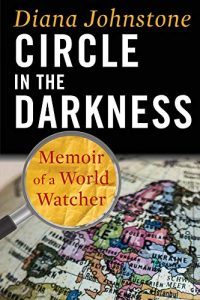 “Circle in the Darkness” gives glimpses into Johnstone’s personal life. She was born in St. Paul, Minnesota and grew up there and in Washington DC. She studied and taught at the University of Minnesota before moving and living most of her life in Europe – mostly in France with stints in Germany and Italy.
Her parents divorced when she was young. She had a special love and connection with her father who, ironically, was an analyst for the Pentagon. Evidently he also had an open and critical mind, writing the memoir “From MAD to Madness: Inside Pentagon Nuclear War Planning“.
Diana had a daughter at a relatively young age and largely raised her on her own. She finished her PhD in French literature, then worked as a teacher, translator, photographer and journalist.
There are interesting observations and comparisons. As Diana and her daughter moved between Minnesota and France, she compared the different educational systems. She notes, “There is a tendency in American grade schools for the kids to gang up against whichever unfortunate schoolmate has been selected by class bullies for tormenting ….. from my observation it is not like this in France.” She also describes the difficulties being a single mother before it was more common.
The book is full of insights based on her first hand experience living in Yugoslavia as a young exchange student, being a photographer for Associated Press, translating news reports for Agence France Presse, reporting on the end of the Cold War for In These Times and being press officer for the coalition of Green Parties in the newly formed European Union.
Grass Roots Activism
One theme running through the book is the need to reach out and engage with regular people. She recounts her experiences opposing the US war on Vietnam. Johnstone and her allies launched a campaign to educate and engage with regular Minnesotans, to explain what was happening in Vietnam and why the war should be opposed. She helped organize teams of students and teachers who went door to door in Minneapolis. Later, they sent a citizens delegation to Paris to meet with and hear from the Vietnamese representatives. Afterward, they reported back to communities throughout the state and country. Johnstone says these actions did not get the media attention but deepened opposition to the war in profound ways. The students and teachers going into the neighborhoods had to educate themselves in advance; they learned from the questions (and sometimes opposition) of community members; the delegation which met the Vietnamese representatives in Paris were deeply impressed and conveyed their experience on their return.
Johnstone is an unusually perceptive analyst. For example, her analysis of the Watergate scandal and Nixon resignation raises important but overlooked issues. Rather than seeing this as the hallmark of investigative journalism, she notes that it established the model of journalism relying on unidentified government sources. Looking back, the Watergate scandal effectively deflected attention from the ongoing slaughter in Southeast Asia. “Getting rid of Nixon was a brilliant coup that united generations, torn asunder by opposing attitudes toward the war ….. Watergate washed away the national sins. It prepared America to be ‘born again’ first as the innocent Gerald Ford and then as the good Christian Jimmy Carter, champion of human rights.” Moreover “The shenanigans around Watergate were a distraction from the most significant acts of the Nixon administration, in particular the shakeup of the world economy by the August 1971 decision to suspend (meaning to end) the convertibility of the dollar into gold. This was a direct result of the huge U.S. debt resulting from the cost of the Vietnam War.”
The author has a stark assessment of what happened to the Left. “As for the American antiwar movement, half a century later, it has vanished almost without a trace as an influential political force. There are perhaps more intelligent critics of war than ever before, but they are largely confined to the virtual world of the web, without significant impact on a political system which is totally integrated into a military industrial complex that relies on endless conflicts.”
Critical International Events
Through her work at Associated Press and Agence France Presse, Johnstone saw how stories are selected and prioritized depending on establishment bias. She also saw how the media can promote certain types of protest leaders. There are critical assessments of some protest leaders who became famous including Daniel Cohn Bendit. She gives a scathing critique of celebrity French philosopher Bernard Henri Levy.
Johnson has valuable insights on many events over the 1970’s and 80’s. A few examples are
* the assassination of Swedish Prime Minister Olaf Palme, who was likely behind it and how it has led to Swedish subservience to the US
* the causes and consequences of the assassination of Aldo Moro by ultra-leftists in Italy
* the murder of Palestinian moderate Dr. Issa Sartawi at a Socialist Party conference
* the attempted assassination of Pope John Paul II by a Turkish militant and the propaganda campaign trying to link him to Bulgaria and Soviet Union
* the growing influence of Israel in western foreign policy
In the 1980’s and early 1990’s, Johnstone watched closely, interviewed key players and reported on the rise of detente between the USA and Soviet Union She concludes, “Not enough credit is given to Mikhail Gorbachev and to the 1980s peace movement”.
The book is subtitled “Memoirs of a World Watcher”. Johnstone describes how radical islamists were used to undermine the socialist Afghanistan government beginning 1979. When the Soviet Union collapsed, the US had no restraints. She summarizes “Mikhail Gorbachev was a naive negotiator, outfoxed by the Americans” and “The total surrender of ‘real existing’ communism in the East contributed to the defeat of the Western Left”.
In 1991 the US seemingly invited Saddam Hussein to go into Kuwait, then built up a huge force to expel and then massacre thousands of retreating Iraqi soldiers. With operation “Desert Storm” viewed as a military success, President Bush declared “The Vietnam syndrome is over!”
Yugoslavia and “Humanitarian Imperialism”
With the dissolution of the Soviet Union, neoliberal economic policies quickly dominated the globe. The European Union was formed in 1992. Johnstone describes how the EU imposed rules and requirements that favored private banks and institutions and restricted or prevented state intervention and solutions. Yugoslavia, as the sole remaining socialist holdout, was under increasing pressure and media attack.
Johnstone describes how “humanitarian imperialism” emerged at this time. With the dissolution of the Warsaw Pact in 1991, the North Atlantic Treaty Organization (NATO) needed a new mandate and reason for existing. They found this new purpose in media distortion and demonization of Serbia and Yugoslavia. NATO promoted the “Kosovo Liberation Army” and other divisive elements then bombed Serbia for 78 consecutive days. Yugoslavia was broken into pieces.
In 2002 Johnstone wrote a book about the NATO attack, western propaganda and show trial. Her book is titled “Fool’s Crusade: Yugoslavia, NATO and Western Delusions”. She was attacked in the media for challenging the dominant assumptions about the conflict. She responded to the attacks saying,“I do not deny atrocities, but unlike others I give them a political context.” Others strongly defended her. Canadian law professor Michael Mandel wrote, “Fools Crusade is not only the definitive work on the Balkans Wars, it is also an inspiring example of how to rescue truth from the battlefield when it has become war’s first casualty”.
Western media distortion and intervention in Yugoslavia went almost unopposed. The antiwar movement was widely confused and silent. This was followed by the US invasions of Afghanistan then Iraq.
Along with media distortions and comparisons to Hitler and the Holocaust, there emerged the justification for violating national sovereignty based on the “Right to Protect” (R2P). This was the pretext for overthrowing the Libyan government of Moammar Gadhafi. Johnstone discusses how R2P has been used to confuse and silence antiwar forces, even some prominent traditional antiwar analysts. Johnstone has interacted with Noam Chomsky many times over decades and is overall very positive. But she notes that “even he might get something wrong”. She documents how the co-author of “Manufacturing Consent” was evidently fooled into believing media reports from Benghazi Libya. Chomsky said the western sponsored uprising was “wonderful”. It is now clear that media reports and NGO accusations from Benghazi were false. They were the pretense to launch the NATO campaign to overthrow the government.
Western intervention, including the sponsorship of terrorist armies in Syria, has been sold to the unwitting public using this model. Wherever the US and NATO wish to intervene, there is a “humanitarian crisis” and “responsibility to protect”.
Critical Current Issues
“Circle in the Darkness” analyzes many current issues of contention and debate on the left. She argues that suppression of debate and free speech, whether by the Right or Left, is counter-productive. She also argues that violence and vandalism hurts the progressive cause even when it gives a spurt of publicity and media attention. She describes many examples over the past 50 years and how frequently the instigators were government or police agents.
Johnstone describes the spectacular growth of the “Yellow Vest” movement in France. She documents how it began, how it was supported and joined by common people and how it reached across party lines. She contrasts the broad support of the Yellow Vest movement with narrow support of the student protests of May 1968. She writes, “Sociologically, this revolt was the opposite of May ’68. Instead of privileged students, imagining a non-existent working class revolution in a time of prosperity, this was the working class itself, in hard times.”
Johnstone describes how French police then attacked the Yellow Vest protesters with many injuries and even deaths. She writes, “Curiously, all this heavy handed repression totally failed to prevent masked ‘Black Bloc’ members from taking advantage of this opportunity to attack the police, set fires, break shop windows ….. Police did nothing to prevent unidentified intruders from invading the ground floor of the Arc de Triomphe to smash up a statue of Marianne…. It is noteworthy that almost all the seriously injured were peaceful Yellow Vest protesters, whereas the Black Blocs often got away unscathed. Perhaps the Black Blocs believe they are fighting the system. Whatever their intentions, they have served as a useful auxiliary to government repression.”
Johnstone notes the massive media effort to control popular thoughts and anger. “The mainstream media have moved farther and farther away from informing the public and nearer to instructing them in what they should think and do.” She thinks the Left is also infused with dogma. Diana Johnstone recounts the falling out with Counterpunch magazine after they published a “barrage of attacks” on the analyst and writer Caitlin Johnstone (no relation). “That was indeed the start of Caitlin’s rise to great prominence in anti-war circles and the beginning of CounterPunch’s decline from ‘fearless muckraking’ to snide sniping at the genuine heirs to the independent spirit of the founder, Alexander Cockburn. The gist of the CounterPunch attacks on the Australian Johnstone were that she dared say she would join even with someone on the right against war. That is simple good sense, but it was picked up by the Antifa purification squad as proof of tendencies toward fascism. When I saw them coming after Caitlin, I figured they’d be coming after me, and that my association with CounterPunch was soon coming to an end.”
Johnstone argues in favor of working for peace with all forces which agree on that issue, whether or not they agree on all issues of “identity politics”. She argues that we should not be distracted from the root causes of war and social inequality. When the Left focuses on the fringe right, the establishment is not only happy, they encourage and promote this diversion.
“The specialty of the AntiFa is to situate the threat of tyranny on the powerless margins of society – from isolated groups of costume party neo-Nazis to outspoken persons on the left accused of ‘red-brown’ tendencies. This amounts to keeping the Left herded into its sheep pen, while the wolves roam freely.”
Johnstone is hopeful and encouraged by two things: a new generation of truth seekers and the fact that life is full of surprises.
This book is full of insights and analysis about where the world is at and how we got here. It includes important ideas and thoughts about what we can do to resist the drift toward global war and catastrophe. Above all, Diana Johnstone argues for the importance of discussion, debate and keeping it real.
The CIA Versus the Kennedys
By Jacob G. Hornberger | FFF | August 18, 2020
Former Congressman Ron Paul and his colleague Dan McAdams recently conducted a fascinating interview with Robert F. Kennedy Jr., which focused in part on the assassination of President John F. Kennedy, who was Kennedy Jr.’s uncle. The interview took place on their program the Ron Paul Liberty Report.
Owing to the many federal records that have been released over the years relating to the Kennedy assassination, especially through the efforts of the Assassination Records Review Board in the 1990s, many Americans are now aware of the war that was being waged between President Kennedy and the CIA throughout his presidency. The details of this war are set forth in FFF’s book JFK’s War with the National Security Establishment: Why Kennedy Was Assassinated by Douglas Horne.
In the interview, Robert Kennedy Jr. revealed a fascinating aspect of this war with which I was unfamiliar. He stated that the deep animosity that the CIA had for the Kennedy family actually stretched back to something the family patriarch, Joseph P. Kennedy, did in the 1950s that incurred the wrath of Allen Dulles, the head of the CIA.
Kennedy Jr. stated that his father had served on a commission that was charged with examining and analyzing CIA covert activities, or “dirty tricks” as Kennedy Jr. put them. As part of that commission, Kennedy Jr stated, Joseph P. Kennedy (Kennedy’s Jr.’s grandfather) had determined that the CIA had done bad things with its regime-change operations that were destroying democracies, such as in Iran and Guatemala.
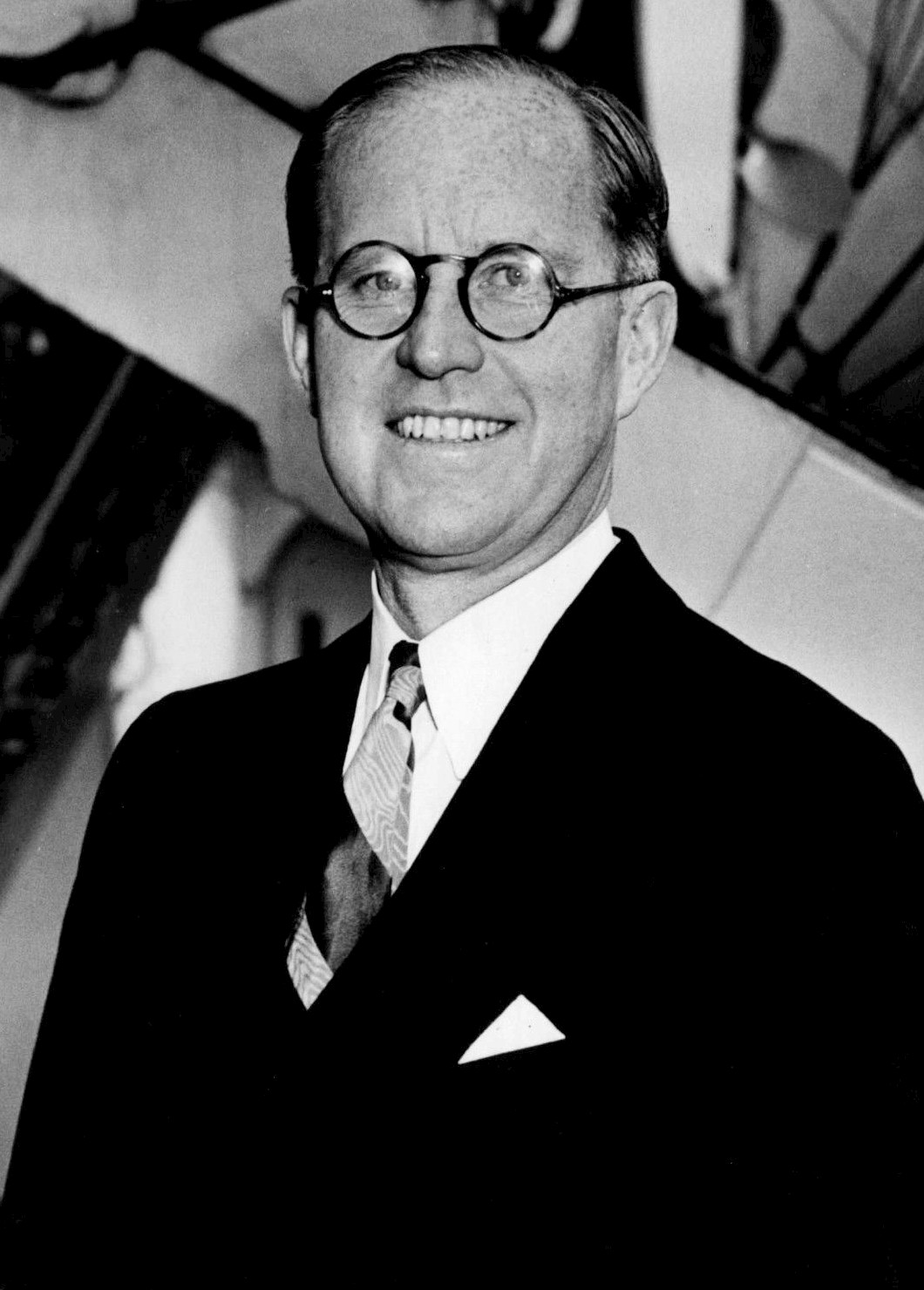 Consequently, Joseph Kennedy recommended that the CIA’s power to engage in covert activities be terminated and that the CIA be strictly limited to collecting intelligence and empowered to do nothing else.
According to Kennedy Jr., “Allen Dulles never forgave him — never forgave my family — for that.”
I wasn’t aware of that fact. I assumed that the war between President Kennedy and the CIA had begun with the CIA’s invasion at the Bay of Pigs in Cuba. The additional information added by Kennedy Jr. places things in a much more fascinating and revealing context.
Upon doing a bit of research on the Internet, I found that the commission that Kennedy Jr. must have been referring to was the President’s Board of Consultants on Foreign Intelligence Activities, which President Eisenhower had established in 1956 through Executive Order 10656. Eisenhower appointed Joseph Kennedy to serve on that commission.
That year was three years after the CIA’s 1953 regime change operation in Iran which destroyed that country’s democratic system. It was two years after the CIA’s regime-change operation in Guatemala that destroyed that country’s democratic system.
Keep in mind that the ostensible reason that the CIA engaged in these regime-change operations was to protect “national security,” which over time has become the most important term in the American political lexicon. Although no one has ever come up with an objective definition for the term, the CIA’s power to address threats to “national security,” including through coups and assassinations, became omnipotent.
Yet, here was Joseph P. Kennedy declaring that the CIA’s power to exercise such powers should be terminated and recommending that the CIA’s power be strictly limited to intelligence gathering.
It is not difficult to imagine how livid CIA Director Dulles and his cohorts must have been at Kennedy. No bureaucrat likes to have his power limited. More important, for Dulles and his cohorts, it would have been clear that if Kennedy got his way, “national security” would be gravely threatened given the Cold War that the United States was engaged in with the Soviet Union, China, Cuba, North Korea, and other communist nations.
Now consider what happened with the Bay of Pigs. The CIA’s plan for a regime-change invasion of Cuba, was conceived under President Eisenhower. Believing that Vice President Nixon would be elected president in 1960, the CIA was quite surprised that Kennedy was elected instead. To ensure that the invasion would go forth anyway, the CIA assured Kennedy that the invasion would succeed without U.S. air support. It was a lie. The CIA assumed that once the invasion was going to go down in defeat at the hands of the communists, Kennedy would have to provide the air support in order to “save face.”
But Kennedy refused to be played by the CIA. When the CIA’s army of Cuban exiles was going down in defeat, the CIA requested the air support, convinced that their plan to manipulate the new president would work. It didn’t. Kennedy refused to provide the air support and the CIA’s invasion went down in defeat.
Now consider what happened after the Bay of Pigs: Knowing that the CIA had played him and double-crossed him, John Kennedy fired Allen Dulles as CIA director, along with his chief deputy, Charles Cabell. He then put his younger brother Bobby Kennedy in charge of monitoring the CIA, which infuriated the CIA.
Now jump ahead to the Cuban Missile Crisis, which Kennedy resolved by promising that the United States would not invade Cuba for a regime-change operation. That necessarily would leave a permanent communist regime in Cuba, something that the CIA steadfastly maintained was a grave threat to “national security”— a much bigger threat, in fact, than the threats supposedly posed by the regimes in Iran in 1953 and Guatemala in 1954.
And then Kennedy did the unforgivable, at least insofar as the CIA was concerned. In his famous Peace Speech at American University in June 1963, he declared an end to the entire Cold War and announced that the United States was going to establish friendly and peaceful relations with the communist world.
Kennedy had thrown the gauntlet down in front of the CIA. It was either going to be his way or the CIA’s way. There was no room for compromise, and both sides knew it.
In the minds of former CIA Director Allen Dulles and the people still at the CIA, what Kennedy was doing was anathema and, even worse, the gravest threat to “national security” the United States had ever faced, a much bigger threat than even that posed by the democratic regimes in Iran and Guatemala. At that point, the CIA’s animosity toward President Kennedy far exceeded the animosity it had borne toward his father, Joseph P. Kennedy, several years before.
Jacob G. Hornberger is founder and president of The Future of Freedom Foundation. He was born and raised in Laredo, Texas, and received his B.A. in economics from Virginia Military Institute and his law degree from the University of Texas. He was a trial attorney for twelve years in Texas. He also was an adjunct professor at the University of Dallas, where he taught law and economics. In 1987, Mr. Hornberger left the practice of law to become director of programs at the Foundation for Economic Education.
Democrats’ election platform demands end to ‘forever wars’ — most of which were launched last time Biden held office
By Helen Buyniski | RT | August 17, 2020
The Democratic Party’s 2020 electoral platform includes a call to end the US’ “forever wars” – which sounds great, except that a Democratic president started many of those wars and the party has stonewalled efforts to end them.
“Democrats know it’s time to bring nearly two decades of unceasing conflict to an end,” the platform, released in draft form on Monday and expected to be approved by Democratic leaders later this week, reads.
It’s a relatively uncontroversial statement in itself: at nearly 19 years and counting, the US war in Afghanistan is the longest conflict in American history. The various satellite wars that have sprung up as part of the “War on Terror” have devastated large swathes of the Middle East – and the US itself, which has spent upwards of $6 trillion on fighting them while much of the country slid into a permanent recession – over the past two decades.
However, the responsibility for many of those satellite conflicts lies with Democrat Barack Obama’s administration, which liberally bombed Syria, Libya, Pakistan, Yemen, and Somalia in addition to Afghanistan and Iraq, turning the already-disastrous two-front War on Terror of his predecessor George W. Bush into a regional quagmire. Democratic candidate Joe Biden was Obama’s vice president, cheering those wars on and defending his boss’ decisions. Now, the party wants Americans to believe only he can put an end to them.
The 2020 platform promises a “durable and inclusive political settlement in Afghanistan” along with an end to US support for the Saudi-led war in Yemen and a repeal of the threadbare 2001 Authorization for Use of Military Force (AUMF) that has been repeatedly (mis)used to excuse US interventions in the Middle East under the guise of fighting terrorism. All great ideas, but the party has been here before.
Despite receiving the Nobel Peace Prize shortly after his inauguration, Obama didn’t bring the peace he promised in his 2008 campaign – he just made war more palatable to the liberals who had previously protested against it. By dramatically expanding the US drone program and cloaking murderous airstrikes in the warm fuzzy rhetoric of spreading democracy and “responsibility to protect,” Obama, his Secretary of State Hillary Clinton, and the Democrats in his administration took the wars out of sight, and out of mind for the average American.
Even while taking credit for “ending” the war in Iraq, launched in 2003 on the fraudulent pretext that leader Saddam Hussein was amassing weapons of mass destruction and/or was somehow involved in the 9/11 terror attacks, Obama subsequently returned US troops to Iraq under the pretext of fighting the Islamic State terror group (IS, ISIS/ISIL). However, IS is widely considered an outgrowth of the US’ botched Iraq policy, which destabilized the region by flooding the country with many of the suddenly-unemployed (but still well-armed) remnants of Saddam Hussein’s military. At the same time, the CIA has a long history of supporting terror groups that dovetail with its political aims, from arming and training al-Qaeda’s predecessors to fight the Soviets in Afghanistan to arming and training so-called “moderate rebels” whose tactics are often indistinguishable from ISIL or al-Qaeda to take out the Syrian government. Terrorism has thrived amid the war “against” it.
That the Democrats should campaign in 2020 on ending forever wars suggests they might have learned something from 2016, when then-candidate Donald Trump pledged to do just that, luring disaffected liberals who couldn’t bring themselves to vote for notorious warmonger Hillary Clinton. Her flippant dismissal of the brutal murder of Libyan leader Muammar Gaddafi – “We came, we saw, he died!” – remains chilling years after she helped reduce the country with the highest standard of living on the African continent to a failed state where slaves are sold in open markets.
But while Trump has profoundly failed to keep his end-the-wars promise, instead increasing the number of drone strikes beyond Obama’s sky-high levels, even Trump’s minimal efforts to withdraw troops from Syria and Afghanistan have been ferociously opposed by the Democrats.
Indeed, the only foreign policy acts the self-styled #Resistance has praised from their political nemesis have been his bombings of Syria in response to extremely dubious reports of gas attacks by the Assad government. CNN’s Fareed Zakaria claimed the strike represented the day Trump “became president of the United States.”
The disingenuous call to end the military quagmires is far from the only lofty pledge embedded in the Democrats’ platform, which alternates between eye-rolling social-justice pandering and common-sense measures with broad appeal.
The party has also pledged to “end the Trump Administration’s politicization of the armed forces,” improve healthcare for veterans, “root out systemic racism from our military justice system,” and “prioritize more effective and less costly diplomatic, intelligence and law enforcement tools” over military invasions in conducting foreign policy.
It remains to be seen which, if any, of those promises they will keep.
Helen Buyniski is an American journalist and political commentator at RT. Follow her on Twitter @velocirapture23
Wolves Prowl Team Biden Borders, Scenting Opportunities
By Alastair Crooke | Strategic Culture Foundation | August 17, 2020
The choice of Vice-President, of course, is primarily about U.S. domestic needs. With BLM and wokeness pervasive in the western sphere, Joe Biden needed to, and committed himself to choosing a black woman, (Kamala Harris is half Indian and Jamaican), since the support of black voters will be crucial in November. But equally importantly, Harris, a career prosecutor, is very aggressive in her speeches — and that’s what Biden needs: i.e. someone with sharp elbows.
She is ‘woke’ on social issues, yet has been notably zealous in incarcerating pot-smoking LA youths, and paradoxically, drew “very little black support in the primaries”. However, in this era of mass protest, Harris will plausibly gild Biden’s ticket – as a Law and Order Vice-President. That counts. And the ‘woke’ contingent on Wall Street, they love her. That counts too.
But down to ‘brass tacks’: Does this tell us anything about Biden’s probable foreign policy, were he to prevail in November? Harris indeed has not adopted war and militarism as her platform – however she hasn’t offered a major foreign policy speech, either. Nonetheless, hers, is no blank page – she has very discernible stances.
Her ‘signature stance’ has been a strong commitment to Israel and to AIPAC: In March 2017, she told the AIPAC Policy Conference: “Let me be clear about what I believe: I stand with Israel – because of our shared values, which are so fundamental to the founding of both our nations.” At the 2018 AIPAC conference, Harris gave an off-the-record speech in which she recounted how, “As a child, I never sold Girl Scout cookies, I went around with a JNFUSA (The Jewish National Fund) box, collecting funds to plant trees in Israel”. And her husband is Jewish. (She skipped the 2019 conference, along with several other Presidential candidates.)
Apart from unwavering support for Israel (which the more panglossian amongst us may see simply as the entry-price to office in the U.S.), Harris has been noted for bellicose rhetoric toward North Korea and Russia, and for her reluctance to co-sponsor legislation aimed at preventing war with Venezuela and North Korea. In short, on such military intervention issues, she’s in line with—and sometimes to the right of—a hawkish Democratic establishment.
‘Move along: Nothing to see here!’ might seem the appropriate riposte: She’s just ‘boilerplate’ Democrat. Maybe that’s right. But to focus on this would be to miss the wood for the trees – for the foreign policy real action is happening almost unnoticed elsewhere.
Executive editor of The American Conservative, Kelly Beaucar Vlahos, warns that we might miss noticing the Neo-con “wolves, dressed in NeverTrumper clothing, sniffing around Joe Biden’s foreign policy circle, bent on influencing his China policy – and more” (emphasis added):
“Never-Trumper Republicans have been worming their way into the Biden campaign, offering to flesh out his “coalition” ahead of the election and pushing their way into the foreign policy discussions, particularly on China. Given their shared history with liberal interventionists already in the campaign, don’t for a second think that there aren’t hungry neoconservatives among them trying to get a seat at the table.
“Some hawkish Democrats may see the neocons as convenient allies in preserving an outdated interventionist mindset,” offers Matt Duss, who is Sen. Bernie Sanders’ longtime foreign policy advisor, who maintains close ties with the Democratic campaign to replace President Trump. “And of course, neocons are desperate for any opportunity to salvage their own relevance.””
A Daily Beast report at the end of last month quoted unnamed “individuals who work for conservative think tanks in Washington” acknowledging that they were “informally speaking with members of the Biden team in recent weeks”.
Their focus is said to be on the ‘failing China trade deal’, and Trump’s supposedly ‘weak posture’. Reportedly, they are “so frustrated with the U.S-China trade deal, and the Administration’s efforts to hold Beijing accountable, that they are willing to offer counsel to the Democratic nominee”. And moreover, are proposing not just support to the Democratic candidate, but also to provide guidance on ways to formulate a tough economic posture toward Beijing, (in order to undermine Trump).
In a later update, the Daily Beast says that with the election less than 100 days away, some members of Trump’s own inner circle are pushing him too in the hawkish direction – urging him to make a new bet: Rather than to put his chips on the trade deal, Trump would hit the electoral jackpot (they counsel) were he just to ‘blow it up’.
Four people knowledgeable about the issue told The Daily Beast that in the past three weeks, an internal campaign has intensified within the Trump administration to convince the president ‘to nuke’ the China trade deal.
The ‘back-story’ here is Biden’s campaign to expand its months of back-channel outreach to Republicans – with the goal of hitting President Trump on his signature campaign issue: China.
Interviews with several of the most prominent NeverTrump Republicans reveal that for now, the nascent effort to mobilise a ‘Republicans for Biden’ movement – alongside the extant Lincoln Project – is loosely defined, and could ultimately take a variety of forms. Essentially, however, Team Biden is being pressed by the Republican strategists to ‘out-Hawk’ Trump on China policy by taking a tougher line than the President. In other words, the campaign is setting up to be about who will be tougher – and will be fought out on the President’s key platform.
Kelley Beaucar Vlahos opines that: “It’s hard to think that real hardline conservative hawks on China, like Steve Bannon and the folks at the Committee on the Present Danger: China [see here] are involved in the Biden collusion. Some of them are certainly neoconservative … They’d be pushing for cold – if not hot – war from Trump’s Right – [and therefore would] not be hedging bets with Biden”. Vlahos continues:
“No, it can only be the establishment Republican types, perched at places like Brookings and AEI, who now see some sort of opening on the D-team. But if they seem like the mushy end of the Right flank, think again. These guys are charter members of the Washington foreign policy consensus, mixed in with neoconservative NeverTrumpers, like Eliot Cohen and Robert Kagan (his wife Victoria Nuland was a top neo-con official in the Clinton State Department) and who have despised Trump from the beginning. They think his America First foreign policy is “deeply misguided” and leading the country to “crisis.””
Ah – It is precisely here where the link back to the choice of Kamala Harris becomes more obvious. She is not likely to bring the Progressive Dems constituency to the Biden campaign (It would take Elizabeth Warren as VP to do that), and she has not had an impressive record of attracting the Black vote in LA. But, she would mesh-in seamlessly with the ‘Washington foreign policy consensus’, whilst still giving ‘the ticket’ a veneer of wokeness.
She thus could be an effective point person for NeverTrumper Republicans. This is a path down which Biden, it seems, is already embarked – at least as far as China is concerned. On domestic issues – such as energy – Biden tilts more towards Sanders, and even Alexandria Ocasio-Cortez (the latter sits on his advisory panel).
And Biden – if elected in November – may not last (or, at least, not attempt a second term). In which case, Harris could theoretically be front-runner for 2024 Presidential contest. And here is the point: If there is one area where these neo-con entryists despise ‘policy weakness’ as much as they do on China, it is Iran. On that issue, Harris is clear. She is an unreserved Israeli partisan.
Anyone therefore hoping for a softening of U.S. policy towards Iran, should Biden win, may be pinning too much hope on Bernie Saunders or ‘The Squad’ being able to ‘round off the sharp edges from U.S. foreign policy stances’ – they may be being overly-optimistic. It is just too obvious: As China veers towards Iran and the Middle East in search of energy-supply security, the temptation of any success with forcing a hawkish stance on China will be to link the two (Iran and China), and to try to push for a ‘kill-two-birds-with-one-stone’ policy stance.
Keep the eyes fixed on the neo-con ‘wolves’, not on Harris.
Featured Video
From Anthrax to Iraq
or go to
Aletho News Archives – Video-Images
Book Review
New paperback: Butchered by “Healthcare”
Lies are Unbekoming | October 20, 2026
 Butchered by “Healthcare” is Robert Yoho’s plain-spoken account of how American medicine stopped being a profession and became an industry. 341 pages. Over a thousand references. Thirty-eight chapters.
“Screening Tests Are Useless”, on tests that find diseases that would never have hurt you. “The FDA Protects the Big Drug Companies”, on an agency funded by the companies it regulates. “The Journals’ Sins Are the Editors’ Sins”, on ghostwritten studies and captured peer review. “Opioids and ‘Pain Management’”, on how a generation was prescribed its way into addiction. “Prozac and Relatives” and “Antipsychotics Are Disastrous”, on what psychiatry does to adults and children. “Surgery: Money Before Patients”. “Failed Cancer Treatments”. “Futile CPR and Overprescribing”. “Billing Scams & Specialty Warfare”. “Hospitals Are Sharks”. Each with a Patient Tips section at the end on how to survive it.
If you have ever walked out of a doctor’s office with a prescription you didn’t ask for, or watched a parent put through a treatment that made them worse, this is the book you want on your shelf before the next appointment. … Full review
Butchered by “Healthcare” is available on Lulu now.
Blog Roll
 Aletho News
- Iran: US political targets legitimate if assassinations return
- Iraq shuts key border crossing with Iran under US pressure: Report
- Undersea Internet cables could be targeted in retaliation for attacks on Iran: IRGC deputy chief
- EU sending ‘biased’ observers to interfere in Serbian election – president
- White House envoy declares kinetic action against Yemen ‘fruitless’
- Ukraine deployed thousands of microdrones in Iraqi Kurdistan: Tasnim
- Iran calls for emergency UNSC meeting over Trump’s ‘brazen’ bomb talk, Israeli threats
- Iranian sources reveal details of Russia-China Hormuz proposal
- Plan for more US-Israel integration puts our military tech at risk
- Another Round Against Iran Will Break What Is Left of the Gulf
- If Americans Knew
- Christiane Amanpour exits CNN with a legacy shaped by the debate over Israel
- Israel’s war on Iran is the final move in a decades-old strategy
- Israel Denies Entry to French Journalist, U.S. Researcher Amid Rise in Entry Denials
- Gaza’s hospitals are running out of life-saving fuel – Daily Update
- Mysterious bot accounts reportedly spread fake ‘man on the street’ videos for Michigan Senate candidate
- Israeli Defense Minister Katz Says Over 60 Lebanon Villages Have Been Destroyed
- Why Is Israel Running TV Ads in Iowa Ahead of the Midterms?
- Hind Rajab’s Alleged Killer Is in the United States. HRF Demands His Arrest.
- US Officials Face Fresh Pressure After Another American ‘Brutalized’ by Israeli Settlers in West Bank
- Israel-Backed Palestinian Militias Terrorize Displaced Families in Gaza
- No Tricks Zone
- E-Cars Reduce CO2 Emissions By Only 41% Compared To Internal Combustion Engine Vehicles
- Predictions Made By Renowned Climate Professor Over Past Decades Have Been Proven To Be Poor
- New Study Suggests Large Regions Of The Pacific Ocean Have Been Cooling For The Last 80 Years
- Germany’s Green Energy Debacle: High Energy Costs Force Kahla Porzellan to Close After 182 Years!
- New Study: 50 Years Of The Most Aggressive ‘Net Zero’ Policies Can Only Affect The Global Climate By 0.03°C
- US September “Heat” Was No Record…Many Records Set Decades Ago
- Latest European Green Energy Debacle; Portugal’s Largest Flagship Solar Park Insolvent!
- Green Energy Debacle: German Expert Professor Fritz Vahrenholt Warns Of Severe Economic And Social Consequences
- Two More Paleo Reconstructions Affirm Meters-Higher Sea Levels Across Ireland, Brazil 7000-6000 Years Ago
- New Study: Earth And Venus Surface Warmth Largely Explained By Convection And Lapse Rate, Not CO2 Or Radiation

