Looking back on the Maidan events and its consequences
By Francis Lee for the Saker Blog | August 12, 2020
Victor Yanukovich was elected President of the Ukraine in 2010 narrowly defeating Yulia Timoshenko with 49% of votes cast to Timoshenko’s 45%. The Ukrainian Presidential term of office lasts for five years. Yanukovich’s Party, the Party of the Regions, together with its coalition partner the Communist Party of the Ukraine, also had a majority in the Ukrainian Parliament, with Mykola Azarov as Prime Minister. The membership of the EU was perhaps one of the more salient issues of the time and was the trigger for the ensuing upheavals.
Negotiations for Ukraine’s initial stage of eventual membership of the EU – the so-called Association Agreement – had been dragging on since 2011, but both Yanukovich and Azarov were favourably disposed to an eventual positive outcome, although the Communist part of the coalition were not.
This did not go down at all well in Moscow and Azarov attempted to assuage Russian misgivings by urging Russia ‘’to accept the reality of Ukraine signing the EU agreement’’. The commitment of Yanukovich was eventually tested to destruction since he was being pulled in two directions, by Russia on the one hand and by the EU on the other. For their part, the Russians offered the Ukraine a $15 billion loan, a discount on gas prices, and membership of the Customs Union of Russia, Kazakhstan, and Belarus. But the EU was having none of it. President of the European Commission Jose Manuel Barroso stated that the EU will not tolerate ‘a veto of a third country’ (Russia) in their negotiations on closer integration with Ukraine. This being the case Yanukovich was forced into a choice which would be certain to alienate and anger one of the powerful interested parties on its borders.
Negotiations continued on into 2013. Yanukovich was invited to sign the Association Agreement, but there were a number of conditions. The most significant of these were those concerning an IMF loan. But anything involving the IMF should have set the alarm bells ringing with regard to the intentions of western institutions vis-à-vis the future of the Ukraine. The conditionality clauses were very much in the tradition of the IMF. Their ‘Structural Adjustment Programmes’ had always been the scourge of the developing world and this offer pact was enough to scupper the EU deal. Prime Minister Azarov at the time stating that ‘’the issue which blocked the signature of the EU deal were the conditions proposed by the IMF loan being negotiated at the same time as the budget cuts and 40% increase in gas prices’’. This for a country already verging on bankruptcy. In store for the Ukraine was the usual neoliberal austerity package. Compliments of the IMF’s Structural Adjustment Policies (SAPs) this would involve the following set of prescriptions:
1. Balance of payments deficit reductions through currency devaluation = SAP
2. Budget deficit reduction through higher taxes and lower government spending, aka austerity = SAP
3. Restructuring foreign debts
4. Monetary policy to finance government deficits (loans from central bank – with strings) = SAP
5. Raising food prices to cut the burden of subsidies = SAP
6. Raising the price of public services = SAP
7. Cutting wages = SAP
8. Reducing domestic credit = SAP
9. ‘Reforming’ pensions = SAP. Marvelous word ‘Reforming’
10. Deregulation of labour market. = SAP aka smashing labour unions
Longer-term ‘structural adjustment’ policies usually include:
1. Liberalization of markets to guarantee a price mechanism = SAP
2. Privatization, or divestiture, of all or part of state-owned enterprises = SAP
3. Creating new financial institutions. Hedge Funds, Shadow Banks, Private Equity = SAP
4. Improving governance and fighting corruption – ?
5. Enhancing the rights of foreign investors vis-à-vis national laws = SAP
6. Focusing economic output on direct export and resource extraction = SAP. That is to say, the creation of a peripheral economy a raw material exporter.
7. Increasing the stability of investment (by supplementing foreign direct investment with the opening of domestic stock markets). Financialization of the host economy = SAP
Just what the doctor ordered, no! These policies have been tried everywhere and have failed abysmally. Little wonder Yanukovich took the Russian offer instead.
However, what seemed like a straightforward business decision was greeted with howls of anguish and gnashing of teeth as the Europhiles in Independence Square felt that their future had been taken from them. This was indeed to happen in due course (see below) but this was the outcome of accepting rather than rejecting the IMF package.
THE BATTLE OF THE MAIDAN
Immediately these facts became known the mass protest in Kiev took place and was on the world’s TV screens, with demonstrators waiving Ukrainian and EU flags. (Where they got these EU flags is a mystery to this day.) This seemed to be a mass popular protest and the demonstrators were to set up camps in Independence Square. But the carnival atmosphere was not to last. Ultra-nationalist groups (inveterate fascists) in the shape of Right Sector and Svoboda (1) began to emerge from the shadows and appear among the genuine moderate majority and joined in pitched battles with the Berkut (riot Police) on a daily basis which the opposition forces finally won. This was, according to the Guardian ‘newspaper’ a victory for democracy and peoples’ power. Well it might have started like this but it transmuted into something very different. Nobody should be in any doubt about the political complexion of these ultra-nationalist groups who went on to hold 6 portfolios in the new ‘government’ based in Kiev. Nor should anyone be in any doubt about both the overt and covert roles played by both the US and EU officials in the formation of the future interim government.
Throughout this period the EU and high-ranking US officials were openly engaged in Ukraine’s internal affairs. The US Ambassador, Geoffrey Pyatt, and the US Assistant Secretary of State for European and Eurasian Affairs, Victoria Nuland, were strolling around Independence Square reassuring the protestors that America stood behind them. Also basking in the political sunlight were US NGOs (such as the National Endowment for Democracy – NED – directly funded by the US Government) and (USAID). Also involved was the US Human Rights Watch (HRW) and not forgetting of course the ubiquitous Mr. Soros. Identified as GS in the leaked Open Society Foundation (OSF) documents, others involved in the Ukrainian coup in the planning, were the already named, US Ambassador Geoffrey Pyatt, along with the following: David Meale (Economic Counsellor to Pyatt, Lenny Benardo (Open Society Foundation – OSF) Yevhen Bystry (Executive Director International Renaissance Foundation – IRF) Oleksandr Sushko (Board Chair, IRF) Ivan Krastev (Chairman Centre for Liberal Studies, a Soros and US government-influenced operation in Sofia, Bulgaria) and Deff Barton (Director, US Agency for International Development AID – USAID – Ukraine). USAID is a conduit for the CIA.
Even right-wing thinkers such as George Freidman at Stratfor described these events as being ‘the most blatant coup in history.’
The new ‘government’ in Kiev was represented by a hotch-potch of oligarchs Kolomoiski, Akhmetof, Pinchuk, Poroshenko, et al, and petty fuhrers including Parubiy, Yarosh, Biletsky, from the Western Ukraine with their violent armed squadristi units terrorizing their opponents. The ultra-right Svoboda Party had a presence in the Ukrainian parliament (Rada). It is a neo-nazi, ultra-right, anti-Semitic, Russo phobic party with its base of support in the western Ukraine. The most important governmental post was handed to its fuhrer Andriy Parubiy who was appointed as Secretary of the Security and National Defence Committee, which supervised the defence ministry and the armed forces. The Parubiy appointment to such an important post should, alone, be cause for international outrage. He led the masked Right-Sector thugs who battled riot police in the Maidan in Kiev.
Like Svoboda, Right-Sector led by their own tin-pot fuhrer Dmitry Yarosh is an openly fascist, anti-semitic and anti-Russian organization. Most of the snipers and bomb-throwers in the crowds were connected with this group. Right Sector members had been participating in military training camps for the last 2 years or more in preparation for street activity of the kind witnessed in the Ukraine during the events in Independence Square in 2013-14. The Right Sector as can be seen by the appointment of Parubiy, is not in a position to control major appointments to the provisional government but he has succeeded in achieving his long-term goal of legalizing discrimination against Russians.
This discrimination took the forms of mass murder in the southern Black Sea port of Odessa when pro-Yanukovich supporters were attacked by fascist mobs and chased into a nearby building, a trade union HQ. The building was then set on fire and its exits blocked, the unfortunate people trapped inside were either burnt to death or, jumped out of the windows only to be clubbed to death when they landed. The practices of the political heirs of Bandera had apparently not been forgotten by the present generation. There is a video of the incident, but frankly, it was so horrific that I could only watch it once. These barbarians were described by Luke Harding of the Guardian as being ‘’an eccentric group of people with unpleasant right-wing views.’’ Yes, they were really nice chaps who got a little carried away! One week later with the open support of Washington and its European allies, the regime installed by Washington and Berlin in February’s fascist-led putsch then began extending its reign of terror against all popular resistance in Ukraine. That was the significance of the events in the major eastern Ukrainian sea-port city of Mariupol less than a week after the Odessa outrage.
After tanks, armoured personnel carriers and heavily armed troops were unleashed on unarmed civilians in the city, the Kiev regime claimed to have killed some 20 people. The Obama administration immediately blamed the violent repression on “pro-Russian separatists.’’
Poroshenko, ex-Finance Minister in Yanukovich’s government, was elected as President on 29 May and duly announced that “My first presidential trip will be to Donbass where armed pro-Russian rebels had declared the separatist Donetsk and Lugansk People’s Republics and control a large part of the region.’’ This was the beginning of the Anti-Terrorist Operation the ATO. However, things didn’t quite work out as planned. After 2 heavy defeats at Iloviask and Debaltsevo the Ukie army was stopped in its tracks and the situation has remained static to this day.
In the meantime the Ukraine has become the poorest nation in the whole of Europe. The economic and social ramifications of the 2014 coup were such that that the full weight of the neo-liberal economic policies were foisted on the Ukraine, courtesy of the IMF. This was already apparent in the early 80s, but the trend accelerated after the coup. The standard IMF/WTO Structural Adjustment Policies (SAPs) – see above – a package of ‘reforms’ and ‘fiscal consolidation’ (I just love these IMF euphemisms) consisted of cuts in government expenditure, accompanied by extensive liberalisation of product and labour markets, together with abandonment of exchange rate control and capital flows.
These policies along with political instability have had, among other things, a disastrous effect on population growth. Ukraine’s population was 52 million in 1992 and the decline started in that year. By 2016, this figure had fallen to 42.5 million, its 1960 figure, and was accelerated since the coup of 2014. The current Fertility rate stands at 1.3. Any figure less than 2 will mean a shrinking population. The death rate has also increased, along with mass migration with some 2 million Ukrainian guest workers decamping to Russia and Poland in search of work. This is a slow-motion demographic calamity.
This notwithstanding the largesse handed out by the Western powers through the instrumentality of the IMF as pointed out by Michael Hudson. ‘’The IMF in fact broke four of its rules by lending to Ukraine: These included (i) Not to lend to a country that has no visible means to pay back the loan (the “No More Argentinas” rule, adopted after the IMF’s disastrous 2001 loan to that country). (ii) Not to lend to a country that repudiates its debt to official creditors (the rule originally intended to enforce payment to U.S.-based institutions). (iii) Not to lend to a country at war – and indeed, destroying its export capacity and hence its balance-of-payments ability to pay back the loan. Finally (iv), not to lend to a country unlikely to impose the IMF’s austerity ‘conditionalities.’ Ukraine did agree to override democratic opposition and cut back pensions, but its junta proved too unstable to impose the austerity terms on which the IMF insisted.’’
Nothing better illustrated the monumental stupidity of a nation which subordinated economic common-sense to anti-Russian gestures and rhetorical bluster; this was visibly illustrated in the trade deal involving the import of European gas and South African coal to the exclusion of Russian gas and Donbass coal. In both cases, however, Ukraine was simply buying the same goods from Donbass and Russia but resold at a significantly higher price by South Africa and Europe simply acting as middle-men at a huge cost to the Ukrainian tax-payer. (2)
All of which illustrates the intractable political and economic debacle unfolding and goes some way to explaining the present impasse of a backward movement into under-development. Ukraine is becoming deindustrialised – not unlike the fate of many post-soviet nations – its trade with the Eurasian Economic Union (EEU) Russia-Belarus-Kazakhstan-Kyrgyzstan severed. This was formerly an exceptionally large and important export-import market, imports consisting of energy commodities coming from the EEU, and exports to the EEU consisting of Ukraine’s advanced industries in the east situated in Donetsk, Lugansk, Kharkov, Dnepropetrovsk, Zhaporizyha and Nikolayev oblasts. These exports consisting of machinery, equipment, aircraft, vessels, nuclear reactors and boilers, railway, tramway rolling stocks and inorganic chemicals.
‘’… The machinery industry alone had an annual revenue of nearly US$20 billion and was responsible for employing 600,000 people in the southern and eastern oblasts. Not only would trade disruptions in the EEU devastate the southern and eastern economies, they would also lead to the deindustrialisation of the Ukraine, and this process has already started.’’ (3)
Ukraine is now the poorest country in Europe. And once the process of deindustrialisation starts, charting a way back will be exceedingly difficult, even with the best will in the world and with the necessary manpower, skills, and expertise to carry out such a transformation. Moreover, this imbecility is compounded by military expenditures including the costs of an army of 250,000 that is doing nothing other than getting drunk and occasionally shelling towns and villages – against International Law it might be added – on the front line in the Donbass. Ukraine’s defence expenditure stands at 3.7% of GDP compared with NATO’s 2% and most NATO countries don’t even reach 2%. For the poorest country in Europe this is frankly bizarre. If you wanted to run a country and its economy into the ground this is the way to do it.
It has been suggested that nothing short of a huge ‘Marshall Plan’ to reconfigure Ukraine’s economic composition, requiring massive investment if it is to replace its post-Soviet industry – which seems especially so now that the industry heartlands of the Donbass have been severed from the Ukraine. Unsurprisingly, however, no-one is rushing to pick up the tab for this new ‘Marshall Plan’. Certainly not the EU, and even less so the Americans, who simply wanted yet another east European state (qua protectorate) to serve as a military base aimed at confronting Russia.
But now we may dispose of the customary patter of freedom and democracy together with the rest of the pseudo-rhetoric emanating from the usual sources. Fact: the entire Ukrainian imbroglio was essentially a matter of geopolitical realpolitik with the exalted rhetorical baggage being mere camouflage. US geopolitical strategy being predicated upon a hegemonic project to establish a system of dominance over the entire world. This desired outcome was nothing if not ambitious and is a common feature of all historically crackpot utopian schemes. This explains the US’s concurrent wars in the middle-east, the South China Sea, and in Europe – EUROCOM – with Ukraine as the spearhead. The object was initially to occupy western Europe through NATO and the EU, then spread this to eastern Europe, resulting in a de facto occupation and vassalisation of the European continent, with the role of the EU playing second string to its masters hegemonic requirements. This was the tawdry reality behind the initial euphoria of the short-lived settlement of 1991.
‘’It is pure hypocrisy to argue that the EU is now little more than an extended trading bloc after the Lisbon Treaty. It was institutionally now a core part of the Atlantic Security bloc (NATO) and had thus become geopolitical’’ (4)
In broader terms the Ukraine episode was part of a more general offensive against Putin in particular and Russia in general, and both were subjected to unrelenting demonization. With regard to Putin the venom was such that he was held personally responsible for the Skripal poisonings. That is to say a foreign head of a powerful state was accused of attempted murder of its citizens who resided in another state, the UK. Such unproven allegations between states seem unprecedented and alien to any type of mutual respect and diplomacy. For months the West has been demonizing Putin, it has almost become a national sport, with figures such as the Prince of Wales and Hilary Clinton comparing him with Hitler, oblivious to the fact that Putin had lost members of his own family during USSR’s Great Patriot war against Hitler’s legions. Such is the intellectual prowess, or more likely the lack of it, among the leading spokespersons of the West who combine ignorance in equal measure to arrogance. What set this crisis in motion were the recklessly provocative moves to absorb the Ukraine into the EU. Moreover, if the West’s offhand dismissal of Russia’s power concerns and the continued demonization of Putin continued, then Russia could well shift into a Cold War mode which would be a self-fulfilling prophecy come true.
Thus the contemporary decline of diplomacy reflects the didactic character of the liberal international order, which presumes that Russia is somehow an illegitimate interlocutor and parvenu and therefore its views can be discounted.
Coming full circle, the US relations with other states – particularly Russia and China – are best summarized in the Wolfowitz doctrine which bears repeating. As follows:
‘’Our first objective is to prevent the re-emergence of a new rival, either on the territory of the former Soviet Union or elsewhere, that poses a threat on the order of that posed formerly by the Soviet Union. This is a dominant consideration underlying the new regional defence strategy and requires that we endeavour to prevent any hostile power from dominating a region whose resources would, under consolidated control, be sufficient to generate global power.’’ (5)
Thus peaceful coexistence has never really been part of the US foreign policy, only world domination. Episodes like Ukraine, Syria and the middle-east, the South China Sea, Africa and Afghanistan, Hong Kong, Taiwan and not to mention Latin America are all part of the playbook and have all followed a similar if not exact patterns of regime change and/or being dragooned into one-sided relationships, military, commercial or otherwise.
Whoever becomes the next US American President will not in any way mean a departure from the above geopolitical policies. If anything such policies will be even more rigorously pursued.
NOTES
(1) These fascist militias had for some time been made ready for civil conflict against the Ukraine’s elected authorities. In 2012 I was travelling with my wife from Donetsk to a holiday resort in the Khmelnytskyi Oblast in the Western Ukraine. The train stopped at Dnipropetrovsk a major city half-way between. The train was boarded by a large group of young men; they looked like an amateur football team. My wife got talking to them and they described themselves as students. The strange thing was that there were no women or girls among them. Perhaps there were no female students in Ukraine; this seemed unlikely. Then the coin dropped: Right Sector had its main training camp at Dnipropetrovsk and these ‘students’ were going back to the west for the summer vacation. Two years later they were in all probability engaged in ‘political activities’ in Independence Square.
(2) http://www.lrb.co.uk/v36/n17/keith-gessen-why-not-kill-them-all)
(3) countryeconomy.com
(4) Richard Sakwa – Frontline Ukraine – p.255)
(5) Paul Wolfowitz -Defence Planning Guidance for the 1994–99 fiscal years (dated February 18, 1992) published by US Under Secretary of Défense for Policy Paul Wolfowitz and his deputy Scooter Libby. Not intended for public release, it was leaked to the New York Times on March 7, 1992, and sparked a public controversy about U.S. foreign and defence policy. The document was widely criticized as imperialist, as the document outlined a policy of unilateralism and pre-emptive military action to suppress potential threats from other nations and prevent ‘’dictatorships’’ from rising to superpower status.
Australia: Willing Pawn in US Struggle with China
By Tony Cartalucci – New Eastern Outlook – 07.08.2020
Upon reading Australia’s new defense strategy, one might think its authors believe they are surrounded by nations invaded and destroyed by China with Australia next in line.
News headlines declare, “Australia’s new defence strategy unveils a significant strategic shift in foreign policy to meet new threats from China,” “China the unspoken threat at centre of new defence strategy,” and “Australia to buy ship-killing missiles and shift focus to Indo-Pacific” to “to protect overseas forces, allies and the mainland against rising threats including China.”
The “threat” of China – the articles and the new defense strategy argue – requires Australia to spend billions on weapons bought from the United States and to depend more heavily on the US for Australia’s protection.
Yet in the same breath, Australia’s media openly admits that up until now, Australia’s military has spent much of its time contributing to America’s many and still-ongoing wars of aggression around the globe from Libya and Syria to Iraq and Afghanistan. Most recently, Washington has recruited Australia to help bolster its presence in the Strait of Hormuz in an effort to menace Iran as well.
In one of the above mentioned articles it’s admitted that:
For decades Australia has been quick to send troops, naval vessels and planes to help the United States wage wars on distant shores.
Despite all but admitting the US – not China – is engaged in a global campaign of armed aggression and that Australia is a willing accomplice – Australia’s new defense strategy points the finger at China as the ultimate global threat.
A likely explanation for this contradictory worldview among Australian policymakers is the possibility that deep-pocketed lobbyists from Washington still hold more sway over Australia’s political levers than Australian businesses and certainly the Australian public – and plan to collectively squeeze Australia for billions in arms sales for missiles and other weapon systems pointed at what is otherwise Australia’s largest and most important economic partner – China.
Not only does this fill up the coffers of corporations like Boeing, Lockheed Martin, Raytheon, and others, but Australia’s apparently hostile posture toward China will most certainly taint relations between the two nations, creating further conflict, and requiring continued and increased weapon sales well into the future.
Should any conflict erupt between the US and China, Australia will find itself a much closer target than the US – a sacrificial pawn of sorts that will bear the full brunt and consequences of any potential US-Chinese hostilities.
Well-Timed “Cyber Attacks” Help Sell an Otherwise Unappealing Defense Strategy
The new defense strategy – long in the works – was unveiled only after a healthy dose of recent and mysterious “cyber attacks” Australian security agencies attributed with no evidence to China.
Again – the irony here is that the US has by far demonstrated itself to be as much a threat in cyberspace as it is to sovereign nations and their physical territory, and much more so than China.
Regarding Australia specifically, a 2013 Guardian article titled, “NSA considered spying on Australians ‘unilaterally’, leaked paper reveals,” would note that a:
The US National Security Agency has considered spying on Australian citizens without the knowledge or consent of the Australian intelligence organisations it partners with, according to a draft 2005 NSA directive kept secret from other countries.
The US National Security Agency (NSA) has been revealed to have compromised communications worldwide, hacked the phones of national leaders both friend and foe, infiltrated and created backdoors in Western-manufactured high tech hardware, and carried out offensive cyber attacks against nations around the globe.
There is also a growing body of evidence that suggests many attacks attributed to nations like Russia and China – like the one recently carried out against Australia – were either fabricated entirely, or in fact carried out by actors in the US itself.
But what better way is there to sell the otherwise unpopular idea of Australia buying billions of dollars of weapons from America and poisoning relations with China than to cite an alleged act of aggression from China that is nearly impossible to attribute one way or the other? The Western media’s clout has in the past and continues to be much more persuasive than fact or common sense in the short-term.
Other analysts have pointed out Australia’s new defense policy is out of touch with reality. It will also do much more to undermine Australia’s national security than underwrite it.
While it is sensible for nations to ensure they have a credible deterrence against all forms of aggression regardless of the nation of origin, Australia’s defense posture has it facing a nation clearly more interested in economics than conquest, and facing away from a nation not only openly and repeatedly carrying out aggression worldwide, but one increasingly turning on its own allies for not exhibiting enough zeal against its many and multiplying enemies.
While Australia commits billions to buying American weapons and buying into Washington’s continued and growing confrontation with China – in the end – Australia will need to pick between fading with the US economically or finally accepting China’s rise regionally and globally and Australia’s role as a partner with China rather than part of America’s “primacy” over it.
Again – the irony here is of course that the most likely threat to Australia’s national security will not be from a rising China eager to do business with Australia, but a scorned Washington seeking increasingly aggressive means to force Australia back into its traditional role of buttressing US primacy.
Hiroshima, Nagasaki 75 Years On, Washington Still Playing Terror Card

Strategic Culture Foundation | August 7, 2020
Seventy-five years ago this week the world crossed an infernal threshold, with the dropping of two atomic bombs on Japan by the United States. Humankind had gained the technological capability for inflicting mass, instantaneous annihilation.
The destruction of Hiroshima and Nagasaki along with over 200,000 lives – 90 per cent of whom were civilians – was not a military act to end the Second World War, as the official American narrative would have us believe. It was a political act to begin the Cold War, deliberately carried out by American leaders to assert U.S. hegemony against the Soviet Union and all others. It was an act of fiendish, premeditated mass murder – genocide – with the political objective of instilling terror against all perceived adversaries of American ambitions for global dominance.
Many historians, including respected American scholars, have verified that the atomic bombing of Japan had nothing to do with swiftly ending the Pacific War and “saving U.S. lives”. It was simply an act of unspeakable barbarism for political aims to do with winning the anticipated Cold War. The bombs were dropped just as the Soviet Red Army entered the Korean Peninsula to augment the fight against Japanese imperial forces, as was previously agreed by Stalin, Roosevelt and Churchill at the Yalta conference of war-time allies back in February 1945. However, by the time of August 1945, Washington and London had moved considerably to adopt a more hostile position against Moscow, with a view to challenging the Soviet Union for spheres of influence in the postwar world.
There is no doubt that the indiscriminate mass murder of Japanese civilians with a new weapon of unprecedented savagery was carried out as a demonstration of psychopathic power by the United States. It was to be the ultimate warning. In short, it was a supreme act of terrorism. The earlier British-American aerial bombing of German cities and the U.S. firebombing of Tokyo inflicted more accumulated deaths, but the instantaneous destruction at Hiroshima and Nagasaki introduced a new terror lever, one that spelt total annihilation with single bombs.
By 1949, Washington’s terror monopoly lost its ace value when the Soviet Union developed its own atomic weapon. For over seven decades, the world has lived under the shadow of nuclear catastrophe, sometimes coming perilously close, as in the Cuban missile crisis of 1962.
Today, the U.S. and Russia each possess an estimated 6,000 nuclear weapons – accounting for over 90 per cent of the world’s total arsenal. Existing stockpiles are much reduced in number compared with past decades. Nevertheless, each one of these contemporary devices has an explosive power many times that of the bombs dropped on Hiroshima and Nagasaki. It is inconceivable that human life and the planet as we know it would survive a nuclear war. For that onerous reason, and to avoid “mutually assured destruction”, Washington and Moscow had cooperated historically to draw up several arms control treaties. But over the past two decades, the U.S. side has revoked treaty after treaty. The Trump administration is threatening to scrap the last remaining one, the New START accord which is due to expire in February next year unless it is renewed, which Washington seems ambiguous about. A policy of calculated ambiguity, it may be averred.
There can be little doubt that the Cold War is back with a vengeance as far as the American government and its propagandist corporate news media are concerned. In recent years and indeed weeks, the vilification and smears heaped upon both Russia and China have intensified to a frenzy. The week-in, week-out paranoia and hostility emanating from Washington towards Moscow and Beijing is on par with the unhinged red-baiting ravings of the McCarthyite era in the 1950s. The return of Cold War mindset in Washington is a concomitant of political and economic crises besetting American power as its presumed global empire lurches towards collapse.
In this context, the remembrance of Hiroshima and Nagasaki takes on an altogether more urgent purpose. It has to be recognized that Washington used nuclear annihilation as a terror weapon and it continues to play the same nefarious tactic to this day. There has never been an official apology out of Washington for the monstrous crime it committed in August 1945 because the American rulers have always wanted to maintain the “right” to terrorize others. The current warmongering out of Washington towards Russia and China amid baseless, provocative accusations, as well as military force build-up in sensitive regions, against the backdrop of unfettered arms development, all can only mean one thing: Washington is trying to use the terror card to subjugate others while running the diabolical risk of inciting a nuclear war.
The world should know that American politicians and their media boosters are collectively acting as a madman. American power ultimately relies on coercive terror. But Russia and China will not tolerate such psychopathic conduct, and, thankfully, have the defensive means to counter-threat. The American pretense of virtue is finally being exposed for the ugly reality that lies beneath.
Austrians protest government cooperation with Israel in cyber drills
By Homa Lezgee | Press TV | August 4, 2020
Vienna – Protesters in Vienna are demanding an immediate end to Austria’s military cooperation with the Israeli regime.
The slogan of protesters gathered outside the American embassy in Vienna is “No to Austrian subordination to US/Israeli interests.”
They say the Austrian government’s decision to involve its intelligence forces in cyber maneuvers with Israel is meant to serve the interests of the US and Israel despite concerns it could lead to mass surveillance of the Austrian population.
Not much is known about the maneuvers, reportedly involving the Israeli military, the German Armed Forces, and units from Austria and Switzerland, during which cyber attacks would be simulated and countered.
Protesters also condemned the Austrian government for refusing to vote against Israel’s recent illegal annexation plans.
Pro-Palestinian groups in Austria, such as the Palestine Solidarity Platform, and the Boycott, Divestment and Sanctions Movement (BDS) have been facing increasing government restrictions amid allegations of promoting anti-Semitism, an accusation they say is being used to misrepresent their goal of opposing Israeli occupation and aggression.
Democratic Party Boosters Have Little to Offer
Few want to return to Obama or Clinton

By Philip Giraldi • Unz Review • August 4, 2020
Donald Trump might be described as unique as a president of the United States in that he constantly impulsively self-promotes in a bizarre fashion which the Independent has described as “wild days of authoritarian and incoherent outbursts.” But normally politicians are canny enough to steal and connive out of sight without letting on what they are doing or thinking. Given that, you know you are in deep trouble as a nation when a major political party is so tone deaf as to persist in introducing spokesmen who suffer from serious negative perceptions to boost the chances of their current candidates for office. That is precisely what the Democratic Party has been doing when it keeps employing the Obamas and Clintons to promote the Democratic National Committee platform and its candidates for the November elections while also supporting the campaign of Honest Joe Biden.
Reminding the national electorate of the legacies of Hillary Clinton and Barack Obama guarantees that voters normally inclined to vote Republican or even independent will be energized and turn out in large numbers in spite of their disdain for Trump’s style. Hillary, after all, should still be in jail for her mishandling of classified information while Barack ought to be in prison for life for having given the orders to assassinate American citizens without due process while also using the intelligence and law enforcement agencies to undermine the Donald Trump campaign. Hillary and Barack were also complicit in unnecessary wars against Libya and Syria that have devastated both countries.
Hillary is a co-founder of Onward Together, a Democratic Party front group that is affiliated to other activist organizations. In a recent e-mail she played the race card in a bid to solidify the black vote behind the Democratic Party, writing “Friend, George Floyd’s life mattered. Ahmaud Arbery and Breonna Taylor’s lives mattered. Black lives matter. Against a backdrop of a pandemic that has disproportionately ravaged communities of color, we are being painfully reminded right now that we are long overdue for honest reckoning and meaningful action to dismantle systemic racism.”
It is, of course, a not-so-subtle bid to buy votes using the currently popular code words “systemic racism” as a pledge that the Democrats will take steps to materially benefit blacks if the party wins the White House and a majority in the Senate. She ends her e-mail with an odd commitment, “I promise to keep fighting alongside all of you to make the United States a place where all men and all women are treated as equals, just as we are and just as we deserve to be.” The comment is odd because she is on one hand promising to promote the interests of one group based on skin color while also stating that everyone should be “treated as equals.” Someone should tip her off to the fact that employment and educational racial preferences and reparations are not the hallmarks of a government that treats everyone the same.
But if one really wants to dig into the depths of the Democratic Party soul, or lack thereof, there is no one who is better than former U.N. Ambassador and Secretary of State under Bill Clinton, the estimable Madeleine Albright. She too has written an e-mail that recently went out to Democratic Party supporters, saying:
“I’m deeply concerned. Donald Trump poses an existential threat to our standing in the world and continues to threaten the decades of diplomatic progress we had made. It is easy to forget from the comfort of our homes that for many people, America is a beacon of hope and opportunity. We’re known as a country that keeps our promises and upholds justice and democracy, and that didn’t just happen overnight. We’ve spent decades building our nation’s reputation on the world stage through careful, strategic diplomacy — but in just under four years, Trump has done unspeakable damage to those relationships and has insulted even our closest allies.”
Albright, who is perhaps most famous for having stated that she thought that the deaths of 500,000 Iraqi children due to U.S. imposed sanctions was “worth it,” is living in a fantasy bubble that many politicians and high government officials seem to inhabit. She embraces the America the “Essential Nation” concept because it makes her and her former boss Bill Clinton look like great statesmen. She once enthused nonsensically that “If we have to use force, it is because we are America; we are the indispensable nation. We stand tall and we see further than other countries into the future, and we see the danger here to all of us.”
Madeleine Albright’s view that “America is a beacon of hope and opportunity… known as a country that keeps our promises and upholds justice and democracy” is also, of course, completely delusional, as opinion polls regularly indicate that nearly the entire world considers the U.S. to be extremely dangerous and virtually a rogue state in its blind pursuit of narrow self-interest combined with an unwillingness to uphold international law. And that has been true under both Democratic and Republican recent presidents, including Clinton. It is not just Trump.
Albright is clearly on a roll and has also submitted to a New York Times interview, further enlightening that paper’s readership on why the Trump administration is failing in its job of protecting the American people. The questions and answers are singularly, perhaps deliberately, unexciting and are largely focused on coronavirus and the new world order that it is shaping. Albright faults Trump for not promoting an international effort to defeat the virus, which is perhaps a bridge too far for most Americans who are not even very receptive to a nationally mandated pandemic response, let alone one requiring cooperation with “foreigners.”
Albright’s persistence as a go-to media “expert” on international relations is befuddling given her own history as an integral part of the inept foreign policy promoted by the Clinton Administration. She and Bill Clinton became cheerleaders for an unnecessary Balkan war that still resonates and were responsible for what was possibly the greatest foreign policy blunder (with the possible exception of the Iraq War) since the Second World War. That consisted of ignoring the commitment to post-Soviet Russia to not take advantage of the 1991 end of Communism by expanding U.S. or NATO military presence into Eastern Europe. Clinton/Albright reneged on that understanding and opened the door for many of the former Soviet allied states to enter NATO, thereby introducing a hostile military presence right up to Russia’s border.
Simultaneously, the U.S. enabled the election as Russian president of the hapless drunk Boris Yeltsin, who, guided by advisers sent by the White House, oversaw the western looting of his country’s natural resources. The bad decision-making under the Clintons led inevitably to the rise of Vladimir Putin as a corrective, which, exacerbated by Hillary Clinton as Secretary of State and a maladroit Donald Trump, has in turn produced the poisoned bilateral relationship between Washington and Moscow that currently prevails.
So, one might reasonably suggest to Joe Biden that if he really wants to get elected in November it would be a good idea to keep the Clintons, Albright and maybe even Obama carefully hidden away somewhere. Albright’s interview characteristically concludes with her plan for an “Avengers style dream team” to “fix the world right now.” She said that “Well, it certainly would be a female team. Without naming names, I would really try to look for women who are in office, both in the executive and legislative branch. I would try to have a female C.E.O., but also somebody who heads up a nongovernmental organization. You don’t want everybody that’s exactly the same. Oh, and I’m about to do a program for the National Democratic Institute with Angelina Jolie, and she made the most amazing movie about what was going on in Bosnia, so I would want her on my team.”
No men allowed and a Hollywood actress who is regarded as somewhat odd? Right.
Philip M. Giraldi, Ph.D., is Executive Director of the Council for the National Interest.
Why the US really accuses Russia & China of weaponizing space
By Finian Cunningham | RT | July 30, 2020
Washington has made startling accusations that Russia & China “have already turned space into a war-fighting domain,” but what’s really going on is the US is attempting to distract from its own controversial space militarization.
There is also a sequence of events reflecting Washington’s increasingly hysterical hostility towards Russia and China in which all events are perceived through an obsessive American lens of “hybrid warfare.”
An additional factor is the intensified US demand to include China in arms control talks with Russia, which resumed this week.
The claim made against Russia and China by Christophe Ford, a State Department arms control envoy, comes against the backdrop of President Trump announcing the establishment of a new Space Force Command earlier this year. That move by the Trump administration flies in the face of decades-long advocacy at the United Nations by Russia and China to keep weapons out of space.
The 1967 UN Outer Space Treaty forbids weaponization in the outer atmosphere. Thus, America’s renewed efforts through its Space Force Command are arguably illegal. Allegations from Washington that Moscow and Beijing have turned space into a war-fighting domain appear to turn reality on its head.
Karl Grossman, a professor at the State University of New York who has written extensively on the subject, says that Russia and China have consistently advocated for the expansion of the existing UN treaty to ban not only the placement of weapons of mass destruction but also for a prohibition on any weaponization in outer space.
“The United States has repeatedly voted against this effort, essentially casting a veto at the UN,” Grossman said.
It would seem therefore that America’s claims are motivated by a need to obscure its own controversial militarization of the “final frontier.”
On July 15, the US and Britain accused Russia of testing an anti-satellite weapon in space. Moscow denied this, saying it was carrying out an in-orbit satellite “inspection” by another one of its own satellites. The US Space Force Command acknowledges it was a “non-destructive event” but nevertheless alleged it was an attempt by Russia to deploy a “bullet” in space.
“Inspection of satellites” could of course be a euphemism for gaining the capacity to spy on other nations’ space vehicles. The US is reportedly involved in developing the same kind of surveillance activity against foreign satellites. But for the Americans to accuse Russia of testing a space-based “anti-satellite weapon” seems to be a provocative stretch.
Notably, the report of the alleged Russian weapon test was followed immediately by sonorous statements hailing the establishment last year of the US Space Force “to deter aggression and defend the nation.”
Grossman says: “The new US Space Force is, I’d say desperately, trying to justify itself and thus its announcement that Russia conducted an anti-satellite weapons test needs to be considered in this context.”
But there is more to the sequence of events. Last week, on July 23, China launched its first rover to explore Mars. If the mission succeeds in landing on the Red Planet in seven months, it will be seen as a breakthrough achievement by China, putting the country on par with the US in space exploration. The Chinese launch came a week before NASA blasted off its new rover to Mars which is due to reach the planet in February around the same time as China’s.
It seems significant that Christophe Ford, the US arms control envoy, first made his announcement accusing Russia and China of weaponizing space the day after China’s historic Mars mission launch. Given the closely overlapping engineering shared by space rocketry and ballistic missiles, it could, therefore, be loosely argued that a Mars mission by China has military dimensions. (As would all American missions, if using the same tenuous reasoning.)
However, in the present context of rampant accusations against Russia and China of waging “hybrid war,” including everything from “meddling in elections to subvert US democracy” to “unleashing a virus pandemic to destroy American capitalism,” it is not hard to see how in Washington’s mindset events in space could be construed as yet more hybrid warfare. American paranoia is simply going extraterrestrial.
Another important factor in the sequence is the resumption of arms control talks this week in Vienna between the US and Russia. These negotiations are aimed at extending the New START accord limiting strategic weapons. Washington is pushing the Russian side to lever China into joining a new trilateral arms control agreement. Secretary of State Mike Pompeo admitted in a recent keynote speech that Washington was seeking Russia’s help in curbing China’s nuclear arsenal. Moscow has indicated that such a trilateral accord with China, considering its relatively smaller arsenal, is not relevant at this stage in bilateral negotiations between the US and Russia over New START.
The US warned it would bring up the issue of Russia’s alleged anti-satellite weapon at the arms control talks this week in Vienna.
It seems the US is using claims about space weaponization not only to distract from its own illicit program, but also to undermine Russia in arms talks as a way to pressure Moscow into accommodating Washington’s overbearing demands regarding China.
That does not augur well for a successful arms control agreement or for global security. A foreboding case, so to speak, of ‘watch this space’.
Finian Cunningham is an award-winning journalist. For over 25 years, he worked as a sub-editor and writer for The Mirror, Irish Times, Irish Independent and Britain’s Independent, among others.
U.S. is pushing for a new provocation against Serbia over the Kosovo issue
By Paul Antonopoulos | July 29, 2020
Belgrade and Pristina have resumed dialogue in Brussels, but the recent delivery of American-made armored vehicles to Kosovo could make the talks difficult and signifies Washington is once again attempting to destabilize the Balkans. Serbia and Kosovo returned to the negotiating table on July 16 after a long hiatus; however the hopes of Josep Borrell, head of European diplomacy, to allow a constructive dialogue could now be in jeopardy. Washington’s delivery of Humvee armored vehicles to Pristina is a clear message to Belgrade that the U.S. will continue recognizing Kosovo’s independence. Washington purposefully sent the armored vehicles knowing it will create tensions in negotiations between Belgrade and Pristina.
The U.S. is putting pressure on Serbian President Aleksandar Vučić to recognize Kosovo’s independence. However, this is in detriment to international law and UN Security Council resolution 1244, which is still valid and specifies that Kosovo is a Serbian province despite Washington’s recognition of its illegal independence. Although the delivery of Humvee armored vehicles makes little impact on the military capabilities of Kosovo, it is a symbolic gesture by the Americans to show they still have significant influence over Kosovo. Hashim Thaçi, the President of Kosovo and alleged war criminal, has always said that Washington should be an important player in negotiations between Serbia and Kosovo.
Kosovo is recognized as an independent state by the majority of Western countries, with the exception of five EU members who still refuse to recognize its independence: Spain, Romania, Greece, Cyprus and Slovakia. Russia and China, permanent members of the UN Security Council, have not recognized this either and are de facto preventing Kosovo from joining the United Nations.
There is clear proof that tensions are still high between Belgrade and Pristine, especially after Vučić attacked with virulence Kosovo’s Prime Minister, Avdullah Hoti, after the last round of negotiations:
“Is it nice to sit at the other end of the table facing Hoti and listen to his gibberish, saying that they are the only victims and that we are the only bad guys? No.”
The fact that Kosovo recently received a new shipment of armored vehicles from the U.S. will not help normalize relations between the two parties, but this is not surprising considering the Albanians are key to Washington’s policy in controlling the Balkans. Therefore, Belgrade likely recognizes that it cannot trust Washington to bring a resolution to the Kosovo issue, especially since Serbia maintains strong relations with Moscow that it is not willing to sacrifice.
The special relationship between Belgrade and Moscow is viewed negatively by both Brussels and NATO. They would rather bring Serbia under its influence. This is further complicated by the fact that Beijing has an ever-increasing strong presence in Serbia and is investing a lot in the country. Beijing always supports the preservation of Serbia’s territorial integrity, especially regarding Kosovo, which could mean that the Balkan country might be a future flash point between the growing rivalry between China and the U.S.
In 2012, Belgrade highlighted that officials during the presidency of Bill Clinton, who were in charge at the time of the brutal NATO bombing campaign against Serbia in 1999, returned to Kosovo to invest – particularly General Wesley Clark and former U.S. Secretary of State, Madeleine Albright. Today Kosovo is a hub for drug trafficking, human trafficking and organ harvesting, something that Brussels and Washington are happy to turn a blind eye to.
Albanians are trying to unite in a Greater Albania that would serve the interests of U.S. foreign policy. The arming of Kosovo could be a consequence of this vision, especially since American arms deliveries to Kosovo contradict international law and could trigger a new armed conflict. This may be the hidden goal of the U.S. It is possible that Germany is also pushing in this direction, especially since Berlin was a key player in the dismemberment of the Federal Republic of Yugoslavia. The recognition of Kosovo’s independence opens the door to further destabilization, violence and potentially even a new Balkan war. With the U.S. delivering Humvee’s to Kosovo, it has signified that it has no interest in finding a lasting resolution between the rebel province and Serbia.
Paul Antonopoulos is an independent geopolitical analyst.
Featured Video
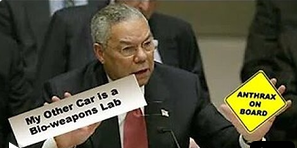
From Anthrax to Iraq
or go to
Aletho News Archives – Video-Images
Book Review
New paperback: Butchered by “Healthcare”
Lies are Unbekoming | October 20, 2026
 Butchered by “Healthcare” is Robert Yoho’s plain-spoken account of how American medicine stopped being a profession and became an industry. 341 pages. Over a thousand references. Thirty-eight chapters.
“Screening Tests Are Useless”, on tests that find diseases that would never have hurt you. “The FDA Protects the Big Drug Companies”, on an agency funded by the companies it regulates. “The Journals’ Sins Are the Editors’ Sins”, on ghostwritten studies and captured peer review. “Opioids and ‘Pain Management’”, on how a generation was prescribed its way into addiction. “Prozac and Relatives” and “Antipsychotics Are Disastrous”, on what psychiatry does to adults and children. “Surgery: Money Before Patients”. “Failed Cancer Treatments”. “Futile CPR and Overprescribing”. “Billing Scams & Specialty Warfare”. “Hospitals Are Sharks”. Each with a Patient Tips section at the end on how to survive it.
If you have ever walked out of a doctor’s office with a prescription you didn’t ask for, or watched a parent put through a treatment that made them worse, this is the book you want on your shelf before the next appointment. … Full review
Butchered by “Healthcare” is available on Lulu now.
Blog Roll
 Aletho News
- Iran: US political targets legitimate if assassinations return
- Iraq shuts key border crossing with Iran under US pressure: Report
- Undersea Internet cables could be targeted in retaliation for attacks on Iran: IRGC deputy chief
- EU sending ‘biased’ observers to interfere in Serbian election – president
- White House envoy declares kinetic action against Yemen ‘fruitless’
- Ukraine deployed thousands of microdrones in Iraqi Kurdistan: Tasnim
- Iran calls for emergency UNSC meeting over Trump’s ‘brazen’ bomb talk, Israeli threats
- Iranian sources reveal details of Russia-China Hormuz proposal
- Plan for more US-Israel integration puts our military tech at risk
- Another Round Against Iran Will Break What Is Left of the Gulf
- If Americans Knew
- Americans at National Conservatism Conference held in Israel this year criticize Israel
- Christiane Amanpour exits CNN with a legacy shaped by the debate over Israel
- Israel’s war on Iran is the final move in a decades-old strategy
- Israel Denies Entry to French Journalist, U.S. Researcher Amid Rise in Entry Denials
- Gaza’s hospitals are running out of life-saving fuel – Daily Update
- Mysterious bot accounts reportedly spread fake ‘man on the street’ videos for Michigan Senate candidate
- Israeli Defense Minister Katz Says Over 60 Lebanon Villages Have Been Destroyed
- Why Is Israel Running TV Ads in Iowa Ahead of the Midterms?
- Hind Rajab’s Alleged Killer Is in the United States. HRF Demands His Arrest.
- US Officials Face Fresh Pressure After Another American ‘Brutalized’ by Israeli Settlers in West Bank
- No Tricks Zone
- E-Cars Reduce CO2 Emissions By Only 41% Compared To Internal Combustion Engine Vehicles
- Predictions Made By Renowned Climate Professor Over Past Decades Have Been Proven To Be Poor
- New Study Suggests Large Regions Of The Pacific Ocean Have Been Cooling For The Last 80 Years
- Germany’s Green Energy Debacle: High Energy Costs Force Kahla Porzellan to Close After 182 Years!
- New Study: 50 Years Of The Most Aggressive ‘Net Zero’ Policies Can Only Affect The Global Climate By 0.03°C
- US September “Heat” Was No Record…Many Records Set Decades Ago
- Latest European Green Energy Debacle; Portugal’s Largest Flagship Solar Park Insolvent!
- Green Energy Debacle: German Expert Professor Fritz Vahrenholt Warns Of Severe Economic And Social Consequences
- Two More Paleo Reconstructions Affirm Meters-Higher Sea Levels Across Ireland, Brazil 7000-6000 Years Ago
- New Study: Earth And Venus Surface Warmth Largely Explained By Convection And Lapse Rate, Not CO2 Or Radiation

