Israeli army sued for ‘dangerous’ levels of radiation
MEMO | July 23, 2020
The Israeli occupation army is being sued for exposing residents of a kibbutz to high levels of radiation in a lawsuit that serves to highlight the Zionist state’s discrimination against Palestinians. Farmers in the northern Negev who are said to have been unknowingly exposed to very strong radiation for six years and had their livelihood disrupted, are seeking approximately $1.3 million in compensation.
The lawsuit states that the Israeli army installed the Iron Dome system, funded by the US government, on fields belonging to an unnamed kibbutz in 2012 without informing residents of the danger it posed to their health. Five years later, reported Ynet News, they were told that they could not approach the fields near the area, a site at which they had worked freely until then, due to the very strong radiation that the system emits.
“The defendant [Israeli army] only recently remembered to update the kibbutz about the very strong radiation the systems emits, and that it is therefore strictly forbidden to engage in any agriculture work in the surrounding area,” the lawsuit states. “It will become clear that danger of radiation in the field was unknown until the defendant’s notice.”
It’s also claimed that the farmers were never compensated for damage to their territory and from being barred from cultivating in the area in which the system was installed. The Defence Ministry is thought to have promised compensation for such damage, which the lawsuit claims has yet to be paid eight years later.
Highlighting the damage to the land, the lawsuit states that, “As of 2012, the defendant took over an area of approximately 10 dunams [2.5 acres] for the purpose of installing missile defence systems to protect from ballistics coming from the Gaza Strip.”
The Israeli army and Defence Ministry told Ynet that, “The lawsuit has not yet been received by the defence establishment. When it is, it will be examined and answered as usual in court.”
Concerns over the Iron Dome were raised last year. Around 30 Israeli soldiers, the majority of whom operated the system, were said to be battling cancer.
For Palestinian farmers, this case will further highlight the structural racism under which they have suffered for decades. The theft of their land in order to build Jewish settler-only roads and illegal settlements, for example, is carried out without any compensation or recourse to any form of legal redress.
US’ War Tactics Might Not Be Useful Anymore
By Prof. Zamir Ahmed Awan | One World | July 21, 2020
The US’ typical war tactics of the past may not be useful against China, Russia, or North Korea. Let us review the Iraq War as a typical case. The first step was the media war by building an anti-Saddam narrative. The BBC reported on the weapons of mass destruction in Iraq and termed them a threat to regional and global peace. UN inspectors were dispatched to verify their existence, but could not confirm anything. When the US was sure that Iraq had no weapons of mass destruction and capability of resistance or retaliation, that was when it decided to attack the country. Later on, the BBC apologized for spreading fake news, but only after the destruction of Iraq.
Simultaneously, the media distorted the image of President Saddam Hussein and instigated the public against him. The US intelligence identified individuals disgruntled with the Saddam regime, provided them training, equipped them, liberally funded them, and organized systematic agitations, demonstrations, and insurgency against the Saddam government.
After the US established a strong network against Saddam Hussein and agents providing them with ground intelligence, they felt comfortable attacking Iraq.
The preparatory work that was undertaken before the attack included spreading anti-Saddam sentiments, supporting insurgencies, spreading fake news, and creating an environment for a smooth attack. Media and intelligence agents were the tools to achieve all of this.
Then the US, along with its allies, launched airstrikes, carpet bombed, and dropped unlimited explosives. After destroying the control and command, dispersing troops, telecommunications, power plants, fuel storage facilities, hospitals, airports, government buildings, and other important installations, they were assured of no resistance or retaliation from the Iraqi forces.
The airstrikes were made as a result of high-tech warfare, jamming radars, and disabling Iraqi defense systems. The US used bombers at a very high altitude where Iraqi anti-air crafts defense systems could not reach so that there were no casualties on the American side. After damaging the whole country so badly, and when they were 100% sure of no resistance from the Iraqi forces, the ground troops conquered Baghdad almost without any resistance or loss of lives.
The Libyan War was a similar case. They tried to do the same thing in Syria. However, this did not succeed because Russia rescued Syria, while it was quite a different story in the case of North Korea. The US could not penetrate into Korea, reach disgruntled individuals, or lobby against the Kim regime. The media war was not successful either. On the other hand, North Korea really has nuclear deterrence. That is why the US never attacked North Korea. In the case of Iran, the US understands the potential of resistance and retaliation. Iran demonstrated its capabilities well when the US assassinated General Soleimani in Baghdad.
I am pretty sure that the US will never come into direct confrontation with China. Although the US tried its best to destabilize China by creating issues like Hong Kong and Xinjiang, China has almost fully overcome such disturbances. The media war is also under the control of the Chinese government. China is officially recognized as the second-largest economy just after the US, but the realities may be different. In the case of weapons, China is not behind the US. In high-tech and advanced technologies, in some respect, China is ahead of America. China might not compete with America in conventional warfare, but it can move swiftly, decisively, and with its most modern advanced defense systems.
At the same time, the US is losing its reputation worldwide because it was — and in some cases, still is — involved in countless killings in South America, the Middle East, Vietnam, Japan, Africa, Korea, and many other parts of the world. Some people say that “when you have America as your friend, you do not need any enemies”. Even close allies of the US are not satisfied. Anti-American sentiments are growing globally. While this is happening, China is engaged in connectivity, infrastructure development, and the promotion of understanding and harmony among various cultures. The Belt & Road Initiative (BRI) is a message of peace, stability, development, and prosperity. As a result, China enjoys an immense amount of goodwill.
In order to preserve this message of global peace, we must always struggle to avert any conflict in any part of the world and resolve all issues amicably, diplomatically, and politically under the UN Charter.
Prof. Engr. Zamir Ahmed Awan is a Sinologist (ex-Diplomat), Editor, Analyst, Non-Resident Fellow of CCG (Center for China and Globalization), National University of Sciences and Technology (NUST), Islamabad, Pakistan. (E-mail: awanzamir@yahoo.com)
On Australia’s Potential Participation in the Malabar Exercise
By Vladimir Terehov – New Eastern Outlook – 20.07.2020
On July 10, a number of news agencies reported that India’s leadership is considering inviting Australia to participate in the international naval exercise Malabar, scheduled later this year. The report is noteworthy for a number of reasons, mainly from the perspective of assessing the state of affairs in the Indo-Pacific region. The changes that have taken place in this region are directly linked to the history of the Malabar exercises.
This was the name given to the first joint Indian-US Navy exercise to be conducted in decades, which took place in the Gulf of Bengal in 1992. This was a notable sign of the burgeoning transformation of the entire geopolitical map after the end Cold War. India, for one, was in a state of strategic solitude (because of the disappearance of its former ally, the USSR) in the face of the same foreign policy challenges from China and Pakistan.
Naturally, India’s leadership began to seek a new external “balancing force,” and Washington was willing to fill this role. The very fact that the Malabar 1992 exercise had taken place marked the start of a US-India rapprochement—something that had seemed unbelievable just a few years before. This process has been neither smooth nor easy and continues to this day.
The first sticking point on this path was India testing its own nuclear weapons in 1998. The termination of the Malabar exercise was just one amongst other “sanctions” against Delhi.
However, compared to the Cold War, Washington stayed displeased with India for quite a long time. The prospect of a new geopolitical opponent in the face of China, which was already obvious then, forced Washington to turn a blind eye to Delhi’s recent “nuclear debacles” and to resume developing relations with India. Since then, India itself sees the US as the potential balancing force for the rapidly developing China.
The starting point of the process was President Bill Clinton’s visit to India in March 2000. A year later, Washington made it clear that it was willing to recognize India as a de facto nuclear power and generally cooperate in the field of peaceful nuclear energy. This led to the US-India nuclear deal, signed in 2006 by President George W. Bush. In 2002, the annual Malabar exercise was resumed.
At the same time the idea of forming an “Asian NATO” (evidently based on anti-Chinese sentiments) was put on the table in Washington’s political circles. The core of the new NATO was to consist of the US, India, Japan and Australia. In 2007, at the ASEAN Regional Forum, US Defense Secretary R. Gates formulated a concept to create a so-called Quad comprising the above-mentioned countries.
The evidence of the potential participants of the proposed project taking this seriously was the participation of Japan and Australia (joined by Singapore) in the Malabar exercise held that year.
This was, however, the first and, for many years to come, the last of these exercises to be conducted in a quadrilateral format. However, the very idea of the Quad seemed to have been forgotten. Among other reasons, we note the internal unrest that struck Japan at that time, as well as a sharp change in the domestic political situation in Australia.
As for Japan, with the early (and rather scandalous) end of Shinzo Abe’s first term as prime minister in 2007, the country entered a period of annual changes of government. At such times, it is difficult to conduct any significant foreign policy actions. Japan’s partners (including the US) also had doubts about doing serious business with a country whose leaders were replacing each other so quickly.
The domestic political situation in Japan only stabilized after Abe’s triumphant return to the Prime Minister’s seat at the end of 2012. This dramatically boosted the country’s foreign policy activity. In the summer of 2014, the Japanese Navy took part in another Malabar exercise after a seven-year hiatus. For the first time, it was held not in the Bay of Bengal, but on the eastern coast of Japan.
Since then, the exercise has adopted a trilateral format, and Japanese ships head to the Indian Ocean to participate in it. However, this wasn’t the only occasion for the Japanese Navy to frequent the Indian Ocean.
Australia paused its participation in the Malabar exercise due to a bloc of left-centrist parties coming to power in 2007. Their foreign policy (along with certain ideological considerations) considered economic wellbeing its main priority. China had already begun to occupy the position of Australia’s leading trade and economic partner, and it seemed absolutely unnecessary for the latter to spoil relations with it because of some “solidarity with the democratic countries of the region.”
Its foreign policy preferences underwent dramatic changes again in 2013 with the return of the bloc of center-right parties, who then won again twice (in 2016 and 2019) in the parliamentary elections. For the center-right government, the aforementioned factor of solidarity, which Canberra still tires to demonstrate on various occasions, was quite significant. One of the examples of this solidarity, recently discussed in the New Eastern Outlook, was the question of the “culprit” of the SARS COV-2 pandemic, as well as Australia joining a Western propaganda campaign connected to events in Hong Kong.
From the moment it came to power, the center-right government renewed its interest in the Malabar exercise and repeatedly asked the Indian leadership to allow Australia’s participation. The latest such request took place in late April 2018. For quite understandable reasons, Delhi refused every time.
A positive answer would obviously indicate the Indian leadership’s departure from the strategy of keeping the country in a neutral position (which over time grows more and more relative) in the aggravating confrontation between the two leading world powers.
Despite all the difficulties in China-India relations, the leaders of both countries, Xi Jinping and Narendra Modi, have made efforts to keep their development in a positive and constructive direction in recent years. Two informal meetings between them were of particular importance in this regard. The first took place in Wuhan at the end of April 2018, and the second in the Indian resort town of Mamallapuram a year and a half later.
Something negative had to happen recently between China and India in order for the latter to start considering the possibility of Australia joining the Malabar exercise in Delhi, which is tied to the prospect of forming an anti-Chinese Quad. And there is no doubt about what this “something” was. It is connected with another escalation of the situation on one of the China-India (quasi) borders in the highlands of Ladakh. This happened on the night of June 16 and resulted in the largest collision between the border patrol units of both countries over the past 40 years.
There was another noteworthy event taking place between early May and June 16, namely the Australian-Indian virtual summit, attended by Prime Ministers Scott Morrison and Narendra Modi. The parties focused on cooperation defense and security in general.
Perhaps the June 16 incident in Ladakh was intended to serve as a warning to India in response to the outcome of this summit. This summit, in turn, could also be seen as a response to the aggravation of the situation in Ladakh that began back in May. Thus, a possible invitation extended to Australia to join the upcoming Malabar exercise could well be an answer to the “response” of June 16.
This raises the question of how far the spiral of mutual “responses” can reach. The fact that this question has been raised at all leads to some upsetting conclusions.
Hopefully, however, the “spirit of Wuhan” has not yet been completely eroded from the relationship between the two Asian powers, and even with the (possible) quadrilateral Malabar exercise, the idea of building an “Asian NATO” with India’s participation won’t develop further.
Saudi Arabia: Ambitious Plans and Facts on the Ground
By Viktor Mikhin – New Eastern Outlook – 20.07.2020
Saudi Arabia has announced plans to implement an ambitious $800 billion initiative aimed at increasing the size of Riyadh in the next decade, and at transforming the capital into an economic, social and cultural hub in the Persian Gulf region.
The ambitious strategy was presented by Fahd Al-Rasheed, the President of the Royal Commission for Riyadh City, ahead of this year’s key high-level meetings between leaders of G20 and of the commission responsible for the urban, economic, social, and cultural development of the capital city of Saudi Arabia. “Riyadh is already a very important economic engine for the Kingdom, and although it’s already very successful, the plan now, under Vision 2030, is to actually take that way further, to double the population to 15 million people,” Fahd Al-Rasheed told Arab News. “We’ve already launched 18 megaprojects in the city, worth over SR1 trillion, over $250 billion, to both improve livability and deliver much higher economic growth so we can create jobs and double the population in 10 years. It’s a significant plan and the whole city is working to make sure this happens,” he added. In the next few years, 7 million trees will be planted in Riyadh, despite its arid climate, and once completed, King Salman Park is expected to be bigger than Hyde Park in London.
All of these plans sound really promising and it would be easy to share in the enthusiasm of our Saudi partners in the oil industry. Unfortunately, the current reality is not as rosy and “plots of the folk tales One Thousand and One Nights” often change to reflect the stark facts on the ground. Although Fahd Al-Rasheed talked about Saudi Vision 2030, few in the Kingdom appear to concern themselves with the strategy. And it is not that the Saudi leadership does not wish to transform the Kingdom into a heavenly place, but that they simply lack money for even the nation’s basic necessities and have to save money in every sphere. Hence, it is far more sensible to forget the unrealistic plans for the time being. Of course, it is pure joy to live and not to worry about a thing, but to do so a country needs to have a robust economy and high earnings, as it did earlier.
The poorly thought through and formulated oil strategy, which Crown Prince Mohammad Bin Salman Al Saud has been trying to implement, has had a strong negative impact on all the oil producing nations, and especially on Saudi Arabia. As a result, the Saudi leadership was forced to come back down to Earth and start saving money in every possible sphere. So for now, Saudi Vision 2030 appears all but forgotten.
To cope with the hardship, Saudi Arabia tripled its value-added tax (VAT) rate starting on July 1, and suspended a cost of living allowance from June as part of cost-cutting programs to counter the severe economic impact of the Coronavirus pandemic and the sudden fall in oil prices. Approximately 1.5 million state employees are affected by the latter measure. The cost of living allowance was a monthly payment of 1,000 riyals ($267) introduced by King Salman bin Abdulaziz Al Saud in 2018 “to help offset increased financial burdens, including VAT and a rise in the price of petrol”. The Kingdom’s “central bank foreign exchange reserves fell in March at their fastest rate in at least 20 years”, reaching their lowest levels since 2011, while Saudi Arabia’s budget deficit hit $9 billion in the first quarter of 2020 as oil revenues collapsed. The news outlet Middle East Eye reported that in January 2015, when Salman bin Abdulaziz Al Saud became king, the country’s “foreign reserves totaled $732 billion”. According to the Saudi Arabian Monetary Authority, these reserves had been diminished to $499 billion by December 2019, and they have since continued to decrease. The Kingdom has sustained considerable financial losses and damage to its reputation, because it was forced to temporarily suspend entry for foreigners for pilgrimage to the two holy cities of Mecca and Medina.
Saudi Arabia’s Minister of Finance Mohammed Al-Jadaan ruefully said that “the global economic crisis associated with the Coronavirus pandemic” had led to three major shocks to the Saudi economy. The first was the unprecedented fall in oil prices “leading to a sharp decline in” the kingdom’s revenues. The second stemmed from “the preventive measures taken to curb the spread of Covid-19, leading to the suspension of many economic activities”, which in turn took a toll on non-oil revenues. The third shock was caused “by the rising expenditure on the health sector to deal with the rising number of Covid-19 patients”. “The challenges combined have led to a decline in government revenues and pressure on public finance to levels that are hard to counter without harming the kingdom’s macroeconomics and public finances in the medium and long term,” Mohammed Al-Jadaan said. “Therefore, a further reduction in expenditures is a must, along with measures to stabilize non-oil revenues,” added the Minister of Finance.
Incidentally, Mohammed Al-Jadaan appears to have forgotten to mention the vast sums of money the power-hungry Crown Prince has wasted. Seemingly on autopilot, he spent enormous amounts to oust the democratically elected President of Syria Bashar al-Assad. Even nowadays, Mohammad Bin Salman Al Saud allegedly continues to provide financial support to militants occupying Syria’s Idlib Governorate, thus contributing to the delay in finding a resolution to the complex Syrian conflict. It was at the Crown Prince’s initiative that Saudi Arabia spearheaded a coalition that intervened in the civil war in the brotherly nation of Yemen, resulting in death and destruction in this impoverished nation. Such a military undertaking requires a considerable amount of money, something that the Kingdom’s budget is in dire need of. Even now, Riyadh continues to stoke tensions with Iran, seemingly failing to comprehend the simple fact that the West, while appearing to support Saudi Arabia, is actually following its favorite divide and conquer strategy and thus strengthening its position in this important region of the world. In addition, outdated US weapons are being sold for too high a price to the Kingdom. In fact, Saudi Arabia has accumulated more military equipment and arms than its army needs. And do Saudi “falcons” really expect to emerge victorious from a confrontation with Iran, while they continue to suffer defeats at the hands of poor Yemeni inhabitants, who are still mainly fighting with Soviet armaments? Plus another question arises: “Why did Saudi Arabia spoil its relationship with Qatar and impose tough sanctions (as Americans are prone to do) against this small nation?” It appears that the answer is “Just for the fun of it.”
Consequences of Crown Prince’s poorly thought through policies are being felt even today. In fact, there is still a risk of new tensions arising in the global oil market and further financial losses for everyone and especially the Kingdom. Media outlets and experts have been reporting about yet another rivalry on world markets. Saudi Arabia has threatened to sell its oil at a discount to undercut Nigeria and Angola for their non-compliance with production cuts, agreed by the Organization of Petroleum Exporting Countries (OPEC) and its allies. The tough stance taken by the Kingdom, with its world’s largest crude oil production capacity, may lead to yet another oil price war, which is bound to have serious consequences. “We know who your customers are,” Saudi Arabia’s Minister of Energy reportedly told the representatives of Nigeria and Angola, which count China and India as their biggest clients. However, India is still in the midst of the Coronavirus pandemic, hence its economy has not recovered as yet. Riyadh’s only hope is China, which receives unlimited supplies of cheap oil and gas from Russia via pipelines. It is quite clear that Moscow has no plans to reduce supplies of these fossil fuels in the current tough climate. The Saudi leadership, therefore, has no other choice but to stop and think long and hard before taking any rash decisions. The world has changed and Saudi Arabia is no longer the only leader on the global oil market.
Still, Riyadh’s officials are free to continue talking about their ambitious plans, but realizing them requires vast sums of money, which the Kingdom simply does not have in its budget at present. And without financial backing, all of these hopes and dreams are nothing more than a mirage in the Arabian Desert, which disappears as soon as one tries to take a closer look at it.
Victor Mikhin is a member-correspondent of the Russian Academy of Natural Sciences.
Armenian-Azerbaijani Clashes And Shifting Balance Of Power In South Caucasus
South Front | July 18, 2020
The Armenian-Azerbaijani tensions have once again turned South Caucasus into a hot point increasing chances of a new regional war.
The key difference with previous military incidents between the two countries is that the point of confrontation shifted from the breakaway Nagorno-Karabakh Republic to the Armenian-Azerbaijani state border. Clashes first erupted on July 12 in the area of Tovuz and since then both sides have repeatedly accused each other of provoking the conflict, attacking civilians and declared defeats of the ‘enemy’.
According to the Defense Ministry of Azerbaijan, the fighting started after Armenian forces opened fire on positions of Azerbaijani forces in the Tovuz district. The fighting which included the use of combat drones, artillery, mortars, and battle tanks continued over the following days, including July 17. The Azerbaijani military confirmed that at least 12 personnel, including Major General Gashimov Polad and Colonel Ilgar Mirzaev, were killed. In turn, Kerim Veliyev, Azerbaijan’s deputy defense minister, said that 100 Armenian soldiers were killed, several fortified positions were destroyed and that a UAV was shot down. Armenia, according to Veliyev, is hiding the real number of its casualties.
Azerbaijani media and top leadership describe the current situation as an act of Armenian aggression, and say that Azerbaijani forces are only responding to it. President Ilham Aliyev even called Armenia a “fascist state” adding that “Armenian forces could not enter Azerbaijan in one centimeter of soil and will never be able to do this”.
The Armenian version of events is quite different. According to it, the clashes started after a group of Azerbaijani soldiers violated the Armenian state border in an UAZ vehicle. The defense ministry press service claimed that after the warning from the Armenian side, “the enemy troops returned to their positions”. It added that later Azerbaijani forces attacked an Armenian checkpoint.
As of now, the Armenian military said that it had repelled two ‘offensives’ involving at least 100 soldiers supported by fire of several artillery battalions. These attacks were allegedly actively supported by combat and reconnaissance drones of Azerbaijan. A spokesperson for the Armenian Defense Ministry Artsrun Hovhannisyan said that Azerbaijan lost at least 20 soldiers, a battle tank and other equipment during the clashes. Armenia says that only 4 of its service members were killed.
Both Armenia and Azerbaijan claim that their forces are repelling an aggression of the enemy, which has been attacking it and killing civilians. However, despite the harsh rhetoric, the leaderships of both countries are sending signals that they are not interested in a larger military confrontation.
At the same time, years of war propaganda and historic tensions between the nations push the situation towards a further escalation. A unilateral move towards the cessation of hostilities by leaders of either country would be presented by the other one as a sign of weakness and promoted as an admission of defeat. Taking into account the complicated political and economic conditions in both countries, neither Armenian nor Azerbaijani leaders could afford such a public move. Therefore, de-escalation is possible only through international mechanisms.
The situation is further complicated by the complex diplomatic situation in the region of the South Caucasus. Armenia, alongside Russia, Belarus, Kazakhstan, Tajikistan and Kyrgyzstan, is a member of the Collective Security Treaty Organization (CSTO). The CSTO expressed its concerns over the situation and called on the sides to commit to a ceasefire regime. Nonetheless, the Russia-led security bloc, and Russia itself, demonstrated that in the current situation they will focus on diplomatic measures.
Since the 2018 coup, when Nikol Pashinyan came to power in Armenia, the country has been consistently undermining its relations with the CSTO and Russia by pursuing a quite weak, but apparent anti-Russian and pro-Western foreign policy course. The bright dream of the Pashinyan government is to sell its loyalty to the United States for some coins and commit itself to the way of the so-called ‘European integration’. The issue with this plan is that Washington and its partners need Armenia only as a tool of their geopolitical gains and are not interested in providing it with any kind of military protection or economic assistance. The Pashinyan government is forced to play a double game in an attempt to simultaneously please its ‘democratic’ masters and receive protection and assistance from Russia. This attitude is not a secret for Moscow.
On the other hand, in the event of a large-scale military confrontation, Azerbaijan will be supported by its main ally Turkey, which also has close bilateral ties with Russia. Ankara already declared that it fully supports Azerbaijan and condemned the supposed ‘Armenian aggression’. Thus, in the event of full-scale military confrontation, Armenia will immediately find itself in a very complicated situation, and direct military assistance from the CSTO and Russia will be unlikely.
So, the Armenian chances in a limited military conflict with Azerbaijan and Turkey are at least shaky. Turkey and Azerbaijan fully understand this. By undermining strategic relations with Moscow, and thus the balance of power in the region, Erevan put the entire South Caucasus on the brink of a new regional war.
US Presidential Election And Prospects Of Kiev Advance In Eastern Ukraine
By South Front Team: J.Hawk, Daniel Deiss, Edwin Watson | July 15, 2020
For the past several years, the war between Ukraine and the breakaway and still-unrecognized Donetsk People’s Republic and Lugansk People’s Republic has settled into a tense routine of attritional trench warfare, punctuated by sniping, clashes between patrols, small-scale raids, offensive minelaying, and ambushes using anti-tank guided missiles. There have been few operations by units larger than company. The front line has remained almost entirely unchanged. At the same time, both sides have been preparing for the possible next round of high-intensity warfare. What would happen if the fighting were to break out again?
That particular prediction is made more difficult by the very fact of the long lull in high-intensity fighting during which both sides have undergone a certain degree of transformation which remains relatively unknown to the other party. Both sides have seen certain material improvements, though apparently nothing dramatic. Ukraine’s armored vehicle fleet still relies on the same, but now even more worn out vehicles it went to war with in 2014. The planned re-equipment with the Oplot MBT never took place, and even the upgraded T-64BU Bulat was found to be flawed. Therefore the elderly T-64BV remains the main tank of Ukraine’s forces. Light armored vehicle fleet has seen some improvement thanks to domestic production and deliveries from former Warsaw Pact member states. If there is one area where Ukraine’s military may have made a major step forward, it is the artillery, using the large store of inactive weapons for Soviet-era reserve forces. However, artillery munition production continues to be a problem. While the number of Ukraine’s brigades has grown, the military experiences major problems with recruitment and retention, meaning that many of these brigades have the strength of a reinforced combined arms battalion.
On Novorossia’s side the situation is hardly different. DPR and LPR units continue to use the same types of equipment they used during the campaigns of five years ago. The numeric strength does not appear to have changed much, either, and here too recruitment and retention remains a problem.
The other factor making predictions difficult is the level of morale of these two forces that have been bogged down in an apparently endless war that is beyond their power to finish. The combination of trench warfare boredom and terror means it is debilitating to the units’ morale and proficiency if they are forced to remain in the trenches for too long. While the most offensive-capable forces are kept out of the trenches as mobile reserves, they too can only maintain their state of alert for so long before losing their edge.
Paradoxically, this state of affairs give an advantage to the side that intends to go on the offensive, because the preparations for the attack and associated training would imbue the troops with the hope that, after the next big push, the war will finally be over. At the same time, both sides know such an offensive would be an exceedingly risky proposition, because if it fails, it will grind down the attacking side’s most effective units and render the army vulnerable to a counteroffensive to which it would not be able to respond.
Therefore the likelihood of renewed fighting also heavily depends on who actually makes the decision. While local leaders may be cautious enough, foreign ones in distant capitals may have different considerations in mind.
A big unknown hanging over the future of the Donbass is the position of Joe Biden, the Democratic Party nominee and the potential winner of the November elections. Biden has already played a highly destructive role in the politics of Ukraine and the US-Russia relations. It is Biden that blackmailed Poroshenko into firing the Chief Prosecutor Shokin due to his interest in the corrupt dealings of the Burisma energy company which infamously had Joe’s son Hunter on its board of directors. It is also Biden who held a lengthy, 30-45 minute telephone conversation with Poroshenko on the day MH17 was shot down and promptly came out blaming Russia for it, even as the wreckage was still smoking where it fell. Biden identified himself as a Russia foe much earlier, during the 2012 vice-presidential debates where he positioned himself as being “hard on Putin”, which in retrospect proved to be an early indicator of where the second-term Obama administration foreign policy would go. It also goes without saying Biden is an ardent promoter of the “RussiaGate” effort to paint Donald Trump as a Russian agent/stooge/fellow traveler/useful idiot.
At the same time, Biden’s line against China has hardened as well, which may have implications for US-Russia relations during the probable Biden presidency. As late as May 2019, Biden would describe People’s Republic of China as “they are not bad folks”, adding that “they are not competition to us”, comments that may yet come to haunt him on the campaign trail. However, once the COVID-19 broke out of control in the United States, Biden sought to out-do Trump in his accusations the high US death toll was due to China misleading the United States on the nature of the virus and not allowing US public health officials access to Wuhan and China’s epidemiology labs. Even before that, Hunter Biden resigned from boards of directors of China-based firms. While that might have been motivated by his, and his dad’s, desire to keep a low profile due to the scrutiny Hunter’s business dealings have attracted during Donald Trump’s impeachment proceedings, it may also have been preparation for Joe Biden’s anti-China pivot.
The emergence of PRC as Biden’s perceived number one international adversary may mean a desire to improve relations with Russia in the way that Trump, compromised from the start by RussiaGate and without a history of own anti-Russia rhetoric to fall back on, could never deliver. Biden, however, is in the same position as Nixon was in the late 1960s. His earlier anti-Russian rhetoric and actions now make him nearly immune from the same sort of accusations which, even though false, nevertheless effectively stuck to Trump. Nixon’s own enthusiastic participation in McCarthyite witch hunts made it possible for him to do what his Democratic Party predecessor Lyndon Johnson could not: end Vietnam War, engage in arms control treaties with USSR and “go to China” in order to exploit the growing divide between the two main Communist powers. Biden has the political capital necessary to repeat the process: end the war in Afghanistan (something he had proposed already as vice president), enter into arms control treaties with China and…go to Moscow, which is currently seen in Washington in the same way that Beijing was in the 1970s, namely the secondary challenger which needs to be peeled away from the primary one. Moreover, just as in the early 1970s, United States of the 2020s is wracked by a massive internal crisis requiring international retrenchment in order to focus on internal reforms.
But that optimistic scenario remains less likely than the prospect of renewed escalation. Nixon-era United States was not suffering from the hubris of American Exceptionalism. On the contrary, it was a country full of self-doubt and under no illusion concerning the limits of its power. It entered into arms control treaties because it did not feel it could win them. Disasters abroad and at home notwithstanding, the US elite still has not been shaken out of its complacency, and it does appear to sincerely believe it can win a strategic and conventional arms race against both China and Russia. We have not seen any indications so far that Biden intends any moderation in the area of foreign policy or returning to a policy of cooperation with Russia. One should expect that, in the event of Biden victory, Ukraine will launch an offensive against the Donbass shortly after the inauguration, in other words, in February or March of 2020. This offensive would accomplish two objectives for Biden. One, it would establish his hawkish, “patriotic” bona fides, make him look “presidential” in the eyes of the mainstream media and the national security establishment. Secondly, it would allow the US to exert even more pressure on Germany and other EU member states concerning North Stream and other areas of cooperation with Russia.
In order to achieve these goals, particularly the second one, the offensive would not need to overrun the Donbass, in fact, that would not be the aim at all. Rather, the goal would be to force Russian forces to intervene directly in support of the Lugansk and Donetsk republics to justify depicting Russia as the aggressor in the matter. And even if the republics’ militaries can cope with the UAF assault on their own, the sheer level of violence will still make enough headlines to satisfy Biden’s requirements. Whether Zelensky wants that kind of escalation for his country is almost irrelevant. Both he and Biden know very well what the balance of power in that relationship is. Ukraine is a failing state seriously dependent on foreign financial assistance in the form of continual IMF loans, debt rescheduling, favorable trade deals, etc. Biden knew how to use these levers to achieve an important change in Ukraine’s politics that benefited him personally, he will not hesitate to use them again.
Moreover, even if Biden were driven by the Nixonian motives described above, it’s doubtful the foreign policy Deep State would allow him to do that. Biden’s own conversations with Poroshenko no doubt contain a great many embarrassing moments whose release would instantly embroil him in a massive scandal. The fact that Donald Trump was impeached solely due to the desire of national security apparatchiks to continue their pet war in Ukraine is indicative of their power to make foreign policy quite independently of their supposed civilian bosses.
The situation is further complicated by the widening rift between the Western neo-liberal world and conservative societies of eastern European countries. This includes a large part of the Ukrainian population which is committed to traditional values. The rapidly deteriorating social and economic situation in Ukraine contributes to a further antagonism of this part of the society towards the forcefully imposed Western ideology and its local agents. Another point of tension is the existing contradictions between the Orthodox Church (Moscow Patriarchy) and the artificially assembled pseudo-church organizations in Ukraine. The Moscow Patriarchy is returning to its former position among the Ukrainian faithful. In the event of a further dissatisfaction of the society by the declared pseudo-Western way of development, positions of Russia and the Moscow Patriarchy will strengthen even more.
While a Ukrainian offensive is relatively unlikely in 2020, its probability increases considerably in 2021, particularly in the event of a Biden victory. The conflict in Ukraine has lasted this long mainly because Ukraine’s current sponsors in the West are not interested in ending it, irrespective of what the will of the Ukrainian people might be. The situation will get even worse should the US presidency be taken over by someone with a well-established hostility toward Russia who believes his aims would be better served by another bloody campaign on the Donbass.
The next US administration will employ every option that it has in order to prevent the return of Russian influence in the country. Besides furthering the conflict in eastern Ukraine, it will expand efforts against it in the ideological sphere as well, likely including direct provocations.
British nuclear submarine close to disaster after NEAR MISS with packed passenger ferry, report finds
RT | July 16, 2020
A British nuclear-powered submarine was at “serious risk of collision” with a passenger ferry with hundreds on board after the commanding officer made decisions on “inaccurate information,” an investigation has found.
A report conducted by the Marine Accident Investigation Branch (MAIB) – published on Thursday – found that the two vessels came within 50-100 meters of each other during the incident on November 6, 2018. The investigation revealed that it was the third time in four years that a submerged Royal Navy submarine had narrowly missed a calamitous collision with another vessel.
The Stena Superfast V11 ferry was travelling from Belfast to Cairnryan in Scotland when it was forced to take “immediate action” and alter its course to save the 215 passengers and 67 crew onboard – having spotted the submarine’s periscope just 250 yards (229 meters) ahead.
The two-year probe found that the sub had miscalculated that it was 1,000 yards away when the ferry swerved. It was actually a quarter of that distance away from disaster.
This was an unsafe event and placed the ferry’s passengers and crew, as well as the submarine and its crew, in immediate danger.
The report said that the Royal Navy vessel’s control room team “overestimated the ferry’s range and underestimated its speed.” It goes on to say that the commanding officer and its officer of the watch made “safety-critical decisions” that might have appeared rational at the time but were in fact “based on inaccurate information.”
The sub – which is based at Faslane in Scotland – is part of Britain’s nuclear-powered fleet, although it has not been revealed whether it was one of four that carry nuke missiles.
Iran Voices Readiness to Help Ease Tensions between Azerbaijan, Armenia
Al-Manar | July 16, 2020
Iran’s Foreign Ministry expressed the Islamic Republic’s readiness to mediate between Azerbaijan and Armenia in the wake of deadly border clashes between the two countries.
“As soon as clashes erupted between Armenia and Azerbaijan, Iran’s diplomatic apparatus got active to mediate and soothe this tension as the region cannot afford another conflict,” ministry spokesman Abbas Mousavi told reporters in the northwestern city of Ardabil on Thursday.
He further called on both sides to show restraint, voicing Iran’s readiness to help bring an end to tensions between the two former Soviet republics, Tasnim news agency reported.
The clashes broke out on the volatile Armenia-Azerbaijan border on Sunday and have continued over the past days.
At least 16 people, including four Armenian troops, 11 Azeri servicemen and one Azeri civilian, have been killed in the latest outbreak of hostilities between the two neighbors.
Russian Defence Ministry Calls US Accusations on Open Skies Treaty Speculative
Sputnik – 16.07.2020
MOSCOW – The United States is using speculative accusations against Russia to withdraw from the Open Skies Treaty, Sergei Ryzhkov, the head of the Russian Defence Ministry’s National Center for Reducing Nuclear Danger, said.
“On May 22, 2020, Washington said that the United States will withdraw from the Open Skies Treaty in six months. It [the US] used an issue of alleged Russian violations [of the treaty] as a pretext. This statement of the US government has not found wide support even in the United States,” Ryzhkov told the Krasnaya Zvezda official newspaper of the Russian Armed Forces.
He stressed that the United States was facing a 6-7 year technological gap comparing to Russia in the sphere of technologies related to the Open Skies Treaty.
According to Ryzhkov, the Russian restrictions on foreign reconnaissance flights over the exclave Kaliningrad Region were in line with the Open Skies Treaty.
In May, the United States announced its withdrawal from the Open Skies Treaty. US President Donald Trump said that Washington was quitting the treaty and alleged that Russia was not in compliance with the agreement. Many European countries have voiced regrets over the US move and expressed hope that Washington would revise the decision.
Russia has repeatedly refuted the US accusations. The Russian Foreign Ministry said that Moscow would work with the United States only on a mutual basis and would not accept any ultimatums.
The treaty on observation flights was signed in 1992 and set up as trust-building measures in post-cold war Europe. It allows its 34 parties to openly collect information about one another’s militaries.
Turkey supports Azerbaijan to cause instability in the Caucasus
By Lucas Leiroz | July 16, 2020
The conflict between Azerbaijan and Armenia has become increasingly serious. Both countries claim the territory of Nagorno-Karabakh and between the late 1980s and early 1990s there was a war between them to decide the control of the region. Tens of thousands of people died in the conflict, which ended in 1994 with a ceasefire agreement, without a winner. The agreement places the Nagorno-Karabakh region as a de facto autonomous republic, remaining de jure as part of Azerbaijan. This agreement gave a break in the massacres but did not prevent the continuation of the territorial disputes between both countries, which until today claim the region, and the situation has worsened even more recently.
On July 12, there was an armed clash in the region, with an uncertain number of victims. Azerbaijani forces accuse Armenia of violating territorial limits. In contrast, the Armenian government blames the opposing country for such violations. Since then, according to Armenian observers, bombings on the border have been reported every 15 to 20 minutes. Data on the dead or injured people remain uncertain.
Armenian Prime Minister Nikol Pashinyan accuses Azerbaijan of initiating hostilities and says that no violence will go unpunished, promising to react to every move by the enemy country. Data from the Armenian Ministry of Defense points to records of artillery attacks against Armenian territory in the early hours of July 12, when the fighting was recorded. According to the Armenian government, Armenian troops only retaliated against the attacks received. Pashinyan accuses not only Azerbaijan, but also Turkey of involvement in the attacks.
The charges are not unfounded. Turkey has shown support for Azerbaijan in the dispute, encouraging annexation and not a peaceful resolution of the impasse. The day after the clashes at the border, the Turkish foreign minister, Mevlut Cavusoglu, spoke in defense of Azerbaijan, saying that this country “is not alone” in the conflict. The statement becomes controversial and dangerous amid an escalation of violence, as it connotes not only support from Ankara, but also an interest in intervening in the conflict. Armenia reacted with severe criticism, blaming Ankara for the return of the violence. According to the Armenian government, Turkey has an interest in destabilizing peace in the region to gain greater control and influence over neighboring territories.
In return, the European Union issued a public note calling on both parties to reduce violence and to avoid the use of force. Likewise, the US State Department classified violence in the region as unacceptable and urged both parties to seek a peaceful solution to the dispute. In the same vein, the Russian government has called on both countries for a peaceful resolution, without showing support for either party. Foreign Minister Sergey Lavrov urged Armenia and Azerbaijan to an immediate ceasefire and to comply with the terms of the Minsk Group, a committee created in 1992 to manage peace in the region. Since both countries are former Soviet republics, the role of Russian diplomacy in managing the conflict is essential, due to the weight of its influence in the region.
It is important to note the difference in the approach of the Russians, Americans and Europeans to the Turkish stance to the crisis. Demonstrating open support for any party in the current phase of the conflict can be crucial to intensify disputes and encourage an increase in violence. Being a military potency, Turkey’s declared support in a conflict in its early stages may encourage the progress of hostilities. In this sense, it is likely that Azerbaijan, with the support of Ankara and possible Turkish intervention, will continue the bombing, assuming strategic advantage and superiority over its opponent. This is the great danger behind the Turkish pronouncement.
The situation, however, must be analyzed in a complete context. Turkey has shown interest in increasing its regional and international geopolitical relevance and, for this purpose, it has called for bold and provocative acts, such as, for example, its role in the Syrian War and the recent conversion of Hagia Sophia into a mosque, which provoked outcries all over the world for being an unnecessary attack on the memory of Greek Christianity, provoking the resurgence of religious tensions in the region that had not existed for a long time.
In fact, Erdogan has clear plans to constitute a neo-Ottoman geopolitical projection, regaining power and influence at a regional level throughout the territory where the Ottoman Empire, predecessor of the modern Turkish state, operated in the past. Relations between Turks and Armenians, in this sense, do not have a good record and are alive in Armenian memory with the ethnic-religious genocide perpetrated against Christian Armenians in the early 20th century.
In this sense, Turkish interest in creating an area of instability that favors its regional influence can be costly. Russia, as the regional power with the greatest historical influence in the Caucasus, must counterbalance Turkish advances through diplomacy, while Erdogan must be internationally pressured to avoid any intervention in the dispute between neighboring countries.
Lucas Leiroz is a research fellow in international law at the Federal University of Rio de Janeiro.
Featured Video
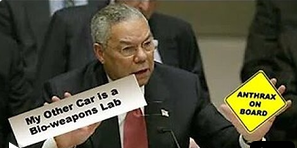
From Anthrax to Iraq
or go to
Aletho News Archives – Video-Images
Book Review
New paperback: Butchered by “Healthcare”
Lies are Unbekoming | October 20, 2026
 Butchered by “Healthcare” is Robert Yoho’s plain-spoken account of how American medicine stopped being a profession and became an industry. 341 pages. Over a thousand references. Thirty-eight chapters.
“Screening Tests Are Useless”, on tests that find diseases that would never have hurt you. “The FDA Protects the Big Drug Companies”, on an agency funded by the companies it regulates. “The Journals’ Sins Are the Editors’ Sins”, on ghostwritten studies and captured peer review. “Opioids and ‘Pain Management’”, on how a generation was prescribed its way into addiction. “Prozac and Relatives” and “Antipsychotics Are Disastrous”, on what psychiatry does to adults and children. “Surgery: Money Before Patients”. “Failed Cancer Treatments”. “Futile CPR and Overprescribing”. “Billing Scams & Specialty Warfare”. “Hospitals Are Sharks”. Each with a Patient Tips section at the end on how to survive it.
If you have ever walked out of a doctor’s office with a prescription you didn’t ask for, or watched a parent put through a treatment that made them worse, this is the book you want on your shelf before the next appointment. … Full review
Butchered by “Healthcare” is available on Lulu now.
Blog Roll
 Aletho News
- Iran: US political targets legitimate if assassinations return
- Iraq shuts key border crossing with Iran under US pressure: Report
- Undersea Internet cables could be targeted in retaliation for attacks on Iran: IRGC deputy chief
- EU sending ‘biased’ observers to interfere in Serbian election – president
- White House envoy declares kinetic action against Yemen ‘fruitless’
- Ukraine deployed thousands of microdrones in Iraqi Kurdistan: Tasnim
- Iran calls for emergency UNSC meeting over Trump’s ‘brazen’ bomb talk, Israeli threats
- Iranian sources reveal details of Russia-China Hormuz proposal
- Plan for more US-Israel integration puts our military tech at risk
- Another Round Against Iran Will Break What Is Left of the Gulf
- If Americans Knew
- Americans at National Conservatism Conference held in Israel this year criticize Israel
- Christiane Amanpour exits CNN with a legacy shaped by the debate over Israel
- Israel’s war on Iran is the final move in a decades-old strategy
- Israel Denies Entry to French Journalist, U.S. Researcher Amid Rise in Entry Denials
- Gaza’s hospitals are running out of life-saving fuel – Daily Update
- Mysterious bot accounts reportedly spread fake ‘man on the street’ videos for Michigan Senate candidate
- Israeli Defense Minister Katz Says Over 60 Lebanon Villages Have Been Destroyed
- Why Is Israel Running TV Ads in Iowa Ahead of the Midterms?
- Hind Rajab’s Alleged Killer Is in the United States. HRF Demands His Arrest.
- US Officials Face Fresh Pressure After Another American ‘Brutalized’ by Israeli Settlers in West Bank
- No Tricks Zone
- E-Cars Reduce CO2 Emissions By Only 41% Compared To Internal Combustion Engine Vehicles
- Predictions Made By Renowned Climate Professor Over Past Decades Have Been Proven To Be Poor
- New Study Suggests Large Regions Of The Pacific Ocean Have Been Cooling For The Last 80 Years
- Germany’s Green Energy Debacle: High Energy Costs Force Kahla Porzellan to Close After 182 Years!
- New Study: 50 Years Of The Most Aggressive ‘Net Zero’ Policies Can Only Affect The Global Climate By 0.03°C
- US September “Heat” Was No Record…Many Records Set Decades Ago
- Latest European Green Energy Debacle; Portugal’s Largest Flagship Solar Park Insolvent!
- Green Energy Debacle: German Expert Professor Fritz Vahrenholt Warns Of Severe Economic And Social Consequences
- Two More Paleo Reconstructions Affirm Meters-Higher Sea Levels Across Ireland, Brazil 7000-6000 Years Ago
- New Study: Earth And Venus Surface Warmth Largely Explained By Convection And Lapse Rate, Not CO2 Or Radiation

