Turkey supports Azerbaijan to cause instability in the Caucasus
By Lucas Leiroz | July 16, 2020
The conflict between Azerbaijan and Armenia has become increasingly serious. Both countries claim the territory of Nagorno-Karabakh and between the late 1980s and early 1990s there was a war between them to decide the control of the region. Tens of thousands of people died in the conflict, which ended in 1994 with a ceasefire agreement, without a winner. The agreement places the Nagorno-Karabakh region as a de facto autonomous republic, remaining de jure as part of Azerbaijan. This agreement gave a break in the massacres but did not prevent the continuation of the territorial disputes between both countries, which until today claim the region, and the situation has worsened even more recently.
On July 12, there was an armed clash in the region, with an uncertain number of victims. Azerbaijani forces accuse Armenia of violating territorial limits. In contrast, the Armenian government blames the opposing country for such violations. Since then, according to Armenian observers, bombings on the border have been reported every 15 to 20 minutes. Data on the dead or injured people remain uncertain.
Armenian Prime Minister Nikol Pashinyan accuses Azerbaijan of initiating hostilities and says that no violence will go unpunished, promising to react to every move by the enemy country. Data from the Armenian Ministry of Defense points to records of artillery attacks against Armenian territory in the early hours of July 12, when the fighting was recorded. According to the Armenian government, Armenian troops only retaliated against the attacks received. Pashinyan accuses not only Azerbaijan, but also Turkey of involvement in the attacks.
The charges are not unfounded. Turkey has shown support for Azerbaijan in the dispute, encouraging annexation and not a peaceful resolution of the impasse. The day after the clashes at the border, the Turkish foreign minister, Mevlut Cavusoglu, spoke in defense of Azerbaijan, saying that this country “is not alone” in the conflict. The statement becomes controversial and dangerous amid an escalation of violence, as it connotes not only support from Ankara, but also an interest in intervening in the conflict. Armenia reacted with severe criticism, blaming Ankara for the return of the violence. According to the Armenian government, Turkey has an interest in destabilizing peace in the region to gain greater control and influence over neighboring territories.
In return, the European Union issued a public note calling on both parties to reduce violence and to avoid the use of force. Likewise, the US State Department classified violence in the region as unacceptable and urged both parties to seek a peaceful solution to the dispute. In the same vein, the Russian government has called on both countries for a peaceful resolution, without showing support for either party. Foreign Minister Sergey Lavrov urged Armenia and Azerbaijan to an immediate ceasefire and to comply with the terms of the Minsk Group, a committee created in 1992 to manage peace in the region. Since both countries are former Soviet republics, the role of Russian diplomacy in managing the conflict is essential, due to the weight of its influence in the region.
It is important to note the difference in the approach of the Russians, Americans and Europeans to the Turkish stance to the crisis. Demonstrating open support for any party in the current phase of the conflict can be crucial to intensify disputes and encourage an increase in violence. Being a military potency, Turkey’s declared support in a conflict in its early stages may encourage the progress of hostilities. In this sense, it is likely that Azerbaijan, with the support of Ankara and possible Turkish intervention, will continue the bombing, assuming strategic advantage and superiority over its opponent. This is the great danger behind the Turkish pronouncement.
The situation, however, must be analyzed in a complete context. Turkey has shown interest in increasing its regional and international geopolitical relevance and, for this purpose, it has called for bold and provocative acts, such as, for example, its role in the Syrian War and the recent conversion of Hagia Sophia into a mosque, which provoked outcries all over the world for being an unnecessary attack on the memory of Greek Christianity, provoking the resurgence of religious tensions in the region that had not existed for a long time.
In fact, Erdogan has clear plans to constitute a neo-Ottoman geopolitical projection, regaining power and influence at a regional level throughout the territory where the Ottoman Empire, predecessor of the modern Turkish state, operated in the past. Relations between Turks and Armenians, in this sense, do not have a good record and are alive in Armenian memory with the ethnic-religious genocide perpetrated against Christian Armenians in the early 20th century.
In this sense, Turkish interest in creating an area of instability that favors its regional influence can be costly. Russia, as the regional power with the greatest historical influence in the Caucasus, must counterbalance Turkish advances through diplomacy, while Erdogan must be internationally pressured to avoid any intervention in the dispute between neighboring countries.
Lucas Leiroz is a research fellow in international law at the Federal University of Rio de Janeiro.
Britain’s Gentleman Posturing Comes Undone With Absurd Hypocrisy
By Finian Cunningham | Strategic Culture Foundation | July 13, 2020
It’s official Britain at its best, posing as the quintessential gentleman upholding morality while at the same time engaging in despicable double-dealing for grubby interests.
The British government announced sanctions against various nations last week, including Russia and Saudi Arabia, proclaiming the punitive measures were due to alleged human rights violations. Foreign minister Dominic Raab, summoning throaty British authority, declared to the House of Commons that it sent a “clear message” to the world of British rectitude.
The next day, however, London made a separate announcement that it was resuming arms sales to Saudi Arabia, despite an international outcry over war crimes committed in Yemen. Thousands of civilians have been killed in Yemen by Saudi warplanes bombing that country over the past five years.
It is estimated by the United Nations that the majority of civilian casualties have been caused by air strikes carried out by the Saudi-led coalition.
Britain, as well as the United States and France, has been arming the Saudi military coalition in its war in Yemen. The British arms trade was halted last year as “unlawful” by a court ruling out of concern for civilian deaths. Now though the British government has decided that the arms dealing can resume because violations were deemed by ministers to be “isolated” incidents. How quaint is the self-serving subjectivity of British officialdom.
The UK-based Campaign Against the Arms Trade (CAAT) slammed the government’s decision, saying it was “morally bankrupt”.
“The Saudi-led bombardment of Yemen has created the world’s worst humanitarian crisis, and the government itself admits that UK-made arms have played a central role in the bombing,” said CAAT, adding with wry irony: “The government claims that these are isolated incidents, but how many hundreds of isolated incidents would it take for the government to stop supplying the weaponry?”
What’s more, it turns out that the British posturing on human rights and sanctions was only meant for public appearance, not be taken seriously. That’s according to the British government itself.
The Independent newspaper reports that British defense minister Ben Wallace immediately phoned his counterpart in Riyadh to “apologize” for the latest imposition of sanctions. “The UK government privately showered Saudi Arabia’s government with praise,” it is reported.
The “discreet” phone call, which emphasized the importance of British arms sales to the oil-rich kingdom, was not publicly disclosed by London. Instead it was revealed by the Saudi state media which boasted about the lavish praise from the British government.
Between 2015 and 2019, it is estimated that Britain sold over £5.3 billion ($6.7 bn) worth of weapons to Saudi Arabia, much of that boosted by the war in Yemen.
The war has led to the world’s worst current humanitarian crisis with millions of Yemenis facing starvation and death from disease. Images of skeletal children dying from cholera and other preventable diseases should make anyone with a heart tremble with indignation.
The UK’s arms trade is fueling that catastrophe. Evidently, British avarice for profits is too great to put a check on its lucrative weapons dealing regardless of the death and destruction it generates.
But that best of British baseness is only matched by its government’s rank hypocrisy in posing as a defender of human rights and wielding sanctions against other nations.
The sanctions it imposed on Russia were, according to London, related the death in a Moscow prison of tax accountant Sergei Magnitsky in 2009. Russia claims Magnitsky died from an existing medical condition while in detention on massive corruption charges. Washington has used the case as a political stick to beat Moscow with. London is doing Washington’s bidding with its latest sanctions. It also fits the lurid narrative of Russia allegedly running assassination plots in Western states against dissidents and former spies. Thereby stoking a Cold War-style stand-off between the West and Russia.
Britain has been doing similar kowtowing to Washington with its belated ban on China’s Huawei telecoms firm being involved in modernizing mobile phone and internet networks.
Moscow has dismissed the latest British sanctions as “pointless” and said it would reciprocate with its own punitive diplomatic measures against London. That’s something which the British government may come to rue as it seeks to drum up wider international business in the post-Brexit world. The price for serving as Washington’s Jeeves-the-butler flunkey could be high indeed.
How absurd and surreal for London to lecture others about violations when it is complicit in genocide in Yemen. We could also cite Iraq and Afghanistan among many other foreign aggressions. That feat of preposterousness is a reflection of the insidious efficacy of British state propaganda and “education”. Polls show Britons are more likely (compared with other former colonial powers) to think that the British Empire was a good thing, despite the tens of millions who were killed under British subjugation.
One can only hope for the day when the world will actually implement human rights justice and the government in London will be sanctioned to the hilt for the pariah that it truly is.
India should not participate in Washington-led anti-China coalition
By Lucas Leiroz | July 13, 2020
For years, the US, Japan and India have maintained Malabar military exercises on an annual basis. As the US and Japan are absolutely aligned countries and India is a Washington regional strategic partner, the common objective of the three participants is to face the Chinese advance and to strengthen a coalition against Beijing and its presence in the Indian Ocean. Now, with the increasing of tensions between China and the United States for naval supremacy and between China and India for territorial reasons, Malabar exercises take on a new dimension, being the moment of greatest risk of war in the region in recent years.
Since 2017, Australia has asked to join Malabar naval exercises. The US and Japan have already voted in favor of the Australian participation, but India has not allowed it – the US, Japan and India are the permanent members of the tests and the adherence of a new country depends on a unanimous vote. There was a logistical disagreement between India and Australia, which prevented them from reaching a consensus on the execution of the exercises. In June, both countries signed a mutual logistical support agreement, thus removing the obstacle to Australian participation. Now, as the impasse with China increases, India can change its vote and finally approve Australian participation. The result would be an even stronger coalition scenario against China, which would certainly respond accordingly.
Beijing will not allow its oceanic region to be the target of powerful military exercises by enemy powers without offering high-level war tests in return. China has recently reached an advanced stage of naval military power, practically equaling American power by crossing the International Date Line. In addition, China has significantly increased its military campaign in the South China Sea and has built a large fleet for the Arctic. It is this adversary that the Malabar coalition is facing when promoting a siege in the Indian Ocean. So, what will happen if China invests even more in naval power, modernizing its Navy and devoting itself to a military strategy focused on maritime defense?
On the other hand, Beijing’s reaction may be different and even more effective: investing in Sino-Pakistani military cooperation to affect India. If China and Pakistan start joint naval exercises in the Indian Ocean, a coalition dispute will form, in which both groups will begin a series of regular tests and demonstrations of strength, seeking to intimidate each other.
In all scenarios, a central point is inevitable: the increase of tensions and violence in the Indian Ocean. Perhaps this is, in fact, the American desire in the region, taking into account that the increase in the crisis will inevitably forge the strengthening of the anti-China coalition and its ties with Washington, in addition to encouraging regional reactions from the Chinese Navy and delaying Beijing’s global projections – like the Chinese presence in the Arctic, for example. Having been subjected to the American naval umbrella for decades, Japanese and Australian participation is predictable and it is not surprising that Tokyo and Canberra support aggressive operations against China in the Indian Ocean. However, the same cannot be said about India.
India should not be part of a Washington-led coalition against China. The rivalry between India and China is different from the dispute between the US and China, and the mere fact that Beijing looks like a “common enemy” does not justify a coalition. China and India have an historic dispute of a territorial nature – a regional conflict over a physical, continental space. This is different from the American quest for global hegemony – to which China poses a threat today. China and India have much more in common than opposites: both are emerging Asian nations, with enormous growth potential and which aim to increase their degree of participation in the international scene, at the economic and geopolitical level. Washington, in this sense, is against both – because it seeks to preserve unipolarity and the American global dominance. Beijing and New Delhi can reach a common agreement sovereignly, with regional negotiations and bilateral diplomacy, as, in fact, they have been doing recently, resulting in the reduction of the border violence and the evacuation of troops.
By maintaining its participation in the exercises and encouraging the growth of the coalition, India will be making a big mistake – both in its relations with China and in its relations with Pakistan. Japan and Australia are nations willing to collaborate with American hegemony – India is not. The best path to be taken by the Indians is the abdication from the Malabar exercises, or, if it is not possible, at least, to prevent the Australian entry again, avoiding the strengthening of the anti-China alliance.
Lucas Leiroz is a research fellow in international law at the Federal University of Rio de Janeiro.
Nuclear confrontation becomes likelier as US races for global domination, Russian FM says
RT – July 10, 2020
“I agree that the nuclear risks have increased substantially in the recent past,” Foreign Minister Sergey Lavrov told an audience at the high-profile Primakov Readings forum on Friday.
The reasons for that are “obvious,” the minister clarified. “The US wants to regain global dominance and achieve victory in what they call a great power competition.”
Lavrov said Washington refuses the notion of “strategic stability” and calls it “strategic rivalry” instead. “They want to win,” he added.
We are particularly worried about the US’ biennial refusal to reaffirm a fundamental principle: the premise that there can be no winners in a nuclear war, and, therefore, it should never be unleashed.
Continuing, the Russian FM suggested Washington wants to dismantle the entire arms control mechanism. The Trump administration pulled out last year from the 1987 Intermediate-Range Nuclear Forces Treaty, which bans either side from stationing short- and intermediate-range, land-based missiles in Europe.
That withdrawal also threw the New START treaty, signed with Russia in 2010, into jeopardy. The milestone agreement saw the US and Russia reduce their warheads to 1,550 each and their launchers to 800. It is set to expire next year but Lavrov said on Friday he was not optimistic that it would be extended.
According to the foreign minister, the US decision not to renew the New START is already a done deal and the fate of the pact “is sealed.”
Washington insists that the renewal of talks be made trilateral, with China joining in on the discussions. Beijing has said it would “be happy” to take part in the negotiations – but only if the US was willing to reduce its nuclear arsenal to China’s level, which is about 20 times smaller.
How the Pentagon failed to sell Afghan government’s bunk ‘Bountygate’ story to US intelligence agencies
By Gareth Porter | The Grayzone | July 7, 2020
The New York Times dropped another Russiagate bombshell on June 26 with a sensational front-page story headlined, “Russia Secretly Offered Afghan Militants Bounties to Kill U.S. Troops, Intelligence Says.” A predictable media and political frenzy followed, reviving the anti-Russian hysteria that has excited the Beltway establishment for the past four years.
But a closer look at the reporting by the Times and other mainstream outlets vying to confirm its coverage reveals another scandal not unlike Russiagate itself: the core elements of the story appear to have been fabricated by Afghan government intelligence to derail a potential US troop withdrawal from the country. And they were leaked to the Times and other outlets by US national security state officials who shared an agenda with their Afghan allies.
In the days following the story’s publication, the maneuvers of the Afghan regime and US national security bureaucracy encountered an unexpected political obstacle: US intelligence agencies began offering a series of low confidence assessments in the Afghan government’s self-interested intelligence claims, judging them to be highly suspect at best, and altogether bogus at worst.
In light of this dramatic development, the Times’ initial report appears to have been the product of a sensationalistic disinformation dump aimed at prolonging the failed Afghan war in the face of President Donald Trump’s plans to withdraw US troops from it.
The Times quietly reveals its own sources’ falsehoods
The Times not only broke the Bountygate story but commissioned squads of reporters comprising nine different correspondents to write eight articles hyping the supposed scandal in the course of eight days. Its coverage displayed the paper’s usual habit of regurgitating bits of dubious information furnished to its correspondents by faceless national security sources. In the days after the Times’ dramatic publication, its correspondent squads were forced to revise the story line to correct an account that ultimately turned out to be false on practically every important point.
The Bountygate saga began on June 26, with a Times report declaring, “The United States concluded months ago” that the Russians “had covertly offered rewards for successful attacks last year.” The report suggested that US intelligence analysts had reached a firm conclusion on Russian bounties as early as January. A follow-up Times report portrayed the shocking discovery of the lurid Russian plot thanks to the recovery of a large amount of U.S. cash from a “raid on a Taliban outpost.” That article sourced its claim to the interrogations of “captured Afghan militants and criminals.”
However, subsequent reporting revealed that the “US intelligence reports” about a Russian plot to distribute bounties through Afghan middlemen were not generated by US intelligence at all.
The Times reported first on June 28, then again on June 30, that a large amount of cash found at a “Taliban outpost” or a “Taliban site” had led U.S. intelligence to suspect the Russian plot. But the Times had to walk that claim back, revealing on July 1 that the raid that turned up $500,000 in cash had in fact targeted the Kabul home of Rahmatullah Azizi, an Afghan businessmen said to have been involved in both drug trafficking and contracting for part of the billions of dollars the United States spent on construction projects.
The Times also disclosed that the information provided by “captured militants and criminals” under “interrogation” had been the main source of suspicion of a Russian bounty scheme in Afghanistan. But those “militants and criminals” turned out to be thirteen relatives and business associates of the businessman whose house was raided.
The Times reported that those detainees were arrested and interrogated following the January 2020 raids based on suspicions by Afghan intelligence that they belonged to a “ring of middlemen” operating between the Russian GRU and so-called “Taliban-linked militants,” as Afghan sources made clear.
Furthermore, contrary to the initial report by the Times, those raids had actually been carried out exclusively by the Afghan intelligence service known as the National Directorate of Security (NDS). The Times disclosed this on July 1. Indeed, the interrogation of those detained in the raids was carried out by the NDS, which explains why the Times reporting referred repeatedly to “interrogations” without ever explaining who actually did the questioning.
Given the notorious record of the NDS, it must be assumed that its interrogators used torture or at least the threat of it to obtain accounts from the detainees that would support the Afghan government’s narrative. Both the Toronto Globe and Mail and the United Nations Assistance Mission in Afghanistan (UNAMA) have documented as recently as 2019 the frequent use of torture by the NDS to obtain information from detainees. The primary objective of the NDS was to establish an air of plausibility around the claim that the fugitive businessman Azizi was the main “middleman” for a purported GRU scheme to offer bounties for killing Americans.
NDS clearly fashioned its story to suit the sensibilities of the U.S. national security state. The narrative echoed previous intelligence reports about Russian bounties in Afghanistan that circulated in early 2019, and which were even discussed at NSC meetings. Nothing was done about these reports, however, because nothing had been confirmed.
The idea that hardcore Taliban fighters needed or wanted foreign money to kill American invaders could have been dismissed on its face. So Afghan officials spun out claims that Russian bounties were paid to incentivize violence by “militants and criminals” supposedly “linked” to the Taliban.
These elements zeroed in on the April 2019 IED attack on a vehicle near the U.S. military base at Bagram in Parwan province that killed three US Marines, insisting that the Taliban had paid local criminal networks in the region to carry out attacks.
As former Parwan police chief Gen. Zaman Mamozai told the Times, Taliban commanders were based in only two of the province’s ten districts, forcing them to depend on a wider network of non-Taliban killers-for-hire to carry out attacks elsewhere in the province. These areas included the region around Bagram, according to the Afghan government’s argument.
But Dr. Thomas H. Johnson of the Naval Postgraduate School, a leading expert on insurgency and counter-insurgency in Afghanistan who has been researching war in the country for three decades, dismissed the idea that the Taliban would need a criminal network to operate effectively in Parwan.
“The Taliban are all over Parwan,” Johnson stated in an interview with The Grayzone, observing that its fighters had repeatedly carried out attacks on or near the Bagram base throughout the war.
With withdrawal looming, the national security state plays its Bountygate card
Senior U.S. national security officials had clear ulterior motives for embracing the dubious NDS narrative. More than anything, those officials were determined to scuttle Trump’s push for a complete withdrawal from Afghanistan. For Pentagon brass and civilian leadership, the fear of withdrawal became more acute in early 2020 as Trump began to demand an even more rapid timetable for a complete pullout than the 12-14 months being negotiated with the Taliban.
It was little surprise then that this element leapt at the opportunity to exploit the self-interested claims by the Afghan NDS to serve its own agenda, especially as the November election loomed. The Times even cited one “senior [US] official” musing that “the evidence about Russia could have threatened that [Afghanistan] deal, because it suggested that after eighteen year of war, Mr. Trump was letting Russia chase the last American troops out of the country.”
In fact, the intelligence reporting from the CIA Station in Kabul on the NDS Russia bounty claims was included in the Presidential Daily Brief (PDB) on or about February 27 — just as the negotiation of the U.S. peace agreement with the Taliban was about to be signed. That was too late to prevent the signing but timed well enough to ratchet up pressure on Trump to back away from his threat to pull all US troops out of Afghanistan.
Trump may have been briefed orally on the issue at the time, but even if he had not been, the presence of a summary description of the intelligence in the PDB could obviously have been used to embarrass him on Afghanistan by leaking it to the media.
According to Ray McGovern, a former CIA official who was responsible for preparing the PDB for Presidents Ronald Reagan and George H.W. Bush, the insertion of raw, unconfirmed intelligence from a self-interested Afghan intelligence agency into the PDB was a departure from normal practice.
Unless it was a two or three-sentence summary of a current intelligence report, McGovern explained, an item in the PDB normally involved only important intelligence that had been confirmed. Furthermore, according to McGovern, PDB items are normally shorter versions of items prepared the same day as part of the CIA’s “World Intelligence Review” or “WIRe.”
Information about the purported Russian bounty scheme, however, was not part of the WIRe until May 4, well over two months later, according to the Times. That discrepancy added weight to the suggestion that the CIA had political motivations for planting the raw NDS reporting in the PDB before it could be evaluated.
This June, Trump’s National Security Council (NSC) convened a meeting to discuss the intelligence report, officials told the Times. NSC members drew up a range of options in response to the alleged Russian plot, from a diplomatic protest to more forceful responses. Any public indication that US troops in Afghanistan had been targeted by Russian spies would have inevitably threatened Trump’s plan for withdrawal from Afghanistan.
At some point in the weeks that followed, the CIA, Defense Intelligence Agency and National Security Agency each undertook evaluations of the Afghan intelligence claims. Once the Times began publishing stories about the issue, Director of National Intelligence John Ratcliffe directed the National Intelligence Council, which is responsible for managing all common intelligence community assessments, to write a memorandum summarizing the intelligence organizations’ conclusions.
The memorandum revealed that the intelligence agencies were not impressed with what they’d seen. The CIA and National Counter-Terrorism Center (NCTC) each gave the NDS intelligence an assessment of “moderate confidence,” according to memorandum.
An official guide to intelligence community terminology used by policymakers to determine how much they should rely on assessments indicates that “moderate confidence” generally indicates that “the information being used in the analysis may be interpreted in various ways….” It was hardly a ringing endorsement of the NDS intelligence when the CIA and NCTC arrived at this finding.
The assessment by the National Security Agency was even more important, given that it had obtained intercepts of electronic data on financial transfers “from a bank account controlled by Russia’s military intelligence agency to a Taliban-linked account,” according to the Times’ sources. But the NSA evidently had no idea what the transfers related to, and essentially disavowed the information from the Afghan intelligence agency.
The NIC memorandum reported that NSA gave the information from Afghan intelligence “low confidence” — the lowest of the three possible levels of confidence used in the intelligence community. According to the official guide to intelligence community terminology, that meant that “information used in the analysis is scant, questionable, fragmented, or that solid analytical conclusions cannot be inferred from the information.”
Other intelligence agencies reportedly assigned “low confidence” to the information as well, according to the memorandum. Even the Defense Intelligence Agency, known for its tendency to issue alarmist warnings about activities by US adversaries, found no evidence in the material linking the Kremlin to any bounty offers.
Less than two weeks after the Times rolled out its supposed bombshell on Russian bounties, relying entirely on national security officials pushing their own bureaucratic interests on Afghanistan, the story was effectively discredited by the intelligence community itself. In a healthy political climate, this would have produced a major setback for the elements determined to keep US troops entrenched in Afghanistan.
But the political hysteria generated by the Times and the hyper-partisan elements triggered by the appearance of another sordid Trump-Putin connection easily overwhelmed the countervailing facts. It was all the Pentagon and its bureaucratic allies needed to push back on plans for a speedy withdrawal from a long and costly war.
Gareth Porter is an independent investigative journalist who has covered national security policy since 2005 and was the recipient of Gellhorn Prize for Journalism in 2012. His most recent book is The CIA Insider’s Guide to the Iran Crisis co-authored with John Kiriakou, just published in February.
China says will join arms control talks if US reduces nuclear arsenal
Press TV – July 8, 2020
China says it would be happy to participate in negotiations on arms control with the United States if Washington was willing to reduce its nuclear arsenal to the same level as Beijing.
“I can assure you that if the US says that they are ready to come down to the Chinese [nuclear arsenal] level, China would be happy to participate the next day,” Fu Cong, director general of the Arms Control Department at the Chinese Foreign Ministry, said in a news conference in Beijing on Wednesday.
“But actually, we know that that’s not going to happen. We know the US policy. And we are more realistic, frankly speaking,” Fu added.
Approximately 91 percent of all nuclear warheads are owned by the United States and Russia, each having around 4,000 in their military stockpiles.
It is estimated that China has a stockpile of around 320 nuclear warheads.
Fu said Beijing had no interest in joining trilateral negotiations that involve both the US and Russia.
The US has been calling on China to join trilateral negotiations to extend a flagship nuclear arms treaty between Washington and Moscow that is due to expire in February next year.
China has refused to participate in the US-Russia talks but said it would take part in international nuclear disarmament efforts.
The negotiations in question were on the replacement of New START, a nuclear arms treaty between the US and Russia that has nothing to do with China. By inviting China and anticipating its refusal to participate, Washington had been planning to portray the Chinese government as reluctant to take part in any arms control treaty.
Washington itself, meanwhile, has unilaterally withdrawn from treaty after treaty under US President Donald Trump.
BOUNTYGATE: Scapegoating Systemic Military Failure in Afghanistan
By Scott Ritter | Consortium News | July 5, 2020
On the morning of Feb. 27, Beth Sanner, the deputy director of national intelligence for mission integration, arrived at the White House carrying a copy of the Presidential Daily Brief (PDB), a document which, in one form or another, has been made available to every president of the United States since Harry Truman first received what was then known as the “Daily Summary” in February 1946.
The sensitivity of the PDB is without dispute; former White House Press Secretary Ari Fleischer once called the PBD “the most highly sensitized classified document in the government,”while former Vice President Dick Cheney referred to it as “the family jewels.”
The contents of the PDB are rarely shared with the public, not only because of the highly classified nature of the information it contains, but also because of the intimacy it reveals about the relationship between the nation’s chief executive and the intelligence community.
“It’s important for the writers of the presidential daily brief to feel comfortable that the documents will never be politicized and/or unnecessarily exposed for public purview,” former President George W. Bush observed after he left office, giving voice to a more blunt assessment put forward by his vice president who warned that any public release of a PDB would make its authors “spend more time worried about how the report’s going to look on the front page of The Washington Post.”
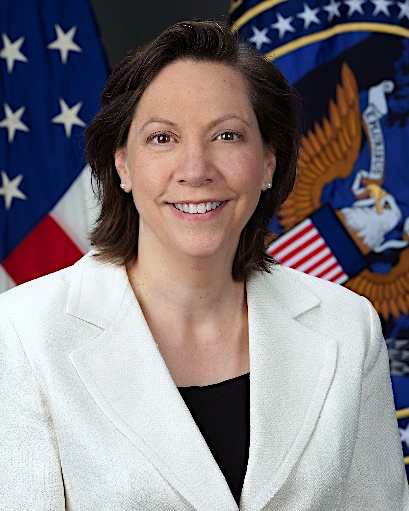
Beth Sanner
Sanner’s job was the same for those who had carried out this task under previous presidents: find a way to engage a politician whose natural instincts might not incline toward the tedious, and often contradictory details contained in many intelligence products. This was especially true for Donald J. Trump, who reportedly disdains detailed written reports, preferring instead oral briefings backed up by graphics.
The end result was a two-phased briefing process, where Sanner would seek to distill critical material to the president orally, leaving the task of picking through the details spelled out in the written product to his senior advisors. This approach was approved beforehand by the director of national intelligence, the director of the CIA and the president’s national security advisor.
Sanner, a veteran CIA analyst who previously headed up the office responsible for preparing the PDB, served as the DNI’s principal advisor “on all aspects of intelligence,” responsible for creating “a consistent and holistic view of intelligence from collection to analysis” and ensures “the delivery of timely, objective, accurate, and relevant intelligence.”
If there was anyone in the intelligence community capable of sorting out the wheat from the chaff when it came to what information was suited for verbal presentation to the president, it was Sanner.
No copy of the PDB for Feb. 27 has been made available to the public to scrutinize, nor will one likely ever be.
However, based upon information gleaned from media reporting derived from anonymous leaks, a picture emerges of at least one of the items contained in the briefing document, the proverbial “ground zero” for the current crisis surrounding allegations that Russia has paid cash bounties to persons affiliated with the Taliban for the purpose of killing American and coalition military personnel in Afghanistan.
Links Between Accounts
Sometime in early January 2020 a combined force of U.S. special operators and Afghan National Intelligence Service (NDS) commandos raided the offices of several businessmen in the northern Afghan city of Konduz and the capital city of Kabul, according to a report in The New York Times. The businessmen were involved in the ancient practice of “Hawala.” It is a traditional system for transferring money in Islamic cultures, involving money paid to an agent who then instructs a remote associate to pay the final recipient.
Afghan security officials claim that the raid had nothing to do with “Russians smuggling money,” but rather was a response to pressure from the Financial Action Task Force (FATF), an international body established in 1989 whose mission is, among other things, to set standards and promote effective implementation of legal, regulatory and operational measures for combating money laundering and terrorist financing.
This explanation, however, seems more of a cover story than fact, if for no other reason than that the FATF, in June 2017, formally recognized that Afghanistan had established “the legal and regulatory framework to meet its commitments in its action plan,” noting that Afghanistan was “therefore no longer subject to the FATF’s monitoring process.”
The joint U.S.-Afghan raid, according to the Times, was not a takedown of the Halawa system in Afghanistan—a virtually impossible task—but rather a particular Halawa network run by Rahmatullah Azizi, a one-time low-level Afghan drug smuggler-turned-high profile businessman, along with a colleague named Habib Muradi.
Azizi’s portfolio is alleged by the Times, quoting a “friend,” to include serving as a contractor for U.S. reconstruction programs, managing undefined business dealings in Russia, which supposedly, according to unnamed U.S. intelligence sources quoted by the Times, included face-to-face meetings with officers from Russian Military Intelligence (GRU), and serving as a bagman for a covert money laundering scheme between the Taliban and Russia.
Some thirteen persons, including members of Azizi’s extended family and close associates, were rounded up in the raids. Both Azizi and Muradi, however, eluded capture, believed by Afghan security officials to have fled to Russia.
Based in large part on information derived from the interrogation of the detainees that followed, U.S. intelligence analysts pieced together a picture of Azizi’s Halawa enterprise—described as “layered and complex”, with money transfers “often sliced into smaller amounts that routed through several regional countries before arriving in Afghanistan.”
What made these transactions even more interesting from an intelligence perspective, were the links made by U.S. analysts between Azizi’s Halawa system, an electronic wire transfer, a Taliban-linked account, and a Russian account that some believed was tied to Unit 29155 (a covert GRU activity believed to be involved with, among other activities, assassinations). The transactions had been picked up by the National Security Agency (NSA), the U.S. intelligence agency responsible for monitoring communications and electronic data worldwide.
The discovery of some $500,000 in cash by U.S. special operators at Azizi’s luxury villa in Kabul was the icing on the cake—the final “dot” in a complex and convoluted game of “connect the dots” that comprised the U.S. intelligence community’s assessment of the alleged Russian (GRU)-Taliban-Azizi connection.
The next task for U.S. intelligence analysts was to see where the Russian (GRU)-Taliban-Azizi connection took them. Using information gathered through detainee debriefings, the analysts broke down money Azizi received through his Halawa pipeline into “packets,” some comprising hundreds of thousands of dollars, which were doled out to entities affiliated with, or sympathetic to, the Taliban.
According to Afghan security officials quoted by the Times, at least some of these payments were specifically for the purpose of killing American troops, amounting to a price tag of around $100,000 per dead American.
The game of “connect the dots” continued as the U.S. intelligence analysts linked this “bounty” money to criminal networks in Parwan Province, where Bagram Air Base—the largest U.S. military installation in Afghanistan—is located. According to Afghan security officials, local criminal networks had carried out attacks on behalf of the Taliban in the past in exchange for money. This linkage prompted U.S. intelligence analysts to take a new look at an April 9, 2019 car bomb attack outside of Bagram Air Base which killed three U.S. Marines.
This information was contained in the PDB that was given to Trump on Feb. 27. According to standard procedure, it would have been vetted by at least three intelligence agencies—the CIA, the National Counterterrorism Center (NCC), and the NSA. Both the CIA and NCC had assessed the finding that the GRU had offered bounties to the Taliban with “moderate confidence,” which in the lexicon used by the intelligence community means that the information is interpreted in various ways, that there are alternative views, or that the information is credible and plausible but not corroborated sufficiently to warrant a higher level of confidence.
The NSA, however, assessed the information with “low confidence,” meaning that they viewed the information as scant, questionable, or very fragmented, that it was difficult to make solid analytic inferences, and that there were significant concerns or problems with the sources of information used.
Floating in the Bowl
All of this information was contained in the PDB carried into the White House by Sanner. The problem for Sanner was the context and relevance of the information she carried. Just five days prior, on Feb. 22, the U.S. and the Taliban had agreed to a seven-day partial ceasefire as prelude to the conclusion of a peace agreement scheduled to be signed in two days’ time, on Feb. 29.
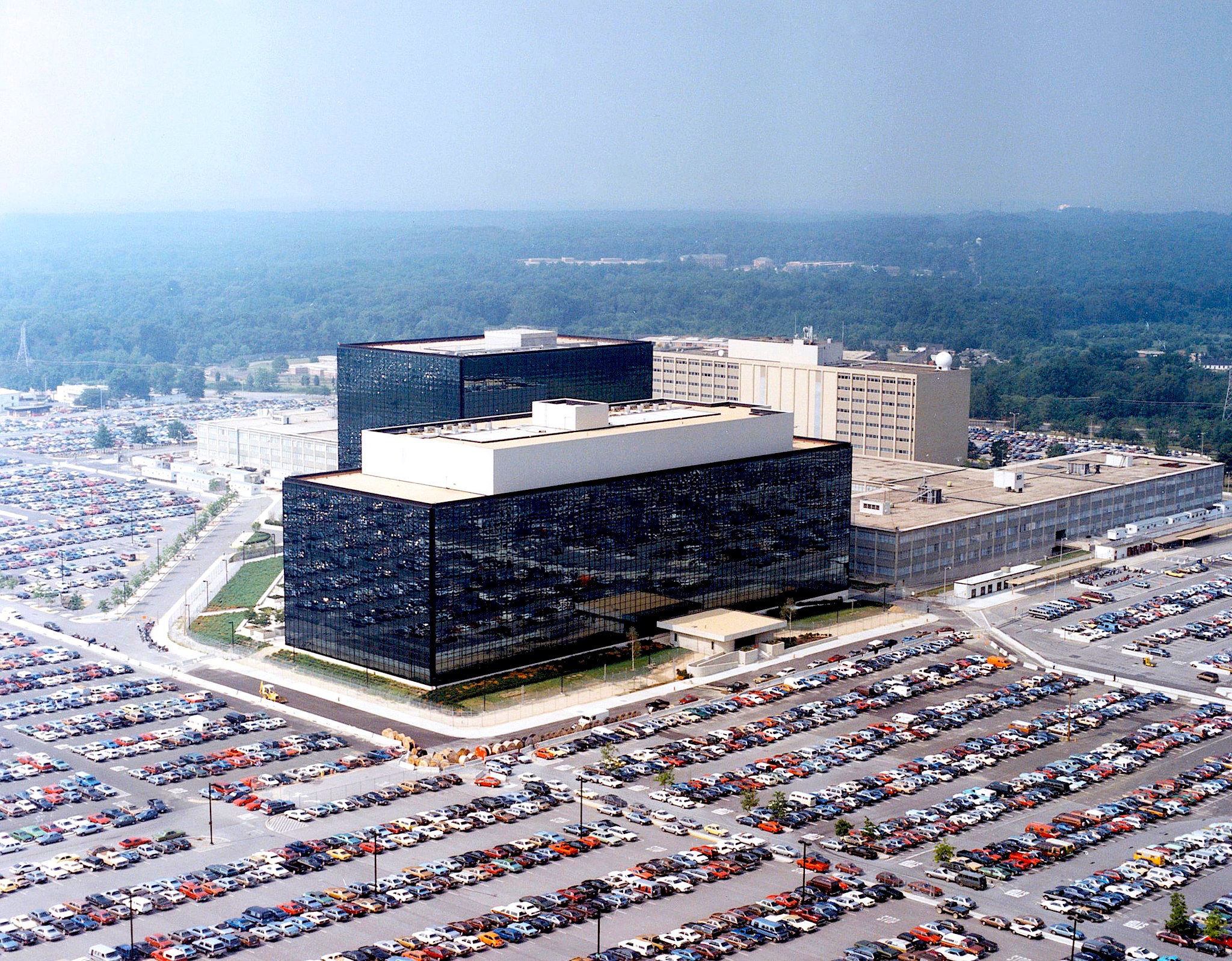
NSA HQ, Fort Meade, Maryland. (Wikimedia Commons)
The U.S. Representative for Afghanistan Zalmay Khalilzad, was in Doha, Qatar, where he was hammering out the final touches to the agreement with his Taliban counterparts. Secretary of State Mike Pompeo was preparing to depart the U.S. for Doha, where he would witness the signing ceremony. The information Sanner carried in the PDB was the proverbial turd in the punchbowl.
The problem was that the intelligence assessment on alleged Russian GRU “bounties” contained zero corroborated information. It was all raw intelligence (characterized by one informed official as an “intelligence collection report”), and there were serious disagreements among the differing analytical communities—in particular the NSA—which took umbrage over what it deemed a misreading of its intercepts and an over reliance on uncorroborated information derived from detainee debriefs.
Moreover, none of the intelligence linking the GRU to the Taliban provided any indication of how far up the Russian chain of command knowledge of the “bounties” went, and whether or not anyone at the Kremlin-let alone President Vladimir Putin-were aware of it.
None of the information contained in the PDB was “actionable.” The president couldn’t very well pick up the phone to complain to Putin based on a case drawn solely from unverified, and in some cases unverifiable, information.
To brief the president about an assessment which, if taken at face value, could unravel a peace agreement that represented a core commitment of the president to his domestic political base—to bring U.S. troops home from endless overseas wars—was the epitome of the politicization of intelligence, especially when there was no consensus among the U.S. intelligence community that the assessment was even correct to begin with.
This was a matter which could, and would, be handled by the president’s national security advisors. Sanner would not be briefing the president in person on this report, a decision that Trump National Security Adviser Robert O’Brien agreed with.
Blaming Russia
Ending America’s nearly 19-year misadventure in Afghanistan had always been an objective of President Trump. Like both presidents before him whose tenure witnessed the deaths of American service members in that hard, distant and inhospitable land, Trump found himself confronting a military and national security establishment convinced that “victory” could be achieved, if only sufficient resources, backed by decisive leadership, were thrown at the problem.
His choice for secretary of defense, James “Mad Dog” Mattis, a retired Marine general who commanded Central Command (the geographical combatant command responsible for, among other regions, Afghanistan) pushed Trump for more troops, more equipment, and a freer hand in taking on the enemy.
By the Fall of 2017, Trump eventually agreed to the dispatch of some 3,000 additional troops to Afghanistan, along with new rules of engagement, which would allow greater flexibility and quicker response times for the employment of U.S. air strikes against hostile forces in Afghanistan.
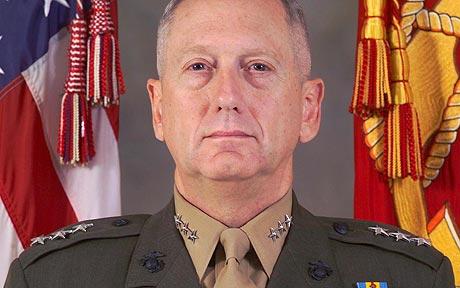
Mattis: Got what he wanted
It took little more than a year for the president to come to grips with a reality that would be reflected in the findings of Special Inspector General for Afghanistan Reconstruction John Sopko, that there had been “explicit and sustained efforts by the U.S. government to deliberately mislead the public…to distort statistics to make it appear the United States was winning the war when that was not the case.”
In November 2018, Trump turned on “Mad Dog”, telling the former Marine General “I gave you what you asked for. Unlimited authority, no holds barred. You’re losing. You’re getting your ass kicked. You failed.”
It was probably the most honest assessment of the War in Afghanistan any American president delivered to his serving secretary of defense. By December 2018 Mattis was out, having resigned in the face of Trump’s decision to cut American losses not only in Afghanistan, but also Syria and Iraq.
That same month, U.S. diplomat Khalilizad began the process of direct peace talks with the Taliban that led to the Feb. 29 peace agreement. It was a dispute over Afghan peace talks that led to the firing of National Security Advisor John Bolton. In September 2019—Trump wanted to invite the Taliban leadership to Camp David for a signing ceremony, something Bolton helped quash. Trump cancelled the “summit”, citing a Taliban attack that took the life of an American service member, but Bolton was gone.
Taking on Failure
One doesn’t take on two decades of systemic investment in military failure that had become ingrained in both the psyche and structure of the U.S. military establishment, fire a popular secretary of defense, and then follow that act up with the dismissal of one of the most vindictive bureaucratic infighters in the business without accumulating enemies.
Washington DC has always been a political Peyton Place where no deed goes unpunished. All president’s are confronted by this reality, but Trump’s was a far different case—at no time in America’s history had such a divisive figure won the White House. Trump’s anti-establishment agenda alienated people across all political spectrums, often for cause. But he also came into office bearing a Scarlet Letter which none of his predecessors had to confront—the stigma of a “stolen election” won only through the help of Russian intelligence.
The “Russian interference” mantra was all-pervasive, cited by legions of anti-Trumpers suddenly imbued with a Cold War-era appreciation of global geopolitics, seeing the Russian Bear behind every roadblock encountered, never once pausing to consider that the problem might actually reside closer to home, in the very military establishment Trump sought to challenge.
Afghanistan was no different. Prior to stepping down as the commander of U.S. forces in Afghanistan in September 2018, Army General John Nicholson sought to deflect responsibility for the reality that, despite receiving the reinforcements and freedom of action requested, his forces were losing the fight for Afghanistan.
Unable or unwilling to shoulder responsibility, Nicholson instead took the safe way out—he blamed Russia.
Scapegoating
“We know that Russia is attempting to undercut our military gains and years of military progress in Afghanistan, and make partners question Afghanistan’s stability,” Nicholson wrote in an email to reporters, seemingly oblivious to the history of failure and lies being documented at that moment by Sopko.
In March 2018 Nicholson had accused the Russians of “acting to undermine” U.S. interests in Afghanistan, accusing the Russians of arming the Taliban. But the most telling example of Russian-baiting on the part of the general occurred in February 2017, shortly after President Trump was inaugurated. In an appearance before the Senate Armed Services Committee, Nicholson was confronted by Sen. Bill Nelson, a Florida Democrat and ardent supporter of the U.S. intervention in Afghanistan.
“If Russia is cozying up to the Taliban—and that’s a kind word—if they are giving equipment that we have some evidence that the Taliban is getting…and other things that we can’t mention in this unclassified setting? And the Taliban is also associated with al-Qaida? Therefore Russia is indirectly helping al-Qaeda in Afghanistan?” Nelson asked.
“Your logic is absolutely sound, sir,” was Nicholson’s response.
Except it wasn’t.
Russia has a long and complicated history with Afghanistan. The Soviet Union invaded Afghanistan in 1979, and over the course of the next decade fought a long and costly war with Afghan tribes, backed by American money and arms and a legion of Arab jihadis who would later morph into the very al-Qaeda Sen. Nelson alluded to in his question to General Nicholson.
By 1989 the Soviet Empire was winding down, and with it its disastrous Afghan War. In the decade that followed, Russia was at odds with the Taliban government that arose from the ashes of the Afghan civil war that followed in the wake of the withdrawal of Soviet forces.
Moscow threw its support behind the more moderate forces of the so-called Northern Alliance and, after the al-Qaeda terror attacks on the U.S. on Sept. 11, 2001, was supportive of the U.S.-led intervention to defeat the Taliban and bring stability to a nation that bordered the Central Asian Republics of the former Soviet Union, which Russia viewed as especially sensitive to its own national security.
Realized US Was Losing the War
Fourteen years later, in September 2015, Russia was confronted by the reality that the U.S. had no strategy for victory in Afghanistan and, left to its own devices, Afghanistan was doomed to collapse into an ungovernable morass of tribal, ethnic and religious interests that would spawn extremism capable of migrating over the border, into the former Soviet Central Asian Republics, and into Russia itself.
Russia’s concerns were shared by regional countries such as Pakistan and China, both of which faced serious threats in the form of domestic Islamist extremism.
The capture of the northern Afghan city of Konduz, followed by the rise of an even more militant Islamist group in Afghanistan known as the Islamic State-Khorassan (IS-K), both of which occurred in September 2015, led the Russians to conclude that the U.S. was losing its war in Afghanistan, and Russia’s best hope was to work with the prevailing side—the Taliban—in order to defeat the threat from IS-K, and create the conditions for a negotiated peace settlement in Afghanistan.
None of this history was mentioned by either Gen. Nicholson or Sen. Nelson. Instead, Nicholson sought to cast Russia’s involvement in Afghanistan as “malign”, declaring in a Dec. 16, 2016 briefing that:
“Russia has overtly lent legitimacy to the Taliban. And their narrative goes something like this: that the Taliban are the ones fighting Islamic State, not the Afghan government. And of course … the Afghan government and the U.S. counterterrorism effort are the ones achieving the greatest effect against Islamic State. So, this public legitimacy that Russia lends to the Taliban is not based on fact, but it is used as a way to essentially undermine the Afghan government and the NATO effort and bolster the belligerents.”
Absent from Nicholson’s comments is any appreciation surrounding the creation of IS-K, and the impact it had on the Taliban as a whole.
The formation of IS-K can be causally linked to the disarray that occurred within the internal ranks of the Taliban in the aftermath of the death of Mullah Omar, the founder and moral inspiration of the organization. The struggle to pick a successor to Omar exposed a Taliban fractured into three factions.
One, representing the mainstream faction of the Taliban most closely linked to Mullah Omar, wanted to continue and expand upon the existing struggle against the Government of Afghanistan and the U.S.-led coalition, which supported and sustained it in an effort to re-establish the Emirate that ruled prior to being evicted from power in the months after the terror attacks of 9/11.
Another, grounded in the ranks of Pakistani Taliban, wanted a more radical approach which sought a regional Emirate beyond the borders of Afghanistan.
A third faction had grown tired of years of fighting and viewed the passing of Mullah Omar as an opportunity for a negotiated peace settlement with the Afghan government. IS-K emerged from the ranks of the second group, and posed a real threat to the viability of the Taliban if it could motivate large numbers of the Taliban’s most fanatic fighters to defect from the ranks of the mainstream Taliban.

Mujahideen who fought Soviets, Aug. 1985 (Wikimedia Commons)
For the Russians, who witnessed the growing potency of the Taliban as manifested in its short-lived capture of Konduz, the biggest danger it faced wasn’t a Taliban victory over the U.S.-dominated Afghan government, but rather the emergence of a regionally-minded Islamist extremist movement that could serve as a model and inspiration for Muslim men of combat age to rally around, allowing the violent instability to fester locally and spread regionally for decades to come. The mainstream Taliban were no longer viewed as a force to be confronted, but rather contained through co-option.
In a statement before U.S. troops in December 2016, then-President Barack Obama openly admitted that “the U.S. cannot eliminate the Taliban or end violence in that country [Afghanistan].” Russia had reached that conclusion more than a year prior, following the Taliban capture of Konduz.
A year before Obama made this announcement, Zamir Kabulov, Russia’s special representative to Afghanistan, noted that “Taliban interests objectively coincide with ours” when it came to limiting the spread of the Islamic State in Afghanistan, and he acknowledged that Russia had “opened communication channels with the Taliban to exchange information.”
For its part, the Taliban was at first cold to the thought of cooperating with the Russians. A spokesperson declared that they “do not see a need for receiving aid from anyone concerning so-called Daesh [Islamic State] and neither have we contacted nor talked with anyone about this issue.”
Many of the Taliban leadership had a history of fighting against the Soviets in the 1980s and were loath to be seen as working with their old enemies. The rise of IS-K in Afghanistan, however, created a common threat that helped salve old wounds, and while the Taliban balked at any overt relationship, the Russians began a backchannel process of discreet diplomatic engagement. (Kabulov had a history of negotiations with the Taliban dating back to the mid-1990’s).
By November 2018 this effort had matured into what was called the “Moscow Format”, a process of diplomatic engagement between Russia and Afghanistan’s neighbors which resulted in the first-ever dispatch of a Taliban delegation to Moscow for the purpose of discussing the conditions necessary for peace talks to be held about ending the conflict in Afghanistan.
When President Trump terminated the U.S.-Taliban peace negotiations in September 2019, it was the “Moscow Format” that kept the peace process alive, with Russia hosting a delegation from the Taliban to discuss the future of the peace process.
The Russian involvement helped keep the window of negotiations with the Taliban open, helping to facilitate the eventual return of the U.S. to the negotiating table this February, and played no small part in the eventual successful conclusion of the Feb. 27, 2020 peace agreement—a fact which no one in the U.S. was willing to publicly acknowledge.
Bad Intelligence
The Intelligence Collection Report that found its way into the Feb. 27 PDB did not appear in a vacuum. The singling out of the Hawala network operated by Rahmatullah Azizi was the manifestation of a larger anti-Russian animus that had existed in the intelligence collection priorities of the U.S. military, the CIA and the Afghan NDS since 2015.
This animus can be traced to internal bias that existed in both U.S. Central Command and the CIA against anything Russian, and the impact this bias had on the intelligence cycle as it applied to Afghanistan.
The existence of this kind of bias is the death knell of any professional intelligence effort, as it destroys the objectivity needed to produce effective analysis.
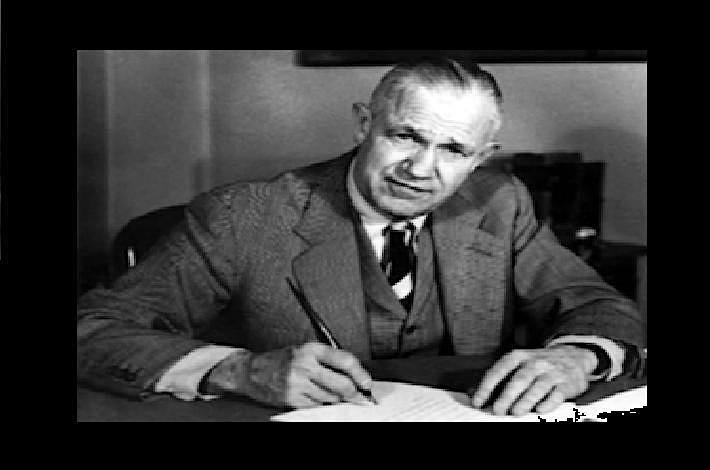
Sherman Kent
Sherman Kent, the dean of U.S. intelligence analysis (the CIA’s Center for Intelligence Analysis is named after him), warned of this danger, noting that while there was no excuse for policy or political bias, the existence of analytic or cognitive bias was ingrained in human condition, requiring a continuous effort by those responsible for overseeing analytical tasks to minimize.
Kent urged analysts “to resist the tendency to see what they expect to see in the information,” and “urged special caution when a whole team of analysts immediately agrees on an interpretation of yesterday’s development or a prediction about tomorrow’s.”
Part of a Litany of Intel Failures
The nexus of theory and reality was rarely, if ever, achieved within the U.S. intelligence community. From exaggerated Cold War estimates of Soviet military capability (the “bomber” and “missile” gaps), the underestimation of Viet Cong and North Vietnamese military capability, a failure to accurately predict the need for, and impact of, Gorbachev’s policies of reform in the Soviet Union, the debacle that was Iraqi WMD, a similar misreading of Iran’s nuclear capability and intent, and the two decade failure that was (and is) the Afghanistan experience, the U.S. intelligence community has a track record of imbuing its analysis with both political and cognitive bias—and getting it very, very wrong about so many things.
The Russian bounty story is no exception. It represents the nexus of two separate analytical streams, both of which were amply imbued with policy bias; one, representing America’s anger at not being able to control the fate of Russia in the aftermath of the collapse of the Soviet Union, and the second, America’s total misread of the reality of Afghanistan (and the Taliban) as it related to the Global War on Terror (GWOT).
For the first decade or so, these streams lived separate but equal lives, populated by analytical teams whose work rarely intersected (indeed, if truth be told, the Russian/Eurasian “house” was frequently robbed of its best talent to feed the insatiable appetite for more and better “analysis” driven by the GWOT enterprise.)
The election of Barack Obama, however, changed the intelligence landscape and, in doing so, initiated processes which allow these two heretofore disparate intelligence streams to drift together.
Under President Obama, the U.S. “surged” some 17,000 additional combat troops into Afghanistan in an effort to turn the tide of battle. By September 2012, these troops had been withdrawn; the “surge” was over, with little to show for it besides an additional 1,300 U.S. troops killed and tens of thousands more wounded. The “surge” had failed, but like any failure rooted in Presidential policy, it was instead sold as a success.
That same year the Obama administration suffered another policy failure of similar magnitude. In 2008, Russian President Vladimir Putin swapped places with Prime Minister Dmitri Medvedev, and when Obama took office, his team of Russian experts, led by a Stanford professor named Michael McFaul, sold him on the concept of a “reset” of U.S.-Russian relations, which had soured under eight years of the Bush Presidency.
But the “reset” was decidedly one-sided—it placed all of the blame for the bad blood between the two nations on Putin, and none on two successive eight-year presidential administrations, led by Bill Clinton and George W. Bush, which saw the U.S. expand the NATO alliance up to Russia’s borders, abandon foundational arms control agreements, and basically behave like Russia was a defeated foe whose only acceptable posture was one of acquiescence and subservience.
This was a game Russia’s first President, Boris Yeltsin, only seemed too happy to play. His hand-picked successor, Vladimir Putin, however, would not.
With Medvedev installed as president, McFaul sought to empower Medvedev politically—in effect, to give him the “Yeltsin” treatment—in hopes that an empowered Medvedev might be able to muscle Putin out of the picture.
For any number of reasons (perhaps most important being Putin had no intention of allowing himself to be so squeezed, and Medvedev was never inclined to do any squeezing), the Russian “reset” failed. Putin was reelected as president in March 2012. McFaul’s gambit had failed, and from that moment forward, U.S.-Russian relations became a “zero sum game” for the U.S.—any Russian success was seen as a U.S. failure, and vice versa.
In 2014, after watching a duly elected, pro-Russian Ukrainian president, Viktor Yanukovych, removed from office by a popular uprising which, if not U.S. sponsored, was U.S. supported, Putin responded by annexing the Russian-majority Crimean peninsula and supporting pro-Russian secessionists in the breakaway Donbas region of Ukraine.
This action created a schism between Russia and the U.S. and Europe, resulting in the implementation of economic sanctions against Russia by both entities, and the emergence of a new Cold War-like relationship between Russia and NATO.
In 2015 Russia followed up its Ukraine action by dispatching its military into Syria where, at the invitation of the Syria government, it helped turn the tide on the battlefield in favor of Syria’s embattled president, Bashar al-Assad, against an assortment of jihadist groups.
Overnight, the intelligence backwater that had been Russian/European affairs was suddenly thrust front and center on the world stage and, with it, into the heart of American politics. The McFaul school of Putin-phobia suddenly became dogma, and any academic who had published a book or article critical of the Russian president was elevated in status and stature, up to and including a seat at the table in the senior-most decision-making circles of the U.S. intelligence community.
The Russians were suddenly imbued with near super-human capability, up to and including the ability to steal an American presidential election.
After the failure of the Obama surge in Afghanistan, and the withdrawal from Iraq at the end of 2011 of all U.S. combat troops, the mindset throughout the Central Command area of operations was “stability.” This was the command guidance and pity the intelligence analyst who tried to raise a red flag or inject a modicum of reality into the intelligence enterprise whose mission it was to sustain this sense of stability.
Indeed, when the Islamic State roared out of the western deserts of Iraq to establish itself in eastern Syria, dozens of CENTCOM intelligence analysts officially complained that their senior management was purposefully manipulating the analytical product produced by CENTCOM to paint a deliberately misleading “rosy” picture of truth on the ground out of fear of angering the Commanding General and his senior staff.
For anyone who has spent any time in the military, the importance of command guidance, whether written or verbal, when it comes to establishing both priorities and approach, cannot be overstated. In short, what the general wants, the general gets; woe be the junior officer or analyst who didn’t get the memo.
By 2016, the commander of U.S. forces in Afghanistan, Gen. Nicholson, wanted to see Russians undermining U.S. policy objectives in Afghanistan. The poisonous culture that existed inside CENTCOM’s intelligence enterprise was only too happy to comply.
The corruption of intelligence at “ground zero” ended up corrupting the entire U.S. intelligence community, especially when there was a systemic desire to transfer blame for the failure of U.S. policy in Afghanistan anywhere other than where it belonged—squarely on the shoulders of U.S. policy makers and the military that did their bidding.
And there was a beefed-up Russia/Eurasia intelligence apparatus looking for opportunities to foist blame on Russia. Blaming Russia for U.S. policy failure in Afghanistan became the law of the land.
The consequences of this political and cognitive bias is subtle, but apparent to those who know what to look for, and are willing to take the time to look.
Following the leak to The New York Times about the Russian “bounty” intelligence, members of Congress demanded answers about the White House’s claim that the information published by the Times (and mimicked by other mainstream media outlets) was “unverified.”
Rep. Jim Banks, who sits on the Armed Services Committee as one of eight Republican lawmakers briefed by the White House on the substance of the intelligence regarding the alleged Russian “bounties”, tweeted shortly after the meeting ended that, “Having served in Afghanistan during the time the alleged bounties were placed, no one is angrier about this than me.”
Bank’s biography notes that, “In 2014 and 2015, he took a leave of absence from the Indiana State Senate to deploy to Afghanistan during Operations Enduring Freedom and Freedom’s Sentinel.”
Banks’ timeline mirrors that offered by a former senior Taliban leader, Mullah Manan Niazi, who told U.S. reporters who interviewed him after the Russian “bounty” story broke that “the Taliban have been paid by Russian intelligence for attacks on U.S. forces—and on ISIS forces—in Afghanistan from 2014 up to the present.”
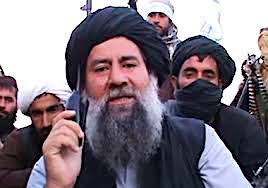
Niazi: shady character (ToloNews/YouTube)
Niazi has emerged a key figure behind the crafting of the “bounty” narrative, and yet his voice is absent from The New York Times reporting, for good reason—Niazi is a shady character whose acknowledged ties to both the Afghan Intelligence Service (NDS) and the CIA undermine his credibility as a viable source of information.
Officials, speaking anonymously to the media, have stated that “the bounty hunting story was ‘well-known’ among the intelligence community in Afghanistan, including the CIA’s chief of station and other top officials there, like the military commandos hunting the Taliban. The information was distributed in intelligence reports and highlighted in some of them.”
If this is true, and some of this information found its way into the intelligence report referred to by Rep. Banks, then the U.S. intelligence community has been selling the notion of a Russian bounty on U.S. troops since at least 2015—coincidentally, the same time Russia started siding with the Taliban against IS-K.
Seen in this light, claims that Bolton briefed President Trump on the “bounty” story in March of 2019–nearly a full year before the PDB on it was delivered to the White House—don’t seem too far-fetched, except for one small detail: what was the basis of Bolton’s briefing? What intelligence product had been generated at that time which rose to a level sufficient enough to warrant being briefed to the president of the United States by his national security advisor?
The answer is, of cours–none. There was nothing; if there was, we would be reading about it with enough corroboration to warrant a White House denial. All we have is a story, a rumor, speculation, a “legend” promoted by CIA-funded Taliban turncoats that had seeped itself into the folklore of Afghanistan enough to be assimilated by other Afghans who, once detained and interrogated by the NDS and CIA, repeated the “legend” with sufficient ardor to be included, without question, in the intelligence collection report that actually did make into a PD–on Feb. 27, 2020.
There is another aspect of this narrative that fails completely, namely the basic comprehension of what exactly constitutes a “bounty.”
“Afghan officials said prizes of as much as $100,000 per killed soldier were offered for American and coalition targets,” the Times reported. And yet, when Rukmini Callimachi, a member of the reporting team breaking the story, appeared on MSNBC to elaborate further, she noted that “the funds were being sent from Russia regardless of whether the Taliban followed through with killing soldiers or not. There was no report back to the GRU about casualties. The money continued to flow.”
There is just one problem—that’s not how bounties work. Bounties are the quintessential quid pro quo arrangement—a reward for a service tendered. Do the job, collect the reward. Fail to deliver—there is no reward. The idea that the Russian GRU set up a cash pipeline to the Taliban that was not, in fact, contingent on the killing of U.S. and coalition troops, is the antithesis of a bounty system. It sounds more like financial aid, which it was—and is. Any assessment that lacked this observation is simply a product of bad intelligence.
The Timing
Whoever leaked the Russian “bounty” story to The New York Times knew that, over time, the basics of the story would not be able to stand up under close scrutiny—there were simply too many holes in the underlying logic, and once the totality of the intelligence leaked out (which, by Friday seemed to be the case), the White House would take control of the narrative.
The timing of the leak hints at its true objective. The main thrust of the story was that the president had been briefed on a threat to U.S. forces in the form of a Russian “bounty,” payable to the Taliban, and yet opted to do nothing. On its own, this story would eventually die out of its own volition.
On June 18, the U.S. fulfilled its obligation under the peace agreement to reduce the number of troops in Afghanistan to 8,600 by July 2020. By June 26, the Trump administration was close to finalizing a decision to withdraw more than 4,000 troops from Afghanistan by the fall, a move which would reduce the number of troops from 8,600 to 4,500 and thus pave the way for the complete withdrawal from U.S. forces from Afghanistan by mid-2021.
Both of these measures were unpopular with a military establishment that had been deluding itself for two decades that it could prevail in the Afghan conflict. Moreover, once the troop level had dropped to 4,500, there was no turning back—the total withdrawal of all forces was inevitable, because at that level the U.S. would be unable to defend itself, let alone conduct any sort of meaningful combat operations in support of the Afghan government.
It was at this time that the leaker chose to release his or her information to The New York Times, perfectly timed to create a political furor intended not only to embarrass the president, but more critically, to mobilize Congressional pushback against the Afghan withdrawal.
On Thursday, the House Armed Services Committee voted on an amendment to the National Defense Authorization Act which required the Trump administration to issue several certifications before U.S. forces could be further reduced in Afghanistan, including an assessment of whether any “state actors have provided any incentives to the Taliban, their affiliates, or other foreign terrorist organizations for attacks against United States, coalition, or Afghan security forces or civilians in Afghanistan in the last two years, including the details of any attacks believed to have been connected with such incentives”—a direct reference to the Russian “bounty” leak.
The amendment passed 45-11.
This, more than anything else, seems to have been the objective of the leak. The irony of Congress passing legislation designed to prolong the American war in Afghanistan in the name of protecting American troops deployed to Afghanistan should be apparent to all.
The fact that it is not speaks volumes to just how far down the road of political insanity this country has travelled. On a weekend where America is collectively celebrating the birth of the nation, that celebration will be marred by the knowledge that elected representatives voted to sustain a war everyone knows has already been lost. That they did so on the backs of bad intelligence leaked for the purpose of triggering such a vote only makes matters worse.
Scott Ritter is a former Marine Corps intelligence officer who served in the former Soviet Union implementing arms control treaties, in the Persian Gulf during Operation Desert Storm, and in Iraq overseeing the disarmament of WMD.
Moscow Denies US Allegation of Breach of Underground Nuclear Testing Moratorium
Sputnik – 04.07.2020
US Special Presidential Envoy for Arms Control Marshall Billingslea on 3 July called Russia’s next-generation Poseidon and Burevestnik, experimental nuclear-powered as well as nuclear-armed submarine and air missile systems, “terrible” and urged for their abolition, while citing allegations of a rise in radiation levels in northern Europe.
Moscow rejects the allegations of non-compliance with the Threshold Test Ban Treaty*, the Russian Foreign Ministry said in a statement. The ministry went on to explain that the US claims regarding Russia’s alleged non-compliance with the 1974 treaty between the Soviet Union and the United States on limiting underground nuclear tests were built on completely false premises.
“Predictably, the US allegations that Russia has breached the moratorium on nuclear tests by conducting experiments that do not meet the US ‘zero-yield’ standard have not been supported by any evidence. Moreover, the US has admitted that it knows neither the number of such tests in 2019, nor whether they have been conducted at all”, the ministry spokesperson said.
According to the Russian Foreign Ministry, Moscow’s international obligations do not entail compliance with any “US standards” with regard to nuclear tests.
“These insinuations have seemingly been floated to divert attention from the Comprehensive Nuclear-Test-Ban Treaty (CTBT)”, the ministry spokesperson said, adding that “by refusing to ratify the CTBT, the US put it on the brink of complete collapse”.
For several months now, various Russia officials have voiced concerns about the US government’s campaign, aided by the media, to prepare the ground for abandoning the CTBT.
“Claims on Russia’s alleged violation of obligations under the 1974 US-Soviet Treaty on the Limitation of Underground Nuclear Weapon Tests, which stipulate that parties inform each other on any conducted tests, are built on false ‘premises”, the ministry said.
The multilateral CTBT was adopted by the United Nations General Assembly in 1966 to halt all nuclear tests, both for civilian and military purposes. The treaty will enter into force once all 44 states listed in Annex 2 of the document ratify it. The United States is among the minority of countries which have not yet ratified the document. All European countries, including Russia, have ratified the treaty.
“We officially confirm that Russia continues to strictly adhere to the declared moratorium on nuclear tests and to comply with the Comprehensive Nuclear-Test-Ban Treaty (CTBT) provisions pertaining to the prohibition of tests, despite the fact that the treaty has not entered into force”, a ministry spokesperson said.
The ministry pointed out that any discussions of alleged non-compliance with the United States are counterproductive as long as Washington has not ratified the treaty.
“Unlike the United States, we ratified it 20 years ago and are successfully implementing it. At the same time, we proceed from the fact that any disagreements regarding the criteria for compliance with relevant obligations can and should be resolved within the framework of the CTBT after its entry into force”, the spokesperson added.
Russia has the impression that the US is preparing to stop observing the voluntary nuclear test moratorium, the ministry said.
Late last month, the US Department of State released its annual Compliance Report pertaining to the implementation of arms control commitments by the US and other countries. Russia, in particular, has been alleged in having conducted “nuclear weapons-related experiments that have created nuclear yield” in violation of the 1974 US-Soviet Treaty on the Limitation of Underground Nuclear Weapon Tests, also known as the Threshold Test Ban Treaty (TTBT). In the very next sentence, the State Department clarified that it “does not know how many, if any” such experiments were conducted by Moscow in 2019.
*The Treaty on the Limitation of Underground Nuclear Weapons Tests, also known as the Threshold Test Ban Treaty (TTBT), was signed in July 1974 by the United States and the Soviet Union. The treaty established a nuclear “threshold” by prohibiting nuclear tests of devices having a yield surpassing 150 kilotons after 31 March 1976.
Will South Korea’s Moon Defy Trump and Improve Relations with North Korea?
By Gregory Elich | June 29, 2020
North Korea is in the news again. As always, that means that it is time for mainstream journalists and establishment figures to reach for the handy cliché and to recycle received opinion as a substitute for thought. Terms like “provocation,” “threat,” and “aggression” abound. Not surprisingly, powerful political and military actors in the United States are seizing the opportunity offered by strained inter-Korean relations to try and kill any prospect of reengagement with the Democratic People’s Republic of Korea (DPRK – the official name for North Korea).
In the eyes of nearly all U.S. politicians, military contractors, think tank analysts, and mainstream journalists, the release of former National Security Advisor John Bolton’s memoir could not have arrived at a better time. Bolton played a key role in torpedoing the Hanoi Summit by demanding that North Korea relinquish its biological and chemical weapons, despite the lack of evidence that the DPRK even has such programs. That was coupled with his insistence that North Korea adopt the Libya model of denuclearization, in which the DPRK would give up everything and receive nothing in return other than vague assurances. For Bolton, sinking the Hanoi Summit was a job half-done. With his memoir, he hopes to complete the task and smother the very concept of reengagement, a message that is predictably finding a receptive ear among so many in Washington.
President Trump’s willingness to meet with Chairman Kim Jong Un had suggested the potential for progress on the Korean Peninsula. For a time, Trump was open to dialogue but he remained wedded to the standard establishment line that the sole purpose of talks should be to negotiate the terms of North Korea’s surrender. In essence, it now appears that there was more continuity than change in Trump’s policy. Both former President Obama and Trump waged economic warfare on the North Korean people through sanctions, and both sought unilateral concessions. Where they differed was in whether issuing demands in face-to-face meetings needed to be added to the mix.
At one point, U.S. Special Representative for North Korea Stephen Biegun responded to criticisms of American intransigence by suggesting that the United States might consider offering compensation to North Korea in exchange for denuclearization. The possibilities he mentioned included agreeing to the two nations opening liaison offices in each other’s capital, permitting a few people-to-people talks, and humanitarian aid. There was also the thought that the United States might be willing to sign a declaration acknowledging that the Korean War came to an end in 1953. What is notable about all of these proposals is that they would provide nothing that North Korea truly needs. Sanctions would remain in place. Nor would there be a security guarantee to the DPRK that would allow it to feel safe enough to dismantle its nuclear deterrent. Also missing was normalization of relations.
Undoubtedly, there is ample reason to question Bolton’s veracity in his self-justifying memoir. But there is at least one passage that has the ring of plausibility. Bolton claims that he began to suspect that the end-of-war declaration was Moon’s idea. That impression was confirmed in talks with the North Koreans, who “had told us they didn’t care about it, seeing it as something Moon wanted,” and they also “worried about Moon’s pitching Trump on these bad ideas.” [1]
Kim Myong Gil, North Korea’s chief negotiator in denuclearization talks, firmly rejected Biegun’s offer of purely symbolic measures. “If the U.S. believes that it can lure us to the table with secondary issues, such as an end-of-war declaration – which can instantly end up as garbage depending on the political situation – and the establishment of a liaison office, instead of presenting fundamental solutions to withdraw its hostile policy against North Korea, which interferes with our right to survival and development, there will never be any hope for a solution.” [2]
However, reciprocity is not a word in the Washington lexicon, so talks remained stymied. Trump is currently distracted as the electoral campaign ramps up and in his criminal mismanagement of the COVID-19 virus. The mood on Capitol Hill and in the media is unremittingly hostile to the resumption of talks, and it is difficult to envision a reelected Trump being open to reengagement in a more even-handed manner. Nor can hope for an improved U.S.-DPRK relationship be placed in a Joe Biden presidency. In a campaign video, Biden declared, “The first thing we have to do is start to demonstrate to the American public that we’re no longer embracing the Kim Jong Uns and the thugs of the world…We are the United States of America. We lead by our example. We’re back. That’s the most critical thing that is going to have to be done.” [3]
The writing, then, is clearly on the wall. North Korean Minister of Foreign Affairs Ri Son Gwon issued a statement on June 12, in which he pointed out that “the hope for improved DPRK-U.S. relations…has now been shifted into despair,” and “even a slim ray of optimism for peace and prosperity… has faded away.” [4]
Trump’s inability or unwillingness to think beyond the ossified constraints of the Washington Establishment’s mindset ensured that talks could only end in failure. The North Koreans have taken due note of the Trump administration’s rigidity and have essentially given up hope for better relations.
Instead, the North Koreans focused their attention where there seemed more potential for improvement, and that was with inter-Korean relations. They hoped for measures such as establishing economic projects of mutual benefit and the cessation of military exercises aimed at each other. But here, too, the DPRK met with disappointment, as progress with South Korea remained stalled.
Mainstream media tell us that by severing communication links with the south and setting off an explosion at the Joint Liaison Office in Kaesong, North Korea is ‘lashing out’ and ‘raising tensions,’ due to economic problems or as a message to encourage Trump to resume negotiations.
In reality, these gestures are intended as a wake-up call to the Moon administration to prod him into returning to the commitments he signed in the Panmunjom Declaration. North-south relations have been in the doldrums for quite some time now, and the DPRK’s repeated requests for cooperation in advancing inter-Korean relations have invariably failed to move Moon into action.
South Korean President Moon Jae-in recognizes the need for warmer relations between the two Koreas, and some of Moon’s ideas for bringing the two Koreas closer together, such as his proposal for a Northeast Asian Railway Initiative, [5] have considerable merit. Yet, all of his plans remain undisturbed on the shelf, collecting dust.
The problem is that, as much as Moon may care about inter-Korean relations, the U.S.-South Korean alliance is more important to him. Moon insists that the UN economic sanctions on North Korea, which the U.S. devised, prevent him from implementing many of his plans. On every matter concerning cooperation with North Korea, whether large or small, Moon feels compelled to first ask for permission from the United States, and the answer is always no. It is due to Moon’s timidity that inter-Korean relations have failed to progress beyond initial steps.
Moon’s pronouncements are indicative of his frame of mind. In a meeting with senior secretaries on April 27, he said, “The fact that the Panmunjom Declaration’s implementation could not be sped up was never for lack of determination. It was because we could not step beyond the international restrictions that are part of reality.” There it is again, that inability to be an independent actor, and the compulsion to seek permission. Moon went on to say that “we should continue to find what is doable,” [6] by which he meant any small thing that the United States would permit him to do.
In the same meeting, Moon stated that “in regard to connecting inter-Korean railroads, we will start with what is possible first.” He added that he looks forward to working with the DPRK to “attain a vision for reconnecting the Donghae and Gyeongui lines, as agreed upon by the two leaders” [of North and South Korea]. Since U.S. opposition had already dissuaded Moon from moving ahead on reconnecting the rail lines, all that’s left is for the two Koreas to work on agreeing on what that “vision” would look like without ever actually attempting to translate that vision into reality.
The United States and South Korea established a working group to coordinate the latter’s policy towards the DPRK. For the Trump administration, the group’s mission is to put the brakes on all attempts at cooperation with the north. It is widely thought in South Korea that it was the working group that prevented business representatives from checking on their factories at the closed Kaesong Industrial Complex. It was also the working group that refused to allow South Korea to ship 200,000 doses of Tamiflu last year to the DPRK. [7] No cracks can be permitted in the Trump administration’s maximum pressure campaign against North Korea, not even when it comes to the provision of humanitarian aid.
With their only remaining hopes focused on closer cooperation with South Korea, the North Koreans have reached the point of total exasperation with Moon for his prioritizing the demands of U.S. imperialism over the needs of the Korean people.
From the North Korean perspective, Moon’s follow through on implementing the terms of the Panmunjom Declaration for Peace, Prosperity and Unification of the Korean Peninsula has been lacking. The clause that “affirmed the principle of determining the destiny of the Korean nation on their own accord” should have been the overarching philosophy.
The Panmunjom Declaration’s call to “actively implement” economic projects agreed to in 2007 at the summit between Roh Moo-hyun and Kim Jong Il had no chance, given punishing UN sanctions. Yet, there could have been some progress on implementing “practical steps towards the connection and modernization of the railways and roads on the eastern transportation corridor as well as between Seoul and Sinuiju for their utilization.” [8]
The immediate trigger for North Korea’s recent actions is the ongoing psychological warfare campaign waged by South Korean right-wing evangelical groups against the DPRK through the launch of propaganda balloons. The Panmunjom Declaration obligated both sides to cease all hostile acts against each other, including “distribution of leaflets” across the border. Given the frequency of right-wing balloon launches, the DPRK felt that South Korea was lackadaisical at best in restraining such efforts. An unnamed former South Korean official comments: “What the North Koreans are saying is that if the South can’t even keep its promise to ban the propaganda balloons, a matter that’s unrelated to sanctions and that the leaders of South and North Korea already reached an agreement about, there isn’t anything the two sides can work on together.” [9]
In a study published in 2014, based partly on interviews with defector groups, Jin-Heon Jung estimated the cost of a single balloon at around $100. Given the volume of balloons sent aloft, it is clear that, as Jung puts it, “fundraising matters the most.” In addition to individual donations, Jung reports: “Some of my interlocutors told me that financial support from international organizations such as the Defense Forum Foundation and overseas churches account for a significant portion of the sponsorship.” [10]
Responding to North Korea’s complaints about South Korean inaction on inter-Korean relations, on June 15, Moon delivered a speech in which he expressed “frustration and regret” for not being able to talk about progress made since the South-North Joint Declaration of twenty years before. Demonstrating a gift for understatement, Moon went on to say: “We’ve always been using cautious approaches to take just one step forward – as if walking on ice – but now it seems that was insufficient.” [11]
A bit later in the speech, Moon explained: “The Korean Peninsula is not yet in a situation where both Koreas can charge ahead as much as we desire at our own discretion. We must move forward, though slowly, with the international community’s consent.” [12] Here, Moon used the term ‘international community’ in its standard usage, as referring solely to the few thousand people in the Washington Establishment, and excluding the rest of the world’s nearly eight billion people.
Moon followed with the suggestion “that there are projects where both Koreas can pursue independently,” and “we have to start with small, achievable tasks.” The problem is that the United States is never going to give its consent for any task, no matter how minor and unrelated to sanctions, and it is not in Moon’s character to even inch along without Washington’s approval.
The North Koreans find Moon’s inaction and penchant for expressing beautiful but empty words annoying. In a scathing reaction to Moon’s speech, Kim Yo Jong, First Vice Department Director of the Workers Party of Korea Central Committee, issued a statement that was filled with language that was undiplomatic, even quite harsh – but which was not inaccurate in its assessment of Moon. “As acknowledged by everyone, the reason that the north-south agreements which were so wonderful did not see any light of even a single step of implementation was due to the noose of the pro-U.S. flunkeyism into which he put his neck.” Kim added that Moon accepted the U.S.-South Korea working group “under the coercion of his master and presented all issues related to the north-south ties to [the] White House. This has all boomeranged.” [13]
It is not only what Kim terms Moon’s “servile” attitude that perturbs the North Koreans. Even though joint U.S.-South Korean military exercises, which practice the bombing and invasion of the DPRK, have been downscaled, the North Koreans still regard these smaller exercises as a violation of the spirit of the Comprehensive Military Agreement signed between the two Koreas. [14]
The same can be said of South Korea’s military buildup. Spending on the military rose 7.4% this year, and Moon’s plans call for an average increase of 7.5% each year through 2023. Already, South Korea ranks tenth worldwide in defense spending [15], and the nation is the fourth-largest buyer of U.S. weaponry. [16] In what strikes the DPRK as a provocative move, South Korea is allocating $3.3 billion to purchase twenty additional F-35 stealth fighter jets over the next five years. [17]
The direction that inter-Korean relations take in the future depends primarily on whether Moon, master of the empty phrase, decides to add action to his repertoire and behave as if he regards South Korea as a sovereign nation. As a recent report in the North Korean press put it, the only option for improvement is “by joining hands with the fellow countrymen, not with foreign forces.” [18] The time has come for Moon to choose between serving the Korean people and serving Washington.
Cheong Seong-chang, director of the Center for North Korean Studies at South Korea’s Sejong Institute, observes, “It has been just words. For the North, the South Korean government’s words and actions are different… There is a need for actions to match words, and it is also necessary for actions to move ahead of words. At the least, the two need to move at the same pace.” [19]
[1] Sarah Kim, “Trump Didn’t Want Moon in DMZ, Writes Bolton,” JoongAng Ilbo, June 22, 2020.
[2] Jeong Je-hyug, “NK Kim Myong-gil, ‘Biegun Conveyed Wish to Meet for Talks in December. Willing to Sit with the U.S.,” November 15, 2019.
[3] https://youtu.be/3TFqeMSsTx0?t=2585
[4] “Our Message to U.S. is Clear: Ri Son Gwon, Minister of Foreign Affairs of DPRK,” KCNA, June 12, 2020.
[5] Kim Ji-eun and Seong Yeon-cheol, “President Moon Proposes Northeast Asian Railway Community Initiative,” Hankyoreh, August 16, 2018.
[6] https://english1.president.go.kr/BriefingSpeeches/Speeches/813
[7] Kang Seung-woo, “South Korea-US Working Group’s Role in Question Amid Growing Inter-Korean Tensions, Korea Times, June 18, 2020.
[8] “Panmunjom Declaration for Peace, Prosperity and Unification of the Korean Peninsula,” Reuters, April 27, 2018.
[9] Lee Je-hun, “Kim Yo Jong Becomes the Face of N. Korea Regarding Propaganda Balloons,” Hankyoreh, June 8, 2020.
[10] Jin-Heon Jung, “Ballooning Evangelism: Psychological Warfare and Christianity in the Divided Korea,” Max Planck Institute for the Study of Religious and Ethnic Diversity,” 2014.
[11] https://english1.president.go.kr/BriefingSpeeches/Speeches/839
[12] https://english1.president.go.kr/BriefingSpeeches/Speeches/839
[13] “Honeyed Words of Impudent Man are Disgusting: First Vice Department Director Kim Yo Jong of WPK Central Committee,” KCNA, June 17, 2020.
[14] “U.S. and S. Korean Authorities Condemned for Exacerbating Situation on Korean Peninsula,” KCNA, June 18, 2020.
Noh Ji-won, “N. Korea’s Grievances with S. Korea as Expressed by Kim Yo-jong,” Hankyoreh, June 18, 2020.
[15] Koharo Ito, “What to Make of South Korea’s Growing Defense Spending,” The Sasakawa Peace Foundation, March 12, 2020.
[16] Elizabeth Shim, “South Korea a Top Buyer of U.S. Weapons, Annual Report Says,” UPI, December 16, 2019.
[17] Jeff Jeong, “South Korea to Buy 20 More F-35 Jets,” Defense News, October 10, 2019.
Franz-Stefan Gady, “F-35A Stealth Fighter Formally Enters Service in South Korea,” The Diplomat, December 19, 2019.
[18] “S. Korean Authorities’ Inveterate Sycophancy Brings North-South Relations to Catastrophe: Rodong Sinmun,” KCNA, June 22, 2020.
[19] Choi He-suk, “Moon’s Progress on NK at Risk of Being Undone,” Korea Herald, June 10, 2020.
Featured Video

Iran’s Next Strike May Not Explode. It Could Shut You Down
or go to
Aletho News Archives – Video-Images
Book Review
New paperback: Butchered by “Healthcare”
Lies are Unbekoming | October 20, 2026
 Butchered by “Healthcare” is Robert Yoho’s plain-spoken account of how American medicine stopped being a profession and became an industry. 341 pages. Over a thousand references. Thirty-eight chapters.
“Screening Tests Are Useless”, on tests that find diseases that would never have hurt you. “The FDA Protects the Big Drug Companies”, on an agency funded by the companies it regulates. “The Journals’ Sins Are the Editors’ Sins”, on ghostwritten studies and captured peer review. “Opioids and ‘Pain Management’”, on how a generation was prescribed its way into addiction. “Prozac and Relatives” and “Antipsychotics Are Disastrous”, on what psychiatry does to adults and children. “Surgery: Money Before Patients”. “Failed Cancer Treatments”. “Futile CPR and Overprescribing”. “Billing Scams & Specialty Warfare”. “Hospitals Are Sharks”. Each with a Patient Tips section at the end on how to survive it.
If you have ever walked out of a doctor’s office with a prescription you didn’t ask for, or watched a parent put through a treatment that made them worse, this is the book you want on your shelf before the next appointment. … Full review
Butchered by “Healthcare” is available on Lulu now.
Blog Roll
 Aletho News
- Iran’s Next Strike May Not Explode. It Could Shut You Down /Col Doug Macgregor
- Iran: US political targets legitimate if assassinations return
- Iraq shuts key border crossing with Iran under US pressure: Report
- Undersea Internet cables could be targeted in retaliation for attacks on Iran: IRGC deputy chief
- EU sending ‘biased’ observers to interfere in Serbian election – president
- White House envoy declares kinetic action against Yemen ‘fruitless’
- Ukraine deployed thousands of microdrones in Iraqi Kurdistan: Tasnim
- Iran calls for emergency UNSC meeting over Trump’s ‘brazen’ bomb talk, Israeli threats
- Iranian sources reveal details of Russia-China Hormuz proposal
- Plan for more US-Israel integration puts our military tech at risk
- If Americans Knew
- Americans at National Conservatism Conference held in Israel this year criticize Israel
- Christiane Amanpour exits CNN with a legacy shaped by the debate over Israel
- Israel’s war on Iran is the final move in a decades-old strategy
- Israel Denies Entry to French Journalist, U.S. Researcher Amid Rise in Entry Denials
- Gaza’s hospitals are running out of life-saving fuel – Daily Update
- Mysterious bot accounts reportedly spread fake ‘man on the street’ videos for Michigan Senate candidate
- Israeli Defense Minister Katz Says Over 60 Lebanon Villages Have Been Destroyed
- Why Is Israel Running TV Ads in Iowa Ahead of the Midterms?
- Hind Rajab’s Alleged Killer Is in the United States. HRF Demands His Arrest.
- US Officials Face Fresh Pressure After Another American ‘Brutalized’ by Israeli Settlers in West Bank
- No Tricks Zone
- E-Cars Reduce CO2 Emissions By Only 41% Compared To Internal Combustion Engine Vehicles
- Predictions Made By Renowned Climate Professor Over Past Decades Have Been Proven To Be Poor
- New Study Suggests Large Regions Of The Pacific Ocean Have Been Cooling For The Last 80 Years
- Germany’s Green Energy Debacle: High Energy Costs Force Kahla Porzellan to Close After 182 Years!
- New Study: 50 Years Of The Most Aggressive ‘Net Zero’ Policies Can Only Affect The Global Climate By 0.03°C
- US September “Heat” Was No Record…Many Records Set Decades Ago
- Latest European Green Energy Debacle; Portugal’s Largest Flagship Solar Park Insolvent!
- Green Energy Debacle: German Expert Professor Fritz Vahrenholt Warns Of Severe Economic And Social Consequences
- Two More Paleo Reconstructions Affirm Meters-Higher Sea Levels Across Ireland, Brazil 7000-6000 Years Ago
- New Study: Earth And Venus Surface Warmth Largely Explained By Convection And Lapse Rate, Not CO2 Or Radiation

