UK military killing THOUSANDS of farm animals in Cyprus and threatening PROTECTED wildlife zones
RT | June 10, 2020
The British military is “knowingly” causing the deaths of farm animals in Cyprus on an “almost daily basis” and has paid millions of pounds in compensation to farmers since 1995, an investigation has revealed.
Activity at a British base on the Mediterranean island has resulted in 1,764 claims for “animal loss” over the last five years from “live-firing and low-flying,” the Declassified UK website revealed on Wednesday. The animal deaths are happening near the Royal Air Force (RAF) base at Akrotiri on the southern peninsula of Cyprus, the investigative website said.
Paying compensation to farmers is now commonplace, and the Ministry of Defence (MOD) paid out almost £750,000 during the 2018-19 financial year – most of which was to settle 334 animal loss claims. One of the payouts last year covered costs for “abortions and associated vet fees” after pregnant goats were killed by low-flying aircraft.
Declassified UK said internal documents show that the MOD is “knowingly” causing the deaths by permitting planes to fly as low as 100 feet above the ground. A report in 2009 explained that the goats “abort their unborn kids/lambs if panicked” by low-flying planes and the “dry firing/pyrotechnics.”
The MOD has also paid compensation to UK farmers for animal deaths, but the numbers of incidents are “far higher” in Cyprus, Declassified said, suggesting the military may make more of an effort to avoid such deaths on British soil.
For instance, only 22 claims were settled across the UK between 2014 and 2018 for animal deaths due to aircraft noise, while 1,034 were made in Cyprus over the same period.
The investigative website found that more than half of the deaths are close to the Paramali river, which is a protected wildlife zone described by the MOD as being home to Europe’s “most valuable and threatened species” including falcons, harriers and kestrels. It’s not known, however, if the British military activity has killed any wild animals.
The UK has two bases at Akrotiri and Dhekelia, which it retained following the granting of independence to Cyprus in 1960. It uses the land for training soldiers for combat in the Middle East, even creating a “mock Afghan village” for an “authentic” experience.
Local farmers are not permitted to water or harvest their crops in the areas during live-firing exercises, a situation which results in “crop loss” claims for “poor yield or overripe items unable to be sold.” Between animal and crop loss claims, the MOD has paid out £8 million to claimants over the past 25 years.
The internal documents also showed the military was aware that expanded training exercises in areas with large farms would “inevitably see more expensive claims being presented” — but proceeded with the plans anyway. They do, however, conduct some reconnaissance before exercises in an effort to maintain “good relations” with the community.
The presence of the British military in the area has long been controversial for Cypriots, with a 2001 proposal to build a large radio mast at a site on the edge of Limassol Salt Lake sparking riots outside the RAF base.
The lake is recognized as a “wetland of international importance” and hosts 15,000 greater flamingos during the winter months. The presence of an RAF runway less than one kilometer away means disturbance to the wildlife there is a “major issue,” BirdLife Cyprus director Martin Hellicar told Declassified. An MOD spokesperson said all training and activity takes place under “strict conditions” and with precautions to minimize risk.
Okinawa’s Governor Promises ‘Fierce Opposition’ to Plan for New US Missile Bases
Sputnik – 10.06.2020
A US plan to build new missile sites on the Japanese island of Okinawa has encountered stiff resistance by locals, including the governor, who was elected on a position of getting US forces out of the prefecture.
‘Absolutely Unacceptable’
In the event of a war with China, land-based missiles placed on Okinawa would provide a major leverage point for US forces. However, with the island already a major target due to several large US military installations, Okinawans are fed up with the idea of bringing in even more targets for China’s People’s Liberation Army (PLA).
“I firmly oppose the idea,” Okinawa Governor Denny Tamaki told the Los Angeles Times for a Wednesday story. “If there is such a plan, I can easily imagine fierce opposition from Okinawa residents.”
“Intermediate-range ballistic missiles can be used to attack other countries, so deploying them would conflict with the Constitution and lead to a further build-up of the US bases,” Tamaki told Bloomberg News last November. “To have new military facilities would be absolutely unacceptable.”
The Straits-Times noted last November that similar opposition is just as likely from other US allies, such as Australia and South Korea, which would then become targets in the event of a shooting war between Washington and Beijing. Similar fears quelled early Cold War enthusiasm in Canberra for a nuclear weapons program, too.
Last October, the Okinawan daily Ryukyu Shimpo reportedly uncovered evidence the US government had informed the Russian government in August 2019 of its intent to base missiles violating the shredded Intermediate-Range Nuclear Forces (INF) Treaty in Okinawa within two years. The US formally withdrew from the treaty, which governed the ranges of land-based missiles used by Russia and the US, just days earlier.
Battle Plans Hinge on Okinawa
Never having been bound by the INF Treaty, the PLA has spent decades building up its Rocket Force into a formidably armed corps, wielding a variety of long-range cruise missiles and ballistic missiles and even hypersonic weapons, which the US has yet to field.
Sitting just 500 miles from Shanghai and 400 miles from the Zhejiang coast, Okinawa-based missiles would find much of mainland China within striking distance. However, the Ryukyu Islands would almost certainly fall under heavy attack by the PLA during a prospective war with US allies, as the archipelago falls within the “First Island Chain,” or the first string of islands sitting just off the east Asian coast. Beijing’s long-term strategic plans call for forcing its adversaries increasingly away from the Asian mainland, beginning with the First Island Chain, which stretches from Russia’s Kamchatka Peninsula south to Borneo, in Indonesia.
Likewise, the US Marine Corps is busy reenvisioning the way it wages war, including a pivot from the heavy land-based forces of the last several decades toward a more maritime role.
Commandant of the US Marine Corps Gen. David Berger told Congressional lawmakers in March that the Corps would be expanding its missile capabilities twentyfold in the next five years, as well as introducing the Navy Marine Expeditionary Ship Interdiction System (NMESIS), which is based on the High Mobility Artillery Rocket System (HIMARS) but mounted atop a Joint Light Tactical Vehicle chassis. The weapons system will be able to fire a variety of anti-air and anti-ship missiles.
The purpose of these weapons can be found in Expeditionary Advance Base Ops (EABO), in which Marines will rush forward to set up small outposts on scattered islands that would house batteries of long-range anti-ship and anti-air missiles, creating a “no-go zone” for Chinese air and sea forces. A graphic illustrating the concept by the Center for Strategic and Budgetary Assessments think tank happens to show EABOs deployed across the Ryukyuan chain.

Center for Strategic and Budgetary Assessments
Land-based missiles deployed at “Expeditionary Advance Bases” could form a virtual wall against Chinese aggression
Widespread Japanese Opposition to US Missiles
US plans for deploying weapons previously banned by the INF Treaty elsewhere in Japan have met strong resistance as well. An Aegis Ashore system that was to have been built in the western city of Akita was canceled last month amid heavy opposition from locals. Another site, on the western coast of Yamaguchi Prefecture, also met opposition, but so far plans for its construction remain unchanged.
Tokyo approved their construction to provide anti-missile defense against potential attack from the Democratic People’s Republic of Korea (DPRK), but with the US out of the INF Treaty, the Aegis Ashore systems can easily be converted to fire offensive weapons, as the site in Deveselu, Romania, has already demonstrated.

Sonata
Marine Corps Station Futenma, in Ginowan, Okinawa
Okinawans have also fought the continued presence of several US military bases on the island, which was stormed by US forces in the closing months of World War II in a furious battle that killed nearly half the island’s population of 300,000 at the time. US Marine Corps Air Station Futenma sits in the middle of Ginowan City, and Tamaki was elected to the governorship on a campaign to get the base removed from the prefecture. Just four miles north of Futenma is another air base, the US Air Force’s colossal Kadena Air Force Base; between the two installations are half of the 50,000 US service members deployed in all of Japan.
In a February 2019 referendum, 70% of Okinawans voted against a US-Japanese plan to relocate Futenma on the island, but Japanese Prime Minister Shinzo Abe insisted Tokyo “cannot avoid the necessity of moving Futenma,” and land reclamation for the new site, on the coast of rural Henoko to the north, has continued.
Saudi Arabia exempts Western arms purchases from austerity plan: FT
Press TV – June 7, 2020
Saudi Arabia is reportedly continuing to import weapons from Western countries, especially the United States, despite austerity measures taken recently to handle the kingdom’s worst financial crisis in decades.
Saudi Arabia posted a $9 billion budget deficit in the first quarter of 2020 due to plummeting oil prices and the novel coronavirus (COVID-19) pandemic.
Riyadh announced last month that it will suspend the cost of living allowance for state workers and raise the value added tax threefold in a bid to boost state finances.
However, the Financial Times reported on Sunday that the kingdom’s military expenditure emerged unscathed from the tough austerity measures, citing military contracts signed with American arms giants.
A Western arms industry executive based in the Persian Gulf quoted top Saudi officials as saying that there would be no military cuts.
“I was fully expecting there to be a cut, but the information from very senior levels and princes is ‘no, we’re not going to do it. In fact, don’t come and ask me if your program is going to slip, keep working hard at it, because we are just carrying ahead,’” the executive said.
“We’ve got a large number of requirements popping in through the door.”
The report cited the Pentagon’s contracts worth more than $2.6 billion for the delivery of more than 1,000 air-to-surface and anti-ship missiles to Saudi Arabia.
The US arms manufacturer Lockheed Martin, which supplies THAAD missiles to Riyadh, also told the Financial Times that it had “not seen a backing off of expenditures on defense” by any of its main Middle Eastern customers.
Robert Harward, chief executive of Lockheed’s Middle East unit, said although it was too early to judge, he expected that customers, including Saudi Arabia, “will continue with their procurement”.
“Regional threats are not receding and are more unpredictable than ever,” he said. “Countries will have to make choices on budgets, as countries always have to do.”
Another Persian Gulf-based military executive confirmed that his company had not witnessed “any shift in attitudes from the customers,” but suggested that it could still change, the FT added.
Meanwhile, the Saudi Finance Ministry stressed that the kingdom would “continue to support our military needs.”
The ministry said it had been working to rationalize spending to ensure the country got military equipment “for the right cost for the right quantity with the right specification”.
Saudi Arabia was the world’s largest weapons importer in 2015–19, according to the Stockholm International Peace Research Institute (SIPRI). The regime’s imports of major arms increased by 130 percent compared with the previous five-year period.
The kingdom is stuck in a costly war on Yemen it launched in March 2015 in a bid to reinstall the former Saudi-backed regime and crush the popular Houthi Ansarullah movement.
However, over five years into the Western-sponsored war, Saudi Arabia has achieved neither of its objectives and instead plunged Yemen into what the UN says is the world’s worst humanitarian crisis.
Riyadh is the largest buyer of American-made weaponry. US President Donald Trump signed an arms deal worth $110 billion with Saudi Arabia in May 2017 on his first foreign trip since becoming president.
Before his presidency, he had described the kingdom as “a milk cow” which would be slaughtered when its milk ran out.
All Tom Cotton has to do to get back in the NYTimes’ good graces is call for the US military to bomb ANOTHER country’s civilians
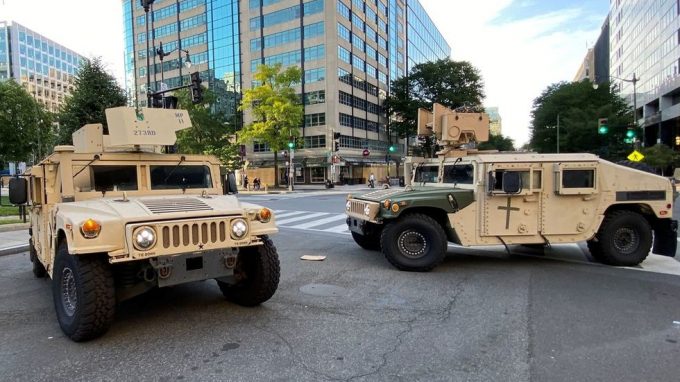
The war comes home… literally © Reuters / Andy Sullivan
By Helen Buyniski | RT | June 6, 2020
Republican senator Tom Cotton’s controversial op-ed demanding US troops be deployed against American protesters would have been embraced by the New York Times if he’d just stuck to cheering on military actions abroad.
The Times has been consumed with angst over the backlash to the Arkansas senator’s piece, which called for the military to be turned loose in US cities as an “overwhelming show of force to disperse, detain and ultimately deter lawbreakers.” Hundreds of the outlet’s staffers have slammed management’s decision to publish, insisting Cotton’s words somehow put them in danger.
Yet the Paper of Record has a long, colorful history of publishing op-eds (and even news pieces) supporting the deployment of the US military against civilian populations. Sure, those populations generally live outside the US – maybe they’re in Iraq, or Venezuela, or Iran – but the Times can almost always be relied upon to support the idea that the US military is a force for good, bringing sweetness and light (and, of course, democracy) wherever it goes.
That the Times would then balk at Cotton’s call to send those same troops into American cities is a bit surprising. Are these writers suggesting military activity in civilian areas isn’t limited to building schools for needy children, or freeing kittens trapped up tall trees?
And if they are aware of the destruction that takes place when US troops invade a country – civilian casualties, terrorism, drug and human trafficking – what’s their excuse for declaring, again and again, that military intervention is the answer to any nation’s problems?
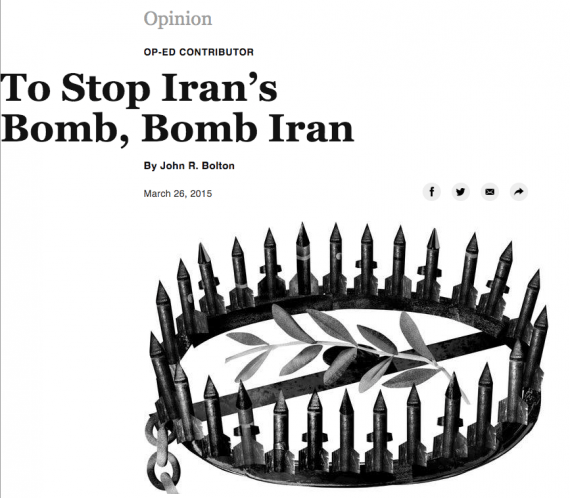
© New York Times
For the paper to cry fascism now – when its pages have been used to manufacture consent for war after war among the American people, facilitating the decimation of Afghanistan, Iraq, Libya, and Syria – is the pinnacle of hypocrisy. The time to speak up, morally, was long ago. Putting their foot down now is utter cowardice, motivated not by concern over a fascist takeover – that ship has sailed – but by a desire to keep Uncle Sam’s enforcers from stomping back home.
Michelle Goldberg, given the task of refuting Cotton’s ‘dangerous’ views on the op-ed page on Friday, cut to the heart of the matter when she pointed out that Cotton’s recommendations would “almost certainly amount to massive violence against his fellow citizens.” Massive violence, then, is only acceptable when it happens to civilians outside the US.
The rest of the world still has to deal with the fallout from the Times’ warmongering. If Cotton wants to make nice with the Times, all he has to do is write a piece explaining how the children of Hong Kong (or Pyongyang, or Tehran) are crying out for the kind of freedom that can only be delivered from the barrel of a made-in-USA M-16. All will be forgiven.
Helen Buyniski is an American journalist and political commentator at RT. Follow her on Twitter @velocirapture23
Biothreat from US on the Rise
By Vladimir Platov – New Eastern Outlook – 03.06.2020
As the Coronavirus pandemic continues to devastate many nations of the world, the global community and media outlets have been increasingly focusing on questionable activities being carried out at biolabs financed by funds from the US Department of Defense budget.
There have already been a number of publications expressing concern about the collection of human specimens for research from members of various ethnic groups by the Pentagon. The total budget for this program is supposedly $2 billion. The key long-term aims of USA’s biological defense program are to “counter and reduce the risk of biological threats and to prepare, respond to, and recover from them if they happen” in any given region. These goals include monitoring all the research conducted on pathogens; collecting biological specimens in countries of interest (and then handing them over to the United States); studying how susceptible certain ethnic groups are to various diseases and their responses to appropriate treatments, and conducting clinical trials of drugs in regions with ethnically diverse populations. In order to reach these objectives, the United States has ensured the establishment of partner alert and response systems for epidemics in the aforementioned countries, which encompass national, regional and local research laboratories, institutes of veterinary medicine as well as medical facilities.
USA’s National Security Strategy, unveiled in 2017, stated that “China and Russia challenge American power, influence, and interests, attempting to erode American security and prosperity”. Hence, it is not surprising that research on bio-threats is being actively conducted in partnership with the United States in the CIS (Commonwealth of Independent States) region. In addition, a network of US partner biolabs is being established on the borders of Russia and China. In this regard, the USA seems to be particularly interested in Central Asian nations, Ukraine and Eastern European countries. It is particularly frightening that, in recent years, new US partner biological laboratories have reportedly been established in Kazakhstan, Azerbaijan, Armenia, Uzbekistan, Moldova and Ukraine (altogether, there are several dozen facilities of this nature in 25 countries).
For example, in Ukraine, which appears to be under Washington’s direct influence after the Maidan Revolution, the USA has purportedly opened a network of 15 secret biolabs. Recently, Oleksandr Lazarev, a Ukrainian political scientist, told Ukrainian TV channel ZIK that these laboratories were conducting research on weaponizing viruses and could therefore jeopardize national security. He added that 15 laboratories had been established in Ukraine since the so-called Orange Revolution in 2005. The political scientist pointed out that these facilities were funded by the US Department of Defense, which meant that their presence in the region was in line with USA’s military objectives. Oleksandr Lazarev used biolabs in Georgia as an example of facilities where questionable research was being carried out. According to the Ukrainian expert, in 2008, when the Georgian–Ossetian conflict occurred and there was a flare-up in tensions between the United States and Russia, the African swine fever virus (ASFV) spread from Georgia to Russia. The political scientist said that numerous factors suggested that the pathogen came from the aforementioned biolabs in Georgia. He also reminded the audience that ASFV then reached the territory of Ukraine, where it indiscriminately killed livestock. Oleksandr Lazarev also opined that outbreaks of various dangerous diseases, which had occurred in different regions of Ukraine, were directly linked to the US partner biolabs in the country.
Many media outlets have reported about the work carried out at the Richard Lugar Public Health Research Center (a US partner biolab in Alekseyevka, Tbilisi). These news items have expressed concern about the legitimacy of US-funded activities in Georgia. Secret experiments are being conducted at the facility. Some research is even done on people, who are isolated in special units and subsequently infected with the most dangerous diseases.
Another region that the US Department of Defense is particularly interested in is Central Asia, where the US military and political leadership has decided to establish partner laboratories in Soviet-era facilities, called the “anti-plague system”. In Kazakhstan, four out of nine regional research centers (in Nur-Sultan, Otar and Oral) have already been repaired and equipped with necessary instruments as part of Defense Advanced Research Projects Agency’s (DARPA) program.
In recent years, the United States has continued to ramp up its activities in partner biolabs in Uzbekistan, a country not far from Russia, China and Iran. The Pentagon started increasing the reach of its secret biolabs within Uzbekistan since the end of 1990s, during the upheavals that followed the collapse of the USSR. Hence, US experts from the Defense Threat Reduction Agency (DTRA, a body within the US Department of Defense) could have gained access to previously secret biological and chemical facilities in this nation. The first National Reference Laboratory opened in 2007 in Tashkent, Uzbekistan, with support from the US Agency for International Development (USAID). In 2013, two more began operations in Andijan and Fergana, and in 2016, another laboratory opened in Urgench (the Khorezm Regional Diagnostic Laboratory). These facilities, as others in countries of the region, were built with the support of the DTRA of the US Department of Defense. Currently, there are more than 10 laboratories aside from the one in Tashkent: in Andijan, Bukhara, Denau, Qarshi, Nukus (the capital of the Republic of Karakalpakstan), Urgench, Samarkand and Fergana. As this network of US partner biolabs continues to expand in Uzbekistan (the most highly-populated Central Asian country), periodic outbreaks of unknown origins have occurred in the nation. However, there is very little information about them at present. For instance, in August 2011, within 24 hours, 70 sick individuals were admitted to hospital in Yangiyul, a city not far from Tashkent. In 2012, an unknown disease spread in Uzbekistan and dozens of people died as a result. In spring 2017, there was an outbreak of chickenpox (a dangerous disease especially for infants, caused by a virus). It had a negative effect on the health of the population in the region and the country, and spread among individuals of working age. Strangely, the rise in infections coincided with the opening of US partner facilities supposedly aimed at reducing the risk of biological threats. It is, therefore, not surprising that there have been rising concerns among the public about the lack of transparency in these laboratories and reporting practices used by them involving US officials.
The United States has been increasing its sphere of influence in the bio defense sector by, first and foremost, expanding its network of partner biolabs and conducting more experiments of interest to the Pentagon. As a result, the aforementioned countries are losing their ability to function independently in this particular field. Fulfilling its objectives could allow the United States to subsequently use these biolabs for military purposes; to ensure US servicemen are protected if they are deployed in the regions where the laboratories are located, and to conduct in-depth research into pathogens that can affect ethnic groups in different ways.
Recently, Russia’s Foreign Minister Sergey Lavrov stated that Washington’s rejection of the protocol containing verification measures to strengthen the Convention on the Prohibition of the Development, Production and Stockpiling of Bacteriological (Biological) and Toxin Weapons and on their Destruction was a cause for concern. “Tensions around the issue have escalated and Washington’s unwillingness to ensure the transparency of its military biological activities in various parts of the world raises questions about what is really going on there and what the actual goals are,” the official pointed out.
GCHQ propagandizing kids as young as four in secretive school ‘educational’ programs aimed at recruitment
RT | June 2, 2020
Britain’s GCHQ spy agency is running secretive “educational” programs in dozens of schools and disseminating propaganda to children as young as four years old, without the knowledge of parents, it’s been revealed.
The intelligence agency is running the programs in at least 40 schools with access to 22,000 children who are potentially being spied on, according to an investigation by Declassified UK.
According to the investigative website, GCHQ officers themselves are operating in at least one of the schools and parents of the pupils involved have not been made aware of the extent of the spy agency’s role in the so-called Cyber Schools Hub (CSH) programs also known as ‘CyberFirst’.
GCHQ publicly describes the programs as giving children between the ages of 11 and 17 the chance to experience “new ways of learning” in an “innovative cyber environment” and aims to use the school activities to help recruit kids for the cyber security industry.
Yet, Declassified revealed that the efforts have now expanded into primary schools where GCHQ has access to children as young as four years old – and that while the program literature states it is operational in 23 schools, it is actually running in nearly double that number – 10 of which are primary schools.
One of the primary school level “code clubs” is in fact staffed “entirely” by officers from GCHQ. The agency gains access to schools by offering to provide technology to local libraries and “recruitment teams” field enquiries from schools interested in being part of the program, the website said.
More disturbingly, the investigation revealed, local police worked with GCHQ on a “joint tag team event” to gain access to a student who had been reported to authorities as “very talented” by teachers who were worried he may be about to “cross the line” with his cyber activities – though there was no evidence that the child had done anything wrong.
The revelations about GCHQ’s activities in British schools are unsurprising considering US whistleblower Edward Snowden had previously revealed that one of the spy agency’s “top objectives” was to target children and create a “reporting service on radicalisation.”
Children are told that GCHQ, which conducts unlawful mass surveillance, according to the European Court of Human Rights, is the “heart of the nation’s security” system and has “saved countless lives.”
Asked what information was given to parents about the taxpayer-funded program, the National Cyber Security Centre (NCSC) told Declassified it had “no contact with parents” and that what teachers share with parents is up to them.
Declassified UK was rebuffed by both GCHQ and the schools themselves when trying to glean more information about the projects, with both citing “national security exemptions” in order to block freedom of information requests.
The spy agency is attempting to “drip-feed” children with messages aimed at recruiting them for the field over time, Jen Persson, director of Defend Digital Me, told Declassified.
“There is regulation in other areas to protect [children] from undue adult influence, like online advertising – yet it sounds like spies can walk into schools whenever they want with no transparency or independent oversight,” Persson said.
GCHQ has posted “comments” from children on social media apparently praising the program as “the best thing EVER,” “fabulous” and “masses of fun” – but some of these quotes are seemingly made up.
A newsletter on an event for girls includes an alleged quote from Ella and Chloe in Year 8 (12-13 years old) expressing the need for “diversity in perspectives, leadership and experience.” Aside from “sounding more like language used by GCHQ media relations,” Declassified found that the same quote is attributed to 13-year-old Evie in another CSH blog post. Asked about this curious detail, NCSC told the website that teachers provide the quotes from students.
During an unannounced visit to a GCHQ “hub school,” one principal told Declassified that the program has brought his school no investment or new facilities but has simply made the school put more of a focus on cyber security.
Following a “successful” pilot phase in England, the government is now planning to expand the GCHQ program across the whole UK.
Algeria wants to become a satellite of Western interests in Africa
By Lucas Leiroz | June 1, 2020
The current geopolitical situation in North Africa and the Sahel can be radically changed and hardened if the new Algerian constitution allows the army to participate in operations outside its national borders. Paris and Washington are already supporting this change.
Article 95 of the new Constitution under review will open up the possibility for the “National People’s Army” to participate in “efforts to maintain peace at the regional and international level”. None of the five previous Algerian constitutions since independence from France in 1962 offered this possibility. As it appears in the constitutional project, the decision of this eventual military participation abroad must be approved by two thirds of the Parliament and it would not depend on the unilateral decision of the president, who is also the commander-in-chief of the Armed Forces.
According to the text, Algeria would always act in response to the mandate of the UN, the Arab League or the African Union. The interpretations of the measure, however, go far beyond what is formally written on paper. In this specific case, a careless interpretation and an imprudent decision could generate terrible risks.
Algeria participated in two of the Arab-Israeli and Libyan wars against the United States’ incursions. In peace missions, the African country also sent forces to Cambodia, Ethiopia-Eritrea, Haiti and Lebanon.
Some opposition voices interpret the new initiative more as “an act of servitude to the imperialist powers” than as an “evolution of the concept of national security”, which must be taken into account in the study of the project. After all, is Algeria really guaranteeing its own interests by sending troops abroad in advance? Or would it be serving foreign interests as well?
Several specialists on military topics are criticizing the reform and point to it as absolutely anti-strategic in a particularly delicate “transition” period in the history of the country and the entire region. Others add to this circumstance the concern about the global pandemic of COVID-19. In the specific case of the country, the new coronavirus has left the streets free from the protests that were calling for a regime change since February 22, 2019.
The new Algerian constitutional project appears to be particularly interesting for French interests in the country, from different perspectives. For example, one of the innovations brought by the new law is the possibility for citizens with dual nationality to occupy high positions in the public administration, which has never been possible since the country’s independence and will particularly benefit France, due to the large number of French people in the region.
On a military level, Paris is particularly interested in Algerian aid in the Mali issue, since France is the foreign country most active in fighting this country’s jihadists. Now, under an international mandate, Algiers could send troops to Mali and, due to its clear interest in seeking closer ties with France (as seen in the constitutional project), everything indicates that the country could occupy a position of satellite of the French interests in Africa. It is also necessary to remember that, due to the geographical proximity, many times, Mali terrorists have made incursions into Algerian territory, which also raises the Algerian interest in the fight against the jihadists. Recently, the government of Emmanuel Macron provided a symbolic aid of 400,000 euros to Algeria. Finally, everything indicates a convergence of interests between Algeria and France.
By its part, the United States is taking the opportunity to show solidarity with Algeria. Washington recently sent two million dollars in aid to fight the coronavirus in Algeria. Amid the global dispute for medical and health diplomacy, Washington does not want to give space to Russia and China – which has also joined the group of Algeria’s main arms suppliers; Algeria is Africa’s main arms buyer, with 6% of its product for this sector.
Lately, bilateral trade between the United States and Algeria has increased significantly, with Washington interested in being more deeply involved in current issues in North Africa. Indeed, the new Constitution, if passed, will be the perfect opportunity for Americans. The same means that try to favor French interests can serve for American ones; and, possibly, they should favor even other world powers that come to invest in political and economic questions of Africa.
In fact, if Algeria ends its non-interventionist doctrine, the diplomatic impact on North Africa and the Sahel could be considerable. The new Algerian leadership seems ready to regain the international weight it lost in the Buteflika era. Being closer to France and opening such possibilities for Washington is a current strategic path for Algeria to become a western military satellite in Africa, increasing its role in international relations. The consequences of such decision will be revealed soon.
Lucas Leiroz is a research fellow in international law at the Federal University of Rio de Janeiro.
Libyan war escalates as regional powers attempt to gain stronger influence
By Paul Antonopoulos | June 1, 2020
Alarms are sounding in Europe as Turkey, Russia and Arab states could potentially agree on shared influence in Libya, and therefore the entirety of the eastern Mediterranean, according to some experts. This comes as European states have no influence over the war in Libya despite it occurring on its southern doorstep and Turkey, Russia and Arab states continue to gain influence.
The direct intervention of Turkey in Libya, who has sent its own intelligence officers, military advisers and thousands of Syrian jihadists to support the Muslim Brotherhood Government of National Accords (GNA), based in Tripoli and led by the ethnic Turk Fayez al-Sarraj, has limited further gains by the Libyan National Army (LNA). The mobilization of thousands of Turkish and Syrian jihadists and the massive shipment of weapons to Tripoli has slowed down the offensive of the LNA, led by Field Marshal Khalifa Belqasim Haftar. Haftar was proclaimed on April 27 as the only leader of the country, in which most of the international community found to be a provocative move as they believe it limited the likelihood of a political settlement to the conflict.
Confident of his past military superiority and assured in the determination that the United Arab Emirates, Saudi Arabia and Egypt have to counter Turkey’s efforts to create hegemony in the Eastern Mediterranean, Haftar continues to ignore calls for a political solution to the war. Sarraj also ignores such calls confident in the backing he has from Turkey.
Russia also condemned Haftar’s offensive and called for negotiations on peace. However, the U.S. claims that Russian fighter jets arrived in Libya to protect the withdrawal of volunteers from the Russian Wagner group in a decision agreed upon with Ankara, something that Moscow denies. Both Europe and the U.S. fear that Russia may obtain the use of a naval base in eastern Libya, that the LNA securely controls, in the future.
Despite these potentialities, it is unlikely the war between GNA-backed jihadists and the LNA will come to a conclusion anytime soon, unless there is a drastic change caused by external forces. Turkey in the midst of an economic crisis is unwilling to use the full force of its military in Libya and is rather acting as a conduit between the GNA and Qatari-funded but Turkish-trained Syrian jihadists. Egypt is contemplating using its military in Libya to “fight against Libyan extremists and terrorists supported by Turkey.” This too could be a game changer since Egypt has the means, logistics and capabilities to successfully intervene in Libya in favour of the LNA.
France has also not hidden away with its support for Haftar, finding him to be a leader that would advance French interests in the Mediterranean that is in direct conflict with Turkey. The GNA has also signed a memorandum with the Muslim Brotherhood government to cut through Greece’s maritime space for the exploitation of gas in that area of the Mediterranean, forcing Greece to get embroiled in the Libyan mess. Meanwhile, Italy has backed the GNA while Germany is trying to act as referee, showing once again there is no common European position.
The European ‘Irini’ (meaning peace in Greek) operation is committed to prevent maritime-bound arms delivery to Libya, i.e. Turkish arms to Libya. This is a maritime surveillance operation to enforce the United Nations-imposed arms embargo on Libya, but in reality, it has not prevented Turkey’s deliveries to the GNA while Egypt continues to supply the LNA over the land border.
The situation shows that the European Union is unable to establish itself as a main actor in a conflict that brings together strategic political and economic interests a few nautical miles from its southern coast. With the U.S. realistically absent, Turkey backing the GNA and Russia and the Arab + Greece alliance backing the LNA, these are the main protagonists.
In Paris, and seeing the failure of his diplomacy parallel to the EU, the Foreign Minister, Jean-Yves Le Drian, warns about the “Syrianization of Libya,” while spokesman of Turkish President Recep Tayyip Erdoğan’s gloats: “France and other European countries supporting Haftar are on the wrong side of history.” Seen in this light, the balancing role Russia can play in Libya to contain Ankara could even be positive for Europeans.
However, the main reason that shared influence will not be agreed upon is because the GNA-Turkish deal to steal Greece’s maritime space relies on a supposed share maritime space between Libya and Turkey. And therein lays the problem – it is the LNA, who has rejected the memorandum, that controls the eastern Libyan coast that supposedly shares a maritime border with Turkey. So long as the LNA controls eastern Libya, Turkey will always strive for a GNA victory to legitimize the memorandum. Once again, the European Union remains divided on Libya, despite the Muslim Brotherhood government aiming to carve out the maritime space of a member state.
Paul Antonopoulos is an independent geopolitical analyst.
AFRICOM’s gambit: Why a US military command is waging a ‘media war’ on Americans
By Nebojsa Malic | RT | May 28, 2020
A regional US military command tasked with hunting down terrorists across Africa seems to be far more interested in waging psychological operations targeting the American public, the Pentagon and the White House. How curious.
Most countries in the world divide their own territory in military areas of responsibility. Not so the US, whose combatant commands span the entire globe – and beyond. One of these, the Africa Command (AFRICOM) is responsible for the entire African continent – with the exception of Egypt, which somehow ended up in the realm of the neighboring Central Command (CENTCOM).
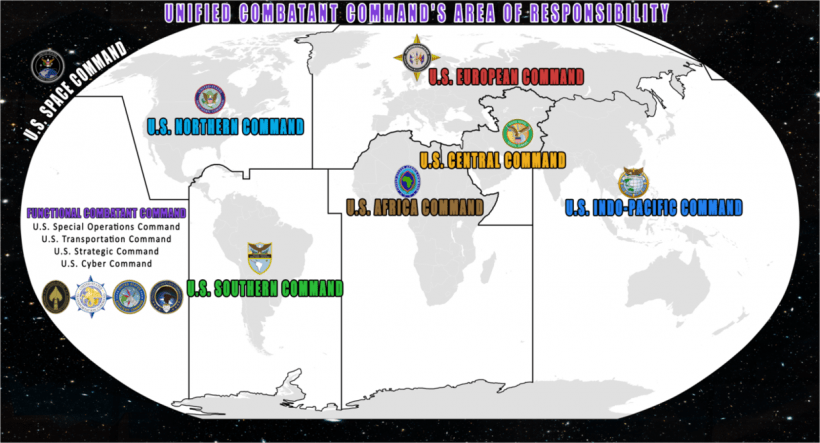
AFRICOM is one of the US combatant commands that span the entire planet, as well as space now © Wikipedia
Tasked with going after terrorist groups like Boko Haram, Al-Shabaab and Islamic State (IS, formerly ISIS), AFRICOM has recently focused its efforts on using friendly journalists, media leak and bombastic social media statements to bypass its military and civilian superiors and lobby in Washington for more power, influence and money.
“Once is happenstance. Twice is coincidence. Three times is enemy action,” goes a quote attributed to James Bond author Ian Fleming. So it was definitely noticeable when AFRICOM made a third bid to attract attention in under a month.
On Wednesday, the left-progressive magazine Nation published an exclusive story based on an AFRICOM document showing that the command was worried about President Donald Trump freezing US funding for the World Health Organization and how China might exploit that for expanding its influence in Africa. Journalist Ken Klippenstein says the document, dated April 23, was leaked to him.
The leak came only a day after AFRICOM posted a series of tweets accusing Russia of sending fighter jets to Libya. One of them quoted its commander, General Charles Townsend, saying that they “watched as Russia flew fourth generation jet fighters to Libya – every step of the way.”
Except no proof of this was actually offered, and AFRICOM’s statement qualified the claim with weasel-words such as “assessed” and “likely.” Russian officials have dismissed the claim as ridiculous, especially the part about supposedly camouflaging the fighters’ origins by giving them a fresh paint job in Syria.
AFRICOM has been very sore about Moscow’s alleged military presence in Libya – where its own troops withdrew from in March 2019, per Trump’s orders – claiming that Russia is “destabilizing” Libya and making worse the “migration crisis affecting Europe.” In Tuesday’s statement, it accused Russia of not being “interested in what is best for the Libyan people” but “working to achieve their own strategic goals instead.”
That’s a bit rich, considering that it was the US and its NATO allies that carried out the 2011 regime-change intervention, turning Libya from the most prosperous country in Africa into a hellhole infested with warlords, terrorists and slavers ever since.
While leaking to The Nation appealed to the American left, AFRICOM has previously reached out to the right as well. Back in April, the command used a friendly reporter at the conservative Washington Examiner to claim that the (alleged) Russian presence in Libya is “more dangerous than ISIS,” which actually operated in Libya at one point in time.
“We believe that there will be a need in the future, an opportunity for us to get back into Libya again,” the unnamed official was actually quoted as saying at one point, giving away the endgame.
Between bombastic tweets, anonymous insinuations to friendly conservative reporters and leaks to liberal ones, the picture that emerges is of AFRICOM waging a psychological operation (psyop), a propaganda war on the US public bypassing the Joint Chiefs, the Pentagon and even the commander in chief himself to lobby for a bigger piece of the military pie.
This may seem far-fetched, but it isn’t strictly speaking without precedent. Some might remember General Phillip ‘Bwana’ Breedlove, who headed the European Command until May 2016. Emails from his personal account – published in July 2016, following his retirement from the US military – revealed months of effort to lobby the Pentagon and the White House to give EUCOM more attention, including spinning tall tales about a “Russian invasion” of Ukraine. The emails also revealed how Washington-based lobbyists identified the right way of approaching certain officials and the best channels for influencing the Obama administration when it came to Ukraine – notably, Vice President Joe Biden.
At one point, Breedlove even accused Moscow of “weaponizing migration in an attempt to overwhelm European structures and break European resolve” – just as AFRICOM is doing now.
All of which raises the question: when did combatant commands – an organization system invented during WWII to streamline command, control and communication between various branches of the military – morph into de facto feudal fiefdoms, with their commanders as barons more focused on currying favor in Washington than doing their actual job in the field?
In AFRICOM’s case, that job literally involves hunting down terrorists – or helping locals do so themselves, since the command is headquartered in Germany and has only a few actual bases in Africa. Not that any of that is going well at all. So AFRICOM shifted its focus on the home front instead.
One possible explanation may be money. Back in February, a rumor began spreading around Washington that the Trump administration was considering “zeroing out” AFRICOM’s budget. Both the rumor itself and the reported reactions to it have been hotly denied, but that might just help shed some light on Townsend’s gambit. As with any bureaucracy, survival is the highest priority.
Nebojsa Malic is a Serbian-American journalist, blogger and translator, who wrote a regular column for Antiwar.com from 2000 to 2015, and is now senior writer at RT. Follow him on Twitter @NebojsaMalic
Featured Video

Iran’s Next Strike May Not Explode. It Could Shut You Down
or go to
Aletho News Archives – Video-Images
Book Review
New paperback: Butchered by “Healthcare”
Lies are Unbekoming | October 20, 2026
 Butchered by “Healthcare” is Robert Yoho’s plain-spoken account of how American medicine stopped being a profession and became an industry. 341 pages. Over a thousand references. Thirty-eight chapters.
“Screening Tests Are Useless”, on tests that find diseases that would never have hurt you. “The FDA Protects the Big Drug Companies”, on an agency funded by the companies it regulates. “The Journals’ Sins Are the Editors’ Sins”, on ghostwritten studies and captured peer review. “Opioids and ‘Pain Management’”, on how a generation was prescribed its way into addiction. “Prozac and Relatives” and “Antipsychotics Are Disastrous”, on what psychiatry does to adults and children. “Surgery: Money Before Patients”. “Failed Cancer Treatments”. “Futile CPR and Overprescribing”. “Billing Scams & Specialty Warfare”. “Hospitals Are Sharks”. Each with a Patient Tips section at the end on how to survive it.
If you have ever walked out of a doctor’s office with a prescription you didn’t ask for, or watched a parent put through a treatment that made them worse, this is the book you want on your shelf before the next appointment. … Full review
Butchered by “Healthcare” is available on Lulu now.
Blog Roll
 Aletho News
- Iran’s Next Strike May Not Explode. It Could Shut You Down /Col Doug Macgregor
- Iran: US political targets legitimate if assassinations return
- Iraq shuts key border crossing with Iran under US pressure: Report
- Undersea Internet cables could be targeted in retaliation for attacks on Iran: IRGC deputy chief
- EU sending ‘biased’ observers to interfere in Serbian election – president
- White House envoy declares kinetic action against Yemen ‘fruitless’
- Ukraine deployed thousands of microdrones in Iraqi Kurdistan: Tasnim
- Iran calls for emergency UNSC meeting over Trump’s ‘brazen’ bomb talk, Israeli threats
- Iranian sources reveal details of Russia-China Hormuz proposal
- Plan for more US-Israel integration puts our military tech at risk
- If Americans Knew
- Americans at National Conservatism Conference held in Israel this year criticize Israel
- Christiane Amanpour exits CNN with a legacy shaped by the debate over Israel
- Israel’s war on Iran is the final move in a decades-old strategy
- Israel Denies Entry to French Journalist, U.S. Researcher Amid Rise in Entry Denials
- Gaza’s hospitals are running out of life-saving fuel – Daily Update
- Mysterious bot accounts reportedly spread fake ‘man on the street’ videos for Michigan Senate candidate
- Israeli Defense Minister Katz Says Over 60 Lebanon Villages Have Been Destroyed
- Why Is Israel Running TV Ads in Iowa Ahead of the Midterms?
- Hind Rajab’s Alleged Killer Is in the United States. HRF Demands His Arrest.
- US Officials Face Fresh Pressure After Another American ‘Brutalized’ by Israeli Settlers in West Bank
- No Tricks Zone
- E-Cars Reduce CO2 Emissions By Only 41% Compared To Internal Combustion Engine Vehicles
- Predictions Made By Renowned Climate Professor Over Past Decades Have Been Proven To Be Poor
- New Study Suggests Large Regions Of The Pacific Ocean Have Been Cooling For The Last 80 Years
- Germany’s Green Energy Debacle: High Energy Costs Force Kahla Porzellan to Close After 182 Years!
- New Study: 50 Years Of The Most Aggressive ‘Net Zero’ Policies Can Only Affect The Global Climate By 0.03°C
- US September “Heat” Was No Record…Many Records Set Decades Ago
- Latest European Green Energy Debacle; Portugal’s Largest Flagship Solar Park Insolvent!
- Green Energy Debacle: German Expert Professor Fritz Vahrenholt Warns Of Severe Economic And Social Consequences
- Two More Paleo Reconstructions Affirm Meters-Higher Sea Levels Across Ireland, Brazil 7000-6000 Years Ago
- New Study: Earth And Venus Surface Warmth Largely Explained By Convection And Lapse Rate, Not CO2 Or Radiation

