Trump Flip-Flops on Syria Withdrawal. Again.
By Ron Paul | October 28, 2019
President Trump is reversing his foreign policy decisions so quickly these days that it almost seems like he overturns himself before making the decision in the first place. Last week he was very clear that the US was pulling its troops out of Syria. “Bringing soldiers home,” he said. “Let someone else fight over this long-bloodstained sand.”
But then he overturned himself later in the same speech. He said: “We’ve secured the oil and therefore a small number of US troops will remain in the area where they have the oil. And we’re going to be protecting it and we’ll be deciding what we’re going to do with it in the future.”
Where does President Trump think he gets the legal or moral authority to send US troops to illegally occupy foreign territory and determine what that foreign country can or cannot do with its resources? After eight years of Obama’s disastrous “Assad must go” policy, during which the US provided weapons and training to radicals and terrorists with a half million people killed as a result, President Trump had the opportunity to finally close that dark chapter of US foreign policy so the Syrian people could rebuild their country.
Instead he sat down on Thursday with Senator Lindsey Graham, who has been wrong in every foreign policy position he’s ever taken, and decided to follow Graham’s advice to take Syria’s oil. Even though Trump himself has said many times that ISIS is 100 percent defeated, he claims we must take Syria’s oil to keep it from ISIS.
The real reason the neocons want the US military to occupy Syria’s oil fields is they are still convinced they can overthrow Assad by carving out eastern Syria for the Kurds. They don’t want to keep the oil from ISIS, they want to keep it from the Syrian government. They don’t want the oil revenue to be used to help rebuild the country because they still want to make life more unbearable for the population through sanctions so they will overthrow Assad. They don’t care how many innocent civilians die.
So instead of bringing the troops home like he promised, President Trump has allowed himself to be convinced to actually expand the US presence in eastern Syria! Instead of ending a foolish mission, he’s giving them an even more foolish mission – and sending in more troops and weapons. Instead of removing the approximately 200 troops in that region as promised, Trump is going to add more troops to equal about a thousand. He’s also sending in tanks and other armored vehicles, according to the Pentagon.
If President Trump believes following neocon advice on Syria is going to produce results different than the past eight years of following neocon advice on Syria, he’s naïve or worse. This new mission is going to cost tens of millions of dollars per month and will only serve to inspire the next generation of radicals. Trump is right that the people of the region, including Russia, Iran, Syria, and Turkey have all the incentive to keep ISIS at bay. So why does he fold like a cheap suit every time the neocons strong-arm him into another dumb foreign policy position?
Copyright © 2019 by RonPaul Institute.
Bundestag MPs demand that US troops leave Germany to avoid tensions with Russia
RT | October 25, 2019
German MPs have demanded that the government expel US forces stationed in Germany. MPs argue that their presence only serves the purposes of the US illegal wars in the Middle East and stokes tensions with Moscow.
Lawmakers from the opposition Left Party have tabled a motion calling on Chancellor Angela Merkel’s government to immediately stop financing the American military presence in the country and to annul a 1990 treaty allowing US soldiers to be deployed on German soil in the first instance.
“More than 35,000 US soldiers are stationed in Germany, more than in any other European land,” the document, published on the Bundestag’s website, points out, adding that American military bases are used to further Washington’s “policy of war in the Middle East.” The lawmakers particularly expressed their outrage over the fact that the German bases are used “in the continuing illegal practice of targeted US assassinations in Pakistan and Afghanistan,” apparently referring to the American use of strike drones.
The document also states that the continued presence of American forces on German soil leads to nothing but escalation of an already tense situation with regard to relations with Russia. The MPs also denounced any deployment of American troops to bases in Poland and other Central and Eastern European states, saying that such actions cannot be interpreted as anything but “war preparations.”
They also drew attention to the fact that the US troops are being transferred through the territory of the former East Germany, thus violating the spirit of the 1990 ‘2+4’ agreement that facilitated Germany’s reunification on condition that no foreign troops or nuclear weapons would be deployed or stationed there.
A stockpile of 20 US nuclear bombs at the Buehel airbase in western Germany also came in for criticism from the MPs, who found the possibility of these weapons being used by the German Air Forces “in case of emergency” quite disturbing. [The American military] “presence is incompatible with the peace principle enshrined in the constitution.”
The Basic Law, as it is called in Germany, indeed states that “acts tending to and undertaken with intent to disturb the peaceful relations between nations, especially to prepare for a war of aggression, shall be unconstitutional.”
Yet, Berlin apparently is not planning to get rid of the American forces on its soil just yet. The 2020 federal budget shows that the German taxpayer would have to spend €71 million ($78.72 million) on the upkeep of the US and other foreign forces stationed on its territory.
Washington, however, believes this is not enough. In August, two American ambassadors, Georgette Mosbacher in Warsaw and Richard Grenell in Berlin, have hinted that the US was so angry with Berlin not spending enough on defense that it may relocate its forces to neighboring Poland.
“It’s really insulting to expect the US taxpayers to keep paying for over 50,000 Americans in Germany,” Grenell told DPA news agency at that time. The remark sparked quite a stir among German politicians, with Dietmar Bartsch, an MP from the Left Party, saying that American should indeed pull out and take their nukes with them.
Ordinary Germans also do not seem to be particularly scared of the US troops suddenly stripping them of their “protection” as most said that a withdrawal from Germany of American forces would not make them any less secure, according to an August survey.
A House of 12: Debate Four Shows Dems Have No Platform – Biden Stands No Chance
By Joaquin Flores | Strategic Culture Foundation | October 22, 2019
The DNC continues to promote Biden despite his not resonating with likely voters, undecideds, and swing-staters. Gabbard shone bright, but appears to have earned her place back by putting in work for Biden. The DNC must focus on fully socialized healthcare, as Trump’s foreign policy record is strong in the eyes of anti-war voters actually paying attention. But the DNC can’t, and so Trump will likely win.
It was Round Four of the Democratic debates on Tuesday, with 12 candidates squaring off in Westerville, Ohio.
Staged in the critical swing-state of Ohio, the small town of Westerville hosted Round Four of the Democratic Party primary race debates on October 15th. Democrats obviously are pinning hopes on being able to win a few of the swing states they lost to Trump.
The Democratic Party continues its strategy of maintaining a very high number of contenders in the race. In short, the party realizes that the front runner it wants to win – Biden – really lacks the grass roots support, big ideas, and mobilizing capacity that interesting candidates like Sanders, Yang, and Gabbard in fact have. So they keep these more interesting candidates in the race, so that potential voters are more invested in the process for longer. The idea is to try to transfer some of that Yang and Gabbard excitement and support, onto Biden. If that seems like a Herculean task and a strategy not likely to succeed, you would be right. But bear in mind that this is the same Clinton controlled DNC that came to believe that Hillary would win by a landslide.
Gabbard was no doubt the real-winner of this debate – because a victory in 2019 is whatever meme, soundbite, or viral clip you can produce from this sort of event. And Gabbard’s slicing and dicing of Warren was absolutely the highlight of the debate.
By European standards, the Democratic Party is a center-right liberal-austerity party, engaged in an abusive tactic of working against the mandate handed to them by their own more social-democratic constituency. Their programmatic aim is to reduce and tame the real demands of most of their voters, and present ‘pragmatic’ candidates with a ‘chance to win’. In reality, they force their own voters to bargain against themselves. The much weakened and diluted program that the pragmatic candidates take with them into office, is then in turn ‘bargained down’ in their negotiations with law-makers on the other side of the aisle. The result are candidates that no one really likes, going in and beginning negotiations with the position that one ought to arrive at in the end, and absolutely not begin with.
Healthcare
For example, on healthcare – as we saw again in debate number four – Biden promotes only nominal tweaks to Obamacare, which is a non-starter for the activist base of the party which knows that other developed countries consider healthcare both a right and a necessary foundation that makes all other profitable and industrious parts of socio-economic life possible and significantly more robust.
This base is required to generate excitement and launch candidates to wider audiences.
This is an entirely foolish position for many reasons, for nearly 60% of the general public according to recent Gallup polling, also believe that government must provide healthcare. Assuming that every voting Democrat supports a government mandate on healthcare, then nearly 60% means that about 20% of those are Trump voters, making this something of a non-partisan issue.
Interestingly, that polling data also shows that Obamacare ruined the public’s perception of government involvement in healthcare, and support for some kind of intervention dropped from all time pre-Obama high in 2006 of 69% in 2007, all the way down to some 46% in the time period that the travesty of Obamacare was passed into law in 2010. It would take another nine years for the support number to rise to where it is now, still 12 points below its 2007 high.
No Alternative to Trump’s Dovishness
The candidates in the Ohio debate took turns posturing tough on the need to beat Trump, but the DNC seems bent on backing any candidate who seems the least likely to. The reason that Trump will win if this continues – and win ‘big league’ – is that this is not only another ‘change’ election in the eyes of progressive and independent voters, but in fact a larger change paradigm.
Trump’s biggest weakness is his generally conservative position on social programs and healthcare, which is generally unpopular, even though his nominal trade wars with Europe and China were aimed at raising the position of the American worker.
The reality is that even during the administration of Bush 43, the Republican base was growing and voters were trending Republican. The victory of Obama was made possible around three factors: the unpopularity of the wars, which he promised to end, but did not; the massive new-voter registration campaign that was done through the back-door of ostensible labor organizing campaigns by SEIU in swing-states like Colorado; the massive energy at the base created around the prospect of a paradigm-shifting president, African-American no less, that would open the door to larger social-democratic movement – this also was spelled out in new-voter registration and turn-out.
Clinton attempted to use what the Obama energy had built, despite the 2016 election also having been a change election. But this need for ‘change without hope’ was absolutely at odds with the ‘hope + change’ campaign of 2007. Clinton was in the position of not being particularly inspiring to anyone, and needing to use the Obama energy and Obama machine to win an election which in all reality was a mandate against many of Obama’s actual policies and failings.
Without new voter turn-out, and without a genuinely populist campaign from the Democrats, Trump doesn’t have a serious contender to deal with.
Democrats have no real alternative program to offer to Trump, appealing instead to Trump Derangement Syndrome and the ‘Orange-Man-Bad’ mantra. But none of their supposedly front-runner candidates have anything of substance to counterpoise to Trump, with the exception of Warren on healthcare. But Warren will never escape the tag of being Pocahontas, and like Gabbard and Sanders, her anti-war positions may resonate against some of Trump’s rhetoric – if cherry-picked – but voters really concerned about war as a priority are more or less informed that it is Trump, and none other, that has been the first U.S president since perhaps Ford that has not begun a fresh U.S military campaign abroad.
We live in times where the entire U.S Empire is being dismantled, and being dismantled much to the chagrin of vested interests who may know better, but nevertheless insist on policies that stretch out the inevitable in the most short-term profitable way, to the extreme detriment of long-term thinking along strategic and national security/sovereignty lines. These ‘neoconservatives/neoliberals/whatevers’ have been using the vehicle of the Oval Office to see their plans through since the end of the Cold War. The policies of Clinton and Obama were practically indistinguishable from their Republican ‘opponents’ from the same era. All Trump will have to do is continue to run against the past Obama administration on foreign policy, deep state and all, since they’ve been so adamant about controlling and owning the process up to and until now. The numerous times he’s been threatened with impeachment was explicitly aimed at steering him back on track on aggressiveness on Syria, despite that their strategy failed nonetheless.
That means that what differentiates progressives from Trump is not the actual foreign policy positions as such – in this sense Trump feels and acts more like a dove than a hawk – but rather domestic policy on healthcare. Given the real state of inequality, costs, employment, and so forth, healthcare costs are simply out of hand, and too many Americans who have fallen ill have had to mortgage their homes, sell whatever earthly possessions they may have, wind up homeless, or simply die in hospice care.
This is the reality that Americans are facing, and it is therefore strategically ‘insane’, also being unconscionable as an aside, that Democrats continue to push characters like Biden and Harris who oppose single payer along ‘tax increase’ lines. Warren, as was on display in the debate, continues to support some kind of Medicaid for all, and rightly points out that any tax increases will be easily off-set by the end of insurance premiums. Everyone apparently knows this but Biden and Harris, so insurance companies and HMO’s continue to bankroll significant parts of the Biden and Harris campaigns.
We live in a ‘punishment’ paradigm, not a ‘lesser of two evils’ paradigm. Democrats on the fence are not ‘centrists’ as Biden backers insist, but rather ‘to the left’ of Democrats on foreign policy and healthcare, and will simply vote against any Democrat to punish them the way they themselves have been punished by Democrats for hitherto voting for said Democrats until now. Democrats in swing states will vote against Democrats, not vote, or vote for Trump for the very teachable moment that such a move creates.
For that reason, we continue to see 12 candidates all on one stage. Most of what is being written and read this week on the subject has a relatively transparent method and goal: to give a blow by blow of the debate and focus on the ‘horse-race’ angle of it, instead of how the candidates’ positions reflect things that actually matter to voters, and to promote Biden, Warren, and Harris as ‘front-runners’ simply by promoting this idea and repeating it until it becomes a matter of fact as a result. This, despite the fact that these three are among the least likeable candidates, and are indeed very uninspiring people with very little of substance to say.
It has to be said, and must be said again, that it is Sanders, Gabbard, and Yang that motivate and inspire the base. The DNC has no intention in allowing any of them to get the nomination, but need them in the running.
Nobodies like Buttigieg, whose political experience constitutes being a homosexual mayor of a town of three-hundred thousand folks, are in this race for no apparent reason. Except as some sort of latent insult to gay voters, implying that gay voters are interested in a gay candidate for their gayness alone, despite not having any political experience in state-wide, let alone national politics. That, and attempting to keep some sort of Democratic Party interest in Indiana, a state that Obama won in 2008, lost in 2012, and that Trump won in 2016. No wonder Buttigieg, in his ‘tremendous’ political experience at 37 years old and mayor of some place no one has heard of even in Indiana, wants to abolish the electoral college. Why is Buttigieg still in this race? This campaign has to be ‘fake news’ as nobody on the ground is excited about this lad.
Gabbard was the highlight, and she’s still in it
In our simulated and scripted reality, Gabbard ‘made a come-back’ after being excluded from the third debate, and qualified for the fourth. She has shown real utility on numerous occasions for being one of the three most interesting candidates on the one hand, but showing a particular acumen for landing punches on Biden’s opponents – punches that Biden himself can’t seem to land. She’s showing herself to be a very important part of this race, because our Kshatriya warrior princess keeps grass-roots Democrats engaged. The most interesting part of this debate was Gabbard taking aim directly at Warren’s inexperience militarily, that she has no experience to serve as Commander-in-Chief. Moderators cut her off right as she landed this punch, a punch which everyone heard nonetheless, and received an audible ovation from the audience. That clip will no doubt be viral for the coming weeks.
Zombie Nation: the Democratic Party Is Dead, and Everyone Knows It but Them
By Helen Buyniski | Helen of DesTroy | October 22, 2019
Failed presidential candidate Hillary Clinton, thought to have finally retired from politics after an embarrassing electoral loss to a politically-inexperienced reality show personality, is threatening to enter the 2020 race, serving up reheated Cold War fearmongering and an ironclad sense of royal privilege to a Trump-weary populace. A morally and fiscally bankrupt Democratic Party is poised to enable this sick drama with the help of a spineless and compliant media.

How could this possibly happen? Surely Democrats learned their lesson after their decision to take Clinton’s money in order to stay financially solvent in 2016 required them to rig the primaries in her favor, a crime that likely tanked her candidacy when it was revealed by WikiLeaks? Surely the mainstream media realizes that, three years on, the preposterous Russiagate conspiracy theory they cooked up to defend her has ripped the last shreds of journalistic integrity out of the mainstream media establishment?
Just kidding – the Democratic Party and its media handmaidens bargained away their morals long ago. They’re aiding and abetting a Clinton comeback, wheeling her out to give her opinion on everything from the latest steps toward peace in Syria (bad, needs more war) to the 2020 candidates. Last week, she took aim at Tulsi Gabbard, the best hope the party has of getting voters excited enough to show up in 2020, claiming (without a shred of evidence) that the National Guard major and former DNC chair is being groomed by Russia to act as a third-party spoiler, handing the election to Trump. Had such a claim come from anyone else, the DNC would have slapped it down. But they know on which side their bread is buttered. They’d rather lose than defy their queen.
Let’s do the time warp again
This month’s primary debates proved that, if nothing else, the party has refused to move on from 2016. Candidates clamored to distinguish themselves as the biggest Trump-hater and impeachment zealot, with not one appearing to comprehend that next in line behind their favorite punching bag is Mike Pence. The vice president is a man so possessed by religious sexual phobia that he refuses to be alone in a room with a woman. A Christian Zionist, he is even more willing than Trump to send US soldiers to fight Israel’s battles – the better to hasten the Rapture. Only Andrew Yang – a party outsider – dared speak the truth: “When we are talking about Donald Trump, we’re losing.”
Indeed, everything about the 2020 election is signaling a repeat of the last one. The DNC is broke again, ripe for a Clinton rescue that will once again require the rigging of the primary in return for her kindness. Naysayers who once laughed at the idea of yet another Clinton candidacy are reconsidering their scorn, and former Trump strategist Steve Bannon insists she is, in fact, running – merely waiting for the right moment to officially declare her candidacy. Certainly the media blitz of the past few weeks – ostensibly to promote a book co-written with her do-nothing daughter, but in reality a string of opportunities for her to denounce the “illegitimate” president and remind America that the position is rightfully hers – looks like a campaign publicity tour.
For all that Clinton says she empathizes with current Democratic frontrunner Joe Biden, currently being accused of corruption, she has, in these interviews, always brought the conversation back around to 2016, insisting that “the most outrageously false things” were said about her as well (and lamenting that “enough people believed them” to rob her of the presidency). Biden, like Clinton, is still being pushed as the 2020 favorite, despite coming with decades of baggage including flagrant corruption (threatening to withhold $1 billion in IMF loans from Ukraine until it fired the prosecutor probing an energy company that gave his son a no-show job is only the tip of the iceberg).
Even the New York Times has pointed out the similarities between their two candidacies – both physically deteriorating before voters’ eyes, uninterested in changing the status quo, and embraced by the wealthy donors that keep the party afloat. Biden’s Ukraine problem is as massive and impossible to avoid as Clinton’s email problem. Biden, like Clinton, is positioning himself as not the best candidate, but the only one who can beat Trump – embracing his identity as, he hopes, the lesser of two evils. Both have a long history in politics, dozens of skeletons in the closet (literally, in Clinton’s case), and a string of failed presidential attempts. Both cringingly pander to working-class and minority voters despite a history of racism (“superpredators,” the 1994 crime bill, close friendship with segregationists) and classism (NAFTA).
If at first you don’t succeed…
Ever the strategist, Clinton is likely biding her time until the facts come out about Biden’s involvement in Ukrainian natural gas company Burisma during impeachment hearings and sink his candidacy. She’ll then swoop in, volunteering to take his place as the crusty old standard-bearer of the Democratic pack. Biden’s suicidal stubbornness all but ensures he’ll go down in flames (despite his son Hunter’s admitted drug problems and the obvious nepotism and corruption behind his receiving a $60,000/month directorship just months after being kicked out of the Navy Reserves for cocaine use, Biden insists Hunter will join him on the campaign trail).
Clinton feels the presidency is hers by divine right – that it’s “her turn” to take the reins, like she was promised after Obama snatched it out from under her in 2008. Having paid her dues as First Lady, the long-suffering wife and enabler of serial rapist Bill Clinton occupied a Senate seat just long enough to present herself to the public as a stateswoman in her own right, then made a run at the glass ceiling of the presidency – only to be rejected in favor of a spray-tanned novice without her baggage. Patiently serving as Secretary of State, she oversaw the destruction of Libya, once the jewel of the Middle East under Gaddafi with the highest standard of living on the African continent, turning it into the failed state with open-air slave markets it is today. Thwarted in her efforts to do the same in Syria, she left the White House in 2012.

Clinton transformed the State Department into an extension of the Pentagon via her misleadingly-named “smart power” philosophy. The agency once tasked with solving America’s foreign policy problems diplomatically now merely provides diplomatic cover for regime-change operations like the one she helped engineer in Ukraine in 2014 (while she left the State Department in 2013, the processes she set in motion would culminate in the Maidan revolution that saw actual Nazis take over in Kiev) and the one currently trying to pry Hong Kong from China’s grasp.
She also monetized the position, selling access to the presidency through the Clinton Foundation. The Clintons vastly enriched themselves at the expense of the rest of the world, having never met a dictator they didn’t like. But while they elevated corruption to an art form, their actions were wholly in keeping with the modus operandi of the Democratic Party. Swaddle oneself in the appearance of helping the less fortunate (Clinton has appeared with countless ‘save the children’ and ‘women’s empowerment’ type groups like Somaly Mam’s AFESIP, which notoriously invented Cambodian child brothel horror stories out of whole cloth) while exploiting them to within an inch of their lives (Haitians still protest outside Clinton events over the Foundation’s decision to give over 90 percent of the $13.3 billion given in response to the 2010 earthquake to foreign contractors and Foundation donors while Haitians starved and died).
The rot goes to the core
Clinton wouldn’t be able to get away with this sort of thing if her party wasn’t fully on board with such moral depravity. The current impeachment circus is merely the latest proof that they do not believe anything they say in public. For the entire party and its stenographers in the media to turn on a dime from accusing Trump of colluding with Russia to accusing him of engaging in quid-pro-quo with Ukraine (an enemy of Russia, if one is paying attention) suggests they don’t believe either scandal is necessarily based on facts, but that, to quote congressman and impeachment fanboy Al Green, “if we don’t impeach the president, he will get reelected.”
After losing its collective mind with the 2016 defeat, the Democratic Party, led by Clinton and outgoing President Obama along with CIA director John Brennan and FBI chief James Comey, cobbled together Russiagate as their revenge. Relying on a network of spooks and paid operatives, they conjured up a half-baked menace from the depths of Americans’ collective Cold War memories, light on facts but heavy on the implications, with just enough salacious material to ensure it would go viral. The intention was to cripple Trump’s presidency – if they couldn’t remove him from office, they could at least ensure he played by their rules rather than follow through on wild promises to end the wars in Syria and Afghanistan and normalize relations with Moscow. The status quo held until the release of special counsel Mueller’s Russiagate report meant the media could no longer claim with a straight face that Trump was scheduled to be executed for treason any second now. But top Democrats were unfazed when it was exposed as a hoax – they’d invented it in the first place.

If not a sense of moral outrage that the president is colluding with a foreign power, what has driven the party leadership and its enablers in the media to pursue Trump to the ends of the earth? Democrats’ choice of impeachment issues is proof they lack any sort of moral center – as fake as Russiagate and Ukrainegate are, there are dozens of issues that could potentially be used to skewer Trump. The sky-high civilian casualty rates and record number of bombs dropped on his watch don’t faze Democrats – after all, Bush and Obama started those wars, and neither were impeached for the atrocities committed under their watch.
If anything, Democrats are clamoring for more war, shrieking after Trump announced the latest attempt at a troop pullout from Syria that such an action was unthinkable. Weeping and gnashing their teeth over the impending “genocide” of the Kurds, they spun on a dime when Trump announced a five-day ceasefire with Turkey last week, claiming such a deal – which gave Kurdish militias ample time to vanish from the Turkish border area without being attacked – somehow “discredited” American foreign policy. The Democrat-controlled House even voted to condemn the troop pullout – perhaps forgetting they’d never authorized the deployment of troops to Syria in the first place, an easy mistake to make as the US military has been industriously building up a base infrastructure in flagrant violation of Syria’s sovereignty.
The Trump administration’s blatant nepotism – Jared Kushner, a pampered princeling who has never held a real job in his life, was tasked with making peace between Israel and Palestine, despite blatant partiality toward the Netanyahu government (Bibi slept at the Kushners’ home in New Jersey) – didn’t bat a single Democratic eyelash. After all, Hunter Biden got his own lucrative sinecure in Ukraine with as few credentials. The massive deregulation that has seen the deficit skyrocket as corporations and the wealthy pay even less taxes than they did before bothers no one – Democratic donors benefited as much as Republicans, even though billionaires now pay a lower tax rate than the working class. Trump spitting in the face of international law by “declaring” first Jerusalem and then the Golan Heights the property of Israel went down smoothly as can be – no surprise when House Speaker Nancy Pelosi herself has said that she would back Israel “even if the Capitol crumbles to the ground.” Democrats’ problem has always been finding an “impeachable offense” Trump was committing that they were not also guilty of.

The devil’s rejects
Perhaps Democrats’ awareness that they’re morally as well as fiscally bankrupt is what drives them to make the same mistakes they did four years ago. Just as they did with Bernie Sanders, the party is doing its utmost to sideline Tulsi Gabbard at every opportunity, barring her from September’s debate despite her polling higher than several candidates who were included and refusing to speak up for her in the face of Clinton’s baseless smear. Their hypocrisy is transparent, preaching identity politics until a Hindu woman emerges championing antiwar policies. Gabbard is the only one bringing fresh ideas to the table, ideas that have excited many voters sick of the shame they feel knowing their country is the number one killer since World War II. Spike her, and they’re almost guaranteed to lose.
As if to prove that point, Clinton pounced on the Hawaii congresswoman last week with her “Russian asset” smear – not referring to Gabbard by name, but making it clear she was talking about no one else. Her spokesman Nick Merrill, asked if Clinton was really saying Gabbard – who served in the Iraq war – was an agent, confirmed the smear: “If the nesting doll fits…” In a sane society, Clinton’s disapproval would be a badge of honor (and to her credit, Gabbard appears to be wearing it as such) – but in the mainstream media hothouse, it’s another strike against her – along with the guilt-by-association smears that come with a 4chan fan club and even her looks.
Sanders might be able to muster a win against Trump, but at 78, his health is failing, and his base is wary after he betrayed them in 2016. Despite stolen primaries in New York and California, he sat mutely, throwing his own supporters under the bus during the convention. After a solid year of slamming Clinton for giving secret speeches to Goldman Sachs, voting to bail out the banks in 2008, and backing every war in the past three decades, Sanders turned on his supporters and implored them to vote for her. He remained silent while his supporters demanded a legal reckoning. Some have forgiven him and returned to cheer him on in 2020, but many have not.
Nevertheless, he is head and shoulders above most Democrats, who are completely for sale to the highest bidder, whether it’s Israel, the arms industry or Big Pharma. They violate the Constitution on a daily basis, whether it’s by voting to make participation in boycotts of Israel illegal (a blatant violation of the First Amendment, as a Texas court recently found; passing a law permitting indefinite detention without trial for American citizens (as Obama did in 2011, backed by a supine Congress, in violation of the Sixth Amendment); or outlawing religious vaccine exemptions (a violation of both the First Amendment and the Geneva Convention).
In perhaps the most shocking betrayal of the party’s liberal and progressive wing, Democrats have embraced the CIA, the FBI, and the entire intelligence apparatus that has infiltrated and destroyed leftist movements since the 1960s. Once the home of the counterculture, the Party now clings to authority, enthusiastically licking the boots they believe will curb-stomp Trump. Bereft of historical perspective – even the torture revelations of the early 2000s have vanished amid the onslaught of Orange Man Bad – Democrats ironically calling themselves the Resistance wear slogans like “It’s Mueller time!” and “Comey is my homey,” broadcasting their allegiance to men who’ve covered up monumental crimes and even committed a few themselves. It’s no surprise to see the mainstream media taking the side of the intelligence agencies – assets like Anderson Cooper, Ken Dilanian, and Wolf Blitzer have been keeping newsrooms safe for democracy for decades. But never before have ordinary voters leapt to embrace their oppressors quite so openly. The phenomenon can’t even be described as selling out – because selling out implies getting something in return for one’s soul.
A hive of lesser evils
Even if Clinton does not run, her influence permeates the party. “I’ve talked to most of them,” she revealed on ABC’s The View earlier this month, slyly hinting that previous contests’ frontrunners a year before the election had failed to secure the nomination. Instead of Sanders and Gabbard, the Democratic National Committee is propping up Biden and grooming as his second Elizabeth Warren, the neoliberal wolf in sheep’s clothing trying to steal Sanders’ thunder by insisting she’s all he represents plus a pair of X chromosomes. Decked out in borrowed rhetoric and forged identity politics credentials, she earnestly presents herself as a leftist, hoping no one remembers she was registered as a Republican until her 40s.

Lest anyone be fooled by Warren’s “radical” act, former Senate Majority Leader Harry Reid recently gushed “I know she’s pragmatic, just wait.” Such an endorsement should be a death knell for her progressive support, especially after the revelation that she has been in constant contact with Clinton. Warren emphasizes in communications with donors that she doesn’t actually intend to upend the status quo, and has flip-flopped repeatedly on accepting big-dollar donors and PACs, only rejecting them once she’d stockpiled a healthy war chest from those very donors.
Many of Clinton’s 2016 campaign operatives have chosen California Senator Kamala Harris as their standard-bearer, and Harris exhibits many Clintonesque characteristics. Her enthusiasm for locking up black men for minor drug offenses (she bragged about increasing drug dealers’ conviction rate from 56% to 74% in just three years) – and black women for their truant children (she supported a law that imprisoned mothers if their kids skipped school, then lied about it on the campaign trail) – is worthy of the woman who called black kids “superpredators.” Harris has praised Clinton for “putting our country first” and “serving with distinction” while calling for Trump to be banned from Twitter for his “irresponsible” language.
The other candidates are largely distractions aimed at getting the selection process at the 2020 convention to a second ballot. With voters clamoring for reform after the 2016 disaster, the party obliged by doing away with superdelegates on the first round, but for any round beyond that, they’re fair game – and the DNC refuses to leave the selection up to chance, or anything so small-d democratic as a vote. With a handful of votes thrown to Pete Buttigieg – the anti-Gabbard, a gay pro-war vet – and Beto O’Rourke – the face of privilege whose Spandering caused the cringe heard ‘round the world in the first primary debate – the convention will progress to a second round, and the superdelegates will slither out of their holes to crown their king – or queen.
Status quo defenders
As much as those Democratic establishment stalwarts with presidential ambitions – Clinton and the two dozen-odd candidates determined to dislodge Trump in 2020 – want to get rid of the Bad Orange Man, the benchwarmers in Congress have learned to love him. House Speaker Nancy Pelosi and Senate Minority Leader Charles Schumer can merely rail against Trump instead of actually governing, floating whatever irresponsible fantasy bills they want with the knowledge that they’ll die in the Republican-controlled Senate or – at worst – be vetoed by Trump. House Democrats got the chance to virtue-signal about ending the war in Yemen, helping voters forget Obama had gotten the US involved in the worst humanitarian crisis of the 21st century, knowing Trump would kill the bill to serve their shared Saudi paymasters. And pearl-clutching about kids in cages on the border (cages built, again, by Obama) while calling for open borders attracts the votes of recent immigrants while ensuring they’ll never have to cash the checks they’re writing.
Michael Moore, once a progressive darling, recently appeared on ‘comedian’ Bill Maher’s program to lambaste his fellow ex-progressive about abandoning his own liberal credentials. Maher complained that the “Squad” – progressive congresswomen Ilhan Omar, Rashida Tlaib, and Alexandria Ocasio-Cortez – were unpopular, that Medicare for All was less desirable than Obamacare, and that a leftward shift would sink the party. Moore whimpered that if the election was held today, Trump would win, just as he had predicted in 2016. But where was Moore in 2016? Pleading on Democracy Now! for Sanders supporters to go to the polls for Clinton, even though “she is to the right of Obama.”
The exchange between the two millionaire entertainers was a disturbing window on the utter alienation of the Democratic Party, insulated by layers of money, from its constituents – and increasingly ex-constituents, as nearly 40 percent of Americans disavow both parties. Maher represents the McCarthyite neoliberal centrism that has taken the mainstream media by storm, in which any flicker of anti-war or pro-working class sentiment is viewed as Russian. And Moore represents the thought-leaders who, despite knowing better, have led the party into its current moral sinkhole, insisting it’s the only pragmatic route.

Moore knows Clinton is – as Gabbard declared – the Queen of Warmongers, embodiment of corruption, and personification of the rot that has sickened the Democratic Party for so long. He just doesn’t care as long as he gets paid. Moore, like Clinton, took money from casting couch predator Harvey Weinstein despite his predation being an ‘open secret’ in the industry. As late as 2015, he called the molesting mogul “one of the best people to work with in this town” in a tweet he quickly deleted after it was dug up in October 2017 following Moore’s belated decision to speak out against Weinstein’s crimes. Even after the New York Times story in which several actresses first went public with their accusations was published, it took Moore weeks to climb aboard the dump-Weinstein bandwagon, likely out of concern it would hurt his film – Fahrenheit 11/9 – about the Trump presidency. The bottom line – not morality, or even being factually correct – is his chief concern.
In that respect, Moore is the Democratic Party writ large. Caught in a vicious cycle of selling out to wealthy donors to keep the lights on, it has sealed itself off to the working class, the minorities whose voice it still claims a monopoly on, and the young people just now awakening to the fact that they’ve been cheated out of a future. There has been barely any pushback against the DNC’s relentless trudge to the right from the mainstream media and the party establishment. Van Jones appeared on CNN calling out Clinton’s red-baiting of Gabbard, pointing out the smear contained “no facts” and that Gabbard had been the party chairman before she was demonized for backing Sanders in 2016, but the rest of the #Resistance remained silent as Clinton insisted that opposition to war was anti-American. Even the few candidates who defended Gabbard from her slurs did not mention Clinton in their rebuttals. No one dares to oppose the party’s owners.
Until someone does, the Democratic Party is dead. And it’s all but turned Trump into the lesser evil.
Trump: US military companies against bringing troops home from Syria
Press TV – October 22, 2019
US President Donald Trump says his plans to bring American troops home from Syria and other countries have been met with strong opposition from “military companies,” arguing that it is easier for him to let the soldiers get killed and sent back in coffins instead.
Trump said Monday that ending American military presence overseas was one of his two key campaign pledges — besides building a wall — and that he was intent to fulfill that promise despite facing opposition in Washington.
“We’re bringing our troops back home,” he told a cabinet meeting at the White House. “I got elected on bringing our soldiers back home. Now, it’s not very popular within the beltway because, you know, Lockheed doesn’t like it. And these great military companies don’t like it. It’s not very popular.”
Earlier this year, a report from the Security Assistance Monitor project of the Center for International Policy found that the Trump administration in coordination with US weapons manufacturers made $78.8 billion in arms deals in 2018 alone.
A quarter of those deals involved the production of American weapons overseas, the report stated.
Trump said bringing back the troops was what his supporters asked him when he appeared before a large crowd of 25,000 during a campaign rally in Dallas on Thursday.
“When I said we’re bringing our soldiers back home, the place went crazy,” the president said. “But within the beltway, you know, people don’t like it. It’s much tougher for me. Be much easier for me to let our soldiers be there, let them continue to die.”
He said “the most unpleasant thing” he has to do is meeting with the families of the soldiers who have been killed or sustained injuries while deployed abroad.
“I see that big cargo plane open and I see those coffins get rolled off,” he said.
He referred to his administration’s decision to redeploy forces from Syria to Iraq and said while he did not want to leave any soldiers behind, they should deploy elsewhere before returning to the United States.
“Well, they’re going to be sent initially to different parts and get prepared. Then ultimately we’re bringing them home,” Trump said.
In a major U-turn in the US military policy, the White House announced on October 6 that the US would be withdrawing its forces from northeastern Syria, clearing the path for an expected Turkish incursion into the region.
Three days later, Turkey launched the offensive with the aim of purging the northern Syrian regions near its border of US-backed Kurdish militants, whom it views as terrorists linked to local autonomy-seeking militants of the Kurdistan Workers’ Party (PKK).
US Defense Secretary Mark Esper said Saturday that the nearly 1,000 American troops pulling out of northeastern Syria following a military invasion of the area by Turkey would move to western Iraq.
News agencies reported that US troops had in fact crossed into Iraq from Syria through the Sahela border crossing in the northern province of Dohuk on Monday.
Footage was released of US armored vehicles carrying troops into Iraq, with Iraqi Kurdish sources confirming that American troops had crossed into the semi-autonomous Kurdistan Region.
Trump has announced similar troop withdrawal plans for Afghanistan but his administration has yet to take a step towards fulfilling that promise.
Can Trump Survive Ending Project Syria?
By Tom Luongo | Strategic Culture Foundation | October 21, 2019
From the moment that Speaker Nancy Pelosi (D-Davos) announced reluctantly that impeachment proceedings would begin against President Trump I knew this was about his shift in Middle East policy.
It happened on Terrible Tuesday where both Trump and UK Prime Minister Boris Johnson were handed smackdowns by their respective Deep States over their plans to unwind multiple decades of aggressive foreign policy on the one hand and subjugation to the growing European Union on the other.
Now that Trump has fully embraced ending some of the US’s involvement in Syria the knives have come out in full. There have been nothing but howls of pain from every corner of neoconservatism and liberal interventionism on both sides of the domestic political aisle, about how Trump is unfit for office because he abandoned the heroic Kurds to genocide by the Turks after fighting for freedom against the brutal Bashar al-Assad.
Even the impressive Tulsi Gabbard (D-HI) promoted this narrative at the recent Democratic debate.
This narrative is so wrong on so many levels that it amazes me anyone still promulgating it can do so without their brain seizing up from the cognitive dissonance.
The Kurds were mercenaries in a cynical multi-country operation to atomize Syria into a failed state, a la the Libya model which John Bolton threatened North Korea with (and led to the public reason for his firing). This atomization would have seen Turkey take Idlib and the north eastern Arab lands its moving into now, the Kurds get a country comprised of Southeastern Syria and Northern Iraq with the eventual annexation of Kurdish territory in Iran.
This operation was paid for by the US, Saudi Arabia, Israel, the UK as well as sanctioned by EU leadership in Paris and Berlin. Russia’s intervention put the kibosh on all of it and the alliance formed in Syria’s defense between it, China, Hezbollah and Iran not only won back most of the country over the past four years but also defeated the Iraqi Kurds at Erbil after a failed rebellion by Mamoud Barzani and his Peshmerga forces.
Once Aleppo was retaken, Raqqa demolished, and the Peshmerga defeated the Kurds’ fate was sealed. The past two and a half years have been nothing more than delaying actions against the day that Trump finally gained control over the White House insurrections amongst his staff and ordered the operation ended.
Trump ordering US troops out of the region put the Kurds on notice that they either make a deal with Russia and the Syrian government or get slaughtered by the Turks. That took all of a day.
It also, as the great Pat Buchanan points out in his latest article, put the Saudis on notice that they no longer set US foreign policy objectives because they sell their oil in dollars and splash some money around D.C. and the media.
Their bloodthirst for war with Iran can be done on their dime or not at all.
The most shocking part in all of this is Trump just made the same statement to, of all people, Israel.
And that’s where the highest concentration of anguish is coming from in the media and elsewhere.
Finally, a Republican president had the stones to call AIPAC’s bluff and stop kowtowing to them over their highly sought-after election funds. Trump doesn’t need AIPAC’s money anymore. He raised $125 million in Q3 and with these moves will likely raise more in Q4.
His firing John Bolton was the clue you needed that AIPAC and Sheldon Adelson were no longer important voices in Trump’s White House. He doesn’t need favorable media coverage from a media dominated by Saudi and Israeli money.
It’s not like he’s gotten good press from them on any consistent basis since 2015. He only gets that when he’s willing to bomb people in the name of their agendas and call it ‘freedom.’
But at the same time, he made powerful enemies doing so.
This was finally the right move made by a US president standing firm in front of oppressive political and media opposition. Trump is showing a strength we haven’t seen since Ronald Reagan pulled troops out of Beirut after the massacre of more than 200 marines in 1983.
That he didn’t immediately cave to the pressure like he did in December is noteworthy. I’ve given Trump no end of grief over his lack of moral courage on this very issue, but now that he’s been unleashed by the move to impeach him, he has little left to lose.
It proves that changing personnel can change policy. John Bolton is out and he’s running his mouth about how terrible Trump is trying to become the Hero of the Resistance in the process.
He and former Trump adviser on Russia, Fiona Hill, dominated the news cycle in the wake of the Kurds making a deal with Syria and Russia, to paint Trump with the Nixon brush of spying on his political enemies.
Meanwhile, his replacement Robert O’Brien is gutting the National Security bureaucracy, reportedly cutting the staff in half. Good. That’s more than a hundred people no longer employed to feed the president false information to suit an agenda that contravenes US security.
These moves by Trump have upset the status quo in a fundamental way. It has blown up the narrative that we were in Syria to defeat ISIS. That was the cover story. And Trump has neatly called it out for exactly that.
The real story is that partitioning Syria has been the long-held goal of Israel, the neoconservatives, PNAC and so many others. And that goal is now looking to be out of reach lest they can convict Trump for doing his job for the first time since he became President.
With the rapid changes happening across the region and the collapse of so many narratives concurrently, Trump is in an excellent position to make good on many of his long-delayed promises.
What’s also clear is that Putin has played everyone in the region perfectly, balancing his relationships with Turkey, Saudi Arabia and Israel so that once Trump made his move to pull back the curtain in Syria, they would all turn to him to broker their terms.
What’s also clear is that any move he makes now will be interpreted through the impeachment lens as proof he’s trying to save himself or that he really is a Putin puppet or whatever random anti-Trump thought flits through the tiny openings in the minds of his opponents.
Trump has stepped on sacred ground here, US interventionist foreign policy. And, right now, only he has the platform and the ability to separate fact from fiction about its efficacy and who it really serves.
Because it doesn’t serve the American people, nor does it serve the people our continued presence is supposed to protect. Trump won’t come out and say that he’s turned his back on Israel’s goals in the Middle East. But with his Deal of the Century dead, its proponents on their last legs politically (Netanyahu and Kushner) it seems likely that he’s cutting bait and changing course.
And even if he doesn’t survive this politically, the vacuum he’s creating right now is big enough that it won’t matter. With Putin signing major deals with Saudi Arabia and the UAE, China welcoming Iraq into the Belt and Road family and Turkey all but leaving NATO, what are a bunch of feckless and politically spent neocons going to do?
Not much from where I’m sitting.
Ms. Pumpkin Head for President: A Nightmare
By Edward Curtin | Behind the Curtain | October 20, 2019
A few weeks ago I had a terrifying nightmare, so gruesome was it that I awoke screaming and had to run to the bathroom to vomit in the toilet. In this dark horror show, I was carving a pumpkin for Halloween. The cap came off easily and I disemboweled the slimy interior quickly, but as I did, I felt a strange sensation on my hand, as if a tongue were biting it. When I was finishing carving the face, however, the trouble really started. The pumpkin head came alive as the eyes and mouth moved and then it started speaking in a voice that was familiar but one I couldn’t place. Blond hair started sprouting from its head as it started shrieking and bouncing on the table in an hysterical manner. I jumped back in fear and trembling as it started cackling, “I running, I running.” Blood ran from between the carved teeth and the blue eyes pulsated with the mania of a serial killer in a horror movie.
 I awoke with a scream when I realized it was Hillary Clinton.
So hideous was this night terror that I kept it to myself. But a week later when the next Democratic pseudo-debate was being promoted, I said to my wife that something told me that Hillary Clinton would be the Democratic nominee and the debates were a sideshow. She said she thought that would never happen and that Clinton was now hated and done for. I disagreed without recounting my nightmare because to describe it at that point would have induced more retching at the thought of the night monster.
Then this past week during the Democratic debate, the courageous Tulsi Gabbard put the lie to the murderous militarism of U.S. foreign policy and its regime change operations with its use of American supported terrorists in Syria and throughout the world. She calmly and eloquently denounced the militarist positions of the other candidates standing beside her, as they listened disquieted and disturbed to a patriotic American speaking truth that they dare not even think, so bought and sold are they.
She was a woman alone among a cast of sycophants denouncing the murderous policies carried out by presidents Democratic and Republican and foisted on the American people through a vast network of propaganda, appealing to their worst instincts. It was a stunning few minutes, for it is so rare, almost unheard of, for a politician to tell Americans the brutal truth about their government.
To many it was a sign of hope, but to the evil forces that run this country, Rep. Gabbard had gone too far and the knives came out in force, this time led by the pumpkin-headed Hillary Clinton and her accomplices at The New York Times and The Washington Post, who have consistently trashed Tulsi Gabbard in an effort to destroy her candidacy.
I felt my dream was prophetic when Clinton, in her slimy manner, attacked Tulsi Gabbard, without naming her, by saying,
I’m not making any predictions but I think they’ve [The Russians] got their eye on somebody who is currently in the Democratic primary and are grooming her to be the third-party candidate. She’s the favorite of the Russians. They have a bunch of sites and bots and other ways of supporting her so far.
Well, I ain’t making any prediction either; I’m leaving that up to my nightmare to do my talking.
It tells me that Hillary-O-Lantern, spitting blood, is running and gunning again.
She’s the favorite of the CIA and the military industrial complex and all those who profit from war and live off the deaths of victims everywhere. They have bunches of sites and bots and fake news conspirators and all sorts of ways of supporting her, which they have been doing for many years, straight through their constructed Russia-gate and Ukraine-gate conspiracies and her barbaric support for wars everywhere, including the destruction of Libya and her joyful response to the fiendish death of Muammar Gaddafi, among so may atrocities.
Tulsi, never cowered, said it straight and true in response:
Great, Thank you. You the Queen of warmongers, embodiment of corruption, and of the rot that has sickened the Democratic Party for so long, have finally come out from behind the curtain. From the day I announced my candidacy, there has been a concerted campaign to destroy my reputation. We wondered who was behind it and why. Now we know — it was always you, through your proxies and concerted campaign to destroy my reputation. We wondered who was behind it and why. Now we know — it was always you, through your proxies and powerful allies in the corporate media and war machine, afraid of the threat I pose. It’s now clear that this primary is between you and me. Don’t cowardly hide behind your proxies. Join the race directly.
She later said, “I stand against everything she represents.”
Halloween is the time for masks and dissembling. Hillary Clinton is a figure straight out of a grotesque Halloween party, as are her clones in the Democratic party. Tulsi Gabbard was not invited to their party but came anyway, and came to tell the truth about the masquerade.
She has torn off Clinton’s mask and asks the American people to see the true face of Clinton and all her minions, who represent the triumph of war and death, and the sick play we have been living through, an endless war on terror justified by endless lies.
Norman O. Brown so well describes our stage set:
Ancestral voices prophesying war; ancestral spirits in the danse macabre or war dance; Valhalla, ghostly warriors who kill each other and are reborn to fight again. All warfare is ghostly, every army an exercitus feralis (army of ghosts), every soldier a living corpse.
Lying is the leading cause of living death in the United States.
Tulsi Gabbard has told the truth.
Like me, I am sure you don’t want your nightmares to become reality. Let’s live in the truth.
‘Iranian threat’ gives Israel ‘fundamental right, even obligation’ to bomb Syria, Iraq or whomever it wants – Pompeo
RT | October 20, 2019
Israel should not be constrained by international borders or laws if it feels under threat – and can always rely on US support – US State Secretary Mike Pompeo said following his meeting with Israeli PM and the chief of Mossad.
The US administration has always been “very clear” that is gives Israel a free rein in hunting down any sprouts of purported ‘Iranian threat’ across the region, using the national security threat as an ultimate excuse, Pompeo said in an interview with Jerusalem Post.
“Israel has the fundamental right to engage in activity that ensures the security of its people. It’s at the very core of what nation-states not only have the right to do, but an obligation to do.”
The withdrawal of American troops from Syria raised some concerns in Tel Aviv, but Pompeo rushed to emphasize that the US remains committed to “continuing that activity that the US has been engaged in now for a couple of years.”
“We know this is a corner where Iran has attempted to move weapon systems across into Syria, into Lebanon, that threatens Israel, and we are going to do everything we can to make sure we have the capacity to identify those so that we can, collectively, respond appropriately.”
Pompeo visited Israel following his urgent trip to Turkey, where he convinced President Recep Tayyip Erdogan to temporarily halt the cross-border operation in Syria, somewhat allowing the Trump administration to save its face after the ‘betrayal’ of its Kurdish allies.
In Tel Aviv, Pompeo held a meeting with the Israeli PM Benjamin Netanyahu and Mossad chief Yossi Cohen, apparently reassuring them that the US withdrawal wasn’t a sign of weakness or intentions to reduce its pressure on Tehran.
Secret NATO Military Exercises in Germany Drill Nuclear War Scenario – Report
By Oleg Burunov – Sputnik – 19.10.2019
NATO allies are holding secret military exercises in Germany, which aim to drill a nuclear war scenario, the German newspaper Kronen Zeitung reports.
During the drills, codenamed “Steadfast Noon”, the military personnel utilise warplanes which could be equipped with nuclear weapons in the event of a war.
The Luftwaffe is represented in the drills by Tornado fighter jets from the 33rd Tactical Squadron; it is stationed at Buchel Air Base where the US-made B61 nuclear bombs are currently stored.
In case of an emergency, the B61 warheads will be installed on the Tornadoes as part of Germany’s “nuclear participation” in a NATO mission to counter an adversary, according to Kronen Zeitung.
Collapse of INF Treaty
The newspaper claims that “the danger of a nuclear war scenario is currently much higher than in the past three decades” due to the collapse of the Intermediate-Range Nuclear Forces (INF) Treaty between the US and Russia this summer.
The two countries have repeatedly accused each other of violating the Cold War Era treaty, and after announcing in February 2019 that it would suspend its participation in the arms control treaty, the US formally withdrew from the accord on 2 August.
Russia says allegations that it violated the INF Treaty are unsubstantiated and accuses the US of violating the treaty by deploying defence systems in Europe with launchers capable of firing cruise missiles at ranges prohibited under the agreement.
Signed in 1987, the INF Treaty required the two countries to eliminate and permanently refrain from the development of ground-launched ballistic and cruise missiles with ranges of 500 to 5,500 kilometres (310 to 3,417 miles).
Seoul police ramp up security after protesters break into US ambassador’s residence

RT | October 19, 2019
South Korean police have increased security at the US ambassador’s residence in Seoul after a group of students demonstrating against American troops in the country were able to infiltrate the diplomatic compound.
The Seoul Metropolitan Police agency said Saturday that the number of officers guarding the estate was more than tripled to 110. The beefed-up security comes a day after a group of protesters used ladders to gain entry to the walled-off grounds around Ambassador Harry Harris’ residence. Nineteen students were detained after unfurling banners saying “Leave this soil, Harris.”
“Stop interfering with our domestic affairs,” they shouted, followed by other chants – “Get out,” and “We don’t need US troops” – before being escorted off the property by police.
The group said they were motivated by Washington’s insistence that Seoul should pay [more] to keep US troops on its soil.
A spokesman for the US Embassy in Seoul said that the diplomatic mission was “seriously concerned about the illegal breach” and urged Korean authorities to do more to protect the compound.
American diplomatic and military outposts in the region are regularly targeted by protesters.
Last year, tens of thousands of protesters in Okinawa, Japan marched to stop the planned relocation of a US military base, demanding that the facility be removed from the island entirely.
‘Queen of warmongers, embodiment of corruption’: Tulsi Gabbard DRAGS Hillary Clinton after ‘Russian asset’ claim
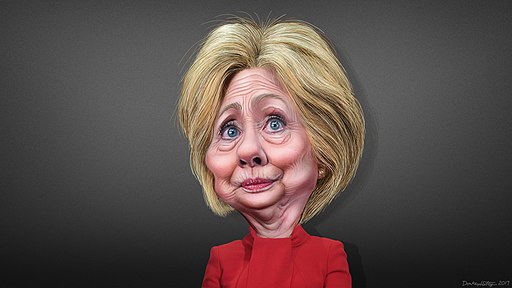
Image by Gage Skidmore
RT | October 18, 2019
Congresswoman Tulsi Gabbard (D-Hawaii) has accused Hillary Clinton of being behind a ‘concerted campaign’ to destroy her reputation and challenged her to stop hiding and enter the 2020 presidential race.
“Great! Thank you Hillary Clinton,” Gabbard tweeted on Friday afternoon. “You, the queen of warmongers, embodiment of corruption, and personification of the rot that has sickened the Democratic Party for so long, have finally come out from behind the curtain.”
“From the day I announced my candidacy, there has been a concerted campaign to destroy my reputation. We wondered who was behind it and why. Now we know — it was always you, through your proxies and powerful allies in the corporate media and war machine,” Gabbard added.
Clinton, who has blamed everyone from the FBI to Russia for her 2016 loss to Donald Trump, said in an interview on Thursday that “Russians” were “grooming” someone in the Democrat primary field to run as a third-party candidate. While not calling out Gabbard by name, her spokesperson later told CNN, “if the nesting doll fits,” leaving no room for doubt.
Of all the candidates in the crowded Democrat primary field, Gabbard has been under the heaviest fire from journalists who previously boosted Clinton, accused of being an “Assad apologist” over a fact-finding trip she took to Syria years ago.
“Don’t cowardly hide behind your proxies. Join the race directly,” Gabbard called out Clinton, who has dropped hints that she might run again in 2020 as a rematch for her 2016 humiliation.
During the 2016 campaign, Gabbard resigned as vice-chair of the Democratic National Committee after endorsing Bernie Sanders for the party’s presidential nomination. Clinton beat Sanders out for the nomination largely due to support from the unaccountable “superdelegates,” and it emerged later that her campaign had taken over the DNC entirely – which might help explain Gabbard’s line about “the rot that has sickened the Democratic Party for so long.”
Japan Snubs US-Led Gulf Coalition, Considers Sending its Own Troops to Strait of Hormuz – Reports
Sputnik – October 18, 2019
The Japanese government has decided to send its own self-defence troops to the Strait of Hormuz area as an alternative to joining the US-coalition to protect commercial vessels passing through key Middle Eastern waterways, according to the Asahi newspaper.
Earlier, media reported that Japan would not join such a coalition due to its close economic ties with Iran, as an important oil producer.
The US announced the creation of a naval coalition in the wake of the detention of a British tanker by Iranian authorities over alleged violations of maritime laws and a series of “sabotage attacks” on commercial vessels in the Persian Gulf. These it blamed on Iran, claiming that the US goal will be to ensure the safety of navigation through a crucial oil-exporting lane – the Strait of Hormuz. Tehran has strongly denied any involvement in the attacks.
Washington invited several countries from Europe and Asia to participate in this coalition, but so far few have responded. While the UK has shown interest in participating in the American mission, Germany opted for diplomatic efforts as a mean to reduce tensions in the Gulf and stated that its participation in America’s “maximum pressure” campaign against Iran has been “ruled out”.
Iran has slammed the planned American maritime mission as endangering the international waterway and expressed scepticism about Washington’s chances of rallying allies for it.
Featured Video

Iran’s Next Strike May Not Explode. It Could Shut You Down
or go to
Aletho News Archives – Video-Images
From the Archive
Zionism’s Violent Legacy
By Donald Neff | Washington Report On Middle East Affairs | January 1996
On January 4, 1948, Jewish terrorists drove a truck loaded with explosives into the center of the all Arab city of Jaffa and detonated it, killing 26 and wounding around 100 Palestinian men, women and children.[1] The attack was the work of the Irgun Zvai Leumi – the “National Military Organization,” also known by the Hebrew letters Etzel – the largest Jewish terrorist group in Palestine. The Irgun was headed by Revisionist Zionist Menachem Begin and had been killing and maiming Arabs, Britons and even Jews for the previous ten years in its efforts to establish a Jewish state.
This terror campaign meant that at the core of Revisionist Zionism there existed a philosophical embrace of violence. … continue
Blog Roll
 Aletho News
- Trump’s Iran war is on an Israeli leash
- Saudi oil boss issues global supply warning
- Riyadh Says Its Oil System Is Intact. The Numbers Say Otherwise.
- Trump and Netanyahu Want to “Finish the Job” on Iran
- US ‘one-sided dictation’ not Iran’s beliefs makes rational talks impossible: Baghaei
- Iran’s Next Strike May Not Explode. It Could Shut You Down /Col Doug Macgregor
- Iran: US political targets legitimate if assassinations return
- Iraq shuts key border crossing with Iran under US pressure: Report
- Undersea Internet cables could be targeted in retaliation for attacks on Iran: IRGC deputy chief
- EU sending ‘biased’ observers to interfere in Serbian election – president
- If Americans Knew
- Heidi Levine recounts how Palestinian youths helped save her in settler attack
- DAILY UPDATE: Latest essential news on Palestine, Israel, & region
- Trump’s Intensifying Sabotage of the ICC, for Israel’s Sake
- Israeli military detain US and UK volunteers in West Bank including Democratic NY politician Brad Lander
- Americans at National Conservatism Conference held in Israel this year criticize Israel
- Christiane Amanpour exits CNN with a legacy shaped by the debate over Israel
- Israel’s war on Iran is the final move in a decades-old strategy
- Israel Denies Entry to French Journalist, U.S. Researcher Amid Rise in Entry Denials
- Gaza’s hospitals are running out of life-saving fuel – Daily Update
- Mysterious bot accounts reportedly spread fake ‘man on the street’ videos for Michigan Senate candidate
- No Tricks Zone
- E-Cars Reduce CO2 Emissions By Only 41% Compared To Internal Combustion Engine Vehicles
- Predictions Made By Renowned Climate Professor Over Past Decades Have Been Proven To Be Poor
- New Study Suggests Large Regions Of The Pacific Ocean Have Been Cooling For The Last 80 Years
- Germany’s Green Energy Debacle: High Energy Costs Force Kahla Porzellan to Close After 182 Years!
- New Study: 50 Years Of The Most Aggressive ‘Net Zero’ Policies Can Only Affect The Global Climate By 0.03°C
- US September “Heat” Was No Record…Many Records Set Decades Ago
- Latest European Green Energy Debacle; Portugal’s Largest Flagship Solar Park Insolvent!
- Green Energy Debacle: German Expert Professor Fritz Vahrenholt Warns Of Severe Economic And Social Consequences
- Two More Paleo Reconstructions Affirm Meters-Higher Sea Levels Across Ireland, Brazil 7000-6000 Years Ago
- New Study: Earth And Venus Surface Warmth Largely Explained By Convection And Lapse Rate, Not CO2 Or Radiation

