Key Jewish Democrats to vote against Iran nuclear agreement

Democratic Senator Chuck Schumer (left) and Representative Eliot Engel
Press TV – August 7, 2015
Two Jewish lawmakers from US President Barack Obama’s Democratic Party have announced their intention to vote against the Iran nuclear agreement, betraying the Obama administration which is fighting hard to save the accord in the Republican-dominated Congress.
Senator Chuck Schumer said on Thursday he would vote against the conclusion of nuclear talks that was reached last month in Vienna between Iran and the P5+1 group — the US, Britain, France, Russia, China, and Germany.
Moments later, Eliot Engel, the ranking Democrat on the House Foreign Affairs Committee, also declared to join Obama’s rivals in opposing the nuclear accord.
The US Congress is reviewing the Iran nuclear agreement and is likely to vote on it in September.
“Advocates on both sides have strong cases for their point of view that cannot simply be dismissed,” Schumer said in a statement.
“This has made evaluating the agreement a difficult and deliberate endeavor,” he noted. “I have decided I must oppose the agreement and will vote yes on a motion of disapproval.”
Meanwhile, Engel claimed that Iranians would not uphold their end of the agreement. “I still believe that a negotiated solution is the best course of action. That’s the path I believe we should pursue. But … I regret that I cannot support this deal.”
According to the text of the Joint Comprehensive Plan of Action (JCPOA), Iran will be recognized by the United Nations as a nuclear power and will continue its uranium enrichment program. But some restrictions will be placed on Iran’s nuclear program in exchange for the removal of sanctions against the Islamic Republic.
Most Republicans oppose the nuclear agreement with Iran, but they need a two-thirds vote in both chambers of Congress to override a possible presidential veto, and to reach that threshold, Republicans need Democratic support.
The White House has launched a sales pitch to Congress, which remains skeptical of the nuclear accord with Iran, and has 60 days to vote to either approve or disapprove of it.
The announcements by Schumer and Engel were a blow to Obama, who is striving to save the Iran nuclear agreement in Congress, which is expected to pass a resolution opposing the measure.
Jeremy Corbyn calls for UK nuclear disarmament on Hiroshima 70th anniversary

Hiroshima aftermath © U.S. Navy Public Affairs Resources Website / Wikipedia
RT | August 6, 2015
Labour Party leadership frontrunner Jeremy Corbyn has called for Britain’s complete nuclear disarmament at an event commemorating 70 years since the US dropped an atom bomb on the Japanese city of Hiroshima.
Speaking on Thursday at the Campaign for Nuclear Disarmament (CND) commemoration event in London, the anti-austerity candidate said that if he became prime minister he would not renew Trident, Britain’s nuclear deterrent.
Unveiling his Plan for Nuclear Disarmament, Corbyn said he would move away from a nuclear weapons based arsenal.
In the document, Corbyn lays out a strategy to protect the jobs of people currently working on Trident by investing in infrastructure projects and “socially productive” initiatives.
“We are making the case for a defense diversification agency because we have a moral duty, and strategic defense and international commitments, to make Britain and the world a safer place,” the document reads.
“As a signatory to the nuclear non-proliferation treaty, Britain should therefore give a lead in discharging its obligations by not seeking a replacement for Trident, as we are committed to accelerate concrete progress towards nuclear disarmament.
“Senior military figures have described our existing nuclear weapons as ‘militarily useless’ and our possession of them encourages other countries to seek a similar arsenal while undermining the efforts being made to advance the cause of international nuclear disarmament,” it adds.
The Green Party’s Lady Jones also attended the memorial event.
She said: “It is amazing that we haven’t learned more from the nuclear bombing of Japan, that nuclear weapons are indiscriminate, their impact incalculable and their cost insupportable.
“Britain should accept that such weapons are impossible to use with any guarantee of safety and we should scrap plans for renewing the Trident nuclear defense system, freeing up £100b billion to spend on our national wellbeing.”
Currently the UK has committed to the maintenance of four submarines, each equipped with Trident II D-5 nuclear missiles. Parliament will vote on their renewal in 2016.
Corbyn’s call for nuclear disarmament comes after he said Tony Blair could stand trial for war crimes if he is deemed to have broken international law during the 2003 invasion of Iraq.
Speaking to BBC Newsnight, the prominent anti-war campaigner said Blair should stand trial “if he has committed a war crime, yes. Everybody who has committed a war crime should.”
He added the former Labour prime minister, who orchestrated the invasion with then-US President George W. Bush, should “confess” to any plans he made with the former president. The publication of the Chilcot Inquiry report would force Blair’s hand, he said.
Corbyn, who staunchly opposed the invasion and is a leading member of the Stop the War coalition, said: “It was an illegal war. I am confident about that. Indeed Kofi Annan [UN secretary general at the time of the war] confirmed it was an illegal war and therefore [Tony Blair] has to explain that. Is he going to be tried for it? I don’t know. Could he be tried for it? Possibly.”
Sad Nuclear Anniversary
By Brian CLOUGHLEY | Strategic Culture Foundation | August 6, 2015
On 1 September 1939 – the date of the beginning of the Second World War – the President of the United States of America, Franklin D. Roosevelt, wrote to «the Governments of France, Germany, Italy, Poland and His Britannic Majesty» saying that «The ruthless bombing from the air of civilians in unfortified centres of population during the course of the hostilities which have raged in various quarters of the earth during the past few years, which has resulted in the maiming and in the death of thousands of defenceless men, women, and children, has sickened the hearts of every civilized man and woman, and has profoundly shocked the conscience of humanity».
He was rightly appalled about the aerial slaughter of civilians and desired each country to which he addressed his appeal «to affirm its determination that its armed forces shall in no event, and under no circumstances, undertake the bombardment from the air of civilian populations or of unfortified cities, upon the understanding that these same rules of warfare will be scrupulously observed by all of their opponents».
We are now marking the seventieth anniversary of the explosion of the atomic bombs that destroyed the Japanese cities of Hiroshima on 6 August 1945 and Nagasaki three days later, killing a total of over 100,000 «defenceless men, women, and children,» prompting the nuclear scientist Robert Oppenheimer to quote from the Bhagavad Gita, the Hindu religious and philosophical text, that «Now I am become Death, the destroyer of worlds».
Development of the atomic bomb began in 1939 but went into high gear as the Manhattan Project three years later. What is intriguing is that President Roosevelt approved the programme on 9 October 1941, a full two months before the Japanese attacked America at Pearl Harbor killing 2,403 people — including civilians. The subsequent declaration of war by the US resulted in concentration on means of war-winning by any means, and resulted in development of the ultimate weapon.
Even before the atomic explosions it was apparent that the major nations involved in the Second World War had no qualms about inflicting devastation. The British considered that their «aim is, therefore, twofold: namely, to produce (i) destruction, and (ii) the fear of death» and to that end mercilessly bombed German cities. The rationale was that it was the Germans who started it and who in 1940-41 subjected London to a non-stop 60 days and nights of aerial bombardment that killed 30,000 people.
In a macabre game of explosive ping-pong the countries at war sought more and deadlier ways to wreak havoc on their opponents, and it would have been difficult to have found a citizen of any of these countries who would have failed to agree with the actions of their government. It was thus that Project Manhattan received its massive impetus, and in an amazing display of technical prowess and organisational proficiency its scientists designed and produced the Atom Bomb.
It was astonishing that President Roosevelt had not told his Vice-President, Harry Truman, one single thing about the bomb project which some well-informed people believed was a potentially catastrophic venture. The first bomb was tested on 16 July 1945 at Alamogordo in New Mexico and caused concern among the scientists who had been involved in its development, 70 of whom sent a letter to President Roosevelt pointing out that use of the atomic bomb would likely presage «an era of devastation on an unimaginable scale» and that «a nation which sets the precedent of using these newly liberated forces of nature for purposes of destruction may have to bear the responsibility of opening the door to an era of devastation on an unimaginable scale».
 Their letter wasn’t allowed to reach the President. He never knew of its existence, but in any event was convinced that the A-bomb was essential and had written to Oppenheimer, who had grave doubts about the military’s attitude to nuclear developments, that «whatever the enemy may be planning, American science will be equal to the challenge». The Bomb was going to be used, no matter the consequences, although the president who gave the order to drop the bombs in August 1945 was Harry Truman, who learned of the project’s existence on 13 April 1945, the day after Roosevelt died.
As recorded by Eric Schlosser in his edifying book Command and Control, there had been air attacks on Japan of staggering intensity in the months before the atom bombs were employed. On the night of 9 March 1945, for example, «American planes struck Tokyo with 2,000 tons of bombs containing napalm and jellied gasoline… Within hours the firestorm consumed one quarter of the city. It killed about 100,000 civilians… «Worse was yet to come because Truman icily warned that the Japanese «may expect a rain of ruin from the air, the like of which has never been seen on this earth».
There were not many large concentrations of Japanese that had not been subjected to firebombing, and choosing the ultimate victims was not easy. Kyoto was removed from the list of four targets because the Secretary of War, Henry Stimson, pointed out that it was a major cultural centre of great importance to Japanese art and history — and Nagasaki was chosen instead. By such decisions are the fates of human beings decided. Countless thousands of Kyoto citizens were spared, but 39,000 in Nagasaki were condemned to death.
First came Hiroshima, where on 6 August «a firestorm engulfed the city» and 66,000 people were killed. Next on the target list was Kokura, and in yet another horrible twist of fate the city was covered in smoke and haze and the plane was diverted to Nagasaki where the second bomb, hideously named Fat Man, was dropped on 9 August.
The war against Japan then ended, but it should be remembered that between the destruction of the two cities there was a Charter was being approved, on 8 August in the German city of Nuremburg, signed by the victorious allies, that included guidelines for the forthcoming trial of German war criminals by the International Military Tribunal. In an alarming example of double standards, the judges were informed that «The following acts, or any of them, are crimes coming within the jurisdiction of the Tribunal for which there shall be individual responsibility… (b) War Crimes: namely, violations of the laws or customs of war. Such violations shall include… wanton destruction of cities, towns, or villages». It did not include the words of President Roosevelt, that it was sickening to «undertake the bombardment from the air of civilian populations or of unfortified cities,» but made it clear that such attacks were against the laws of war.
The Nuremburg Charter guided the conviction of German war criminals, and it is hideous coincidence that it was signed at the very time when «Death, the destroyer of worlds» was thundering down on Japan in what Truman called «a rain of ruin from the air».
Which goes to show that justice is reserved for those who win wars.
Really, Sad Nuclear Anniversary.
Brian Cloughley writes about foreign policy and military affairs. He lives in Voutenay sur Cure, France.
Why Does Bernie Sanders Want the Saudis to Exercise MORE Influence?
By Sam Husseini | August 6, 2015
My colleague Norman Solomon has a piece published today: “Bernie Sanders should stop ducking foreign policy” in which he writes:
“After a question about ‘the military establishment’ and ‘perpetual war’ from a man who identified himself as a veteran for peace at a recent town hall gathering in Iowa City, Sanders’ reply was tepid Democratic boilerplate. He blamed Republican hawks for getting the U.S. into Iraq. He called for progress against waste and cost overruns at the Pentagon. And he said that in the war against the Islamic State of Iraq and the Levant (ISIL), the U.S. government should act jointly with regional allies such as Saudi Arabia and Turkey. (‘Those countries are going to have to get their hands dirty, it cannot just be the United States alone.’)
“When pressed for details on military intervention, Sanders has indicated that his differences with the Barack Obama administration are quite minor. Like many Democrats, he supports U.S. air strikes in the Middle East, while asserting that only countries in the region should deploy ground forces there. Sanders shares the widespread view among members of Congress who don’t want boots on the ground but do want U.S. air power to keep dropping bombs and firing missiles.
“Sanders has also urged confronting Russian leader Vladimir Putin over Ukraine. (‘You totally isolate him politically, you totally isolate him economically,’ Sanders said on Fox News last year.) Closer to home, the Vermont senator has championed the $1.4 trillion half-century program for Lockheed Martin’s F-35 beleaguered fighter jets. The Air Force is planning to base F-35s at the commercial airport in Burlington, his state’s largest city.”
I had actually asked Sanders about the F-35 when he was at the Press Club in March of this year and he ducked the question. It was part of what the moderator asked as a two parter and Sanders replied to the other part of the question and simply ignored the question about his backing the F-35. I’ve listed all the questions I submitted below.
However, the aspect of foreign policy as articulated by Sanders that has grabbed me the most is his stance on ISIS — where he points to the Saudis being the solution. He’s said this repeatedly. In February with Wolf Blitzer on CNN: “this war is a battle for the soul of Islam and it’s going to have to be the Muslim countries who are stepping up. These are billionaire families all over that region. They’ve got to get their hands dirty. They’ve got to get their troops on the ground. They’ve got to win that war with our support. We cannot be leading the effort.”
And in May, after the Saudi’s started bombing Yemen, also when interviewed by Wolf Blitzer, Sanders correctly noted as a result of the Iraq invasion “we’ve destabilized the region, we’ve given rise to Al-Qaeda, ISIS.” But then says: “What we need now, and this is not easy stuff, I think the President is trying, you need to bring together an international coalition, Wolf, led by the Muslim countries themselves! Saudi Arabia is the third largest military budget in the world they’re going to have to get their hands dirty in this fight. We should be supporting, but at the end of the day this is fight over what Islam is about, the soul of Islam, we should support those countries taking on ISIS.”
What? Why should the U.S. be backing Saudi Arabia? You’d think that perhaps an alleged progressive like Sanders would say that we have to break our decades-long backing of the Saudis. But no, he wants to double down on it. They’re not “pulling their weight” — they’re not exercising enough influence in the region. The Saudis have pushed Wahabism and have been deforming Islam, which actually give rise to ISIS and Al Qaeda. It’s a little like Bernie Sanders saying that the Koch Brothers need to get more involved in U.S. politics, they need to “get their hands dirty.”
But if your point is to build up the next stage of the U.S. government’s horrific role in the Mideast, it kind of makes sense. The U.S. government helped ensure the Saudis would dominate the Arabian Peninsula. In return the Saudis invested funds from their oil wealth largely in the West instead of the region. They buy U.S. weapons to further solidify the “relationship” and to ensure their military dominance. The Saudis and other Gulf monarchies deformed the Arab uprisings, which turned oppressive but minimally populist regimes that were potential rivals into failed states.
Perhaps most horrifically, Sanders continued this line of argument in May — after the Saudis started bombing Yemen in March. As far as I can tell, he continues making the argument.
But why? Is there a domestic constituency called “Americans for Further Expanding Saudi Power”? Well, yes and no. It would obviously play well in the general public to say: “We’ve got to stop backing dictatorships like the Saudis.” There’s no affront to any sense of U.S. nationalism there. There would seem to be no affront to the domestic constituencies obsessed with Israeli domination of the region. But the Israeli-Saudi alliance means that there is. It feels to me that Sanders is knowingly or not — I don’t know who his foreign policy advisers are — telegraphing to the Israel fanatic crowd that he’s on board in terms of Israel’s geo-strategic interests in the region. And to the U.S. establishment generally. It’s noteworthy that he’s made the case on Wolf Blitzer’s program, since Blitzer has long been a leading pro-Israel luminary.
The U.S.-Saudi alliance has been one of the plagues that has devastated the Mideast. There’s nothing “progressive” about doubling down on it.
The following are the questions I submitted to the Sanders event at the National Press Club in March. Other than the question about the F-35, which Sanders didn’t respond to, none were asked:
* You’re fond of saying “Wars drain investment at home” — MLK referred to
this in his “Beyond Vietnam” speech, the notion that wars drain the public treasury as a “facile” connection — and then listed several other reasons based on other moral grounds for opposing war. You rarely list other reasons for opposing war. Why is that?
* Why do you support the F-35 program?
* On Friday, CIA director John Brennan proposed a restructuring of the CIA to allegedly better confront current threats. Some former CIA analysts however charge that this restructuring will further politicize intelligence, so that “intelligence” will more likely come to “conclusions” that are politically convenient. Is this a growing threat?
* There’s apparently a gag order on acknowledging the Israel has a nuclear weapons arsenal, even as many in the US and Israel have charged Iraq and now Iran with having a nuclear weapons program. Do you acknowledge Israel has a nuclear weapons program? Will you change decades-long US policy that refuses to acknowledge this?
* Last summer, the Senate passed a resolution by unanimous consent backing Israel’s “defending itself” from Gaza in the conflict that left about 2,000 Palestinians in Gaza dead. Do you regret not objecting to that resolution?
* Noted historian Alfred McCoy recently wrote: “Under Obama, drones have grown from a tactical Band-Aid in Afghanistan into a strategic weapon for the exercise of global power. From 2009 to 2015, the CIA and the U.S. Air Force deployed a drone armada of over 200 Predators and Reapers, launching 413 strikes in Pakistan alone, killing as many as 3,800 people. ” Are you for or against the drone assassination program?
* You recently said: “I find it remarkable that Saudi Arabia, which borders Iraq and is controlled by a multi-billion dollar family, is demanding that U.S. combat troops have ‘boots on the ground’ against ISIS. Where are the Saudi troops?…With the third largest military budget in the world and an army far larger than ISIS, the Saudi government must accept its full responsibility for stability in their own region of the world.” Are you really wanting the Saudi regime, which has been accused of fomenting violence through the Wahhabi sect, to play a greater role in the region? Will you break with the decades-old alliance with the authoritarian Saudi regime?
* What issues do you agree with some, like Ron Paul, who are associated with the right wing? (Trade? Civil liberties? Cutting military budget? Cutting corporate welfare? Ending bank bailouts?)
Osama “Sam” Husseini is the communications director of the Institute for Public Accuracy. He’s also set up VotePact.org — which helps break out of the two party bind. He’s on twitter: @samhusseini
Obama’s Pragmatic Appeal for Iran Peace
By Robert Parry | Consortium News | August 5, 2015
Trying to rally public support for a diplomatic agreement to constrain Iran’s nuclear program, President Barack Obama went to American University in Washington D.C., where – in 1963 – President John F. Kennedy gave perhaps his greatest speech arguing against the easy talk of war in favor of the difficult work for peace.
Obama’s speech lacked the universal appeal and eloquent nobility of Kennedy’s oration, but represented in a programmatic way what Kennedy also noted, that the details and deal-making of diplomacy are often less dramatic than the clenching of fists and the pounding of chests that rally a nation to war. Obama went through the pluses of what he felt the Iran deal would achieve and the minuses of what its rejection would cause.
Obama said congressional approval of the agreement would gain the narrow but important goal of ensuring that Iran won’t get a nuclear weapon while congressional rejection would lead toward another war in the Middle East, thus adding to the chaos started by President George W. Bush’s invasion of Iraq in 2003.
“Congressional rejection of this deal leaves any U.S. administration that is absolutely committed to preventing Iran from getting a nuclear weapon with one option, another war in the Middle East. I say this not to be provocative, I am stating a fact,” Obama said.
“So let’s not mince words. The choice we face is ultimately between diplomacy or some form of war. Maybe not tomorrow, maybe not three months from now, but soon.”
Obama also called out many of the deal’s opponents, noting that many were vocal advocates for invading Iraq and that some are now openly acknowledging their preference for another war against Iran.
Obama said, “They’re opponents of this deal who accept the choice of war. In fact, they argue that surgical strikes against Iran’s facilities will be quick and painless. But if we’ve learned anything from the last decade, it’s that wars in general and wars in the Middle East in particular are anything but simple.
“The only certainty in war is human suffering, uncertain costs, unintended consequences. We can also be sure that the Americans who bear the heaviest burden are the less-than-1 percent of us, the outstanding men and women who serve in uniform, and not those of us who send them to war.”
Still a ‘War President’
Apparently seeking to establish his own credibility as a “war president,” Obama also took note of how many countries he has launched military attacks in and against during his presidency:
“I’ve ordered military action in seven countries. There are times when force is necessary, and if Iran does not abide by this deal, it’s possible that we don’t have an alternative. But how can we, in good conscience, justify war before we’ve tested a diplomatic agreement that achieves our objectives, that has been agreed to by Iran, that is supported by the rest of the world and that preserves our option if the deal falls short?
“How could we justify that to our troops? How could we justify that to the world or to future generations? In the end, that should be a lesson that we’ve learned from over a decade of war. On the front end, ask tough questions, subject our own assumptions to evidence and analysis, resist the conventional wisdom and the drumbeat of war, worry less about being labeled weak, worry more about getting it right.”
One might note that as worthy as those guidelines are, they have often been violated by the Obama administration, such as its dubious allegations against the Syrian government regarding the infamous sarin gas attack on Aug. 21, 2013, and against Russia over the shoot-down of Malaysia Airlines Flight 17 in eastern Ukraine on July 17, 2014. In both cases, Obama and his administration have kept from public view evidence that they claim to possess while decrying skeptics who have questioned the conventional wisdom.
But Obama did take to task the neoconservatives and other warmongers who have followed a pattern of exaggerating dangers to frighten the American people into support for more warfare:
“I know it’s easy to play in people’s fears, to magnify threats, to compare any attempt at diplomacy to Munich, but none of these arguments hold up. They didn’t back in 2002, in 2003, they shouldn’t now. That same mind-set in many cases offered by the same people, who seem to have no compunction with being repeatedly wrong.”
In conclusion, Obama added,
“John F. Kennedy cautioned here more than 50 years ago at this university that the pursuit of peace is not as dramatic as the pursuit of war. But it’s so very important. It is surely the pursuit of peace that is most needed in this world so full of strife.”
Usual Iran Bashing
Yet, while Obama made an impassioned case for a diplomatic solution to the Iran-nuclear dispute – and defended the details of the agreement – he also drifted back into the typical propagandistic Iran bashing that has become de rigueur in Official Washington.
Obama salted his praise for diplomacy with the typical insults toward Iran, portraying it as some particularly aggressive force for evil in the Middle East, juxtaposed against the forces for good, such as Saudi Arabia, the Gulf sheikdoms and Israel – all of which have spread more violence and chaos in the Middle East than Iran.
In that sense, Obama’s speech fell far short of the statement of universal principles on behalf of humanity that was the hallmark of Kennedy’s speech on June 10, 1963, a declaration that was remarkable coming at a peak of the Cold War and almost unthinkable today amid the petty partisan rhetoric of American politicians. In contrast to Obama’s cheap shots at Iran, Kennedy refrained from gratuitous Moscow bashing.
Instead, Kennedy outlined the need to collaborate with Soviet leaders to avert dangerous confrontations, like the Cuban Missile Crisis of 1962. Kennedy also declared that it was wrong for America to seek world domination, and he asserted that U.S. foreign policy must be guided by a respect for the understandable interests of adversaries as well as allies. Kennedy said:
“What kind of peace do I mean and what kind of a peace do we seek? Not a Pax Americana enforced on the world by American weapons of war. Not the peace of the grave or the security of the slave. I am talking about genuine peace, the kind of peace that makes life on earth worth living, and the kind that enables men and nations to grow, and to hope, and build a better life for their children — not merely peace for Americans but peace for all men and women, not merely peace in our time but peace in all time.”
Standing Up to Cynics
Kennedy recognized that his appeal for this serious pursuit of peace would be dismissed by the cynics and the warmongers as unrealistic and even dangerous. But he was determined to change the frame of the foreign policy debate, away from the endless bravado of militarism:
“I speak of peace, therefore, as the necessary, rational end of rational men. I realize the pursuit of peace is not as dramatic as the pursuit of war, and frequently the words of the pursuers fall on deaf ears. But we have no more urgent task. …
“Too many of us think it is impossible. Too many think it is unreal. But that is a dangerous, defeatist belief. It leads to the conclusion that war is inevitable, that mankind is doomed, that we are gripped by forces we cannot control. We need not accept that view. Our problems are manmade; therefore, they can be solved by man. And man can be as big as he wants. No problem of human destiny is beyond human beings.”
And then, in arguably the most important words that he ever spoke, Kennedy said, “For in the final analysis, our most basic common link is that we all inhabit this small planet. We all breathe the same air. We all cherish our children’s futures. And we are all mortal.”
Kennedy followed up his AU speech with practical efforts to work with Soviet leader Nikita Khrushchev to rein in dangers from nuclear weapons and to discuss other ways of reducing international tensions, initiatives that Khrushchev welcomed although many of the hopeful prospects were cut short by Kennedy’s assassination on Nov. 22, 1963.
Kennedy’s AU oration was, in many ways, a follow-up to what turned out to be President Dwight Eisenhower’s most famous speech, his farewell address of Jan. 17, 1961. That’s when Eisenhower ominously warned that,
“In the councils of government, we must guard against the acquisition of unwarranted influence, whether sought or unsought, by the military–industrial complex. … We must never let the weight of this combination endanger our liberties or democratic processes.”
Arguably no modern speeches by American presidents were as important as those two. Without the phony trumpets that often herald what are supposed to be “important” presidential addresses, Eisenhower’s stark warning and Kennedy’s humanistic appeal defined the challenges that Americans have faced in the more than half century since then.
Those two speeches, especially Eisenhower’s phrase “military-industrial complex” and Kennedy’s “we all inhabit this small planet,” resonate to the present because they were rare moments when presidents spoke truthfully to the American people.
Nearly all later “famous” remarks by presidents were either phony self-aggrandizement (Ronald Reagan’s “Mr. Gorbachev, tear down that wall” – when the wall wasn’t torn down until George H.W. Bush was president and wasn’t torn down by Mikhail Gorbachev anyway but by the German people). Or they are unintentionally self-revealing (Richard Nixon’s “I am not a crook” or Bill Clinton’s “I did not have sexual relations with that woman.”)
Obama has yet to leave behind any memorable quote, despite his undeniable eloquence. There are his slogans, like “hope and change” and some thoughtful speeches about race and income inequality, but nothing of the substance and the magnitude of Eisenhower’s “military-industrial complex” and Kennedy’s “we all inhabit this small planet.”
Despite the practical value of Obama’s spirited defense of the Iran nuclear deal, nothing in his AU speech on Wednesday deserved the immortality of the truth-telling by those two predecessors.
~
Investigative reporter Robert Parry broke many of the Iran-Contra stories for The Associated Press and Newsweek in the 1980s. You can buy his latest book, America’s Stolen Narrative, either in print here or as an e-book (from Amazon and barnesandnoble.com).
Iran Accuses US of Already Backtracking on Nuclear Deal
Sputnik | August 4, 2015
Mere weeks after the historic nuclear deal between Iran and the P5+1 nations was finalized, Tehran has already accused the United States of violating the agreement.
After months of negotiations, the Iran nuclear deal was finalized on July 14. Allowing the Islamic Republic to pursue nuclear energy for peaceful purposes, the agreement was heralded by the Obama administration as a major success.
“History shows that America must lead not just with our might, but with our principles,” President Obama said in a speech. “It shows we are stronger not when we are alone, but when we bring the world together.”
But according to a new complaint filed with the International Atomic Energy Agency, Iran feels that the US has already breached its newfound pledge of comradery.
Filed by Iranian Ambassador and Resident Representative Reza Najafi, the complaint refers to statements made by White House press secretary Josh Earnest. These comments occurred during a news briefing on July 17, only three days after a deal was reached.
“The military option would remain on the table, but the fact is, that military option would be enhanced because we’d been spending the intervening number of years gathering significantly more detail about Iran’s nuclear program,” Earnest said.
Iran’s complaint calls Earnest’s statement, essentially threatening military use of force, a “material breach of the commitments just undertaken.”
During the news conference, Earnest went on to say that any future “targeting decisions” would be well informed, “based on the knowledge that has been gained in the intervening years through this inspections regime.”
The complaint points out that the nuclear agreement was never meant as a way for the United States to gain intelligence information through the International Atomic Energy Agency. The very mention of such an act could potentially destroy the trust necessary for international inspections to be carried out.
“Recalling the past instances, in which highly confidential information provided by the Islamic Republic of Iran to the Agency inspectors had been leaked, posing a grave threat to the national security of Iran… it is absolutely essential and imperative for the Agency to take immediate and urgent action to reject such flagrant abuses…” the complaint reads.
Najafi includes his expectation that the IAEA “condemn categorically the July 17, 2015 statement by the White House Press Secretary.”
While the nuclear agreement is intended to foster the Islamic Republic’s peaceful development of nuclear energy, it has also heralded an uptick in Western aggression in the Middle East. On Tuesday, former Undersecretary of Defense for Policy Eric Edelman encourage US Senators to expand the Pentagon’s presence in the Persian Gulf.
Iran Nuclear Deal Boosts Saudi Demand for US Weapons Systems
“I think we are going to have to expand our regional military presence to reassure Israel and the Gulf States and to deter Iran,” Edelman said during a hearing on the regional impacts of the nuclear agreement.
Saudi Arabia has also begun bolstering its military capabilities, fearing the growing influence of its regional rival. According to former US Assistant Secretary Lawrence Korb, major US defense contractors have already increased weapons sales to Riyadh.
“The Saudis want the Patriot [air defense] missiles,” Korb told Sputnik on Tuesday. “The Saudis feel that with Iran now getting relief from sanctions… they [Iranians] are going to be more aggressive militarily.”
Japan to temporarily halt preparation work on new US base
Press TV – August 4, 2015
Japan is set to suspend preparation work for the construction of a new US military base on the southern island of Okinawa, a government official says, amid widespread local protests against the facility’s relocation.
Chief Cabinet Secretary Yoshihide Suga told a news conference that Tokyo had decided to halt the work for a month starting August 10, Japanese Kyodo News reported on Tuesday.
Suga further said that during the month-long period, Tokyo plans to hold “intensive consultations” with the regional government in Okinawa Prefecture in an attempt to settle the standoff over the controversial plans to relocate the military base.
The official made the announcement ahead of a meeting between Japanese Prime Minister Shinzo Abe and Okinawa Governor Takeshi Onaga in the capital, Tokyo, on Friday.
The prospective outpost, which is planned to be constructed in the Henoko district of the city of Nago in the north of the island, would take over the functions of US Marine Corps Air Station Futenma, also known as MCAS Futenma.
MCAS Futenma, which is based in the city of Ginowan in Okinawa Prefecture, houses several thousand US military personnel.
Okinawans have been calling for the base to be closed and American troops to be moved completely off the island.
Unpopular presence
The plan for the construction of a new military base for the United States is a key part of a bilateral agreement to realign the US military presence in Japan.
US presence in Japan has been embroiled in controversy, with American military personnel having reportedly been involved in more than 1,000 sex crimes between 2005 and 2013 in the country.
Onaga, the Okinawa governor, has said he will rescind his predecessor’s approval of land reclamation work off Nago, which is required to get the construction work off the ground. By so doing, Onaga would eliminate the legal basis for the central government’s project to build the outpost.
A third-party committee, set up by Onaga, compiled a report on July 16, pointing to “legal defects” in the processing of the central government’s application for reclaiming the area.
More proof that Western bombing in Syria and Iraq is massacring civilians

A US-led air strike in October 2014 in Kobani, Syria
Stop the War Coalition | August 4, 2015
The bombing campaign against the Islamic State in Iraq and Syria has killed at least 459 civilians, including 100 children, in 52 air strikes, according to a new report by Airwars, a project by a group of independent journalists.
Commenting on the supposed precision of air strikes against Isis, the Airwars project leader Chris Woods has told the Guardian that this “hasn’t been borne out by facts on the ground”.
This is one of the first reports examining the number of civilian casualties which have resulted from the savage bombing campaign against Isis militants. The lack of official interest in and support for investigating these casualties means that their number may actually be far higher. The violence on the ground also greatly impedes the verification of casualties.
It took years before the full scale of mass murder in the Second Iraq War came to light. A recent study by Physicians for Social Responsibility, Physicians for Global Survival and International Physicians for the Prevention of Nuclear War has established that around a million people have died as a result of that war.
The UK is the second-most active participant in the bombing campaign against Isis. The British government’s claims about its commitment to avoiding civilian casualties are negated by facts.
Chris Woods from Airwars has stated that bombing Isis fighters in their strongholds means that the focus is on bombing cities. 40% of civilian casualty reports came from the city of Mosul in Iraq. “You can’t have an air war of this intensity without civilians getting killed or injured,” said Woods.
Western intervention in Iraq and Syria is adding fuel on the fire of a savage war. As the experience of more than a decade of terroristic “war on terror” shows us, Western intervention contributes to a vicious cycle of brutalising violence. It increases suffering and is a major cause of bitterness against the West.
This underscores the need to oppose resolutely the proposed full-scale UK military intervention in Syria, which will lead to more of the same: more misery, more hatred, more death and more destruction. Humanity can be more creative than that.
Featured Video
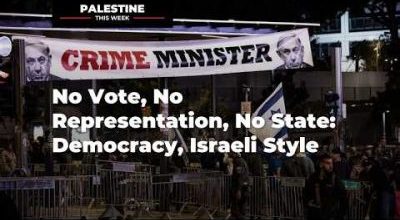
No Vote, No Representation, No State: Democracy, Israeli Style
or go to
Aletho News Archives – Video-Images
From the Archives
Sanctions, War and the Policy of Dual Containment
By SASAN FAYAZMANESH | March 17, 2008
It is now nearly three decades since the Unites States adopted the policy of dual containment of Iran and Iraq. While much has been written about the containment of Iraq, there has been very little in-depth analysis of this policy when it comes to Iran. In a book that is going to be released on March 31, 2008, entitled The United States and Iran: Sanctions, Wars and the Policy of Dual Containment (Routledge), I attempt to address this shortcoming by investigating when and why the US policy of containment of Iran came about, how it evolved, and where it stands today.[1] To the extent that Israel has been involved in US policy making, the study will also include the role that Israel has played in the containment of Iran. Also, since the fate of Iran has been inextricably linked to that of Iraq, occasionally the investigation will overlap with the containment of Iraq.
The policy of dual containment of Iran and Iraq originated during the Carter Administration, but it was not until the Clinton Administration that the expression “dual containment” became popular. … continue
Blog Roll
 Aletho News
- Europe’s Establishment Is Embracing War – and Losing Voters
- NATO chief advocates war of aggression
- No Vote, No Representation, No State: Democracy, Israeli Style
- Zionist Bought Senate Blocks Information About American Citizens Killed By Israel
- While Gaza dominates the UN, these are the people keeping it alive
- New Report: “Scholasticide and Genocide in Gaza: Assessment, Testimonies and Legal Analysis”
- ‘THAAD Delusion’: Iran war exposes US missile shield limits – The Atlantic
- Moscow issues warning to NATO over Russian exclave
- Yes, the Iran war has destroyed Trump’s presidency
- The fallacy of US delusions about Iran’s economic collapse
- If Americans Knew
- Mamdani releases plan to combat antisemitism and hate crimes in New York City
- Iran’s Revolutionary Guards Publish Letter to the American People
- DMFI launches $1 million ad campaign supporting Virginia’s Elaine Luria
- US Senate blocks resolution seeking report on Americans killed by Israel
- Israeli Attacks Kill Ten Palestinians in Gaza
- Massacre at Minab: The School That Became a Grave
- Israeli media: The IDF Shows It Doesn’t Turn a Blind Eye; It Actively Emboldens Settler Havoc
- As settlers ravage West Bank, Israeli forces kill 10 in Gaza – Daily Update
- New Report: “Scholasticide and Genocide in Gaza: Assessment, Testimonies and Legal Analysis”
- Ex-Biden officials are desperate for a Gaza scapegoat
- No Tricks Zone
- Green Energy Debacle: German Expert Professor Fritz Vahrenholt Warns Of Severe Economic And Social Consequences
- Two More Paleo Reconstructions Affirm Meters-Higher Sea Levels Across Ireland, Brazil 7000-6000 Years Ago
- New Study: Earth And Venus Surface Warmth Largely Explained By Convection And Lapse Rate, Not CO2 Or Radiation
- 2025 Nature Paper Claiming Worsening Global Drought Gets RETRACTED …Heavily Flawed
- New Study: ‘Global Drought Shows No Detectable Recent Acceleration Under Climate Warming’
- Economic Masterminds: German Socialists Suggest Taxing Productivity Gains Stemming From Using AI
- The South China Sea Has Not Been Cooperating With The Climate Change Narrative
- Energy Crisis: Germany Enters Heating Season With Historically Low Gas Reserve Fill Levels
- New Study: The Antarctic Ice Sheet Gained Mass From 2020-2024 Due To Staggering Snow And Ice Accumulation
- Study: Ocean Heating Rates From Thousands Of Years Ago ‘Dwarf’ Modern Ocean Heating Rates

