International Solidarity Movement honors Kayla Mueller
International Solidarity Movement | February 9, 2015
 Occupied Palestine – Kayla Mueller volunteered with the International Solidarity Movement from August to September of 2010.
On 4 August 2013 Kayla, 26, originally from Prescott, Arizona, was working with Syrian refugees when she was kidnapped after leaving a Spanish Doctors Without Borders hospital in Aleppo. Since that time she has been held in captivity by Da’esh (ISIS). This information was not previously released publicly out of concerns for her safety. On February 6th, Da’esh announced that she had been killed by Jordanian airstrikes in Raqqa, northern Syria. The validity of their announcement has not been confirmed.
Our hearts are with Kayla, her family, friends, and all those who have lost liberty, lives and loved ones in the global struggle for freedom and human rights.
With the ISM, Kayla worked with Palestinians nonviolently resisting the confiscation and demolitions of their homes and lands. In the Sheikh Jarrah neighborhood of Occupied East Jerusalem, she stayed with the Al Kurd family to try and prevent the takeover of their home by Israeli settlers.
Kayla accompanied Palestinian children to school in the neighborhood of Tel Ruimeda in Al-Khalil (Hebron) where the children face frequent attacks by the Israeli settlers and military. She stayed with villagers in Izbat Al Tabib in a protest tent to try to prevent the demolition of homes in the village. She joined weekly Friday protests in Palestinian villages against the confiscation of their lands due to Israel’s illegal annexation wall and settlements.
Kayla published writing online about her work in Palestine with the International Solidarity Movement in August and September 2010. “How can I ignore the blessing of freedom of speech when I know that people I deeply care for can be shot dead for it?” she wrote.
Below are excerpts from two of Kayla’s posts.
October 29, 2010:
“I could tell a few stories about running desperately from what you pray are rubber-coated steel bullets launched from the gun tip of a reckless and frightened 18-year old.”
“I could tell a few stories about sleeping in front of half demolished buildings waiting for the one night when the bulldozers come to finish them off; fearing sleep because you don’t know what could wake you. . . . I could tell a few stories about walking children home from school because settlers next door are keen to throw stones, threaten and curse at them. Seeing the honest fear in young boys eyes when heavily armed settlers arise from the outpost; pure fear, frozen from further steps, lip trembling.”
“The smell and taste of tear gas has lodged itself in the pores of my throat and the skin around my nose, mouth and eyes. It still burns when I close them. It still hangs in the air like invisible fire burning the oxygen I breathe. When I cry tears for this land, my eyes still sting. This land that is beautiful as the poetry of the mystics. This land with the people who’s hearts are more expansive than any wall that any man could ever build. Yes, the wall will fall. The nature of impermanence is our greatest ally and soon the rules will change, the tide will turn and just as the moon waxes and wanes over this land so too the cycles of life here will continue. One day the cycle will once again return to freedom.”
“Oppression greets us from all angles. Oppression wails from the soldiers radio and floats through tear gas clouds in the air. Oppression explodes with every sound bomb and sinks deeper into the heart of the mother who has lost her son. But resistance is nestled in the cracks in the wall, resistance flows from the minaret 5 times a day and resistance sits quietly in jail knowing its time will come again. Resistance lives in the grieving mother’s wails and resistance lives in the anger at the lies broadcasted across the globe. Though it is sometimes hard to see and even harder sometimes to harbor, resistance lives. Do not be fooled, resistance lives.”
On New Year’s Day of 2011, Kayla received news that Jawaher Abu Rahma, from the village of Bil’in where Kayla had demonstrated in solidarity with her and her family, had been killed by tear gas asphyxiation. On the first of January 2011, Kayla wrote:
“I felt compelled to blog on this today. The first day of 2011, the actual day that she died, just a few hours ago in a village called, Bil’in.”
“Every Friday in Bil’in villagers and international/Israel activists march to the barbed wire fence where an enormous and expanding illegal settlement is visible to protest the theft of their land and their livelihoods. The Palestinians are armed with rocks, the other activists with cameras and collectively they are armed with their bones. Each Friday the demonstration is met with violence; rubber-coated steel bullets, tear gas and sounds bombs are the usual choice of artillery. Lives are taken as a result of the violence and Jawaher Abu Rahmah’s life was taken today.
I have been to this village,
I demonstrated in this village,
I demonstrated arm in arm with her brothers,
and I knew her.”
……………
“My first demonstration in Palestine was in Bil’in and that is when I met Ashraf, Jawaher’s brother. Despite his broken English he always made a point to make sure we were ok when we were at the demonstration in his village, to help us cough up the tear gas and walk off the anxiety. He showed us his village and we played with the kids. Ashraf would bring us water or tea and help us find rides out of the village back to the cities. In the summer of 2008, Ashraf was participating in the demonstration and was detained by the Israeli Defense Forces (IDF). After he was blind-folded and his hands bound, an IDF soldier shot him in the foot from a distance of about 2 meters shattering his toes and leaving him in trauma as one could imagine.”
(As with all of these video clips, the content may be too graphic for some, please use discretion).
“Just the next year in 2009 Ashraf’s brother, Bassem Abu Rahma, was participating in the demonstration and was attempting to communicate with the IDF soldiers telling them to stop shooting the steel-coated rubber bullets as an Israeli activist had been shot in the leg and needed medical attention. Not soon after an Israeli soldier illegally used a tear gas canister as a bullet hitting Bassem in the chest, stopping his heart and killing him instantly.”
And now just today, the daughter of the Rahmah family, Jawaher, has been asphyxiated from tear gas inhalation. Jawaher was not even participating in the weekly demonstration but was in her home approximately 500 meters away from where the tear gas canisters were being fired (by wind the tear gas reaches the village and even the nearby illegal settlement often). There is currently little information as to how she suffocated but the doctor that attended her said a mixture of the tear gas from the IDF soldiers and phosphorus poisoned her lungs causing asphyxiation, the stopping of the heart and death this afternoon after fighting for her life last night in the hospital. The following is a clip from today showing hundreds of Palestinians, Israelis and international activist carrying her body to her families home where they said their final goodbyes.
“This family has a tragic story, but it is the story of life in Palestine.”
“Thank you for reading. Ask me questions and ask yourself questions but most importantly, question the answers.
Forever in solidarity,
Kayla”
Bahraini exiles test Britain’s policy on statelessness
By Alastair Sloan | MEMO | February 9, 2015
The Al-Khalifa monarchy in Bahrain recently stripped over 70 exiled activists of their citizenship, eight of whom live in Britain. In 2012, they did something similar, stripping 31 human rights and pro-democracy activists of Bahraini citizenship, 11 of them living in the UK. These new exiles are testing Britain’s policy on statelessness.
Bahrain’s move is particularly ironic because much of its state security apparatus is made up of mercenary enforcers and interrogators from Pakistan, Yemen, Syria and Jordan. All have been given Bahraini citizenship, housing and salaries by the regime in return for their role in the torture, humiliation and shooting of peaceful pro-democracy protesters.
The Al-Khalifas use citizenship as a weapon. It is offered to those who take part in callous oppression, but removed from citizens who call for democracy.
This latest move was choreographed carefully to coincide with the confiscation of passports from preachers and fighters associated with ISIS. Thus the authorities have conflated the two movements in a clumsy smear.
The British charity Asylum Aid has been conducting wide-ranging research into the negative impacts of statelessness, interviewing stateless persons in Britain who have been destitute for months. They have been detained by the UK immigration authorities despite evidence that they have no prospect of returning to their home country, or that they have been separated for years from their families overseas. Some have been forced to sleep on the streets. Many have seen their accommodation and support cancelled repeatedly and then reinstated. In the absence of a dedicated and accessible procedure to identify people who are stateless, they have been left in a legal limbo for years.
In a rare moment of progressive policy making, Britain has taken steps recently to address the problem of statelessness. Across the European Union, approximately 600,000 quasi-citizens are estimated to be stateless. The UK is so far the only EU member to implement substantive measures to assimilate stateless refugees, implementing a specialised asylum procedure from April 2013. Thousands of refugees are currently applying through the official mechanism, with immigration officials deciding each case carefully; it is not a straightforward process.
The British authorities must act to treat the Bahraini exiles stripped of their citizenship on the same basis as other refugees. However, as the repression in Bahrain grows worse, it is becoming increasingly clear that the British government is sticking to its commitment to support the Al-Khalifa regime. As I have reported previously elsewhere, Britain has been accused of harassing, rather than helping, such exiles, often in collusion with the Bahraini government.
In January, Foreign Secretary Philip Hammond praised improvements in Bahrain’s human rights record, shortly before the Gulf state jailed its most prominent human rights activist, Nabeel Rajab, for six months. His “crime” was to send an “insulting tweet”. He is currently on bail pending an appeal scheduled for later this week. In July 2014, the Guardian revealed that Hammond had sat next to the Earl of Clanwilliam, a lobbyist for the Bahraini government, at a fundraising dinner for the Conservative Party.
The parliamentary Foreign Affairs Committee also lamented the government’s decision not to “bite the bullet” – its own words – by designating Bahrain as a human rights “country of concern” for 2014. “We see little or no evidence that Bahrain has made enough progress in implementing political reform and safeguarding human rights,” the committee judged. Civil society organisations described the British government’s reluctance as a whitewash.
The FCO response was short, disdainful and factually inaccurate. “On the human rights front Bahrain is by no means perfect,” it insisted, “but it is a country that is making progress and its leadership has shown a willingness to engage with the human rights challenges that it faces.”
Research by Bahrain Watch, an NGO which has been tracking progress on the Al-Khalifa government’s alleged reforms, shows that if British officials believe Bahrain to be “making progress”, they are wilfully and obstinately ignorant.
Of the 25 recommendations made to improve human rights in Bahrain after the 2011 uprising, 11 have been violated openly, six have seen no action at all, five have had no details about their progress released by the government, and three have been implemented “partially”. Not a single reform is judged to have been implemented in full.
The leader of the main opposition Al-Wefaq Party, Ali Salman, was arrested recently on what are claimed to be trumped-up charges. He was also slapped with a travel ban just as he was about to embark on “a major European tour, meeting officials, think tanks, civil society leaders, academics and media professionals.”
Despite this, Britain announced recently a significant expansion to its military assets in Manama harbour, with plans for a full-scale naval base. The Royal Navy has deployed small minesweepers out of Bahrain for some years, but when larger vessels visit the port the crews sleep on board; there are limited facilities for such ships. With a naval base, British warships will be able to deploy regularly from Bahrain. The expansion of the base will resume a long term British military presence in the area and mark the end of a 40-year Middle East policy by the government. Controversially, the Bahrain government will foot the bill for building the Royal Navy facilities, effectively buying Britain’s silence over its ongoing human rights abuses.
Britain has a patchy record on human rights, but addressing statelessness has been a more positive example of what can be done. In applying this new policy rigorously and fairly, they must include Bahraini exiles, as they would any other refugee.
Chancellor Merkel’s Misguided Guilt Leads to Change in Balance of Power Over Europe
By Anthony Bellchambers | Dissident Voice | February 9, 2015
German-Israeli relations are currently at a low ebb as a result of Israel’s illegal settlement activity that continues to cause anger throughout the EU as it continues with its land grabs in the West Bank and authorises yet more building permits on Palestinian land in violation of international law.
German Chancellor, Angela Merkel, has a difficult relationship with Israel’s Prime Minister, Binyamin Netanyahu. However, this did not prevent her inexplicable decision to increase to six the supply of nuclear-powered, diesel-electric, AIP Dolphin Class submarines developed and constructed by Howaldtswerke-Deutsche Werft AG., for the Israeli Navy.
Israel has already modified those war vessels delivered, each now being armed with long-range, (SLCM) cruise missiles equipped with nuclear warheads, plus a maximum of 16 torpedoes: a naval task-force capable of destroying most of the Middle East and Southern Europe. It also gives the Israelis an offshore, second strike, nuclear capability.
Germany, itself, has no such offensive nuclear armament, neither has either France or Britain of such size and power, for Israel is estimated to also possess up to 400 nuclear warheads. All of which means that Merkel has effectively made Israel into the most powerful nuclear weapons state outside of the US and Russia!
The rationale for Merkel’s strategic error in altering the balance of power not only in the Middle East but also in Europe with consequences yet to be determined, is unknown.
It is too late, of course, to reverse her extraordinary decision to deliver a fleet of (now) SLCM-armed, nuclear-equipped, undersea naval vessels to the government of the most contentious piece of land on earth. The damage has been done and the repercussions will ensure dangerous instability – or worse – for decades after Chancellor Merkel has left office.
Anthony, a resident of London, UK, is a long-standing advocate/activist for human and civil rights.
Le Pen says Washington attempting to start ‘war in Europe’
RT | February 9, 2015
The leader of France’s rightwing Front National (FN), Marine Le Pen, has called Brussels “American lackeys” over the EU’s Ukraine policy. She further accused Washington of attempting to start a “war in Europe” and expand NATO towards Russia’s borders.
“European capitals do not have the wisdom to refuse to be dependent on US positions on Ukraine,” Le Pen told French journalists on Sunday.
“Regarding Ukraine, we behave like American lackeys,” she said, before warning that “the aim of the Americans is to start a war in Europe to push NATO to the Russian border.”
She went on to accuse European leaders of turning a blind eye to the Ukrainian government’s “bombing of civilians,” adding that both those in Crimea and Eastern Ukraine believed the country should be federalized.
Le Pen has regularly criticized the EU for its policy on Ukraine and its alleged lack of independence from Washington.
In September, she told Le Monde that the ongoing crisis in Ukraine is “all the European Union’s fault,” saying Brussels had “blackmailed the country to choose between Europe and Russia.”
In June, she similarly told RT’s Sophie Shevardnadze that there were “no independent states left in Europe,” saying many of their foreign policy mistakes in recent times had been made “under Washington’s influence.”
Her words echoed statements by former French Prime minister Francois Fillon, who told the public broadcaster France 5 on Sunday that the United States was attempting to “unleash a war in Europe, which would end in catastrophe.” He added that once a war broke out, the US would attempt to distance itself from it.
“Total war caused [by the] Ukrainian conflict is absolutely unacceptable. And really there is no reason for it,” he said.
Fillon accused the US of suffering from “blindness” and an oversimplified approach to reality, which saw them constantly attempting to “solve all problems by force.”
He further said Washington was always attempting to force others to join its camp, a mistaken approach given that a country like Ukraine has ties to both Europe and Russia.
“The Americans have made one mistake after another and today they have simply been discredited,” said Fillon.
He added that attempting to punish Russia with sanctions was like trying to intimidate a bear with a pin prick. He further commended recent efforts by French President Francois Hollande and German Chancellor Angela Merkel to open a dialogue with Moscow.
“The West is trying to imagine today Russia as a threat to the whole world, while deliberately forgetting that Russia is a large and truly a great country, not to mention a nuclear power,” he said.
“Humiliating Russia is simply unacceptable.”
Also on Saturday, former French President Nicolas Sarkozy said that Europe was part of “a common civilization with Russia,” saying they needed to avoid conflict on the continent.
“The interests of the Americans with the Russians are not the interests of Europe and Russia,” he said, adding that “we do not want the revival of a Cold War between Europe and Russia.”
READ MORE:
Crisis in Ukraine is ‘all EU’s fault’ – France’s Marine Le Pen
EU lost its foreign policy sovereignty to US – Marine Le Pen to RT
Munich conference: Russia ‘hate fest’ or split between Western allies?
RT | February 8, 2015
World leaders gathered in Germany to discuss international security on Saturday, with the meeting somewhat descending into ‘Russia-bashing’. But the West showed itself to be more divided than ever on Ukraine, with the EU and US drifting further apart.
The Americans led the harsh anti-Russian rhetoric at the conference, and once again, they did not exclude the possibility of lethal arms deliveries to Ukraine in the future.
Speaking to reporters, NATO’s top commander in Europe, General Philip Breedlove, said that although no troops would be sent to Ukraine, providing Kiev with lethal weapons and equipment was on the cards.
NATO Secretary General Jens Stoltenberg, British Conservative politician and former foreign secretary Malcom Rifkind, and US senator Lindsey Graham notably took a pronounced anti-Russian stance, blaming the Kremlin for the violence in Ukraine.
Moscow hit back, with Russian Foreign Minister Sergey Lavrov stressing in his Munich speech that it is the US and its European allies who have played the key destabilizing role in Ukraine, from helping to overthrow the democratically elected government to failing to condemn the new Kiev government for shelling the civilian population in the east with cluster bombs.
“Through every step, as the crisis has developed, our American colleagues and the EU under their influence have tried to escalate the situation,” Lavrov said, adding that the West has always been urging world governments to enter into dialogue with opposition groups or figures, even when it came to extremist groups such as the Taliban. However, in Ukraine it has bluntly been supporting every one of Kiev’s actions.
Lavrov then spoke with US Secretary of State John Kerry, warning him that Washington’s plans to supply Kiev with military equipment might have “unpredictable consequences”, including “disrupting the efforts to resolve the crisis in southeastern Ukraine,” according to a Facebook statement by the Russian Foreign Ministry. He stressed that Russia and the US agree that the only basis for any solution is a comprehensive national dialogue on constitutional reform in Ukraine.
Russia will not sacrifice its national interest, but is ready to “engage constructively” with the US, Lavrov stressed.
At the press conference, the Russian top diplomat was pelted with questions implying that Moscow is responsible for the ongoing conflict in Ukraine.
“It felt like orchestrated hate fest. Obviously these people live in a surreal world. The US try to change the balance of forces in eastern Europe and the EU join the band wagon,” Srdja Trifkovic, foreign affairs editor of the Chronicles magazine told RT, adding that “whenever a major power wants to change the status-quo, the result is a crisis.”
Despite the recent efforts to try and to stop the violence and find a peaceful way out of the Ukrainian conflict, with French and German leaders having taken an initiative to discuss a peace plan with Russia’s President Putin and Ukraine’s President Poroshenko, the actions of the West are still “profoundly self-righteous,” critics say.
“What I saw today in the press conference is a total unwillingness from the European, Western side to even take into consideration the arguments of the other side…the questions they pose are so selective, so predetermined by their self-righteousness – that is not the way you try to get peace,” former security consultant at the OSCE Lode Vanoost told RT, adding that the West is hypocritical to a level “so profound that [its behavior] is not a serious way to try to get peace.”
However, despite the overwhelmingly anti-Russian rhetoric coming from the West, there are increasingly numbers of politicians who are softening their stance.
Following the Friday meeting of President Putin, German Chancellor Angela Merkel and French President Francois Hollande in Moscow, which was said to be “constructive,” the French leader revealed that the discussion included the creation of a larger demilitarized zone between the Kiev and militia-controlled territories. He also called for “quite strong” autonomy for Ukraine’s eastern regions.
Former French president Nicolas Sarkozy said on Saturday that Paris does not want a new Cold War, considering that Russia and France having a long history of common interests and values. The former state leader also said that it was Crimea that had chosen to join Russia and it “cannot be blamed” for its choice. Previously, former Czech president, Vaclav Klaus, said that Crimea has “always” been a part of Russia.
While the European leaders have largely been united in their support for the Kiev government, only a few have agreed with the United States on supplying weapons to Ukraine. Instead, the German leader stressed that the crisis “cannot be resolved militarily” and that sending more arms can only worsen the conflict.
The issue of military aid to Ukraine is now considered to be the main subject causing the divide in the West, with many in Europe realizing that the potential threat of an escalating conflict on its territory exists.

German Foreign Minister Frank-Walter Steinmeier and Russian Foreign Minister Sergey Lavrov at the 51st Munich Security Conference on February 7, 2015. (RIA Novosti/Flickr MFA Russia)
Political analysts agree that hidden from the public eye, “there is definitely a big divide between the US and the EU on the whole issue of Ukraine,” Vanoost told RT. “It’s very difficult to know how the game will finish, because it’s not an open game, it’s behind the scenes,” Bruno Drweski, an analyst specializing in eastern Europe, said.
Sanctions against Russia have economically hit the EU itself, but have not affected the US. The conflict is also happening on the European continent, not in America, with the EU generally not eager to further escalate it.
“First of all, the European Union is directly involved if the conflict escalates – which is not the case for the United States. Secondly, in the EU they are realistic enough to know that the government in Kiev is very unstable, that they don’t even have full control of all parts of their own military,” Vanoost explained, while speaking about the Western split in regard of the Ukrainian crisis.
However, toning down rhetoric puts some in the firing line, too.
After Merkel said that Europe wants security alongside with Russia, rather against it, and reiterated Berlin’s stance that the Ukrainian conflict must be resolved peacefully, US senator Graham lashed out at the German leader for her refusal to send arms to Ukraine.
“She can’t see how arming people who are willing to fight and die for their freedom makes things better,” the US politician said, adding that the West cannot “turn [its] back on the struggling democracy.”
In an effort to silence voices against harsher anti-Russian measures, US Vice President Joe Biden has labeled those questioning sanctions against Moscow “inappropriate and annoying,” Der Spiegel reported, quoting the participants of the Brussels meeting. The US official called on European countries to show unity when it comes to sanctions against Russia. Biden even reportedly added that critics of the policy should be aware that they also benefited from the current low price of oil.
“The Americans want to run this show, and they have no interest in stopping the crisis in Ukraine because it is really driving a wedge between the Europeans and Russia. And to their [the US’] mind, it is only pushing Europe ever so firmly back into the NATO fold,” Trifkovic told RT.
Meanwhile, Lavrov said Moscow is ready to guarantee agreements between the warring sides if a peaceful solution to the crisis is found, which would satisfy both Kiev and the eastern Ukrainian regions.
Quoting the “aggression” against the federal republic of Yugoslavia, the current crisis has been named “an ongoing assault against the Russian Federation” by the former deputy head of OSCE, Willy Wimmer. Calling for a hastier end to the conflict, which “is the best for all of us,” the ex official of the European security and cooperation organization said that “it’s better to have Polish apples in Russian stores than US tanks at the Russian border.”
READ MORE:
NATO top commander in Europe says ‘military option’ possible in Ukraine
Lavrov: US escalated Ukraine crisis at every stage, blamed Russia
Hopes for breakthrough: Moscow talks on Ukraine ‘constructive,’ joint doc ‘possible’
Hollande: If lasting Ukraine peace not found ‘scenario is war’
Sarkozy: Crimea cannot be blamed for joining Russia
Europe reticent about supplying Ukraine with weapons & money
Biden says Europeans questioning Russia sanctions ‘inappropriate, annoying’ – Spiegel
‘Official figures not credible’: German intel say Ukraine death toll 10 times higher
RT | February 8, 2015

Burnt military machinery in Uglegorsk. Background: a DPR bus column heading to Debaltsevo for evacuation of local residents from the combat zone. (RIA Novosti)
The German intelligence service estimates the real losses in the Ukrainian civil war at 50,000 dead (civilians and servicemen), which is nearly 10 times higher than reported by the Kiev authorities, German media report.
The information comes from a source in German intelligence, who spoke to the Frankfurter Allgemeine Sonntagszeitung (FAZ) newspaper.
“Germany’s special services estimate the probable number of deceased Ukrainian servicemen and civilians at up to 50,000 people. This figure is about 10 times higher than official data. Official figures are clearly too low and not credible,” the newspaper reported on Sunday, citing its source.
Just one day before the report was published, the Ukrainian president gave completely different numbers to the international community.
“The death toll for the Ukrainian soldiers defending land from the aggressor is now 1,432. Thousands of people, 5,638, have been killed since April [2014] and every single day the number of victims among the civilians is rising,” Petro Poroshenko said in his address to the 51st Munich Security Conference on Saturday.
The Ukrainian army is reported to be suffering its heaviest losses since the beginning of the conflict last spring. According to the Donetsk militia representative, Eduard Basurin, the Ukrainian army has lost 1,569 servicemen in just three weeks since restarting the offensive.
The situation on the battlefield is dire for the Ukrainian forces. Some 8,000 Ukrainian troops are believed to be surrounded near the village of Debaltsevo in Donbass. Militia units cut off the only road linking this pocket of land to Kiev-controlled territory.
Taking into account these heavy losses, Ukraine is set to call up as many military age Ukrainians as possible. The national military draft for 2015 is expected to see 100,000 people joining the army in three stages throughout the year.
The recruitment effort, coming amid intensified fighting in eastern Ukraine, is being met by a distinct lack of enthusiasm by potential soldiers.
READ MORE:
Potential conscripts evade draft, flee country amid escalation in E. Ukraine
Thousands of Ukrainian troops thought to be trapped in Donbass
When Ukrainians Choose Not to Die in a War
By DMITRY KOLESNIK | CounterPunch | February 6, 2015
“Imagine all the people, living life in peace.” Maybe John Lennon’s famous musical lyric can be called naive, but it’s a hopeful vision all the same. Antiwar protests, mass soldier desertions, refusal to serve and fight in defiance of government orders and repression—these have stopped many wars once people decide there is nothing righteous in killing their fellow humans.
The current war situation in eastern Ukraine and the decision of the government in Kyiv to begin a new, fourth wave of military conscription and mobilization is unleashing a firestorm of mass opposition and refusal to fight. Protest is rising in all the regions of the country. For sure, there are still nationalist fanatics and far-right militarists exercising violence and intimidation against antiwar protests, but their capacity to stamp out protest is diminishing.
Ukraine is historically a peaceful nation. For some time now, it has avoided military conflicts like those that have flared elsewhere in eastern Europe—Yugoslavia, Georgia, etc. That came to a crashing end last year when the Kyiv government launched its ‘anti-terrorist operation’ against the people in the east of the country. But from the beginning of the conflict, Ukraine has seen refusals by soldiers to fire on their fellow citizens, desertions from the army and refusals to show up for conscription. Women—the mothers, wives, sisters and daughters of military conscripts—have held protests and even riots against the war or against force military service.
The protests have been sparked, first of all, by the fact that many Ukrainians do not accept the interpretation of the war as offered by the government. They don’t necessarily see foreign (ie Russian) aggression. They only know that when a Ukrainian soldier lifts his gun or artillery barrel, it is a compatriot, a fellow Ukrainian, who appears in the gunsight.
Secondly, many people don’t want to die for the current government which they view as composed of extreme nationalists and neoliberals. They are unwilling to be cannon fodder dying for the interests of Ukrainian oligarchs whose only apparent interest is to pursue a civil war, siphon Western financial aid and suppress opposition to their rule. A young woman recently voiced this sentiment searingly at a rally held in her village in south-central Ukraine.
Last but not least, many ordinary workers and farmers, (contrary to middle-class, urban dwellers), preserve entrenched, regional identities. They consider their homeland to be a region such as Donbas, Bukovyna, Transkarpathia or Volhynia as much as, or perhaps even more importantly, it is the entity called ‘Ukraine’. It is harder to sell to such people the war’s patriotic, pro-Ukraine and anti-Russia message.
The astonishing fact that almost no one is coming voluntarily to the military recruitment offices in this fourth, latest round of conscription is causing panic in the government and top army command of Ukraine. They are appealing, as always, to patriotic and nationalist sentiments, but this is falling increasingly on deaf ears.
Men of conscription age are fleeing in the thousands, crossing Ukraine’s borders in all directions, or taking cover internally, to escape the clutches of the military recruiters. President Poroshenko has been obliged to order that, henceforth, only those men of military age with papers confirming they are duly registered with their military registration office will be permitted to leave the country.
“Each day, new facts about mass, draft evasion are emerging” reports the Ukrainian daily Korrespondent. It writes, “In the first wave of military mobilization in 2014, 20 per cent of those who showed up for the conscription call did so voluntarily. In the second wave the same year, it was ten per cent.
“This year, only six per cent of those conscripts showing up for the call to service have done so voluntarily“.
In the Trancarpathia region in western Ukraine, entire villages have scattered across various borders to escape conscription of their menfolk. The head of the village council of Kosiv district in Ivano-Frankivsk region reports that the entire population of the village booked buses and have moved to Russia to wait out the war.
In the village of Colchino, authorities could find only three of the 105 eligible males to whom to serve papers.
Chief Recruitment Officer for Trancarpathia, O.Boyko, told Korrespondent, “It may seem a paradox, but from the western Ukrainian region of Ternopyl, people have fled to Russia in order to escape army conscription.”
Many people are selecting east European countries as temporary refuges. Yuri Biryukov,an adviser to the Ukrainian president, has admitted, “In the last 30 days, 17 per cent of the total number of reservists of the entire region of Chernivtsy (western Ukraine) have crossed borders into other countries”.
“According to unofficial sources, the hostels and motels in the border area of neighboring Romania are overcrowded with Ukrainian draft evaders.”
In the Volhynya region of western Ukraine, villagers have blocked the attempts by authorities to distribute call-up papers. A news report by 112.ua explained, “On January 24, the residents of the villages of Melniki, Zatishye and Pishcha in Shatsky district of Volhynya region blocked cars of the district administration as they arrived. Inside the vehicles were representatives of the local administration and the military recruitment office, arriving to deliver call-up papers for the military mobilization.
“Protesters forced the authorities to tear up the papers. They were then allowed to leave and the people went at home.“
Authorities in that case struck back. “Three criminal proceedings have been opened under Article 336 of the Criminal Code (evasion of conscription)”, reported a local police official.
The Odessa publication Timer reports that on January 23 in the village of Kulevchi in Saratsky district of Odessa region, the local population revolted against the military mobilization and kicked representatives out of the local recruitment office.
The population learned that 240 call-up papers were en route to be served in their village. Within minutes, Timer explained, some 500 people gathered on the village square. Six officers of the recruitment office arrived with the papers but they found a less than welcome reception among the local people. When officials declared that refusal of conscription is punishable by criminal prosecution, the people began to shout “No war” and “We want peace”. They reminded the officers that Ukraine has not declared martial law and that the Minsk ceasefire agreement of last September has not been formally renounced by the Ukraine government. They called the new wave of military mobilization illegal and the recruiting officers were forced to leave the village.
O1.ua news outlet in Odessa city reports, “In the village of Limansky (Reni district), a representative of the military recruitment office arrived with call-up papers accompanied by two armed gunmen. It nearly cost them their lives. The peasant villagers almost lynched the three.“
Before the trip to the village, the military commissar of the district, Igor Skrypnik, was aware of the hostile attitude of the civilian population toward the mobilisation process. So he asked for protection while distributing mobilization papers. Two policemen armed with weapons were assigned. But it produced the opposite result.
“When two gunmen in camouflage appeared in the village, it immediately attracted people’s attention and caused a spontaneous riot,” said the acting chairman of the local state administration, Sergey Barinov. “About 200 residents of Limansky village surrounded the representative of the military and the armed police officers and threatened to punish them.“
“Deputy Chairman Ivan Stadnikov of the Reni district state administration and Military Commissar Igor Skrypnik immediately went to the village. After difficult negotiations, a compromise was reached. But then the local residents seized the call-up papers, defiantly poured gasoline on them and set them alight – right before the eyes of the officials who had brought the papers to the village.”
In some villages in Ternopil region, the heads of local councils did not even participate in the distribution of call-up papers. Even more, when representatives of military recruitment offices were due to arrive, some local authorities in the region tipped off residents in order to give them the opportunity to avoid conscription.
The Russian news agency ITAR-TASS reports on January 27, “Ukraine’s male population has massively started leaving abroad in search of jobs to dodge the current mobilization campaign.
“Entire villages are booking buses to dispatch their men as far as possible. Military committees are handing over the lists of fugitives to law enforcers to try and restrict the movement of men subject to conscription outside their native districts and areas”, TASS says.
Citing the Ukrainian Vesti news agency, TASS reported, “Natalya from Zaporizhia (south-eastern Ukraine) dispatched her son to Russia several months ago. The woman told Vesti on condition of anonymity that she had also sent her husband away (also to Russia) one week earlier. Men from western regions are leaving for Poland and Hungary. The city military committee in Ukraine’s capital Kiev is also complaining about draft dodgers.”
Anti-war protests are continuing in the areas of the Donbas region that are controlled by Ukrainian troops. In the city of Kramatorsk in Donetsk region, women staged a spontaneous rally in late January chanting “No war!” In a video of the protest, at the 1’45” mark, we get a glimpse at how desperate the recruitment tactics of the authorities have become. A woman asks the military officer present, “Why are they beating on our doors at night and taking our men away to the army?”
In recent weeks, the neighbouring, small city of Debaltsevo has become the epicenter of the military clash between Donbas self-defense forces and the Ukraine army and militias. Thousands of Ukrainian troops are at risk of encirclement and capture. Most of the town’s residents have fled. There are only some 6,000-8,000 residents who are left, and they are living without electricity, heating and water supply. They are reduced to cooking their food over open fires.
The online Ukrainian media outlet Expres.ua reports that the mayor of Debaltseve was recently arrested by the Ukrainian Secret Service, accused of having sympathies with the pro-autonomy forces of Donbas. In the face of all this, the people rallied at the end of January, blaming the Ukrainian troops for their plight and demanding that they leave.
A protest of mothers and wives of conscripts was recently held in the village of Belovodsk in a government-controlled part of Luhansk region. The authorities arrived under the protection of machine guns to explain the conscription policy. The villagers answered that they did not vote for President Petro Poroshenko and they had no interest in sacrificing themselves for the interests of the oligarch Igor Kolomoisky (a well-know Ukrainian billionaire and advocate of war).
Social networks are responding to the mobilization by creating memes with titles such as the “Elusive Battalion”. The message is that it’s only in make-believe worlds that the children of high-ranking officials, parliamentary deputies, politicians and businessmen are serving in the military.
Writing in the Ukrainian web journal Liva, journalist Roman Lyubar explains, “Due to conscription, Ukrainian authorities have managed to unite the citizens of the country who are everywhere joining to boycott the military draft and increasingly protest against it. This despite the threat of criminal prosecution and militarist propaganda…
“Now Ukrainians see more clearly than ever that the poorest citizens face being cannon fodder and dying in a war while government officials and rich capitalists escape such a fate.”
Yevgeny Kopatko, a Ukrainian analyst and founder of the Research and Branding Group, told TASS, “More and more statements are heard in Ukrainian society about a readiness [by ordinary people] to sit in prison instead of going to fight. In this situation, the decision on more military mobilizations is another test for the Ukrainian authorities“.
Sergei Kirichuk, a leader of Ukrainian left organization Borotba, writes in a January 29 commentary, “Even pro-government politicians and analysts are saying that the current mobilization has failed. Some people will not come to the draft board, and others desert after they are signed up. Thus are ever more drops added to the cauldron of popular discontent.”
Under such circumstances, the Kiev government may resort to the policy of mass terror (with the help of Ukrainian far-right paramilitary organizations), forcing people to go to war at the point of a gun and murdering antiwar activists. But based on the experience of revolts and revolutions in Europe in 1917-18 during World War One, we know where such policy can lead. When people are armed and forced to fight against their will, when they are indignant, facing dire economic circumstances and demanding peace and yet their will is ignored, then the prospects of governments and private capitalist interests deemed responsible for the mess are not very bright.
Dmitry Kolesnik is a Ukrainian journalist, left-wing activist and editor of the web journal Liva.com (‘The Left’). The journal has an English-language page where it translates and publishes some of its original articles from Ukrainian and Russian languages.
Nuclear War and Clashing Ukraine Narratives
By Robert Parry | Consortium News | February 6, 2015
The U.S. government and mainstream media are swaggering toward a possible nuclear confrontation with Russia over Ukraine without any of the seriousness that has informed this sort of decision-making throughout the nuclear age. Instead, Official Washington seems possessed by a self-righteous goofiness that could be the prelude to the end of life on this planet.
Nearly across the U.S. political spectrum, there is a pugnacious “group think” which has transformed what should have been a manageable political dispute in Ukraine into some morality play where U.S. politicians and pundits blather on about how the nearly year-old coup regime in Kiev “shares our values” and how America must be prepared to defend this regime militarily.

Jaanika Merilo, an Estonian brought into the Ukrainian government to oversee foreign investments. (A photo released on the Internet by Merilo via DanceswithBears)
Though I’m told that President Barack Obama personally recognizes how foolhardy this attitude is, he has made no significant move to head off the craziness and, indeed, has tolerated provocative actions by his underlings, such as neocon Assistant Secretary of State Victoria Nuland’s scheming with coup plotters to overthrow Ukraine’s elected President Viktor Yanukovych last February.
Obama also has withheld from the American people intelligence information that undercuts some of the more extreme claims that his administration has made. For instance, I’m told that he has detailed intelligence reporting on both the mysterious sniper attack that preceded the putsch nearly a year ago and the shoot-down of the Malaysia Airlines Flights 17 that deepened the crisis last summer. But he won’t release the findings.
More broadly over the last year, Obama’s behavior – ranging from his initial neglect of the Ukraine issue, as Nuland’s coup plotting unfolded, to his own participation in the tough talk, such as boasting during his State of the Union address that he had helped put the Russian economy “in tatters” – ranks as one of the most irresponsible performances by a U.S. president.
Given the potential stakes of nuclear war, none of the post-World War II presidents behaved as recklessly as Obama has, which now includes allowing his administration officials to talk loosely about sending military support to an unstable regime in Kiev that includes neo-Nazis who have undertaken death-squad operations against ethnic Russians in eastern Ukraine.
U.S. Gen. Philip Breedlove, who is commander of NATO, declared last November that – regarding supplying military support for the Kiev government – “nothing at this time is off the table.” Breedlove is now pushing actively to send lethal U.S. military equipment to fend off an offensive by ethnic Russian rebels in the east.
I’m told that the Russians fear that U.S. officials are contemplating placing Cruise missiles in Ukraine or otherwise introducing advanced weaponry that Moscow regards as a direct threat to its national security. Whether or not the Russians are being alarmist, these fears are affecting their own decision-making.
None of the nuclear-age presidents – not Harry Truman, Dwight Eisenhower, John F. Kennedy, Lyndon Johnson, Richard Nixon, Gerald Ford, Jimmy Carter, Ronald Reagan, George H.W. Bush, Bill Clinton or even George W. Bush – would have engaged in such provocative actions on Russia’s borders, though some surely behaved aggressively in overthrowing governments and starting wars farther away.
Even Ronald Reagan, an aggressive Cold Warrior, kept his challenges to the Soviet Union in areas that were far less sensitive to its national security than Ukraine. He may have supported the slaughter of leftists in Central America and Africa or armed Islamic fundamentalists fighting a Soviet-backed government in Afghanistan, but he recognized the insanity of a military showdown with Moscow in Eastern Europe.
After the Soviet Union’s collapse in 1991, U.S. presidents became more assertive, pushing NATO into the former Warsaw Pact nations and, under President Clinton, bombing a Russian ally in Serbia, but that came at a time when Russia was essentially flat on its back geopolitically.
Perhaps the triumphalism of that period is still alive especially among neocons who reject President Vladimir Putin’s reassertion of Russia’s national pride. These Washington hardliners still feel that they can treat Moscow with disdain, ignoring the fact that Russia maintains a formidable nuclear arsenal and is not willing to return to the supine position of the 1990s.
In 2008, President George W. Bush – arguably one of the most reckless presidents of the era – backed away from a confrontation with Russia when Georgian President Mikheil Saakashvili, a neocon favorite, drew the Russians into a border conflict over South Ossetia. Despite some war talk from the likes of Vice President Dick Cheney and Sen. John McCain, President Bush showed relative restraint.
Imbalanced Narrative
But Obama has failed to rein in his administration’s war hawks and has done nothing to correct the biased narrative that his State Department has fed to the equally irresponsible mainstream U.S. news media. Since the Ukraine crisis began in fall of 2013, the New York Times and other major U.S. news outlets have provided only one side of the story, openly supporting the interests of the pro-European western Ukrainians over the ethnic Russian eastern Ukrainians.
The bias is so strong that the mainstream media has largely ignored the remarkable story of the Kiev regime willfully dispatching Nazi storm troopers to kill ethnic Russians in the east, something that hasn’t happened in Europe since World War II.
For Western news organizations that are quick to note the slightest uptick in neo-Nazism in Europe, there has been a willful blindness to Kiev’s premeditated use of what amount to Nazi death squads undertaking house-to-house killings in eastern Ukraine. [See Consortiumnews.com’s “Seeing No Neo-Nazi Militias in Ukraine.”]
The Russian government has repeatedly protested these death-squad operations and other crimes committed by the Kiev regime, but the U.S. mainstream media is so in the tank for the western Ukrainians that it has suppressed this aspect of the crisis, typically burying references to the neo-Nazi militias at the end of stories or dismissing these accounts as “Russian propaganda.”
With this ugly reality hidden from the U.S. public, Obama’s State Department has been able to present a white-hat-vs.-black-hat narrative to the crisis. So, while Russians saw a constitutionally elected government on their border overthrown by a U.S.-backed coup last February – and then human rights atrocities inflicted on ethnic Russians in eastern Ukraine – the American people heard only about wonderful pro-American “reformers” in Kiev and the evil pro-Russian “minions” trying to destroy “democracy” at Putin’s bidding.
This distorted American narrative has represented one of the most unprofessional and dangerous performances in the history of modern U.S. journalism, rivaling the false conventional wisdom about Iraq’s WMD except in this case the media propaganda is aimed at a country that really does have weapons of mass destruction.
The Russians also have noted the arrival of financially self-interested Americans, including Vice President Joe Biden’s son Hunter Biden and Ukraine’s new Finance Minister Natalie Jaresko, reminding the Russians of the American financial experts who descended on Moscow with their “shock therapy” in the 1990s, “reforms” that enriched a few well-connected oligarchs but impoverished millions of average Russians.
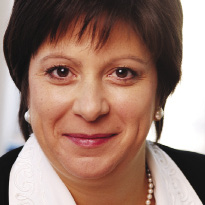
Ukraine’s Finance Minister Natalie Jaresko.
Jaresko, a former U.S. diplomat who took Ukrainian citizenship in December 2014 to become Finance Minister, had been in charge of a U.S.-taxpayer-financed $150 million Ukrainian investment fund which involved substantial insider dealings, including paying a management firm that Jaresko created more than $1 million a year in fees, even as the $150 million apparently dwindled to less than $100 million.
Jaresko also has been involved in a two-year-long legal battle with her ex-husband to gag him from releasing information about apparent irregularities in the handling of the U.S. money. Jaresko went into Chancery Court in Delaware to enforce a non-disclosure clause against her ex-husband, Ihor Figlus, and got a court order to silence him.
This week, when I contacted George Pazuniak, Figlus’s lawyer about Jaresko’s aggressive enforcement of the non-disclosure agreement, he told me that “at this point, it’s very difficult for me to say very much without having a detrimental effect on my client.”
With Jaresko now being hailed as a Ukrainian “reformer” who – in the words of New York Times’ columnist Thomas L. Friedman – “shares our values,” one has to wonder why she has fought so hard to shut up her ex-husband regarding possible revelations about improper handling of U.S. taxpayer money. [See Consortiumnews.com’s “Ukraine’s Made-in-USA Finance Minister.”]
More Interested Parties
The Russians also looked askance at the appointment of Estonian Jaanika Merilo as the latest foreigner to be brought inside the Ukrainian government as a “reformer.” Merilo, a Jaresko associate, is being put in charge of attracting foreign investments but her photo spreads look more like someone interested in some rather kinky partying.

Jaanika Merilo, the Estonian being put in charge of arranging foreign investments in Ukraine. (A photo released by Merilo on the Internet via DanceswithBears)
The Russians are aware, too, of prominent Americans circling around the potential plunder of Ukraine. For instance, Hunter Biden was named to the board of directors of Burisma Holdings, which is a shadowy Cyprus-based company linked to Privat Bank.
Privat Bank is controlled by the thuggish billionaire oligarch Ihor Kolomoysky, who was appointed by the Kiev regime to be governor of Dnipropetrovsk Oblast, a south-central province of Ukraine. Kolomoysky has helped finance the paramilitary forces killing ethnic Russians in eastern Ukraine.
And, Burisma has been lining up well-connected lobbyists, some with ties to Secretary of State John Kerry, including Kerry’s former Senate chief of staff David Leiter, according to lobbying disclosures. As Time magazine reported, “Leiter’s involvement in the firm rounds out a power-packed team of politically-connected Americans that also includes a second new board member, Devon Archer, a Democratic bundler and former adviser to John Kerry’s 2004 presidential campaign. Both Archer and Hunter Biden have worked as business partners with Kerry’s son-in-law, Christopher Heinz, the founding partner of Rosemont Capital, a private-equity company.” [See Consortiumnews.com’s “The Whys Behind the Ukraine Crisis.”]
So, the Russians have a decidedly different view of the Ukrainian “reforms” than much of the U.S. media does. But I’m told that the Russians would be willing to tolerate these well-connected Americans enriching themselves in Ukraine and even having Ukraine expand its economic relations with the European Union.
But the Russians have drawn a red line at the prospect for the expansion of NATO forces into Ukraine and the continued killing of ethnic Russians at the hands of neo-Nazi death squads. Putin is demanding that those paramilitary forces be disarmed.
Besides unleashing these right-wing militias on the ethnic Russians, the Kiev government has moved to punish the people living in the eastern sectors by cutting off access to banks and other financial services. It also has become harder and more dangerous for ethnic Russians to cross into territory controlled by the Kiev authorities. Many are turned back and those who do get through face the risk of being taken and killed by the neo-Nazi militias.
These conditions have left the people in the Donetsk and Luhansk areas – the so-called Donbass region on Russia’s border – dependent on relief supplies from Russia. Meanwhile, the Kiev regime — pumped up by prospects of weapons from Washington as well as more money — has toughened its tone with vows to crush the eastern rebellion once and for all.
Russia’s Hardening Line
The worsening situation in the east and the fear of U.S. military weapons arriving in the west have prompted a shift in Moscow’s view of the Ukraine crisis, including a readiness to resupply the ethnic Russian forces in eastern Ukraine and even provide military advisers.
These developments have alarmed European leaders who find themselves caught in the middle of a possible conflict between the United States and Russia. German Chancellor Angela Merkel and French President Francois Hollande rushed to Kiev and then Moscow this week to discuss possible ways to defuse the crisis.
The hardening Russian position now seeks, in effect, a division of Ukraine into two autonomous zones, the east and the west with a central government that maintains the currency and handles other national concerns. But I’m told that Moscow might still accept the earlier idea of a federated Ukraine with greater self-governance by the different regions.
Putin also does not object to Ukraine building closer economic ties to Europe and he offered a new referendum in Crimea on whether the voters still want to secede from Ukraine and join Russia, said a source familiar with the Kremlin’s thinking. But Putin’s red lines include no NATO expansion into Ukraine and protection for ethnic Russians by disarming the neo-Nazi militias, the source said.
If such an arrangement or something similar isn’t acceptable and if the killing of ethnic Russians continues, the Kremlin would support a large-scale military offensive from the east that would involve “taking Kiev,” according to the source.
A Russian escalation of that magnitude would likely invite a vigorous U.S. response, with leading American politicians and pundits sure to ratchet up demands for a military counterstrike against Russia. If Obama were to acquiesce to such bellicosity – to avoid being called “weak” – the world could be pushed to the brink of nuclear war.
Who’s to Blame?
Though the State Department and the mainstream U.S. media continue to put all the blame on Russia, the fact that the Ukraine crisis has reach such a dangerous crossroads reveals how reckless the behavior of Official Washington has been over the past year.
Nuland and other U.S. officials took an internal Ukrainian disagreement over how quickly it should expand ties to Europe – while seeking to retain its historic relations with Russia – and turned that fairly pedestrian political dispute into a possible flashpoint for a nuclear war.
At no time, as this crisis has evolved over the past year, did anyone of significance in Official Washington, whether in government or media, stop and contemplate whether this issue was worth risking the end of life on the planet. Instead, all the American people have been given is a steady diet of anti-Yanukovych and anti-Putin propaganda.
Though constitutionally elected, Yanukovych was depicted as a corrupt tyrant who had a pricy sauna in his official mansion. Though Putin had just staged the Winter Olympics in Sochi, signaling his desire for Russia to integrate more with the West, he was portrayed as either a new-age imperial czar or the second coming of Hitler – if not worse because he occasionally would ride on a horse while not wearing a shirt.
Further, the U.S. news media refused to conduct a serious investigation into the evidence that Nuland and other U.S. officials had helped destabilize Yanukovych’s government with the goal of achieving another neocon “regime change.”
Nuland, who personally urged on anti-Yanukovych protests in Kiev, discussed with U.S. Ambassador to Ukraine Geoffrey Pyatt in early February 2014 who should lead the new government – “Yats is the guy,” she said, referring to Arseniy Yatsenyuk – and how to “glue this thing.”
After weeks of mounting tensions and worsening violence, the coup occurred on Feb. 22, 2014, when well-organized neo-Nazi and other right-wing militias from western Ukraine overran presidential buildings forcing officials to flee for their lives. With Yanukovych ousted, Yatsenyuk soon became Prime Minister. [See Consortiumnews.com’s “When Is a Putsch a Putsch.” ]
Many ethnic Russians in southern and eastern Ukraine, who had strongly supported Yanukovych, refused to accept the new U.S.-backed order in Kiev. Crimean officials and voters moved to secede from Ukraine and rejoin Russia, a move that Putin accepted because of Crimea’s historic ties to Russia and his fear that the Russian naval base at Sevastopol might be handed to NATO.
The resistance spread to eastern Ukraine where other ethnic Russians took up arms against the coup regime in Kiev, which responded with that it called an “anti-terrorist operation” against the east. To bolster the weak Ukrainian army, Internal Affairs Minister Arsen Avakov dispatched neo-Nazi and other “volunteer” militias to spearhead the attacks.
After the deaths of more than 5,000 people, a shaky cease-fire was announced in September, but — amid complaints about neo-Nazi death squads operating in government-controlled areas and with life deteriorating in rebel-controlled towns and cities — the ethnic Russians launched an offensive in January, using Russian-supplied weapons to expand their control of territory.
In reaction, U.S. pundits, including columnists and editors of the New York Times and the Washington Post, called for dispatching U.S. aid to the Kiev forces, including proposals for lethal weaponry to deter Putin’s “aggression.” Members of Congress and members of the Obama administration have joined the chorus.
On Feb. 2, the New York Times reported “With Russian-backed separatists pressing their attacks in Ukraine, NATO’s military commander, Gen. Philip M. Breedlove, now supports providing defensive weapons and equipment to Kiev’s beleaguered forces, and an array of administration and military officials appear to be edging toward that position, American officials said. … President Obama has made no decisions on providing such lethal assistance.”
That same day, the lead Times editorial was entitled “Mr. Putin Resumes His War” and continued with the theme about “Russian aggression” and the need “to increase the cost” if Russia demands “a permanent rebel-held enclave.”
On Feb. 3, the Washington Post ran an editorial entitled “Help for Ukraine. Defensive weapons could deter Russia in a way sanctions won’t.” The editorial concluded that Putin “will stop only if the cost to his regime is sharply raised – and quickly.”
A new war fever gripped Washington and no one wanted to be viewed as “soft” or to be denounced as a “Putin apologist.” Amid this combination of propaganda, confusion and tough-guy-ism – and lacking the tempering wisdom about war and nuclear weapons that restrained earlier U.S. presidents – a momentum lurched toward a nuclear showdown over Ukraine that could put all life on earth in jeopardy.
~
Investigative reporter Robert Parry broke many of the Iran-Contra stories for The Associated Press and Newsweek in the 1980s. You can buy his latest book, America’s Stolen Narrative, either in print here or as an e-book (from Amazon and barnesandnoble.com). You also can order Robert Parry’s trilogy on the Bush Family and its connections to various right-wing operatives for only $34. The trilogy includes America’s Stolen Narrative. For details on this offer, click here.
Featured Video
10K More U.S. Troops Deploy as Trump Weighs New Iran Strikes
or go to
Aletho News Archives – Video-Images
Book Review
The Genetic Deception — now in paperback (Second Edition)
Lies are Unbekoming | October 2, 2026
The genes the field promised were never there.
The genetic story of disease is a cover story.
The twenty-first century runs on it. Paediatric clinics. Cancer centres. Forensic laboratories. Family-planning counsel. It is used to explain illness, to assign blame, to foreclose questions. It protects the industries whose products and practices are what actually caused the harm.
It isn’t true.
In 2010, Jonathan Latham and Allison Wilson looked at over seven hundred genome-wide association studies covering some eighty common diseases. The genes the field had promised were not there. The field invented a term, “missing heritability”, to explain the absence, and has quietly worked to bury the finding ever since.
The Genetic Deception is a book about what Latham and Wilson found. What the field did with it. And what the public was told instead. … continue
Blog Roll
 Aletho News
- Von der Leyen gifts her spin doctor a job for life
- 10K More U.S. Troops Deploy as Trump Weighs New Iran Strikes /Suliaman Ahmed
- Iranian crew declared Dena training vessel ‘unarmed’ to US warship before deadly torpedo strike: Report
- Iran’s NPT debate moves beyond parliament
- Houthis condemn Saudi claims of attack on Medina
- Fatuous False Flags
- Are Europe’s Smallest Nations Dragging the Continent into War?
- EU draws up contingency plans for possible Merz exit
- G7 caves to US blackmail, announces ‘massive’ release of diesel reserves
- Reporting of the RAF Fairford arrests blows the idea of a ‘free press’ out of the water
- If Americans Knew
- The Israeli Right Portrays Islam as Murderous. It Serves a Political Purpose
- Jordan Has Had Enough: King Abdullah’s Scathing Warning to Israel
- Israeli Colonizers (i.e. Settlers) Kill Palestinian Man Near Salfit
- New Google Maps images reveal massive scale of devastation in Gaza
- Jewish supremacy, anti-Palestinian bigotry on display in Israel – Daily Update
- Israeli Soldiers Abduct At Least 22 Across Occupied West Bank
- Eight Palestinians Killed in Israeli Attacks on Gaza
- Israeli former leaders and security chiefs threaten legal action over ‘Jewish terrorism’
- Israel map in LA Times ad includes all land from the river to the sea
- Inside Lebanon’s 200-page dossier on Israeli war crimes
- No Tricks Zone
- Green Energy Debacle: German Expert Professor Fritz Vahrenholt Warns Of Severe Economic And Social Consequences
- Two More Paleo Reconstructions Affirm Meters-Higher Sea Levels Across Ireland, Brazil 7000-6000 Years Ago
- New Study: Earth And Venus Surface Warmth Largely Explained By Convection And Lapse Rate, Not CO2 Or Radiation
- 2025 Nature Paper Claiming Worsening Global Drought Gets RETRACTED …Heavily Flawed
- New Study: ‘Global Drought Shows No Detectable Recent Acceleration Under Climate Warming’
- Economic Masterminds: German Socialists Suggest Taxing Productivity Gains Stemming From Using AI
- The South China Sea Has Not Been Cooperating With The Climate Change Narrative
- Energy Crisis: Germany Enters Heating Season With Historically Low Gas Reserve Fill Levels
- New Study: The Antarctic Ice Sheet Gained Mass From 2020-2024 Due To Staggering Snow And Ice Accumulation
- Study: Ocean Heating Rates From Thousands Of Years Ago ‘Dwarf’ Modern Ocean Heating Rates

