UK dispatches troop carriers to Ukraine
Press TV – February 14, 2015
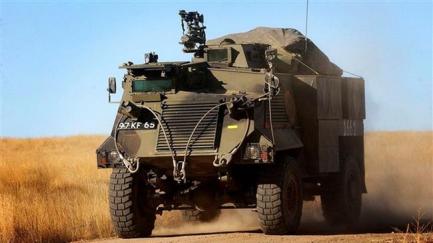
Britain has delivered a number of troop transporters to Ukraine as fighting rages on unabated in the eastern parts of the former Soviet country despite a peace deal.
Ukrainian media reported on Friday that 20 British Saxon armored vehicles were handed in to Kiev, with another 55 expected to arrive soon.
The UK’s Ministry of Defense (MoD) said that the vehicles were transferred by a private firm under a 2013 deal with the eastern European country.
The troop carriers were first used by the MoD in the 1980s, but went out of service some three years ago, according to an MoD spokesperson.
The spokesperson stressed that the British government has been supplying “non-lethal assistance” to the Ukrainian army since the beginning of the crisis in the country.
“There has been no change to this and we have not provided lethal assistance. These vehicles were provided unarmed under a commercial contract dating 2013 by a private company,” the spokesperson added.
Earlier this week, British Foreign Secretary Philip Hammond also noted that London was keeping under review a decision not to arm Ukraine, adding it could not allow the Ukrainian army to collapse.
This is while Russia has repeatedly criticized plans by Western countries to supply weapons to Ukraine, saying it would only aggravate the situation in the country’s restive provinces.
The UK’s decision to send troop carriers to Ukraine came one day after Kiev reached a ceasefire agreement with pro-Moscow forces operating in the country’s volatile east following marathon peace talks in the Belarusian capital, Minsk, with leaders of Russia, Germany and France.
The mainly Russian-speaking regions of Donetsk and Lugansk in eastern Ukraine have been the scene of deadly clashes between pro-Russia activists and the Ukrainian army since Kiev launched military operations to silence protests there in mid-April 2014.
More than 5,500 people have died and some 12,200 wounded in the conflict, the UN says. Around 1.5 million people have been also forced from their homes over the past months of turmoil.
Ukraine ultranationalist leader rejects Minsk peace deal, vows ‘to continue war’
RT | February 13, 2015
Ukraine’s Right Sector leader Dmitry Yarosh said his radical movement rejects the Minsk peace deal and that their paramilitary units in eastern Ukraine will continue “active fighting” according to their “own plans.”
The notorious ultranationalist leader published a statement on his Facebook page Friday, saying that his radical Right Sector movement doesn’t recognize the peace deal, signed by the so-called ‘contact group’ on Thursday and agreed upon by Ukraine, France, Germany and Russia after epic 16-hour talks.
Yarosh claimed that any agreement with the eastern militia, whom he calls “terrorists,” has no legal force.
In his statement, Yarosh claimed that that the Minsk deal is contrary to Ukraine’s constitution, so Ukrainian citizens are not obliged to abide by it. Thus if the army receives orders to cease military activity and withdraw heavy weaponry from the eastern regions, the Right Sector paramilitaries, who are also fighting there “reserve the right” to continue the war, he said.
The Right Sector paramilitary organization continues to deploy its combat and reserve units, to train and logistically support personnel, while coordinating its activities with the military command of the Ukrainian army, paramilitary units of the Defense Ministry and the Interior Ministry, he said.
The breakthrough Minsk agreement was reached on Thursday following marathon overnight negotiations between Ukraine, France, Germany and Russia, and offer hope the fighting in Eastern Ukraine may come to an end. The talks were part of a Franco-German initiative. President Francois Hollande and Chancellor Angela Merkel visited Kiev and Moscow before meeting the Russian and Ukrainian leaders at the negotiating table in Minsk.
READ MORE: Right Sector refuses to obey Ukraine’s Defense Ministry – presidential aid
EU and Russia: No option but peace and coexistence
The BRICS Post | February 13, 2015
At the moment of writing, the ink on the second Minsk agreement has not yet dried.
On February 15, fighting is supposed to come to an end in Ukraine. What are the chances for success of this agreement and what’s in it for the EU and Russia?
Are we on the path to a new peace or to a new cold/hot war? That is the question that will be on the minds of many in the days to come.
There are too many uncertain factors to reliably predict what will happen. The EU and the US have different agendas, and one can even make a case that they have conflicting interests.
For Russia, a peaceful resolution to the conflict means ending the sanctions and facilitating closer economic cooperation with the EU.
But tighter economic relations with Russia, the natural hinterland of Europe, goes against the core of the transatlantic NATO alliance. This has been a nightmare scenario for the Washington elite since 1945.
Pointedly, neither the US nor the UK were involved in the Minsk negotiations, so for Washington all options are still on the table. Considering the warmongering majority in the US Congress, that is not a good omen for peace.
Then there is the matter of the government in Kiev. Hardly ever mentioned in the news, it is far from stable. Extremist militias who do not bother to hide their fascist ideologies have been integrated into the Ukrainian army.
Considering their behaviour on the battlefield so far, it is very doubtful that Kiev will be able to make them abide by the ceasefire conditions.
Besides the extremists in their own ranks, the Kiev government faces another problem – young Ukrainian men in the west are bitterly resisting military conscription. This is not to say that they sympathize with their compatriots in the east – they just do not want to die fighting them.
Furthermore, there is the inner political struggle for power.
While President Petro Poroshenko is more than willing to find a pragmatic solution to the conflict, his prime minister Arseniy Yatsenyuk, however, is a fanatic Ukrainian nationalist, who is not a man of compromise.
He wants total victory and would be more then happy to replace his president.
Then there are the rebels in Eastern Ukraine, the so-called ‘pro-Russian separatists’.
Western media make it look like they are mere pawns in Putin’s hands, but that is hardly the case.
Nobody denies that Russia is giving them ample logistic support, but the leaders of the resistance are very unreliable. Will they accept the ceasefire? Hard to tell.
First step toward peace
Yet, despite all these challenges, history shows that worse situations have led to lasting peace.
The second Minsk agreement might just work. It is only a first step, and a peaceful long-term resolution of the conflict is still to be negotiated, but it is the only way out for the EU, Russia and Ukraine.
One of the reasons it might just work is precisely that the EU alone brokered it, or rather Germany and France, and not the US. That might seem contradictory given the different variables mentioned above, but it’s not. It all depends on who and what will prevail.
The real issues are still on the table – disarmament and federalization of the country. If the EU really wants it, Brussels has the financial leverage to force Kiev’s hand in accepting a new constitution granting the eastern regions meaningful autonomy.
The EU has experience with forging complex compromise solutions. After all, the EU itself is a permanent compromise.
What is really at stake is much more than just an end to an internal conflict stoked by outside forces. A resumption of violence carries with it the risk of an all out war between nuclear powers.
This is about a possible major war on European soil.
Border control
Hence, peace is the only option for Europe and Russia.
Personally, I consider one of the last paragraphs in the Minsk agreement, which focuses on control of the border, the most difficult one.
Kiev wants to regain full control of the border between the eastern provinces and Russia. This may at first appear to be a technicality, but it isn’t. Control of the border is highly symbolic, for all parties involved.
Kiev’s control of the border would impede Russia’s direct influence on the ground; for the rebels it would symbolize a partial surrender. The only party that stands to gain from this paragraph in the agreement is Kiev, which would have been delivered a highly symbolic victory.
A reasonable option would be to deploy UN troops on the border. Russia has proposed it, but apparently it was not on the negotiating table in Minsk.
While the Cold War has prevented Europe and Moscow from peaceful coexistence on their common continent, peace in Ukraine might just open up the whole Russian hinterland to the European economy.
At the end, it boils down to two options: The renewal of the old transatlantic pact with the ally overseas leading to a new Cold War (that could turn very nasty), or peace and coexistence with Russia.
War in Ukraine: Who Wants War? And Who Doesn’t?
By William Boardman | Reader Supported News | February 10, 2015
“Russian aggression” – the bad faith mantra of dishonest brokers
Just as NATO allies Germany and France were undertaking a peace initiative with Russia and Ukraine, U.S. Secretary of State John Kerry turned up in Kiev at the same time, seeking to poison the talks before they started by spouting yet again the ritual U.S. accusation of “Russian aggression.” The incantation is meaningless without context. Its purpose is mesmerize a false consciousness. “Russian aggression” may or may not exist in the events of the past year, just like “Russian self-defense.” Reporting on the ground has been too unreliable to support any firm analysis, never mind the provocative “Russian aggression” the U.S. brandishes as a virtual call for war.
Western aggression, political and diplomatic more than military, is a cold reality and has been for two decades. The West, and especially the U.S., has yet to accept responsibility for 20 years of anti-Russian aggression, much less pull back from such perennial hostility. The Obama administration (parts of it at least, given the incoherence of the “administration”) has acted as if its pulling off an only-slightly-violent coup in Kiev in 2014 was a grand triumph. Worse, having grabbed a government on Russia’s borders, the Obama hawks carry on as if the only reasonable choice for Russia is to accept the success of this Western aggression.
Rarely is this context acknowledged in discussions of the natural fissures in Ukraine that feed sectarian civil war. Rather the issues are over-simplified – falsified – by the U.S. Secretary of State, consistent with a hidden agenda of provoking a military confrontation (at the very least) with Russia and eastern Ukrainians. That’s the subtext that makes sense of Kerry’s otherwise seeming blithering in Kiev on February 5:
We talked about the largest threat that Ukraine faces today, and that is Russia’s continued aggression in the east. There’s no other way to call it. We’re not seeking a conflict with Russia. No one is. … The president is reviewing all of his options. Among those options, obviously, is the possibility of providing defensive — defensive — assistance to Ukraine. And those discussions are going on. The president will make his decision, I am confident, soon.
Note the lie: “We’re not seeking a conflict with Russia. No one is.”
When Kerry said that, he was lying, he almost surely knew he was lying, and the question is whether his lie represents only the rogue war-faction in the U.S., or is part of a dicey good-cop/bad-cop routine out of Washington. The only way it’s true that “we’re not seeking a conflict” is that the U.S. is already engaged in conflict with Russia, decades-long and currently escalating. The lie of not seeking a conflict already engaged is used to mask the lie of “defensive weapons,” a military-diplomatic oxymoron of long standing. So the most obvious answer to the question of who wants war in Ukraine is elements of the U.S. government whose immediate challenge is to persuade its Kiev client that it’s a good idea to risk turning its country into more of a battlefield than it already is.
Kiev’s desire is more obscure, and likely divided. Having taken power in something of a slow-motion coup d’etat last spring, the government faced a restive-to-defiant population in eastern Ukraine. Rather than seeking to negotiate legitimate grievances with the eastern region, the Kiev government chose instead to escalate quickly, from political hostilities into civil war. When that didn’t work out militarily, when Kiev started losing what it started, it agreed on September 5 to terms of a ceasefire that it then failed to honor with consistency (as did the separatists). Now the Ukrainian president has been to Moscow for early peace talks, but only after he staked out a preposterous public position seeking to win with a losing negotiating hand what Kiev has already lost on the ground.
Ukrainian President Petro Poroshenko met with German Chancellor Angela Merkel and French President François Hollande in Kiev on February 5 (when Kerry was in town but not part of the meeting). In his public statement, Poroshenko referred self-servingly to September’s Minsk Agreement signed by Ukraine, Russia, and the break-away Ukrainian states that call themselves the People’s Republic of Donetsk and the People’s Republic of Luhansk. The only other Minsk signatory was the Organization for Security and Co-operation in Europe (OSCE), giving the agreement the tacit endorsement of Europe without any individual European nation signing on. The United States was not directly involved in the Minsk Agreement, but a week later expressed its support for finding a peaceful solution by sending American troops to take part in NATO military exercises in Ukraine’s western provinces.
Understood in its actual context, Poroshenko’s February 5 statement is ludicrously disingenuous:
The Minsk plan is very simple: immediate ceasefire; releasing all the hostages; closing the border, or renew the internationally recognized border on Ukrainian (side); withdrawal all of the foreign troops from the Ukrainian territory; launching very important process of the political regulation by the election on the municipal election, local election, under Ukrainian legislation in the territory of Donetsk and Luhansk.
All signatories must take Minsk accord seriously to avoid war
It’s hard to find anyone who doesn’t urge compliance with the Minsk Agreement, even if that means different things to different people. Neither side in Ukraine has come close to significant compliance for any length of time. Poroshenko calls for the ceasefire, but omits the international monitoring called for in the agreement. He calls for closing the border with Russia, which is NOT part of the agreement. When he calls for the withdrawal of foreign troops, he omits mention of NATO. When he refers to elections, he omits Kiev’s failure to pass the legislation it promised, and he omits the elections that have already been held in the Republics of Donetsk and Luhansk [see “Election Note” at the end of this article]. Poroshenko also omits amnesty for separatists, improving humanitarian conditions in the region, and the recovery program, all of which are part of the Minsk Agreement.
Nevertheless, Poroshenko went to Moscow with his German and French colleagues to take part in peace talks with Russian President Vladimir Putin there on February 6, at Russia’s initiative. When similar talks had been proposed for mid-January, Chancellor Merkel had been instrumental in making sure they didn’t happen. This time her public posture going in was appropriately statesmanlike:
It is a question of peace and preserving the European peace order. It is a question of free self-determination of the people as part of this European peace order. And we are doing what we believe to be our duty at this time, namely trying to do everything in our power to end the bloodshed.
Merkel’s reference to “free self-determination” is diplomatically murky and allows for a wide range of possible solutions for the self-proclaimed Republics in eastern Ukraine, and even hints at a resolution for Crimea. Her focus on peace serves all the parties’ best interest, seeking to avoid a war that would, inevitably, cause much more suffering for Europe than the United States.
U.S. policy seems designed to turn Ukraine into the “European Iraq”
Presumably none of the parties meeting in Moscow on February 6 wants to see Ukraine become “another Iraq,” even if Ukraine is already part way there. Where Iraq had been a coherent, modern state with cultural cohesion despite its dictatorship, Ukraine has a long history of quasi-chaos, internal squabbling, and corruption. Where it took an American invasion and occupation to reduce Iraq to a near-failed state, the U.S. sees an opportunity now to manipulate proxies into destroying Ukraine (and even Russia) for the next generation or so.
Germany, France, Russia, and especially Ukraine must be acutely tuned to the potential horrors they face. After meeting for four hours, the parties were generally low key and discreet in what they said about the substance discussed. This reality produced European coverage by the BBC and others characterized by cautious hopefulness. U.S. media more typically characterized uncertainty as failure, offering the talismans of magical thinking and instant gratification in place of accuracy or analysis.
Whatever they were, the four-way talks in Moscow were not a failure. All sides called them “constructive,” which is diplo-speak for: there’s still a chance for a settlement. The parties are continuing the negotiations with apparent openness to a range of solutions. Hollande called this process “one of the last chances” to settle eastern Ukraine peacefully. Poroshenko has expressed hope for an early agreement to an “unconditional ceasefire” and one step toward reducing tensions. An unconditional ceasefire is beyond what was agreed to at Minsk in September, but creates no barrier to implementing the agreement later. Moscow’s tactful obliqueness leaving room for the parties to maneuver was in sharp contrast to the bloviating cries for war coming mostly from U.S. Senators and the vice-president at the simultaneous regional security gathering in Munich.
The lesson of Munich for 2015: “War in our time”?
Meeting for the 51st year in Munich during February 6-8, the Munich Security Conference (MSC) provided a setting for mostly U.S. hawks to try to undermine the chances for peace in Ukraine. Founded in 1963, the Munich conference identifies itself as
… a key annual gathering for the international ‘strategic community’… an independent forum dedicated to promoting peaceful conflict resolution and international cooperation and dialogue in dealing with today’s and future security challenges.
What the Munich conference seems to be is something of a foreign policy free-for-all to which almost anyone from anywhere can come and pontificate regardless of whether they hold any actual decision-making authority. The American delegation, including a dozen war-minded congress members, seems not to have gotten the memo about “promoting peaceful conflict resolution,” like the British lapdog also barking loudly for war.
Like any good multinational circus, the Munich show offered a variety of clown acts and sideshows to distract from the U.S. rush to war. The Turks decided not to take part rather than share a panel with Israelis. Non-office-holder Arnold Schwarzeneggar stumped to action on climate change. Some European Union members ganged up on Greece (again), this time for opposing some sanctions on Russia, while support for Greece (and peace) came from Cyprus, Austria, Hungary, Italy, Luxembourg, Slovakia, Slovenia, and the Czech Republic – most of which are closer to the likely war zone than those brave distant states ready to start a fight. In the Munich streets, some 2,000 peaceful protestors demonstrated against NATO, otherwise known as an American sphere of influence (if not a Trojan horse).
Joe Biden toes the official line, smoothly riffing on official lies
Other members of the American delegation included Kiev coup supporters Vice President Joe Biden, Secretary of State Kerry, and assistant secretary of state Victoria Nuland, none of whom showed any public willingness to look at the realities of the present or the past 20 years. Like a good apparatchik of the American war party, Biden’s address to the conference included a subtle version of the requisite “Russian aggression” trope, along with 45 minutes of neo-Cold-War boilerplate propaganda. In one of the more hilarious highlights of this taken-very-seriously by the media speech, Biden quoted himself from the same conference in 2009:
Six years ago at this podium, I said and I quote, ‘To paraphrase President Obama, it is time to press the reset button and reinvest in the many areas where we can and should be working together with Russia.’
That’s what everybody remembers. But they don’t often repeat what I then said.
I said, ‘We will also not recognize any nation having a sphere of influence. We will remain — it will remain our view that sovereign states have the right to make their decisions and choose their own alliances.’
I meant it when I said it then, and America means it as I repeat it now.
The “reset button” rhetoric did not include changing U.S. support for the relentless push for NATO to include countries on Russia’s border, a form of blatant – and mindless – political aggression. NATO, the European Union, Europe itself are all U.S. spheres of influence, no matter what the Biden-shills of the world may say. Even as he lied sanctimoniously about spheres of influence in 2009, his country was engaging in its half-century of punishing Cuba for not being a loyal and subservient of the American hemisphere of influence.
And when Biden claimed, “it will remain our view that sovereign states have the right to make their decisions and choose their own alliances,” an honest audience would have laughed as derisively at that as the same audience laughed at perceived absurdity from Russian Foreign Minister Sergey Lavrov during his address to the Munich conference.
Having destabilized Ukraine, the U.S. blames Russia for piling on
Remember how the present Ukraine crisis came about? In the fall of 2013, Ukraine was weighing a political, economic choice between a European proposal requiring exclusivity (and implying future NATO membership) and a somewhat more open Russian proposal (with no military alliance component). In Ukraine, as politically divided as ever, the western population yearned for Europe, the eastern population was content with Russia. When the legitimate, democratically-elected Ukraine government rejected the European offer, protesters mostly from western Ukraine launched the months-long Euro-Maidan demonstrations in Kiev (presumably with the connivance of the U.S. and others). In time, including on the scene visits from Biden (whose son reportedly has significant economic interests in Ukraine) and Nuland (with her cookies for the mob), the Maidan evolved into the coup d’etat that produced the current Ukraine government.
So when Biden says “that sovereign states have the right to make their decisions and choose their own alliances,” he lying. He’s lying about Ukraine and he’s lying about U.S. behavior in the present and the recent past (and the not so recent past as well, to be sure).
Somewhat measured language from the White House
On February 5, as the flurry of events in Kiev, Moscow, and Munich was beginning, the White House expressed some awareness that military escalation might only make matters worse in Ukraine. White House Press Secretary Josh Earnest said, in part:
… the United States has been saying for some time that it’s a diplomatic negotiation that is required to bring this conflict in Ukraine to an end, that this is not something that’s going to be solved or resolved militarily, but rather through diplomatic negotiations. So we certainly are encouraging and supportive of ongoing efforts to try to find a peaceful diplomatic resolution to the conflict in Ukraine…. [But] we need serious engagement from the Russians and the separatists, the likes of which we’ve not seen before….
… the President is going to make a decision [on weapons to Ukraine] that he believes is in the broader national security interests of the United States…. But certainly the President takes very seriously the views of our allies and is going to consult very closely as we evaluate any needed strategic changes ahead…. [But] this conflict was not going to rise to the level of a military confrontation between the United States and Russia. The President has been very clear about that. So there are things that we are going to continue to avoid.
But one of the concerns that we have about providing military assistance is it does contain the possibility of actually expanding bloodshed, and that’s actually what we’re trying to avoid. The whole reason that we are trying to encourage both sides to sit down and hammer out a diplomatic agreement is to end the bloodshed and end the escalating conflict in that country.
The press secretary made no effort to offer a balanced analysis of the Minsk Agreement, blaming the separatist Republics and Russia for virtually all the problems. He did allow that Ukraine had not lived up to all its commitments under the agreement.
Who actually speaks for the United States?
The same day the White House offered this view, NATO ministers in Brussels adopted a plan to ring Russia’s European perimeter with a network of command centers and rapid reaction forces. According to NATO Secretary General Jens Stoltenberg, this plan is NATO’s biggest reinforcement of collective defense since the end of the Cold War. He added that the first six multinational command and control units would be established immediately in Estonia, Latvia, Lithuania, Poland, Romania, and Bulgaria. Estonia and Latvia border on Russia. Poland and Romania border on Ukraine.
The Secretary of State is carrying on as if he believes that this might be his legacy moment. He’s acting as if he’s thinking: Hillary Clinton led the charge on Libya and made magnificent regional chaos there, so why shouldn’t I be able to top that, and make a mess of Ukraine, and possibly create global chaos?
But what if “Russian aggression” is real? As matters stand now, U.S. policy aggression for two decades has served as a self-fulfilling prophecy that creates “aggression” in response. What would happen if the U.S. especially, and the West in general, sent a clear signal that western aggression was over? How long would it take for Russia (or China) to trust that as reality? And would that persuade the Russians to relax what we now call their aggression? (We don’t hear much about “Chinese aggression” these days, but chances are that Kerry or Biden or someone already has that speech written.)
The course the U.S. has been on since 1990 has no good ending, unless one assumes that the Russians (or the Chinese) will fold under pressure. That seems unlikely. Nor does the result seem worth the risk. But also unlikely is a U.S. course change as long as we remain enamored of our own exceptional face in the magic mirror that keeps telling us we’re indispensable and can do no wrong. In Ukraine, today, probably the most dispensable nation is the U.S.
As this is written February 9, President Obama and Chancellor Merkel have met at the White House and offered vague public assurances that diplomatic efforts will continue to try to settle Ukraine issues peacefully. It’s not reassuring that Obama’s companions in his meeting with Merkel were committed aggressors: Biden, Kerry, and national security advisor Susan Rice. We don’t know if this President is strong enough to be in control of his administration as it speaks with conflicting voices. What we know pretty surely is that this is a moment when President Obama could actually earn his Nobel Peace Prize by calling off “American aggression.”
Or he could just follow the lead of the mindless, bi-partisan weapons-gaggle in Congress and elsewhere. The president could do the bidding of all those shrill demagogues who cry for escalating bloodshed, those grandstanding testosterone puffs who will never accept responsibility for the death and dismemberment they advocate. In that event, the President would once again ignore his own earlier wisdom when he once said: “Don’t do stupid stuff.”
Election Note [see above]: The Donetsk and Luhansk elections held November 2 were supported by Russia and rejected as illegitimate by Ukraine, as well as spokespersons for the European Union, Germany and others in the west. The election results mostly confirmed the local authority already in place, including the chief executive and parliamentary majorities in both Republics, which were popularly approved in referendums in May. An OSCE spokesperson called the November elections a violation of the spirit and letter of the Minsk Agreement, which seemed to contemplate such elections taking place on December 7, under Ukrainian law. Ukraine had excluded Donetsk and Luhansk from its presidential election in May and its parliamentary election in October. The last apparently legitimate presidential election held in Ukraine chose Viktor Yanukovych president in February 2010. Yanukovych, whose support reached 90% of the vote in some districts of Donetsk and Luhansk, was forced from office in February 2014 by the coup that emerged from the Maidan protest. Ukraine has almost 34 million voters in all, of which more than 5 million are (or were) in Luhansk and Donetsk. Another 1.8 million voters in Crimea have not taken part in the 2014 elections outside Crimea.
Ukraine peace deal: Ceasefire starting February 15, removal of heavy weapons
RT | February 12, 2015
An agreement has been brokered in Minsk to stop hostilities in Ukraine from Sunday. The deal was reached after marathon talks between the leaders of France, Germany, Russia and Ukraine, and signed by the Ukrainian rebels.
“I believe we agreed on a big deal. We agreed to a ceasefire starting at 00:00 on February 15,” Russian President Vladimir Putin told the media after the talks were finished.
“The main thing achieved is that from Saturday into Sunday there should be declared – without any conditions at all – a general ceasefire,” Ukrainian President Petro Poroshenko told journalists in a separate statement.
Pullout compromise
A compromise decision was taken over the disengagement line, which was the biggest stumbling block in the negotiation. According to the document, Kiev’s troops would pull back heavy weapons from the current frontline. The rebels would pull back from the line as it existed in September, when the previous ceasefire agreement was signed.
The security zone separating the warring parties must be at least 50km wide for artillery over 100mm caliber, 70km for regular multiple rocket launchers and 100km for heavier weapons with a longer range, such as Tochka-U ballistic missiles, the document states.
The weapons pullout must start on Sunday and be completed in no longer than 14 days. The OSCE is charged with implementing the ceasefire on the ground and will use its drone fleet and monitors to verify that both parties are sticking to the deal.
The ceasefire deal provides for withdrawal of all “foreign troops, heavy weapons and mercenaries” from Ukraine under an OSCE monitoring. “Illegal armed groups” would be disarmed, but local authorities in the future would be allowed to have legal militia units.
The agreement involves exchange of all prisoners, which is to be completed within 19 days. A general amnesty for the rebels would be declared by Kiev.
The national government’s control over the borders between Donetsk and Lugansk Regions would be fully restored a day after municipal elections, which would be held in the regions as part of a profound constitutional reform.
Decentralization reform
The agreement requires a political reform in Ukraine to ensure decentralization and a special status for its rebel provinces. It requires Ukraine to adopt legislation which would provide permanent privileges to the Lugansk and Donetsk Regions, currently self-declared republics, by the end of 2015.
The legislation would include the right for language self-determination and trans-border ties with Russia, as well as the authority of the local governments to appoint local prosecutors and judges, the document states.
Humanitarian and economic issues are also mentioned in the deal. Kiev would restore economic ties and social payments, which it cut in rebel-held areas, the document says. An international monitoring mechanism may be established for these payments.
During the transition period an internationally-monitored mechanism for humanitarian aid to the regions affected by the war would be implemented, the document sates.
Direct talks needed
Putin said that Kiev’s unwillingness to hold direct talks with the self-proclaimed Donetsk and Lugansk People’s Republics was among the reasons it took so much time to reach an agreement.
“They may be unrecognized, but we have to deal with real life here, and if everyone wants to agree and have sustainable relations, direct contacts are needed,” Putin said.
He added that the ‘Normandy Four’ expect the parties involved in the conflict to show restraint even in the days before the ceasefire takes effect.
The terms of the ceasefire are spelled out in a document signed by members of the so-called contact group, which includes representatives from the rebel forces, Kiev, Moscow and the Organization for Cooperation and Security in Europe, Putin said.
The members of the ‘Normandy Four’ – Putin, Ukrainian President Petro Poroshenko, German Chancellor Angela Merkel and French President Francois Hollande – supported a joint declaration describing the results of their work.
The declaration was not meant to be signed by the leaders, Germany FM Frank-Walter Steinmeier said.
If broken, no new memorandum possible
Head of the Donetsk People’s Republic Aleksandr Zakharchenko, who signed the Minsk document, said it required additional consultation and warned that “if these terms are broken, there will be no new meetings or memoranda.”
He added that he and Igor Plotnitsky, the head of Lugansk People’s Republic, agreed to sign the document “due to guarantees from the president of Russia, chancellor of Germany and president of France,” with the hope that it would allow their people to “achieve peaceful development.”
The new Minsk accord gives hope for de-escalation of the Ukrainian conflict, although it would require a major effort to build trust between the parties involved. The previous deal collapsed as neither Kiev nor the rebels implemented it fully, which means the threat of renewed hostilities in Ukraine continue to loom.
READ MORE:
Obama the War President
By Dave Lindorff | This Can’t Be Happening! | February 6, 2015
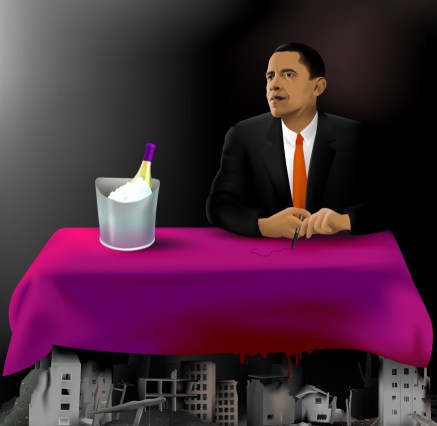
The Nobel Peace Laureate President Barack Obama, the guy who once campaigned claiming one US war — the one against Iraq — was a “bad” one, and the other — against Afghanistan — was a “good” one, turns out to be a man who, once anointed commander-in-chief, can’t seem to find a war he doesn’t consider to be a “good” idea.
Obama turned out, on taking office, to have a hard time saying good-bye to the occupation of Iraq, only leaving when he was forced out by an Iraqi government that refused to continue giving US forces legal immunity for killing Iraqi civilians. In Afghanistan, he decided to copy the same “surge” — a massive increase in targeted assassinations and violence — that he had once condemned in Iraq. Then he stepped up drone-launched rocket attacks and bombings in seven other countries.
More recently he has begun an air war against Syria (okay, he says it’s against the so-called Islamic State, but the whole world, with the exception of a lot of ill-informed US citizens, knows it’s ultimately against the Syrian government), and now his Secretary of Defense (sic) Ashton Carter and his Secretary of State John Kerry are pushing for sending heavy arms and, inevitably, US “advisors” to Ukraine to escalate US involvement in the civil war there. What makes that latest war particularly dangerous is that all the while, Peace Laureate Obama makes it clear that the “enemy” is Russian President Vladimir Putin and the Russian military.
Never mind that it is the US that originally orchestrated and encouraged the fascist coup that overthrew the elected government of Ukraine, setting in motion a huge pogrom against ethnic Russians in the east of that country and provoking the current armed conflict, and never mind that Russian concern about the Ukraine stems from a decades long history of the US pushing NATO ever closer to Russia’s western border, with Ukraine kind of the last straw.
Anyone looking objectively at the warmaking and war-promotion of this administration would have to conclude that President Obama is one of the most bellicose Chief Executives in the history of the United States.
If you don’t believe me, just look at the US military budget President Obama has proposed for FY2016. At $585.3 billion, it would if approved by Congress represent an increase in spending of $24.9 billion, or about 4%, over the 2015 budget, and that is despite a decline in what, since the Bush/Cheney years, has euphemistically been called Overseas Contingency Operations spending, or spending on actual wars. The proposed OCO budget for 2016 in this “peace” president’s budget is “just” $50.9 billion, down about $13.3 billion from 2015 thanks to what the president, in one whopper offered during his State of the Union address, called the “end of combat” in Afghanistan (that war is actually continuing, with some 12,000 US troops expected to remain stationed in that country indefinitely).
The thing about OCO funding is that it is really not predictive of anything. It could soar way beyond that $50.9-billion level, for example, in a flash if the US follows through and escalates the war in Ukraine — especially if Russian troops are drawn directly into that conflict and the US responds by upping its own involvement.
In fact, the OCO part of the budget has been used by the Pentagon and the administration over the last few years to get around the constraints of an ongoing Congressional “sequestration” requirement that cuts so-called discretionary spending, both military and non-military. Congress, ever mindful and solicitous of the country’s imperial ambitions, provided an exemption for ongoing military conflicts, and the Pentagon has since been deceptively slipping all kinds of other spending under the OCO heading now ever since the loophole was created.
But the Obama administration’s warmongering stance, in terms of the budget, isn’t told just by looking at the official Pentagon budget. There is much more spending that is really all about war. Not included in that $585.3 billion figure is $70.2 billion in discretionary spending for Veterans Affairs (that’s in addition to $90 billion in mandated spending). This is money to pay for the damages of the nation’s warmaking — the injured or ailing veterans who served or are now serving in the nation’s armed forces. Then there’s the intelligence agencies’ budgets — the CIA, the NSA, the FBI, the DIA, the DEA, the ATF and Homeland Security, etc. — most of which is really part of part of the war machine, thanks to the so-called “War on Terror,” which has re-defined the US itself as part of a global war zone. While much of that intelligence budget is concealed from the public on the spurious grounds of “national security,” it is known to exceed $100 billion a year. Add to that the $24-billion share of the Department of Energy budget that is weapons and war related, and you have a real military budget for 2016 of $707 billion. That’s out of a $1.2 trillion total discretionary spending budget (the rest of the $4 trillion proposed 2016 budget is called mandatory because it is debt repayment or spending on mandated things like Social Security and Medicare, which are funded by dedicated payroll taxes, not income taxes and other federal taxes, and which are promised to recipients like retirees and the sick.
What this means is that when you look closely, some 59% of the entire discretionary budget of the federal government – things that are funded each year by money that Congress has to appropriate — is being spent on the military. Given that the total amount of taxes collected by the federal government (income, corporate profits, exist, inheritance, etc.) also comes in at about $1.2 trillion, we’re saying that taxpayers this coming year will be pouring not just $707 billion, but 59 cents of every tax dollar in to war, planning for war, or paying for war. But it’s actually worse than that because actually the US government operates at a deficit, and doesn’t ever finance its wars on a pay-as-you-go basis. Instead, it borrows the money and then pays interest on that debt. Every year that interest comes to about $240 billion, and roughly half that is for borrowing to pay for past wars and past and current military spending. So add $120 billion to the $707 total and it become $827 billion.
In other words, it’s really 68.9% of every tax dollar you pay this April 15 that’s going to pay for America’s wars and its obsession with militarism.
No wonder our schools and universities, our parks, our roads, our once-vaunted global scientific leadership, our environment, our health and safety, our family budgets and even our life expectancy, have been going to hell! The only thing that’s really getting funded in this country is war.
By the way, the reason you may not have realized how much you are paying for war out of your taxes is that the government, and the corporate media, carefully avoid letting you know. They do this by sleight of hand. You see, they never really break out just the “discretionary” budget, or point out the parts of the budget that are outside the Pentagon but that are still really military-related, like spending on nuclear weapons and weapons development, nuclear research and cleanup, decommissioning of nuclear processing plants, and of course veterans affairs and benefits. They also do it by lumping the huge outlays for Social Security benefits and Medicare into the overall spending budget, though actually those benefits are funded not by income taxes but by a Trust fund of some $1.7 trillion that was created over the years by specially-dedicated payroll taxes separately paid by workers and their employers over the working life of each person. Adding those items into the national budget, while leaving out things like spending on veterans, nukes and war debt, appears to reduce military spending to a much less troubling 6.8% of the budget.
But it’s a fraud.
If we want to revitalize the US, the only way to do it is to end militarism and war, and to generously fund human needs.
To do that, we need a real peace president and a peace congress, not the Nobel Laureate warmonger we have now in the White House, and the bi-partisan war chorus we have in the Congress.
US plans to establish military base in Kurdistan
MEMO | February 10, 2015
The United States is planning to establish a military base in the Iraqi Kurdistan town of Erbil, the regional capital. The intention is to provide logistical support to military aircraft deployed against ISIS positions, it has been report by Anadolu.
A spokesperson for the Peshmerga Ministry, which looks after military affairs for the autonomous Kurdish government, said on Monday that military officials and aircraft will be based in Erbil as soon as construction work is finished. “The aircraft will carry out surveillance,” said Helgurt Hikmet, “but those on bombing missions will not take off from the new base.” He did not disclose how many aircraft will be based in Erbil, but said that all 60 member states of the coalition fighting ISIS could make use of the new facilities.
The US-led coalition has launched numerous airstrikes against ISIS targets in both Iraq and Syria in recent months.
Hikmet added that military advisors from eight countries are helping to train Peshmerga personnel.
International Solidarity Movement honors Kayla Mueller
International Solidarity Movement | February 9, 2015
 Occupied Palestine – Kayla Mueller volunteered with the International Solidarity Movement from August to September of 2010.
On 4 August 2013 Kayla, 26, originally from Prescott, Arizona, was working with Syrian refugees when she was kidnapped after leaving a Spanish Doctors Without Borders hospital in Aleppo. Since that time she has been held in captivity by Da’esh (ISIS). This information was not previously released publicly out of concerns for her safety. On February 6th, Da’esh announced that she had been killed by Jordanian airstrikes in Raqqa, northern Syria. The validity of their announcement has not been confirmed.
Our hearts are with Kayla, her family, friends, and all those who have lost liberty, lives and loved ones in the global struggle for freedom and human rights.
With the ISM, Kayla worked with Palestinians nonviolently resisting the confiscation and demolitions of their homes and lands. In the Sheikh Jarrah neighborhood of Occupied East Jerusalem, she stayed with the Al Kurd family to try and prevent the takeover of their home by Israeli settlers.
Kayla accompanied Palestinian children to school in the neighborhood of Tel Ruimeda in Al-Khalil (Hebron) where the children face frequent attacks by the Israeli settlers and military. She stayed with villagers in Izbat Al Tabib in a protest tent to try to prevent the demolition of homes in the village. She joined weekly Friday protests in Palestinian villages against the confiscation of their lands due to Israel’s illegal annexation wall and settlements.
Kayla published writing online about her work in Palestine with the International Solidarity Movement in August and September 2010. “How can I ignore the blessing of freedom of speech when I know that people I deeply care for can be shot dead for it?” she wrote.
Below are excerpts from two of Kayla’s posts.
October 29, 2010:
“I could tell a few stories about running desperately from what you pray are rubber-coated steel bullets launched from the gun tip of a reckless and frightened 18-year old.”
“I could tell a few stories about sleeping in front of half demolished buildings waiting for the one night when the bulldozers come to finish them off; fearing sleep because you don’t know what could wake you. . . . I could tell a few stories about walking children home from school because settlers next door are keen to throw stones, threaten and curse at them. Seeing the honest fear in young boys eyes when heavily armed settlers arise from the outpost; pure fear, frozen from further steps, lip trembling.”
“The smell and taste of tear gas has lodged itself in the pores of my throat and the skin around my nose, mouth and eyes. It still burns when I close them. It still hangs in the air like invisible fire burning the oxygen I breathe. When I cry tears for this land, my eyes still sting. This land that is beautiful as the poetry of the mystics. This land with the people who’s hearts are more expansive than any wall that any man could ever build. Yes, the wall will fall. The nature of impermanence is our greatest ally and soon the rules will change, the tide will turn and just as the moon waxes and wanes over this land so too the cycles of life here will continue. One day the cycle will once again return to freedom.”
“Oppression greets us from all angles. Oppression wails from the soldiers radio and floats through tear gas clouds in the air. Oppression explodes with every sound bomb and sinks deeper into the heart of the mother who has lost her son. But resistance is nestled in the cracks in the wall, resistance flows from the minaret 5 times a day and resistance sits quietly in jail knowing its time will come again. Resistance lives in the grieving mother’s wails and resistance lives in the anger at the lies broadcasted across the globe. Though it is sometimes hard to see and even harder sometimes to harbor, resistance lives. Do not be fooled, resistance lives.”
On New Year’s Day of 2011, Kayla received news that Jawaher Abu Rahma, from the village of Bil’in where Kayla had demonstrated in solidarity with her and her family, had been killed by tear gas asphyxiation. On the first of January 2011, Kayla wrote:
“I felt compelled to blog on this today. The first day of 2011, the actual day that she died, just a few hours ago in a village called, Bil’in.”
“Every Friday in Bil’in villagers and international/Israel activists march to the barbed wire fence where an enormous and expanding illegal settlement is visible to protest the theft of their land and their livelihoods. The Palestinians are armed with rocks, the other activists with cameras and collectively they are armed with their bones. Each Friday the demonstration is met with violence; rubber-coated steel bullets, tear gas and sounds bombs are the usual choice of artillery. Lives are taken as a result of the violence and Jawaher Abu Rahmah’s life was taken today.
I have been to this village,
I demonstrated in this village,
I demonstrated arm in arm with her brothers,
and I knew her.”
……………
“My first demonstration in Palestine was in Bil’in and that is when I met Ashraf, Jawaher’s brother. Despite his broken English he always made a point to make sure we were ok when we were at the demonstration in his village, to help us cough up the tear gas and walk off the anxiety. He showed us his village and we played with the kids. Ashraf would bring us water or tea and help us find rides out of the village back to the cities. In the summer of 2008, Ashraf was participating in the demonstration and was detained by the Israeli Defense Forces (IDF). After he was blind-folded and his hands bound, an IDF soldier shot him in the foot from a distance of about 2 meters shattering his toes and leaving him in trauma as one could imagine.”
(As with all of these video clips, the content may be too graphic for some, please use discretion).
“Just the next year in 2009 Ashraf’s brother, Bassem Abu Rahma, was participating in the demonstration and was attempting to communicate with the IDF soldiers telling them to stop shooting the steel-coated rubber bullets as an Israeli activist had been shot in the leg and needed medical attention. Not soon after an Israeli soldier illegally used a tear gas canister as a bullet hitting Bassem in the chest, stopping his heart and killing him instantly.”
And now just today, the daughter of the Rahmah family, Jawaher, has been asphyxiated from tear gas inhalation. Jawaher was not even participating in the weekly demonstration but was in her home approximately 500 meters away from where the tear gas canisters were being fired (by wind the tear gas reaches the village and even the nearby illegal settlement often). There is currently little information as to how she suffocated but the doctor that attended her said a mixture of the tear gas from the IDF soldiers and phosphorus poisoned her lungs causing asphyxiation, the stopping of the heart and death this afternoon after fighting for her life last night in the hospital. The following is a clip from today showing hundreds of Palestinians, Israelis and international activist carrying her body to her families home where they said their final goodbyes.
“This family has a tragic story, but it is the story of life in Palestine.”
“Thank you for reading. Ask me questions and ask yourself questions but most importantly, question the answers.
Forever in solidarity,
Kayla”
Bahraini exiles test Britain’s policy on statelessness
By Alastair Sloan | MEMO | February 9, 2015
The Al-Khalifa monarchy in Bahrain recently stripped over 70 exiled activists of their citizenship, eight of whom live in Britain. In 2012, they did something similar, stripping 31 human rights and pro-democracy activists of Bahraini citizenship, 11 of them living in the UK. These new exiles are testing Britain’s policy on statelessness.
Bahrain’s move is particularly ironic because much of its state security apparatus is made up of mercenary enforcers and interrogators from Pakistan, Yemen, Syria and Jordan. All have been given Bahraini citizenship, housing and salaries by the regime in return for their role in the torture, humiliation and shooting of peaceful pro-democracy protesters.
The Al-Khalifas use citizenship as a weapon. It is offered to those who take part in callous oppression, but removed from citizens who call for democracy.
This latest move was choreographed carefully to coincide with the confiscation of passports from preachers and fighters associated with ISIS. Thus the authorities have conflated the two movements in a clumsy smear.
The British charity Asylum Aid has been conducting wide-ranging research into the negative impacts of statelessness, interviewing stateless persons in Britain who have been destitute for months. They have been detained by the UK immigration authorities despite evidence that they have no prospect of returning to their home country, or that they have been separated for years from their families overseas. Some have been forced to sleep on the streets. Many have seen their accommodation and support cancelled repeatedly and then reinstated. In the absence of a dedicated and accessible procedure to identify people who are stateless, they have been left in a legal limbo for years.
In a rare moment of progressive policy making, Britain has taken steps recently to address the problem of statelessness. Across the European Union, approximately 600,000 quasi-citizens are estimated to be stateless. The UK is so far the only EU member to implement substantive measures to assimilate stateless refugees, implementing a specialised asylum procedure from April 2013. Thousands of refugees are currently applying through the official mechanism, with immigration officials deciding each case carefully; it is not a straightforward process.
The British authorities must act to treat the Bahraini exiles stripped of their citizenship on the same basis as other refugees. However, as the repression in Bahrain grows worse, it is becoming increasingly clear that the British government is sticking to its commitment to support the Al-Khalifa regime. As I have reported previously elsewhere, Britain has been accused of harassing, rather than helping, such exiles, often in collusion with the Bahraini government.
In January, Foreign Secretary Philip Hammond praised improvements in Bahrain’s human rights record, shortly before the Gulf state jailed its most prominent human rights activist, Nabeel Rajab, for six months. His “crime” was to send an “insulting tweet”. He is currently on bail pending an appeal scheduled for later this week. In July 2014, the Guardian revealed that Hammond had sat next to the Earl of Clanwilliam, a lobbyist for the Bahraini government, at a fundraising dinner for the Conservative Party.
The parliamentary Foreign Affairs Committee also lamented the government’s decision not to “bite the bullet” – its own words – by designating Bahrain as a human rights “country of concern” for 2014. “We see little or no evidence that Bahrain has made enough progress in implementing political reform and safeguarding human rights,” the committee judged. Civil society organisations described the British government’s reluctance as a whitewash.
The FCO response was short, disdainful and factually inaccurate. “On the human rights front Bahrain is by no means perfect,” it insisted, “but it is a country that is making progress and its leadership has shown a willingness to engage with the human rights challenges that it faces.”
Research by Bahrain Watch, an NGO which has been tracking progress on the Al-Khalifa government’s alleged reforms, shows that if British officials believe Bahrain to be “making progress”, they are wilfully and obstinately ignorant.
Of the 25 recommendations made to improve human rights in Bahrain after the 2011 uprising, 11 have been violated openly, six have seen no action at all, five have had no details about their progress released by the government, and three have been implemented “partially”. Not a single reform is judged to have been implemented in full.
The leader of the main opposition Al-Wefaq Party, Ali Salman, was arrested recently on what are claimed to be trumped-up charges. He was also slapped with a travel ban just as he was about to embark on “a major European tour, meeting officials, think tanks, civil society leaders, academics and media professionals.”
Despite this, Britain announced recently a significant expansion to its military assets in Manama harbour, with plans for a full-scale naval base. The Royal Navy has deployed small minesweepers out of Bahrain for some years, but when larger vessels visit the port the crews sleep on board; there are limited facilities for such ships. With a naval base, British warships will be able to deploy regularly from Bahrain. The expansion of the base will resume a long term British military presence in the area and mark the end of a 40-year Middle East policy by the government. Controversially, the Bahrain government will foot the bill for building the Royal Navy facilities, effectively buying Britain’s silence over its ongoing human rights abuses.
Britain has a patchy record on human rights, but addressing statelessness has been a more positive example of what can be done. In applying this new policy rigorously and fairly, they must include Bahraini exiles, as they would any other refugee.
Featured Video
or go to
Aletho News Archives – Video-Images
Book Review
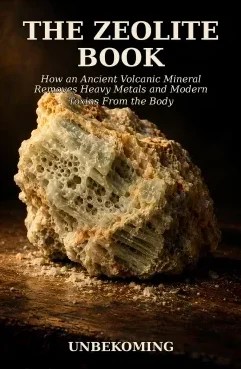
The Zeolite Book — First Edition, 2026, Paperback
The volcanic mineral medicine will not patent — for the toxic burden medicine will not name
Lies are Unbekoming – October 30, 2026
 Zeolite is old. It is in Roman concrete that has held for two thousand years. It’s in the water filters of ancient cisterns. It’s in the stomachs of Pacific livestock whose keepers knew, somehow, that this grey crumbling rock made the animals healthier. It’s in Soviet clinical protocols from the 1960s. It’s in the standard emergency response to the Chernobyl explosion.
In 1986, after the Chernobyl reactor failure, the Soviet Union manufactured and distributed natural zeolite at industrial scale — for soil remediation, for livestock feed, for human consumption, for the cleanup itself. Karl Hecht, who had been director of the Institute for Experimental and Clinical Pathophysiology at the Charité of Humboldt University Berlin, spent the six decades after that building the clinical research base — on silicon’s role in human health, on zeolite’s clinical safety, on its applications in ageing. In 2018, Pavelić and colleagues published a comprehensive clinical safety review of natural clinoptilolite in Frontiers in Pharmacology. In 2019, Mastinu analysed its binding affinities. In the Western medical literature, these works sit largely uncited.
What has not been treated at book length, until now, is how a volcanic mineral with six decades of Soviet clinical work behind it, two major peer-reviewed Western reviews, and ongoing clinical use across the former Eastern Bloc, remains almost entirely absent from Western medical practice — and what the toxic burden it’s meant to address actually is.
The Zeolite Book gathers the Soviet clinical record, the Western peer-reviewed studies, three contemporary practitioner voices, and three serious counterviews into one honest treatment. That’s why the book runs to seven appendices. 288 pages, four parts, three practitioner voices, three counterviews, seven appendices. The honest treatment is the argument.
Blog Roll
 Aletho News
- London tourism expo promotes Israeli agency linked to theft of Palestinian land
- Dockworkers launch global strike against Israeli and US military shipments
- Europe facing gas price shock – Gazprom chief
- Ukraine continues recruiting people with disabilities
- Weaponized Journalism: 2021 Sayer Ji Interview with NPR
- Beyond Netanyahu: what Israel’s election means for Palestinians
- Lithuania plans universal conscription
- Lies, Damn Lies, and Ukraine News
- Financial Times rejects Nordic demands to correct Putin call story – media
- The Case for Less Unity in Europe
- If Americans Knew
- An error has occurred; the feed is probably down. Try again later.
- No Tricks Zone
- Germany’s Green Energy Transition Becoming Increasingly Expensive…Another 6 Trillion Euros!
- Sudden Stratospheric Warming, Powerful El Niño Combination May Lead To Extreme Europe Cold, Energy Crisis!
- Two New Studies Find Thwaites Glacier Melt Cannot Be Driven By Human Activity Or A Warming Ocean
- E-Cars Reduce CO2 Emissions By Only 41% Compared To Internal Combustion Engine Vehicles
- Predictions Made By Renowned Climate Professor Over Past Decades Have Been Proven To Be Poor
- New Study Suggests Large Regions Of The Pacific Ocean Have Been Cooling For The Last 80 Years
- Germany’s Green Energy Debacle: High Energy Costs Force Kahla Porzellan to Close After 182 Years!
- New Study: 50 Years Of The Most Aggressive ‘Net Zero’ Policies Can Only Affect The Global Climate By 0.03°C
- US September “Heat” Was No Record…Many Records Set Decades Ago
- Latest European Green Energy Debacle; Portugal’s Largest Flagship Solar Park Insolvent!

