1. Which of the following is the most accurate statement?
1. chemical weapons were first used during the First World War
2. chemical weapons were invented and first used in the 19th century
3. chemical weapons have been around since prehistoric people first put poisons on arrowheads
4. the first real chemical weapon was “Greek Fire” invented by the Byzantines in the 7th century
5. chemical weapons were first produced in the 18th century, based on formulae found in Leonardo da Vinci’s rediscovered writings
2. An international conference in 1899 produced the Hague Treaty, which bans the use of projectiles containing poison gas in warfare. Only one country’s representative dissented. What country was this?
1. Russia
2. U.S.
3. United Kingdom
4. Japan
5. Union of South Africa
3. In the First World War, what percentage of fatalities were due to chemical weapons?
1. 4%
2. 12%
3. 39%
4. 51%
5. 59%
4. In April 1917, British forces used poison gas against German and Ottoman forces in
1. Turkey
2. Germany
3. Austria
4. Libya
5. Palestine
5. Who made the following comment in May 1919, regarding the use of mustard gas against Mesopotamian Arabs?
“I do not understand this squeamishness about the use of gas…I am strongly in favor of using poisoned gas against uncivilized tribes… It is not necessary to use only the most deadly gasses: gasses can be used which cause great inconvenience and would spread a lively terror and yet would leave no serious permanent effects on most of those affected.”
1. Benito Mussolini
2. Winston Churchill
3. Georges Clemenceau
4. Woodrow Wilson
5. Ibn Saud
6. Mustard gas was invented in 1917 by a scientist in
1. U.S.
2. Austria
3. Norway
4. Germany
5. Japan
7. During the First World War, Germany was the largest producer of chemical weapons. What country was number two?
1. U.K.
2. U.S.
3. Japan
4. Italy
5. France
8. 88,000 people died due to chemical weapons during the First World War. 56,000 of these were in one country. What was it?
1. Russia
2. Japan
3. China
4. Germany
5. France
9. At the Washington Arms Conference of 1922 which country opposed inclusion in a treaty of an article banning chemical weapons?
1. France
2. U.S.
3. U.K.
4. Russia
5. Japan
10. Over 60 U.S. merchant seamen were killed by mustard gas in an Italian port in December 1943. Why did this happen?
1. The ship was accidently attacked by a British submarine, with torpedoes armed with mustard gas
2. German troops attacked with gas
3. Italian guerrillas attacked with gas
4. The gas was aboard their ship and released when German forces bombed it
5. None of the above
11. How many tons of chemical weapons material did the U.S. at peak inventory?
1. The U.S. never built or stockpiled such weapons
2. 10,000 tons
3. 30,000 tons
4. 50,000 tons
5. 110,000 tons
12. Napalm was invented
1. by the ancient Greeks
2. by a Swedish scientist in 1876
3. by scientists at Harvard University in 1943
4. by Dow Chemical Corp. during the Vietnam War
5. by the Japanese military during World War II
13. Which president announced that the U.S. would not be the first to use chemical weapons?
1. Wilson
2. Eisenhower
3. Kennedy
4. Nixon
5. Carter
14. Napalm is:
1. A mix of petroleum plus a gelling agent that sticks to skin and causes severe burns when ignited
2. A gas that causes asphyxiation
3. A type of explosive bullet
4. An invisible gas released at low altitude by helicopters
5. A kerosene-based jet fuel used in firebombs
15. Over 2 million tons of napalm were used in World War II. Between 1965 and 1973 how many tons of napalm were dropped on Vietnam by U.S. forces?
1. 1 million
2. 2 million
3. 5 million
4. 8 million
5. 15 million
16. Up to March 1992, according to a Senate study, the U.S. licensed export of anthrax and VX nerve gas to which country among the following?
1. Zimbabwe
2. South Africa
3. United Kingdom
4. Iraq
5. Canada
17. In March 1988 Iraqi forces attacked Kurds in northern Iraq with chemical weapons, killing over 3000. How did the U.S. react?
1. The State Department stated its belief that Iran was behind the attacks
2. Pres. Reagan declared Iraq in violation of international law and asked Congress for permission to punish it
3. U.S. officials openly argued that since Saddam Hussein was a firm ally against Iran the U.S. had to overlook his war crimes
4. The U.S. placed Iraq back on its list of terror-sponsoring nations
5. The U.S. halted military cooperation with Iraq in its war with Iran
18. Which of the following countries are believed to possess stockpiles of chemical weapons?
1. Russia, China, France, U.K., Russia, Syria
2. Egypt, Israel, Syria, North Korea, Russia, U.S.
3. Iran, Iraq, Pakistan, China, France, Russia, U.S.
4. Iran, Syria, Russia, U.S., India, Egypt
5. Iran, Pakistan, North Korea, Russia, U.S., Germany
19. The U.S. claims that Syria possesses about 1000 tons of chemical weapons. How many tons does the U.S. still possess?
1. 500
2. 1000
3. 2000
4. 2500
5. 3000
20. What countries continue to refuse to ban chemical weapons?
1. Syria, Israel, Zimbabwe, South Korea, North Korea
2. Angola, Egypt, North Korea, South Sudan
3. Syria, Israel, U.S., Russia, China
4. Syria, Iran, Zimbabwe, North Korea
5. Angola, Syria, Egypt, North Korea, South Sudan
Bonus question:
The Chemical Weapons Convention approved by the UN General Assembly that bans use of chemical weapons was first signed by participating nations in what year?
1. 1945
2. 1968
3. 1974
4. 1993
5. 2003
Answers:
1. 3 (Salon of Athens poisoned the Spartan water supply. Henry III used quicklime against the French. In 1675 the French and Germans agreed to stop using poisoned bullets. Chemical warfare is not only modern.)
2. 2 (The U.S. representative wanted no curbs on U.S. inventiveness.)
3. 1 (Remarkably small proportion.)
4. 5 (Mostly British versus Germans, with the latter winning.)
5. 2 (Churchill the consummate colonialist.)
6. 4 (Germany’s chemical industry led the world.)
7. 5 (The U.K. and U.S. produced chemical weapons too, but France was far ahead.)
9.1 (Not surprising, since France was then the world’s leading manufacturer of chemical weapons.)
10. 4 (News of this was hushed up.)
11. 3 (Now down to 3000.)
12. 3 (The scientists were doing war-related research. Napalm was soon used; on March 9, 1945 napalm dropped on Tokyo killed over 87,000 people.)
13. 4 (Nov. 25, 1969 statement.)
14. 1 (From naphthenic palmitic acids.)
15. 4
16. 4 (As part of cooperation during the Iran-Iraq War.)
17. 1 (At the same time anonymous government officials opined that there was no law preventing someone from using weapons of mass destruction on his own people.)
18. 2 (Israel argues that its chemical weapons serve as a deterrent to Syrian attack.)
19. 5 (Russia has about 9000 and plans to destroy it all by next year.)
20. 2 (Now that Syria has signed the treaty, just four countries remain outside it.)
As New York prepares for the annual opening of the United Nations General Assembly next week, the volume of Western media speculation about the prospects for a U.S.-Iranian diplomatic breakthrough is mounting to impressive levels. Predictably, much of this speculation amounts to little more than wondering how many concessions the Islamic Republic’s new president, Hassan Rohani, is willing and will be able to make, especially on the nuclear issue.
As usual, we prefer looking at facts and authoritative statements of official positions over the speculation of journalists and pundits. In this spirit, we want to highlight a few passages from President Rohani’s much noted Op-Ed in the Washington Post earlier this week, see here.
Three passages seem especially relevant for understanding Tehran’s position on the nuclear issue. The first presents Rohani’s definition of “constructive engagement” (emphasis added):
“It is—or should be—counterintuitive to pursue one’s interests without considering the interests of others. A constructive approach to diplomacy doesn’t mean relinquishing one’s rights. It means engaging with one’s counterparts, on the basis of equal footing and mutual respect, to address shared concerns and achieve shared objectives. In other words, win-win outcomes are not just favorable but also achievable. A zero-sum, Cold War mentality leads to everyone’s loss.”
The explicit reference to not relinquishing one’s rights is, of course, very much of a piece with Rohani’s statements, during his presidential campaign and since his election, that he is not about to surrender Iran’s right—as a sovereign state and as a non-weapons state party to the Nuclear Non-Proliferation Treaty (NPT)—to enrich uranium under international safeguards. Unfortunately, there is no concrete indication that the Obama administration is prepared to acknowledge this right. In fact, one can find multiple statements from administration officials over the last five years publicly denying that there is such a right. (This is, among other things, a legally and intellectually dishonest reading of the NPT.)
The second passage from President Rohani’s Op-Ed that we want to highlight here explains with admirable clarity why the Islamic Republic is not about to compromise its right to safeguarded enrichment (again, emphasis added):
“We must also pay attention to the issue of identity as a key driver of tension in, and beyond, the Middle East. At their core, the vicious battles in Iraq, Afghanistan and Syria are over the nature of those countries’ identities and their consequent roles in our region and the world. The centrality of identity extends to the case of our peaceful nuclear energy program. To us, mastering the atomic fuel cycle and generating nuclear power is as much about diversifying our energy resources as it is about who Iranians are as a nation, our demand for dignity and respect and our consequent place in the world.”
President Rohani goes on to note, “Without comprehending the role of identity, many issues we all face will remain unresolved.” Indeed. Unfortunately, it remains far from clear that the Obama administration understands how tightly the matter of Iran’s nuclear rights is linked to fundamental questions of identity (like independence and control of the country’s energy resources) for Iranians who supported Imam Khomeini’s revolution and continue to support the political order it produced.
The third passage from President Rohani’s Op-Ed that we want to highlight discusses the requirements for diplomatic progress (yet again, emphasis added):
“To move beyond impasses, whether in relation to Syria, my country’s nuclear program or its relations with the United States, we need to aim higher. Rather than focusing on how to prevent things from getting worse, we need to think—and talk—about how to make things better. To do that, we all need to muster the courage to start conveying what we want—clearly, concisely and sincerely—and to back it up with the political will to take necessary action. This is the essence of my approach to constructive interaction.”
President Rohani certainly is not the first Iranian leader to want the United States to clarify its ultimate intentions vis-à-vis the Islamic Republic. Unfortunately, it remains far from clear that the Obama administration is or will be prepared to lay out a clear and positive end game for nuclear talks with the Islamic Republic—for this would require the United States to acknowledge Iran’s aforementioned right to safeguarded enrichment as an essential pillar of any negotiated solution to the nuclear issue.
So, going into UNGA next week and looking beyond UNGA to renewed nuclear negotiations with the Islamic Republic, the relevant question is not how much is Iran’s leadership prepared to concede on the nuclear issue. Rather, the relevant question is whether Washington is prepared to abandon a strategic approach to the Middle East that has done profound damage to America’s own position in this vital region—in no small part, by rendering productive diplomacy with the Islamic Republic impossible.
This was very much the theme of an interview that our colleague, Seyed Mohammad Marandi from the University of Tehran, gave earlier this week to Russia Today, see here. We append the interview, titled “Iran’s position strengthening while US in decline,” below, along with Russia Today’s editorial precede:
“Iran’s vow to never develop nuclear arms appeared to be an olive branch extended America’s way. But it is Washington, and not Tehran who needs all the friends it can get these days, Professor Seyed Mohhamad Marandi from the University of Tehran told RT.
On Wednesday, Iran’s new president Hassan Rouhani said of the Islamic Republic, ‘under no circumstances would we seek any weapons of mass destruction, including nuclear weapons, nor will we ever.’
Underscoring Rouhani’s concerted efforts to kick start negotiations over its controversial uranium enrichment program with the West, US President Barack Obama and Rouhani exchanged letters. This followed recent elections in Iran and the two leaders may meet on the margins of the UN general assembly next week. Rouhani, who took office in August, also ordered the release of Nasrin Sotoudeh, an Iranian human rights lawyer, and a number of other political prisoners on the eve of a visit to the United Nations.
The White House has thus far reacted positively towards these overtures, with White House spokesman Jay Carney saying ‘there is an opportunity for diplomacy when it comes to the issues that have presented challenges to the United States and our allies with regards to Iran.’
Professor Marandi says that while the onus has been put on Tehran to return to the Western fold, it is Washington who needs Iran to help fix the mess it’s made in the region.
RT: Iran has always said that it would not construct nuclear weapons.So why the apparently enthusiastic reaction from the US now?
Seyed Mohhamad Marandi: It’s hard to say, it really should be asked why the United States didn’t respond earlier because this is what the Iranians have been saying all along. But still I think the Iranians are quite willing to see if the apparent enthusiasm will lead to any change in US policy; that’s the important thing. What the Iranians are doing right now is saying ‘look, we are going to preserve our sovereign rights as an independent country, we will continue with our peaceful nuclear program, we’ve never disregarded international law, there’s no evidence of that, but we are willing to create a new favorable environment for negotiations.’ So basically what the Iranians have done is put the ball firmly in the American’s court, where it’s been for quite a while, but they’re doing this basically for the international community to see, and it’s now for the United States to respond.
So far the United States has responded negatively. As soon as Mr Rouhani became president [Washington] slapped on new sanctions, now they are taking a building that is linked to the Iranian community in the United States. These are not positive signs, so the Iranians are waiting to see over the next few days and weeks whether the United States is going to rethink its previously irrational approach toward Iran.
RT:You mentioned peaceful energy purposes.Will the US ever accept that?
SMM: That’s up to the United States. Iranians are not going to wait for US acceptance. The Iranian position has been strengthened over the past few months, recent Iranian elections have shown Iran’s strength; the high turnout has shown there is a great deal of legitimacy in the Iranian electoral process. The reason why some of these people in prison were released was not because of any human rights work that they did, but because after the previous elections (which they deemed fraudulent), they were helping to create unrest in the country. But after this election, President Rouhani and many reformists and people from all backgrounds in the political establishment have said that there never was fraud and that basically this has strengthened Iran’s position. Right now, while the rest of the region is in uproar and there’s increasing instability thanks to the United States, Iran is the only country that is completely stable and with a high turnout in the political process in the country.
On the other hand the United States has isolated itself by threatening Syria; the international community has moved against the United States, and even within the United States Obama and the political establishment has lost popularity and support over their proposed aggression against Syria. So Iran feels that its position is much stronger today, and America’s position is much weaker.
RT:Could Iran’s new efforts to improve relations with the West be seen as a sign that sanctions have actually worked?
SMM: Sanctions are working in the sense that some people have died because of a lack of medicine because Americans have basically tried to shut down the Iranian central bank, along with their allies. But that has created anger among Iranians. But at the same time, President Rouhani has said specifically that Iran is very willing to resolve questions that exist with regards to the Iranian nuclear program in the West as long as Iran’s rights are preserved. But when the United States threatens countries, invades countries and imposes sanctions on ordinary Iranians, creating a lack of medicine for cancer patients for example, then that does not help resolve the situation. The Iranians are not going to kneel to the United States. Iran is a sovereign and independent country, that’s what the revolution was about 34 years ago, for Iran to gain its independence and overcome American hegemony. It’s not a client regime like Saudi Arabia, Qatar or Jordan. So if the United States comes to respect Iran, then we can have rapprochement. The United States needs Iran, because thanks to its own policies, its destabilized the whole region, the United States has allowed Al-Qaeda to thrive through Saudi Arabia, Qatar and other oil rich dictatorships. In order to salvage the situation, it needs a strong, powerful, secure and stable country like Iran to help resolve the current mess that they’ve created in the region.”
We will be spending time in New York over the next week, monitoring developments and meeting with senior members of the Islamic Republic’s UNGA delegation. Whatever happens, it is likely to be an interesting—and potentially very revealing—week.
The US Air Force inadvertently dropped an atomic bomb over North Carolina in 1961. If a simple safety switch had not prevented the explosive from detonating, millions of lives across the northeast would have been at risk, a new document has revealed.
The revelation offers the first conclusive evidence after decades of speculation that the US military narrowly avoided a self-inflicted disaster. The incident is explained in detail in a recently declassified document written by Parker F. Jones, supervisor of the nuclear weapons safety department at Sandia National Laboratories.
The document – written in 1969 and titled “How I Learned to Mistrust the H-bomb,” a play on the Stanley Kubrick film title “Dr. Strangelove or: How I Learned to Stop Worrying and Love the Bomb” – was disclosed to the Guardian by journalist Eric Schlosser.
Three days after President John F. Kennedy’s inauguration, a B-52 bomber carrying two Mark 39 hydrogen bombs departed from Goldsboro, North Carolina on a routine flight along the East Coast. The plane soon went into a tailspin, throwing the bombs from the B-52 into the air within striking distance of multiple major metropolitan centers.
Each of the explosives carried a payload of 4 megatons – roughly the same as four million tons of TNT explosive – which could have triggered a blast 260 times more powerful than the atomic bomb that wiped out Hiroshima at the end of World War II.
One of the bombs performed in the same way as those dropped over Japan less than 20 years before – by opening its parachute and engaging its trigger mechanisms. The only thing that prevented untold thousands, or perhaps millions, from being killed was a simple low voltage switch that failed to flip.
That hydrogen bomb, known as MK 39 Mod 2, descended onto tree branches in Faro, North Carolina, while the second explosive landed peacefully off Big Daddy’s Road in Pikeville. Jones determined that three of the four switches designed to prevent unintended detonation on MK 39 Mod 2 failed to work properly, and when a final firing signal was triggered that fourth switch was the only safeguard that worked.
Nuclear fallout from a detonation could have risked millions of lives in Baltimore, Washington DC, Philadelphia, New York City, and the areas in between.
“The MK Mod 2 bomb did not possess adequate safety for the airborne alert role in the B-52,” Jones wrote in his 1969 assessment. He determined “one simple, dynamo-technology, low voltage switch stood between the United States and a major catastrophe…It would have been bad news – in spades.”
Before Schlosser brought the document to light through a Freedom of Information Act request, the US government long denied that any such event ever took place.
“The US government has consistently tried to withhold information from the American people in order to prevent questions being asked about our nuclear weapons policy,” he told the Guardian. “We were told there was no possibility of these weapons accidentally detonating, yet here’s one that very nearly did.”
In “Command and Control,” Schlosser’s new book on the nuclear arms race between the US and the Soviet Union, the journalist writes that he discovered a minimum of 700 “significant” accidents involving nuclear weapons in the years between 1950 and 1968.
The United States is planning to test nuclear missiles next week on the same day that heads of states and foreign ministers from around the world are to hold a high-level meeting on nuclear disarmament at the United Nations headquarters in New York.
The US has scheduled two test launches for its nuclear-capable Intercontinental Ballistic Missiles (ICBMs) on September 22 and September 26.
The first nuclear missile will be launched one day after the International Day of Peace and the second one is expected to be launched on the same day the UN’s high-level meeting on nuclear disarmament will take place in New York.
“Instead of honoring the significance of these dates and working in good faith to achieve nuclear disarmament, the United States has chosen to schedule two tests of its Minuteman III Intercontinental Ballistic Missile on September 22 and September 26,” Rick Wayman of the Nuclear Age Peace Foundation told the Daily Times.
“We are disappointed that a test launch is scheduled for the same day as the High-Level Meeting on nuclear disarmament at the UN in New York,” Wayman said.
“These missiles are designed to carry nuclear warheads capable of killing thousands of times more people than the chemical weapons used in Syria,” he pointed out.
Washington has accused the government of Syrian President Bashar al-Assad of using chemical weapons in an attack near capital Damascus on August 21.
Damascus has categorically rejected the allegations and even Obama’s top aide, White House chief of staff Denis McDonough, admitted that Washington’s claims were based on a “common-sense test” not any “irrefutable” evidence.
Meanwhile, Russia has said it has evidence which shows militant groups operating in Syria staged the August 21 attack to incriminate the Syrian government.
As Washington plans to go ahead with its plans to test nuclear missiles next week, UN spokesperson Farhan Haq cited the UN Secretary General’s statement on the issue which said, “We should all remember the terrible toll of nuclear tests.”
The US is the only country in the world that has used atomic bombs in war. US atomic bombs were dropped on Hiroshima and Nagasaki in Japan in August 1945.
Last year in September, it was reported that the US government was planning to undertake the costliest modernization of its nuclear arsenal in history.
Syrian civilians and children should count themselves lucky that mass opposition in the US, the UK and much of the rest of the world to the idea of a US bombing blitz aimed at punishing the Syrian government for allegedly using Sarin gas in an attack on a Damascus neighborhood forced the US to back off and accept a Russian deal to get rid of Syria’s chemical weapons.
Had the US attacked, primarily with a two- or three-day barrage of Tomahawk missiles, many of those rockets would likely have carried warheads containing BLU-97 cluster munitions, according to the United States Campaign to Ban Cluster Munitions — cluster bombs that would have assuredly killed or maimed many Syrian children.
This news should come as no surprise. The US made heavy use of deadly body-shredding cluster munitions in its invasion of Iraq in 2003 and during the subsequent bloody war and occupation there, as well as in its invasion of Afghanistan in 2001. Some 30 tons of cluster bombs were dropped or fired into urban neighborhoods of Iraq during the first few weeks alone of the 2003 US invasion of that country. Another 250,000 antipersonnel bomblets were dropped or fired into Afghani neighborhoods during the 2001-2002 US invasion of that country.
The US Campaign to Ban Cluster Munitions notes that the last documented US use of cluster munitions was in 2009. The organization writes that was:
“…in Yemen, when one or more Tomahawk cruise missiles loaded with BLU-97 bomblets struck the hamlet of al-Majala in the southern Abyan province. The strike killed at least 41 civilians and at least four more civilians were killed and 13 wounded by unexploded bomblets after the attack. Four years later, the site of the attack remains contaminated by cluster munition remnants.”
In fact, cluster weapons, whether bombs dropped from planes, warheads fired by missiles, or shells fired by cannons or tanks, are among the deadliest and most untargetable weapons devised by man, holding the distinction of being particularly lethal to civilians and children. They work by having a larger bomb, warhead or shell deliver a payload of smaller “bomblets” to a target (each Tomahawk cluster warhead contains 166 of the lethal bomblets). These casings burst open, releasing the small devices, either on the ground, or lowered by little parachutes. Many burst on impact, sending small deadly spinning flechettes out in all directions to tear the flesh off of bones, maiming and killing anyone in the vicinity, while others routinely fail to explode, and then lie around, sometimes for years, until someone steps on one, or a child picks it up to see what it is. (Unexploded BLU-97s look like cardboard drink containers and are bright orange.)”’
I remember a visit to Laos in 1995. It had been over two decades since the US had been relentlessly bombing that small peasant country day and night, primarily with anti-personnel bombs, and the country seemed to have returned to its tranquil past. But walking around the sleepy capital city of Vientiane, I was puzzled at seeing a surprising number of young children of varying ages hobbling around on crutches with one and sometimes parts of two legs missing, or arms missing, often with faces disfigured. I asked a Lao official why there were so many such kids, and he explained they were victims of the “bombis” — small fragmentation bomblets dropped by US forces in the secret war on Laos that had not exploded, and that remained buried in farmers’ fields until found or inadvertently disturbed by peasants or, more often, children working or playing. (The US has refused to help locate and clear these relics of war, claiming, ridiculously, that the Communist Laotian government is still secretly holding captured US soldiers–a position that the then US ambassador shamefacedly admitted to me was nonsense, but that was dictated by right-wingers holding onto the myth of long-suffering MIAs “abandoned” in Southeast Asia.)
When President Obama went on national television on Tuesday, Sept. 10, and passionately evoked images of suffering Syrian children dying on hospital floors from a Sarin attack in Damascus, he might have looked sincere to some, but most of those US viewers probably didn’t realize that as commander in chief, he was asking them to support a bombardment of Syria which would have likely included thousands of similar bomblets that he surely knows would inevitably end up, over time, killing far more children in far more horrible ways than the Sarin attack that was his casus belli.
According to experts, 98% of the victims of cluster bombs are civilians, not soldiers (as horrible as the deaths or maiming of even soldier-targets are from these insidious weapons). And 40% of the victims are children.
Since 2008, there has been a UN Convention against the use of cluster weapons. It has been signed by 112 nations, 83 of which have ratified it. The US is a key holdout, along with China, Israel, Pakistan and Russia. The US in fact, not content to simply not sign the convention, is arguing strenuously against the treaty, claiming that its bomblets, at least by 2018, will boast a 1% failure rate, and thus supposedly would not pose the danger of leaving unexploded, attractive or interesting-looking bomblets scattered around the landscape for months or years, waiting to be picked up by curious children. It’s an absurdly low failure rate the government is claiming, and is also wholly unprovable. (At least the US is consistent; it also refuses to sign a Convention banning landmines, which kill many civilians in the same way as antipersonnel bomblets.) Critics of the cluster munitions, like the US Campaign to Ban Cluster Weapons, say the failure rate of current US weapons like the BLU-97, the most common cluster anti-personnel device used by US forces, is closer to 30%. Besides, as demonstrated by the Yemen Tomahawk attack, a lot of the killing and maiming of civilians and children by cluster weapons happens when the bomblets explode as planned and “on target.”
Talk about brazen hypocrisy! A child killed or injured by Sarin gas is an atrocity, to be sure. But so is a child whose body is turned into chopped meat, or who is painfully rendered limbless by an exploding BLU-97 weapon. Worse yet, the US has had the audacity to accuse the Syrian government of an atrocity for allegedly using cluster weapons, voting earlier this year in the UN to condemn Syria for use of a weapon which the US used liberally in its wars against Iraq and Afghanistan, and in massive amounts in Indochina, and which it stockpiles and continues to design for more lethality and destructiveness for future use by American forces, including in Syria. (The US also sells these horrific weapons of child destruction to its “allies,” including countries ruled by dictators, like Saudi Arabia, which notably is known to be supplying arms to Syrian rebels.)
Of course, Americans themselves can be hypocritical about this stuff. Much horror was expressed after the Boston Marathon bombing over the use of BB pellets in the home-made pressure cooker bombs alleged to have been used, which killed several and lacerated the bodies of others. “How could people be so evil,” many asked. And yet the US provides its military with weapons that are far more efficient at shredding bodies, using taxpayer money, and has done so for decades, with few Americans expressing outrage, even at the carnage the weapons cause among children. Some 270 million cluster bombs were dropped on Indochina between 1964-73, 80 million of which failed to explode and remain to pose a threat to civilians today.
Textron Defense Systems, the maker of the most widely used cluster bomb in the US arsenal, which contains the BLU-97 bomblets, and which is being sold by the US to Saudi Arabia and other “allies,” offers this marketing motto for its deadly product: “Clear victory, Clear battlefield.” Given that most of the “battlefields” these days are urban areas, not classic battle fronts, the “clear battlefield” concept bodes ill for civilians and children.
Obama would be standing on stronger ground in demanding that Syria’s government eliminate its stocks of poison gas, if the US would sign onto the UN’s 2008 Convention on Cluster Munitions. His call for Americans to stand against the use of poison gas weapons by the Syrian government would not ring so hollow if he ordered the US military to destroy its massive stockpiles of cluster weapons, and vowed never to use them again.
On Sunday, the Swiss are voting on a proposal to abolish military conscription in favor of a voluntary army. The country with no clear foes and a long tradition of neutrality could find better ways of spending money than playing at war, proponents say.
Switzerland, once a proud supplier of mercenaries for numerous wars in Europe, has maintained a policy of armed neutrality for the last five centuries. It isn’t a member of any defense pacts and wasn’t even member of the United Nations until 2002. But it has an army of 150,000, the size of Austria’s, Belgium’s, Norway’s, Finland’s and Sweden’s armies combined.
Under Swiss law, all able-bodied males must take part in compulsory military service between the ages of 18 and 34. This comprises 18 to 21 weeks of basic training and further yearly refresher courses lasting 19 days. Senior officers may have to serve up to the age of 50 and spend more than twice as much time on army duty than ordinary recruits.
Boot camp is praised by advocates as a character-building experience, which teaches working in a team under stress and gives a chance to develop leadership skills. It also serves as a kind of glue for Swiss society, with connections made in the service lasting on in civilian life. For a country with four different language groups, it is seen by many Swiss as crucial for national unity.
The military is also the cornerstone of the Swiss militia, which has a role similar to the National Guard in the US. Those in the army help civilian authorities and respond to natural disasters and other major events. Many continue helping society as volunteers after retiring from the service by joining the fire service, participating in local politics. or serving other public duties.
An anachronism that costs too much
However, there are plenty who see military traditions as an expensive anachronism, which is no longer necessary. The pacifist Group for Switzerland without an Army (GSoA) has gathered the 100,000 signatures necessary to put their abolition proposal to a national referendum.
Referenda are essential to Switzerland’s direct form of democracy and are held several times a year at national, regional and local levels. An initiative must win support from a majority of voters and a majority of cantons to be passed and made law.
GSoA, which has been campaigning against obligatory army service since 1982, argues that the country located in the heart of Europe doesn’t need big military firepower to protect itself and that a purely voluntary force would suffice. It criticizes conscription, which excludes Swiss women and disrupts study and work for men, costing an estimated $4.3 billion to the economy annually.
“Not everyone has time to play war,” declares the GSoA campaign poster.
The group has pushed unsuccessfully for several referendums in the past, trying to scrap the military, preventing the procurement of American fighter jets, banning all arms exports from Switzerland, and stopping the Swiss tradition of conscripts keeping their assault rifles at home after initial training.
Sunday’s vote is not expected to go in favor of the GSoA. A survey by Swiss television in August revealed that 40 per cent of respondents would reject the initiative, with another 17 per cent leaning that way. The support for the military is particularly strong in the older generations, with 68 per cent of those over 65 opposing the initiative. Less than a third of Swiss people support the proposal.
“Switzerland needs an army,” says Jakob Büchler of the Christian Democrat Party (CVP), a member of the National Council, which rejected the initiative as cited by The Local. “We are a small country, we are a neutral country, and we are a country that isn’t in any defense alliances. We have to therefore organize our own defense and security ourselves, and that’s why we need an army.”
Opponents of the initiative fear that there won’t be enough volunteers for military service and Switzerland would then have to start a costly change to a professional army.
Globalization advancing
Lately, GSoA reasoning has found support from an increasing number of multinational firms who are not happy to see local staff being sent to boot camps, reports Reuters. The contact-building aspect of the military is diminishing too, with Swiss companies being infiltrated by foreigners – just six of the CEOs at Switzerland’s top 20 companies hold Swiss nationality – and of course females are climbing the corporate ladder, too. Meanwhile young men nowadays have other options such as internships abroad.
While the GSoA proposal is likely to be thrown out, they are still hoping for a strong showing of support for their stance as they continue their fight. “The more ‘yes’ votes we receive, the greater the pressure will be to reform the army,” says Seraina Patzen, a spokeswoman for the group.
The Swiss military are not objecting to undergoing reform. They have already shrunk the number of troops considerably. In the late 1980s Switzerland had 800,000 soldiers and officers, but by 2003 the number had dropped to 350,000. The plan is to reduce the current army of 150,000 to 100,000 in coming years.
Conscription rules were made less strict. Since 1996 conscientious objectors may serve an extended period in the civil service as an alternative to joining the military.
But the Defense Ministry maintains that a conscripted military is necessary for the country. During a recent media tour of barracks, Defense Minister Ueli Maurer said Switzerland may not face an enemy in the field, but may become, for example, a target of a cyber attack disrupting the transport network. In order for the army to respond to national emergencies, it needs to be able to draw on the best IT specialists, engineers and technicians the country has to offer.
The avoidance of an imminent US military onslaught on Syria is of course to be welcomed.
But the deal struck by American Secretary of State John Kerry and his Russian counterpart Sergei Lavrov at the weekend looks rather like a postponement of US aggression than a step towards a peaceful resolution.
Already Western politicians and media are conflating the latest UN chemical weapons inspection report with the weekend admission by the Syrian government that it possesses such armaments.
The UN report only confirms that the toxic nerve agent sarin was used in an attack on 21 August near the capital, Damascus. But this finding is being spun to insinuate that the armed forces of President Bashar al-Assad are to blame and in that way justifying Western threats of retaliatory military action.
It is troubling that within hours of Kerry and Lavrov shaking hands in Geneva on a seeming breakthrough agreement they were both saying very different things about its consequences.
On his way back to Washington, Kerry met the French and British foreign ministers in Paris on Monday morning where they reiterated – with usual high-handed truculence – that the option of military force against Syria was still on the table if the Syrian government did not fully comply with the complete decommissioning of its chemical weapons.
For his part, Lavrov in response to the Paris statement appeared to be irked by the repetition of the militarist option by “our partners… this shows a lack of understanding of what John Kerry and I agreed on.” The Russian foreign minister added that any use of military threat might wreck the chance of a peaceful resolution.
Elsewhere, US President Barack Obama also stated that military force against Syria remained an option in spite of the Geneva pact to disarm Syria’s chemical arsenal through diplomacy. That position of wielding military threat was also backed by French President Francois Hollande.
The Americans, British and French want to finalize a resolution at the United Nations Security Council this week which will be “strong and binding,” meaning the authorization of military force if Syria does not deliver on handing over of its stockpile of chemical weapons.
Russia and China – the other two UN Security Council members – will no doubt veto any such resolution.
However, in that case, the US, supported by Britain and France, says that it will invoke a unilateral decision to go it alone in the use of military force outside of the UN. During his press conference with Lavrov in Geneva, Kerry responded to a question about what his country would do if it did not obtain a UN mandate, by saying “the [American] president always has the right to defend US interests.” In other words, the US president can do whatever he wants, including waging war on another country.
This unilateral move would leave the US open to charges of aggression. But knowing Washington’s arrogant capacity for self-justification, sophistry and long history of aggression, such a charge is by no means a deterrent to eventual US belligerence.
It is significant that the first destination for Kerry after Geneva was to fly to Israel to meet with Prime Minister Benjamin Netanyahu. The latter welcomed Kerry with open arms and was visibly pleased with the prospect of “stripping Syria of all its chemical weapons.” Some commentators have averred that the weekend Geneva deal was a slap in the face to Netanyahu from the Obama White House in that it steered away from Israeli war plans against Syria.
Such an analysis seems misplaced as it presumes, against all the evidence, that Washington does not have an inherent war plan for regime change in Syria. It is also misplaced given Netanyahu’s obvious glee on receiving Kerry. And why wouldn’t the Israeli warmonger be pleased?
The so-called Geneva “deal” may have halted US war plans on Syria for now, but the upshot is that Western aggression towards that country is even more emboldened and, bizarrely, has also now gained a veneer of legitimacy.
Syria was compelled to join the Chemical Weapons Convention and thereby surrender its arsenal of chemical weapons. While such weapons are an abomination and in an ideal world should be removed completely everywhere, the result of the Lavrov-Kerry arrangement is that Syria is obliged to unilaterally disarm. Israel has an equally dangerous stockpile of chemical weapons, as well as biological and nuclear arsenals.
Unlike the Syrian government, the Israeli regime has actually used its chemical weapons in the form of White Phosphorus against Palestinian citizens in Gaza. Yet, while Syria is being disarmed of its weapons that have acted as a deterrent against Israel’s weapons of mass destruction, the Israeli regime is free to increase its balance of terror.
Provocatively, the Western powers are still insisting that they have the right to launch a military attack on Syria if the latter does not conform to the chemical disarmament process. But this process is all one-sided. The West is swinging the threat of military force even though it is an unlawful act of aggression. The US and its allies should be indicted for this aggression against Syria, which they have been engaging in for several months and not just since the 21 August chemical weapon atrocity near Damascus.
The UN chemical weapons inspectors, led by Swedish scientist Ake Sellstrom, has confirmed that the deadly nerve agent sarin was used in the attack on 21 August. The UN team does not conclude who actually used the toxic gas despite Western insinuations. But there is plenty of evidence from alternative sources pointing to the Western-backed mercenaries fighting for regime change who committed this atrocity and others involving chemical weapons, such as at Khan al-Assal near Aleppo on 19 March this year.
As well as the US and its allies remaining armed and dangerous so too are the militants that are terrorizing Syria on behalf of Washington. According to recent reports, Washington is stepping up its weapons supplies to al-Qaeda-linked mercenaries – the same mercenaries who are beheading army captives and civilians, as well as poisoning women and children to fabricate crimes attributed to the Syrian army.
US-led all-out war on Syria may have been averted by the Lavrov-Kerry deal in Geneva at the weekend, but the price for that respite seems to be the West and its allies having gained even more leverage for their criminal agenda of regime change.
What Syria, Russia, Iran, China and other independent nations need to do is to widen the terms of any deal over Syria. This must include the complete cessation of weapons being funneled into Syria by the US and its allies; the immediate halt to threats of war by the US; and if we are going to have disarmament of weapons of mass destruction in the Middle East then that process must include the Israeli regime as absolutely mandatory.
~
Finian Cunningham, originally from Belfast, Ireland, was born in 1963. He is a prominent expert in international affairs. The author and media commentator was expelled from Bahrain in June 2011 for his critical journalism in which he highlighted human rights violations by the Western-backed regime. He is a Master’s graduate in Agricultural Chemistry and worked as a scientific editor for the Royal Society of Chemistry, Cambridge, England, before pursuing a career in journalism. He is also a musician and songwriter. For many years, he worked as an editor and writer in the mainstream news media, including The Mirror, Irish Times and Independent. He is now based in East Africa where he is writing a book on Bahrain and the Arab Spring.He co-hosts a weekly current affairs programme, Sunday at 3pm GMT on Bandung Radio.
The British government has launched a new debate on reintroducing mandatory National Service, or conscription, for the 18 to 26-year-olds, 50 years after the last conscripted British soldier ended his service.
The bill was tabled by Conservative MP Philip Hollobone, who said the service can inspire young people with “self-respect, personal reliance, discipline and behavior.”
The legislation was introduced to the parliament for debate on June 24, which is considered its first reading though no debate took place at that stage.
MPs are expected to hold a second reading debate on the bill on February 28, 2014.
The bill predicts the introduction of a year-long charitable or military service that could involve care for the elderly or the disabled, work for the emergency services or service in the armed forces with a necessary “residential element” that requires participants to live away from their homes.
“Every individual who has attained the age of 18 years, and who has not attained the age of 26 years, shall be liable to serve one year of national service at some point between these years unless exempt,” the bill reads.
“Regulations shall provide that the scheme must extend the scope of the National Citizen Service and include the following elements,” it adds.
The bill, if voted into law, makes it a criminal offense to skip National Service.
The reference in the text of the proposed law to the National Citizen Service (NCS), which was introduced by Prime Minister David Cameron for the 16 and 17-year-olds in 2010, raises suspicion that the Conservative-Liberal Democrat coalition government has been planning to reintroduce the long-forgotten National Service early after taking office.
NCS is now in full swing in England and offers voluntary short-time tours for individuals to take part in team projects away from home to help their community.
London first introduced conscription during the First World War in 1916, which lasted until 1919.
Another forced service was launched in 1939 at the beginning of the Second World War, continuing until 1960, with the last conscripted soldiers ending their service in 1963.
The recruitment was named War Service or Military Service during the wars and National Service, as formulated by the National Service Act 1948, between 1948 and 1960.
The second national service period that started in 1939 lasted beyond the World War II (1939-1945) partly because of Britain’s involvement in the Korean War of the 1950’s.
That could be adequate precedence for the British public to fear a decade of military adventurism, including the wars in Afghanistan, Iraq and Libya – not to mention the saber-rattling against Syria — has triggered the renewed call for a national service.
Indeed, the public opposition to the bill emerged from the very onset after an e-petition was launched demanding the government to “stop the National Service Bill 2013-2014”. The petition has already collected over 27,000 signatures.
It rejects the mandatory service as “unacceptable”, calling on the government to reject the bill “in its entirety” and “reassure us that non voluntary service and any residential or military style training, or service, will always be a freedom of choice”.
Under the Coalition agreement any e-petition attracting more than 100,000 signatures becomes eligible for a Commons debate.
The public concern over the new initiative has been clearly reflected in the e-petition.
“We do not want our children and grandchildren to fight and die in wars, or in training that they or we have no control over,” the petition says.
There are also concerns that the forced conscription is against the idea of a free society as compulsory recruits will have to spend a year in service with minimum wage at the end of their high school or college, when they could rather start a job or begin university education in anticipation of a difficult future amid Britain’s economic woes.
Three rockets launched by mercenaries deployed across the Lebanese border with Syria hit the Bekaa valley Saturday, the state-run National News Agency reported.
“Three Syrian 107 mm Grad Rockets hit Baalbek District without causing any injuries,” the Army Command said confirming the news in a released communiqué.
“A military expert has inspected the scene and the necessary security measures were adopted in the area,” it added.
The NNA said the rockets hit an area that lies between the villages of Labweh and Jabbureh, 30 kilometers (20 miles) north of the city of Baalbek.
“A huge fire erupted as a result in plains near Deir Jabbureh,” it stated, adding that two people were wounded when rockets landed on the Bekaa’s al-Labweh plains.
“Two people, Ali Hasan al-Mawla and a second whose family name is Khazaal, were injured in the attack,” it said, remarking that a rocket fell on an orchard that belongs to the Khazaal family while another landed in the outstrips of al-Labweh.
The third rocket landed on a road in Zboud, according to the same source.
Saturday’s is the latest in a string of cross-border rocket attacks that have recently escalated.
Since the eruption of the Syrian conflict in 2011, Lebanese towns in the North and the Bekaa regions have repeatedly witnessed shelling and gunfire coming from Syria, wounding many people and causing major material damage.
Note the reference to a “red line” on chemical weapons use in this May 27 interview by CNN’s former AIPAC staffer with the AIPAC-created WINEP/Fikra Forum contributor who organized the visit of AIPAC’s leading Senate mouthpiece to the so-called “Free Syrian Army.”
US President Barack Obama has said the US will continue to threaten Syria with the use of force as the government of Syrian President Bashar al-Assad has agreed to put its chemical weapons under the control of the United Nations.
“We need to see concrete actions to demonstrate that Assad is serious about giving up his chemical weapons … And since this plan emerged only with a credible threat of US military action, we will maintain our military posture in the region,” Obama said in his weekly address to Americans on Saturday.
The threat came after the Syrian ambassador to the UN said on Thursday that his country became a full member of the international treaty prohibiting chemical weapons.
After Russia offered a diplomatic proposal for putting Syria’s chemical weapons under international control on Monday, Obama called on Congress to delay a vote on his call for a military action against Syria.
Nevertheless, in his weekly address to Americans, Obama said, “If diplomacy fails, the United States and the international community must remain prepared to act.”
Obama’s talk of “the international community” comes as senior officials within his administration have said he would not push for a United Nations Security Council resolution threatening Syria with the use of force.
This comes as Russian President Vladimir Putin said in an op-ed published by The New York Times on Wednesday that a possible US attack on Syria “is unacceptable under the United Nations Charter and would constitute an act of aggression.”
Meanwhile, recent polls have revealed a growing opposition to military action against Syria both within the US military and America’s war-weary public.
The past ten days have seen what could be the start of an historic turning point away from endless war in the Middle East. Public opinion in the United States, in harmony with the majority of people in the world, has clearly rejected U.S. military intervention in Syria.
But for this turn away from war to be complete and lasting, greater awareness is needed of the forces that have been pushing the United States into these wars, and will surely continue to do so until they are clearly and openly rejected.
An American friend who knows Washington well recently told us that “everybody” there knows that, as far as the drive to war with Syria is concerned, it is Israel that directs U.S. policy. Why then, we replied, don’t opponents of war say it out loud, since, if the American public knew that, support for the war would collapse? Of course, we knew the answer to that question. They are afraid to say all they know, because if you blame the pro-Israel lobby, you are branded an anti-Semite in the media and your career is destroyed.
One who had that experience is James Abourezk, former Senator from South Dakota, who has testified: “I can tell you from personal experience that, at least in the Congress, the support Israel has in that body is based completely on political fear – fear of defeat by anyone who does not do what Israel wants done. I can also tell you that very few members of Congress–at least when I served there – have any affection for Israel or for its lobby. What they have is contempt, but it is silenced by fear of being found out exactly how they feel. I’ve heard too many cloakroom conversations in which members of the Senate will voice their bitter feelings about how they’re pushed around by the lobby to think otherwise. In private one hears the dislike of Israel and the tactics of the lobby, but not one of them is willing to risk the lobby’s animosity by making their feelings public.” Abourezk added : “The only exceptions to that rule are the feelings of Jewish members, who, I believe, are sincere in their efforts to keep U.S. money flowing to Israel. But that minority does not a U.S. imperial policy make.”[1]
Since we do not have to run for Congress, we feel free to take a close look at that highly delicate question. First, we’ll review the evidence for the crucial role of the pro-Israel lobby, then we’ll discuss some objections.
For evidence, it should be enough to quote some recent headlines from the American and Israeli press.
First, according to the Times of Israel (not exactly an anti-Zionist rag): “Israel intelligence seen as central to U.S. case against Syria.”[2] (Perhaps the fact that it is “central” also explains why it is so dubious[3].)
Then, in Haaretz[4]: “AIPAC to deploy hundreds of lobbyists to push for Syria action”. Or, in U.S. News and World Report[5]: “Pro-Israel lobby Seeks to Turn Tide on Syria Debate in Congress”. According to Bloomberg[6]: “Adelson New Obama Ally as Jewish Groups Back Syria Strike”. The worst enemies of Obama become his allies, provided he does what “Jewish groups” want. Even rabbis enter the dance: according to the Times of Israel[7], “U.S. rabbis urge Congress to back Obama on Syria”.
The New York Times explained some of the logic behind the pressure: “Administration officials said the influential pro-Israel lobby group AIPAC was already at work pressing for military action against the government of Mr. Assad, fearing that if Syria escapes American retribution for its use of chemical weapons, Iran might be emboldened in the future to attack Israel. … One administration official, who, like others, declined to be identified discussing White House strategy, called AIPAC ‘the 800-pound gorilla in the room,’ and said its allies in Congress had to be saying, ‘If the White House is not capable of enforcing this red line’ against the catastrophic use of chemical weapons, ‘we’re in trouble’.”
Even more interesting, this part of the story was deleted by the New York Times, according to M.J. Rosenberg[8], which is consistent with the fact that the lobby prefers to act discreetly.
Now, to the objections:
There are indeed forces other than the Israel lobby pushing for war. It is true that some neighboring countries like Saudi Arabia or Turkey also want to destroy Syria, for their own reasons. But they have nowhere near the political influence on the United States of the Israel lobby. If Saudi princes use their money to try to corrupt a few U.S. politicians, that can easily be denounced as interference by a foreign power in the internal affairs of the United States. But no similar charge can be raised against Israeli influence because of the golden gag rule: any mention of such influence can be immediately denounced as a typical anti-Semitic slur against a nonexistent “Jewish power”. Referring to the perfectly obvious, public activities of the Israel lobby may even be likened to peddling a “conspiracy theory”.
But many of our friends insist that every war is driven by economic interests. Isn’t this latest war to be waged because big bad capitalists want to exploit Syrian gas, or use Syrian territory for a gas pipeline, or open up the Syrian economy to foreign investments?
There is a widespread tendency, shared by much of the left, especially among people who think of themselves as Marxists (Marx himself was far more nuanced on this issue), to think that wars must be due to cynically rational calculations by capitalists. If this were so, these wars “for oil” might be seen as “in the national interest”. But this view sees “capitalism” as a unified actor issuing orders to obedient politicians on the basis of careful calculations. As Bertrand Russell put it, this putative rationality ignores “the ocean of human folly upon which the fragile barque of human reason insecurely floats”. Wars have been waged for all kinds of non-economic reasons, such as religion or revenge, or simply to display power.
People who think that capitalists want wars to make profits should spend time observing the board of directors of any big corporation: capitalists need stability, not chaos, and the recent wars only bring more chaos. American capitalists are making fortunes in China and Vietnam now that there is peace between the U.S. and those countries, which was not possible during hostilities. As for the argument that they need wars to loot resources, one may observe that the U.S. is buying oil from Iraq now, and so does China, but China did not have to ruin itself in a costly war. Like Iraq, Iran or Syria are perfectly willing to sell their resources, and it is the political embargoes imposed by the U.S. that prevent such trade. As for the “war for oil” thesis in the case of Libya, the Guardian recently reported that “Libya is facing its most critical moment since the ousting of Muammar Gaddafi with armed groups blockading oil fields and terminals, choking output to a 10th of normal levels and threatening economic disaster.”[9]As for Iraq, Stephen Sniegoski has shown, in The Transparent Cabal, The Neoconsevative Agenda, War in the Middle East, and the National Interest of Israel, that the war was only due to the neoconservatives and that the oil companies had no desire whatsoever to go to war. Indeed, there is no evidence of an “oil lobby” sending its agents to urge Members of Congress to vote for war, as AIPAC is doing.
And how does one explain that many of the most determined opponents of war are found on the right of the political spectrum? Do the Tea Party, Ron Paul, Pat Buchanan, Justin Raimundo and antiwar.com, Paul Craig Roberts, among others, fail to see the wonderful profits to be made by capitalists in a devastated Syria?
The fact is that in the post-colonial period, wherever profits can be made through war, they can be made much more reliably in peaceful conditions, and most capitalists seem to have understood that. There is no need to conquer countries in order to purchase their resources, invest in their economies or sell them our products. Most countries are in fact eager for legitimate trade.
On the other hand, it can be argued that the huge military-industrial complex (MIC) benefits from wars. Doesn’t the MIC need wars to maintain the lifeblood of military appropriations? Here the matter is complex. The MIC benefits above all from various hyped-up threats of war, most notably the Soviet threat during the Cold War, which kept the credits and contracts flowing through the Pentagon. But long, botched wars such as in Afghanistan or Iraq tend to give war a bad name, are economically ruinous and lead to questioning the need for the huge U.S. military. The MIC doesn’t need another one in Syria. Many military officers are openly hostile to mounting at attack against Syria.
The interests that profit directly from recent U.S. wars – and not from mere “threats” – are very few. They are above all the giant construction firms, Bechtel, Halliburton and their subsidiaries, which, through their connections with officials such as Dick Cheney, win contracts to build U.S. military bases abroad and sometimes to rebuild infrastructure destroyed by the U.S. Air Force. This amounts to a recycling of American taxpayers’ money, which in no way “profits” the United States, or American capitalism in general; besides, those construction firms are not big compared to major U.S. corporations. These profiteers could never pose as a “justification” for wars, but are the mere vultures feeding off conflicts.
The basic responsibility for war of the U.S. military-industrial complex is simply that it is there. And as Madeleine Albright famously said, “what is the use of having that splendid military if we don’t use it?” In fact, ever since the collapse of the Soviet Union (and indeed arguably ever since the end of World War II), there is no obviously good reason to use it, and it might well be dismantled and resources redirected toward modernizing U.S. infrastructure and other useful and profitable activities. However, an intellectual industry called “think tanks” has developed in Washington devoted to justifying the perpetuation of the MIC. It specializes in identifying potential “threats”. Over the years, these think tanks have increasingly come under the influence of billionaire benefactors of Israel such as Haim Saban (founder of the Saban Center at the Brookings Institution). Since there are in reality virtually no serious threats to the United States calling for such colossal military strength, alleged “threats to U.S. interests” in the Middle East are invented by adopting supposed threats to Israel as threats to the United States. Example number one: Iran.
People on the left are not wrong in supposing that Washington would want to defend “American geo-strategic interests”. Those certainly exist, and are a proper object of controversy. But the crucial question here is whether support for Israeli policy aims in the Middle East is among them. Indeed, there is a sector of the U.S. foreign policy establishment that promotes an aggressive global foreign policy that amounts to a sort of world conquest, with U.S. military bases and military exercises surrounding Russia and China, as if in preparation for some final showdown. But the fact is that the most active advocates of this aggressive policy are the pro-Israel neoconservatives of the Project for the New American Century that pushed the Bush II presidency into war against Iraq, and now, as the Foreign Policy Initiative, are pushing Obama toward war against Syria. Their general line is that U.S. and Israeli interests are identical, and that U.S. world domination is good, or even necessary, for Israel. Such close identification with Israel has caused the United States to be intensely hated throughout the Muslim world, which is not good for the United States in the long run.
Perhaps because genuine, material or economic U.S. interests in going to war are so hard to find, the emphasis has shifted in the past decade to alleged “moral” concerns, such as “the responsibility to protect”, packaged with a catchy brand name, “R2P”. Today, the strongest advocates of going to war are the various humanitarian imperialists or liberal interventionists, who argue on the basis of R2P, or “justice for victims”, or alleged “genocide prevention”.
There is a large overlap between humanitarian interventionism and support for Israel. In France, Bernard Kouchner, who first invented and promoted the concept of the “right to intervene”, stated in a recent interview that “Israel is like no other country. It is the result of the terrifying massacre of the Holocaust.” It is therefore “our duty” to protect it. Bernard-Henry Lévy prodded the French government to start the war against Libya, making no secret that he considered he was acting as a Jew for the interests of Israel; he is now the foremost and fiercest advocate of bombing Syria. In both France and the United States, advocates of “humanitarian” intervention justify bombing Syria by referring to the Holocaust in the past and to a hypothetical, and totally unsubstantiated, intention by Iran to risk national suicide by attacking Israel in the future.
In the United States, these concerns of the Israel lobby are given ideological and institutional expression by such influential advisors as Samantha Power, Madeleine Albright and the two Abramowitz’s (Morton the father and Michael the son, in charge of “genocide prevention efforts” at the U.S. Holocaust Memorial Museum). The argument is used repeatedly that because “we” did not intervene quickly enough against Auschwitz, we have an obligation to intervene militarily to prevent other possible slaughters.
On September 6, the Cleveland Jewish News published a letter from “leading rabbis” urging Congress to support President Obama’s plans to strike Syria. “We write you as descendants of Holocaust survivors and refugees, whose ancestors were gassed to death in concentration camps,” the letter said. By authorizing bombing raids, the rabbis said, “Congress has the capacity to save thousands of lives”…
Without such dramatization, obscuring the reality of each new crisis with images of the Holocaust, the whole notion that the best way to promote human rights and protect populations is to wage unilateral wars, destroy what is left of the international legal order and spread chaos would be seen for the absurdity it is. Only the fervor of the champions of Israel enables such emotional arguments to swamp reasonable discussion.
But one may reasonably ask what are the interests of Israel itself in inciting the United States to fight in Syria? Israelis seem to have frightened themselves into believing that the very existence of another power in the region, namely Iran, amounts to an existential threat. But the mere fact that a policy is pursued does not mean that it is necessarily in the interests of those who pursue it. That is again ignoring the “ocean of human folly”. Napoleon and Hitler had no interest or desire in bringing Russian troops to Paris or Berlin, but their policies led to precisely that. The emperors of Germany, Austria and Russia had no interest in launching the First World War, since, in the end, they all lost their thrones as a result of the war. But launch it they did. The future is unpredictable, and that is why it is difficult to deduce intentions from consequences. Israel’s hostile policy toward its neighbors can reasonably be seen as self-defeating in the long run.
Oddly enough, some observers deny the obvious, arguing that Bashar al Assad has allowed Israel to occupy Syrian territory on the Golan Heights and has kept the border quiet (without explaining what else he could have done, given the relationship of forces) and concluding that Israel has no interest in toppling him. But what matters is that Assad is allied with Hezbollah and with Iran. Israel hates Hezbollah for its successful resistance to Israeli occupation of Lebanon, and sees Iran as the only potential challenge to Israeli military supremacy in the region.
Even so, it is not certain that Israel’s war aim would be to overthrow Assad. A clue to Israel’s strategy is provided by a September 5 article in the New York Times[10]: “Israeli officials have consistently made the case that enforcing Mr. Obama’s narrow ‘red line’ on Syria is essential to halting the nuclear ambitions of Israel’s archenemy, Iran. More quietly, Israelis have increasingly argued that the best outcome for Syria’s two-and-a-half-year-old civil war, at least for the moment, is no outcome. For Jerusalem, the status quo, horrific as it may be from a humanitarian perspective, seems preferable to either a victory by Mr. Assad’s government and his Iranian backers or a strengthening of rebel groups, increasingly dominated by Sunni jihadis.”
“This is a playoff situation in which you need both teams to lose, but at least you don’t want one to win — we’ll settle for a tie,” said Alon Pinkas, a former Israeli consul general in New York. “Let them both bleed, hemorrhage to death: that’s the strategic thinking here. As long as this lingers, there’s no real threat from Syria.”
So, the real goal of the limited strikes (and the reason why they ought to be limited) would be to send a message to Iran, about its nonexistent nuclear arms program and, in Syria, let both sides “bleed to death”. How nice! Waging a war based on the flimsiest of evidence only to prolong a bloody conflict may not be a very moral endeavor for all those who claim to act out of passion for “our values” and for deep concern over the “suffering of the Syrian people”.
In its zeal to serve what it considers Israel’s interests, AIPAC and its affiliates practice deception concerning the issues at stake. The lobby misrepresents the interests of the United States, and even ignores the long term interests of the Jewish people whom it often claims to represent. It is pure folly for a minority, however powerful and respected, to try to impose an unpopular war on the majority. Since Israel often claims to represent the Jewish people as a whole, if the majority of Americans are forced to pay an unacceptable price for “defending Israel”, sooner or later voices will be raised blaming “the Jews”. Indeed, this can be seen by a brief look at what already gets written, anonymously of course, on social media, ranging from various conspiracy theories to outright Jew-bashing.
We, who are totally opposed to the notion of collective guilt, wish to avoid such an outcome. Far from being anti-Semitic, we deplore all forms of “identity politics” that ignore the diversity within every human group. We simply want to be able to say “no” openly to the pro-Israel lobby without being subjected to moral intimidation. This has nothing to do with Jewish religion or identity or culture: it is entirely political. We claim our right to refuse to be drawn into somebody else’s war. We believe that these endless wars are not “good for the Jews” – or for anyone else. We want to contribute to efforts at mutual understanding, diplomacy, compromise and disarmament. In short, to strengthen “the fragile barque of human reason” adrift on the ocean of human folly. Otherwise, that folly may drown us all.
For now, the threat of war has been avoided, or at least “postponed”. Let us not forget that Iraq and Libya also gave up their weapons of mass destruction, only to be attacked later. Syria is likely to abandon its chemical weapons, but without any guarantee that the rebels, much less Israel, won’t retain such weapons. The popular mobilization against the war, probably the first one in history to stop a war before it starts, has been intense but may be short-lived. Those whose war plans have been interrupted can be expected to come up with new maneuvers to regain the initiative. These past days have given a glimpse of what can be accomplished when people wake up and say no to war. This must be an inspiration for continued efforts to make diplomacy prevail over bullying, and mutual disarmament over endless war. If people really want peace, it can be possible.
UNESCO says it is seriously concerned about the increase in “disinformation” and “conspiracy theories”. And they plan to put an end to it through a network of informants.
“Conspiracy theories can be dangerous,” the UN agency warned. “Often they ignore scientific evidence and polarize society with dire consequences. This has to stop.”
Unesco’s director-general warned that “conspiracy theories” could cause damage to people as well as to their health. “They reinforce misconceptions about the pandemic, reinforcing stereotypes that can fuel violence and violent, extremist ideologies,” said Audrey Azoulay.
The UN agency has launched a campaign to help people identify, debunk and report “conspiracy theories” to prevent them from spreading further.
This campaign is being carried out in collaboration with the European Commission, Twitter and the World Jewish Congress. The UN has created a toolkit to “debunk” such theories and smear anyone who dares to claim that governments are not fair and transparent.
The UN also warned that George Soros, the Rothschilds and Israel should not be linked to “alleged conspiracies”.
World events “are not secretly manipulated behind the scenes by powerful players with malicious intent,” the UN agency maintained.
And if anyone therefore comes across someone who believes that the world elite is plotting to consolidate power or direct events, then that person needs to take action. According to the UN agency, when meeting a “conspiracy theorist”, under no circumstances should one enter into a discussion. … continue
This site is provided as a research and reference tool. Although we make every reasonable effort to ensure that the information and data provided at this site are useful, accurate, and current, we cannot guarantee that the information and data provided here will be error-free. By using this site, you assume all responsibility for and risk arising from your use of and reliance upon the contents of this site.
This site and the information available through it do not, and are not intended to constitute legal advice. Should you require legal advice, you should consult your own attorney.
Nothing within this site or linked to by this site constitutes investment advice or medical advice.
Materials accessible from or added to this site by third parties, such as comments posted, are strictly the responsibility of the third party who added such materials or made them accessible and we neither endorse nor undertake to control, monitor, edit or assume responsibility for any such third-party material.
The posting of stories, commentaries, reports, documents and links (embedded or otherwise) on this site does not in any way, shape or form, implied or otherwise, necessarily express or suggest endorsement or support of any of such posted material or parts therein.
The word “alleged” is deemed to occur before the word “fraud.” Since the rule of law still applies. To peasants, at least.
Fair Use
This site contains copyrighted material the use of which has not always been specifically authorized by the copyright owner. We are making such material available in our efforts to advance understanding of environmental, political, human rights, economic, democracy, scientific, and social justice issues, etc. We believe this constitutes a ‘fair use’ of any such copyrighted material as provided for in section 107 of the US Copyright Law. In accordance with Title 17 U.S.C. Section 107, the material on this site is distributed without profit to those who have expressed a prior interest in receiving the included information for research and educational purposes. For more info go to: http://www.law.cornell.edu/uscode/17/107.shtml. If you wish to use copyrighted material from this site for purposes of your own that go beyond ‘fair use’, you must obtain permission from the copyright owner.
DMCA Contact
This is information for anyone that wishes to challenge our “fair use” of copyrighted material.
If you are a legal copyright holder or a designated agent for such and you believe that content residing on or accessible through our website infringes a copyright and falls outside the boundaries of “Fair Use”, please send a notice of infringement by contacting atheonews@gmail.com.
We will respond and take necessary action immediately.
If notice is given of an alleged copyright violation we will act expeditiously to remove or disable access to the material(s) in question.
All 3rd party material posted on this website is copyright the respective owners / authors. Aletho News makes no claim of copyright on such material.
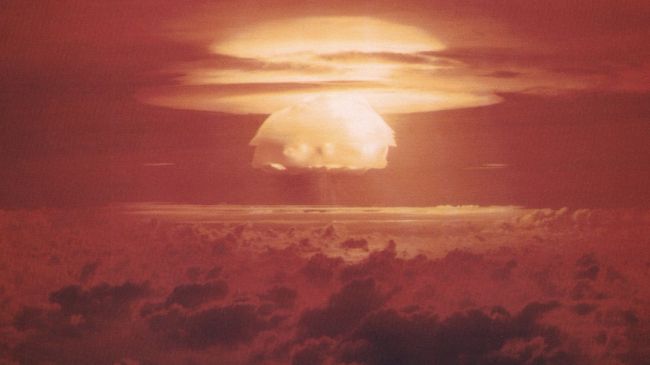
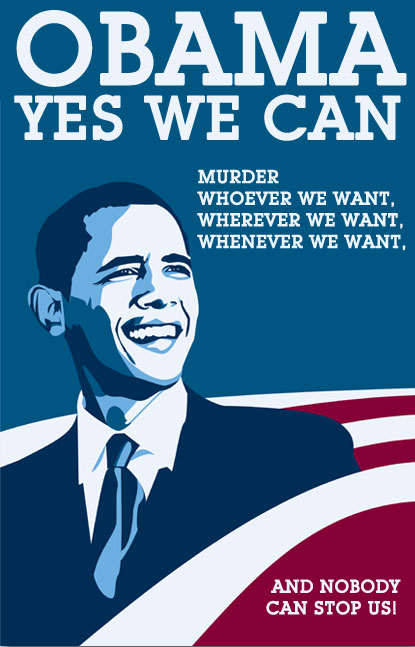 US President Barack Obama has said the US will continue to threaten Syria with the use of force as the government of Syrian President Bashar al-Assad has agreed to put its chemical weapons under the control of the United Nations.

 Aletho News

