It is perceived wisdom throughout the Western world – particularly America – that the dropping of two nuclear bombs on Hiroshima and Nagasaki was “necessary” to end the war with Japan. Printed throughout textbooks in the post-war world, the understanding is that, had these targets not been struck, the war would have waged on indefinitely, with potentially untold American soldier and Japanese civilian deaths.
As the world commemorates the 68th anniversary of the attacks, however, it is important to take a step back and view the catastrophic event not through the prism of propaganda and mythologizing, but instead through the lens of historical scrutiny. For, as is often the case, the disparity between “Official History” and reality is characterized by lies and deceptions bolstered by patriotism and American exceptionalism.
We are told repeatedly that, without the use of weapons which current Hiroshima Mayor Kazumi Matsui refers to as the “ultimate inhumane weapon and an absolute evil”, Japan would never have surrendered. We are told that President Truman was troubled by the mounting Allied casualties, and that the Joint Chiefs had told him to expect 1,000,000 dead Americans in the pending attack on the Japanese home islands. Yet this figure is a complete fabrication, invented by Secretary of War Stimson. No such claim was made by the Joint Chiefs of Staff, and Truman himself, in different statements, asserted “thousands of lives would be saved,” and “a quarter of a million of the flower of our young manhood was worth a couple of Japanese cities,” and also “I thought 200,000 of our young men would be saved by making that decision.” None of these statements were based on any evidence.
The alleged indefatigability of the Japanese military and their unwillingness to surrender is also a proven myth. By the summer of 1945 their position was hopeless and numerous attempts to surrender had already been made. Brigadier Gen. Carter W. Clarke stated: “We brought them down to an abject surrender through the accelerated sinking of their merchant marine and hunger alone, and when we didn’t need to do it, and we knew we didn’t need to do it, and they knew that we knew we didn’t need to do it, we used them as an experiment for two atomic bombs.”
Truman knew weeks before the Potsdam Conference, which began in July, 1945, that the Japanese were making overtures to surrender, the only condition being the retention of the Emperor. But Truman was determined to test the new bombs. In the words of General Douglas McArthur: ”The war might have ended weeks earlier, he said, if the United States had agreed, as it later did anyway, to the retention of the institution of the emperor.” In the end, the US agreed to the terms of the Japanese surrender anyway – but not until they had tested their new weapons and caused the deaths of 100,000s of innocent civilians.
In reality, most of the military top brass were disgusted at the decision to bomb Hiroshima and Nagasaki and understood completely that it served no military purpose whatsoever. Admiral William D. Leahy, the President’s Chief of Staff said, “The use of this barbarous weapon at Hiroshima and Nagasaki was of no material assistance in our war against Japan. The Japanese were already defeated and ready to surrender.” This view was reiterated by Fleet Admiral Chester W. Nimitz, who said, “The Japanese had, in fact, already sued for peace… The atomic bomb played no decisive part, from a purely military standpoint, in the defeat of Japan.”
So what is the truth about the bombing of Hiroshima and Nagasaki? Why, when intelligence agencies knew months in advance that contingency plans for a large-scale invasion were completely unnecessary and that Japan desperately sought peace, did they, as Admiral Leahy put it, adopt “an ethical standard common to the barbarians of the Dark Ages”?
There are two main reasons. Firstly, the Russians had entered the Japanese war and were making striking advances through Manchuria, decimating the already weakened Japanese army. Indeed, their role was pivotal – as Air Force General Claire Chennault stated: “Russia’s entry into the Japanese war was the decisive factor in speeding its end and would have been so even if no atomic bombs had been dropped.” The last thing the American leadership wanted was for Russia to receive equal spoils of war and emerge from the war as a superpower equal to the US.
In this sense, the bombing of Hiroshima and Nagasaki are more accurately perceived as the opening salvos of the Cold War, rather than the final shots fired in the Second World War – the Cold War was, after all, defined essentially as a balance of nuclear powers; realpolitik and the primacy of power where the arms race and military insanity took supremacy over diplomacy.
The other, far more sinister reason, was one of scientific curiosity. After making such a huge investment in the Manhattan Project (2 billion in 1940) and with three bombs completed, there was little to no desire to shelve the weapons. The fissionable material in the Hiroshima bomb was uranium, while the Nagasaki bomb was plutonium, and subsequently there was intense scientific curiosity as to the different effects these bombs would produce. As the US Army director of the project, General Leslie Groves pondered: “what would happen if an entire city was leveled by a single uranium bomb?” “What about a plutonium bomb?” For the science experiment to go ahead, surrender was not an option.
Perhaps Stanley Kubrick in his movie Dr. Strangelove, Or How I Learned to Stop Worrying and Love the Bomb expressed his understanding more than most of the mentality of those who pushed for the use of atomic weapons on the Japanese at Hiroshima and Nagasaki – it was a decision based on a kind of hell-bent fanatical militarism combined with the worst kind of scientific endeavor devoid of any sense of humanity. Small wonder that the history books and the propaganda machine went into overdrive in the following years, endlessly justifying the use of what President Eisenhower described as “that awful thing”.
Behind the gleaming armor of his speeches, the emperor’s new clothes of Obama leave him naked. We are to believe that the persecution of the press is protection of national security, secrecy is transparency, debt servitude is opportunity, imprisoning the poor is correction, assassination is public relations, a militarized police state is public service, and protecting the interests of the 1% is the common good. When nonviolent civil disobedience is treated as terrorism and dissent as treason; when the censor lives in our minds, naked totalitarianism has emerged. Yet, despite all, I still reject the contention that we are beyond the point of no return.
As Michael Hastings observed before his patently unbelievable accident, Obama has enshrined in his foreign policy the two most radical principles of the Bush doctrine, torture and extraordinary rendition, and has made targeted assassination and spying on journalists major tenets of the national security state. Despite Obama’s assurance that the CIA will move away from paramilitary tactics, the intelligence community anticipates a sinister future, and the Pentagon is pushing for the US to aggressively reassert dominance devoid of moral leadership and enforce dictatorship without hegemony, domestically and in the international arena.
Power now circulates through the information and obedience we unwittingly provide to the national security prism and the commerce panopticon, which are a fusion of private power and public authority used to monitor and record our license plates, our shopping habits, our personal correspondences, and our very thoughts. If, as Robert Reich supposed in his recent piece in the Huffington Post, a group of wealthy Americans is systematically dismembering government, disenfranchising the minority, spreading PR campaigns of lies, and buying off the media, that is a form of treason worse than terrorism, and it must be stopped.
However, I would argue that the social safety net, which we depend on for services and the protection of economic and social rights, is being dismantled, while the national security state, which should respect our rights during peacetime or repress them in times of national emergency, is being massively expanded and the state-of-emergency is now permanent.
In order to counteract the undemocratic substitution of national security in place of human security, we must:
(1) Fight mental censorship and reject influence of the defense and intelligence community in our society. Put NSA watch words in every mundane email. Find innovative ways to fool them. If ‘they’ have a blacklist, then every American should endeavor to be included by speaking out. We can influence the spies of the national security state and the directors of their agencies by flooding their press offices with calls to tell them that the violation of American citizens’ civil rights is unjustifiable and unpatriotic.
(2) Demand that the foolish, wasteful, and failed wars on drugs and terror end. I call congressmen everyday, and if you want change, you should, too. The war on terror has greatly outlived its usefulness for the resources we spend on it, which are now being directed towards the repression of dissent. When we quit wasting valuable resources on crimes that have few or no victims, i.e. hacking, whistleblowing, drugs, and terror, we can begin focusing on rapists, murderers, and corrupt elected officials, the true enemies of the state.
(3) Demand accountability from the justice system. Judges, prosecutors, and police not infrequently exhibit racism, gender bias, partiality, and even collusion in corruption, occasionally verging on mobster-style organized crime. Unfortunately, corruption convictions are rare, considering that there are half a million elected officials in the U.S., and light punishments and window-dressing are unacceptably common. Qualified immunity is the enemy of justice and we must abolish it.
(4) Reclaim the terms that have been wrenched away from us by the 1%, their political cronies, and the phony media. Orwellian doublespeak tells us that people in favor of women’s rights are “radical feminists;” those who point out probable or obvious connections between phenomena are “conspiracy theorists;” online activists are “hackers” or “cyber terrorists;” the rich are “job creators,” changing wealth inequality that would make robber barons blush is “socialism,” etc. Don’t believe anything the mainstream media says about activists, because the media is the piehole of the 1%.
(5) Join forces, despite race, gender, social class, or party affiliation against the warmongers, Wall Street plutocrats, and neoconservatives who conspire to maintain the status quo. Class warfare needs to make a comeback, because “the blob” and the permanent war economy has reached a place where it must be exposed and dismantled.
(6) Practice civil disobedience. Support Anonymous and Occupy, which continue to evolve, even today, despite false reports, myths and lies surrounding them. MLK said we have a moral obligation to break unjust laws even as we have a moral responsibility to obey just ones. When you allow your outrage fuel your courage to fight for social justice, your fear and apathy will melt away.
Leaked documents from a Pentagon budget review suggest that the agency is tired of its costly F-35 fighter jets, and has thoughts about cancelling the $391.2 billion program that has already expanded into 10 foreign countries.
Pentagon officials held a briefing on Wednesday in which they mapped out ways to manage the $500 billion in automated budget cuts required over the next decade. A slideshow laid out a number of suggestions and exposed the Pentagon’s frustration with its F-35 jets, which are designed and manufactured by Lockheed Martin Corp. based out of Bethesda, Md. The agency also suggested scrapping plans for a new stealthy, long-range bomber, attendees of the briefing told Reuters.
Defense Secretary Chuck Hagel spoke to reporters on Wednesday and indicated that the Pentagon might have to decide between a “much smaller force” and a decade-long “holiday” from modernizing weapons systems and technology.
Pentagon briefing slides indicated that a decision to maintain a larger military “could result in the cancellation of the $392 billion Lockheed Martin Corp F-35 program and a new stealthy, long-range bomber,” Reuters reports.
When officials familiar with the budget review leaked the news about the F-35s, the agency tried to downplay its alleged intentions.
The F-35 program is the Pentagon’s most expensive weapon system. A fleet of 2,443 aircraft has an estimated price tag of $391.2 billion, which is up 68 percent from the projected costs measured in 2001. Earlier this year, Air Force Lieutenant General Christopher Bogdan, the F-35 program manager, condemned the manufacturer for “trying to squeeze every nickel” out of the Department of Defense.
Although the warplane is the most expensive combat aircraft in history, its quality is lacking. In February, the US military grounded an entire fleet of F-35 Joint Strike Fighters because of a crack found on a turbine blade on one of the jets, marking the fourth time that a fleet was grounded because of manufacturing problems. In April, Bogdan told a Senate committee that he doubted the planes could withstand a sophisticated cyberattack.
But before the sequestration took effect this year, the Pentagon secured several contracts with Lockheed Martin to ensure the continued production and maintenance of the costly F-35s. This week, the Defense Department struck another deal with the company to produce 71 more jet fighters, claiming the costs per aircraft have been reduced by about 4 percent – an insignificant reduction when compared to the 68 percent price increase that has occurred since 2001.
After news broke of the Pentagon’s prospect to cancel the program, officials tried to control the damage of such an alarming statement that runs counter to the claims they publicly make.
“We have gone to great lengths to stress that this review identified, through a rigorous process of strategic modeling, possible decisions we might face, under scenarios we may or may not face in the future,” Pentagon Spokesman George Little told Reuters in an email when asked about the slides. “Any suggestion that we’re now moving away from key modernization programs as a result of yesterday’s discussion of the outcomes of the review would be incorrect.”
An unnamed defense official familiar with the briefing told Reuters that the leaked budget document indicated possibilities for a worst-case scenario. He admitted that the Pentagon considered scrapping the program, but said it was unlikely, since “cancelling the program would be detrimental to our national defense.”
Regardless of the Pentagon’s intent, Congress is responsible for authorizing Department of Defense spending, and has often forced the agency to make costly and unnecessary weapons purchases.
Last year, US Army Chief of Staff Gen. Ray Odierno said that the US has no need for new tanks. But even though senior Army officials have repeatedly stated that there is no need to spend half a billion dollars in taxpayer funds on new 70-ton Abrams tanks, lawmakers from both parties have pushed the Pentagon to accept the useless purchases.
Earlier this year, an investigation revealed that lobbying efforts by Northrop Grumman have kept a costly Global Hawk drone flying, despite the Pentagon’s attempt to end the project. A defense authorization bill passed by Congress requires the Air Force to keep flying its Block 30 Global Hawks through at least 2014, which costs taxpayers $260 million per year.
The US spends more money on defense than any other nation, but lawmakers from both parties often insist that the agency continue to buy tanks and keep ships and planes it no longer needs. Although the Pentagon has expressed its frustration with the costly F-35 fighter jets, there is little the agency can do without congressional support.
The Vietnam War seems to be drawing attention increasingly from researchers born during or after the tumultuous decade in which that deadly drama played out. One sees mostly this generation’s higher profile works, like Fredrik Logevall’s Embers of War; The Fall of an Empire and the Making of America’s Vietnam, winner of the 2013 Pulitzer Prize for History, and Nick Turse’sKill Anything That Moves: The Real American War in Vietnam. More in the academic shadows, but perhaps suggestive of a wider trend in the making, is a new study by Penny Lewis, Hardhats, Hippies and Hawks: The Vietnam Antiwar Movement as Myth and Memory, rich in the vistas it surveys, and a seed bed for future scholars to expand on.
A reader will scan this book’s quirky title in vain for a quick fix on what the work undertakes to present. Lewis, an assistant professor at City University in New York, and active in contemporary Labor and antiwar movements, devotes much of her book’s narrative to the project of sharpening an outmoded analysis of the American working class, accomplished in part by locating the class historically within what the late New York Times columnist Tom Whicker once called “a very broad spectrum” of public opposition to the Vietnam War, some of it organized, some of it not.
The distinction is critical, with the organized spheres of Vietnam War opposition, as highlighted in the book’s subtitle, easier to pin down and label. Lewis comes to her interest in the Vietnam antiwar narrative through disappointing efforts in the last decade to mobilize public opposition to the wars in Iraq and Afghanistan, a movement that promised much in its early stages, then, she dryly notes, “faded.” Serving as a representative of her union within a Labor movement far more sympathetic to an antiwar message in 2003 than it was in 1965, Lewis, “staffing tables, working on resolutions, organizing protests… spoke with fellow labor activists about their experiences within the Vietnam antiwar movement.”
Digging through this “buried history,” the author subsequently confirmed that antiwar forces in the US during Vietnam were every bit as “massive” and “dynamic” as the accounts she was hearing from her older comrades. How, then, could a post-Vietnam generation individual with Penny Lewis’ credentials, a committed peace activist, a leader in her union, a solidly grounded career-bound academic, have missed that story? Apparently because, growing up, what she had absorbed about that war and those times, as “fleshed out in numerous movies, TV shows, textbooks, journalist’s renderings, histories, memoirs, political speeches, and personal recollections,” exposed her to what she now accurately identifies as “half truths and, overall … is a falsehood.”
Myth holds sway in the “renderings” of this history earmarked for storage in the “collective memory,” and doled out with the greatest damage, as Lewis chillingly demonstrates, in the vast majority of text books that feed young minds through mainstream scholastic channels with “[h]ostile treatments of the movement… focused on the elite and out-of-touch nature of the protestors… as ‘spitters’ and ‘haters.’” In contrast, “war supporters” during that period “are often imagined as ordinary… people from Middle America… who supported God, country and our boys in Nam.”
Lewis sets about restoring some of the nuance to the record, framed by the sociological ground rules in force where such discussions occur in her branch of the scholarly manufactory. Fortunately she is sufficiently clear headed and graceful in expression, that the speed bumps of jargon, and occasional quoted infomercials from esteemed mentors and colleagues, shouldn’t deter a general reader drawn to this subject from reaping insight and satisfaction from Lewis’ summary, but deft, treatment of the twin themes she brings under investigation, class and protest.
Lewis frames correctly a chronology – too obvious to have been so often overlooked – that recognizes much attributed culturally and politically to the Sixties to have occurred or spread into the Seventies, a point of some significance when Lewis explores the demographic makeup of the opposition farther on. But the most spectacular relic rescued here by Lewis is a shining image of the Vietnam movement’s voluminous mobilization of “6 million” antiwar activists… with another 25 million close sympathizers.” Imagined visually, it’s a perfect snapshot of what sustained mass organizing looks like, and it cannot be over-emphasized by interested parties seeking to defend and replicate this history in the present. Let me put it this way, there wasn’t a corner of the land for a decade where an organizer couldn’t find a welcome crash pad, and a public forum for whatever on-going or up-coming antiwar action he or she had come to herald.
Examining the evolving Vietnam era antiwar movement over time, Lewis could see that, until the mid-60s, when the public was finally being drawn into the debate, most of the vocal opposition had been limited to well-known figures from the Fifties’ ban-the-bomb’ network, like Dr. Ben Spock and A.J. Muste, a leading pacifist. As the American combat role in Vietnam rapidly expanded, opposition soon spread to a vanguard of precocious students on several of the nation’s top campuses, and included, as well, their less privileged counterparts among young black civil rights workers in the South.
Initially, preoccupation with the war on campus was tangential to a rise in student involvement with civil rights, and demands for academic freedom. The Free Speech Movement at Berkeley in 1964 was an act of defiance against in loco parentis that shocked college administrators who for years had expected nothing more rambunctious from their student bodies than cafeteria food fights and panty raids. Student leader Mario Savio’s name became a house hold word overnight, and the actions of the Berkeley students ignited a political charge throughout a budding youth culture that spawned a collective resistance to the draft, and militant opposition to an escalating war.
At the University of Michigan, where it had been discovered that a program to advise the South Vietnamese government served as a front for the CIA, a handful of leftwing students affiliated with the League For Industrial Democracy, broke with their timid work-within-the-system and red-baiting elders, and, in 1962, formed Students for a Democratic Society. Their impulse had a domestic focus, a desire to explore possibilities for what they called participatory democracy, which might in turn help strip some aggression from the nation’s foreign policy. Then, in 1965, SDS organized the first mass anti-Vietnam war demonstration, bringing 25 thousand protestors to Washington, D.C., and, till the end of the decade, the organization inspired independent political action for a draft age generation, mostly white, middle class college students, female and male, who, as a demographic, remained the backbone of the protest movement until the war’s end.
But where were working class youths not bound for college with its privileged four year deferment from conscription in this generational upheaval? The boys at least, or “proles,” as James Fallows once infamously described them, overwhelmingly filled the ranks of the armed services, where their own rebellion, in Lewis’ astute observation, “had as great, if not greater, an effect on the US military’s ability to fight the war than did the more typical protest actions” on the home front.
Lewis is understandably perplexed that an event of such powerful impact like the GI rebellion receives almost no attention in even the best historical accounts of the movement, like Charles DeBeneditti’s An American Ordeal. Lewis has to provide an academic explanation for this mysterious oversight, arguing that studies of “social movements” are too narrowly defined to accommodate anomalous structures that don’t fit this or that discipline’s analytic criteria, and so forth and so on. Lewis, of course, wants to expand the scholarly strike zone. But the fact remains that the bibliography of works addressing the GI movement is so tiny and obscure that even in the heat of the hunt Lewis has failed to cite among the rare treatments two contributions of seminal importance, Matthew Rinaldi’s 1974 essay for Radical America, “The Olive Drab Rebels,” and James Lewes’ Protest and Survive, a book length survey of the scores of underground GI newspapers that circulated during the war.
The GI Resistance combusted from many acts of spontaneous, individual defiance, although civilian organizers who recognized the importance of working with GIs provided indispensable political and logistical leadership through a network of GI coffee houses and counseling centers that sprang up outside virtually every major US military installation at home, and near many bases overseas as well. The movement in the military paralleled the civilian movement, but was in many ways dissimilar, not least in having erupted under the authoritarian environment of military discipline, and in the rice paddies of Vietnam.
Then, home from the war and discharged from the service, ex-GIs rose up en mass in 1970, energized a flagging movement, and helped to further erode whatever lukewarm public support remained for the war. Never before had veterans anywhere opposed war in such numbers, and, even more unprecedented, did so while their war remained very much in progress, its outcome still in the balance. The antiwar veterans have been only slightly less studied by movement historians, Lewis comments, than the GI resisters.
What about the working class as a whole? Where did Middle America stand on the war? Stored in the distorted memory bank described by Lewis, a white male worker stands upon a pedestal on which the word “hardhat, ”is engraved. An unabashed flag waver and pro-war patriot, he appeared briefly in May 1970, and beat up some long hairs demonstrating against the war in the vicinity of Wall Street.
It does not matter that this prevailing caricature obscures the existence of female and minority workers, and fails to sum up fairly where white male production workers stood on the war overall – the antiwar vets and GIs providing the most glaring rebuttal of the hardhat thesis. The bullying behavior of a battalion of jerks from the pampered and manipulated New York building trades is held up as evidence of a false and inverted reality where only elites of a leisured middle class with too much time on their hands opposed the war, while tradition-bound Archie Bunkers expected their sons to serve when called, even at the cost of coming back from Nam in a body bag.
There’s no doubt that class polarization on the war existed, but leaving aside large segments of rebellious middle and upper middle class young people, the well-heeled parents who paid their college tuitions were more likely to support the war than their opposite numbers among the Greatest Generation in the blue collar neighborhoods. According to one comprehensive survey Lewis cites, “Opposition to the war was in fact higher among lower income than among higher income Americans.” By using the term “in-fact,” Lewis explains, this study’s author “acknowledges the common misconception that the opposite was true.” And yet, she muses, “no account… explains why such a misconception exists…”
Grappling with that conundrum, Lewis says, is the essential project of her book, and she casts the net widely. Her extensive exploration of the inadequacy of the tools of contemporary social science to distinguish the structural conditions that define working class realities from contingent forces that contradict leftist notions of objective class interests, and are often manifest by workers in conservative and individualist political behavior, is easier to read than to review. As the Dude would say, it’s complicated… lotta ins, lotta outs. So, around that task I invite the reader to follow Lewis first hand.
But to the degree that misconception erases the rejection of the Vietnam War by a majority of low income Americans, suffice it say that, generational differences notwithstanding, bluecollar opposition was seldom expressed or politicized in any manner resembling movement activism. Much working class skepticism of US military policy in SE Asia centered around the inability of the nation’s leaders to justify the burden in blood and treasure extracted disproportionately from their communities in pursuit of war objectives that could never be adequately explained to their satisfaction. Such attitudes in Middle America, communicated as vox populi, seldom translated into sympathy for the more flamboyant aspects of the protest movement.
In fact, “[t]he countercultural expression of many parts of the movement challenged core values of many workers,” Lewis acknowledges. Or as Notre Dame sociologist, Andrew Greeley, once quipped, “If the white ethnic is told in effect that to support peace he must also support the Black Panthers, women’s liberation, widespread use of drugs, free love, campus radicals, Dr. Spock, long hair and picketing clergymen,” you’re unlikely to find him in the peace movement.
Greeley’s observation, which echoes the witty pen of George Orwell describing eccentric Brit peaceniks of the Thirties, is likewise more parody than picture of a movement that was as eclectic as the society from which it was formed. But you don’t have to be intolerant of cultural diversity to share in a critique of the infinite contradictions that riddled the organized Vietnam antiwar opposition, those which apply personally being currently under display in my work-in-progress. “Useful knowledge,” Lewis proclaims , can be gained by those carrying a “desire for social change” into the future, who study the Vietnam antiwar movement for its “shortcomings” as well as its “achievements.”
In Hardhats, Hippies and Hawks Lewis underscores two constants that link the Vietnam conflict with contemporary US military adventures in Iraq and Afghanistan. All are or were driven by similar “economic and political imperatives.” And, ultimately, all three were or are rejected by the overwhelming majority of Americans. Only during Vietnam, however, did a people mobilized by an explicit antiwar agenda exercise a strong hand in bringing the war to an end. Obviously conditions differ from one epoch to the next, but it is still useful to emphasize what distinguishes a “faded” movement from a “dynamic” one.
The European Union is pondering an EU Commission proposal to acquire a fleet of surveillance drones, satellites, and planes as part of an “ambitious action” to boost the European defense industry. It follows revelations of the NSA’s spying programs.
The European Commission has issued a 17-page report, proposing some concrete steps that would encourage pan-European defense cooperation.
“Maintaining and developing defense capabilities to meet current and future challenges in spite of severe budget constraints will only be possible if far-reaching political and structural reforms are made. The time has come to take ambitious action,” the Commission’s report said.
One of the actions suggested in the report is funding a pre-commercial procurement scheme to acquire prototypes of some technologies – including drones.
The full list of technology candidates includes equipment to detect chemical, biological, radiological, nuclear and explosives threats (CBRNE), “communication equipment based on software defined radio technology,” and remotely-piloted aircraft systems (RPAS), otherwise known as drones.
According to Commission Staff Working Document accompanying the report, the European Commission has for long been eyeing the possibility of using drones over Europe.
“The European Commission has long identified the potential of this emerging technology and supported the market by investing in research and innovation relevant for RPAS through the Framework Programme for Research. A broad stakeholders’ consultation has demonstrated the necessity for action at EU level, setting as priorities the further development of RPAS civil applications and the integration of the systems into the European air space as soon as possible,” the document said.
It also claimed it would “take into account the data protection and privacy concerns associated with the civil use of RPAS.”
The drones are also proposed to be used in conjunction with other surveillance technologies, including aircraft and satellites.
Lamenting the absence of a structural link between civil and military space activities in the EU and saying that Europe “can no longer afford” the economic and political cost of such a divide, the Commission focused on several technologies that are said to be able to serve both civilian and defense objectives.
These include space surveillance and tracking (SST), which are said to be aimed at protecting satellites from space debris, boosting satellite communications (SATCOM), and building a pan-EU cutting-edge satellite surveillance capability.
The report said it is “crucial” for a number of technologies to be explored and developed in the EU, including “hyper-spectral, high resolution satellites in geostationary orbit or advanced ultra-high resolution satellites in combination with new sensor platforms such as RPAS.”
The Commission has yet to estimate to what extent the proposed moves are useful for EU security. Based on the assessment, it will “come up with a proposal for which capability needs, if any, could best be fulfilled by assets directly purchased, owned and operated by the [European] Union.”
A response to Snowden’s NSA leaks?
The Commission’s report is part of the ongoing debate on the common EU defense policy which is set to culminate in a summit of European leaders in December.
Media reports have said that the European Commission and Lady Ashton’s European External Action Service actually want to create military commands and communications systems to be used by the EU for internal security and defense purposes.
The UK, which stoutly opposes such motion, is said to be leading an intense behind-the-scenes battle against establishing an EU military operations headquarters in Brussels.
Curiously, senior European officials regard the plan as an urgent response to the recent scandal over NSA whistleblower Edward Snowden’s revelations on American and British communications surveillance.
“The Edward Snowden scandal shows us that Europe needs its own autonomous security capabilities, this proposal is one step further towards European defense integration,” a senior EU official said, as quoted by the Daily Telegraph.
However, plans to create the EU’s own security and spying agency and employ spy drones and satellites for “internal and external security policies” – which would reportedly include police intelligence, internet surveillance, protection of external borders, and maritime overwatch – will likely raise concerns that the EU is creating its own version of the NSA.
The Open Europe think tank has already warned that the EU “has absolutely no democratic mandate for actively controlling and operating military and security capabilities.”
“The fact is, European countries have different views on defense and this is best served by intergovernmental cooperation, not by European Commission attempts at nation-building,” Open Europe research analyst Pawel Swidlicki said.
In a major national security speech this spring, President Obama said again and again that the U.S. is at war with “Al Qaeda, the Taliban, and their associated forces.”
So who exactly are those associated forces? It’s a secret.
At a hearing in May, Sen. Carl Levin, D-Mich., asked the Defense Department to provide him with a current list of Al Qaeda affiliates.
The Pentagon responded – but Levin’s office told ProPublica they aren’t allowed to share it. Kathleen Long, a spokeswoman for Levin, would say only that the department’s “answer included the information requested.”
A Pentagon spokesman told ProPublica that revealing such a list could cause “serious damage to national security.”
“Because elements that might be considered ‘associated forces’ can build credibility by being listed as such by the United States, we have classified the list,” said the spokesman, Lt. Col. Jim Gregory. “We cannot afford to inflate these organizations that rely on violent extremist ideology to strengthen their ranks.”
It’s not an abstract question: U.S. drone strikes and other actions frequently target “associated forces,” as has been the case with dozens of strikes against an Al Qaeda offshoot in Yemen.
During the May hearing, Michael Sheehan, Assistant Secretary of Defense for Special Operations and Low-Intensity Conflict, said he was “not sure there is a list per se.” Describing terrorist groups as “murky” and “shifting,” he said, “it would be difficult for the Congress to get involved in trying to track the designation of which are the affiliate forces” of Al Qaeda.
Sheehan said that by the Pentagon’s standard, “sympathy is not enough…. it has to be an organized group and that group has to be in co-belligerent status with Al Qaeda operating against the United States.”
The White House tied Al Qaeda in the Arabian Peninsula and “elements” of Al Shabaab in Somalia to Al Qaeda in a recent report to Congress on military actions. But the report also included a classified annex.
Jack Goldsmith, a professor at Harvard Law who served as a legal counsel during the Bush administration and has writtenon this question at length, told ProPublica that the Pentagon’s reasoning for keeping the affiliates secret seems weak. “If the organizations are ‘inflated’ enough to be targeted with military force, why cannot they be mentioned publicly?” Goldsmith said. He added that there is “a countervailing very important interest in the public knowing who the government is fighting against in its name.”
The law underpinning the U.S. war against Al Qaeda is known as the Authorization for Use of Military Force, or AUMF, and it was passed one week after the 9/11 attacks. It doesn’t actually include the words “associated forces,” though courts and Congress have endorsed the phrase.
As we explained earlier this year, the emergence of new or more loosely-aligned terrorist groups has legal scholars wondering how effectively the U.S. will be able to “shoehorn” them into the AUMF. During the May hearing, many lawmakers expressed concern about the Pentagon’s capacious reading of the law. Sen. John McCain, R-Ariz., described it as a “carte blanche.”
Obama, in his May speech, said he looked forward “to engaging Congress and the American people in efforts to refine, and ultimately repeal, the AUMF’s mandate.” But he didn’t give a time frame. On Wednesday, Rep. Adam Schiff, D-Calif., introduced an amendment that would sunset the law at the end of 2014, to coincide with the U.S. withdrawal from Afghanistan. It was voted down the same day, 185 to 236.
The AUMF isn’t the only thing the government relies on to take military action. In speeches and interviews Obama administration officials also bring up the president’s constitutional power to defend the country, even without congressional authorization.
After committing a half dozen acts of war across the Middle East in recent years, we’re now treated to the absurd spectacle of an American general warning us of the dangers of committing an act of war. On Monday, U.S. General Martin Dempsey starkly outlined options for military action in Syria in a letter to the Senate, ruefully adding a few caveats about costs and collateral damage that triggered some chest-thumping histrionics in the Senate. Dempsey’s menu of warmongering druthers included training and advising the opposition (the term ‘nonlethal’ is always excitedly appended to advisory activities); conducting limited missile strikes; establishing a no-fly zone; creating buffer zones; and controlling chemical weapons. These additional options come even as Congress approves arms shipments to Syrian ‘rebels’.
Importantly, though, Dempsey did emphasize that the use of force in any form would be “no less than an act of war”. This may appear to be a given, but it is not within the Washington bubble, hence the need to overstate the obvious. Outraged by this show of good sense, senior Senator John McCain threatened to block General Dempsey’s re-election as America’s top military appointment. McCain has been clamoring for a ‘no-fly zone’ for months, and finds the General insufficiently hostile to Syrian sovereignty. This is itself absurd, since Dempsey had just laid out five ‘acts of war’ for the White House to consider. While the various approaches appear quite different prima facie, they share a common objective—the end of the Bashar al-Assad government. As employed in Libya, a nominal no-fly zone bears little distinction from Dempsey’s “stand-off strikes,” the former providing rhetorical cover for a brutal aerial assault on a country’s military infrastructure, usefully evading Congressional interference and erecting a posture of last-resort humanitarian action.
Much to McCain’s continuing chagrin, Dempsey also usefully detailed some of the exorbitant costs of any of these actions, including the eye-popping $500 million upfront costs for a no-fly zone, followed by a mere billion dollars a month for maintenance. Controlling chemical weapons would run a billion a month, too. (Training unhinged Islamic jihadists came in comparatively cheaper, at just $500 million a year.) After laying out these costs, Dempsey couldn’t resist noting with dutiful trepidation that these expenditures arise even as we “lose readiness due to budget cuts and fiscal uncertainty”. This must have caused some discomfiture even among the most stalwart deficit hawks.
Dempsey also performed the tiresome hand-wringing pantomime, noting grave concerns that weapons or intelligence could fall into the hands of Al-Qaeda affiliates (such as those we are backing), as well as reminding us how heavily these decisions weigh upon our noble civilian leaders. (Perhaps we are meant to conjure Obama’s discerning visage, a gentle Caesarean wreath of laurels cresting his pate.) Any of the items on the a-la-carte menu, Dempsey noted, might produce “retaliatory attacks” and “collateral damage”, might inadvertently create “operational zones for extremists” or “unleash the very chemical weapons we seek to control,” among a number of other regrettable forms of chaos. One has to wonder whether Dempsey is late arriving to the Syrian conflict, considering it is common knowledge that arming extremist is the cornerstone of our Syrian strategy, or that it is quite possible that the extremists in our employ have already deployed chemical weapons in service to their discredited rebellion. Perhaps Dempsey ought to look back to Libya again for a better sense of what “unintended consequences” really entail—namely, destabilizing delicately balanced communities inside neighboring nations (see Mali) and the indiscriminate diffusion of both weaponry and stateless jihad across the region. It might also behoove McCain to ponder the internal effect of the Libyan no-fly zone, which precipitated not only the aforementioned regional phenomenon, but also left Libya itself reduced to a confection of simmering sectarian strongholds with a cowering and nominally federated government in Tripoli. The only question that remains is whether these consequences are “unintended” or not.
It’s hardly absurd to suggest the possibility that the Pentagon sometimes likes to “trigger” failed states. Once achieved, several fortuitous opportunities emerge: large lending regimes move in, conditioning aid on the chaining of renascent economies to structural reforms designed to refashion the country as an unfettered market for Western multinationals; and also the use of the country as a staging hub for military actions across the region; and other surreptitious designs.
But nothing feels more disingenuous than Dempsey’s pronounced concern over committing an “act of war”. Is funneling cash, weapons, and intelligence to mercenary forces in an effort to unseat a sovereign government not itself an act of war? Are not the pernicious and unsanctioned drone bombings of civilians in Pakistan, Yemen, and Afghanistan not acts of war? Is conducting clandestine cyber warfare within Iran an act of war? What about funneling millions to opposition candidates in last year’s Venezuelan election—surely a serious provocation at least?
You’d be hard-pressed to imagine any of the above acts being taken against the United States that didn’t induce an instantaneous and vicious military reply—and a deluge of indignant rhetoric from the White House. Imagine an Iranian computer virus taking down half our Internet servers. Or a Pakistani drone liquidating a ‘threat’ in Iowa. Or Syria funneling arms to Islamist cells in Delaware.
Dempsey should at least be cognizant of the fact that we’ve been launching acts of war on a regular and unrepentant basis. And perhaps that’s why his modestly alarmist message—albeit couched in a freshet of regime-change mechanisms—will likely fall on deaf ears in our effete and enervated Senate.
The Lawrence World-Journal recently reported the Defense Department’s decision to fund the latest Bowman Expedition led by the American Geographical Society and the University of Kansas Geography Department. Like the first – and controversial – Bowman expedition to Mexico, this latest venture will be led by KU Geographers Jerome Dobson and Peter Herlihy and will target indigenous communities.
Like previous Bowman Expeditions, the expedition’s goal is to compile basic, “open-source,” information about countries that can be used to inform U.S. policy makers and the military. This time, however, they won’t be focused on a single country. Instead they’ll be working throughout Central America, a region that Herlihy and Dobson have elsewhere called “The U.S. Borderlands.” What is this Expedition about? And why is the Defense Department funding academic research on indigenous peoples?
As with the expedition to Mexico, Herlihy and Dobson are focused on land ownership. Echoing a growing list of military strategists, Herlihy and Dobson contend that areas where property rights are not clearly established and enforced by states provide ideal conditions for criminal activity and violence that threaten regional security.
Herlihy and Dobson propose to use maps made with indigenous communities of their lands to clarify this problem, ostensibly with an eye towards securing legal recognition of their property rights. In their expedition to Mexico, Herlihy and Dobson turned over their findings to Radiance Technologies, an Alabama-based military contractor specializing in “creative solutions for the modern warfighter.” It’s not clear whether this new expedition will do the same, though the program funding it, the Minerva Research Initiative, evaluates proposals according to their ability to address national security concerns.
The rationale for these Expeditions has been parsed in film, print, and by academics (myself included), revealing them to be little more than intelligence gathering efforts carried out by civilian professors and their graduate students. Zapotec communities visited by the previous expedition to Mexico have further denounced Herlihy’s and Dobson’s efforts as “geopiracy,” (and again here) that replay some of colonialism’s oldest tactics of extracting information from communities for people (the U.S. Army) who live elsewhere. Zapotec communities in Oaxaca have also accused Herlihy of failing to inform them of the U.S. Army’s role in funding the Expedition and process data collected by it.
Military funding for the latest Bowman Expedition raises the question of what the U.S. military wants to know about Central America. Moreover, why is it funding research on indigenous peoples? It’s hard to imagine that the U.S. military has much interest in the nuances that distinguish, say, Tawahka communities from Emberá ones. Nor does the military appear concerned with the chronic insecurity of land rights, which continues to be one of the primary threats faced by indigenous communities. A far more likely answer lies with the military’s growing interest in collecting information about the “cultural” or “human” terrain that they can use as needed for a variety of purposes, from managing risks posed by natural disasters to planning military interventions.
Maps of the sort produced by the Bowman Expeditions are certainly useful for this task compiling information about who lives where and place names, to give two examples. But maps can only describe the territory. What they cannot describe are the intricacies of the “terrain” such as the social networks through which access to land and resources are negotiated or the history of struggles over land.
The U.S. military is more familiar with this terrain than one might think. Beginning with the “Banana Wars” of the early 20th Century, the U.S. military has intervened more times in Central America that just about any other region in the world. Indeed the Marines’ first resource on counter-insurgency, the “Small Wars Manual,” drew extensively from their experiences navigating the indigenous Mayanagna and Miskito communities in pursuit of Augusto Sandino’s anti-imperialist forces in Nicaragua.
In the 1980s, U.S. military advisors once again traversed the indigenous areas of Central America for tactical gain. In eastern Nicaragua and Honduras, they helped train and organize Miskito-led armed groups as part of the proxy battle strategy of the Contra War. In Guatamala they targeted Maya communities as bastions of guerilla support with genocidal consequence. Dense forests and other isolated areas throughout the region further provided cover for airstrips also used for illicit shipments of cocaine and weapons orchestrated by the Reagan Administration in support of the Contras.
Herlihy knows this history well. He’s been mapping the forested areas in eastern Honduras used by the Contras and Miskito armed groups since the late 1980s. Herlihy’s (and Dobson’s) main military contact, Geoffrey Demarest, knows this history too. A graduate of the School of the Americas, he served as a military attaché to Guatemala. He’s since become an expert on counter-insurgency, publishing extensively from his experience in Colombia and its relevance for current wars. More recently, he enrolled in the Geography Ph.D. program at KU under Dobson’s supervision.
Still, what is the national security interest in Central America that a Bowman Expedition there can help address? Indigenous land ownership has already been extensively mapped in much of the region as part of property reforms supported by the likes of the World Bank. Several countries in the region now also have promising laws on the books recognizing indigenous and black land rights.
Yet neither maps nor legal reforms have been enough to stop the region from becoming a major transshipment route for cocaine en route to the United States. The State Department estimates that more than 80 percent of cocaine bound for the U.S. passes through Honduras. Some of this trafficking makes use of infrastructure created by counter-insurgency campaigns in the 1980s.
In 2011, Herlihy once again mapped the Honduran Mosquitia as part of another U.S. Army-funded Bowman Expedition. Shortly thereafter, in 2012, the region was targeted by the DEA who made use of counter-insurgency tactics developed in Iraq to fight traffickers. Among those lessons of Iraq applied in the Mosquitia was the use of forward operating bases immersed in the region’s physical and cultural terrain of the Mosquitia. Two of those bases, El Aguacate and Mocorón, were repurposed bases constructed during the Contra War. The campaign fits a broader pattern of escalating militarization of Central America further illustrated by this map compiled by the interfaith Fellowship of Reconciliation.
The application of counter-insurgency tactics gives mapping indigenous areas a more sinister edge. Historically the U.S. military has relied on the designation of “Indian Country” and “tribal areas” to designate areas at the edge of state control, often turning them into free-fire zones where the conventions of war, legal and otherwise, do not apply. Better knowledge of these areas has scarcely reduced incidents of violent conflict as Dobson suggests. Instead, that knowledge has served as a “force multiplier” – to use General Petraeus’s term – that allows the U.S. military to intervene with greater efficiency. Herlihy and Dobson claim to champion the rights of indigenous peoples, but the money and data trail suggests that is only a secondary concern to U.S. military interests.
So why is the U.S. military funding academic geographers to do research in indigenous areas in Central America instead of relying on its own people to do the work? In Iraq and Afghanistan, the Army has relied on social scientists embedded with combat units as part of the Human Terrain System program to gather similar information. Funding academic researchers to do similar work poses a number of advantages. For starters, it sidesteps the ethical controversy raised by the Human Terrain System. It also brings the added benefit of relying on “civilian” researchers to access communities who might otherwise be wary of soldiers in military uniform. At the same time, it gives the military precisely the kind of detailed, georeferenced information – the spatial “metadata” – sought by the Human Terrain System for areas that lie far from current combat zones. It’s an approach consistent with what geographer Derek Gregory describes as the “everywhere war” currently waged across society on the whole by covert military teams, surveillance, and drones. By taking the measure of indigenous communities according to security interests, the Bowman Expeditions stand to perpetuate a role that is far too common in Geography’s history. The Bowman Expeditions have generated some productive debate (see also here, here, and here) in this regard, though in a context of shrinking budgets for university research and education the allure of military money remains powerful enough to trump ethical concerns.
Meanwhile as geographers debate the merits of military funding, indigenous peoples continue facing a long list of violent threats from drug trafficking, illegal logging, loss of lands, and institutional racism. The military-funded Bowman Expeditions merely add to that list. Still, as the Zapotec communities in Oaxaca forcefully remind us, it’s their information and the decision to participate in projects like the Bowman Expeditions – or any other research — ultimately resides with them. Herlihy’s and Dobson’s failure to address those concerns will only diminish their access to this field, undermining the kinds of rights and free exchange of knowledge they profess to support.
Joe Bryan is an Assistant Professor of Geography at the University of Colorado at Boulder. For additional resources on the Bowman Expedition, seeZoltán Grossman’sfantastic website.
The US military’s use of depleted uranium in Iraq has led to a sharp increase in Leukemia and birth defects in the city of Najaf – and panicked residents are fearing for their health. Cancer is now more common than the flu, a local doctor tells RT.
The city of Najaf saw one of the most severe military actions during the 2003 invasion. RT traveled to the area, quickly learning that every residential street in several neighborhoods has seen multiple cases of families whose children are ill, as well as families who have lost children, and families who have many relatives suffering from cancer.
Uranium is radioactive and a known carcinogen, but whether or not the amount present in the American ammunition used during the war is enough to cause the kind of disease present in Iraq today has yet to be proven conclusively. But if reports are correct, it would be quite a coincidence that the areas presenting the increases in birth defects and cancer are also the ones where heavy use of depleted uranium shells took place.
Dr. Sundus Nsaif says the city has seen a “dramatic rise” in cancer and birth defects since the 2003 US-led invasion of Iraq. Nsaif said the alternative location was chosen because there is an active push by the government not to talk about the issue, perhaps in an effort not to embarrass coalition forces… Depleted uranium weapons are known for the ability to penetrate through walls and tanks. One of its most dangerous “side effects” is that when the substance vaporizes, it generates dust inhaled by individuals.
The Pentagon and the UN estimate that US and British forces used 1,100 to 2,200 tons of armor-piercing shells made of depleted uranium during attacks in Iraq in March and April, far more than the [officially] estimated 375 tons used in the 1991 Gulf War, according to a report published in the Seattle Post-Intelligencer in 2003.
It would seem the Iraqi people are not quite finished suffering for America’s historic blunder. Those who survived America’s invasion and resulting sectarian war have lived long enough to get cancer or watch their newborn children be crippled from the weaponry used in the war.
The grounds for Zimmerman’s acquittal were that he shot someone, and killed him. Pure and simple.
The grounds for Trayvon Martin’s having been killed is that he decided to defend himself against someone stalking him.
Does it make sense? No. Is it true? Yes.
There’s nothing to understand. That’s just the way it is. But if we do want to understand it, we have to look at the “role model.” Or rather, at The Role Model.
The Role Model is the US, the War Making Power.
The US walks (drives, flies, shoots and bombs its way) into another country under fabricated excuses, and considers anyone who tries to defend their country against this as an aggressor. Hence, Guantanamo is filled with prisoners, never charged with anything because the only thing they did was try to defend Afghanistan against a US invasion. Trayvon Martin is dead for the same reason – that is, Zimmerman invaded his space (acting like the US). With a role model like that, you can’t go wrong. Right?
To act in self-defense is to be the aggressor. Just ask Marissa Alexander. She has a restraining order against her estranged husband. He invades her house and threatens her. She goes out to the garage to get her gun, and comes back into the house to expel this unwanted invader from it. He approaches her, she fires a warning shot into the ceiling, the invader leaves, and she is sentenced to 20 years in prison for attempted murder. She couldn’t claim she was standing her ground because she is a black woman. The fact that this happened in her house meant that she was the aggressor. The judge said that she could not claim self-defense because she left the house and came back in, which made her the aggressor. Had she been acting in self-defense, he said, she would have fled. Her estranged husband, violating a restraining order with the same impunity that the US violates international law in invading countries and torturing prisoners, is the one who can claim to be the victim, standing his ground in her house, which is why she is accused of attempted murder.
Trayvon Martin is walking along, minding his own business, which is why he cannot claim his space of privacy as his ground. The ground belongs to the invader, the one who aggressed against the space of Trayvon Martin’s privacy, and stands on it. The one who defends his space becomes the aggressor.
Have I got that right? Whoever defends their space is a criminal, an aggressor (which is why Trayvon Martin is dead), while whoever invades that space and stands his ground can claim self-defense, and kill with impunity. Racially profiling a black teenager in a hoodie means he is a foreigner in his own space. We have prisons in Guantanamo for such people (unless we kill them first).
War is the role model. For the last 60 years, the US has waged wars of aggression, bombing other countries and landing troops they have trained to be killers on foreign soil – Korea, Vietnam, Panama, Iraq, Afghanistan – while referring to each invasion as “self-defense.”
Invasion is self-defense. Self-defense is aggression. Racialization is equality. Unless you are the racialized.
Zimmerman’s ground, the ground he claimed, didn’t belong to him. He was receiving stolen goods. You know how you steal land from people who do not see it as property? You turn it into property. You mark out a boundary, write that boundary down on a piece of paper called a deed, and sell it. You cannot steal land by picking it up and putting it in your pocket. You steal land by turning it into a commodity. It is a juridical trick, like acquitting a man of manslaughter after he has just slaughtered a man.
Oh, and one more thing to commodify the land, to steal it. You have to stand on it.
Standing your ground is a colonialist notion, since the ground is not “yours.” Not only is it not yours, it is a social space in which ownership cannot be claimed.
Disputes between individuals are personal things, not spatial. To make them spatial is to make them territorial. Any claim to the territory has no legitimacy other than that of force or criminality. Or in other words, colonialism. For Zimmerman to have stood “his” ground is already to be a criminal. Which is enough to get you exonerated of any crime in a colonialist society. Colonialism depends on it.
A beautiful thing happened at the demonstration in Oakland against The Zimmerman Travesty (two days after it happened). We, the colonized (yes, I make common cause under that name), met at the usual place, the plaza whose popular name commemorates the exercise of the police state that occurred at “Fruitvale Station.”
You know why this is a police state? Because you can’t stand your ground against the police. They are the invaders against whom all others are aggressors. The slightest gesture of dignity or self-respect will get you beaten to the ground, arrested for resisting arrest and assaulting an officer, and possibly killed. Guess who the police arrested at the demonstration I am speaking about. A photographer, plying his trade.
Anyway, there appeared at this demonstration a small band of the colonized on bicycles – bicycles tricked out with fancy wheels and decorations, and music playing. And just as the march was to start, they rode into the intersection, coordinated and circling around in it, stopping traffic in all directions. Taking back the land by not standing on it but moving. The motion, like dance, was powerful because it cannot be commodified. Only cars can stand their ground (i.e. colonize) on that land. Or cops – who arrived a few minutes later. These guys on bikes just rode circles around them, so that all the cops could do was take over the intersection, which meant taking over the task of stopping traffic in all directions.
It happened again and again, until it finally happened on the expressway. Bikes. And photographers. And we, the colonized, dancing behind them to their music.
Only the totally naïve would believe that Trayvon Martin attacked Zimmerman, instead of dancing around his stalking. There was a photo of Zimmerman with blood on his face, which surfaced three weeks after the event. Had the picture been made on the night of the murder, it would have been in every newspaper’s front page the next day. It took three weeks to produce it. It didn’t look like Photoshop, but you never can tell.
All that happened not because Trayvon Martin is black. No, we are no longer permitted to play that race card. There is a whole slew of Supreme Court decisions that legitimize profiling. Please see Michelle Alexander’s book, The New Jim Crow, for a partial list, complete with explanations in layperson’s language. Trayvon Martin wasn’t stalked and shot because he was black. He was stalked and shot because Zimmerman is white. It is the fact that Trayvon Martin could be stalked and shot by Zimmerman with impunity that makes him black. The DA and the AG assisted Zimmerman, in a cabal of jurisprudence, with the jury carrying the ball the rest of the way, because Zimmerman is white. It is that cabal that makes Trayvon Martin black. Pure and simple.
OMG, my deepest apologies. I’ve got this all wrong. Its not that the US invasions of other countries is the role model for Zimmerman. Not at all. It’s the Zimmermans of the country that are the role model for the US government.
~
Steve Martinot is a scholarly progressive activist in any cause for social justice and author of a number of books, including The Rules of Racialization and The Machinery of Whiteness. He can be reached at: martinot4@gmail.com.
In her first appearance before the Senate Foreign Affairs Committee, Samantha Power, Obama’s pick for next U.S. Ambassador to the United Nations, made clear that she will spend her time in the role much as her predecessor Susan Rice did: acting as Israel’s consummate defender, fear-mongering about Iran, and opposing any move to champion Palestinian human rights or self-determination.
Rice, who has been appointed as Obama’s National Security Adviser, has said repeatedly that the American delegation to the UN “often works in ‘lockstep’ with the Israeli delegation” and spends “an enormous amount of time defending Israel’s right to defend itself and defending Israel’s legitimacy.”
“It’s an issue of utmost and daily concern for the United States,” she declared last year. A few months ago, she reiterated this point, insisting that her role as an apologist for the Israeli government is “a huge part of my work to the United Nations” and that the United States “will not rest in the crucial work of defending Israel’s security and legitimacy every day at the United Nations.”
Power has already proven herself a loyal replacement, disavowing any semblance of past critical thinking when it comes to Israeli human rights abuses and abrogation of international law and opposing fear-mongering about Iran’s nuclear program. It is no surprise Washington hawks and, even the Israeli government, are falling over themselves to sing her praises.
In her confirmation hearing yesterday, Power revealed her adherence to AIPAC talking points, essentially working her way down the tried and true list of boilerplate phrases. “The United States has no greater friend in the world than the State of Israel,” she said, adding, “Israel is a country with whom we share security interests and, even more fundamentally, with whom we share core values – the values of democracy, human rights, and the rule of law.”
“America has a special relationship with Israel,” she stated, to the surprise of no one and the consternation of George Washington‘s ghost. “I will stand up for Israel and work tirelessly to defend it,” she promised.
Perhaps her most disturbing comments, however, were about Iran. Shamelessly exploiting the horror of the Holocaust to fear-monger about the Islamic Republic, she declared:
“…within this organization built in the wake of the Holocaust – built in part in order to apply the lessons of the Holocaust – we also see unacceptable bias and attacks against the State of Israel. We see the absurdity of Iran chairing the UN Conference on Disarmament, despite the fact that its continued pursuit of nuclear weapons is a grave threat to international peace and security.”
Early last year, an unnamed U.S. intelligence official told the Washington Post that Iran has not decided to pursue nuclear weapons, explaining, “Our belief is that they are reserving judgment on whether to continue with key steps they haven’t taken regarding nuclear weapons.” At the time, Secretary of Defense Leon Panetta affirmed this position, admitting, “Are they trying to develop a nuclear weapon? No.”
Soon thereafter, the New York Timesreported, “Recent assessments by American spy agencies are broadly consistent with a 2007 intelligence finding that concluded that Iran had abandoned its nuclear weapons program years earlier.” This, the paper noted, “remains the consensus view of America’s 16 intelligence agencies.”
Either Samantha Power is an idiot or she’s lying.
In fact, there was a time when Power wasn’t so confident in making such a declarative statement. In a 2008 interview with Miller-McCune, Power noted that she was “not an expert on Iran,” but condemned the “American sabre-rattling” of the George W. Bush administration. “The threats – implicit and explicit – of U.S. military action have united very diverse secular, Islamist and nationalist strands,” she said, adding that American “belligerence” had “backfired.”
When asked specifically about whether she thought “Iran is trying to create nuclear weapons,” Power replied, “It would surprise me if they weren’t, but I don’t know.”
Still, she disparaged the findings of the National Intelligence Estimate and simply assumed Iran “would see as in its interests to amass as much firepower as possible,” due to the foreign threats it faces. Nevertheless, she stated, “It does not seem as though the Iranian regime is close to possessing nuclear weapons” and said that “when U.S. leaders claim Iran poses an imminent threat, they are not currently heard as credible.”
Now, five years later, Power sounds exactly like Bush’s own UN Ambassador, perennial Iran hawk John Bolton, who in 2006, insisted to the UN Security Council that “Iran had defied the international community by continuing its pursuit of nuclear weapons” and that this “pursuit of nuclear weapons constituted a direct threat to international peace and security.”
Furthermore, Power’s incredulity regarding what she deems the “absurdity of Iran chairing the UN Conference on Disarmament,” betrays her own ignorance on Iran’s constantly repeated stance regarding nuclear nonproliferation and disarmament.
Last year, Iranian Foreign Minister Ali Akbar Salehi stated that Iran fully supports the establishment of a NWFZ, but that Israel, and its American backers, presented the “only obstacle to the creation of such a zone…due to its persistent refusal to join the NPT and to place its nuclear facilities under the IAEA safeguards system.” The United States consistently blocks crucial international conferences dedicated to nuclear non-proliferation for the sole purpose of protecting Israel’s massive nuclear arsenal from scrutiny.
Samantha Power has surely embraced her new role in Turtle Bay as Israel’s stalwart apologist.
Abe Foxman, the Anti-Defamation League’s hasbarist-in-chief, once called Susan Rice a “gladiator” fighting in the United Nations on behalf of Israel. There is no question Samantha Power will, for the sake of our “special relationship” and “shared values” with an aggressive, nuclear-armed, settler-colonial apartheid state, similarly take up the sword and continue to unleash hell on the entire Middle East.
Department of Homeland Security secretary Janet Napolitano’s nomination to be the 22nd president of the University of California announced days ago has already provoked skepticism and opposition from numerous faculty and students. Christopher Newfield, a professor of English at UCSB, wrote on his widely read blog that Napolitano is “unqualified to be a university president,” due to her lack of academic background and knowledge of how universities operate. “She has no political network in California,” added Newfield, “no local knowledge of the players, no constituency in the state, no national or state-based academic network, no direct understanding of the state’s history or current society.”
The UC’s graduate student union which represents thousands of student employees across the ten campuses, from Berkeley to San Diego, stated in a press release that they are “shocked and troubled,” by Napolitano’s nomination. “We fear that this decision will further expand the privatization, mismanagement, and militarized repression of free speech that characterized Mark Yudof’s presidency and will threaten the quality and accessibility of education.”
Yudof of course was UC’s cigar chomping, bald, and gruff president recruited from the University of Texas in 2008 to replace Robert C. Dynes and whip the school’s administration into shape. Dynes was a physicist who presided over various scandals including one that has been emblematic of the decline of universities across the U.S. over the past two decades: bloated and growing executive compensation packages even while colleges trim their budgets, lay off faculty, and hike tuition. UC’s executives were lambasted in the press for their six-figure salaries and cronyism until the Regents, that lofty board of millionaires, mostly friends and donors to the Governor of California given ultimate power of the nation’s largest university, told Dynes it was time to retire back to his laboratory at San Diego.
Napolitano is a departure from Yudof and Dynes in that she doesn’t appear to have been selected purely for her unique qualifications to handle the crisis de jour for the University. Yudof cleaned up Dynes’ mess. Dynes was recruited by several of the Regents in order to assemble Los Alamos National Security, LLC, a private corporation in which the university is a partner with Bechtel. LANS, as it’s called, was a creature to necessity; in the early 2000s another set of scandals —spying, theft, and various deadly accidents— threatened one of the UC’s most prized possessions, it’s sole, lucrative, and much coveted contract to manage the nation’s largest nuclear weapons laboratory in the high desert of the Land of Enchantment, New Mexico. Dynes arrived largely to assemble the UC’s joint bid for the contract with Bechtel and a few other large military-industrial corporations. He was successful in keeping UC wed to the nuclear lab.
Prior to Dynes was Richard Atkinson, an academic’s academic, a former head of the National Science Foundation, and Chancellor of UC San Deigo. Many UC faculty today look back on Atkinson as the ideal type, his reign the good old days, the high water mark for UC, untainted by worldly corruption and materialism, a set of little cities upon golden California hills where patient scientists and scholars could plod away at their research unhurried and secure in tenure and prestige.
But the UC has always been run by cops, spooks, weaponeers, and financiers at the top. The very first board of Regents in 1868 included William Ralston, California’s top banker whose wealth was built from deposits of the Comstock silver mines, and whose financial empire collapsed upon his wild speculative schemes. The second board of Regents included Irving Scott, a proto-Northrop Grumman building warships for the U.S. military. Scott’s company, the Union Iron Works, built the USS Oregon battleship which was deployed in the 1890s to the Philippines where it shelled the filipinos into submission – for their own childish good said UC’s leaders.
UC’s tenth president was selected partly based on his anthropological work in service of the growing U.S. imperium in Asia. David Prescott Barrows led the Bureau of Non-Christian Tribes, “re-educating” the Filipinos, indoctrinating them into American culture, and the English language used by their new rulers. Barrows was molding colonial subjects. He once wrote as if he were molding play dough: “the physique of the Filipino is also being modified for the better. The race is physically small, but agile, athletic and comely.” Barrows concluded in a patriarchal tone, “in the face of these benefits the Filipinos are not unappreciative.”
By the time Clark Kerr took the reigns of UC in the 1960s era, UC had become the uncontested heavy weight champion of the military-industrial-academic complex. Yale could certainly boast deeper ties and more recruits sent yearly to the CIA, but UC Berkeley had John McCone, industrialist, weapons manufacturer, and chairman of the Atomic Energy Commission, and for his crowning achievement in the halls of the national security state, director of the CIA from 1961 to 1965. Yale sent the future spied, Berkeley’s patron McCone ran the show. Today there is a building named after McCone on Berkeley’s campus, but history is alive. If one looks deeper into UC’s federal labs, and into its administration and faculty, one will find live lines to Langley.
McCone was just one among many of UC’s ultra-powerful spooks and Pentagon dons who sloshed money and personnel and gadgetry between Washington and California. After Clark Kerr’s ouster by right-wing, red hunting Regents and the nation’s paranoid FBI director, Charles Hitch took over the nation’s biggest and still fast growing university. Hitch was an economist brought to UC Berkeley to teach business, but his scholarly expertise lay in the economics of military budgeting. Among his greatest hits: The Economics of Defense in the Nuclear Age; Decision-Making for Defense; The Defense Sector and the American Economy, and; Defense Economic Issues, all very dry tomes patiently and authoritatively discussing the most scientifically effective ways to spend billions of tax dollars on nuclear-tipped intercontinental missiles. Professor Hitch was appointed assistant secretary of defense by Kennedy just prior to his taking the post of UC president. It was a natural progression.
Skeptics of Napolitano’s nomination to be UC president point out that running a big federal bureaucracy doesn’t make for skills transferable to UC, but in Hitch’s case that was in fact part of the reason the Regents selected him. Hitch was a budget man for the Cold War defense contractors and Uncle Sam. He was also chairman of the Budget Review Board and the Capital Outlay Review Board for UC while on faculty. So what better man to run the entire integrated show, not just lecturing and writing about how to budget the military-industrial-academic complex, but in fact drafting the operative budgets for the Pentagon and later the UC?
Napolitano does differ from the previous 21 white men who presided over the University of California in being a woman. She’s not different at all with respect to her career and connections to the national security state. Plenty of UC’s leaders, from Chancellors to the Regents to the President have been insiders in the Pentagon, the nuclear weapons complex, and other branches of the warfare state. However, DHS chief Napolitano is unlike the previous UC presidents in that she is an academic outsider, and that is the singular and new difference she signals, a full departure from a presidency that once required the credentials of scholarship and pedagogy.
By Christina England – 30 Q&As – Book Review & Summary
Lies are Unbekoming | September 4, 2026
… Gardasil received FDA fast-track approval in 2006, Cervarix followed in 2009, and Gardasil 9 was approved in December 2014 with more than double the aluminium adjuvant content of the original. The commercial context is specific. Merck was about to lose patent protection on Zocor and faced $18 billion in Vioxx injury claims from a cardiovascular drug the company had marketed while suppressing its own data showing a five-times increase in heart attacks. Analysts projected the global HPV vaccine market at $4 billion by 2011, contingent on government-funded national programs for teenage girls. The 1986 National Childhood Vaccine Injury Act had already granted manufacturers complete liability immunity. By 2013, Japan had withdrawn its HPV vaccine recommendation after cataloguing severe adverse reactions in hundreds of girls. No Western government followed. The establishment position across the UK, US, Australia, and most of Europe held, and still holds, that the vaccines are safe and effective, that reported injuries are coincidental, and that cervical cancer prevention justifies the program. The book was published into this position, not against a vacuum.
Shattered Dreams sits alongside Mary Holland’s The HPV Vaccine On Trial and Viera Scheibner’s foundational vaccination work as part of the documented record on what has been done to a generation of teenage girls under the banner of cancer prevention. The full summary unpacks three specific findings: that Merck used the aluminium adjuvant itself as the “placebo” control in 92.5% of trial subjects, making it structurally impossible to detect excess reactions from the adjuvant; that Dr. Sin Hang Lee found HPV DNA fragments bound to aluminium in every one of sixteen Gardasil samples tested, and in the blood and spleen of a New Zealand girl six months after her third dose; and that in every country with high vaccination coverage, including Australia, the UK, Norway, and Sweden, cervical cancer rates have stopped declining and started rising specifically in the vaccinated cohort. Martínez-Lavín’s 2017 calculation puts the number needed to seriously harm with Gardasil 9 at 140, and the number needed to vaccinate to prevent one case at 1,757. Thirteen young women are seriously harmed for every one who benefits. The vaccine was approved on the basis of trials that could not detect what the trials were supposed to detect, and it is still being given to twelve-year-olds today. … Read full review
This site is provided as a research and reference tool. Although we make every reasonable effort to ensure that the information and data provided at this site are useful, accurate, and current, we cannot guarantee that the information and data provided here will be error-free. By using this site, you assume all responsibility for and risk arising from your use of and reliance upon the contents of this site.
This site and the information available through it do not, and are not intended to constitute legal advice. Should you require legal advice, you should consult your own attorney.
Nothing within this site or linked to by this site constitutes investment advice or medical advice.
Materials accessible from or added to this site by third parties, such as comments posted, are strictly the responsibility of the third party who added such materials or made them accessible and we neither endorse nor undertake to control, monitor, edit or assume responsibility for any such third-party material.
The posting of stories, commentaries, reports, documents and links (embedded or otherwise) on this site does not in any way, shape or form, implied or otherwise, necessarily express or suggest endorsement or support of any of such posted material or parts therein.
The word “alleged” is deemed to occur before the word “fraud.” Since the rule of law still applies. To peasants, at least.
Fair Use
This site contains copyrighted material the use of which has not always been specifically authorized by the copyright owner. We are making such material available in our efforts to advance understanding of environmental, political, human rights, economic, democracy, scientific, and social justice issues, etc. We believe this constitutes a ‘fair use’ of any such copyrighted material as provided for in section 107 of the US Copyright Law. In accordance with Title 17 U.S.C. Section 107, the material on this site is distributed without profit to those who have expressed a prior interest in receiving the included information for research and educational purposes. For more info go to: http://www.law.cornell.edu/uscode/17/107.shtml. If you wish to use copyrighted material from this site for purposes of your own that go beyond ‘fair use’, you must obtain permission from the copyright owner.
DMCA Contact
This is information for anyone that wishes to challenge our “fair use” of copyrighted material.
If you are a legal copyright holder or a designated agent for such and you believe that content residing on or accessible through our website infringes a copyright and falls outside the boundaries of “Fair Use”, please send a notice of infringement by contacting atheonews@gmail.com.
We will respond and take necessary action immediately.
If notice is given of an alleged copyright violation we will act expeditiously to remove or disable access to the material(s) in question.
All 3rd party material posted on this website is copyright the respective owners / authors. Aletho News makes no claim of copyright on such material.

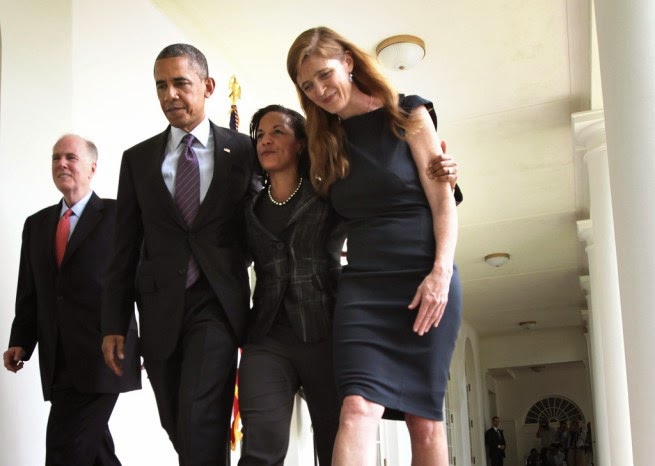

 Aletho News
