Putin signs decree suspending Russia-US deal on plutonium disposal over hostile US actions
RT | October 3, 2016
Russia has suspended a post-Cold War deal with the US on disposal of plutonium from decommissioned nuclear warheads. The decision was explained by “the hostile actions of the US” against Russia and Washington’s failure to observe the terms of the deal.
A decree signed by Russian President Vladimir Putin cites “the radical change in the environment, a threat to strategic stability posed by the hostile actions of the US against Russia, and the inability of the US to deliver on the obligation to dispose of excessive weapons plutonium under international treaties, as well as the need to take swift action to defend Russian security” as justification for suspending the deal.
While Russia suspended the plutonium reprocessing deal, it stressed that the Russian fissile material, which was subject to it, would not be used for any military purpose, be it production of new weapons or research.
The suspension decree has come into force, but it needs to be approved by the Russian parliament, which may overrule the president’s decision. Leonid Slutsky, who’s slated to be appointed head of the Foreign Relations Committee in the newly-elected parliament, said it would be given a priority.
“It’s a very important issue. It’s about taking swift action to protect Russian national security. We will deal with it as soon as the bill is submitted,” he told TASS.
The development was not entirely surprising, since Russia earlier expressed its dissatisfaction with how the US wants to handle plutonium reprocessing.
Washington decided it would be cheaper to mix nuclear materials with special diluents. Russia insisted that the US was violating the terms of the deal, which required it to use a nuclear reactor to transmute plutonium. Unlike the mixing technology, the latter method makes the process irreversible.
The treaty between the US and Russia, which regulates how the two countries are to dispose of plutonium from nuclear warheads decommissioned as part of the parallel reduction of the two countries’ Cold War arsenals, was signed in 2000. Each country was required to dispose of over 34 tons of fissile material by turning it into so-called MOX fuel and burning it in nuclear reactors.
However, costs for building a facility at the Savannah River Site in South Carolina, where the US was supposed to fabricate MOX fuel from its plutonium, spiraled out of control. Under the Obama administration, the US decided that it would instead use the cheaper reversible process, arguing that it was in line with the spirit of the deal with Russia.
Russia expressed its concerns over the unilateral move in April, shortly after a nuclear security summit held in the US.
“We signed an agreement that the plutonium will be processed in a certain way, for which facilities would be purpose-built,” Putin said at the time. “We have met our commitments, and constructed the necessary facilities. The US has not.”
The US rejected the criticism from Russia. The “new US method would not require renegotiation of the agreement,” US State Department spokesperson Jennifer Bavisotto said.
US Syria Policy in Doldrums: Letting Emotions Loose Won’t Help
By Peter KORZUN | Strategic Culture Foundation | 02.10.2016
The United States administration appears to be in panic mode. A number of emotional statements were made by US officials on September 28 to reflect the growing unease with the way the events unfold in Syria and the stance taken by Russia. State Secretary John Kerry threatened to pull out of Russia-US talks on Syria over the situation on Aleppo.
In a phone conversation with Russian Foreign Minister Sergei Lavrov, the State Secretary said the US was preparing to suspend its engagement with Moscow on Syria if Russia didn’t take «immediate steps» to halt the Aleppo offensive.
Citing US officials, The Wall Street Journal reported the administration has renewed an internal debate over giving rebels more firepower to fend off a stepped-up Russian and Syrian assault on their Aleppo stronghold.
The renewed debate centers on what is known as Plan B, authorizing the Central Intelligence Agency and its partners in the region to supply US-supported rebels in Syria with weapons systems to strike Syrian and Russian forces from longer distances, including anti-aircraft missiles.
The package has been on the table for months, but was temporarily shelved after the cessation of hostilities agreement was concluded in February.
John Kirby, the State Department spokesperson, said in his press briefing that, «that extremists and extremists groups will continue to exploit the vacuums that are there in Syria to expand their operations, which will include, no question, attacks against Russian interests, perhaps even Russian cities, and Russia will continue to send troops home in body bags, and they will continue to lose resources – even, perhaps, more aircraft».
This is an unusually hostile and emotional statement that has nothing to do with diplomacy. It sounds more like an invitation for terrorists to attack Russia.
Meanwhile lawmakers are considering legislation to beef up US sanctions against the Syrian government and its «backers».
The bill submitted for consideration by House Foreign Affairs Committee Chairman Ed Royce (R., Calif.) and Rep. Eliot Engel of New York, the panel’s top Democrat, is designed to increase pressure on the military supply chain in Syria by sanctioning the country’s energy industry and penalizing anyone doing business with its telecommunication or transportation sectors. The legislation also would require the White House to submit reports to Congress on risks of establishing and maintaining a no-fly zone or a safe zone in Syria. The calls to establish a «no-fly zone» in Syria are tantamount to advocating an open military confrontation with Russia.
John Kerry has been reported to hold talks with European foreign ministers about stepping up punitive measures.
The US verbal attacks against Russia are made at the very same time extremist forces launch an offensive near the central city of Hama in an attempt to relieve pressure on rebels fighting in Aleppo.
And wasn’t it a coincidence that exactly on September 28 – the date all the «emotional statements» were made – Reuters reported that foreign states had given Syrian rebels surface-to-surface Grad rockets of a type not previously supplied to them?
The Grad rockets with a range of 22 km and 40 km will be used on battlefronts in Aleppo, Hama and the coastal region.
Rebel groups fighting under the Free Syrian Army banner have received military aid from states opposed to President Bashar al-Assad via a US-backed coordination center in Turkey. It means the United States is well aware of the shipments and responsible for implications.
To prevent the fall of Aleppo the US is preparing to allow its Gulf allies – Qatar and Saudi Arabia – to flood the city with shoulder-fired, surface-to-air missiles. Rebels are being told only to target Syrian aircraft, not Russian – but it’s not clear they will abide by this. One needs training to distinguish the types and national identity of air targets – something the rebels definitely lack. «The US won’t let Aleppo fall. We can expect to see Syrian helicopters falling from the sky within weeks», a source said.
Actually, this is nothing else but an open declaration of war by the United States on the Russia-supported Syrian government. The weapons fired in Aleppo will be used to support the Jabhat al Nusra (recently renamed into Jabhat Fateh al-Sham) group, an al Qaeda’s Syrian affiliate and the main fighting force on the ground in Aleppo province. Russia and the United States have agreed to fight it together.
Thus, the US is responsible for providing aid to terrorists while blaming Russia for each and everything that goes awry in Syria. Somehow, these activities were omitted in the texts of the statements made by US officials. Russian Foreign Minister Sergei Lavrov told US Secretary of State John Kerry during a phone conversation that Fateh al-Sham Front had been receiving foreign support and American weapons.
In an interview with German-language daily Kölner Stadt-Anzeiger earlier this week, a Jabhat Fateh al-Sham commander identified only as Abu al-Ezz confirmed that the US is supporting the terror group, saying, «The Americans are on our side».
A very indicative statement to corroborate what Mr. Lavrov said!
The use of military force is also on the table. The options under consideration include a US air strike on a Syrian air base at the distance from the fighting between Syrian government troops and rebel forces in the north.
Actually, having failed to separate the «moderate» rebels from the al Nusra group, America is taking the side of those it vowed to resolutely fight after 9/11. In Syria, it will benefit the Islamic State group as it won’t have to face a united front of forces opposing it.
Other options include sending more Special Operations Forces ((SOF) to «train and advise» Kurdish and Syrian rebel groups and deploying additional American and allied naval and airpower to the eastern Mediterranean, where the French aircraft carrier Charles de Gaulle is already en route.
A military intervention to rescue the «rebels», which amounts to a war to save, the al Nusra Front, could quickly get the US and its allies into the quagmire of prolonged conflict. An incident could spark a real war with Russia. Is it worth it?
The US is in a blind alley in Syria. The administration is evidently at a loss and on the brink of emotional break down. A negotiated settlement the US is trying to back away from is the only viable pathway out of the Syrian crisis, but the United States appears to be more prone to take sides and support terrorist groups. It could admit its failure to live up to the commitments stipulated by the agreement with Russia and separate other groups from al Nusra. It could enhance the coordination of military activities and be more frank and transparent at the talks with Russia.
It could but it didn’t. But there is no escape from reality: Aleppo is doomed to fall. The Syrian government will establish its control over it soon. It will change the military situation into its favor. It’ll strengthen its and Russia’s position for a negotiated settlement of the crisis. And talks will start again as there is no alternative to them.
Despite all the failures of Obama’s policy on Syria, there is a big chance Russia and the United States will join together in the fight against terror. Republican nominee Donald Trump has stated that if elected US president he would weigh an alliance with Russia against Islamic State militants. «When you think about it, wouldn’t it be nice if we got along with Russia?» Trump said.
«Wouldn’t it be nice if we got together with Russia and knocked the hell out of ISIS (Islamic State)?» he asked.
It gives the world a hope. A hope that the United States will have a president with clear vision of national interests and goals to achieve. A hope that the US will no longer openly side with terrorists putting the blame on others for its own mistakes and failures. And a hope that America will have a leader able to convert his words into deeds, even if he won’t be a Nobel Peace Prize laureate.
Russia warns US against ‘direct aggression’
Press TV – October 1, 2016
Russia has warned that any “direct aggression” by the US against the Syrian government or army would lead to “frightening, tectonic shifts” in the Middle East.
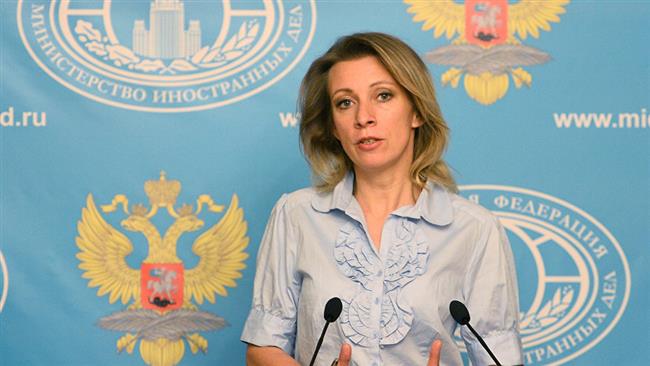
The warning by Russian Foreign Ministry spokeswoman Maria Zakharova on Saturday came after US officials said Washington had begun considering tougher responses to an ongoing Syrian assault on Aleppo, including military options.
Russia has been supporting the Syrian government in its push to take back Aleppo from Takfiri terrorists.
The US is backing what it calls “moderate” militants fighting to topple Syrian President Bashar al-Assad besides carrying out airstrikes against what it calls Daesh targets.
However, with Syrian advances on Aleppo gaining momentum, US officials have hinted at direct attacks on Syrian troops.
US aircraft recently bombed Syrian army positions in Dayr al-Zawr, killing 83 soldiers. The airstrike, which helped Daesh briefly overrun government positions in the area, was characterized by Washington as unintentional but Syria rejected the allegation.
“How could they (Daesh) know that the Americans are going to attack that position in order to gather their militants to attack right away and to capture it one hour after the strike?” Assad asked during an interview with the Associated Press.
Last week, the Middle East Eye news portal cited a source close to militants as saying that the US was resolved to prevent the fall of Aleppo.
The US State Department has warned it was considering the suspension of “bilateral engagement” in Syria unless Russia took “immediate steps to end the assault on Aleppo.”
A US-Russian brokered ceasefire recently fell apart after the American airstrike on Syrian troops.
Obama implicated in Clinton email scandal – New FBI docs

RT | September 24, 2016
President Barack Obama used a pseudonym when communicating with then Secretary of State Hillary Clinton by email, while her IT company referred to her email deleting as a “cover-up”, new FBI documents reveal.
The heavily-redacted documents, almost 200 pages, include summaries of interviews with senior Clinton aides concerning the private email server, and brings to light details previously unknown.
During the interview with Huma Abedin, who served as deputy chief of staff under Clinton, the FBI reportedly presented her with an email exchange between Clinton and a person she did not recognize. The FBI then revealed the unknown person’s name was believed to be a pseudonym used by Obama. Abedin reacted by saying, “How is this not classified?”
This exchange could expose Obama as having mislead the public on the issue, given his 2015 statement that he found out about Clinton’s use of a private email server “the same time everybody else learned it, through news reports.”
The State Department will not make public the emails Clinton exchanged with Obama, citing “presidential communications privilege,” as reason to withhold the emails under the Freedom of Information Act, Politico reports.
The documents also include interview notes with other senior Clinton aides; Cheryl Mills, Jake Sullivan and former Bill Clinton advisor Justin Cooper, who registered the clintonemail.com domain. Romanian hacker Guccifer and a number of state department officials were also interviewed.
The latest FBI document cache also refers to the engineer who used BleachBit to permanently delete emails from Clinton’s server soon after the House Benghazi Committee issued a subpoena for documents relating to the 2012 attack on the US embassy in Libya. According to the engineer, he did this “of his own accord based on his normal practices as an engineer.”
Documents show employees from Platte River Networks, the IT company who managed Clinton’s emails, referring to a request to wipe emails in 2014 as the “Hilary [sic] cover-up operation”. An employee told the FBI this was a joke.
Clinton aide, Bryan Pagliano, said concerns were raised about whether Clinton’s server created a “federal records retention issue” by state department officials in 2009 or 2010. When he communicated these concerns to Mills, however, she said that Clinton’s predecessor, Colin Powell, had also used private email.
The reports further reveal Clinton’s alleged ineptitude with technology, with aides claiming she “could not use a computer,” and didn’t know her email password.
Abedin said she had two computers in her State Department office, one for unclassified communications and another for classified communications. She did most of her work on the unclassified computer and would go “days or weeks without logging into the classified system.”
One redacted interviewee described himself as a “Clintonista” and said he has a relationship with the Clintons dating back years. He said he would meet with Clinton four or five times a day and initially traveled with her until she was comfortable with the position of secretary of state.
The unnamed interviewee said he only became aware of the server after receiving an email from the address, which he thought was spam. He described Clinton as a “paper person” who preferred using paper over electronic communications.
Clinton’s spokesperson, Brian Fallon, responded to the new revelations by saying the interviews “further demonstrate why the Justice Department believed there was no basis to move forward with this case.”
He also criticized the timing of the release, three days before the first debate, in a tweet. Others also questioned the timing , but for a different reason.
The Trump camp said through advisor Jason Miller, the reference to a cover-up “suggests there was a concerted effort to systematically destroy potentially incriminating information.”
READ MORE:
Clinton’s aide left classified briefing paper in Russian hotel – FBI documents
Russia Hopes Next US President to Push for Ratification of Nuclear Test Ban
Sputnik – 23.09.2016
Russia hopes that the next US president will be more committed to ratification by his country of the Comprehensive Nuclear-Test-Ban Treaty (CTBT), which Moscow has already ratified, Russian ambassador to the United Nations Vitaliy Churkin said Friday.
“We hope that the next president of the United States will be more strident in his commitment to [CTBT] ratification,” Churkin said at the UN General Assembly noting that Washington failed to ratify the treaty under the administration of President Barack Obama.
Earlier in the day, UN Security Council has adopted a resolution in support of the early enforcement of the CTBT.
The CTBT was finalized in 1996 and has been signed by the United States and 182 other countries. It was ratified by 166 countries but is yet to be ratified in Washington.
To enter into force, the CTBT requires ratification by all 44 states listed in the annex.
At present, the treaty is ratified by 36 countries, including the three nuclear weapons possessor states — Russia, France and the United Kingdom. The Comprehensive Nuclear-Test-Ban Treaty provides for a legally binding global prohibition against nuclear explosive tests or any other nuclear explosions.
Washington’s Hawks Push New Cold War
By Alastair Crooke | Consortium News | September 20, 2016
Does the failure of the U.S.-backed, major insurgent August “push” on Aleppo – and the terms of the consequent ceasefire, to which some in the U.S. only irascibly agreed – constitute a political defeat for the U.S. and a “win” for Russia?
Yes, in one way: Moscow may, (just may) have cornered America into joint military air attacks on Al Qaeda in Syria, but in another way, one would have to be somewhat cautious in suggesting a Russian “win” (although Foreign Minister Sergey Lavrov’s diplomacy has been indeed tenacious).
Secretary of State John Kerry’s Syria agreement with Lavrov though, has sparked virtual open warfare in Washington. The “Cold War Bloc,” which includes Defense Secretary Ash Carter and House Speaker Paul Ryan, is extremely angry.
The Defense Department is in near open disobedience: when asked in a press teleconference if the military would abide by the terms of the agreement and share information with the Russians after the completion of the seven-day ceasefire, Lt. Gen. Jeffrey Harrigian, the commander of the U.S. Air Forces Central Command, which is directing the bombing campaign in Iraq and Syria, responded: “I think … it would be premature to say we’re going to jump right into it. And I’m not saying yes or no.”
But President Obama wants to define some sort of a foreign policy historical “legacy” (and so does Kerry). And the President probably suspects (with good cause possibly) that his legacy is set to be trashed by his successor, whomsoever it be – the minute he steps down from office.
In brief, the Establishment’s dirty washing is hanging on the line in plain sight. And it does not look great: Ash Carter, whose Department would have to work jointly with Russia in Syria, last week at Oxford University, accused Russia of having a “clear ambition” to degrade the world order with its military and cyber campaigns.
House Speaker Paul Ryan called Russian President Vladimir Putin an “adversary” and an “aggressor” who does not share U.S. interests. There is a U.S. media blitz in train, with powerful forces behind it, which paints Putin as no possible partner for the U.S.
Obama’s Will
Only in the coming days will we see whether Obama still has the will and clout to make the Syria ceasefire agreement stick. But the agreement did not appear out of the blue. One parent was the failure of America’s military “Plan B” (itself a response to the failed February ceasefire), and the other “parent” was Kerry’s wringing of a further concession from Damascus: Obama supposedly agreed to the separation of U.S. insurgent proxies from Al Qaeda (the former Nusra Front now called Jabhat Fateh al-Sham), and to their joint targeting, in return “for the what the Obama administration characterized as the ‘grounding’ of the Syrian air force in the current agreement,” as Gareth Porter has reported.
The U.S. and its Gulf allies – in pursuit of Plan B – had invested enormous effort to break Damascus’ operation to relieve Aleppo from the jihadists’ hold in the northeastern part of the city. The two sides, here (Russia and U.S.), were playing for high stakes: the U.S. wanted its Islamist proxies to take Aleppo, and then to use its seizure by the jihadis as political leverage with which to force Russia and Iran to concede President Bashar al-Assad’s ouster. Plan B, in other words, was still all about “regime change.”
Aleppo, Syria’s second largest city, has from the outset of this conflict been strategically pivotal – its loss would have pulled the rug from under the Syrian government’s guiding objective of keeping the mass of the urban population of Syria within the state’s orbit.
America’s long-standing objective thus would have been achieved – albeit at an indescribable price paid by the inhabitants of western Aleppo, who would have been overrun by the forces of Al Qaeda. Thus, the Syrian government’s recovery of all Aleppo is a major strategic gain.
In the end, however, the U.S. and its Gulf allies did not succeed: their much vaunted Plan B failed. And in failing, the insurgents have sustained heavy loss of life and equipment. Indeed, such are the losses, it is doubtful whether a “push” on this scale could again be mounted by Qatar or Saudi Arabia (despite the post-Aleppo “push” in Hama) .
In spite of the failure of Plan B, the U.S. was not ready to see Al Qaeda isolated and attacked. It wanted it protected. The U.S. ambiguity towards the jihadists of being “at war with the terrorists”; but always maneuvering to stop Syria and Russia from weakening the jihadists was plain in the letter sent by the U.S. envoy to the Syrian opposition Michael Ratney to opposition groups backed by the United States.
The first letter, sent on Sept. 3, after most of the Kerry-Lavrov agreement had already been hammered out, “makes no reference to any requirement for the armed opposition to move away from their Al Qaeda allies, or even terminate their military relationships, and thus implied that they need not do so,” Porter wrote.
A second letter however, apparently sent on Sept. 10, reverses the message: “We urge the rebels to distance themselves and cut all ties with Fateh al-Sham, formerly Nusra Front, or there will be severe consequences.”
Will it happen? Will the agreement be observed? Well, the Syrian conflict is but one leg of the trifecta that constitutes the “new” Cold War theatre: there is the delicate and unstable situation in Ukraine (another leg), and elsewhere NATO is busy building its forces on the borders of the Baltic Republics (the third leg). Any one of these pillars can be wobbled (intentionally) – and crash the delicate political framework of all the others.
Demonizing Russia
Which brings us to the complex question of the current demonization of Russia by the Cold War Bloc (which includes Hillary Clinton) in the U.S. presidential election campaign.
Gregory R. Copley, editor of Defense & Foreign Affairs has described the situation as one in which the U.S. Establishment is deliberately and intentionally “sacrificing key bilateral relationships in order to win [a] domestic election,” adding “in my 50 odd years covering the US government, I have never seen this level of partisanship within the administration where a sitting president actually regards the opposition party as the enemy of the state.”
In short, the stakes being played here – in demonizing Russia and Putin – go well beyond Syria or Ukraine. They lie at the heart of the struggle for the future of the U.S.
There is practical evidence for such caution – for, three days before the Syrian artillery was scything the ranks of Ahrar al-Sham near Aleppo on Sept. 9 to close the chapter on America’s Plan B – (and four days before Ratney’s letter to the Syrian insurgents telling them to separate from Al Qaeda “or else”), Ukrainian President Petro Poroshenko in addressing the Ukrainian parliament, the Rada in Kiev, was eviscerating the Minsk II accords, brokered by German Chancellor Angela Merkel and French President Francois Hollande as the only possible political solution to the Ukrainian civil war.
“Moreover, in a difficult dialogue,” Poroshenko said (see here and here), “we have convinced our western allies and partners that any political settlement must be preceded by apparent and undeniable progress on security issues: a sustainable ceasefire, withdrawal of Russian troops and equipment from the occupied territories, disarmament of militants and their family – and finally the restoration of our control over our own border” (emphasis added.)
Poroshenko, in other words, unilaterally turned the accord on its head: he reversed its order completely. And just to skewer it further, he told Parliament that any decision would be “exclusively yours” and nothing would be done “without your co-operation” – knowing full well that this Ukrainian parliament never wanted Minsk II in the first place.
And Kiev too is deploying along the entire borders of Donetsk and Lugansk. (A description of the military escalation by Kiev can be seen visually presented here).
Is Poroshenko’s U-turn the American “revenge” for Russia’s “win” in Syria – to heat up Ukraine, in order to drown President Putin in the Ukraine marshes? We do not know.
U.S. Vice President Joe Biden has boasted: “I think I tend to be in more direct conversation, for longer periods of time with the President [Poroshenko], than with my wife. (Laughter.) I think they both regret that (Laughter).”
Is it possible that Biden was not consulted before Poroshenko made his annual address to the Rada? We do not know, although within 48 hours of Poroshenko’s making his Rada address, Defense Secretary Ash Carter was in London, recommitting to Ukraine’s sovereignty and territorial integrity, as he signed a “bilateral partner concept” with the Ukrainian defense minister.
Provoking Russia
What we do know however, is that this is – and is intended to be – a direct provocation to Russia. And to France and Germany, too. Within a week, however, Poroshenko was backtracking as “coincidentally” a new IMF loan was being floated for Kiev, just as the German and French Foreign ministers insisted on the Minsk formula of “truce – special status – elections in Donbass – control of the border” be respected – and as the Donetsk and Lugansk leadership unexpectedly offered a unilateral ceasefire.
But Poroshenko’s “backtrack” was itself “backtracked” by Sept. 16, when the French and German visiting Foreign Ministers were reportedly told that Ukraine’s government now refused to implement the Minsk accord as it stood, as it now insists that the order be fully reversed: “truce – control of the border – elections.”
The American bitter internal election “civil war” is now shaking the pillars of the tripod on which America’s – and Europe’s – bilateral relations with Russia stand. It would therefore seem a stretch now for Obama to hope to prevail with any “legacy strategy” either in the Middle East or Ukraine that is contingent on cooperation with Russia.
The U.S. Establishment seems to have come to see the very preservation of the global status quo as linked to their ability to paint Trump as President Putin’s instrument for undermining the entire U.S. electoral system and the U.S.-led global order.
To the world outside, it seems as if the U.S. is seized by a collective hysteria (whether genuine, or manufactured for political ends). And it is not clear where the U.S. President now stands in this anti-Russian hysteria having likened Putin to Saddam Hussein, and having accused the Republican nominee of trying to “curry favor” with the Russian president – for having appeared on “Larry King Live” which is now broadcast by Russia Today.
But the bigger question is the longer-term consequence of all this: some in the “Hillary Bloc” still hanker for “regime change” in Moscow, apparently convinced that Putin’s humiliation in either Syria (not so likely now), or in Ukraine, could see him deposed in the March 2018 Russian Presidential elections, for a more Atlanticist, more “acceptable” leader.
It is unadulterated wishful thinking to imagine that Putin could be displaced thus – and more likely, Ukraine (with its prolific ‘kith and kin’ ties to Russians) used as a lever to “humiliate” President Putin will prove counter-productive, serving only to harden antagonism towards the U.S., as ethnic Russians die at the hands of rightist Ukrainian “militia.”
But it is certainly so that this campaign is strengthening the hand of those in Russia who would like to see President Putin taking a less “conciliatory line” towards the West. So, we may be heading towards more troubled waters.
Alastair Crooke is a former British diplomat who was a senior figure in British intelligence and in European Union diplomacy. He is the founder and director of the Conflicts Forum, which advocates for engagement between political Islam and the West.
Whose Rebels? Three years since chemical weapons massacre in Ghouta, Assad found not guilty

Pro rebels demonstration at Brandenburg Gate in Berlin two years after the chemical attacks on the Damascus suburbs
By David Macilwain | American Herald Tribune | September 20, 2016
Three long and terrible years have now passed since the staging of a Sarin attack in the Eastern suburbs of Damascus. These years have cost the lives of twice as many Syrians as had been killed in the preceding two and a half years of this unnecessary war against the Syrian state.
Yet it needn’t have been like this. Following the apparent chemical weapons attack on the Opposition-held suburb of Ghouta in the early hours of August 21st 2013 – for which the Syrian government was immediately held responsible by Western leaders and media – a ‘punitive’ military strike was proposed by the White House. This was averted, at the very last minute, by Russia’s proposal for the UN-supervised destruction of Syria’s chemical weapons stocks, or so it seemed.
Writing in a seminal article published by the London Review of Books that December, veteran investigative journalist Seymour Hersh reported that sections of the US intelligence community had also advised the White House to call off the strike, because of serious doubts about who was actually responsible for the Sarin attack.
But Hersh’s article – ‘Whose Sarin?’ – was comprehensively ignored by the Western media and even, it must be said, in the letters pages of the journal which had been brave enough to publish it. By comparison, his revelations were championed in the media of Syria and her allies, as well as by Syria’s supporters in the West, who had never given the slightest credibility to claims the Syrian government had launched Sarin-filled missiles ‘at its own people’. Such an idea, in the straightforward words of Russia’s President Putin, was ‘utter nonsense’.
And yet this idea persists, and continues to poison the minds of so many in the West who might otherwise have put an end to the illicit and covert war against the Syrian state and its people. Not only does the ‘original lie’ about the Ghouta attack get restated by self-described ‘supporters of the Syrian People’, but the facile idea of the ‘regime’ using chemical weapons has been reborn. Even before all the sarin and mustard gas stocks were destroyed, there were warnings that Chlorine might be used instead; now ‘chlorine filled barrel bombs’ have become a preferred method of killing people the government doesn’t like, according to Opposition activists. For the multiple NGOs, media and Western audience who condone the insurgency it matters not that these claims are vacuous and mendacious.
The focus of ‘Whose Sarin?’ was mostly on how much US intelligence knew about the abilities of terrorist groups in Syria – Al Nusra/Al Qaeda and ‘AQI’, later to become ‘ISIS’ – to manufacture Sarin, and the consequent doubts about Syrian government responsibility for the Ghouta attack. While Hersh noted the observations of missile experts Lloyd and Postol that cast real doubts on the origins of the suspect Sarin-loaded missiles, he didn’t offer an opinion on the lack of an ‘a priori’ case against the Assad government; I think it must be restated now.
Following claims that Sarin had been used in a missile strike in the village of Khan al Assal, near Aleppo in March 2013, attributed to Al Nusra by a Russian investigation team, the Syrian government had been demanding a UN investigation of this incident. Although the UN representative Carla del Ponte agreed with the Russian conclusion, the US took the word of the Syrian opposition that the government was responsible, despite those targeted and killed in the strike being government supporters. Not until the 19th of August did a UN team arrive in Damascus to investigate the Khan al Assal strike, as well as opposition claims of two other smaller Sarin attacks.
But before the UN team could arrange their visit to Khan al Assal, the Ghouta attack occurred, as evidenced by videos released and spread through social media. What actually happened there, and in the suburb of Moadamiya where claims of a Sarin-loaded missile were not substantiated in the UN investigation, remains in doubt. Quite startlingly the declarations of outrage from President Obama and John Kerry that 1430 innocent civilians had been gassed were supported by zero evidence; not one single autopsy showing death from Sarin was carried out, as the UN team confined its investigation to a mere 36 supposed victims who survived the attack. Even the evidence from those victims was inconclusive, though that was hardly surprising given these ‘victims’ were supplied by ‘activists’ in Moadamiya, where no Sarin contamination was found.
Notwithstanding this lack of real evidence for a Sarin attack, regardless of the culprit, and the rapid emergence of doubts on the authenticity of the crucial video evidence, a fact that even disturbed some Western commentators was the absence of any rationale for such a chemical weapons attack on the Syrian government side. Not only had the Syrian Army made recent gains in driving back the insurgency, and was working hard on reconciliation in divided communities, but the government quite clearly had a lot to lose by launching such a criminal and militarily useless attack. To choose to launch such an attack, ostensibly against innocent civilians, right under the noses of the UN chemical weapons investigators just after their arrival next-door to the crime scene would have been more than stupid – it was simply incomprehensible!
Perhaps it was at this point that the two sides of the narrative on the Syrian war parted company. No-one whose survival now depended on the Syrian Arab Army and its allies could believe the talk from the West – of ‘humanitarian intervention’, and of ‘moderate rebels’ wanting a secular democracy. And when the support of Syrians for their Army and President was put to the test in the elections of May 2014 the great majority of them offered it enthusiastically. Conversely in the Western sphere of influence, in the countries supporting the insurgency directly and indirectly, and amongst Syrian refugees in those countries, the case was closed against President Assad and the Syrian army. Even though the military strike had been called off, this was on the condition Syria’s chemical weapons stocks were destroyed – an action that clearly assumed the Syrian government had used Sarin and must be prevented from doing so again.
Although the evident plan in some quarters to prosecute an illegitimate war on Syria with direct military intervention using the attack as a pretext was foiled, the success of the Ghouta ‘false flag’ operation was clear in a different respect – as a demonstration that the Western public could now be made to believe almost anything, however implausible, with emotive manipulation. Both before and since the Ghouta operation, opposition videos showing children killed and injured by ‘Assad’s bombs’ have been very skilfully employed to conceal the truth of these vile attacks on humanity. Nowhere was this more the case than with the Ghouta Sarin attack videos.
While most of the bodies pictured in those videos were shown wrapped in white cloth and unidentified, many dead children were pictured as they died in their variety of ordinary clothes, and were soon identified. Some two weeks earlier, one of the most brutal and barbaric attacks by ‘rebel’ forces had been launched against some Alawite villages near Lattakia, with hundreds massacred but also over a hundred women and children kidnapped. Their fate was unknown until relatives recognised some of those children in the videos of ‘Sarin victims’, even though these videos were released 16 days later and 200 kilometres away in Damascus. In subsequent close analysis of the videos it was then observed that some of the same children appeared in videos released in different suburbs, in different positions and surroundings.
The unspeakable barbarity of the ‘rebels’, who all came together to take part in the massacre and then so callously made ‘snuff videos’ to use as a propaganda weapon, should cause us to reflect on how the reporting of these atrocities went virtually unnoticed by our ‘humanitarian’ agencies, and remained uncondemned by the UN. The apparent condoning of this sectarian attack on rural Alawite communities – which was seen by some as a payback for the Syrian Army’s liberation of Al Qusair two months earlier – has unpleasant echoes in the reaction of those same agencies to recent events in Aleppo. Before considering these events, and the renewed threat of a catastrophic war, there is another story to be told for which Seymour Hersh’s further investigations provide a lead.
Having established ‘whose Sarin’ was used in Ghouta – and more recent investigations confirmed beyond reasonable doubt that the Sarin was not from Syrian government stocks – the question that must now be answered is ‘whose Rebels?’. It has been no secret for some time that Opposition forces in Syria are being supplied with ammunition and weapons from neighbouring countries, and that ‘jihadis’ from many countries have been flowing over Syria’s borders to join the fight. The Orwellian ‘Friends of Syria’ countries – the Western and Gulf states supporting the Syrian Opposition against the Syrian state – have long maintained that this support for the insurgency is being assisted and paid for by individuals over whom states have little control. While they might allow that some governments – Turkey for instance – are ‘not doing enough’ to stop the flow of fighters and arms across their borders, no Western leaders or mainstream media organisations will admit to the truth of direct state support for the insurgency.
The reality of this barely covert and illicit support from foreign governments for all the armed groups fighting in Syria is however like the proverbial ‘elephant in the room’, and the inability to see it barely comprehensible. It is as if the whole Western populace has been subject to a feat of mass hypnosis by their corporate media, who have themselves become witless facilitators of their governments’ agendas. The official ‘narrative’ of the ‘Civil War in Syria’ has now become self-sustaining, with the same false memes pervading every part of the Western media echo-chamber.
Yet ask anyone outside this chamber – and particularly the 17 million Syrians who have remained in and support their country – and they will tell you all we need to know about the ‘elephant’. They have long realised that – at its simplest – there is no ‘civil war’ in Syria, having its origins in an authentic sectarian uprising against an oppressive and brutal ‘Alawite’ government. The conflict is rather seen as a war on Syria being waged by a proxy army of ruthless ‘takfiris’, against which all actions of the Syrian Arab Army are considered legitimate self-defence of Syria and its people. Some Syrians may consider that the war was not like this from the start, but now accept the reality of foreign sponsorship of the insurgency and fully support the government and army’s fight against it.
Within days of the first protest rallies in Dera’a on the border with Jordan however, it became abundantly clear to the government that arms and fighters had infiltrated Syria’s borders, with assistance from foreign agencies and with the express intention of fomenting a ‘popular uprising’. The role played by Al Jazeera and Al Arabiya, the state broadcasters for the key Arab states seeking the overthrow of the Assad government, in ‘spreading false news’ and thereby inciting rebellion, was fundamental in this operation. While the better informed and educated populations in the cities and in areas historically supportive of the government were sceptical of Al Jazeera’s reports and soon recognised their bias and fabrications, those in poorer rural areas readily accepted the false accusations against the government and army. What might have been peaceful protests, with legitimate demands that the government initially sought to address, rapidly descended into a spiral of violence. This was not as portrayed in the West, as a result of a ‘brutal crackdown’ by the security forces, but because of the reaction of those forces to lethal fire from ‘agents provocateurs’ amongst the protestors or hidden in nearby buildings. Adding insult to injury, soldiers who were killed by these snipers were reported by opposition fighters as having been shot ‘for failing to fire on protestors’, or for attempted desertion. These false assertions, relayed to the Western media by local and foreign ‘activists’, laid the basis for the ‘information war’ against Syria.
Building on this narrative that the Syrian army, under the command of Bashar al Assad, was determined to stamp out the protests by any means, including by committing massacres of innocent and unarmed civilians, the ‘Free Syrian Army’ was contrived as a self-defence force for ‘the Syrian people’. Thanks to the developing links between Al Jazeera and some Western media organisations the completely false narrative of ‘the Syrian Popular Revolution’ took root in the western mind. This movement was assisted by the formation of the ‘Syrian National Council’ from the expat Syrian community in France, the US and UK. The SNC was strongly affiliated with the Muslim Brotherhood, ejected from Syria in 1982 by Bashar al Assad’s father Hafez, following the Brotherhood’s earlier violent attempts to undermine the central government. While the political significance of this group was not lost on the Syrian government or amongst Syrians, given that both Qatar – the home of Al Jazeera – and Turkey also had strong allegiance to the Muslim Brotherhood, the connection was dismissed or ignored by the ‘Friends of Syria’ and their subject populations. Astoundingly, following meetings with western leaders, this self-elected group of people, most of whom hadn’t set foot in Syria for thirty years, were pronounced as ‘the legitimate representatives of the Syrian people’ by their Western ‘friends’, and proposed as the government-in-waiting once Bashar al Assad was removed.
More astounding even than this was the acceptance by almost all NGOs, the UN, commentators and general public of this self-evident fiction. I shouldn’t even have to explain why people who have been through no conceivably democratic process of selection by any small fraction of ‘the Syrian people’, who don’t reside in Syria, and who seek the overthrow of Syria’s legitimate government cannot be legitimate representatives of anyone – other than the foreign states on whose behalf they are evidently acting. That the ‘Friends of Syria’ consider them so tells us just which foreign states these are.
While the SNC was always presented as a political group, and with only a tenuous connection to ‘Opposition’ fighters in Syria, this may be seen as one of the ways its ‘supporting powers’ concealed their own direct support for the armed insurgency. The years of rhetoric about a ‘peace process’, and vacuous debate over whether Assad could play a role in an interim government, gave false legitimacy to the role of the US in particular in its contribution to the Syrian conflict. Despite the wide acknowledgement of the false claims used by the US in its war against Iraq, the similar role it had played in fomenting and supporting the violent war on Syria went unnoticed, even amongst the most vocal left-wing opponents of US policies and ‘foreign interventions’.
Many mainstream commentators repeatedly represent the US role in the Syrian war as one of ‘reluctance to become involved’, while supporters of the armed insurgency both within and without Syria frequently complain about the ‘US failure’ to help the ‘rebels’, both militarily and politically. This call for intervention is echoed by influential NGOs such as Amnesty International and Medecins Sans Frontieres and charities such as Save the Children, as well as the UN and UNHRC.
Faced with the reality, of significant covert military assistance to the Syrian insurgency by the CIA, as discussed in detail by Seymour Hersh in two later articles published by the LRB, we have a difficult choice. Either these NGOs who are helping the opposition forces in Syria are ignorant of the direct US military support for armed groups conducting daily attacks on Syrian civilians and soldiers, or they condone this support. Clearly it is preferable to believe that these respected humanitarian agencies, who claim to be apolitical and oppose all violence against unarmed civilians, are ignorant of the extent and criminality of US and other foreign military support for the violent extremists and mercenaries who increasingly dominate the opposition forces in Syria.
Perhaps they did not read, or chose to dismiss the unchallengeable evidence for a ‘Rat line’ of both weapons and fighters from Libya through Turkey into Syria, facilitated since 2012 by the CIA and the Turkish Intelligence organisation MIT, as discussed in April 2014 by Seymour Hersh. (LRB, ‘Obama, Erdogan and the Syrian Rebels’). Hersh reiterates and further elaborates on the operation of the CIA’s rat line in his most recent article discussing intelligence sharing between the US and Syria (Military to Military, LRB January 7th 2016), noting the state department’s support for the operation, and apparent carelessness about the final destination of the weapons or the true nature of the ‘rebels’ they were arming. During this period the CIA was also running a training program for opposition fighters in Jordan who then joined jihadist forces fighting the Syrian army up to Damascus. Credible reports put the number of mercenaries so trained and armed at around 10,000 over several years.
While both these covert and illegal US operations were quite visible to those who looked, the false narrative about US reluctance to arm the ‘rebel’ forces remains dominant, sustained by periodic statements from the White House. Following constant calls from sections of Congress and pressure groups, the US finally ‘agreed’ to set up a ‘train and assist program’, selecting suitable ‘moderate’ Syrians for this force, not to fight ‘Assad’s Army’ but Islamic State. Much was made of the failure of this programme and the rapid defeat of its first recruits by Al Nusra. In fact it was a significant success for the White House in concealing the reality of its massive contribution to the violent military campaign to change Syria’s government. Considering the number of innocent Syrians who have been killed by US weapons, used by US trained mercenaries and foreign fighters, it was a truly criminal deception.
This deception continued until late last year, when Russia’s intervention in support of the Syrian army finally brought ‘the Rats’ out into the daylight. The US could no longer hide the armed groups it was supporting within the main Opposition-held area in the north-west as the Syrian army backed by Russian air power advanced towards Aleppo; it was forced to reveal their identity and location, and appeal to the Russians to avoid bombing these US-approved ‘moderate rebels’. No-one thought to point out that if these ‘vetted’ groups were there to fight Islamic State, they seemed to be in the wrong place, at least according to their sponsors. The US had complained since the start of the Russian air-campaign that Russia was targeting the ‘moderate rebels’ – claiming there was no IS presence around Aleppo.
But this left another problem for the US covert operation – Syria’s Al Qaeda. The dominant presence of this group around Aleppo, which has been holding Aleppo under siege for years while subjecting the government-supporting population to constant terrorist attacks, makes it the prime target for the Syrian forces and Russian air-strikes. Unable to deny that the ‘Al Nusra front’ did dominate the armed groups in East Aleppo, or persuade Russia not to target the terrorist group for fear it might kill ‘moderate rebels’ the West is vocally supporting, the US came up with another idea, claiming Al Nusra had cut ties with Al Qaeda and would henceforth be known as ‘Jabhat Fatah al Sham’. Even though this was so transparently disingenuous – and statements from the new ‘Foreign Media Relations Director’ of ‘Fatah al Sham’ confirmed the group’s continuing extremist Islamist agenda – the name-changing ruse worked.
Following a long-awaited campaign to liberate Aleppo from Al Nusra’s siege by the Syrian army, assisted by Iranian and Lebanese forces and the Russian air force, and the breaking of their resupply route from Turkey, an estimated force of 10,000 armed militants launched a huge counter attack on West Aleppo (at the end of July). Quite astonishingly the assistance of Al Qaeda’s suicide bombers in making this a ‘successful’ assault was acknowledged and even welcomed by Western media, who took their cue from aid agencies and others supporting the ‘besieged rebels’ in their hold-out in East Aleppo. One of the most influential of these ‘aid’ agencies is the ‘Syrian Civil Defence’ or White Helmets, whose logo can be seen on many videos showing people being rescued from buildings allegedly destroyed by Syrian or Russian bombs. While the White Helmets’ origins with MI6 are not hidden, – origins which should cast serious doubt both on their reports and their actual activities – Western media agencies have managed to ignore them.
Indeed one wonders now whether the White Helmets’ evident support for Al Nusra would any longer serve to disqualify it as a recipient of the West’s charitable and political assistance. If Al Qaeda’s suicide bombers can now be viewed as ‘good suicide bombers’ for helping the cause, then presumably the White Helmets would also be praised for their supporting role.
Yet it is only a supporting role. Taking advantage of the ceasefire and ‘humanitarian pause’ in the Syrian campaign forced on it by the West, huge new stocks of US weapons and vehicles paid for by local allies were shipped in across the Turkish border to resupply ‘rebel forces’. For the first time these included MANPADS, enabling Syrian or Russian planes to be shot down.
Perhaps now we should consider the disdain and disgust amongst Syrians, not just for those who kill their brave and loyal soldiers, but for those amongst us who would celebrate the brutal deaths of their loved ones and protectors. Consider the particular degree of wrath reserved for ‘terrorists’ who dare to kill just one of our soldiers on our own soil, or for those who seek to justify or even explain such brutality as a response to our own murderous campaigns in their homelands.
Having established, beyond a shadow of doubt, that neither the Syrian government nor any of its agents was responsible for the deaths of civilians from Sarin poisoning in Ghouta three years ago, it follows that all subsequent action taken directly or indirectly against Syria has been illegitimate. It also follows that responsibility for the deaths and injury of tens of thousands of innocent Syrian civilians and as many loyal Syrian soldiers and defence forces at the hands of violent sectarian extremists and mercenaries since August 2013, lies with those who have – in full knowledge of the truth – developed and maintained the fraudulent supporting narrative of the ‘Syrian civil war’ in the Western sphere.
How did it come to this – a situation where the truth of the ‘dirty war on Syria’ is completely concealed from those whose governments are conducting it, while being known to all those who are the victims of it in Syria? How can our comprehension of the motives and methods of our own governments be so lacking that they can literally get away with murder, while claiming the moral high ground and pretending sympathy with their victims?
But do we also share some responsibility for these crimes against humanity, for our gullibility in believing only the stories told by one party to the conflict, while rejecting those of the actual victims of the war – the Syrian people and their defence forces?
America’s Worldwide Impunity
By Robert Parry | Consortium News | September 19, 2016
After several years of arming and supporting Syrian rebel groups that often collaborated with Al Qaeda’s Nusra terror affiliate, the United States launched an illegal invasion of Syria two years ago with airstrikes supposedly aimed at Al Qaeda’s Islamic State spin-off, but on Saturday that air war killed scores of Syrian soldiers and aided an Islamic State victory.
Yet, the major American news outlets treat this extraordinary set of circumstances as barely newsworthy, operating with an imperial hubris that holds any U.S. invasion or subversion of another country as simply, ho-hum, the way things are supposed to work.
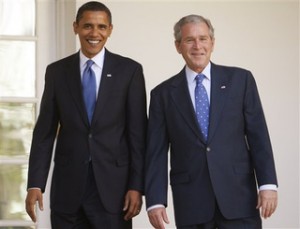
Barack Obama and George W. Bush at the White House
On Monday, The Washington Post dismissed the devastating airstrike at Deir al-Zour killing at least 62 Syrian soldiers as one of several “mishaps” that had occurred over the past week and jeopardized a limited ceasefire, arranged between Russia and the Obama administration.
But the fact that the U.S. and several allies have been routinely violating Syrian sovereign airspace to carry out attacks was not even an issue, nor is it a scandal that the U.S. military and CIA have been arming and training Syrian rebels. In the world of Official Washington, the United States has the right to intervene anywhere, anytime, for whatever reason it chooses.
President Barack Obama has even publicly talked about authorizing military strikes in seven different countries, including Syria, and yet he is deemed “weak” for not invading more countries, at least more decisively.
Democratic presidential nominee Hillary Clinton has vowed to engage in a larger invasion of Syria, albeit wrapping the aggression in pretty words like “safe zone” and “no-fly zone,” but it would mean bombing and killing more Syrian soldiers.
As Secretary of State, Clinton used similar language to justify invading Libya and implementing a “regime change” that killed the nation’s leader, Muammar Gaddafi, and unleashed five years of violent political chaos.
If you were living in a truly democratic country with a truly professional news media, you would think that this evolution of the United States into a rogue superpower violating pretty much every international law and treaty of the post-World War II era would be a regular topic of debate and criticism.
Those crimes include horrendous acts against people, such as torture and other violations of the Geneva Conventions, as well as acts of aggression, which the Nuremberg Tribunals deemed “the supreme international crime differing only from other war crimes in that it contains within itself the accumulated evil of the whole.”
Justifying ‘Regime Change’
Yet, instead of insisting on accountability for American leaders who have committed these crimes, the mainstream U.S. news media spreads pro-war propaganda against any nation or leader that refuses to bend to America’s imperial demands. In other words, the U.S. news media creates the rationalizations and arranges the public acquiescence for U.S. invasions and subversions of other countries.
In particular, The New York Times now reeks of propaganda, especially aimed at two of the current targets, Syrian President Bashar al-Assad and Russian President Vladimir Putin. With all pretenses of professionalism cast aside, the Times has descended into the status of a crude propaganda organ.
On Sunday, the Times described Assad’s visit to a town recently regained from the rebels this way: “Assad Smiles as Syria Burns, His Grip and Impunity Secure.” That was the headline. The article began:
“On the day after his 51st birthday, Bashar al-Assad, the president of Syria, took a victory lap through the dusty streets of a destroyed and empty rebel town that his forces had starved into submission.
“Smiling, with his shirt open at the collar, he led officials in dark suits past deserted shops and bombed-out buildings before telling a reporter that — despite a cease-fire announced by the United States and Russia — he was committed ‘to taking back all areas from the terrorists.’ When he says terrorists, he means all who oppose him.”
The story by Ben Hubbard continues in that vein, although oddly the accompanying photograph doesn’t show Assad smiling but rather assessing the scene with a rather grim visage.
But let’s unpack the propaganda elements of this front-page story, which is clearly intended to paint Assad as a sadistic monster, rather than a leader fighting a foreign-funded-and-armed rebel movement that includes radical jihadists, including powerful groups linked to Al Qaeda and others forces operating under the banner of the brutal Islamic State.
The reader is supposed to recoil at Assad who “smiles as Syria burns” and who is rejoicing over his “impunity.” Then, there’s the apparent suggestion that his trip to Daraya was part of his birthday celebration so he could take “a victory lap” while “smiling, with his shirt open at the collar,” although why his collar is relevant is hard to understand. Next, there is the argumentative claim that when Assad refers to “terrorists” that “he means all who oppose him.”
As much as the U.S. news media likes to pride itself on its “objectivity,” it is hard to see how this article meets any such standard, especially when the Times takes a far different posture when explaining, excusing or ignoring U.S. forces slaughtering countless civilians in multiple countries for decades and at a rapid clip over the past 15 years. If anyone operates with “impunity,” it has been the leadership of the U.S. government.
Dubious Charge
On Sunday, the Times also asserted as flat fact the dubious charge against Assad that he has “hit civilians with gas attacks” when the most notorious case – the sarin attack outside Damascus on Aug. 21, 2013 – appears now to have been carried out by rebels trying to trick the United States into intervening more directly on their side.
A recent United Nations report blaming Syrian forces for two later attacks involving chlorine was based on slim evidence and produced under great political pressure to reach that conclusion – while ignoring the absence of any logical reason for the Syrian forces to have used such an ineffective weapon and brushing aside testimony about rebels staging other gas attacks.
More often than not, U.N. officials bend to the will of the American superpower, failing to challenge any of the U.S.-sponsored invasions over recent decades, including something as blatantly illegal as the Iraq War. After all, for an aspiring U.N. bureaucrat, it’s clear which side his career bread is buttered.
We find ourselves in a world in which propaganda has come to dominate the foreign policy debates and – despite the belated admissions of lies used to justify the invasions of Iraq and Libya – the U.S. media insists on labeling anyone who questions the latest round of propaganda as a “fill-in-the-blank apologist.”
So, Americans who want to maintain their mainstream status shy away from contesting what the U.S. government and its complicit media assert, despite their proven track record of deceit. This is not just a case of being fooled once; it is being fooled over and over with a seemingly endless willingness to accept dubious assertion after dubious assertion.
In the same Sunday edition which carried the creepy portrayal about Assad, the Times’ Neil MacFarquhar pre-disparaged Russia’s parliamentary elections because the Russian people were showing little support for the Times’ beloved “liberals,” the political descendants of the Russians who collaborated with the U.S.-driven “shock therapy” of the 1990s, a policy that impoverished a vast number of Russians and drastically reduced life expectancy.
Why those Russian “liberals” have such limited support from the populace is a dark mystery to the mainstream U.S. news media, which also can’t figure out why Putin is popular for significantly reversing the “shock therapy” policies and restoring Russian life expectancy to its previous levels. No, it can’t be that Putin delivered for the Russian people; the only answer must be Putin’s “totalitarianism.”
The New York Times and Washington Post have been particularly outraged over Russia’s crackdown on “grassroots” organizations that are funded by the U.S. government or by billionaire financial speculator George Soros, who has publicly urged the overthrow of Putin. So has Carl Gershman, president of the National Endowment for Democracy (NED), which funnels U.S. government cash to political and media operations abroad.
The Post has decried a Russian legal requirement that political entities taking money from foreign sources must register as “foreign agents” and complains that such a designation discredits these organizations. What the Post doesn’t tell its readers is that the Russian law is modeled after the American “Foreign Agent Registration Act,” which likewise requires people trying to influence policy in favor of a foreign sponsor to register with the Justice Department.
Nor do the Times and Post acknowledge the long history of the U.S. government funding foreign groups, either overtly or covertly, to destabilize targeted regimes. These U.S.-financed groups often do act as “fifth columnists” spreading propaganda designed to undermine the credibility of the leaders, whether that’s Iranian Prime Minister Mohammad Mosaddegh in 1953 or Ukrainian President Viktor Yanukovych in 2014.
Imperfect Leaders
That’s not to say that these targeted leaders were or are perfect. They are often far from it. But the essence of propaganda is to apply selective outrage and exaggeration to the leader that is marked for removal. Similar treatment does not apply to U.S.-favored leaders.
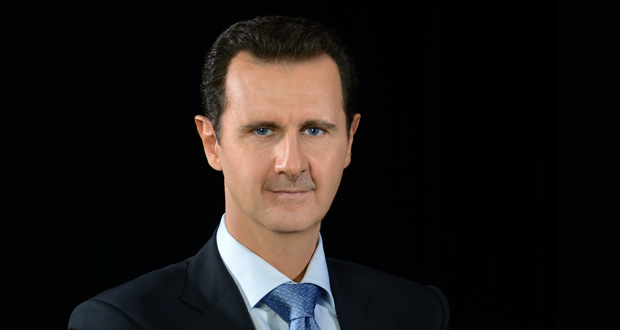
Syrian President Bashar al-Assad
The pattern of the Times and Post is also to engage in ridicule when someone in a targeted country actually perceives what is going on. The correct perception is then dismissed as some sort of paranoid conspiracy theory.
Take, for example, the Times’ MacFarquhar describing a pamphlet and speeches from Nikolai Merkushkin, the governor of Russian region of Samara, that MacFarquhar says “cast the blame for Russia’s economic woes not on economic mismanagement or Western sanctions after the annexation of Crimea but on a plot by President Obama and the C.I.A. to undermine Russia.”
The Times article continues: “Opposition candidates are a fifth column on the payroll of the State Department and part of the scheme, the pamphlet said, along with the collapse in oil prices and the emergence of the Islamic State. Mr. Putin is on the case, not least by rebuilding the military, the pamphlet said, noting that ‘our country forces others to take it seriously and this is something that American politicians don’t like very much.’”
Yet, despite the Times’ mocking tone, the pamphlet’s perceptions are largely accurate. There can be little doubt that the U.S. government through funding of anti-Putin groups inside Russia and organizing punishing sanctions against Russia, is trying to make the Russian economy scream, destabilize the Russian government and encourage a “regime change” in Moscow.
Further, President Obama has personally bristled at Russia’s attempts to reassert itself as an important world player, demeaning the former Cold War superpower as only a “regional power.” The U.S. government has even tread on that “regional” status by helping to orchestrate the 2014 putsch that overthrew Ukraine’s elected President Yanukovych on Russia’s border.
After quickly calling the coup regime “legitimate,” the U.S. government supported attempts to crush resistance in the south and east which were Yanukovych’s political strongholds. Crimea’s overwhelming decision to secede from Ukraine and rejoin Russia was deemed by The New York Times a Russian “invasion” although the Russian troops that helped protect Crimea’s referendum were already inside Crimea as part of the Sevastopol basing agreement.
The U.S.-backed Kiev regime’s attempt to annihilate resistance from ethnic Russians in the east – through what was called an “Anti-Terrorism Operation” that has slaughtered thousands of eastern Ukrainians – also had American backing. Russian assistance to these rebels is described in the mainstream U.S. media as Russian “aggression.”
Oddly, U.S. news outlets find nothing objectionable about the U.S. government launching military strikes in countries halfway around the world, including the recent massacre of scores of Syrian soldiers, but are outraged that Russia provided military help to ethnic Russians being faced with annihilation on Russia’s border.
Because of the Ukraine crisis, Hillary Clinton likened Vladimir Putin to Adolf Hitler.
Seeing No Coup
For its part, The New York Times concluded that there had been no coup in Ukraine – by ignoring the evidence that there was one, including an intercepted pre-coup telephone call between U.S. Assistant Secretary of State Victoria Nuland and U.S. Ambassador Geoffrey Pyatt discussing who should be made the new leaders of Ukraine.
The evidence of a coup was so clear that George Friedman, founder of the global intelligence firm Stratfor, said in an interview that the overthrow of Yanukovych “really was the most blatant coup in history.” But the Times put protecting the legitimacy of the post-coup regime ahead of its journalistic responsibilities to its readers, as it has done repeatedly regarding Ukraine.
Another stunning case of double standards has been the mainstream U.S. media’s apoplexy about alleged Russian hacking into emails of prominent Americans and then making them public. These blame-Russia articles have failed to present any solid evidence that the Russians were responsible and also fail to note that the United States leads the world in using electronic means to vacuum up personal secrets about foreign leaders as well as average citizens.
In a number of cases, these secrets appear to have been used to blackmail foreign leaders to get them to comply with U.S. demands, such as the case in 2002-03 of the George W. Bush administration spying on diplomats on the U.N. Security Council to coerce their votes on authorizing the U.S. invasion of Iraq, a ploy that failed.
U.S. intelligence also tapped the cell phone of German Chancellor Angela Merkel, whose cooperation on Ukraine and other issues of the New Cold War is important to Washington. And then there’s the massive collection of data about virtually everybody on the planet, including U.S. citizens, over the past 15 years during the “war on terror.”
Earlier this year, the mainstream U.S. news media congratulated itself over its use of hacked private business data from a Panama-based law firm, material that was said to implicate Putin in some shady business dealings even though his name never showed up in the documents. No one in the mainstream media protested that leak or questioned who did the hacking.
Such mainstream media bias is pervasive. In the case of Sunday’s Russian elections, the Times seems determined to maintain the fiction that the Russian people don’t really support Putin, despite consistent opinion polls showing him with some 80 percent approval.
In the Times’ version of reality, Putin’s popularity must be some kind of trick, a case of totalitarian repression of the Russian people, which would be fixed if only the U.S.-backed “liberals” were allowed to keep getting money from NED and Soros without having to divulge where the funds were coming from.
The fact that Russians, like Americans, will rally around their national leader when they perceive the country to be under assault – think, George W. Bush after the 9/11 attacks – is another reality that the Times can’t tolerate. No, the explanation must be mind control.
The troubling reality is that the Times, Post and other leading American news outlets have glibly applied one set of standards on “enemies” and another on the U.S. government. The Times may charge that Bashar al-Assad has “impunity” for his abuses, but what about the multitude of U.S. leaders – and, yes, journalists – who have their hands covered in the blood of Iraqis, Libyans, Afghans, Yemenis, Syrians, Somalis and other nationalities. Where is their accountability?
Investigative reporter Robert Parry broke many of the Iran-Contra stories for The Associated Press and Newsweek in the 1980s. You can buy his latest book, America’s Stolen Narrative, either in print here or as an e-book (from Amazon and barnesandnoble.com).
The Façade of “Humanitarian Intentions” in Libya
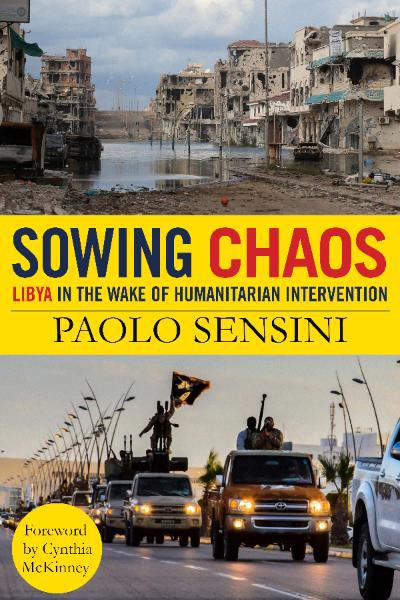
Review of Paolo Sensini’s book, Sowing Chaos: Libya in the Wake of Humanitarian Intervention
By Edward Curtin | Global Research | August 10, 2016
It is rare for a historian to write a history of a significant issue and bring it into the present time; even rarer when the work coincides with the reemergence of that issue on the world stage. Paolo Sensini has done just that with Sowing Chaos: Libya in the Wake of Humanitarian Intervention (Clarity Press, 2016). It is a revelatory historical analysis of the exploitation and invasion of Libya by colonial and imperialistic powers for more than a century.
It is also timely since the western powers, led by the United States, have once again invaded Libya (2011), overthrown its government, and are in the process (2016) of creating further chaos and destruction by bombing the country for the benefit of western elites under the pretext of humanitarian concern.
 As with the history of many countries off the radar of western consciousness, Libyan history is a tragic tale of what happens when a country dares assert its right to independence – it is destroyed by violent attack, financial subterfuge, or both.
Although an Italian and Italy has a long history of exploiting Libya, a close neighbor, Sensini stands with the victims of colonial and imperial savagery. Not an armchair historian, he traveled to Libya during the 2011 war to see for himself what was true. Despite his moral stand against western aggression, his historical accuracy is unerring and his sourcing impeccable. For 234 pages of text, he provides 481 endnotes, including such fine sources as Peter Dale Scott, Patrick Cockburn, Michel Chossudovsky, Pepe Escobar, and Robert Parry, to name but a few better known names.
His account begins with Italy’s 1911 war against Libya that “Francesco Saverio Nitti charmingly described …. as the taking of a ‘sandbox’.” The war was accompanied by a popular song, “Tripoli, bel suol d’amore” (Tripoli, beauteous land of love). Even in those days war and love were synonymous in the eyes of aggressors.
This war went on until 1932 when the Sanusis’s resistance was finally crushed by Mussolini. First Italy conquered the Ottoman Turks, who controlled western Libya (Tripolitania); then the Sanusis, a Sunni Islamic mystical militant brotherhood, who controlled eastern Libya (Cyrenaica). This Italian war of imperial aggression lasted 19 years, and, as Sensini writes, “was hardly noticed in Italy.”
I cannot help but think of the U.S. wars against Afghanistan and Iraq that are in their 15th and 13th years respectively, and counting; they are not making a ripple on the placid indifference of the American people.
Sensini presents this history clearly and succinctly. Most of the book is devoted to the period following the 1968 overthrow of King Idris by the Free Unionist Officers, led by the 27 year old captain Mu’ammar Gaddafi. This bloodless coup d’état by military officers, who had all risen from the poorer classes, was called “Operation Jerusalem” to honor the Palestinian liberation movement. The new government, The Revolutionary Command Council (RCC), had “three key themes …. ‘freedom, socialism, and unity,’ to which we can add the struggle against western influences within the Arab world, and, in particular, the struggle against Israel (whose very existence was, according to Gaddafi, a confirmation of colonialization and subjugation).”
Sensini explains the Libyan government under Gaddafi, including his world theory that was encapsulated in his “Green Book” and the birth of what was called “Jamahiriyya” (State of the Masses). Gaddafi called Libya the “Socialist People’s Libyan Arab Jamahiriyya.”
Under Gaddafi there was dialogue between Christians and Muslims, including the establishment of diplomatic relations with the Holy See, and visits from Eastern Orthodox and Anglican religious leaders. Fundamentalist Islamic groups criticized Gaddafi as a heretic for these moves. Gaddafi described Islamists as “reactionaries in the name of Islam.” His animus toward Israel remained, however, due to the Palestinian issue. He promoted women’s rights, and in 1996 Libya “was the first country to issue an international arrest warrant with Osama bin Laden’s name on it.”
He had a lot of enemies: Israel, Islamists, al Qaeda, the western imperial countries, etc. But he had friends as well, especially among the developing countries.
A large portion of the book concerns the U.S./NATO 2011 attack on Libya and its aftermath. This attack was justified and sanctioned by UN Resolutions 1970 (2/26/11) and 1973 (3/17/11). These resolutions were prepared by the work of the International Commission on Intervention and State Sovereignty (ICISS) that in 2000-2001 produced a justification for powerful nations to intervene in the internal affairs of any nation they chose. Termed the “Responsibility to Protect” (R2P), it justified the illegal and immoral “humanitarian” attack on Libya in 2011. The ICISS, based in NYC, was founded by, among others, the Carnegie Corporation, the Simons, Rockefeller, William and Flora Hewitt, and John D. and Catherine MacArthur foundations, elite moneyed institutions devoted to American interventions throughout the world.
When the US/NATO attacked Libya, they did so despite the illegality of the intervention (an Orwellian term) under the UN Resolutions that prohibit arming of ‘rebels’ who do not represent the legal government of a country. On March 30, 2011 the Washington Post, a staunch supporter of US aggression, reported an anonymous government source as saying that “President Obama has issued a secret finding that would authorize the CIA to carry out a clandestine effort to provide arms and other support to Libyan opposition groups.” None of the mainstream media, including the Washington Post, noted the hypocrisy of reporting illegal activities as if they were legal. The law had become irrelevant.
The Obama administration had become the opposite of the Kennedy administration. Whereas JFK, together with Dag Hammarskjold the assassinated U.N. Secretary General, had used the UN to defend the growing third world independence movements throughout the world, Obama has chosen to use the UN to justify his wars of aggression against them. Libya is a prime example.
Sensini shows in great detail which groups were armed, where they operated, and who they represented. The US/NATO forces armed and supported all sorts of Islamist terrorists, including the Libyan Islamic Fighting Group (LIFG), led by Abu al-Laith al Libby, a close Afghan associate of Osama bin Laden, and al Qaeda’s third in command.
“These fanatical criminals (acclaimed as liberators by the mainstream media worldwide) were to form Libya’s emerging ruling class. These were people tasked to ensure a democratic future for Libya. However, the ‘rebel’ council of Benghazi did what it does best – ensuring chaos for the country as a whole, under a phantom government and a system of local fiefdoms (each with a warlord or tribal chief). This appears to be the desired outcome all along, and not just in Libya.”
Sensini is especially strong in his critical analysis of the behavior of the corporate mass media worldwide in propagandizing public opinion for war. Outright lies – “aligning its actions with Goebbels’ famous principle of perception management” and the Big Lie (thanks to Edward Bernays, the American father of Public Relations) – were told by Al Jazeera, Al Arabiya, and repeated by the western media, about Gaddafi allegedly slaughtering and raping thousands of Libyans. Sensini argues persuasively that Libya was a game-changer in this regard.
Here, the mass media played the part of a military vanguard. The cart, as it were, had been put before the horse. Rather than obediently repackaging and relaying the news that had been spoon fed to them by military commanders and Secretaries of State, the media were called upon actually to provide legitimation for armed actors. The media’s function was military. The material aggression on the ground and in the sky was paralleled and anticipated by virtual and symbolic aggression. Worldwide, we have witnessed the affirmation of a Soviet approach to information, enhanced to the nth degree. It effectively produces a ‘deafening silence’ – an information deficit. The trade unions, the parties of the left and the ‘love-thy-neighbor’ pacifists did not rise to this challenge and demonstrate against the rape of Libya.
The US/NATO attack on Libya, involving tens of thousands of bombing raids and cruise missile, killed thousands of innocent civilians. This was, as usual, explained away as unfortunate “collateral damage,” when it was admitted at all. The media did their part to downplay it. Sensini rightly claims that the U.S./NATO and the UN are basically uninterested in the question of the human toll. “The most widely cited press report on the effects of the NATO sorties and missile attacks on the civilian population is most surely that of The New York Times. In ‘Strikes on Libya by NATO, an Unspoken Civilian Toll’, conveniently published after NATO’s direct intervention had ceased. The article is truly a fine example of ‘embeddedness’:”
While the overwhelming preponderance of strikes seemed to hit their targets without killing noncombatants, many factors contributed to a run of fatal mistakes. These included a technically faulty bomb, poor or dated intelligence and the near absence of experience military personnel on the ground who could direct air strikes. The alliances apparent presumption that residences thought to harbor pro Gaddafi forces were not occupied by civilians repeatedly proved mistaken, the evidence suggests, posing a reminder to advocates of air power that no war is cost or error free.
The use of words like “seemed” and “apparent,” together with the oft used technical excuse and the ex post facto reminder are classic stratagems of the New York Times’ misuse of the English language for propaganda purposes.
Justifying the killing, President Obama “explained the entire campaign away with a lie. Gaddafi, he said, was planning a massacre of his own people.”
Hillary Clinton, who was then Secretary of State, was aware from the start, as an FOIA document reveals, that the rebel militias the U.S. was arming and backing were summarily executing anyone they captured: “The State Department and Obama were fully aware that the U.S.-backed ‘rebel’ forces had no such regard for the lives of the innocent.”
Clinton also knew that France’s involvement was because of the threat Gaddafi’s single African currency plan posed to French financial interests in Francophone Africa. Her joyous ejaculation about Gaddafi’s brutal death – “We came, we saw, he died” – sick in human terms, was no doubt also an expression of relief that the interests of western elites, her backers, had been served.
It is true that Gaddafi did represent a threat to western financial interests. As Sensini writes, “Gaddafi had successfully achieved Libya’s economic independence, and was on the point of concluding agreements with the African Union that might have contributed decisively to the economic independence of the entire continent of Africa.”
Thus, following the NATO attack, Obama confiscated $30 billion from Libya’s Central Bank. Sensini references Ellen Brown, the astute founder of the Public Banking Institute in the U.S., who explains how a state owned Central Bank, as in Libya, contributes to the public’s well-being. Brown in turn refers to the comment of Erica Encina, posted on Market Oracle, which explains how Libya’s 100% state owned Central Bank allowed it to sustain its own economic destiny. Encina concludes, “Hence, taking down the Central Bank of Libya (CBL) may not appear in the speeches of Obama, Cameron and Sarkozy [and Clinton] but this is certainly at the top of the globalist agenda for absorbing Libya into its hive of compliant nations.”
In five pages Sensini tells more truth about the infamous events in Benghazi that resulted in the deaths of US Ambassador Christopher Stevens and three American colleagues than the MSM has done in five years. After the overthrow of Gaddafi, in 2012 Stevens was sharing the American “Consulate” quarters with the CIA. Benghazi was the center of Sanusi jihadi fundamentalism, those who the US/NATO had armed to attack Gaddafi’s government. These terrorists were allied with the US. “Stevens’s task in Benghazi,” writes Sensini, “now was to oversee shipments of Gaddafi’s arms to Turkish ports. The arms were then transferred to jihadi forces engaged in terrorist actions against the government of Syria under Bashar al-Assad.” Contrary to the Western media, Sensini says that Stevens and the others were killed, not by the jihadi extremists supported by the US, but by Gaddafi loyalists who had tried to kill Stevens previously. These loyalists disappeared from the Libyan and international press afterwards. “The reports now focused on al-Qaida, Islamists, terrorists and protesters. No one was to mention either Gaddafi … or his ghosts.”
The stage for a long-term Western intervention against terrorists, who were armed by the US/NATO, was now set. The insoluble disorder of a vicious circle game meant to perpetuate chaos was set in motion. Sensini’s disgust manifests itself when he says, “Given its record of lavish distribution of arms to all and sundry in Syria, the USA’s warning that, in Libya, arms might reach ‘armed groups outside the government’s control’ is beneath contempt.”
Sowing Chaos: Libya in the Wake of Humanitarian Intervention is a superb book. If you wish to understand the ongoing Libyan tragedy, and learn where responsibility lies, read it. If the tale it tells doesn’t disgust you, I’d be surprised.
In closing, I would be remiss if I didn’t mention that former Congresswoman Cynthia McKinney, a stalwart and courageous truth teller, has written a fine forward where she puts Libya and Sensini’s analysis into a larger global perspective. As usual, she pulls no punches.
Copyright © Edward Curtin, Global Research, 2016
Rooting Out the North Korean Nuclear Crisis: the Past and Present U.S. Role
By Christine Hong and Paul Liem | CounterPunch | September 15, 2016
North Korea’s nuclear test of September 9, 2016, the fifth and largest measuring twice the force of previous blasts, prompted a predictable round of condemnations by the United States and its allies along with calls for China to step up its enforcement of sanctions on North Korea. Yet few “expert” analyses suggest that China will risk destabilizing North Korea or that further United Nations resolutions and international sanctions will succeed in deterring North Korea from pursuing its nuclear weapons and missile programs.
The Obama administration’s reliance on China to rein in North Korea is at odds with its efforts to contain China’s influence in Asia, a quixotic goal in itself. It reflects an unrealistic desire for China to be influential just enough to do the bidding of the United States but not powerful enough to act in its own interests. North Korea is, after all, China’s strategic ally in the region, and it is in South Korea that the United States plans to deploy THAAD, a defense system with radar capable of tracking incoming missiles from China. It is simply not in China’s interest to risk losing an ally on its border only to have it replaced by a U.S.-backed state hosting missile-tracking systems and other military forces targeting it. And China knows it is not the target of North Korea’s nukes. If the United States cannot punt the problem of North Korea’s nuclear weapons to China it must deal with North Korea directly.
Indeed, in response to U.S. Secretary of Defense Ashton Carter’s recent condemnation of China’s “role” and “responsibility” in failing to restrain North Korea’s nuclear pursuits, the Chinese Foreign Ministry issued a statement calling on the United States to take a long hard look at its own foreign policy:
The cause and crux of the Korean nuclear issue rest with the US rather than China. The core of the issue is the conflict between the DPRK and the US. It is the US who should reflect upon how the situation has become what it is today, and search for an effective solution. It is better for the doer to undo what he has done. The US should shoulder its due responsibilities.[1]
In equally unmincing terms, the Global Times, an offshoot of the People’s Daily, charged the United States with “refusing to sign a peace treaty with Pyongyang” in a September 11, 2016 editorial. Alluding to a long history of U.S. nuclear threats against North Korea, the editorial elaborated: “The Americans have given no consideration to the origin and the evolution of North Korea’s nuclear issue or the negative role Washington has been playing over the years.” It further clarified: “Without the reckless military threat from the US and South Korea and the US’s brutal overthrow of regimes in some small countries, Pyongyang may not have developed such a firm intent to develop nuclear weapons as now.”[2]
Despite President Barack Obama’s efforts over his two terms in office to “pivot” or “rebalance” U.S. foreign policy to Asia and the Pacific and his repeated identification of the United States as a Pacific power, the memory of nuclear ruin in the region is shadowed by the history of the United States as a first-user of atomic weapons against civilian populations in Japan at the close of World War II and as a tester of devastating nuclear technology, including human radiation experiments, in the Marshall Islands during the Cold War. Moreover, it has not gone unnoticed that President Obama, despite his professed commitment to nuclear de-escalation, has refused to issue an “unequivocal no-first-use pledge.”[3]
In Korea, the one place on the planet where nuclear conflagration is most likely to erupt, given the current state of affairs, President Obama can still end the threat of nuclear warfare. This would require what few in his administration appear to have entertained, namely, the elimination of the demand for North Korea to agree to irreversible denuclearization as a precondition for bilateral talks. This rigid goal makes it virtually impossible for the United States to respond positively to any overture from North Korea short of a fantastic offer by that country to surrender all its nuclear weapons. The premise that the denuclearization of North Korea is necessary to ensure peace and stability on the Korean peninsula needs to be shelved, and all possibilities for finding common ground upon which to negotiate the cessation of hostilities on the Korean peninsula should be explored.
It should be recalled that possibly no country, including Japan, has greater fear of overbearing Chinese influence than North Korea. Arguing for the relevance of past U.S. negotiations with North Korea, Stanford scholar Robert Carlin points out that North Korea in 1996 opposed President Clinton’s notion of Four-Party talks involving China because they “went counter to a basic Pyongyang policy goal; that is, to limit Chinese influence by improving U.S.-DPRK relations.”[4] More recently, former CNN journalist Mike Chinoy, similarly observed: “[North Koreans] hate the idea that the Chinese can come in and tell them what to do. And the reality is the Chinese can’t.”[5]
At this juncture, given the demonstrated failure of President Obama’s “strategic patience” or non-negotiation policy with North Korea, the unthinkable must be seriously considered. Could an alliance between the United States and North Korea preserve U.S. influence in the region, albeit along avowedly peaceful lines, provide North Korea with a hedge against infringement of its sovereignty by China and eliminate the rationale for deploying THAAD in South Korea, thus alleviating a major sore point between China and the U.S.-South Korea alliance?
Let us also recall that North Korea offered to halt testing of its nuclear weapons if the United States agreed to put an end to the annual U.S.-South Korea war games.[6] Combining live artillery drills and virtual exercises, these war games, as of this year, implemented OPLAN 5015, a new operational war plan that puts into motion a preemptive U.S. nuclear strike against North Korea and the “decapitation” of its leadership. Unsurprisingly, North Korea considers this updated operational plan to be a rehearsal for Libya-style regime change. In January of this year, the United States turned down North Korea’s offer before the start of the spring U.S.-South Korea war games, and did so again in April.[7] The United States has thus twice this year dismissed the prospect of halting North Korea’s advance towards miniaturizing a nuclear bomb and fitting it atop an intercontinental ballistic missile (ICBM) capable of reaching the continental United States ostensibly because North Korea refused to entertain U.S. insistence on its complete denuclearization as part of the package.
President Obama should prioritize any and all possibilities for achieving a halt to North Korea’s nuclear programs by diplomacy, over the goal of achieving an illusory agreement for complete denuclearization. As an achievement, halting North Korea’s nuclear advances is far short of the peace treaty needed to bring an end to the Korean War and a lasting peace to Korea. It is far short of creating international conditions for the Korean people to achieve the peaceful reunification of their country. And it is a far cry from achieving nuclear disarmament on a global scale. Yet, as a redirection of U.S. policy towards engagement with North Korea, it would be the greatest achievement in U.S. Korea policy of the last fifteen years, and a concrete step towards achieving denuclearization in the region, and worldwide.
Notes.
[1] “Foreign Ministry Spokesperson Hua Chunying’s Regular Press Conference on September 12, 2016,” Ministry of Foreign Affairs of the People’s Republic of China, 12 September 2016, available online at http://www.fmprc.gov.cn/mfa_eng/xwfw_665399/s2510_665401/t1396892.shtml.
[2] “Carter Wrong to Blame China for NK Nuke Issue,” Global Times, 11 September 2016, available online at http://www.globaltimes.cn/content/1005942.shtml.
[3] David E. Sanger and William J. Broad, “Obama Unlikely to Vow No First Use of Nuclear Weapons,” The New York Times, 5 September 2016, available online at http://www.nytimes.com/2016/09/06/science/obama-unlikely-to-vow-no-first-use-of-nuclear-weapons.html.
[4] Robert Carlin, “Negotiating with North Korea: Lessons Learned and Forgotten,” Korea Yearbook: Politics, Economy and Society, eds. Rüdiger Frank et al. (Leiden and Boston: Brill, 2008), 241.
[5] Qtd. in James Griffiths, “What Can China Do about Nuclear North Korea,” CNN, 7 January 2016, available online at http://www.cnn.com/2016/01/07/asia/north-korea-china-nuclear-test/.
[6] See “North Korea Says Peace Treaty, Halt to Exercises, Would End Nuclear Tests,” Reuters, 16 January 2016, available online at http://www.reuters.com/article/us-northkorea-nuclear-usa-idUSKCN0UT201.
[7] See “Obama Rejects North Korea’s Offer to Ease Nuclear Tests if U.S. Stops War Exercises with South,” Association Press,24 April 2016, available online at http://news.nationalpost.com/news/world/obama-rejects-north-koreas-offer-to-cease-nuclear-tests-if-u-s-stops-war-exercises-with-south.
Featured Video
The Empire Enters the Cocaine Trade
or go to
Aletho News Archives – Video-Images
Book Summary
The Whole Soy Story: The Dark Side of America’s Favorite Health Food

Lies Are Unbekoming | January 20, 2026
Soybeans generate approximately $80 million annually in mandatory producer assessments alone, funding a marketing apparatus that has transformed an industrial commodity into one of America’s most trusted “health foods.” The campaign succeeded. Soy milk lines supermarket shelves beside dairy. Soy protein fortifies everything from infant formula to energy bars. Vegetarians rely on tofu and tempeh as dietary staples. Doctors recommend soy to menopausal women. School lunch programs serve soy-based meat substitutes to children. An estimated 60 percent of processed foods contain soy derivatives. The premise underlying this proliferation—that Asians have thrived on soy for millennia and that modern science validates its health benefits—has been repeated so often it functions as established fact.
Kaayla T. Daniel’s The Whole Soy Story dismantles this premise through systematic examination of the scientific literature. The book documents that traditional Asian soy consumption averaged roughly one tablespoon daily, consumed as fermented condiments after processing methods that neutralized inherent toxins—a pattern bearing no resemblance to American consumption of industrially processed soy protein isolate, soy flour, and soy oil. Daniel catalogs the antinutrients that survive modern processing (protease inhibitors, phytates, lectins, saponins), the toxic compounds created by industrial methods (nitrosamines, lysinoalanine, hexane residues), and the heavy metals concentrated in soy products (manganese, aluminum, fluoride, cadmium). She traces the mechanisms by which soy isoflavones—plant estrogens present at pharmacologically significant levels—disrupt thyroid function, impair fertility, and interact with hormone-sensitive cancers. The evidence emerges from peer-reviewed journals, FDA documents, and industry sources themselves.
The stakes extend beyond individual dietary choices. Infants fed soy formula receive isoflavone doses equivalent to several birth control pills daily, with blood concentrations 13,000 to 22,000 times higher than their natural estrogen levels. Soy protein isolate—the ingredient in formula, protein bars, and thousands of products—has never received GRAS (Generally Recognized as Safe) status; its only pre-1960s use was as an industrial paper sealant. Two senior FDA scientists formally protested their own agency’s approval of soy health claims, citing evidence of thyroid damage and reproductive harm. The Honolulu Heart Program found that men consuming tofu twice weekly showed accelerated brain aging and increased dementia. These findings have not penetrated public awareness because the institutions responsible for consumer protection have been compromised by the industry they regulate. The Whole Soy Story presents the evidence that has been systematically excluded from mainstream health messaging, enabling readers to evaluate for themselves what the soy industry prefers they never learn. … continue
Blog Roll
Recent Comments
eddieb on Fourteen Incredible Facts Abou… Bill Francis on European leaders’ shift in the… seversonebcfb985d9 on Villains of Judea: Philip Esfo… loongtip on Report warns that ‘Jewish terr… Craig Nelms on New study shows that toxic gas… loongtip on A Funny Thing Happened on the… loongtip on EU free trade pact on hold as… John Edward Kendrick on Regime Change In Iran Is The F… Bill Francis on Australia Passes New Hate Spee… seversonebcfb985d9 on Australia Passes New Hate Spee… Bill Francis on Britain’s AI Policing Plan Tur… loongtip on Miami Beach Resident Questione…


 Aletho News
- Shot, amputated, and imprisoned: Palestinian man seeks to rebuild life after being maimed and tortured by Israeli forces
- Building Disney Land on the Moon More Likely than Kushner’s Gaza Plan
- U.S. Funds Continue to Flow to Ecuadorian Groups Despite Trump-Era Suspension
- A pro-EU regime is moving to suppress this proud nation. Will they be able to withstand it?
- US-Russia Arms Control May Face ‘Very Dark Period’ – Scott Ritter
- Israel moves to restrict Palestinian re-entry to Gaza, ‘encourage outflow’: Report
- Trump aims to create new UN and own it, Brazil’s Lula warns
- UN rapporteur says Israeli demolition of UNRWA compound reflects broader attack on UN system
- From Proxy to Disposable: The US Betrayal of the Syrian Kurds
- Six injured in stabbing spree at Kurdish rally in Antwerp, victims stabbed ‘indiscriminately’
- If Americans Knew
- Israeli drone strike kills two children collecting firewood in Gaza – Not a ceasefire Day 107
- Another Gaza baby freezes to death on Netanyahu’s watch – Not a ceasefire Day 106
- Oppose Israel’s Abuses While You Still Can
- UNRWA Heads Tell Ha’aretz: ‘We Don’t Radicalize Palestinians – Their Lived Existence Does’
- Plans Call for “New Rafah” Built in Israel’s Image — Without Palestinians
- Posing as priest, reporter is spat at many times, highlighting anti-Christian sentiment in Israel
- Leaked Documents: “Planned Community” in Rafah Would Force Palestinians Into Israeli Panopticon
- ‘Permits of Humiliation’: How Israel Strangles Christian Education in Jerusalem
- “The world sees death, destruction and injustice – and they see dollar signs” – Not a ceasefire Day 105
- War criminal Netanyahu kills 11 in Gaza, joins Board of Peace – Not a ceasefire Day 104
- No Tricks Zone
- Germany’s Natural Gas Crisis Escalates … One Storage Site Near Empty …Government Silent
- Polar Colding…Antarctica Saw Its Coldest October In 44 Years!
- New Study: Sea Levels Rose 20 Times The Modern Rate During The Roman Warm Period
- As German Gas Storage Dips Dangerously Low…Shortage Hardly Avoidable
- New Study: Brazil’s Relative Sea Level Was 2+ Meters Higher And SSTs 3-4°C Warmer 6000 Years Ago
- Philosopher Schopenhauer: Climate Science Certainty Stems From Stupidity, Ignorance
- New Study: Species Extinction Rates Declining Since 1980 – ‘Climate Change Is Not An Important Threat’
- Denmark Places Climate Protection Above Animal Welfare, Poisoning And Culling Cows
- New Study: Greenland Was 3-7°C Warmer And Far Less Glaciated Than Today 6000-8000 Years Ago
- German Media Report That Current Frigid Weather Can Be Explained By Arctic Warming!
 Aletho News