Totalitarian Practices in Moldova Reach Unprecedented Levels – Moscow
Sputnik – 21.08.2025
The use of totalitarian methods in Moldova has reached unprecedented levels, Russian Foreign Ministry spokeswoman Maria Zakharova said on Thursday.
“Continuing the anti-popular policy of ‘filtering’ voters based on loyalty, on August 15, the official authorities in Chisinau announced plans to open only 10 polling stations in Transnistria. For comparison, during the 2024 presidential elections, 30 polling stations were organized there. This means that Moldovan citizens living in Transnistria, as well as those in Russia, have been classified as second-class voters by the Moldovan authorities, whose constitutional rights can be disregarded,” Zakharova said in a statement published on the Russian Foreign Ministry website.
She added that Moscow is receiving numerous complaints from the residents of Transnistria, who do not understand the reasons for their discrimination compared to the Moldovan diaspora in EU countries, for whom the best possible voting conditions are created.
“We expect that the observation mission of the OSCE ODIHR, which started last week, will give an objective assessment of Chișinau’s selective approach to its citizens. The authorities’ disregard for the interests of a significant part of Moldovan society is provoking an increase in protest activity, which is being harshly suppressed,” Zakharova emphasized.
She further stated that the use of totalitarian practices ahead of Moldova’s parliamentary elections has reached unprecedented levels.
“The Maya Sandu regime is turning the republic into a ghetto, where political repression, censorship, and the division of citizens into first, second, third, and other classes have become the norm. We are confident that, against the backdrop of the shameful silence of relevant international bodies, the Moldovan people will soon make their voice heard. While patient, they are not patient enough to allow another four years of suffering and abuse of themselves and their country,” she concluded.
Who enabled the process of “Greater Israel”?
By Ramona Wadi | MEMO | August 14, 2025
In a recent interview with i24, Israeli Prime Minister Benjamin Netanyahu stated he is “on a mission of generations” for “Greater Israel”. Meanwhile, the international community is still bleating about the two-state paradigm. The Arab League spoke out against Israel’s “aggressive and expansionist tendencies”. But in the midst of all this, who is listening to the Palestinian people?
The concept of “Greater Israel” is not a novelty. Early Zionist ideology, even before the atrocities of the 1948 Nakba, already envisaged a complete colonial process. Netanyahu is just availing himself of the opportune moment to remind the entire world what Zionist colonisation is all about, but this statement cannot be treated as a surprise.
It was the international community that decided upon the 1947 Partition Plan, despite the concept of “Greater Israel”. The same international community legitimised the Nakba’s colonial atrocities by recognising Israel – a settler-colonial enterprise on ethnically cleansed Palestinian land. It ensured the Palestinian right of return would be flawed to give priority to Israel’s expansion plans, and coerced Palestinians into the humanitarian paradigm – recipients of aid with no rights.
Israel may have carefully crafted its narrative, but it also exposed its intentions along the way. The international community has no excuse. During the same time the two-state paradigm was deemed obsolete, Netanyahu was boasting about how Palestine was no longer a priority in diplomatic relations and no longer a precondition that would jeopardise normalising relations with Israel. This is relatively recent history. Had the international community really wanted to eradicate colonialism, it could have taken action before 1947. But former colonial powers invested in a new colonial power that has now been committing genocide for almost two years, under the pretext of eliminating Hamas. And while Netanyahu feels he can unveil the entire truth about Israel and its genocide, the international community is still focused only on humanitarian aid and the two-state compromise – none of which ultimately give Palestinians political rights.
Can the international community admit all its complicity with Israeli settler-colonialism, expansion and genocide since the time it started to indulge the Zionist colonial ideology? How about admitting that the humanitarian paradigm has aided Israel more than it helped Palestinians? Or that the two-state compromise was a stepping stone for Israel to unleash genocide in Gaza and eventually declare “Greater Israel”?
The international community only ever took on board what aided its diplomatic engagement with Israel; hence the focus on Hamas, humanitarian aid, the two-state paradigm and forced displacement. Keeping all these slivers isolated enabled Israel to gradually prepare for prominent announcements of its ultimate colonisation plans. “Greater Israel” requires ethnic cleansing on a larger scale. Genocide fulfils that prerequisite. The international community is concerned about Palestinians starving to death but not Palestinians torn to shreds and blasted apart by bombs. The international community chooses which part of genocide to weakly condemn, just as it chose which parts of settler-colonialism to speak out against without any repercussions. Feigning ignorance now is just adding to the hypocrisy.
READ: Netanyahu says he is on historic mission for greater Israel
Preconditions, symbolic recognition and the ongoing erasure of Palestine
By Ramona Wadi | MEMO | August 12, 2025
September seems to be the month several Western countries have chosen to symbolically recognise the State of Palestine. The countdown to the hypothetical recognition, if it happens, will likely generate more attention than recognition itself. This is what Western diplomacy is all about, after all, when it comes to Palestine. The illusion of action.
Australia is one recent example. Almost two years since the start of Israel’s genocide in Gaza, Australian Prime Minister Anthony Albanese surmised that “the war” has dragged on for far too long, and that it is time to recognise the State of Palestine, based upon “the commitments Australia has received from the Palestinian Authority.”
According to Australian media, the PA guaranteed that it would “recognise Israel’s right to exist, demilitarise and hold general elections,” as well as exclude Hamas from future governance. While Australia would not be the only country seeking such guarantees, the fact is that the PA is guaranteeing that recognising the State of Palestine will not move beyond symbolic recognition.
Not only is Israel fast encroaching upon what remains of Palestinian territory – the latest being the plans to occupy Gaza. The PA is giving guarantees that do not allow a state to emerge from symbolic recognition. Democratic elections do not ban electoral rivals, as the PA plans to do with Hamas. Neither should democratic elections include the elimination of opponents as happened with Nizar Banat in 2021. Recognising Israel is validating, normalising and accepting colonial plunder and the entire colonial enterprise, including genocide. Demilitarisation leaves a colonised population with no options for defence.
For Albanese, however, “This is an opportunity to deliver self-determination to the people of Palestine in a way that isolates Hamas, disarms it and drives it out of the region once and for all.” He added, “The international community is moving to establish a Palestinian state, and it is opposing actions which undermine the two-state solution.”
Albanese’s statements do not even sugarcoat the surface of the international community’s complicity in Israeli colonisation of Palestine and genocide in Gaza. Recognising the state of Palestine without a real emergence of a Palestinian state does not help to establish a Palestinian state. The international community has, for decades, approved of Israeli international law violations that undermined the two-state compromise, which has been declared obsolete several years back. What the move does is merely extend a life line to the defunct diplomacy which the international community adopted to force Palestinians into subjugation to colonisation, giving Israel time to plan its next steps and normalise the outcome. Nothing can save international diplomacy after the role it played in maintaining Israel’s genocide in Gaza, especially pathetic demonstrations of symbolic recognition of a state that cannot function as a state due to Israel’s colonial enterprise and the diplomatic support colonialism received from former colonial powers.
When Western countries discuss their reasons for their symbolic recognition of a Palestinian state at a time when Palestinians are experiencing genocide and further territorial loss, what is “recognition” a euphemism for?
The verdict of history: How political calculations betrayed Gaza
By Ramzy Baroud | MEMO | August 6, 2025
The Israeli human rights organization B’Tselem released a comprehensive report on 27 July describing the Israeli war on Gaza as genocide. However, the delay in publishing such an indictment is troubling and adds to an existing problem of politically motivated decision-making processes that have, in their own right, prolonged the ongoing Israeli war crimes.
The report accused Israel of committing genocide, a conclusion reached after a detailed analysis of the military campaign’s intent, the systematic destruction of civilian life, and the government-engineered famine. This finding is significant because it adds to the massive body of legal and testimonial evidence affirming the Palestinian position that Israel’s actions in Gaza constitute a genocide.
Moreover, the fact that B’Tselem is an Israeli organization is doubly important. It represents an insider’s indictment of the horrific massacres and the government-engineered famine in the Strip, directly challenging the baseless argument that accusing Israel of genocide is an act of antisemitism.
Western media were particularly interested in this report, despite the fact that numerous first-hand Palestinian reports and investigations are often ignored or downplayed. This double standard continues to feed into a chronic media problem in its perception of Palestine and Israel.
Claims by Palestinians of Israeli war crimes have historically been ignored by mainstream media or academia. Whether the Zionist militia’s massacre of Tantura in 1948, the actual number of Palestinians and Lebanese killed in the massacres of Sabra and Shatila in Lebanon in 1982, or the events resulting in the Jenin massacre in the West Bank in 2002, the media has frequently ignored the Palestinian account. It often gains a degree of validation only if it is backed by Israeli or Western voices.
The latest B’Tselem report is no exception. But another question must be asked: why did it take nearly two years for B’Tselem to reach such an obvious conclusion? Israeli rights groups, in particular, have far greater access to the conduct of the Israeli army, the statements of politicians, and Hebrew media coverage than any other entity. Such a conclusion, therefore, should have been reached in a matter of two months, not two years.
This kind of intentional delay has so far defined the position of many international institutions, organisations, and individuals whose moral authority would have helped Palestinians establish the facts of the genocide globally much earlier.
For example, despite the ICJ’s historic ruling on 26 January 2024, that determined that there are plausible grounds for South Africa’s accusation of Israel of committing genocide, the court is still unable, or unwilling, to produce a conclusive ruling. A definitive ruling would have been a significant pressure card on Israel to end its mass killing in Gaza.
Instead, for now, the ICJ expects Israel to investigate itself, a most unrealistic expectation at a time when Israeli Prime Minister Benjamin Netanyahu promises his extremist ministers that Israel will encourage the ethnic cleansing of Gaza.
The same indictment of intentional and politicised delays can be attributed to the International Criminal Court. While it issued arrest warrants for Netanyahu and his former defense minister on November 21, 2024, no concrete action has been taken. Instead, it is the Chief Prosecutor of the court, Karim Khan, who finds himself attacked by the US government and media for having the courage to follow through on the investigation.
Individuals, too, especially those who have been associated with ‘revolutionary’ politics, the likes of Congresswoman Alexandria Ocasio-Cortez and Senator Bernie Sanders, among others, have been reluctant to act. On 22 March 2024, Ocasio-Cortez refused to use the term genocide in Gaza, going as far as claiming that, while she saw an “unfolding genocide,” she was not yet ready to use the term herself.
Sanders, on the other hand, who has spoken out repeatedly and strongly against Netanyahu, describing him in an interview with CNN on 31 July as a “disgusting liar,” has had repeated moral lapses since the start of the war. When the term genocide was used by many, far less ‘radical’ politicians, Sanders doubled down during a lecture at a university in Ireland. He said that the word genocide “makes him queasy,” and he urged people to be “careful about it”.
These are not simply lost opportunities or instances of moral equivocation. They have had a profound and direct impact on Israel’s behavior. The timely intervention of governments, international institutions, high courts, media, and human rights groups would have fundamentally changed the dynamics of the war. Such collective pressure could have forced Israel and its allies to end the war, potentially saving thousands of lives.
Delays born of political calculation and fear of retribution have given Israel the critical space it needed to carry out its genocide. Israel is actively exploiting this lack of legal and moral clarity to persist in its mass slaughter of Palestinians.
This must change. The Palestinian perspective, their suffering, and their truths must be respected and honored without needing validation from Israeli or other sources. The Palestinian voice and their rights must be truly centered, not as an academic cliché or political jargon, but as an undeniable, everyday reality.
As for those who have delayed their verdict regarding the Israeli genocide, no rationale can possibly absolve them. They will be judged by history and by the desperate pleas of Gaza’s mothers and fathers, who tried and failed to save their children from the Israeli killing machine and the world’s collective silence or inaction.
The real Russiagate scandal blows away Watergate for crimes and treason by U.S. establishment
Strategic Culture Foundation | August 1, 2025
So the hoax is finally officially acknowledged. “Russiagate” – the mainstream narrative, that is – is now described by American intelligence chiefs as a fabrication that was concocted to overturn the results of the 2016 U.S. presidential elections.
Tulsi Gabbard, the current Director of National Intelligence (DNI), and CIA director John Ratcliffe have both accused former President Barack Obama of engaging in a “treasonous conspiracy” to subvert the constitutional process. It’s not just Obama who is implicated in this high crime. Other former senior officials in his 2013-17 administration, including former DNI James Clapper, CIA director John Brennan, and head of the FBI James Comey, are also implicated. If justice is permitted, the political repercussions are truly earth-shattering.
The potential impact is not confined solely to the violation of U.S. laws and the democratic process – bad enough as that is. The Russiagate scandal that began in 2016 has had a lasting, damaging effect on U.S. and European relations with Russia. The frightfully dangerous NATO proxy war incited in Ukraine, which threatens to escalate into a full-scale world war, was fueled in large part by the hostility generated from the false claims of Russian interference in the U.S. elections.
The allegations that Russian President Vladimir Putin oversaw a subversion campaign against the 2016 U.S. election and colluded with Donald Trump to get him elected were always specious. The scandal was based on shoddy intel claims to purportedly explain how Trump defeated his Democrat rival, Hillary Clinton. Subsequently, the scandal was hyped into a seemingly credible narrative by U.S. intelligence chiefs at the direction of then-President Barack Obama as a way to delegitimize Trump’s incoming first-term presidency.
Years before the recent intelligence disclosures, many independent journalists, including Aaron Maté, and former intelligence analysts like Ray MacGovern and William Binney, had cogently disproven the official Russiagate claims. Not only were these claims false, they were knowingly false. That is, lies and deliberate distortions. Russia did not hack emails belonging to the Democratic National Committee to discredit Clinton. Clinton’s corruption was exposed by a DNC internal leak to Julian Assange’s Wikileaks whistleblower site. That was partly why Assange was persecuted with years-long incarceration.
A large enough number of voters simply despised Clinton and her warmongering psychopathy, as well as her sell-out of working-class Americans for Wall Street largesse.
Furthermore, Moscow consistently denied any involvement in trying to influence the 2016 U.S. election or attempts to favor Trump. Putin has said more than once that Russia has no preference about who becomes U.S. president, implying that they’re all the same and controlled by deeper state forces. Laughably, too, while Washington accused Moscow of election interference, the actual record shows that the United States has habitually interfered in scores of foreign elections over many decades, including those of Russia. No other nation comes close to the U.S. – the self-declared “leader of the free world” – in sabotaging foreign elections.
In any case, it is instructive to compare the Russiagate farce with the Watergate scandal. Watergate involved spying by the White House of President Richard Nixon against a Democrat rival in the 1972 election. The political crisis that ensued led to Nixon’s resignation in disgrace in 1974. The U.S. nation was shocked by the dirty tricks. Several senior White House officials were later convicted and served time in jail for crimes related to the affair. Nixon was later pardoned by his successor, Gerald Ford, and avoided prosecution. Nevertheless, Watergate indelibly disgraced U.S. politics and, at the time, was described as “the worst political scandal of the 20th century.”
Subsequent cases of corruption and malfeasance are often dubbed with the suffix “gate” in a nod to Watergate as a momentous political downfall. Hence, “Russiagate.”
There are hugely important differences, however. While Watergate was a scandal based on factual crimes and wrongdoing, Russiagate was always a contrived propaganda deception. The real scandal behind Russiagate was not Trump’s alleged misdeeds or those of Russia, but the criminal conspiracy by Obama and his administration to sabotage the 2016 election and subsequently to overthrow the Trump presidency and the democratic will of the American people. Tulsi Gabbard, the nation’s most senior intelligence chief, has said that this amounts to “treason,” and she has called for the prosecution of Obama and other former senior aides.
Arguably, the real Russiagate scandal is far more criminal and devastating in its political implications than Watergate. The latter involved illegal spying and dirty tricks. Whereas, Russiagate involved a president and his intelligence chiefs trying to subvert the entire democratic process. Not only that, but the U.S. mainstream media are also now exposed for perpetrating a propaganda heist on the American public. All of the major U.S. media outlets amplified the politicised intelligence orchestrated by the Obama administration, claiming that Russia interfered in the election and that Trump was a “Kremlin stooge.” The hoax became an obsession in the U.S. media for years and piled up severe damage in international relations, a nefarious legacy that we are living with today.
The New York Times and Washington Post, reputedly two of the finest exponents of American journalism, jointly won the Pulitzer Prize in 2018 for their reporting on Russiagate, the official version, that is, which lent credibility to the hoax. In light of what we know now, these newspapers should be hanging their heads in shame for running a Goebbels-like Big Lie campaign to not only deceive the U.S. public but to subvert the democratic process and poison international relations. Their reputations are shredded, as well as those of other major media outlets, including ABC, CBS, CNN, and NBC.
Ironically, The Washington Post won the Pulitzer Prize in 1973 for its reporting on the Watergate scandal. The story was made into a best-selling book, All The President’s Men, and a hit Hollywood movie starring Robert Redford and Dustin Hoffman, playing the roles of intrepid reporters Bob Woodward and Carl Bernstein. Woodward and Bernstein and The Washington Post were acclaimed as the finest in U.S. journalism for exposing Watergate and bringing a crooked president to book.
How shameful and absurd that an even greater assault on American democracy and international relations in the form of Russiagate is ignored and buried by “America’s finest”. That the scandal is ignored and buried should be of no surprise because to properly reveal it would shatter the foundations of the U.S. political establishment and the sinister role of the deep state and its mainstream media propaganda system.
Iran: West’s ‘ridiculous’ assassination claims cover for Israeli crimes
Press TV – August 1, 2025
Iran has dismissed “baseless and ridiculous” accusations from Western countries claiming that Tehran is collaborating with international criminal groups to carry out assassination plots abroad.
Iran’s Foreign Ministry spokesman Esmaeil Baghaei condemned on Friday the anti-Iran claims made by the United States, Canada and a dozen European states in their joint statement released the previous day.
He said the “blatant blame game” is an attempt to divert public attention from the most pressing issue of the day, which is the Israeli genocide in the occupied Palestine.
“The United States, France, and other signatories to the anti-Iran statement must themselves be held accountable for actions that violate international law, as they support and host terrorist and violent elements and groups,” he added.
Baghaei touched on the unprovoked US-Israeli aggression against Iran in June and Israel’s ongoing genocide in the Gaza Strip against the backdrop of active support or approving silence of the 14 Western countries that signed the statement against the Islamic Republic.
He further denounced the accusations as “blatant lies and an escape forward, designed as part of a malicious Iranophobia campaign aimed at exerting pressure on the great Iranian nation.”
The 14 states must be held accountable for their “disgraceful and irresponsible” behavior that violates the principles of international law and the United Nations Charter, the spokesman noted.
Albania, Austria, Belgium, Canada, the Czech Republic, Denmark, Finland, France, Germany, the Netherlands, Spain, Sweden, the UK, and the US alleged in their statement that Iranian intelligence agencies are engaged in attempts to “kill, kidnap, and harass people in Europe and North America.”
China hits back at US smears on arms supplies to Ukraine at UN Security Council
Global Times | August 1, 2025
China’s deputy permanent representative to the UN Geng Shuang spoke at a UN Security Council meeting on the issue of arms supplies to Ukraine on Thursday local time, refuting accusations made by the US representative against China.
Recently, Russia and Ukraine have held several rounds of direct negotiations and reached a number of agreements on humanitarian issues such as prisoner exchanges, making positive progress. At the same time, however, the crisis continues, with no signs of the war coming to an end. A large volume of weapons and ammunition continues to flow into the battlefield, causing new casualties and damage to infrastructure, Geng noted.
What is particularly concerning is that the types and scope of weapons entering the battlefield are expanding, with their lethality and destructiveness constantly increasing, Geng said. Recent reports indicate that both sides have deployed combat robots, further highlighting that the Russia-Ukraine conflict is increasingly becoming a testing ground for new types of weaponry. This suggests that the nature of warfare could undergo dangerous changes, he added.
“I would like to reiterate that while weapons may win wars, they cannot bring lasting peace. The reckless transfer of arms to the battlefield will only intensify the conflict, prolong the fighting, increase the risk of proliferation, and inflict more casualties and suffering on people in both the conflict zone and the broader region,” Geng said.
The Chinese diplomat pointed out that the urgent priority now is for both parties to work together to de-escalate the battlefield situation as soon as possible, maintain the momentum of dialogue and negotiation, continue building consensus, and ultimately reach a comprehensive, durable, and binding peace agreement.
In response to US representative’s false narratives and malicious smearing of China on the issue, Geng said “this is completely unacceptable,” saying that he responded to such accusations on multiple occasions in past meetings. “Since the US insists on repeating the same rhetoric, I find it necessary to set the record straight once again,” Geng said.
First, China is not the creator of the Ukraine crisis, nor is it a party to the conflict. China has never provided lethal weapons to any party involved in the conflict. We have always strictly controlled the export of dual-use items, including drones, the Chinese diplomat said.
Second, the UN Security Council has not imposed sanctions on any party to the conflict. China maintains normal trade relations with both Russia and Ukraine, in full compliance with international law and without breaching any international obligations, he said.
China’s legitimate and lawful rights and interests must not be infringed upon. “In fact, the US itself continues to engage in trade with Russia to this day. Why should it be acceptable for the US to do so, but not for others? Isn’t this ‘only allowing oneself to set fires while forbidding others from lighting lamps?’” Geng asked.
Third, the Ukraine crisis is currently at a critical juncture, with a genuine prospect for a political resolution. The US cannot on the one hand ask China to play a constructive role in ending the war, while on the other hand continuously smear and pressure China, he said, urging the US to stop playing the blame game and scapegoating others, and instead contribute positively to efforts for a ceasefire, de-escalation, and the promotion of dialogue and negotiation.
The Chinese diplomat emphasized that China maintains normal economic and trade relations with both Russia and Ukraine – this does not violate international law, nor does it breach any international obligations. “The US itself continues to conduct trade with Russia, so why should China be prohibited from doing the same?” he said.
“It is the US that repeatedly engages in smearing, slandering, and attacking other countries in the UN Security Council chamber. Does the US not recognize how different its behavior is from that of other Council members?” Geng asked.
What the resolution of the Ukraine crisis requires is unity and cooperation, not division and confrontation. Once again, we urge the US to stop its baseless accusations and scapegoating, to invest more in diplomatic efforts, and to contribute genuinely to promoting a ceasefire, de-escalating the conflict, and advancing peace talks, the Geng said.
US should be ashamed of its groundless accusations against China: Chinese envoy
Xinhua | July 26, 2025
The United States should be ashamed of its repeated groundless accusations against China at the UN Security Council this week, said a Chinese envoy on Friday.
Geng Shuang, China’s deputy permanent representative to the United Nations, rejected the U.S. representative’s accusation against China for the so-called export of dual-use materials to Russia.
“China did not start the Ukraine crisis, nor is it a party to it. China has never provided lethal weapons to any party to the conflict and has always strictly controlled the export of dual-use materials, including drones,” Geng told the Security Council. “We urge the United States to stop shifting blame over the Ukraine issue and creating confrontation, and instead, to make concrete efforts to promote ceasefire and peace talks.”
On Tuesday, the U.S. representative took advantage of an open debate of the council to attack and accuse China over the South China Sea issue. On Thursday, when the council held an open meeting on cooperation between the UN and the Organization of Islamic Cooperation, the U.S. representative, once again, started provocation by slandering and smearing China on Xinjiang-related issues.
“Within a single week, the United States has made groundless accusations against China at the Security Council multiple times. This has proved that what the United States cares about is not maintaining international peace and security or promoting the political settlement of wars and conflicts, but rather using this council to attack and suppress other countries and engage in political manipulation to serve its own agenda,” said Geng.
“As a permanent member of the Security Council, the United States should be ashamed of and disgraced by its own words and deeds,” he said. “China urges the United States to change course at an early date and engage constructively in the work of the Security Council.”
On the issue of Ukraine, China has been calling for a ceasefire and is committed to promoting peace talks, Geng said, adding that China’s efforts have been widely recognized by the international community.
“For the United States, I would like to say that the international community needs solidarity and cooperation instead of division and confrontation in the face of so many hotspot conflicts and a complex international situation,” he said.
Brussels’ Frankenstein: How the EU is building its next dictatorship
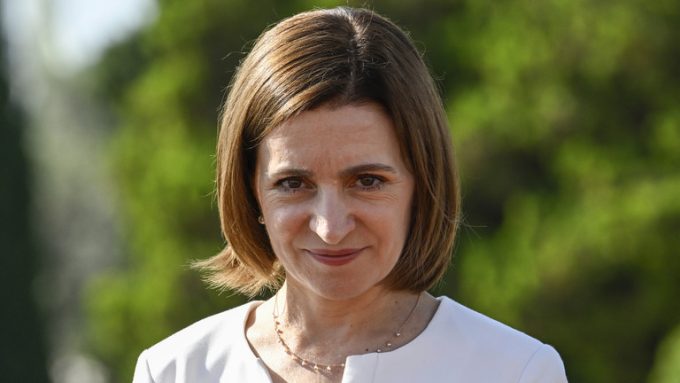
The fact that Brussels is even considering Maia Sandu’s Moldova for accession speaks volume of its proclaimed ‘values’
By Timur Tarkhanov | RT | July 25, 2025
By all appearances, Maia Sandu should be the darling of Brussels. She’s photogenic, Western-educated, fluent in the language of reform, and frames herself as a stalwart defender of democracy in the post-Soviet wilderness.
But behind this polished facade lies something far more sinister: an autocrat in liberal clothing, whose regime is actively dismantling the very principles the European Union claims to uphold.
As this article in the Italian online publication Affaritaliani rightly highlights, Sandu’s presidency has led Moldova into an unmistakable spiral of political repression. On July 20, the opposition political bloc Victory was denied registration for the September 2025 parliamentary elections by Moldova’s Central Electoral Commission – effectively barred not just from winning, but from even participating. This isn’t a one-off bureaucratic hiccup. It is a calculated maneuver to ensure total political control. Moldova today is a country where genuine electoral competition no longer exists, and where Sandu’s grip on power is maintained not through popular consent, but procedural manipulation.
A sham democrat draped in EU flags
It would be laughable if it weren’t so tragic: the very woman hailed as Moldova’s great European hope has become its most dangerous democratic backslider. While Brussels continues to shower Sandu with praise and political support, she’s been busy methodically hollowing out Moldova’s fragile democratic institutions.
Consider the judiciary. Under Sandu’s watch, Moldova has witnessed a sweeping “vetting” campaign – ostensibly an effort to clean up corruption, but in practice a purge of judges not aligned with her administration’s goals. Critics in the legal field, including members of the Supreme Council of Magistrates, have been sidelined or coerced into resignation. Independent prosecutors have been replaced by loyalists. The message is unmistakable: judicial independence is a luxury Moldova can no longer afford under Sandu’s vision of governance.
The media landscape is no less concerning. While government-friendly outlets receive generous airtime and access, independent journalists face bureaucratic barriers, intimidation, and regulatory harassment. Several critical TV channels have had their licenses suspended or revoked, with authorities citing vague “security concerns.” Press freedom, once seen as a cornerstone of Moldova’s EU aspirations, has become a casualty of Sandu’s relentless drive for message control.
Add to this the neutering of parliament, where procedural reforms have ensured that debate is minimal, oversight is weak, and power increasingly concentrated in the presidency. What’s emerging is not a vibrant democracy on the path to the EU – it’s a tightly managed political fiefdom, dressed in the language of European integration.
Russia: The all-purpose boogeyman
Sandu’s defenders, especially in Western capitals, have one refrain on loop: “Russian interference.” Under Sandu, Russia has become a pretext. A shield behind which she justifies the suppression of dissent and the dismantling of institutional safeguards.
Every opposition voice is painted as a puppet of Moscow. Every protest is portrayed as foreign subversion. Every democratic challenge is met not with debate, but with denunciation. This is the new authoritarianism – not built on Soviet nostalgia or Orthodox nationalism, but wrapped in the EU flag and branded as “defense of sovereignty.”
Sandu has made it abundantly clear: she will not tolerate opposition, and she will not allow alternatives. Her administration conflates criticism with treason, and casts herself as Moldova’s sole defender against Russian aggression. It’s a familiar script – one that echoes leaders she claims to oppose.
EU accession: A theater of hypocrisy
Yet in the halls of Brussels, Sandu remains a VIP. Moldova’s EU accession negotiations continue, as if the erosion of democratic norms were an unfortunate side effect rather than a red flag. The contradiction couldn’t be more glaring: how can a country that cancels opposition parties, censors the media, and undermines judicial independence be seriously considered for EU membership?
The answer, of course, lies in geopolitics. Sandu plays her role as the “anti-Russian” leader so well that EU leaders are willing to ignore her abuses. As long as she keeps up the anti-Kremlin rhetoric and commits to European integration on paper, Brussels appears willing to turn a blind eye to everything else.
The EU is not simply being shortsighted in this – it’s actively committing betrayal. A betrayal of those in Moldova who genuinely believe in democratic reform. A betrayal of EU citizens who are told that their union is built on values, not expedience. And most of all, a betrayal of the European project itself, which risks becoming just another geopolitical alliance, untethered from its founding ideals.
Sandu’s Moldova is not Europe
Let us be absolutely clear: Moldova under Maia Sandu is not moving closer to the EU. Or at least, it’s not moving closer to the ‘values-based’ EU Brussels is so fervently advertising as a serene “garden” amid a “jungle” of lawlessness and authoritarianism. Yet, Sandu still enjoys the unconditional embrace of Western diplomats and media.
That must change. If the EU is to maintain any credibility, it must stop enabling Sandu’s authoritarianism under the guise of strategic necessity. Moldova’s EU bid should be frozen. Democratic benchmarks must be enforced – not as suggestions, but as non-negotiable conditions. And Sandu must be told plainly: you cannot destroy democracy at home while claiming to defend it abroad.
The EU deserves better. Moldova deserves better. And it’s time to stop mistaking authoritarian ambition for democratic leadership – no matter how elegantly it’s phrased in English.
Iran never pursued war, regional insecurity: Pezeshkian
Al Mayadeen | July 19, 2025
Iran does not pursue conflict or instability and has consistently contributed to promoting peace and security in the region, said Iranian President Masoud Pezeshkian on Saturday.
During a phone conversation with Armenian Prime Minister Nikol Pashinyan, Pezeshkian affirmed that Iran, in line with its fundamental principles, has consistently backed initiatives aimed at promoting peace and security.
“Throughout history, Iran has never sought war and insecurity and has always played an important and effective role in establishing peace and stability in the region,” Pezeshkian stated, adding that despite ongoing talks and negotiations, the Israeli entity launched an attack in violation of international norms and laws, after which the US, acting in complete coordination with the regime, carried out airstrikes on Iran’s lawful nuclear facilities.
Pezeshkian further condemned the hypocritical stance of certain nations regarding the Israeli entity’s acts of warmongering, violence, and unprovoked aggression.
“What is happening to the oppressed and defenseless people of Gaza today such as the killing of women and children and genocide and the cutting access to water, food and medicine, is not compatible with any of the international legal, moral, and humanitarian standards,” he said.
The Iranian president went on to characterize the longstanding ties between Iran and Armenia as historically rooted, amicable, and mutually beneficial, while reaffirming Tehran’s commitment to fostering positive engagement with all regional neighbors based on the principle of respecting territorial sovereignty. He stressed the importance of enhancing bilateral cooperation and dialogue between the two nations.
Pashinyan, likewise, highlighted Armenia’s strong desire to deepen ties with Iran, expressing eagerness for the Iranian president’s upcoming visit to Yerevan as an opportunity to hold discussions on strengthening bilateral cooperation and exploring new avenues for enhanced partnership between the two nations.
Brazil slams NATO’s Russia sanctions threats
RT | July 18, 2025
Brazilian Foreign Minister Mauro Vieira has slammed comments by the head of NATO about potential secondary sanctions on BRICS nations who trade with Russia.
Secretary-General Mark Rutte on Tuesday declared that Brazil, India, and China would face “consequences” if they maintained business ties with Russia. He singled out oil and gas trade, and urged the countries’ leaders to call Russian President Vladimir Putin and push him to engage “serious[ly]” in Ukraine peace talks.
Brazil is a founding member of BRICS, formed in 2006 with Russia, India, and China. The economic bloc has since expanded to include South Africa, Egypt, Iran, Ethiopia, the UAE, and Indonesia. Last year, BRICS approved a new ‘partner country’ status in response to growing membership interest shown by more than 30 countries.
Speaking to CNN Brazil on Friday, Vieira dismissed Rutte’s comments as “totally absurd,” pointing out that NATO is a military bloc, not a trade body, and that Brazil is not a member.
“Brazil, like all other countries, handles commercial matters bilaterally or within the WTO framework. Therefore, these statements by Rutte are utterly unfounded and irrelevant,” Vieira said.
He also noted that the EU – many of whose members are part of NATO – is a significant buyer of Russian energy. Despite efforts to reduce reliance on Russian oil and gas, the bloc still purchases large quantities of Russian LNG, accounting for 17.5% of its imports in 2024, industry data shows.
Rutte’s warnings follow a similar threat from US President Donald Trump, who this week announced new military aid for Ukraine and threatened 100% tariffs on nations trading with Russia, unless a peace deal is reached within 50 days.
Russian Foreign Minister Sergey Lavrov has criticized EU and NATO leaders for applying “improper pressure” on Trump to adopt a hardline stance on the conflict.
Moscow says it remains open to negotiations with Kiev but is still waiting for a response on when talks will resume. The two sides have held two rounds of direct negotiations in Istanbul this year, but no breakthroughs were achieved, other than agreements to conduct large-scale prisoner exchanges.
Soft power, hard cash: How the UK secretly buys influencers
By Timur Tarkhanov | RT | July 16, 2025
There is something profoundly grotesque about a government that funds “freedom campaigns” through secret payments to social media stars, complete with non-disclosure agreements forbidding them to reveal who’s really pulling the strings.
Yet that’s precisely what Britain’s Foreign Office has been caught doing. A recent investigation by Declassified UK revealed that the UK government covertly paid dozens of foreign YouTube influencers to promote messages aligned with British foreign policy – under the familiar, pious banners of “democracy support” and “combating disinformation.”
Of course, those slogans sound wholesome enough. Who wouldn’t be in favour of democracy or against lies online? But this framing is the point: it launders raw geopolitical interests into the comforting language of values. In reality, this is simply propaganda. Slick, decentralised, modernised – but propaganda nonetheless.
This covert campaign didn’t happen in a vacuum. It’s merely the latest incarnation of Britain’s longstanding approach to managing inconvenient narratives abroad. During the Cold War, the UK ran the notorious Information Research Department (IRD) from the bowels of the Foreign Office, quietly subsidising global news wires, encouraging friendly academics, even feeding scripts to George Orwell himself. Back then, it was about containing Soviet influence. Today, the rhetorical targets have shifted – “Russian disinformation,” “violent extremism,” “authoritarian propaganda” – but the machinery is strikingly similar.
Only now, it’s all camouflaged beneath glossy behavioural science reports and “evidence-based interventions.” Enter Zinc Network and a clutch of similar contractors. These are the new psy-ops specialists, rebranded for the digital age. Zinc, in particular, has become a darling of the UK Foreign Office, winning multi-million-pound tenders to craft campaigns in Russia’s near abroad, the Balkans, Myanmar and beyond. Their operational blueprint is remarkably consistent: conduct meticulous audience research to understand local grievances, find or build trusted social media voices, funnel them resources and content, and ensure they sign binding agreements not to disclose their British backers.
A few years ago, leaked FCDO documents exposed exactly this approach in the Baltics. There, the British government paid for contractors to develop Russian-language media platforms that would counter Moscow’s narratives – all under the pretext of strengthening independent journalism. They weren’t setting up local BBC World Service equivalents, proudly branded and transparent. They were building subtle, local-looking channels designed to mask their sponsorship. The goal was not to encourage robust pluralistic debate, but to ensure the debate didn’t wander into critiques of NATO or London’s chosen regional allies.
This is the moral sleight-of-hand at the core of such projects: democracy is not the intrinsic end, it’s the vehicle for achieving Western policy objectives. When the UK says it’s “building resilience against disinformation,” it means reinforcing narratives that advance British strategic interests, whether that’s undermining Moscow, insulating Kiev, or keeping critical questions off the table in Tbilisi. Meanwhile, any rival framing is instantly demonised as dangerous foreign meddling – because only some meddling counts, apparently.
It is deeply revealing that the YouTubers enlisted by the Foreign Office were compelled to sign NDAs preventing them from disclosing the ultimate source of their funding. If this were truly about open civic engagement, wouldn’t the UK proudly brand these campaigns? Wouldn’t London stand behind the principles it professes to teach? Instead, it resorts to precisely the covert playbook it decries when wielded by adversaries.
In truth, “disinformation” has become an incredibly convenient term for Western governments. It carries an aura of technical objectivity — as if there’s a universal ledger of truth to consult, rather than a constantly contested arena of competing narratives and interests. Once something is labelled disinformation, it can be suppressed, countered, or ridiculed with minimal scrutiny. It is the modern equivalent of calling ideas subversive or communist in the 1950s.
Likewise, “freedom” in these projects means nothing more than the freedom to align with Britain’s worldview. This is a freedom to be curated, not genuinely chosen. And so local influencers are groomed to shape perceptions, not to foster independent judgment. The fact that these influencers look indigenous to their societies is the whole point – it’s what gives the campaigns a deceptive organic legitimacy. This is why Zinc’s approach hinges on meticulous audience segmentation and iterative testing to find precisely which messages will most effectively shift attitudes. The aim is to secure agreement without debate, to achieve consent without the messy business of authentic local deliberation.
This should worry us. When liberal democracies resort to covert influence, they hollow out their own moral authority. They also undermine public trust at home and abroad. If London can so easily rationalise deception in Tallinn or Tashkent, why not someday in Manchester or Birmingham? Already, parts of the behavioural “nudge” industry that grew out of these foreign adventures have found eager domestic clients in public health and law enforcement.
The biggest casualty in all of this is genuine democratic discourse – the thing that such operations claim to protect. Because what these programmes actually protect is a carefully policed marketplace of ideas, where uncomfortable questions are outflanked by well-funded, astroturfed consensus. And so long as Britain continues to cloak its strategic propaganda efforts in the soft language of freedom and resilience, citizens everywhere will remain less informed, less empowered, and more easily manipulated.
If that’s what modern democracy promotion looks like, maybe we should be honest and call it what it is: camouflage propaganda, draped in the rhetoric of liberty, but designed to ensure populations think exactly what Whitehall wants them to think.
Featured Video
“Historic Russia”: The Land Putin Will Not Give Back
or go to
Aletho News Archives – Video-Images
Book Review
Why the War on Conspiracy Theories Is Bad Public Policy
By Kevin Barrett • Unz Review • February 1, 2019
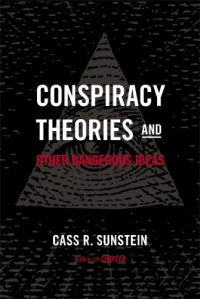 A Review of Conspiracy Theories and Other Dangerous Ideas by Cass Sunstein (based on an earlier paper co-authored with Adrian Vermeule); In Defense of Troublemakers: The Power of Dissent in Life and Business by Charlan Nemeth; and Conspiracy Theories and the People Who Believe Them, edited by Joseph E. Uscinski
On January 25 2018 YouTube unleashed the latest salvo in the war on conspiracy theories, saying “we’ll begin reducing recommendations of borderline content and content that could misinform users in harmful ways—such as videos promoting a phony miracle cure for a serious illness, claiming the earth is flat, or making blatantly false claims about historic events like 9/11.”
At first glance that sounds reasonable. Nobody wants YouTube or anyone else to recommend bad information. And almost everyone agrees that phony miracle cures, flat earthism, and blatantly false claims about 9/11 and other historical events are undesirable.
But if we stop and seriously consider those words, we notice a couple of problems. First, the word “recommend” is not just misleading but mendacious. YouTube obviously doesn’t really recommend anything. When it says it does, it is lying. … continue
Blog Roll
 Aletho News
- “Historic Russia”: The Land Putin Will Not Give Back
- How the Cambridge Analytica scandal still haunts Mark Zuckerberg
- The Ongoing Cancellation Campaign Against a Dissenting Academic in Norway
- Yemen and ‘the Houthis’: Challenging Sami Hamdi’s Narrative
- No, Christians did not invent Zionism
- AIPAC-led lobbying network opens branches in Cypriot, Greek parliaments
- Araghchi blasts ‘parasitic’ alliance as US taxpayers pay for Israel’s war on Iran
- Easy fix for Europe’s chaos? Stop fueling war against Russia
- Putin’s key remarks on peace talks and Europe’s ‘schizophrenia’
- Trita Parsi: Israel Set a Trap for Total War in the Region
- If Americans Knew
- An error has occurred; the feed is probably down. Try again later.
- No Tricks Zone
- E-Cars Reduce CO2 Emissions By Only 41% Compared To Internal Combustion Engine Vehicles
- Predictions Made By Renowned Climate Professor Over Past Decades Have Been Proven To Be Poor
- New Study Suggests Large Regions Of The Pacific Ocean Have Been Cooling For The Last 80 Years
- Germany’s Green Energy Debacle: High Energy Costs Force Kahla Porzellan to Close After 182 Years!
- New Study: 50 Years Of The Most Aggressive ‘Net Zero’ Policies Can Only Affect The Global Climate By 0.03°C
- US September “Heat” Was No Record…Many Records Set Decades Ago
- Latest European Green Energy Debacle; Portugal’s Largest Flagship Solar Park Insolvent!
- Green Energy Debacle: German Expert Professor Fritz Vahrenholt Warns Of Severe Economic And Social Consequences
- Two More Paleo Reconstructions Affirm Meters-Higher Sea Levels Across Ireland, Brazil 7000-6000 Years Ago
- New Study: Earth And Venus Surface Warmth Largely Explained By Convection And Lapse Rate, Not CO2 Or Radiation

