Cohen testimony: Trump’s former attorney can’t provide ‘any real examples’ of Russia collusion
RT | February 27, 2019
US President Donald Trump’s former lawyer Michael Cohen, giving testimony on Capitol Hill, has not been able to provide any evidence of collusion between the Trump campaign and Russian officials during the 2016 election.
Cohen has been giving testimony described as “explosive” by mainstream media to the House Oversight Committee about his “suspicions” that Trump could have worked with Russia during the campaign — but when probed, was not able to provide any evidence to back up those suggestions.
CBS reporter Bo Erickson tweeted during the hearing that Cohen “cannot cite any real examples of Russian collusion” with the Trump campaign “even though he was one of [Trump’s] closest allies.”
“If [Cohen] doesn’t know about any collusion, who does?” Erickson tweeted.
Republicans on the committee have castigated Democrats for inviting a “convicted perjurer,” who they say cannot be trusted, to give testimony. Cohen pleaded guilty last November to making false statements to Congress about a potential deal to build a Trump Tower hotel in Moscow, later admitting that he lied to “protect” Trump.
During the hearing, Rep. Jim Jordan accused Cohen of being aggrieved with Trump because he didn’t get a job at the White House — a claim which Cohen denied.
While Republicans immediately took an adversarial tone with Cohen, Democrats on the committee have been pushing him to produce information implicating Trump in a conspiracy to steal the election with help from Russia.
Committee Chairman Elijah Cummings said Democrats will continue to call Trump’s associates before Congress to testify in their “search for the truth” for the foreseeable future, taking advantage of the fact that the party now holds majority powers in the House of Representatives.
Tweeting before the hearing, Trump himself accused Cohen of “lying in order to reduce his prison time.”
Russia willing to work with US on cybersecurity, but Washington stalls – national security chief
RT | February 27, 2019
The Russian government is willing to cooperate with the US on cybersecurity issues, but so far it sees no reciprocation of this intention on the other side, said the head of Russia’s National Security Committee.
“On our part, we are prepared to dialogue with our Western partners, once there is responsiveness and a real interest in solving the issues we have accumulated,” Nikolai Patrushev said in an interview.
He added that at the moment there is virtually no progress in this regard.
The US suggested discussing the problems in 2018, but then they derailed a planned Russian-American interagency consultation by failing to send a delegation to Geneva.
The American government accuses Russia of interfering in its domestic affairs by hacking Democrat party officials and leaking stolen emails during the 2016 campaign. Moscow denies the allegations and says unlike Washington, it strictly follows the principle of non-interference.
The ‘Russian bots’ that weren’t: Twitter backtracks on troll claims, media ignores updated info
RT | February 26, 2019
Twitter quietly revised its public database of ‘Russian bot’ accounts earlier this month, removing 228 accounts it previously said were “connected to Russia”— but the admission has gone almost completely unnoticed by the media.
Bloomberg reported on the “burst of activity” from the bot accounts and claimed that Russia’s “social-media trolling operation” was “stepping up its Twitter presence to new heights.”
Fast-forward to 2019 and Twitter has removed 228 of these accounts from the database, saying they had “initially misidentified” them as being linked to Russia, but nobody in the media seems to have noticed.
In fact, Bloomberg is the only major US outlet which bothered to correct the story to reflect reality, admitting that Twitter’s changes to the dataset “invalidate central portions” of its original report and that there was “no surge” in this so-called Russian bot activity at the time in question. Oops!
Pivot to Venezuela!
Interestingly, the highlighted accounts have now been linked to Venezuela, another country the US government just so happens to have bad blood with.
In a tweet, Twitter’s “head of site integrity” Yoel Roth said that the company can now “more confidently associate” the 228 accounts with Venezuela. Roth’s short tweet thread on the misidentification was met with little interest receiving only a few retweets and no attention from media figures who supposedly actively follow any and all news remotely related to Russian activity online.
In a statement to Bloomberg, Roth later admitted that “definitive attribution is very, very difficult.” The Bloomberg mea culpa also noted that Twitter is “reluctant to discuss” how it connects accounts to so-called trolling networks in the first place.
Some on Twitter quickly pointed out that the timing of the pivot to focus on Venezuelan bots was curious, given the US’ recent efforts to engineer regime change against the government of Nicolas Maduro.
Journalist Sam Sacks tweeted that the new information about Venezuelan bots was “convenient” and said that the vast majority of stories written about Russian trolls and their alleged social media activity are “based on junk research.” Sacks also questioned why anyone should have faith in the credibility of such flawed analyses going forward.
Another Twitter user found it odd that Twitter and Bloomberg had “suddenly discovered” that bots it claimed were Russian had “miraculously turned into Venezuelans.”
Pattern of fake ‘Russian bots’
When it comes to the hot topic of Russian bots and trolls, the media and various social media monitoring groups have suffered unfortunate “misidentification” incidents before.
In 2017, an African American activist Charlie Peach was suspended from Twitter during one of the company’s purges of accounts purportedly linked to Russia, a claim that was happily echoed later by multiple major media outlets. Peach told RT at the time that Twitter was engaging in “suppression of voices” using the “Russian scare tactic.”
Twitter users in the UK have also been swept up into the hysteria over Russian bots based on their political opinions, with some accounts belonging to real people even being listed in a UK government report on nefarious Russian activity online.
More recently, a dodgy US-based cybersecurity firm called New Knowledge was busted by the New York Times for creating an army of fake Russian bots in order to secretly influence an Alabama election by accusing one candidate of being ‘supported’ by the fake accounts. Yet, despite its own dirty tricks being exposed, the firm is still cited by major US media outlets as a legitimate source of information on Russian “disinformation” online.
So it seems media interest in Russian bot stories waxes and wanes based on whether or not the information bolsters the ‘correct’ narrative.
Read more:
‘Fake news’ is okay if it’s about #RussiaGate: Top 7 fake ‘collusion’ stories the media pushed
The Russian Mirror
By Jacob G. Hornberger | FFF | February 26, 2019
A recent article in the New York Times about Russia’s “intelligence state,” authored by John Sipher, a former chief of station for the CIA, provides a valuable mirror for the American people. The problem is that American statists cannot see it as a mirror. While Sipher’s article clearly demonstrates that American statists, especially conservative ones, can see the wrongdoing of foreign totalitarian or authoritarian regimes with great clarity, they have a moral blindness when it comes to recognizing wrongdoing by their own government. Even worse, they defend wrongdoing by their own regime (which they can’t see as wrongdoing) as a way to combat foreign wrongdoing. In fact, they come to view their own wrongdoing as something good when it is being used to oppose wrongdoing by a foreign regime.
Sipher labels Russia’s (and, before that, the Soviet) governmental system an “intelligence state.” He’s critical of it, and rightly so. It is a type of governmental system that engages in such things as secret surveillance of the citizenry, assassination, torture, and interference in the affairs of other nations.
Referring to Russia’s system under Vladimir Putin, who Sipher reminds us is a former KGB officer, Sipher writes:
“The history of the brutal Soviet security services lays bare the roots of Russia’s current use of political arrests, subversion, disinformation, assassination, espionage and the weaponization of lies. None of those tactics is new to the Kremlin.
“In fact, those tactics made Soviet Russia the world’s first “intelligence state,” and they also distinguished it from authoritarian states run by militaries…. The result is a regime with the policies and philosophy of a supercharged secret police service, a regime that relies on intelligence operations to deal with foreign policy challenges and maintain control at home….
“Over the decades, the Soviet and Russian secret services developed tools and habits based on their Chekist experience that set them apart from their counterparts in the West. Rather than focusing on collecting and analyzing intelligence, they developed expertise in propaganda, agitation, subversion, repression, deception and murder.”
Sipher uses the label “intelligence state” to describe the Russian and Soviet system. There is another label that Sipher could have used, a much more common one: a “national security state.”
Why would Sipher avoid using the term “national-security state”? My hunch is that he instinctively knows that that would be holding the mirror to himself and the rest of the American people. That’s because the United States is a “national-security state” or an “intelligence state,” just like Russia is.
In fact, a supreme irony in Sipher’s article is that he worked for the CIA for 27 years. At the risk of belaboring the obvious, the CIA is an “intelligence agency,” one that not only engages in intelligence gathering but also has long wielded and exercised the powers of assassination, torture, indefinite detention, involuntary drug experimentation, and secret surveillance — that is, the same types of powers that Sipher decries in the Russia/Soviet “intelligence state.”
Sipher points out that one of the main features of an “intelligence state” is lying. He ought to know. Since its very beginning, the CIA has been an agency based on lies and lying. Deception has always been justified under the rubric of “national security.” Coming immediately to mind is CIA Director Richard Helms, who was convicted of lying to Congress regarding the CIA’s secret regime-change operation against Chile, to the praise and acclaim of his subordinate officers in the CIA. Let’s also not forget the lies that former Director of National Intelligence James Clapper Jr. told Congress under oath regarding the NSA’s secret surveillance of Americans.
Consider all the nefarious things the CIA has done and continues to do in foreign countries, including assassination, coups, installation of foreign dictators, invasions, wars of aggression, torture, rendition, partnerships with dictatorial regimes, sanctions and embargoes targeting innocent people with death, impoverishment, and suffering.
Or consider MKULTRA, the CIA’s top-secret operation to subject innocent, unsuspecting people to drug experimentation, along with the subsequent intentional destruction of official records to prevent Americans from discovering the full extent of the operation.
Or the U.S. national-security state’s secret surveillance of American citizens, along with secret illegal operations to spy on and infiltrate peaceful and law-abiding organization with the intent to smear and destroy them and their members.
Of course, it wasn’t always that way. The United States was founded as a limited-government republic, which is the opposite of a national-security state. For more than 150 years, our nation prospered without a Pentagon, a military-industrial complex, a national-security state, a CIA, and a NSA. Governmental procedures were transparent. There was no obsession over the nebulous and meaningless term “national security.”
Then came the aftermath of World War II, when U.S. officials told Americans that they were now facing a new official enemy, one that had been an official enemy of Nazi Germany and a friend and partner of the United States. That new official enemy was the Soviet Union and its system of communism. The communists were coming to get us, U.S. official maintained, as part of a worldwide communist conspiracy based in Moscow, Russia.
U.S. officials said that there was only one way to prevent a communist takeover of the United States. In order to prevail against the Soviet Union, the U.S. government would have to be converted into the same type of governmental system, U.S. officials said.
That meant moving to the dark side — toward torture, assassination, coups, regime-change operations, sanctions and embargoes, secret surveillance — i.e., the types of things the communists were doing. That’s how we got the Pentagon, the CIA, and the NSA, three principal components of the U.S. national-security state or intelligence state.
What about our limited-government republic? U.S. officials said that as soon as the Cold War was over, we could have it back. But when the Cold War suddenly and unexpectedly ended, we didn’t get our republic back. Instead, we got the continued existence of the national-security state, along with its forever wars and forever interventions all around the world, along with its never-ending plunge into the dark side.
Worst of all, we got a moral blindness, one in which all too many Americans are unable to recognize what all this has done to us.
Facebook unblocks RT-linked pages but makes them comply with rules ‘no one else’ has to follow
RT | February 25, 2019
Social media giant Facebook has restored several RT-linked pages more than a week after it blocked them without prior notice. The pages were only freed-up after their administrators posted data about their management and funding.
The Facebook pages of InTheNow, Soapbox, Back Then and Waste-Ed – all operated by the Germany-based company Maffick Media, which is 51 percent owned by RT’s video agency Ruptly – were made accessible again as of Monday evening.
All the accounts were previously suspended by Facebook, which issued no warning before taking action against the pages, even though their administration had not violated any of the social media giant’s existing regulations.
The social network then said in a statement that it wants the pages’ administrators to reveal their “ties to Russia” to their audience in the name of greater transparency while still refraining from contacting the accounts’ managers directly. FB’s measure was taken following a CNN report, which accused the pages of concealing their ties to “the Kremlin,” even though their administrators had never actually made a secret of their relations to Ruptly and RT.
Maffick CEO Anissa Naouai said what Facebook had done was “blatant censorship.” She also said she believes that the move was prompted by the pages’ popularity and by their critical stance on several US policies, and the US-backed coup attempt in Venezuela in particular.
Facebook only contacted her on February 20, after staying silent for about five days, Naouai said. The blocking was apparently explained away by reference to a “new policy.”
Later, she also revealed that the social media giant agreed to unblock the pages, but only after their administration updated “our ‘About’ section, in a manner NO other page has been required to do.” The accounts now indeed feature information related to their funding and management, visible under the pages’ logos.
“I guess you could say we are making Facebook history or are the victims of blatant double standards.”
No other pages besides the four RT-linked ones have been forced to comply with the “new policy” so far, Naouai says.
The blocking of the accounts had been slammed by journalists and popular social media commentators. The head of the world’s largest media union, the International Federation of Journalists (IFJ), denounced it as an “act of censorship opposed by the IFJ.”
Journalist Glenn Greenwald, co-founder of The Intercept, also criticized Facebook’s actions as “highly disturbing.” Popular social and political commenter and stand-up comedian Jimmy Dore told RT that the “ultimate goal” of such actions is to “expand the security state’s control over social media.”
The Hunt for Konstantin Kilimnik
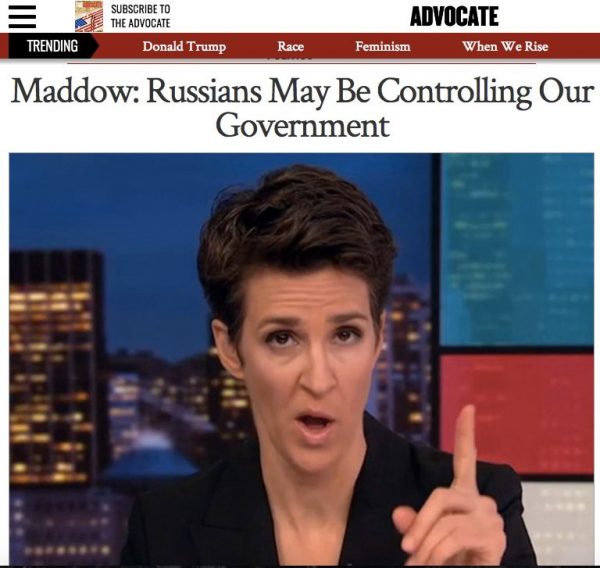
By Deena Stryker – New Eastern Outlook – 24.02.2019
Since 2014, the US has been accusing Russia of having ‘invaded’ Ukraine. Yet the latest story being repeated by the news media transforms an interesting proposal by a Ukrainian national to bring peace to that country into a devious attempt to have sanctions on Russia removed!
It was months ago that Rachel Maddow first mentioned the name of Konstantin Kilimnik, without mentioning why, specifically, that he had a plan to bring back Ukraine’s ousted President Yanukovich to head the Donbas. Merely quoting Kilimnik as saying ‘This is about my country’ Maddow implied he was a Russian, in what was to become a long series of misinterpretations and obfuscations.
A youngish Ukrainian who worked for Paul Manafort’s PR firm, Konstantin Kilimnik figured the Russian-speaking Donbas’s refusal to recognize the Kiev government could be ended by installing the country’s former pro-Russian President, whom the US deposed, in the breakaway province, the Minsk Agreements (I and II) laboriously crafted by the West having failed to heal the rift.
If he were an American, Kilimnik would be referred to as a patriot, but instead his only moniker is ‘having ties to the GRU’, that is being assumed because of the fact that he received language training in Russia’s Military University of the Ministry of Defense. Having become proficient in English, Kilimnik got a job working with the American Paul Manafort, who was trying to teach that President, Viktor Yanukovich to become a public figure. When, in 2014, Hillary Clinton, as Obama’s Secretary of State replaced Yanukovich with a government that relies on virulent anti-Russian fascist militias (among other things, they burned 200 opponents live), the Russian-speaking Donbas refused to recognize the new government and President Putin looked the other way when ‘volunteers’ crossed the border to help them repulse Kiev’s attacks.
(This policy is consistently referred to by the US media as Russia ‘invading’ Ukraine, hence US sanctions…). When Donald Trump ran for President, Kilimnik’s boss, Manafort, became the head of his campaign, and managed to scotch a Republican Party plan to deliver arms to Kiev for use against the Donbas.)
While the press endlessly details accusations against Manafort (known as a high-flyer wearing exotic clothes), it never mentions his protege’s goal: to secure American backing for a plan that would bring peace to Ukraine. Recently, for the first time, the BBC’s Katy Kay mentioned that plan on MSNBC. But without spelling it out, she allowed her colleagues to remark that it could result in the sanctions the US imposed on Russia being lifted. The US is not interested in bringing peace to Ukraine after five years of strife, but only in pursuing its goal of replacing Vladimir Putin with a more compliant Russian President, among other things, via sanctions for its ‘behavior’ vis a vis Ukraine.
When President Trump rightly points out that the majority Russian-speaking population of Crimea voted by 90% to rejoin Russia in a referendum, the media comments that he knows nothing about foreign affairs. Five years after the events, the American public is unlikely to remember — if it ever knew — that 90% of Crimeans are Russian. Not one in a hundred thousand knows that Catherine the Great wrested Crimea from the Ottoman Turks in the eighteenth century, building a big naval base in Sebastopol to give Russia a warm water port. (In the US it would be an impeachable offense if the president were to allow a hostile government to lay its hands on such a crucial asset.)
The latest chapter in the federal case against Manafort involves the ‘revelation’ that he met with Kilimnik in a New York bar during the campaign, providing him with polling data about the up-coming election, Trump having probably indicated to Russians in or around the government that he would be open to relaxing the sanctions imposed by Obama.
The laudable desire to bring peace to Ukraine has been turned into a crime in order to prove that Trump is appeasing Russia — either in return for money-laundering facilities or a future tower in Moscow. Washington cares not a whit that Ukraine — whose Western aspirations it supposedly backs — will continue in a state of low-level civil war for the foreseeable future.
P.S. Just in: Ukraine’s US installed president Petro Poroshenko just had an article added to the constitution stating that it is the duty of the government to ensure that Ukraine simultaneously enters the EU and NATO, so that NATO can not only camp on Russia’s European border, but in neighboring Ukraine as well.
Meet Pierre Omidyar, billionaire patron of US regime change operations, neocons & activist media
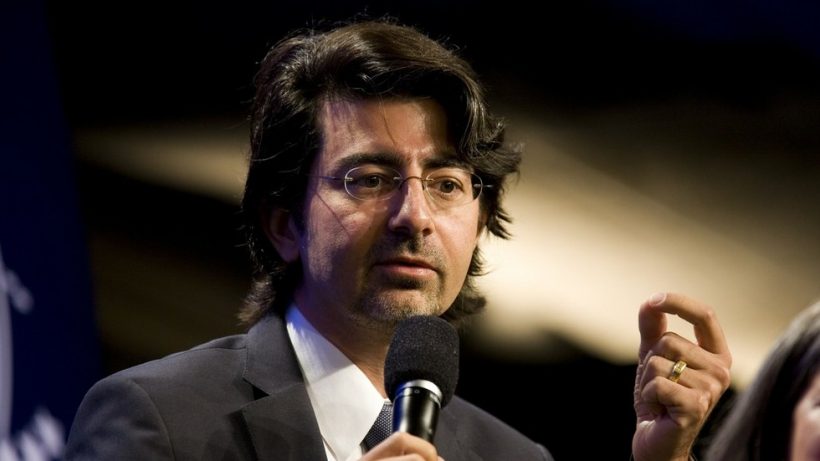
Pierre Omidyar speaks at a ‘Technology For Citizen Empowerment and Human Rights’ panel at the Clinton Global Initiative in New York, September 23, 2010 © AFP / Brian Harkin
RT | February 22, 2019
Amid the US push for regime change in Venezuela, RT speaks with investigative journalists who looked into the eBay founder and self-described “progressive” billionaire Pierre Omidyar, a major patron of regime-change operations.
An ongoing series in MintPress News, written by Alexander Rubinstein and Max Blumenthal, is a rare look into the projects undertaken by the “progressive philanthropreneur,” who has been praised by the liberal interventionist establishment for following in the footsteps of George Soros but attracts far less media attention.
“Part of the reason for doing this investigation was to inspire more scrutiny of Pierre Omidyar,” Rubinstein told RT. “There are mountains of newsworthy bits of information about many of the organizations he funds, but the sad reality is that it would require a team of at least half a dozen journalists working overtime to fully make sense of it all.”

Detail of a chart showing the connections between Pierre Omidyar and various media outlets, foundations, activists and outfits. © MintPress News
The second part in Blumenthal and Rubinstein’s series, published Wednesday, took a particular interest in Omidyar’s ties to organizations promoting “regime change.” In Ukraine, it was a TV station (Hromadske) that backed what turned into a violent 2014 coup against the government in Kiev. In Zimbabwe, Omidyar money funded a “cultural activist network” that campaigned for the ouster of President Robert Mugabe in 2017. And in the Philippines Omidyar is backing The Rappler, a news site opposed to President Rodrigo Duterte that is developing surveillance technologies like a “mood meter” of the audience to capture – and channel? – “non-rational reactions.”
Not progressivism but power
Omidyar is not doing this on his own, either, working hand in hand with US Agency for International Aid and Development (USAID) and the National Endowment for Democracy (NED).
“He has the money and – for one reason or another– the desire to participate in such destabilizing policies,” Rubinstein told RT, noting that the billionaire’s embrace of such projects makes him “the perfect private partner for the US government” in seeking regime change abroad.
How does a self-described progressive find himself riding the horse of regime change? This is one of the questions Rubinstein and Blumenthal hope further research will answer. Their digging has found Omidyar’s money behind the Alliance for Securing Democracy and The Bulwark – projects led by NeverTrump neoconservative Bill Kristol that push “Russiagate” and carry the torch of interventionism.
“If partnering with the neocon think tank guru who was a main conduit for US government messaging in the lead-up to the Iraq War is ‘progressive’ then I think it’s time we retire the term,” Rubinstein told RT.
He believes that Omidyar is not driving the regime-change agenda, but going along with it in “the perfect alliance of convenience.”
“If you’re looking for a coherent ideology that permeates through each of Omidyar’s investments, it’s not progressivism: it’s power… and power lies with empire,” Rubinstein said.
More specifically, Omidyar is looking to manage all areas of modern life, from journalism and transportation to banking and finance and government administration, journalist Yasha Levine, author of ‘Surveillance Valley: The Secret Military History of the Internet,’ told MintPress.
To him it’s not just about running a single service, but integrating things together to give technocrats, business executives and government officials a God’s-eye view of the world – to manage and control society more efficiently.
The role of Omidyar and other billionaires – who would be called ‘oligarchs’ if they were Russian but keep being presented as ‘philanthropists’ in the West – in influencing media and politics around the world is woefully under-examined, Rubinstein and Blumenthal argue.
Controlled or ‘responsible’ opposition?
Part of the problem is that Omidyar funds a wide range of media outlets through foundations, nonprofits and other cutouts, and many journalists who consider themselves independent or progressive aspire to work at Omidyar-backed Intercept, famous for publishing (some of) the documents leaked by NSA whistleblower Edward Snowden in 2013.
“All of the media ventures funded by Omidyar have one thing in common: their slickness,” Rubinstein said, noting that the “cutting edge design, high production values, and the esoteric portrayal of the process of reporting” all contribute to creating the image of Omidyar-backed outlets as the “responsible opposition” in contrast to outlets with a more shoestring budget.
While Intercept editor Glenn Greenwald has been sharply critical of US foreign policy and the ‘Russiagate’ conspiracy theory, other writers at the outlet have “carried water for al-Qaeda in Syria” and pushed Russiagate, said Rubinstein.
He described as “incredibly troubling” the fact that The Intercept has rolled out only a portion of the Snowden documents, de facto making them serve the agenda of Omidyar and his First Look Media rather than be responsibly released to the public, as Snowden intended.
Russia shouldn’t go ‘tooth for a tooth’ after Facebook bans Russian-linked media – Lavrov
RT | February 19, 2019
Sergey Lavrov says he is opposed to retaliating against foreign media in Russia after the Facebook ban of Russia-linked pages. Moscow should instead focus on upholding the rights of its journalists abroad.
The recent suspension of four Maffick Media Facebook pages after a CNN report on their links to RT is “definitely another example of pressure against Russian media and against free speech,” Russian Foreign Minister Sergey Lavrov told media after a meeting with his Slovak counterpart and current chairman of the Organization for Security and Cooperation in Europe (OSCE), Miroslav Lajcak.
Lavrov said he had also brought to Lajcak’s attention recent cases of discrimination against Sputnik and RT, including journalists being arbitrarily banned from official events in Spain.
When asked whether Moscow would retaliate against foreign media in Russia, however, Lavrov said he is “firmly against” such measures.
The fact that we still have not done so is not only testimony to our restraint, but also to our strength. We are an open society.
He pointed out that Ukrainian journalists are freely operating in Russia, including those reporting “rather aggressively” on both internal Russian events and Moscow’s relationships with the West.
The authorities responsible for deciding on a response should not employ the “tooth for a tooth” principle, Lavrov said.
“We should focus on maintaining comfortable working conditions for foreign journalists in Russia, while at the same time firmly defending the rights of our journalists abroad,” using the resources of international media rights institutions, the Russian foreign minister said.
During the weekend, CNN reported on the “Russian links” of several Facebook pages hosting political videos with millions of subscribers and over two billion views. Shortly afterwards, Facebook suspended four pages run by Maffick Media, half of which is owned by RT subsidiary Ruptly, and the other by In The Now host Anissa Naouai. No prior warning or explanation had been given for the ban, which Naouai called an act of “blatant censorship.”
EU Claims ‘Russian Sources’ Are Threat to Parliamentary Elections in May
Sputnik – 19.02.2019
BRUSSELS – The Council of the European Union adopted conclusions on Tuesday, casting Russia as a threat to “free and fair” EU parliamentary elections in May, citing the country’s alleged “disinformation strategies.”
“The sources and phenomena of disinformation can be identified inside and outside the Union and are originating from a range of state and non-state actors. In this regard, efforts should target malign actors, notably Russian sources,” the Council of the European Union document read.
The Council accused unidentified Russian sources of increasingly deploying disinformation strategies and suggested that any action against them should be guided by threat analyses and intelligence assessments.
With less than a hundred days left until the European vote, the Council added another initiative to a raft of documents that seek to set out a common approach toward suspected disinformation and other malicious practices it believes could undermine the electoral process.
The Council called for an array of non-legislative measures, including enhancing preparedness to cyber threats, establishing a network of fact-checkers to detect disinformation on social and digital media, and setting up a rapid alert system to share data on perceived disinformation campaigns.
Russia has repeatedly refuted claims of interfering in other countries’ electoral processes. The Russian envoy to the European Union, Vladimir Chizhov, accused the bloc in December of blaming Russia for meddling in the May elections before they even began.
‘What Are They Hiding?’ Amesbury Victim’s Parents Want Justice From UK Government
Sputnik – February 16, 2019
On 30 June 2018, UK couple Dawn Sturgess and Charlie Rowley, was rushed to a hospital after collapsing at their home in Amesbury, located several miles away from Salisbury where former Russian GRU agent Sergei Skripal and his daughter were found in a similar condition in March.
The parents of Dawn Sturgess, who died last July after allegedly being poisoned with the Novichok nerve agent in Amesbury, told The Guardian that they want justice from the UK government.
Stan and Caroline Sturgess said that they didn’t blame the death of their daughter on Russia, which British authorities have accused of being behind the toxin’s development and carrying out an attack on ex-GRU agent Sergei Skripal four months prior to the Amesbury incident in neighbouring Salisbury.
“I want justice from our own government. What are they hiding? I don’t think they have given us all the facts. If anyone, I blame the government for putting Skripal in Salisbury”, Stan said.
Back in late June-early July, UK police believed that Sturgess and her boyfriend, Charlie Rowley, had taken contaminated drugs, but later they claimed that they were exposed to a nerve agent, the same that was ostensibly used against Skripal and his daughter. While the Skripals and Rowley survived, Sturgess died on 8 July.
Rowley later claimed that he had picked up a perfume bottle and gave it as a gift to his girlfriend, who immediately sprayed the liquid over her skin.Dawn’s family told The Guardian that they believed Rowley when he said that the perfume bottle was in a sealed box, which is at odds with London’s claims that the alleged toxic substance Sturgess came into contact with was the same as in Salisbury.
“I think Charlie would remember that. I do believe it was sealed. I think he stumbled on it. I believe he had only just found it. If Charlie had found it in a bin in March he would have given it to Dawn straight away”, Caroline Sturgess said.
Skripal and his daughter Yulia were found unconscious in Salisbury on 4 March last year after allegedly being exposed to what the UK authorities later claimed was the Novichok nerve agent. London accused Moscow of orchestrating the purported attack, while failing to present any proof.
Russia, for its part, has consistently denied the allegations, offering assistance in the investigation of the case – something which the UK refused to accept.Four months later, the UK police reported a “serious incident” in the city of Amesbury, in which Sturgess and Rowley were believed to have handled an item allegedly contaminated by the same military-grade nerve agent that was purportedly used against the Skripals.
UK Home Secretary Sajid Javid accused Russia of using Britain as a “dumping ground” for poison, while Moscow has strongly denied any involvement in both the Salisbury and Amesbury incidents, stressing that no evidence had been presented to corroborate the claims.
In addition, the Russian Embassy in the UK pointed out that a hurried cremation of Dawn Sturgess confirmed that the British government was continuing to destroy evidence related to the Skripal case.
READ MORE:
Moscow Notes New Inconsistencies in Amesbury Incident Probe
‘Terrified’: Amesbury Survivor Fears He’ll Be Dead in 10 Years Due to ‘Novichok’
‘Run Down by Novichok’: Amesbury Survivor Charlie Rowley Reportedly Battleing Deadly Disease
Featured Video
EUROPE FEARS RUSSIA’S NEXT MOVE / Ian Proud
or go to
Aletho News Archives – Video-Images
New Book
New Book: No Autoimmunity The Body Doesn’t Attack Itself
Lies are Unbekoming | September 24, 2026
 The label for Humira, once the best-selling drug in the world, lists its risks in plain print. One of them, in the label’s own words, is new “autoimmune” disease.
A drug prescribed for a condition labelled autoimmune carries a warning that it can cause a condition labelled autoimmune. That contradiction sits in every box, on a folded paper almost nobody reads.
My new book starts there.
No Autoimmunity: The Body Doesn’t Attack Itself
For seventy years, “your body is attacking itself, and we don’t know why” has ended the conversation for people diagnosed with multiple sclerosis, lupus, rheumatoid arthritis, Hashimoto’s, Type 1 diabetes, Crohn’s and psoriasis. More than eighty conditions now carry the autoimmune label. The diagnosis comes with a prescription for life. It almost never comes with a question about cause.
This book asks the question and answers it from the framework’s own records: its drug labels, its journals, its regulatory filings, and its own experiments. … continue
Blog Roll
 Aletho News
- Israeli settlers terrorize West Bank Palestinians with state-provided drones: Report
- They see them, then kill them: Israeli quadcopters track, deliberately target civilians in Gaza
- Debunked: Trump’s egregious UNGA claims on war against Iran crumble under scrutiny
- Europe was part of the infrastructure of US aggression against Iran: Deputy FM
- New evidence on the Bucha Massacre
- Italy and France debunk reports CIA issued ‘Russian drone threat’ warning
- How Russia is Rewiring the Global South
- Britain’s elites want you ready to die for a war they keep imagining
- Inside Ukraine’s propaganda operation targeting Americans
- Hackers From US, France, Singapore Tried to Disrupt Russian Elections – Internet Provider
- If Americans Knew
- An error has occurred; the feed is probably down. Try again later.
- No Tricks Zone
- New Study: Earth And Venus Surface Warmth Largely Explained By Convection And Lapse Rate, Not CO2 Or Radiation
- 2025 Nature Paper Claiming Worsening Global Drought Gets RETRACTED …Heavily Flawed
- New Study: ‘Global Drought Shows No Detectable Recent Acceleration Under Climate Warming’
- Economic Masterminds: German Socialists Suggest Taxing Productivity Gains Stemming From Using AI
- The South China Sea Has Not Been Cooperating With The Climate Change Narrative
- Energy Crisis: Germany Enters Heating Season With Historically Low Gas Reserve Fill Levels
- New Study: The Antarctic Ice Sheet Gained Mass From 2020-2024 Due To Staggering Snow And Ice Accumulation
- Study: Ocean Heating Rates From Thousands Of Years Ago ‘Dwarf’ Modern Ocean Heating Rates
- Climate Extremists Target, Attack Large-Scale Power Grid Infrastructure In Germany!
- New Study: Antarctic Ice Melt Has Contributed Less Than 1 Centimeter To Sea Level Rise In The Last 30 Years

