More vaccines and fake meat to appease the biotech monster
By Guy Hatchard | TCW Defending Freedom | April 26, 2023
Science Minister George Freeman has announced a record £52billion investment in public research and development over the next three years. That is £775 for every man, woman and child in Britain. So what are they spending your money on? You probably guessed it: the first grants under the scheme are being made to produce more biotech vaccines and industrial quantities of fake meat.
Freeman announced that traditional agriculture is inadequate to the task of feeding the world. Accordingly, the newly funded Cellular Agriculture Manufacturing Hub will spearhead the development of processes to produce key food groups such as proteins sustainably and cost-effectively to feed a growing global population.
The Hub will undertake ‘upstream engagement with a wide range of stakeholders including consumers, food producers and retailers to promote transformational food development’. Translation: very soon the government will be rewriting our dinner menus.
According to Professor Marianne Ellis of the University of Bath, who will benefit from the first funding award, ‘This would enable production of foodstuffs and the vast array of co-products that are the same as traditional products produced in a system similar to brewing.’
Bearing in mind that no specific processes have yet been developed or their products tasted, the claim of similarity with traditional food and the analogy with the brewing of beer stumbles at the first hurdle. In fact what is being proposed is biotechnology on an industrial scale using processes which are already known to be energy-hungry, risk-intensive and subject to genetic contamination.
In my book Your DNA Diet, I discuss research illustrating the value of natural food based on DNA to maintain our health. We have enjoyed a co-evolutionary relationship with these foods for millions of years. Genetically processed foods will not have this same relationship. Industrial production of such foods will also change the relationship of consumers with producers, placing food supply in the hands of giant corporations.
The second recipient of government research largesse will be the Future Vaccines Manufacturing Hub led by Professor Dame Sarah Gilbert at Oxford University and Professor Martina Micheletti at University College London. This group is a follow-on from the Oxford University-AstraZeneca collaboration which gave us a Covid vaccine that is no longer used around the world possibly because of the danger of adverse effects.
The Vaccine Hub intends ‘to make it possible to undertake mass programmes of non-invasive vaccination’. For your reference, non-invasive delivery systems currently under development include oral and nasal vaccines, and vaccines built into foods.
The Vaccine Hub will develop cellular-level technologies. As we have noted previously, the basis of life as we know it is the cell. Genetically altering cellular processes is inherently mutagenic and undermines the very basis of biostability and health.
The press release from UK Research and Innovation announcing these new grants is headlined: ‘Vaccine and food manufacturing hubs will save lives and cut carbon’. It makes ample use of phrases designed to sound reassuring such as ‘Food production revolutionised’, ’A hub for health and life’, and so on. The release also reassures us that Covid vaccines have been ‘game-changing’ – they certainly have, but not in the way originally intended. The current high level of excess deaths in the UK and elsewhere, disproportionately affecting those in receipt of Covid vaccines, tells its own story.
The hubs are each associated with a long list of private-sector partners from the biotechnology industry. To facilitate the commercialisation of biotech products, the UK government is loosening the regulations requiring the public to be informed about what they are eating. The Genetic Technology Act, which passed into law last Thursday, ‘removes plants and animals produced through precision breeding technologies from regulatory requirements applicable in England to the environmental release and marketing of GMOs (Genetically Modified Organisms)’.
The key change here is merely semantic: genetic manipulation is now described as a ‘precise’ process and will thereby escape regulation and labelling. Watch Dr Michael Antoniou of King’s College London discuss the dangers of gene crop deregulation in the new Act.
New UK policies appear to be at least in part a response to the huge pressure exerted by scientists, academic institutions and biotech firms on the government to continue the massive level of funding they enjoyed during the pandemic. All this is being undertaken in the absence of any credible official evaluation of the impact, advisability, cost and safety of pandemic policies. It is of note that independent evaluations such as this paper are pointing to huge mistakes, which the new grants appear poised to repeat. A form of madness has gripped our politicians as they rush ahead without bothering to inform themselves of potential dire consequences.
An Earth Day Special in Defense of Climate Science and CO2
BY MATTHEW EHRET | APRIL 23, 2023
According to such modern climate experts as Bill Gates, Greta Thunberg, Michael Bloomberg, Mark Carney, Al Gore, Alexandria Ocasio Cortez, Prince Charles and Klaus Schwab, carbon dioxide must be stopped at all cost. Images of submerged cities, drowning polar bears and burning deserts taking over civilization flash before our eyes repeatedly in schools, mainstream media and films.
The Paris Climate Accords demand that all nations reduce their emissions to pre-industrial levels in order to save the world from boiling over and nations are strong armed into adapting to a new ‘green’ economic order of de-growth and depopulation.
But is CO2 really the existential threat it is being made out to be?
I would like to take a few moments to entertain the hypothesis that we may be drinking some poisonous Kool-Aid in a modern-day Jonestown cult and we are just minutes away from a hearty “bottoms up”.
While some of the questions and facts you are about to read are considered heretical in certain quarters, I think that history has shown that it is only by permitting the mind to question sacred cows at the risk of being denounced as “heretical” that any creative progress can made. With this thought in mind, I will venture the risk and only ask that you accompany me for this thought experiment with an open mind.
Back in November 17, 2009, a major scandal erupted when the 61 Mb of emails internally circulated among the directors and researchers at East Anglia University’s Climate Research Unit (CRU) were made public. To this day, it has not been verified if the scandal occurred via an internal leak or a hack, but what was verified throughout the hundreds of emails between director Phil Jones and the teams of climatologists staffing the CRU, was that vast scales of fraud were occurring. Jones himself was caught red handed[1] demanding that data sets be ignored and massaged in order to justify the climate models that had all been used to sell the idea that CO2 was driving startling rates of warming.
East Anglia’s CRU is the world’s foremost center of data set centralization and climate model generation which feed directly into the UN’s Independent Panel on Climate Change (IPCC) and which in turn feeds into every major NGO, school, corporation and government. The other central control point of data selection and model generation (for both climate change and covid-19 data sets) is an Oxford-based operation called “Our World In Data”, funded in large measure by the UK government and Bill Gates[2].
Climategate couldn’t have come at a worse time, as the COP15 Climate Summit was scheduled for December 2009 where the world’s first legally binding carbon reduction treaties were expected to finalize an end to sovereign nation states. The terrible publicity of climategate essentially caused the event to become a big goose egg, as Chinese and Indian delegates refused to play along, and ensured that all teeth were removed from any binding carbon caps[3].
In December 2009, former chief economic advisor to Putin, Dr. Andrei Illarionov stated that Russia had sent data to East Anglia’s CRU from 476 meteorological stations covering over 20% of the globe’s surface hosting a wide range of data from as far back as 1865 to 2005. Dr. Illarionov explained[4] that he was dismayed to see that Phil Jones and the CRU entirely ignored the data from all but 121 stations, and from those stations they did use, they artificially cherry-picked data that gave off the false result that temperatures between 1860-1965 were 0.67 degrees colder than they truly were while temperatures from 1965-2005 were made artificially high.
After being suspended for a few months, a UK review panel absolved Jones from his transgressions and re-installed him into his old position of carbon data gatekeeper at the CRU.
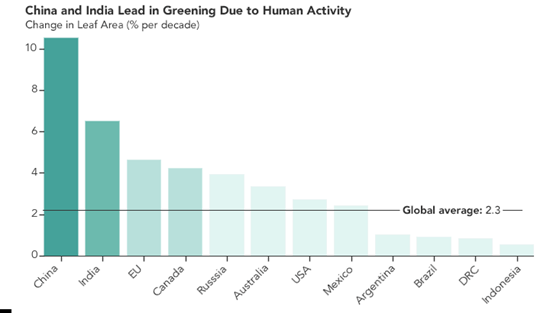
Many people were taken aback by the findings published by a team of scientists analyzing the results of Moderate Resolution Imaging Spectroradiometer (MODIS) instruments on NASA’s Terra and Aqua satellites. NASA’s website[5] described the findings (published on February 11, 2019[6]) in the following way: “The research team found that global green leaf area has increased by 5 percent since the early 2000s, an area equivalent to all of the Amazon rainforests. At least 25 percent of that gain came in China.”

Up until this study’s publication, scientists were not certain what role human economic activity played in this anomalous greening of the earth.
The NASA study demonstrated that this dramatic rate of greening between 2000-2017 was being driven largely by China and India’s combined efforts at eradicating poverty which involves both reforestation, desert greening efforts (see China’s Move South Water North megaproject[7]), agricultural innovation and also, general industrial growth policies. The later policies represent genuine efforts by Asian nations to wipe out poverty by investments into large scale infrastructure… a practice once used in the west before the days of “post-industrialism” induced a collective insanity of consumerism in the early 1970s.
A perplexed reader might now be heard to ask: but how can industrial growth have anything to do with greening of the planet?
One simple answer is: carbon dioxide.
As children, we are taught that CO2 is an integral part of our ecosystem and that plants love it.
The processes of photosynthesis which evolved over long spans of time with the advent of the chlorophyll molecule eons ago requires constant infusions of carbon dioxide that are broken down along with H2O, releasing oxygen back into the biosphere. Over time, free oxygen slowly formed the earth’s ozone layer and fueled the rise of ever higher life forms that relied on this “plant waste” for life.
Today, large amounts of carbon dioxide is regularly generated by biotic and abiotic activity from living animals, decaying biomass as well as volcanos which constantly emit CO2 and other greenhouse gases. A surprisingly small portion of that naturally occurring CO2 is caused by human economic activity.
Taking the entire composition of greenhouse gases together, water vapour makes up 95% of the bulk, carbon dioxide makes up 3.6%, nitrous oxide (0.9%), methane (0.3%), and aerosols about 0.07%.

Of the sum total of the 3.6% carbon dioxide released into the atmosphere, approximately 0.9% is caused by human activity. To restate this statistic: Human CO2 makes up less than 1% of the 3.6% of the total greenhouse gases influencing our climate.
During the mid-20th century, a belief began to emerge among some fringe climate scientists that the 400 parts per million (PPM) average carbon dioxide in the atmosphere is the “natural and ideal amount”, such that any upset of this mathematical average would supposedly result in destruction of biodiversity. These same mathematicians also presumed that the biosphere could be defined as closed systems such that rules of entropy were the natural organizing principles- ignoring the obvious fact that ecosystems are OPEN, connected to oceans of active cosmic radiations from other stars, galaxies, supernova and more while being mediated by nested arrays of electromagnetic fields.
As film maker Adam Curtis demonstrated in his All Watched Over By Machines of Love and Grace (2011)[8], this belief slowly moved from the fringe into mainstream thinking despite the fact that it is simply wrong.
Beyond the facts already presented above, another persuasive piece of evidence can be found in carbon dioxide generators which are commonly purchased by anyone managing a greenhouse[9]. These widely-used generators increase CO2 to amounts as high as 1,500 PPM. What is the effect of such increases? Healthier, happier, greener plants and vegetables.

Amidst the frantic alarms sounding daily over the impending climate emergency threatening the world, we often forget to ask if anyone ever actually proved the claim that CO2 drives the climate?
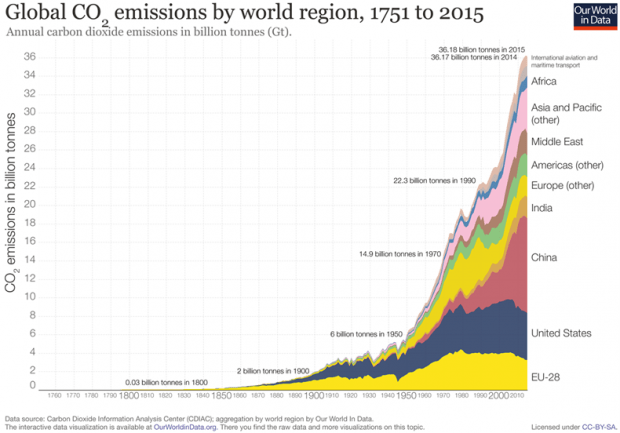
To begin to answer this question, let’s start with a graph showcasing the rise of human industrial CO2 from 1751-2015 broken down into various regions of the earth. What we can see is consistent increase from the mid 19th century until 1950, when a vast spike of emission rate increases can be viewed. This increase obviously accompanies world population growth and the correlated agro-industrial output.
Next, let us look at the global mean temperature changes from 1880-present.
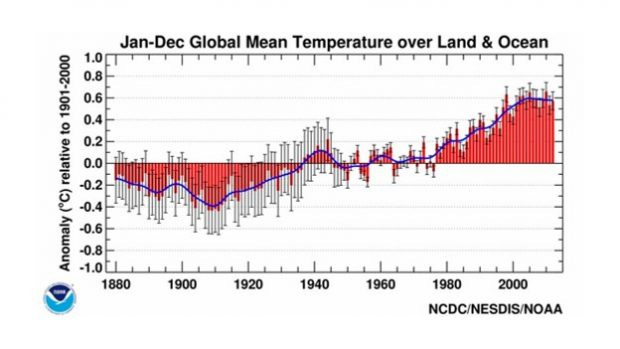
Here several anomalies strike the thinking mind.
For starters, absolutely no warming accompanies the period of intensive industrial growth of 1940-1977. In fact during this period, many climate scientists were ringing the alarm over an impending ice age![10]
Another anomaly: Since carbon dioxide emissions have increased continuously over the past 20 years, one would expect to see a correlated spike in warming trends. However, this expected correlation is entirely absent between the year 1998 and 2012 when warming tappers off to a near standstill sometimes called “the global warming pause” of 1998-2012[11]. This has been an embarrassment for all modellers whose scare-mongering predictions have fallen to pieces to the point that they can only pretend this pause doesn’t exist. Again, the question must be asked: why would this anomaly appear if CO2 drove temperature?
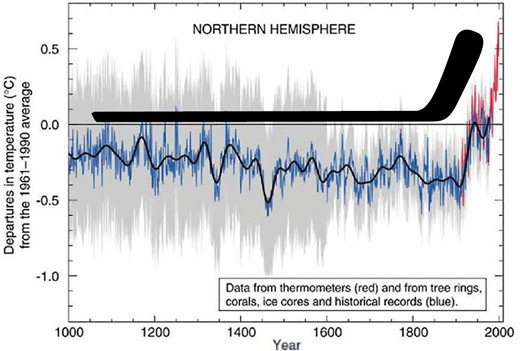
Let’s take one more anomaly from our temperature records before digging into the hard proof that CO2 does not cause temperature changes: The medieval warming period [see graph].

While certain proven fraudsters like Michael Mann[12] have attempted to erase this warming period from existence with things like the famous “hockey stick” model crafted with the help of East Anglia’s Phil Jones, the fact remains that from 1000-1350 A.D. global mean temperatures were significantly warmer than anything we are currently living through. The Vikings in Greenland had no coal plants or SUVs, and yet mean temperatures were still warmer than today by a long shot. Why?
Perhaps taking a wider look at the CO2:climate correlation might give us a better idea of what is actually happening.
Below we can see a chart taking 600,000 years of data into account. It is certainly the case that CO2 and temperature have a connection on these scales… but correlation is not causation, and as the author of How to Lie with Statistics[13] famously stated “a well-wrapped statistic is better than Hitler’s Big Lie; it misleads, yet it cannot be pinned on you.”
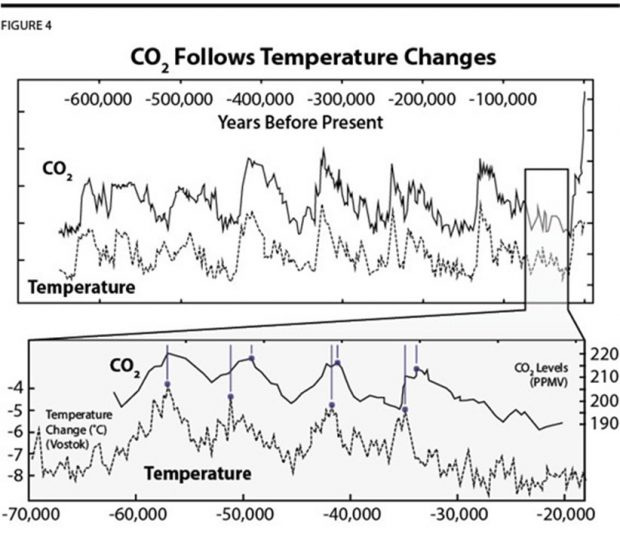
When a 70,000 year sampling is inspected, we find the slight of hand fully exposed by observing the peaks and troughs of temperature and CO2. If the later were truly the driving force as the Great Resetters of our day proclaim, then CO2 peaks and troughs would happen before temperature, but the evidence shows us the inverse. Let’s look at one more example of an 800 year CO2/temperature lag about 130,000 years ago…
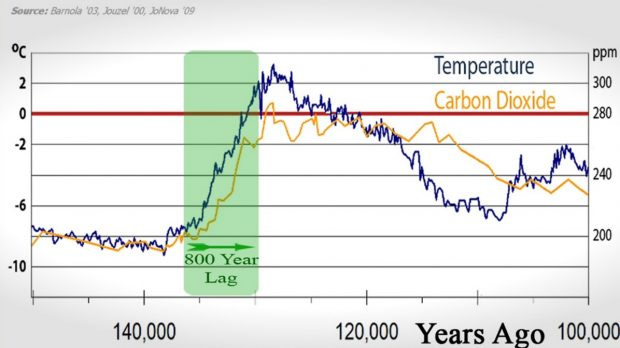
Going back even further into the climate records, it has been revealed that during many of the past ice ages, carbon dioxide had risen up to 800% higher than our current levels, despite the fact that human activity played zero role[14].
Technically, I could end right now and feel like any honest jury would conclude that CO2 has been falsely framed for murder. But I would like to introduce one more dramatic piece of evidence that gets us back on the path of a true science of climate change and ecosystems management: Astroclimatology.
The fact that the earth is but one of a multitude of spherical bodies in space speedily revolving around an incredibly active sun within the outskirts of a galaxy within a broader cluster of galaxies is often ignored by many computer modelling statisticians for a very simple reason. Anyone who has been conditioned to look at the universe through a filter of linear computer models is obsessed with control, and is incredibly uncomfortable with the unknown. The amount of actual factors shaping the weather, ice ages, and volcanism are so complex, vast and mostly undiscovered that computer modellers would prefer to simply pretend they don’t exist… or if they do acknowledge such celestial phenomena to have any function in climate change, it is often dismissed as “negligible”.
Despite this culture of laziness and dishonesty, the question is worth asking: WHY does evidence of climate change occur across so many other planets and moons of our solar system? Ice caps on Mars melt periodically[15] and have been melting at faster rates in recent years. Why is this happening? Could the sun’s coronal mass ejections, solar wind, or electromagnetic field be affecting climate change within the solar system as one unifying process?
Often Venus with its atmosphere of 96.5% CO2 is used as a warning for people on the earth what sort of terrible oven we will create by producing more CO2. It is hot after all with temperatures averaging 467 degrees Celsius (872 degrees Fahrenheit). However, if CO2 were truly to blame for the heating, then why is Mars so cold with temperatures averaging minus 125 degrees Celsius (-195 degrees Fahrenheit) despite the fact that it’s atmosphere is 95% CO2?
Similarly, what role does cosmic radiation play in driving climate change? Based on the recent discoveries of Heinrich Svensmark and his team in Denmark, strong correlations were found linking cloud formation, climate and cosmic radiation flux over time. Cosmic radiation flux into the earth is a continuous process mediated by the earth’s magnetic field as well as the oscillating magnetic field of the sun which shapes the entire solar system as we revolve around the galactic center of the Milky Way every 225-250 million years. Svensmark’s discovery was outlined beautifully in the 2011 documentary The Cloud Mystery.[16]
The point to re-emphasize is that the weather is, and always has been, a complex process shaped by galactic forces that have driven a miraculous system of life on the earth over hundreds of millions of years.
During this time amounting to approximately two revolutions around the galactic center, living matter has transformed from relatively boring (high entropy) single celled organisms, through a continuous process of increased complexity, and increased power of self-direction (low entropy). Up until now, there is no actual evidence that this process is a closed system and as such, that any fixed state of no change/heat death is controlling its behavior. While some might deny this claim, citing the redshifts of galaxies as proof that the universe is in fact dying (or inversely had a starting point “in time” 13.6 billion years ago before there was nothing), I refer you to the work of Halton Arp[17].
This process has been characterized by non-linear discontinuities of living matter emerging where only nonliving matter previously existed, followed later by conscious life having appeared where only non-conscious life had been found and most recently self-conscious life endowed with creative reason appearing onto the scene. While this process has been punctuated by sometimes violent mass-extinction cycles, the overall direction of life has not been shaped by randomness, chance or chaos, but rather improvement, perfectibility and harmony.
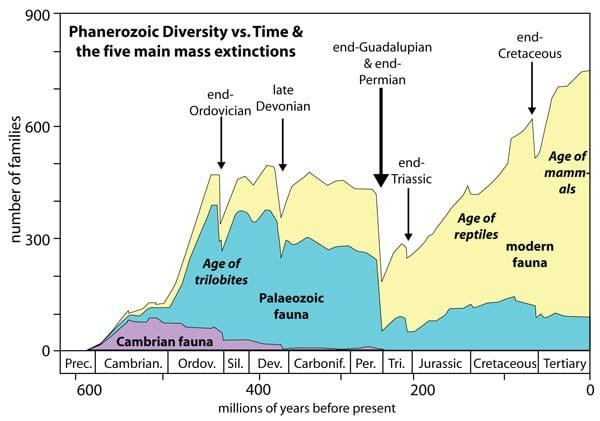
When humanity appeared onto the scene, a new phenomenon began expressing itself in a form which the great Russian academician Vladimir Vernadsky (1863-1945) described as the Noosphere (as opposed to the lithosphere and biosphere). Vernadsky understood this new geological force to be driven by human creative reason, and devoted his life to teaching the world that the law of humanity must accord with the law of nature stating:
“The noösphere is a new geological phenomenon on our planet. In it, for the first time, man becomes a large-scale geological force. He can, and must, rebuild the province of his life by his work and thought, rebuild it radically in comparison with the past. Wider and wider creative possibilities open before him. It may be that the generation of our grandchildren will approach their blossoming”.[18]
In Vernadsky’s mind, neither the noosphere, nor the biosphere obeyed a law of mathematical equilibrium or statis, but was rather governed by an asymmetrical harmony and progress from lower to higher states of organization. It was only by coming to understand the principles of nature that mankind became morally and intellectually fit to improve upon nature by turning deserts green, harnessing the power of the atom or applying scientific progress to health and agriculture. Some of his most important insights were published in his Scientific Thought as a Planetary Phenomena (1938), Evolution of Species and Living Matter (1928) Some Words About the Noosphere (1943), and The Transition of the Biosphere to the Noosphere (1938).[19]
Despite the lasting contributions made by Vernadsky to human knowledge, here we sit, 76 years after the end of WW2 tolerating an unscientific policy of mass decarbonization which threatens to radically undermine civilization for countless generations.
Is this change being forced upon humanity? Unlike the forces of fascism and imperialism of the past, today’s terrible self-implosion of civilization is occurring via the consent of those intended to perish under a Great Reset via the collective guilt for the crime of simply being human. It has become the norm for the majority of today’s children to think of themselves as belonging not to a beautiful species made in the image of a Creator, but rather to a parasitic race guilty for the crime of sinning against nature.
So let’s take this opportunity to re-introduce truth back into climate science, and let the social engineers drooling over a Great Reset scream and whine as nations choose a new open system paradigm of life and anti-entropy rather than a closed system world of decay and heat death. This positive new paradigm of cooperation, scientific and technological progress, and cultural optimism is getting stronger by the day led by Russia, China and other nations joining the international New Silk Road. Most importantly, let’s finally absolve CO2 of its accused sins, and celebrate this wonderful little molecule as our friend and ally.
—
[1] The Evidence of Climate Fraud, By Marc Sheppard, American Thinker Nov. 21, 2009
[2] https://ourworldindata.org/funding
[3] How do I know China wrecked the Copenhagen deal? I was in the room by Mark Lynas, London Guardian, Dec. 22, 2009
[4] ClimateGate Fallout: Russian Think Tank Says Temperature Data was ‘Cherry-Picked’, Media Research Center, December 2009
[5] China and India Lead the Way in Greening, NASA Earth Observatory, Feb. 12, 2019
[6] China and India lead in greening of the world through land-use management, Nature Sustainability, Feb. 11, 2019
[7] China’s South-to-North Water Diversion Project benefits 120 million people, CGTN, Dec. 13, 2020
[8] Watch full documentary here: https://watchdocumentaries.com/all-watched-over-by-machines-of-loving-grace/
[9] To examine one of many models of CO2 generators, visit: https://johnsonco2.com/co2-generators/
[10] The 1970s Ice Age Scare, by Steve Goddard, May 12, 2013
[11] https://wattsupwiththat.com/2020/09/28/study-global-warming-hiatus-aka-the-pause-was-real/
[12] Dr. Tim Ball Defeats Michael ‘Hockey Stick’ Mann’s Climate Lawsuit, Aug. 24, 2019, Climate Change Dispatch
[13] How to Lie with Statistics, by Darrell Huff, 1954 https://archive.org/details/how-to-lie-with-statistics-darrell-huff/page/23/mode/2up
[14] Ice age occurred when CO2 levels were 800 percent higher than now, IceAgeNow.info, July 23, 2016
[15] Mars is Melting, Science.nasa.gov, Aug 7, 2003
[16] To watch the full documentary, visit:
[17] A Look Into Halton Arp’s “Peculiar Galaxies” and its Implications for the World We Live In, by Matthew Ehret, Rising Tide Foundation https://risingtidefoundation.net/2020/10/13/a-look-into-arps-peculiar-galaxies/
[18] Some Words About the Noosphere by V.I. Vernadsky, 1943, republished in 21st Century Science and Technology, Spring 2005 TS5467.SP05 (21sci-tech.com)
[19] To access all of these referenced works by Vernadsky, visit: https://risingtidefoundation.net/vladimir-vernadsky/
Facebook Should Keep Removing COVID ‘Misinformation,’ Oversight Board Says
By Brenda Baletti, Ph.D. | The Defender | April 21, 2023
The oversight board for Facebook’s parent company, Meta, on Thursday recommended the social media giant “maintain its current policy” of removing COVID-19 “misinformation” from its platform until the World Health Organization declares an end to the global pandemic.
The board made the recommendation despite widespread outcry about social media censorship after the Twitter Files and several ongoing lawsuits revealed collusion between state actors and social media companies to censor dissenting opinions and factual information that contradict official narratives, including those related to the COVID-19 pandemic.
The recommendation came in response to a request by Meta in July that the oversight board — an independent panel of tech and legal experts selected by Meta to weigh in on content policy issues — assess whether “a less restrictive approach” to censoring misinformation might “better align with its values and human rights responsibilities.”
Meta’s current misinformation policy sets different categories of harm content might cause, making that content subject to removal. Content is censored if the platform deems that it contributes to the “risk of imminent physical harm,” could cause “interference” with the functioning of political processes or contains “certain highly deceptive manipulated media.”
But the board didn’t find inconsistency between Meta’s “misinformation policy” and its “values and human rights responsibilities.” Instead, it said Meta’s current “exceptional measures” of eliminating disinformation are “justified.”
The board also urged Meta to “begin a process” to reassess which “misleading claims” it removes, to be more transparent about government requests for information, to consider making its “misinformation” policies more localized and to investigate how the architecture of the platform facilitates the spread of misinformation.
Meta said Thursday it will publicly respond to the board’s non-binding recommendations within 60 days.
Suzanne Nossel, a board member and CEO of PEN America, told The Washington Post that the board’s recommendations are not just relevant to COVID-19, but could shape Meta’s approach to anticipated future global health emergencies.
“The decision is less perhaps about the COVID pandemic per se or exclusively than about … how Meta should handle its responsibilities in the context of a fast-moving public health emergency,” she said.
How Facebook and Instagram censor COVID ‘misinformation’
The recommendation specifically assessed Meta’s “misinformation about health during public emergencies” policy, under which it removes 80 distinct “COVID-19 misinformation claims” posted on its platforms, such as claiming masking or social distancing lack efficacy or that the vaccines can have serious side effects.
Between March 2020 and July 2022, Facebook and Instagram, also owned by Meta, removed 27 million instances of COVID-19 “misinformation,” 1.3 million of which were restored on appeal.
The social media giant also designates a second type of COVID-19 “misinformation,” which does not reach the standard of removal, but is still subject to manipulation by the platform.
For example, information in that category is “fact-checked” where it is labeled as “false” or “missing context,” and then linked to a fact-checking article. That content is then also demoted so that it appears less frequently and prominently in users’ feeds.
Meta also treated other information with what it calls “neutral labels,” where it labeled posts with statements such as “some unapproved COVID-19 treatments may cause serious harm” and then directed people to Meta’s COVID-19 information center, which provides approved information from public health authorities.
Last July, the company said it had connected more than 2 billion people across 189 countries to “trustworthy information” through the portal. But it decided to stop using the neutral labels in December 2022, to ensure they would remain effective in other health emergencies, according to the oversight board’s report.
The basis for determining what is misinformation is whether the information conforms to what public health authorities deem to be true, according to the board’s recommendation and the Facebook policy page.
But throughout the pandemic, public health authorities have had to concede they were wrong about things — and that they lied about things — they had previously pronounced to be science-backed facts.
These “facts” include, for example, flip-flopping on masks, the lab-leak hypothesis, the effectiveness of natural immunity and numerous claims about vaccine efficacy, including that it stops transmission.
That means the platforms eliminated and demoted facts and information that were true. Even CNN conceded that “the company applied the labels to a wide range of claims both true and untrue about vaccines, treatments and other topics related to the virus.”
‘This kind of abuse of power should terrify all of us’
The board recommendations don’t mention the events that led Meta to consider changing its policies — controversy over recent revelations about how government officials coerced social media companies into toeing the government line.
In 2021, President Biden directly criticized Facebook and other platforms, saying they allowed “vaccine misinformation” to spread and they contributed to deaths from COVID-19.
He said they were “killing people” and that the pandemic was only “among the unvaccinated.”
Biden’s accusation was accompanied by threats of regulatory action from from high-ranking members of the administration — including White House Press Secretary Jennifer Psaki, Surgeon General Dr. Vivek Murthy and Department of Homeland Security (DHS) Secretary Alejandro Mayorkas — if the social media companies did not comply.
Psaki said government officials were in regular touch with social media platforms, telling them what — and in some cases whom — to censor, Jenin Younes reported.
DHS even created a video in 2021, since removed from youtube, encouraging children to report their own family members to Facebook for ‘disinformation’ if they challenge U.S. government narratives on COVID-19.
Writing in Tablet Magazine this month, civil liberties attorney Jenin Younes recounted the story of a Facebook support group for people who experienced adverse events related to the COVID-19 vaccines being shut down for spreading harmful “misinformation.”
Last month, in the Twitter Files release about Stanford University’s Virality project, Matt Taiibbi revealed that Stanford, with the backing of several government agencies, had created a cross-platform digital ticketing system that was processing censorship requests for all of the social media platforms, including Meta’s.
The Virality Project claimed its objective “is to detect, analyze, and respond to incidents of false and misleading narratives related to COVID-19 vaccines across online ecosystems.”
Taibbi said the Virality Project was “defining true things as disinformation or misinformation or malformation,” which he said signifies “a new evolution of the disinformation process away from trying to figure out what’s true and what’s not and just going directly to political narrative.”
That reflects Meta’s policy to censor statements that don’t conform to official public health authority doctrine as “misinformation.”
Meta’s policies do not mention the tips and directions it receives from government agencies about misinformation.
Sen. Rand Paul (R-Ky.) on Tuesday published an op-ed in The Hill calling for an end to censorship practices, pointing out that statements about COVID-19 made on platforms like Facebook that are now supported by evidence were flagged as disinformation.
”Statements including my own, that our government once labeled as ‘disinformation,’ such as the efficacy of masks, naturally acquired immunity, and the origins of COVID-19, are now supported by evidence,” he said.
“In reality, the most significant source of disinformation during the pandemic, with the most influence and greatest impact on people’s lives, was the U.S. government,” he added.
Rand pointed to critiques of DHS’s “abusive practices” by organizations like the American Civil Liberties Union and highlighted a Brennan Center for Justice report published last month that found at least 12 DHS programs for tracking what Americans are saying online.
“This kind of abuse of power should terrify all of us regardless of which side of the aisle you are on,” he said.
Brenda Baletti Ph.D. is a reporter for The Defender. She wrote and taught about capitalism and politics for 10 years in the writing program at Duke University. She holds a Ph.D. in human geography from the University of North Carolina at Chapel Hill and a master’s from the University of Texas at Austin.
This article was originally published by The Defender — Children’s Health Defense’s News & Views Website under Creative Commons license CC BY-NC-ND 4.0. Please consider subscribing to The Defender or donating to Children’s Health Defense.
The False Messaging on Vaccines Given to Pregnant Women
By David Bell | Brownstone Institute | April 19, 2023
The mRNA vaccines were released globally in early 2021 with the slogan ‘safe and effective.’ Unusually for a new class of medicine, they were soon recommended by public health authorities for pregnant women.
By late 2021, working-age women, including those who were pregnant, were being thrown out of employment for not agreeing to be injected. Those who took the mRNA vaccines did so based on trust in health authorities – the assumption being that they would not have been approved if the evidence was not absolutely clear. The role of regulatory agencies was to protect the public and, therefore, if they were approved, the “vaccines” were safe.
Recently, a lengthy vaccine evaluation report sponsored by Pfizer and submitted to the Australian regulator, the Therapeutic Goods Administration (TGA) dated January 2021 was released under a Freedom of Information request.
The report contains significant new information that had been suppressed by the TGA and by Pfizer itself. Much of this relates directly to the issue of safety in pregnancy, and impacts on the fertility of women of child-bearing age. The whole report is important, but four key data points stand out;
- The rapid decline in antibody and T cells in monkeys following second dose,
- Biodistribution studies (previously released in 2021 through an FOI request in Japan)
- Data on the impact of fertility outcomes for rats.
- Data on fetal abnormalities in rats.
We focus on the last three items as, for the first point, it is enough to quote the report itself “Antibodies and T cells in monkeys declined quickly over 5 weeks after the second dose of BNT162b2 (V9), raising concerns over long term immunity…”.
This point indicates that the regulators should have anticipated the rapid decline in efficacy and must have known at the outset that the initial two-dose “course” was unlikely to confer lasting immunity and would, therefore, require multiple repeat doses. This expectation of failure was recently highlighted by Dr Anthony Fauci, former director at the US NIH.
The three remaining items should be a major cause for alarm with the pharmaceutical regulatory system. The first, as revealed in 2021, involved biodistribution studies of the lipid nanoparticle carrier in rats, using a luciferase enzyme to substitute for the mRNA vaccine.
The study demonstrated that the vaccine will travel throughout the body after injection, and is found not only at the injection site, but in all organs tested, with high concentration in the ovaries, liver, adrenal glands, and spleen. Authorities who assured vaccinated people in early 2021 that the vaccine stays in the arm were, as we have known for two years, lying.
Lipid concentration per gram, recalculated as percentage of injection site.
| ORGAN | 28 HOURS µg lipid equiv/g | TOTAL | CONC VS INJECTION SITE |
| ADRENAL | 18.21 | 164.9 | 11.04% |
| MARROW | 3.77 | 164.9 | 2.29% |
| SITE | 164.9 | 164.9 | 100.00% |
| LIVER | 24.29 | 164.9 | 14.73% |
| OVARIES | 12.26 | 164.9 | 7.43% |
| SPLEEN | 23.35 | 164.9 | 14.16% |
In terms of the impact on fertility and fetal abnormalities, the report includes a study of 44 rats and describes two main metrics, the pre-implantation loss rate and the number of abnormalities per fetus (also expressed per litter). In both cases the metrics were significantly higher for vaccinated rats than for unvaccinated rats.
Roughly speaking, the pre-implantation loss ratio compares the estimated number of fertilised ova and the ova implanted in the uterus. The table below is taken from the report itself and clearly shows the loss rate for vaccinated (BNT162b2) is more than double the unvaccinated control group.

In a case control study, a doubling of pregnancy loss in the intervention group would represent a serious safety signal. Rather than take this seriously, the authors of the report then compared the outcomes to historical data on other rat populations; 27 studies of 568 rats, and ignored the outcome because other populations had recorded higher overall losses; this range is shown in the right hand column as 2.6 percent to 13.8 percent. This analysis is alarming as remaining below the highest previously recorded pregnancy loss levels in populations elsewhere is not a safe outcome when the intervention is also associated with double the harm of the control group.
A similar pattern is observed for fetal malformations with higher abnormality rate in each of the 12 categories studied. Of the 11 categories where Pfizer confirmed the data is correct, there are only 2 total abnormalities in the control group, versus 28 with the mRNA vaccine (BNT162b2). In the category which Pfizer labeled as unreliable (supernumerary lumbar ribs), there were 3 abnormalities in the control group and 12 in the vaccinated group.
As with the increased pregnancy losses, Pfizer simply ignored the trend and compared the results with historical data from other rat populations. This is very significant as it is seen across every malformation category. The case control nature of the study design is again ignored, in order to apparently hide the negative outcomes demonstrated.
These data indicate that there is NO basis for saying the vaccine is safe in pregnancy. Concentration of LNPs in ovaries, a doubled pregnancy loss rate, and raised fetal abnormality rate across all measured categories indicates that designating a safe-in-pregnancy label (B1 category in Australia) was contrary to available evidence. The data implies that not only was the Government’s “safe and effective” sloganeering not accurate, it was totally misleading with respect to the safety data available.
Known unknowns and missing data:
Despite the negative nature of these outcomes, the classification of this medicine as a vaccine appears to have precluded further animal trials. Historically, new medicines, especially in classes never used in humans before, would require a very rigorous assessment. Vaccines, however, have a lower burden of proof requirement than ordinary medicines. By classifying mRNA injections as “vaccines,” this ensured regulatory approval with significantly less stringent safety requirements, as the TGA itself notes.
In fact, mRNA gene therapies function more like medicines than vaccines in that they modify the internal functioning of cells, rather than stimulating an immune response to presence of an antigen. Labelling these gene therapy products as vaccines means that, as far as we are aware, even today no genotoxicity or carcinogenicity studies have been carried out.
This report, which was only released after a FOI request, is extremely disturbing as it shows that authorities knew of major risks with mRNA Covid-19 vaccination while simultaneously assuring populations that it was safe. The fact that mainstream media has (as far as we are aware) completely ignored the newly released data should reinforce the need for caution when listening to the advice of public health messaging regarding Covid-19 vaccination.
Firstly, it is clear that regulators, drug companies and the government would have known that vaccine-induced immunity tails off very rapidly with this being observed in real world data with efficacy against infection falling to zero. Accordingly, the single point in time figures of 95 percent and 62 percent efficacy against cases quoted for Pfizer and ChAdOx1 (AstraZeneca) respectively meant almost nothing since a rapid decline was to be expected.
Similarly, the concept of a two-dose “course” was inaccurate as endless boosters would likely have been required given the rapid decline in antibodies and T-cells observed in the monkeys.
Most importantly, the data does not in any way support the “safe” conclusion with respect to pregnancy; a conclusion of dangerous would be more accurate. The assurances of safety were, therefore, completely misleading given the data disclosures in the recent freedom of information release.
Regulatory authorities knew that animal studies showed major red flags regarding both pregnancy loss and fetal abnormalities, consistent with the systemic distribution of the mRNA they had been hiding from the public.
Even in March 2023, it is impossible to give these assurances, given the fact that important studies have not, to the best of our knowledge, been done.
Pfizer elected not to follow up the vast majority of pregnancies in the original human trials, despite high miscarriage rates in the minority they did follow. Given all of the problems with efficacy and safety, the administration of these products to women of childbearing age, and administration to healthy pregnant women is high-risk and not justified.
Assisting in co-authorship for this essay is Alex Kriel, a physicist and was one of the first people to highlight the flawed nature of the Imperial COVID model, and he is a founder of the Thinking Coalition which comprises a group of citizens who are concerned about Government overreach.
David Bell, Senior Scholar at Brownstone Institute, is a public health physician and biotech consultant in global health. He is a former medical officer and scientist at the World Health Organization (WHO), Programme Head for malaria and febrile diseases at the Foundation for Innovative New Diagnostics (FIND) in Geneva, Switzerland, and Director of Global Health Technologies at Intellectual Ventures Global Good Fund in Bellevue, WA, USA.
Canadian Medical Association Journal article calls for governments to “address the risks of misinformation” online
By Didi Rankovic | Reclaim The Net | April 21, 2023
An article published by the Canadian Medical Association Journal (CMAJ) has undertaken a formidable task: to engage in lockdown revisionism – while stating that it is fighting lockdown revisionism.
The lockdown here refers to the radically restrictive, invasive and long-lasting measures the authorities put in place during the Covid pandemic, but the article believes that the very word “lockdown” has now gained not only a powerful, but also “perverted” meaning.
Talk about “perverted” use of language – this development which worries CMAJ has taken place not only during the pandemic, but during “the infodemic.”
For those not in the know, “infodemic” is a pandemic-era neologism pushed by the likes of the World Health Organization (WHO) et al., meant to signify “an overabundance of information – some accurate and some not – that makes it hard for people to find trustworthy sources and Access to the right reliable guidance when they need it.”
In other words, people don’t know what’s good for them, and in come all sorts of “trustworthy sources” to sort “the truth” out for them; the CMAJ article in particular wants to deal with “misinformation on lockdowns” and calls that – “lockdown revisionism.”
It is this – rather than any actions taken by governments – that has eroded trust in public health initiatives over the past three years, the journal is convinced.
The article’s authors also curiously insisted on peppering it with the mention of “democratic governments” engaging in these initiatives, possibly to bolster the “trustworthiness” of their own argument here (in reality, all sorts of governments did this – and some viewed as democratic then, did not emerge from the pandemic with that image unscathed.)
The CMAJ wants these “good” governments to now do more controversial things, such as, put euphemistically, “address the risks” of what is seen as misinformation amplification on social media.
Some of this “misinformation,” specifically regarding lockdowns as a tool of repression, not only physical, but also intellectual (considering censorship faced by those expressing their skepticism on those social sites), is defined pretty well – although, clearly from CMAJ’s point of view, as a negative phenomena (“elements of outlandish conspiracies”).
Things like this: “Lockdowns have been framed as reckless and unscientific, as junk science, as an excuse to permanently oppress populations, as gaslighting with ever-shifting goalposts.”
If that sounds about right, the CMAJ considers you a misinformation peddler with possibly a knack for outlandish conspiracies.
And now, how to fix that?
“Governments could consider strategies — including increased regulatory scrutiny — to address the risks of misinformation being amplified on social media,” is one of the ideas presented in the article.
CDC director gives misleading testimony to Congress
Walensky misled Congress on vaccine effectiveness against viral transmission and on Cochrane review of face masks
BY MARYANNE DEMASI, PHD | APRIL 20, 2023
This week, CDC director Rochelle Walensky provided witness testimony to the House Committee on Appropriations responsible for overseeing the funding of various federal programs related to labour, health, education, and other related agencies.
But serious questions have been raised about the veracity of Walensky’s testimony.
Congressman Andrew Clyde (R-Ga) asked Walensky if her March 2021 public statement on MSNBC, in which she unequivocally said that “vaccinated people do not carry the virus, they do not get sick” was accurate.
“At the time it was [accurate]” Walensky replied confidently.
She then proceeded to explain, “We’ve had an evolution of the science and an evolution of the virus” and that “all the data at the time suggested that vaccinated people, even if they got sick, could not transmit the virus.”
However, there was no such evidence at the time and it prompted criticism from scientists who said there weren’t enough data to claim that vaccinated people were completely protected or that they could not transmit the virus to others.
One of those critics was Jay Bhattacharya, professor of health policy at Stanford University School of Medicine.
“Back then, Walensky didn’t know if it was true. It was just an irresponsible use of a bully pulpit as a CDC director to say something that she did not know for certain to be true at the time,” said Bhattacharya.
“Unfortunately, people used that information to discriminate against unvaccinated individuals and would certainly have been used as fuel for very destructive policies like vaccine mandates,” he added.
Notably, only days after Walensky made that statement to MSNBC, a spokesperson from her own agency had to walk back the comments saying, “Dr Walensky spoke broadly in this interview” adding that it was possible for fully vaccinated people to get COVID-19.
Walensky missed the memo
Walensky should have known that when mRNA vaccines were first authorised in 2020, the FDA listed critical ‘gaps’ in the knowledge base. One of them was the vaccine’s unknown effectiveness against viral transmission.
Also, in Pfizer’s and Moderna’s original pivotal trials, there were 8 and 11 people respectively, who developed symptomatic COVID-19 in the vaccine group, proving the vaccines never had absolute effectiveness, like Walensky had claimed.

Several months later, the FDA’s evaluation stayed the same. In a clinical review, the FDA wrote, “remaining uncertainties regarding the clinical benefits of BNT162b2 in individuals 16 years and older, include its level of protection against asymptomatic infection and transmission of SARS-CoV-2, including for the delta variant.”
Even today, the FDA remains clear that efficacy against transmission is unproven. The FDA’s website states, “While it is hoped this will be the case, the scientific community does not yet know if Comirnaty will reduce such transmission.”
Walensky says Cochrane summary ‘retracted’
Another astonishing falsehood made by Walensky was her response to Congressman Clyde’s question about the Cochrane review which found that wearing face masks in the community “probably makes little to no difference” in preventing viral transmission.
Walensky enthusiastically stated, “I think its notable, that the Editor-in-Chief of Cochrane, actually said that the summary of that review was…[stumble]..she retracted the summary of that review and said that it was inaccurate.”
However, the summary of the review was not retracted, nor have the authors of the review changed the language in the summary.
Misleading statements by New York Times columnist Zeynep Tufekci has likely led to this falsehood being repeated (which I cover in a previous article).
In response to Walensky’s comments, Tom Jefferson, lead author of the Cochrane study said, “Walensky is plain wrong. There has been no retraction of anything.”
“It’s worth reiterating that we are the copyright holders of the review, so we decide what goes in or out of the review and we will not change our review on the basis of what the media wants or what Walensky says,” remarked Jefferson.
Bhattacharya was also stunned by Walensky’s comments. “It’s irresponsible for her to claim that the Cochrane review [summary] was retracted when it was not. It damages her credibility and harms the scientific process, which requires public officials to be honest about scientific results,” he said.
Did Walensky lie to Congress or is she poorly informed?
Witnesses at these hearings are expected to provide truthful and accurate information to the committee and may be subject to legal penalties if they provide false information or knowingly make false statements.
But will Walensky be held accountable for misleading Congress? Unlikely.
The Novelty of mRNA Viral Vaccines and Potential Harms: A Scoping Review
By Peter A. McCullough, MD, MPH | Courageous Discourse | April 19, 2023
We all have the tendency to paint issues with a broad brush. That is to see things one way for intellectual simplicity. “All pharmaceuticals are bad” or “I don’t trust any vaccine.” It is even more tempting to take a negative view on all new technology when the product launch in humans fails to a large degree.
These old mental saws could apply to mRNA vaccines. Halma et al have published a scoping review of lipid nanoparticle-mRNA products with fair balance causing the reader to consider future possibilities. The COVID-19 vaccines are known to be unsafe for several reasons: 1) the Wuhan Spike protein damages cells, tissues, organs, and causes blood clotting, 2) the lipid nanoparticles may have toxicity from the PEG or polysorbate 80 or from syncytia formation, 3) the mRNA appears to be resistant to ribonucleases and is not broken down in the body. As some point the mRNA or fragments could interfere with gene function or alter other microRNAs that are managing the human genome.

Halma, M.T.J.; Rose, J.; Lawrie, T. The Novelty of mRNA Viral Vaccines and Potential Harms: A Scoping Review. J 2023, 6, 220-235. https://doi.org/10.3390/j6020017
The Halma paper points out that safe mRNA products are possible. For example, properly designed mRNA coding for normal proteins that are deficient or ones that are sufficiently humanized and not recognized by the body as foreign could indeed become part of the future pharmacopeia. But there is no doubt that the first use of mRNA on a mass, indiscriminate scale has been a disaster with the COVID-19 vaccine campaign.
New York City to Track Personal Food Choices Using Credit Card Data
BY IGOR CHUDOV | APRIL 18, 2023
Remember the crazy right-wing conspiracy theory alleging that our food purchases will be tracked to reduce our CO2 consumption?
That one is turning out to be true!
Yesterday, New York City announced its plan to track the “food choices” of New Yorkers using credit card data from individual store purchases. According to the mayor, tracking individual food choices is a step towards “reducing the CO2 output” of New Yorkers.
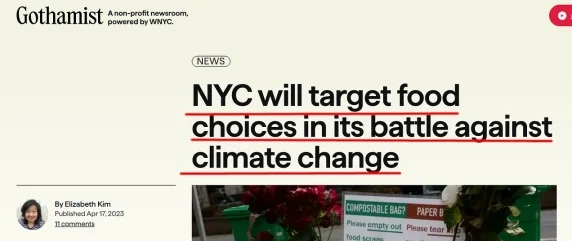
The Adams administration has announced a plan to begin tracking the carbon footprint created by household food consumption as well as a new target for New York City agencies to reduce their food-based emissions by 33% by the year 2023. [Did they mean 2032 – I.C.? ]
New York City, in partnership with American Express, a credit card company, will track purchases to calculate New Yorkers’ carbon footprints:
The new plan puts the city on par with London and 13 other cities to incorporate food consumption into its greenhouse gas emission metrics. The effort to examine the environmental effects of eating foods like meat and dairy was first announced about a year ago as part of a collaboration among major cities across the globe.
You would think such a plan would only be made after a conversation with New Yorkers, right? After all, the mayor of New York is supposed to serve New Yorkers, not the other way around.
However, the reality is that there was no consultation and no “conversation” because New York’s mayor Eric Adams is sure that people do not even want to have a “conversation” about interrogating their food choices.
On Monday, Adams acknowledged that interrogating people’s food choices would be difficult. “I don’t know if people are really ready for this conversation,” he said.
The WEF’s “My Carbon” Plan
Eric Adams, of course, is not serving New Yorkers, whom he did not even consult. He is serving his sponsors, demanding that food and other personal expenditures be tracked to advance climate goals. The World Economic Forum proposed tracking personal CO2 consumption in its infamous “My Carbon” agenda article.

The WEF explains that tracking individual choices was always met with resistance. Fortunately for the WEF, the Covid pandemic, caused by a mysterious lab-made pathogen, changed this calculation and, according to the WEF, allowed us to extend “pandemic measures” into consumption tracking due to greater social acceptance of the governmental intrusion into our personal lives:
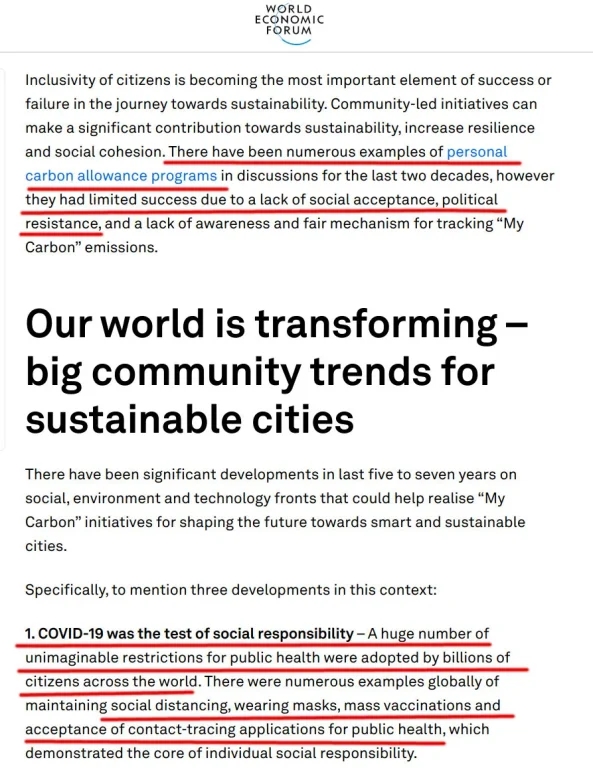
Few cities exhibited more sheep-like adherence to pandemic measures than New York City, so it should not be surprising that “food purchase tracking” is being tried in that particular locale in accordance with the WEF’s instructions.
Tracking of purchases will not be limited to food, of course.
On Meat, Health, and Freedom
This article is intentionally neutral on meat and health. Some of my subscribers are vegans, and some are avid meat eaters. I respect everyone. I was a vegetarian for a whole year, a long time ago. I try to eat less meat nowadays, which still amounts to eating too much, but I am trying.
Rather than framing this issue as a health matter, I urge you to consider it a question of basic fairness: the unelected, supranational, self-appointed masters of the world are trying to track and influence our behavior without even asking for permission or our opinion.
We are being assured that this is done for our good. However, these same people benefit financially from well-placed investments in companies growing fake meat comprised of cancer tumor cells:
Lab-Grown Meat Is Made of Cancer Cells. Would You Like It Rare or Medium?
We are generally taught that conflicts of interest should make us question the intentions of people promoting ideas related to such conflicts.
In the case of Covid-19 or climate change, we are asked to throw such precautions away and put blind faith into mega billionaires benefiting mightily from the pandemic or their climate change investments.
As skeptics and critical thinkers, we should refuse to believe promoters standing to benefit financially from their crazy ideas. Instead, we should demand a close and skeptical look into what is behind the curtain.
I am sure, however, that instead of skepticism, we will get more fake fact checks, denials, and gaslighting.
Featured Video

The Truth About the Trump Shootings with Ken Silva
or go to
Aletho News Archives – Video-Images
From the Archives
The Geopolitics behind the War in Yemen (I)
By Mahdi Darius NAZEMROAYA | Strategic Culture Foundation | 30.03.2015
The United States and the Kingdom of Saudi Arabia became very uneasy when the Yemenese or Yemenite movement of the Houthi or Ansarallah (meaning the supporters of God in Arabic) gained control of Yemen’s capital, Sanaa/Sana, in September 2014. The US-supported Yemenite President Abd-Rabbuh Manṣour Al-Hadi was humiliatingly forced to share power with the Houthis and the coalition of northern Yemenese tribes that had helped them enter Sana. Al-Hadi declared that negotiations for a Yemeni national unity government would take place and his allies the US and Saudi Arabia tried to use a new national dialogue and mediated talks to co-opt and pacify the Houthis.
The truth has been turned on its head about the war in Yemen. The war and ousting of President Abd-Rabbuh Manṣour Al-Hadi in Yemen are not the results of «Houthi coup» in Yemen. It is the opposite. Al-Hadi was ousted, because with Saudi and US support he tried to backtrack on the power sharing agreements he had made and return Yemen to authoritarian rule. The ousting of President Al-Hadi by the Houthis and their political allies was an unexpected reaction to the takeover Al-Hadi was planning with Washington and the House of Saudi. … continue
Blog Roll
 Aletho News
- Pakistan-Iran talks secure LNG shipment to Islamabad through Hormuz
- Black Sea grain crisis puts global wheat supplies under pressure
- IRGC air defenses destroy another US MQ-1 drone over Strait of Hormuz
- Imran Khan’s entire immediate family detained in Pakistan ahead of mass protest demanding his release
- EU nation detains former presidential frontrunner
- Leaked: Britain’s Sham Conviction Of Hashim Thaci
- Seyed M. Marandi: U.S. Strike Imminent – Toward Total War in the Middle East
- Russia Voted Under Fire. Washington Is Loading the Tankers.
- 12 Things Your Oncologist Was Trained Not to Tell You
- Anthrax Attacks Paved Way for COVID-Era ‘Junk Drugs and Vaccines’
- If Americans Knew
- This isn’t sci-fi, AI is already killing people
- ‘The Most Brutal Thing’: Investigation Reveals Execution of Elderly Woman in Rafah
- Inside Israel’s ‘soft’ ethnic cleansing plan for Gaza through the eyes of its victims
- New online database tracks pro-Israel political donations in the United States
- Israeli president pardons soldier convicted for killing wounded Palestinian
- Singer Ed Sheeran says his ‘heart broken’ by Gaza devastation, addresses Macklemore controversy
- Israel Has Imprisoned Female Journalist Bushra Al-Tawil Without Trial Or Charge In Solitary Confinement For Past Month
- Israel poised to teach West Bank a lesson after one Israeli killed – Daily Update
- Salah Sarsour’s Legal Team Says DHS Has Not Met Its Burden to Prove He Is Deportable
- An analysis of tax forms by The Intercept show Kraft’s charity and LLC have donated to Friends of the IDF and AIPAC’s super PAC.
- No Tricks Zone
- 2025 Nature Paper Claiming Worsening Global Drought Gets RETRACTED …Heavily Flawed
- New Study: ‘Global Drought Shows No Detectable Recent Acceleration Under Climate Warming’
- Economic Masterminds: German Socialists Suggest Taxing Productivity Gains Stemming From Using AI
- The South China Sea Has Not Been Cooperating With The Climate Change Narrative
- Energy Crisis: Germany Enters Heating Season With Historically Low Gas Reserve Fill Levels
- New Study: The Antarctic Ice Sheet Gained Mass From 2020-2024 Due To Staggering Snow And Ice Accumulation
- Study: Ocean Heating Rates From Thousands Of Years Ago ‘Dwarf’ Modern Ocean Heating Rates
- Climate Extremists Target, Attack Large-Scale Power Grid Infrastructure In Germany!
- New Study: Antarctic Ice Melt Has Contributed Less Than 1 Centimeter To Sea Level Rise In The Last 30 Years
- Fear Of Debate: Alarmist German Climate Scientist Calls On Mainstream Media To Discredit Skeptic Voices
 Aletho News