Daily temperature records are meaningless in terms of climate and weather. But they are of immense propaganda value.
So, step forward Marco Petagna, Media Advisor & Senior Operational Meteorologist at the UK Met Office:

Followed later in the day by the ITV weatherman:

The Met Office confirmed 27.0C at Frittenden:

But how do we know what the previous daily record was? Indeed, how does the Met Office?
Are we supposed to take them on trust? If so, that trust is misplaced.
An article in the Times 15 years ago, following a warm spell of weather, reminded readers that it had been much hotter in September 1895! Their archived news reports revealed that temperatures had reached 30.6C (87.1F) on both 25th and 27th of September in Strathfield Turgis, Hampshire.
When challenged about this on X, Marco Petagna replied that Strathfield Turgis was “not on our internal records for some reason”.
How convenient!!!!
In fact, the weather during that last week in September 1895 was exceptionally hot for days on end, much hotter than the 27.0C at Frittenden. The highest readings for the month were variously set on dates between the 24th and 29th at different locations:
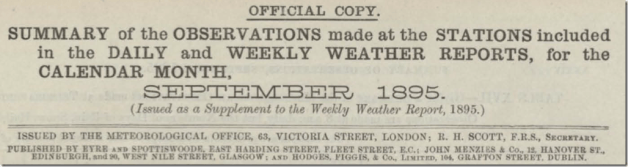

Strathfield Turgis was no fluke or outlier.
A number of sites up and down the country exceeded 27.0C/80.6F, on the 24th, 25th, 237th and 28th:


Note that North Foreland recorded 81F on the 25th, the day under discussion.
These are just a small selection of stations, used in the Met Office Monthly Summaries. There will be hundreds of other sites, such as Strathfield, and given the prolonged nature of the heatwave in 1895 and its widespread geographical coverage, it seems inevitable that many other sites topped 81F that day.
Petagna’s comment about “internal records” is revealing. It indicates that the Met Office has simply binned any temperature data it deems to be “too high”.
As one commenter wisecracked:
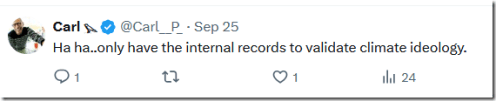
In the meantime, it is clear that we cannot trust any daily record claims made by the Met Office.
September 28, 2026
Posted by aletho |
Deception, Science and Pseudo-Science | UK |
Comments Off on Met Office Caught Fabricating Daily Temperature Record Claims
Now you know why outbreaks still regularly occur in highly vaccinated populations
On the topic of splitting up the MMR vaccine into 3 separate vaccines, everyone should know that in 2012, two Merck virologists came forward and explained that when Merck sought to change the label on its MMR vaccine and approval for ProQuad (a combination MMR and varicella vaccine), it “falsely certified as having an efficacy rate that is significantly higher than it actually is.” (See Complaint ¶ 1.)
As detailed in the whistleblower lawsuit, Merck obtained a license for its mumps vaccine in 1967. (Comp. ¶ 16.) In the late 1990s, to obtain approval for ProQuad and change the label on its MMR vaccine, Merck needed to reconfirm its claims of efficacy for its mumps vaccine made thirty years prior. (Comp. ¶ 22.) Two of Merck’s virologists working on testing the efficacy of the mumps vaccine revealed that after Merck could not demonstrate a 95% efficacy for its mumps vaccine, the results were simply fraudulently falsified to achieve this result. (Comp. ¶¶ 15-131.)
As explained by the virologists, Merck took blood samples pre-vaccinated with the mumps vaccine and then exposed them to the mumps virus. (Comp. ¶¶ 25-28.) Suspecting a test against a live strain of mumps would not yield a 95% efficacy, Merck tried to improperly obtain this rate using an attenuated strain of the mumps virus. (Comp. ¶¶ 29-30.) When that would not achieve 95% efficacy, Merck tried different virus dilutions, different staining procedures, and even more liberal counting techniques. (Comp. ¶¶ 31-32.) The Merck lab even improperly added animal antibodies to the blood samples and still could not achieve a 95% efficacy rate. (Comp. ¶¶ 33-39.)
When it was clear that even improper testing techniques could not produce the desired result, the test reports were simply falsified. (Comp. ¶¶ 40-51.) According to the Merck virologists, to document the desired efficacy rate, Merck destroyed result sheets and falsified various documents. (Id.) The Merck virologists claim this fraud was done with the direct authority and approval of Merck’s senior management. (Comp. ¶¶ 52-58.)
Now you know.
This may explain why outbreaks of mumps still regularly occur in highly vaccinated populations. See, e.g.:
September 27, 2026
Posted by aletho |
Deception, Science and Pseudo-Science | Merck, MMR vaccine, United States |
Comments Off on Merck Virologists Admitted to Falsely Certifying Vaccine Efficacy
The change in the law to enable this came as an amendment, SI2024/1162, to the Bread and Flour Regulations 1998. As a Statutory Instrument, there was no parliamentary debate. There was no full scientific Impact Assessment; just a de minimis financial assessment by DEFRA and limited DHSC input. The stated aim is to increase blood folate levels in pregnant women in order to reduce the risk of neural tube defects (NTDs). The Government estimates a reduction of about 200 Neural Tube Defect (NTD)-affected pregnancies annually, approximately 20% of UK cases. Most of these would have ended in a termination of pregnancy or a neonatal death but a small number of births of children with spina bifida may be avoided.
No proper assessment of the harms of folic acid has been carried out, yet it is proposed to give it to every man, woman and child in this country indefinitely, rather than just giving supplements for a few months to those women wishing to take them. Most notably there are several groups of people whom the NHS currently advises to avoid folic acid medication. This includes patients with cancer, Vitamin B12 deficiency and cardiac stent procedures (patients on haemodialysis were also included in the list until recently). Analysis of long term outcomes from 10 randomised trials has shown a worrying 23% increase in cancers, 24% for prostate cancer.
What is not at all clear, is how people will avoid folic acid once it is in virtually all flour.
The UK Government presents folic acid fortification as a settled, cost-free public health win.
Every one of its load-bearing claims collapses under examination.
First, “folic acid is a B vitamin.” This is the foundational deception. Folic acid is not a vitamin at all. It is a synthetic, oxidized compound that does not occur in nature. The actual vitamin is folate, found in leafy greens and liver. Folic acid must be converted in the body, and a large share of the population converts it poorly due to common MTHFR gene variants. The result is unmetabolized folic acid circulating in the blood, which has been linked to masking vitamin B12 deficiency and to accelerated growth of existing pre-cancerous lesions. Calling it “a B vitamin” is the rhetorical move that makes the whole policy sound harmless.
Second, “it helps prevent neural tube defects.” The honest version is that high-dose supplementation in women with a previous affected pregnancy showed benefit in a 1991 trial. What the government has done is extrapolate that clinical result to low-dose, population-wide dosing through bread. Those are not the same intervention, and the “200 cases prevented” figure is a model output, not a measurement.
Third, and this is the killing blow, the only large randomised trial in otherwise healthy women, the Hungarian trial by Czeizel and Dudás, found that every category of fetal death was higher in the folic acid group. Total fetal deaths were 374 (13.4%) against 304 (11.4%) in the control arm, an excess of 70 deaths that was statistically significant. In that same trial, the number of neural tube defects prevented was six. That is roughly nine to twelve dead babies for every defect apparently prevented. The mechanism was named by the trial’s own principal investigator in a 1997 Lancet paper: terathanasia, the death of the malformed. Folic acid may reduce the count of babies born with neural tube defects not by curing them, but by killing the affected embryos before birth.
Fourth, the government knows this and has chosen to redefine the dead babies as a benefit. When asked directly in Parliament, the Department of Health answered that folic acid extended the viability of early conceptuses, so the excess miscarriages were really evidence of extra life-creation. No evidence was supplied for this. The data refute it, because if early losses were merely being promoted upward, chemical pregnancies should have fallen. They rose alongside every other category.
Fifth, the surveillance data cannot detect the harm. The US monitoring system only records fetal deaths at 20 weeks or later, while the excess deaths in the trial were overwhelmingly first-trimester miscarriages and chemical pregnancies. The harm signal is structurally invisible to the system used to claim success.
Sixth, the “200 babies” figure is inflated. Even on the government’s own final assessment, the operative effect is around 31 fewer live births a year, of which about 28 would be children living with disability. The rest of the “200” is mostly terminations avoided and a notional quality-of-life valuation. The economic case values a life-year at £70,000, more than double what the NHS uses for medicines.
Seventh, the decline in neural tube defects happened before folic acid existed. Spina bifida fell 82 percent between 1972 and 1991 in England and Wales. The recommendation to take folic acid arrived in 1992, after almost all of that decline had already occurred. Folic acid is being credited with a fall it could not have caused, and after 1992 the rate of decline actually slowed.
Eighth, the safety question for everyone else, which the campaign suppresses entirely. The NHS itself lists categories of people told to avoid folic acid, and most of them have no idea that mandatory fortification means avoiding flour entirely. These include people with cancer, people with B12 deficiency, people with stents, and people with kidney disease.
Ninth, take cancer. Lifetime cancer risk in the UK is around one in two, so you are mandating a synthetic compound linked to driving pre-cancerous growth for a population, half of whom will at some point be cancer patients or survivors. Unmetabolized folic acid has been associated with accelerated growth of existing pre-cancerous lesions, particularly in the colon. For anyone with active cancer or a history of colorectal adenomas, folic acid is not benign. It is fuel.
Tenth, then B12. Folic acid masks vitamin B12 deficiency, allowing neurological damage to progress invisibly while blood markers look normal. The elderly are the classic at-risk group, and they are also heavy bread consumers. The policy doses the exact population most vulnerable to hidden B12 deficiency.
Eleventh, stents and cardiovascular disease. People with coronary stents and certain vascular conditions are among those advised against folic acid, with some trials showing worse cardiovascular outcomes, including restenosis concerns, in people with existing heart disease. Those patients cannot avoid the exposure without abandoning a staple food.
Twelfth, then kidney disease. Folic acid metabolism and accumulation are altered in renal impairment, and patients with kidney disease are routinely told to be cautious. Again, no exemption, no alternative, no consent.
Thirteenth, beyond the NHS list, there is the prostate cancer signal, with some research suggesting a doubling of prostate cancer risk in men, and concerns about immune response in women. None of this was given a value in the government’s assessment. The final assessment named potential harms to others but then did not quantify them.
Fourteenth, like men, infants and children are a group that cannot benefit. For children, the duration of mandatory folic acid ingestion will effectively last a lifetime. Yet the dosage per kilogram is far higher for children, when existing fortification of breakfast cereals is added to the new mandatory fortification of flour and hence bread.
Finally, the “nearly half of pregnancies are unplanned” argument is a confession disguised as a justification. Because some women do not know they are pregnant early on, the answer is to medicate every man, woman, child, and elderly person in the country through the bread supply. The number needed to treat is roughly 440 women to prevent one neural tube defect. The number needed to harm is one in 50 women suffering a lost pregnancy. The harm is about nine times more likely than the benefit. Where are the safety studies for a whole population?
The structure of the policy is the scandal. Tens of millions of people will be exposed every year with zero possibility of benefit. Only a small subgroup, women in early pregnancy, is the nominal target. For everyone else, the benefit is exactly nothing, and any risk at all is pure downside. The people this is unsafe for are not a rare corner case. They are half the population over a lifetime, concentrated precisely in the groups that eat the most bread.
This UK government policy is built on a misrepresented trial, an inflated model, the reclassification of fetal deaths as a public health victory, and the forced medication of the entire population, including the very groups for whom folic acid is contraindicated, with no risk-benefit assessment and no consent. From December 2026 it becomes compulsory.
A letter has been sent to the minister last month and a very inadequate response received, here. Letters have also been sent to all medically qualified MPs and peers, with as yet one reply.
Sign the parliamentary petition to stop folic acid being added to flour. We need a complete stop to all fortification. https://petition.parliament.uk/petitions/769589
Also, if any readers do have one of the NHS listed medical contradictions, do write to your MP and get them to ask questions.
To find all the recent HART articles on Folic acid go to https://www.hartgroup.org/category/folic-acid/
September 27, 2026
Posted by aletho |
Science and Pseudo-Science | UK |
Comments Off on Mandatory Folic Acid for every man, woman & child
An Essay on What the Fifteen-Minute Consultation Leaves Out
What follows is twelve documented findings compressed into one sitting. It is written for the reader who has been prescribed one of these drugs, or is caring for someone who has, and who wants to know what the fifteen-minute consultation did not include. Every claim is drawn from the profession’s own literature, its own regulatory filings, its own package inserts, or the admissions of its own senior figures. Where an item is developed at greater length elsewhere in this series, that is noted. The purpose here is not depth on any single item. It is the cumulative weight of the twelve landing together.
The trial was announced with a cumulative remission figure of 67 percent.² When Ed Pigott and colleagues spent more than five years reanalyzing the data with fidelity to the original protocol, they found the 3 percent figure. When journalists put the 3 percent number to Maurizio Fava, one of the lead investigators, he acknowledged it was accurate. The investigators knew.³
The paper has not been retracted. It is still cited in psychiatric textbooks. The American Journal of Psychiatry ignored a petition signed by more than 1,800 people asking for retraction. The New York Times, repeatedly notified of the fraud, published the 70 percent figure again in a 2024 article praising the drugs.⁴
STAR*D was the largest depression trial ever conducted. It was funded by the National Institute of Mental Health. It was designed by the profession’s most senior researchers. What it proved, when honestly analyzed, was that the drugs did not work.
That fact has been available for over a decade. It has not reached the patients being handed the prescriptions.
What This Essay Draws On
Six of the twelve items below have been developed at greater length in earlier essays in this series: chemical imbalance theory, benzodiazepine dependence, ADHD stimulants, antipsychotic brain damage, SSRI withdrawal, and long-term antidepressant outcomes. Readers who want depth on any of those threads should follow them. The purpose of this essay is different. Twelve items, four sections, one sitting.
The evidence throughout is drawn primarily from Peter Gøtzsche, Robert Whitaker, Peter Breggin, Gary Greenberg, David Healy, and Joanna Moncrieff. What the twelve items share is that none of them are contested at the level of documentation. They are contested only at the level of what the profession chooses to tell patients.
What They Told You Was True
The prescription is written on the basis of a mechanism, a diagnosis, and a trial. Each has failed on its own terms.
The theory that depression results from a deficiency of serotonin was never established in the scientific literature. Joanna Moncrieff and colleagues published a comprehensive umbrella review of the serotonin theory in 2022 and found no consistent evidence for its central claims.⁵ The theory was abandoned by serious researchers decades earlier. It continued to appear in direct-to-consumer advertising and patient education materials because it served a function. It explained why the pill was necessary and why the patient would need to keep taking it.
Steven Hyman, director of NIMH from 1996 to 2001, later observed that “the gold standard was the DSM criteria. It struck me as a fool’s errand to try to develop a biomarker for a fictive category.”⁶ The chemical imbalance was the mechanism proposed for a disease no one could measure, in a category no one could validate.
Chemical Imbalance: The Collapse of a Medical Myth
After four decades and hundreds of millions of dollars in federal research, not one disorder in the Diagnostic and Statistical Manual of Mental Disorders has a confirmed biological test. Not depression. Not schizophrenia. Not bipolar disorder. Not ADHD. Not anxiety. Not any of the more than three hundred conditions the manual lists.
Robins and Guze proposed a five-step validation process in 1970: clinical description, laboratory studies, exclusion criteria, follow-up studies, family studies.⁷ The five steps were meant to establish, over time, which alleged disorders were real diseases and which were figments. Four decades later, Darrel Regier, who chaired the DSM-5 task force, told Psychiatric News that “validity tests have not lived up to the expectations of Robins and Guze.”⁸ Kenneth Kendler, the field’s leading nosologist, wrote that the diagnostic categories in use had been “heavily influenced by expert opinion” and were “fuzzy constructs that shift when viewed in different ways.”⁹
Thomas Insel, director of NIMH from 2002 to 2015, put it most directly in a 2005 address to the American Psychiatric Association: “The DSM-IV has 100 percent reliability and zero percent validity.”¹⁰ Reliability means clinicians using the same manual will arrive at the same diagnosis. Validity means the diagnosis corresponds to a real thing. Insel was telling the assembled profession that its manual sorted patients consistently into categories that did not exist.
The APA response was to convene committees to plan the DSM-5. The committees did not find biological markers. They could not have. The categories were not built to have biological markers. They were built from clinical description alone. The manual reifies its own criteria.
The consequence for the patient is direct. When the doctor says “you have major depressive disorder,” the patient hears a diagnosis in the sense that a diabetes diagnosis is a diagnosis: a measurable biological state with a known mechanism. What the patient has actually received is a checklist tally. Five of nine symptoms present for two weeks. That is the whole test. There is no blood work, no scan, no biomarker. The diagnostic bible of American psychiatry sits on the shelf as an artifact of expert agreement, not a description of nature.
Manufacturing Madness: The DSM as Instrument of Social Control
The opening figures bear structural repetition: 3 percent versus 67 percent, admitted by the lead investigator, still not retracted, still cited. Ed Pigott’s reanalysis was published in BMJ Open in 2023.¹¹ The investigators, when confronted, doubled down on the fraud in the American Journal of Psychiatry rather than correct it.¹² The owner of the journal, the American Psychiatric Association, did nothing.
Peter Gøtzsche has documented the specific manipulations. The “remission” threshold was set so low that a patient scoring 7 on the Hamilton depression scale, including endorsement of “feels like life is not worth living,” was counted as symptom-free.¹³ Patients who exited the study were assumed to have remitted at the same rate as those who stayed, a statistical fiction that inflated the numbers by an order of magnitude. Eleven prespecified outcomes were never reported. Suicidal ideation was reported at 0.7 percent in one paper and ten times that in others by the same authors.
The trial that was supposed to establish the effectiveness of antidepressants in real-world practice established the opposite. The profession’s response was to continue citing the announced figure.
Is Psychiatry a Crime Against Humanity? (2024)
The prescription arrives with the phrase “you may notice some side effects.” The phrase does the work of concealment. Three effects, in particular, are not warned about with the seriousness they warrant.
Akathisia is a state of extreme inner restlessness produced by antidepressants, antipsychotics, and antiemetics. The Greek term means inability to sit still. The patient may pace, fidget, wring hands, or endlessly walk. The condition may also present without visible motor symptoms, as unbearable internal agitation the observer cannot see.¹⁴
In 1990, Martin Teicher and colleagues at Harvard published five cases of patients who developed intense suicidal preoccupations on fluoxetine, all associated with akathisia, all resolving when the drug was stopped and returning when it was restarted.¹⁵ Rothschild and Locke published the rechallenge study in 1991: three patients who had made serious suicide attempts on fluoxetine, all rechallenged under controlled conditions, all developing akathisia and becoming suicidal again. One patient said in retrospect: “I tried to kill myself because of these anxiety symptoms. It was not so much the depression.”¹⁶
A study of psychiatric inpatients found that 79 percent of those who had attempted suicide were experiencing akathisia at the time.¹⁷ Another found that half of all fights on a psychiatric ward were akathisia-related. Haloperidol at moderate to high doses made half the patients markedly more aggressive, sometimes to the point of wanting to kill their psychiatrists.
The FDA’s 2004 black-box warning on antidepressants describes what Breggin has called the stimulant syndrome: anxiety, agitation, panic attacks, insomnia, irritability, hostility, aggressiveness, impulsivity, akathisia, hypomania, mania.¹⁸ The label warns that these can occur in nonpsychiatric patients, meaning the drug produces the syndrome by itself, not by unmasking a preexisting condition.
Gøtzsche’s team examined manufacturer trial data and found akathisia miscoded as “hyperkinesia” in Zoloft trials. In paroxetine trials they found not a single case of akathisia recorded, which is statistically impossible given the drug class.¹⁹ The miscoding was systematic.
The FDA-approved label for Zyprexa describes akathisia as “extreme inner anxiety and restlessness.” At least one psychiatric textbook labeled it “agitated depression,” folding the drug’s most dangerous effect back into the diagnosis it was prescribed to treat. The patient who reports the akathisia is told the underlying illness has worsened. The dose is increased.
Mental Health Survival Kit and Withdrawal from Psychiatric Drugs (2022)
The FDA-approved label for Xanax states that withdrawal symptoms, including seizures, have been reported after only brief therapy at doses within the recommended range for treating anxiety.²⁰ In the eight-week trials used for FDA approval, patients were worse off at eight weeks than before starting the drug. Between 7 and 29 percent of patients could not withdraw after only six to eight weeks of exposure.²¹
If you are currently taking a benzodiazepine, do not stop it abruptly. Abrupt cessation can produce seizures. Item 12 addresses what safe withdrawal actually requires.
Heather Ashton, the British psychiatrist who ran a benzodiazepine withdrawal clinic at the University of Newcastle for decades, documented that long-term users often required a year or more to taper.²² Some experience withdrawal symptoms lasting years after cessation. Cognitive impairment, depression, and anxiety worse than the original condition are common outcomes of long-term use.²³ Gøtzsche, who has decades of clinical pharmacology experience, has noted that patients report benzodiazepine withdrawal as often worse than heroin. Heroin abstinence symptoms resolve within days. Benzo withdrawal can persist for years.
Anxiety Uncovered: The Truth About Benzodiazepines and Real Solutions
The DSM has a category for stimulant withdrawal, which lists depression, anxiety, irritability, sleep problems, fatigue, and agitation as the withdrawal syndrome after “several days or longer” of use. Rebound hyperactivity, talkativeness, and inattention are documented after a single dose in a placebo-controlled NIMH study of normal children ages 6 to 12.²⁴ Ten of fourteen children in that study showed marked behavioral rebound; three developed euphoria.
If a child is currently taking a stimulant, do not stop it abruptly. Rebound and withdrawal effects are commonly mistaken for a worsening of the original condition. Item 12 addresses safe withdrawal.
The teacher observes the child on Monday morning after a weekend off the drug, notices the child is more scattered and irritable than usual, and concludes the child needs the medication. The child is in withdrawal. The dose is increased. Peter Breggin’s observation from the early 1990s stands unchanged three decades later: if the child continues on Ritalin because they continue to have problems focusing, the disorder may be the drug’s effect.²⁵ Drug-induced inattention becomes the reason to continue and increase the drug.
The Multimodal Treatment Study of ADHD, the largest NIMH-funded stimulant trial, tracked children through eight years of follow-up. By three years, the medicated children showed no advantage over the non-medicated on any measure. They were, however, 2 cm shorter and 2.7 kg lighter than their unmedicated peers, a growth suppression the FDA eventually required on the label.²⁶
The Arithmetic Pill: ADHD, ADD, and the Evidence
The drugs act on the brain and the brain responds. What the brain does under sustained chemical assault is documented in the profession’s own imaging studies.
Nancy Andreasen, editor-in-chief of the American Journal of Psychiatry from 1993 to 2005, began a longitudinal MRI study of over 500 first-episode schizophrenia patients in 1989. In 2003, she reported that frontal lobe white matter volume decreased progressively over the years of treatment.²⁷ In 2011, her team published in Archives of General Psychiatry the finding that antipsychotic exposure was directly associated with volume loss.²⁸ In a 2008 interview with the New York Times, Andreasen stated it plainly: “The more drugs you’ve been given, the more brain tissue you lose.”²⁹
Fusar-Poli and colleagues confirmed the pattern in a 2013 meta-analysis of longitudinal MRI studies.³⁰ The 2009 Navari and Dazzan review reported that both older and newer antipsychotics produce gross changes in brain volume in selected regions.³¹ In monkey studies, haloperidol and olanzapine produced substantial reductions in both grey and white matter, and reduced glial cell numbers.³²
Andreasen’s original interpretation was that the shrinkage reflected the disease. The follow-up data forced her to concede the drug was the cause.
Anatomy of an Epidemic: Magic Bullets, Psychiatric Drugs, and the Astonishing Rise of Mental Illness in America (2010)
Tardive dyskinesia is a drug-induced movement disorder produced by antipsychotics. It can affect any voluntary muscle: face, tongue, neck, torso, extremities, diaphragm, vocal cords. The condition presents as involuntary jerky movements, slower writhing movements, painful spasms, or restlessness the patient cannot control. The mechanism is understood. Antipsychotics block dopamine receptors in a brain region called the basal ganglia. Over time the brain compensates by growing more of those receptors. When the drug dose is reduced, or when the extra receptors eventually outnumber the block, the excess drives the involuntary movements.
The prevalence is not marginal. DSM-IV-TR sets the annual incidence at 3 to 5 percent per year in young adults and 25 to 30 percent per year in older patients.³³ These are cumulative rates. A young adult after three years of exposure has a 9 to 15 percent risk. An older patient after three years has a 75 to 90 percent risk. Prevalence in outpatient clinics runs above 40 percent. In long-term facilities, above 50 percent.³⁴ There is no established treatment. Most cases are permanent.
The condition often extends beyond motor symptoms. Gualtieri and Barnhill observed that “in virtually every clinical survey that has addressed the question, it is found that TD patients, compared to non-TD patients, have more in the way of dementia.”³⁵ Breggin has called this tardive dementia. Tardive akathisia and tardive psychosis have also been documented, representing further permanent damage to the higher brain function of patients whose brains were supposed to be helped.
The condition is frequently masked by the drug that caused it. Increasing the dose suppresses the visible movements while the underlying damage progresses. Reducing the dose brings the movements out, which the prescriber may interpret as evidence that the patient still needs the medication. The patient’s brain, already damaged, is offered more of what damaged it.
The neurological literature has documented tardive dyskinesia for over five decades. It is required disclosure on antipsychotic labels. It is not routinely disclosed at the point of prescription.
Toxic Psychiatry
Electroconvulsive therapy applies electrical current to the head sufficient to produce a grand mal seizure. In modern practice, the patient is anesthetized and given a muscle relaxant to prevent the visible convulsion. The electrical dose is often increased to compensate for the seizure threshold raised by the anesthesia. Multiple treatments are given, typically 8 to 16 per course, sometimes more.
Autopsy studies dating to the 1940s documented brain necrosis in patients who died following ECT.³⁶ Animal studies documented brain damage. The brain’s response to ECT is an acute organic brain syndrome, medically indistinguishable from severe head injury. In neurological terms, multiple continuous seizures without full recovery of consciousness constitute status epilepticus, a medical emergency defined by its risk of permanent brain damage.
The memory loss is documented in every serious study that has looked for it. Larry Squire and Pamela Slater reported an average of 27 months of retrograde amnesia surrounding treatment.³⁷ Freeman and Kendell, using face-to-face interviews conducted by the treating doctors themselves (a design that biased strongly against reporting), found that 74 percent of patients reported memory impairment and 30 percent said their memory function was permanently affected.³⁸ Squire and Slater’s own longer follow-up found that 55 percent of patients felt they had not regained normal memory function over the years.
Gøtzsche summarizes the current literature: with strict definitions of memory loss, 29 to 55 percent of patients are affected. With looser criteria, 51 to 79 percent.³⁹ Death rates from ECT, according to a systematic review by John Read and colleagues, run at approximately 1 per 1,000 treatment courses, ten times higher than the American Psychiatric Association’s stated figure.⁴⁰
The efficacy evidence is thinner than the harms evidence. The 1985 NIMH Consensus Conference on ECT accepted the finding that no controlled study showed benefit beyond four weeks. The four-week window corresponds to the acute organic brain syndrome, during which severe brain dysfunction produces the euphoria or apathy interpreted as improvement.⁴¹ Once the brain begins to recover, the depression returns. If the patient is given more ECT, the brain damage accumulates. If the patient is not given more ECT, the profession points to the returning depression as evidence the disease was chronic.
The APA’s 1990 task force report on ECT omitted essentially the entire literature documenting memory loss and brain damage.⁴² The literature it omitted included the work of Squire, Slater, Janis, Friedberg, Breggin, and even the APA’s own previous 1978 report, which contained more information on memory loss than the 1990 update. In psychiatry, science sometimes runs backward.
At some point the patient decides they no longer want to be on the drug. The system was not built to help them leave.
The FDA-approved labels describe “discontinuation syndrome.” Patients and doctors alike were told the symptoms would last a few weeks and resolve. The systematic review by Davies and Read, published in 2019, established that this was false. Withdrawal symptoms are more common than reported, more severe than reported, and last far longer than reported. In one survey of 580 patients, 16 percent reported withdrawal symptoms lasting over three years.⁴³
If you are currently taking an SSRI or SNRI, do not stop it abruptly. Withdrawal reactions can include severe agitation, akathisia, suicidal ideation, and violence. Item 12 addresses the resources for safe tapering.
The Dutch tapering-strip program run by Peter Groot and Jim van Os has documented the shape of the problem. Of 895 patients on antidepressants, 62 percent had previously tried to withdraw without success. Using hyperbolic dose-reduction strips, 71 percent were able to withdraw within a median of 56 days.⁴⁴ Venlafaxine required 90 percent of patients to start at the lowest available dose and taper over three months. Some patients required more than six months. Dutch insurers refused to reimburse extended tapering because “there is no evidence in the literature” for its necessity, a circular defense against the very treatment the literature was documenting.
The withdrawal is routinely misinterpreted as return of the underlying illness. The patient is told they were unwise to stop and needs to remain on the drug indefinitely. Breggin’s term for this pattern is medication spellbinding. The drug produces effects the patient attributes to the disease.
The 1997 British study of a large inner-city primary care facility followed 95 never-medicated depressed patients and 53 drug-treated ones. Symptom reduction at six months: 62 percent for the never-medicated, 33 percent for the drug-treated.⁴⁵ A World Health Organization study of 640 depressed patients found that medicated patients had worse general health and were more likely to still be mentally ill at one year.⁴⁶ A Canadian five-year study of 9,508 depressed patients: 19 weeks of depression per year for the medicated, 11 for the unmedicated.⁴⁷ An NIMH study of 547 patients: medicated patients were three times more likely to lose their principal social role and nearly seven times more likely to become incapacitated at six years.⁴⁸
Rif El-Mallakh reported that 40 percent of patients on antidepressants end up in a chronically depressed “treatment resistant” state.⁴⁹ Giovanni Fava documented that drug changes induced by antidepressants “may propel the illness to a more malignant and treatment unresponsive course.”⁵⁰
The pattern extends to antipsychotics. Martin Harrow’s 15-year follow-up of first-episode psychosis patients found that those not on antipsychotics had significantly better outcomes and were far more likely to be in recovery.⁵¹ Lex Wunderink’s 7-year Dutch trial randomized first-episode psychosis patients to maintenance antipsychotics or dose reduction and discontinuation. The reduction group had double the recovery rate.⁵² Bockoven had documented in 1975 that rehospitalization rates rose after the introduction of antipsychotics and that medicated patients were more socially dependent than those treated in the pre-drug era.⁵³
The pattern is consistent across drug classes and across decades. Longer exposure produces worse outcomes. The drugs sensitize the brain and convert episodic distress into chronic dysfunction. The profession’s response has been to rewrite the natural history of the conditions to match the drug-damaged outcomes. The 1999 American Psychiatric Publishing Textbook of Psychiatry declared that older studies showing depression was self-limiting had been “disproved.” Depression became “a highly recurrent and pernicious disorder.”⁵⁴ The drugs had made it so.
The prescriber who put the patient on the drug is typically not trained in how to help them come off it. Withdrawal is not covered in the standard psychiatric curriculum. The tapering approach with the strongest evidence base is hyperbolic dose reduction, developed by Mark Horowitz and Joanna Moncrieff and published in Lancet Psychiatry in 2019.⁵⁵ The approach requires micro-dose reductions of a few percent at a time, made possible by liquid formulations or compounded tapering strips. Standard tablets do not come in the small doses required.
Peter Gøtzsche’s team spent two years trying to publish a Cochrane review protocol on antidepressant withdrawal support. The Cochrane depression group, chaired by Rachel Churchill, raised objections through 12,044 words of feedback across 86 numbered points, then rejected the protocol.⁵⁶ Cochrane refused to publish a review on how to help patients safely withdraw from a class of drugs prescribed to hundreds of millions of people worldwide. Gøtzsche’s PhD student Anders Sørensen mentored 30 consecutive patients through withdrawal in his unpaid spare time and documented the results, because it was the only way to do the work.
The insurance system compounds the problem. Dutch national health insurance refuses to reimburse extended tapering on the grounds of insufficient evidence, though the evidence exists and the insurers know it does. American insurers do not cover compounded formulations. The tapering strips developed at the Amsterdam pharmacy (taperingstrip.org) are available to prescribers in any country, but the patient must find a prescriber willing to order them, which many will not.
The knowledge exists. The Ashton Manual for benzodiazepine withdrawal has been public since 2002.⁵⁷ The Horowitz-Moncrieff hyperbolic tapering literature is in peer-reviewed journals. Mad in America hosts a withdrawal community with thousands of patients’ documented experiences. Breggin’s Psychiatric Drug Withdrawal was published in 2013.
None of it is on the psychiatric residency reading list. The doctor who wrote the prescription is, in most cases, not the doctor who can help the patient stop taking it. The patient is on their own.
The most common defense of the current prescribing paradigm is that the drugs help some patients, and that essays like this one endanger those patients by encouraging them to stop.
Some patients do report subjective benefit on these drugs. That is not disputed. What is not established is that this benefit exceeds placebo by a clinically meaningful margin, or that it survives the long-term outcomes documented in Item 11.
The safety caveats throughout this essay, and the resources listed below, exist precisely because abrupt cessation is dangerous. Nothing here recommends abrupt cessation. What is recommended is informed choice, which requires the twelve findings to be visible before the prescription is written or renewed. A patient who wishes to continue after seeing the twelve findings has made a different decision from a patient who was never shown them.
For patients currently on psychiatric drugs who wish to withdraw, resources exist outside the mainstream medical system. The Ashton Manual (benzo.org.uk/manual/) remains the standard reference for benzodiazepine tapering. The Horowitz-Moncrieff papers on hyperbolic tapering in Lancet Psychiatry (2019) provide the scientific basis for SSRI withdrawal. Mad in America (madinamerica.com) hosts an active community of patients who have withdrawn or are withdrawing. The Amsterdam tapering strip program (taperingstrip.org) makes hyperbolic dose reduction physically possible for antidepressants that do not come in the required small doses. Breggin’s Psychiatric Drug Withdrawal (2013) provides detailed clinical protocols. None of the above require permission from the prescribing physician. All require time and typically a support person. None should be attempted abruptly.
The twelve findings above are documented. They are not concealed by conspiracy. They sit in FDA labels, peer-reviewed journals, systematic reviews, and the admissions of senior figures within the profession. What conceals them is training.
Psychiatric residency does not require reading Whitaker or Breggin or Gøtzsche. It does not require examining the primary trial data on the drugs the resident will spend a career prescribing. It requires reading the textbooks the profession publishes about itself, the same textbooks that praised electroconvulsive therapy while omitting the memory-loss literature and that continue to cite the STAR*D 67 percent figure. The continuing medical education the practicing psychiatrist attends is funded largely by the pharmaceutical industry, whose interest in the twelve findings is that they should not surface. The drug representatives who visit the office once a month are the primary source of pharmacological information for many prescribers.
The doctor across from the patient in the fifteen-minute consultation is often not withholding information out of malice. The doctor does not have it. What was left out of the training reproduces itself in every consultation the doctor conducts for the rest of the career.
The training explains the local silence. It does not explain how the whole enterprise reached the point where twelve findings of this severity could accumulate without institutional response. That answer comes from someone who ran the enterprise.
Thomas Insel directed the National Institute of Mental Health from 2002 to 2015. He controlled the American federal research budget for psychiatry for thirteen years. He was, in that period, the single most powerful figure in American psychiatric science.
Reflecting on his tenure after leaving the position, he made the following observation, widely reported and repeated in the years since:
I spent 13 years at NIMH really pushing on the neuroscience and genetics of mental disorders. And when I look back on that I realize that while I think I succeeded at getting lots of really cool papers published by cool scientists at fairly large costs, I think $20 billion, I don’t think we moved the needle in reducing suicide, reducing hospitalizations, improving recovery for the tens of millions of people who have mental illness.⁵⁸
Twenty billion dollars over thirteen years, and the head of the enterprise said it moved nothing on suicide, hospitalization, or recovery.
That is not the assessment of a critic. That is the man who ran the enterprise, describing the enterprise, from inside it. Insel went on to write a book defending psychiatric drugs, so the admission cannot be attributed to conversion or apostasy. He continues to believe in the paradigm. He just concedes it produced nothing.
The twelve items above sit inside that enterprise. What the psychiatrist was trained not to tell the patient is what the man who ran it for thirteen years, on his own accounting, could not deny.
Imagine a garage that has been fixing cars for many years. Every car that leaves the garage has a bumper sticker that says FIXED.
One day someone counts. Out of every hundred cars leaving the garage, only three actually work. Ninety-seven do not.
The garage keeps operating. The mechanics keep putting on the FIXED stickers. The owner keeps telling everyone the garage fixes seven cars out of every ten.
When someone points out that the real number is three out of a hundred, the owner says yes, he knows the real number is three. He does not correct the seven-out-of-ten claim. He does not put up a new sign. He keeps the stickers.
The people bringing in their cars do not know about the three. They see the FIXED sticker and they drive off. Some of the cars catch fire on the highway. Some of the brakes fail. Some of the cars will not start again once they are turned off.
When people bring the broken cars back, the garage says the problem is not with the fix. The problem is with the car.
That is the garage. The cars are patients. The stickers are prescriptions. The garage is a whole profession.
In Print
The Unbekoming library is available in paperback, printed to order through Lulu and shipped worldwide. The shelf begins with the paradigm question underneath everything else — No Virus, the isolation problem, the collapse of virology’s foundational claims, and a disease-by-disease reappraisal — and moves through the suppressed compounds mainstream medicine set aside: The DMSO Book, Chlorine Dioxide: The Forbidden Remedy, The Iodine Book, and The Hydrogen Peroxide Book. Two more recover what’s still on the kitchen shelf: Baking Soda and The Castor Oil Book. Two more recover the minerals modern soil, water, and processing quietly stripped from the diet: The Magnesium Handbook and The Boron Book. Sitting alongside these is No Contagion, co-authored with Jamie Andrews — the case against germ theory itself, catalogued through 258 failed contagion experiments.
The critique books cover what medicine, dentistry, psychiatry, and veterinary practice have become. The Unvaccinated treats the completely unvaccinated as a comparison group across twenty chapters and five appendices. Medicalized Motherhood follows a woman through 123 documented interventions from teenage pill to postpartum discharge. Drilling for Profit treats cavities, gum disease, and crooked teeth as the dietary problem they are. What Your Vet Can’t Tell You applies the same critique to pets. Escape from Psychiatry documents the fabrication of the DSM and the specific damage of every major psychiatric drug class. The Vitamin K Injection covers what happens in the first hours of a newborn’s life.
The full shelf is at lulu.com/spotlight/unbekoming. A physical book reaches the person a Substack post never will — the skeptical relative, the friend who won’t click a link but might open a book, the visitor whose eye lands on a coffee table. Buy one to keep, and one to give away.
New Biology Clinic
For those of you looking for practitioners who actually understand terrain medicine and the principles we explore here, I want to share something valuable. Dr. Tom Cowan—whose books and podcasts have shaped much of my own thinking about health—has created the New Biology Clinic, a virtual practice staffed by wellness specialists who operate from the same foundational understanding. This isn’t about symptom suppression or the conventional model. It’s about personalized guidance rooted in how living systems actually work. The clinic offers individual and family memberships that include not just private consults, but group sessions covering movement, nutrition, breathwork, biofield tuning, and more. Everything is virtual, making it accessible wherever you are. If you’ve been searching for practitioners who won’t look at you blankly when you mention structured water or the importance of the extracellular matrix, this is worth exploring. Use discount code “Unbekoming” to get $100 off the member activation fee. You can learn more and sign up at newbiologyclinic.com
- Pigott HE, Kim T, Xu C, Kirsch I, Amsterdam J. What are the treatment remission, response and extent of improvement rates after up to four trials of antidepressant therapies in real-world depressed patients? A reanalysis of the STAR*D study’s patient-level data with fidelity to the original research protocol. BMJ Open 2023;13:e063095.
- Trivedi MH, Rush AJ, Wisniewski SR, et al. Evaluation of outcomes with citalopram for depression using measurement-based care in STAR*D: implications for clinical practice. American Journal of Psychiatry 2006;163:28-40.
- Whitaker R. The STAR*D scandal: a new paper sums it all up. Mad in America 2010; August 27.
- Whitaker R. The New York Times is now engulfed in the STAR*D scandal. Mad in America 2024; April 27.
- Moncrieff J, Cooper RE, Stockmann T, Amendola S, Hengartner MP, Horowitz MA. The serotonin theory of depression: a systematic umbrella review of the evidence. Molecular Psychiatry 2022;28:3243-3256.
- Hyman S, quoted in Greenberg G. The Book of Woe: The Making of the DSM and the Unmaking of Psychiatry. New York: Blue Rider Press; 2013.
- Robins E, Guze SB. Establishment of diagnostic validity in psychiatric illness: its application to schizophrenia. American Journal of Psychiatry 1970;126:983-987.
- Regier D, quoted in Time for a change? Psychiatric News 2009; August 21.
- Kendler KS. An historical framework for psychiatric nosology. Psychological Medicine 2009;39:1935-1941.
- Insel T, address to the American Psychiatric Association annual meeting, 2005, quoted in Greenberg G. Manufacturing Depression: The Secret History of a Modern Disease. Simon & Schuster; 2010.
- Pigott HE, et al. BMJ Open 2023;13:e063095. See reference 1.
- Whitaker R. After MIA calls for retraction of STAR*D article, study authors double down on the fraud. Mad in America 2023; December 6.
- Gøtzsche PC. Is Psychiatry a Crime Against Humanity? Institute for Scientific Freedom; 2024.
- Gøtzsche PC. Mental Health Survival Kit and Withdrawal from Psychiatric Drugs. LH Press; 2022.
- Teicher MH, Glod C, Cole JO. Emergence of intense suicidal preoccupations during fluoxetine treatment. American Journal of Psychiatry 1990;147:207-210.
- Rothschild AJ, Locke CA. Reexposure to fluoxetine after serious suicide attempts by three patients: the role of akathisia. Journal of Clinical Psychiatry 1991;52:491-493.
- Van Putten T. The many faces of akathisia. Comprehensive Psychiatry 1975;16:43-47.
- Breggin PR. Talking Back to Prozac (updated edition). Springer; 2014.
- Gøtzsche PC. Mental Health Survival Kit and Withdrawal from Psychiatric Drugs. LH Press; 2022.
- FDA-approved product information, Xanax XR (alprazolam), 2011.
- Breggin PR. Psychiatric Drug Withdrawal: A Guide for Prescribers, Therapists, Patients, and Their Families. Springer; 2013.
- Ashton H. Benzodiazepines: How They Work and How to Withdraw. Newcastle upon Tyne: University of Newcastle; 2002. Available at benzo.org.uk/manual/
- Barker MJ, Greenwood KM, Jackson M, Crowe SF. Cognitive effects of long-term benzodiazepine use: a meta-analysis. CNS Drugs 2004;18:37-48.
- Rapoport JL, Buchsbaum MS, Weingartner H, Zahn TP, Ludlow C, Mikkelsen EJ. Dextroamphetamine: cognitive and behavioral effects in normal prepubertal boys. Science 1978;199:560-563.
- Breggin PR. Toxic Psychiatry. St. Martin’s Press; 1991.
- Swanson JM, Elliott GR, Greenhill LL, et al. Effects of stimulant medication on growth rates across 3 years in the MTA follow-up. Journal of the American Academy of Child and Adolescent Psychiatry 2007;46:1015-1027.
- Ho BC, Andreasen NC, Nopoulos P, et al. Progressive structural brain abnormalities and their relationship to clinical outcome: a longitudinal magnetic resonance imaging study early in schizophrenia. Archives of General Psychiatry 2003;60:585-594.
- Ho BC, Andreasen NC, Ziebell S, et al. Long-term antipsychotic treatment and brain volumes: a longitudinal study of first-episode schizophrenia. Archives of General Psychiatry 2011;68:128-137.
- Dreifus C. Using imaging to look at changes in the brain. New York Times 2008; September 16.
- Fusar-Poli P, Smieskova R, Kempton MJ, et al. Progressive brain changes in schizophrenia related to antipsychotic treatment? A meta-analysis of longitudinal MRI studies. Neuroscience and Biobehavioral Reviews 2013;37:1680-1691.
- Navari S, Dazzan P. Do antipsychotic drugs affect brain structure? A systematic and critical review of MRI findings. Psychological Medicine 2009;39:1763-1777.
- Konopaske GT, Dorph-Petersen KA, Sweet RA, et al. Effect of chronic antipsychotic exposure on astrocyte and oligodendrocyte numbers in macaque monkeys. Biological Psychiatry 2008;63:759-765.
- American Psychiatric Association. Diagnostic and Statistical Manual of Mental Disorders, Fourth Edition, Text Revision. Washington DC: APA; 2000, p. 803.
- Breggin PR. Brain-Disabling Treatments in Psychiatry: Drugs, Electroshock, and the Psychopharmaceutical Complex, 2nd edition. Springer; 2008.
- Gualtieri CT, Barnhill LJ. Tardive dyskinesia in special populations. In: Wolf ME, Mosnaim AD, eds. Tardive Dyskinesia: Biological Mechanisms and Clinical Aspects. American Psychiatric Press; 1988.
- Summarized in Gøtzsche PC. Is Psychiatry a Crime Against Humanity? Institute for Scientific Freedom; 2024. Historical citations include Alpers BJ (1946) and subsequent European autopsy series.
- Squire LR, Slater PC. Electroconvulsive therapy and complaints of memory dysfunction: a prospective three-year follow-up study. British Journal of Psychiatry 1983;142:1-8.
- Freeman CP, Kendell RE. ECT: patients’ experiences and attitudes. Annals of the New York Academy of Sciences 1986;462:341-352.
- Gøtzsche PC. Is Psychiatry a Crime Against Humanity? Institute for Scientific Freedom; 2024.
- Read J, Cunliffe S, Jauhar S, McLoughlin DM. Should we stop using electroconvulsive therapy? BMJ 2019;364:k5233.
- NIMH Consensus Development Conference. Electroconvulsive therapy. JAMA 1985;254:2103-2108.
- American Psychiatric Association. The Practice of Electroconvulsive Therapy: Recommendations for Treatment, Training, and Privileging. APA; 1990.
- Davies J, Read J. A systematic review into the incidence, severity and duration of antidepressant withdrawal effects: are guidelines evidence-based? Addictive Behaviors 2019;97:111-121.
- Groot PC, van Os J. How user knowledge of psychotropic drug withdrawal resulted in the development of person-specific tapering medication. Therapeutic Advances in Psychopharmacology 2020;10:2045125320932452.
- Ronalds C, Creed F, Stone K, Webb S, Tomenson B. Outcome of anxiety and depressive disorders in primary care. British Journal of Psychiatry 1997;171:427-433.
- Goldberg D, Privett M, Ustun B, Simon G, Linden M. The effects of detection and treatment on the outcome of major depression in primary care: a naturalistic study in 15 cities. British Journal of General Practice 1998;48:1840-1844.
- Patten SB. The impact of antidepressant treatment on population health: synthesis of data from two national data sources in Canada. Population Health Metrics 2004;2:9.
- Coryell W, Endicott J, Winokur G, et al. Characteristics and significance of untreated major depressive disorder. American Journal of Psychiatry 1995;152:1124-1129.
- El-Mallakh RS, Gao Y, Roberts RJ. Tardive dysphoria: the role of long-term antidepressant use in inducing chronic depression. Medical Hypotheses 2011;76:769-773.
- Fava GA. Do antidepressant and antianxiety drugs increase chronicity in affective disorders? Psychotherapy and Psychosomatics 1994;61:125-131.
- Harrow M, Jobe TH. Factors involved in outcome and recovery in schizophrenia patients not on antipsychotic medications: a 15-year multifollow-up study. Journal of Nervous and Mental Disease 2007;195:406-414.
- Wunderink L, Nieboer RM, Wiersma D, Sytema S, Nienhuis FJ. Recovery in remitted first-episode psychosis at 7 years of follow-up of an early dose reduction/discontinuation or maintenance treatment strategy. JAMA Psychiatry 2013;70:913-920.
- Bockoven JS, Solomon HC. Comparison of two five-year follow-up studies: 1947 to 1952 and 1967 to 1972. American Journal of Psychiatry 1975;132:796-801.
- Hales RE, Yudofsky SC, eds. American Psychiatric Publishing Textbook of Psychiatry. American Psychiatric Publishing; 1999.
- Horowitz MA, Taylor D. Tapering of SSRI treatment to mitigate withdrawal symptoms. Lancet Psychiatry 2019;6:538-546.
- Gøtzsche PC. Is Psychiatry a Crime Against Humanity? Institute for Scientific Freedom; 2024, chapter on Cochrane.
- Ashton H. Benzodiazepines: How They Work and How to Withdraw. Newcastle upon Tyne: University of Newcastle; 2002.
- Insel T, quoted in Rogers A. Star neuroscientist Tom Insel leaves the Google-spawned Verily for … a startup? Wired 2017; May 11. See also Whitaker R’s coverage in Mad in America, and Levine B. How to explain top psychiatrists’ “Dr. Strangelove exuberance” unchecked by reality. Mad in America 2025; June 6.
September 27, 2026
Posted by aletho |
Deception, Science and Pseudo-Science, Timeless or most popular | Haloperidol, SSRIs, Xanax, Zoloft, Zyprexa |
Comments Off on 12 Things Your Psychiatrist Was Trained Not to Tell You
Fresh off testifying at Canada’s Allison Inquiry, physicist Denis Rancourt joins Del to examine mortality and cancer data among 5- to 24-year-olds—and what could be behind their striking, lockstep rise.
September 26, 2026
Posted by aletho |
Science and Pseudo-Science, Video, War Crimes | Covid-19, COVID-19 Vaccine, United States |
Comments Off on DEATH SPIKES & RISING CANCER IN OUR YOUTH EXPLAINED
The label for Humira, once the best-selling drug in the world, lists its risks in plain print. One of them, in the label’s own words, is new “autoimmune” disease.
A drug prescribed for a condition labelled autoimmune carries a warning that it can cause a condition labelled autoimmune. That contradiction sits in every box, on a folded paper almost nobody reads.
My new book starts there.
No Autoimmunity: The Body Doesn’t Attack Itself
For seventy years, “your body is attacking itself, and we don’t know why” has ended the conversation for people diagnosed with multiple sclerosis, lupus, rheumatoid arthritis, Hashimoto’s, Type 1 diabetes, Crohn’s and psoriasis. More than eighty conditions now carry the autoimmune label. The diagnosis comes with a prescription for life. It almost never comes with a question about cause.
This book asks the question and answers it from the framework’s own records: its drug labels, its journals, its regulatory filings, and its own experiments.
What’s inside
 Humira: The Cover Story. A drug that once earned more than twenty billion dollars a year, whose own label warns of lymphoma and new conditions labelled autoimmune. Stop taking it and the symptoms usually return, so the prescription never ends.
The Autoimmune Label. In 1956 researchers produced thyroid disease in rabbits by injecting thyroid tissue with a powerful adjuvant. A category defined by “unknown cause” has since grown to more than eighty conditions.
The Three Deceptions. The “immune system” as an army, antibodies as soldiers, autoimmunity as the army turning on itself. Each idea props up the others.
Richet’s Erased Nobel. The 1913 Nobel Prize for showing that injected foreign proteins sensitise the body. Medicine kept the prize and filed the warning under “allergy.”
The Nervous System. The 1976 swine flu campaign and the paralysis cases that followed. Hal Huggins removed mercury fillings from MS patients, documented their improvement, and lost his licence.
The Endocrine System. Fluoride and bromide crowding out iodine, and a lifelong thyroid pill that ensures nobody learns whether the gland could recover.
Connective Tissue. Evelyn Hess’s catalog of more than seventy medications that produce lupus and related disease, which usually clears once the drug is stopped. The book’s central proof, from the framework’s own literature.
The GI Tract. Celiac disease went from one child in five thousand in 1950 to about one person in a hundred today. The chapter covers what changed in the food.
Skin and Blood. Psoriasis appears where skin is injured, and the drugs sold for psoriasis are documented to cause it.
The Documented Reversals. Drugs withdrawn, mercury removed, implants taken out, diets changed. Once the injury is gone, the body mends.
What Made the Reversal Possible. Remove the harm, restore what the body needs, give it time, and protect what still works.
How to Think About the Diagnosis You Were Given. Written directly to the reader holding a diagnosis, with the exposure history to build and the questions to ask.
Where to Go from Here. A reading list and the kinds of practitioners worth finding.
Every chapter closes with How to Explain It to a 6 Year Old, a plain-language section you can read aloud to a child or hand to a relative who will never read a medical paper. The book also includes a glossary, a bibliography of more than 100 sources and a full index.
Who this book is for
If you or someone you love has been handed one of these diagnoses, read this before accepting that the answer is a lifetime prescription. If you’re a practitioner, or someone who simply wants to check the record, the full documentary trail is here, referenced source by source.
288 pages, paperback.
Order No Autoimmunity
The shelf
No Autoimmunity joins the rest of the Unbekoming catalogue at lulu.com/spotlight/unbekoming.
September 25, 2026
Posted by aletho |
Book Review, Science and Pseudo-Science | Autoimmunity |
Comments Off on New Book: No Autoimmunity The Body Doesn’t Attack Itself
An Essay on the National Registry and the Psychiatric Trajectory After Adolescent Gender Reassignment
In April 2026, a Finnish research team led by Professor Riittakerttu Kaltiala published in Acta Paediatrica the largest and longest-running study yet conducted on psychiatric outcomes after pediatric gender reassignment. The study drew on Finland’s mandatory national health registers, which captured every gender-referred adolescent in the country from 1996 to 2019 and followed them for up to twenty-five years. The finding contradicts the clinical claim that has justified these interventions for a generation. This essay presents that finding, the pre-referral pattern the finding rests on, the statistical work that closes off the obvious defense, and the international context into which the study lands.
The Trajectory
Among the natal males in Finland’s national cohort who underwent feminizing gender reassignment, the proportion requiring specialist-level psychiatric treatment rose from 9.8% before the intervention to 60.7% afterward.¹ Among the natal females who underwent masculinizing gender reassignment, the proportion rose from 21.6% to 54.5%.¹
The interventions were justified on the promise that they would reduce psychiatric suffering. In Finland’s national registry, they preceded a sharp increase in it.
The finding comes from a study published on April 4, 2026 in Acta Paediatrica by Sami-Matti Ruuska, Katinka Tuisku, Timo Holttinen, and Riittakerttu Kaltiala.¹ The cohort covers every adolescent under the age of 23 who contacted Finland’s nationally centralized gender identity services between 1996 and 2019: 2,083 individuals, matched against 16,643 controls drawn by birth year and municipality. Follow-up extended up to twenty-five years, with a mean of 5.49 years. Of the referred adolescents, 796 underwent medical gender reassignment through hormones, surgery, or both.
Because reporting to the Finnish Care Register for Health Care is mandatory and patients cannot opt out, the dataset captured the complete psychiatric history of every person in the cohort. There was no attrition or self-selection, and no mechanism by which the clinics involved could shape what the data would show.
Why the Registry Cannot Be Waved Away
The methodology closes a defense that has protected pediatric gender medicine for two decades. The evidence base underlying the interventions has consisted of small cross-sectional studies with short follow-up, high loss to follow-up, and no control groups. The Cass Review commissioned by the NHS concluded in April 2024 that this is “an area of remarkably weak evidence.”²
The Ruuska team has now produced the counter-model. Their study is a nationally representative cohort with mandatory reporting, matched population controls, and a twenty-five-year follow-up horizon that captures long-term outcomes rather than the short-term post-treatment satisfaction on which most of the affirmative literature has rested. Kaltiala has served on the Cass Review advisory board and has led Tampere University Hospital’s youth gender clinic since 2011.⁴ The lead investigator is not a critic writing from outside the field. She is the clinician who ran the clinic.
Specialist-level psychiatric treatment in Finland is not equivalent to any therapist visit. It is care available only on accepted referral, indicating severe mental disorders, with national guidelines ensuring a consistent threshold across the country.¹ The Finnish school system regularly screens students for possible mental health problems, meaning both the referred adolescents and their controls have been assessed many times across their lifetimes.¹ The study excluded gender identity assessments and multi-disciplinary gender team appointments from the psychiatric care count, so what the measure captures is care sought for reasons other than the gender assessment itself.¹
The Adolescents Who Arrived
Before ever contacting the gender identity services, the referred adolescents already carried heavy psychiatric loads. 45.7% had required specialist-level psychiatric treatment prior to their first clinic appointment, compared with 15.0% of matched controls.¹ Their lifetime psychiatric care was also more intensive: 27.6% had 101 or more specialist psychiatric contacts across their lives, against 4.3% of controls.¹
This pattern is consistent with what J. Michael Bailey and Suzanna Diaz documented in their 2023 survey of 1,655 parents of adolescents who developed rapid onset gender dysphoria: mental health problems in the youths preceded any gender-related distress by an average of four years.³ Bailey and Diaz’s paper was retracted by Springer under activist pressure without any finding of fraud or scientific error.³ Finland’s mandatory national registry has now confirmed the underlying pattern with a methodology no retraction can reach.
The pre-referral morbidity was also not stable across the study period. In the 1996 to 2010 cohort, 23.7% of referred adolescents had a history of specialist psychiatric treatment before their first clinic visit.¹ In the 2011 to 2019 cohort, that figure doubled to 47.9%.¹ The matched control groups in the same two periods showed 11.8% and 15.3%, a shift within the normal range of secular trends in adolescent mental health. The doubling occurred only in the gender-referred group. It occurred alongside a tenfold increase in the number of adolescents being referred.⁴
What the Authors Themselves Say
The Ruuska team draws the inference their own data implies. They write that the pattern “may also suggest that, for some, mental health challenges may manifest as concerns related to gender identity,” and that in some of these adolescents “GD may be secondary to other mental health challenges.”¹
The observation carries specific weight. It is the lead investigator of Finland’s gender identity clinic, writing from her own registry data, stating that a rising share of the adolescents being medicalized may be presenting with gender concerns as the surface expression of unrelated psychiatric illness. Kaltiala has said publicly of the patients at her clinic that they “were not thriving” and that “their lives were deteriorating.”⁴
The demographic shift the data captures aligns with what has been observed internationally. Among Finland’s cohort, 1,602 of the 2,083 referred adolescents (77%) were seeking change toward male, meaning they were natal females.¹ The historical pattern of gender dysphoria as a rare condition affecting a small number of natal males from early childhood has inverted within a single generation. The clinics attribute this to reduced stigma. The registry data suggests something else may also be operating.
The “Already Sick” Defense, Closed Statistically
The obvious defense of the interventions runs like this: these adolescents were already psychiatrically ill before they arrived, so the elevated morbidity after gender reassignment reflects what they brought in rather than what the treatment did. The Ruuska team anticipated this defense and closed it statistically.
They ran Cox regression models predicting the need for specialist psychiatric treatment two or more years after the first clinic contact. The models controlled for year of birth, year of referral, and any prior psychiatric treatment the adolescent had received. After all three adjustments, every gender-referred subgroup remained between 4.7 and 6.1 times more likely to require specialist psychiatric treatment than male controls, and between 3.0 and 3.7 times more likely than female controls.¹ This held regardless of whether the adolescent underwent medical gender reassignment and regardless of the desired direction of change.
Controlling for pre-existing psychiatric morbidity does not eliminate the elevated risk in follow-up. It does not meaningfully reduce it. The “they were already sick” defense fails on the study’s own numbers, produced by the study’s own investigators, using the statistical adjustment the defense implicitly assumes has not been made.
The Trajectory, Broken Out by Group
The subgroup data sharpens the picture. Among gender-referred adolescents who did not undergo medical intervention, the need for specialist psychiatric treatment moved little from before referral to two years afterward: from 53.1% to 59.7% among those seeking change toward female, and from 65.0% to 67.2% among those seeking change toward male.¹ The high baseline reflected the pre-existing morbidity that was itself typically a contraindication for medical intervention. What did not happen in this group was a dramatic worsening.
Among those who did undergo medical gender reassignment, the trajectory reversed direction. Those seeking change toward female (natal males on feminizing hormones and surgery) went from 9.8% needing specialist psychiatric care before referral to 60.7% afterward.¹ Those seeking change toward male (natal females on masculinizing hormones and surgery) went from 21.6% to 54.5%.¹ The rise was sharpest in the group that entered with the lowest baseline morbidity.
The comparison across all four subgroups sharpens the finding further. Adolescents who did not undergo medical gender reassignment ended follow-up with psychiatric morbidity between 59.7% and 67.2%. Adolescents who did undergo medical gender reassignment ended follow-up with psychiatric morbidity between 54.5% and 60.7%. The intervention did not reduce psychiatric morbidity below the level observed in the untreated group. It raised the treated group from a much lower baseline until they arrived at approximately the same terminal morbidity as those who received no intervention at all. The affirmation model’s central promise is that these interventions relieve psychiatric suffering. In Finland’s registry, the treated group finished with morbidity in the same range as the untreated group, arrived at by a trajectory that climbed rather than fell.
The authors note that “in some individuals, medical GR appears to be linked to deterioration in mental health” and that “subsequent morbidity burden may also arise from treatments not meeting the expectations placed on them.”¹ They further observe that estrogen has been found to potentially cause depressive symptoms in both cisgender women and in transwomen, offering a partial biological mechanism for the feminizing cohort’s outcomes.¹
The Study Lands into a Contested Policy Environment
In the United Kingdom, the Cass Review has already produced a systematic dismantling of the evidence base, with the NHS restricting routine prescribing of puberty-suppressing drugs.² In Sweden, Finland, and Norway, national health authorities have pulled back from the earlier expansion of these interventions. In the United States, following the Supreme Court’s June 2025 decision in United States v. Skrmetti and subsequent healthcare fraud settlements with Texas Children’s Hospital and the Cleveland Clinic, federal policy has reversed.⁵
Australia sits in a different position. The federal government has tasked the National Health and Medical Research Council with updating clinical guidelines, with interim advice on puberty-suppressing drugs expected in mid-2026.⁴ Queensland’s government has suspended initiation of the interventions for minors until at least 2031, pending its own state review.⁴ The Cass Review rated Australian child gender medicine standards nineteen out of one hundred for rigor of development.⁴
Two Australian clinicians who raised concerns have faced regulatory action. Queensland psychiatrist Dr. Andrew Amos was banned by AHPRA for publicly questioning the interventions and barred from direct clinical contact. No finding of patient harm or unsafe clinical practice was made against him.⁴ Queensland child psychiatrist Dr. Jillian Spencer was suspended from Queensland Children’s Hospital in 2023 after objecting to the state’s treatment model and was issued a termination notice one month before an independent panel was due to deliver its findings. Her case is now subject to legal challenge.⁴
The Finnish registry is the population-level evidence those clinicians were pointing at. The country that silenced them now has the data in hand.
Closing
The clinical claim that has driven pediatric gender medicine for two decades is that medical intervention reduces psychiatric suffering in adolescents with gender dysphoria. The evidence offered in support has consisted of small uncontrolled studies with short follow-up, conducted by the practitioners performing the interventions. Finland’s national registry followed every referred adolescent for up to twenty-five years with no possibility of attrition or selection.
Psychiatric morbidity rose after medical gender reassignment. Among natal males on feminizing hormones and surgery, from 9.8% to 60.7%. Among natal females on masculinizing hormones and surgery, from 21.6% to 54.5%. The treatment is sold as reducing psychiatric suffering. In the country where the finding cannot be waved away, it produces psychiatric suffering.
How to Explain It to a Six-Year-Old
Imagine a doctor tells some parents that their child is very sad, and the only way to make the child happy is to change the child’s body with medicine and with an operation. The parents are frightened, so they say yes. Years later, people in a country called Finland count what happened to every single child who was treated this way. They find that most of the children became much sadder, not happier. The children who got the medicine and the operation ended up needing far more help from mental health doctors than they had needed before. The children who did not get the treatment stayed about the same. The medicine was supposed to fix the sadness. It made more of it. The doctors who sell the treatment do not talk about this. The country that has the numbers does.
References
- Ruuska, S.-M., Tuisku, K., Holttinen, T., & Kaltiala, R. (2026). Psychiatric Morbidity Among Adolescents and Young Adults Who Contacted Specialised Gender Identity Services in Finland in 1996–2019: A Register Study. Acta Paediatrica. https://doi.org/10.1111/apa.70533
- Cass, H. (2024). Independent Review of Gender Identity Services for Children and Young People: Final Report. NHS England.
- Diaz, S., & Bailey, J. M. (2023). Rapid Onset Gender Dysphoria: Parent Reports on 1655 Possible Cases [Retracted]. Archives of Sexual Behavior.
- Mahlburg, K. (2026, April 7). Psychiatric Needs Surge Up to 6x After ‘Gender Reassignment’, Major Finnish Study Finds.
- U.S. Department of Health and Human Services. (2026). Wolves in White Coats: How Doctors and Hospitals Pushed and Profited from the Fraud of “Gender Medicine.”
In Print
The Unbekoming library is available in paperback, printed to order through Lulu and shipped worldwide. The shelf begins with the paradigm question underneath everything else — No Virus, the isolation problem, the collapse of virology’s foundational claims, and a disease-by-disease reappraisal — and moves through the suppressed compounds mainstream medicine set aside: The DMSO Book, Chlorine Dioxide: The Forbidden Remedy, The Iodine Book, and The Hydrogen Peroxide Book. Two more recover what’s still on the kitchen shelf: Baking Soda and The Castor Oil Book. Two more recover the minerals modern soil, water, and processing quietly stripped from the diet: The Magnesium Handbook and The Boron Book. Sitting alongside these is No Contagion, co-authored with Jamie Andrews — the case against germ theory itself, catalogued through 258 failed contagion experiments.
The critique books cover what medicine, dentistry, psychiatry, and veterinary practice have become. The Unvaccinated treats the completely unvaccinated as a comparison group across twenty chapters and five appendices. Medicalized Motherhood follows a woman through 123 documented interventions from teenage pill to postpartum discharge. Drilling for Profit treats cavities, gum disease, and crooked teeth as the dietary problem they are. What Your Vet Can’t Tell You applies the same critique to pets. Escape from Psychiatry documents the fabrication of the DSM and the specific damage of every major psychiatric drug class. The Vitamin K Injection covers what happens in the first hours of a newborn’s life.
The full shelf is at lulu.com/spotlight/unbekoming. A physical book reaches the person a Substack post never will — the skeptical relative, the friend who won’t click a link but might open a book, the visitor whose eye lands on a coffee table. Buy one to keep, and one to give away.
September 22, 2026
Posted by aletho |
Science and Pseudo-Science, Timeless or most popular | Gender Reassignment |
Comments Off on Finland’s Gender Clinic Reversal
An Essay on the Profession Trained for Procedures, Not Cure
The single most consequential number in this essay:
“The overall contribution of curative and adjuvant cytotoxic chemotherapy to 5-year survival in adults was estimated to be 2.3% in Australia and 2.1% in the USA.”
— Morgan, Ward, and Barton, Clinical Oncology, 2004
Everything else follows from that number, and from the specialty’s twenty-plus-year refusal to act on it.
What Was Done to John Bailar
On May 8, 1986, John Bailar and Elaine Smith published a paper in the New England Journal of Medicine titled “Progress Against Cancer?” Bailar had spent over two decades at the National Cancer Institute and held an appointment at the Harvard School of Public Health. The paper used the specialty’s own registry data. It reached one conclusion. Between 1950 and 1982, the age-adjusted mortality rate from cancer in the United States had risen, along with crude mortality and incidence rates. Reported five-year survival rates had also risen. The authors argued that the age-adjusted mortality rate was the correct measure of progress and that by this measure the country was “losing the war against cancer, notwithstanding progress against several uncommon forms of the disease.”¹
Bailar was not a dissident. He was working inside the institution. The paper drew on SEER data, the specialty’s own registry. The methodology used age-adjusted mortality per 100,000, the same denominator the American Cancer Society used in its annual publications. His conclusion was cautious and quantitative.
The response was not to change practice. The American Society of Clinical Oncology labeled him a naysayer. Funding for the work he cared about became harder to secure. He continued publishing. In 1997, with Heather Gornik, he returned to the same question in the same journal under the title “Cancer Undefeated.” Using more rigorous statistical methods, the paper found that age-adjusted cancer mortality in 1994 was 6.0 percent higher than in 1970 (200.9 versus 189.6 per 100,000), with a 1 percent decline only between 1991 and 1994. The authors concluded that the war against cancer was “far from over,” that observed changes in mortality primarily reflected changing incidence or early detection, and that the effect of new treatments on mortality had been largely disappointing.²
Bailar’s conclusion was in the specialty’s own journal, using the specialty’s own data, from a statistician who had spent his career inside the specialty’s own institutions. The response was to continue.
What Was Done to Ralph Moss
In 1974, Memorial Sloan Kettering hired a young science writer named Ralph Moss as assistant director of public affairs. His job was to translate the institution’s research into press releases and articles for the in-house publication. In the course of that work he befriended Kanematsu Sugiura, MSK’s senior research scientist, then in his late eighties, whose name appeared on foundational papers in cancer chemotherapy going back to the 1930s.
Sugiura had been running experiments on amygdalin, the compound the alternative cancer world called laetrile. His results across five years of work at MSK showed that laetrile did not shrink primary tumors in his mouse models but dramatically reduced the appearance of lung metastases. In one series, mice receiving laetrile showed 21 percent metastasis rates compared to 90 percent in controls. When Moss asked Sugiura in 1977 whether he still stood by his findings, Sugiura told him yes. Moss then asked to see the internal documents.
He found that MSK’s leadership was publicly denying the very findings its own laboratory had produced. On June 15, 1977, at a press conference, MSK president Lewis Thomas told the world: “We have no evidence that laetrile possesses any biological activity with respect to cancer, one way or the other.” Robert Good, director, added: “We have no reproducible evidence that amygdalin, or laetrile, is active.”³
On November 18, 1977, Moss held a counter press conference. He and a small internal working group called Second Opinion released a forty-eight-page report documenting what MSK had actually found, when it had found it, and how the institutional story had diverged from the laboratory data. He named names. He produced the documents.
The next day he was fired. The stated reason was that he had failed to carry out his most basic job responsibilities, which, as he later observed dryly, evidently included lying on behalf of Memorial Sloan Kettering. He went on to write The Cancer Industry in 1980, Questioning Chemotherapy in 1995, and Doctored Results in 2014, the last being his firsthand account of the laetrile suppression. The mainstream oncology establishment has not acknowledged the substance of his charge in the intervening five decades.
The pattern did not stop with Moss. In September 2018, Peter Gøtzsche, co-founder of the Cochrane Collaboration and director of the Nordic Cochrane Centre, was expelled from Cochrane’s Governing Board by a 6-to-5 vote. Gøtzsche’s Cochrane reviews had established that mammographic screening turns healthy women into cancer patients without reducing total mortality, and his critique of the Cochrane review of HPV vaccines had been published in the BMJ Evidence-Based Medicine journal shortly before his expulsion. Four board members resigned in protest. Thirty-five hundred scientists and health-care professionals signed a letter objecting to his treatment. John Ioannidis, the Stanford statistician who has published foundational work on the reliability of medical research, wrote to the Danish Minister of Health that Gøtzsche was one of the greatest scientists of our times and that removing him through administrative machinations violated the basic norms of scientific discourse.⁴
That same week, Gilbert Welch, whose work on screening overdiagnosis is cited throughout this essay, resigned from Dartmouth over plagiarism allegations that arose from a graph attribution dispute in a paper on thyroid cancer overdiagnosis. Cowan, who cites Welch extensively in Cancer and the New Biology of Water, observed that the college’s accusations did not detract from the importance of Welch’s work.⁵
Two of the highest-profile screening critics in the field lost their institutional positions in the same week. The pattern that began with Bailar in the mid-1980s and Moss in 1977 continues in real time.
The Structure That Explains the Pattern
What was done to Bailar, Moss, Gøtzsche, and Welch defines the specialty’s response to its own data. When the numbers do not support the enterprise, the enterprise continues and the person who published the numbers is marginalized. This is not scientific debate leading to synthesis. It is an economic structure defending itself against evidence its business model cannot accommodate.
Community oncology practices in the United States operate on a system called buy-and-bill. The oncologist purchases infused chemotherapy drugs and then bills the payer for their use. Under the Medicare Modernization Act of 2003, Medicare Part B reimburses these drugs at the average sales price plus a small margin, currently around 4.3 percent after sequestration.⁶ For hospitals participating in the 340B drug pricing program, a 2017 Community Oncology Alliance analysis found average profit margins on oncology drugs of 49 percent by 2015.⁷ Drug reimbursement is the single largest revenue stream for a typical community oncology practice.
A drug costing $10,000 per infusion generates a margin dollar figure that a $99 drug does not. The 4.3 percent margin on a $200,000 branded therapy is $8,600 per year per patient. The same 4.3 percent margin on generic metformin, at pennies per pill, is meaningless. Higher-priced drugs generate proportionally higher absolute margins. This is the incentive gradient inside which every oncology decision is made.
Every subsequent choice the specialty has made about what to test, what to prescribe, what to teach, and what to ignore has followed the same structural logic. What follows are twelve specific things oncology has decided not to say. Each is documented in the specialty’s own trials, its own registries, or its own admissions.
1. The five-year survival statistic conceals the failure.
Ask most oncologists whether the country has made progress against cancer and they will point to five-year survival. In 1975, the five-year survival rate for all cancers combined was approximately 49 percent. Today it exceeds 68 percent. The number sounds decisive. It is also almost meaningless as evidence that anything the specialty does actually extends life.
Lead-time bias is the first distortion. A cancer that would have killed a patient at age seventy will still kill them at seventy whether it is diagnosed at sixty-five or sixty-nine. What screening changes is not the date of death but the date of diagnosis. Move the diagnosis forward by three years and you have added three years to five-year survival without extending the patient’s life by a single day. Cowan puts it plainly: starting the clock earlier is not a reason to celebrate people living longer.⁸
Overdiagnosis is the second distortion. Screening programs detect cellular changes the pathologist calls cancer that would never have progressed to cause symptoms or death. Archie Bleyer and Gilbert Welch, publishing in the New England Journal of Medicine in 2012, examined three decades of mammographic screening data and concluded that breast cancer had been overdiagnosed in an estimated 1.3 million American women. In 2008 alone, 31 percent of all breast cancer diagnoses were cancers that would never have caused symptoms or death if left undetected.⁹ Every one of those women was subjected to surgery, radiation, or chemotherapy for a condition that required no treatment. Each entered the five-year-survival denominator as a cured cancer.
Hardin Jones saw the distortion earliest. A professor of medical physics at the Berkeley Donner Laboratory, Jones spent decades analyzing cancer survival data using the methods of demographic statistics. His 1956 paper “Demographic Consideration of the Cancer Problem,” published in the Transactions of the New York Academy of Sciences, and his subsequent presentations at the American Cancer Society’s Science Writers Seminar in 1969, argued that treated patients did not, on close examination, live meaningfully longer than untreated patients matched for stage and cell type. His work established what statisticians now call the Hardin Jones principle: for a homogeneous cohort of cancer patients, the logarithm of the fraction surviving over time has a constant slope, a mortality-rate constant that treatment does not appreciably shift.¹⁰ Linus Pauling, a Nobel laureate in chemistry, considered the principle sufficiently robust to build his own biostatistical analysis around it in a 1989 paper in the Proceedings of the National Academy of Sciences.
Bailar’s 1986 and 1997 papers, using age-adjusted mortality per 100,000 rather than five-year survival, confirmed the picture Jones had drawn. The mortality rate had not fallen. The five-year survival rate had risen because the specialty had learned to detect and count cancers earlier, not because it had learned to prevent people from dying of them.
2. Chemotherapy contributes 2.1 percent to five-year survival in adult solid tumors.
In 2004, three Australian oncologists, Graeme Morgan, Robyn Ward, and Michael Barton, published a systematic literature review in the specialty’s own journal Clinical Oncology. They asked a specific question. Across twenty-two adult malignancies, how much of the five-year survival benefit that the specialty attributed to itself could actually be attributed to cytotoxic chemotherapy? They pulled the randomized controlled trials for each malignancy, calculated absolute survival benefit for each, and summed the contributions.
The answer, for Australia, was 2.3 percent. For the United States, 2.1 percent. The authors added that cytotoxic chemotherapy makes only a minor contribution to cancer survival.¹¹
The paper has been in the peer-reviewed literature for over two decades. The specialty has not refuted it. Community oncology practice has not shifted. Roughly 650,000 Americans receive chemotherapy each year at an average cost per patient in the tens of thousands of dollars, generating the buy-and-bill revenue stream that keeps community practices operating. The 2.1 percent has been known throughout. It does not appear in the conversation the patient has with the oncologist at the point of consent.
Cowan cites the Morgan paper. Seyfried cites it. Marik cites it. The training programs that produce oncologists do not.
3. The FDA approves cancer drugs on tumor shrinkage, not on survival.
Every prescription an oncologist writes in the United States corresponds to a drug the FDA has approved. The patient assumes, reasonably, that approval means the drug has been shown to extend life. The specialty knows the assumption is largely false.
Vinay Prasad and Chul Kim, publishing in JAMA Internal Medicine in 2015, examined every oncology drug approved by the FDA between 2008 and 2012. Fifty-four drugs were approved. Thirty-six of them, or two-thirds, were approved on the basis of a surrogate endpoint rather than overall survival. Surrogate endpoints in oncology mean things like response rate (the tumor got smaller by a certain percentage) or progression-free survival (the tumor grew more slowly). Neither is the same as living longer.
The authors then asked, several years later, how many of those thirty-six surrogate-approved drugs had subsequently been shown to actually extend life. The answer was five. Eighteen had been shown to fail to extend survival. Thirteen had unknown effects on survival because the confirmatory studies had never been done or had never reported out. Of drugs approved on the basis of tumor shrinkage or slowed growth, 86 percent had unknown or absent survival benefit after years of use.¹²
A subsequent 2019 analysis in the same journal extended the picture to the FDA’s accelerated approval pathway, examining ninety-three drugs approved on this basis between 1992 and 2017. Only nineteen of the ninety-three had subsequently been shown to improve overall survival.¹³ The pathway was designed to speed access to life-saving drugs. What it has largely produced is speeded access to drugs whose life-saving effect was never demonstrated and, in most cases, never subsequently confirmed.
The reason the endpoint matters is that a drug can shrink a tumor while the patient dies faster. Cowan explains the mechanism. Anti-androgen therapy for prostate cancer selects for cancer cells that no longer need testosterone to grow. The tumor shrinks initially, meeting the response-rate threshold. The residual cells then resume growth in a more aggressive form.¹⁴ The trial captures the shrinkage. The patient captures the aggressive recurrence. The FDA approves on the shrinkage.
The current flagship of the industry, checkpoint inhibitor immunotherapy, is the same story with better marketing. Pembrolizumab (Keytruda) and nivolumab (Opdivo) list at over $150,000 per year. In melanoma and a narrow subset of PD-L1-high lung cancers, they extend median survival by measurable margins. Across every other tumor type they have been trialed in, the benefit is either marginal or absent, while severe adverse events including fatal inflammatory reactions occur in a meaningful minority of patients. The specialty’s approval and prescription of these drugs across expanding indications is proceeding largely on surrogate endpoints, and the confirmatory survival data, when it eventually arrives, tends to disappoint.
4. Screening finds cancers that would never have killed anyone.
Between 1975 and 2005, breast cancer incidence in the United States roughly doubled while the mortality rate barely moved. If the additional cancers being detected were meaningful cases, mortality should have fallen sharply as they were caught and treated early. It did not. The additional cancers were largely overdiagnosis: cellular changes that met the pathological definition of cancer but would never have become the clinical event the woman would die of.
Ductal carcinoma in situ makes the case most cleanly. DCIS is now diagnosed in roughly 60,000 American women each year, almost all detected on mammography. Before mammographic screening, DCIS was a footnote in the pathology literature. Now it is the earliest diagnosable breast cancer, treated with lumpectomy, radiation, and often hormonal therapy. Long-term follow-up of untreated DCIS suggests low mortality without treatment. The LORIS and LORD trials, testing active surveillance rather than immediate treatment, exist because the specialty’s own researchers understand that most DCIS is a lesion the woman would have died with rather than of. Nasha Winters notes that the incidence of DCIS has risen by 328 percent since mammographic screening was introduced.¹⁵ Meanwhile, DCIS mortality remains near baseline.
Prostate cancer follows the same pattern. Welch and Albertsen documented that between 1986 and 2005, the introduction of PSA screening produced an epidemic of prostate cancer diagnoses without a corresponding decline in prostate cancer deaths.¹⁶ The ProtecT trial, published in the New England Journal of Medicine in 2016 and updated in 2023, followed men with localized prostate cancer randomized to active monitoring, surgery, or radiation. Prostate-cancer-specific mortality was nearly identical across the three groups.¹⁷ Men in the active-monitoring arm neither died at higher rates nor lived less well than men who had their prostates removed.
The routine mammogram itself is not without cost. The Institute of Medicine’s 2012 report Breast Cancer and the Environment: A Life Course Approach estimated that approximately 2,800 breast cancer cases per year in the United States stem from medical radiation.¹⁵ The Canadian National Breast Screening Study, following 89,835 women aged 40 to 59 across 25 years, found that annual mammography produced no reduction in breast cancer mortality compared to physical examination alone, with 22 percent of screen-detected invasive cancers overdiagnosed.
5. The tumor is not the disease. It is the wall the body built.
Look inside a tumor and it is possible to catalog what has accumulated there. Patrick Coles has done this work more systematically than anyone. Inside the enclosed region: breakdown products from seed oils, free iron, excess copper, excess estrogen, ammonia carried in through glutamine metabolism, histamine, microplastics, and, in the injected population, the metallic debris that produced the original electrical injury. Cancer cells produce enzymes that break glutamine into glutamate and ammonia, allowing dangerous nitrogen to be handled locally rather than circulating. Iron is stored inside tumor cells, which is why cancer patients present as anemic even while their total body iron is elevated: the iron is trapped in the wall rather than available to the body. Lipid droplets inside the enclosed cells serve as neutralization sites for fat-soluble toxins the compromised region cannot expel.¹⁸
Mainstream oncology has cataloged the contents. It has not asked what the enclosed region is doing.
From the terrain paradigm* the question is obvious. What accumulates inside a wall is what a containment structure would contain. The body invests significant infrastructure in building this structure. New blood vessels form to supply the region, though the vasculature is architecturally disorganized and unable to deliver oxygen efficiently, locking the interior into the anaerobic state the cells inside have already shifted to. Extracellular scaffolding is laid down around the compromised region. Specialized metabolic machinery is upregulated. What emerges is not random disease. It is a sequestration vault the body constructed around a region of tissue that could no longer sustain itself under the load the body could not clear.¹⁹
The clinical consequence of this reframe is total. Every mainstream cancer treatment attacks the wall while the primary insult continues to circulate. Surgery removes the wall. It does not remove the substrate. New walls form. What the specialty calls metastasis is not invasion by rogue cells but the body building further containment structures at further sites as the substrate continues to reach those sites. Chemotherapy poisons every rapidly dividing cell in the body, cancer and non-cancer alike, without correcting the underlying electrical injury and while adding cytotoxic drugs that are themselves biopersistent toxins the body will subsequently have to sequester. Radiation burns tissue and creates additional regions of damage the body will then have to wall off.
Giorgio Baroldi’s autopsies documented what most people already know if they think about it. Many people die carrying tumors that never killed them. Many people who die of cancer had lived symptom-free with their tumors for years, the containment holding, until the underlying substrate load crossed a threshold the containment could no longer manage.²⁰ The wall is not the disease. The wall is what the body did about the disease.
Oncology treats the wall as the enemy and destroys it. Nothing in the specialty’s training addresses what the wall was built for.
6. Surgery and biopsy breach the wall the body built.
The specialty’s two most common physical interventions on a solid tumor are the biopsy needle and the surgeon’s scalpel. Both breach the containment structure the previous item described. Both release the contents into the surrounding tissue. Both trigger the systemic response the body mounts to acute injury. The specialty performs both routinely, at scale, and against the following evidence.
The biopsy first. When a needle enters a suspected tumor to extract cells for pathological examination and then withdraws, it draws cells and contents along its track and deposits them in the tissue it passed through. Some of what is deposited lodges. Some of what lodges forms new tumors along the biopsy tract. Oncologists call this needle-tract seeding. Seyfried explains why the tract is preferred: the metastatic cells that establish there express macrophage characteristics, and macrophages home to wounds.²¹ An unhealed biopsy tract is the kind of tissue environment the released material preferentially colonizes. The specialty acknowledges the phenomenon, quantifies it as rare (single-digit percentages, higher for hepatocellular and pancreatic tumors), and continues the practice at the rate of millions of biopsies per year. The alternative, treating on imaging and clinical presentation without cutting first, is not offered. The billing codes do not support it.
Surgery second. Jane McLelland, whose case history is the substance of How to Starve Cancer, was the first widely read patient advocate to name the phenomenon plainly. Surgery sets off the body’s response to acute injury. Fibrinogen production surges. The cells the body uses to clear damaged tissue are redirected to the surgical site. The wound-healing cascade activates growth factors including VEGF. The perioperative period becomes a systemic environment optimized for the spread of the very cells the surgery was performed to remove.²²
Marik documents the mechanism in the Cancer Care monograph. Tumor excision facilitates both pro-metastatic and anti-metastatic processes. Minor perioperative dominance of the pro-metastatic side can trigger what he calls a snowball effect, leading to accelerated progression of minimal residual disease. He terms the surgical event the surgical metastatic roulette.²³ The mechanism runs through beta-adrenergic signaling, COX-2 activity, and the release of pro-inflammatory mediators. Perioperative propranolol combined with a COX-2 inhibitor such as ketorolac or etodolac reduces post-surgical metastasis in randomized trials. The COMPIT trial, testing this combination in colorectal cancer, reported a five-year recurrence rate of 12.5 percent in the treatment arm versus 50 percent in the placebo arm.²⁴ The number needed to treat to prevent one recurrence was three.
None of this is in routine surgical practice. The surgeon operates. The patient goes home. No propranolol. No ketorolac. No cimetidine. No aspirin in the perioperative window. The bimodal recurrence distribution Retsky and Demicheli mapped in breast cancer, in which recurrences cluster tightly at ten months and again at twenty-four months post-surgery, is what the specialty has built into its follow-up scanning schedule. The peaks are what surgical metastatic acceleration looks like on a Kaplan-Meier curve. The specialty tracks them. It does not intervene to prevent them.
Read the two mechanisms together with Item 5. The tumor is the wall. The biopsy pierces the wall. The surgery removes the wall and floods the surrounding tissue with released contents. The specialty performs these procedures on the premise that the wall is the disease. From the terrain framework* they are mechanical breaches of a containment structure the body built for a reason, at a moment when the reason the body built it has not been addressed.
7. The disease is in the cytoplasm, not the nucleus. Oncology looked at the nucleus for a century.
In 1987, Warren Schaeffer at the University of Vermont ran an experiment that should have ended the genetic theory of cancer. He took the nucleus of a cancer cell, the nucleus that contains all the mutated material the genetic theory blames for the disease, and transplanted it into a normal cell whose own nucleus had been removed. If the genetic theory were correct, the result should have been cancer. Of the recipient cells implanted into mice, almost none produced tumors.
The reverse experiment produced the reverse result. Normal nuclei transplanted into the cytoplasm of cancer cells produced cancerous cells at a rate that varied by cell line but was consistently much higher than the forward experiment produced.²⁵
The disease was not in the nucleus. The disease was in the cytoplasm.
This finding sat in the peer-reviewed literature for nearly four decades and was not followed up. The industry could not follow it up, because the cytoplasm carries no patentable target. There is no molecule to sequence, no mutation to license, no personalized therapy to bill. What the cytoplasm carries is water, the machinery embedded in that water, and the electrical charge that organizes both.
The water inside a living cell is not the same as water in a glass. Gerald Pollack’s laboratory at the University of Washington documented across two decades of experiments that water adjacent to hydrophilic surfaces (which include the interior walls of cellular structures) forms a structured gel-like layer distinct from bulk liquid water. He named it the exclusion zone because it excludes solutes. The layer carries a strong negative electrical charge, and the bulk water beyond it carries a compensating positive charge.²⁶ Every gel-phase water body in a living cell is a battery. Thomas Cowan’s Cancer and the New Biology of Water extends the physics into cancer biology directly. The cell is not a bag of chemicals suspended in liquid water. It is a hydrogel. The gel is not a container for the machinery. It is the organization.²⁷
Mitochondria cannot respire in a cytoplasm whose gel phase has collapsed. Warburg’s fermentation shift, which he documented in 1924 and which every cancer cell examined since has confirmed, is what mitochondria do when their surrounding environment can no longer support oxidative metabolism. Warburg said the prime cause of cancer was the replacement of respiration by fermentation. What replaces the respiration is the collapse of the electrical and water-body environment respiration requires. The measurable voltage difference is direct evidence. Healthy cells sit at roughly minus 70 to minus 80 millivolts across their membrane. Cancer cells sit at approximately minus 15 millivolts. The metabolic shift Warburg described and the voltage collapse Pollack and Levin measured are the same event described from different angles.²⁸
The Schaeffer experiment, read against Pollack’s physics, makes obvious what the nuclear-transplant result should have made obvious in 1987. What Schaeffer transferred when he transplanted cytoplasm was a water body plus its embedded machinery. When he transferred it from a cancerous cell into a healthy one, he transferred a collapsed gel. The recipient cell’s mitochondria did not fail because something was wrong with them. They failed because their environment had collapsed around them. The paradigm essay in this series works the causal chain in full: what damages the water body, what the zeta potential of blood has to do with it, and what the metallic content of injected products contributes to the collapse.¹⁹
None of this appears in the training a mainstream oncologist receives. Warburg’s Nobel-winning finding sits in the specialty’s textbooks as a historical footnote, described as a metabolic curiosity rather than the causal mechanism it was. Schaeffer’s finding has not been named in any oncology curriculum. Pollack’s water physics is not in the curriculum at all. Cowan’s synthesis is on the shelf of any oncologist who chose to read it and is read by almost none.
The Cancer Genome Atlas, launched in 2006 as the definitive catalog of what mainstream oncology calls cancer-causing mutations, returned mutational chaos rather than a coherent genetic cause. Nearly 700 targeted therapies have been developed on the genetic model. No patient with a solid tumor has been cured by this strategy.²⁹ James Watson, co-discoverer of the double helix and the paradigm’s founding figure, publicly walked away from the genetic theory in 2009. Writing in the New York Times, he urged researchers to shift their focus from decoding the genetic instructions behind cancer to understanding the chemical reactions taking place within cancer cells.³⁰ He later called this his most important insight since the double helix. The paradigm’s founder recanted the paradigm. The industry it built continued.
8. The oncologist earns from the drug margin.
The economic structure inside which every American oncology decision is made was rewritten by the Medicare Modernization Act of 2003 and implemented in 2005. Before that, the reimbursement formula produced substantial margins that were widely acknowledged to distort prescribing. The MMA reformed the arithmetic. It did not remove the distortion.
Under the current rules, community oncology practices buy infused drugs at the manufacturer’s price, administer them to patients, and bill the payer at the average sales price plus a small percentage margin. For hospitals in the 340B program, which was designed to help safety-net providers, oncology drug margins had reached an average of 49 percent by 2015.⁷ The mechanics vary by setting. The gradient does not. The higher the drug’s list price, the higher the absolute dollar margin per infusion. Buy-and-bill drug reimbursement is the largest single line item in the annual revenue of a typical community oncology practice.
The structural implication is not that individual oncologists prescribe drugs to enrich themselves. It is that the entire enterprise sits on top of an incentive gradient. A drug that costs $10,000 per infusion generates a margin dollar figure that a $99 drug does not. Metformin costs pennies per day. Cisplatin costs thousands per cycle. Practice payroll, overhead, and solvency depend on the volume and price mix of infused chemotherapy administered.
The FDA’s surrogate-endpoint approval pathway feeds directly into this structure. New drugs, priced at hundreds of thousands of dollars per year, enter the buy-and-bill stream on the basis of tumor shrinkage rather than survival benefit. The oncologist is paid to administer them. The patient is charged for them. A study finding that repurposed off-label metformin at pennies per day outperformed the branded infused drug would collapse the practice’s revenue model. Such studies are not commissioned by the entity that would lose the revenue.
A 2022 Miljković and Prasad analysis in JAMA Internal Medicine examining 224 FDA approvals of 119 cancer drugs from 2015 to 2020 found that pricing was not correlated with clinical benefit. Drugs approved on overall survival were priced at a median $185,000 per year. Drugs approved on progression-free survival were priced at $203,000. Drugs approved on tumor response rate, the weakest endpoint, were priced at $239,000.³¹ The market prices drugs at what the market will bear. Not at what they clinically deliver.
9. The metabolic markers that matter are not tested.
Ask an oncologist what a stage-3 breast cancer patient’s fasting insulin, ferritin, HbA1c, homocysteine, 25-hydroxycholecalciferol, and ceruloplasmin values are, and in most cases the answer will be that the panel has not been ordered. The oncology intake bloodwork tracks a specific set of markers: complete blood count, comprehensive metabolic panel, tumor-specific antigens (CA-125, CA 19-9, CEA depending on tumor site), and drug-specific safety markers. The markers that would predict metabolic response to disease, and that would track the terrain the tumor is embedded in, are not routinely obtained.
Winters, drawing on twenty years of clinical work as an integrative oncologist, lists what she orders for every cancer patient: fasting glucose, fasting insulin, HbA1c, IGF-1, fibrinogen, VEGF, serum copper and ceruloplasmin, ferritin, hsCRP, homocysteine.³² Marik lists an overlapping panel in the Cancer Care monograph. Kalamian’s Keto for Cancer details how each marker responds to metabolic intervention and why tracking them lets the patient assess whether a ketogenic protocol is working.³³ Fasting insulin under 5 mIU/mL is a different metabolic environment from fasting insulin at 25 mIU/mL. Ferritin at 40 ng/mL supports normal cellular function; ferritin at 400 ng/mL fuels tumor growth. Each marker is inexpensive. Each is standard laboratory work. Each is missing from most oncology panels.
Kalamian quotes an oncologist telling a patient bluntly: “We don’t run tests because we’re curious.”³⁴ The tests that get ordered are the tests that support the treatment the specialty performs. The tests that would support metabolic intervention, which the specialty does not perform, are the tests that do not get ordered. The patient can request them. Insurance may or may not cover them. The oncology practice will often decline to order them, sending the patient to their primary care physician or an integrative provider. The result, from the patient’s perspective, is a treatment plan built on a partial picture of their own biochemistry, chosen because the missing pieces would have suggested a different plan.
10. Diet counseling is absent.
Miriam Kalamian writes that she has lost count of the times an oncologist has told one of her ketogenic diet clients that diet does not matter, eat what you want.³⁵ The instruction is not incidental. It is the specialty’s default position, delivered thousands of times per day across American cancer centers, and it is delivered against a body of evidence the specialty knows exists and has decided not to integrate.
The evidence begins with Warburg. Every cancer cell ferments glucose. Restrict glucose and provide ketones as an alternative fuel and the metabolic environment shifts against the tumor’s requirements. Seyfried has spent forty years developing this into a clinical protocol. Kalamian’s book documents her son Raffi’s response to a ketogenic diet after conventional treatment for his brain tumor failed. Cases across Seyfried’s published series show patients on ketogenic protocols living a decade or more beyond terminal prognoses. The mechanism is not speculative. It is the metabolic inflexibility of the fermenting cell, exploited by removing its fuel.
The response an oncologist gives when the patient raises the ketogenic diet is instructive. Kalamian catalogs the responses: diet doesn’t matter, you can’t stop your body from making glucose, if a diet worked I’d read about it in the professional journals, we don’t want you to lose weight, this isn’t standard of care. Each response deflects. None engages the underlying evidence. The oncologist has been trained to view diet as adjunct at best, distraction at worst, and has been given fewer than twenty-five hours of nutrition education across the entirety of medical school. What the oncologist can say honestly is that they have not been trained to answer the patient’s question. What the oncologist tends to say instead is that the question does not matter.
Kalamian identifies why the culture holds. An oncologist who mentions a therapy outside their practice is stepping outside the professional envelope.³⁶ The specialty polices itself. An oncologist who begins recommending diet to patients steps outside the standard-of-care envelope and becomes vulnerable to malpractice challenge if any patient subsequently does poorly. The safer position professionally is silence, which is what the patient hears.
11. Repurposed off-label drugs work and are not offered.
Metformin costs approximately five cents per pill. It has been in generic use for over half a century as a first-line treatment for type 2 diabetes. Multiple observational studies and meta-analyses have found that diabetic patients on metformin have significantly lower cancer incidence and lower cancer mortality across a range of tumor types than diabetic patients on other agents.³⁷ The mechanism runs through AMPK activation and mTOR inhibition, which shifts cellular metabolism away from the growth pathway cancer cells depend on. Metformin has been evaluated in over a hundred cancer clinical trials.
It is not a standard part of any American oncology protocol.
The Care Oncology Clinic in London prescribes a specific four-drug combination as an adjunct to conventional cancer treatment: metformin, atorvastatin (a statin), mebendazole (an antiparasitic), and doxycycline (an antibiotic). Each is an off-patent generic drug with decades of safety data. Each has documented anticancer mechanisms. The Care Oncology approach was pioneered by Justin Stebbing, a mainstream British oncologist, and has become the reference protocol for the metabolic oncology community. Jane McLelland, whose own combination of these and related agents produced a durable remission from a widely metastatic cancer she was told was terminal, popularized the approach in How to Starve Cancer.³⁸ Amanda King and Hariharan Kuhan’s Metabolic Drugs for Cancer catalogs the mechanism and clinical evidence for over a dozen repurposed agents.³⁹
The FLCCC’s Cancer Care monograph, authored by Paul Marik, catalogs 371 approved drugs with documented anticancer effects, drawn from the Repurposing Drugs in Oncology (ReDO) database.⁴⁰ These are drugs on the shelves of every pharmacy in the developed world. They can be prescribed today. Marik recommends the first six to ten as a starting protocol for any cancer patient, adjusted to tumor type and clinical response.
None of these drugs is standard oncology practice. The specialty has not evaluated them in the trials that would move them into practice, and it will not, because the manufacturers cannot patent them. Michelle Holmes, associate professor of medicine at Harvard Medical School, spent years attempting to secure funding for a trial on aspirin in breast cancer. She told a ProPublica reporter in 2014: “For some reason a drug that could be patented would get a randomized trial, but aspirin, which has amazing properties, goes unexplored because it’s 99 cents at CVS.”⁴¹ The specialty’s silence on repurposed drugs is not a scientific silence. It is a commercial one.
12. The injection substrate is not investigated as a cause of the cancer being treated.
Since 2021, oncologists in laboratories, diagnostic services, and clinical practices across the developed world have been reporting a pattern of cancer presentations they had not seen before their careers. Cancers arriving at Stage 3 or 4 in patients in their twenties and thirties with no medical history. Multi-focal cancers presenting in multiple tissues simultaneously with no identifiable primary. Recurrence within weeks of apparent successful treatment. Aggressive tumor grades in populations previously associated with slower-growing disease. Ute Krüger, a senior consultant pathologist in Sweden with decades of specialty in breast cancer, has been the most prominent voice describing the pattern. Ryan Cole, from an Idaho diagnostic laboratory, has documented the same shift. Harvey Risch, professor emeritus of epidemiology at Yale, has adopted the shorthand “turbo cancer” for the phenomenon and called for formal epidemiologic investigation.⁴²
The pattern has not yet been formally quantified in a peer-reviewed epidemiologic study. This is a Tier 3 confidence area rather than a Tier 1 documented fact. Risch, Krüger, and Cole have all called for the study that would establish or refute what they are seeing. No such study has been funded. The absence is itself significant. In a specialty that funds studies at scale on branded drugs, the study that would establish whether the injection rollout altered the age distribution and aggression profile of new cancer presentations has not been commissioned.
The mainstream response has been either silence or the routine attribution of the pattern to delayed screening during the COVID-19 lockdowns. The delayed-screening explanation does not account for the age distribution shift, the multi-focal presentation, the aggression of the tumor grades, or the temporal association with the injection rollout rather than with the lockdown itself. It is an explanation the specialty has adopted because the alternative explanation is unavailable inside the specialty’s framework.
The alternative is developed in full in What Is Turbo Cancer? in this series.⁴³ The Diblasi paper published in the International Journal of Vaccine Theory, Practice, and Research in December 2024 quantified fifty-seven chemical elements by ICP-MS in six brands of COVID-19 injectables. Twelve of the fifteen lanthanides were present. All eleven of the standard heavy metals were present. Twenty trivalent cations, whose effect on colloidal stability was mapped in the 1880s by Schulze and Hardy and quantified in Riddick’s 1968 monograph on zeta potential, were present in every product examined.⁴⁴ What these ions do to a colloidal fluid is collapse the electrical repulsion that keeps it fluid. Blood is a colloidal fluid. The water inside cells is a colloidal fluid. The causal chain then runs through the mechanism Items 5 and 7 described: zeta potential collapse, water body decomposition, mitochondrial fermentation shift, containment wall. Compressed by the delivery mechanism from the sixty-year timeline of ambient environmental exposure to a matter of months.
No oncologist in mainstream American practice is asking their newly diagnosed young patient about their injection history. No oncologist in mainstream American practice is testing for the specific metallic content the patient is carrying. No oncologist is investigating the correlation between the tissue distribution of the LNP-delivered cocktail and the tissue distribution of the aggressive cancers now appearing. The specialty is treating the wall while the substrate that produced the wall continues to circulate. Every mainstream treatment attacks the wall while the primary insult continues. New walls form.
The specialty could commission this investigation. It is not going to. The pharmaceutical companies that manufactured the injections have indemnification. The regulatory agencies that approved them have institutional exposure. The oncology practices that treat the resulting disease have revenue exposure. Nobody in the incentive structure is positioned to fund the study that would name the cause.
The Oncologist’s Waiting Room
The next appointment is on the calendar. It is Thursday at 2:00.
The patient will check in. A phlebotomist will draw the standard oncology panel. A tumor-marker level will come back. The oncologist will review the imaging, review the pathology report, and present a treatment recommendation drawn from the National Comprehensive Cancer Network guidelines for the specific tumor type and stage. Surgery, chemotherapy, radiation, or some combination. The recommendation will be delivered as the standard of care. The five-year survival percentage will be quoted. The consent forms will be presented.
Nothing in the sequence will ask what the patient ate for breakfast, whether they were injected with a COVID-19 mRNA product, what their fasting insulin is, whether they carry an amalgam filling in every molar or a root canal in the tooth over the jaw that drains the region where the primary lesion sits, what their 25-hydroxycholecalciferol level is, what their psychological load has been over the last five years, whether they sleep more than six hours a night, or whether they have been standing on the earth barefoot at any point in the last decade. None of it will be asked because the appointment is not structured to ask it.
The oncology specialty in its current form sits at the end of a long causal chain. The chain runs from injected substrate and industrial food and electromagnetic exposure and psychological strain and dental toxicity through the mechanisms the paradigm essay develops to the tumor the oncologist is now treating. The oncologist did not create the chain. The oncologist is also not paid to address it.
What This Means for the Next Appointment
Before any chemotherapy prescription, ask for the Morgan 2004 paper by name. Ask what percentage of five-year survival the recommended regimen has been shown to contribute in randomized trials. Ask what the absolute survival benefit is over no treatment, not the relative reduction in recurrence.
Before any FDA-approved targeted therapy or immunotherapy, ask what endpoint the drug was approved on. If the answer is response rate or progression-free survival, ask what the overall survival data is, and if there is none, ask why.
Before any surgery on a solid tumor, ask about perioperative propranolol, ketorolac, and cimetidine. Ask about the bimodal recurrence peaks Retsky and Demicheli mapped. Ask whether the surgeon uses NSAID protocols in the perioperative window.
Before any biopsy, ask about needle-tract seeding rates for the specific tumor being biopsied and whether imaging-based diagnosis is a defensible alternative.
Before any screening protocol, ask whether the screening extends life or advances the date of diagnosis. Ask about overdiagnosis rates. Ask whether the LORIS or LORD trials would apply to your case.
Ask what your fasting insulin, HbA1c, ferritin, 25-hydroxycholecalciferol, homocysteine, and hsCRP values are. If they have not been tested, ask why not.
Ask whether the oncologist has read Marik’s Cancer Care monograph, Seyfried’s Cancer as a Metabolic Disease, Winters and Kelley’s The Metabolic Approach to Cancer, or Kalamian’s Keto for Cancer. The answer, or the way the answer is given, is the diagnostic finding you take home.
For the patient already deep in the cascade, the framework in the paradigm essay applies. The wall comes down when the conditions that required it are no longer sustained. Reversing the chain runs from the substrate outward: reduce further exposures, restore charge, restore the water body, restore respiration, release the wall, carry out what the wall contained. The paradigm essay in this series works each of the six layers in detail. This essay was for the professional layer, the appointment, the practice, the industry sitting on top of the biology.
Bailar’s arithmetic has been in the specialty’s journal since 1986. Morgan’s 2.1 percent has been in the specialty’s journal since 2004. Warburg’s fermentation shift has been in the specialty’s textbooks for a century. Schaeffer’s cytoplasm-transfer experiment has been in the peer-reviewed literature since 1987. Nothing has changed. That is the pattern of a professional structure defending its economic base against evidence it cannot accommodate.
How to Explain It to a Six-Year-Old
Sometimes people get very sick with a thing called cancer. There are doctors whose whole job is to take care of people with cancer. They are called oncologists.
Oncologists have three tools. They can cut the sick part out. They can burn it with a special light. Or they can put a strong medicine into a tube in your arm that makes you feel very bad but is supposed to kill the sick part.
Here is the part the doctors do not tell you. The lump is not the sickness. The lump is a wall. The body builds the wall around a spot that got hurt inside and could not get better. Inside the wall is all the bad stuff the body could not get out. The wall keeps the bad stuff away from the healthy parts. That is why the wall is there.
When the doctor cuts the wall out, the bad stuff spills into the surrounding tissue. Some of it lodges somewhere else. The body has to build a new wall there. The doctors call the new wall by a new name and treat it like a new disease. But it is not a new disease. It is the same problem. The body is still trying to hold the bad stuff away from the healthy parts, because the bad stuff never left.
The reason the doctors do not tell you this is that if you understood it you would want them to help you get the bad stuff out of your body instead of cutting the walls. Getting the bad stuff out is slow. It is done with food and sunshine and fixing bad teeth and not being so worried and cheap old medicines that have been around for a long time. None of those things pay the doctor.
Cutting the walls pays the doctor. Burning the walls pays the doctor. The strong medicine in the tube in your arm pays the doctor.
So the doctor does what pays the doctor. And the walls keep coming back, because the bad stuff is still there.
If you ever get sick with the cancer thing, or if someone you love does, remember: the lump is not the sickness. The sickness is what made the body build the lump. And you fix the sickness by taking away what is making the body build the lumps, not by cutting the lumps out.
The oncologist will probably never tell you this.
Now you know.
In Print
The Unbekoming library is available in paperback, printed to order through Lulu and shipped worldwide. The shelf begins with the paradigm question underneath everything else — No Virus, the isolation problem, the collapse of virology’s foundational claims, and a disease-by-disease reappraisal — and moves through the suppressed compounds mainstream medicine set aside: The DMSO Book, Chlorine Dioxide: The Forbidden Remedy, The Iodine Book, and The Hydrogen Peroxide Book. Two more recover what’s still on the kitchen shelf: Baking Soda and The Castor Oil Book. Two more recover the minerals modern soil, water, and processing quietly stripped from the diet: The Magnesium Handbook and The Boron Book. Sitting alongside these is No Contagion, co-authored with Jamie Andrews — the case against germ theory itself, catalogued through 258 failed contagion experiments.
The critique books cover what medicine, dentistry, psychiatry, and veterinary practice have become. The Unvaccinated treats the completely unvaccinated as a comparison group across twenty chapters and five appendices. Medicalized Motherhood follows a woman through 123 documented interventions from teenage pill to postpartum discharge. Drilling for Profit treats cavities, gum disease, and crooked teeth as the dietary problem they are. What Your Vet Can’t Tell You applies the same critique to pets. Escape from Psychiatry documents the fabrication of the DSM and the specific damage of every major psychiatric drug class. The Vitamin K Injection covers what happens in the first hours of a newborn’s life.
The full shelf is at lulu.com/spotlight/unbekoming. A physical book reaches the person a Substack post never will — the skeptical relative, the friend who won’t click a link but might open a book, the visitor whose eye lands on a coffee table. Buy one to keep, and one to give away.
New Biology Clinic
For those of you looking for practitioners who actually understand terrain medicine and the principles we explore here, I want to share something valuable. Dr. Tom Cowan—whose books and podcasts have shaped much of my own thinking about health—has created the New Biology Clinic, a virtual practice staffed by wellness specialists who operate from the same foundational understanding. This isn’t about symptom suppression or the conventional model. It’s about personalized guidance rooted in how living systems actually work. The clinic offers individual and family memberships that include not just private consults, but group sessions covering movement, nutrition, breathwork, biofield tuning, and more. Everything is virtual, making it accessible wherever you are. If you’ve been searching for practitioners who won’t look at you blankly when you mention structured water or the importance of the extracellular matrix, this is worth exploring. Use discount code “Unbekoming” to get $100 off the member activation fee. You can learn more and sign up at newbiologyclinic.com
References
- Bailar JC 3rd, Smith EM. “Progress against cancer?” New England Journal of Medicine 314, no. 19 (May 8, 1986): 1226–1232.
- Bailar JC 3rd, Gornik HL. “Cancer undefeated.” New England Journal of Medicine 336, no. 22 (May 29, 1997): 1569–1574.
- Moss RW. Doctored Results: The Suppression of Laetrile at Sloan-Kettering Institute for Cancer Research. New Spring Press, 2014. See also The Cancer Industry: The Classic Exposé on the Cancer Establishment, revised edition, Equinox Press, 1999. The June 15, 1977 MSK press conference statements by Lewis Thomas and Robert Good are documented in Moss’s account and in Eric Merola’s documentary Second Opinion: Laetrile at Sloan-Kettering (2014).
- Gøtzsche PC. “Cochrane—no longer a collaboration.” BMJ Opinion, November 8, 2018. See also Undark magazine, “’Evidence-Based Medicine’ and the Expulsion of Peter Gøtzsche,” December 30, 2019. The John Ioannidis statement and the 3,500-scientist letter are documented in Undark and in Gøtzsche’s own account of his expulsion. Gøtzsche founded the Institute for Scientific Freedom in 2019.
- Cowan T. Cancer and the New Biology of Water. Chelsea Green Publishing, 2019, on Welch’s departure from Dartmouth over a graph attribution dispute in his thyroid cancer overdiagnosis work.
- Medicare Modernization Act of 2003. Payment for Medicare Part B drugs is set at average sales price plus 6 percent, subsequently reduced to approximately 4.3 percent under sequestration. See Ward JC. “Oncology reimbursement and the shifting site of care.” Journal of Oncology Practice 11, no. 4 (2015): 264–267.
- Community Oncology Alliance and Berkeley Research Group, “The Oncology Drug Marketplace: Trends in Discounting and Site of Care,” December 2017, documenting an average 340B hospital margin on oncology drugs of 49 percent in 2015.
- Cowan T. Cancer and the New Biology of Water. Chelsea Green Publishing, 2019, Chapter 13 on screening.
- Bleyer A, Welch HG. “Effect of three decades of screening mammography on breast-cancer incidence.” New England Journal of Medicine 367 (2012): 1998–2005.
- Jones HB. “Demographic consideration of the cancer problem.” Transactions of the New York Academy of Sciences 18 (1956): 298–333. Presentation at the American Cancer Society Science Writers Seminar, March 7, 1969. Pauling L. “Biostatistical analysis of mortality data for cohorts of cancer patients.” Proceedings of the National Academy of Sciences 86 (1989): 3466–3468.
- Morgan G, Ward R, Barton M. “The contribution of cytotoxic chemotherapy to 5-year survival in adult malignancies.” Clinical Oncology 16 (2004): 549–560.
- Kim C, Prasad V. “Cancer drugs approved on the basis of a surrogate end point and subsequent overall survival: an analysis of 5 years of US Food and Drug Administration approvals.” JAMA Internal Medicine 175, no. 12 (2015): 1992–1994.
- Gyawali B, Hey SP, Kesselheim AS. “Assessment of the clinical benefit of cancer drugs receiving accelerated approval.” JAMA Internal Medicine 179, no. 7 (2019): 906–913.
- Cowan T. Cancer and the New Biology of Water, chapter on the mechanism of tumor shrinkage without survival benefit in anti-androgen therapy.
- Winters N, Kelley JH. The Metabolic Approach to Cancer. Chelsea Green Publishing, 2017. Institute of Medicine. Breast Cancer and the Environment: A Life Course Approach. National Academies Press, 2012. Miller AB, Wall C, Baines CJ, Sun P, To T, Narod SA. “Twenty five year follow-up for breast cancer incidence and mortality of the Canadian National Breast Screening Study: randomised screening trial.” BMJ 348 (2014): g366.
- Welch HG, Albertsen PC. “Prostate cancer diagnosis and treatment after the introduction of prostate-specific antigen screening: 1986–2005.” Journal of the National Cancer Institute 101 (2009): 1325–1329.
- Hamdy FC et al. “10-Year outcomes after monitoring, surgery, or radiotherapy for localized prostate cancer” (ProtecT trial). New England Journal of Medicine 375 (2016): 1415–1424; 15-year follow-up published in NEJM 2023.
- Coles P. Toxin Sequestration Theory. See patrickcoles.substack.com for the framework covering seed oils, iron, copper, estrogen, glucose, glutamine, and microplastics inside the tumor as a sequestration vault.
- Unbekoming. “What Is Cancer? An Essay on the Warburg Shift, the Cytoplasm, and the Particle in the Vial.” Lies are Unbekoming, July 2026.
- Baroldi G. “Coronary heart disease: significance of the morphologic lesions.” American Heart Journal 85 (1973): 1–5, and subsequent autopsy series. Discussed in Cowan T. Human Heart, Cosmic Heart (2016) and in Hussey S. Understanding the Heart (2022) on tumors present at autopsy in individuals whose cause of death was not cancer.
- Seyfried TN. Cancer as a Metabolic Disease: On the Origin, Management, and Prevention of Cancer. Wiley, 2012, Chapter 13 on metastasis and inflammatory oncotaxis.
- McLelland J. How to Starve Cancer: Without Starving Yourself. Agenor Publishing, 2018, chapter on perioperative interventions.
- Marik PE. Cancer Care. FLCCC Alliance monograph, Version 2.2, 2024, section on perioperative metastatic mechanisms.
- Marik, Cancer Care, on the COMPIT trial (NCT00888797) provisional results in colorectal cancer.
- Israel BA, Schaeffer WI. “Cytoplasmic suppression of malignancy.” In Vitro Cellular & Developmental Biology 23, no. 9 (1987): 627–632. See also Howell AN, Sager R. “Tumorigenicity and its suppression in cybrids of mouse and Chinese hamster cell lines.” Proceedings of the National Academy of Sciences 75, no. 5 (1978): 2358–2362. The specific reciprocal-transfer results described here are drawn from Israel and Schaeffer’s paper and subsequent cybrid studies summarized in Seyfried, Cancer as a Metabolic Disease, Chapter 11.
- Pollack GH. The Fourth Phase of Water: Beyond Solid, Liquid, and Vapor. Ebner and Sons Publishers, 2013.
- Cowan T. Cancer and the New Biology of Water. Chelsea Green Publishing, 2019.
- Chernet BT, Levin M. “Endogenous voltage potentials and the microenvironment: bioelectric signals that reveal, induce and normalize cancer.” Journal of Clinical & Experimental Oncology, Supplement 1 (2013): 002. Documents the membrane potential difference between healthy and cancer cells.
- Christofferson T. Tripping over the Truth: How the Metabolic Theory of Cancer Is Overturning One of Medicine’s Most Entrenched Paradigms. Chelsea Green Publishing, 2017.
- Watson J. “To fight cancer, know the enemy.” New York Times, August 5, 2009. Watson JD. “Oxidants, antioxidants and the current incurability of metastatic cancers.” Open Biology 3 (2013): 120144.
- Miljković MD, Tuia JE, Olivier T, Haslam A, Prasad V. “Association Between US Drug Price and Measures of Efficacy for Oncology Drugs Approved by the US Food and Drug Administration From 2015 to 2020.” JAMA Internal Medicine 182, no. 12 (2022): 1319–1320. See also Prasad V. Malignant: How Bad Policy and Bad Evidence Harm People with Cancer. Johns Hopkins University Press, 2020.
- Winters N, Kelley JH. The Metabolic Approach to Cancer. Chelsea Green Publishing, 2017, chapters on laboratory assessment across the ten terrain factors.
- Kalamian M. Keto for Cancer: Ketogenic Metabolic Therapy as a Targeted Nutritional Strategy. Chelsea Green Publishing, 2017, chapter on laboratory monitoring.
- Kalamian, Keto for Cancer, on the oncologist’s approach to laboratory testing.
- Kalamian, Keto for Cancer, on oncologist responses to patient inquiries about ketogenic dietary therapy.
- Kalamian, Keto for Cancer, on the professional culture that inhibits oncologists from mentioning nonstandard therapies.
- Marik, Cancer Care, sections on metformin including citations 667–679 covering AMPK activation, mortality benefit meta-analyses, and organ-specific evidence.
- McLelland J. How to Starve Cancer. Agenor Publishing, 2018. Care Oncology Clinic protocol overview through Professor Justin Stebbing’s collaborative work.
- King A, Kuhan H. Metabolic Drugs for Cancer. 2025. Foreword by Paul Marik.
- Marik, Cancer Care, referencing the Repurposing Drugs in Oncology (ReDO) database and its catalog of 371 approved drugs with anticancer effects.
- Bernstein J. “MIA in the War on Cancer: Where Are the Low-Cost Treatments?” ProPublica, April 23, 2014. Michelle Holmes quotation, Harvard Medical School. Cited in Marik, Cancer Care.
- Krüger U, lectures and public presentations 2022–2024 on breast cancer pathology observations. Cole R, presentations 2022–2025 on diagnostic laboratory observations. Risch H, Yale School of Public Health emeritus, public commentary 2022–2025 on the pattern he has termed “turbo cancers.”
- Unbekoming. “What Is Turbo Cancer? An Essay on the Cocktail in the Vial, the Cation Charge State, and the Cancer That Is Not New.” Lies are Unbekoming, July 2026.
- Diblasi J et al. “True or False? At Least 55 Undeclared Chemical Elements Have Been Detected by ICP-MS in COVID-19 ‘Vaccines.’” International Journal of Vaccine Theory, Practice, and Research 3, no. 2 (2024). Schulze H. “Schwefelarsen im wässriger Lösung.” Journal für praktische Chemie 25 (1882): 431–452. Hardy WB. “A preliminary investigation of the conditions which determine the stability of irreversible hydrosols.” Proceedings of the Royal Society of London 66 (1900): 110–125. Riddick TM. Control of Colloid Stability through Zeta Potential. Livingston Publishing, 1968.
* A note from the author. This essay is written from the terrain paradigm. Cancer is not a disease the body produces against itself; it is the body’s containment response to injury it cannot resolve. The full paradigm case is developed in three companion essays in this series (What Is Cancer?, What Is Turbo Cancer?, The Primary Cause), and this essay refers out to them rather than duplicating their work. What follows is a professional critique. Twelve specific practices oncology teaches, performs, or refuses to perform, each named against its own literature, each held against the framework the specialty has chosen not to integrate. Two registers operate throughout. When the essay engages material framed in establishment terms (five-year survival, tumor response rate, metastatic cascade, genetic causation), the establishment vocabulary appears in quotation, attribution, and reference titles. The terrain paradigm operates in the author’s own analytical voice. Readers who have not made the shift from mechanistic to terrain biology may find the conclusions inverted from what they expect.
September 20, 2026
Posted by aletho |
Full Spectrum Dominance, Science and Pseudo-Science, Timeless or most popular | United States |
Comments Off on 12 Things Your Oncologist Was Trained Not to Tell You
A study by Gebrechorkos et al. (published in Nature in 2025) claiming climate change is worsening global drought severity has been retracted, reports ScienceFiles.
Gross errors throughout…
The ScienceFiles article reports that the study was heavily flawed, citing errors in calculations, miscoded data, misaligned comparison periods, and flawed weightings.
The now retracted paper claimed that drought severity had increased significantly since 1981, that “atmospheric evaporative demand” (PET/AED) had worsened droughts by 40% from 2018–2022 compared to previous decades, and that 30% of global land area had suffered moderate-to-extreme drought since 2022. It now appears all these findings were incorrect and based on shoddy methodology.
Reality: no detectable global drought acceleration
The ScienceFiles article highlights a follow-up study by Xu et al. (2026, published in Communications Earth & Environment ), which challenged the original study. The main issue revolves around how Potential Evapotranspiration (PET) was calculated: In the retracted paper, soil dryness was overstated by assuming uniform moisture dynamics based on air dryness. When re-calculated by Xu et al., the drought severity ended up being less than one sixth of that reported in the retracted paper, and found no detectable recent acceleration in global drought.
The ScienceFiles author accuses major mainstream media outlets (such as Die Zeit and The New York Times ) of uncritically spreading alarmist “climate apocalypse” headlines based on flawed science without issuing corrections after retractions.
ScienceFiles criticizes the journal Nature and peer reviewers for allowing low-quality science to be published in the first place.
September 20, 2026
Posted by aletho |
Fake News, Mainstream Media, Warmongering, Science and Pseudo-Science | New York Times |
Comments Off on 2025 Nature Paper Claiming Worsening Global Drought Gets RETRACTED …Heavily Flawed
An Essay on How a $50 Billion Industry Convinced a Generation of Mothers That Their Bodies Were Hurting Their Babies
Mothers of newborns are being told by pediatricians, every week, that their infants are allergic to their breast milk. They are instructed to stop breastfeeding and switch to specialized formulas costing tens of dollars a week. The claim is biologically implausible, and the mainstream medical literature, when examined, confirms that it is false in more than 99 percent of cases.
This essay operates in two registers. When examining what the establishment has documented in its own journals, its own guidelines, its own prescribing trends, and its own funding structures, I use its own vocabulary: “allergy,” “immune reaction,” “IgE-mediated.” That language belongs to the framework being examined. When describing what is actually happening in the infants being labeled, and what the mother’s body actually produces, the writing shifts into the terrain paradigm. The purpose is to let the mainstream literature do the work of demolishing its own diagnosis, and then to explain, in accurate language, what the mother’s intuition has been telling her all along.
In the Office
She has been awake since three, or since two, or since not sleeping at all. The baby cried for most of it, arched his back, spat up twice, passed a stool the color of split-pea soup that alarmed her more than she wants to admit. The waiting room smells of antiseptic and the coffee cart in the lobby. When the nurse calls her name, she stands too quickly and has to steady herself against the arm of the chair.
The pediatrician is kind. He asks how long the crying has been going on, whether the spit-up is forceful or a dribble, whether there is blood in the diapers. She nods at each question the way you nod when you’re not sure what the right answer is. He examines the baby. He types.
“It sounds like milk protein allergy,” he says. “We see this a lot. Very common.”
He hands her a printed sheet. He writes a prescription. He explains that she will need to stop eating dairy, or possibly stop breastfeeding altogether, and that the baby will need a special formula from the pharmacy that will be partially covered by her insurance. He is warm, unhurried, professional. She trusts him.
She leaves the office holding the prescription in one hand and the baby in the other. Something in her chest will not settle. The doctor said her milk was hurting her baby. She had not known this was possible. She had assumed, without ever thinking about it, that her body knew what it was doing.
The something in her chest was right.
Micrograms Per Liter
The concentration of beta-lactoglobulin, the cow’s milk protein most commonly cited as the trigger for “milk allergy” in breastfed infants, is present in a dairy-consuming mother’s breast milk at concentrations measured in a few micrograms per liter. Researchers at Imperial College London and Sechenov University in Moscow, using the pharmacokinetic data from published cases of children with genuine reactions, calculated that this amount is too low to trigger a reaction in more than 99 percent of children with a laboratory-confirmed cow’s milk allergy. The paper appeared in JAMA Pediatrics in 2020, authored by Munblit, Perkin, Palmer, Allen, and Boyle.¹
The finding is not obscure. It is not from a fringe journal or a suppressed preprint. It is in the most-cited pediatric journal in the world, from an author group at one of the most-cited medical schools in the world, published five years ago, never retracted.
Every week, in clinics across the United States, the United Kingdom, and Australia, mothers are being told the opposite. They are told that their infants have cow’s milk protein allergy (CMPA), that their breast milk is the vector, and that they must switch to a hydrolyzed or amino acid formula priced at three to five times the cost of standard formula. Their confidence in their own bodies is dismantled in the space of a fifteen-minute appointment. The prescription is written before they leave the office.
The gap between what the mainstream literature says and what mainstream clinicians do is the mechanism by which a fifty-billion-dollar global formula industry has extended its reach into the lives of exclusively breastfed infants, using a diagnostic category whose criteria capture the ordinary behavior of the newborn.
One in a Hundred, One in Seven
The Munblit team analyzed nine official CMPA guidelines published between 2012 and 2019, drawn from medical organizations across Europe, North America, and Australasia. The actual laboratory-confirmed prevalence of cow’s milk allergy in infancy is approximately 1 percent.¹ In exclusively breastfed infants, the rate is lower still, estimated at less than 0.5 percent.² The proportion of families who now believe their infant has cow’s milk allergy runs as high as 14 percent.¹
Fourteen times the actual rate. Closer to thirty times the rate for the breastfed babies who are being diagnosed most enthusiastically.
The guidelines list, as indications of possible cow’s milk allergy: excessive crying, regurgitating milk, loose or blood-streaked stools, mild eczema, gassiness, disrupted sleep, fussiness during or after feeds.
Infant colic (unexplained crying with no identifiable medical cause, resolving spontaneously between four and five months) affects between 20 and 30 percent of all healthy infants.³ Spit-up occurs in the majority of infants under six months. Vomiting, crying, and mild eczema each affect 15 to 20 percent of babies in the first year.¹ Gassiness, disrupted sleep, and fussiness are close to universal in the newborn period.
Dr. Chris van Tulleken, writing in the British Medical Journal in 2018, put it plainly: “Virtually every single infant could potentially be diagnosed using these symptoms.”⁴
The non-IgE-mediated form of cow’s milk allergy, which is the type overwhelmingly diagnosed in breastfed infants, has no confirmatory laboratory test. The diagnosis is made by asking the mother to eliminate all dairy from her diet for two to four weeks and observe whether the infant’s symptoms improve. Since infant colic resolves spontaneously by the time most elimination trials conclude, and since parental confirmation bias in observing subjective infant symptoms is well documented, this procedure produces positive results whether the underlying allergy exists or not.
The reintroduction step (do the symptoms return when the food is reintroduced?) is the actual diagnostic test. It is skipped in the majority of primary-care cases. Once a mother has been told her milk is the problem, she is reluctant to challenge that finding by feeding her baby the food that supposedly hurt her.
Why would a diagnostic category composed of base-rate symptoms, resting on no confirmatory test, and requiring no completed challenge for confirmation, be codified into international guidelines and disseminated to pediatricians worldwide? The question has an answer. It is not a medical one.
The Trojan Horse
Before 1950, cow’s milk protein allergy in infants was rarely diagnosed. This is not the observation of a heterodox writer. It is the opening line of a 2022 case report published in Frontiers in Pediatrics.⁵ The product came before the diagnosis.
Nutramigen, the first extensively hydrolyzed formula, was introduced by Mead Johnson in 1942 for the rare cases of severe, laboratory-confirmed cow’s milk allergy in formula-fed infants.⁶ It remained a small-volume, narrow-indication product for the next fifty years. Neocate, the first amino acid formula, was developed by SHS in the United Kingdom in 1992 and received FDA approval for infants in the United States in 1995.⁷ Nutramigen with LGG (a probiotic-added reformulation) launched in Europe in 2003. Enfamil Gentlease LIPIL, a partially hydrolyzed formula marketed explicitly for “gas and fussiness,” launched in the United States in 2005.⁶ The DRACMA international guideline for cow’s milk allergy management appeared in 2010. The MAP guideline for UK general practice followed in 2013.
The products were in the market for a decade or more before the guidelines that would drive their mass prescription were written.
In December 2018, Chris van Tulleken published an investigation in the BMJ titled “Overdiagnosis and industry influence: how cow’s milk protein allergy is extending the reach of infant formula manufacturers.”⁴ He examined the funding structures behind the guidelines. The findings, later corroborated and quantitatively extended by the Munblit team’s JAMA Pediatrics review:
Three of the nine guidelines examined were directly funded by infant formula manufacturers or their marketing consultancies.¹
More than 80 percent of guideline authors had declared conflicts of interest with formula companies, including consultancy fees, research grants, speaking honoraria, and advisory board positions with Nestlé, Danone-Nutricia, Abbott Nutrition, and Reckitt (formerly Mead Johnson), or with the marketing agencies that represent them.¹
The Royal College of Paediatrics and Child Health and the Royal College of General Practitioners in the United Kingdom accepted financial support from formula manufacturers for educational programming on infant nutrition and allergy.⁴
The Milk Allergy in Primary Care (MAP) guideline, adopted widely in UK general practice, was developed with formula-industry funding, and its authors had industry ties.⁴
Public-facing websites offering “symptom checkers” and information about cow’s milk protein allergy in babies (the same sites mothers land on when they type their infant’s fussy behavior into Google at two in the morning) are funded by Danone-Nutricia (cowsmilkallergy.co.uk among others) and by other manufacturers.⁴
Fiona Godlee, then editor-in-chief of the BMJ, wrote in an accompanying editorial: “The growth in prevalence of CMPA has all the hallmarks of overdiagnosis fuelled by commercial interests.”⁸
What followed was predictable. Between 2006 and 2016, prescriptions of specialist formulas for suspected CMPA in the UK NHS rose from 105,029 per year to more than 600,000 per year, a nearly 500 percent increase.⁴ NHS spending on these products rose from £8.1 million to more than £60 million annually, an increase of nearly 700 percent.⁴ The 2022 Mehta analysis in Clinical and Experimental Allergy confirmed the pattern across three countries: prescribed volumes rose 2.8-fold in England (2007-2018), 2.2-fold in Norway (2009-2020), and 3.2-fold in Australia (2001-2012).⁹ By 2020, total prescribed volumes were 9.7 to 12.6 times greater than a true 1 percent CMPA prevalence would predict in England, and 8.3 to 15.6 times greater than expected in Norway.⁹
The global infant formula market is now valued at more than fifty billion dollars annually. Specialized “hypoallergenic” formulas sell at three to five times the price of standard cow’s milk formula. Every mother persuaded to switch from breastfeeding to one of these products represents lifetime revenue of several thousand dollars per infant, plus the network effect of a mother who did not breastfeed being statistically less likely to breastfeed her next child.
This pattern has run before, with a different product. Soy formula prescriptions in England exceeded expected volumes by 5.5 to 6.4-fold in 1994, driven by the same diagnostic vagueness and the same commercial promotion.⁹ Public health concerns then emerged about the phytoestrogen content of soy-based infant formula and its effects on infant endocrine development. Soy formula prescribing declined. The industry pivoted to the next product category. The extensively hydrolyzed and amino acid formulas that dominate CMPA prescribing today are the second act of a pattern whose first act ended in the phytoestrogen concern of the late 1990s.
Van Tulleken called CMPA a “Trojan horse” for the formula industry to establish relationships with pediatric clinicians and to insert its products into the lives of families whose infants would have thrived without them.⁴
The BMJ’s own editor, in her own journal, describing her own journal’s investigation: “hallmarks of overdiagnosis fuelled by commercial interests.”⁸
What They Are Actually Selling
The mother who accepts the diagnosis is handed a prescription for one of the following products, sold under names chosen to sound medical, precise, and safe.
Nutramigen (Reckitt / Mead Johnson). Extensively hydrolyzed casein formula. Corn syrup solids as the primary carbohydrate source. Palm olein, soy oil, coconut oil, and high-oleic sunflower oil as the fat blend. A premix of synthesized vitamins and minerals.
Alimentum (Abbott). Extensively hydrolyzed casein formula. Sucrose (table sugar) or modified tapioca starch as carbohydrate source, depending on formulation. Vegetable oil blend. Synthesized nutrient package.
Neocate (Danone-Nutricia). Amino acid formula. No intact protein at all. The “protein” component is a laboratory-synthesized mixture of free amino acids. Carbohydrate is corn syrup solids. Fat is a refined vegetable oil blend.
EleCare (Abbott) and PurAmino (Reckitt). Additional amino acid formulas. Similar composition, similar price, similar dependence on corn syrup solids as the primary carbohydrate.
A significant portion of the caloric content of these “specialized formulas” comes from free sugars: sucrose, glucose, dextrose, corn syrup solids, or maltodextrin. The 2022 Mehta paper flagged the contribution of specialized formula to free sugars consumption in young children as a public health concern.⁹ A 2022 European Food Safety Authority review of tolerable upper intake levels for dietary sugars in infants and young children raised the same concern in more detail.¹⁰
The mother who follows the pediatrician’s instruction is doing the following. She is stopping the flow of her own colostrum and mature milk, a living substance containing her hormones, her stem cells, her leukocytes, her tailored oligosaccharides, and hundreds of biologically active compounds calibrated in real time to her infant’s needs. She is replacing it with a mixture of hydrolyzed dairy fragments or synthesized amino acids, refined vegetable oils, corn syrup, and industrial vitamin and mineral premixes.
She is told the substitution will help her baby. She is not told what she is substituting.
What Is Actually Happening in These Infants
A minority of infants labeled with cow’s milk protein allergy do have real symptoms. The argument is not that every diagnosis is invented from thin air. The argument is that the diagnosis systematically obscures what is actually producing the symptoms in the infants whose distress is real.
Several documented pathways account for the phenomenon that mainstream medicine folds under the CMPA label. None of them locate the cause in the mother’s milk.
Intrapartum antibiotics. In the United States, roughly 25 to 30 percent of laboring women receive intravenous antibiotics during labor as part of the Group B Streptococcus (GBS) prophylaxis protocol. The typical regimen is two or three doses of penicillin or ampicillin over the hours preceding delivery. The infant is born having received these antibiotics across the placenta and, in the case of vaginal birth, encounters an antibiotic-suppressed birth canal.
The consequence for the infant’s gut is predictable. The microbial succession that normally establishes itself in the first days of life (Bifidobacterium infantis colonizing first and drawing on the specific oligosaccharides in colostrum, followed by the broader commensal community) is disrupted. Infants born to mothers who received intrapartum antibiotics show measurably different gut microbiome profiles at one month, six months, and one year of age.
When such an infant develops loose stools, blood-streaked mucous, or eczema in the first weeks of life, the mother is not told that her infant’s gut is trying to recover from prophylactic penicillin. She is told her infant has a milk protein allergy.
Cesarean delivery. Roughly 32 percent of American infants are delivered by cesarean section. These infants do not pass through the birth canal and do not receive the maternal microbial inoculum that vaginal birth provides. Their initial gut colonization is dominated by skin flora and hospital-environment organisms rather than by maternal Bifidobacterium and Bacteroides. Cesarean-delivered infants have higher rates of what mainstream medicine labels “atopy,” meaning eczema, food sensitivities, and asthma later in childhood. Some proportion of the CMPA diagnoses in breastfed infants are, in mechanistic terms, the downstream consequence of a compromised establishment of gut microbial ecology after cesarean birth.
Injection-induced sensitization. Charles Richet was awarded the 1913 Nobel Prize in Physiology or Medicine for his work on anaphylaxis. He demonstrated that the injection of a foreign protein, bypassing the digestive tract, creates heightened responsiveness on subsequent oral exposure. The oral-tolerance mechanisms that normally teach the body to tolerate ingested proteins do not operate on injected proteins.
Newborns in the United States receive, within their first hours and days of life, the hepatitis B vaccine, containing aluminum hydroxide adjuvant. Aluminum provokes strong sensitization reactions, and a fraction of injected aluminum remains in body tissues indefinitely.
Newborns also receive the vitamin K1 injection, formulated in polyethoxylated castor seed oil (Aquamephyton, Merck) or in lecithin derived from soy and egg (Konakion MM, Roche). The injection acts as a slow-release depot, dispersing its contents into the infant’s tissues over roughly two months. Castor and soy are legumes and share protein epitopes with peanut. Fraser cites a 1987 Plant Physiology study demonstrating cross-reactive binding between castor seed proteins and peanut proteins of similar molecular weight.¹¹
Heather Fraser’s The Peanut Allergy Epidemic documented the sensitization mechanism in painstaking detail.¹¹ The same mechanism operates for cow’s milk proteins, which are present as contaminants and process residues in various injected preparations and which cross-react with related bovine proteins used in vaccine growth media. An infant sensitized to cow’s milk proteins through an injected route, subsequently exposed to trace amounts through maternal diet, may indeed produce a reaction. The reaction is not to breast milk. It is to a prior injection-induced sensitization, later triggered by an oral exposure the infant’s body has been conditioned to attack.
The Vaccine Adverse Event Reporting System (VAERS), the CDC’s own passive surveillance database, allows the pattern to be checked directly. As of August 2026, VAERS contains 135 reports of “milk allergy” developing in infants and children following vaccination.¹² The temporal association is striking. In 57.8 percent of the reports, the milk allergy developed within 30 days of the vaccination. In 54.1 percent, within 14 days. In 48.9 percent, within 2 days. In 31.9 percent, the onset was recorded as day 0, the same day as the shot.¹²
The vaccines most frequently reported are the ones administered on the standard 2-month, 4-month, and 6-month infant schedule: RotaTeq, the live oral rotavirus vaccine (a human-bovine reassortant strain grown in bovine cell lines, associated with 20.0 percent of the reports), DTaP (17.8 percent), the Haemophilus B conjugate vaccine (16.3 percent), the hepatitis B vaccine (11.9 percent), pneumococcal 13-valent conjugate vaccine (11.9 percent), and inactivated polio vaccine (9.6 percent).¹² The single most-reported vaccine is bovine-derived. The alleged allergen the infants are then diagnosed with is bovine-derived. Same category of protein.
VAERS is a passive reporting system. A 2010 study commissioned by the Agency for Healthcare Research and Quality and conducted by Harvard Pilgrim Health Care found that “fewer than 1 percent of vaccine adverse events are reported.”¹³ The 135 milk-allergy reports on file therefore represent the visible surface of a much larger unreported phenomenon. What the reports establish is that infants developing what medicine calls “milk allergy” within hours to days of receiving vaccinations containing bovine-derived materials and aluminum adjuvants is not a theoretical prediction. It is documented in the CDC’s own database, and the pattern in the data is precisely what Richet described in 1901.
Hospital formula supplementation. Newborn nurseries in the United States and elsewhere routinely offer supplementary bottles of standard cow’s milk formula to breastfed infants during the first days of life, ostensibly to “top them up” while the mother’s milk supply establishes. A single such exposure, followed by cessation, followed by later re-exposure through the trace amounts in breast milk, is a documented mechanism for sensitization to cow’s milk protein. The mother is not told this occurred. She is told her milk is the problem.
Maternal pharmaceutical and toxic load. Breast milk carries what the mother’s body carries. Pharmaceuticals cross into breast milk. SSRIs, acetaminophen, ibuprofen, antibiotics prescribed for post-partum infections, hormonal contraceptives resumed within weeks of delivery. So do environmental toxicants: glyphosate residues from her food supply, plasticizers from her water bottles and food packaging, agricultural chemicals from her produce, pharmaceutical residues from her municipal water. An infant reacting to what is coming through the maternal milk supply may be reacting to any of these. The diagnostic move that lands on “cow’s milk protein” as the culprit is not derived from any test that isolated cow’s milk protein as the cause. It is derived from the fact that cow’s milk is on the list of things the mother can be told to eliminate.
The ordinary work of being a newborn. Underneath all of this is a fact the diagnostic apparatus has forgotten. A newborn’s digestive tract is establishing itself. The gut lining is maturing. The nervous system is calibrating. The infant will cry. The infant will spit up. The infant will pass green stool, yellow stool, mucous-streaked stool. The infant’s skin will show blemishes. This is not disease. It is the ordinary work of arriving in a body and beginning to use it.
What the Mother’s Body Actually Makes
Breast milk is not food the way formula is food. It is something else. To call it a nutrient mixture is to call the Ganges a body of water.
Colostrum comes first. Thick, yellow, closer to honey than to milk. Small in volume. A newborn takes teaspoons of it in the first day, and this is enough. Inside it are living cells from the mother’s body: T-lymphocytes that pass into the infant’s intestine, migrate to lymph nodes, and take up residence as part of the infant’s own cleansing and repair capacity.¹⁴ Her stem cells. Some of these have been observed migrating to distant organs of the infant, though what they do there is still being worked out. Interferons, cytokines, growth factors, hundreds of biologically active proteins whose specific instructions to the infant’s tissues are only beginning to be catalogued.
Mature milk comes in around day three or four. It contains more than two hundred distinct human milk oligosaccharides. The infant cannot digest most of them. They are not for the infant. They are for Bifidobacterium infantis, the specific commensal organism that must colonize the newborn gut before the rest of the microbial community can find its place. Without these oligosaccharides, that organism does not thrive. Without that organism, the succession does not proceed as it should. Formula, including the most expensive amino acid formulas, contains none of these oligosaccharides in any biologically meaningful form.
The composition changes constantly. It changes across a single feed: watery and sweet at first, richer in fat by the end. It changes across the day. It changes as the infant grows. When the infant is unwell, the compounds in the milk shift in response to what the mother has been exposed to through the infant’s mouth on her skin. The milk is not a delivery mechanism. It is a conversation.
The mother’s body makes this from her own tissue, her own diet, her own microbiome, her own physiological state. When she is well nourished and her terrain is intact, what she produces is the most complete nutrition and the most sophisticated developmental support the newborn will ever encounter. There is no product on any shelf that competes with it. There is no product that can.
The claim that an industrial mixture (corn syrup, refined vegetable oils, hydrolyzed dairy fragments or synthesized amino acids, a laboratory premix of vitamins and minerals) can substitute for this substance is not one any honest biologist would advance. The claim that the mother’s own milk is causing her infant harm, in 99 out of 100 cases where a milk protein reactivity has been laboratory-confirmed, is not one any honest clinician would advance either.
The mother’s intuition that her milk cannot be hurting her infant is not sentimental. It is biologically correct.
The Pattern in Practice
Two weeks after the appointment, she is on the phone with her sister, crying. She has cut out all dairy. She has been eating oatmeal and rice and chicken and steamed vegetables, and she is losing weight she cannot afford to lose. The baby’s crying has eased. The pediatrician wants her to switch to the specialist formula for six months to be sure. She has not slept properly in a week. Her sister asks whether the crying really was that bad. She cannot remember. She only remembers that the doctor was worried.
Three months in, on a friend’s kitchen counter, she picks up a slice of buttered toast without thinking. She eats half of it before she notices. She waits for the reaction. Nothing happens. She eats the rest. Nothing happens the next day either.
She calls the pediatrician. The pediatrician tells her to stay off dairy for the full six months to be safe. She asks whether the diagnosis was correct. The pediatrician tells her that these diagnoses are hard to be sure about, and that it is better to be safe than sorry.
She goes home. She thinks about it for another week. Then she eats a piece of cheese. Then she eats a bowl of yogurt. Then she reintroduces dairy fully. The baby is fine. He has been fine the whole time. She does not tell the pediatrician. She would like to, but she is tired, and she does not know what to say. The prescription is renewed automatically every three months for the next year.
This is the pattern documented in the mainstream literature. A 2021 survey of 133 mothers of children with diagnosed food allergies, presented by the American College of Allergy, Asthma and Immunology, found that 12 percent of mothers believed their child had reacted to breast milk.¹⁵ When an allergist evaluated the reported reactions, only 4 of the 133 (3 percent) were classified as “likely IgE-mediated.” All 4 of those children had multiple other confirmed food allergies.¹⁵ The great majority of women told or believing their milk was harming their child were reacting to something else, or to nothing.
Harvard Medical School’s own publication, Harvard Health, has been telling parents since 2020: “many, if not most, of the babies who get this diagnosis don’t have it at all.”¹⁶
La Leche League Great Britain puts it more directly: “The misconception that these common baby symptoms are signs of milk allergy has been promoted by formula companies over the past 20 years.”¹⁷
The harm to mothers who follow the diagnosis is documented. Elimination diets remove dairy, then soy, then eggs, then wheat, then whatever remains on the pediatrician’s cascade. Calcium, vitamin B12, iodine, vitamin D, and DHA deficiencies follow. Maternal anxiety and sleep loss follow. Breastfeeding duration shortens. Mothers who abandon breastfeeding earlier than they intended describe grief, self-blame, and lasting regret in survey after survey and story after story.
What to Do Tonight
The mother reading this in the hours after being told to stop breastfeeding needs three things.
The first is a set of questions to put to the pediatrician who gave her the diagnosis.
- What confirmatory test established that my baby has cow’s milk protein allergy? (For the non-IgE-mediated form, there is no confirmatory test. The diagnosis rests on elimination followed by reintroduction, and reintroduction is routinely skipped.)
- Are you aware of the 2020 Munblit paper in JAMA Pediatrics finding that beta-lactoglobulin in breast milk is present at concentrations too low to trigger a reaction in more than 99 percent of children with proven cow’s milk allergy?
- Which of the CMPA guidelines you are following were funded by infant formula manufacturers, and which of their authors have consultancy relationships with Nestlé, Danone, Abbott, or Reckitt?
An honest pediatrician will engage with these questions. A captured one will not. The answers, either way, will settle the matter.
The second is the plain fact that infant colic is a normal, self-limiting developmental phase affecting 20 to 30 percent of all healthy infants. It typically begins in the first weeks of life, peaks around six weeks of age, and resolves without intervention by four to five months. The crying is real. The distress is real. Colic is not a disease, and it does not require the mother to stop breastfeeding.
The third is a route to support that does not run through the formula industry’s referral pipeline. International Board Certified Lactation Consultants (IBCLCs) practice largely outside pediatric channels, are not funded by formula manufacturers, and possess the direct clinical experience of what a healthy breastfed infant actually looks like. La Leche League, in most countries, provides free peer support to mothers navigating breastfeeding difficulties. The Human Milk Foundation and its network of milk banks provide donated breast milk for infants whose mothers genuinely cannot produce it.
Tonight, in a house somewhere, a mother will feed her baby from her own body. He will fall asleep at her breast, warm, milk-drunk, breathing against her collarbone. Her milk will keep him fed and keep him growing and quietly do the thousand other things her doctor was never trained to tell her about. The prescription she was handed will sit on the counter beside the sink. She will look at it once, and then she will not look at it again.
How to Explain It to a Six-Year-Old
There is a bakery in your town. It makes the best bread anyone has ever tasted. People walk in, eat as much as they want, and walk out. The bread is free.
A big company that sells bread in boxes notices something. People aren’t buying its boxed bread anymore, because the free bread is better and doesn’t cost anything. This is a problem for the company. The company likes making money.
So the company pays some doctors to write a book. The book is called How to Tell If Bread Is Making You Sick. It says that if you feel full after eating, or you burp, or you feel a little tired, that means you’re allergic to bread. Everyone who eats bread does these things. That is what happens when you eat bread.
Then the company pays other doctors to give the book to every mother in town. When a mother comes into the doctor’s office with her baby, the doctor opens the book and says, “Your baby is allergic to the free bread you eat, which comes through your milk. You must stop right away. Here is a box of special safe bread from the company. It costs a lot of money. It will save your baby.”
The mother is confused. The free bread was so good. Her baby seemed fine, just a little fussy sometimes, like all babies. But the doctor sounds worried, and doctors know things. So she stops going to the free bakery and starts buying the company’s bread. The company’s bread is mostly sugar and cheap oil. But it comes in a very nice box.
The company gets richer. The mother eats worse bread. Her baby drinks the box bread instead of her milk. The free bakery gets quieter.
The mother’s baby was never allergic to the free bread. The mother was just told he was, by a doctor who was reading from the company’s book.
References
Munblit D, Perkin MR, Palmer DJ, Allen KJ, Boyle RJ. “Assessment of Evidence About Common Infant Symptoms and Cow’s Milk Allergy.” JAMA Pediatrics 2020;174(6):599-608. doi:10.1001/jamapediatrics.2020.0153
University Hospitals (Cleveland). “Signs Your Breastfed Baby Has a Cow’s Milk Allergy.” Clinical guidance summary, 2024.
Wolke D, Bilgin A, Samara M. “Systematic Review and Meta-Analysis: Fussing and Crying Durations and Prevalence of Colic in Infants.” Journal of Pediatrics 2017;185:55-61.
Van Tulleken C. “Overdiagnosis and industry influence: how cow’s milk protein allergy is extending the reach of infant formula manufacturers.” BMJ 2018;363:k5056. doi:10.1136/bmj.k5056
Chansiripornchai S et al. Case report on early-onset CMPA (opening statement: “Before 1950, CMPA was rarely diagnosed”). Frontiers in Pediatrics 2022. doi:10.3389/fped.2022.858476
Mead Johnson Nutrition Co. Form S-1/A (product portfolio history), 2009 SEC filing; and Mead Johnson Journal, “Celebrating 70 Years of Nutritional Success” (Nutramigen), March 2012.
SHS International / Nutricia. Company history of Neocate development (UK 1992, US FDA infant approval 1995).
Godlee F. Editorial accompanying van Tulleken investigation, BMJ 2018.
Mehta S, Allen HI, Campbell DE, Arntsen KF, Simpson MR, Boyle RJ. “Trends in use of specialized formula for managing cow’s milk allergy in young children.” Clinical and Experimental Allergy 2022;52(7):839-847. doi:10.1111/cea.14180
EFSA Panel on Nutrition, Novel Foods and Food Allergens (NDA). “Tolerable upper intake level for dietary sugars.” EFSA Journal 2022;20(2):7074.
Fraser H. The Peanut Allergy Epidemic: What’s Causing It and How to Stop It. Skyhorse Publishing, 2011 (updated edition 2017).
Vaccine Adverse Event Reporting System (VAERS). CDC WONDER database query: Symptom = “MILK ALLERGY,” all VAERS IDs, grouped by VAERS ID, Vaccine Type, and Onset Interval. Data processed as of August 27, 2026. Accessed September 19, 2026. http://wonder.cdc.gov/vaers.html
Lazarus R, Klompas M. Electronic Support for Public Health–Vaccine Adverse Event Reporting System (ESP:VAERS). Grant Final Report, Grant ID: R18 HS 017045. Harvard Pilgrim Health Care, Inc. Prepared for the Agency for Healthcare Research and Quality (AHRQ), 2010.
Humphries S, Bystrianyk R. Dissolving Illusions: Disease, Vaccines, and the Forgotten History. CreateSpace, 2013.
American College of Allergy, Asthma and Immunology. “Moms Need Guidance on What to Eat When Their Breastfeeding Infant Has a Food Allergy.” Study by Wangberg H et al. presented at ACAAI Annual Scientific Meeting, 2021.
McCarthy CE. “Think your baby is allergic to cow’s milk?” Harvard Health Publishing, Harvard Medical School, May 5, 2020.
La Leche League Great Britain. “Breastfeeding and Food Allergies.” Official guidance, 2024 update.
Boyle RJ. “Allergy societies and the formula industry.” Clinical and Experimental Allergy 2021;51(11):1391-1394.
Munblit D, Crawley H, Hyde R, Boyle RJ. “Health and nutrition claims for infant formula are poorly substantiated and potentially harmful.” BMJ 2020;369:m875.
Vincent R, MacNeill SJ, Marrs T, et al. “Frequency of guideline-defined cow’s milk allergy symptoms in infants: Secondary analysis of EAT trial data.” Clinical and Experimental Allergy 2022;52(1):82-93. doi:10.1111/cea.14060
Human Milk Foundation. “Industry influence and overdiagnosis of cow milk protein allergy.” Position statement, 2022.
Imperial College London News. “Milk allergy guidelines may cause overdiagnosis in babies and children.” Published April 10, 2020.
In Print
The Unbekoming library is available in paperback, printed to order through Lulu and shipped worldwide. The shelf begins with the paradigm question underneath everything else — No Virus, the isolation problem, the collapse of virology’s foundational claims, and a disease-by-disease reappraisal — and moves through the suppressed compounds mainstream medicine set aside: The DMSO Book, Chlorine Dioxide: The Forbidden Remedy, The Iodine Book, and The Hydrogen Peroxide Book. Two more recover what’s still on the kitchen shelf: Baking Soda and The Castor Oil Book. Two more recover the minerals modern soil, water, and processing quietly stripped from the diet: The Magnesium Handbook and The Boron Book. Sitting alongside these is No Contagion, co-authored with Jamie Andrews — the case against germ theory itself, catalogued through 258 failed contagion experiments.
The critique books cover what medicine, dentistry, psychiatry, and veterinary practice have become. The Unvaccinated treats the completely unvaccinated as a comparison group across twenty chapters and five appendices. Medicalized Motherhood follows a woman through 123 documented interventions from teenage pill to postpartum discharge. Drilling for Profit treats cavities, gum disease, and crooked teeth as the dietary problem they are. What Your Vet Can’t Tell You applies the same critique to pets. Escape from Psychiatry documents the fabrication of the DSM and the specific damage of every major psychiatric drug class. The Vitamin K Injection covers what happens in the first hours of a newborn’s life.
The full shelf is at lulu.com/spotlight/unbekoming. A physical book reaches the person a Substack post never will — the skeptical relative, the friend who won’t click a link but might open a book, the visitor whose eye lands on a coffee table. Buy one to keep, and one to give away.
September 20, 2026
Posted by aletho |
Corruption, Science and Pseudo-Science, Timeless or most popular |
Comments Off on Your Milk Is Not the Problem
GLP-1 drugs are easier to get than ever, even as reports of overdoses, severe reactions, vision loss, and multibillion-dollar lawsuits continue to mount. Del and Jefferey look at how quickly these drugs are being prescribed, how little time some providers spend with patients, and why proper dosing and medical follow-up may make all the difference.
September 19, 2026
Posted by aletho |
Deception, Science and Pseudo-Science, Video | United States |
Comments Off on ARE PATIENTS BEING PROPERLY INFORMED ABOUT OZEMPIC?
A new Unbekoming paperback

Peter Gøtzsche reviewed every randomised mammography screening trial ever conducted for the Cochrane Collaboration. Cochrane’s headline is that, assuming a 15% mortality reduction, one woman in 2000 avoids dying of breast cancer over ten years. Ten are overdiagnosed and treated. Two hundred experience false alarms.
But that headline assumes the reduction. When Gøtzsche looked only at the trials with adequate randomisation — the higher-quality ones — the reduction disappeared. No effect on breast cancer mortality. No effect on all-cause mortality.
This is the Cochrane finding, published in the establishment’s own database of systematic reviews.
No woman being asked to consent to a mammogram this week knows it.
That is why the new Unbekoming paperback exists.
A woman opens a letter. Her mammogram from last week has been flagged. She needs to come back for further imaging.
Another gets a phone call. The biopsy result is back. She has ductal carcinoma in situ. Stage 0. The surgeon can see her Tuesday.
Another sits across from a BRCA counsellor who tells her that carrying the mutation gives her a lifetime risk of 87 percent. There is a procedure that can protect her.
Another has been on a hormonal IUD for three years. Her mood, her cycle, her sense of herself have all changed. Her GP prescribes an antidepressant.
None of them are being told what the published medical literature actually shows.
This new book is what the published medical literature actually shows.
The Argument
H. Gilbert Welch’s autopsy studies show that up to 39 percent of middle-aged women carry breast cancer they will die with, never from. The screening apparatus finds those cancers, calls them disease, and initiates the treatment cascade.
The twenty-five-year Canadian National Breast Screening Study, the most rigorous mammography trial ever conducted, found that one in five diagnosed cancers were overdiagnosis. The screened group and the unscreened group had the same mortality.
The 87 percent BRCA lifetime risk figure a genetic counsellor cites was derived from families selected because they already had clustered breast cancer cases. When the same variant is examined in general-population samples, the risk drops to 17 percent. A woman is being told her risk is roughly five times what the corrected data shows.
A 2004 Australian analysis by Morgan, Ward, and Barton calculated the contribution of chemotherapy to five-year survival across all cancer types. The number is 2.1 to 2.3 percent. Almost every woman who consents to chemotherapy for breast cancer believes she is consenting to something that materially changes her survival probability. The published contribution to five-year survival across all cancers is roughly one in fifty.
None of this is fringe. Every study cited above appeared in the establishment’s own journals. Cochrane. BMJ. New England Journal of Medicine.
The problem is that a woman standing at the consultation desk does not have this evidence in front of her when she is asked to sign.
That is what the book is for.
Buy Breast Cancer: Before You Consent (paperback) →
Structure
Part I is the compact clinical guide. Designed to be read in one hour by a woman with a decision on her calendar: a mammogram Friday, a callback Tuesday, a biopsy result waiting, an IUD consultation the week after next. Four branches. Three questions per branch. The exact wording to use with the clinician on the other side of the desk.
Part II is the evidence in full. Twelve chapters walk through the argument. Gøtzsche on the screening question. Welch on overdiagnosis. The Boobs documentary. What cancer actually is (Warburg, Seyfried). What turbo cancer is. Root canals and breast cancer (Levy, Haley). Iodine and the Japanese paradox (Derry). The BRCA gene and the women who lost their breasts to a hypothesis. Hormonal IUDs and the 2024 Danish cohort of 78,595 women. Tirza Derflinger on better breast health for life. Paul Marik on the perioperative window.
Part III is the preparation tools. The Decision Toolkit. The Personal Action Plan, sequenced across six intervention layers from immediate substrate reduction through terrain rebuild. And “But My Doctor Said,” the eleven objections a woman will hear when she acts on what she has learned, and what the evidence actually shows for each one.
Part IV is the physical reference. The Conversation Card and the Clinical Checklist. Designed to be brought to appointments.
Who It Is For
The woman with a mammogram scheduled who has never been told the screening question is contested.
The woman who has been called back and is being pulled into the diagnostic funnel.
The woman who has been told she has DCIS and is being scheduled for surgery.
The woman who has been offered BRCA testing.
The woman who has been prescribed a hormonal IUD.
The woman whose mother, aunt, sister, friend, or daughter is in one of those situations, and who wants to have a better conversation with her.
The book is not medical advice. It is the published medical literature laid out clearly enough that a woman can make her own informed decision, before she consents to anything.
The Terrain Frame
Every Unbekoming book is written inside the terrain framework, which holds that the internal environment of the body, its toxic burden, nutritional status, electromagnetic exposure, and stress load, determines whether illness manifests. This book is no exception.
The book names one primary cause of the injury the medical system calls breast cancer, substrate accumulation, and three specific contributors: injection load, oral toxicity, and continuous synthetic-progestin exposure. Chapter 5 makes the full case, drawing on Warburg, Béchamp, Cowan, and Seyfried. A woman does not need to accept the framework to use the clinical chapters. She may find herself reaching for it by the time she finishes them.
The Paperback
Available now on the Lulu Bookstore. 359 pages. Source-cited throughout. Published without commercial sponsorship.
AUD 37.99 / USD 24.99 / GBP 19.99 / EUR 23.99 / CAD 34.99.
The digital edition will be released to paid subscribers within 6 months.
This is the seventeenth title in the Unbekoming print catalogue, and the first to unite the compact clinical guide with the full paradigm framework in one volume.
A woman with a mammogram scheduled on Friday has time to read Part I before she goes in. She may still decide to keep the appointment. She may not. What she will not do is walk into that room without knowing what she was never told.
That is the point of the book.
Buy Breast Cancer: Before You Consent (paperback) →
The Shelf
The full Unbekoming print catalogue is at lulu.com/spotlight/unbekoming. Seventeen titles now, across paradigm, remedy, and critique. All direct from the printer.
September 19, 2026
Posted by aletho |
Book Review, Deception, Science and Pseudo-Science, Timeless or most popular |
Comments Off on Breast Cancer: Before You Consent




 Aletho News
