The Magnesium Handbook + The Boron Book
Two new paperbacks, in print today

Lies are Unbekoming | September 13, 2026
Two minerals your body has been receiving from food and water for as long as there has been food and water. Two minerals your body no longer gets in the amounts it needs. Two minerals modern medicine does not measure, does not restore, and does not talk about.
Magnesium and boron.
What happened to them
The soil that grew the food was depleted. The industrial fertilizers that replaced natural soil renewal put nitrogen, phosphorus, and potassium back in, and left the trace minerals out. The water that used to carry them was treated, softened, and stripped. The food that reached the table was processed, refined, and cooked at temperatures that finished the job.
Then the halogens moved in. Fluoride in the water. Bromide in the bread. Perchlorate in the produce. Each one competes for the receptor sites where the mineral used to sit. Every one of them makes what little is left work less well.
Your grandmother got what you don’t. Not because she took supplements. Because the food, the water, and the soil hadn’t been hollowed out yet.
What their absence looks like
Magnesium depletion presents as: cardiovascular disease, arrhythmia, hypertension, migraines, muscle cramps, insomnia, anxiety, chronic fatigue, insulin resistance, PMS, restless legs, tension headaches, poor recovery from exercise, poor recovery from anything. The mineral runs 600+ enzyme systems. When it runs low, hundreds of things break. Not one dramatic thing, but a background low-grade version of nearly everything.
Boron depletion presents as: osteoarthritis, brittle bones, hormonal decline in both sexes, cognitive fog in older adults, joint stiffness that starts a decade before it “should,” and a fungal terrain the body has fewer tools to manage. Rex Newnham, an Australian soil scientist working in the 1970s, first documented what a century of missing boron does, and what its restoration reverses.
None of this is diagnosed as mineral depletion. It is diagnosed as a chronic condition, prescribed for, and monitored. The mineral, inexpensive and unpatentable, does not enter the conversation.
What the books do
The Magnesium Handbook.
333 pages, seventeen chapters. The four evidence lines. The four insults of modern life that strip out intake. The cardiac and neurological pattern. The metabolic and hormonal picture. The reproductive terrain. The forms of magnesium and how to use each. Eight appendices with condition quick-reference, drug-depletion tables, dosing by form, food sources, transdermal protocols, troubleshooting, and further reading. A full index sends you to what you need. Draws on Jeff at Curious Outlier and his Magnesium Mastery course, Mildred Seelig, Carolyn Dean, Mark Sircus, Arthur Firstenberg and Martin Pall, and the terrain framework running from Béchamp through Shelton to Cowan.
Order The Magnesium Handbook →
The Boron Book.
268 pages. The Tibetan and Silk Road pharmacopoeia. The medieval European use. The mid-twentieth-century collapse of dietary intake. The four mechanisms that stripped modern boron from the diet: industrial fertilization, food processing, water fluoridation, halogen displacement. The Newnham Protocol. The Walter Last modification. The food-first restoration pattern. The borax chapter, covering what to buy, how to dose, and what to expect. Draws on Rex Newnham’s clinical work, Forrest Nielsen’s USDA research, and the essays of Curious Outlier.
The regulatory framework still classifies boron as non-essential. The evidence says otherwise. The minerals are inexpensive. These books are how you get them back.
How to explain it to a six-year-old
Imagine your body is a bicycle. It has hundreds of little screws holding it together. Brakes, gears, wheels, seat, handlebars. Most of the screws don’t do anything dramatic. But if they get loose, the bicycle starts to rattle and squeak and slow down. Nothing broken. Just… not right.
Magnesium is one of the screws. Boron is another.
Nobody stole the screws. They just fell out slowly, over a long time. From the soil the food grew in. From the water. From the bread. Every day a little bit less. Nobody noticed because nothing broke.
But the bicycle is rattling now. You feel it. Everyone feels it.
The screws are cheap. You can put them back.
In Print
Sixteen books are now available as paperbacks, printed to order through Lulu and shipped worldwide.
The two new ones today. The Magnesium Handbook and The Boron Book.
Injection injury. The Vitamin K Injection — what happens in the first hours of a newborn’s life.
Two on the paradigm underneath. No Contagion, the case against germ theory itself, co-authored with Jamie Andrews. No Virus, the isolation problem, the collapse of virology’s foundational claims, and a disease-by-disease reappraisal.
Four suppressed compounds. The DMSO Book, Chlorine Dioxide: The Forbidden Remedy, The Iodine Book, The Hydrogen Peroxide Book.
Two from the kitchen shelf. Baking Soda, The Castor Oil Book.
Five critique books. The Unvaccinated, Medicalized Motherhood, Drilling for Profit, What Your Vet Can’t Tell You, Escape from Psychiatry.
The full shelf is at lulu.com/spotlight/unbekoming.
A physical book reaches the person a Substack post never will. The skeptical relative. The friend who won’t click a link but might open a book. The visitor whose eye lands on a coffee table. Buy one to keep, and one to give away.
THE RISE IN CANCER THEY CAN’T EXPLAIN AWAY
The HighWire with Del Bigtree| September 10, 2026
A mouse study, a wave of new global cancer data, and disturbing testimony out of Canada are all pointing in the same direction. Jefferey digs into what the lipid nanoparticle from the COVID-19 vaccine might be doing to your immune system, and why some researchers think this issue is only getting started.
The Vitamin K Injection (2026)
A new paperback on what’s in the shot every newborn is offered in the first hour of life

Lies are Unbekoming | September 12, 2026
Every U.S. newborn is offered a shot in the leg in the first hour of life. Parents are rarely told the shot exists until the moment it is about to be given.
The new paperback is out today. It examines that shot.
What’s in the book
Twenty-seven chapters walk through what the vitamin K injection actually is, what it contains, what the manufacturers themselves warn against, what the studies did and didn’t find, and where the current framework came from.
The intervention itself. The three products currently in use in English-speaking countries — the U.S. Hospira formulation with its polyoxyethylated castor oil and benzyl alcohol preservative, the UK Konakion MM Paediatric with its glycocholic-acid mixed-micelle vehicle, and the Australian Konakion MM Paediatric with its lecithin base. What each carries alongside the vitamin K itself. The depot vehicle that keeps the injection releasing into the baby’s tissue for two months after the needle comes out. The aluminum contamination the manufacturer discloses without context. The peanut allergy pathway the mainstream literature acknowledges but does not track.
The manufacturer’s own warnings. Every current package insert opens with a boxed warning against the exact route of administration hospitals universally use. Every insert lists a set of adverse reactions — anaphylaxis, cyanosis, gasping syndrome, skin necrosis, cardiovascular collapse — that the doctors administering the shot are largely unaware of and that parents are never shown.
The history. A 1961 AAP recommendation set by a small committee that did not test what it was recommending. A 1985 quiet shift from targeted to universal injection. A 1992 cancer signal from a large UK cohort study that was dismissed rather than investigated. The menadione (K3) disaster that hospitals eventually withdrew — but only by switching products, never by pausing to ask whether the intervention itself was needed. Dam and Doisy’s 1943 Nobel, awarded for work in starved chickens, later used to justify universal injection of healthy newborns.
The alternatives. The oral vitamin K protocols in continuous use in the Netherlands, Germany, Switzerland, and Denmark. Their dosing schedules, their VKDB failure rates, their published surveillance data. Maternal supplementation as a route the doctors could offer but don’t. The physiologic support at birth that most modern maternity practice has already adopted for other reasons but has never been asked to interact with the shot.
The system machinery. The standing-order framework that bypasses individual consent. What refusal actually costs the parent, and what it usually doesn’t cost the baby. The circumcision-clotting interaction that turns one cultural habit into justification for another.
Two personal stories. A father’s account of what happened after his son’s shot. A mother’s account of what changed the week the injection was administered.
Two practical tools. A checklist of questions for the practitioner conversation. A country-by-country reference of the oral protocols with dosing, timing, and documented outcomes.
And at the end of every chapter, a short section titled How to Explain It to a Six-Year-Old.
If you’re picking one up, pick two
The natural pigeon pair for The Vitamin K Injection is The Unvaccinated: What a Forbidden Comparison Reveals About the True Cost of Vaccination. The two examine the same institutional logic from different angles. Vitamin K is the first injection most newborns receive; the childhood schedule follows. Both document what the mainstream literature won’t compare, won’t study, and won’t offer as choice.
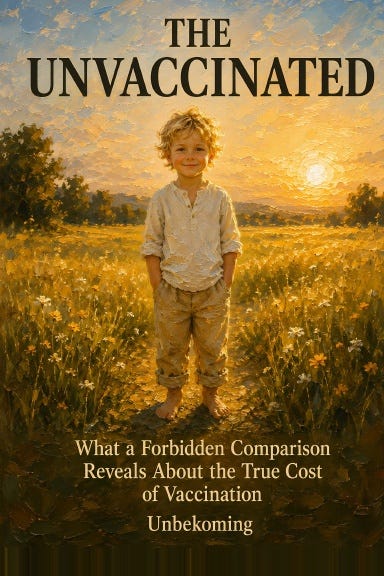
The book
The Vitamin K Injection: What the Evidence Shows
First edition. 300 pages. 6×9 paperback, matte cover, cream paper.
ISBN 978-1-7648990-4-8
USD 19.99 / EUR 18.99 / AUD 29.99 / GBP 15.99 / CAD 26.99
The full catalogue lives on the Unbekoming Spotlight.
13 Things Your Pediatrician Was Trained Not to Tell You
An Essay on the Profession Trained for Compliance, Not Curiosity
Lies are Unbekoming | September 11, 2026
This essay engages material framed in establishment terms: vaccines, immunity, deficiencies, contagion, developmental disorders. In quotation, attribution, and official body names, that vocabulary appears as the establishment uses it. In my own analytical voice, the terrain paradigm operates. The two registers do different work. One shows what the profession says about itself. The other names what is happening to the child.
The Training
“Nothing bad should be said about any vaccine.”¹ That is what Suzanne Humphries, a board-certified nephrologist, was taught during her American medical training. Vaccines are administered on schedule. Adverse conversation was not encouraged. It was actively closed down.
Lawrence Palevsky, a pediatrician practicing in New York, describes the same experience. What he was taught in medical school and residency, he later realized, differed sharply from what he observed in his own patients and read in the primary literature.²
Robert Sears, a California pediatrician, describes reading a book in medical school that documented severe injuries from the DTP (diphtheria-tetanus-whole-cell-pertussis) vaccine. The vaccine was eventually removed from the American market. Sears kept reading. What he found was not what he had been taught.³
Rachael Ross, a family physician who spent three seasons cohosting the syndicated show The Doctors, described a similar reckoning in a widely read 2016 blog post. She had watched the schedule grow from sixteen doses of four vaccines during her own childhood to sixty-nine doses of sixteen vaccines by age eighteen. Medical school and residency, she wrote, had taught her to give them all on time, without question.⁴
Jayne Donegan, a British general practitioner, wrote in the foreword to Humphries’ Dissolving Illusions that her medical training left vaccination as an “article of faith” that could not be interrogated. The curriculum was already so crowded that there was no room to ask why non-vaccine-preventable disease deaths had also declined during the twentieth century for reasons unrelated to any injection.⁵
None of these physicians is fringe. Each trained inside the profession. Each describes the training in similar terms: a set of scripts about safety, efficacy, and schedule, delivered as certainties, with no time in the curriculum to interrogate the primary literature that would complicate them. A pediatrician does not know what she was trained not to know. She cannot ask questions she was trained not to ask.
American pediatric practice covers the child from birth through age eighteen, and in many practices through age twenty-one. What follows is a chronological walk through what that profession was trained not to tell you, across that entire arc. Thirteen items. In order.
1. The Cord Cut Before the Blood Finished Moving (birth)
A newborn’s blood volume is meant to be topped off from the placenta in the minutes after birth. When the cord is left intact and pulsing, roughly a third of the baby’s total blood supply, along with the iron that supply carries, transfers across before the placenta is expelled. That iron is the reserve intended to carry the child through the first six months of life.
The standard hospital practice throughout the late twentieth century was to clamp within seconds. The World Health Organization now recommends waiting at least one minute. The American College of Obstetricians and Gynecologists came around in 2017. Most hospital deliveries in the United States still clamp early, driven by workflow, the neonatal warmer schedule, and the syringe already on the tray.
Your pediatrician does not raise this. The obstetrical team performed the clamp. The pediatrician receives the baby afterward and plots the numbers she is given. The infant she inherits is the infant who lost a third of the placental transfusion at hour zero.
Six months later, that same pediatrician will run an iron level, note the low result, and prescribe supplementation. The low reading she treats was produced by the system at birth. She is not trained to draw the line between the two events. She is trained to run the number and write the script.
The curious pediatrician would ask what a child born with a full complement of placental blood looks like at six months. The compliant pediatrician cannot ask, because the reference population she was trained on is the population that was clamped early.

2. The Vitamin K Injection (first hours)
Within hours of birth, the newborn receives an intramuscular injection of phytonadione, the compound sold as vitamin K1. The dose is one milligram. Breast milk carries roughly one to two micrograms of phytonadione per liter, and a newborn’s colostrum intake on day one delivers a fraction of a microgram; the injection is thousands of times that dose, and the published pediatric literature confirms that plasma phytonadione levels for two weeks after the shot run one to two thousand times higher than normal adult values. The injection also contains benzyl alcohol, polysorbate 80, and propylene glycol as excipients. The delivery site is the infant’s leg. The parent, if consulted at all, is told the shot prevents a bleeding condition called hemorrhagic disease of the newborn.
The condition exists. What is not explained is why. Newborn phytonadione levels are low at birth by design; the compound is produced by the gut bacteria that colonize the infant’s digestive tract in the first days, and levels rise on the biological schedule the infant’s body follows. Levels are further supported by the maternal transfer that continues through breastfeeding. The “deficiency” the injection corrects is the state a healthy newborn is meant to occupy for the first days of life while the gut ecology establishes itself.⁶
The bleeding events the injection is designed to prevent cluster in infants who have been subjected to the standard hospital birth sequence: early cord clamping, which strips the placental transfusion of clotting factors; maternal medications passed through delivery; the injection itself as a source of tissue injury; and, in male infants, circumcision. The intervention creates the conditions in which bleeding becomes more likely, then presents itself as the solution to the problem it has helped produce.
Two forms of the shot exist. The oral form is available in some countries and delivers a smaller dose across three administrations in the first weeks of life. The intramuscular form is the American standard. The intramuscular form has been associated in the published literature with elevated rates of childhood cancer, a finding disputed by subsequent industry-funded studies but never resolved. The oral form does not appear in that literature.⁷
This is the first injection. It is the moment at which the infant’s body, hours old, receives an industrial compound at pharmacological doses that no biology has any history with, into a system that has been producing its own supply on schedule for as long as human infants have been born. It is also the moment at which bodily sovereignty is handed over: the first substance introduced by needle before the first feed, before the first look at the mother’s face, before any element of the child’s own biology has had time to establish itself. The parent is rarely told what phytonadione is, where it comes from, what else is in the syringe, or that an oral alternative exists. The consent process is a signature.
Your pediatrician was trained that hemorrhagic disease is prevented by the injection. She was not trained to ask why the disease clusters in the population subjected to the delivery-room sequence, or what a newborn’s clotting profile looks like when the earlier interventions never happened.

3. The Hepatitis B Shot Before the First Feed (first day)
Hepatitis B, in the establishment’s account, is transmitted through blood-to-blood contact or sexual contact. In the United States it is given as an injection to every newborn within twenty-four hours of birth, regardless of the mother’s status. Denmark, which shares its borders with high-travel Europe, gives the shot only to infants born to mothers who carry the condition themselves.⁸
The safety claim rests on clinical trials. Those trials, for hepatitis B and for the childhood schedule generally, do not compare the vaccine to an inert placebo. The comparator is another aluminum-adjuvanted formulation, or a different vaccine, or the “background” mixture of the product minus the antigen. Adverse events in the “placebo” arm therefore match adverse events in the vaccine arm, because both arms received a substance that produces adverse events. The trial reports that the vaccine is “safe compared to placebo.” The label reflects the conclusion. What the label does not reflect is that the placebo was not a placebo. This is the load-bearing methodology under every safety claim on the childhood schedule. No vaccine on the schedule has been tested against saline in a pediatric population large enough to detect serious harm.⁹
The consent process at the American bedside is not consent. The mother has just given birth. The Vaccine Information Statement is handed over as the needle is prepared. The package insert, which contains the excipients, the adverse event history, and the acknowledged absence of long-term studies, is not offered. The CDC itself states that the Vaccine Information Statement is not an informed-consent document.¹⁰
The Belmont Report, drafted after the 1974 Research Act, identifies the three components of ethical consent: information, comprehension, and voluntariness.¹¹ The pamphlet handed to the mother is not information. The mother in her eighteenth hour of labor cannot comprehend the pamphlet even if she reads it. The room in which declining is coded as neglect does not offer voluntariness.
The Emergency Use Authorization products marketed for children under twelve during the COVID period had blank package inserts.¹² There was no clinical trial data to disclose. There was nothing to comprehend. The consent form still had a signature line.
Your pediatrician does not raise the Belmont Report. She does not know it exists. She was trained to hand over a pamphlet. Consent, as the Belmont Report defines it, was not part of the training.

4. The Circumstraint (first days)
Boys born in American hospitals are commonly circumcised within the first forty-eight hours of life. The procedure is elective, performed on healthy tissue, without therapeutic indication. The device most commonly used to hold the infant during the procedure is called the Circumstraint, a plastic form that immobilizes the baby’s arms and legs so the surgeon can work.
Forrest Maready has written on what happens inside the infant’s body during this event.¹³ Three triggers activate the dorsal vagal complex simultaneously: the injected local anesthetic registers as chemical intrusion, the incision as tissue injury, and the strap and plastic form as restraint. The infant cannot fight and cannot flee. Under sustained restraint, the primal system routes into shutdown. Images of babies on the Circumstraint mid-procedure show glassed-over eyes and a stillness that is not calm. It is dissociation, the same primal response animals and reptiles exhibit under capture, and the same response World War I soldiers exhibited when frozen in place under sustained fire.
The procedure requires written consent. It does not require informed consent. Parents are not shown the Circumstraint, or what dorsal vagal shutdown looks like. They are told the boy will not remember.
Whether the child remembers with his cortex is beside the point. The body remembers with its wiring. Maready traces the same trigger pattern, the same shutdown response, in the shots administered later, where the parent’s or nurse’s restraint constitutes the third trigger and delivers the injected metals into a body whose lymphatic system is now primed to transport them.
Your pediatrician was not trained in polyvagal theory. The circumcision was billed separately, performed by a different practitioner, and by the time she sees the child for the first well-baby visit, the file is closed and the incision has healed.

5. The Formula Sample in the Discharge Bag (first weeks)
Breast milk is more than food. It is a continuation of the mother’s biology into the infant. It delivers living stem cells, signalling molecules, protective proteins, and dozens of maternal components the infant’s biology integrates into its own.¹⁴ Colostrum in the first days carries a concentration of maternal material no manufactured product can replicate. The list of components identified in breast milk grows every year.
What formula provides is a mix of macronutrients dissolved in vegetable oils, built from cow’s milk protein or soy. It is what a mother feeds her baby when the biology cannot function or when she has no other option. It is not equivalent to what it replaces.
Formula recommendation frequently begins in the hospital. If the baby is slow to latch, if the mother is exhausted, if the nursing staff has other beds to turn over, a bottle of formula appears. The discharge bag contains a formula sample. The pediatrician’s office keeps sample cans for the first well-baby visit. What the office does not keep is a lactation consultant on staff.
The consultant costs money. The formula is provided by the manufacturer. The infrastructure of the American pediatric practice is built around the availability of formula and the absence of professional breastfeeding support. When troubleshooting is needed, the referral goes to a private lactation consultant the family pays for out of pocket, or, more commonly, the referral does not go anywhere and the mother receives a can of Similac.
The pediatrician was trained to identify failure to thrive. She was not trained to identify a poor latch, an undiagnosed tongue tie, engorgement, mastitis, or the constellation of ordinary breastfeeding difficulties that resolve with skilled support. The training treated breastfeeding as a preference and formula as a substitute of equivalent value. Neither claim survives the primary literature.

6. The Growth Chart Announcement (every visit)
At every visit, the baby is weighed and measured. The numbers are plotted against a curve. The pediatrician announces the percentile. Anything below the fiftieth is met with concern. Anything below the tenth triggers supplementation, formula, referrals, and repeat visits.
The curve is a statistical instrument. It plots where a population’s babies actually fell, not where healthy babies should fall. The reference standards against which most American pediatricians still work were built substantially on formula-fed populations, until the World Health Organization revised its curves in 2006 based on breastfed infants. A breastfed baby, whose weight-gain curve flattens naturally after four to six months, tracks below the older references and appears to be failing. The formula-fed baby was the standard against which the breastfed baby was measured and labeled as failing to thrive.
The percentile is not a diagnosis. Half of all babies are, by definition, below the fiftieth percentile. This is what percentiles are. The pediatrician’s alarm at the number is not a medical judgment. It is a script triggered by a chart.
The mother leaves the visit worried about her baby’s weight. She adds a bottle. The pediatrician marks the intervention on the record. At the next visit, if the number has climbed, the intervention is validated. If it has not, the recommendation escalates. More bottles. Iron drops. Cereal at four months. Formula-based supplementation.
The chart does not measure the child’s thriving. It measures her position relative to a reference population that was itself constructed by earlier interventions. The chart manufactures the pathology it then addresses.

7. The Iron Drops at Six Months (six months)
The four-month or six-month iron level comes back low. The pediatrician prescribes ferrous sulfate drops or recommends iron-fortified cereal. The parent complies. The drops stain the baby’s teeth, alter the stool, and are frequently spit up. The parent gives them anyway because the pediatrician said the number was low.
The number was low because the placenta was cut early. The reference range was developed on infants who were also cut early. The whole system, from delivery-room workflow to the reference range on the lab printout, was calibrated around interventions that removed the natural iron reserve at birth.
The intervention at hour zero produced the finding at month six that justifies the intervention at month six.
Ferrous sulfate is an industrial iron compound the infant’s body has no biological history with. It is aggressive on the gut lining, contributes to constipation, and drives oxidative stress the six-month-old is developmentally ill-equipped to buffer. The clinical trials on infant iron supplementation are almost entirely funded by the manufacturers of the supplements themselves or the cereals into which those supplements are compounded.
Iron in the form the child’s biology expects arrives packaged inside whole foods: liver, red meat, egg yolk, shellfish. These are the traditional first foods documented by Weston Price across traditional cultures around the world.¹⁵ None of Price’s cultures gave their infants iron drops. None of Price’s cultures produced the infants the American pediatric system labels as low in iron at six months.
Your pediatrician was trained in the intervention. She was not trained in what a child looks like when the intervention is not needed because the earlier interventions never happened.

8. Amoxicillin for the Ear (infancy onward)
The child has an earache. The pediatrician looks in the ear, notes the red drum, and writes a script for amoxicillin. Ten days. The ear improves. Three weeks later, the ear is red again. Another course. By eighteen months, the child has been on four rounds of antibiotics. The referral to ENT for tubes is in the file.
A 1994 study in Annals of Allergy identified food allergy in 78 percent of a series of 104 children with recurrent middle-ear fluid. Of the food-allergic group, 86 percent showed significant reduction on a sixteen-week elimination diet; when the offending foods were reintroduced, 94 percent recurred. The common offenders were cow’s milk, eggs, wheat, corn, soy, and peanuts.¹⁶ Children with undiagnosed cow’s milk allergy are roughly twice as likely to have recurrent ear problems. The ENT specialist David Hurst has spent his career documenting that allergy is the primary driver of chronic middle-ear fluid, and that aggressive allergy management resolves most cases.¹⁷
Your pediatrician does not ask about the child’s diet. She does not ask whether the ear inflammation clusters after certain foods. She writes the amoxicillin. The amoxicillin, over successive courses, does documented damage to the child’s gut ecology, contributing to the food sensitizations that will produce the next allergy diagnosis and the next inflammation and the next round of prescriptions.¹⁸
Heather Fraser has documented the loop.¹⁹ Antibiotic exposure is associated with elevated risk of food allergy. The food allergy drives the inflammation that produces the fluid that invites the prescription. The prescription drives the next allergy. The pediatrician sees the ear. The pediatrician does not see the loop.

9. The Autism Screening at Eighteen Months (eighteen to twenty-four months)
The M-CHAT is administered at the eighteen-month and twenty-four-month well-child visits. It is a screening questionnaire designed to catch signs of autism early. Parents whose children screen positive are referred for further evaluation.
By eighteen months, an American child following the CDC schedule has received over twenty vaccine doses. The MMR is typically administered at twelve to fifteen months. The pattern of parental accounts documented across the literature is consistent: the child was developing normally, received the shots at fifteen to eighteen months, and regressed.²⁰
J.B. Handley’s son Jamison is one such case. At eighteen months, Jamison was sick, never sleeping, gut in distress, alternating between diarrhea and constipation. His behavior had shifted. He ran along walls turning his eyes to the side, spun in circles, and played with his trains in odd ways. He had been an early talker, but the words had disappeared. UCSF confirmed the diagnosis: autism, the severe kind. The presiding doctor told the family to expect institutionalization. Within two weeks of beginning biomedical treatment under a different physician, Jamison’s belly had flattened, his eye contact was returning, and the dark circles under his eyes were clearing.²¹ The pattern that took his family months to piece together is the pattern the M-CHAT is designed to detect after the fact.
The screening does not prevent autism. It catches autism after the damage is measurable. It is a diagnostic backstop, timed to the developmental window in which regression is typically noticed, which is the same developmental window in which the schedule delivers its heaviest early load.
The rate is now one in thirty-one American children.²² A fully vaccinated Danish child receives thirty doses of vaccine against ten diseases across childhood, delivered in eleven injections thanks to multivalent combinations. A fully vaccinated American child, as of 2024, received between eighty-four and eighty-eight doses against seventeen diseases.²³ The pediatrician who administers the M-CHAT does not draw this comparison. She was trained that autism is genetic, that the cause is unknown, and that no controlled comparison of fully vaccinated versus never-vaccinated populations has ever been conducted. The last of these is true. The absence of the study is itself the finding.
The screening timing is the confession. The system knows when regression happens. The system built the screening around that window. What the system does not do is investigate the exposures delivered during the same window.
The Intervention Cascade: How Modern Medicine Creates the Birth Emergencies It Claims to Prevent (Part 2)
10. The Tonsillectomy Recommendation (early childhood)
The child has recurrent throat inflammation, or the tonsils appear enlarged, or the sleep is poor. The pediatrician refers to ENT. The ENT recommends removal. The parents comply.
During the American polio era, fifty to eighty percent of middle- and upper-class American children were tonsillectomized. Anderson’s 1943 Utah data showed that poliomyelitis was more than 2.5 times as common in tonsillectomized children. Bulbar polio, the form that paralyzed the muscles of breathing and swallowing, was sixteen times more common. Forty-three percent of the bulbar and bulbospinal cases had been preceded by a tonsillectomy within thirty days.²⁴ After the connection surfaced in the medical literature, tonsillectomy rates collapsed. The procedure never recovered its earlier prevalence, though it remains common enough to be a routine referral.
The tonsils are lymphatic tissue. They are part of the body’s cleansing and repair infrastructure, positioned at the entry point of the digestive and respiratory tracts to sample what comes in and to house the response. Removing them because they are inflamed is comparable to removing a filter because it is doing its job.
The recurrent throat problems have a driver. Maready has documented one pattern in the sudden-onset behavioral and neurological conditions labeled PANDAS and PANS (Pediatric Autoimmune Neuropsychiatric Disorders Associated with Streptococcal infections, and Pediatric Acute-onset Neuropsychiatric Syndrome). Aluminum from prior vaccinations creates a metal burden in the brain and lymphatic system. A subsequent inflammatory event produces a sudden onset of behavioral and neurological symptoms.²⁵ Removing the tonsils and giving antibiotics produces temporary relief. The underlying loop persists.
Your pediatrician was trained to identify the surgical indication. She was not trained to ask what the tonsils were responding to, or what the removal costs the child in the years afterward when the filter that used to sample the air is no longer there.

11. The Stimulant Prescription (school age)
The teacher flags the boy. His mother takes him to the pediatrician. A screening tool is administered. The prescription follows. Ritalin, Adderall, Vyvanse, Concerta. The child is medicated through the school day.
The DSM criteria for ADHD are behavioral. There is no biomarker. There is no imaging finding required for the diagnosis. There is no laboratory test. The condition is defined by the behavior and validated by the response to the stimulant, which by design produces focus and compliance in almost any child regardless of underlying condition.
Maready has proposed that the behavioral pattern derives from damage to a small brainstem structure called the locus coeruleus, which regulates the release of norepinephrine and mediates the fight-or-flight response.²⁶ Damage produces hypersensitivity and continuous norepinephrine release. The child is locked in a low-grade panic state. He cannot sit still because his body is preparing for a threat that never resolves. The gut problems that frequently accompany the ADHD presentation follow from the same diversion of resources away from digestion. Many parents notice that their child’s behavior improves markedly during a fever, which fits the same mechanism: the locus coeruleus diverts its norepinephrine output to raising body temperature, giving the child a temporary respite from the constant stress signal.²⁷
The metals implicated in the damage, in Maready’s account, are the aluminum-based adjuvants injected in the leg during infancy and transported by the lymphatic system toward the brainstem.²⁸ Studies have documented elevated aluminum in the hair of children diagnosed with hyperactivity. The stimulant does not address the damage. It masks the presentation by driving further neurotransmitter release, in the way that pressing harder on a broken accelerator does not fix the car.
The pediatrician was trained in the diagnostic criteria and the medication. She was not trained in the injection pathway, the lymphatic transport, or the brainstem lesion. The prescription pad was faster than the investigation.

12. The SSRI for the Teenager (adolescence)
The teenage girl is depressed. Her pediatrician writes the SSRI. American pediatric and family practice are the frontline prescribers of adolescent SSRIs; referral to a child psychiatrist happens only for complex cases. The FDA’s own black-box warning, added in 2004, states that these compounds increase suicidal ideation in children and adolescents. The warning appears on the label. It is rarely raised in the conversation before the script is signed.
In 2012, GlaxoSmithKline paid three billion dollars to settle claims that it had downplayed the risk of paroxetine, marketed as Paxil, in adolescents.²⁹ The company had promoted the drug for uses the FDA had not approved and had withheld safety data. The settlement was the largest healthcare fraud settlement in American history at the time. Nearly every major pharmaceutical company has been caught in comparable settlements. The prescriptions kept flowing.
Teenage depression has risen sharply during the period in which the pediatric schedule expanded, the smartphone was placed in every hand, sleep was compressed, sunlight exposure collapsed, gut ecology was serially disrupted by antibiotic courses, and the food supply was reengineered around industrial seed oils and ultra-processed carbohydrates. Each of these has documented effects on mood and cognition. None is investigated at the sixteen-year-old’s medication appointment.
The SSRI is not a diagnosis. It is a management protocol. It changes what the neurotransmitter machinery is doing without asking what damaged the machinery in the first place. The teen who does not respond gets a second SSRI. The teen who responds badly gets an antipsychotic added. The teen who spirals gets hospitalized. The chart records the diagnosis codes and the medication trials. The chart does not record what happened to the child between age one and age fourteen.
Your pediatrician was trained to identify depression and to prescribe the first-line medication. She was not trained to ask what a healthy sixteen-year-old looks like, or what would have to change in the child’s life for the depression to resolve without the compound.
13. The Gardasil Series (eleven to twelve)
The eleven-year-old girl is offered the HPV vaccine at her pediatric well-visit; American pediatric care runs through adolescence, and the HPV series is a scheduled pediatric-office item. In many practices, the shot is bundled with the meningococcal and Tdap boosters at the same visit, an arrangement the Advisory Committee on Immunization Practices (ACIP) recommends explicitly to improve series completion.³⁰ The practice’s incentive is to have the teenager walk out with all three.
The clinical trials submitted for HPV vaccine approval did not use saline as the placebo. The comparator was the aluminum adjuvant, which produces its own inflammatory and neurological effects.³¹ The trials measured precancerous lesions, not cervical cancer, which develops on a timeline decades longer than the trials ran. The insert states that the product has not been evaluated for carcinogenicity or genotoxicity.³²
The injury patterns reported after HPV vaccination include postural orthostatic tachycardia syndrome, seizures, chronic fatigue, cognitive dysfunction, motor symptoms, and premature ovarian failure. Mary Holland has documented individual cases in detail. Alexis Wolf was thirteen when she started the series in 2007. After the second dose her health deteriorated. After the third she could no longer focus, sleep, eat, or behave normally. Today, at twenty-five, she has daily seizures. Colton Berrett was thirteen when he received the third dose. He became paralyzed from the neck down and remained on a ventilator until his suicide, two months before his eighteenth birthday. Joel Gomez was fourteen when he died in his sleep after the second dose.³³
The American pediatric office does not present the trial design. It does not present the package insert. The pediatrician was trained that Gardasil prevents cervical cancer. That claim is not supported by the trials. The claim she was trained to make is the claim she makes.
In Japan, after the injury patterns became public, uptake dropped from around seventy percent to under one percent.³⁴ The Japanese Ministry of Health withdrew its active recommendation. Girls in Japan are still eligible to receive the shot. Their parents are informed. Most decline.

The Well-Child Visit Is Not a Health Check
Thirteen items across one childhood, all delivered by the same profession and shaped by the same training.
The nurse walks in with the shot tray already prepared. A Vaccine Information Statement is handed over as the needle is uncapped. The growth chart appears on the monitor and a percentile is announced. The developmental questionnaire sits on the clipboard. Next shots are read off the schedule. Questions raised meet a script. Parents who decline meet a second script. Parents who persist are fired from the practice.
None of this measures whether the child is thriving. The visit measures whether the child is on schedule for the shots, the screenings, the growth curve, the developmental milestones, and the medication trials. The well-child visit is a compliance check. It has been a compliance check for as long as most parents alive today have been alive. What changed is the length of the compliance list, which as of 2024 ran to eighty-four to eighty-eight doses covering seventeen diseases, an autism screening at eighteen months, a stimulant prescription at seven, an SSRI at fourteen, and a Gardasil dose at eleven.
The pediatrician cannot do the health check because she was not trained for it. She was trained to plot, prescribe, inject, refer, screen, code, and bill. The health check is what a curious pediatrician would do. The profession does not produce curious pediatricians. It produces compliant ones, because the training rewards compliance and punishes curiosity, and the compliant pediatrician takes home the same salary whether the child in front of her is thriving or not.
The mother in the exam room is the one who has to do the health check. She has to hold the developmental history the chart does not track. She has to notice what changed after which appointment. She has to ask what the pediatrician was trained not to ask. She has to know what a healthy child looks like, because the person paid to know does not.
How To Explain It To A 6 Year Old
Imagine a driving school where the students learn one thing. They learn the map. Every morning, the teacher hands out the map. It shows every road and every turn.
The students memorize the map. When they get their driver’s license, they can drive the map perfectly.
They cannot, however, look out the window.
Looking out the window was not on the map. Looking out the window is not what the driving school taught. If a dog runs into the road, the map does not have a dog. If the tire goes flat, the map does not have a tire. The students keep driving the map. They drive right through the dog. They drive on the flat tire until the wheel comes off.
If you asked one of these drivers why they did not stop, they would say the map said to keep going.
Your pediatrician has a map. It is called the schedule. It tells her which shots to give and which drops to prescribe and which screenings to run and at which age. She learned the map very well and can drive it in her sleep. She was not taught to look out the window.
The window is your child. The window is what your child looked like last week and what your child looks like this week. The window is what changed after the last appointment. The window is whether your child is thriving, or is quietly, slowly becoming someone the map does not have space for.
You are the one at the window. Your pediatrician is at the map. Both of you are trying to help your child. Only one of you can see her.
Medical Disclaimer
This essay is a work of analysis and commentary. It is not medical advice. It is not a prescription. It is not a substitute for the judgment of a practitioner who knows your child. Decisions about vaccination, medication, surgery, and pediatric care belong to the parent and to the practitioner the parent chooses. The purpose of this essay is to widen the frame of what a parent knows before those decisions are made.
In Print
Thirteen of my books are now available as paperbacks, printed to order through Lulu and shipped worldwide. The Unvaccinated lays out the completely unvaccinated as a comparison group across twenty chapters and five appendices — as far as I know, the only book of its kind. Medicalized Motherhood follows a woman through 123 documented interventions from teenage pill to postpartum discharge. Drilling for Profit argues that cavities, gum disease, and crooked teeth are a dietary problem the dental profession treats surgically. What Your Vet Can’t Tell You applies the same critique to pets — food, vaccines, and a profession trained by the industries whose products cause the harm. Escape from Psychiatry documents the fabrication of the DSM, the collapse of the serotonin hypothesis, and the specific damage done by every major psychiatric drug class.
Two go to the paradigm underneath the whole shelf. No Contagion, co-authored with Jamie Andrews, catalogues 258 failed contagion experiments and the case against germ theory itself. No Virus takes the examination one layer deeper — the isolation problem, the collapse of virology’s foundational claims, and a disease-by-disease reappraisal of the entities the framework is built on.
Four take on the remedies and paradigm questions mainstream medicine actively suppresses. The DMSO Book covers 100,000 studies, zero deaths, and one approval — the suppressed science of medicine’s most versatile compound. Chlorine Dioxide: The Forbidden Remedy collects the interviews, protocols, and evidence from the doctors and researchers they tried to silence. The Iodine Book recovers an essential mineral driven out of easy reach by bromide, fluoride, and perchlorate — and the pharmacological tradition that kept its therapeutic use alive across the decades mainstream medicine set it aside. The Hydrogen Peroxide Book recovers a century of practice with a compound the body already makes — mitochondrial, phagocytic, part of thyroid hormone synthesis — suppressed precisely because its clinical utility threatened the pharmaceutical direction that captured twentieth-century medicine.
Two more take on the remedies already in your kitchen. Baking Soda locates sodium bicarbonate inside the terrain framework industrial medicine buried — the compound already in your cupboard, and what it does at the level of the blood, kidneys, lungs, digestion, and skin. The Castor Oil Book recovers four thousand years of documented practice on the medicine mainstream healthcare quietly stopped talking about — the kitchen bottle that doesn’t sit well in a system built on prescriptions and procedures.
A physical book reaches the person a Substack post never will — the sceptical relative, the friend who won’t click a link but might open a book, the visitor whose eye lands on a coffee table. The full shelf is at lulu.com/spotlight/unbekoming. Buy one to keep, and one to give away.
References
- Suzanne Humphries, quoted in J.B. Handley, How to End the Autism Epidemic (Chelsea Green Publishing, 2018).
- Lawrence Palevsky, quoted in J.B. Handley, How to End the Autism Epidemic.
- Robert Sears, quoted in J.B. Handley, How to End the Autism Epidemic.
- Rachael Ross, “Vaccines, Vaccine Injury, and My Perspective as a Doctor and Mom,” Dr. Rachael (July 1, 2016), http://drrachael.com/vaccines-vaccine-injuries-my-perspective-as-a-doctor-and-mom/.
- Jayne L. M. Donegan, Foreword to Suzanne Humphries and Roman Bystrianyk, Dissolving Illusions: Disease, Vaccines, and the Forgotten History (2013).
- Thomas Cowan, Vaccines, Autoimmunity, and the Changing Nature of Childhood Illness (Chelsea Green, 2018), on newborn phytonadione biology and gut colonization.
- Suzanne Humphries and Roman Bystrianyk, Dissolving Illusions, on intramuscular versus oral vitamin K administration and the childhood cancer literature.
- J.B. Handley, How to End the Autism Epidemic, on the Danish Childhood Vaccination Program.
- J.B. Handley, How to End the Autism Epidemic, on the corrupted placebo methodology across the pediatric vaccine trial literature.
- CDC, “Vaccine Information Statements: Frequently Asked Questions,” in Epidemiology and Prevention of Vaccine-Preventable Diseases (Pink Book), 14th edition, Appendix C.
- National Commission for the Protection of Human Subjects of Biomedical and Behavioral Research, The Belmont Report: Ethical Principles and Guidelines for the Protection of Human Subjects of Research (1979), cited in Edward Geehr, Unavoidably Unsafe.
- Edward Geehr, Unavoidably Unsafe, on Emergency Use Authorization and blank package inserts.
- Forrest Maready, Crooked: Man-Made Disease Explained, on the dorsal vagal complex and the Circumstraint.
- Suzanne Humphries and Roman Bystrianyk, Dissolving Illusions, on the cellular components of breast milk and colostrum.
- Weston A. Price, Nutrition and Physical Degeneration (1939), documenting traditional cultures and their infant feeding practices.
- Heather Fraser, The Peanut Allergy Epidemic, citing 1994 Annals of Allergy study on food elimination and ear inflammation.
- David Hurst, cited in Heather Fraser, The Peanut Allergy Epidemic, on allergy as the primary driver of chronic middle-ear fluid.
- Fraser, The Peanut Allergy Epidemic, on antibiotic exposure and food allergy risk.
- Fraser, The Peanut Allergy Epidemic, on the antibiotic-allergy-inflammation loop.
- J.B. Handley, How to End the Autism Epidemic, on parental accounts of regression following the fifteen-to-eighteen-month shots.
- J.B. Handley, How to End the Autism Epidemic, on the regression and recovery of his son Jamison.
- CDC, “Prevalence and Early Identification of Autism Spectrum Disorder Among Children Aged 4 and 8 Years — Autism and Developmental Disabilities Monitoring Network, 16 Sites, United States, 2022,” MMWR Surveillance Summaries 74, no. 2 (April 17, 2025).
- U.S. Department of Health and Human Services, “Assessment of the U.S. Childhood and Adolescent Immunization Schedule Compared to Other Countries” (2025), https://www.hhs.gov/sites/default/files/assessment-of-the-us-childhood-and-adolescent-immunization-schedule-compared-to-other-countries.pdf.
- Suzanne Humphries and Roman Bystrianyk, Dissolving Illusions, on tonsillectomy and bulbar polio (Anderson, 1943 Utah data).
- Forrest Maready, Crooked, on PANDAS and PANS as aluminum-inflammation cascades.
- Forrest Maready, Crooked, on the locus coeruleus and ADHD.
- Forrest Maready, Crooked, on fever, norepinephrine, and behavioral improvement in autism and ADHD.
- Maready, Crooked, on aluminum adjuvant transport via the lymphatic system.
- J.B. Handley, How to End the Autism Epidemic, on the GlaxoSmithKline paroxetine settlement.
- CDC, “General Best Practice Guidelines for Immunization: Timing and Spacing of Immunobiologics,” on ACIP recommendations for simultaneous administration of adolescent vaccines at the 11-to-12 visit.
- Holland et al., The HPV Vaccine on Trial, on Gardasil clinical trial placebo design.
- Holland et al., The HPV Vaccine on Trial, quoting the Gardasil package insert on carcinogenicity and genotoxicity evaluation.
- Holland et al., The HPV Vaccine on Trial, on the cases of Alexis Wolf, Colton Berrett, and Joel Gomez.
- J.B. Handley, How to End the Autism Epidemic, on the collapse of Japanese HPV vaccine uptake.
Additional Sources
Thomas Cowan, Vaccines, Autoimmunity, and the Changing Nature of Childhood Illness (Chelsea Green, 2018).
Herbert M. Shelton, Natural Hygiene: Man’s Pristine Way of Life, and the collected articles on pediatric care.
John H. Tilden, Toxemia Explained: The True Interpretation of the Cause of Disease (1926).
Daniel Roytas, Can You Catch a Cold? Untold History and Human Experiments.
Torsten Engelbrecht, Claus Köhnlein, Samantha Bailey, and Stefan Lanka, Virus Mania, 3rd edition (2021).
Mark Bailey, The Final Pandemic: An Antidote to Medical Tyranny (2023).
Dawn Lester and David Parker, What Really Makes You Ill? Why Everything You Thought You Knew About Disease Is Wrong.
Sally Fallon Morell, The Nourishing Traditions Book of Baby & Child Care.
Bessel van der Kolk, The Body Keeps the Score (2014), on early-life trauma and dissociation as embodied phenomena.
Peter Gøtzsche, Deadly Medicines and Organised Crime: How Big Pharma Has Corrupted Healthcare (2013).
Babies Whose Mothers Drank Fluoridated Water During Pregnancy Scored Lower in Problem-Solving
By Brenda Baletti, Ph.D. | The Defender | September 3, 2026
Babies whose mothers drank fluoridated water during pregnancy at and slightly below concentrations currently recommended by U.S. public health agencies scored lower on tests that measure fluid cognition — the ability to think logically and solve problems in new situations.
Fluid cognition is considered the “cornerstone of human cognition, both during development and in adulthood.”
A new study led by Columbia University researchers found that prenatal fluoride exposure resulted in reduced fluid cognition at levels as low as 0.675 milligrams per liter (mg/L).
That’s slightly below the U.S. Public Health Service’s recommended concentration of 0.7 mg/L for fluoridated drinking water and far below the U.S. Environmental Protection Agency’s (EPA) maximum contaminant level of 4 mg/L and the World Health Organization’s guideline of 1.5 mg/L, according to the study.
The study, funded by the National Institutes of Health (NIH) and accepted for publication in the American Journal of Epidemiology, analyzed outcomes among 2,514 children born between 2006 and 2019 at 17 sites spanning 23 U.S. states that are part of the Environmental influences on Child Health Cohort (ECHO).
The authors concluded that more research is needed to identify the risky prenatal, postnatal and childhood window when fluoride exposure can harm cognitive development.
Higher fluoride linked to lower fluid cognition
To estimate prenatal water fluoride exposure, the researchers linked publicly available drinking water fluoride measurements to residential address information collected during pregnancy. The study focused only on fluoride from drinking water and did not account for any other sources.
The researchers then compared estimated fluoride intake with children’s cognitive abilities, evaluated using the NIH Toolbox Cognition Battery.
Researchers separately examined “fluid cognition,” which included measures of cognitive flexibility, inhibitory control, attention and memory, and “crystallized cognition,” assessed through a vocabulary test.
Crystallized cognition is “the breadth and depth of knowledge, vocabulary, and verbal skill a person has acquired through education, experience, and cultural exposure — what has been learned and can be retrieved and applied later.”
The children whose mothers were exposed to higher fluoride levels during pregnancy tended to score lower on the fluid cognition tests.
They found children’s cognition was affected when mothers were exposed to water fluoride levels at and above 0.675 mg/L, or 675 micrograms per liter. That’s below the federally recommended level for water fluoridation.
They also found that every 500 microgram-per-liter increase in water fluoride was linked to an average 3.36-point drop in IQ.
The outcomes were substantially worse among children whose cognitive abilities were assessed before age 7. Their IQ scores dropped up to 13.5 points for the same increase in water fluoride content.
The researchers cautioned, however, that the apparent difference by age requires further study.
“This study adds to a large body of work that looks at how early exposure to environmental contaminants may be associated with the development of the thinking and learning processes that are important for children’s developmental outcomes,” co-senior author Amy Margolis, Ph.D., of The Ohio State University College of Medicine said in a Columbia University press release about the study.
“Continuing to study fluoride and other exposures will be integral in best supporting children’s environmental health and well-being.”
Malin and Thiessen both noted that a limitation of the study was that they didn’t measure individual fluoride intake. Because intake can vary across individuals, failure to measure individual exposure can lead to exposure misclassification.
“Despite this, the authors still observed quite sizable associations between prenatal public water fluoride exposure and child fluid cognition, particularly for children younger than 7,” Malin said.
“Nevertheless, true associations between prenatal fluoride exposure and child cognition may in fact be larger than what this study was able to detect,” she added. “Future individual-level research will be needed to further investigate that question.”
Findings add to evidence in contested court ruling
Water fluoridation in the U.S. has been a political flashpoint since a landmark 2024 federal court ruling concluded that current levels of fluoride added to water at 0.7 mg/L posed a risk to children’s health. The ruling directed the EPA to regulate the chemical under the Toxic Substances Control Act.
The ruling was largely based on the federal National Toxicology Program’s (NTP) six-year assessment of all existing literature on fluoride and neurotoxicity, along with testimony from leading experts at top universities across the world who study the issue.
The NTP concluded that water fluoridation at 1.5 mg/L was linked to lower IQ in children. It also found that people exposed to water fluoridation below 1.5 mg/L could have high fluoride levels in their systems, in part because people can be exposed to fluoride from other sources and/or may drink different amounts of water.
The NTP researchers said their findings about water fluoridation and neurotoxicity were based on studies of water fluoridation at or above current U.S. fluoridation levels.
The groups that sued the EPA also argued that EPA regulations for other toxic chemicals don’t allow exposure at known toxicity levels. For other chemicals, exposure is allowed only at levels that are at least 10 times [lower than] the known toxic exposure level to ensure safety.
An appeals court later overturned the fluoride verdict on a procedural issue, but the court did not disagree with the lower court ruling that fluoridation at current levels poses an unreasonable risk to human health.
The American Dental Association, mainstream media and others have attempted to publicly discount the NTP’s findings, arguing that its data were weak at current levels, or that studies showing the neurological effects of water fluoridation happened in other countries that weren’t similar to the U.S.
The new Columbia University study — conducted in the U.S. at current fluoridation levels — confirmed the NTP’s conclusions and offered findings in line with other recent studies in the U.S.
Ashley Malin, Ph.D., assistant professor of epidemiology at the University of Florida’s College of Medicine, and lead author of a U.S. study that linked fluoride exposure during pregnancy to neurobehavioral problems in children, told The Defender that the Columbia University study is “significant” because it includes a relatively recent cohort of children from multiple U.S. states.
She said the findings were consistent with other major cohort studies in Mexico and Canada that observed an inverse association between early life fluoride exposure and non-verbal IQ.
Kathleen Thiessen, Ph.D., who co-authored the 2006 National Research Council study on fluoride toxicity, also said the study was consistent with many recent findings.
“Importantly, they see an adverse effect at lower levels of water fluoride than many previous studies have used, and these are U.S. children,” she said.
This article was originally published by The Defender — Children’s Health Defense’s News & Views Website under Creative Commons license CC BY-NC-ND 4.0. Please consider subscribing to The Defender or donating to Children’s Health Defense.
Vaccination Data on Amish Children Screened for 2010 Autism Study Was Never Made Public
By Suzanne Burdick, Ph.D. | The Defender | September 2, 2026
Controversy is swirling around a 2010 study on autism rates among the Amish, after President Donald Trump on Monday posted a graphic citing the study.
Trump’s post on Truth Social claimed, “No published case has explicitly documented an unvaccinated Amish child with autism.”
The social media post cited a study, conducted in 2008 and 2009 by researchers who screened 1,899 Amish children in Indiana and Ohio for autism. The researchers confirmed seven cases of autism among the children.
The study concluded that among the Amish children in the study, the autism rate was roughly 1 in 271 — far lower than the national rate, which at the time was estimated by the Centers for Disease Control and Prevention (CDC) as 1 in 91.
According to Trump’s post, the study authors collected vaccination histories for the children but “did not report any confirmed case” of autism as “completely unvaccinated.”
The post drew a mix of cheers and fact checks, according to health writer Sayer Ji.
Ji called Trump’s post “factually imperfect” but “genuinely important.”
The post contained factual inaccuracies — for instance, it stated that the Amish have been around for 330 years. However, although the Amish broke away from the Mennonites 333 years ago in 1693, Amish settlements in the U.S. didn’t begin until the 1720s.
Trump’s post also drew attention to the verifiable fact that the Amish tend to have lower vaccination rates and lower autism rates, compared to the mainstream.
Ji praised the president for highlighting the 2010 study. “Whatever else you think of the man, he [Trump] pointed at the study,” Ji wrote.
Children’s Health Defense (CHD) CEO Mary Holland told The Defender she was pleased that Trump highlighted the relative absence of autism among the Amish, who typically have lower vaccination rates than mainstream communities.
“It’s high time we start dealing with reality — the current vaccine schedule causes brain injury called autism. Let’s be humble enough to learn from the Amish,” Holland said.
What did the 2010 Amish autism study show?
Trump’s post cites a 2010 study conducted by human genomics researchers from the University of Miami and Vanderbilt University, according to a conference abstract about the study.
However, contrary to Trump’s post, the study was never published in a peer-reviewed journal.
The study’s abstract, dated May 22, 2010, appeared on the website for the International Meeting for Autism Research, a research gathering held by the International Society of Autism Research.
The study authors appeared to have presented the study at the May 2010 meeting. There is no online record of the study’s full report.
The abstract’s methods section states that the researchers collected the children’s vaccination data. However, the results section doesn’t state whether the seven Amish children in the study who were identified as having autism were vaccinated or unvaccinated.
The abstract states:
“Preliminary data have identified the presence of ASD [autism spectrum disorder] in the Amish community at a rate of approximately 1 in 271 children using standard ASD screening and diagnostic tools although some modifications may be in order.”
The authors wrote that “further studies are underway” to address the cultural norms and customs that may affect how parents talk about their children’s behavior when interviewed by researchers.
It is unclear if the study authors looked at whether the seven children with autism had been vaccinated.
The study’s lead author, listed as J. L. Robinson, did not respond to The Defender when asked if the researchers ever ran a vaccination-stratified analysis of the seven confirmed autism cases, and why the researchers never published the study.
The Defender asked Margaret Pericak-Vance, Ph.D., director of the John P. Hussman Institute for Human Genomics at the University of Miami and one of the study’s authors, the same questions. However, the inquiry was directed to the university’s public relations director, who did not respond by deadline.
Ji searched online public records to see if the study authors ever spoke again publicly about the study or submitted it for publication in a peer-reviewed journal, but found nothing.
That is significant, Ji told The Defender. “I searched for and could not find any public statement by any of the six authors, in sixteen years, on why the paper never appeared or what became of the data. That absence is the finding.”
Ji said he isn’t accusing the study authors of intentionally burying their data on the Amish children’s vaccination histories. “I am not alleging that any of the six destroyed data or acted in bad faith — I have no evidence of that.”
But their data were effectively “buried,” in that the data were never published and never appeared in a future study.
Ji acknowledged that even if the study had explicitly linked all seven autism cases to not vaccinating, the study wouldn’t prove that unvaccinated children do not get autism, because seven is too small a number to power a statistical model.
But the data would still be helpful because they “would fill a hole in the record and tell us whether the screening infrastructure can be rebuilt at scale,” he said. “A statistician could do it in weeks if the files exist.”
The study authors did not respond when The Defender asked if they still had the original research files for the study.
Given that the study appeared to use federally funded research dollars, according to the abstract, the public deserves to know what happened to the files, Ji said.
Trump focused on uncovering autism-vaccine link
Trump’s post referencing the 2010 study comes amid a roiling debate about vaccines and autism. In May, Trump pressed U.S. Health Secretary Robert F. Kennedy Jr. to do more to investigate a possible link between vaccines and autism, according to a July 27 Wall Street Journal report.
Last month, Trump signed an executive order calling for sweeping changes to U.S. vaccine policy, including reducing the number of diseases for which kids receive routine childhood vaccines from 18 to 11.
According to The Associated Press, Trump is “fixated on connecting autism to vaccines.”
During a Sept. 22, 2025 press conference, Trump said, “There are certain groups of people that don’t take vaccines and don’t take any pills that have no autism. … The Amish, as an example, they have essentially no autism.”
According to Ji, the 2010 Amish study does not prove that vaccines cause autism.
However, the story of what happened to the 2010 study reveals that when data are collected that could potentially contribute to answering the question of whether vaccines cause autism, that data “doesn’t become available,” Ji said.
In Ji’s view, studies looking at Amish autism rates should examine many factors, including vaccination status, exposure to glyphosate, acetaminophen, ultrasound, diet, endogamy and access to healthcare.
The full results should be made public, regardless of what the studies find. “That isn’t anti-vaccine. It’s science.”
The connection between lower vaccination and autism rates among the Amish was something that investigative journalist Dan Olmsted spent years documenting.
Olmsted, founder of Age of Autism, authored “Age of Autism: Mercury, Medicine, and a Man-Made Epidemic” (2011) and “Denial: How Refusing to Face the Facts about Our Autism Epidemic Hurts Children, Families, and Our Future” (2017) before he passed away in early 2017.
Where did Trump get the graphic he posted?
The Amish continue to be central to ongoing national debate on vaccines. In New York, Amish are threatening to leave the state due to the state’s school-based vaccine mandate, according to an Aug. 26 New York Post report.
Pennsylvania, which is home to the largest Amish population in the U.S., has been making headlines for its current measles outbreak and ongoing investigation of measles-related deaths.
Steve Kirsch created the graphic that Trump posted to social media. On Aug. 14, Kirsch posted the graphic on X with the statement, “Baffling, isn’t it? Autism is only found in vaccinated Amish kids. I wonder why?”
Kirsch told The Defender he created the graphic using ChatGPT.
He instructed ChatGPT to create a graphic based on the 2010 study and based on his understanding that there is no evidence that an unvaccinated Amish child has ever been diagnosed with autism.
“Nobody has ever heard of an unvaccinated Amish child with autism,” Kirsch told The Defender.
Kirsch said he referred to the study as “published” in the graphic because the International Society of Autism Research posted the study’s conference abstract online. He acknowledged that the study itself was never published.
The White House did not respond to our comment request by the deadline.
This article was originally published by The Defender — Children’s Health Defense’s News & Views Website under Creative Commons license CC BY-NC-ND 4.0. Please consider subscribing to The Defender or donating to Children’s Health Defense.
6-Week-Old Amish Infant With Fatal Genetic Condition Died From Measles, Coroner Confirms
By Henrick Karoliszyn, DSW | The Defender |September 4, 2026
A 6-week-old Amish infant with a neurological genetic disorder died from measles, Lancaster County Coroner Stephen Diamontoni said today. Lancaster Online first reported the death and Diamontoni’s comments.
The baby girl, born with Amish lethal microcephaly, a condition that typically causes infants to die within six months of birth, died on Aug. 18, the coroner said.
“Those children are sick from birth and actually are placed on palliative care from the time of birth,” Diamontoni told Lancaster Online today. “They typically only live 5 or 6 months of age and the majority of those children die as a result of a respiratory infection of any kind, because their brain is very small and they don’t have the capacity to fight those infections well.”
The infant’s death “was not unexpected,” Diamantoni said. He said the Clinic for Special Children in Leacock Township handled the case. When reached for comment, the clinic refused to comment, citing privacy laws.
Diamantoni said he did not know if this was the second “measles-associated” death initially reported on Aug. 25 by Gov. Josh Shapiro.
Lancaster County Commissioner Josh Parsons said today in a statement that the county still could not confirm the death of the infant as “measles-associated.”
Parsons said state officials provided little information beyond saying the 6-week-old — and a newborn whose death the coroner confirmed on Aug. 25 — were both “unvaccinated.”
Parsons questioned that characterization, noting that a 6-week-old infant would not ordinarily have had an opportunity to receive a routine measles vaccination.
“If this is the second [‘measles-associated’ death] case, the ‘unvaccinated’ label would again be deceptive.”
The newborn, also Amish, died during childbirth. The infant tested positive for measles, but according to the coroner, she died of a ruptured spleen — not of measles.
Parsons said that if the newly identified infant is the second case that was announced Aug. 25 by the state, officials should have provided additional context while protecting the family’s privacy.
“There are obviously significant relevant facts that should have been discussed about the case,” Parsons said, adding that those facts could have been presented “in a careful,” accurate and honest way without identifying the infant or family.
“That was not done,” he wrote on X. “The opposite was done. The few facts revealed were done so in a deceptive and inflammatory manner.”
Parsons also said the delay in notifying the coroner’s office prevented his staff from conducting what he described as a full, routine investigation, including a review of physical evidence.
“Much of the debate and invasion of privacy could have been avoided by state officials being honest and forthright at the beginning of this, rather than forcing the people of Lancaster County to track down information a piece at a time,” he said.
RFK Jr. ‘undermined public health,’ says Shapiro
After today’s statement to the press about the 6-week-old infant, Shapiro continued relaying on X that both cases were the “first two measles-associated deaths in 35 years.”
The Pennsylvania Department of Health uses the term “measles-associated” when there is laboratory or epidemiological evidence of the virus.
Shapiro criticized U.S. Health Secretary Robert F. Kennedy Jr., saying:
“Instead of listening to the real doctors and public health experts, RFK chose to sow doubt, play politics, direct the CDC not to acknowledge these deaths, and even accuse me of fabricating these tragedies. That led to a firestorm of conspiracy theories that denied these families’ pain, invaded their privacy, and undermined public health.
“It’s long past time for RFK to stop playing games with people’s lives, report these deaths accurately on the CDC dashboard, and heed the guidance of actual medical experts so people get accurate information to discuss with their trusted health care providers and can best protect themselves and their children against this deadly disease.”
Shapiro used his initial announcement of the deaths on Aug. 25 to criticize the Trump administration’s approach to vaccination policy and public health messaging.
“When the information we see coming from the federal government, in some cases, isn’t driven by facts and by science, it makes it even more confusing for parents, and that has a serious impact,” Shapiro said.
Kennedy responded on social media by accusing Shapiro of announcing the deaths with “giddy delight” for partisan purposes. He called the governor’s announcement “unseemly” and accused him of using the COVID-19 playbook, which includes “the weaponization of infectious disease fears for political gain.”
The Centers for Disease Control and Prevention (CDC) decision not to include the deaths in its national count has only added to the dispute.
“CDC has a responsibility to ensure its reporting accurately and transparently reflects what is known and what remains unconfirmed,” a U.S. Department of Health and Human Services spokesperson told The Defender. “The two measles-associated deaths announced by Pennsylvania have not been confirmed based on the information currently available to CDC.”
The CDC said the current data reflect “the best available information and our commitment to transparency and telling the American people the truth.”
The measles outbreak continues
Meanwhile, the measles continues to spread in Pennsylvania and beyond.
The U.S. has recorded its highest number of measles cases in 35 years.
As of today, 577 people in Pennsylvania had contracted measles in the current outbreak, with 115 new cases reported in the state in the past week. The state also reported 87 hospitalizations as of Aug. 31, with Lancaster County among the hardest-hit areas.
Lancaster County is home to the country’s largest Amish community, where vaccination rates have historically been lower than in the general population. Pennsylvania health officials estimated last year that only about 25% of Lancaster County’s Amish population had received the measles, mumps and rubella (MMR) vaccine.
The Amish Church has no official doctrine prohibiting vaccination. The parents of the newborn who died of a ruptured spleen told The Atlantic that their decision not to vaccinate their children was not politically motivated and was not based on extensive research.
The Pennsylvania Department of Health says vaccination remains the best protection against measles and has expanded vaccination clinics in response to the outbreak. The state says more than 35,000 Pennsylvanians received an MMR vaccine in July, about 10,000 more than in a typical month.
The Lancaster County coroner’s office and the Pennsylvania Department of Health ignored several requests for comment from The Defender.
This article was originally published by The Defender — Children’s Health Defense’s News & Views Website under Creative Commons license CC BY-NC-ND 4.0. Please consider subscribing to The Defender or donating to Children’s Health Defense.
WHAT REALLY HAPPENED TO LINDSAY CLANCY?
The HighWire with Del Bigtree | August 27, 2026
The Lindsay Clancy trial has ignited a national debate over postpartum mental health and criminal responsibility. Clinical psychologist Dr. Roger McFillin joins Del to examine a major part of her medical history and expose the darker side of modern psychiatry—and the devastating consequences its practices are having on millions of patients around the world.
Featured Video

Racist Seinfeld Dances for Joy as Bibi Unveils His New Map
or go to
Aletho News Archives – Video-Images
TV Drama Review
Japanese drama projects Japan’s wartime atrocities onto Chinese characters

Global Times | October 25, 2026
By portraying Chinese characters as perpetrators of ruthless violence while casting Japanese Self-Defense Forces (SDF) intelligence operatives as defenders, the season 2 of the Japanese drama Vivant has recently drawn criticism from Chinese netizens, who argue that its depiction turns historical reality on its head while ignoring Japan’s wartime atrocities.
The TBS drama series – a spy suspense story in which an alleged unofficial intelligence unit of the SDF operates across the globe — has attracted a passionate fanbase. Its currently airing season 2 opened with a household rating of 18.8 percent, the highest for a TV drama this year, according toa commentary article by Japanese media Toyo Keizai.
What draws attention is the portrayal of the enemies in the series, the article noted. Scenes in which the Chinese organization subjects kidnapped members of the SDF unit to brutal torture are repeated with unrelenting intensity.
It is rare for Japanese TV dramas to explicitly portray a real-life country as the enemy, the article noted.
Japanese Prime Minister Sanae Takaichi also made a reference to the drama, saying that she has been recording Vivant and hopes to binge-watch it over the year-end and New Year holidays, according to Japanese media outlets.
China’s CCTV News report on Sunday revealed that the drama features scenes in which Chinese personnel cut off the fingers of and stab Japanese intelligence operatives in the abdomen. Such acts bear striking similarities to the torture inflicted on Chinese nationals by invading Japanese troops during the World War II.
The drama distorts the truth by attributing these atrocities to modern Chinese characters. Beneath the surface, it subtly glorifies Japan’s cross-border overseas operations, blurs the functional boundaries of the SDF and implicitly promotes an expansionist narrative, per CCTV News. … continue
Blog Roll
 Aletho News
- EU facing trillion-euro debt hole while seeking more cash for Kiev
- How US, Europe, Persian Gulf states exhausted missile stockpiles, splurged billions to defend Israel
- Up in arms… Koreans reject U.S. empire’s plan to make South Korea the next Ukraine
- Iran, Turkey, Pakistan, Saudi Arabia could advance region-led security framework in Tehran: FM spox
- Netizens condemn Japanese drama for projecting Japan’s wartime atrocities onto Chinese characters
- Racist Seinfeld Dances for Joy as Bibi Unveils His New Map
- A West Bank War for Netanyahu’s Election Campaign, Could It Backfire?
- Yemen denounces European Parliament’s ‘hypocritical’ push to blacklist Ansarullah
- Qalibaf: UAE’s UN bid aims to ‘clear the runway’ for ‘Greater Israel’, whitewash genocide
- Pakistan reopens Iran border after boosting security: Report
- If Americans Knew
- An error has occurred; the feed is probably down. Try again later.
- No Tricks Zone
- Sudden Stratospheric Warming, Powerful El Niño Combination May Lead To Extreme Europe Cold, Energy Crisis!
- Two New Studies Find Thwaites Glacier Melt Cannot Be Driven By Human Activity Or A Warming Ocean
- E-Cars Reduce CO2 Emissions By Only 41% Compared To Internal Combustion Engine Vehicles
- Predictions Made By Renowned Climate Professor Over Past Decades Have Been Proven To Be Poor
- New Study Suggests Large Regions Of The Pacific Ocean Have Been Cooling For The Last 80 Years
- Germany’s Green Energy Debacle: High Energy Costs Force Kahla Porzellan to Close After 182 Years!
- New Study: 50 Years Of The Most Aggressive ‘Net Zero’ Policies Can Only Affect The Global Climate By 0.03°C
- US September “Heat” Was No Record…Many Records Set Decades Ago
- Latest European Green Energy Debacle; Portugal’s Largest Flagship Solar Park Insolvent!
- Green Energy Debacle: German Expert Professor Fritz Vahrenholt Warns Of Severe Economic And Social Consequences

