Danish Researcher Responds to RFK Jr.’s Call to Retract ‘Deeply Flawed’ Aluminum Study
By Suzanne Burdick, Ph.D. | The Defender | August 5, 2025
The lead author of a controversial Danish study on aluminum in vaccines responded this week to a call by U.S. Health Secretary Robert F. Kennedy Jr. for the study to be retracted.
In an op-ed published Aug. 1 in Trial Site News, Kennedy outlined at least 10 “fatal deficiencies.” According to the Danish researchers, their study showed no link between aluminum in vaccines and autism — a finding that Kennedy and others rejected.
Kennedy wrote:
“The slavish, pharma-funded mainstream media, ever eager to defend industry orthodoxies, have triumphantly hailed this study as proof of aluminum’s safety without even a cursory examination of the study’s fatal deficiencies or the financial conflicts of its authors.
“But a closer look reveals a study so deeply flawed it functions not as science but as a deceitful propaganda stunt by the pharmaceutical industry.”
Anders Hviid, a professor and department head of epidemiology at the Statens Serum Institut (SSI) and the study’s lead author, responded to Kennedy’s criticism in his own op-ed, also published in Trial Site News.
Hviid included a bullet-point list of the methodological issues Kennedy raised, but without refuting any of them.
“Despite the veneer of professional courtesy,” said James Lyons-Weiler, Ph.D., “Anders Hviid’s response fails to address any of the core methodological flaws … What Hviid offers the public is not a defense, but a performance. The press should not mistake posturing for scientific rebuttal.”
Children’s Health Defense (CHD) Chief Scientific Officer Brian Hooker agreed. “Hviid offers no scientific arguments whatsoever against Secretary Kennedy’s observations.” Chris Exley, Ph.D., one of the world’s leading experts on the health effects of aluminum exposure, said Hviid’s response had “no science” in it.
Hviid ‘categorically’ denies any deceit
Hviid claimed that “none of the critiques put forward by the Secretary is substantive. … I categorically deny that any deceit is involved as implied by the Secretary.”
But other critics of the study argued that many of Kennedy’s concerns are not only “substantive,” but are also shared by other independent scientists.
For instance, Kennedy pointed out — as did scientists with CHD in a July 28 press release — that data from the corrected version of the study’s supplemental materials showed that children who received a large dose of aluminum from vaccines had a statistically significantly higher risk of being diagnosed with a neurodevelopmental disorder, including autism, compared to those who received a moderate dose of aluminum.
“Yet the authors,” Kennedy wrote, “gloss over these harms to children by claiming they ‘did not find evidence’ for an increased risk.”
On July 17, the Annals of Internal Medicine, which originally published the Danish study on July 15, issued a correction, stating that the journal “included an incorrect version of the Supplementary Material at the time of initial publication.”
The updated materials are available here with the link to the study.
Hviid didn’t explain why he believes the corrected supplemental material data do not contradict the study’s conclusion. Instead, he repeated the claim that the study “does not provide support for the hypothesis that aluminum used as adjuvants in vaccines are associated with increased risks of early childhood health conditions.”
“Just because Dr. Hviid makes a statement about something doesn’t mean that it is true,” Hooker said. “Frankly, his paper shows the exact opposite — a strong, statistically significant relationship between aluminum adjuvant exposure and autism spectrum disorders.”
Hviid also didn’t refute Kennedy’s claim that the study authors had biased the data when they made statistical adjustments for the number of times a child visited the doctor.
According to Kennedy:
“The authors inappropriately treated general practitioner visits before age two as a confounder, without assessing whether these GP visits reflected early aluminum-related illness or were predictive of later diagnoses.
“This introduced ‘collider bias’ — a distortion that can suppress real associations even to the extent of making aluminum appear protective. It’s like studying whether smoking causes lung cancer while adjusting for coughing or for yellowed fingers — symptoms associated with smoking.”
Lyons-Weiler had pointed out the same methodological problem in a lengthy Substack post published July 15.
Both Kennedy and Lyons-Weiler also pointed out that the Danish study lacked a control group of kids unexposed to aluminum.
They also criticized the study authors for excluding children who were diagnosed with certain preexisting conditions by age two, including respiratory conditions, congenital rubella syndrome, primary immune deficiency, and heart or liver failure, and for excluding children who died by age two.
According to Kennedy, “The exclusion included all children who died before age two, those diagnosed early with respiratory conditions, and an astonishing 34,547 children — 2.8% of the study population — whose vaccination records showed the highest aluminum exposure levels.”
In other words, the study “systematically omits the very cases most plausibly linked to early-life neurotoxicity,” Lyons-Weiler said. “You cannot detect harm in infants if you erase harmed infants from the dataset.”
Study not intentionally designed to find no link, author says
Hviid offered no scientific rebuttal to Kennedy’s specific criticisms, but he did push back against Kennedy’s insinuation that the study had been designed to find no link between aluminum in vaccines and negative health conditions, including autism and asthma.
Hviid said he and his co-authors chose their study design in an attempt to replicate a 2023 study led by Dr. Matthew Daley that found a link between aluminum in vaccines and asthma in young children.
Seeking to replicate Daley’s study doesn’t exonerate Hviid and his co-authors from the claim that their study was ill-designed, Exley said.
When Daley’s study first came out, Exley said in a Substack post that it had so many flaws that it wouldn’t have survived “peer review at any reputable journal operating independent peer review.”
Exley wrote:
“Not a single reputable and independent researcher on aluminium toxicity in humans is cited in this paper. If any of the world’s leading researchers on aluminium had been sent this manuscript to review they would have rejected it on multiple standpoints.”
Hviid also criticized Kennedy for calling on the authors to ask the Danish government to let them release the raw data so scientists around the world could replicate their work. He said that as a lawyer, Kennedy should know that’s impossible.
“Accredited Danish researchers and their international collaborators” can access the data, Hviid said.
He also rejected Kennedy’s suggestion that Hviid’s financial ties may have influenced the study. Hviid acknowledged he has received grants from the Novo Nordisk Foundation — which is linked to the pharmaceutical industry — but said the grants were “unrelated” to the aluminum study.
Hviid clarified that SSI, where he and two of his co-authors work, is not a “company,” as Kennedy claimed, but an “institute.” Hviid acknowledged that SSI historically produced vaccines but said it sold its vaccine manufacturing capacities to AJ Vaccines in 2017.
Hooker said:
“The fact that SSI held the vaccine manufacturing capabilities up until 2017 and sold those capabilities shows that it is profiting off of vaccine sales regardless of whether the funds are reinvested in research or used to reward vaccine developers directly. This is a conflict of interest.”
More than a dozen researchers post critical comments
Kennedy is far from alone in voicing concerns about the Danish researchers’ aluminum study.
Over a dozen researchers, including Exley and CHD Senior Research Scientist Karl Jablonowski, have posted comments on the study’s webpage that detail specific methodological flaws they say undermine the study’s conclusions.
The study authors responded to comments posted in the first few days after the study’s publication on July 15, but haven’t responded to comments posted after July 21.
In his op-ed, Hviid said he and his co-authors will respond to the latter comments “in the coming weeks.”
Hviid and his co-authors have already responded to Exley’s comment, which he posted on July 15. But Exley said that, similar to Hviid’s op-ed, the authors’ online response had “little science” in it.
Exley said he tried to post a follow-up comment about the authors’ lack of scientific response and the questions that their response left unanswered. However, he was informed by the Annals of Internal Medicine, which published the study, that the journal does not allow follow-up comments, he said.
Exley shared with The Defender some of the questions he wanted to ask in a follow-up comment, including:
“How many infants are in their database that have never received an aluminium-containing vaccine? Why is this number insufficient for any comparative purpose? What are the confounding factors that make it impossible to compare populations of infants that have not received an aluminium-adjuvanted vaccine with those that have? Are the authors wholly unaware that the data relating to the aluminium content of vaccines are completely unreliable, one might even say random?”
Exley and colleagues in 2021 published a study showing that among 13 aluminum-containing vaccines given to babies, only three contained the amount of aluminum specified by the vaccine manufacturer.
Related articles in The Defender
- ‘Deceitful Propaganda Stunt’: RFK Jr. Breaks Down Danish Study on Autism and Aluminum in Vaccines
- Danish Researchers Remain Mum on Corrected Data Showing Link Between Aluminum in Vaccines and Autism
- Calls Grow for Journal to Retract Danish Study After Corrected Data Show Link Between Aluminum in Vaccines and Autism
- Study Claiming No Link Between Aluminum in Vaccines and Autism Riddled with Flaws, Critics Say
- 4 Things the New York Times Got Wrong About Aluminum in Vaccines
This article was originally published by The Defender — Children’s Health Defense’s News & Views Website under Creative Commons license CC BY-NC-ND 4.0. Please consider subscribing to The Defender or donating to Children’s Health Defense.
The Price of Speaking Truth
Dr. Martin Feeley and the cost of courage
By Trish Dennis | July 31, 2025
In April 2023, The Irish Times published a quietly devastating article under the headline:
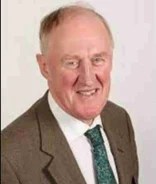 This article told the story of Dr. Martin Feeley, a man who had already lived an extraordinary life before becoming a reluctant public dissenter during one of the most charged periods in Irish history.
A vascular surgeon by training, Martin Feeley was also an Olympian, representing Ireland in rowing at the 1976 Summer Games. Born in Lecarrow, County Roscommon in 1950, he qualified from UCD in medicine and later became a Fellow of the Royal College of Surgeons in Ireland. In 1985, he earned a Master’s in surgery, and by 2015, he had been appointed Group Clinical Director of the Dublin Midlands Hospital Group, one of the most senior medical administrative roles in Ireland’s Health Service Executive (HSE.)
By any measure, Dr. Martin Feeley was an exceptional person, not just accomplished, but genuinely liked and respected by his colleagues, patients, friends and everyone who knew him through the Irish rowing community. He was known and loved not just for his clinical expertise, but also for his warmth, integrity, intelligence and humour. Those who worked alongside him described a kind, principled man, generous with his time, supportive of younger colleagues, and unwilling to play politics with the truth.
A sample few of the many heartfelt tributes left in the Condolence Book on RIP.ie following Dr. Feeley’s death in December 2023, read:
“I had the privilege to work with Mr Feeley in AMNCH and that made all the difference to me. He exemplified integrity, empathy and good sense. Authentic, kind and encouraging, a Colossus amongst men and medics. And always brilliantly funny.”
“A decent man, a great teacher, much respected.”
A patient shares:
“Thank you Mr. Feeley for saving my life in 2013. Fly high with the Lord. RIP.”
What stands out in the many tributes is how deeply admired he was, not just for his medical expertise, but for his warmth, kindness and humour and the deep impression he left on those who worked with him. Again and again, the tributes spoke of his decency and integrity.
And yet, when it really mattered, during a period in Irish life when decency and integrity were needed most, it was precisely those qualities that cost Dr. Feeley his job.
During the Covid-19 pandemic, Dr. Feeley raised a profoundly important question, one that has aged far better than the policies it challenged: Was the State’s response proportionate to the actual risk faced by the population, particularly children and young adults?
Dr. Feeley did not deny the virus or downplay the risks. He simply raised a measured, evidence-based concern, which was that the restrictions being imposed were doing real and lasting harm. Drawing on clinical experience and moral clarity, he warned of the damage being done, especially to children and young people, through shuttered schools and colleges, cancelled sports, and the loss of everyday human connection. He believed that those at low risk could, in time, build natural immunity, helping to reduce the danger to the most vulnerable.
His critique wasn’t vague or emotional. It was specific, well-informed, and in hindsight, remarkably prescient. Among the key points he raised:
- Restrictions should have focused on those most at risk, not applied as blanket rules to everyone. Healthy younger people, he argued, could have built immunity more safely, helping society reopen sooner and more fairly.
- He condemned the government’s communication strategy, especially the daily case counts, calling them a form of “deliberate, unforgivable terrorising of the population.”
- His concerns were later echoed by others, including former HSE infection control chief Professor Martin Cormican who suggested that Dr. Feeley wasn’t alone in his thinking, just in his willingness to say it out loud.
- He examined ICU projections and found they didn’t match the alarmist tone of official briefings. On the ground, he was seeing only a handful of Covid patients in intensive care, far fewer than the public had been led to expect.
- He urged staff to keep perspective, pointing out that statistically, a healthy person under 65 was more likely to be injured cycling than to die of Covid.
- He objected to the new definition of a “case”, expanded to include any positive test result, even in people with no symptoms, a shift that he believed inflated fear and distorted the public understanding of risk.
And Dr. Feeley never backed down. If anything, he felt that the passing of time only confirmed the accuracy and necessity of what he said.
From the very early days of the pandemic, Dr. Feeley spoke with a compassion and honesty that few public health figures dared to match. In an article written in October 2020 for The Irish Times, written as Ireland entered a second lockdown, he captured the human cost in a single, unforgettable sentence:
“Life is not a video game which we can freeze-frame and restart when a vaccine arrives. All living is being suspended, but unfortunately all lifetime is passing, even for those with six months or a year to live, with or without Covid-19.”
This line “Life is not a video game which we can freeze-frame and restart when a vaccine arrives” gets to the heart of the problem with lockdown thinking. Real life cannot be paused. Time moves forward inevitably, especially for those who are elderly, ill, or nearing the end of life.
And it’s not only the old people who lost something. For young people too, there are moments in life, rites of passage, milestones, celebrations, that happen once and cannot be relived or recreated. Birthdays, graduations, first jobs, leaving school, falling in love, saying goodbye. These are not things you can reschedule. That time was taken from our young people, and it can never be given back.
Dr. Feeley’s point was that by trying to preserve life at all costs, we ended up suspending the very things that made life worth living, human connection, care, life experiences and milestones. When he said “all life time is passing even for those with six months or a year to live”, it was a stark reminder that waiting for a vaccine wasn’t just a pause for some, it was a loss they would never get back. It challenged the technocratic idea that society could be put on hold without consequence, and called for a more humane, proportionate approach, one that saw people not as data points but as human beings living in real time.
And yet, for speaking so clearly and ethically, he was punished.
In September 2020, Dr. Feeley was forced to resign from his role as Clinical Director of the Dublin Midlands Hospital Group under pressure from the HSE following a series of media interviews. In that April 2023 article from The Irish Times, Dr. Feeley is quoted as saying that “within days” of airing his objections to the restrictions he was removed from his position. He specifically stated:
“I was forced to resign as opposed to just walking away.”
He attributed responsibility for his exit to the former HSE Chief Executive Paul Reid, although Reid denied involvement.
He was further quoted in that article of having said about his decision to speak publicly against the lockdowns from inside the HSE:
“The only stupid thing I did,” he said, “was to say what I thought. I should have kept my mouth shut.”
Those words should shame us. Because they don’t just reflect one man’s bitter experience, they reflect a sick and dishonest culture. A culture that punished integrity and rewarded compliance and where the cost of speaking truth was professional exile. In Dr. Feeley’s case, the silence of Irish medicine was not only deafening, it was shamefully complicit.
Following Dr. Feeley’s death in 2023, tributes poured in across social media. Colleagues, former patients, independent politicians, and members of the public remembered him not just as a brilliant surgeon, but as a man of deep principle and uncommon courage. Independent TD Michael McNamara called him “a doctor unafraid to question the consensus.” Another tribute read: “If only we had more men like him in this country. We lost a good one. RIP Dr Feeley.” One especially searing comment captured the public mood: “This poor man was shunned… by the HSE… for challenging the ‘science’ that caused untold damage… RIP.”
These aren’t just empty or generic eulogies, they’re heartfelt tributes from people who understood and valued what he stood for.
At this stage in the game, five years on from that bleak chapter, I shouldn’t be surprised by the Irish establishment’s failure to learn anything meaningful from all of this, and yet somehow I still am. Despite everything we’ve seen and lived through, I remain both astonished and disheartened by how little reflection or change seems to have taken place.
Not only has the Irish state failed to reckon with the silencing of Dr Martin Feeley and others like him, it now appears poised to reward the chief architect of the very policies they dared to question. Dr Tony Holohan, who served as chair of the National Public Health Emergency Team (NPHET) during the pandemic and was widely seen as the public face of Ireland’s Covid response, is now reportedly being considered for the highest office in the land, the Irish Presidency.
Often described as Ireland’s answer to Dr Anthony Fauci, Dr. Holohan became synonymous with the government’s lockdown policies. Under Dr. Holohan’s watch, Ireland implemented one of the strictest lockdown regimes in the EU, including the longest closure of public venues across Europe. On a global level, Ireland had the fourth most stringent lockdown in the world, behind only Cuba, Eritrea and Honduras.
Whether or not this presidential bid ultimately materialises, the very suggestion that Dr. Holohan could be a contender for the most prestigious office in the state, is a striking example of the Irish establishment doubling down on steroids. Rather than reassess, Ireland appears intent on enshrining its mistakes.
To elevate Dr. Holohan now is to consecrate a version of history in which men like Dr. Feeley were cast as dangerous and disposable, and those who imposed sweeping harms on the Irish population are hailed as statesmen. It sends a chilling message that in Ireland, telling the truth as you see it, even from a place of expertise, ethics, and professional integrity is punishable. That the architect of Ireland’s extreme lockdowns, a man who dictated when we could hug our loved ones, is now being considered for the Irish presidency is not only shocking but morally obscene.
In fact, were he still with us today, Dr Martin Feely is exactly the sort of person the Irish people should have elected as their President, being someone who truly stood for the people of Ireland. He did his utmost, against all odds, to advocate for their rights and to stand firm against the harms he knew were being inflicted upon them.
Dr. Feeley’s voice may be silent now, but what he stood for must continue to be heard. He spoke with reason, compassion and integrity in a time of hysteria and institutional cowardice. He recognised the true human cost, not just in lives lost, but in lives unravelling, in relationships strained or severed, in connections broken, and in communities turning on themselves.
Dr Feely understood that this harm was not abstract but deeply personal and that it fell heaviest on those least equipped to bear it, those children and young people whose milestones were stolen, the elderly who were isolated and forgotten, and the already marginalised who were pushed further to the edges of society.
To honour him now is to face what we did, not in blame, but in truth. We must reject the whitewashing of history that elevates bureaucrats and silences decent and honest people. We have to ensure that in any future crisis, conscience will not be a sackable offence.
We lost Dr. Feely too soon, and with him, a voice the Irish people sorely needed. I would have loved the chance to meet him, shake his hand, and thank him for speaking up for all of us, for humanity, and for decency. I wish I could have told him that in person. Still, I write it now in the hope that someone, somewhere might read about this remarkable man and find courage and inspiration in his example.
Martin, may you rest in peace. You were one of the good ones. You stood for what was right when it mattered most. We remember you with gratitude, respect and love.
HHS Cancels mRNA Vaccine Development – ‘poses more risk than benefit’ says RFK Jr
By Jefferey Jaxen | August 5, 2025
A stunning announcement from HHS Secretary RFK Jr. has set the media ablaze.
“After reviewing the science and consulting top experts at NIH and FDA, HHS has determined that mRNA technology poses more risk than benefits than these respiratory viruses.”
The official HHS press release states:
“BARDA is terminating 22 mRNA vaccine development investments because the data show these vaccines fail to protect effectively against upper respiratory infections like COVID and flu. We’re shifting that funding toward safer, broader vaccine platforms that remain effective even as viruses mutate.”
The announcement wipes out nearly $500 million worth of Covid mRNA vaccine development projects, “we’re moving beyond the limitations of mRNA and investing in better solutions” stated Kennedy in the HHS press release.
Kennedy’s announcement comes after months of outside pressure to wind down the Covid mRNA vaccine platform in the U.S.
In May 2025, RFK Jr. removed COVID-19 vaccines from the list of routine immunizations for healthy pregnant women and children.
HHS and America now have pressing work at hand to undue the damage of the rushed and forced mRNA vaccine platform.
World-leading cancer researcher Dr. Patrick Soon-Shiong recently stated in an interview: “This non-infectious pandemic of cancer is sadly upon us” referring to how both the virus and the vaccine can awaken sleeping cancer cells in the body. A topic mainstream science is just now, after years of alternative researchers and journalists banging the drum, beginning to admit and study. The new study in the journal Nature chronicles how it is actually the immune system’s response to the lab created gain-of-function bioweapon (and the mRNA shot as we have pointed out) that down-regulates and allows for accelerated cancer progression.
Kennedy has signaled over the last month that he is now taking aim at the broken vaccine injury compensation in the United States.
America, and other countries that align with our mission, must now develop a Manhattan Project-level effort to reverse the many harms brought about by the lab-constructed virus and the shot we were falsely told would save us from it.
EPA Finally Proposes To Rescind The Endangerment Finding
By Francis Menton | Manhattan Contrarian | July 29, 2025
It’s been a long time coming. But today the EPA, through its Administrator Lee Zeldin, finally began the formal process of rescinding the so-called “Endangerment Finding” (EF). The EF is the 2009 regulatory action by which the Obama-era EPA purported to determine that CO2 and other greenhouse gases constitute a “danger to human health and welfare.” That Finding then formed the basis for all subsequent federal greenhouse gas regulations, including efforts of Obama and Biden regulators to force the closure of all power plants running on coal and natural gas, and to mandate increased vehicle mileage to levels that no internal combustion engine could meet.
EPA initiated the rescission process today by means of an announcement in a speech by Zeldin, who appeared at an event in Indianapolis, and also through this document, titled “Reconsideration of 2009 Endangerment Finding and Greenhouse Gas Vehicle Standards.” The document looks to be about a couple of hundred pages long, although it’s hard to know exactly, because the pages aren’t numbered.
Long time readers here will know that I have been an active participant in efforts, beginning when President Trump first took office in 2017, to get the EF rescinded. Immediately after Trump’s inauguration in January 2017, co-counsel Harry MacDougald and I filed a Petition to EPA, on behalf of the Concerned Household Electricity Consumers Council (CHECC), seeking the rescission. Here is a post I wrote in April 2017, describing the initiation of the petition process, and also linking to our Petition. But during Trump’s first term, despite the critical importance of the EF in supporting all of the burdensome “climate” regulations, EPA never undertook the rescission process. We continued to press the point, filing some seven supplements to our Petition during the four years of Trump’s first term. For example, here is a post from July 2017 announcing the first of the Supplements to our Petition, based on new research at the time.
Ultimately our Petition was denied in 2022 by the Biden EPA. We then appealed that denial to the DC Circuit, where our appeal was denied in 2023, and to the U.S. Supreme Court, where certiorari was denied in 2024.
Well, the proposal in today’s document will reverse the denial of our Petition. I can’t give you a page cite, but this quote is from the page of the EPA document that contains footnote 15:
If finalized, this action would also rescind denial[] of petitions for reconsideration of the Endangerment Finding in 2022 . . . entitled “Endangerment and Cause or Contribute Findings for Greenhouse Gases Under Section 202(a) of the Clean Air Act; Final Action on Petitions,” 87 FR 25412 (Apr. 29, 2022). . . .
Vindication!
As to the grounds for the prospective rescission, EPA appears ready to take on both the legal and scientific bases of the EF. As to the legal analysis, the following quote comes from the page preceding footnote 42:
Section IV.A of this preamble describes our primary proposal to rescind the Endangerment Finding by concluding that CAA section 202(a) does not authorize the EPA to prescribe standards for GHG emissions based on global climate change concerns or to issue standalone findings that do not apply the statutory standard for regulation as a cohesive whole. If finalized, this proposal would require rescinding the Endangerment Finding and resulting regulations because we lacked statutory authority to issue them in the first instance. . . . Next, we propose that the Nation’s response to global climate change concerns generally, and specifically whether that response should include regulating GHG emissions from new motor vehicles and engines, is an economically and politically significant issue that triggers the major questions doctrine under UARG and West Virginia, and that Congress did not clearly authorize the EPA to decide it by empowering the Administrator to “prescribe … standards” under CAA section 202(a). Throughout this section, we propose that the Endangerment Finding relied on various forms of Chevron deference to depart from the best reading of the statute and exceeded the EPA’s authority in several fundamental respects, any one of which would independently require rescission to conform to the best reading of the law.
On the subject of “climate science,” the following quote comes from the document’s pre-amble:
[T]he Administrator has serious concerns that many of the scientific underpinnings of the Endangerment Finding are materially weaker than previously believed and contradicted by empirical data, peer-reviewed studies, and scientific developments since 2009.
Then, on the page with footnote 87 there begins a lengthy section titled “Climate Science Discussion.” The gist of this entire section is that the alarmists have not proved their claims. There are lengthy paragraphs reviewing data on all the major “extreme weather” claims, and citing work showing no increasing or accelerating trends in things like hurricanes, tornadoes, wildfires, sea level and the like. Here is a paragraph that reiterates a theme of our Petition, namely that the amount of human caused global warming cannot be separated from what may be caused by natural factors:
The Administrator is also troubled by the Endangerment Finding’s seemingly inconsistent treatment of the nature and extent of the role human action with respect to climate change. The Endangerment Finding attributes the entirety of adverse impacts from climate change to increased GHG concentrations, and it attributes virtually the entirety of increased GHG concentrations to anthropogenic emissions from all sources. But the causal role of anthropogenic emissions is not the exclusive source of these phenomena, and any projections and conclusions bearing on the issue should be appropriately discounted to reflect additional factors. Moreover, recent data and analyses suggest that attributing adverse impacts from climate change to anthropogenic emissions in a reliable manner is more difficult than previously believed and demand additional analysis of the role of natural factors and other anthropogenic factors such as urbanization and localized population growth (2025 CWG Draft Report at 14-22, 82-92).
The process here will likely take until around the end of this year for EPA to formally enact the rescission. And then the legal battles begin — first to the DC Circuit, and then to the Supreme Court. The big question: Can the administration get this process to the Supreme Court in time to avoid a reversal of this whole regulatory effort by a Democratic administration that could be elected in 2028? I would think that if the Supremes have upheld this effort of Trump’s EPA before January 2029, it will be very difficult for a subsequent administration to reverse. On the other hand, if the status as of January 2029 is that the DC Circuit has struck down EPA’s rescission and the matter is pending in the Supreme Court, it would be much easier to attempt a reversal. But the ongoing failure of “net zero” energy transition plans in places like New York, California, Germany and the UK may make reversal a dead letter anyway.
I want to offer my thanks and gratitude to the small band of independent thinkers who have fought this lonely battle all these years, in the face of the billions of dollars at the hands of the climate industrial juggernaut. For particular mention: the members of CHECC (including its moving force, James Wallace); my co-counsel Harry MacDougald; the few think tanks that have taken on this issue, including the Competitive Enterprise Institute (who filed a Petition for rescission of the EF along with ours) and the Heartland Institute; the CO2 Coalition, including its Chair Will Happer and Executive Director Greg Wrightstone; CFACT; the Global Warming Policy Foundation (I serve on its Board); and Anthony Watts and Charles Rotter at Watts Up With That. I’m sure that there are a few that I have forgotten. Congratulations to all!
American Academy of Pediatrics Goes To War Against Religious Exemptions, Parental Rights
By Jefferey Jaxen | July 29, 2025
The ability to practice ones sincere religious beliefs is woven into the very fabric of America and its founding ethos yet the American Academy of Pediatrics (AAP), a membership organization focusing on pediatricians, just declared war on this bedrock right.
Besides being morally objectionable, the concept is just plain unpopular in modern America. By 2023 only six U.S. states officially denied parents religious exemptions to vaccination for their children via laws that were enacted in the face of massive opposition from the public.
Since then, two of the states (Mississippi and West Virginia) have seen their religious denial laws overturned by court wins from the Informed Consent Action Network’s legal team in which judges deemed such laws to violate the First Amendment.
Meanwhile, public pushback saw Hawaii as the latest state to defeat a bill that would have removed its religious exemption option.
AAP’s new policy paper has stepped in with an attempt to stop the momentum of religious freedom in the medical and public health spaces – an idea whose time has come.
“The AAP recommends that all states, territories, and the District of Columbia eliminate all nonmedical exemptions from immunizations as a condition of school attendance.
With a flowery mission to ‘attain optimal physical, mental, and social health and well-being for all infants, children, adolescents and young adults,’ AAP fashions itself more as a continuous pipeline for industry products through overreaching, anti-science edicts.
The AAP recently floated a lawsuit against HHS Secretary Kennedy for his recommendation to remove pregnant women and healthy children from the Covid vaccine schedule.
Lets take a look at some of AAP’s greatest hits over the last 5 years.
In 2019, Washington D.C.’s B23-0171 (later named D.C. Law 23-193) sought to add a new section into the existing regulations that would allow a minor child to consent to receive a vaccine. The bill, and its hearing, signaled a new high-water mark towards the removal of parents from some of their children’s most important medical decisions – and AAP was there.
During the public hearing before it was signed into law, pediatrician Dr. Helene Felman, representing Washington D.C.’s chapter of the American Academy of Pediatrics (AAP), stated:
“As a pediatrician, I like the legislation as it stands because it offers the opportunity to capture those young adults who can make informed decisions at technically any age.”
Any age…
An ICAN legal victory halting D.C.’s overreach saw a D.C. district judge issue a preliminary injunction against the act in favor of parents who brought suit. The parents filed complaints and were able to demonstrate that the act likely violates federal law.
Next up AAP was on the wrong side of the push, against clear scientific evidence, to medically transition children. As Norway, Sweden, Denmark, U.K. and other countries officially backed off the practice. A 2025 review by HHS of the evidence and best practices found significant risks associated with gender dysphoria treatments.
One of the authors of the paper stated simply:
“… No reliable research indicates that these treatments are beneficial to minors’ mental health.”
In 2023, AAP reaffirmed its stance in a policy paper arguing for youth to have open access to gender-affirming health care fully funded by health insurance.
And finally, the AAP worked to influence public policy by advocating for new injectable weight loss drugs for children.
“Children struggling with obesity should be evaluated and treated early and aggressively, including with medications for kids as young as 12 and surgery for those as young as 13, according to new guidelines released Monday.”
The newly discovered harms of such drugs are unfolding on a weekly basis but that didn’t seem to matter to the AAP.
As an industry mouthpiece who see children as a profit margin and pipeline demographic for drugs and shots, AAP is unmatched in its corporate ‘advocacy.’
The organization appears to have chosen another losing battle siding against religious freedom in the United States of America and with it a further loss of relevancy for the organization.
‘Tough Thing to Defend’: FDA Holds Heated Debate on ‘Untested, Unapproved’ Fluoride Supplements for Kids
By Brenda Baletti, Ph.D. | The Defender | July 24, 2025
The decision whether or not to prescribe unapproved fluoride supplements to children needs to be based on data — “It can’t be done with opinion,” Dr. George Tidmarsh said Wednesday during a public meeting held by the U.S. Food and Drug Administration (FDA) to solicit public input on safety concerns associated with the supplements.
Tidmarsh was tapped this week to lead the FDA Center for Drug Evaluation and Research, which regulates over-the-counter and prescription drugs.
In May, the FDA moved to ban fluoride supplements after a systematic review of recent science by top government scientists, published in January in JAMA Pediatrics, reported that early fluoride exposure was linked to a decrease in children’s IQ scores.
During Wednesday’s meeting, Tidmarsh said:
“That’s a huge issue. Everybody should be concerned about that. What this is saying is that the fluoride in water was causing a cognitive decrease in the younger children. And the randomized studies say that there is no benefit. So that’s a tough thing to defend.”
“Our job here is to use evidence,” he added, citing the recently updated Cochrane Review on fluoride, which found that water fluoridation offered little to no protection against cavities in children.
Although the FDA never approved fluoride supplements, which come in tablets and lozenges, doctors have for decades routinely prescribed them to children — including babies as young as 6 months old — to prevent cavities.
Research has shown for more than two decades that any benefit to teeth from fluoride comes from topical applications — like toothpaste — not from ingesting the drug.
The supplements are known to cause dental fluorosis, a tooth discoloration that is a marker of fluoride overexposure. Overwhelming evidence now shows that ingesting fluoride is linked to lower IQ in children, neurobehavioral issues and thyroid problems.
Fluoride advocates say safety studies exist, but don’t cite them
Wednesday’s day-long meeting, facilitated by the Reagan-Udall Foundation for the FDA, turned contentious at times, as researchers presented evidence of fluoride’s risks to children’s health and debated whether to pull the supplements from the market.
Eighteen speakers argued for and against the supplements, including top researchers on fluoride’s toxic effects. Speakers included Kyla Taylor, Ph.D., an epidemiologist at the National Institutes of Health and an author on the National Toxicology Program’s recent report and JAMA study showing that fluoride exposure for pregnant mothers and infants is linked to lowered IQ among children.
Christine Till, Ph.D., a professor from York University in Toronto and author of a highly cited 2019 study that reported similar findings, shared research on fluoride’s damaging effects on the thyroid.
Commenters also included pro-fluoride lobbyists and advocates, such as Dr. David Krol, with the American Academy of Pediatrics, and Dr. Scott Tomar, with the American Dental Association (ADA).
In his opening remarks, Tidmarsh warned about the need for data in response to presentations by supplement advocates, including Dr. James Bekker, a pediatric dentist and a member of the Utah Dental Association.
Bekker said, “We’ve got to have a balance. We’ve got to have a situation where the right amount of fluoride is present during development. As we look at ways in today’s world of achieving that balance, supplements play a very important role.”
“When we don’t have fluoride, there are certain things that happen that are very disturbing,” Bekker added. “We have an increase in tooth decay, and we have an increase in the use of emergency services to receive care for dental emergencies.”
However, Tidmarsh called out Bekker, comparing the lack of evidence in his presentation with the presentation by Dr. Bill Osmunson, a dentist associated with the Fluoride Action Network (FAN), who pointed out that no randomized controlled studies had ever been conducted on the supplements.
Bekker countered that he didn’t want to overwhelm people with information. “That data is very available. It’s important to understand that,” he said, citing no specific studies.
‘Just take them off the market’
The move to ban the supplements comes on the heels of a federal court decision last September that water fluoridation at current U.S. levels poses an “unreasonable risk” of reduced IQ in children and that the U.S. Environmental Protection Agency (EPA) must take regulatory action to address that risk.
Since then, more than 60 communities and two states — Utah and Florida — have voted to stop adding fluoride to their water. The EPA is appealing the decision.
Water fluoridation has been practiced in the U.S. for decades, long advocated by lobbying organizations like the ADA. The Centers for Disease Control and Prevention (CDC) continues to celebrate it as one of the 10 greatest public health achievements of the 20th century.
As water fluoridation comes under threat, fluoridation advocates have taken up the cause of defending the untested, unapproved supplements.
“Honestly, it’s ridiculous that we are even having this discussion — the supplements have never been tested, they have never been approved, and we know that early fluoride exposure can harm children,” Dr. Griffin Cole, conference chairman of the International Academy of Oral Medicine and Toxicology, told The Defender after the meeting. “Just take them off the market.”
Cole, who presented data on fluoride’s neurotoxicity, said these debates had become tiresome because fluoride advocates repeat the mantra that it is “safe and effective,” and are unresponsive to evidence of fluoride’s harm.
“I can understand why most people who aren’t informed in fluoride science would simply succumb to business as usual,” he said.
Advocates call supplements ‘safe and effective’ despite no safety testing
Dr. Charlotte Lewis, a pediatrician and one of the panelists who defended supplements, was slated to comment on the content of the presentations about fluoride’s risks. Instead, she argued that systemic absorption of fluoride is paramount.
“I want to make sure you understand that when we drink fluoridated water, we are allowing ourselves both a topical and a systemic source of fluoride. And both of these are important.” She said systemic ingestion is particularly important for young children.
Lewis said researchers arguing there is little to no benefit to swallowing fluoride are “biased.”
“What we’ve seen today is people cherry-picking studies and making conclusions without presenting us with the complete data that we need,” she added.
Those observations followed Taylor’s presentation, in which she explained that the National Toxicology Program and the JAMA publication presented an analysis of every available study, and they made all of their data publicly available.
Cole responded to Lewis, quoting her own Pediatrics in Review paper, in which she concluded the disadvantages of supplements were “substantial,” the benefits of fluoride were primarily topical and not systemic, that fluoride supplements cause more dental fluorosis and that their routine use is inconsistent with the way fluoride works — which is topically.
Michael Connett, lead attorney for plaintiffs in the lawsuit against the EPA, also read from Lewis’ paper during the meeting:
“The preponderance of strong research evidence supports the relative advantages of fluoride toothpaste over fluoride supplements, and this led Canada, England, Australia, New Zealand, and the European Union to recommend against regular use of fluoride supplements in favor of promoting fluoride toothpaste use in young children. The United States should do the same.
“FDA should ban these unapproved drugs from the market.”
Faced with her own research conclusion, Lewis conceded, “I personally think there’s a lot of disadvantages to supplements,” and said she would like to see the U.S. move to a model that promotes fluoride toothpaste.
Several public commenters raised concerns about the health impacts of fluoride. Then representatives from the ADA, American Academy of Pediatrics, other professional medical organizations, several dentists and dental hygienists submitted comments to the FDA advocating for the supplements to remain available.
They stated that the tablets have been proven “safe and effective.” None commented on the fact that they have never been studied.
Fluoride supplements carry ‘more risk than benefit,’ study says
The FDA facilitator referred to fluoride supplements by their official classification, “orally ingestible unapproved prescription drug products containing fluoride,” underscoring the fact that the drugs have never been subjected to an FDA approval process to determine if the benefits outweigh the risks.
The supplements were launched in the 1940s and later effectively grandfathered into the regulatory process. They never underwent the testing for safety and effectiveness typically required by FDA-regulated drugs, and the agency never granted them formal approval.
Before 1938, sodium fluoride had never been used in dentistry. Instead, it was commonly used as a roach and rodent poison. In 2016, FAN filed a citizens’ petition demanding the removal “of unapproved, unsafe, unnecessary, and ineffective sodium fluoride-containing” supplements from the market.
The petition cited a letter the FDA sent to Kirkman Labs, a fluoride supplement manufacturer, informing the company that it couldn’t sell its products because they were new, unapproved drugs not generally recognized as “safe and effective” to prevent dental decay.
The agency concluded that fluoride tablets didn’t meet the “generally recognized as safe” classification.
During public comments on Wednesday, Jay Sanders, FAN education & outreach director, cited a review in the Journal of Public Health Dentistry that found fluoride supplements “when ingested for a preeruptive effect by infants and young children in the United States, carry more risk than benefit.”
Sanders also noted that the CDC and the National Resource Council have both concluded that fluoride predominantly works topically, not systemically.
“A non-FDA approved drug with poor efficacy and with the potential to permanently damage the brain and disrupt the endocrine system should not be dispensed to children in the United States,” he said.
Tidmarsh underscored that understanding the risk-benefit analysis was key. “We’re not talking about taking a drug off the market that was already FDA-approved. In that context, we need to make sure there is a rigorous analysis.”
He added that makers of these drugs could always do real safety and efficacy testing on the products and submit them to the FDA for approval. “If we decide to take sodium fluoride supplements off the market, there’s nothing that would prevent a group from doing the rigorous studies and bringing it back to the FDA.”
This article was originally published by The Defender — Children’s Health Defense’s News & Views Website under Creative Commons license CC BY-NC-ND 4.0. Please consider subscribing to The Defender or donating to Children’s Health Defense.
FLAWED STUDY CLAIMS ALUMINUM IN VACCINES IS SAFE
The HighWire | July 24, 2025
As industry voices scramble to defend aluminum in childhood vaccines, a new Danish study is held up as “proof” of safety, until you look closer. Exclusions, flawed comparisons, and the lack of U.S. relevance raise serious questions. Is the science settled, or just carefully curated?
Calls for journal to retract Danish study after corrected data show link between aluminum in vaccines and autism
By Suzanne Burdick, Ph.D. | The Defender | July 24, 2025
The authors of a recent Danish study widely reported on by mainstream media claimed they found no link between the aluminum in vaccines and autism.
However, corrected data added after the study’s original July 15 publication date show the authors got it wrong — in fact, the data in the study of 1.2 million children clearly indicate a link between aluminum in vaccines and autism, according to scientists with Children’s Health Defense (CHD) who reviewed the study and the corrected data.
On July 17, the Annals of Internal Medicine, which published the Danish study, added a disclaimer stating that it “included an incorrect version of the Supplementary Material at the time of initial publication.”
The updated materials are available with the link to the study at “Correction: Aluminum-Adsorbed Vaccines and Chronic Diseases in Childhood.”
CHD Senior Research Scientist Karl Jablonowski broke the news of the buried autism link on Monday’s episode of “Good Morning, CHD.” Today, Jablonowski told The Defender :
“According to the corrected data, nearly 10 (9.7) of every 10,000 children who were vaccinated with a higher dose of aluminum (compared to a moderate dose) developed a neurodevelopmental disorder — mostly autism — between ages 2 and 5.”
On Monday, The Defender reached out to lead author Anders Hviid, a professor and department head of epidemiology at the Statens Serum Institut, for comment on the allegation that the corrected data show a link between increased aluminum exposure and autism. In response, we received an automated email from Hviid stating that he was “out-of-office for the summer,” until Aug. 11.
The study’s corresponding author, Niklas Worm Andersson, M.D, Ph.D., an epidemiology researcher at the Statens Serum Institut, did not respond to a request for comment.
On July 14 — a day before the study was published and three days before the journal issued a correction — Hviid told numerous media outlets that the study showed aluminum in vaccines does not cause autism.
As of press time today, the authors of the study had not revised their findings to concur with the corrected materials that contradict the findings they shared with media outlets.
NBC News, which reported on the uncorrected version of the study on July 14, criticized U.S. Health Secretary Robert F. Kennedy Jr. for saying during a 2024 “Joe Rogan Experience” interview that the aluminum in vaccines is “extremely neurotoxic.”
Last month, Kennedy appointed new members to the Centers for Disease Control and Prevention’s (CDC) vaccine advisory committee. Last month, during the first meeting of the new members, they voted to remove thimerosal, a preservative that contains mercury, from vaccines. On Wednesday, the U.S. Department of Health and Human Services said it formalized the recommendation.
Reuters reported that Kennedy also considered asking the committee to examine vaccines that contain aluminum, but to date, the CDC has not announced any new recommendations related to aluminum.
Danish researchers ‘completely obfuscated what they really found’
According to the authors of the Danish study:
“This nationwide cohort study did not find evidence supporting an increased risk for autoimmune, atopic or allergic, or neurodevelopmental disorders associated with early childhood exposure to aluminum-adsorbed vaccines.”
However, after reviewing the corrected data, Brian Hooker, Ph.D., CHD’s chief scientific officer, told The Defender the authors “completely obfuscated what they really found — a statistically significant relationship between aluminum exposure and autism.”
The buried link appears on Figure 11 (page 19) of the corrected supplemental materials.
The original version showed that children who received a large dose of aluminum were not at greater risk of getting a neurodevelopmental diagnosis, including autism, than kids who received a small or moderate dose.
Yet the corrected version showed that kids who received a large dose had a statistically significantly higher risk of being diagnosed with autism or other “pervasive” developmental disorders compared to those who received a moderate dose of aluminum.
Jablonowski said he and Hooker determined that the results were statistically significant — meaning they couldn’t be attributed to chance — by looking at the confidence intervals for each statistic.
A confidence interval “shows the range of values you expect the true estimate to fall between if you redo the study many times.”
The corrected figure also showed that children who received a large dose of aluminum had a statistically significantly higher risk of Asperger’s syndrome compared to kids who received a small dose of aluminum. However, kids in the large-dose group weren’t at a higher risk of any other neurodevelopmental issues compared to kids who received a small dose.
The low-dose group included roughly only 42,000 children. That could make it difficult to detect a statistical signal, Jablonowski explained.
“It’s not surprising that we see a strong signal among the groups that had more participants but not among the group that had fewer participants,” he said.
The moderate-dose group consisted of about 700,000 children, while there were about 460,000 children in the large-dose group.
How did authors make autism link disappear from original figure?
The original version of the study reported 2,961 fewer diagnoses of neurodevelopmental outcomes than the corrected version.
It appears the study authors “deleted the sicker kids,” Jablonowski said. “Or at least, just their diagnoses.”
The study also included allergy and autoimmune diagnoses, but none of those statistics were missing. Only the number of neurodevelopmental diagnoses differed between the original results and the corrected ones.
That suggests the authors didn’t make a random mistake, but intentionally fudged the number, Jablonowski said.
In hope of shedding light on what happened to the missing data, Jablonowski emailed the journal’s editors on July 18, asking them to publicize the comments between themselves and the anonymous scientists who peer-reviewed the study.
The inconsistencies in the study are specifically in “the figures in the main manuscript and the figures in the supplemental material,” Jablonowski wrote to the journal. “I believe the nature of those inconsistencies may be understood by examining the reviewer comments and subsequent exchanges.”
The journal editors have not responded.
‘Glaring signs’ Danish authors ‘didn’t practice good science’
The authors have not released the study’s raw data, citing Danish privacy law.
This frustrates independent scientists like Jablonowski, who said having access only to the data that the authors statistically adjusted makes it difficult to accurately critique the study, and impossible to replicate it.
Andersson did not respond when The Defender asked if the authors could share a de-identified version of the data that wouldn’t violate privacy law.
Jablonowski said:
“So if the raw data can’t be shared and Andersson is not going to reveal their unadjusted data, the appraisal of this paper is solely based on trust that the authors are practicing good science in good faith and they do not need to be scrutinized.”
But there are “glaring signs that the authors didn’t practice good science,” he said.
There were other inconsistencies between the original and corrected supplemental material. For instance, the corrected version shows different results in multiple places when tracking the prevalence of Asperger’s syndrome among kids.
The authors may have been more inclined to produce results that favored vaccination, given that they work at the Statens Serum Institut, a government agency responsible for procuring and supplying vaccines for the national vaccination.
Hviid reported funding from the Novo Nordisk Foundation, which is directly linked to the pharmaceutical giant Novo Nordisk.
“The researchers are integrally involved in pushing vaccines and sweeping vaccine safety under the rug.”
Original study also riddled with flaws, critics say
Even before the corrected materials were added to the study, Hooker and Jablonowski noted a host of flaws.
For instance, the authors failed to mention there were increased risks of certain diseases for kids vaccinated with aluminum-containing vaccines, compared with kids who received no aluminum-containing vaccines.
Before Hviid went on summer break, he told The Defender in an email that his team didn’t include a control group of unvaccinated children who had no aluminum exposure because differences between unvaccinated and vaccinated children likely would have biased the results.
Instead, the team opted to compare groups of vaccinated children who were exposed to different amounts of aluminum, Hviid said.
Yet the study reported results for 15,237 children who were either unvaccinated or vaccinated only with a shot that contains no aluminum, such as the measles-mumps-rubella (MMR) vaccine. The MMR vaccine used in Denmark has no aluminum, according to the authors.
That creates a cohort of children unvaccinated with an aluminum-containing shot, Jablonowski said.
Hooker and Jablonowski compared the outcomes of children who didn’t receive an aluminum-containing vaccine with the outcomes of children who received aluminum-containing vaccines.
“Kids who received an aluminum-containing vaccine were 26% more likely to have atopic dermatitis” than kids who were unvaccinated or only got the MMR shot, Jablonowski said. Those kids were “50% more likely to have allergic rhinoconjunctivitis — and these are really strong, statistically significant signals.”
Jablonowski said the study authors might criticize the analysis he and Hooker conducted for failing to consider possible confounding factors.
“I’d be happy to redo the analysis and account for possible confounding factors, but I’d need the authors to release sufficiently detailed data,” Jablonowski said.
Calls grow for journal to retract study
The findings in the corrected study still maintain the authors’ claim that aluminum-containing vaccinations are not associated with all 50 of the negative health outcomes they analyzed. In fact, their analysis claims protection against 12 categories of disease, including autism.
“These findings are not just counterintuitive — they are biologically absurd,” James Lyons-Weiler, Ph.D., wrote on Substack. “No plausible mechanism exists by which aluminum salts could prevent neurodevelopmental delay.”
Lyons-Weiler is the founder of IPAK-EDU, an adult online institution of higher learning run by the Institute for Pure and Applied Knowledge.
Lyons-Weiler and other critics are calling for the study’s retraction. He told The Defender the study’s “fatal methodological flaws … violate the principles of valid causal inference.”
Guillemette Crépeaux, Ph.D., associate professor at École Nationale Vétérinaire d’Alfort, told The Defender that the Annals of Internal Medicine should never have accepted the study — especially with its incorrect supplementary data. “Retraction should be the bare minimum,” she said.
Guillemette said she and her colleagues are writing a rebuttal to the study. They plan to submit it for publication later this summer.
Chris Exley, Ph.D., one of the world’s leading experts on the health effects of aluminum exposure, told The Defender, “There is no question in my mind that the authors of this study used the data available to them to come to an afore determined conclusion.”
In 2020, Crépeaux and Exley co-authored an article in the Journal of Trace Elements in Medicine and Biology that called for “independent, rigorous and honest science” on aluminum in vaccines.
Exley said the authors of the Danish study should make the data they used available for independent scrutiny. He said:
“I understand that they have already refused such requests and the compliant journal publishing the study is not prepared to press them on this issue. Surprise, surprise.
“Hviid and his band of conspirators are only interested in pedaling nonsense and nonscience to what they and others … believe is a gullible public. I think we have news for them. The times are changing, at long last.”
Related articles in The Defender
- Study Claiming No Link Between Aluminum in Vaccines and Autism Riddled with Flaws, Critics Say
- 4 Things the New York Times Got Wrong About Aluminum in Vaccines
- 5 Scientific Findings Explain Link Between Vaccines and Autism — Why Do Health Agencies Ignore Them?
- 36% Higher Risk of Asthma in Some Kids Who Had Vaccine-Related Aluminum Exposure, CDC Study Shows
- Study Showing 13% of Kids Have 2 or More Allergy-Related Conditions Overlooks Role of Aluminum and Vaccines
This article was originally published by The Defender — Children’s Health Defense’s News & Views Website under Creative Commons license CC BY-NC-ND 4.0. Please consider subscribing to The Defender or donating to Children’s Health Defense.
Climate Change Is Reducing, Not Increasing Food Costs, Mainstream Media
By Linnea Lueken | ClimateRealism | July 23, 2025
A flurry of mainstream media reports, from Bloomberg, The Guardian, Financial Times, and CNN, among other outlets, claim that climate change is causing rising food prices “worldwide,” based on a single new study. This is false. Bad weather has always impacted crop production, and there is no actual evidence that extreme weather is increasing. Globalization of media coverage is simply making it easier to hear about bad weather elsewhere in the world, meanwhile crop production and yields globally continue to set records – a fact the same media outlets largely ignore.
Focusing on the coverage by Bloomberg, in an article titled “How Climate Change Is Raising Your Grocery Bill,” Bloomberg writers report on a study from the Barcelona Supercomputing Center (BSC) and the European Central Bank, which claims price jumps in certain food products are due to “extreme weather they say is linked to climate change.”
Bloomberg claims that consumers around the world “say they are feeling the effects of climate change on their grocery bills, making food unaffordable for some and posing a challenge for central bankers trying to tame inflation.” If true at all, this is almost certainly the effect of media coverage like Bloomberg’s insisting that climate change is responsible, instead of observational evidence of crop production.
It is worth noting that the study uses the term “unprecedented” eight times in the mere four pages of content. To justify their use of the term unprecedented to describe global weather events in the last few years they reference ERA5 surface temperature data going back to 1940, and the standardized precipitation index from CRU going back to 1901. The reason why this is non-scientific and misleading will become clear when we go over the weather events they claim were so “unprecedented.”
Bloomberg discussed a few of the weather events mentioned in the study linking them to increases in the price for specific crops. They first highlighted increases in lettuce and vegetable prices in the United States, driven by droughts in California and Arizona, the former of which Bloomberg claims saw the “driest three-year period ever recorded.” Also mentioned was hurricane Ian. The problem, of course, is that California’s drought was anything but unprecedented. As discussed in the post “Mega-droughts and Mega-floods in the West All Occurred Well Before ‘climate change’ Was Blamed for Every Weather Event,” historical data and proxies show that California has experienced far more widespread and severe periods of drought in the past, some of which lasted as long as two hundred years.
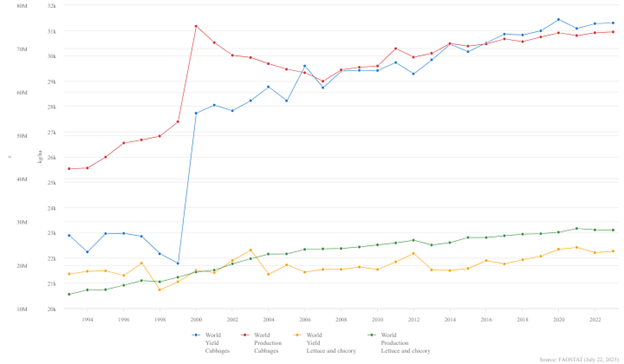
In Asia, Bloomberg says a heatwave impacted South Korean cabbage production. While UN Food and Agriculture Organization (FAO) data indicate that cabbage production has been slowly declining after a massive spike in the 1970s, yields have remained stable or increased since 2000. This suggests that economic considerations or political decisions made about the relative benefits of growing cabbage versus other crops that could be grown, or uses the land could be put too, rather than climate, are responsible for changes in production.
Australia also saw high lettuce costs due to flooding in the eastern part of the country in recent years, but the year Bloomberg and the study highlight, 2022, was not unprecedented as they implied. In fact, 2022 was only the sixth “wettest” year on available Australian rainfall records, the wettest year on record was in 1950.
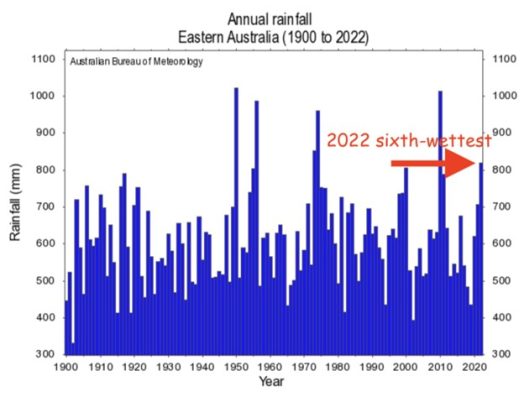
Figure 1: Australian rainfall records, chart from Jennifer Marohasy
Bloomberg goes on to explain how the study allegedly “found that heat, drought and floods were occurring at an increased intensity and frequency,” which is at odds with available data and the UN Intergovernmental Panel on Climate Change’s 6th assessment report, which though it claims an increase in extreme heat has been detected, finds no emergence of increased flooding or drought in the current historical period.
In short, Bloomberg, and the other mainstream media outlets hyping the BSC report, failed to do any fact checking, failed to examine crop trends, and illegitimately linked individual weather events to long-term climate change, despite such events being common in history and there being no discernable trend in an increase in such events amid the slight warming that has occurred in recent years. To be clear, weather is not climate and, despite what unscientific attribution studies claim, no specific weather event can be tied to long-term climate change.
In short, none of the weather events Bloomberg referred to as unprecedented were in fact unique or even rare historically.
Concerning the crops, BSC and the media focuses on the most, lettuce and cabbage, data from the U.N. Food and Agriculture Organization show that between 1993 and 2023 (the most recent 30-year period of climate change for which we have available data):
- Lettuce (and chicory – the FAO combines them) production grew approximately 112 percent;
- Lettuce and chicory yields increased by about 4 percent;
- Cabbage production expanded by nearly 75 percent;
- And cabbage yield grew by more than 37 percent. (see the graph below)
Bloomberg does briefly concede that other factors, like El Niño, a totally natural phenomenon, played a role in weather in 2023 and 2024, impacting certain crops. The outlet also begrudgingly admits that “food price shocks typically turn out to be short-term in nature, because high prices incentivize more production, which brings prices back down,” though they try to say that coffee and cattle are exceptions to this rule. Although Bloomberg reports that coffee futures are high, there is no evidence that climate change is actually damaging global coffee production, as explained in Climate Realism posts here, here, and here.
Bloomberg ends with a warning from the study authors, claiming that “slashing greenhouse gas emissions and containing global warming will be key to reducing food price inflation risks,” but this ignores another key aspect of food costs. They are also impacted by the cost to produce food, like when governments increase the price farmers pay for fossil fuel derived pesticides and fertilizers or try to restrict their use. Fossil fuel derived chemicals increase yields with less labor and using much less land. Take a look at Sri Lanka for a good example of what happens when climate action is prioritized over food production.
Never before has it been so easy for the media to report on various weather disasters and crop failures globally, and this certainly has an impact on peoples’ perceptions as well as the ability for studies to try to draw connections that aren’t really backed by data. This Bloomberg piece is nothing more than climate fearmongering; taking disconnected crop shortages from around the world from localized weather events and trying to blame them on climate change, when the truth is that there have always been crops failing somewhere in the world at any given time.
WEATHER CONTROL: WHAT’S REAL?
The HighWire with Del Bigtree | July 17, 2025
Geoengineering researcher Jim Lee joins guest host Jefferey Jaxen to unpack the real-world science behind weather modification. From cloud seeding to large-scale atmospheric interventions, Lee makes it clear: this is no longer science fiction. He also discusses his recent interview with controversial cloud seeding tech CEO Augustus Doricko, who addresses claims tying his company to the catastrophic Texas floods.
Study Claiming No Link Between Aluminum in Vaccines and Autism Riddled with Flaws, Critics Say
By Suzanne Burdick, Ph.D. | The Defender | July 17, 2025
Mainstream media widely promoted a new study by Danish researchers that found no link between aluminum in vaccines and 50 negative health outcomes, including autism, asthma and autoimmune disorders.
However, critics told The Defender the study used flawed methodology and “statistical tricks” that muddied the findings.
The authors published their report on July 15 in the Annals of Internal Medicine. On July 14, even before the study went live, mainstream and health industry media, including NBC News and STAT News, publicly announced the results.
Chris Exley, Ph.D., one of the world’s leading experts on the health effects of aluminum exposure, and Brian Hooker, Ph.D., chief scientific officer of Children’s Health Defense (CHD), said that in order to determine if aluminum exposure is linked to health conditions, the researchers should have compared children with no aluminum exposure to children with aluminum exposure.
But that’s not what the Danish scientists did. Instead, they compared children who received vaccines containing aluminum to children who received vaccines with slightly less aluminum.
Not only that, but there was only a one-milligram difference between the amount of aluminum in the vaccine doses received by the children in one of the groups compared to those in another group. Comparing children with similar aluminum levels rather than comparing children with low levels of aluminum to children with high levels of the metal further muddled the findings, Hooker said.
The researchers examined national vaccination records of about 1.2 million children born in Denmark between 1997 and 2018 and tracked the rates of 50 chronic health conditions.
Using statistical analyses, the authors concluded there was no link between aluminum content in vaccines and increased risk of developing autism, autoimmune diseases, asthma or allergic conditions, including food allergies and hay fever.
Anders Hviid, a professor and department head of epidemiology at the Statens Serum Institut and lead study author, told MedPage Today, the results “provide robust evidence supporting the safety of childhood vaccines.”
“This is evidence that parents, clinicians, and public health officials need to make the best choices for the health of our children,” Hviid said.
In a press release, Hviid called the results “reassuring” and said large studies like his are important in “an era marked by widespread misinformation about vaccines.”
According to Hviid, the aluminum in vaccines is in the form of aluminum salts, “which is not the same as elemental aluminum which is a metal.” He told NBC News, “It’s really important for parents to understand that we are not injecting metal into children.”
Hviid justified the choice not to include a control group of children with no aluminum exposure by saying there are “very few” children who are “completely unvaccinated.”
The study came out just weeks after Health Secretary Robert F. Kennedy Jr. considered asking the Centers for Disease Control and Prevention’s (CDC) vaccine advisory committee to review vaccines containing aluminum ingredients, according to Reuters.
Aluminum-containing adjuvants are used in many vaccines to create a stronger immune response in the person receiving the shot, according to the CDC. Vaccines containing aluminum adjuvants include DTP (diphtheria, tetanus, pertussis), hepatitis A, hepatitis B, Haemophilus influenzae type b (Hib), HPV and pneumococcal.
Kennedy previously suggested that aluminum may be partially responsible for the rise in allergies among U.S. kids, according to The New York Times.
J.B. Handley, author of “How to End the Autism Epidemic,” said aluminum in vaccines may trigger autism and other neurodevelopmental disorders by activating the immune system in a way that alters the developing brain of a fetus or child.
This happens because the aluminum in vaccines travels easily to the brain. There, it can cause inflammation in vulnerable people by triggering the production of a key cytokine — interleukin 6 or IL-6 — a protein that affects the immune system. Elevated IL-6 has been linked to autism.
Is aluminum industry running scared?
The new Danish study affirms that aluminum is safe — a convenient narrative for the aluminum industry and one that has come under greater scrutiny since Kennedy became head of the U.S. Department of Health and Human Services.
“I spent forty years of academic research on aluminium and I never really believed that I would see the day when the aluminium industry was running scared,” Exley wrote on Substack about the media response to the Danish study. “This is what is happening now.”
Exley said he suspects the aluminum industry influenced the Danish researchers. Hviid pushed back on the claim, telling The Defender he and his co-authors have no financial ties to the aluminum industry.
The study’s authors are employed by the Statens Serum Institut, which has a long history of developing vaccines, Hooker said. “The researchers are integrally involved in pushing vaccines and sweeping vaccine safety under the rug.”
Researchers excluded kids most likely to show early signs of aluminum-related injury
Failing to have a control group with no aluminum exposure was one of several criticisms leveled at the Danish study.
James Lyons-Weiler, Ph.D., wrote a lengthy Substack post detailing numerous methodological problems. He is president and CEO of the Institute for Pure and Applied Knowledge, an advocacy group that supports accuracy and integrity in science.
Lyons-Weiler said the study’s authors adjusted for children having aluminum-related chronic illness before 24 months, which meant they removed the kids most likely to show early signs of aluminum-related injury.
He explained how this was a “statistical trick”:
“Imagine studying the association between smoking and lung disease, adjusting for having nicotine-stained fingers, carrying a lighter, or frequency of coughing in the 24 months before lung cancer diagnosis.
“What you are doing, in effect, is mathematically erasing the very signal you are supposed to be detecting.”
Karl Jablonowski, Ph.D., CHD’s senior research scientist, noted that over 34,000 children were excluded from the study because they received more than three of any one of the aluminum-containing vaccines before their second birthday. The study described this as an “implausible number of childhood vaccines.”
“Was this a documentation error or a medical error?” Jablonowski asked. “The group had the opportunity to investigate the health of these children and chose not to.”
Recommendations for aluminum-containing vaccines are higher in the U.S. than in Denmark. Before a child turns 2 years old, the U.S. Child and Adolescent Immunization Schedule calls for four doses of DTaP, four doses of pneumococcal, three or four doses of Hib, three doses of hepatitis B and one dose of hepatitis A. Other vaccines that don’t contain aluminum are also recommended.
Researchers stopped following kids’ diagnoses at age 5
Hooker cited another flaw in the study: the authors tracked chronic disease diagnoses in children only from ages 2-5. It’s possible some of the kids were older than age 5 when they were diagnosed with a health condition, but by then, researchers were no longer tracking them.
“This is much too young for developmental and autoimmune diagnoses and will cause everything to move to the null hypothesis,” he said.
For example, the number of autistic kids in the study was only about 1 in 500, “which we know is much too low,” Hooker said. Denmark’s autism rate is over four times that amount, according to data from World Population Review.
Additionally, the researchers did nothing to ensure that the kids in the study were exposed to the amounts of aluminum that the authors assumed, based on the kids’ vaccination records.
“There were no biomarkers, no aluminum levels measured in serum, hair or tissue,” Lyons-Weiler told The Defender.
Prior research links aluminum to neurotoxicity, asthma
The results of the new Danish study stand in contrast to the findings of other researchers on aluminum’s negative health impacts, according to Lyons-Weiler.
“The literature contains multiple lines of evidence implicating aluminum adjuvants in neurotoxicity, immune dysregulation and developmental injury,” he said. “The consistency of these findings — across model systems, exposure levels and endpoints — demands attention, not erasure.”
In 2023, a federally funded U.S. study found a 36% higher risk of persistent asthma in children who received three or more milligrams of vaccine-related aluminum than kids who got less than three, but the study’s authors were careful not to suggest a causal relationship.
Exley said he hopes Kennedy will commission independent research that will provide “unequivocal” evidence on aluminum’s role in infant mortality and ill health.
Lyons-Weiler added, “The public deserves studies that test hypotheses honestly, not ones built to produce desired headlines.”
Related articles in The Defender
- 4 Things the New York Times Got Wrong About Aluminum in Vaccines
- 36% Higher Risk of Asthma in Some Kids Who Had Vaccine-Related Aluminum Exposure, CDC Study Shows
- 5 Scientific Findings Explain Link Between Vaccines and Autism — Why Do Health Agencies Ignore Them?
- Study Showing 13% of Kids Have 2 or More Allergy-Related Conditions Overlooks Role of Aluminum and Vaccines
This article was originally published by The Defender — Children’s Health Defense’s News & Views Website under Creative Commons license CC BY-NC-ND 4.0. Please consider subscribing to The Defender or donating to Children’s Health Defense.
Kathryn Porter On The Spanish Blackouts
By Paul Homewood | Not A Lot Of People Know That | July 17, 2025
Kathryn Porter has a detailed analysis of the concise but informative report produced by Red Eléctrica de España (“REE”), the Spanish Transmission System Operator on the Spanish blackouts.
It’s way beyond my pay grade, but it can be neatly summed up by this comment from Kathryn:
The Iberian grid was already in a weakened state, owing to insufficient synchronous generation and excessive reliance on inverter-based renewables. The system failed to withstand a fault that originated with a single solar inverter. This was not an unavoidable technical event – it was the result of systemic underestimation of voltage control risks, poor compliance enforcement, and REE’s failure to schedule or deploy sufficient dynamic voltage support.
This blackout would not have occurred in a conventional, high-synchronous grid. The rush to decarbonise the power system without adequate attention to resilience and enforcement has created an atmosphere of complacency. That complacency – shared by policymakers, regulators, and parts of the renewables industry – led directly to a system-wide collapse that cost eleven lives.
I have seen many media reports which have tried to deflect from the role of intermittent renewable energy in the disaster. They have usually highlighted various failings by grid operators and lack of “investment” in the grid.
But such reports miss the point. It is only because of the inherent instability of wind and solar power that all of these investments and safety measures become necessary.
Maybe in a perfect world the Spanish grid would have worked as intended, and there would have been no blackouts.
But we don’t live in a perfect world.
Featured Video

Racist Seinfeld Dances for Joy as Bibi Unveils His New Map
or go to
Aletho News Archives – Video-Images
TV Drama Review
Japanese drama projects Japan’s wartime atrocities onto Chinese characters

Global Times | October 25, 2026
By portraying Chinese characters as perpetrators of ruthless violence while casting Japanese Self-Defense Forces (SDF) intelligence operatives as defenders, the season 2 of the Japanese drama Vivant has recently drawn criticism from Chinese netizens, who argue that its depiction turns historical reality on its head while ignoring Japan’s wartime atrocities.
The TBS drama series – a spy suspense story in which an alleged unofficial intelligence unit of the SDF operates across the globe — has attracted a passionate fanbase. Its currently airing season 2 opened with a household rating of 18.8 percent, the highest for a TV drama this year, according toa commentary article by Japanese media Toyo Keizai.
What draws attention is the portrayal of the enemies in the series, the article noted. Scenes in which the Chinese organization subjects kidnapped members of the SDF unit to brutal torture are repeated with unrelenting intensity.
It is rare for Japanese TV dramas to explicitly portray a real-life country as the enemy, the article noted.
Japanese Prime Minister Sanae Takaichi also made a reference to the drama, saying that she has been recording Vivant and hopes to binge-watch it over the year-end and New Year holidays, according to Japanese media outlets.
China’s CCTV News report on Sunday revealed that the drama features scenes in which Chinese personnel cut off the fingers of and stab Japanese intelligence operatives in the abdomen. Such acts bear striking similarities to the torture inflicted on Chinese nationals by invading Japanese troops during the World War II.
The drama distorts the truth by attributing these atrocities to modern Chinese characters. Beneath the surface, it subtly glorifies Japan’s cross-border overseas operations, blurs the functional boundaries of the SDF and implicitly promotes an expansionist narrative, per CCTV News. … continue
Blog Roll
 Aletho News
- Iran FM Araghchi: “Hormuz Will No Longer Be the Same”
- EU facing trillion-euro debt hole while seeking more cash for Kiev
- How US, Europe, Persian Gulf states exhausted missile stockpiles, splurged billions to defend Israel
- Up in arms… Koreans reject U.S. empire’s plan to make South Korea the next Ukraine
- Iran, Turkey, Pakistan, Saudi Arabia could advance region-led security framework in Tehran: FM spox
- Netizens condemn Japanese drama for projecting Japan’s wartime atrocities onto Chinese characters
- Racist Seinfeld Dances for Joy as Bibi Unveils His New Map
- A West Bank War for Netanyahu’s Election Campaign, Could It Backfire?
- Yemen denounces European Parliament’s ‘hypocritical’ push to blacklist Ansarullah
- Qalibaf: UAE’s UN bid aims to ‘clear the runway’ for ‘Greater Israel’, whitewash genocide
- If Americans Knew
- An error has occurred; the feed is probably down. Try again later.
- No Tricks Zone
- Sudden Stratospheric Warming, Powerful El Niño Combination May Lead To Extreme Europe Cold, Energy Crisis!
- Two New Studies Find Thwaites Glacier Melt Cannot Be Driven By Human Activity Or A Warming Ocean
- E-Cars Reduce CO2 Emissions By Only 41% Compared To Internal Combustion Engine Vehicles
- Predictions Made By Renowned Climate Professor Over Past Decades Have Been Proven To Be Poor
- New Study Suggests Large Regions Of The Pacific Ocean Have Been Cooling For The Last 80 Years
- Germany’s Green Energy Debacle: High Energy Costs Force Kahla Porzellan to Close After 182 Years!
- New Study: 50 Years Of The Most Aggressive ‘Net Zero’ Policies Can Only Affect The Global Climate By 0.03°C
- US September “Heat” Was No Record…Many Records Set Decades Ago
- Latest European Green Energy Debacle; Portugal’s Largest Flagship Solar Park Insolvent!
- Green Energy Debacle: German Expert Professor Fritz Vahrenholt Warns Of Severe Economic And Social Consequences

