Hamas: the US has told Arab states to stop supporting the PA
MEMO | October 19, 2020
A senior Hamas official has claimed that the US has told a number of Arab states to stop giving financial support to the Palestinian Authority, Al-Aqsa TV reported on Sunday. According to Saleh Al-Arouri, a number of states have been asked to put pressure on Fatah, which controls the PA, in order to pull out of any reconciliation with Hamas.
The Deputy Head of the Hamas Political Bureau added that these countries are those which sponsored the US deal of the century. He stressed, however, that Hamas is committed to the Palestinian understandings reached in Istanbul and would never backtrack on them.
Al-Arouri also revealed that the US had offered to talk with Hamas over the so-called “deal”, but Hamas refused because Washington’s intention was to split the national Palestinian stance and threaten the PLO leadership.
In July, the former Hamas leader Khaled Meshaal said that the best way to undermine the Israeli annexation plans “is to change the function of the PA” from serving the Israeli occupation to confronting it. He stressed that if such a change was not made, the PA should be dissolved after discussions with the different Palestinian factions and reaching an agreement on a replacement in order not to end up in chaos.
95% of Bahrainis against normalization deal with Israel: Opposition tells UN
Press TV – October 18, 2020
Bahrain’s largest opposition group calls on the United Nations to intervene in the kingdom’s unbridled push to deepen its relations with the Israeli regime, saying the move falls short of the general population’s consent.
The Al-Wefaq National Islamic Society released the statement on Sunday, as the two sides are expected to sign a “joint communique on establishing peaceful and diplomatic relations” during a visit by Israeli and US delegations to the Bahraini capital Manama.
The move marks a major step forward in formalizing Manama and Tel Aviv’s ties after a September 15 event at the White House during which Bahrain and the United Arab Emirates signed “normalization” deals with the occupying regime.
All the Palestinian factions besides countless independent Muslim figures and bodies have unanimously blasted the détente as a stab in the back of the Palestinian nation and a US-facilitated attempt at betraying the Palestinian cause of ending the Israeli occupation and aggression.
The opponents of the rapprochement say the move that has been taken by a handful of unelected authorities in Manama and Abu Dhabi never qualifies to represent the opinion of the world’s millions-strong Arab and Muslim community.
“More than 95% are against the agreement and the normalization with the Zionists and the absence of any authority representing the people” in the push towards cementing the détente, al-Wefaq said, addressing UN Secretary-General Antonio Guterres.
“We call on the secretary-general and the international community to ask the Bahraini regime to allow Bahrainis to give their final word on the agreement between the Bahraini regime and the Zionist occupation,” it added.
“The people of Bahrain need to express their opinion about this illegal agreement,” the statement read, calling the deal unconstitutional and contrary to “patriotic and national values.”
The movement said another reason for the agreement’s illegality was that Manama was going ahead with it while stifling all instances of opposition at home.
Since 2011, Bahrain has been witnessing near-daily peaceful rallies against Manama’s routine practice of heavily discriminating against its Shia Muslim majority. The state has come down hard on the protests, killing scores of people and jailing hundreds of others.
Dying Alone: When We Stopped Caring for Palestinian Prisoners
By Ramzy Baroud | Dissident Voice | October 12, 2020
“No one cares about the prisoners.” Over the past few years, I have heard this phrase — or some variation of it — uttered many times by freed Palestinian prisoners and their families. Whenever I conduct an interview regarding this crucial and highly sensitive topic, I am told, repeatedly, that ‘no one cares.’
But is this really the case? Are Palestinian prisoners so abandoned to the extent that their freedom, life and death are of no consequence?
The subject, and the claim, resurfaces every time a Palestinian prisoner launches a hunger strike or undergoes extreme hardship and torture, which is leaked outside Israeli prisons through lawyers or human rights organizations. This year, five Palestinian prisoners died in prison as a result of alleged medical negligence, or worse, torture.
Even international humanitarian aid workers, like Mohammed el-Halabi, are not immune to degrading treatment. Arrested in August 2016, el-Halabi is yet to be charged for any wrongdoing. News of his plight, which originally received some media attention — due to his work with a US-based organization – is now merely confined to Facebook posts by his father, Khalil.
As of October 1, el-Halabi has been paraded before 151 military trials, yet unaware what the charges are. The cherished Palestinian man, who has played a major role in providing cancer medicine to dying children in Gaza, now holds the record of the longest military trial ever carried out by the Israeli occupation.
Desperate for some attention, and fed up with cliches about their ‘centrality in the Palestinian struggle’, many prisoners, whether individually or collectively, launch hunger strikes under the slogan: ‘freedom or death’. Those who are held under the draconian and illegal ‘administrative detention’ policy, demand their freedom, while ‘security prisoners’, who are held in degrading conditions, merely ask for family visitations or food that is suitable for human consumption.
Health complications resulting from hunger strikes often linger long after the physical ordeal is over. I have interviewed families of Palestinians who were freed from Israeli prisons, only to die in a matter of months, or live a life of endless pain and constant ailments for years following their release.
According to some estimates, over 800,000 Palestinians have been imprisoned in Israeli jails since the Israeli occupation of East Jerusalem, the West Bank and Gaza in June 1967.
Maher al-Akhras is currently writing the latest chapter in this tragic narrative. At the time of writing this article, he has just concluded 77 days of uninterrupted hunger strike. No medical opinion is necessary to tell us that al-Akhras could die any moment. A recent video released of al-Akhras on his Israeli hospital bed conveyed a glimpse of the man’s unbearable suffering.
With a barely audible voice, the gaunt, exhausted-looking man said that he is left with only two options: either his immediate freedom or death within the confines of Israel’s “phony justice system.”
On October 7, his wife, Taghrid, launched her own hunger strike to protest the fact that “no one cares about” her husband.
Once again, the lack of concern for the plight of prisoners, even dying ones, imposes itself on the Palestinian political discourse. So, why is this the case?
The idea that Palestinian prisoners are all alone in the fight for freedom began in the early 1990s. It was during this period that the various Oslo Accords were signed, dividing the Occupied Territories into zones governed by some strange Kafkaesque military system, one that did not end the Israeli occupation, but, rather, cemented it.
Largely dropped from the Israeli-Palestinian negotiations agenda at the time, but permanently, eventually, were several pressing issues fundamental to Palestinian rights and freedom. One of these issues was Israel’s brutal system of incarceration and imprisonment without trial.
Certainly, some Palestinian prisoners were released in small batches occasionally, as ‘gestures of goodwill’; but the system, itself, which gave Israel the right to arrest, detain and sentence Palestinians, remained intact.
To date, the freedom of Palestinian prisoners — nearly 5,000 of them are still held in Israel, with new prisoners added daily — is not part of the Palestinian leadership political agenda, itself subsumed by self-interests, factional fights and other trivial matters.
Being removed from the realm of politics, the plight of prisoners has, over the years, been reduced to a mere humanitarian subject — as if these men and women are no longer political agents and a direct expression of Palestinian resistance, on the one hand, and Israel’s military occupation and violence, on the other.
There are ample references to Palestinian prisoners in everyday language. Not a single press release drafted by the Palestinian Authority, its main Fatah faction or any other Palestinian group fails to renew the pledge to free the prisoners, while constantly glorifying their sacrifices. Unsurprisingly, empty language never produces concrete results.
There are two exceptions to the above maxim. The first is prisoner exchanges, like the one that took place in October 2011, resulting in the freedom of over 1,000 Palestinian prisoners. And, second, the prisoners’ own hunger strikes, which are incremental in their achievements, but have, lately, become the main channel of resistance.
Sadly, even solidarity with hunger strikers is often factional, as each Palestinian political group often places disproportionate focus on their own striking prisoners and, largely ignores others. Not only has the issue of prisoners become depoliticized, it has also fallen victim to Palestine’s unfortunate disunity.
While it is untrue that ‘no one cares about Palestinian prisoners’, thousands of Palestinian families are justified to hold this opinion. For the freedom of prisoners to take center stage within the larger Palestinian struggle for freedom, the issue must be placed at the top of Palestine’s political agenda, by Palestinians themselves and by Palestinian solidarity networks everywhere.
Maher al-Akhras, and thousands like him, should not risk their lives to obtain basic human rights, which should, in theory, be guaranteed under international law. Equally important, Palestinian prisoners should not be left alone, paying a price for daring to stand up for justice, fairness and for their people’s freedom.
 Ramzy Baroud is a journalist and the editor of The Palestine Chronicle. He is the author of five books. His latest is These Chains Will Be Broken: Palestinian Stories of Struggle and Defiance in Israeli Prisons (Clarity Press). Baroud is a Non-resident Senior Research Fellow at the Center for Islam and Global Affairs, Istanbul Zaim University (IZU). Read other articles by Ramzy, or visit Ramzy’s website.
Qatar, Pakistan rule out possibility of normalization with Israel
Press TV – September 15, 2020
A high-ranking Qatari official says Doha will not follow in the footsteps of neighboring Bahrain and the United Arab Emirates (UAE) to normalize relations with Israel, emphasizing that Doha will not take such a measure as long as the Palestinian issue is unresolved.
“We don’t think that normalization was the core of this conflict and hence it can’t be the answer,” Qatari Spokesperson for the Ministry of Foreign Affairs Lolwah Rashid al-Khater, said in an exclusive interview with Bloomberg television news network on Monday.
She added, “The core of this conflict is about the drastic conditions that the Palestinians are living under” as “people without a country, living under occupation.”
Last week, Bahrain joined the UAE in striking an agreement to normalize relations with Israel.
In a joint statement, the United States, Bahrain and Israel said the agreement to establish ties was reached after US President Donald Trump spoke with Israeli Prime Minister Benjamin Netanyahu and Bahraini King Hamad bin Isa Al Khalifah.
The deal came one month after the UAE and the Tel Aviv regime agreed to normalize ties under a US-brokered accord.
Bahrain will join Israel and the UAE for a signing ceremony at the White House hosted by Trump later on Tuesday. The ceremony will be attended by Netanyahu, Bahrain’s Foreign Minister Abdullatif Al Zayani and Emirati Foreign Minister Sheikh Abdullah bin Zayed Al Nahyan.
Elsewhere in her remarks, Khater pointed to the attempts, backed by Kuwait, to end the economic and diplomatic blockade Saudi Arabia and a number of its allies imposed on gas-rich Qatar in June 2017, noting that the efforts have not yet reached a tipping point.
“In the past couple of months, there have been messages and messengers going back and forth,” she said.
“It’s very early to talk about a real breakthrough,” but “the coming few weeks might reveal something new,” the top Qatari official pointed out.
“We’re beyond this point. The point we are at is engaging constructively in unconditional negotiations and discussions” that “do not necessarily need to include all parties at once,” Khater said.
Saudi Arabia, the UAE, Bahrain and Egypt severed diplomatic and trade ties with Qatar on June 5, 2017, after the quartet officially accused Doha of meddling in regional affairs and supporting terrorism.
The quartet later issued a 13-point list of demands in return for the reconciliation, which was rejected as an attack on Qatar’s sovereignty.
‘Pakistan won’t compromise on Palestine cause’
Meanwhile, Pakistani Prime Minister Imran Khan reacted to Bahrain’s normalization of ties with the Israeli regime following the UAE, saying, “Any recognition of Israel will face strong opposition from Palestinian people. We cannot make a decision which runs counter to the aspirations of the oppressed Palestinian nation. We will continue to support the fair resolution of the Palestinian issue.”
“If the whole world wants to recognize Israel, Islamabad would not do so and would never make a decision contrary to the wishes of the Palestinian people” Khan told Urdu-language 92 News television news network on Tuesday.
He underlined that the Pakistani government will never compromise on its fundamental principles of supporting Palestine and its liberation, as stated by the founder of Pakistan Muhammad Ali Jinnah.
“Until a just solution to the Palestinian issue is produced, any recognition of the Zionist regime is ruled out. How can we accept to normalize with the Zionists when the main Palestinian parties do not accept it?” the Pakistani premier said.
Bahrain civil society groups reject normalisation agreement
MEMO | September 14, 2020
Civil society groups in Bahrain have rejected the government’s normalisation agreement with Israel which is expected to be signed formally in Washington DC on Tuesday. Seventeen organisations have issued a joint statement to this effect, with signatories including the General Federation of Workers’ Trade Unions in Bahrain, the Bahraini Bar Association and the Bahrain Women’s Association.
“We adhere to the constants of the Bahraini people regarding the just Palestinian cause and the provisions of the constitution that criminalise normalisation with the Zionist entity, in accordance with the official and popular Arab and Islamic consensus rejecting normalisation with this criminal entity,” said the groups. “All forms of normalisation with the Zionist entity initiated by some countries have neither produced peace nor restored the usurped rights of the Palestinian people, but have, rather, encouraged the enemy to commit more crimes against Palestine and the holy Arab and Muslim sites, foremost of which is Holy Jerusalem.”
The statement added that “what is known as a peace treaty between Bahrain and the Zionist enemy under the auspices of the US administration has brought about tremendous shock, resentment and widespread popular rejection among the Bahraini people, their political forces, civil society institutions, and all national actors and personalities.”
As a result, the signatories pointed out, nothing arising from the normalisation deal will have any popular legitimacy. “Generations of Bahrainis have believed in the just nature of the Palestinian cause,” they concluded.
US charges three over collecting monetary aid for war-torn Yemen
Press TV – August 29, 2020
The US Justice Department has charged three people in connection with a campaign to collect monetary assistance for the oppressed Yemenis, who are suffering under the years-long Saudi war and blockade.
It claimed that Muzzamil Zaidi and Asim Naqvi, US citizens living in Iran’s holy city of Qom and the American city of Houston, respectively, and Ali Chawla, a Pakistani national residing in Qom, had violated the International Emergency Economic Powers Act.
Justice Department officials alleged that the defendants “have considerable operational links” to the Islamic Revolution Guards Corps (IRGC) and moved US currency from the United States to Iran.
They claimed that Zaidi, Chawla and other members of an organization, called Islamic Pulse, received permission from Leader of the Islamic Revolution Ayatollah Seyyed Ali Khamenei to collect a religious tax on his behalf and send half the money to Yemen.
“Zaidi, Naqvi, and Chawla allegedly raised money in the United States on behalf of Iran’s Supreme Leader, and illegally channeled these dollars to the government of Iran. As a result of today’s charges, their unlawful scheme has been exposed and brought to an end. The US Department of Justice and its National Security Division are committed to holding accountable individuals who operate covert networks within the United States in order to provide support and funds to hostile foreign governments like Iran in violation of US law,” said Assistant Attorney General for National Security John C. Demers.
The Justice Department also said Zaidi, 36, was charged with acting in the US as an agent of the Iranian government without first notifying the Attorney General.
The charges come at a time when the US has been continuing to supply weapons and military equipment to Saudi Arabia despite war crimes committed by the regime in Yemen.
The Yemeni army says Washington arms Saudi Arabia and its regional allies, defines goals for them and is involved in a political cover-up for their acts of aggression.
Saudi Arabia waged the devastating military aggression against its southern neighbor in March 2015 in collaboration with a number of its allied states.
The purported aim was to return to power a Riyadh-backed former regime and defeat the popular Houthi Ansarullah movement that took control of state matters after the resignation of the then president and his government.
The UN refers to the situation in Yemen as the world’s worst humanitarian crisis, with more than half of hospitals and clinics destroyed or closed.
Yemen’s Ansarullah slams UAE-Israel deal as ‘great betrayal’ of Palestinians
Press TV – August 14, 2020
Yemen’s Houthi Ansarullah movement has decried the deal reached between the United Arab Emirates and Israel to fully normalize relations as a “great betrayal” of the Palestinian cause.
In a statement issued on Friday, Ansarullah’s political bureau said the exposure of the UAE-Israel relations proved the emptiness of all the pan-Arabist slogans raised by the Saudi-led coalition in waging war on Yemen.
The statement added that the UAE was continuing to move forward on the wrong path of serving American and Israeli interests against the Muslim Ummah, referring to the Emirates’ participation in the Saudi-led war on Yemen, which began in March 2015 and has left tens of thousands of people killed.
Ansarullah dismissed assertions that normalization with the Israeli regime would lead to the establishment of peace and stability in the region as “mere delusions.”
It also called for isolating any regime that announces normalization with Israel and boycotting it economically and commercially, stressing that Arab and Muslim peoples were able to do a lot to help Palestine.
The deal between the UAE and Israel was announced on Thursday. US President Donald Trump, who apparently helped broker the deal, has attempted to paint it as a big breakthrough.
But the Palestinians have utterly rejected the deal.
Palestinian President Mahmoud Abbas referred to the deal as an “aggression” against the Palestinian people and a “betrayal” of their cause. The Palestinian resistance movement Hamas described it as “a stab in the back of the Palestinian cause.” And Palestinian people staged protests against the deal in the occupied West Bank and the besieged Gaza Strip on Friday.
The Emirates is now the third Arab country, after Egypt and Jordan, to normalize with Israel. Abu Dhabi was already believed to have clandestine relations with Tel Aviv.
Iran is ready to help Beirut’s reconstruction
MEMO | August 10, 2020
Iranian Foreign Minister Javad Zarif has visited the Lebanese Embassy in Tehran to express his condolences following last week’s devastating blast at Beirut Port which has now claimed the lives of 200 people and wounded at least 5,000.
“Dr Zarif presented his condolences on the tragic incident that befell Beirut on the 4th of August,” tweeted Lebanese Ambassador Hassan Abbas. “He also expressed Iran’s readiness to provide support in the rebuilding and reconstruction process.”
Tehran’s Ambassador in Lebanon, Mohammad Jalal Firouznia, said on Saturday that Iran plans to play an active role in the reconstruction of the areas of the Lebanese capital affected by the explosion.
In addition to the several medical and humanitarian aid consignments sent to Lebanon by the Iranian government, Iran’s Red Crescent Society (IRCS) has established a field hospital in Beirut, with the city’s hospitals already at full capacity. Mehr news agency reported today that the IRCS said that it is fully prepared to send more aid if Lebanon requires it.
Many Lebanese citizens have been on the streets ever since the blast last week to protest angrily at the government, which has long been accused of corruption and negligence.
While expressing its solidarity and support for Lebanon, Iran has cautioned against “external provocation” by groups and other countries seeking to exploit and misuse the tragedy for political ends. Foreign Ministry spokesperson Abbas Mousavi said today that, “Clearly, some are pursuing specific [political] goals through external provocation.”
Popular Resistance: Armed Syrian Arab Tribes Able to Defeat US-SDF Alliance, Ex-Diplomat Reveals
Sputnik – 07.08.2020
Earlier this week, a group of Syrian Arab tribes representatives broke into the local headquarters of the Syrian Democratic Forces (SDF) in the cities of Deir ez-Zor, Diban, and Al-Hawaij in the eastern Deir ez-Zor Province.
Seyed Hadi Afgahi, an Iranian expert on the Middle East, and ex-diplomat at the Iranian embassy in Beirut, believes that Syrian Democratic Forces (SDF) units play a destructive role in terms of Syria’s security and stability, but there are certain forces that can break them for good.
“After Daesh had been defeated, the Americans created an alternative force to destroy Syria, the Syrian Democratic Forces (SDF), which is a mixture of Arabs and Kurds, and plays a destructive role in terms of Syria’s stability and security. The Americans armed them and used them as a proxy to take control of oil in Eastern Syria. In fact, the United States is plundering Syrian oil reserves through these forces. That is why a popular resistance is being formed in Syria, similar to the one in Iraq in 2003, whose armed guerrillas repeatedly dealt a serious blow to the American military contingent in Iraq, forcing Barack Obama to conclude an agreement. This is exactly the way of forming a popular resistance among Arab tribes that is gradually gaining strength in Syria,” he said.
“Moreover, some of the Arab tribes elders’ sons in the area of Deir ez-Zor and in the east of Al-Hasakah have left their previous military units and returned to their homes, where they are already forming people’s armed resistance backed by the Syrian government. They are expanding their groups and attacking US forces,” he added.
“This is one of the ways to counter US presence in Syria, because currently the Syrian army is not strong enough to resist and is unable to strike, therefore the best way is to opt for popular resistance that can ‘strike and smash’”, the former diplomat concluded.
Afgahi’s comments come days after representatives of Syrian Arab tribes stormed several SDF headquarters in the cities of Deir ez-Zor, Diban, and Al-Hawaij in the eastern Deir ez-Zor Province. The armed tribesmen also detained SDF militants present in the buildings at that moment.
The storming of the SDF headquarters in the province happened after representatives of the tribes protested against arbitrary actions by militant groups supported by the US. The demonstration was held against a recent surge in killings of elders and sheikhs of the local tribes by the SDF militants. The protesters demanded that the group hand over those responsible for the killings.
The SDF and other Kurdish groups currently control most of Syria’s oil-rich east with the support of US troops, who have been tasked with “keeping” the local crude fields since October 2019 from alleged attempts by Daesh militants to seize them. The Syrian government has repeatedly slammed the presence of a US military contingent in the country as illegal since they didn’t receive a mandate either from Damascus or the UN.
Medicine, Doctors, and More: Russia Sends Five Planes With Humanitarian Assistance to Beirut
Sputnik – August 5, 2020
The deadly explosion, which levelled the Lebanese capital’s port and severely damaged nearby areas, left at least 80 people dead and thousands more injured. The city’s hospitals are filled to the brim and countries around the world are rushing to offer their assistance.
Russia’s Ministry of Emergency Situations has announced that the first of its planes loaded with humanitarian aid for Beirut, intended to help local authorities cope with the aftermath of the 4 August blast, has lifted off and is en route to its destination. The ministry added that four more planes with aid will be sent within a day, with the total number of Russian specialists expected to arrive in Lebanon amounting to some 150 personnel.
The first cargo plane, an Il-76 aircraft transporting a mobile hospital and a first response team, has already arrived in the country. The third aircraft, a Sukhoi Superjet, will bring a team of psychologists and members of the “Centrospas” – a dedicated mobile emergency response team that focuses on finding and rescuing survivors in catastrophes and disasters of all kinds.
The fourth and fifth planes will also bring more of the ministry’s personnel, emergency teams, and special equipment for managing the consequences of the explosion.
Beyond Just Relief Aid
Russia’s help extends beyond just assisting the Lebanese authorities with rescuing possible survivors and treating the wounded. The second plane flying from Russia to Beirut will bring a team of 15 epidemiologists, along with a mobile field laboratory, the ministry said. Their goal will be to prevent an uncontrolled spread of the coronavirus infection amid the chaos of the blast’s aftermath and Beirut’s overloaded hospitals.
This form of aid was specifically requested by Lebanese officials, Russia’s Federal Service for the Oversight of Consumer Protection and Welfare said earlier in the day. The two countries’ foreign ministries have been coordinating their steps in regards to how Moscow can help Beirut cope with the tragic incident, the Russian ministry stated.
Iran slams ‘flurry of disinformation’ about potential China deal
Press TV – July 11, 2020
A senior Iranian foreign ministry official has slammed a “disinformation” campaign that seeks to stoke fears about the impacts of a potential agreement between Iran and China.
In remarks published on Saturday, Reza Zabib, a foreign minister aide for South Asia, dismissed “the hypothetical figures” reported in the media about Iran-China Comprehensive Strategic Partnership, saying nothing has yet been finalized about the deal.
“The objective of those who spread this disinformation is to destroy the (bilateral) relations, to prevent the signing of the deal and to pile accusations on the (Iranian) government and system,” said Zabib in an interview with Persian daily Shargh.
The seasoned Iranian diplomat also said that scaremongering about the deal is an attempt by certain political elements inside Iran to extract information about the deal and to force the Iranian government to disclose more information about the ongoing talks with China.
He said that Iran and China are now in agreement about at least 75 percent of the terms of a draft deal that was proposed by Iran during a visit to Beijing last year by Iranian Foreign Minister Mohammad Javad Zarif.
Zabib said that the Iran-China Comprehensive Strategic Partnership will allow the two countries to expand ties in three main fields of politics, military and economy.
He said that the economic part of the agreement would cover a wide range of areas, including energy, technology and infrastructure.
Zabib’s comments come against the backdrop of criticism suggesting that Iran has offered major discounts on its future sales of oil to China in return for Beijing’s long-term and sizable investment in the country.
Iranian authorities have dismissed the claims while also insisting that the potential deal with China would not be an attempt to offset the failure of a 2015 nuclear agreement involving major Western powers.
Zabib said China has always been a major economic partner for Iran, even at the times of normal relations between Tehran and some Western countries.
Featured Video
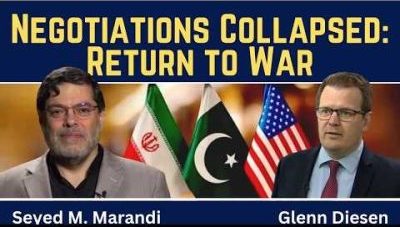
Seyed M. Marandi: Negotiations Collapsed – Return to War
or go to
Aletho News Archives – Video-Images
From the Archives
Wartime internment camps in Australia
National Archives of Australia
World War I
During World War I, for security reasons the Australian Government pursued a comprehensive internment policy against enemy aliens living in Australia.
Initially only those born in countries at war with Australia were classed as enemy aliens, but later this was expanded to include people of enemy nations who were naturalised British subjects, Australian-born descendants of migrants born in enemy nations and others who were thought to pose a threat to Australia’s security.
Australia interned almost 7,000 people during World War I, of whom about 4,500 were enemy aliens and British nationals of German ancestry already resident in Australia.
Records of World War I internment camps
World War II
During World War II, Australian authorities established internment camps for three reasons – to prevent residents from assisting Australia’s enemies, to appease public opinion and to house overseas internees sent to Australia for the duration of the war.
Unlike World War I, the initial aim of internment during the later conflict was to identify and intern those who posed a particular threat to the safety or defence of the country. As the war progressed, however, this policy changed and Japanese residents were interned en masse. In the later years of the war, Germans and Italians were also interned on the basis of nationality, particularly those living in the north of Australia. In all, just over 20 per cent of all Italians resident in Australia were interned. … continue
Blog Roll
 Aletho News
- Seyed M. Marandi: Negotiations Collapsed – Return to War
- Tomorrow’s naval blockade showdown
- ‘Israel’ attacks civilians to hide its embarrassing military failures & out of pure sadism
- Any Foreign Military Vessel Approaching Hormuz Under Any Pretext ‘Will Be Dealt With Severely’: IRGC
- Diplomats slam US negotiators’ performance in Iran talks
- Trump Refuses Exit Ramp, War with Iran will Continue
- Trump Says US Naval Blockade in Strait of Hormuz Will Begin Shortly
- US, Iran end 21-hour talks without agreement
- US IRAN TALKS: Who Are the Crazy Ones Here? /Lt Col Daniel Davis
- Talks with the US end without a deal over excessive US demands: Iran
- If Americans Knew
- US-Iran ceasefire negotiations make zero progress – Daily Update
- Pro-Israel ‘Thinktanks’ and Individuals who Influence U.S. Foreign Policy
- Mearsheimer reveals how Israel dictates US policies on Iran, Gaza – video
- After killing 350+, Israel still has a “score to settle” with Lebanon before ceasefire – Daily Update
- Military aid to Israel emerges as the latest political litmus test for Democrats
- The only Palestinian children’s rights organization closes following years-long Israeli campaign against it
- ‘I Can’t Forget the Smell’: Lebanese Reel After Israel Kills Over 300 in Single Day
- DNC Shoots Down Resolutions Calling Out AIPAC and Limiting Arms to Israel
- TCN: Is Israel Blackmailing President Trump?
- Israel killed at least 303 Lebanese yesterday – who were they? Daily Update
- No Tricks Zone
- German Expert: Heat Dome Led To Record Temps In Western USA…Warmer In 1934, 1936
- New Study: No Linear Warming Or Glacier Retreat Along Northern Antarctic Peninsula Since 1980s
- An Inconvenient Tree: Uncovered In Alps… Europe Much Warmer Than Today 6000 Years Ago
- New Study Reports A 60% Slowdown In Greenland’s Ice Loss Rate In The Last Decade
- Low Intensity Tornado Wrecks Major Solar Farm, Creating A Potential Toxic Dump
- New Study Finds Warming Saves Lives…Cold Temperatures 12 Times More Deadly Than Excess Heat
- German Science Blog Accuses PIK Climate Institute Of Hallucinating Climate Tipping Points
- Devastating Assessment Of Comirnaty Vaccine By Former Senior Pfizer Europe Toxicologist
- New Study: CO2 Is ‘Effectively Negligible’ As An Explanatory Climate Change Factor Since 2000
- Former Pfizer Toxicologist Dr. Helmut Sterz Tells Bundestag Hearing Pfizer Vaccine Should Have Never Been Approved
 Aletho News