Chile Senate approves resolution to adopt law boycotting settlement goods
MEMO | July 10, 2020
The Chilean Senate last week approved a resolution calling on President Sebastian Pinera Echenique to adopt a law boycotting settlement goods and banning commercial activity with companies that operate in the occupied Palestinian territories.
The motion passed on 30 June with 29 votes in favour and six abstentions, no votes were cast against the move.
The resolution also called on the government to promote legislation that would ban all Israeli settlement products; prohibit any company involved in the Israeli occupation from benefiting from any agreement or bid signed by Chile; apply tourism guidelines for Israel and Palestine that would not allow the promotion of trips to Israel using pictures of East Jerusalem or Bethlehem “among other Palestinian cities”; forbid any kind of cooperation, including monetary, with the Israeli colonisation of occupied Palestine; and ensure that no tax benefits will be afforded to any organisation operating in Chile if it is involved in the occupation of Palestine.
Yesterday, President of the Palestinian National Council Salim Al-Zanoun thanked the Senate for its decision which he said constitutes a victory for the right of “our people to establish an independent state with its capital, Jerusalem, on the borders of June 4, 1967”, and affirming the international consensus regarding the application of international law and the terms of reference of the peace process.
On 2 July, Chile, the country with the largest population of Palestinians in Latin America, lit up its Telephone Tower with the Palestinian kufiyeh in support of the Palestinian people and rejection of Israel’s plans to annex some 30 per cent of the occupied West Bank
Russia, China keep the ‘dragon in the fog’
By M. K. BHADRAKUMAR | Indian Punchline | July 8, 2020
Chinese President Xi Jinping said in a phone conversation today with his Russian counterpart Vladimir Putin that Beijing will “continue to work” with Moscow in “firmly supporting” each other’s efforts “rejecting external sabotage and intervention” so as to “preserve their respective sovereignty, security and development rights, and well safeguard their shared interests.”
This signifies the consolidation of a new template in the Russian-Chinese alliance, which appeared in the most recent months — mutual support to push back at the covert operations by western intelligence agencies to destabilise the internal situation in the two countries.
An quasi-alliance rooted in dynamic economic partnership — trade touched $110 bn last year — and intensifying cooperation and coordination in the foreign policy arena takes a big leap forward, as the two countries join hands to strengthen their political systems. Beijing’s interest to highlight it speaks for itself.
Xi’s phone call to Putin took place in the backdrop of the Russian constitutional referendum and the law on ensuring security in Hong Kong last week. Prima facie, one metaphor is common to them — the “dragon in the fog”, a Chinese concept to portray a strong player in an incomprehensible space who can strike at his competitors at any moment from an unexpected angle.
The metaphor was recently used by a Russian political analyst Alexey Chesnakov (who previously served as a Kremlin aide) to sum up the quintessence of the Russian referendum, which allows Putin notionally to seek two more six-year terms. As Chesnakov put it, President Putin “wants to remain a ‘dragon in the fog’ until the end of his presidency.”
Chesnakov explained that the sheer prospect of Putin remaining in power beyond 2024 would also send an unmistakable signal to the international community that the Russian leader is confident about remaining at the helm of affairs in his country for at least the next decade.
Coming to the Hong Kong legislation too, the leitmotif is the ‘dragon in the fog’. The new law strengthens China’s national unity and territorial integrity. The four categories of criminal offence outlined in the law are: secession, subversion of state power, terrorist activities and collusion with foreign and external forces to endanger national security. In essence, the legislation will keep western intelligence guessing.
The western legal scholars’ principal argument is that the new law weakens the “one country, two systems” principle. But the paradox here is that while western critics put the accent on the “two-systems” part, Beijing estimates that it is the “one-country” leg that has dramatically weakened in the recent years due to the upheaval in Hong Kong.
Beijing had two options to bring about greater harmony — use of force to pull back the “two systems” concept from racing away or, alternatively, strengthen the “one country” part by providing security underpinnings. Beijing opted for the latter course after a great deal of deliberation.
The crux of the matter is that Beijing wants to keep Hong Kong as the financial hub of Asia, while at the same time strengthening the city’s security and stability. Of course, the interference of the western intelligence agencies — primarily British, Australian and American intelligence — to fuel the protests in Hong Kong formed the context.
Hong Kong has a long history of being the base camp of western intelligence agencies in the Asia-Pacific. Much has been written about the western intelligence agencies’ covert operations out of Hong Kong before, during and after the 1989 Tiananmen Square protests in China.
In the case of Russia, too, western intelligence activities are showing signs of making another determined push for a post-Putin scenario in the Kremlin. The West’s calculation is that if Putin were to step down in 2024, he would very soon become a “lame duck”. Like in Hong Kong, western intelligence has developed extensive networks within Russia through which it is feasible to fuel unrest if political uncertainties coalesce with social and economic grievances. The Russian counter-intelligence is very well aware of this danger.
Putin has outwitted the western game plan to destabilise Russia. The constitutional amendment allows him to seek another two six-year terms and he intends to keep everyone guessing. Keeping the western adversaries guessing is also what the Chinese security law in Hong Kong hopes to achieve.
The western intelligence operating out of the city henceforth comes under direct scrutiny of Beijing. Recruitment of local agents, planning and mounting operations inside China, or inciting unrest in Hong Kong to weaken China — such covert operations become far more difficult and risky for the US, British and Australian intelligence. Interestingly, Xi used the expression “external sabotage and intervention” in his conversation with Putin today.
Beijing and Moscow have voiced strong support for each other’s moves to strengthen national security. On June 2, Chinese foreign ministry spokesman Zhao Lijian said,
“We note that the national referendum on constitutional amendments, a major event in Russia’s political calendar, is going on smoothly. Results released by the Central Elections Commission reflect the Russian people’s choice. As Russia’s friendly neighbour and comprehensive strategic partner of coordination for a new era, China will always respect the development path independently chosen by the Russian people and support Russia’s efforts to realise lasting stability and promote socioeconomic development.
“We stand ready to work together with the Russian side to act on the consensus reached by our heads of state, deepen all-round strategic coordination and mutually-beneficial cooperation in various areas, and bring greater benefits to our two peoples.”
On the same day, Russian Foreign Ministry spokesperson Maria Zakharova said in Moscow, “We noted the entry into force of the law on ensuring national security in the Hong Kong Special Administrative Region of the PRC on July 1, 2020 by the decision of the Standing Committee of the National People’s Congress of China.
“In this context, we would like to reaffirm that Russia’s position of principle on the situation in Hong Kong remains unchanged. We respect the sovereignty and territorial integrity of the PRC and consider all issues pertaining to Hong Kong to be China’s domestic affair. We are against any attempts by external forces to interfere in relations between the central government and the Hong Kong Special Administrative Region of the PRC.”
Cooperation between the Russian and Chinese security agencies in the realm of internal security can only stem from a high level of mutual understanding at the highest level. Significantly, on July 4, Russian Deputy Foreign Minister Sergei Ryabkov poured cold water on President Trump’s invitation to Putin to attend a G7 summit in the US, calling it a “flawed” idea.
Moscow has any number of legitimate reasons to distance itself from Trump’s invite, but what Ryabkov chose was very telling. He said, “The idea of the so-called expanded G7 summit is flawed, because it is unclear to us how the authors of that initiative plan to consider the Chinese factor. Without China, it is just impossible to discuss certain issues in the modern world.”
In effect, Rybakov thwarted Washington’s move to isolate China. Trump’s advisors were naive to estimate that Moscow could be baited to join its containment strategy against China. Ryabkov publicly administered the Kremlin’s snub.
Veteran activists called out BLM as a tool of the Democrats from day 1. But agenda-driven $Millions drown out the grassroots
By Helen Buyniski | RT | July 6, 2020
The Black Lives Matter movement has made millions off black Americans’ suffering. A St. Louis activist explains how it comes from a long tradition of white liberals coopting grassroots movements to push a Democratic Party agenda.
The foundation-funded social justice activism of Black Lives Matter is using black pain to cash in on white liberal guilt, dividing American society in pursuit of a Democratic political agenda, St. Louis activist Nyota Uhura told RT.
Uhura founded her website handsupdontshoot in August 2014 to counter false narratives coming out of the St. Louis suburb of Ferguson following the police shooting of 18-year-old Michael Brown.
Having witnessed BLM’s rise up close as the nascent organization swooped into Ferguson amid the calls for justice triggered by Brown’s killing, methodically co-opting the genuine protest energy while ignoring or even obstructing those protesters’ demands, Uhura has fought to warn others of what the organization really represents – leveraging black activism into a boost for the Democratic Party.
The science of co-opting movements
Plucking a few Ferguson residents from the streets for a veneer of local credibility, BLM raised $33 million on the back of Brown’s death – money Uhura says her community never saw. Six years later, black St. Louis remains poor and plagued with violence, while BLM has found a new community to exploit.
“They overshadow the work of the grassroots, then they insert themselves as leaders and they go out in the media and claim to be leading these movements,” Uhura said.
Outlining the methodology of BLM and other astroturfed movements, she added that sometimes they literally just showed up at a protest they didn’t plan and did a news conference. This is a tradition she traces back to white liberals’ hijacking of the 1963 March on Washington.
That tradition has been boiled down to a science, she says, with organizations like NetRoots turning out phony ‘activists’ with the ruthless efficiency of an assembly line. “NetRoots is where activists go to audition to be puppets of the Democrats, special interest and white elite nonprofit,” she continued.
“It happens so fast that all the pieces are in place before you even have a chance to know what hit you… Before you even know it, you’re watching the news and they have coopted your movement.”
White liberal and progressive groups “use the energy of our movement to push their agenda” – in BLM’s case, weaponizing the concept of “intersectionality” to broaden the movement’s scope from race to feminism, immigrant rights, LGBT issues, and other causes that directly affect white people.
“In order to mobilize people, they need those black faces out front – because what are they going to look like protesting? Just in terms of optics it’ll look like a Klan rally,” Uhura joked. She has a point – just 17 percent of last month’s protesters were black, according to a Pew Research poll published last week, a statistic the organization’s foes are unlikely to let it forget.
Real activists disenfranchised
Uhura is far from the only grassroots activist to publicly speak out against BLM for pulling a bait-and-switch, substituting the Democratic Party’s pet causes in place of justice for the victims of police violence. The group’s Cincinnati chapter dropped the iconic phrase from its name in 2018, alleging the national organization “capitalized off a nameless groundswell of resistance sweeping the nation, branded it as their own, and profited off [black people’s deaths]” without making an effort to get justice for victims’ families.
The Cincinnati chapter also says that BLM’s 2015 conference in Cleveland – where 12-year-old Tamir Rice had just been gunned down by a cop for holding a toy gun – focused almost exclusively on black transgender rights, further dividing a suffering community.
Los Angeles activists slammed BLM’s local chapter for ignoring the killing of Ezell Ford, a mentally-ill man shot by police in 2014, to travel to Ferguson and piggyback on the Michael Brown shooting. Upon their return to Los Angeles, where the activist community was demanding the city’s district attorney indict Ford’s killers, BLM Los Angeles not only continued to ignore the injustice, one of its leaders actually bestowed a ‘Women in Action’ award on the same DA who exonerated the cops who killed him.
Others take issue with what they see as obvious grifting by some of BLM’s most prominent representatives. DeRay McKesson has promoted brands from Apple to McDonald’s, and even got himself arrested in a Twitter T-shirt in what many activists believe was a staged promotion.
Shaun King is so legendary for making large sums of money raised “for the movement” disappear that the Daily Beast wrote a story about it. King recently announced a “Truth, Justice and Reconciliation Commission” in conjunction with three of the same “progressive prosecutors” that activists like Uhura have denounced for failing to police the police.
‘They always march us back into the voting booth’
Like all controlled opposition movements, one of BLM’s primary functions is to derail meaningful change. Uhura explained, “They always march us back into the voting booth.”
Well-heeled movement activists consistently divert money and energy into electing Democratic Party candidates or “progressive” prosecutors, none of whom hold police accountable when they murder innocent black men, whether it’s in Ferguson, Los Angeles, or New York City.
For this reason, she’s not convinced by the group’s recent calls to defund police, or the Minneapolis City Council’s pledge to do just that – the governments of Ferguson and St. Louis promised all manner of reforms they didn’t deliver. Many that did pass were hopelessly watered-down or have since been rolled back, and Uhura sees ‘defund the police’ as just another fundraising tactic.
The only electoral solution to the black community’s problems is “weaponizing our politics,” according to the veteran activist – all incumbents have to go. They’ve had their chance to make a difference, and proven themselves unwilling to deliver. “It might take one or two election cycles to mold a person into what we need, but right now we’re losing anyway,” she explained. “We have to just clean house and get rid of everybody. How can it be worse?”
BLM recently came under fire for doling out just six percent of its donations to local chapters over the past three years, with a whopping 83 percent going to pay consultants and travel costs. The complicated route the money takes from donor to chapter has elicited extensive speculation about the possibility of money laundering, and BLM representatives have been almost cartoonishly cagey when asked by reporters about their finances
Co-founder Alicia Garza has denied the group is backed by foundations at all, even though billionaire currency speculator George Soros alone has given over $33 million to BLM, its founders, and associated groups, and the Ford Foundation pledged to raise $100 million in 2016. Fellow co-founder Patrisse Cullors has held up a fact-check by PolitiFact, funded by the same Omidyar Network that funds BLM, as “proof” the group isn’t linked with the Democratic Party.
But it’s the group’s function as an ideological launderer that has thus far insulated it from accountability. From the corporations pouring millions of dollars into its coffers to burnish their woke cred, to the politicians donning Kente cloths and pandering their way to re-election, BLM positions itself as ‘the’ black activism group, overshadowing grassroots campaigners and sucking up all available cash – literally starving out the competition, as genuine movements struggle to be heard by the media and greater public over the foundation-funded din.
This model of activism has been so successful over the decades that it has come to dominate every cause from environmentalism to civil liberties, offering young people a “romanticized view of activism where it’s all hashtags, all patty-cake, all sugar and cream, when nothing could be further from the truth.”
Uhura, however, is confident that BLM’s true nature will be exposed, citing the movement’s own inherent discrimination: “How does Black Lives Matter get to decide WHICH black lives matter when they purposefully omit straight black people and straight black men whose death they profit from?”
But as long as grassroots activists are losing ground to foundation-funded rivals, new BLMs will keep popping up. Real activists must “create an alternative” to foundation-funded movements, she says – or risk losing the next generation to the Democratic operatives and keeping justice out of the reach of black communities forever.
Helen Buyniski is an American journalist and political commentator at RT. Follow her on Twitter @velocirapture23
If Suez Canal Blocks Iran’s Aid Ships to Lebanon & Syria, Strait of Hormuz Will Be Closed: Al-Akhbar Report
Al-Manar | July 1, 2020
Amid the squeezing US economic blockade on Lebanon and Syria, the Islamic Republic of Iran seeks to aid allies and provide them with the basic consumption items by all means.
The Lebanese daily newspaper, Al-Akhbar, reported Wednesday that Iran has offered to sell oil to Lebanon which would pay in the national currency in return, adding that the Iranian ships are ready to sail without any political or geographical barrier.
In this context, the paper pointed out that the Iranians have threatened to close the Strait of Hormuz in case the Suez Canal is blocked to the aid ships heading to Lebanon and Syria, citing a positive Egyptian stance in this regard.
The Iranian offer, expected to leave Tehran losing hundreds of millions of dollars, is inexactly viewed in Lebanon, according to the Al-Akhbar report Hezbollah has informed the Lebanese authorities it will help finalize the deal when they approve it.
Hezbollah Secretary General Sayyed Hasan Nasrallah’s latest speech tackled the Iranian offer on the basis of a promise his eminence received from the Supreme Leader Imam Sayyed Ali Khamenei, Al-Akhbar mentioned.
Belgium Urges Sanctions against Israel if it Annexes West Bank
Palestine Chronicle | June 27, 2020
The Belgian parliament on Friday passed a resolution urging the government to call on the European Union to impose sanctions against Israel if it proceeds with its plan to annex large swaths of the occupied West Bank.
The measure “concerning Israel’s annexation of occupied territories in Palestine”, passed in the 150-member House of Representatives with 101 affirmative votes, 39 abstentions and zero votes against it.
The body was also due to vote on a motion calling for the recognition of a Palestinian state but this was delayed after it was sent back to the foreign affairs committee for further debate.
MPs from left-wing parties, including the Socialist Party and members of the French and Green parties, proposed the resolutions.
“It is a matter of defending international law. There is no equidistance to be respected in this fight,” said MP Ecolo Simon Moutquin who authored the resolution.
The resolution has two objectives, he said: “On the one hand, send a message to the Israeli government ‘Don’t cross that red line’. On the other hand, give some hope to the Palestinians who have suffered injustice for decades.”
More than 1,000 European lawmakers across the political spectrum issued a letter earlier this week warning Israel against annexing parts of the occupied West Bank.
Legislators said they “share serious concerns about [US] President Trump’s plan for the Israeli-Palestinian conflict and the imminent prospect of Israeli annexation of West Bank territory.”
ECHR Backs Activists Convicted in France Over Campaign to Boycott Israel
Sputnik – June 11, 2020
The European Court of Human Rights on Thursday backed the pro-Palestinian activists who were convicted in France for “incitement to discrimination” over their calls to boycott products imported from Israel and ruled that the conviction violated their freedom of expression.
“The Court considered that the applicants’ conviction had lacked any relevant or sufficient grounds. It was not [established] that the domestic court had applied rules in keeping with the principles set out in [of the European Convention on Human Rights, providing the right to freedom of expression] or had conducted an appropriate assessment of the facts”, the ECHR statement read.
However, the French judiciary had not violated Article 7 of the European Convention on Human Rights, which implies that a person should not be held accountable for an offence if it was not considered an offence under national law when it was committed, the ECHR also said.
The court ruled that France must pay to each campaigner “380 euros [$431] for pecuniary damage, 7,000 euros for non-pecuniary damage” and a total of 20,000 euros jointly to the applicants “for costs and expenses”.
The Israeli government has argued that the BDS campaign, sponsored by Palestinian non-governmental organisations, is driven by anti-semitism. In 2017, Israel passed a law that allows it to refuse entry to foreign supporters of the movement.
Eleven members of the Collectif Palestine 68 group, which is a French branch of the international Boycott, Divestment and Sanctions (BDS) movement, were accused over two campaigns held in 2009 and 2010 in a supermarket located in eastern France. They urged customers to not buy goods of Israeli origin and called on the store to stop selling them. The activists were accused of inciting anti-semitism and racism by a French court in 2015 and ordered to pay thousands of euros in fines.
Biden Condemns Pro Palestinian BDS Movement
teleSUR | May 21, 2020
Left-wing activists in the U.S. rejected assertions by the presumptive Democratic nominee for president, Joe Biden, who said criticism of Israel too often drifts towards anti-Semitism before he declared his opposition to the Boycott, Divest, and Sanctions movement (BDS).
“Criticism of Israel’s policy is not anti-Semitism,” Biden said during a phone call with donors earlier this week. “But too often that criticism from the left morphs into anti-Semitism.”
The call was part of a virtual fundraiser hosted by Dan Shapiro, a former ambassador to Israel, and Deborah Lipstadt, a professor of Jewish history and Holocaust studies at Emory University.
Biden was asked how to respond to anti-Semitism among progressive activists in both the U.S. and the United Kingdom.
“We have to condemn it, and I’ve gotten in trouble for doing that,” the former vice president said. “Whatever the source, right, left, or center.”
The Biden campaign later released a policy paper saying it “firmly rejects” the BDS movement, a nonviolent initiative launched by Palestinians in 2005 to pressure Israel to comply with international law and defend Palestinian human rights.
Biden said the movement “singles out Israel – home to millions of Jews – and too often veers into anti-Semitism while letting Palestinians off the hook for their choices”.
Leaders of the BDS movement replied that Democratic voters should be endorsing the movement instead of rejecting it.
“By rejecting BDS, Joe Biden endorses U.S. complicity in Israel’s decades-old regime of occupation, colonialism, and apartheid, and supports depriving Palestinians of our fundamental human rights,” the group said.
Biden has struggled to unite a Democratic Party deeply divided between moderates and younger progressives who gravitated towards Biden’s rival, Senator Bernie Sanders, who has withdrawn from the election.
The progressive wing has been outspoken in its opposition to Israel’s policies towards Palestinians in the West Bank and Gaza, particularly under right-wing Prime Minister Benjamin Netanyahu.
Iranian Supreme Leader Tweets Country Will Support Any Nation That Fights Israel
Sputnik – 20.05.2020
Iran’s Supreme Leader announced on Wednesday his country would “support and assist any nation or any group anywhere” in its struggles against Israel. His comments follow a Palestinian withdrawal from agreements with Israel over its proposed annexation of the West Bank.
“The Zionist regime has proven it won’t abide by any treaty & understands no logic except force,” Iranian Supreme Leader Ali Khamenei wrote in a Wednesday statement posted on Twitter as a series of tweets. “The nature of the Zionist regime is incompatible with peace, because the Zionists seek to expand their territories & will certainly not be limited to what they have already occupied.”
“Eliminating the Zionist regime doesn’t mean eliminating Jews. We aren’t against Jews. It means abolishing the imposed regime & Muslim, Christian & Jewish Palestinians choose their own govt & expel thugs like Netanyahu. This is ‘Eliminating Israel’ & it will happen,” the Shiite religious leader explained. “A proposal for a referendum to choose the type of govt for the historical country of #Palestine was registered with the UN as offered by Iran. We say the true Palestinians with Palestinian roots of at least 100 years, and Palestinians living abroad, choose the govt of Palestine.”
“Comprehensive struggles by the Palestinian nation – political, military & cultural – should continue till the usurpers submit to the referendum for the Palestinian nation. This nation should determine what political system should rule there; struggle must continue until then,” Khamenei continued. “We will support and assist any nation or any group anywhere who opposes and fights the Zionist regime, and we do not hesitate to say this.”
Khamenei’s comments follow an announcement by the Palestinian Authority on Tuesday that it would cease to abide by any of its agreements with either Israel or the United States – a move itself in response to an announcement by the newly formed Israeli government to begin annexing one-third of the West Bank as soon as July. […]
The area Tel Aviv seeks to annex is part of what is known as “Zone C” under the Second Oslo Accords in 1995, a part of the West Bank subjected to Israel military control. However, the area Prime Minister Benjamin Netanyahu has proposed annexing is roughly 30% of the West Bank and not all of Area C, but mostly the Jordan River valley. As Sputnik has reported, the Israel Defense Forces have used this control to systematically evict Palestinian villages from the fertile land along the River Jordan for decades, later turning the land over to Israeli settlers who now number close to 400,000 in the zone.
Pro-Israel group fails to have BDS supporting professor removed
MEMO | May 18, 2020
A pro-Israel American campus group has failed in its bid to have a professor removed from the position of interim dean of a department at the George Washington University because of her support for the global Boycott, Divestment and Sanctions (BDS) campaign.
Professor Ilana Feldman was targeted by GW for Israel following her appointment as the interim dean of the Elliott School of International Affairs, a prestigious private Washington, DC university’s training school for diplomats and other foreign policy specialists.
GW for Israel launched a petition demanding the removal of Feldman from the post citing her support for BDS. “Dr. Feldman is a fervent supporter of the Boycott, Divestment, and Sanctions (BDS) movement and has a record of minimizing terrorism, delegitimizing the State of Israel, and advocating to suspend academic ties with Israeli institutions,” said the petition.
Feldman is a member of the American Anthropological Association. In 2015 she led a campaign in which professors of anthropology voted overwhelmingly in favour of a resolution calling on the group to boycott Israeli academic institutions by a 1,040 to 136 margin at the association’s annual business meeting.
Last year, she published a book on Palestinian refugees titled: “Life Lived in Relief — Humanitarian Predicaments and Palestinian Refugee Politics”. It was shortlisted for the 2019 Palestine Book Awards.
Despite the protest from GW for Israel, George Washington University stood by its decision.
“Dr. Ilana Feldman has been an active faculty member at the Elliott School of International Affairs since 2007,” the University’s provost, Brian Blake, said last week in an email to the Jewish Telegraphic Agency. “As vice dean, Dr. Feldman has demonstrated her leadership ability and her respect for and commitment to all students, faculty and staff of the Elliott School community.
Dr. Feldman’s appointment as interim dean was made based on strong support within the Elliott School, including from the current dean, the Dean’s Council, as well as a number of faculty.”
Feldman is the most recent academic to face the wrath of the pro-Israeli groups. In January JB Brager, a teacher at an elite New York City prep school, was fired for expressing remarks critical of Israel.
Iran Majlis committee endorses anti-Zionism motion
Press TV – May 18, 2020
Majlis (the Iranian Parliament)’s Committee on National Security and Foreign Policy has approved a motion that outlines the manner of confrontation on the national and international scale against the Zionist regime of Israel’s atrocities.
The parliament had designated the plan as a double-urgency motion on May 12 and submitted it for approval to the committee as the main legislative body to review the measure.
The committee released the approved version under the “The Motion for Confrontation against the Zionist regime [of Israel]’s Actions Targeting Peace and Security” on Saturday, after examining it and making some amendments, Fars News Agency reported on Sunday.
The amended version tasked all national organizations to deploy available national and international capacities towards confronting the Israeli regime’s actions against the oppressed Palestinian nation and Muslim countries, including Iran, as well as the regime’s role in disrupting regional and international peace and security.
As instances of the regime’s actions against Palestinians that warranted confrontation, it cited Tel Aviv’s large-scale and systematic violation of human rights through continued occupation of Palestinian and other territories, setting up of illegal settlements across the occupied Palestinian territories, attempting annexation of more Palestinian land, and keeping Palestinians under siege.
The Israeli regime, the motion noted, was also engaged in warmongering, terrorism, electronic warfare, and deployment of heavy and banned weapons against civilians throughout the region and elsewhere as its other actions that had to be confronted.
Virtual Embassy
The committee obliged the Foreign Ministry to lay the groundwork for the creation of the Islamic Republic’s Virtual Embassy in Palestine within six months, and submit the results for approval to the cabinet.
In so doing, the Ministry was required to conduct consultations with the countries that it saw fit.
The Ministry was also asked to pursue Iran’s initiative for “realization of nationwide referendum in Palestine” — a plan that the Islamic Republic has devised with emancipation of the territories from Israeli occupation in mind.
Iran’s Attorney General was, meanwhile, tasked to work in cooperation with the Ministry and other relevant domestic and foreign bodies towards prosecution of Israeli officials at competent tribunals for their atrocities.
The parliamentary committee demanded that the Iranian government provide support for various domestic and international parties, who engage in activities targeting the occupying regime.
The government was also required to try preventing the prospect of any normalization with Tel Aviv on the regional scale and among the world’s Muslim countries, and outline the “Zionism worse than Apartheid” mindset across various international organizations.
The Islamic Republic’s cultural bodies, including the Ministry of Culture and Islamic Guidance and the Islamic Republic of Iran Broadcasting, were assigned the task of engaging in extensive cultural activity aimed at exposing the Zionist regime’s nature and atrocities.
The committee also strictly prohibited the use of Israeli software and hardware inside the country, the entry and transit of Israeli commodities and individuals through the Islamic Republic’s soil, and engagement with any Israeli entity.
With Friends Like These…

By Blake Alcott | Palestine Chronicle | May 16, 2020
It’s nice that a group of 127 British politicians has discovered the as-yet unused tool for pressuring Israel: sanctions, the ‘S’ in Boycott, Divestment and Sanctions (BDS). They wrote a letter to Boris Johnson asking him to impose such sanctions if Israel annexes roughly half of the West Bank – which it just might do this summer.
Actually, many Palestinians believe annexation even of the entire West Bank would be a good thing insofar as it would make Israeli apartheid plain and visible to everybody. That would force world opinion to apply its anti-apartheid standards to historic Palestine and insist on equal rights for everybody between the river and the sea.
Even without this insight, however, the letter is milk toast. It latches onto only the most egregious of Israeli actions – de jure annexation of territory already de facto annexed. It leaves unchallenged countless Israeli actions such as mass murder in Gaza, home and village demolitions, discrimination against the Palestinians in Israel, and its defining itself in July 2018 as a racist state by means of the Nation State Basic Law. The list goes on and on.
The letter is a legalistic gripe that doesn’t mention history or basic ethics. Yes, it is true that “acquisition of territory through war is prohibited” and annexing such territory violates international law, but what about the annexation of Greater Jerusalem in 1967 or, for that matter, of the bulk of historic Palestine in 1948? What about absolute rule over the West Bank and the siege of Gaza without annexation?
The politicians’ main gripe, though, is that annexation would be “a mortal blow to… any viable two-state solution.” Beloved by all of the signees, that is the Zionist solution which leaves the Israeli apartheid state intact within the 1948-occupied territories. It also leaves the 7 million Palestinian refugees out in the cold.
Any two-state solution would be crassly unjust, but this group of British politicians thinks it would be great, and that its possibility be kept alive, because that is the only way to save Israel in the long run (albeit on only about 80% of Palestinian land). And these signees are allegedly the Palestinians’ friends.
Palestine’s So-called Friends
Their letter is actually a symptom of a deeper intellectual bankruptcy and of the impotence of the forces in political Britain claiming solidarity with Palestine. They all support the Zionist two-state solution.
The Parliamentary group ‘Labour Friends of Palestine and the Middle East’ (LFPME), for instance, “supports a two state solution that creates a viable and contiguous Palestinian state” – and that preserves the viable and contiguous Jewish state. It to be sure urges boycott of West Bank-settlement goods, but trips over itself in a rush to assure the public that this “is categorically not an anti-Israeli policy, but an anti-settlement policy” and that this should not be taken for support of BDS, “which is widely considered to be obstructive to the two state solution.”
91 MPs are members of LFPME, and 24 of them signed the letter. Not among them, curiously, is the Chair of LFPME, Lisa Nandy, who has herself taken incoherent positions on Palestine, describing herself at once as a Zionist but broadly supporting the Palestinians’ right of return. She clearly leans toward Israel, saying she was “honored” by the support of the rabidly pro-Israel Jewish Labour Movement and that under Jeremy Corbyn, the most pro-Palestinian British politician ever, Labour “gave the green light to anti-Semites”.
Three of the signees against annexation are even members of Labour Friends of Israel (LFI) – Lilian Greenwood, Peter Hain, and Margaret Hodge. On that group’s website, the headline reads ‘Working towards a Two-State Solution’. It “promotes a negotiated two state solution for two peoples; with Israel safe, secure and recognized within its borders living alongside a democratic, independent Palestinian state [and] seeks to strengthen relations between Britain and Israel.”
At first glance, it is astounding that of LFI’s 55 MP members, 24 of them are also members of LFPME! They include such well-known figures as Liam Byrne, Angela Eagle, Emily Thornberry, Liz Kendall, Wes Streeting, David Lammy, Jess Phillips, Chris Bryant, and Rosie Winterton. But astonishment vanishes when one realizes that the goal of the two groups is the same: Israel safe and secure in the Near East, legitimate for all time, ‘alongside’ a rump statelet they are cheeky enough to call ‘Palestine’.
LFI Chair Steve McCabe MP rides hard against a new category of racism: “anti-Zionist antisemitism”. In the Jewish Chronicle of 7 April 2020, he pledged to “vigorously oppose the divisive effort to demonize and delegitimize the Jewish state led by the BDS movement.” Perhaps, were LFPME to endorse BDS in so many words – which to my knowledge it does not – MPs would see that they must choose between LFI and LFPME.
Corbyn as Labour leader from 2015-2020 not only unfailingly supported the two-state solution and Israel’s ‘right to exist’, but failed to deal with the Party’s phony, alleged ‘antisemitism crisis’. He did not make clear that criticism of Israel is not antisemitic because any settler-colonial state in Palestine – whether Jewish, Christian, Muslim, or British – would face the same fundamental criticism, namely that it by definition dispossesses the Palestinians.
Tragically, Corbyn also allowed anti-racist upholders of human rights such as Ken Livingstone, Jackie Walker, Marc Wadsworth and Chris Williamson to be expelled from the Labour Party merely for making various factual comments, mostly about Zionism. Lacking any clear and principled ideology, Labour under Corbyn diminished and tainted the voices of many staunch pro-Palestinians.
What’s more, all the candidates to replace Corbyn – Keir Starmer, Nandy, Rebecca Long-Bailey, etc. – bent the knee to those who do have a coherent ideology and control the narrative in Britain: the Zionists. During the leadership campaign all of them endorsed the so-called “Ten pledges to end the antisemitism crisis” written by the Israel-lobby group Board of Deputies of British Jews. Two of the pledges are 1) to see to it that “Ken Livingstone and Jackie Walker… will never be readmitted to membership” and 2) to “adopt the international definition of antisemitism without qualification”.
That definition of antisemitism is, of course, the notoriously illogical one put out by the International Holocaust Remembrance Alliance (IHRA). It conflates politics and racism and includes amongst the “manifestations” of antisemitism the “targeting of the state of Israel, conceived as a Jewish collectivity”, “denying the Jewish people their right to self-determination, e.g., by claiming that the existence of a State of Israel is a racist endeavor”, and “drawing comparisons of contemporary Israeli policy to that of the Nazis.”
The Labour Party obeys the pro-Israel forces, but rest assured, things are no better within the Conservative and Liberal Democrat Parties, nor at The Guardian or any other British newspaper. Truly, ‘with friends like these,…’ No, that’s not quite right. The Palestinians have no friends in British politics.
Why Such Weakness?
The question is Why? A big reason is that within Palestinian and Palestine-solidarity circles there is, in Britain, no coherent intellectual analysis of what is just or unjust, and no vision of a solution.
Nobody in political circles even talks about the three comprehensive demands of BDS (return, equality within Israel, and liberation for the West Bank and Gaza Strip). Talk is only of BDS tactics and its danger to Israel.
Instead, as with the anti-annexation letter, small skirmishes are fought within the Zionist two-state paradigm, symbolically making oppression a little more tolerable and in effect distracting from the fundamental issues that would make sense to the British public, if enunciated.
One ‘solidarity’ wing is Zionist: Israel has every right to continue as it is, as a discriminatory state on the 1967 borders. The perfect representative of this wing is the U.K.’s only Palestinian MP, Liberal Democrat Layla Moran, who wrote in the Guardian in 2019 of her fear of being called ‘antisemitic’ and who stressed that she “believes in Israel’s right to exist.” Also: “I believe in a two-state solution [which] is at best in stasis, at worst it is teetering on the brink of a precipice. It needs a lifeline.”
The other wing is BDS, which starts not with a position against Israel but rather for all the rights of all the Palestinians. Its three demands strictly imply Two Democratic States, and neither of them are Jewish or any other ethnocracy. (The two would undoubtedly merge, resulting in One Democratic State, but that is a separate topic.)
As Omar Barghouti, one of the main originators and propounders of BDS, said a few years ago, “A Jewish state in Palestine, in any shape or form, cannot but contradict the basic rights of the land’s indigenous Palestinian population… No Palestinian, rational Palestinian, not a sell-out Palestinian, will ever accept a Jewish state in Palestine.”
So the cat’s already out of the bag. What is now needed is for both Palestinians and their supporters to publicly and fearlessly embrace Barghouti’s clarity – to unabashedly say Yes, a racist, apartheid state should obviously be replaced by a normal, human rights-based, ethnicity-blind democracy. To boot, in my experience most people on the street understand this without any difficulty.
It would both constitute a clear intellectual narrative and enormously help campaigning in countries like the U.K. It is now impossible to explain to the public – or for that matter to MPs when one lobbies them – what solution would embody the fulfillment of Palestinians’ rights, or ‘what the Palestinians want’. By contrast, international supporters of the Black freedom struggle in South Africa were able to draw upon a clear vision while arguing the case in the West; Palestine activists lack any such inspiring vision, one which openly, in easy-to-understand terms, states the political goal.
But the BDS Call describing the rights to be fulfilled is kept at a flickering flame. Hardly anyone ventures outside the pro-Zionist framework of the parliamentary Friends of Palestine and, for that matter, the co-opted leaders of the Palestinian Authority. The best that well-meaning British politicians have to hold onto are sporadic, justified but non-essential incidents like the annexation of Area C in the West Bank.
Palestine’s supporters are waiting for open acknowledgment of the consequences of the BDS demands. Only that will enable a refutation of charges of antisemitism – because it would offer a clear, motivating, positive vision which doesn’t even have to mention the Jewishness of the present occupying state, Israel.
– Blake Alcott is an ecological economist and the director of One Democratic State in Palestine (England) Limited. The author welcomes any information on ODS or bi-nationalism activity sent to blakeley@bluewin.ch.
Interview with a COVID-19 survivor
“It felt like a global tidal wave of human sorrow”
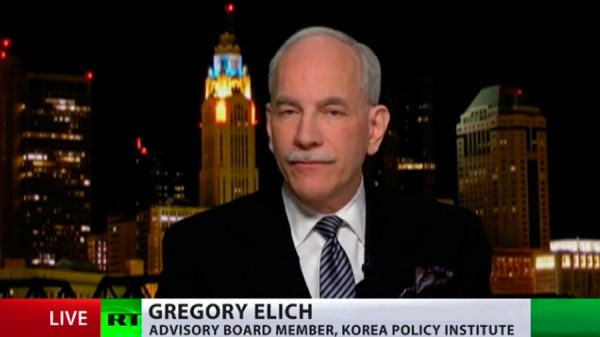
Mickey Z. – World News Trust – May 14, 2020
“At my lowest points, the unsettling realization came to me that given the ferocity and rapidity of change with this virus, a further plunge could mean that I might not survive. Indeed, I felt so close to total suffocation that there seemed little room for further decline. I was determined to fight my way through this, but at the same time, I calmly prepared myself mentally for any eventuality.”
These are the words of my friend, Gregory Elich. They’re not uncommon during this pandemic but I believe his story must be shared within the current climate of uncertainty, misinformation, and division. My goal is not to “set the record straight.” Rather, Greg agreed to this interview because we both saw value in reminding folks of the harsh human realities that exist beyond the headlines, debates, and confusion.
This interview is about one person but his harrowing tale encapsulates much of what’s still going on across the globe. Like Greg, I live alone and I often ponder the logistics of a simple question: What happens if I get sick during the lockdown?
Questions like this highlight what I talked about in a recent article, e.g. the importance of focusing on what is within our control. Therefore, no matter where we stand on the ideological spectrum, we must never forget our shared humanity. Beneath the partisan politics, conflicting theories, and medical contradictions are vulnerable human beings trying to survive — emotionally, financially, and physically. I’m very grateful Greg got through this and has agreed to tell us a little about it.
For the record, I met Greg in 2004 when we were both featured speakers at a large political event in Santa Cruz, California. In the ensuing years, we’ve stayed in touch, wrote blurbs for each other’s books, and developed a strong friendship. I reached out to him via e-mail in early May to do this interview. It went a little something like this:
Mickey Z.: When did you first experience COVID-19 symptoms?
Gregory Elich: I became infected in early March, at a time when it was nearly impossible to get tested. My state, Ohio, followed CDC guidelines to determine where to direct limited testing capacity. Initially, testing was restricted to those who had recently been abroad or to those who had contact with someone who had tested positive for COVID-19. Since virtually no one could get tested, there was practically no way one could have contact with anyone testing positive. Later on, the guidance was adjusted so that testing was limited to healthcare workers and hospitalized people showing symptoms.
Under the circumstances, all that could be done was to test me for normal type A or type B flu. Had either test produced a positive result, it would have ruled out COVID-19. The results of those tests were negative.
MZ: Do you feel confident you would’ve tested positive for COVID-19?
GE: I believe so. This virus is like nothing I’ve ever experienced, and my symptoms closely matched those that have been reported. Naturally, since it was not possible to get tested, I am not included in the statistics. At that time I was reading about so many others who, like me, were repeatedly stymied in their efforts to get tested, regardless of how sick they were. I suspect there are millions of people who were in the same situation.
MZ: It’s interesting that the final count will never truly be known and how this fact will be used by a wide range of groups as evidence for whatever their angle on the pandemic may be. How would you respond to someone who wouldn’t want to list you among the COVID-infected or would doubt such status?
GE: Obviously, I cannot prove it, unless someday I can get tested for antibodies. The reader can judge from the description of my experience whether or not to believe that I was infected with COVID-19. However, my case is irrelevant to the larger argument about the overall impact of the virus. My experience does not alter the fact that a great many people who were seriously ill were unable to get tested. Also, a great many people who died were not counted, since the dead aren’t typically tested for COVID-19. Because the virus interferes with the passage of oxygen to the bloodstream, it can wreak havoc in a variety of organs. In particular, cardiac arrest is not uncommon. COVID-19 can bring death in a variety of ways. It concerns me that policy decisions are being made based on flawed statistics that undercount the true extent of the pandemic in this country.
MZ: Back to you and the illness, how did it manifest for you?
GE: I’ve never been so sick in my life. The experience people have with this virus ranges from being asymptomatic on one end, to life-threatening at the other. I’d say mine fell right in the middle and would be labeled as mild or moderate. The terms are relative, of course, as there was nothing in this ordeal that seemed quite so gentle to me.
The first two days, my only symptom was an intense headache beyond anything I had ever experienced before. On the third day, the dry coughing began. Nonstop coughing fits would come and go in cycles, usually lasting around two to three hours, interspersed with approximately equally long periods where the coughing was sporadic.
On the fourth day, I started feeling short of breath. As the days went on, the dry coughing worsened, as did the shortness of breath. Physically, I felt completely wiped out, and I spent almost all of my time lying down. I had to put an increasing amount of effort into each breath, which was wearing.
From the second week onward, the coughing fits intensified, with the longest one lasting around 35 consecutive hours.
Because I have sleep apnea, I have a continuous positive airway pressure (CPAP) machine. On several days, I used my CPAP machine during the daytime so that I wouldn’t have to work as hard to get enough oxygen.
While the CPAP helped to reduce the amount of effort I had to put into breathing, it did not change the fact that I was struggling. It was impossible to take a deep or even a moderate breath. My lungs felt constricted, and the sensation I had was that only the top third of my lungs were taking in air. That probably wasn’t literally the case, but the overall capacity was certainly limited.
MZ: Would the sleep apnea be considered an underlying risk for something like COVID-19?
GE: There is no evidence that sleep apnea is a risk factor. I think it is important to point out, though, that the exhaust from a CPAP mask is spectacularly effective at spreading the virus. So if anyone becomes infected by COVID-19 who uses a CPAP and lives with others, it is essential to sleep in a separate room.
MZ: Did the symptoms fluctuate?
GE: That was the oddest thing about the sickness. My condition was like a roller coaster. I could never tell if I was improving or not. There were two periods where I had three straight days where I seemed to be improving, and I thought I was on my way to recovery. In both cases, within the span of one or two hours, my condition plunged so rapidly and so steeply that it was alarming. I suddenly found myself feeling on the verge of suffocating, and I was gasping for air. All I could do was focus on putting all of my energy into each intake of air, inadequate though it was. The experience is worse than one could imagine, and the thought occurred to me that this would be a horrible way to die. During those periods, the CPAP was of no use, as trying to force air into my lungs when the capacity just wasn’t there only magnified the feeling of suffocation.
I read an article by a doctor who described the fluctuation perfectly. He said that when patients with COVID-19 crash, they crash very quickly and crash very hard. “Each patient is a ticking time-bomb,” he added, “and then — suddenly — they are gasping for air with plummeting oxygen levels and a plummeting blood pressure.”
MZ: Did you consider going to the hospital?
GE: The hospitals were overwhelmed. Respirators and ventilators were in short supply, as were personal protective equipment (PPE) for medical personnel. State officials were urging people not to go to the emergency rooms, lest they infect others. State officials were emphasizing that what little equipment and PPE was available needed to be reserved for those patients in the most severe condition. They advised that infected people should work through their doctors to determine when or if hospitalization was needed. In this situation, one has to consider the broader social need. Had I gone on my own to the hospital, I may have deprived someone who was in greater need, with perhaps lethal consequences for that person.
MZ: How did that play out for you?
GE: I had two tele-appointments with my doctor. I asked my doctor what sign I should watch for that should trigger me to call about arranging a trip to the hospital. He told me the key to judge by would be if I was sitting in a chair and by standing up, I was so out of breath I couldn’t take another step. That would be the way of determining if I needed a respirator or ventilator. As he pointed out, unless one needs a respirator or ventilator, there is no treatment for the virus that a hospital can offer.
MZ: This must have been hard to accept knowing how volatile your symptoms were.
GE: At my lowest points, the unsettling realization came to me that given the ferocity and rapidity of change with this virus, a further plunge could mean that I might not survive. Indeed, I felt so close to total suffocation that there seemed little room for further decline. There was no way to know what the next hour would bring. I was determined to fight my way through this, but at the same time, I calmly prepared myself mentally for any eventuality.
MZ: Was the doctor able to offer any long-distance help?
GE: At my first tele-appointment, my doctor prescribed an inhaler, codeine cough medicine, and an antibiotic to ward off pneumonia. On the second tele-appointment, I was prescribed more codeine cough medicine and prednisone to reduce inflammation in the lungs. These helped, although the cough medicine proved ineffective during my worse coughing fits.
MZ: Was the medicine delivered to you or were there times you could venture out to the pharmacy?
GE: I go to a small family-owned drug store, so it was possible to make special arrangements. I certainly did not want to infect anyone there, so I waited until I was in one of my milder cycles. Then I called the pharmacy and arranged a set time to show up at their parking lot. Once there, I remained about 100 feet from the door. At the prearranged time, one of the pharmacists came out and set my bag on the ground. Once she was back inside, I went and picked it up. On my way home, I mailed them a check.
MZ: We’ve all heard about the 14-day incubation period. How long were you feeling ill?
GE: I was sick for around six weeks. It lasted so long that it was difficult for me to imagine being well again. But I did recover, and now I am just so happy to be alive and healthy!
MZ: It’s so jolting to have a specific face put on something as abstract as a “pandemic.” I hope that’s what we’ve accomplished here, in a way. Before we wrap up, is there anything else you feel compelled to share or say about your experience in particular or this entire crisis, in general?
GE: I am grateful to my cousin and several friends who phoned me and/or e-mailed me on a daily or near-daily basis. Their support substantially raised my spirits and made it much easier to cope.
My experience was nothing compared to that of many others. I can’t imagine what it must be like for those who need to go on a respirator or ventilator.
Amid my sickness, my sleep doctor sent out a mass e-mail, evidently to all of his patients. His message included a photo of his wife and a note that she has been on a ventilator for one week with no sign of improvement. He asked everyone to pray for her. I could imagine the anguish and desperation that drove him to send that e-mail. Looking at his wife’s photo, she was so young. I couldn’t stop crying, thinking of what my sleep doctor was going through emotionally and what his wife was going through physically.
It may sound odd, but during my illness, I felt directly connected to every human being across the world who was struggling with COVID-19. That feeling was most intense when I wasn’t entirely sure what my fate would be, but it continues to this day. The virus has brought so much death, suffering, and struggle. It felt like a global tidal wave of human sorrow.
As far as my general feeling about the entire crisis, that can best be summed up by simply stating that human life should come first.
MZ: After such an experience — one that could be accurately described as near-death — do you feel any palpable changes in your daily mindset or perspective?
GE: I’m not sure I’d describe it as a near-death experience, in that I never reached the point where I needed a respirator or ventilator. However, had there been a further decline at a crucial moment, I think I would have been at the edge.
At any one moment, there was no way I could predict which direction I would go, so it was close enough to set me thinking.
What surprised me was being able to calmly face the possibility of death. Aside from that, striving for achievement seemed to lose importance, and the experience only reinforced my belief in the importance of treating others with kindness and respect. I would also add that the support I received from my cousin and friends only reemphasized that in life all we really have that matters is each other.
Actually, I am still sorting through my feelings and this may take some time to fully work through.
***
Gregory Elich is a Korea Policy Institute associate and on the Board of Directors of the Jasenovac Research Institute. He is also a member of the Solidarity Committee for Democracy and Peace in Korea. His website is https://gregoryelich.org Follow him on Twitter at @GregoryElich or @GElich_music
Mickey Z. can be found on Instagram here. He is also the founder of Helping Homeless Women – NYC, offering direct relief to women on the streets of New York City. To help him grow this project, CLICK HERE and make a donation right now. And please spread the word!
Featured Video
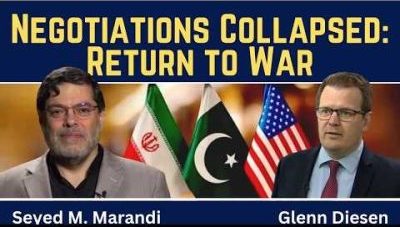
Seyed M. Marandi: Negotiations Collapsed – Return to War
or go to
Aletho News Archives – Video-Images
From the Archives
Wartime internment camps in Australia
National Archives of Australia
World War I
During World War I, for security reasons the Australian Government pursued a comprehensive internment policy against enemy aliens living in Australia.
Initially only those born in countries at war with Australia were classed as enemy aliens, but later this was expanded to include people of enemy nations who were naturalised British subjects, Australian-born descendants of migrants born in enemy nations and others who were thought to pose a threat to Australia’s security.
Australia interned almost 7,000 people during World War I, of whom about 4,500 were enemy aliens and British nationals of German ancestry already resident in Australia.
Records of World War I internment camps
World War II
During World War II, Australian authorities established internment camps for three reasons – to prevent residents from assisting Australia’s enemies, to appease public opinion and to house overseas internees sent to Australia for the duration of the war.
Unlike World War I, the initial aim of internment during the later conflict was to identify and intern those who posed a particular threat to the safety or defence of the country. As the war progressed, however, this policy changed and Japanese residents were interned en masse. In the later years of the war, Germans and Italians were also interned on the basis of nationality, particularly those living in the north of Australia. In all, just over 20 per cent of all Italians resident in Australia were interned. … continue
Blog Roll
 Aletho News
- Seyed M. Marandi: Negotiations Collapsed – Return to War
- Tomorrow’s naval blockade showdown
- ‘Israel’ attacks civilians to hide its embarrassing military failures & out of pure sadism
- Any Foreign Military Vessel Approaching Hormuz Under Any Pretext ‘Will Be Dealt With Severely’: IRGC
- Diplomats slam US negotiators’ performance in Iran talks
- Trump Refuses Exit Ramp, War with Iran will Continue
- Trump Says US Naval Blockade in Strait of Hormuz Will Begin Shortly
- US, Iran end 21-hour talks without agreement
- US IRAN TALKS: Who Are the Crazy Ones Here? /Lt Col Daniel Davis
- Talks with the US end without a deal over excessive US demands: Iran
- If Americans Knew
- US-Iran ceasefire negotiations make zero progress – Daily Update
- Pro-Israel ‘Thinktanks’ and Individuals who Influence U.S. Foreign Policy
- Mearsheimer reveals how Israel dictates US policies on Iran, Gaza – video
- After killing 350+, Israel still has a “score to settle” with Lebanon before ceasefire – Daily Update
- Military aid to Israel emerges as the latest political litmus test for Democrats
- The only Palestinian children’s rights organization closes following years-long Israeli campaign against it
- ‘I Can’t Forget the Smell’: Lebanese Reel After Israel Kills Over 300 in Single Day
- DNC Shoots Down Resolutions Calling Out AIPAC and Limiting Arms to Israel
- TCN: Is Israel Blackmailing President Trump?
- Israel killed at least 303 Lebanese yesterday – who were they? Daily Update
- No Tricks Zone
- German Expert: Heat Dome Led To Record Temps In Western USA…Warmer In 1934, 1936
- New Study: No Linear Warming Or Glacier Retreat Along Northern Antarctic Peninsula Since 1980s
- An Inconvenient Tree: Uncovered In Alps… Europe Much Warmer Than Today 6000 Years Ago
- New Study Reports A 60% Slowdown In Greenland’s Ice Loss Rate In The Last Decade
- Low Intensity Tornado Wrecks Major Solar Farm, Creating A Potential Toxic Dump
- New Study Finds Warming Saves Lives…Cold Temperatures 12 Times More Deadly Than Excess Heat
- German Science Blog Accuses PIK Climate Institute Of Hallucinating Climate Tipping Points
- Devastating Assessment Of Comirnaty Vaccine By Former Senior Pfizer Europe Toxicologist
- New Study: CO2 Is ‘Effectively Negligible’ As An Explanatory Climate Change Factor Since 2000
- Former Pfizer Toxicologist Dr. Helmut Sterz Tells Bundestag Hearing Pfizer Vaccine Should Have Never Been Approved
 Aletho News