Bolivians Face Major Post-Coup Struggles As Luis Arce Seeks Justice, Economic Reforms, Activist Says
By Demond Cureton – Sputnik – 17.11.2020
Bolivians are tasked with numerous challenges after successfully voting out the former Jeanine Anez coup government, who seized control last year in elections contested by opposition forces. The nation has entered a period of restructuring and healing following major political crises in recent months.
Miriam Amancay Colque, spokeswoman for the Bartolina Sisa Resistance movement in London, spoke to Sputnik about events in Bolivia following President Luis Arce and Vice-president David Choquehuanca’s victory in national elections.
SPUTNIK: Can you tell us about the current mood in Bolivia? How are people feeling after Luis Arce’s electoral victory?
Miriam Amancay Colque: The Bolivian people have regained their hope or, as we call it, their Ajayu, or their ‘soul’.
The victories of President Arce and Vice-president Choquehuanca mark those of the Bolivian people that, despite intimidation, persecution and massacres, defended democracy against racist, genocidal Jeanine Anez dictatorship.
Bolivians, in particular indigenous people, feel that their dignity and identity has been restored and are now placing faith in their new leadership.
Former president Evo Morales has also returned from exile in Argentina, back to his roots in Bolivia. Nearly 1m people welcomed him in El Chapare, and we are sure he will work positively with the new government.
SPUTNIK: How was the swearing in ceremony and how did people react?
Miriam Amancay Colque: The swearing-in ceremony for the President and Vice-President was inspiring. It took place on 8 November and was attended by global delegates and Bolivians. Social movements from across the country joined the parade to show support for the two officials, and the event was celebrated with music and dances for over eight hours.
There was widespread jubilation, with several thousands taking part in the event. A small opposition group protested the event but failed to dampen the celebrations.
Bolivians have shown the world that a humble but dignified and courageous people were able to break the chains of the former Anez dictatorship to reclaim their democracy.
SPUTNIK: What has become of the previous coup administration?
Miriam Amancay Colque: The former regime strongman who launched massacres across the country, Arturo Murillo Prijic, was the first to flee the country. Jeanine Anez is also believed to have fled Bolivia, and her collaborators have either renounced or left their posts.
Most of them will face justice for numerous crimes, including massacres, torture, imprisonment, corruption and others.
SPUTNIK: Have they accepted defeat or do you think they will attempt further coups in the country?
Miriam Amancay Colque: The opposition will always be on the lookout, but as long as Bolivians remain united and mobilised, it will be very difficult for them to violate the rule of law and its institutions again.
Those most affected by the attacks from the right-wing groups were always indigenous people who, after over 500 years, continue to struggle against oppressors and will continue to defend their rights.
Dignified and sovereign people rebelled and empowered themselves by speaking out against the Anez regime and emerged victorious.
But it should be known that the opposition never works alone. US organisations such as the National Endowment for Democracy (NED) funded the right-wing opposition with millions to destabilise left-wing governments.
Groups such as Rios de Pie (Standing Rivers) were camouflaged as an environmental non-governmental organisation (NGO) lead by Jhanisse Vaca Daza, a US-backed operative with experience in toppling progressive governments.
Daza also holds racist views and is now campaigning against President Arce in an attempt to divide Bolivians again.
SPUTNIK: How will the incoming administration deal with those responsible for crimes against humanity?
Miriam Amancay Colque: To bring peace we need justice, and all people involved in crimes against humanity must be tried and punished. Massacres took place against mostly indigenous people, leading to over 30 people killed and hundreds injured, and cannot go unpunished.
Judicial authorities in Bolivia will need to investigate and restore justice and peace to affected families, and President Arce has met with families in Senkata to listen to their testimonies.
We remembered the victims killed and injured in Ovejuyo, Pedregal, Rosales and Chasquipampa in southern La Paz City on 11 November, and victims of the Huayllani, Sabaca massacre last year were remembered on the 15th.
Many of them have been unable to seek justice, and our organisation sends our heartfelt solidarity to all those affected.
Despite the pain and trauma, it is important to seek justice for all victims and their relatives subjected to threats and mistreatment by security forces, including police and paramilitary groups as well as health professionals refusing to provide medical care to victims because they ‘looked like Masistas’, or indigenous people.
SPUTNIK: According to Reuters, Arce promises “moderate” Socialism for the Bolivian people. What precisely does he mean by this and how would it work compared to socialism under Evo Morales?
Miriam Amancay Colque: Neoliberal policies have been imposed on Bolivia, leading to major poverty, unemployment and inequality, among others.
Capitalism is not the answer for these people there is a need to move to a system that works for the people rather than exploiting them, and that supports the majority rather than a few by redistributing wealth to the poorest and marginalised.
Arce’s socialist views were formed when he was a member of the Socialist Party 1 (PS1) in the 80s. His party leader, Marcelo Quiroga Santa Cruz, was tortured, killed and disappeared by military dictator Luis Garcia Mesa in July 1980.
We also recognise that Morales is an undisputed and charismatic indigenous leader with a major place in history, and Arce is, after all, the architect of the miraculous economic policies that transformed Bolivia under Morales.
Arce’s policies halved extreme poverty from 38 percent to 17 percent, reduced national debt and increased wealth by 5 percent each year. It is thanks to Arce that Bolivia has made such progress prior to the US backed coup. He is also a more pragmatic person and is well-qualified to rescue the nation from economic collapse and bring people together.
SPUTNIK: What are the most important challenges for the Arce administration?
Miriam Amancay Colque: President Arce has inherited a real challenge after the coup government left the country economically destroyed with state companies privatised and bankrupt, along with a -11 percent recession rate and unemployment tripled.
Jeanine Anez took power only to embezzle public funds with her collaborators, who never offered support to Bolivians left to their own devices in the COVID-19 pandemic.
Dead victims were found in the streets, in houses and other places, without medical assistance and abandoned by the state.
President Arce’s top priority will be to tackle COVID-19 by providing full assistance to Bolivians. He recently stated he would rebuild the economy, boost domestic consumption and pledge financial support, and announced on 12 November a further Bonus Against Hunger to be paid in December to unemployed people over 18 years old.
The most pressing problems in the country will be economic and health issues. President Arce has said he would need to implement measures to boost the economy.
Personally, I think there should be no payments of foreign debt to the International Monetary Fund (IMF) until the economy is back on track and COVID-19 is suppressed.
The government should also continue industrialising national gas, lithium and other resources, and further advancements in social services should be implemented to inspire young, new leaders in the future.
SPUTNIK: What issues will they need to reverse from the former Anez coup government?
Miriam Amancay Colque: Measures will need to be implemented to reverse the damage of the Anez coup government, including boosting internal demand, renationalising strategic companies from foreign companies and backing state firms.
Education will need to be restored after the coup government shuttered schools for the year, leaving thousands of children without access to education.
The Arce government has reestablished the Culture and Decolonisation Ministry to continue to support the Bolivian people.
The Bolivian people are beginning to decide their own future for themselves.
Iran ready to play leading role in Syria reconstruction/ Shalamcheh-Basra-Latakia railway; The most important economic joint project
Mideast Discourse | November 6, 2020
Steven Sahiounie, a Syrian-American journalist, believes that while Western and European sanctions prevent the import of replacement parts needed by Syria in infrastructure projects, the ability of Iranian industrial engineers to build what is needed could be a vital path around and behind Western sanctions.
Sahiounie tells the Bazaar in an exclusive interview that the prospects for continuing bilateral relations between Iran and Syria are good.
“They both share the same dedication to peaceful relations with countries in the Middle East region while holding firmly to the ideal of resistance to the occupation of Palestine, and demanding that the rights of the Palestinian people be restored without delay”, he said.
Steven Sahiounie is an award-winning journalist, and chief editor of MidEastDiscourse. He has appeared on RT, PressTV, Syrian News, as well as international TV and radio programs. As a Syrian-American journalist and political commentator, he is often sought out concerning currents events facing Syria and the region.
Following is the text of the interview:
Bazaar: How do you predict the prospects for bilateral relations between Iran and Syria?
Sahiounie: The prospects for continuing bilateral relations between Iran and Syria are good. They both share the same dedication to peaceful relations with countries in the Middle East region while holding firmly to the ideal of resistance to the occupation of Palestine, and demanding that the rights of the Palestinian people be restored without delay.
Bazaar: What are the current economic relations and volume of trade between Iran and Syria?
Sahiounie: The trade officials of both Syria and Iran have worked toward establishing industrial and economic free trade zones jointly, with an emphasis on the private sector.
Iran and Syria are slated to boost bilateral trade volume from $500 million to $1 billion within the next year.
Bazaar: What is the major part of Syrian exports?
Sahiounie: The top exports of Syria are Pure Olive Oil, Spice Seeds, Other Nuts, Apples, Pears, and Calcium Phosphates.
Syria shipped an estimated $462 million worth of goods around the globe in 2019. That amount reflects a -46% decrease since 2015 and a -36.2% drop from 2018 to 2019.
The US-NATO attack on Syria beginning in 2011 has devastated lives, the infrastructure, and the economy. The continuing sanctions by the US and EU are designed to keep the war against the Syrian people going, even though the battlefields are silent, except for Idlib, which is under the military occupation of Al Qaeda.
The data from 2010 shows that 81.1% of products exported from Syria were bought by importers in Iraq, Italy, Germany, Turkey, Saudi Arabia, France, Lebanon, Jordan, United States, Netherlands, Egypt, and Spain. Due to the US-EU sanctions against Syria and the Arab monarchies of the Persian Gulf region boycotts, the markets for Syrian goods were closed due to political ideology. Iraq, Lebanon, and Jordan have maintained some trade with Syria in defiance of the western bullies.
The Syrian government is working with a comprehensive plan for agricultural development and expansion of agricultural and food industries to enhance the Syrian economy in the face of the sanctions and the unfair siege on the livelihood of the Syrian people.
Bazaar: What is the most important economic project of the two countries at this present?
Sahiounie: The project to build a railroad connecting Iran’s Shalamcheh border crossing, to the Iraqi port of Basra, and finally to reach Syria’s Mediterranean port city of Latakia is the most important economic project between Syria and Iran.
The project has been on the drawing board for years and is now in the beginning stages. The mammoth railroad line will be linked to the New Silk Road, also known as China’s Belt and Road Initiative, which in turn is also linked to the Russian railroad system. Once completed, western sanctions on Syria and Iran will be thwarted.
Bazaar: What is the most important tool to protect the continuation of bilateral economic relations?
Sahiounie: The most important tool for Iran and Syria to use to protect their continuing bilateral economic relations is in supporting the two countries’ private sectors, both in trade and industry, for the benefit of investment opportunities in the free zones. The bartering system of exchanging goods and services without the use of currency is another tool that can be effective.
Bazaar: The trade between the two countries is set to reach $ 1 billion by next year. What are the plans for expanding bilateral trade? What ?is your opinion?
Sahiounie: Plans to expand bilateral trade include mechanisms to enhance commercial exchange and develop cooperation in the field of research laboratories and medical equipment and infrastructure projects, development, and investment.
The agreement is known as “long-term strategic economic cooperation”, which includes industrial, trade, and agricultural cooperation. Education, housing, public works, railroads, and investments are covered in other agreements.
An important banking agreement between Iran and Syria has been reached, which sends a message to the international community about the depth of Syrian-Iranian cooperation and will benefit Iranian companies wishing to invest in Syria and participate in reconstruction.
Syria and Iran signed several agreements worth $142.5 million, involving Iranian companies involved in the restoration of more than 2,000 MegaWatts of power production capacity, and additional projects by the dozens in the oil and agricultural sectors.
Bazaar: What is your opinion about the impact of Caesar’s law and resulting US sanctions on Iran-Syria trade?
Sahiounie: The impact of Caesar’s sanctions is psychological. To instill fear into the minds of all Syrian people, as well as all countries which would conduct business with Syria.
Layer, after layer of sanctions, has been applied to Syria, to destroy the Syrian government, and installing a US puppet to be the ultimate ‘yes-man’ to Washington.
As Syria and the entire world grapple with the COVID-19 pandemic, the imposition of such inhumane sanctions has increased the suffering of the Syrian people. Instead of coming to the aid of people inside Syria with medical supplies to cope with the pandemic, the sanctions prevent medical companies abroad from doing business with merchants in Syria in the medical supplies industry, for fear of being tracked down and fined by the US Treasury Department.
Horror stories have been heard of companies in Europe who sent medicines and supplies to Syria, only to be tracked down in their own offices in Europe by US authorities enforcing the sanctions against anyone who would dare to throw a lifeline to anyone in Syria.
Bazaar: What is your assessment about Iran’s role in Syria`s reconstruction?
Sahiounie: Since 2017, Iranian companies have participated in rebuilding expos in Syria, and in 2019, the Syrian–Iranian Joint Chamber of Commerce held its first meeting. Iran is poised to play a leading role in the reconstruction of Syria. Projects include residential buildings, power stations, agriculture, telecommunications, oil, and mining.
In 2018, Iran signed a Memorandum of Understanding with Syria to construct 200,000 housing units near Damascus alongside other large projects. Iranian companies are participating in several major projects in Syria’s energy industry, including a gas-fired power plant project in Aleppo. Iran’s largest energy construction company, MAPNA Group, is engaged in the construction of the 540-MegaWatt combined-cycle power plant in Latakia.
Over 95 percent of the power plant equipment and much of the equipment in the Iranian electricity and water industry are domestically manufactured and can repair steam, natural gas, combined-cycle, incineration, and turbines of generators, as well as make strategic parts for power plants.
While the US-EU sanctions prevent Syria from importing much-needed replacement parts for infrastructure projects, the ability of the Iranian industrial engineers to manufacture what is needed can be a vital path around and behind the back of the western sanctions.
Time to Stand Up and Be Counted
By Craig Murray | October 29, 2020
Today, nothing is more important than to say that we will not be silent on the dreadful oppression of the Palestinian people; the daily beatings, killings, humiliations, demolitions, expropriations and destruction of groves that are the concomitant of Israeli illegal occupation.
We will never be browbeaten into silence on the slow genocide of the Palestinian people.
Nobody with any grasp on the location of their right mind believes Jeremy Corbyn to be an anti-Semite. Nobody with any grasp on their right mind believes the Labour Party is now anything but the substitutes’ bench for the Neoconservative team. Under Keir Starmer, the Labour Party has failed to oppose the granting of legal powers to the security services to kill, torture, entrap, forge and fake with impunity. It has failed to oppose the limitation of prosecution of British soldiers for war crimes. The Labour Party now seeks to erase all trace that it might once have been a party that offered an alternative to the right wing security state.
As Director of Public Prosecutions, Keir Starmer pressurised Swedish prosecutors who wished to drop the case against Julian Assange, to persist in order that he might be rendered to the USA. He further persuaded them not to interview Julian here, which is standard practice when he was never charged but only wanted for questioning, and which would have reduced Julian’s ordeal by four years.
Starmer received £50,000 in personal donations from lobbyist Sir Trevor Chinn to fund his leadership bid.
It is perfectly plain that Starmer’s aim in suspending Corbyn is to drive the mass membership that Corbyn attracted out of the Labour Party, and make it a reliable arm of the right wing security state. He wants the Labour Party to be financially dependent not on its members, who have annoying principles, but on donors like Chinn.
The media and political elite have attained their aim; there is no longer any point in voting in Westminster elections. A right wing government supporting the neo-con status quo and the ever tightening security state is now firmly guaranteed and cannot be influenced by a Westminster election.
Anti-normalization Protests Erupt in Bahrain despite Security Restrictions

MEMO | October 24, 2020
Anti-normalisation protests erupted in the streets of the Bahraini capital of Manama after Friday prayer yesterday.
Protesters held up banners denouncing normalisation, with the unified slogan “Anti-normalisation Friday”, along with a photo of a masked Palestinian militant.
Bahrain’s normalisation agreement with Israel was met with widespread anger, despite tight security restrictions, as well as the summoning of the demonstration organisers and participants, forcing them to sign an order to stay off the streets and not to engage in disruptive activities.
The protesters expressed their rejection of normalisation by carrying banners with the slogans: “Normalisation is treason”, “We reject submission, humiliation and surrender to the instructions of the US and Britain” and “Israel is a cancer that must be eradicated, and we will”. Other slogans stated: “We will never surrender” and “Normalisation is shameful, it is a betrayal”.
After Bahrain announced normalising relations with Israel, the hashtag “Bahrainis against normalisation” was widely circulated by Bahraini activists on Twitter.
The Emirati and Bahraini normalisation agreements with Israel were categorically rejected by the Palestinian authorities and factions, who considered the decision as a betrayal of Al-Aqsa mosque, Jerusalem and the Palestinian cause.
Arce to Restore Bolivian Relations With Cuba and Venezuela, Blasts OAS

teleSUR – October 21, 2020
Bolivia’s elected president Luis Arce said that he would carry out a foreign policy of restoration of relationships with Venezuela, Cuba, and Iran.
“We are going to reestablish all relations. This government has acted very ideologically, depriving the Bolivian people of access to Cuban medicine, Russian medicine, and advances in China. For a purely ideological issue, it has exposed the population in a way unnecessary and harmful,” Arce explained.
The former Economy Minister, during the 14 years mandate of Indigenous leader Evo Morales, participated in the process of increasing Bolivian’s literacy levels and offering free healthcare to thousands with the support of Cuban doctors. All this social progress was radically paralyzed by the coup born government of Jeanine Añez.
Likewise, Arce emphasized that his government will open the door to all countries based on mutual respect and sovereignty. “Nothing more,” Arce remarked.
On the other hand, the Movement Towards Socialism (MAS) leader warned that the Organization of the American States (OAS) has to amend its mistakes in Bolivia. The OAS co-authored the report on the 2019 elections that served as a pretext to coup Evo Morales. This report was later proved to be inaccurate. It has also supported the de facto government of Jeanine Añez, who carried out massacres and sank the country into an unprecedented economic recession.
In this sense, Arce was clear that the “OAS has to make amends for their mistakes. But if it does not, we (the elected government) will work, as well as with other countries, with international organizations that respect us.”
Hamas: the US has told Arab states to stop supporting the PA
MEMO | October 19, 2020
A senior Hamas official has claimed that the US has told a number of Arab states to stop giving financial support to the Palestinian Authority, Al-Aqsa TV reported on Sunday. According to Saleh Al-Arouri, a number of states have been asked to put pressure on Fatah, which controls the PA, in order to pull out of any reconciliation with Hamas.
The Deputy Head of the Hamas Political Bureau added that these countries are those which sponsored the US deal of the century. He stressed, however, that Hamas is committed to the Palestinian understandings reached in Istanbul and would never backtrack on them.
Al-Arouri also revealed that the US had offered to talk with Hamas over the so-called “deal”, but Hamas refused because Washington’s intention was to split the national Palestinian stance and threaten the PLO leadership.
In July, the former Hamas leader Khaled Meshaal said that the best way to undermine the Israeli annexation plans “is to change the function of the PA” from serving the Israeli occupation to confronting it. He stressed that if such a change was not made, the PA should be dissolved after discussions with the different Palestinian factions and reaching an agreement on a replacement in order not to end up in chaos.
95% of Bahrainis against normalization deal with Israel: Opposition tells UN
Press TV – October 18, 2020
Bahrain’s largest opposition group calls on the United Nations to intervene in the kingdom’s unbridled push to deepen its relations with the Israeli regime, saying the move falls short of the general population’s consent.
The Al-Wefaq National Islamic Society released the statement on Sunday, as the two sides are expected to sign a “joint communique on establishing peaceful and diplomatic relations” during a visit by Israeli and US delegations to the Bahraini capital Manama.
The move marks a major step forward in formalizing Manama and Tel Aviv’s ties after a September 15 event at the White House during which Bahrain and the United Arab Emirates signed “normalization” deals with the occupying regime.
All the Palestinian factions besides countless independent Muslim figures and bodies have unanimously blasted the détente as a stab in the back of the Palestinian nation and a US-facilitated attempt at betraying the Palestinian cause of ending the Israeli occupation and aggression.
The opponents of the rapprochement say the move that has been taken by a handful of unelected authorities in Manama and Abu Dhabi never qualifies to represent the opinion of the world’s millions-strong Arab and Muslim community.
“More than 95% are against the agreement and the normalization with the Zionists and the absence of any authority representing the people” in the push towards cementing the détente, al-Wefaq said, addressing UN Secretary-General Antonio Guterres.
“We call on the secretary-general and the international community to ask the Bahraini regime to allow Bahrainis to give their final word on the agreement between the Bahraini regime and the Zionist occupation,” it added.
“The people of Bahrain need to express their opinion about this illegal agreement,” the statement read, calling the deal unconstitutional and contrary to “patriotic and national values.”
The movement said another reason for the agreement’s illegality was that Manama was going ahead with it while stifling all instances of opposition at home.
Since 2011, Bahrain has been witnessing near-daily peaceful rallies against Manama’s routine practice of heavily discriminating against its Shia Muslim majority. The state has come down hard on the protests, killing scores of people and jailing hundreds of others.
Dying Alone: When We Stopped Caring for Palestinian Prisoners
By Ramzy Baroud | Dissident Voice | October 12, 2020
“No one cares about the prisoners.” Over the past few years, I have heard this phrase — or some variation of it — uttered many times by freed Palestinian prisoners and their families. Whenever I conduct an interview regarding this crucial and highly sensitive topic, I am told, repeatedly, that ‘no one cares.’
But is this really the case? Are Palestinian prisoners so abandoned to the extent that their freedom, life and death are of no consequence?
The subject, and the claim, resurfaces every time a Palestinian prisoner launches a hunger strike or undergoes extreme hardship and torture, which is leaked outside Israeli prisons through lawyers or human rights organizations. This year, five Palestinian prisoners died in prison as a result of alleged medical negligence, or worse, torture.
Even international humanitarian aid workers, like Mohammed el-Halabi, are not immune to degrading treatment. Arrested in August 2016, el-Halabi is yet to be charged for any wrongdoing. News of his plight, which originally received some media attention — due to his work with a US-based organization – is now merely confined to Facebook posts by his father, Khalil.
As of October 1, el-Halabi has been paraded before 151 military trials, yet unaware what the charges are. The cherished Palestinian man, who has played a major role in providing cancer medicine to dying children in Gaza, now holds the record of the longest military trial ever carried out by the Israeli occupation.
Desperate for some attention, and fed up with cliches about their ‘centrality in the Palestinian struggle’, many prisoners, whether individually or collectively, launch hunger strikes under the slogan: ‘freedom or death’. Those who are held under the draconian and illegal ‘administrative detention’ policy, demand their freedom, while ‘security prisoners’, who are held in degrading conditions, merely ask for family visitations or food that is suitable for human consumption.
Health complications resulting from hunger strikes often linger long after the physical ordeal is over. I have interviewed families of Palestinians who were freed from Israeli prisons, only to die in a matter of months, or live a life of endless pain and constant ailments for years following their release.
According to some estimates, over 800,000 Palestinians have been imprisoned in Israeli jails since the Israeli occupation of East Jerusalem, the West Bank and Gaza in June 1967.
Maher al-Akhras is currently writing the latest chapter in this tragic narrative. At the time of writing this article, he has just concluded 77 days of uninterrupted hunger strike. No medical opinion is necessary to tell us that al-Akhras could die any moment. A recent video released of al-Akhras on his Israeli hospital bed conveyed a glimpse of the man’s unbearable suffering.
With a barely audible voice, the gaunt, exhausted-looking man said that he is left with only two options: either his immediate freedom or death within the confines of Israel’s “phony justice system.”
On October 7, his wife, Taghrid, launched her own hunger strike to protest the fact that “no one cares about” her husband.
Once again, the lack of concern for the plight of prisoners, even dying ones, imposes itself on the Palestinian political discourse. So, why is this the case?
The idea that Palestinian prisoners are all alone in the fight for freedom began in the early 1990s. It was during this period that the various Oslo Accords were signed, dividing the Occupied Territories into zones governed by some strange Kafkaesque military system, one that did not end the Israeli occupation, but, rather, cemented it.
Largely dropped from the Israeli-Palestinian negotiations agenda at the time, but permanently, eventually, were several pressing issues fundamental to Palestinian rights and freedom. One of these issues was Israel’s brutal system of incarceration and imprisonment without trial.
Certainly, some Palestinian prisoners were released in small batches occasionally, as ‘gestures of goodwill’; but the system, itself, which gave Israel the right to arrest, detain and sentence Palestinians, remained intact.
To date, the freedom of Palestinian prisoners — nearly 5,000 of them are still held in Israel, with new prisoners added daily — is not part of the Palestinian leadership political agenda, itself subsumed by self-interests, factional fights and other trivial matters.
Being removed from the realm of politics, the plight of prisoners has, over the years, been reduced to a mere humanitarian subject — as if these men and women are no longer political agents and a direct expression of Palestinian resistance, on the one hand, and Israel’s military occupation and violence, on the other.
There are ample references to Palestinian prisoners in everyday language. Not a single press release drafted by the Palestinian Authority, its main Fatah faction or any other Palestinian group fails to renew the pledge to free the prisoners, while constantly glorifying their sacrifices. Unsurprisingly, empty language never produces concrete results.
There are two exceptions to the above maxim. The first is prisoner exchanges, like the one that took place in October 2011, resulting in the freedom of over 1,000 Palestinian prisoners. And, second, the prisoners’ own hunger strikes, which are incremental in their achievements, but have, lately, become the main channel of resistance.
Sadly, even solidarity with hunger strikers is often factional, as each Palestinian political group often places disproportionate focus on their own striking prisoners and, largely ignores others. Not only has the issue of prisoners become depoliticized, it has also fallen victim to Palestine’s unfortunate disunity.
While it is untrue that ‘no one cares about Palestinian prisoners’, thousands of Palestinian families are justified to hold this opinion. For the freedom of prisoners to take center stage within the larger Palestinian struggle for freedom, the issue must be placed at the top of Palestine’s political agenda, by Palestinians themselves and by Palestinian solidarity networks everywhere.
Maher al-Akhras, and thousands like him, should not risk their lives to obtain basic human rights, which should, in theory, be guaranteed under international law. Equally important, Palestinian prisoners should not be left alone, paying a price for daring to stand up for justice, fairness and for their people’s freedom.
 Ramzy Baroud is a journalist and the editor of The Palestine Chronicle. He is the author of five books. His latest is These Chains Will Be Broken: Palestinian Stories of Struggle and Defiance in Israeli Prisons (Clarity Press). Baroud is a Non-resident Senior Research Fellow at the Center for Islam and Global Affairs, Istanbul Zaim University (IZU). Read other articles by Ramzy, or visit Ramzy’s website.
Qatar, Pakistan rule out possibility of normalization with Israel
Press TV – September 15, 2020
A high-ranking Qatari official says Doha will not follow in the footsteps of neighboring Bahrain and the United Arab Emirates (UAE) to normalize relations with Israel, emphasizing that Doha will not take such a measure as long as the Palestinian issue is unresolved.
“We don’t think that normalization was the core of this conflict and hence it can’t be the answer,” Qatari Spokesperson for the Ministry of Foreign Affairs Lolwah Rashid al-Khater, said in an exclusive interview with Bloomberg television news network on Monday.
She added, “The core of this conflict is about the drastic conditions that the Palestinians are living under” as “people without a country, living under occupation.”
Last week, Bahrain joined the UAE in striking an agreement to normalize relations with Israel.
In a joint statement, the United States, Bahrain and Israel said the agreement to establish ties was reached after US President Donald Trump spoke with Israeli Prime Minister Benjamin Netanyahu and Bahraini King Hamad bin Isa Al Khalifah.
The deal came one month after the UAE and the Tel Aviv regime agreed to normalize ties under a US-brokered accord.
Bahrain will join Israel and the UAE for a signing ceremony at the White House hosted by Trump later on Tuesday. The ceremony will be attended by Netanyahu, Bahrain’s Foreign Minister Abdullatif Al Zayani and Emirati Foreign Minister Sheikh Abdullah bin Zayed Al Nahyan.
Elsewhere in her remarks, Khater pointed to the attempts, backed by Kuwait, to end the economic and diplomatic blockade Saudi Arabia and a number of its allies imposed on gas-rich Qatar in June 2017, noting that the efforts have not yet reached a tipping point.
“In the past couple of months, there have been messages and messengers going back and forth,” she said.
“It’s very early to talk about a real breakthrough,” but “the coming few weeks might reveal something new,” the top Qatari official pointed out.
“We’re beyond this point. The point we are at is engaging constructively in unconditional negotiations and discussions” that “do not necessarily need to include all parties at once,” Khater said.
Saudi Arabia, the UAE, Bahrain and Egypt severed diplomatic and trade ties with Qatar on June 5, 2017, after the quartet officially accused Doha of meddling in regional affairs and supporting terrorism.
The quartet later issued a 13-point list of demands in return for the reconciliation, which was rejected as an attack on Qatar’s sovereignty.
‘Pakistan won’t compromise on Palestine cause’
Meanwhile, Pakistani Prime Minister Imran Khan reacted to Bahrain’s normalization of ties with the Israeli regime following the UAE, saying, “Any recognition of Israel will face strong opposition from Palestinian people. We cannot make a decision which runs counter to the aspirations of the oppressed Palestinian nation. We will continue to support the fair resolution of the Palestinian issue.”
“If the whole world wants to recognize Israel, Islamabad would not do so and would never make a decision contrary to the wishes of the Palestinian people” Khan told Urdu-language 92 News television news network on Tuesday.
He underlined that the Pakistani government will never compromise on its fundamental principles of supporting Palestine and its liberation, as stated by the founder of Pakistan Muhammad Ali Jinnah.
“Until a just solution to the Palestinian issue is produced, any recognition of the Zionist regime is ruled out. How can we accept to normalize with the Zionists when the main Palestinian parties do not accept it?” the Pakistani premier said.
Bahrain civil society groups reject normalisation agreement
MEMO | September 14, 2020
Civil society groups in Bahrain have rejected the government’s normalisation agreement with Israel which is expected to be signed formally in Washington DC on Tuesday. Seventeen organisations have issued a joint statement to this effect, with signatories including the General Federation of Workers’ Trade Unions in Bahrain, the Bahraini Bar Association and the Bahrain Women’s Association.
“We adhere to the constants of the Bahraini people regarding the just Palestinian cause and the provisions of the constitution that criminalise normalisation with the Zionist entity, in accordance with the official and popular Arab and Islamic consensus rejecting normalisation with this criminal entity,” said the groups. “All forms of normalisation with the Zionist entity initiated by some countries have neither produced peace nor restored the usurped rights of the Palestinian people, but have, rather, encouraged the enemy to commit more crimes against Palestine and the holy Arab and Muslim sites, foremost of which is Holy Jerusalem.”
The statement added that “what is known as a peace treaty between Bahrain and the Zionist enemy under the auspices of the US administration has brought about tremendous shock, resentment and widespread popular rejection among the Bahraini people, their political forces, civil society institutions, and all national actors and personalities.”
As a result, the signatories pointed out, nothing arising from the normalisation deal will have any popular legitimacy. “Generations of Bahrainis have believed in the just nature of the Palestinian cause,” they concluded.
US charges three over collecting monetary aid for war-torn Yemen
Press TV – August 29, 2020
The US Justice Department has charged three people in connection with a campaign to collect monetary assistance for the oppressed Yemenis, who are suffering under the years-long Saudi war and blockade.
It claimed that Muzzamil Zaidi and Asim Naqvi, US citizens living in Iran’s holy city of Qom and the American city of Houston, respectively, and Ali Chawla, a Pakistani national residing in Qom, had violated the International Emergency Economic Powers Act.
Justice Department officials alleged that the defendants “have considerable operational links” to the Islamic Revolution Guards Corps (IRGC) and moved US currency from the United States to Iran.
They claimed that Zaidi, Chawla and other members of an organization, called Islamic Pulse, received permission from Leader of the Islamic Revolution Ayatollah Seyyed Ali Khamenei to collect a religious tax on his behalf and send half the money to Yemen.
“Zaidi, Naqvi, and Chawla allegedly raised money in the United States on behalf of Iran’s Supreme Leader, and illegally channeled these dollars to the government of Iran. As a result of today’s charges, their unlawful scheme has been exposed and brought to an end. The US Department of Justice and its National Security Division are committed to holding accountable individuals who operate covert networks within the United States in order to provide support and funds to hostile foreign governments like Iran in violation of US law,” said Assistant Attorney General for National Security John C. Demers.
The Justice Department also said Zaidi, 36, was charged with acting in the US as an agent of the Iranian government without first notifying the Attorney General.
The charges come at a time when the US has been continuing to supply weapons and military equipment to Saudi Arabia despite war crimes committed by the regime in Yemen.
The Yemeni army says Washington arms Saudi Arabia and its regional allies, defines goals for them and is involved in a political cover-up for their acts of aggression.
Saudi Arabia waged the devastating military aggression against its southern neighbor in March 2015 in collaboration with a number of its allied states.
The purported aim was to return to power a Riyadh-backed former regime and defeat the popular Houthi Ansarullah movement that took control of state matters after the resignation of the then president and his government.
The UN refers to the situation in Yemen as the world’s worst humanitarian crisis, with more than half of hospitals and clinics destroyed or closed.
Featured Video

Armando Mema: Finland Used as New Frontline Against Russia
or go to
Aletho News Archives – Video-Images
New Documentary
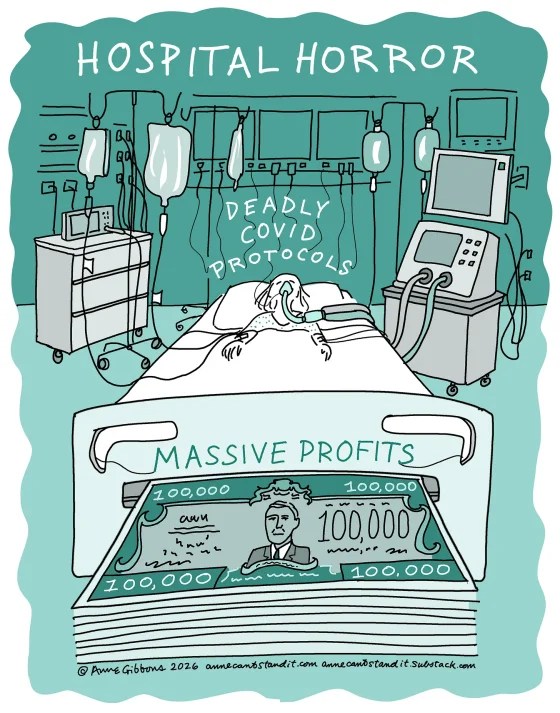
Hospital Horror
Documented in the film,“Bad Medicine”
Blog Roll
 Aletho News
- Poland and Bulgaria put brakes on Ukraine weapons funding
- Russia Reaffirms Its Support for Sovereignty, Territorial Integrity of Lebanon – Russian MFA
- Araghchi: Failure to punish aggressors against Iran endangers all nations
- Iran tells UN Security Council to stop reversing roles of ‘aggressor and victim’
- Disgraced neocons Feith & Libby: stop whining about ‘endless war’
- CENTCOM rejects Israeli claims of preparations for new Iran attacks
- Your Shopping Bag Runs Through Hormuz
- Armando Mema: Finland Used as New Frontline Against Russia
- Gestapo 2.0? Germany grants spy agencies sweeping new powers
- Franco-Palestinian group seeks court ban on Israeli real estate fair in Paris
- If Americans Knew
- An error has occurred; the feed is probably down. Try again later.
- No Tricks Zone
- New Study: Barents Sea Temperatures Were Warmer And Sea Ice Less Extensive In The 1700s Than Today
- German Authorities Start Initiative To Evaluate Public Register For Climate “Disinformation” Spreaders!
- Zonal Asymmetry of Temperature Change in the Antarctic Circumpolar Current
- New Study: The Net Fossil Fuel Contribution To Rising Atmospheric CO2 Has Been Zero For 500 Years
- Germany’s Green Energy Transition Becoming Increasingly Expensive…Another 6 Trillion Euros!
- Sudden Stratospheric Warming, Powerful El Niño Combination May Lead To Extreme Europe Cold, Energy Crisis!
- Two New Studies Find Thwaites Glacier Melt Cannot Be Driven By Human Activity Or A Warming Ocean
- E-Cars Reduce CO2 Emissions By Only 41% Compared To Internal Combustion Engine Vehicles
- Predictions Made By Renowned Climate Professor Over Past Decades Have Been Proven To Be Poor
- New Study Suggests Large Regions Of The Pacific Ocean Have Been Cooling For The Last 80 Years

