April 2016 Report: 567 Palestinians arrested by Israeli occupation, including 123 children

Samidoun Palestinian Prisoners Solidarity Network | May 3, 2016
In a report by Palestinian prisoners’ institutions, the Palestinian Prisoners’ Society, Addameer Prisoner Support and Human Rights Association and the Prisoners Affairs’ Commission, the organizations released the relevant statistics and overall report on Palestinian prisoners in April 2016. The following figures were compiled and released by these three organizations.
567 Palestinians were arrested by Israeli occupation forces during April 2016, bringing the number of those arrested since the beginning of the popular uprising in October 2015 to 5334 Palestinians. The highest number of arrests were in Jerusalem, where 213 were arrested including 60 minors; al-Khalil, where 120 were arrested; followed by 43 in Ramallah, 40 in Nablus, 38 in Bethlehem, 35 in Qalqilya, 23 in Jenin, 12 in Tulkarem, 9 in Tubas, five in Salfit and four in Jericho; in the Gaza Strip, 25 were arrested, including 20 fishers who were subjected to firing and attacks in the sea, two who passed Beit Hanoun (Erez) crossing, and three near the “border” of Gaza.
Among the arrestees were 123 children and 24 women and girls (including 3 minor girls). 69 Palestinian women and girls are imprisoned in Israeli jails, including 15 minor girls; the total number of children in Israeli jails remains over 400. There are over 750 Palestinians held in administrative detention and 700 sick and ill prisoners. 133 administrative detention orders were issued in April, including 97 renewals of ongoing administrative detention orders.
Invasions and Inspection Policy in Prisons
The Israel Prison Service used special units in raid and search operations launched by the prison administration on a regular basis as a means of collective punishment by the Israel Prison Service from arrest until release. The prison administration fabricates pretexts to launch these attacks, in which prisoners are subjected to cruel and inhumane treatment.
These special units suddenly invade or launch inspections, so as to prevent prisoners from preparing themselves or taking precautionary measures, usually in the early morning hours and sometimes in the hours after midnight; sometimes these fall in the middle of the day, including during prayer times or during iftar in Ramadan. The aim of these raids is to harass and abuse detainees; these special units use provocative actions against prisoners, including dragging prisoners from the rooms, yelling in their faces, verbally abusing them, and confiscating personal documents and family photos, creating provocations which are then used to justify attacks on prisoners.
In the month of April, the incident of the storming of section 14 in Nafha prison went beyond a typical invasion/inspection process with beating of prisoners. This incident occurred after guards refused to allow Akram Siyam and Muharreb Da’is to use the bathroom, which led to an altercation between the guards and the prisoners, during which armed units broke into the section, beat prisoners, sprayed pepper spray and tear gas, removed prisoners from the section, then returned Da’is to the section and invaded again to take him back. Prisoners refused to hand him back and a large force returned with dogs, forced all the prisoners from the room, and attacked them with batons. This caused numerous injuries, including to the ill prisoner Yousry al-Masri, who has cancer and was beaten with a baton on his neck and in his liver area.
The prison administration closed all sections of the prison, and imposed sanctions on section 14, including removal of electrical appliances, denial of family visits, and isolation from other prisoners.
Isolation conditions
17 prisoners are isolated under the pretext of “threat to state security,” without evidence to indicate this threat. They are held in solitary confinement cells for 23 hours a day except for one hour of recreation when they are with guards only. Solitary confinement is harmful to mental and physical health. The prison service issues isolation orders which can be extended every six months on the decision of the military court, based on a secret file not revealed to prisoners or their lawyers.
Among the isolated prisoners are Noureddine Amer, 34, from Qalqilya, isolated since 21 September 2013, imprisoned since 2 February 2002, and serving a 55 year sentence. He is held in a 3.5 m x 1.5 m room, in Eshel prison, which contines a toilet and a metal door with a slot for introducing food, and has a closed window. He is allowed out for recreation alone for one hour per day.
He has been held in isolation in multiple prisons: Ramon, Ashkelon, Megiddo, Shatta, Gilboa and Ayalon. He is transfered by “Bosta”; transfers take many hours. Prisoners transfered by “Bosta” are prevented from looking through the window and their hands and feet are shackled. During these transfers, Amer is accompanied by special forces who often engage in provocations and subsequent attacks. In July 2015, he was beaten by five military guards; his nose was bleeding and he was in pain but was not given treatment. His belongings were scattered, and they told him to gather them again while he was handcuffed.
He suffers from several diseases worsened by the environment of isolation, including shortness of breath, high cholesterol, joint problems, severe headaches, and stomach ulcers. He sustained a fracture in his hand eight years ago in Gilboa prison and did not receive treatment, and continues to suffer today from the injury to his hand.
He has been denied all forms of communication with his family since his isolation. His mother is elderly, suffers from cancer and had a stroke; he has learned this news only through visits from his lawyers. Three of his brothers are also imprisoned; Nidal Amer is sentenced to life imprisonment, Abdul Salam Amer to 20 years, and Aysar Amer is held in administrative detention since February 2016.
Systematic policy of torture and abuse during the detention of children
Children are exposed to systematic torture, humiliation and cruel treatment from the first moment of arrest, characterized by methods of detention, whether through late-night home invasions, detention by special units or by undercover soldiers who seek to appear “like Arabs” on the street. In addition to degrading treatment of children during their arrest and transfer, they are shackled hand and foot and blindfolded while taken to detention or interrogation centers where they are directly exposed to ill-treatment. This comes either through beatings using hands and feet, cursing and yelling at them in order to provoke fear, or through solitary confinement and harsh conditions to psychologically pressure them,
Among the cases of minor prisoners is that of Mohammed Amarna, 17, from Ya’bad near Jenin, who was arrested on 2 March 2016 from his home. During a legal visit inside the prison, his lawyer confirmed that Amarna had been beaten, insulted and mistreated during transfer to a detention center where he was blindfolded and his hands cuffed behind his back. He was held for hours outside, slapped by a soldier in the face repeatedly as well as by an interrogator.
157 Palestinians detained in connection with activities on social media
The Israeli government formed in recent months the so-called “Cyber Unit” to step up its prosecutions of Palestinians on social media, especially Facebook.
From October 2015 to April 2016, there have been 157 cases of arrests based on expression and opinion posted on Facebook. A number of people have been indicted for “incitement,” while others have been ordered to administrative detention.
The majority of arrests have taken place in Jerusalem as part of the targeting of Palestinians in Jerusalem. Many of the statements express sympathy or solidarity with Palestinian martyrs killed by Israeli occupation forces, or include publishing the photos of martyrs or prisoners.
The suppression of freedom of speech, opinion and expression on social media is not limited to cases of arrest, but has also included terminating the employment of accused Palestinians from institutions in Jerusalem or 1948 occupied Palestine, or forcibly expelling them from their city of residence, especially Jerusalem.
Battle of the empty stomachs
During the month of April, Palestinian prisoners engaged in a number of individual and collective hunger strikes for multiple reason. Sami Janazrah, 43, from al-Khalil, has continued his hunger strike since 3 March, and Fuad Assi, 30, and Adib Mafarjah, 29, both from Ramallah, continue their hunger strikes since 3 April. All are striking against their administrative detention without charge or trial.
Shukri al-Khawaja, 48, from Ramallah, engaged in a strike for a number of days against his continued isolation; dozens of prisoners in several prisons launched solidarity strikes with him. Abdullah Mughrabi, 24, from Jerusalem, also struck for a number of days against isolation.
Mahmoud Suwayta, 40, from al-Khalil, went on hunger strike for over a week against the denial of visits from his son for over two years; Iyad Fawajrah of Bethlehem also engaged in a hunger strike for family visits.
Mansour Moqtada, 48, from Salfit, is engaged in a partial hunger strike as a result of complicated and difficult health conditions, demanding improved medical treatment. Muhannad al-Izzat of Bethelehm engaged in a 9-day hunger strike, also for medical treatment.
Two re-arrested former prisoners, Abdel-Rahim Sawayfeh and Mohammed Daoud, engaged in hunger strikes against their re-arrests.
In addition, thousands of prisoners collectively engaged in a protest, returning food in rejection of the attacks on prisoners in Nafha prison.
How The NY Times Whitewashes the Scandal of Israel’s Child Prisoners
By Barbara Erickson | TimesWarp | May 3, 2016
 Dima al Wawi, 12, was released from an Israeli prison last week, and according to The New York Times, her experience there was not all that bad. She played shuffle ball and went to classes, and when she came home after more than two months, she remained her spunky self.
This is the tenor of a piece by Diaa Hadid that ran on page one recently under the headline, “As Attacks Surge, Boys and Girls Fill Israeli Jails.” The tone here is in stark contrast to other accounts. The Daily Mail, for instance, ran the story with this title: “Haunted face of a 12-year-old girl broken by jail.”
A YouTube video of Dima’s reunion with her family also reveals a stony-faced child with dull eyes, and her mother speaks of her dismay at seeing her like that: “It seems like she is living in another world, in shock, not aware of what is happening.” She adds, “It feels like our suffering has increased.”
But Hadid gives us nothing like this. Her piece opens with a description of a benign Israeli prison experience and ends with Dima talking back to her mother like a normal, spirited pre-teen. Only far into the story do readers learn that Dima was not allowed to have either her parents or a lawyer present when she was interrogated and that she was shackled when she appeared in court.
Also missing from Hadid’s article is a full account of Israel’s scandalous treatment of Palestinian children and its apartheid court system. She describes these euphemistically as “a debate over how Israel’s military justice system, which prosecutes Palestinians from the West Bank, differs from the courts that cover Israeli citizens… and especially how it handles very young offenders.”
In fact, this is more than a debate. It is an atrocity that monitoring organizations have been documenting and publicizing for years: Israel routinely abuses Palestinian children in custody, deprives them of access to their parents and lawyers and coerces them into confessions. (See list of sources below.)
In addition, Israel is the only country in the world that systematically tries children (but only Palestinian children) in military courts, and it has two distinct systems for Jews and Palestinians in the West Bank. The former are tried in civil court while Palestinians face military trials.
In the Times story, however, this scandalous state of affairs becomes little more than a bureaucratic matter, a problem that calls for bringing two separate justice systems “more in line with one another.”
Hadid writes that Israel is trying to correct this deficiency, and she lists some policy changes made since a 2013 UNICEF report outlined abuses, but she fails to clarify either the extent of these abuses or the consistent and widespread condemnations of Israeli practices.
It is not only UNICEF that has raised alarm over the scandal: Human Rights Watch, Defence for Children International, the Israeli monitoring group B’Tselem, Amnesty International, Military Court Watch, several members of the U.S. Congress, the UN Committee for the Rights of the Child, Breaking the Silence (a group of former Israeli soldiers) and the U.S. State Department have done the same over several years.
It should also be noted that Israel, even as it claims it is correcting the problems, recently denied a delegation from the UK the right to witness child detainees in court. Additionally, the DCI report, cited in Hadid’s article, states, “Despite repeated calls to end night arrests and ill treatment and torture of Palestinian children, Israel has persistently failed to implement practical changes to stop violence against child detainees.”
Missing from the Times story is a major abuse cited in the above quote: the arrest of young Palestinians during night raids. Israeli soldiers routinely invade Palestinian homes after midnight—terrorizing families and neighborhoods in the process—and haul away teenagers and children accused of throwing stones or other offenses.
After a drumbeat of criticism from rights groups, the military announced that it would try a pilot program to cut down on night raids by delivering summonses to suspects, demanding that they turn themselves to the authorities.
But as the online magazine 972 reported, little has changed. The program has affected only 5 percent of these arrests, the documents are often handwritten in Hebrew without translation and soldiers are delivering the summonses during night raids.
DCI noted in its report that Israel has an obvious interest in continuing the raids: “Arresting children from their homes in the middle of the night, ill-treating them during arrest and interrogation, and prosecuting them in military courts that lack basic fair trial guarantees, works to stifle dissent and control an occupied population.”
Hadid’s story makes no mention of the night raids nor of the possible Israeli strategic interest mentioned by DCI. We get glimpses of the hardships Dima’s family has faced, but overall the effect is to minimize the trauma Israel inflicts on Palestinian children.
As the Times tells it, the treatment of these young detainees is simply “different” from that of young Israelis who run afoul of the law. It’s a matter of making a few adjustments, not a matter of ingrained racism and a brutal occupation.
Online readers can get a more complete story by clicking on the links to the DCI and UNICEF reports, but in the Times itself only fragments of the truth are allowed into print. The result is to obscure the cruel reality of routine abuse in the cells and interrogation rooms of Israel’s crowded prisons.
Follow @TimesWarp on Twitter
Palestinian astrophysicist imprisoned without charge or trial under administrative detention

Samidoun Palestinian Prisoner Solidarity Network | May 3, 2016
Prominent Palestinian astrophysicist Imad Barghouthi, a professor of theoretical space-plasma physics at Al-Quds University, was ordered by the Israeli occupation military to three months in administrative detention – imprisonment without charge or trial – on Monday, 2 May.
Barghouthi, who marked his 54th birthday in Israeli prison, joins nearly 750 fellow Palestinians held without charge or trial under administrative detention. Detention orders are indefinitely renewable on the basis of “secret evidence” to which both Palestinian detainees and their lawyers are denied access. The scientist, from Beit Rima near Ramallah, was arrested by Israeli occupation forces at a military checkpoint in Nabi Saleh on 24 April.
Barghouthi, a former employee of NASA in the United States, is a prominent figure in the Palestinian scientific community and his work is internationally known. He received his BS in physics from the University of Jordan in 1985, followed by his masters’ degree in nuclear physics in 1988. In 1994, he completed his Ph.D. at Utah State University in the United States.
He was arrested before, on 6 December 2014, as he traveled to a scientific conference in the United Arab Emirates, and ordered to administrative detention without charge or trial; he was released early, on 22 January 2015, following an international outcry from the scientific community, including statements from AURDIP (Association des Universitaires pour le Respect du Droit International en Palestine), BRICUP (British Committee for the Universities of Palestine), Committee of Concerned Scientists, MESA (Middle East Studies Association) Committee on Academic Freedom, and Euroscience.
Upon Barghouthi’s release, he wrote a letter to international organizations that had supported him: “I call on the international community that spoke up on my behalf to speak up also on behalf of all Palestinian political prisoners. There are approximately 500 Palestinians held in administrative detention, imprisoned without charge or trial. The systematic use of arbitrary imprisonment by Israeli forces to punish Palestinians violates international humanitarian law under the Fourth Geneva Convention.”
Al-Quds University, where Barghouthi teaches, has also been subject to ongoing Israeli repression, including invasion of the campus, destruction of student organizations’ offices and materials, and arrests of students.
Samidoun Palestinian Prisoner Solidarity Network calls for the immediate release of Palestinian scientist Imad al-Barghouthi, which comes as part of a systematic attack on Palestinian academics, journalists, writers and other cultural workers by the Israeli occupation. We reiterate that the case of Imad al-Barghouthi underlines the necessity of the international academic boycott of Israeli academic institutions – a call adopted by an increasing number of academic associations and academic labor unions. Such institutions are deeply complicit in the structures of occupation that deny Palestinian human rights at all levels, including denying Palestinians’ rights to education and academic freedom, and upholding the structures of colonialism and occupation that target Barghouthi, his students and fellow faculty at Palestinian universities like Al-Quds, and the Palestinian people as a whole.
Photo: Al-Quds Human Rights Clinic
Israeli Forces shoot at family harvesting crops on their land
International Solidarity Movement, Gaza team | May 2, 2016
Gaza, Occupied Palestine – After more than six months risking their lives while ploughing, planting seeds and weeding their land, and after investing a large amount of money on seeds and on renting a tractor, the Qudaih family from the village of Khuzaa were finally ready to start harvesting their barley and the wheat two days ago.
We arrived at the fields, located around 100 metres from the fence, at 7am. Around 9am one jeep from the Israeli occupation forces stopped in front of the farmers and a group of soldiers emerged. After a few minutes they fired several shots in the air, then returned to the jeep and left.

A family member working on the land in Khuzaa
45 minutes later another jeep arrived. This time the soldiers fired shots on the ground next to the farmers and the ISM activists that were with them. The shots were near misses, just a few centimetres from their feet. As if this was not terrifying enough, next they fired shots close to the farmers’ and activists’ heads. At that moment most of the farmers started to run away from their fields terrified by the whistling sounds of the bullets flying around them: One Bedouin man that was picking herbs for his animals laid down on the ground hiding behind his donkey, while the soldiers fired shot more than five times just a few centimetres from him. The shooting didn’t even stop when everyone started to run away, preventing the farmers to secure their horse cart holding what little harvest they had collected until they were attacked.

The Qudaih family harvesting their barley on their land.
These families now have to choose between losing all the money invested as well as their main sustenance for the year, or continue trying to harvest the crops on their land – despite the risk of someone getting killed or disabled.
Israeli Justice Ministry drops probe after report that contractor behind Qalandiya killings
Ma’an – May 1, 2016
BETHLEHEM – The Israeli who shot and killed a pregnant Palestinian woman and her teenage brother at the notorious Qalandiya checkpoint in the occupied West Bank on Wednesday was a private security contractor, not a member of the police forces, Israeli media revealed on Sunday.
The Israeli Justice Ministry released a report on Sunday, which revealed that Maram Salih Hassan Abu Ismail, 23, and her brother Ibrahim, 16, had been shot and killed by a privately contracted security guard, and not a police officer as had previously been thought, Israeli Channel 10 reported, noting that the police officer only fired warning shots into the air.
As a result, newspaper Haaretz wrote, the Justice Ministry’s police investigation unit won’t be opening a probe into the killings.
It remains unclear if and by whom a further probe will be conducted.
The revelation comes as serious questions have arisen over Israeli forces’ version of the events that led to the death of Abu Ismail and her younger brother earlier this week.
The contractor shot and killed the siblings after Israeli forces said that Abu Ismail, who was five months pregnant, threw a knife in the direction of Israeli forces at the Qalandiya military checkpoint.
However, witnesses at the scene said the two siblings posed no threat at the time the Israeli officer killed them, as they mistakenly entered the wrong part of the checkpoint and did not understand Israeli soldiers speaking to them in Hebrew.
Israeli police has so far refused to release security camera footage of the Qalandiya shooting, despite having done so in past cases under investigation.
An Israeli police spokesperson was not available for comment on Sunday.
Maram and Ibrahim Abu Ismail are among more than 200 Palestinians to be killed by Israeli forces or settlers since October, the majority during alleged or attempted small-scale attacks that have left nearly 30 Israelis dead.
UN investigations have shown that, in a number of instances since the unrest began, Israeli forces have implemented a policy of extrajudicial execution, shooting dead Palestinians who did not present imminent threat at the time of their death.

Historic Ruling Opens Discovery Phase for CIA Torture Victims’ Lawsuit
By Steven M. Watt | ACLU | April 29, 2016
CIA torture victims are a big step closer to accountability.
A federal judge has ruled against two CIA contract psychologists, James Mitchell and John Bruce Jessen, in their effort to dismiss a case brought against them on behalf of three victims of the torture program they designed and implemented for the agency.
Senior Judge Justin Quackenbush announced his decision rejecting the psychologists’ motion to dismiss during an argument last Friday in Spokane, Washington. Yesterday, the federal court issued its written opinion.
The ruling is an historic first. Those responsible for the CIA’s torture program never previously had to answer for their actions because no victim’s case has ever proceeded beyond a motion to dismiss. Thanks to this order, we now enter into the pretrial discovery phase of the litigation, an essential step before any trial of Mitchell and Jessen for their key role in the torture of our clients. During discovery our clients will be able to obtain evidence from Mitchell and Jessen to help prove their case at trial — although the Senate torture report already makes public many of Mitchell and Jessen’s actions in the CIA torture program.
The case was brought by Suleiman Abdullah Salim, Mohamed Ben Soud, two survivors of the CIA program, and the family of Gul Rahman, who died as a result of his torture. All three men were subjected to torture techniques and methods that Mitchell and Jessen designed and helped implement for the CIA. To this day, Salim and Ben Soud suffer psychologically and physically from the effects of their torture. Gul Rahman’s family has never been officially notified of his death, and his body never returned to them.
In their effort to evade accountability, lawyers for the two psychologists had argued that the decision to torture the three men was a political one and therefore not appropriate for determination by a judge. They also argued that they are entitled to the same legal immunity as government officials because they were government contractors.
As the court recognized, however, our judiciary is well equipped to handle claims of torture, and it does not turn a blind eye to prisoner abuse even in wartime. The court pointed out that years of case law “demonstrate the present fallacy of Defendants’ argument that the court must decline jurisdiction because the case falls within the realm of war and foreign policy.”
The court also explained that contractors do not qualify for immunity unless they “merely acted at the direction of the Government” in carrying out lawful government contracts. Mitchell and Jessen went far beyond carrying out orders. They designed, sold, and implemented an unlawful torture program (and earned tens of millions of dollars in the process).
After over a decade of trying, it looks like CIA torture survivors will finally have their day in court.
Israeli police refuse to release video of Qalandiya murder
Palestinian Information Center – May 1, 2016
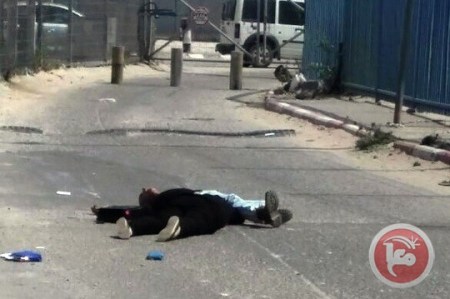 NAZARETH – The Israeli occupation police refused to release a video documenting the murder of a young Palestinian lady and her brother who posed no threat to the occupation troops, Hebrew press said on Sunday.
According to the Israeli police version, 23-year-old Maram Saleh Abu Ismail and her 16-year-old brother Ibrahim refused their order to stop and posed a threat to officers.
The Israeli police further claimed that Maram wielded a knife before she was shot along with her brother, who was walking behind her, by the Israeli police.
Eyewitness accounts, however, contradict such Israeli claims, saying the two casualties posed no threat and were at a distance from the occupation troops, who talked to them in a Hebrew language which they did not understand.
Haaretz newspaper quoted Israeli police sources as stating that videos documenting live scenes cannot be released during the investigation phase.
According to the newspaper, similar recordings legitimizing police use of force were released in the past. Israeli police claimed, after searching the casualties’ bodies, that Ibrahim was holding a knife, which was discredited by eyewitness accounts.
The newspaper said a snapshot picked up at the scene shows the two martyrs lying on the ground 15 meters away from the checkpoint and in a place where no Israeli police officers were deployed.
MK Dov Khenin (Joint Arab List) demanded that “Defense Minister Moshe Ya’alon and Public Security Minister Gilad Erdan launch an immediate probe into the scene and release the video.”
Khenin said no recordings were released despite the fact that the checkpoint was equipped with several cameras.
Maram, who was shot dead by the occupation troops, is a mother of two children and was expecting another baby. She was killed on her way to al-Maqasid hospital in Occupied Jerusalem.
Bodies of Shias killed by Nigeria army must be exhumed: Activists
Press TV – April 29, 2016
Rights activists have called for the bodies of hundreds of Shia Muslims massacred by the Nigerian army last December to be exhumed for further investigation into the exact number of victims.
Residents in the northern city of Kaduna, where the carnage took place, have rejected the official death toll and said a local inquiry into the incident suggests the government figures may be a gross underestimation.
On December 12, Nigerian soldiers attacked Shia Muslims attending a ceremony at a religious center in Zaria, accusing them of blocking the convoy of the army’s chief of staff and attempting to assassinate him.
A day later, Nigerian forces raided the home of Sheikh Ibhrahim al- Zakzaky, who leads the Islamic Movement of Nigeria (IMN), and arrested him after killing those attempting to protect him. Both incidents led to the deaths of hundreds of members of the religious community.
Rights groups say there is evidence Nigerian military had secretly buried hundreds of bodies in mass graves.
Meanwhile, Mohammed Mustapha and Nura Adam, two eye-witnesses, have also painted a horrific picture of the massacre.
Referring to a mass grave outside Kaduna, Mustapha said the local “government claimed they buried 347 people here but we know the actual number is far more than that.”
Mustapha also recalled how earth-moving equipment was brought into the cemetery near the Nigerian Defense Academy in the troubled region on December 14 to dig a pit for the burial.
He also noted that at about 11:00 p.m. (2200 GMT) armed forces cordoned off the narrow path leading to the burial ground shortly before trucks filled with bodies arrived.
“I counted six huge trucks and several military vans laden with dead bodies driving into the cemetery for the mass burial which residents were not allowed to witness,” said Adam.
“It took them five hours to finish the burial, which was an indication that the bodies were more than 347 because it doesn’t take that long to thrown in such a number of bodies into a pit,” he added.
Adam also said the bodies should be exhumed to confirm the exact number of the dead, adding that the world would be “shocked by the true number of those buried.”
However, Abdulhakeem Mustapha, counsel to the Kaduna state commission of inquiry probing the incident, has said local public officials do not have any authority to force the central government in Abuja to take action over the massacre.
“This is an investigative committee. It doesn’t have powers to issue orders,” said Mustapha, adding, “It is going to make its recommendations to the government on what it believes are the best ways to resolve the problem based on its findings.”
Last week, Amnesty International said in a report titled “Unearthing the truth: unlawful killings and mass cover-up in Zaria,” on April 22 that the Nigerian army killed over 350 supporters of Zakzaky and tried to meticulously destroy evidence of the crime by burying the victims in mass graves.
The report also blames Nigerian President Muhammadu Buhari’s administration for failing to probe army crimes against civilians.
Despite Buhari’s pledge to investigate the war crimes, “to date no concrete steps have been taken to end endemic impunity for such crimes,” it pointed out.
Human Rights Watch (HRW) has also slammed the carnage and said Nigerian forces committed several instances of bloodshed against the country’s Shia community in mid-December 2015.
The Nigerian army had also targeted Shias in August 2014 as people were holding a demonstration to condemn Israeli attacks on the Palestinians.
The Woman, Who was Killed By Israeli Soldiers Along With Her Brother, Was Pregnant
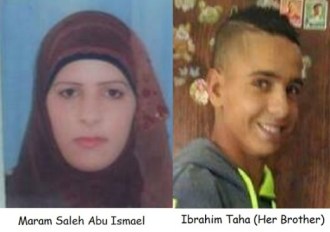
By Saed Bannoura | IMEMC | April 28, 2016
Palestinian medical sources confirmed that the Palestinian woman, who was killed by Israeli army fire, on Wednesday, did not carry an explosive belt as the army claimed, but was instead five months pregnant, and “her only fault was walking the wrong route and not understanding Hebrew.”
The Israeli police and army tried to come up with various allegations, including the usual claim of “carrying a knife,” and then tried to claim that she “was wearing an explosive belt,” while the only thing she “carried” was her fetus.
The slain woman has been identified as Maram Saleh Abu Ismael, 24, a mother of two children; Sarah, 6, and Remas, 4. Her brother, Ibrahim Taha, only sixteen years of age, was also killed as he was walking with her, heading to Jerusalem, after she obtained for the first time, a permit to enter the city.
Contrary to the Israeli allegation that Maram “carried a knife,” and the second allegation of “carrying an explosive,” eyewitnesses said the two victims walked the wrong route while heading to the Qalandia terminal, as they took the route that is only used for vehicles, instead of the pedestrian path.
The soldiers then started shouting in Hebrew, a language neither Maram nor her brother understood, and the woman just froze from fear before the soldiers started firing at her, and when her brother rushed to rescue her, the soldiers shot him too, and both were left to bleed to death.
The two were tens of meters away from the soldiers, and contrary to military allegations, did not attempt to attack any soldier or officer.
Ahmad Taha, an eyewitness from Jerusalem said that after the soldiers shot the pregnant woman and her brother, they retreated a few meters back, and fired several additional live rounds on them, “confirming the kill.”
“There was no stabbing attempt, and no reason for the army to shoot, the soldiers shot them from a distance, and later fired more rounds to confirm the kill,” Ahmad said, “The soldiers then placed two knives next to the lifeless body of the pregnant woman, and shortly after that, the police published pictures showing three knives!”
Mohammad Ahmad, a bus driver who witnessed the shooting, said an Israeli soldier who was standing behind a large concrete block, shot the woman from a distance of more than twenty meters.
“Neither the woman, nor her brother, posed any threat to the lives of the soldiers,” Ahmad stated, “They were far away from the nearest soldier, and did not pose any threat to them – they just walked the wrong route.”
The slain brother and his sister are from Qotna village, northwest of occupied Jerusalem; Maram is Married and living with her husband and children in Beit Surik nearby village.
It is worth mentioning that a Palestinian ambulance rushed to the scene, but the soldiers closed the entire area, and prevented them from approaching the two Palestinians, who eventually bled to death.
More than an hour after the shooting, Israeli military medics placed the corpses of the two Palestinians in black bags, and took them away.
One day before this fatal shooting, a Palestinian man in his sixties nearly faced the same deadly fate when he walked this same wrong route, but when the soldiers started shouting at him he understood them because he speaks and understand Hebrew very well.
Featured Video
Trita Parsi: Israel Set a Trap for Total War in the Region
or go to
Aletho News Archives – Video-Images
Book Review
Why the War on Conspiracy Theories Is Bad Public Policy
By Kevin Barrett • Unz Review • February 1, 2019
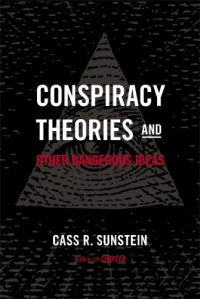 A Review of Conspiracy Theories and Other Dangerous Ideas by Cass Sunstein (based on an earlier paper co-authored with Adrian Vermeule); In Defense of Troublemakers: The Power of Dissent in Life and Business by Charlan Nemeth; and Conspiracy Theories and the People Who Believe Them, edited by Joseph E. Uscinski
On January 25 2018 YouTube unleashed the latest salvo in the war on conspiracy theories, saying “we’ll begin reducing recommendations of borderline content and content that could misinform users in harmful ways—such as videos promoting a phony miracle cure for a serious illness, claiming the earth is flat, or making blatantly false claims about historic events like 9/11.”
At first glance that sounds reasonable. Nobody wants YouTube or anyone else to recommend bad information. And almost everyone agrees that phony miracle cures, flat earthism, and blatantly false claims about 9/11 and other historical events are undesirable.
But if we stop and seriously consider those words, we notice a couple of problems. First, the word “recommend” is not just misleading but mendacious. YouTube obviously doesn’t really recommend anything. When it says it does, it is lying. … continue
Blog Roll
 Aletho News
- Easy fix for Europe’s chaos? Stop fueling war against Russia
- Putin’s key remarks on peace talks and Europe’s ‘schizophrenia’
- Trita Parsi: Israel Set a Trap for Total War in the Region
- Trump’s Iran war is on an Israeli leash
- Saudi oil boss issues global supply warning
- Riyadh Says Its Oil System Is Intact. The Numbers Say Otherwise.
- Trump and Netanyahu Want to “Finish the Job” on Iran
- US ‘one-sided dictation’ not Iran’s beliefs makes rational talks impossible: Baghaei
- Iran’s Next Strike May Not Explode. It Could Shut You Down /Col Doug Macgregor
- Iran: US political targets legitimate if assassinations return
- If Americans Knew
- DAILY UPDATE: Latest essential news on Palestine, Israel, & region
- The Israel Lobby’s Changing Fortunes
- AIPAC has become such a political liability that it’s shifting to a more “nimble” approach to buying politicians
- At least 160 Israeli settler attacks in 2 weeks
- Will Gaza’s Ancient Christian Community Disappear Forever?
- Israel’s vision of regional security rests on keeping Arab states weak
- Heidi Levine recounts how Palestinian youths helped save her in settler attack
- DAILY UPDATE: Latest essential news on Palestine, Israel, & region
- Trump’s Intensifying Sabotage of the ICC, for Israel’s Sake
- Israeli military detain US and UK volunteers in West Bank including Democratic NY politician Brad Lander
- No Tricks Zone
- E-Cars Reduce CO2 Emissions By Only 41% Compared To Internal Combustion Engine Vehicles
- Predictions Made By Renowned Climate Professor Over Past Decades Have Been Proven To Be Poor
- New Study Suggests Large Regions Of The Pacific Ocean Have Been Cooling For The Last 80 Years
- Germany’s Green Energy Debacle: High Energy Costs Force Kahla Porzellan to Close After 182 Years!
- New Study: 50 Years Of The Most Aggressive ‘Net Zero’ Policies Can Only Affect The Global Climate By 0.03°C
- US September “Heat” Was No Record…Many Records Set Decades Ago
- Latest European Green Energy Debacle; Portugal’s Largest Flagship Solar Park Insolvent!
- Green Energy Debacle: German Expert Professor Fritz Vahrenholt Warns Of Severe Economic And Social Consequences
- Two More Paleo Reconstructions Affirm Meters-Higher Sea Levels Across Ireland, Brazil 7000-6000 Years Ago
- New Study: Earth And Venus Surface Warmth Largely Explained By Convection And Lapse Rate, Not CO2 Or Radiation

