Illegal settler visits impose severe restrictions on Palestinian presence in al-Khalil
International Solidarity Movement | April 27, 2016
Hebron, Occupied Palestine – During this week’s ‘Pessach’ celebrations from 22nd to 29th April, Israeli settlers and Israeli forces throughout occupied al-Khalil (Hebron) have been taking over Palestinians houses, rooftops, streets and entire areas while denying passage for Palestinians.

Settlers ‘celebrating Pesaach’ while Palestinians are denied access to the area
Last Friday night, with the start of the ‘holiday’, large groups of settlers were going from the illegal Kiryat Arba settlement on the outskirts of al-Khalil, towards the Ibrahimi mosque, 60% of which has been taken over by the settlers that installed a ‘synagogue’ following the 1994 Ibrahimi mosque massacre; while Palestinians were stopped, frisked and delayed.

Israeli forces taking over the roofs of Palestinian family homes
On Monday and Tuesday, Palestinians’ movement was entirely restricted and H2 was completely void of any Palestinian presence in order to facilitate the settler’s freedom of movement and to enable a space for the main ‘Pessach celebrations’. During these two days the checkpoint at the Ibrahimi mosque has remained closed, thus closing off the main entrance for Palestinians heading to the mosque. Palestinians were entirely barred from entering the mosque during these two days, while settlers used the additional 40% of the mosque that has so far remained for Palestinians – with the ‘usual’ entry restrictions and harassment by Israeli forces.

Closed Ibrahimi mosque checkpoint barring Palestinian movement
While bus loads of settlers from all over Palestine are arriving in the Old City of al-Khalil, new barricades, entry and movement restrictions for Palestinians are springing up throughout the city. Al-Faiha’a girls school, right opposite the parking lot used for the settler only buses, has been forced to finish early in order to at least attempt to provide a safe way home for the girls, despite the heavy army and settler presence. During Monday and Tuesday, a sharp decrease in the number of girls attending school was noted by both the teachers and international human rights defenders offering protective presence. Israeli forces have also taken control of two shops right next to the school building and turned it into a military base.

Israeli forces moving into the building next to the girls school
On Monday, Israeli forces escorted endless groups of settlers on a ‘tour’ through the main Palestinian market in the Old City during the busy noon hours – blocking the narrow alleyways while giving a Zionist version of the history of the city. Palestinians were stopped and forced to wait for the tours to pass. One Palestinian man was arrested while another one was seriously injured when settlers threw a rock into the Palestinian market hitting him right on the head.
Despite the area behind Shuhada checkpoint being H1 and thus supposedly under full Palestinian control, Israeli forces on Tuesday brought large groups of settlers, after ‘clearing’ the area for bombs, in a sheer show of their power and in total disregard of any (international) agreement. Shuhada checkpoint has during the ‘holiday’ season seen repeated and arbitrary delays, causing Palestinians to wait for, at times, hours to be allowed to go to their homes located in the ‘closed military zone’ while settlers were freely roaming the streets and could be seen from the checkpoint chit-chatting with the soldiers.
In Israel, an Ugly Tide sweeps over Palestinians
By Jonathan Cook | Dissident Voice | April 25, 2016
In Israel’s evermore tribal politics, there is no such thing as a “good” Arab – and the worst failing in a Jew is to be unmasked as an “Arab lover”. Or so was the message last week from Isaac Herzog, head of Israel’s so-called peace camp. The shock waves of popular anger at the recent indictment of an Israeli army medic, Elor Azaria, on a charge of “negligent homicide” are being felt across Israel’s political landscape.
Most Israeli Jews bitterly resent the soldier being put on trial, even though Azaria was caught on camera firing a bullet into the head of a badly injured Palestinian, Abdel Fattah Al Sharif.
In the current climate, Herzog and his opposition party Zionist Union have found themselves highly uncomfortable at having in their midst a single non-Jewish legislator.
Zuheir Bahloul, an accommodating figure who made his name as a sportscaster before entering politics, belongs to the minority of 1.7 million Palestinian citizens, one in five of the population.
Unlike most of Israel’s Palestinian politicians, he preferred to join a Zionist party than one of several specifically Arab parties. Nonetheless, he embarrassed colleagues by briefly pricking the bubble of unreason cocooning the country.
Attacks on soldiers were wrong, said Bahloul, but a Palestinian such as Al Sharif – who tried to stab soldiers at a checkpoint in the West Bank city of Hebron – was not a “terrorist” by any normal definition. Terrorists target civilians, Bahloul noted, not soldiers enforcing an illegal occupation.
Other Zionist Union MPs raced to disown Bahloul, while Herzog warned that the party was unelectable as long as it was seen as full of “Arab lovers”.
Bahloul is hardly the first Palestinian politician in Israel to find himself denounced as a “bad” Arab. But the others have mostly sinned by demanding an end to Israel’s status as a Jewish state. Israel is currently promulgating a law to oust such dissenters from the parliament.
Now the earth is shifting beneath the feet of formerly “good Arabs” such as Bahloul, the small number who cling to the belief that a self-declared Jewish state can be fair to them.
It is no longer just the state’s Jewishness that is sacrosanct. The occupation is too.
Salim Joubran, the only Palestinian judge in the supreme court, fell foul of this creed last week as the court considered an appeal from Raed Salah, leader of the northern Islamic Movement, against his jail sentence for incitement to violence.
There is almost continual incitement by Jewish political and religious leaders, but indictments are almost unheard of. Two rabbis who wrote a book, the King’s Torah, calling for the killing of Palestinian babies were investigated but not charged.
In his minority opinion, Joubran thought it reasonable to observe that Salah’s remark urging the Arab world to support the Palestinians with a “global intifada” to protect Jerusalem’s Islamic holy sites under occupation was more rhetorical than a call to arms.
He was wrong. Israelis took to social media calling for an “intifada” against both him and the supreme court.
The ugly political tide turning against the most moderate and pragmatic elements in Israel’s Palestinian minority was also exemplified by threats against Ayman Odeh, leader of the only joint Jewish-Arab party in the parliament.
Odeh’s crime was to describe the assassinations of Palestinian leaders by the Shin Bet intelligence service as “executions without trial”.
Avi Dichter, a former Shin Bet head who is now a legislator in the ruling Likud party, wondered aloud about the merits of assassinating Odeh, before concluding it was not worth “wasting the ammunition”. Dichter knows there is no danger he will face a trial for incitement to violence.
Meanwhile, a TV investigation last week turned a critical lens on the late Rehavam Zeevi, a hero of the occupation. The programme revealed that the general had serially raped and assaulted women under his command, and used underworld connections to silence critics.
Tellingly, however, while the programme highlighted his crimes against Jews, it was largely untroubled by his many well-documented abuses of Palestinians.
Zeevi once proudly boasted of killing prisoners, and famously terrorised Palestinians by flying over their villages with a Palestinian corpse hanging from his helicopter undercarriage.
Later he sat in government as head of a party calling for the expulsion of Palestinians from their homeland.
When he was assassinated by Palestinians in 2001, he was quickly beatified. Scores of roads and parks are named after him, and a commemoration law requires that his “legacy and values” be taught in schools.
The anti-Arab values Zeevi embodied are in no danger of being discarded. Rather, they are being entrenched. Today, the definition of a “bad Arab” stretches from those, such as Al Sharif, who take up arms against the occupation to those, such as Bahloul, who do nothing more than raise their voice against it.
The trigger-happy soldier Elor Azaria and the peace camp leader Isaac Herzog have more in common than either might wish to admit. In their different ways, both have helped to turn all Palestinians into outcasts – and crush any hope of concessions from Israel to peace.
Mexican authorities obstruct probe of missing students case: report
Press TV – April 25, 2016
A panel of international experts probing the 2014 massacre of 43 Mexican students has accused the government of obstructing its inquiry into Mexico’s most notorious murder case in recent years.
Foreign experts from the Inter-American Commission on Human Rights (IACHR) issued their final report Sunday, saying the government’s stonewalling stopped them from reaching the truth.
The five-member panel, who has been investigating the case for a year, said Mexican authorities showed “little interest” in moving forward with the probe.
The panel also accused the Mexican government of allowing a smear campaign against its investigation in an attempt to discredit the final report as it prepared to leave the country.
A group 43 students from Ayotzinapa Teacher Training College went missing on the night of September 26, 2014, after they participated in a protest in the south-western city of Iguala, in Guerrero state.
Mexican prosecutors say they were arrested by corrupt municipal policemen and handed over to the local criminal gang of Guerreros Unidos, which apparently massacred them and burned their bodies at a garage dump.
Relatives of the victims dismiss the government version of the incident, accusing authorities of trying to cover up the involvement of senior politicians and army officers in the killings.
The international report also dismissed the government’s narrative, saying there is no evidence that the 43 students were incinerated at the dump.
It said the claim that the students had been burned is scientifically impossible given the heat needed to reduce human remains to ash.
It said the remains of only one student were fully identified after they were found in a nearby river.
“More than a year and a half after the students’ disappearance, we are no closer to knowing what really happened that night but one thing’s for certain: the credibility of the Mexican government is more in doubt than ever,” the report noted.
The case sparked outrage across the country and has led to street protests against President Enrique Pena Nieto.
The report also accused the government of torturing some of the suspects detained in relation to the case.
It said medical report of the suspects shows “significant indications of mistreatment and torture” against 17 of the detainees. More than 100 suspects were detained in the case.
Israeli Army Closes Entrance Of Hebron Emergency Center With Concrete Blocks
IMEMC – April 25, 2016
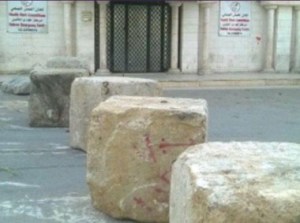 Israeli soldiers closed the main entrance of the Hebron Emergency Center, run by the Hebron Health Committees, by placing concrete blocks, completely sealing it, and deployed dozens of soldiers on its rooftop on Monday morning.
Dr. Ramzi Abu Yousef, director of the Health Work Committees (HWC) in Hebron, said many soldiers occupied the center’s rooftop, and turned it into a military base.
Abu Yousef warned of the consequences of this violation, especially since the center receives hundreds of patients on a daily basis, and added that the center provides its medical services to more than 60,000 Palestinians.
“For years now, the center has been subject to frequent Israeli military violations, including many invasions, and the soldiers even fired gas bombs at it,” Abu Yousef said, “They also repeatedly sprayed it with waste-water mixed with chemicals, in addition to harassing the patients and their families, and the various measures restricting their freedom of movement.”
The HWC voiced an urgent appeal to various human rights groups to intervene, and provide the needed protection to Palestinian health centers, in addition to pressuring Israel into halting its serious violations.
“People who need medical care have the right to receive it, but Israel continues to violate it,” the HWC added, “International Humanitarian Law stresses on the importance of unrestricted access to medical facilities.”
Trust the IDF investigation
By Yossi Gurvitz | Yesh Din | April 25, 2016
The case of Bassem Abu Rahme challenges the army’s claim that it can conduct a serious investigation of itself.
On April 17th 2009, Bassem Abu Rahme was demonstrating against the separation wall in his village, Bil’in. After another demonstrator was hit by crowd-dispersal weapons shot by Israeli security forces, Abu Rahme shouted at the soldiers and Border Policemen that the person was wounded. Seconds later, a person in Israeli uniform (it is unclear whether he or she was an IDF soldier or a Border Policeman) fired a tear gas canister directly into Abu Rahme’s chest; the wound was fatal, and within hours Abu Rahme was dead.
These facts were not, until recently, in contention. Even so, almost seven years after his death, no one has been held responsible for Abu Rahme’s death. Seven years of foot dragging and avoiding investigation (more on that in these two posts). This is what happens when a member of the security forces shoots an unarmed man — who everyone agrees posed no danger to — and the cameras (three of them, actually) document the event – yet are not aimed directly at the shooter.
We do not know who shot Abu Rahme, whether he or she was an IDF soldier or a Border Policeman. We do, however, have forensic evidence pointing to where the shooters stood. According to the ballistics examination, conducted by the IDF itself, “the only possibility of this sort of armament hitting the target is only by direct fire and using a flat angle — in the single digits — no more than three or four angles.” That is, there is no possibility of Abu Rahme being hit by a canister shot according to the orders and hitting him by mistake; even were the canister to ricochet off a fence, it would still be fired directly, contrary to orders.
The Chief of the IDF’s Photo Reconnaissance Department told the Military Police Criminal Investigations Division (MPCID) in 2013 that direct fire of tear gas canisters is forbidden and that it should hold a lineup to determine where each of the shooters stood. The MPCID refrained from doing so.
Last week, Israel’s Supreme Court heard an appeal by Yesh Din and human rights NGO B’Tselem , in which we demanded that the shooter be indicted, or that at least the army indict his commander. The hearing was held ex parte due to a strike by the prosecution. We estimate that the state would have argued that the shooters cannot be identified; and that it would also try to avoid mentioning the fact that the MPCID and the military prosecution did everything in their power to refrain from investigating the case for 15 months, and were forced to open an investigation after our first petition to the High Corut of Justice. The government is likely to claim that the canister that hit Abu Rahme’s chest ricocheted off something – and will play down the fact that even if it did, its own ballistic diagnosis ruled that it was fired contrary to orders.
The government is further likely to argue that it has no clue as to whom it should prosecute, hoping the judges will not think too much of the fact that it strangled the investigation for years. Our demand is simple: even if there is no chance to indict the shooters themselves, and we contend this claim since the MPCID’s failure to investigate rendered the case no longer investigable, the commanders should still bear responsibility.
So far, none of this has happened. The justices decided to rescind the petition, since under the Turkel Commission’s recommendations one may now object to the Attorney General over the military prosecution’s decision – a process that did not exist when we made our appeal. Justice, it seems, will have to keep waiting.
It is important to emphasize this time and again: Abu Rahme was unarmed. He was a danger to no one. He was protesting an injustice in his village – an injustice recognized by the High Court of Justice. And yet, an Israeli security officer, perhaps more than one, fired at a demonstrator in a life-threatening manner and caused his death. We note that one of the suspects said in his interrogation that he never received proper training with the weapon he was using. The commanders of these warriors, who are responsible for their actions, continue dodging this responsibility to this day.
Over the last few weeks, the very well-documented murder in Hebron has been called an exceptional, unrepresentative, and isolated incident by senior IDF and political figures. Every person of conscience should wonder whether this is so; whether the important statement in the case was not made of by Chief of Staff Eizenkot, but rather by Prime Minister Netanyahu, who phoned the father of the shooter and told him (Hebrew) to “trust the IDF investigation.”
What ought an Israeli security officer understand from the prime minister’s remarks? A reasonable interpretation would be: “don’t worry, our investigation will find you acted properly.” This, after all, is the unwritten contract between the government and its soldiers: we send you to do the dirty work of oppressing a civilian population, and in return we will turn a blind eye if you sometimes exceed your orders – unless are caught red-handed, that is. In such a case, we shall regrettably have to begin the investigation show.
Israeli occupation forces kidnap professor near Ramallah
Palestinian Information Center – April 25, 2016
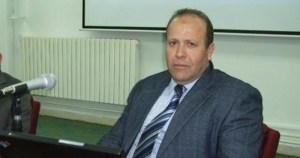 RAMALLAH – Israeli occupation forces (IOF) on Sunday kidnapped Palestinian astrophysicist Imad al-Barghouthi at Nabi Saleh checkpoint, northwest of Ramallah.
Local sources told the Palestinian Information Center that Israeli soldiers at the checkpoint detained Barghouthi and took him to an undeclared place.
Barghouthi, 53, is a professor of theoretical space plasma physics at al-Quds University and has worked for some time at NASA in the United States. His scientific work is widely published internationally in academic journals.
The IOF previously kidnapped him on December 6, 2014 at al-Karama border crossing as he was trying to cross to Jordan in order to attend a scientific conference in the United Arab Emirates.
At the time, he was reportedly interrogated for participating in a mass march against Israel’s war on Gaza.
Copyright © The Palestinian Information Center
NYU grad student union votes to boycott Israel
Ma’an – April 24, 2016
A graduate student union at New York University on Friday voted in favor of joining the Boycott, Divestment, and Sanctions movement against Israeli violations of Palestinian human rights.
Two-thirds of the Graduate Student Organizing Committee cast a vote in support of the resolution, which calls on both NYU and its United Automobile Workers union affiliate to divest from all Israeli state institutions — including universities — and corporations “complicit in” Israeli violations.
The resolution proposes that NYU join the movement “until Israel complies with international law and ends the military occupation, dismantles the wall, recognizes the rights of Palestinian citizens to full equality, and respects the right of return of Palestinian refugees and exiles.”
Over 600 union members voted in the referendum, a reportedly larger-than-average turnout for union votes. The 2,000-strong union represents graduate teaching and research assistants at the university.
Some 57 percent of voters made a voluntary individual pledge to participate in the academic boycott against Israel.
The BDS movement has gained momentum over the past year, aiming to exert political and economic pressure over Israel’s occupation of Palestinian territory in a bid to repeat the success of the campaign which ended apartheid in South Africa.
Major actors to join the movement this year include British security giant G4S and French telecom company Orange.
The NYU union’s support of BDS comes after US President Barack Obama in February signed into law an anti-BDS trade agreement reiterating that US Congress “opposes politically motivated actions that penalize or otherwise limit commercial relations specifically with Israel,” referring directly to BDS activities.
The Israeli leadership has widely condemned the BDS movement as antisemitic or carried out from “hatred of Israel,” while proponents of the movement argue divestment measures are necessary in pressuring Israel to end its decades-long military occupation.
Moves inside the US — Israel’s longstanding ally and number one provider of military aid — to criminalize BDS have meanwhile been slammed by human rights defenders as a violation of free speech.
A Note on Clinton’s Faux-Concern
By Andrew Smolski | CounterPunch | April 22, 2016
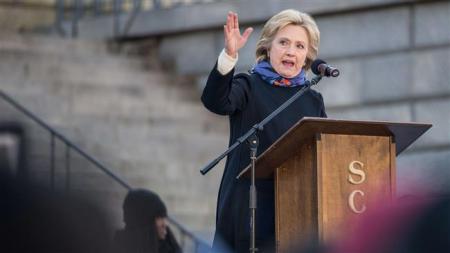 Hillary Clinton’s recent comments on the 43 students for La Opinión show the media’s failure to judge her pandering rhetoric against her actual, substantive actions. When she states she is indignant about the case, she erases her role in the violence engulfing Mexico. The corporate media allows this, because their pages never print about the US-role in Mexico’s War on Drugs.
Hillary Clinton was Secretary of State from 2009 to 2013. During that time, State Department officials under her direction continued to vet and clear Mexican security forces to receive arms transfers. When she says rhetorically, “If there was something the US could do to help, I would be the first to offer it”, it is the theatre of faux-naivety. She knows quite well that the US could end support for policies militarizing Mexico. It’s just that she is not concerned with human rights if that means demilitarization.
It was under the Clinton State Department that the Merida Initiative continued passed its original 3-year time frame. The Merida Initiative enables the Mexican government to repress dissent, while at the same time increasing Mexican elite dependence on the infusion of US armaments. She has called for more of this Plan Colombia-style policy in the future, which means that under a Clinton presidency we can expect more violence throughout Central America.
So, when Clinton exclaims that she is indignant about the Mexican government’s role in covering up the Ayotzinapa case, it belies the fact that she would support (and possibly ramp up) policies that enable the Mexican government to do exactly what she says is a “violation of the law”. The evidence is quite clear on this point, and reported by countless others, like Dawn Paley, Greg Grandin, and Jesse Franzblau. The fact that the corporate media has ignored the record is typical. Clinton’s pandering hypocrisy, typical as well.
Sadly, Clinton is using the tragedy of the 43 to justify and continue policies that brought it about. That is why I am indignant. That is why we should all be indignant.
Release of a cold-blooded killer illustrates the racism of Israeli society
International Solidarity Movement | April 23, 2016
Hebron, occupied Palestine – Yesterday, Elor Azraya, a soldier in the Israeli army, infamous for the extrajudicial execution of Abed al-Fattah al-Sharif in occupied al-Khalil (Hebron), has been released to celebrate the Jewish holiday of Pessach with his family.
21-year old Abed al-Fattah al-Sharif was lying on the ground incapacitated after what Israeli forces claim was a knife-attack by him and Ramzi al-Qasrawi against Israeli soldiers stationed at Gilbert checkpoint in the Tel Rumeida neighbourhood of occupied al-Khalil. In a video that was captured by human rights defender Emad Abu Shamsiyyah, who has since been receiving death threats from settlers, Elor Azraya can be seen cocking his gun and executing the unconscious Abed al-Fattah with a shot in the head. With blood and brain matter starting to seep from the wound in his head, it is obvious that Abed al-Fattah was still alive when executed in cold-blood by Elor Azraya.
*** WARNING*** the following video contains extremely graphic material. A soldier is seen executing one of the Palestinian men at 1:52. Video-credit: Emad Abu Shamsiya
The neighbourhood of Tel Rumeida and the tiny strip of Shuhada Street where Palestinians are still ‘allowed’ to walk after the 1994 Ibrahimi mosque massacre, have been declared a ‘closed military zone’ since 1st November 2015 in an act of collective punishment against the whole Palestinian population. The increase of humiliating and racist ‘security-controls’ towards only the Palestinian residents by Israeli forces, goes hand in hand with the dehumanization of these residents with the introduction of a number system, where every Palestinian resident was assigned a number that he or she is being referred to. When passing and being checked at one of the countless checkpoints whether a Palestinian resident is allowed to enter, soldiers check whether they are registered and numbered residents. At the same time, Israeli settlers from the illegal settlements are allowed to freely and without hassle, roam the streets, regardless of whether they actually are residents in this area.
The approval and support Elor Azraya has been receiving both from his comrades (that can be seen in the video with them not even flinching when he executes Abed al-Fattah) and settlers, mirrors the great support he enjoys from the majority of the Israeli population. Upon arriving home, Elor Azraya was received as a hero with a big celebration. The Israeli army clearly foster a culture where extrajudicial executions and an excessive use of force against Palestinians is considered ‘commendable’, ‘normal’ and even ‘heroism’; which is approved of not only by Israeli politics, but also society, and is thus becoming an integral part of Israeli society.

Elor Azraya welcomed home
In various demonstrations in favour of this cold-blooded execution, Israeli demonstrators have been seen with placards asking to ‘kill them all’ – applauding not only the heinous execution of Abed al-Fattah, but calling on everyone to kill all the Palestinians – a clear call for the ethnic cleansing, and genocide, of Palestinians. These demonstrations have attracted hundreds of Israelis, and have not received any condemnation by the Israeli public or government.

Banner calling for the erasure of the Palestinian people
Photo credit: AFP
Whereas Elor Azraya has been released until Sunday, the body of Abed al-Fattah is still being held by the Israeli government in a practice where the Israeli government holds hostage the bodies of Palestinians they accuse of attempting to harm Israeli forces or settlers. Like Abed al-Fattah al-Sharif, many more Palestinian families are thus denied the right to bury their loved ones and mourn their loss. Families of these Palestinians and their supporters have been protesting this inhumane tactic, demanding the release of the bodies.
In an environment that supports and commends the extrajudicial killing of a (Palestinian) human being lying incapacitated on the ground – clearly posing no threat to anyone – it does not come as a big surprise that Elor Azraya has been released ‘to celebrate Pessach with his family’. The charges for the heinous murder of Abed al-Fattah had already been reduced to ‘manslaughter’, despite the telling and obvious video footage. His release without any consequence for the execution of a Palestinian so clearly caught on camera is not just another sign of how cold-blooded, racist and inhumane the apartheid Israeli occupation of Palestine is; but also of how the ‘only democracy in the Middle East’ visibly has no regard or rather a total disregard for human rights, the rule of law or even of human life – as long as it is Palestinian life.
Israel to close off West Bank, Gaza Strip for Jewish holiday
Press TV – April 22, 2016
The Israeli regime plans to close off all entry points to the occupied West Bank and the Gaza Strip ahead of a Jewish holiday.
According to the Israeli army, the crossings to the West Bank and the Gaza Strip will be sealed off on Friday and Saturday, the days of the so-called Passover holiday, over security concerns.
The decision on the blockades was made after “an evaluation of the security situation,” an Israeli military spokesperson said without elaborating.
The Israeli decision to block pathways comes as a move to bar Palestinians from the al-Aqsa Mosque in August 2015 caused a major outcry on the part of the Palestinians. The Israel-occupied territories have been the scene of tensions ever since.
Israeli Prime Minister Benjamin Netanyahu has also said that security measures will be tightened ahead of the holiday.
Soldier in execution released
Israel also released from custody on Friday a soldier charged with manslaughter after shooting a wounded Palestinian. A military statement said Elor Azria was released home for the Passover holiday.
Azria, who also holds French citizenship, was charged on Monday with manslaughter and unbecoming conduct over the March 24 killing that took place in the southern West Bank city al-Khalil (Hebron).
A widely circulated video showed Abdul Fatah al-Sharif, 21, lying on the ground, shot along with another man after allegedly stabbing and moderately wounding a soldier minutes earlier.
Azria, who was not at the scene during Sharif’s alleged attack, then shoots him in the head without any apparent provocation. His lawyers argued he thought the Palestinian was wearing explosives.
Palestinian Authority halts UN bid
With Israel tightening its measures, the Palestinian Authority however said a push for a UN resolution demanding an end to Israeli settlement expansion will be put on hold.
Foreign Minister Riyad Maliki announced on Thursday that the Palestinians supported a French initiative to hold an international conference in May in an effort to revive so-called peace talks.
The Palestinians initially planned to get the UN Security Council to adopt a resolution that would condemn continued Israeli settlement construction as an obstacle to peace.
Earlier reports had said that the Palestinian Authority had been under pressure from France and other countries to stop its efforts to push for the UN resolution.
French officials told President Mahmoud Abbas that the Palestinian bid was unlikely to succeed because the US would veto the resolution even if it received enough votes from other members.
In his Thursday remarks, Maliki said Palestinian and French leaders agreed during meetings in Paris a few days ago that the French initiative should move ahead and not be jeopardized “in any way” by the resolution.
Senior Israeli and Palestinian officials have said that the Egyptians, the Jordanians and the Saudis were not keen to see the draft resolution move forward at this time.
Featured Video
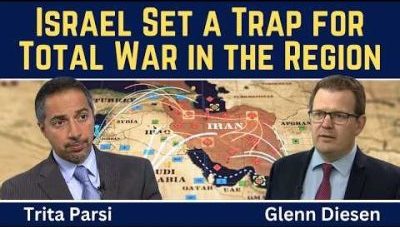
Trita Parsi: Israel Set a Trap for Total War in the Region
or go to
Aletho News Archives – Video-Images
Book Review
Why the War on Conspiracy Theories Is Bad Public Policy
By Kevin Barrett • Unz Review • February 1, 2019
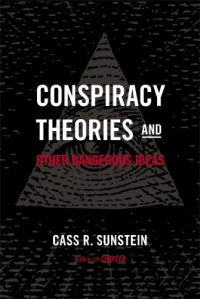 A Review of Conspiracy Theories and Other Dangerous Ideas by Cass Sunstein (based on an earlier paper co-authored with Adrian Vermeule); In Defense of Troublemakers: The Power of Dissent in Life and Business by Charlan Nemeth; and Conspiracy Theories and the People Who Believe Them, edited by Joseph E. Uscinski
On January 25 2018 YouTube unleashed the latest salvo in the war on conspiracy theories, saying “we’ll begin reducing recommendations of borderline content and content that could misinform users in harmful ways—such as videos promoting a phony miracle cure for a serious illness, claiming the earth is flat, or making blatantly false claims about historic events like 9/11.”
At first glance that sounds reasonable. Nobody wants YouTube or anyone else to recommend bad information. And almost everyone agrees that phony miracle cures, flat earthism, and blatantly false claims about 9/11 and other historical events are undesirable.
But if we stop and seriously consider those words, we notice a couple of problems. First, the word “recommend” is not just misleading but mendacious. YouTube obviously doesn’t really recommend anything. When it says it does, it is lying. … continue
Blog Roll
 Aletho News
- Easy fix for Europe’s chaos? Stop fueling war against Russia
- Putin’s key remarks on peace talks and Europe’s ‘schizophrenia’
- Trita Parsi: Israel Set a Trap for Total War in the Region
- Trump’s Iran war is on an Israeli leash
- Saudi oil boss issues global supply warning
- Riyadh Says Its Oil System Is Intact. The Numbers Say Otherwise.
- Trump and Netanyahu Want to “Finish the Job” on Iran
- US ‘one-sided dictation’ not Iran’s beliefs makes rational talks impossible: Baghaei
- Iran’s Next Strike May Not Explode. It Could Shut You Down /Col Doug Macgregor
- Iran: US political targets legitimate if assassinations return
- If Americans Knew
- DAILY UPDATE: Latest essential news on Palestine, Israel, & region
- The Israel Lobby’s Changing Fortunes
- AIPAC has become such a political liability that it’s shifting to a more “nimble” approach to buying politicians
- At least 160 Israeli settler attacks in 2 weeks
- Will Gaza’s Ancient Christian Community Disappear Forever?
- Israel’s vision of regional security rests on keeping Arab states weak
- Heidi Levine recounts how Palestinian youths helped save her in settler attack
- DAILY UPDATE: Latest essential news on Palestine, Israel, & region
- Trump’s Intensifying Sabotage of the ICC, for Israel’s Sake
- Israeli military detain US and UK volunteers in West Bank including Democratic NY politician Brad Lander
- No Tricks Zone
- E-Cars Reduce CO2 Emissions By Only 41% Compared To Internal Combustion Engine Vehicles
- Predictions Made By Renowned Climate Professor Over Past Decades Have Been Proven To Be Poor
- New Study Suggests Large Regions Of The Pacific Ocean Have Been Cooling For The Last 80 Years
- Germany’s Green Energy Debacle: High Energy Costs Force Kahla Porzellan to Close After 182 Years!
- New Study: 50 Years Of The Most Aggressive ‘Net Zero’ Policies Can Only Affect The Global Climate By 0.03°C
- US September “Heat” Was No Record…Many Records Set Decades Ago
- Latest European Green Energy Debacle; Portugal’s Largest Flagship Solar Park Insolvent!
- Green Energy Debacle: German Expert Professor Fritz Vahrenholt Warns Of Severe Economic And Social Consequences
- Two More Paleo Reconstructions Affirm Meters-Higher Sea Levels Across Ireland, Brazil 7000-6000 Years Ago
- New Study: Earth And Venus Surface Warmth Largely Explained By Convection And Lapse Rate, Not CO2 Or Radiation

